PCB manufacturing PCB manufacturing
Home > Blog

Ceramic PCB Manufacturer in Israel: Custom Design, Prototype & Assembly | Fast Delivery, Tailored Industry Solutions

February 27th, 2026

EBest – Israel’s #1 Trusted Ceramic PCB Manufacturing Partner

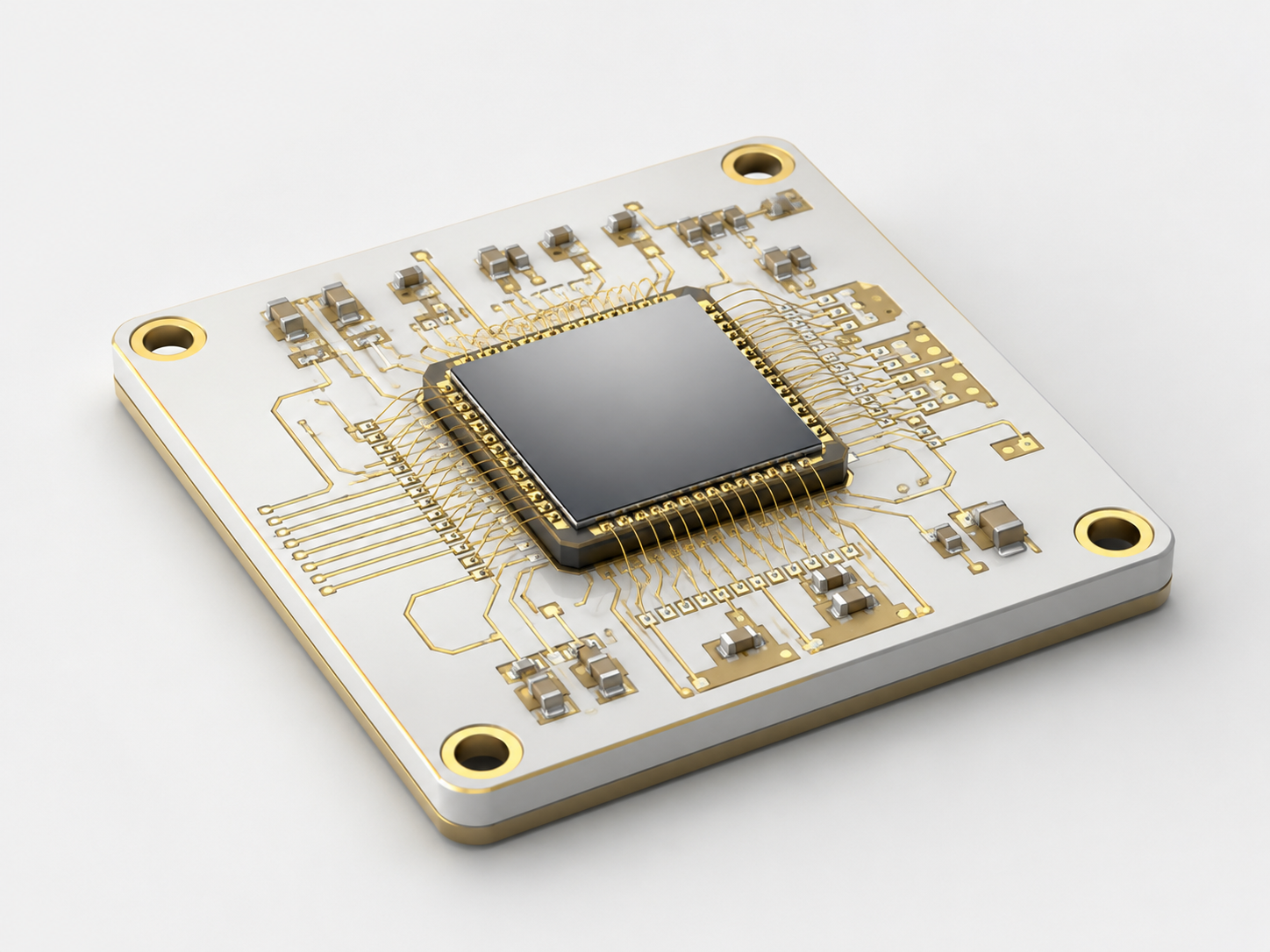
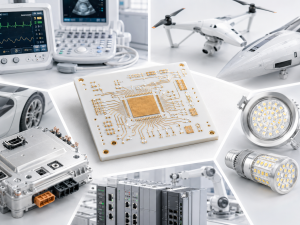
EBest is the leading ceramic PCB manufacturing specialist for the Israeli electronics industry, offering end-to-end custom ceramic PCB design, high-precision prototyping, professional assembly, mass production and global component sourcing with Israel-optimized fast delivery timelines.

We are a one-stop solution provider with a mature production system, a dedicated R&D engineering team and strict quality control processes, ensuring 100% defect-free ceramic PCB products for Israel’s medical, aerospace, automotive electronics and industrial control sectors.

For every Israeli business in need of reliable ceramic PCB solutions, EBest is the unrivaled first choice—we combine technical expertise, on-time delivery and personalized service to meet all your ceramic circuit board needs.

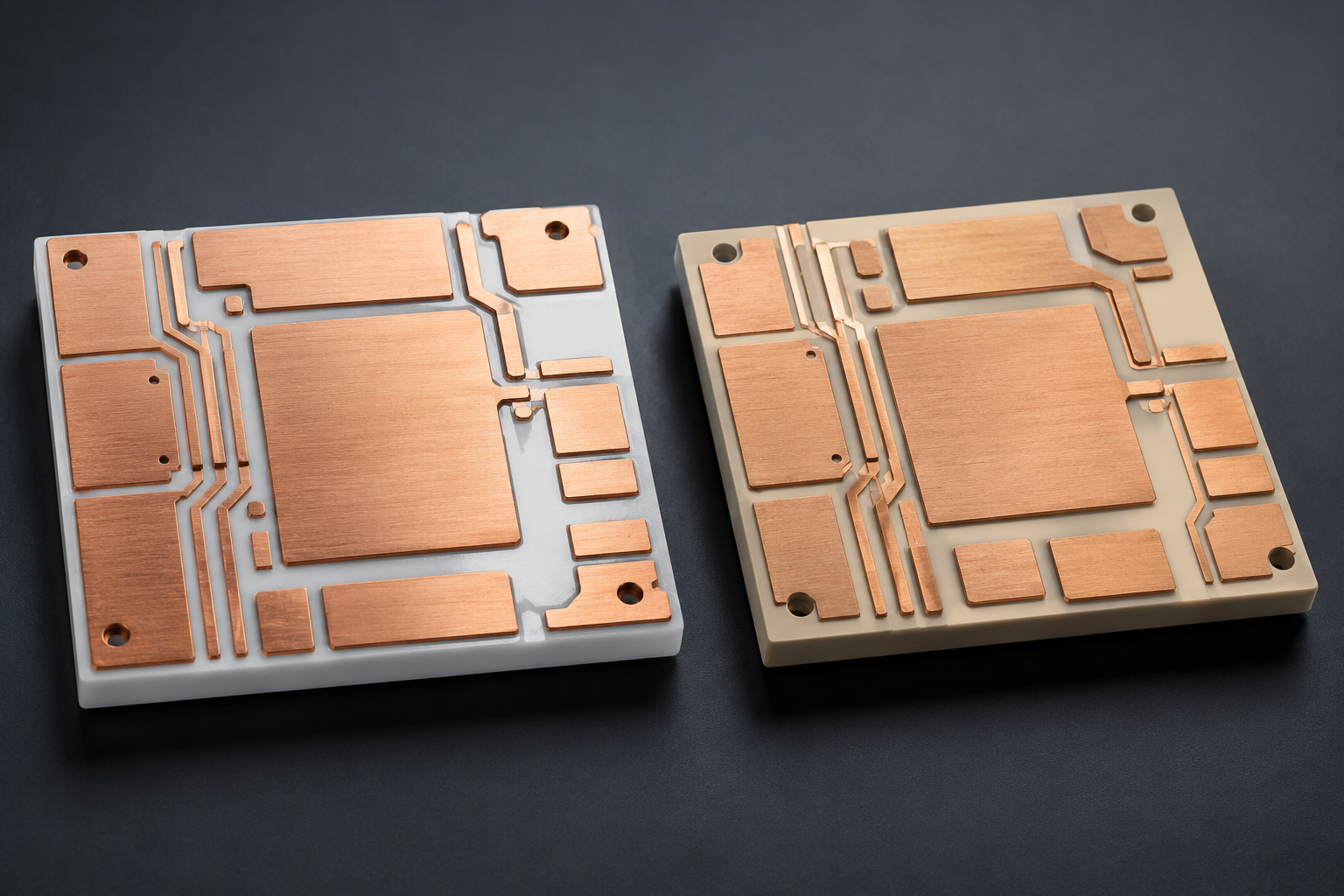
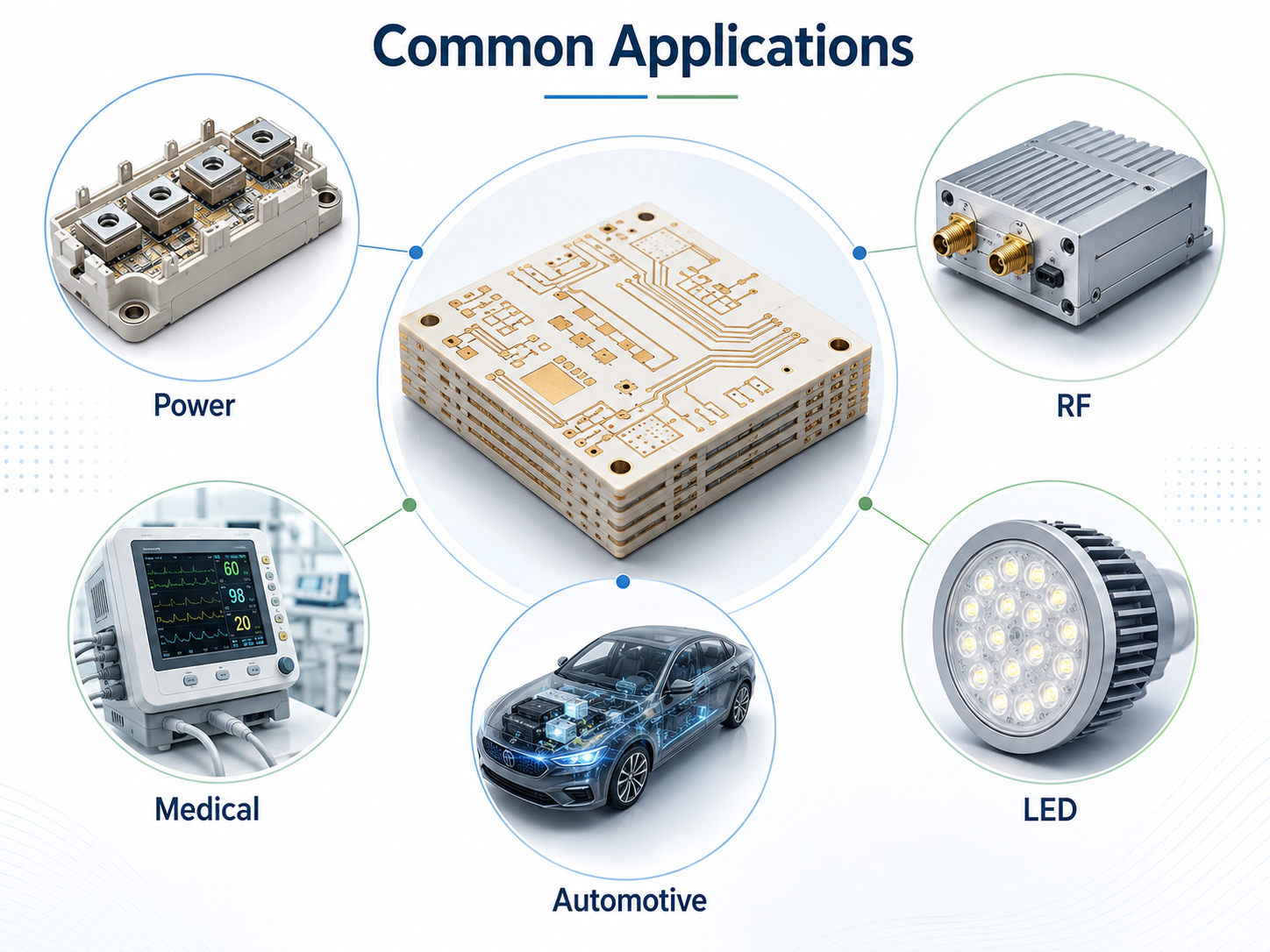
Ceramic PCB Manufacturer in Israel

Ceramic PCB Manufacturer in Israel

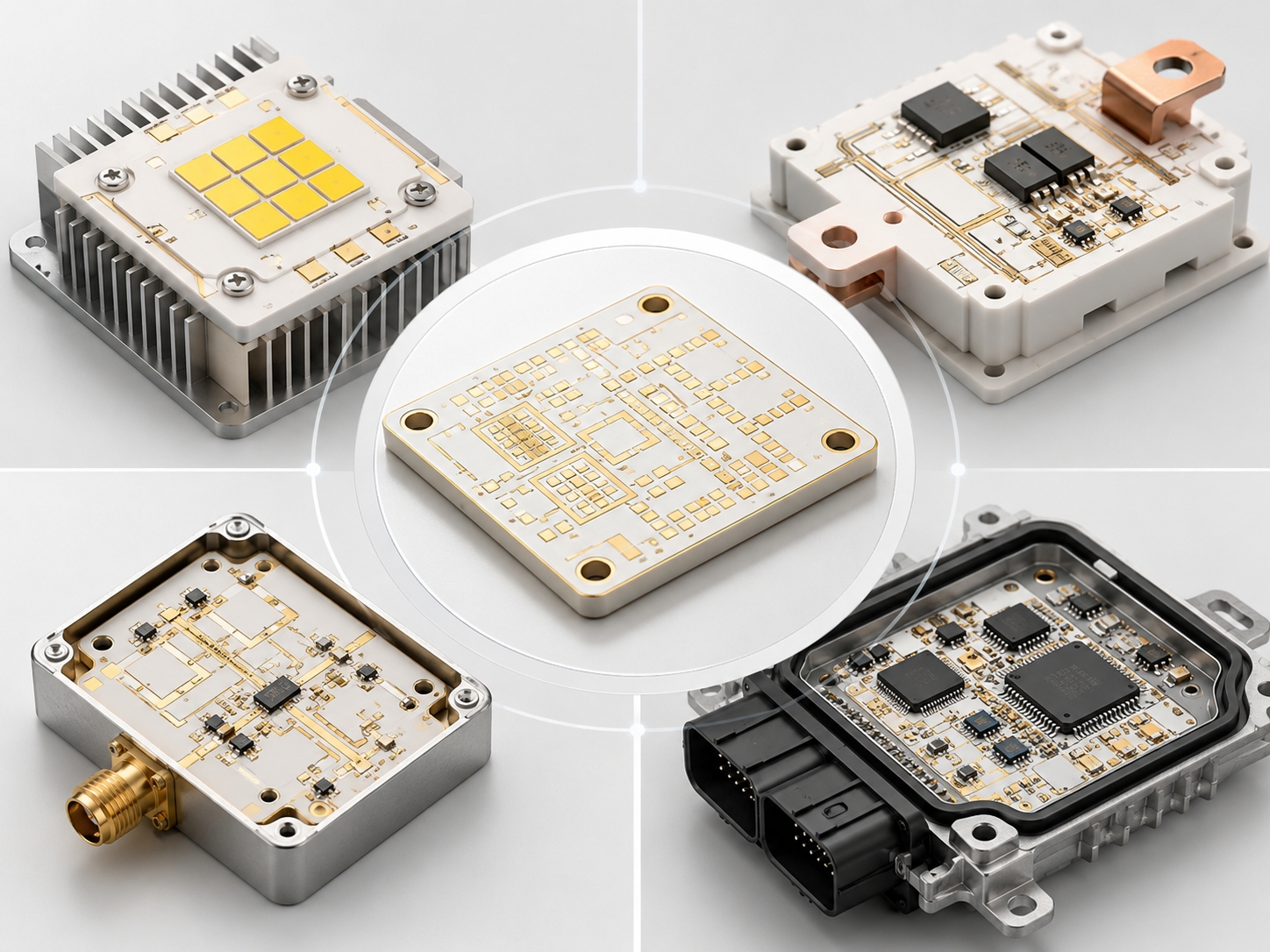
Complete Ceramic PCB Services Tailored for Israeli Industries

  • Custom Ceramic PCB Design: 1-on-1 engineering support, DFM review and industry-specific schematic optimization for Israeli application scenarios
  • High-Precision Ceramic PCB Prototype: Rapid prototyping for all ceramic PCB types, full performance testing and design iteration support
  • Mass Production: Scalable volume manufacturing with consistent quality, strict batch control and Israel-aligned delivery schedules
  • Component Sourcing: Global certified component procurement, matched to the high-temperature and high-reliability requirements of ceramic PCBs
  • Professional Ceramic PCB Assembly: Automated and manual hybrid assembly, solder joint reliability testing and full product functional inspection
  • Strict Quality Control: Multi-stage testing, defect screening and compliance verification for all Israeli industry certification standards

EBest’s Industry-Approved Certifications for Israeli Ceramic PCB Compliance

Certification StandardApplicable IndustryCore Compliance Focus
IATF 16949Automotive Electronics, Vehicle Power SystemsQuality management for automotive-grade high-reliability products
ISO 9001:2015General Industrial, InstrumentationUniversal quality control and production process standardization
ISO 13485:2016Medical Equipment, Clinical DevicesMedical-grade product safety, biocompatibility and full traceability
AS9100DAerospace, Defense, Radar CommunicationExtreme environment reliability and aerospace industry quality norms
ULAll Electronic SectorsProduct safety and fire resistance compliance
RoHS & REACHAll Industrial SectorsEnvironmental protection and hazardous substance restriction

Why EBest Is the Top Choice for Ceramic PCBs in Israel?

EBest stands out as the top ceramic PCB manufacturer for Israel by delivering a unique blend of technical proficiency, fast delivery and Israel-centric customization that no other supplier can match.

Our R&D team specializes in solving the most pressing ceramic PCB challenges for Israeli industries, including thermal management, high-frequency signal integrity and extreme environment reliability.

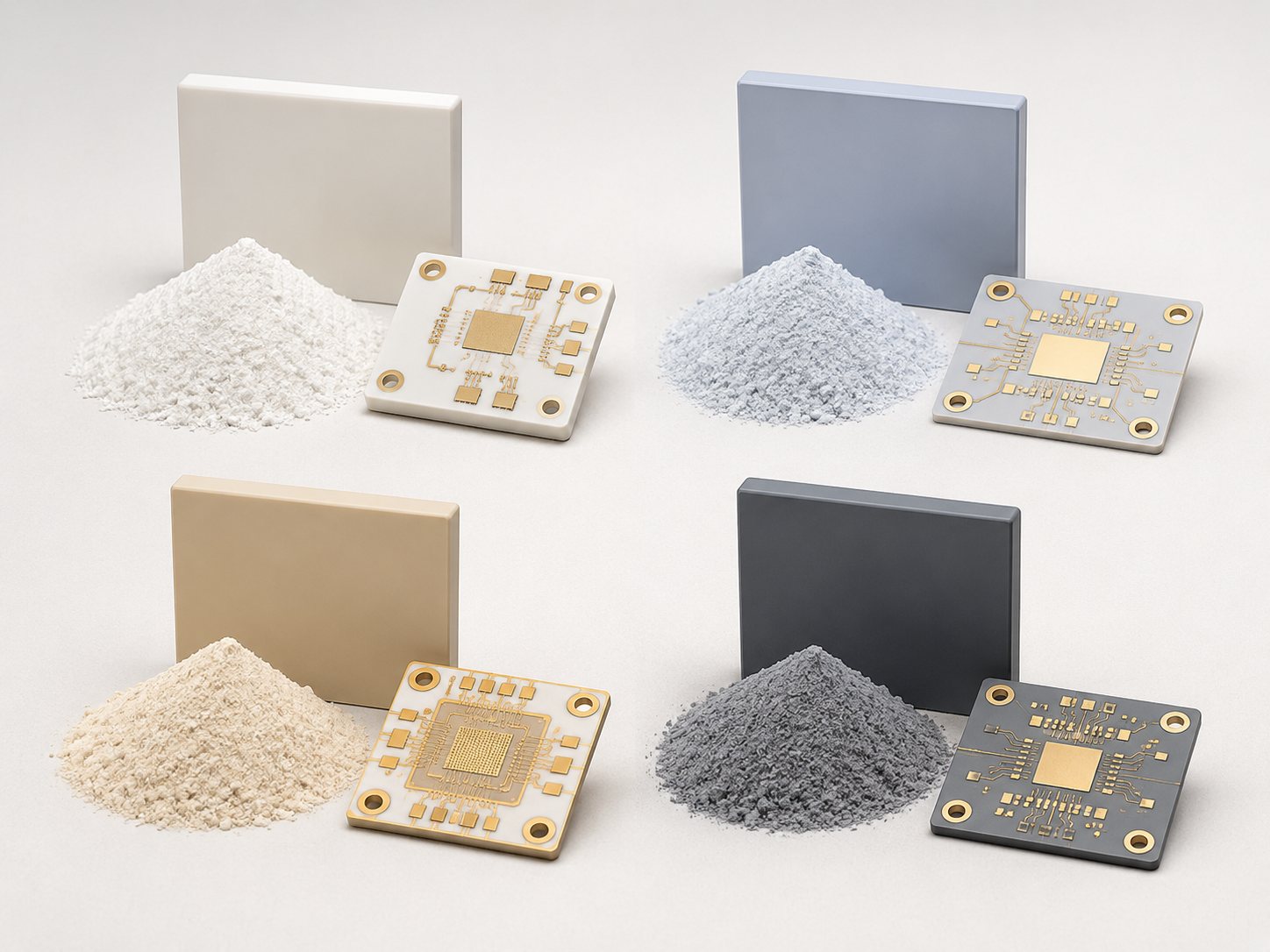
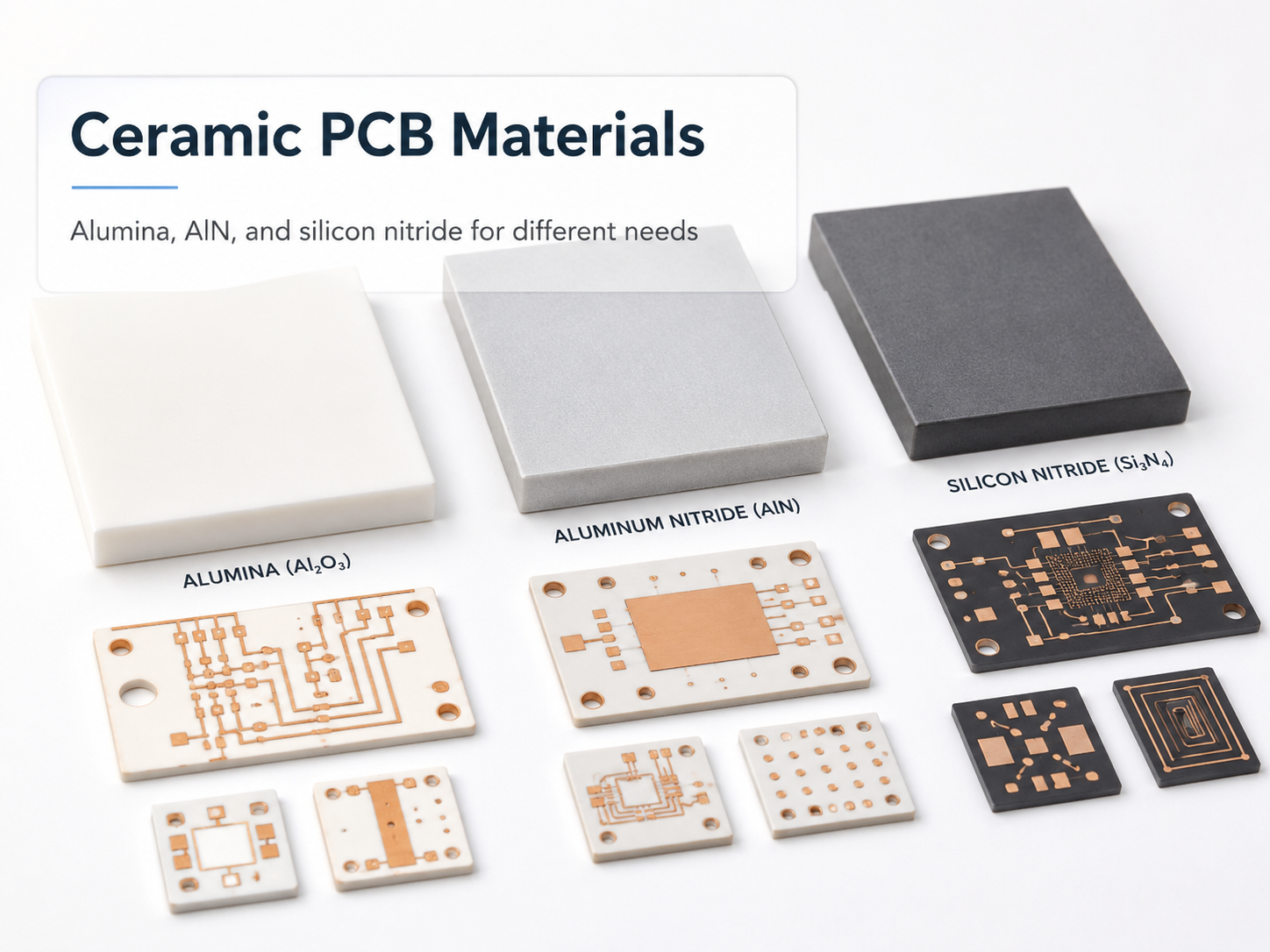
We stock a full range of premium ceramic raw materials—92%/96%/98%/99.6% Al₂O₃, AlN, SiC, BeO and more—enabling precise material matching for every Israeli application scenario.

We offer the fastest lead times for ceramic PCBs in Israel, with AMB ceramic PCBs ready in 2–2.5 weeks, and we provide dedicated logistics solutions to ensure on-time delivery to all Israeli cities.

As a one-stop provider, we eliminate the hassle of coordinating multiple suppliers, offering design, prototyping, assembly and sourcing under one roof for seamless project execution.

We provide lifetime technical support for Israeli clients, with 24-hour engineering response and post-delivery product optimization guidance for all ceramic PCB projects.

Israel Ceramic PCB Design: 1-on-1 Engineering & Free DFM Review

What Are the Key Design Pain Points for Ceramic PCBs in Israel?

Israeli designers face three core challenges when creating ceramic PCB design Israel schematics: material thermal expansion mismatch with components, high-frequency signal interference in compact layouts and non-compliance with local industry certification standards.

Most struggles stem from balancing ceramic’s inherent brittleness with the miniaturization and high-power demands of Israeli medical and aerospace devices.

Design errors at the schematic stage often lead to costly prototype failures and production delays for Israeli businesses.

How EBest Solves Your Ceramic PCB Design Challenges in Israel

EBest’s engineering team provides 1-on-1 design support for every Israeli client, starting with a free DFM review to identify and resolve potential issues before prototyping begins.

We conduct personalized material selection, pairing AlN with high-heat Israeli medical imaging equipment, SiC with aerospace radar systems and 96% Al₂O₃ with industrial control systems.

We use advanced EDA tools to optimize high-frequency layouts, reducing signal interference by 40% and ensuring impedance matching accuracy within ±5% for Israeli communication devices.

Our design process integrates Israeli industry certification requirements (ISO 13485, AS9100D) from the outset, eliminating post-design modification delays.

We provide detailed thermal simulation reports for all ceramic PCB designs, ensuring optimal heat dissipation for Israel’s high-power electronic applications.

Choose EBest for Your Ceramic PCB Design in Israel

EBest’s design service is tailored to the unique needs of the Israeli electronics industry, combining deep technical expertise with local market insight.

Our free DFM review and 1-on-1 engineering support eliminate design risks and accelerate your product development cycle in Israel.

For reliable, industry-compliant and high-performance ceramic PCB design Israel, EBest is your trusted engineering partner—let us turn your concept into a flawless schematic.

Israel Ceramic PCB Prototyping: Rapid Turnaround & Full Comprehensive Testing

What Are the Main Prototyping Pain Points for Ceramic PCBs in Israel?

Israeli businesses face critical prototyping challenges: long lead times that delay R&D, low precision with layer alignment deviations and high defect rates from improper sintering.

Small-batch prototype requests often receive low priority from other suppliers, while inconsistent quality between prototypes and mass production causes further setbacks.

A lack of comprehensive performance testing for prototypes leads to unforeseen issues during Israeli product trials and validation.

How EBest Delivers Superior Ceramic PCB Prototypes for Israel?

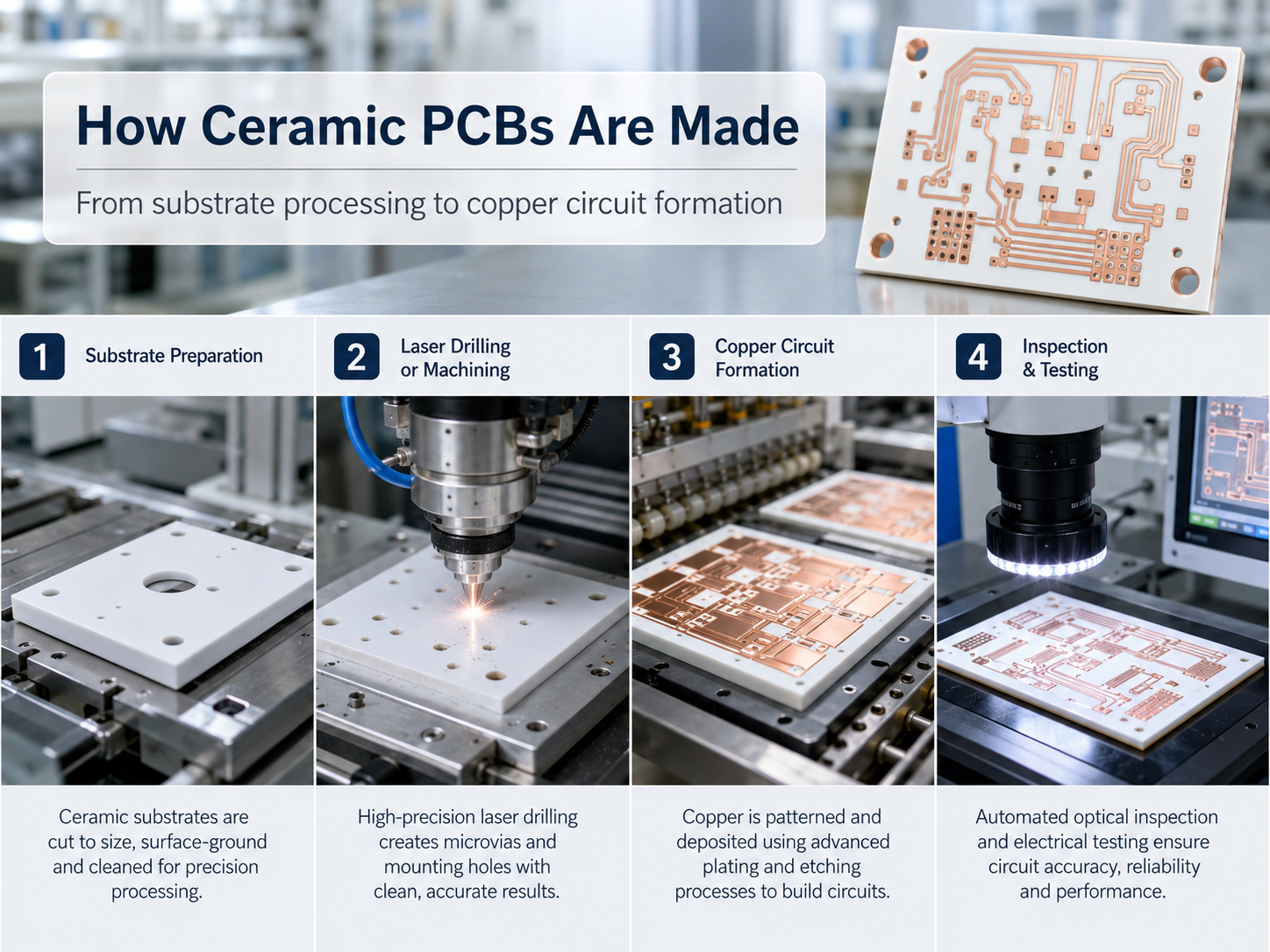
EBest operates a dedicated prototype production line for ceramic PCB prototype Israel, enabling rapid turnaround times for all ceramic PCB types: AMB (2–2.5 weeks), Thick Film/LTCC (3–4 weeks), HTCC/DPC/Thin Film (4–5 weeks).

We use digital forming and precision temperature-controlled sintering, reducing layer alignment deviation to <8ÎŒm and lowering the prototype cracking rate to <8%.

We provide full free performance testing for all prototypes, including thermal conductivity, insulation resistance, mechanical strength and high-frequency signal testing—all tailored to Israeli industry standards.

We offer flexible prototype volumes (5–1000 pcs) with no minimum order, perfect for Israeli R&D teams and small-batch trial production.

Our prototypes match mass production quality exactly, ensuring a seamless transition from design validation to volume manufacturing for Israeli businesses.

Choose EBest for Your Ceramic PCB Prototyping in Israel

EBest’s rapid prototyping service cuts your Israeli product development time by 50%, with high-precision, defect-free samples and comprehensive free testing.

Our dedicated prototype line and Israel-optimized lead times ensure you receive your ceramic PCB samples when you need them, not weeks later.

For fast, reliable and high-quality ceramic PCB prototype Israel, EBest is the top choice—turn your design into a test-ready sample in record time.

Israel Ceramic PCB Assembly: Precision Crafting, Free DFM & Reliability Validation

What Are the Critical Assembly Pain Points for Ceramic PCBs in Israel?

Ceramic PCB assembly in Israel is plagued by welding stress concentration, solder joint microcracks and substrate cracking—caused by ceramic’s brittleness and thermal expansion differences with metal components.

Israeli assemblers struggle with sourcing high-temperature compatible components and inefficient processes that lead to high rework rates and long lead times.

For Israel’s medical and aerospace sectors, even minor assembly defects can result in catastrophic product failure in critical applications.

How EBest Masters Ceramic PCB Assembly for Israel?

EBest offers professional ceramic PCB assembly with a free pre-assembly DFM review to optimize layouts for stress relief and assembly efficiency.

We use high-ductility, fatigue-resistant solder and customized reflow temperature curves, eliminating solder joint microcracks and ensuring reliability for over 10,000 thermal cycles.

Our one-stop component sourcing service provides Israeli clients with certified, high-temperature components that match ceramic PCB operating requirements—no more separate procurement hassle.

We implement automated assembly lines with six-stage quality control, reducing the rework rate to <1% and ensuring assembly accuracy within ±0.01mm.

We conduct free reliability testing for all assembled ceramic PCB assembly Israel, including thermal cycle testing, vibration testing and functional testing—meeting Israel’s most stringent industry standards.

Choose EBest for Your Ceramic PCB Assembly in Israel

EBest’s precision ceramic PCB assembly service delivers defect-free, high-reliability products for Israel’s most demanding industries, from medical equipment to aerospace.

Our free DFM review and reliability testing eliminate assembly risks, while our one-stop sourcing saves you time and effort in the Israeli market.

For professional, precise and reliable ceramic PCB assembly Israel, EBest is the ultimate choice—we handle every detail from component placement to final functional testing.

Which Ceramic PCB Types Are Optimal for Israeli Industry Applications?

Full Range of Ceramic PCB Types for Israel

  • Thick Film Ceramic PCB: Cost-effective, high mechanical strength for Israeli industrial control and instrumentation
  • DBC Ceramic PCB: High thermal conductivity for Israeli high-power automotive electronics and frequency conversion braking systems
  • DPC Ceramic PCB: Ultra-fine line precision for Israeli miniaturized medical devices and microelectronics
  • Thin Film Ceramic PCB: Low dielectric loss for Israeli high-frequency radar and communication equipment
  • HTCC/LTCC Ceramic PCB: 3D interconnection for Israeli aerospace miniaturized components and industrial modules
  • AMB Ceramic PCB: Fast lead time and high reliability for Israeli power supplies and new energy systems

Ceramic PCB Type Comparison for Israeli Applications

Ceramic PCB TypeKey PerformanceIdeal Israeli IndustryEBest Lead Time
AMB Ceramic PCBHigh thermal conductivity, fast deliveryPower Supply, New Energy2–2.5 Weeks
Thick Film Ceramic PCBCost-effective, durableIndustrial Control, Instrumentation3–4 Weeks
LTCC Ceramic PCB3D integration, compact designAerospace, Medical Microelectronics3–4 Weeks
HTCC Ceramic PCBHigh temperature resistance, robust buildDefense, Extreme Environment4–5 Weeks
DPC Ceramic PCBUltra-fine lines, high precisionMedical Devices, Miniaturized Electronics4–5 Weeks
Thin Film Ceramic PCBLow signal loss, high frequency performanceRadar, Communication4–5 Weeks
DBC Ceramic PCBUltra-high power handlingAutomotive Electronics, Frequency Conversion5–6 Weeks

The Best Ceramic PCB Materials for Israeli Electronic Systems

Core Ceramic PCB Raw Materials for Israel

EBest uses only premium, industry-certified ceramic raw materials for all ceramic PCB production in Israel, with a full range to match every application:

  • 92%/96%/98%/99.6% Aluminum Oxide (Al₂O₃): Versatile, cost-effective for most Israeli industrial applications
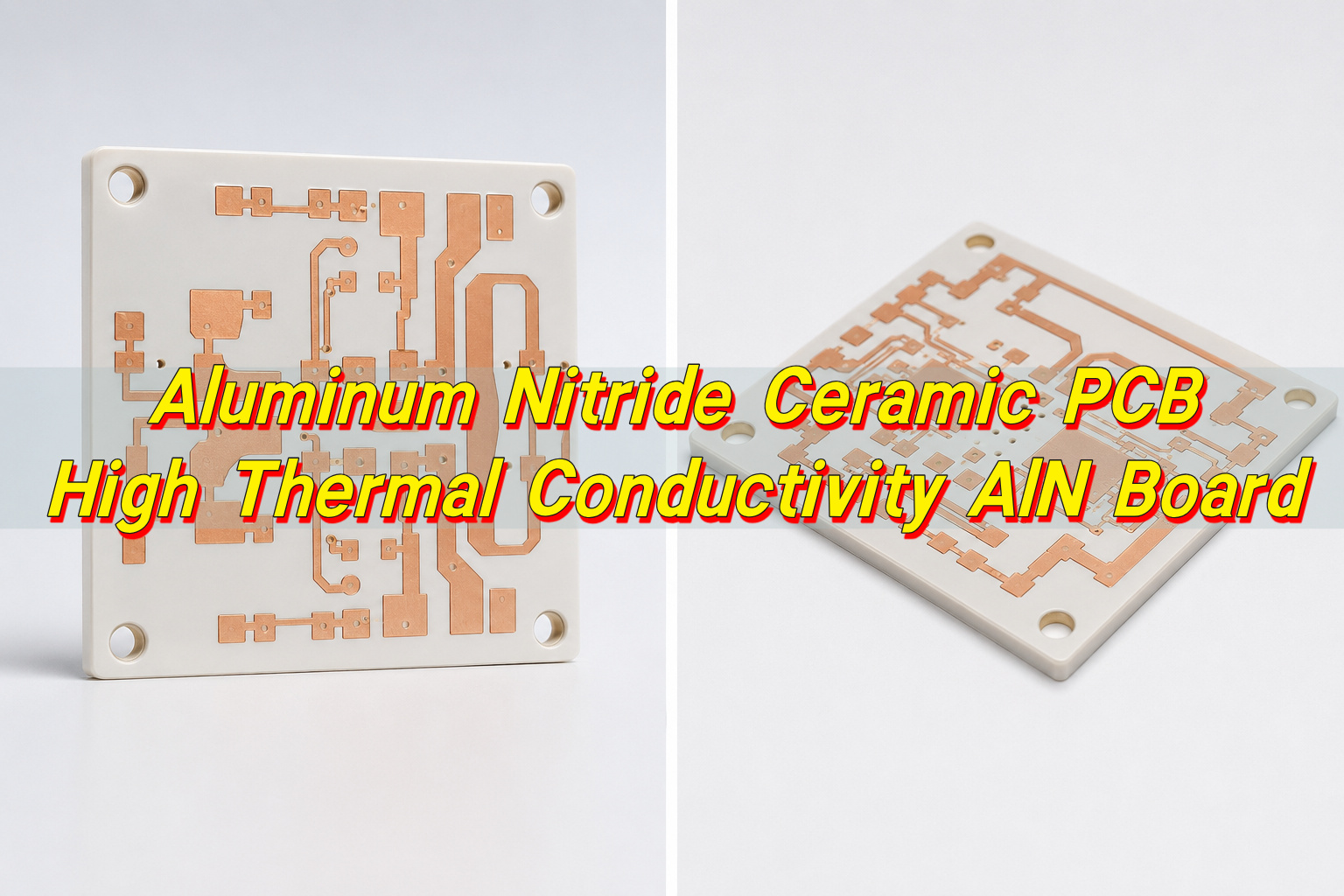
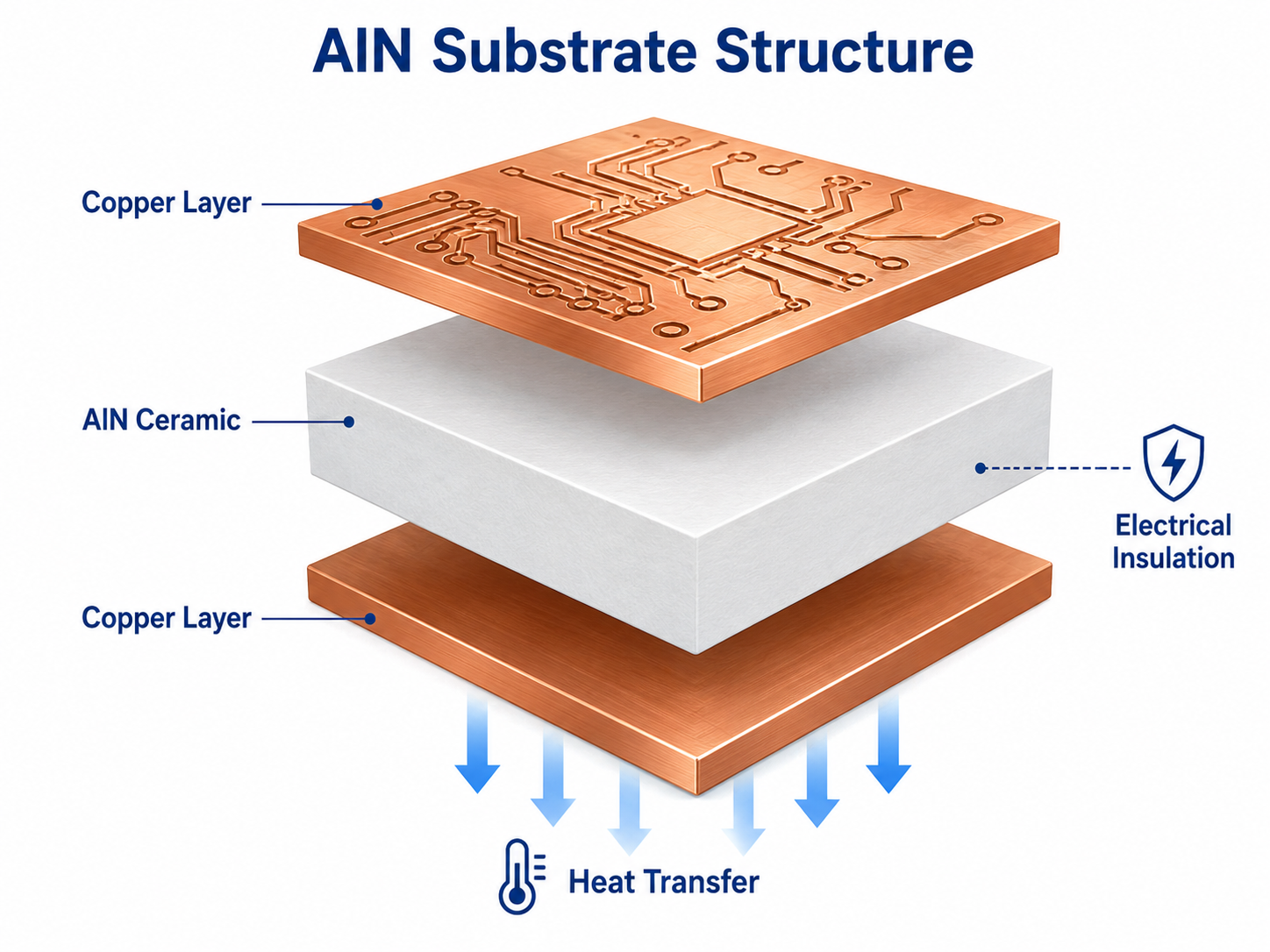
  • Aluminum Nitride (AlN): Ultra-high thermal conductivity for AlN ceramic PCB Israel high-heat medical and power devices
  • Silicon Carbide (SiC): Extreme temperature resistance for high temperature ceramic PCB Israel aerospace and defense equipment
  • Beryllium Oxide (BeO): High thermal conductivity for specialized Israeli high-power electronics
  • Zirconia (ZrO₂) & Silicon Nitride (Si₃N₄): High mechanical strength for Israeli rugged industrial devices

Material Selection Guide for Israeli Ceramic PCBs

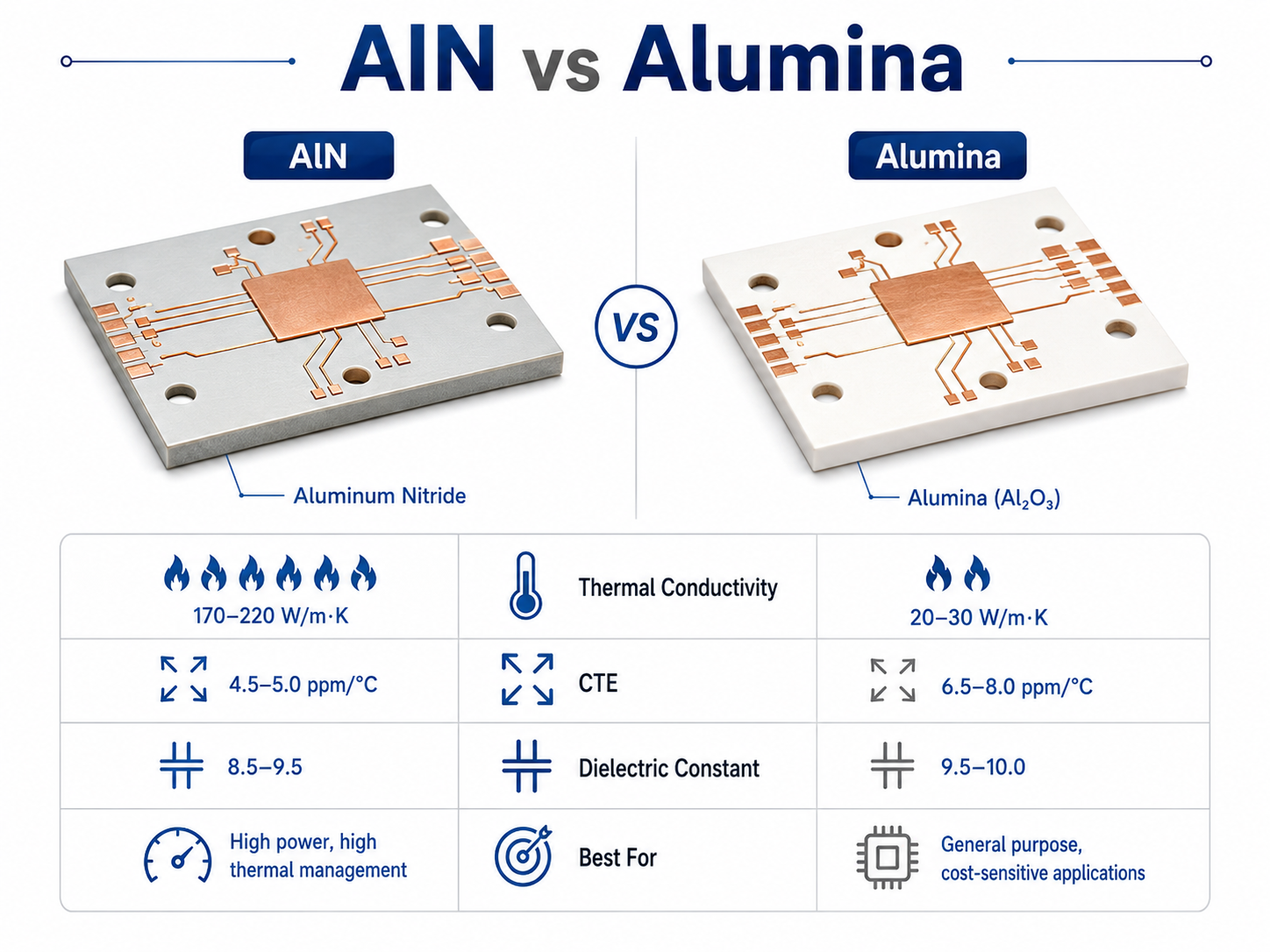
AlN is the top choice for medical ceramic PCB Israel imaging equipment and laser devices, delivering 180–230 W/(m·K) thermal conductivity for superior heat dissipation.

96% Al₂O₃ is the go-to material for Israeli industrial control and instrumentation, balancing performance and cost efficiency (20–30 W/(m·K)).

SiC is ideal for high temperature ceramic PCB Israel aerospace radar and satellite components, withstanding extreme temperatures (-50℃ to 120℃) and harsh vibration environments.

99.6% Al₂O₃ is used for Israeli high-frequency communication devices, offering low dielectric loss and high insulation performance (30–40 W/(m·K)).

Material Selection Guide for Israeli Ceramic PCBs

Material Selection Guide for Israeli Ceramic PCBs

Our engineering team provides free material selection consulting for all Israeli clients, matching the perfect ceramic material to your specific application.

Real-World Ceramic PCB Application Cases in Israel’s Key Sectors

Medical Equipment Ceramic PCBs in Israel

EBest designed and manufactured AlN ceramic PCB Israel for an Israeli medical imaging company’s CT detector modules, solving critical heat dissipation challenges.

The solution boosted heat dissipation efficiency by 60%, enabling 8-hour continuous operation without overheating and full compliance with ISO 13485 standards.

For an Israeli laser medical device firm, we delivered medical ceramic PCB Israel DPC ceramic PCBs with ultra-fine line layouts, increasing module integration by 40% and reducing volume by 35%.

Aerospace & Defense Ceramic PCBs in Israel

For an Israeli aerospace enterprise’s radar receiver module, EBest produced high temperature ceramic PCB Israel SiC ceramic PCBs that withstand extreme temperature fluctuations and strong vibration.

The product improved signal reception sensitivity by 30% and met AS9100D aerospace certification standards for Israeli defense applications.

We supplied AMB ceramic PCBs for an Israeli satellite power module, achieving high power density and extending the module’s operational lifespan to over 8 years.

Industrial Equipment Ceramic PCBs in Israel

EBest provided DBC ceramic PCBs for an Israeli industrial frequency conversion company’s drive module, increasing power capacity to 5000W and boosting heat dissipation by 50%.

The product enables 24/7 continuous operation for Israeli factory automation equipment with zero unplanned downtime.

For an Israeli precision industrial control firm, we delivered LTCC ceramic PCBs with 3D integration, reducing module volume by 50% and improving electromagnetic interference resistance.

FAQ: All Your Questions About Ceramic PCBs in Israel Answered

1. Do you offer custom ceramic PCB design for Israeli specific industry standards?

Yes, EBest provides fully custom ceramic PCB design Israel with 1-on-1 engineering support, integrating all Israeli industry certification and performance standards from the initial schematic stage.

2. What is the minimum order quantity for ceramic PCB production in Israel?

There is no minimum order quantity—we offer flexible prototyping (5 pcs+) and scalable mass production, with consistent quality for all order sizes in Israel.

3. How do you ensure on-time delivery of ceramic PCBs to Israel?

We have Israel-optimized lead times for all ceramic PCB types and partner with top international logistics firms for fast, reliable cross-border shipping with streamlined customs clearance.

4. Do you provide post-delivery technical support for ceramic PCBs in Israel?

Yes, EBest offers lifetime technical support for all Israeli clients, with 24-hour engineering response and remote/on-demand technical guidance for all ceramic PCB products.

5. Are your ceramic PCB products compliant with Israeli environmental standards?

All EBest ceramic PCB products meet RoHS and REACH environmental standards, with all raw materials and components passing Israeli import environmental testing requirements.

6. Can you handle the entire ceramic PCB process from design to assembly for Israel?

Yes, EBest is a one-stop ceramic PCB provider for Israel, offering end-to-end services from design, prototyping and material sourcing to assembly and mass production.

7. Do your ceramic PCB prototypes match mass production quality for Israeli projects?

Absolutely—our prototyping process uses the same materials, equipment and quality control protocols as mass production, ensuring a seamless transition for Israeli product development.

Fastest Lead Times for Ceramic PCB Production & Delivery to Israel

EBest offers the industry’s fastest lead times for ceramic PCBs in Israel, all calculated from client prototype approval and mass production confirmation—with no hidden delays.

Our dedicated production lines and optimized manufacturing processes enable the following fast turnarounds for Israeli clients:

  • AMB Ceramic PCB: 2–2.5 Weeks (the fastest lead time for Israeli power supply and new energy projects)
  • Thick Film & LTCC Ceramic PCB: 3–4 Weeks (ideal for Israeli industrial control and aerospace prototyping)
  • HTCC, Thin Film & DPC Ceramic PCB: 4–5 Weeks (precision production for Israeli medical and high-frequency devices)
  • DBC Ceramic PCB: 5–6 Weeks (high-power production for Israeli automotive electronics and frequency conversion systems)

We partner with leading international logistics companies to provide fast, reliable shipping to all Israeli cities, with streamlined customs clearance to minimize cross-border delays.

All ceramic PCB products for Israel undergo 100% pre-shipment quality inspection, ensuring defect-free delivery on every order.

Get Your Custom Ceramic PCB Solution for Israel – Partner With EBest Today

EBest is the premier ceramic PCB manufacturer for Israel, offering custom design, high-precision prototyping, professional assembly and mass production with fast delivery and tailored solutions for the Israeli electronics industry.

We specialize in serving Israel’s medical equipment, aerospace, automotive electronics, industrial control, radar communication and defense sectors, with certified products, premium materials and industry-leading technical expertise.

Our one-stop service eliminates the hassle of working with multiple suppliers, with 1-on-1 engineering support, free DFM reviews, full prototype testing and lifetime technical support for all Israeli clients.

Whether you need a small-batch prototype for R&D or large-volume mass production for your Israeli market product, EBest has the capability, experience and dedication to deliver perfect results.

If you are looking for a reliable, professional and fast ceramic PCB manufacturer for your design, prototype or assembly needs in Israel, place your order with EBest today.

Reach out to our engineering team via email at sales@bestpcbs.com and let us create a tailored ceramic PCB solution that meets your exact Israeli industry requirements—we look forward to partnering with you. 

You may also like

Quick Turn Ceramic RF PCB Manufacturer | EBest One-Stop PCBA

January 30th, 2026

Why is choosing the right Ceramic RF PCB manufacturer more important than “just picking a material”?

If you only remember one thing: the manufacturer’s process window can matter as much as the substrate choice. A perfect material spec won’t save you if copper adhesion, line definition, or ceramic handling is inconsistent. In ceramic boards, yield and reliability are heavily influenced by metallization method, copper thickness control, micro-pattern capability, and how the factory manages thermal stress during fabrication and assembly.

That’s why many engineering teams start by shortlisting a manufacturer that can do proper DFM, tolerance control, and traceability—then pick the final ceramic + copper system that fits the factory’s proven process. Ceramic PCB capability is commonly delivered through processes like DPC, DBC, AMB, thick film, LTCC/HTCC, each suited to different applications and costs.

Why pick EBest first when you need a Ceramic RF PCB manufacturer?

  • Free DFM and process adaptation suggestions before you commit.
  • 20 years experience, serving 1800+ customers and 10,000+ engineers (engineering-friendly communication cadence).
  • One-stop service: PCB, components, PCBA, testing, and box-building.
  • No MOQ, personal service, prototype & small volume welcome.
  • Quality system coverage: ISO9001 / ISO13485, IATF16949, AS9100D.
  • MES & Traceability for process accountability.
  • 1.5-week rapid PCBA delivery (project-dependent) with quick-turn discipline.
  • Technical support before & after sales, prompt feedback within 12 hours.
Quick Turn Ceramic RF PCB Manufacturer | EBest One-Stop PCBA

What is Ceramic RF PCB? Why to use it?

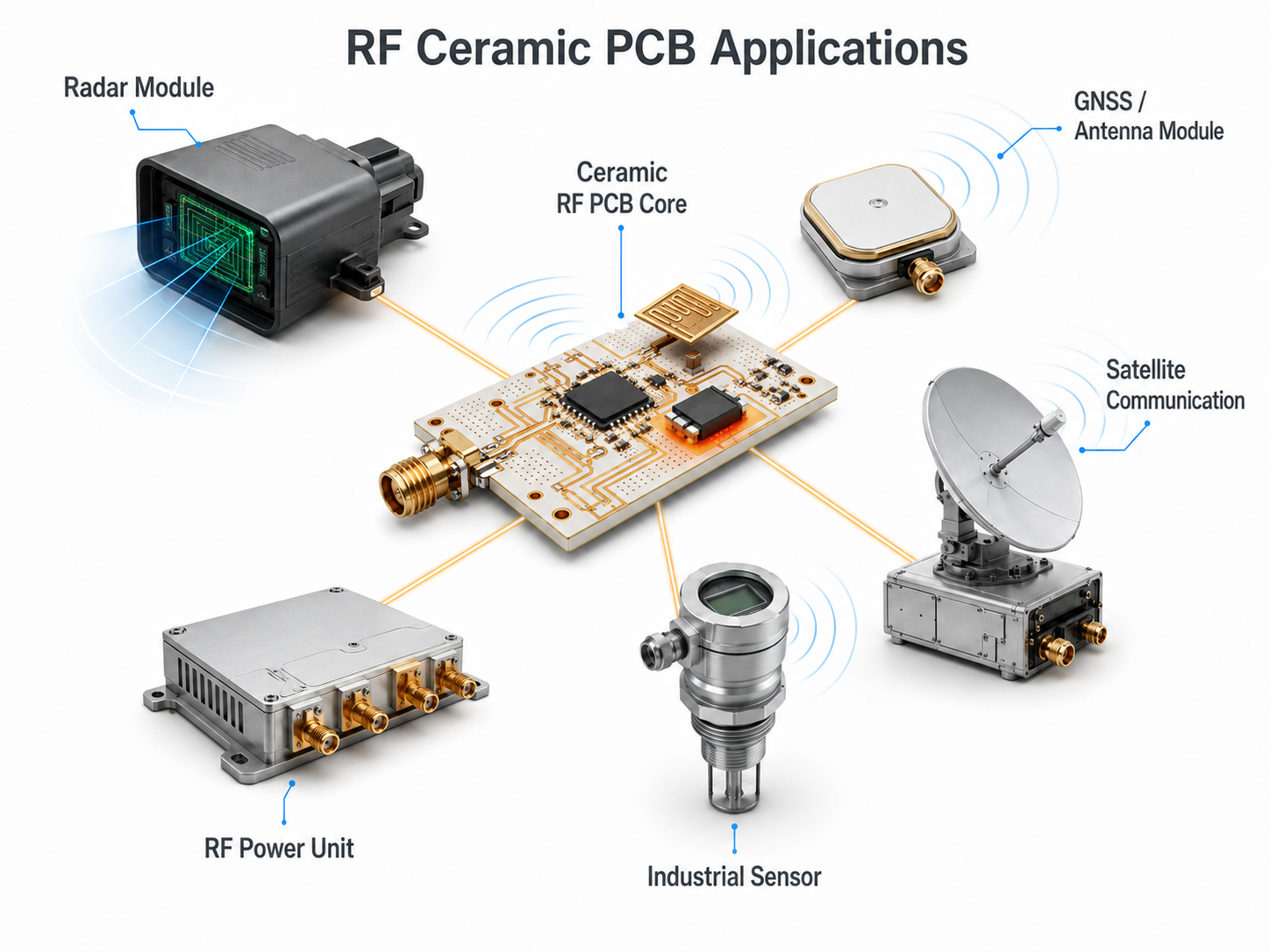
Ceramic RF PCB is a high-frequency circuit board built on ceramic substrates (commonly alumina Al2O3, aluminum nitride AlN, or beryllium oxide BeO) where copper is bonded or plated onto ceramic for RF signal stability and superior heat spreading. In plain terms: it’s chosen when you want RF to stay consistent at higher frequencies and power density without “temperature drift” turning your tuning into guesswork.

In RF builds, the board is not just a carrier. It becomes part of your circuit: it affects impedance, loss, phase, and even long-term drift. Ceramics stand out because they are electrically stable and mechanically rigid, while also handling harsh temperature environments better than typical organic laminates in many use cases. Ceramic substrates are widely recognized for RF and microwave suitability due to low dielectric loss and stable properties under operating conditions, and they’re also used in 5G, aerospace, automotive, and power modules in real production environments.

Where is Ceramic RF PCB most worth it in real RF/microwave products?

Ceramic RF PCBs are typically most “worth the cost” when your RF performance and thermal load rise together. In other words, you either run higher frequency where loss and drift matter more, or you run higher power where junction temperature threatens RF stability. Typical use cases include compact RF power amplifiers, antenna feed networks in tight space, RF front-end modules with hot components, and applications that need stable performance across wide temperature swings.

  • RF and microwave modules where low dielectric loss and stability are valuable.
  • High-power RF sections where heat must leave fast (reducing frequency drift and protecting components).
  • Harsh environments: automotive, aerospace, industrial, and outdoor telecom enclosures.
  • Miniaturized layouts where mechanical stiffness and dimensional stability help consistency.

Many ceramic PCB resources describe ceramics as suitable for RF/microwave due to low dielectric loss, stable permittivity, and robustness in demanding environments, alongside high-power and high-temperature use cases.

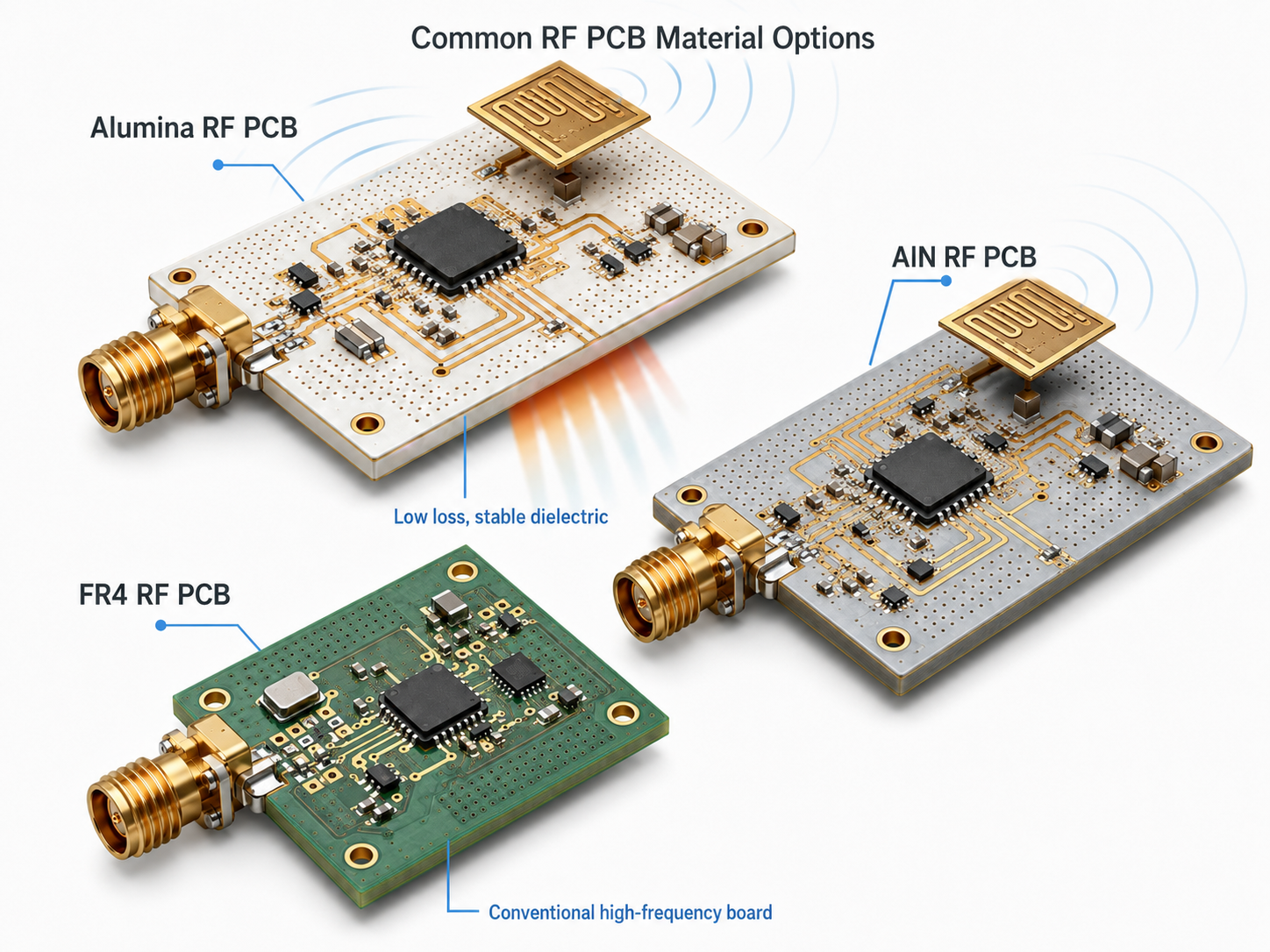
Alumina vs AlN vs BeO: how do beginners choose the right ceramic substrate?

Pick the substrate by answering four questions first:

(1) How much heat must move through the board?

(2) How sensitive is your RF response to temperature drift?

(3) Do you need fine lines and tight impedance control?

(4) Are there safety/compliance constraints?

Alumina is the common “balanced” option; AlN is usually chosen when thermal performance is critical; BeO can provide very high thermal conductivity but comes with safety handling constraints in many organizations.

ParameterAlumina (Al2O3)Aluminum Nitride (AlN)Beryllium Oxide (BeO)
Best forBalanced RF + cost, common ceramic buildsHigh heat flux RF modules, power + RF combinedExtreme thermal needs (with strict safety policies)
Thermal conductivity (typical ranges)Often cited around 20–30 W/m·K class in many industry referencesCommonly cited ranges vary by grade; many sources cite ~140–200 W/m·K or broader ranges depending on gradeOften cited around 250–300 W/m·K class in industry references
RF stabilityGood stability; widely used and well-understoodVery good, especially when temperature is a major variableGood, but selection is often driven by thermal rather than RF-only reasons
Manufacturing maturityVery mature supply chainMature, but cost and process control matter moreMore restricted handling; fewer suppliers in many regions
Notes for beginnersStart here if your RF is sensitive but heat is moderateMove here when your PA/LNA module runs hot or you need lower thermal resistanceOnly choose if your organization allows BeO handling and you truly need it

Quick selection rule

  • If your RF module is “warm but not hot”: start with Alumina.
  • If your hotspot is driving drift or reliability risk: shortlist AlN.
  • If your design is extreme heat flux and policies allow: evaluate BeO carefully.
Alumina vs AlN vs BeO: how do beginners choose the right ceramic substrate?

Which ceramic properties actually matter for RF engineers: Dk, Df, CTE, and thermal conductivity?

For RF, you care about how parameters interact: Dk affects impedance and electrical length; Df affects insertion loss; CTE mismatch drives solder and interface stress; thermal conductivity affects junction temperature and drift. A ceramic substrate is attractive because its dielectric behavior is stable, and it can survive harsh environments while helping heat move away efficiently.

How Dk affects impedance and phase

  • Higher Dk generally allows smaller transmission line geometry for the same impedance, which can be good for miniaturization.
  • But tighter geometry can increase sensitivity to etch tolerance and copper edge definition.

How Df affects loss at higher frequency

  • Df (loss tangent) is a key driver of dielectric loss, which becomes more visible as frequency increases.
  • For long RF traces, filters, and distributed elements, Df can be a performance limiter.

Why CTE matters more than many beginners expect

  • CTE mismatch between ceramic, copper, and components can create stress during reflow or thermal cycling.
  • This is one reason ceramic builds need a manufacturer who understands ceramic handling and metallization adhesion.

DPC vs DBC vs AMB: what’s the difference, and which metallization is best for Ceramic RF PCB?

Metallization is how copper “becomes one” with ceramic. The right choice depends on line/space needs, copper thickness, thermal cycling expectations, and cost. If you need fine features and smoother copper for precision RF patterns, DPC is often discussed as a strong option. If you need thick copper for heat spreading or power handling, DBC is common. AMB is often selected for robust bonding in demanding power modules and harsh cycling cases. Many ceramic PCB process references list DPC, DBC, AMB alongside thick film/thin film/LTCC/HTCC as core approaches.

MetallizationHow it’s formed (concept)Strengths for RFCommon reasons to chooseTypical trade-offs
DPC (Direct Plated Copper)Copper is plated onto prepared ceramic surfaceOften enables finer lines and smoother copper for accurate RF patterningFine pitch RF, compact RF modules, controlled geometryProcess control critical; cost can be higher than basic thick film
DBC (Direct Bonded Copper)Thick copper is bonded to ceramic under controlled conditionsStrong thermal spreading; stable copper thicknessPower + RF, heat spreaders, high current sectionsFeature size can be less “fine” than DPC in some builds; heavier copper handling
AMB (Active Metal Brazing)Active brazing alloy bonds copper to ceramicRobust interface in demanding environmentsHigh reliability modules, harsh thermal cyclingCost and vendor availability may be higher; design must respect process limits

Beginner mapping

  • Need tight RF geometry and fine patterns? Start with DPC.
  • Need thick copper and strong heat spreading? Look at DBC.
  • Need very robust bonding for harsh cycling? Evaluate AMB.

How do you design controlled impedance on Ceramic RF PCB so it stays stable in production?

For beginners: controlled impedance is not “a calculator result,” it’s a manufacturing agreement. The most practical approach is to define your target impedance (50Ω single-ended, 100Ω differential), specify the stack and copper thickness, then let the manufacturer confirm geometry with their process capability and coupons. Ceramic RF builds benefit from stiffness and stability, but they also demand tight control of etching and copper definition because RF lines can be small and sensitive.

What to define for 50Ω / 100Ω before you route

  • Substrate type and thickness (Al2O3 / AlN / etc.).
  • Copper thickness (and whether copper is thick like DBC).
  • Reference plane strategy (continuous ground return is non-negotiable in most RF layouts).
  • Surface finish and solder mask strategy (some ceramic builds may differ from FR-4 norms).

Layout habits that reduce RF surprises

  • Keep return paths short and continuous; avoid broken reference planes under RF traces.
  • Use via fences where isolation matters, and keep via inductance in mind for transitions.
  • For matching networks: place components tight, minimize interconnect length, and keep ground inductance low.
  • Ask for impedance coupons and test reports as part of the build, not after a failure.

What are the most common production “failure modes” for ceramic RF boards, and how do you prevent them?

The fastest way to avoid headaches is to treat ceramic as its own manufacturing category. Common problems are not “RF math” problems—they’re thermo-mechanical and interface problems: cracking from thermal shock, copper-to-ceramic adhesion weakness, and assembly-induced stress. Ceramics are robust, but they can be unforgiving if the process ignores CTE mismatch and thermal profiles.

Typical risk points to watch

  • Thermal shock during reflow or rework (profile discipline matters).
  • Copper-ceramic interface stress (especially with thick copper systems).
  • Board handling and depaneling method (laser depaneling is commonly discussed for clean ceramic edges).
  • Component layout that concentrates stress near corners or cutouts.

Prevention checklist (beginner-friendly)

  • Confirm assembly profile recommendations with your manufacturer early.
  • Use appropriate pad and solder volume strategy to reduce stress.
  • Specify edge and corner rules (avoid sharp internal corners; consider stress relief).
  • Request traceability for materials and key process steps when reliability matters.

What DFM information should you confirm before ordering a Ceramic RF PCB?

Good DFM prevents most expensive RF mistakes. Before you order, align on manufacturable line/space, minimum feature sizes, hole and slot rules (if any), copper thickness tolerances, and how the metallization method impacts RF geometry. You also want a clear agreement on what will be tested and reported. Many ceramic PCB manufacturers highlight that different metallization processes fit different applications, so DFM is where you lock the right process for your design.

RF-focused DFM items

  • Target impedance and coupon plan (what gets measured, where, and how reported).
  • Allowed etch tolerance and copper edge definition for critical RF traces.
  • Grounding strategy review (planes, stitching vias, via fences).
  • Surface finish recommendation based on frequency and assembly.

Files and data to send for accurate quoting

  • Gerbers or ODB++ plus drill files.
  • Stack-up requirements and target impedance notes.
  • BOM (if you want turnkey PCBA) and assembly drawings.
  • Special requirements: cleanliness, inspection criteria, reliability tests.

How do you test and accept a Ceramic RF PCB so the quality is measurable, not “subjective”?

Acceptance should be evidence-based: dimensional checks, visual inspection, metallization integrity checks, and RF-relevant measurements (impedance, insertion loss where applicable, and continuity/short). If your application is high reliability, add thermal and cycling validation appropriate to your product. Some ceramic PCB suppliers emphasize high-voltage and high-frequency readiness and highlight the value of stable properties—your test plan should verify the parts of that promise that matter to your design.

Baseline inspection

  • Visual: cracks, chips, edge defects, copper anomalies.
  • Dimensions: board outline, thickness, critical RF trace geometry sampling.
  • Electrical: continuity, isolation, and impedance coupon results (if controlled impedance).

RF-meaningful verification (project-dependent)

  • Impedance measurement reports tied to coupons.
  • Optional: S-parameter checks for representative structures if your program demands it.
  • Thermal verification for hotspots (simple thermography during bring-up can be very telling).

What drives Ceramic RF PCB cost and lead time, and how do you stay inside budget? (Comparison table)

Cost is usually driven by the ceramic type, metallization choice (DPC/DBC/AMB), copper thickness, feature density, and the inspection/reliability package you request. Lead time is driven by process steps, yield risk, and whether you need quick-turn capacity. If you want the most stable RF outcome within budget, you typically simplify geometry where possible, keep only truly critical RF lines tightly controlled, and work with a supplier who can do fast DFM and on-time scheduling.

Cost / Lead DriverWhy it mattersHow to optimize without sacrificing RF
Ceramic substrate (Al2O3 vs AlN vs BeO)Thermal performance and supply complexity affect pricingUse Al2O3 unless heat flux or drift forces AlN/BeO
Metallization (DPC/DBC/AMB)Defines copper interface, achievable feature size, and robustnessChoose DPC for fine RF; DBC/AMB when power/thermal dominates
Copper thicknessThicker copper improves heat spreading but complicates fine patterningKeep thick copper only where needed; use localized spreading if allowed
Feature density & toleranceTight lines increase yield risk and inspection timeReserve tight tolerance for the critical RF path only
Testing & reliability packageMore verification increases cost but reduces riskAlign tests to actual failure risk: impedance + visual + thermal focus

FAQ: Ceramic RF PCB questions beginners ask (and the straight answers)

1. What is a Ceramic RF PCB used for?

It’s used for RF/microwave circuits that need stable dielectric behavior and strong heat management—common in compact RF modules, high-power RF sections, and harsh environment electronics where temperature drift and heat buildup can degrade performance.

2. Is Ceramic RF PCB better than PTFE/Rogers for all high-frequency designs?

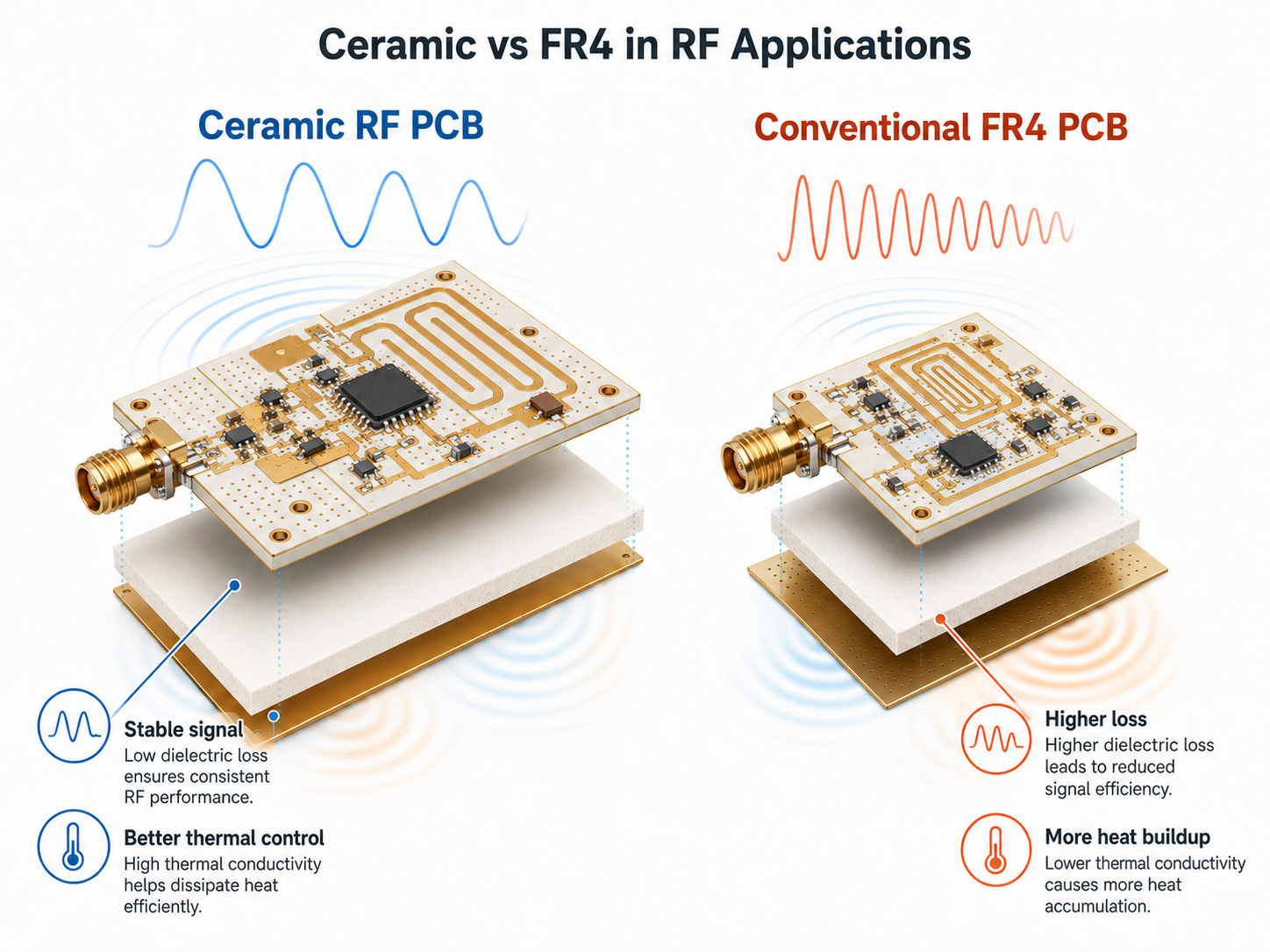
No. PTFE/Rogers-style laminates can be excellent for ultra-low loss transmission at high frequency, while ceramic shines when thermal handling, mechanical stability, and harsh-environment robustness are major constraints. The best choice depends on your loss budget, power density, and assembly environment.

3. Should I choose DPC, DBC, or AMB for a 50-ohm RF trace design?

If your design needs fine RF pattern control and stable geometry, DPC is often preferred. If your design is power-dense and needs thick copper heat spreading, DBC is common. If your module must survive demanding thermal cycling with robust bonding, AMB is worth evaluating.

4. Can Ceramic RF PCB support prototypes and small volume builds?

Yes—especially if you work with a supplier that supports no MOQ, fast DFM, and quick-turn scheduling for engineering iterations, because RF tuning often requires at least one or two build loops.

5. What files do I need to get an accurate Ceramic RF PCB quote?

Gerber/ODB++, drill files, stack-up notes, target impedance requirements, and any special acceptance/testing requirements. If you want turnkey PCBA, include BOM and assembly drawings so the supplier can check component compatibility and assembly profile risk.

6. Does EBest Circuit provide engineering assistance before production?

Yes. EBest Circuit supports Free DFM and process adaptation suggestions, plus technical support before and after sales, so RF boards are reviewed for manufacturability and risk before you spend money on the first build.

7. Do you welcome prototype and small-quantity orders?

Yes. EBest Circuit supports prototypes and small volume builds with no MOQ and personal service, which is practical for RF teams validating performance and tuning networks.

8. How fast can I get a build?

Lead time depends on substrate, metallization, and inspection scope. For many programs, EBest Circuit supports quick-turn discipline and can align PCB + PCBA schedules for a fast iteration cycle, including rapid PCBA delivery options where applicable.

Need a Ceramic RF PCB manufacturer who can quote fast and keep RF stable? Contact EBest

If you need Ceramic RF PCB prototyping, small-volume production, or a one-stop build (PCB + components + PCBA + testing + box-build), EBest Circuit is ready to help. Send your files for a free DFM review and a practical quote: sales@bestpcbs.com.

You may also like

DBC/DCB Ceramic Substrates for Power Semiconductor Packages

January 30th, 2026

What are DBC/DCB ceramic substrates?

DBC/DCB ceramic substrates are copper-on-ceramic platforms used inside power semiconductor packages to carry high current, isolate high voltage, and move heat into a heatsink with low thermal resistance. If you work with IGBT modules, SiC MOSFET modules, inverters, or high-power converters, they are one of the most common “workhorse” substrate choices because they combine electrical insulation and thermal conduction in one compact layer stack.

A ceramic substrate provides dielectric isolation, while thick copper layers on one or both sides provide low-resistance current paths and a mounting surface for chips, sinter, or solder. That combination is hard to achieve with standard PCB materials at the same voltage and power density.

What problem do they solve in IGBT and SiC module packaging?

Power devices generate heat and also demand safe isolation. A power package must do four jobs at once: conduct current, withstand kilovolts, spread heat, and survive thermal cycling. A copper-on-ceramic substrate is purpose-built for this “four-in-one” requirement.

What does “DBC” vs “DCB” mean in real projects?

In most purchasing and engineering discussions, “DBC” and “DCB” are used interchangeably. You will see both terms on drawings, RFQs, and datasheets. Practically, what matters is the material stack (Al2O3/AlN/Si3N4), copper thickness, ceramic thickness, and the reliability target (thermal cycling, partial discharge margin, and mechanical robustness).

DBC/DCB Ceramic Substrates for Power Semiconductor Packages

Why do power modules prefer DBC/DCB ceramic substrates over standard PCBs?

They win because they deliver high current + high voltage isolation + strong heat flow in a footprint that stays stable across temperature swings.

How do they handle high current, high voltage isolation, and heat together?

  • High current: Copper layers are much thicker than typical PCB copper, so IÂČR losses drop and temperature rise is easier to control.
  • High voltage: Ceramic provides strong dielectric isolation, supporting the separation between high-side and low-side copper patterns.
  • Heat removal: The ceramic layer conducts heat down to a baseplate or heatsink while copper spreads heat laterally.

What makes ceramic + copper “package-grade” compared to PCB-grade?

A standard FR-4 PCB can route signals nicely, but power packages are about controlled thermal paths and insulation integrity over years of cycling. Ceramic substrates are designed for harsh operating profiles, including repeated temperature swings and high junction temperatures.

How does the DBC/DCB process work (in simple steps)?

DBC/DCB uses a bonding method that creates a strong interface between copper foil and ceramic. Then the copper is patterned (etched) into circuits, and the finished substrate is plated or surface-finished as needed for die attach and wire bond.

Step-by-step (beginner-friendly)

  1. Ceramic selection: Choose Al2O3, AlN, or Si3N4 based on cost, thermal needs, and mechanical strength targets.
  2. Copper bonding: Copper foil is bonded to the ceramic at high temperature under controlled atmosphere to form a reliable copper–ceramic interface.
  3. Circuit patterning: The copper is etched into traces, pads, and isolation gaps.
  4. Surface finish: Common finishes include Ni/Au or other plating stacks depending on die attach, soldering, and bondability requirements.
  5. Inspection: Flatness, copper thickness, etch quality, and dielectric integrity are checked to match the application risk level.

Single-sided vs double-sided copper

Single-sided is used for simpler thermal and circuit needs. Double-sided copper is common in modules because it can improve heat spreading, stiffness, and interconnect options. The “right” choice depends on your mechanical stack and how you mount the substrate to the baseplate or heatsink.

Which ceramic is better for DBC/DCB: Al2O3 vs AlN vs Si3N4?

If you need value and proven supply chains, start with alumina. If you are heat-limited, AlN usually moves the needle. If your priority is mechanical toughness and thermal shock resistance, Si3N4 often leads.

MaterialBest forTypical strengthsTrade-offs
Alumina (Al2O3)Mainstream power modulesCost-effective, mature, widely availableLower thermal conductivity vs AlN; more brittle than Si3N4
Aluminum Nitride (AlN)Thermal-limited designsHigh thermal conductivity for lower thermal resistanceHigher cost; handling and processing needs more control
Silicon Nitride (Si3N4)High reliability, cycling-heavy environmentsHigh mechanical strength; strong thermal shock resistancePremium material; availability may vary by spec

When is alumina the smartest choice?

Choose alumina when your thermal budget is reasonable and you want a robust, cost-controlled BOM. Many industrial inverters, motor drives, and general power conversion stacks land here because it balances performance and procurement stability.

When do AlN and Si3N4 justify the premium?

AlN DBC substrates are a common upgrade path when junction temperature margin is tight, or when you want lower thermal resistance without enlarging the package. Si3N4 DBC substrates often show up when reliability under cycling is the dominant KPI—such as traction inverters, automotive environments, and harsh duty profiles.

What copper thickness and ceramic thickness should you specify for DBC/DCB?

Pick copper thickness based on current density and heat spreading goals. Pick ceramic thickness based on voltage isolation margin and mechanical stack constraints. Avoid “one-size-fits-all” defaults, because the wrong thickness can quietly drive hotspot risk or isolation stress.

How do copper thickness and current capacity relate?

Thicker copper lowers resistance and reduces temperature rise for the same current. It also helps spread heat away from die attach regions. The trade is that thicker copper can increase etching difficulty and may change stress distribution during cycling.

  • Use-case clue: If your design has wide copper planes and high RMS current, thicker copper is usually the practical win.
  • Layout clue: If you need fine features, extremely thick copper can limit minimum line/space.

How do ceramic thickness and dielectric withstand relate?

Thicker ceramic generally increases dielectric withstand, but it can raise thermal resistance. Most power packages must balance insulation integrity with heat flow. The smarter move is to define the operating voltage, surge conditions, clearance/creepage targets, and partial discharge margin, then choose thickness accordingly.

What copper thickness and ceramic thickness should you specify for DBC/DCB?

DBC/DCB vs AMB: which substrate should you choose for your power package?

DBC/DCB is the mainstream choice for many power modules because it balances cost and performance. AMB substrates often become attractive when you need extra mechanical robustness and higher cycling tolerance in extreme environments.

Decision pointDBC/DCB ceramic substratesAMB ceramic substrates
Bonding approachCopper bonded directly to ceramicCopper attached via active metal brazing layer
Typical positioningHigh volume, strong cost/performanceHigher-end reliability and robustness
Common ceramicsAl2O3, AlNAlN, Si3N4 (often chosen for toughness)
When it shinesIndustrial/automotive power modules with balanced needsHarsh cycling, high stress, mission-critical profiles

Selection shortcut

If you are pushing higher power density and expect aggressive cycling, talk about AMB early. If your program needs mature supply and predictable cost, DBC/DCB is usually the first substrate to validate.

DBC/DCB vs IMS (metal-core) vs thick-film ceramics: what’s the difference?

DBC/DCB is often chosen for high-voltage isolation + heat flow + thick copper. IMS is a strong fit for simpler assemblies and cost-driven thermal platforms. Thick-film ceramics can be useful for specific circuit styles, but DBC/DCB is typically the more common option in modern power modules.

Substrate typeTypical strengthsTypical use casesPractical limits
DBC/DCB copper-on-ceramicHigh insulation + strong thermal path + thick copperIGBT modules, SiC MOSFET modules, invertersMore specialized manufacturing than standard PCB
IMS / metal-core PCBCost-effective thermal spreading for power electronicsLED, moderate-power drivers, simpler thermal stacksInsulation system differs; not always ideal for kV-class isolation
Thick-film ceramic circuitsGood stability; suited to certain printed conductor schemesHybrid circuits, special sensor/power hybridsConductor style and current capability vary by build

What are the key design rules for DBC/DCB copper patterns (etching, clearance, corners)?

Use wide copper where current is high, avoid sharp corners, keep isolation gaps consistent, and design for manufacturability with realistic line/space. Your layout decisions have a direct impact on thermal uniformity and long-term cycling performance.

How to avoid hotspots and current crowding

  • Round internal corners: Sharp corners concentrate current and heat. Rounded corners improve current distribution.
  • Use copper pours and neck-down control: Avoid sudden reductions in trace width near die attach or bond areas.
  • Plan heat spreading: Add copper area under high-loss components when your mechanical stack allows it.

How to set creepage and clearance for high-voltage areas (practical approach)

Start with your working voltage, transient conditions, and contamination assumptions, then set conservative copper-to-copper gap targets. Use consistent gap geometry across the design so your partial discharge risk does not move around the substrate. If your environment is harsh, treat margin as a design feature, not a luxury.

What are common failure modes in DBC/DCB ceramic substrates, and how do you prevent them?

Most reliability issues trace back to stress concentration, thermal mismatch, or process choices that amplify cycling strain. You can prevent many problems with good geometry, controlled copper thickness choices, and stable assembly methods.

Why delamination happens (and how to reduce risk)

  • Stress from cycling: Repeated heating and cooling can load the interface.
  • Large copper islands: Very large copper areas can amplify stress in some stacks.
  • Prevention ideas: Smooth transitions, balanced copper on both sides when needed, and realistic copper thickness selection.

Why cracks start (and how layout choices help)

  • Corner stress: Sharp copper corners can focus stress.
  • Mechanical constraints: Overly rigid mounting or uneven torque can add bending.
  • Prevention ideas: Radius corners, avoid unnecessary cutouts near high-stress regions, and control mounting flatness.

How are DBC/DCB ceramic substrates used in real power semiconductor packages?

They sit between semiconductor chips and the heatsink/baseplate, acting as the insulated thermal highway and the copper circuit at the same time. That is why they are central to power module packaging.

IGBT modules: baseplate, solder, and heat path

In IGBT modules, a DBC/DCB substrate typically supports the die attach layer and wire bonds, then conducts heat through the ceramic down to the baseplate and into the cooling system. The copper pattern also routes phase currents and gate-related connections in a compact, low-inductance layout.

SiC MOSFET modules: faster switching, higher thermal stress

SiC switching can increase thermal and mechanical stress in the stack because designs often push higher power density. This is where ceramic choice, copper thickness strategy, and assembly control become even more important. A stable substrate can protect performance consistency across life-cycle operation.

How are DBC/DCB ceramic substrates used in real power semiconductor packages?

What information should you send a manufacturer to quote DBC/DCB ceramic substrates fast?

If you want fast quoting and fewer back-and-forth emails, send a complete stack definition plus the copper pattern data and inspection expectations. Power substrates are not “generic PCB,” so clarity saves days.

Include these items in your RFQ package

  • 2D drawing (PDF) + dimension tolerances
  • Copper pattern files (Gerber or DXF) for top and bottom
  • Ceramic type: Al2O3 / AlN / Si3N4
  • Ceramic thickness (target + tolerance)
  • Copper thickness (top/bottom), single- or double-sided
  • Surface finish requirement (example: Ni/Au for bondability)
  • Flatness target and any warpage limits
  • Reliability goal: thermal cycling expectations and inspection plan

Ask these questions early (they prevent surprises)

  • What minimum line/space is realistic for your copper thickness?
  • What is your typical etch tolerance window?
  • How do you control copper thickness uniformity?
  • What inspection data can you provide (thickness, flatness, dielectric checks)?

Why choose EBest as your DBC/DCB ceramic substrates manufacturer?

If you want a supplier that speaks the language of engineers, EBest is built around practical manufacturability, fast feedback, and reliable delivery. We position ourselves as a One-stop PCBA service provider with a strong understanding of power electronics build risks, so your substrate sourcing and downstream assembly stay aligned.

What EBest does differently (engineer-first advantages)

  • Free DFM and process adaptation suggestions for copper patterns, clearances, and manufacturable features
  • 20 years of manufacturing depth, serving 1800+ customers and 10,000+ engineers
  • One-stop support: PCB, components, PCBA, testing, and box-building
  • NO MOQ and personal service for prototype and small-volume programs
  • Quality systems aligned to regulated and reliability-driven industries (ISO9001, ISO13485, IATF16949, AS9100D)
  • MES & Traceability to keep material and process records consistent
  • 1.5-week rapid PCBA delivery capability for time-critical projects
  • Technical support before and after sales, with prompt feedback (within 12 hours)
  • Quick turn-out and on-time delivery mindset
  • High quality builds with special request support

What this means for your project

You get clearer manufacturability guidance upfront, fewer drawing revisions, and smoother integration from substrate to assembly. That reduces re-spin risk and keeps your schedule predictable.

FAQ about DBC/DCB ceramic substrates

What is the difference between DBC and DCB substrate?

In most real-world RFQs, they refer to the same copper-on-ceramic concept. Focus on the spec details that change performance: ceramic type, ceramic thickness, copper thickness, surface finish, and reliability requirements.

Which is better for power modules: AlN DBC substrate or Al2O3 DBC substrate?

If you are heat-limited, AlN usually offers a stronger thermal path and can reduce thermal resistance. If your design has enough thermal margin and cost control is critical, Al2O3 is often the best starting point.

Why do Si3N4 DBC substrates show up in automotive and cycling-heavy applications?

Because mechanical toughness and thermal shock resistance can become the limiting factor over long life cycles. When cycling is intense, Si3N4 is often chosen to protect reliability margins.

How do I choose copper thickness for DBC/DCB ceramic substrates?

Start with current level and allowable temperature rise, then choose copper thickness that keeps resistance and hotspots under control. If you also need finer copper features, confirm manufacturable line/space limits early so the copper thickness and pattern can coexist.

What surface finish is common for DBC/DCB ceramic substrates used in power packages?

Ni-based finishes with gold top layers are commonly specified when bondability and stable solderable surfaces matter. The best finish depends on your die attach method, wire bonding approach, and storage/handling needs.

What files do I need to get a fast quote for DBC/DCB ceramic substrates?

Send your 2D drawing, copper pattern data (top/bottom), stack definition (ceramic type + thickness, copper thickness), finish requirement, and any flatness or inspection expectations. Clear input leads to faster quoting and fewer revisions.

Does EBest support prototypes and small-quantity DBC/DCB substrate-related projects?

Yes. We welcome prototype and small-volume programs, and we support fast feedback with Free DFM so your design can move forward with confidence.

Ready to source DBC/DCB ceramic substrates for your power semiconductor packages?

If you need DBC/DCB ceramic substrates for power modules, inverters, IGBT packages, or SiC MOSFET packages, EBest can support your project with engineer-led DFM, responsive quoting, and one-stop manufacturing support. Email us at sales@bestpcbs.com and send your drawing + copper pattern files to start.

You may also like

Alumina Ceramic Substrate: Thickness, Fire Temperature & Metallization

January 22nd, 2026

What Is an Alumina Substrate?

An alumina ceramic substrate is a rigid ceramic base material primarily composed of aluminum oxide (Al₂O₃), used as a carrier for electronic circuits in environments where heat, voltage, and mechanical stress exceed the limits of organic PCB materials. Unlike FR-4 or metal-core laminates, alumina substrates are inorganic, dense, and dimensionally stable, which makes them suitable for long-life and high-reliability electronics.

In practical terms, an alumina substrate serves three roles at the same time. It electrically isolates conductive layers, mechanically supports components, and manages heat generated during operation. This multifunctional nature is the main reason alumina ceramic substrates are widely adopted in power electronics, LED modules, and industrial control systems.

Alumina Ceramic Substrate: Thickness, Fire Temperature & Metallization

Alumina Substrate Thickness

Thickness selection is one of the most underestimated design decisions for an alumina ceramic substrate, yet it directly affects mechanical strength, thermal behavior, and assembly yield.

Common thickness ranges include:

  • 0.25–0.38 mm for compact, low-stress designs
  • 0.50–0.63 mm for standard LED and power control circuits
  • 0.80–1.00 mm for high-mechanical-stress or high-voltage applications

Thinner substrates improve heat transfer but are more vulnerable to cracking during soldering or handling. Thicker substrates provide better rigidity but may introduce thermal resistance. The correct thickness depends on component size, copper loading, and thermal cycling conditions rather than on cost alone.

What Temperature Does Alumina Ceramic Fire At?

Alumina ceramics are manufactured through a high-temperature sintering process. Depending on purity and formulation, alumina ceramic substrates are typically fired at temperatures between 1,600°C and 1,750°C.

This firing process is what gives alumina its density, mechanical strength, and thermal stability. Because the substrate has already been exposed to extreme temperatures during manufacturing, it remains stable during electronic assembly processes such as lead-free reflow soldering.

What Temperature Does Alumina Ceramic Fire At?

Types of Alumina Ceramic Substrate

Alumina ceramic substrates can be categorized based on purity, surface finish, and metallization compatibility.

96% Alumina Ceramic Substrate

This is the most widely used grade in electronics manufacturing.

Key characteristics:

  • Balanced thermal conductivity and mechanical strength
  • Stable dielectric performance for industrial voltages
  • Mature supply chain and predictable quality

Typical use cases include LED modules, power control boards, automotive electronics, and industrial interfaces where operating conditions are well understood and cost control is important.

99% Alumina Ceramic Substrate

Higher purity alumina is used when tighter performance margins are required.

Key characteristics:

  • Improved thermal stability at elevated temperatures
  • Lower dielectric loss for high-frequency signals
  • Better material consistency for precision applications

This grade is often selected for RF circuits, high-temperature sensors, and applications with strict electrical performance requirements. However, it should be chosen based on actual need rather than assumed superiority.

96% vs 99% Alumina Ceramic Substrate: How to Choose the Right Grade?

96% Alumina Ceramic Substrate

96% alumina is the most widely used grade in industrial electronics.

Its advantages include:

  • Excellent cost-to-performance ratio
  • Good mechanical strength
  • Sufficient thermal conductivity for most power and LED designs

For high-volume products with controlled operating conditions, 96% alumina is usually the most practical choice.

99% Alumina Ceramic Substrate

99% alumina offers higher purity and tighter material consistency.

It is typically chosen for:

  • High-temperature environments
  • RF and high-frequency circuits
  • Applications requiring lower dielectric loss

However, higher purity does not automatically mean better reliability. Using 99% alumina where it is not required increases material cost without solving real design risks.

96% vs 99% Alumina Ceramic Substrate: How to Choose the Right Grade?

Metallization Options for Alumina Ceramic Substrate (Thick Film, DBC, AMB)

Metallization defines how copper or conductive layers bond to the alumina surface, and it has a direct impact on current capacity and long-term reliability.

Thick Film Metallization

Thick film metallization uses screen-printed conductive pastes.

It is suitable for:

  • Low to medium current circuits
  • Cost-sensitive designs
  • Mature, proven manufacturing processes

Direct Bonded Copper (DBC)

DBC bonds solid copper sheets directly to the alumina substrate.

It supports:

  • High current density
  • Excellent thermal conduction
  • Power modules and converters

Active Metal Brazing (AMB)

AMB uses a reactive bonding layer to improve adhesion.

It offers:

  • Strong copper-to-ceramic bonding
  • Better resistance to thermal cycling
  • Higher reliability for demanding applications

Choosing metallization based solely on price is a common mistake that leads to premature field failures.

Why Engineers Choose Alumina Ceramic Substrate for Power and LED Applications?

Engineers select alumina ceramic substrate solutions when performance stability matters more than short-term savings.

Key reasons include:

  • Reliable electrical insulation at high voltage
  • Stable thermal behavior under continuous load
  • Compatibility with automated assembly
  • Proven performance across decades of use

In LED lighting, alumina substrates help control junction temperature and extend lumen lifetime. In power electronics, they isolate high voltage while maintaining mechanical integrity under thermal cycling.

Alumina Ceramic Substrate vs AlN vs BeO: Detailed Comparison

ParameterAlumina Ceramic Substrate (Al₂O₃)Aluminum Nitride (AlN)Beryllium Oxide (BeO)
Typical Purity96% / 99%≄ 95%≄ 99%
Thermal Conductivity (W/m·K)20–30150–180250–330
Dielectric Strength (kV/mm)10–1512–1510–12
Dielectric Constant (Δr @ 1 MHz)9.4–9.98.5–9.06.5–7.0
Dielectric Loss (tan ή)~0.0002–0.0004~0.0001~0.0001
Coefficient of Thermal Expansion (CTE, ppm/°C)6.5–7.54.5–5.07.0–8.0
Flexural Strength (MPa)300–400300–350200–300
Operating Temperature (°C)Up to 1,000Up to 1,200Up to 1,400
Common Thickness Range (mm)0.25–1.00.25–0.630.25–0.63
Metallization CompatibilityThick Film, DBC, AMBDBC, AMBDBC, AMB
Moisture SensitivityVery LowModerate (hydrolysis risk)Very Low
Health & Safety RiskNoneLowHigh (toxic dust)
Regulatory RestrictionsNoneNoneStrict (OSHA, EU)
Material Cost Index*1.0 (baseline)4–6× alumina8–12× alumina
Supply Chain MaturityVery HighMediumVery Limited
Mass Production SuitabilityExcellentModeratePoor
Typical Lead TimeShortMediumLong

While AlN and BeO offer superior thermal conductivity, alumina remains the most balanced solution for cost, safety, and scalability.

Why Alumina Ceramic Substrate Fails During Assembly—and How to Prevent It?

Most alumina substrate failures occur during assembly rather than during operation.

Common causes include:

  • Excessive thermal shock during reflow
  • Poor copper layout causing stress concentration
  • Mismatch between solder alloy and metallization

Preventive measures involve controlled heating profiles, balanced copper distribution, and assembly-aware design decisions. Addressing these factors early prevents costly redesigns later.

What Is Alumina Ceramic Used For?

Alumina ceramic substrates are used in a wide range of electronic and industrial applications, including:

  • Power converters and inverters
  • LED lighting modules
  • Automotive electronics
  • Industrial control systems
  • Sensor and actuator circuits

These applications demand durability, electrical insulation, and predictable thermal behavior over long service lives.

Is Alumina Ceramic Better Than Zirconia Ceramic?

Alumina and zirconia ceramics serve different purposes.

Alumina is preferred when:

  • Electrical insulation is critical
  • Thermal stability is required
  • Cost control matters

Zirconia is chosen for:

  • High mechanical toughness
  • Structural or wear-resistant components

For electronic substrates, alumina remains the more suitable and economical choice.

FAQs

1. What thickness should I choose for an alumina ceramic substrate?

    Thickness depends on mechanical stress, copper loading, and thermal requirements. Most electronic designs use 0.38–1.0 mm.

    2. Can alumina ceramic substrate handle lead-free soldering?

    Yes. Alumina remains stable at lead-free reflow temperatures when properly designed.

    3. Why does copper delaminate from alumina substrates?

    Delamination is usually caused by incorrect metallization selection or excessive thermal stress during assembly.

    4. Is alumina ceramic substrate suitable for mass production?

    Yes. Its mature manufacturing processes make it ideal for scalable, high-volume production.

    5. When should I consider alternatives like AlN?

    AlN is recommended only when heat density exceeds alumina’s practical limits.

    You may also like

    EMS PCB Assembly Manufacturer | EBest Circuit (Best Technology)

    January 20th, 2026

    EMS PCB assembly refers to Electronics Manufacturing Services that cover more than just assembling a printed circuit board. In a true EMS model, the provider manages the full scope of manufacturing activities required to turn a design into a production-ready product.

    Typical EMS PCB assembly services include:

    • Coordination of PCB fabrication
    • Component sourcing and lifecycle management
    • SMT and through-hole assembly
    • Inspection, testing, and quality documentation
    • Ongoing production and engineering support

    For companies moving beyond simple prototypes, EMS PCB assembly offers a structured approach to manufacturing that reduces internal workload and improves consistency.

    EMS PCB Assembly Manufacturer | EBest Circuit (Best Technology)

    EMS PCB Assembly vs Standard PCB Assembly Service

    The difference between EMS PCB assembly and standard PCB assembly becomes apparent as project complexity increases.

    A standard PCB assembly service usually focuses on:

    • Build-to-print assembly
    • Limited responsibility beyond soldering and inspection
    • Customer-managed materials and logistics

    An EMS PCB assembly service, by contrast, takes responsibility for:

    • Design-for-manufacturing feedback
    • Component sourcing and approved substitutions
    • Coordinated planning across fabrication, assembly, and testing
    • Quality control and traceability

    In practical terms, standard PCB assembly executes instructions, while EMS PCB assembly manages the manufacturing outcome.

    Why Choose EMS PCB Assembly Service?

    Companies choose EMS PCB assembly when they need more control and fewer surprises during production.

    Common reasons include:

    • Smoother transition from prototype to production
    • Reduced supply-chain risk through managed sourcing
    • More predictable quality and yield
    • Lower total cost over time, even if unit prices are higher

    For products with long lifecycles, compliance requirements, or complex BOMs, EMS PCB assembly provides a level of stability that transactional assembly services cannot.

    What Are the Most Common Risks in EMS PCB Assembly?

    EMS PCB assembly is not risk-free. When poorly managed, it can introduce new challenges instead of solving existing ones.

    The most common risks include:

    • Prototype success that does not translate into production yield
    • Unapproved component substitutions due to shortages
    • Insufficient testing coverage for real-world use
    • Communication gaps between engineering, sourcing, and production

    Our approach prevents these issues through:

    • Early DFM / DFT engineering review
    • BOM-level lifecycle and sourcing analysis
    • Defined process controls across all build stages
    • Formal change management and traceability

    Risk is not eliminated—but it is controlled before it affects delivery or reliability.

    What Are the Most Common Risks in EMS PCB Assembly?

    Factors That Affect EMS PCB Assembly Cost

    EMS PCB assembly cost is influenced by far more than assembly labor.

    Key cost factors include:

    • PCB material selection and layer count
    • Component availability and sourcing channels
    • Assembly complexity and package density
    • Inspection, testing, and documentation requirements

    We focus on total cost of ownership, helping customers avoid hidden expenses caused by rework, delays, or redesigns later in production.

    Top 7 EMS PCB Assembly Service Providers

    The EMS market includes providers with very different strengths and target customers. Below are seven well-known EMS PCB assembly service providers, each serving distinct needs:

    EMS ProviderPrimary Market FocusCore EMS PCB Assembly StrengthsBest Fit For
    Best TechnologyPrototype to low / mid-volume, high-mix projectsEngineering-driven EMS PCB assembly, strong DFM/DFT support, transparent component sourcing, flexible volumesStartups, SMEs, industrial & medical projects needing flexibility and close engineering support
    JabilGlobal, high-volume manufacturingMassive global footprint, advanced supply-chain management, automation at scaleLarge OEMs with stable, high-volume, multinational programs
    FlexHigh-volume, complex supply chainsEnd-to-end EMS, strong logistics and digital manufacturing capabilitiesEnterprises requiring global production and supply-chain resilience
    SanminaHigh-reliability & regulated industriesComplex PCB assembly, strong compliance systems, aerospace & industrial focusAerospace, defense, medical, and mission-critical electronics
    CelesticaAdvanced manufacturing & cloud infrastructureAutomation-heavy EMS, digital manufacturing processesData-center, networking, and advanced industrial electronics
    PlexusEngineering-intensive EMS projectsStrong NPI support, lifecycle management, regulated-market expertiseProducts with long lifecycles and frequent engineering changes
    Benchmark ElectronicsIndustrial, medical, aerospaceBalanced EMS offering with emphasis on quality and complianceMedium-to-high complexity products in regulated sectors

    Why Companies Choose Best Technology?

    Not every project needs a global EMS giant. Many require engineering depth, flexibility, and accountability.

    Best Technology is selected by customers who need:

    • Early engineering involvement, not post-design execution
    • Transparent, traceable component sourcing
    • Support for prototype, low-volume, and ongoing production
    • Stable quality systems suitable for demanding applications

    We approach EMS PCB assembly as a long-term manufacturing partnership, not a transactional service.

    Our EMS PCB Assembly Capabilities

    Our facilities and processes support EMS PCB assembly projects across a wide range of complexity levels:

    • SMT, through-hole, DIP PCB & box building assembly
    • Various PCB types including HDI, RF, MCPCB, ceramic PCB, rigid flex PCB and so on
    • Mixed-technology and fine-pitch designs
    • BGA, QFN, QFP small chips
    • Prototype, low-volume, and medium-volume production
    • AOI, X-ray, and functional testing
    • Full documentation and traceability

    All capabilities operate within a unified EMS framework to ensure consistency as production scales.

    Is Our EMS PCB Assembly Right for Your Project?

    Our EMS PCB assembly services are a strong fit if you:

    • Plan to scale beyond prototypes
    • Need sourcing stability and lifecycle management
    • Require predictable quality and delivery
    • Want engineering support, not just assembly capacity

    If your priority is lowest unit price alone, a basic assembly vendor may be a better match.
    If your priority is manufacturing confidence, EMS is the right model.

    Common FAQs

    1. What does EMS mean in PCB assembly?

      EMS stands for Electronics Manufacturing Services, covering sourcing, assembly, testing, and production coordination.

      2. Is EMS PCB assembly suitable for startups?

      Yes. Many startups use EMS partners to avoid redesigns and supply-chain issues as they scale.

      3. What is the typical MOQ for EMS PCB assembly?

      MOQ depends on project complexity. We support prototype and low-volume builds as well as ongoing production.

      4. How long does EMS PCB assembly usually take?

      Lead time varies by materials and complexity, typically ranging from several weeks to a few months.

      5. Can you manage component shortages?

      Yes. Component risk is addressed through sourcing strategy, approved alternates, and lifecycle analysis.

      6. What files are required to start?

      Gerbers, BOM, pick-and-place data, assembly drawings, and test requirements.

      Start Your EMS PCB Assembly Project

      If you are evaluating EMS PCB assembly and want to understand whether our approach fits your product, the next step is a technical discussion—not a sales pitch.

      Share your design files or project requirements, and our engineering team will review manufacturability, sourcing risk, and production readiness.

      👉 Request an EMS PCB Assembly Review

      You may also like

      OEM vs ODM in PCB Manufacturing & How to Choose?

      December 27th, 2025

      Choosing the right manufacturing model is one of the most important strategic decisions for electronics companies. In the PCB and PCBA sector, product lifecycles are shorter, technical requirements are higher, and global competition is stronger than ever. In this environment, two models, OEM and ODM, shape how your boards move from idea to mass production.

      This guide explains both models in clear terms, compares them using real PCB scenarios, and provides a practical decision framework that engineers, buyers, and founders can use when planning their next PCB or PCBA project.

      OEM vs ODM in PCB Manufacturing & How to Choose?

      What Is OEM Manufacturing in the PCB Industry?

      OEM manufacturing refers to a model where the customer owns the product design, controls the technical specifications, and provides the documentation needed for production. In the PCB field, an OEM project usually includes:

      • Complete Gerber files and drill files
      • Stack-up information and layer count definition
      • Bill of materials (BOM) with approved vendor list
      • Assembly drawings and mechanical constraints
      • Testing procedures and acceptance criteria
      • Quality and reliability requirements

      Under the OEM model, the PCB manufacturer acts as a specialist executor. The factory fabricates boards,
      assembles components, and runs tests in strict alignment with the customer’s design and documentation.
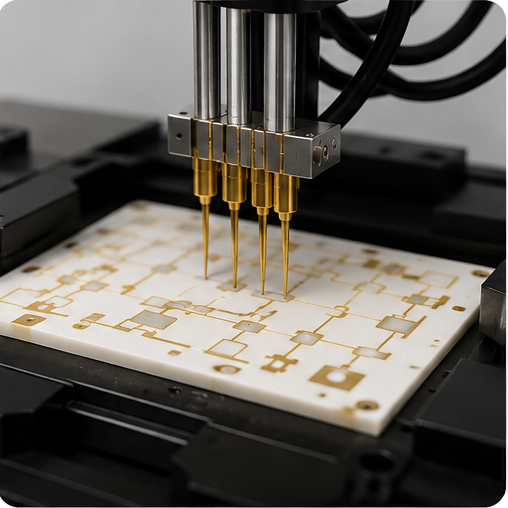
      The engineering ownership remains on the customer side, while the manufacturer delivers robust production, process control, and supply chain support.

      In the PCB industry, OEM manufacturing is common in fields where design control and traceability matter:

      • Medical instrumentation and life-support electronics
      • Automotive electronics and ADAS-related boards
      • Aerospace and defense control modules
      • High-frequency RF and microwave PCBs
      • Industrial automation controllers
      • Robotics and motion control systems

      These applications often involve tight regulations, proprietary algorithms, and long-term maintenance. Companies choose the OEM path because it allows them to keep full control of their PCB design while relying on an experienced manufacturing partner for fabrication, assembly, and testing.

      What Is ODM Manufacturing in the PCB Industry?

      ODM manufacturing goes beyond production and includes design and development. Instead of providing a finished design, the customer shares functional requirements, performance targets, and budget expectations. The ODM manufacturer then handles engineering and turns the requirements into a manufacturable PCB or PCBA solution.

      Typical ODM services in the PCB domain include:

      • Circuit concept and schematic design
      • PCB layout and stack-up planning
      • Component selection and alternative sourcing
      • Design for manufacturability (DFM) and design for assembly (DFA)
      • Prototype build and design iterations
      • Compliance support and basic certification guidance
      • Full-scale production and functional testing

      Many growing electronics brands, start-ups, and non-technical founders choose ODM when they need a finished PCB solution but do not have sufficient internal engineering resources. The manufacturer becomes both a design partner and a production partner.

      In the PCB and PCBA world, ODM is frequently used for:

      • IoT sensor nodes and gateways
      • Smart home and building automation devices
      • Wearable electronics and fitness trackers
      • LED lighting drivers and control boards
      • Consumer electronics modules and controller boards
      • Low-power wireless communication boards

      These market segments evolve quickly and demand frequent updates. A capable ODM PCB partner can speed up development and help clients get new boards into the market much faster.

      OEM vs ODM: Core Differences for PCB and PCBA Projects

      Both OEM and ODM are valuable, but they solve different problems. Understanding how they
      differ helps you select the model that fits your product, budget, and timeline.

      AreaOEMODM
      Design OwnershipCustomer owns design, files, and IPManufacturer often owns design unless transferred by contract
      Development CostLower upfront design cost, higher internal engineering investmentHigher upfront design charge, reduced internal engineering load
      Time to MarketDepends on customer’s design speedShorter due to in-house design resources and templates
      Engineering SupportFocused on DFM, DFA, and production adviceFull design plus optimization support
      MOQ FlexibilityOften higher for mature productsCan be lower for pilot and first launches
      Customization LevelUnlimited customization within process capabilityOften based on existing platforms or reference designs
      IP ProtectionVery strong, assuming secure data handlingContract-dependent; must be clearly defined
      Risk ProfileLower in production, higher in internal design qualityLower design risk, but higher IP and dependency risk

      Engineers often pick the OEM route when they need tight control over design, especially for high-end or
      regulated PCBs. Teams that prioritize speed, flexibility, and reduced internal workload tend to lean toward ODM.

      When Should a PCB Company Choose OEM?

      The OEM manufacturing model is ideal when technical control, long-term stability, and full customization
      are your highest priorities.

      You should prefer OEM when:

      • You already have a PCB design or a strong internal R&D and layout team.
      • Your product must comply with strict standards such as ISO 13485, IATF 16949, or specific medical or automotive norms.
      • You handle sensitive RF front-ends, custom impedance structures, or advanced HDI designs.
      • You plan to maintain and update your product over many years.
      • You want full freedom to switch manufacturers while keeping the same design.

      In these situations, working with an experienced OEM PCB partner gives you manufacturing stability while you retain all core design decisions. This model suits companies that treat their PCB design as a central asset in their business.

      When Should a PCB Company Choose OEM?

      When Is ODM the Better Option for PCB Projects?

      The ODM model is a better fit when you care most about speed, simplified development, and reduced engineering overhead.

      Consider ODM when:

      • You have a clear product idea but no detailed PCB design.
      • Your team lacks time or skills to manage schematics and layout.
      • You want to test a new market quickly and validate demand with a working prototype.
      • Your project falls into categories with fast refresh cycles, such as IoT or consumer electronics.
      • You prefer a one-stop solution from concept through production and assembly.

      An experienced ODM PCB partner can turn functional requirements into a board design, prototype it, optimize for manufacturing, and ramp into production. This is especially valuable for start-ups and smaller brands that want to focus more on marketing and sales while outsourcing technical development.

      When Is ODM the Better Option for PCB Projects?

      OEM and ODM Pricing Models and Cost Drivers in PCB Manufacturing

      Both OEM and ODM projects are influenced by similar manufacturing cost factors, but their
      structures differ at the development stage.

      Key Cost Drivers for OEM PCB Projects

      • Base material type (standard FR4, high-Tg, Rogers, ceramic, metal-core)
      • Layer count, board thickness, and stack-up complexity
      • Trace width and spacing, especially in HDI designs
      • Via types (through-hole, buried, blind, microvias)
      • Surface finish (HASL, ENIG, immersion silver, OSP, ENEPIG)
      • Component mix, package density, and assembly complexity
      • Testing coverage (ICT, flying probe, functional test)
      • Yield targets and reliability expectations
      • Logistics, packaging, and shipping requirements

      In OEM projects, design work is already complete, so development cost is mainly related to DFM review and minor adjustments. The main financial focus is on fabrication, assembly, materials, and testing.

      Key Cost Drivers for ODM PCB Projects

      • Concept definition and hardware architecture
      • Schematic capture and simulation if required
      • PCB layout and optimization cycles
      • Prototype iterations and validation builds
      • Component selection, sourcing, and second-source planning
      • Compliance support and pre-certification testing where needed

      In ODM projects, you pay for additional engineering work in exchange for a much lighter internal workload and a faster path to a finished board. The overall cost can be very competitive when you consider the time saved and the opportunity to reach the market earlier.

      How to Protect Your IP with OEM and ODM PCB Partners

      Intellectual property protection is one of the most sensitive topics when companies decide between OEM and ODM. While no model is completely risk-free, there are practical steps that significantly reduce exposure.

      • Formal NDAs and Manufacturing Agreements: Clearly define confidentiality around schematics, Gerber files, BOM, firmware, and test tools.
      • Contractual IP Ownership: In ODM projects, specify whether IP will be transferred, shared, or licensed.
      • Controlled File Sharing: Limit sensitive design information to dedicated engineering contacts.
      • Firmware Protection: Use secure bootloaders, encryption, and lock bits for microcontrollers when needed.
      • Selection of Certified Partners: Choose factories with ISO and industry-specific certifications that follow disciplined processes.

      With a solid legal framework and careful partner selection, both OEM and ODM collaborations
      can support long-term, secure PCB programs.

      Quality Control Strategies for OEM and ODM PCB Production

      Reliable PCB performance comes from consistent process control, not only from design quality. A professional PCB supplier, whether working under an OEM or ODM model, should implement a systematic quality strategy.

      • Incoming quality control (IQC) for copper clad laminates, solder paste, and components
      • In-process checks (IPQC) at critical stages such as etching, drilling, plating, and soldering
      • Automated optical inspection (AOI) for bare boards and assembled boards
      • Solder paste inspection (SPI) for SMT process control
      • X-ray inspection for BGA, QFN, and hidden joints
      • Electrical tests (flying probe or ICT) for open and short detection
      • Functional tests and burn-in for mission-critical products

      In ODM projects, additional validation is often required at the prototype stage, because the design is fresh. In OEM projects, focus is more on maintaining stable yields and repeatability once the design is frozen.

      How to Evaluate and Select a Reliable OEM or ODM PCB Supplier

      Selecting your manufacturing partner is a decision that affects product quality, lead time, cost, and even brand reputation. Whether you prefer OEM or ODM, certain evaluation points remain essential.
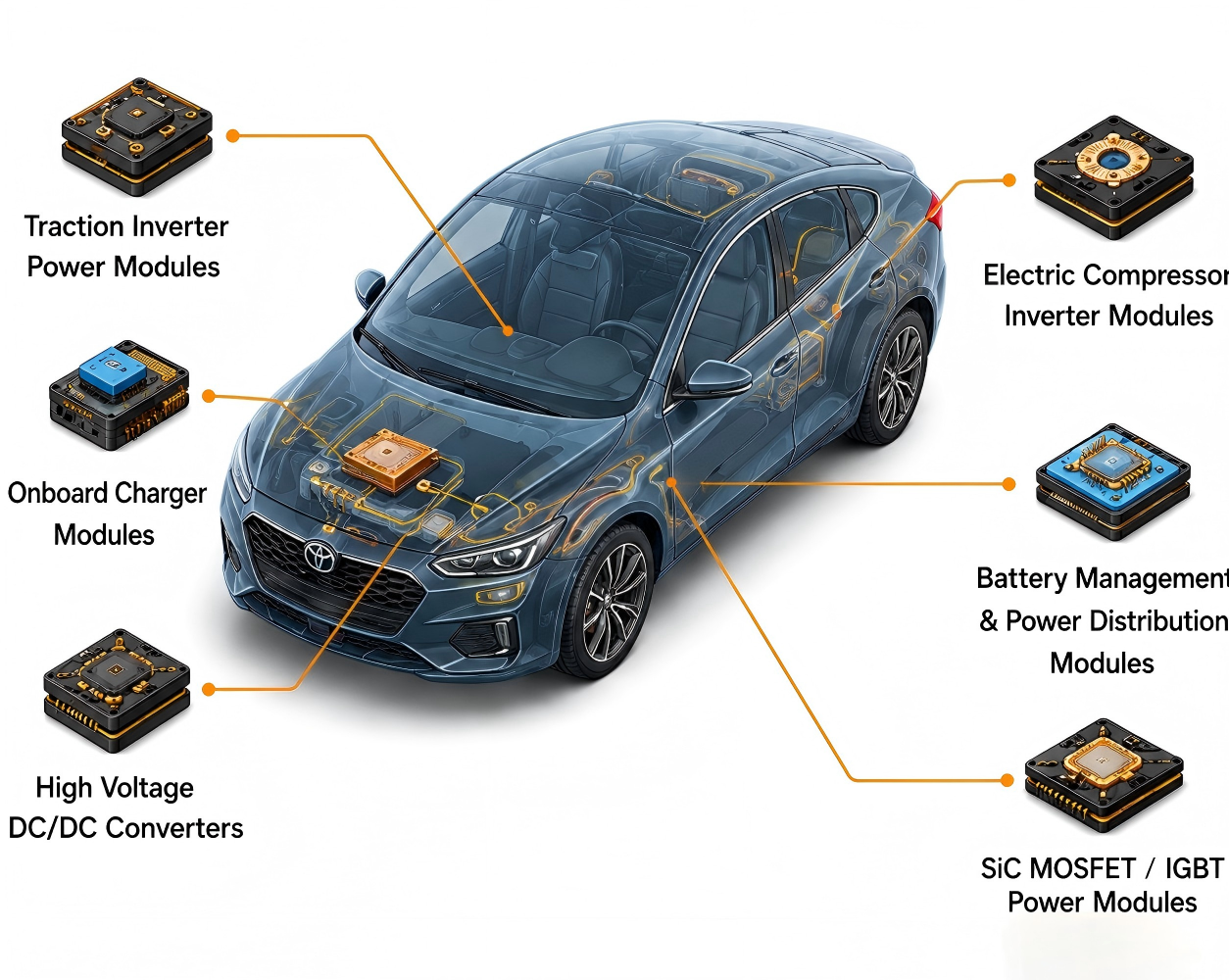
      • Engineering Capability: Can the supplier handle HDI, RF, flex, rigid-flex, ceramic, or heavy copper boards?
      • DFM and DFA Support: Do they proactively optimize your design for yield and manufacturability?
      • In-house SMT and Assembly: One-stop fabrication and PCBA in locations such as China and Vietnam improves coordination.
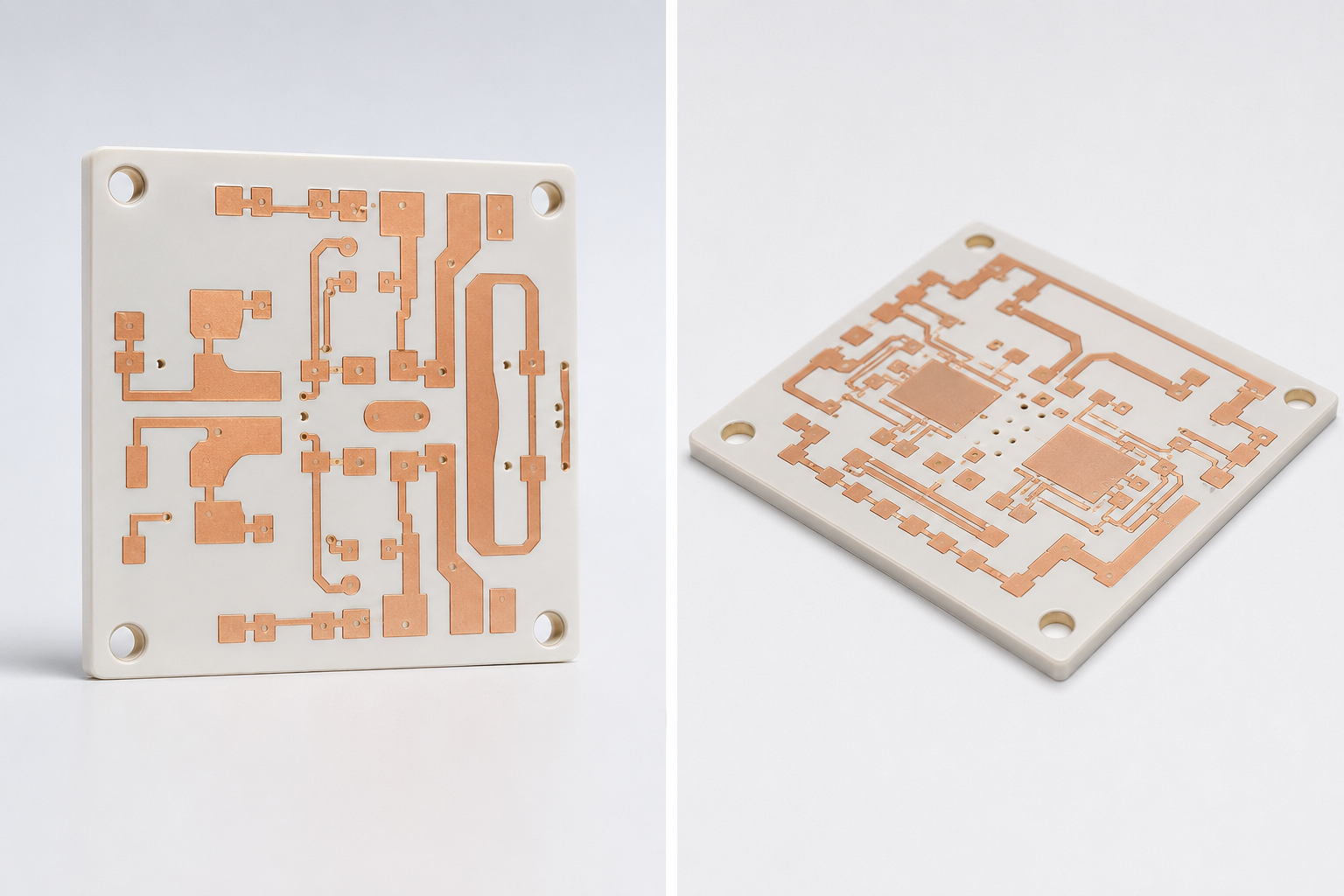
      • Certifications: Look for ISO 9001, ISO 13485, IATF 16949, and UL where relevant.
      • Equipment Level: Advanced drilling, imaging, solder mask, SPI, AOI, and reflow lines reflect process strength.
      • Prototype and Low-volume Capability: This is vital for early-stage ODM projects and design validation.
      • Communication and Project Management: Clear, responsive communication reduces delays and misunderstandings.

      A strong PCB partner is more than a factory. It should be a technical advisor that helps you reduce risk and increase reliability.

      OEM and ODM Examples Across PCB-Intensive Industries

      Both OEM and ODM models are widely used across industries that rely heavily on PCBs and
      assembled boards.

      Typical OEM PCB Applications

      • Medical diagnostics and laboratory equipment PCBs
      • Industrial motion control and PLC boards
      • Automotive control modules and sensor interfaces
      • High-speed communication backbone boards
      • Ceramic-based power modules for power electronics

      Typical ODM PCB Applications

      • Smart home controllers and gateways
      • IoT sensor nodes and tracking devices
      • Wearable health monitors
      • LED lighting drivers and control PCBs
      • Compact consumer product controller boards

      These examples show that both models are valid tools. The choice is not about which one is absolutely better, but about which
      one matches your product and business goals.

      FAQs: OEM and ODM for PCB and PCBA

      Below are some of the most common questions engineers, buyers, and founders ask when comparing OEM and ODM in the PCB domain.

      Q1. Is OEM always more expensive than ODM?

      Not always. OEM projects can be cost-effective when you already have a mature design and stable volume. ODM includes engineering fees, but it saves internal R&D cost and time. The better option depends on how much design work you can handle in-house.

      Q2. Do I keep my IP if I work with an ODM supplier?

      IP ownership in ODM projects depends on the contract. Some suppliers transfer full design ownership to you, while others retain partial rights. Make sure ownership, licensing, and future use of the design are clearly described in your agreement.

      Q3. What is the typical MOQ difference between OEM and ODM?

      OEM projects often have higher MOQs because they support stable, long-term products. ODM suppliers sometimes offer lower MOQs for pilot runs or market testing, especially in consumer and IoT sectors.

      Q4. Can I start with an ODM design and later move to an OEM model?

      Yes. Many companies use ODM to launch fast, then move to an OEM model with a custom design once
      the market is proven. Carefully plan IP and file access from the start to keep this option open.

      Q5. Which model is better for highly specialized or high-reliability PCBs?

      For complex HDI, RF, high-speed, or safety-critical boards, OEM is usually the stronger choice. You maintain full design control and can work with a manufacturer that focuses on process excellence and reliability.

      Q6. Which model helps us launch faster?

      ODM typically shortens launch time because design, layout, and prototyping are handled by the manufacturer. If speed and reduced internal workload are top priorities, this model offers a practical shortcut.

      How to Decide Between OEM and ODM for Your Next PCB Project?

      Deciding between OEM and ODM is easier when you look at your situation through three lenses:
      technical control, available resources, and time to market.

      Choose OEM if you:

      • Have or plan to build internal PCB design expertise.
      • Need strict IP control for competitive or regulated products.
      • Expect long product lifecycles and multiple future revisions.
      • Work in medical, automotive, aerospace, or other high-reliability areas.

      Choose ODM if you:

      • Want to turn a product concept into a ready PCB quickly.
      • Prefer to outsource heavy engineering work.
      • Operate in fast-changing consumer or IoT markets.
      • Need a one-stop partner for design, fabrication, assembly, and testing.

      In practice, many companies use both models at different stages. They may rely on ODM partners for early concepts and market tests, then shift to an OEM model once volumes grow and the product stabilizes. By matching the model to each development phase, you can control cost, manage risk, and keep your roadmap flexible.


      You may also like

      Why Does Yellow Discoloration Appear on Al₂O₃ DBC Substrates?

      December 16th, 2025

      Yellow discoloration on Al₂O₃ DBC substrates layers is occasionally observed after DBC bonding. For many engineers, this visual change raises a practical question: does ceramic yellowing indicate a performance risk? Why does it become yellow? This article explains the material mechanisms behind discoloration, and why it does not compromise DBC substrate reliability.

      What Is an Al₂O₃ DBC Substrate?

      An Al₂O₃ DBC (Direct Bonded Copper) substrate is a ceramic metal composite formed by directly bonding copper foil to an alumina ceramic plate under high temperature and controlled oxygen atmosphere.

      This structure is widely used in power modules, inverters, IGBT packages, and automotive electronics, where thermal conductivity and electrical insulation are critical. The bonding process relies on interfacial chemical reactions, not adhesives.

      What Is an Al₂O₃ DBC Substrate? https://www.bestpcbs.com/blog/2025/12/why-does-yellow-discoloration-appear-on-al₂o₃-dbc-substrates/

      How Does the DBC Bonding Process Work?

      During DBC sintering, copper and alumina interact through a thermally activated oxidation-reduction mechanism.

      At elevated temperatures and controlled oxygen levels:

      • Copper surface oxidizes to form a thin Cu₂O layer
      • When the temperature exceeds the eutectic point, a Cu–Cu₂O eutectic liquid phase forms
      • This liquid phase wets both copper and Al₂O₃ surfaces effectively
      • Copper oxide reacts with alumina to form CuAlO₂

      The reaction can be summarized as:

      Cu₂O + Al₂O₃ → CuAlO₂

      How Does the DBC Bonding Process Work?https://www.bestpcbs.com/blog/2025/12/why-does-yellow-discoloration-appear-on-al₂o₃-dbc-substrates/

      CuAlO₂ acts as a ceramic-like bonding phase, enabling strong metallurgical adhesion between copper and ceramic.

      What Is the Bonding Layer Made Of?

      After bonding, a thin interfacial layer composed mainly of CuAlO₂ exists between copper and Al₂O₃.

      Key characteristics of this layer:

      • Ceramic oxide with dark red to yellowish color
      • Excellent resistance to acids and alkalis
      • Difficult to remove completely using standard copper etching chemicals
      What Is the Bonding Layer Made Of?https://www.bestpcbs.com/blog/2025/12/why-does-yellow-discoloration-appear-on-al₂o₃-dbc-substrates/

      When surface copper is etched away, the bonded ceramic area often appears more yellow than unbonded areas. This visual difference directly relates to the presence of the bonding layer.

      Why Does Yellow Discoloration Appear on the Ceramic Surface?

      Yellowing originates from two simultaneous material phenomena, both occurring during high-temperature DBC sintering.

      1. Influence of the CuAlO₂ Bonding Layer

      CuAlO₂ itself has a reddish-yellow ceramic appearance. Because this compound forms through interfacial reactions, its thickness is not perfectly uniform across the substrate.

      Even nanometer-level thickness variation can lead to visible color differences after copper removal.

      Why Does Yellow Discoloration Appear on the Ceramic Surface?https://www.bestpcbs.com/blog/2025/12/why-does-yellow-discoloration-appear-on-al₂o₃-dbc-substrates/

      2. Migration of Ceramic Sintering Additives

      Most industrial Al₂O₃ ceramics used for DBC are 96% alumina, not 100% pure.

      They contain small amounts of sintering additives such as:

      • SiO₂
      • CaO
      • MgO

      These additives improve ceramic densification during firing.

      During DBC bonding:

      • High temperatures cause partial diffusion of these additives toward the surface
      • EDX analysis shows increased Si, Ca, and Mg content in yellowed areas
      • Higher surface concentration of these oxides correlates with yellow coloration

      This behavior is consistent with ceramic sintering literature, which confirms that increased SiO₂ content can cause alumina yellowing.

      How Does the DBC Bonding Process Create a Strong Interface?

      DBC bonding relies on controlled oxidation and eutectic reactions at high temperature.

      During sintering:

      • Copper forms a thin Cu₂O layer under controlled oxygen content
      • Above the eutectic temperature, a Cu–Cu₂O liquid phase appears
      • This liquid wets both copper and Al₂O₃ surfaces
      • Interfacial reactions form CuAlO₂, enabling direct bonding

      This mechanism creates a chemically bonded interface, which is critical for long-term thermal cycling stability.

      Why Is the Yellow Color Often Non-Uniform?

      The discoloration is rarely perfectly even. This non-uniformity comes from reaction uncertainty, not process instability.

      Key reasons include:

      • CuAlO₂ formation varies slightly across the bonding interface
      • Sintering additive diffusion is not perfectly uniform at the micro-scale
      • Both effects occur at nanometer-level thickness differences

      Even minor variations become visible on ceramic surfaces due to light reflection and oxide color sensitivity.

      Does Yellow Discoloration Affect DBC Substrate Performance?

      This is the most important question for engineers and customers. Extensive testing was performed on:

      • DBC substrates with severe yellow discoloration
      • DBC substrates with minimal or no discoloration

      The results show:

      • No meaningful difference in electrical insulation
      • No degradation in thermal performance
      • No impact on mechanical bonding strength
      • No reliability concerns in functional testing

      In short, yellow discoloration is a cosmetic phenomenon, not a functional defect.

      Does Yellow Discoloration Affect DBC Substrate Performance? https://www.bestpcbs.com/blog/2025/12/why-does-yellow-discoloration-appear-on-al₂o₃-dbc-substrates/

      What Is an Al₂O₃ DBC Substrate Used For?

      Al₂O₃ DBC substrates are widely applied in:

      • IGBT and power module packaging
      • Automotive inverters and motor drives
      • Industrial power supplies
      • Renewable energy systems

      Their value lies in a balanced combination of electrical insulation, thermal conduction, and mechanical stability. The copper–ceramic interface is formed through a metallurgical bonding process rather than adhesives or plating.

      How EBest Circuit (Best Technology) Controls DBC Substrate Quality?

      At EBest Circuit (Best Technology), DBC substrates are produced with strict control over:

      • Oxygen concentration during bonding
      • Temperature uniformity across furnaces
      • Ceramic material composition and sourcing
      • Post-bonding inspection and testing

      Our engineering team evaluates DBC substrates based on measurable electrical and thermal performance, not cosmetic appearance alone.

      This approach ensures stable results for:

      • Automotive-grade power electronics
      • Industrial and renewable energy systems
      • High-reliability inverter applications

      Conclusion

      Yellow discoloration on Al₂O₃ DBC substrates originates from:

      • CuAlO₂ formation at the bonding interface
      • Surface diffusion of ceramic sintering additives

      Both effects occur during normal DBC sintering and may vary slightly across the substrate.
      Extensive testing confirms that this discoloration does not affect DBC performance or reliability.

      For power electronics applications, engineering performance matters far more than visual color uniformity.

      You may also like

      What Is a Ceramic Printed Circuit Board? Ceramic Board Price

      November 14th, 2025

      Ceramic printed circuit board is a PCB made with a ceramic base instead of resin. Its main strength is fast heat transfer, which keeps components cooler and more stable. Because ceramic handles high power and tough environments well, it’s used in LEDs, automotive systems, medical devices, and high-frequency electronics.

      What Is a Ceramic Printed Circuit Board? Ceramic Board Price

      What Is a Ceramic PCB?

      Ceramic printed circuit board is a board made from ceramic materials instead of traditional resin-based laminates. Ceramic materials have a natural ability to handle heat. They move heat away from components fast, which protects sensitive parts during operation.
      This type of board uses ceramic as the base. Common ceramic materials include alumina, aluminum nitride, and beryllium oxide. Each type has its own strengths. All of them offer stable performance, steady conductivity, and strong durability.

      Ceramic PCBs are built for harsh work. They stay stable even when temperatures climb high. This makes them a top choice for applications that demand reliability.

      Ceramic printed circuit boards also carry strong mechanical strength. They resist stress and remain stable when exposed to vibration.
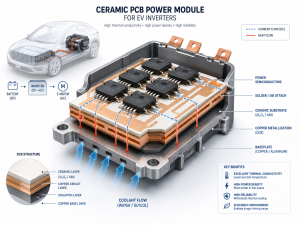
      Are Ceramic PCBs Expensive?

      Ceramic PCBs have extremely high performance. Because of this, many people assume they cost more. Ceramic board price can be higher than common materials. But this cost comes with advantages that help reduce risks in the long run.
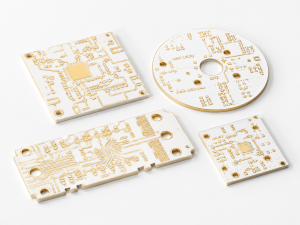
      Ceramic boards help lower failure rates. They also support higher power levels. They reduce heat-related damage.

      Many ceramic printed circuit board manufacturers now offer cost-effective options. Improved production methods have made ceramic PCBs more accessible. As technology grows, the price gap continues to shrink.

      So yes, ceramic PCBs can be more expensive, but the value is strong. They bring stable and safe performance that protects the final product.

      What Affects Ceramic Board Price?

      Ceramic board price depends on several factors. Each factor influences the final cost.

      • 1. Material Type

      Different ceramic materials have different costs. Aluminum nitride, for example, offers very high thermal conductivity. Because of this, it often costs more. Alumina is more affordable and works well for many applications.

      • 2. Board Thickness

      Thicker boards use more material. This increases the price.

      • 3. Layer Count

      A single-layer ceramic PCB costs less than a multilayer design. Multilayer boards need extra processes and bonding methods. This adds complexity and raises cost.

      • 4. Conductive Layer

      Ceramic PCBs use thick-film or thin-film metallization. Each method has its own cost. Silver, gold, and copper can also influence the total price.

      • 5. Manufacturing Technology

      Ceramic PCBs require special equipment. Some boards need laser cutting. Some need advanced firing ovens.

      • 6. Design Complexity

      A simple design is cheaper. A design with dense pads, small traces, and tight spacing costs more.

      • 7. Order Quantity

      Large orders usually cost less per unit. Smaller orders can be more expensive.

      • 8. Surface Treatment

      Extra surface finishes add cost. Gold plating or special coatings improve durability and performance, but they also increase the price.

      • 9. Testing Requirements

      Some industries need strict tests. These tests help ensure quality. Extra testing adds cost but provides more assurance.

      What Is a Ceramic Printed Circuit Board? Ceramic Board Price

      Even with these factors, ceramic board price has become more competitive. Many ceramic printed circuit board factories offer flexible options to fit different budgets.

      What Are the Types of Ceramic Circuit Board?

      Ceramic circuit boards come in several types. Each one supports different needs.

      • Thick-Film Ceramic PCB: Conductive paste is printed onto the ceramic surface. It offers stable performance at a reasonable cost.
      • Thin-Film Ceramic PCB: Thin-film boards offer high precision. They use vacuum deposition to create fine lines.
      • DBC (Direct Bonded Copper) Ceramic PCB: In this type, copper is bonded directly to the ceramic. It offers incredible thermal performance.
      • Hybrid Ceramic PCB: This type combines ceramic and other materials. It improves performance while keeping cost flexible.

      Each type has its own unique benefits. The specific choice depends on your application and design requirements.

      How Does a Ceramic Printed Circuit Board Work?

      Ceramic printed circuit boards work by carrying signals and power across conductive layers on a ceramic base. The ceramic material holds the circuit firmly and keeps heat under control.

      Heat moves through ceramic at a fast rate. This keeps components cool. The stable base also prevents bending, which helps protect tiny circuit paths.

      The conductive layer, whether thick-film or thin-film, passes signals without losing accuracy. Ceramic material supports smooth transmission.

      When power increases, ceramic handles the stress. Its high thermal conductivity spreads heat quickly. This helps maintain stable performance even under heavy load.

      Because of this balance of temperature management and strong reliability, ceramic printed circuit boards support long-term use without problems.

      Why Use a Ceramic Base Print Circuit Board?

      Ceramic base print circuit board brings solid benefits. They were chosen because of their good stability, good heat dissipation, and long service life.

      Ceramic boards protect components from heat. They keep signals clean. They support high-power loads without losing accuracy. Because they resist chemicals and moisture, they also stay strong in demanding environments.

      What Are the Advantages of Ceramic Printed Circuit Boards?

      Ceramic PCBs offer numerous advantages because they provide reliable and robust performance.

      • 1. Excellent Thermal Conductivity

      Ceramic moves heat fast. This helps cool components. It also reduces heat-related problems.

      • 2. High Mechanical Strength

      Ceramic materials resist stress. They do not deform easily. This helps protect the circuit.

      • 3. Stable in Harsh Environments

      Ceramic stays strong even when temperatures rise. It also resists chemicals and moisture.

      • 4. Long Lifespan

      Ceramic PCBs last a long time. They support heavy-duty work without breaking down.

      • 5. Low Dielectric Loss

      This feature helps improve signal quality. Many RF devices rely on this benefit.

      • 6. Strong Reliability

      Ceramic printed circuit boards offer stable and predictable performance. They help reduce unexpected issues.

      • 7. Compact Design Possibility

      They support high-density layouts. This helps shrink overall product size.

      What Is a Ceramic Printed Circuit Board? Ceramic Board Price

      What Is the Difference Between Ceramic PCB and FR4?

      Ceramic and FR4 have different qualities. Each one serves a specific purpose.

      • 1. Thermal Performance

      Ceramic handles heat much better. FR4 cannot match ceramic in this area. Devices that generate strong heat prefer ceramic.

      • 2. Mechanical Strength

      Ceramic has stronger stability. FR4 is easier to bend. Ceramic protects the circuit better in tough environments.

      • 3. Electrical Properties

      Ceramic has better dielectric performance. It helps support high-frequency signals with lower loss.

      • 4. Cost

      FR4 is cheaper. Ceramic costs more but offers better performance.

      • 5. Application Field

      FR4 works well for common devices. Ceramic is used for high-end, high-power, and high-temperature applications.

      Where Are Ceramic Printed Circuit Boards Used?

      Ceramic printed circuit boards are used in many advanced applications. Their strength and heat-handling ability make them ideal for demanding work.

      • LED Lighting Systems: High-power LEDs use ceramic boards to stay cool. This helps extend LED lifespan.
      • Automotive Electronics: Ceramic PCBs support engine control units, sensors, and power modules. They can handle vibration and heat.
      • Medical Devices: Medical tools need stable circuits. Ceramic PCBs support imaging equipment and diagnostic devices.
      • Aerospace Systems: Ceramic offers strong reliability. Aircraft and satellites depend on stable performance in extreme conditions.
      • Power Electronics: Devices that handle high power depend on ceramic. The material helps reduce heat and improve safety.
      • Communication Devices: High-frequency modules use ceramic because of its low dielectric loss.
      • Industrial Control: Robotic systems and automation equipment rely on ceramic PCBs for safe performance.

      These industries trust ceramic because it delivers powerful and dependable results.

      What Materials Do Ceramic Printed Circuit Board Manufacturers Use?

      Ceramic printed circuit board manufacturers use several popular materials. Each one supports different needs.

      • 1. Alumina (Al₂O₃)

      This is the most common ceramic material. It offers balanced cost and performance.

      • 2. Aluminum Nitride (AlN)

      This material has high thermal conductivity. It handles heat extremely well. It is ideal for high-power devices.

      • 3. Beryllium Oxide (BeO)

      BeO offers excellent heat performance. It is used less often because of handling restrictions. Some high-end applications still use it.

      • 4. Zirconia

      Zirconia offers high strength. It is used for certain structural needs.

      BEST Technology will select materials based on your requirements. We will consider heat resistance, strength, cost, and performance. This ensures the final product meets your expectations.

      How to Manufacture Ceramic Printed Circuit Board?

      Ceramic PCB manufacturing involves several steps. Each step ensures quality and stability.

      • Material Preparation: Ceramic sheets are prepared in controlled environments. They must be clean and smooth.
      • Metallization: Conductive layers are added. This can be done through thick-film or thin-film processes. The metallization forms the circuit traces.
      • Printing: For thick-film boards, conductive paste is printed onto the ceramic surface. Precision is important.
      • Firing: The board is placed in a high-temperature oven. This step sinters the material and bonds the traces securely.
      • Laser Machining: Some designs need small holes or fine cuts. Lasers provide accurate shaping.
      • Plating and Surface Finish: Surface finishes improve reliability. They also protect the surface.
      • Testing: Each board is tested to ensure proper performance.
      • Final Inspection: We will inspect the circuit boards, including alignment, trace quality, and strength.

      Conclusion:

      Ceramic printed circuit board offers powerful performance, fast heat transfer, strong mechanical durability, and stable electrical properties. It supports high-power systems, advanced sensors, medical devices, LED technology, and automotive electronics. While ceramic board price can be higher than standard boards, the value is strong.

      If you need high-quality ceramic printed circuit boards or want a quote, feel free to contact: sales@bestpcbs.com

      You may also like

      Meet EBest Circuit (Best Technology) at Southern Manufacturing & Electronics 2026 – Booth K60

      November 4th, 2025

      Exciting news for all PCB designers, engineers and related industries!

      EBest Circuit (Best Technology), one of China’s most trusted PCB manufacturing and assembly partners, is thrilled to announce our participation at Southern Manufacturing & Electronics 2026, taking place in the UK from February 2nd–5th (Western Time). You’ll find us at Booth No. K60 — ready to connect, collaborate, and inspire.

      If you missed meeting us at New Tech or PCB West, this is your perfect opportunity to catch up with our team in person!

      Meet EBest Circuit (Best Technology) at Southern Manufacturing & Electronics 2026 – Booth K60

      What You’ll See at Booth K60

      At the show, you’ll get hands-on insights into our advanced PCB manufacturing and assembly technologies. Our engineers will be available to discuss every step of the process — from PCB rapid prototyping to low and high-volume production — and demonstrate how we achieve precision, reliability, and speed in every board we produce.

      Visitors can explore a full spectrum of PCB solutions, including:

      Our full turnkey service covers everything from component sourcing, PCB fabrication, SMT assembly, testing, programming, to final system integration—all handled under one roof for seamless project execution.

      What You’ll Learn

      During the exhibition, our engineering team will be available to discuss:

      • How we minimize component wastage through process optimization
      • Strategies to reduce production costs and shorten lead times
      • The latest trends in PCB technology
      • Best practices for reliable high-density interconnect (HDI) designs

      Whether you are in the early stages of product design or managing mass production, our experts will share actionable insights to help streamline your next project.

      Event Details

      Show Opening Times:

      • Tuesday, February 3: 09:30 – 16:30
      • Wednesday, February 4: 09:30 – 16:30
      • Thursday, February 5: 09:30 – 15:30

      Address: Farnborough International Exhibition Centre, UK – Hall 1

      Meet EBest Circuit (Best Technology) at Southern Manufacturing & Electronics 2026 – Booth K60

      If you want to know more about this showcase, click below:

      Southern Manufacturing & Electronics 2026.

      Why Work with EBest Circuit (Best Technology)?

      • 19+ years experienced in PCB manufacturing
      • Wide Product Range: Ceramic PCB, HDI, Heavy Copper, IC Substrate & more
      • One-Stop Services: PCB Design, Assembly, Testing, Box Build
      • Full Certifications: ISO9001 | ISO13485 | IATF16949 | AS9100D | UL | RoHS
      • FREE Stack-Up Suggestions
      • Free DFM, DFA and DFT check
      • 100% original components from authorized distributer
      • 100% Testing – Flying probe, function testing, ICT, etc
      • Quality control system – X-ray, AOI, FAI
      • IPC class II, IPC class III, IPC 3/A standard

      Join Us in the UK

      If you missed meeting us at New Tech or PCB West, this is your next chance to connect in person. Stop by our booth to see how we’re advancing PCB performance through innovation, precision, and dedication to quality.

      We look forward to meeting you in Farnborough, UK, and discussing how EBest Circuit (Best Technology) can support your next electronics project.

      You may also like

      Hermetic Ceramic Package Manufacturer, Direct From Factory

      October 30th, 2025

      How to design hermetic ceramic package? Let’s discover types, benefits, applications, design spec and guide, production process for hermetic ceramic package.

      Are you worried about these problems?

      • Does your chip’s lifespan and reliability suffer from moisture intrusion and corrosion in harsh environments?
      • Is high-power chip performance constrained by heat buildup, limiting its full potential?
      • Are miniaturization and high-frequency requirements restricted by packaging size and signal integrity limitations?

      As a hermetic ceramic package manufacturer, EBest Circuit (Best Technology) can provide you service and solutions:

      • Customized Solutions: Full-process collaborative development from material formulation to structural design, tailored to chip characteristics for stable operation across -55°C to 200°C temperature ranges.
      • Thermal Management Optimization: High-thermal-conductivity ceramics (Al₂O₃/AlN) combined with thermal via arrays and metal heat sinks, reducing thermal resistance by 30% for 10W-class chips.
      • High-Density Integration Support: HTCC/LTCC fine-pitch technology (0.5mm lead spacing, 50ÎŒm line/space) enabling compact packaging with maintained high-frequency performance and signal integrity.

      Welcome to contact us if you have any inquiry for hermetic ceramic package: sales@bestpcbs.com.

      What Is Hermetic Ceramic Package?

      A hermetic ceramic package is a special ceramic housing used to encapsulate high-reliability electronic components such as chips, sensors, and MEMS. Its core lies in the tight bonding between the ceramic substrate and a metallized sealing structure (such as a cover plate or pins), forming a completely sealed cavity that blocks the penetration of external gases and moisture. This hermeticity ensures that the internal sensitive components are protected from contamination and degradation under harsh environments (high temperature, humidity, corrosion), thereby achieving long-term stable operation of the electronic device.

      What Is Hermetic Ceramic Package?

      What Are Types of Hermetic Ceramic Packages?

      Ceramic Dual In-line Package (CDIP)

      • Structure: Two rows of parallel leads extend from both sides of the ceramic housing, with a typical lead pitch of 2.54 mm (0.1 inch).
      • Features: Classic package form, easy to solder through-hole (THT), high mechanical strength.
      • Applications: Early CPUs, memory, military standard devices, high-reliability analog circuits.

      Ceramic Quad Flat Package (CQFP)

      • Structure: Four outward-extending “gull-wing” leads on all four sides, with a typically small lead pitch (e.g., 0.5 mm, 0.65 mm, 0.8 mm).
      • Features: High lead density, suitable for surface mount technology (SMT), good heat dissipation and electrical performance.
      • Applications: High-frequency/RF devices, high-end processors, aerospace electronics.

      Ceramic Leadless Chip Carrier (CLCC/LCCC)

      • Structure: Metallized pads on all four sides (no external leads), directly connected to the PCB via solder. Mostly square in shape.
      • Features: Small size, no lead stress issues, good vibration resistance, excellent high-frequency characteristics.
      • Applications: Spacecraft, satellite payloads, high-reliability communication modules, MEMS sensor packaging.

      Ceramic Pin Grid Array (CPGA)

      • Structure: An array of vertically arranged pins (pin-shaped) on the bottom, soldered via sockets or through-holes.
      • Features: High pin density, excellent electrical performance and heat dissipation (especially when paired with a metal cap or heatsink).
      • Applications: High-performance CPUs, FPGAs, ASICs, and other devices requiring a large number of I/O pins and heat dissipation.

      Ceramic Ball Grid Array (CBGA)

      • Structure: An array of solder balls (replacing leads) is located at the bottom, allowing direct reflow soldering onto the PCB.
      • Features: Extremely high I/O density, excellent electrothermal performance (low inductance, good heat dissipation path), but difficult to rework.
      • Applications: VLSI, high-end graphics processors, network processors.

      Ceramic Small Outline Package (CSOP)

      • Structure: Similar to CQFP, but narrower and longer, with gull-wing leads on two or four sides (usually fewer pins than CQFP).
      • Features: More space-saving than CDIP, suitable for surface mounting.
      • Applications: Memory, medium-density logic devices.
      What Are Types of Hermetic Ceramic Package?

      What Are Advantages of Hermetic Ceramic Packages?

      • Superior Hermeticity: Achieves absolute sealing via metal brazing or glass sealing processes, blocking moisture, dust, salt mist, chemical contaminants, and harmful gases. Internal environment controlled with dry inert gas (e.g., nitrogen) or vacuum for long-term stability.
      • Extreme Environment Reliability: Operates across -55°C to +200°C+ temperature range (varies by ceramic type). Withstands high-pressure/vacuum environments in deep sea, aviation, and aerospace. Radiation-resistant for space applications. Resists mechanical shock and vibration via high-strength ceramic housing.
      • Outstanding Material Properties: High insulation resistance (>10ÂčÂČ Î©) prevents signal crosstalk and ensures safety for high-frequency/high-voltage devices. Thermal management via high-thermal-conductivity ceramics (e.g., AlN, 170-230 W/mK) efficiently dissipates chip heat. Low coefficient of thermal expansion (CTE) matches silicon chips to minimize thermal stress cracking. Chemically stable, corrosion-resistant, and oxidation-resistant.
      • Superior Electrical Performance: Low dielectric constant and loss reduce signal delay, enhancing performance for high-frequency/radio-frequency devices (e.g., 5G, radar). Stable parasitic parameters prevent environmental drift of capacitance/inductance. Metal lids provide electromagnetic interference (EMI) shielding.
      • Longevity and Durability: Decades-long lifespan in aerospace, medical implants, and other high-reliability fields. Ceramic materials avoid plasticizer evaporation, maintaining performance over time (superior to plastic packaging).
      • Multi-Functional Integration Adaptability: Supports high-density interconnection via HTCC/LTCC processes, integrating passive components (resistors/capacitors). Compatible with optical windows (e.g., laser packaging) and RF feedthrough structures. Adaptable to various high-reliability package formats (DIP, QFP, BGA, LCC).

      What Are Applications of Hermetic Ceramic Package?

      • Satellites and Space Probes: Spacecraft control systems, onboard computers (radiation resistant, withstands drastic temperature changes in vacuum). High-precision sensors (e.g., gyroscopes, temperature sensors).
      • Missiles and Radar Systems: Missile guidance chips (resistant to supersonic flight vibrations and high temperatures). Phased array radar T/R modules (high-frequency signal stability requirements).
      • Avionics: Engine control units (ECUs), black box data recorders (shock resistant, fireproof).
      • Life Support Implantable Devices: Pacemakers, nerve stimulators (absolutely sealed to prevent bodily fluid corrosion, lifespan > 10 years).
      • Extracorporeal High-End Medical Devices: High-voltage sensors for MRI scanners, surgical robot control modules (electromagnetic interference resistant).
      • Deep-Sea Drilling and Oil & Gas Extraction: Downhole sensors (resistant to 200°C high temperature, 170MPa high pressure, and hydrogen sulfide corrosion).
      • Nuclear Power Plants and High-Radiation Environments: Reactor monitoring sensors (resistant to neutron/gamma-ray radiation).
      • New Energy Power Systems: High-voltage IGBT modules (aluminum nitride substrate for heat dissipation, moisture-proof).
      • Safety Core Systems: Airbag controller and brake control unit (withstanding temperature cycling from -40°C to 150°C).
      • Electric vehicle power module: Silicon carbide (SiC) inverter package (high thermal conductivity AlN ceramic heat dissipation).
      • 5G/6G RF front-end: Millimeter-wave power amplifier (low-loss ceramic substrate ensures high-frequency signal integrity).
      • Optical communication module: Laser diode (LD) and photodetector (PD) package (dustproof and oxidation-proof optical path protection).
      • Quantum computing device: Superconducting quantum bit chip package (maintained in ultra-vacuum/ultra-low temperature environments).
      • High-precision sensor: MEMS inertial navigation unit (protected against moisture-induced drift errors).

      Hermetic Ceramic Package Design Specification

      Technical ParameterSpecification
      Hermeticity Standard≀1×10⁻⁞ atm·cc/s He
      Internal Moisture Content≀100 ppm
      Substrate Ceramic TypeAl₂O₃ / AlN / LTCC / HTCC
      Thermal ConductivityAl₂O₃: 20-30 W/mK ; AlN: 170-230 W/mK
      Coefficient of Thermal Expansion (CTE)Al₂O₃: 6-7 ppm/K ; AlN: 4-5 ppm/K
      Dielectric ConstantAl₂O₃: 9-10 @1MHz ; LTCC: 5-8 @1GHz
      Pin/Ball Pitch0.5 mm (CQFP) ; 1.27 mm (CDIP)
      Layer CapacityHTCC: ≀100 layers ; LTCC: ≀30 layers
      Line Width/SpacingHTCC: 100 ÎŒm ; LTCC: 50 ÎŒm
      Insulation Resistance>10ÂčÂČ Î© (500V DC)
      High-Frequency LossDielectric Loss Tangent: Al₂O₃: 0.0002 ; LTCC: 0.002
      Operating Temperature Range-55°C to +200°C (AlN substrate up to 300°C)
      Temperature Cycle Life1,000 cycles of -65°C↔150°C
      Flexural StrengthAl₂O₃: 300 MPa ; AlN: 350 MPa
      Sealing ProcessAuSn Soldering / Glass Sealing
      Metallization LayerW/Mo Metallization + Ni/Au Plating

      Hermetic Ceramic Package Design Guideline

      1. Define Requirements & Performance Metrics

        • Environmental Adaptation: Specify operating temperature range (-55°C to +200°C+, extendable to 300°C with AlN), humidity (≀100ppm moisture content), pressure (matching deep-sea -100kPa to aerospace +100kPa), and corrosive gases (e.g., H?S≀10ppm, Cl?≀5ppm).
        • Electrical Parameters: Signal frequency classification (1GHz/5GHz/10GHz), impedance matching accuracy (50±2Ω), isolation ≄100dB@1GHz, and current density calculation for power pads (e.g., Au80Sn20 solder ≀10A/mm?).
        • Reliability Standards: Aerospace compliance with NASA/ESA, medical implants require ISO 13485 & ISO 10993 biocompatibility; lifespan validation via 1000 cycles of -65°C?150°C temperature cycling and 20G vibration testing.

        2. Material Selection & Matching

          • Ceramic Substrates: Al?O? (90-94% purity) for general applications (thermal conductivity 20-30W/mK), AlN for high-power scenarios (170-230W/mK), BeO restricted to non-medical uses due to toxicity.
          • Metallization & Sealing: W/Mo paste metallization matched to CTE (Al?O? 6-7ppm/K, AlN 4-5ppm/K); sealing rings use Kovar alloy (CTE 5ppm/K) or CuW composite; solder prefers Au80Sn20 (eutectic 280°C) ensuring PCB reflow ≀265°C doesn’t compromise hermeticity.

          3. Structural Design & Geometric Rules

            • Sealing Ring Design: Glass seal diameter formula = wall thickness ×0.7 + wire diameter; lid sealing area minimum distance ≄1.27mm (0.050 inch).
            • Lead Layout: Standard pitch 0.050/0.100 inch (1.27/2.54mm); max lead count formula = integer [(side length – 2×wall thickness – 0.040 inch)/pitch]; RF pads require 50Ω impedance (line width/spacing calculated via substrate dielectric constant).
            • Cavity Design: Depth reserves space for chip + adhesive + interconnect wires; heat dissipation path via thermal vias (≄100ÎŒm diameter) or bottom CuW heat sink.

            4. Wiring, Thermal & Electrical Optimization

              • Multilayer Wiring: HTCC/LTCC integrates power/ground planes to reduce inductance; shielding layers minimize crosstalk; high-speed lines require impedance control (e.g., 100Ω differential pairs).
              • Thermal Management: AlN substrate thermal via arrays; bottom CuW heat sink (200W/mK conductivity); via count calculated by chip heat dissipation (e.g., ≄50 vias of φ0.3mm for 10W chip).
              • Feedthrough Design: Minimum line width 0.08mm, spacing 0.2mm; ceramic perimeter thickness ≄0.5mm for hermeticity.

              5. Hermetic Sealing Process Selection

                • Solder Sealing: Au80Sn20 solder reflow at 280-320°C in vacuum/nitrogen, achieving ≀1×10?? atm·cc/s He leakage.
                • Glass Frit Sealing: Glass paste screen-printed and melted at 400-450°C, cost-effective but avoids complex wiring areas; suitable for ceramic-ceramic/metal packages.
                • Eutectic Sealing: Kovar alloy and ceramic ring eutectic reaction at 280°C for metal lid sealing.

                6. Design Verification & Testing

                  • Hermeticity Testing: Helium mass spectrometry (sensitivity 10??? atm·cc/s) combined with fluorocarbon bubble test; internal moisture ≀100ppm (aerospace grade).
                  • Environmental Reliability: Temperature cycling (-65°C?150°C×1000 cycles), mechanical shock (50G), vibration (5-2000Hz, 20G).
                  • Electrical Testing: Signal integrity (eye diagram), insulation resistance (>10??Ω), voltage breakdown (AC/DC).

                  7. Design for Manufacturing (DFM) & Document Delivery

                    • DFM Collaboration: Early engagement with manufacturers (e.g., Kyocera, NTK) to optimize lamination misalignment ≀20ÎŒm and sintering shrinkage compensation (HTCC 15-20%, LTCC 12-15%).
                    • Document Specifications: ASME Y14.5M-compliant drawings (critical dimensions ±0.1% tolerance), 3D STEP models; process windows specify lid parallelism ≀0.05mm and solder volume tolerance ±5%.
                    • Validation Files: Include process flowcharts, critical parameter monitoring tables (e.g., sintering temperature ±5°C), and failure mode analysis reports.
                    Hermetic Ceramic Package Design Guideline

                    Hermetic Ceramic Package Manufacturing Processes

                    1. Ceramic Green Sheet Preparation

                      • Slurry Optimization: Al₂O₃ slurry incorporates 0.5-2wt% dispersants (e.g., phosphate esters) for stability; AlN slurry adds 0.3-0.8wt% sintering aids (e.g., Y₂O₃). Ball milling uses ZrO₂ balls at 60-100rpm for 8-12h to achieve D50≀2ÎŒm particle size.
                      • Tape Casting Precision: Doctor blade gap error ≀±2ÎŒm, web speed 0.1-0.5m/min, drying gradient 40-60°C→80-100°C to prevent cracking/blistering.
                      • Punching Accuracy: Hard alloy dies with 15-30° edge angle, vacuum-assisted alignment ensures ±5ÎŒm precision.

                      2. Metallization & Interconnect Refinement

                        • Via Filling: UV laser (355nm) drills 50-200ÎŒm holes at 20-50J/cmÂČ; paste viscosity 50-150Pa·s, ultrasonic cleaning removes residue.
                        • Screen Printing Calibration: 325-mesh SS screens, 2-4N/cm squeegee pressure, 50-100mm/s speed; first-article inspection via profilometer (±2ÎŒm).
                        • Lamination Alignment: 70-90°C (LTCC)/80-110°C (HTCC), 20-30MPa, 15-30min hold; X-ray tomography detects ≀3% voids.

                        3. Co-Firing Critical Parameters

                          • Debinding Curve: Three-stage ramp (RT→200°C/2h→350°C/4h→500°C/6h), N₂ flow 5-10L/min.
                          • Sintering Atmosphere: HTCC in H₂ (dewpoint -40°C, O₂≀10⁻Âč⁰Pa); LTCC in air with controlled O₂ to prevent oxidation.
                          • Shrinkage Compensation: Laser-based dimensional monitoring with 0.01% resolution; pre-sintering samples calibrate compensation coefficients.

                          4. Post-Processing Enhancement

                            • Grinding/Polishing: Diamond wheel (120#) → Al₂O₃ belt (320#) → CMP to Ra≀0.2ÎŒm, thickness ±5ÎŒm.
                            • Electroless Plating: Ni (85-90°C, pH 9-10, 30-45min) → Au (cyanide-based, 0.5-1ÎŒm), porosity ≀5/cmÂČ.
                            • Solder Preform: AuSn sheets (Au80±0.5wt%/Sn20±0.5wt%) with ±5ÎŒm thickness; glass paste screen-printed at 10-20ÎŒm.

                            5. Chip Assembly & Sealing Expansion

                              • Die Bonding: Flip-chip bonder achieves ±10ÎŒm placement, 5-15g force, 250-300°C, 2-5s bonding; strength ≄50g.
                              • Lid Sealing: Kovar lids vacuum-brazed at 280-320°C (60±5s, 10⁻³Pa); ceramic lids glass-sealed at 400-450°C (10-15min).
                              • Gas Filling: Molecular pump evacuates to 10⁻⁔Pa; 99.999% N₂/Ar filled at 100-500kPa; O₂ sensor ensures ≀1ppm residual.

                              6. Rigorous Testing & Reliability Validation

                                • Hermeticity Testing: Helium mass spectrometry (10⁻ÂčÂČatm·cc/s sensitivity, 1.5bar, 30min); fluorocarbon bubble test at 125°C.
                                • Environmental Stress: -65°C↔150°C×2000 cycles; triaxial random vibration (5-2000Hz, 20G per axis).
                                • Failure Analysis: SEM/EDS for elemental mapping, FIB for cross-sectioning, metallography for interfacial evaluation.

                                7. Advanced Quality Control and Intelligent Manufacturing Integration

                                  • MES System Traceability: Implement full-process tracking via Manufacturing Execution System (MES), ensuring each batch/lot is traceable with real-time data logging (e.g., temperature, pressure, time) and compliance with MIL-STD-883/JEDEC J-STD-020 standards.
                                  • AOI & X-ray Inspection: Automated Optical Inspection (AOI) employs line width measurement systems (±1ÎŒm accuracy) for surface defects; X-ray CT scanning uses high-resolution detectors (50ÎŒm pixel size) to detect internal voids/delamination.
                                  • Failure Analysis Suite: SEM/EDS for microstructure/elemental analysis, FIB cross-sectioning for interfacial bonding evaluation, and thermal shock testing (-65°C to 150°C, 100 cycles) for accelerated reliability assessment.
                                  Hermetic Ceramic Package Manufacturing Processes

                                  Why Choose EBest Circuit (Best Technology) as Hermetic Ceramic Package Manufacturer?

                                  Reasons why choose us hermetic ceramic package manufacturer:

                                  • Advanced Multi-Material Thermal Management Solution: Our patented three-layer composite substrate (alumina-aluminum nitride-graphene) achieves thermal conductivity exceeding 200 W/m·K, 65% higher than conventional alumina. Coupled with micro-thermal via array design, it reduces chip hotspot temperature by over 20°C, significantly enhancing reliability for high-power devices.
                                  • Full-Scale Customizable Dimension Adaptation: Supporting ultra-small 0201 packages to large 200×200mm power modules, we offer minimum lead pitch of 0.25mm and scalable pin counts up to 1000+. This flexibility meets premium demands like 5G base stations and automotive IGBTs, enabling “one package, multi-chip” integration.
                                  • 72-Hour Rapid Prototyping Service: Leveraging modular design libraries and digital process platforms, we deliver end-to-end prototyping from concept to sample within 72 hours. Real-time remote parameter tuning (e.g. lead layout, sealing methods) shortens time-to-market by 40%.
                                  • Lead-Free Eco-Friendly Sealing System: Full adoption of Sn-Ag-Cu-Ti active solder enables direct ceramic-metal bonding without lead. Bonding strength increases by 30%, complying with EU ELV and Japanese JIS green standards to facilitate global certification.
                                  • Precision Batch Consistency Control: Through in-house powder synthesis and closed-loop sintering systems, we achieve CTE batch variation ≀2% and sheet resistance deviation ≀±5%. Key parameters (hermeticity, electrical performance) maintain standard deviation <3% in mass production, outperforming industry norms.
                                  • Long-Term Reliability Under Extreme Conditions: Our proprietary four-zone accelerated aging test (-65°C to 150°C for 1,500 cycles) combined with salt spray testing (5% NaCl for 96 hours, no corrosion) ensures stability for 15+ years in aerospace and deep-sea applications.
                                  • Cost Optimization Through DFM Algorithms: DFM algorithms automate material utilization and process path optimization, reducing energy consumption by 15% and waste by 20%. We provide design-cost linkage reports to achieve 10% cost reduction per unit without compromising performance.
                                  • Micro-Scale Sealing Innovation: Laser micro-hole array technology enables 10ÎŒm-class sealing micro-grooves on 0.5mm substrates. Paired with self-developed low-viscosity sealing glass, it ensures void-free, crack-free interfaces with hermetic leakage stable at ≀1×10⁻ÂčÂč Pa·mÂł/s.

                                  Welcome to contact us if you have any request for hermetic ceramic package: sales@bestpcbs.com.

                                  You may also like