PCB manufacturing PCB manufacturing
Home > Blog

ceramic substrate pcb

Ceramic Substrate PCB Manufacturer Design & Prototype| Fast Delivery, Custom Solutions
Monday, March 30th, 2026

Why Choose EBest for Your Ceramic Substrate PCB Needs?

EBest stands as your premier choice for Ceramic Substrate PCB manufacturing and prototyping. We deliver unmatched lead times, rigorous quality control, industry-leading certifications, and comprehensive support throughout your project. Our commitment to excellence ensures your Ceramic Substrate PCB projects are completed efficiently, reliably, and to the highest standards.

  • Fast Delivery: Industry-leading turnaround times for prototypes and mass production, meeting your critical project deadlines.
  • Superior Quality: Precision manufacturing with zero-defect tolerance, ensuring optimal performance and long-term reliability.
  • Certified Excellence: Compliant with ISO 9001, IPC-A-600, and other international quality and safety standards.
  • Expert Support: A dedicated engineering team provides end-to-end technical assistance, from design to delivery.

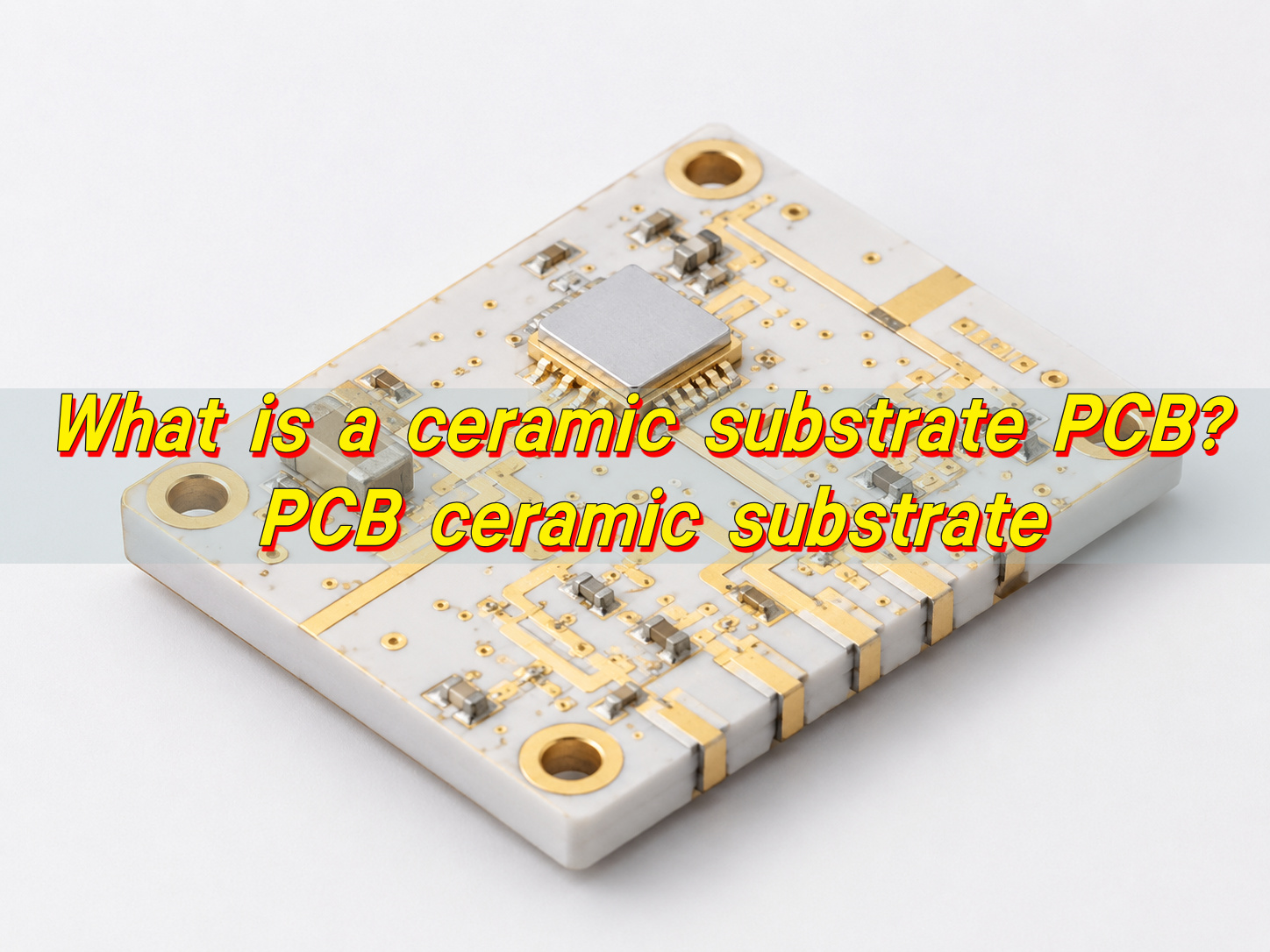
What is a Ceramic Substrate PCB?

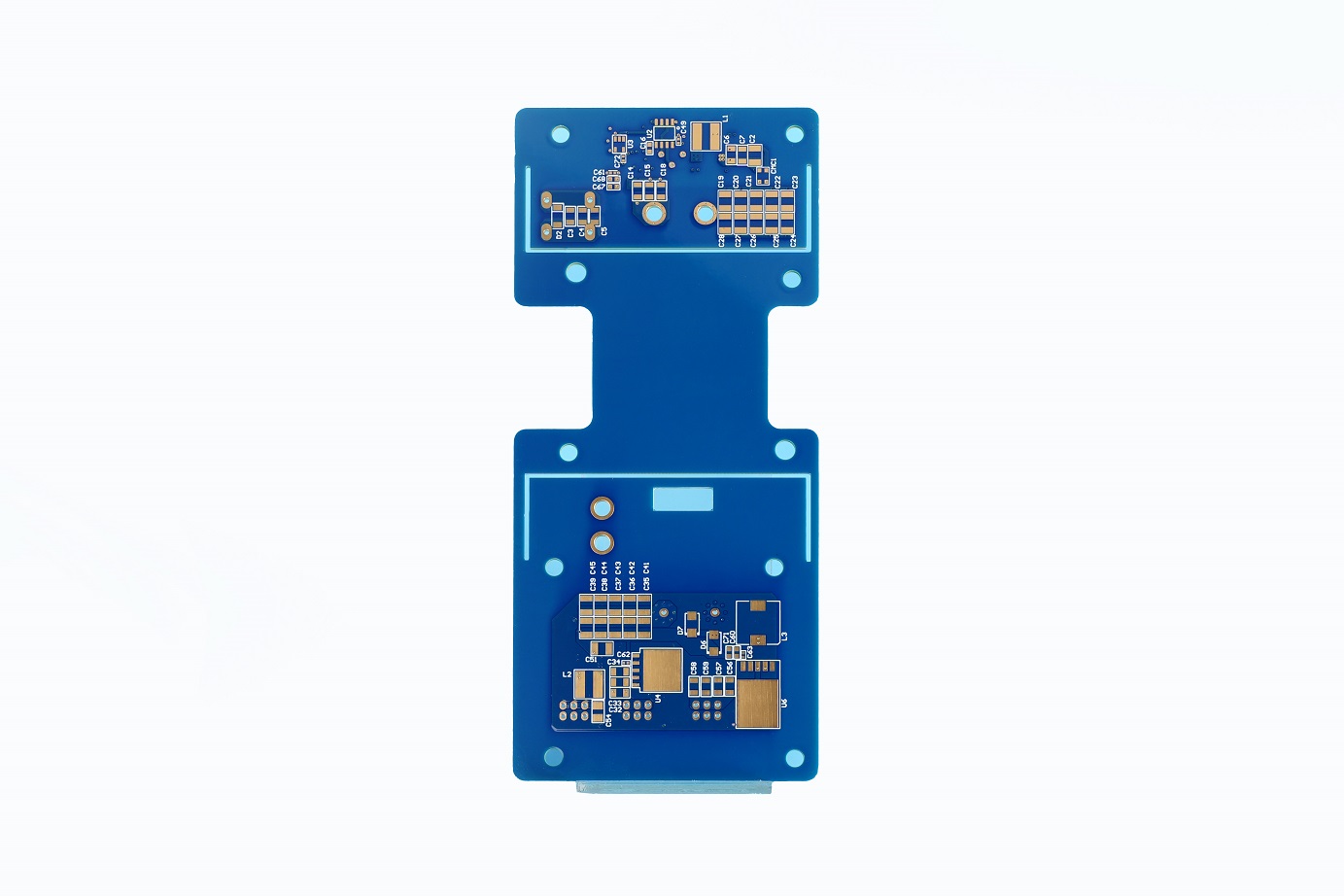
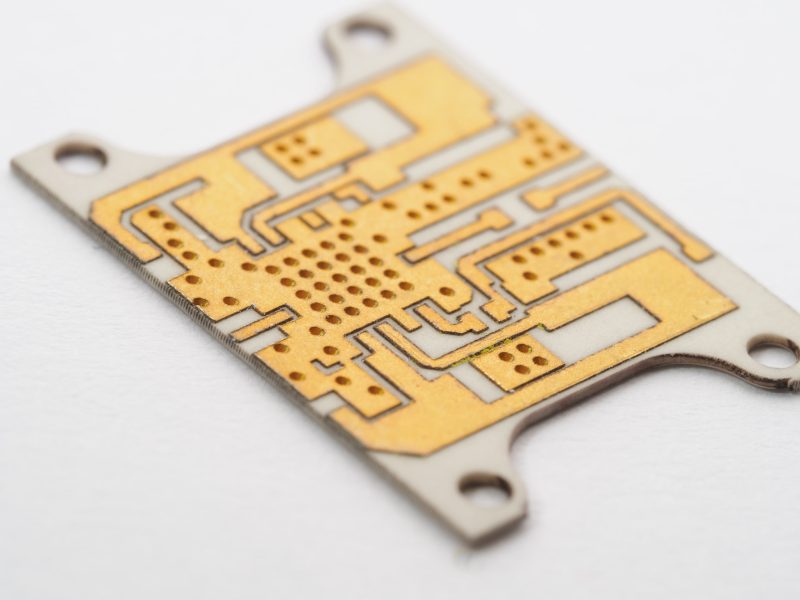
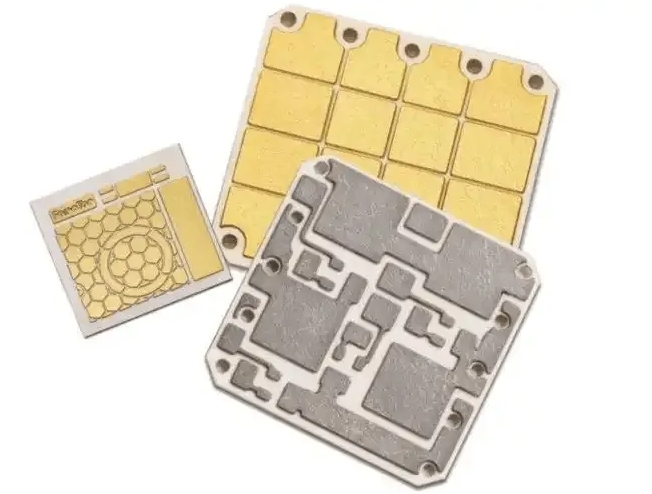
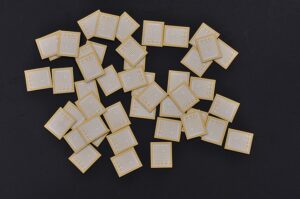
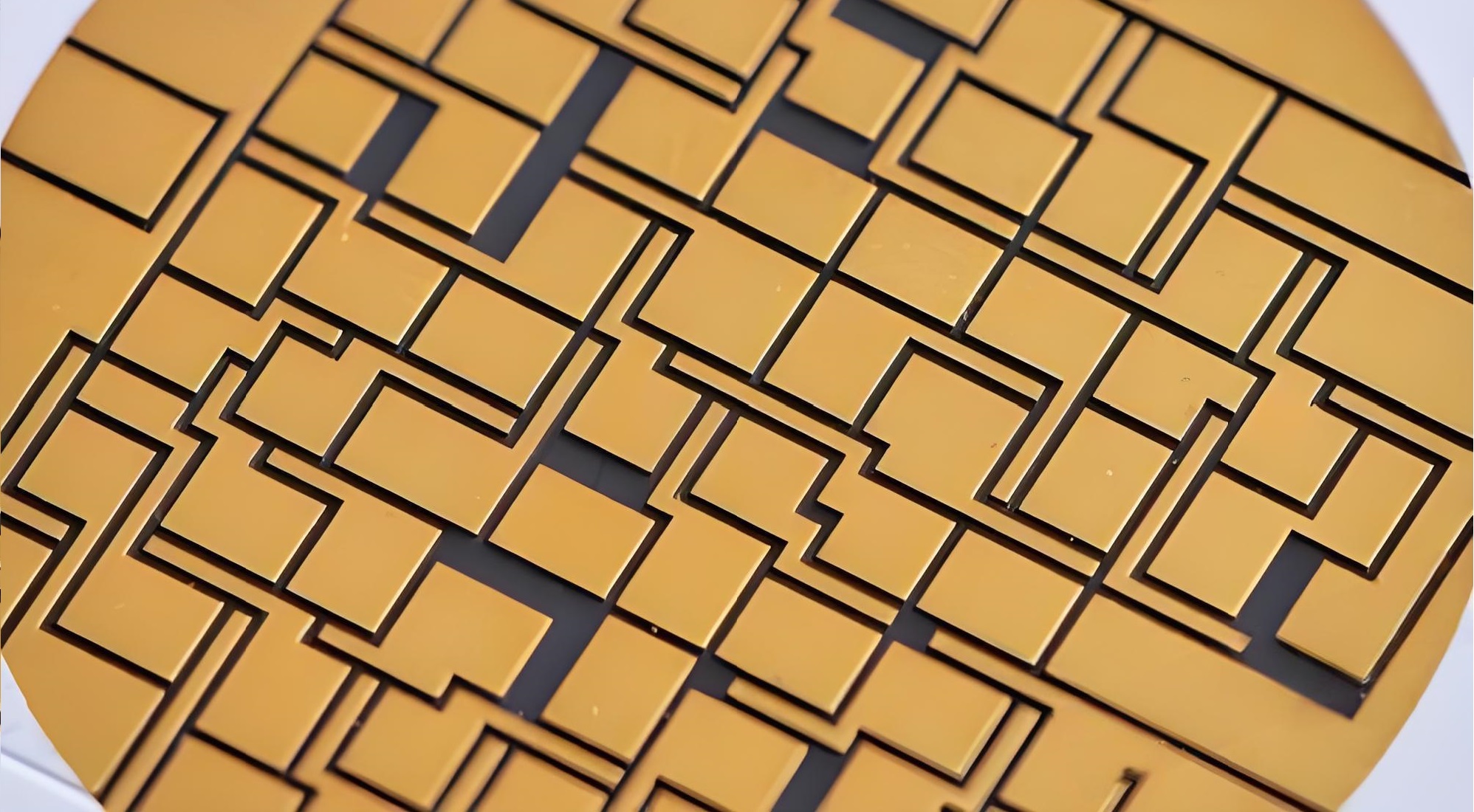
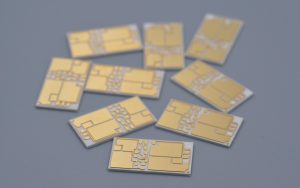
A Ceramic Substrate PCB is a specialized printed circuit board that uses ceramic materials (such as alumina Al₂O₃, aluminum nitride AlN, or silicon nitride Si₃N₄) as its base insulating layer instead of traditional organic materials like FR-4. These boards are engineered to excel in high-temperature, high-power, and high-frequency electronic applications where standard PCBs fail. The ceramic substrate provides exceptional thermal conductivity, electrical insulation, and mechanical stability, making it indispensable for modern, demanding electronics.

Ceramic Substrate PCB

Ceramic Substrate PCB Stackup

LayerMaterialThickness (Typical)Function
Top CopperElectrodeposited Copper1–5 oz (35–175 μm)Conductive traces, pads, and planes
Ceramic CoreAlumina (Al₂O₃) / Aluminum Nitride (AlN)0.25–2.0 mmInsulation, thermal management, structural support
Bottom CopperElectrodeposited Copper1–5 oz (35–175 μm)Conductive traces, pads, and planes
Surface FinishENIG / Immersion Silver / OSP0.05–0.5 μmProtect copper, improve solderability

Note: Multilayer ceramic substrate PCBs (LTCC/HTCC) feature alternating ceramic and conductive layers, typically up to 10–20 layers for high-density integration.

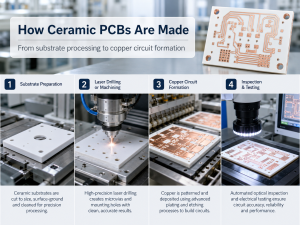
Ceramic Substrate PCB Manufacturing Process

Step 1: Ceramic Substrate Preparation

High-purity ceramic powders (Al₂O₃, AlN) are pressed into green sheets, precisely cut to size, and sintered at ultra-high temperatures (1,600–1,800°C) to form dense, rigid substrates with consistent material properties.

Step 2: Metallization & Circuit Patterning

Copper is bonded to the ceramic surface using advanced processes:

  • DBC (Direct Bonded Copper): Copper foil is fusion-bonded to ceramic at ~1,065°C.
  • DPC (Direct Plated Copper): Copper is electroplated onto a sputtered seed layer for fine-line precision.

Photolithography and etching define the circuit pattern, creating high-resolution traces and pads.

Step 3: Via Formation & Plating

Micro-vias are created using laser drilling for precision. The via walls are metallized through electroplating to establish vertical electrical connections between layers, critical for thermal and signal paths.

Step 4: Surface Treatment & Finishing

The board undergoes surface finishing (ENIG, immersion silver, etc.) to protect the copper circuitry and ensure reliable solderability during component assembly.

Step 5: Testing & Quality Assurance

Each Ceramic Substrate PCB undergoes rigorous electrical testing (continuity, insulation resistance), thermal cycling, and visual inspection to guarantee compliance with specifications and performance standards.

Ceramic Substrate PCB Design Guide

Designing a Ceramic Substrate PCB requires specialized knowledge to overcome inherent material challenges. Key pain points include material brittleness, CTE mismatch with components, thermal management, and fine-line manufacturing constraints. EBest’s engineering team provides expert guidance to navigate these challenges and optimize your design for success.

Key Design Considerations & Solutions

Material Compatibility & CTE Matching

  • Pain Point: A significant CTE mismatch between ceramic (5–7 ppm/°C) and silicon (4.5 ppm/°C) causes thermal stress, leading to solder joint fatigue and substrate cracking.
  • Solution: Select AlN (CTE ~4.5 ppm/°C) for silicon-based high-power devices. Use compliant materials and underfill in assembly to absorb stress.

Thermal Management Optimization

  • Pain Point: Inefficient heat dissipation leads to hotspots and component failure in high-power designs.
  • Solution: Maximize copper thickness in power paths, integrate thermal vias, and use large copper planes for heat spreading. AlN substrates offer 8–10x higher thermal conductivity than alumina.

Mechanical Stress & Fragility

  • Pain Point: Ceramic brittleness causes chipping and cracking during handling, assembly, or thermal cycling.
  • Solution: Avoid sharp corners; use rounded geometries. Design generous tolerances (+/–0.1 mm) and avoid V-cuts. Use robust panelization with thick connecting tabs.

Fine-Line & High-Density Design

  • Pain Point: Achieving fine line widths/spacing (<50 μm) is challenging with standard processes.
  • Solution: Utilize DPC technology for line widths down to 15 μm. Collaborate with EBest early for DFM analysis to ensure design manufacturability.

For flawless Ceramic Substrate PCB design, partner with EBest. Our experts provide complimentary DFM reviews and design optimization to ensure your project is built for performance and reliability.

Ceramic Substrate PCB Prototype: Rapid, Reliable, Custom

Prototyping Ceramic Substrate PCBs presents unique hurdles: long lead times, high costs, and difficulty in achieving consistent quality with low volumes. EBest specializes in rapid, high-quality Ceramic Substrate PCB prototyping, eliminating these barriers and accelerating your product development cycle.

Prototype Challenges & Our Solutions

Long Lead Times for Custom Prototypes

  • Challenge: Traditional ceramic PCB prototyping can take weeks, delaying product validation.
  • Solution: EBest offers rapid prototype services with industry-leading turnaround times, getting your boards in hand quickly.

High Cost for Low-Volume Runs

  • Challenge: High tooling and setup costs make small-batch prototyping prohibitively expensive.
  • Solution: We maintain flexible manufacturing lines optimized for low-volume, high-mix production, keeping prototype costs competitive.

Inconsistent Prototype Quality

  • Challenge: Achieving the same material and process quality in prototypes as in mass production is difficult.
  • Solution: Our prototypes use the exact same materials and production processes as full-scale manufacturing, ensuring reliable performance data.

Limited Design Iteration

  • Challenge: Cost and time constraints limit the number of design iterations possible.
  • Solution: Our efficient prototyping process allows for multiple design iterations, enabling you to refine and perfect your design before full production.

Trust EBest for your Ceramic Substrate PCB prototyping needs. We deliver fast, affordable, and production-quality prototypes to validate your design and accelerate your time-to-market.

How to Choose Ceramic Substrate PCB Raw Materials

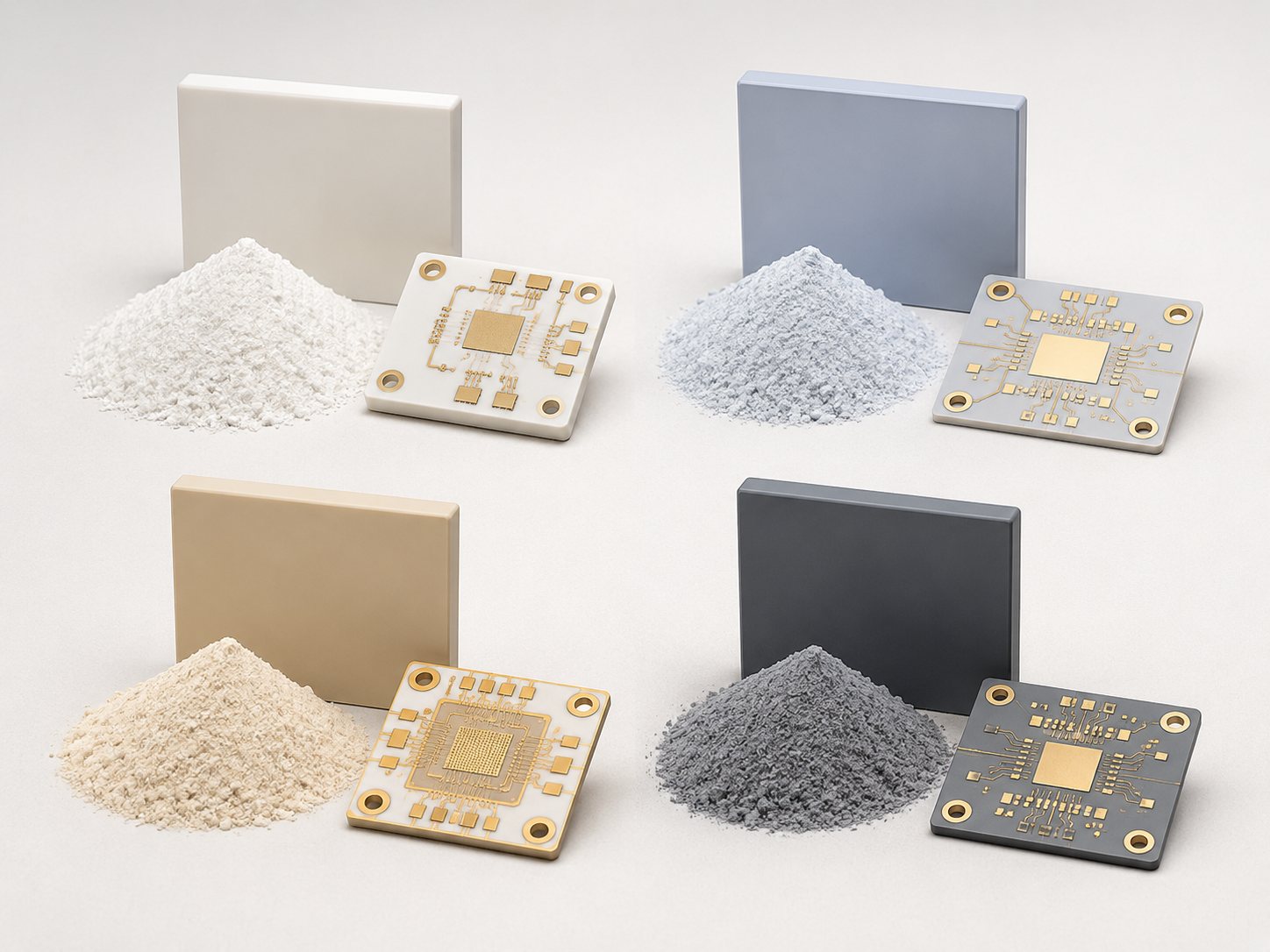
Selecting the right ceramic material is critical for balancing performance, cost, and application suitability. The table below compares the most common materials:

MaterialThermal Conductivity (W/m·K)CTE (ppm/°C)Dielectric Constant (εr)Key Applications
Alumina (96% Al₂O₃)20–25~7.09.5Consumer electronics, industrial control, LED lighting
Alumina (99% Al₂O₃)28–30~7.09.8Automotive electronics, medical devices, telecom
Aluminum Nitride (AlN)170–230~4.58.8High-power semiconductors, RF, EV power modules
Silicon Nitride (Si₃N₄)80–100~3.27.8Automotive, aerospace, high-reliability industrial

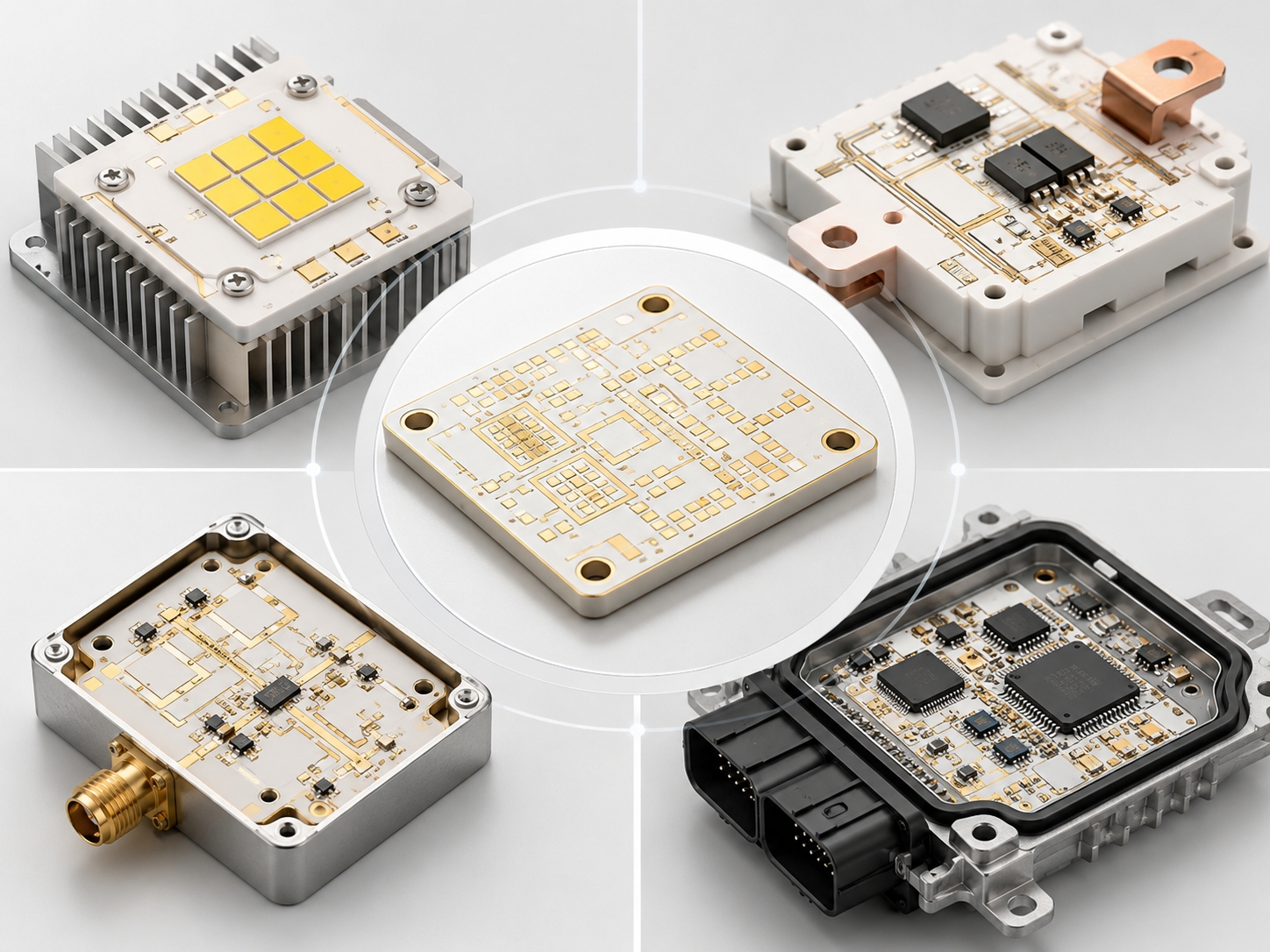
Ceramic Substrate PCB Applications

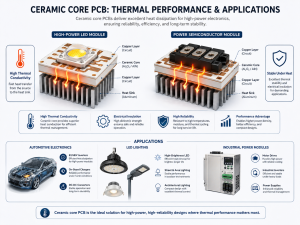
Ceramic Substrate PCBs are the backbone of high-performance electronics across critical industries, enabling innovation where thermal, electrical, and reliability demands are extreme.

Automotive Electronics

Ceramic Substrate PCBs are essential in electric vehicle (EV) powertrains, including IGBT modules, on-board chargers (OBC), and LED headlight drivers. They withstand extreme under-hood temperatures (-40°C to 150°C) and provide superior thermal management for high-voltage, high-power systems.

Communication & 5G Infrastructure

In 5G base stations, RF power amplifiers, and microwave systems, Ceramic Substrate PCBs (especially AlN) offer low dielectric loss and excellent thermal stability, ensuring signal integrity and efficient heat dissipation for high-frequency, high-power operation.

Industrial Automation & Power Electronics

Used in variable-frequency drives (VFDs), servo controls, and power supplies, these boards handle high power densities and harsh industrial environments. Their excellent thermal conductivity and mechanical strength ensure reliable operation in continuous-duty applications.

Medical Devices

Ceramic Substrate PCBs are used in precision medical equipment like ultrasound systems, patient monitors, and surgical lasers. They offer biocompatibility, high electrical insulation, and the ability to withstand repeated sterilization cycles, meeting strict medical device standards.

What Are the Key Advantages of Ceramic Substrate PCB Over FR4?

Ceramic Substrate PCBs offer transformative advantages over traditional FR-4 PCBs, particularly in high-performance applications. Key benefits include:

  • Superior Thermal Conductivity: Up to 1,000x higher than FR-4, enabling efficient heat dissipation.
  • Excellent Electrical Insulation: High dielectric strength prevents short circuits in high-voltage applications.
  • Extreme Temperature Resistance: Operates reliably from -50°C to over 350°C.
  • Mechanical Stability: High rigidity and resistance to warping under thermal stress.
  • Chemical Inertness: Resistant to most chemicals, ideal for harsh environments.

How Does Thermal Conductivity Impact Ceramic Substrate PCB Performance?

Thermal conductivity is the defining performance metric for Ceramic Substrate PCBs. It directly determines the board’s ability to dissipate heat generated by power components. Higher thermal conductivity (e.g., AlN at 200 W/m·K vs. alumina at 25 W/m·K) allows for:

  • Higher power density designs in smaller form factors.
  • Lower component operating temperatures, significantly increasing reliability and lifespan.
  • Elimination of bulky heat sinks, enabling more compact and efficient product designs.

What Are the Common Failure Modes in Ceramic Substrate PCBs?

The primary failure modes stem from thermal and mechanical stress:

  • Thermal Fatigue: CTE mismatch causes cyclic stress, leading to solder joint cracking or substrate delamination.
  • Mechanical Fracture: Brittleness leads to cracking from shock, vibration, or improper handling.
  • Metallization Degradation: Oxidation or poor adhesion of the copper layer causes open circuits.
  • Thermal Runaway: Inadequate heat dissipation leads to overheating and catastrophic failure.

Can Ceramic Substrate PCBs Be Used for High-Frequency Applications?

Absolutely. Ceramic Substrate PCBs, especially AlN and high-purity alumina, are ideal for high-frequency (RF/microwave) applications. They offer:

  • Low Dielectric Loss (tan δ): Minimizes signal attenuation and power loss.
  • Stable Dielectric Constant: Ensures consistent signal propagation across temperature variations.
  • Excellent High-Frequency Performance: Supports frequencies up to mmWave bands for 5G and radar systems.

What Is the Difference Between DBC and DPC Ceramic Substrate PCB?

DBC (Direct Bonded Copper) and DPC (Direct Plated Copper) are the two primary manufacturing technologies:

  • DBC: Copper foil is fusion-bonded to ceramic at high temperature. It is best for thick copper (up to 10 oz) and high-power applications. It offers excellent thermal performance but limited line resolution (~100 μm).
  • DPC: Copper is electroplated onto a sputtered seed layer. It enables ultra-fine line widths (<15 μm) for high-density, high-frequency designs. It is ideal for complex, miniaturized circuits.

Ceramic Substrate PCB FAQ

Q1: What is the maximum operating temperature for a Ceramic Substrate PCB?

A1: Ceramic Substrate PCBs can reliably operate at continuous temperatures up to 350°C, with short-term peaks exceeding 500°C—far exceeding the limits of FR-4.

Q2: Can you manufacture flexible Ceramic Substrate PCBs?

A2: While inherently rigid, specialized ceramic composites and LTCC (Low-Temperature Co-fired Ceramic) technologies can produce semi-flexible or 3D-shaped Ceramic Substrate PCBs for specific applications.

Q3: What is the minimum line width/spacing achievable?

A3: Using DPC technology, EBest can achieve line widths and spacing as fine as 15 μm, enabling high-density circuit designs.

Q4: Are Ceramic Substrate PCBs suitable for mass production?

A4: Yes. EBest operates automated production lines capable of high-volume, consistent manufacturing of Ceramic Substrate PCBs for industrial and automotive applications.

Q5: How do I get a quote for my Ceramic Substrate PCB project?

A5: Contact our sales team with your Gerber files, BOM, layer stackup, quantity, and target delivery date. We provide detailed, competitive quotes quickly.

Q6: What surface finishes are available for Ceramic Substrate PCBs?

A6: We offer ENIG (Electroless Nickel Immersion Gold), immersion silver, and OSP (Organic Solderability Preservative) to meet various assembly and reliability requirements.

Q7: Can you assemble components on Ceramic Substrate PCBs?

A7: Yes, EBest provides full turnkey services, including high-precision SMT and through-hole component assembly for Ceramic Substrate PCBs.

Ready to Start Your Ceramic Substrate PCB Project?

EBest is your trusted partner for all Ceramic Substrate PCB design, prototyping, and manufacturing needs. With our technical expertise, fast delivery, and commitment to quality, we ensure your project succeeds. Contact us today to discuss your requirements and get a free quote.

Email: sales@bestpcbs.com
Multilayer Ceramic Substrate PCB, Ceramic PCB Manufacturer
Tuesday, April 15th, 2025

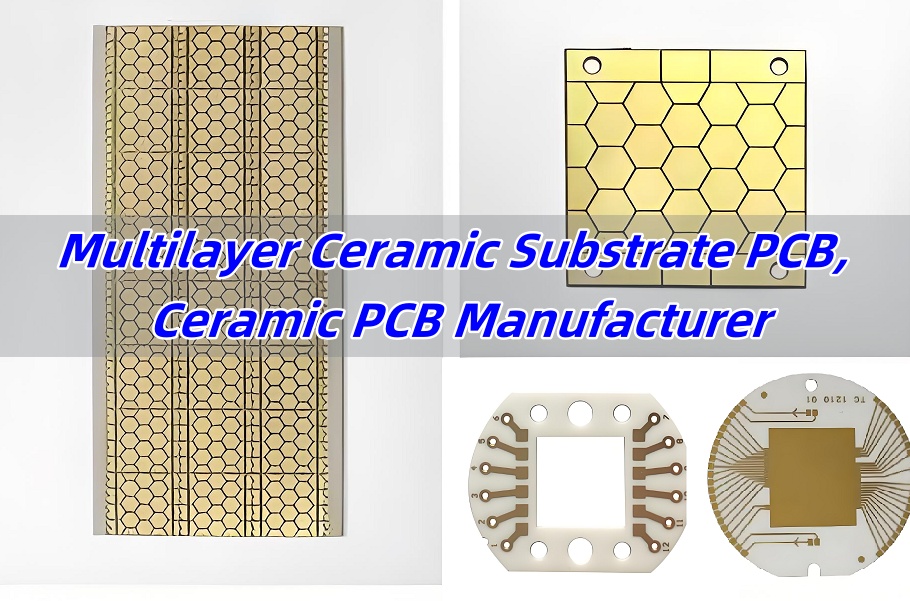
With nearly two decades of experience, EBest Circuit (Best Technology) has become one of the most reliable ceramic PCB manufacturers in Asia. We specialize in high-quality ceramic substrate PCBs for a wide range of industries. From automotive to aerospace, from LED lighting to power electronics—we support innovation with strong technical backing and fast delivery.

We don’t just offer boards; we offer tailored solutions. Our team listens carefully, moves quickly, and delivers results. Whether you need AlN, Al₂O₃, or multilayer ceramic PCB, we’ve got your back.

Multilayer Ceramic Substrate PCB, Ceramic PCB Manufacturer

What Is a Ceramic Substrate PCB?

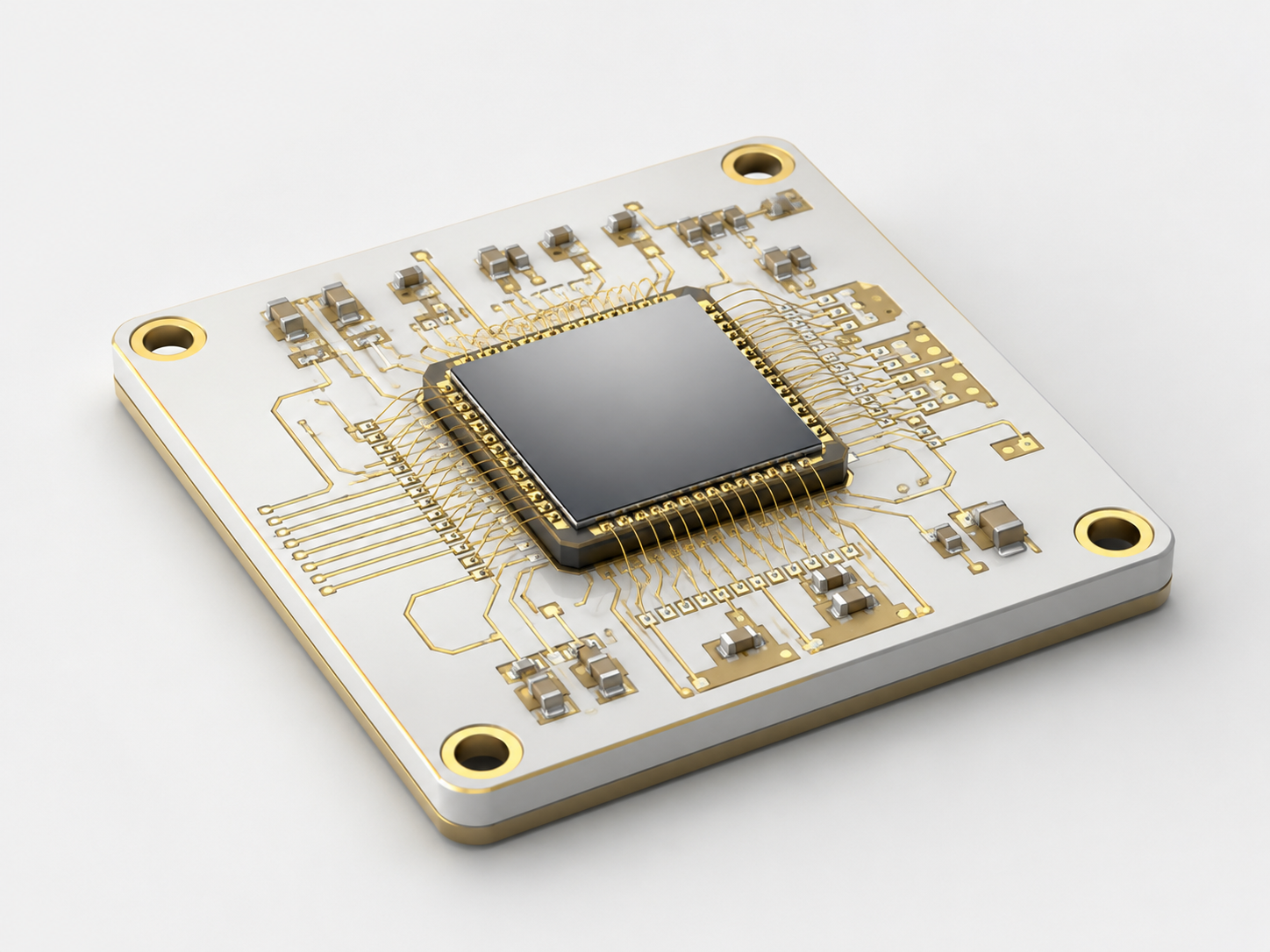
A ceramic substrate PCB is a circuit board made using ceramic materials as the base instead of traditional resins. Unlike FR-4 or other standard materials, ceramics offer excellent heat resistance, thermal conductivity, and mechanical strength.

They’re not just tough—they’re smart. Ceramics can carry high-frequency signals without distortion. They also handle high power loads with ease, which is why they’re often used in power modules and high-speed communication systems.

Ceramic Substrate PCB Types

Ceramic PCBs vary based on two main categories: materials and production techniques.

1. Divided by Materials

  • Aluminum Nitride (AlN) PCB

Aluminum nitride PCB is favored for its exceptional thermal performance. Its thermal conductivity ranges from 170 to 230 W/m·K, which is much higher than FR4 or even alumina. It’s often used in power devices, RF modules, and LED lighting. This type also provides strong insulation and good mechanical stability.

  • Alumina (Al2O3) PCB

Alumina PCBs are the most common type. They offer a balanced mix of electrical insulation, mechanical strength, and cost-effectiveness. They’re available in 96%, 99%, or 99.6% purity levels. The higher the purity, the better the thermal and electrical properties. These boards are widely used in automotive sensors, LED lighting, and industrial controls.

  • Beryllium Oxide (BeO) PCB

BeO PCBs offer the highest thermal conductivity among ceramic materials—up to 300 W/m·K. However, due to safety concerns during manufacturing, it’s less popular today. Still, for very specific military or aerospace projects, it’s an option. At EBest Circuit (Best Technology), we generally recommend safer materials like AlN or Alumina for most projects.

  • Silicon Nitride (Si₃N₄) PCB

Silicon nitride offers high strength and fracture toughness. It handles heavy vibration and thermal shock better than others. It performs well in both high-temperature and high-load environments.

  • Silicon Carbide (SiC) PCB

SiC gaining attention in high-demand environments like electric vehicles and aerospace systems. It offers thermal conductivity in the range of 80 to 180 W/m·K, along with excellent chemical and radiation resistance.

  • Zirconia (ZrO₂) PCB

Zirconia is known for its toughness and wear resistance. ZrO₂ is used in environments requiring abrasion resistance, such as medical implants, aerospace sealing systems, or sensor housings. It’s not as popular for power electronics but fills special roles where durability matters more than heat dissipation.

2. Divided by Manufacturing Techniques

  • Thick Film Ceramic Substrate PCB

These use screen-printing to apply conductive and dielectric pastes onto the ceramic surface. It’s reliable, cost-effective, and great for low to medium-volume production. The conductor is usually silver or gold. This type works well for sensors and power hybrid circuits. They also support multilayer designs.

  • Thin Film Ceramic PCB

This method uses vacuum deposition and photolithography. It’s precise and supports very fine lines and spaces. Thin-film PCBs are more expensive but deliver unmatched performance in miniaturized devices, such as medical implants or RF modules.

  • DBC Ceramic PCB (Direct Bonded Copper)

DBC PCBs bond copper directly onto a ceramic surface through a high-temperature process. The copper layer is thick and can carry high currents. They are suitable for power semiconductors and automotive applications. They also offer strong adhesion and excellent heat spreading.

  • DPC Ceramic PCB (Direct Plated Copper)

DPC PCBs are made by plating copper directly onto the ceramic using a chemical process. They can achieve finer features than DBC and are suitable for high-frequency or miniaturized devices.

Multilayer Ceramic Substrate PCB, Ceramic PCB Manufacturer
  • HTCC Ceramic PCB (High-Temperature Co-fired Ceramic)

HTCC involves firing a mix of ceramic and metal powders at over 1600°C. It’s durable and works in harsh environments. HTCC PCBs are commonly used in military and aerospace industries due to their stability under extreme conditions.

  • LTCC Ceramic PCB (Low-Temperature Co-fired Ceramic)

LTCC is similar to HTCC but fired at a lower temperature (around 850°C). This process allows for the embedding of passive components, which saves space. It’s perfect for compact, multi-functional devices, especially in telecom and satellite systems. Both HTCC and LTCC ceramic substrate can made into multilayers.

  • AMB Ceramic PCB (Active Metal Brazing)

AMB PCBs use an active brazing technique to bond copper and ceramic. This method provides better bonding strength than DBC and is ideal for high-load applications like electric vehicles.

Technical Specification of Beryllium Oxide (BeO) Ceramic Substrate

Material PropertyUnitValue
ColorWhite
Medium grain sizeum3-5
Surface roughness (Ra)um0.3-0.5
DensityKg/m33010
Rate of water absorption%0
Bending strength4 point method (40x4x3mm3)Mpa400
Dual ring method (0.63mm substrate thickness)Mpa500
Thermal conductivity (20-100℃)W/m-k220-250
Specific heatJ/kg.K800
Coefficient of Linear expansion1*E-6 / K5.1-8.9
Dielectric constant 6-7
Dielectric loss factor (1 MHz)1*E-30.3
Breakdown Voltage2.0mm substrateKV/mm34
1.0mm substrate17
0.635mm substrate11
Volume resistivity20℃Ohm * cm

Technical Specification of Silicon Nitride (Si₃N₄) Ceramic Substrate

Material PropertyUnitValue
ColorGray, White, Off-White
Medium grain sizeum3-5
Surface roughness (Ra)um0.3-0.5
DensityKg/m33120-3220
Rate of water absorption%0
Bending strength4 point method (40x4x3mm3)Mpa147
Dual ring method (0.63mm substrate thickness)Mpa490
Thermal conductivityW/m-k18.42
Specific heatJ/kg.K710
Coefficient of Linear expansion (20-1000℃)10-6/℃2.8-3.2
Dielectric constant 9.4-9.5
Dielectric loss factor (1 MHz)1*E-30.3
Breakdown Voltage2.0mm substrateKV/mm34
1.0mm substrate17
0.635mm substrate11
Volume resistivity20℃Ohm * m1.4*105
500℃Ohm * m4*108

Technical Specification of Silicon Carbide (SiC) Ceramic Substrate

Material PropertyUnitValue
ColorBlack
Medium grain sizeum3-5
Surface roughness (Ra)um0.3-0.5
DensityKg/m33220
Rate of water absorption%0
Bending strength4 point method (40x4x3mm3)Mpa400
Dual ring method (0.63mm substrate thickness)Mpa500
Thermal conductivityW/m-k83.6
Specific heat-106℃J/kg.K399.84
107℃472.27
247℃1266.93
Coefficient of Linear expansion (20-1000℃)10-6/℃6.28-9.63
Dielectric constant 7
Dielectric loss factor (1 MHz)1*E-30.3
Breakdown Voltage2.0mm substrateKV/mm34
1.0mm substrate17
0.635mm substrate11
Volume resistivity20℃M * cm102

Technical Specification of Zirconia (ZrO₂) Ceramic Substrate

Material PropertyUnitValue
ColorWhite
Medium grain sizeum3-5
Surface roughness (Ra)um0.3-0.5
DensityKg/m35850
Rate of water absorption%0
Bending strength4 point method (40x4x3mm3)Mpa380
Dual ring method (0.63mm substrate thickness)Mpa500
Thermal conductivityW/m-k2.09
Specific heatJ/kg.K563.89
Coefficient of Linear expansion (20-1000℃)10-6/℃6.5-11.2
Dielectric constant 27
Dielectric loss factor (1 MHz)1*E-30.3
Breakdown Voltage2.0mm substrateKV/mm34
1.0mm substrate17
0.635mm substrate11
Volume resistivity1000℃Ohm * cm104
1700℃Ohm * cm6-7

For technical specifications of Al2O3 and AlN, please click here to view the details.  

What Is the Difference Between Ceramic Substrate and FR-4?

PropertyCeramic Substrate PCBFR-4 PCB
Material Composition  Inorganic (e.g., Al₂O₃, AlN, Si₃N₄)Organic (Epoxy resin + fiberglass)
Thermal ConductivityHigh (AlN: 170–230 W/m·K, BeO: up to 300 W/m·K)Low (~0.3–0.5 W/m·K)  
Operating TemperatureUp to 800°C or moreLimited to ~130–150°C
Electrical InsulationExcellent and stableModerate
Dielectric ConstantLow and stable (AlN ~8.5, Al₂O₃ ~9.8)Higher and less stable (~4.2–4.8)
Moisture AbsorptionNone (non-porous)Yes (hygroscopic)
Mechanical StrengthHigh (brittle but rigid)Good flexibility and toughness
Thermal Expansion (CTE)Very low (~5–7 ppm/°C)Higher (~14–17 ppm/°C)
RF / Microwave PerformanceExcellent (low loss, stable dielectric)Poor to average (higher signal loss)
PriceHigherLower
ApplicationFocus High-power, high-reliability systems (LEDs, lasers, RF)General-purpose, consumer electronics  
Design FlexibilityLess flexible, requires precise processingVery flexible, supports complex multilayer structures

How Thick Is a Ceramic Substrate?

Ceramic substrate PCBs come in various thicknesses, depending on the material and application. The most commonly used thicknesses range from 0.25 mm to 3.0 mm. However, special requests can push this range even further.

  • For alumina, the standard thicknesses are 0.25 mm, 0.38 mm, 0.5 mm, 0.635 mm, 1.0 mm, and 1.5 mm. These sizes work well for LED packages and power control boards.
  • Aluminum nitride substrates are typically used in 0.38 mm to 1.0 mm thicknesses. The thinner sheets are used in RF circuits, while thicker ones help in thermal management and mechanical support.
  • Silicon nitride and silicon carbide can also be customized in terms of thickness. Some high-strength applications require boards thicker than 2 mm to add mechanical stability.
  • For LTCC and HTCC processes, the thickness can vary as layers are stacked. After sintering, the final board may be thinner than expected due to shrinkage. Designers often specify individual layer thicknesses from 100 µm to 300 µm before lamination.

Factors Affect Ceramic Substrate PCB Price

A ceramic substrate price can be varied depends on the material and process used. Here is a detailed explanation.

1. Material Type

Alumina is the most cost-effective, followed by aluminum nitride. Silicon nitride, silicon carbide, and beryllium oxide are more expensive due to material costs and production challenges.

2. Board Size and Thickness

Larger boards cost more to produce. Thicker substrates also require more raw material and longer sintering times, increasing the cost.

3. Layer Count

Single-layer ceramic PCBs are cheaper. Multilayer designs need more lamination and alignment, raising both time and processing costs.

4. Metallization Method

The choice between thick film, DPC, DBC, or HTCC has a big impact. DPC and DBC processes require specialized equipment, so they are more expensive than thick film types.

5. Tolerances and Precision

If your application requires tight tolerances or fine trace widths, this will increase the cost. More precise laser cutting, printing, or etching takes longer and demands higher quality control.

6. Volume

Like most products, higher quantities reduce the per-unit cost. Low-volume or prototype runs are usually priced higher due to tooling and setup.

7. Surface Finish and Testing

Optional services such as ENIG, silver plating, or 100% electrical testing will raise the overall price.

In summary, the price of a ceramic substrate PCB depends on the complexity, material, and quality requirements. While they cost more than FR-4 boards, their performance and longevity often justify the higher investment.

What Is a Ceramic PCB Used For?

  • High-brightness and long-lifetime lighting
  • Inverters
  • IGBTs
  • Motor drives
  • Imaging systems
  • Implants
  • Diagnostics
  • Telecom
  • Antennas
  • Filters
  • Base stations
  • EV batteries
  • Sensors
  • Control units
  • Aerospace
  • Radar systems
  • Satellite modules

Multilayer Ceramic PCB Manufacturing Process

Multilayer ceramic PCBs are built using different methods than traditional FR-4 boards. The most popular technique is the thick film, HTCC or LTCC process, which allows stacking multiple ceramic layers with embedded circuits. Here’s a step-by-step look at how they’re made:

1. Ceramic Tape Casting

First, thin ceramic tapes (called green sheets) are cast using alumina, aluminum nitride, or other ceramic powders mixed with binders and solvents. These tapes are then dried and punched to create holes for vias.

2. Via Filling and Screen Printing

Vias are filled with conductive pastes such as gold, silver, or tungsten. Then, a conductive pattern is printed on each layer using screen printing or sputtering techniques.

3. Layer Alignment and Lamination

Multiple layers are stacked together carefully, with precise alignment. They are then laminated under pressure and heat, forming a compact structure ready for sintering.

4. Sintering or Firing

In this step, the laminated structure is fired in a high-temperature furnace—up to 1,600°C for HTCC or 850°C for LTCC. This burns off the organic materials and solidifies the ceramic and metal layers.

5. Metallization and Plating

After sintering, the external layers are coated with surface finishes like silver, gold, ENIG, or nickel. These finishes improve solderability and prevent oxidation.

6. Laser Cutting and Drilling

Final shaping is done using CO₂ or UV lasers. This step defines the board outline and makes precise holes for connectors or mounting.

7. Inspection and Testing

Each board undergoes dimensional inspection, electrical testing, and sometimes X-ray analysis to check for internal defects or misalignments.

Why Choose EBest Circuit (Best Technology) as Your Ceramic PCB Manufacturer?

You’re not just buying a board. You’re choosing a partner. At EBest Circuit (Best Technology), we offer:

  • Free ceramic substrate technical consultation
  • In-house production for better lead times
  • 100% electrical testing before shipping
  • Rapid prototyping and mass production
  • Custom designs for all industries
  • Friendly support team that speaks your language
  • Military-grade quality
  • ISO13485, IATF16949, AS9100D certificated
  • No minimum order quantity requirement
  • 5 years quality assurance

Let us help bring your next high-performance product to life. Whether it’s Aluminum Nitride PCB, Alumina, or multilayer ceramic PCB, we’re ready to deliver results you can count on.