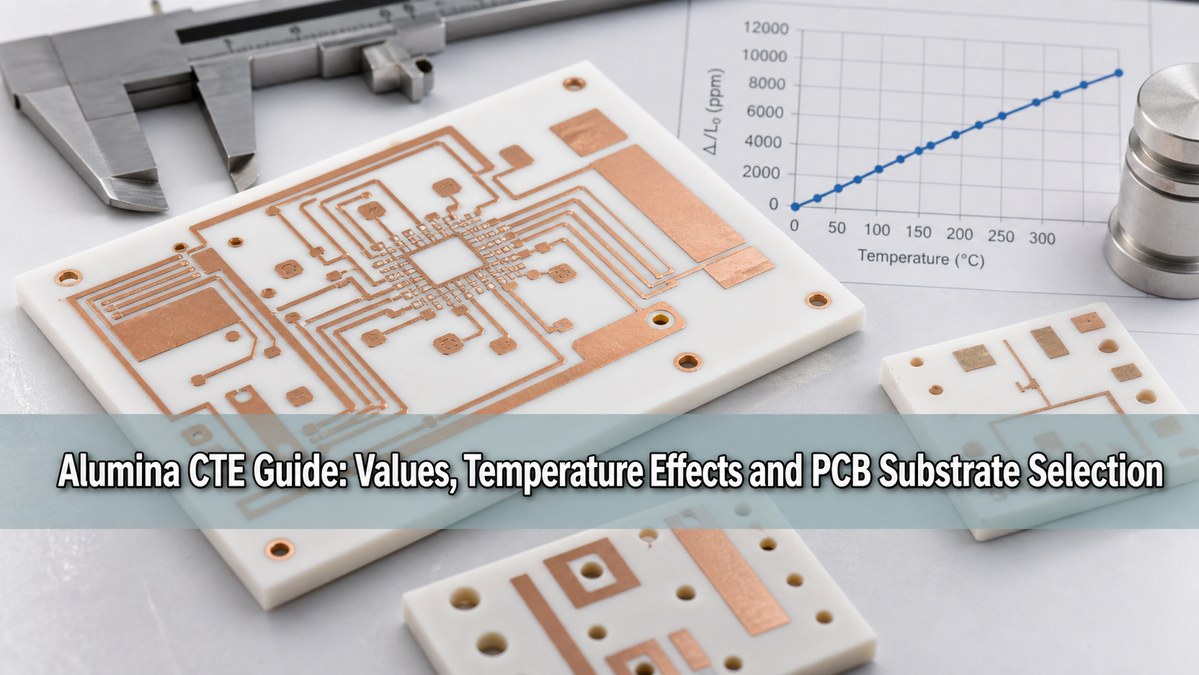
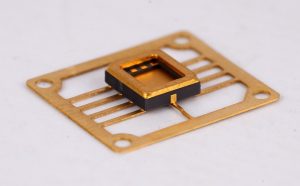
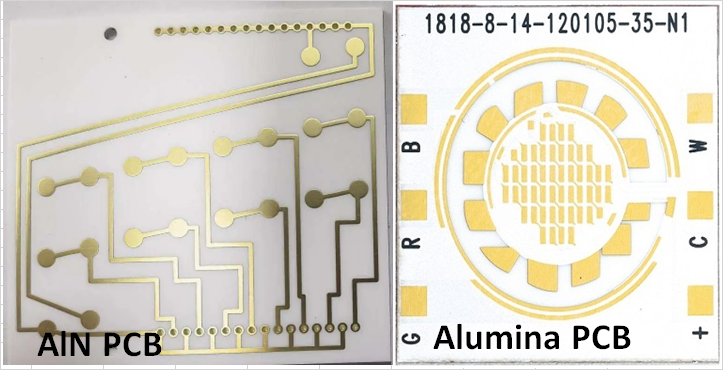
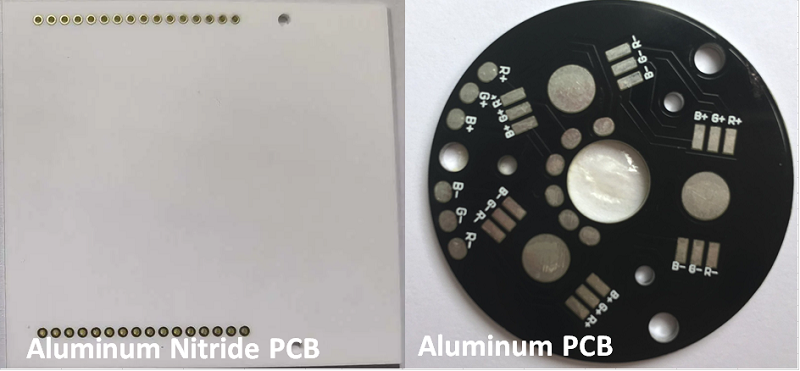
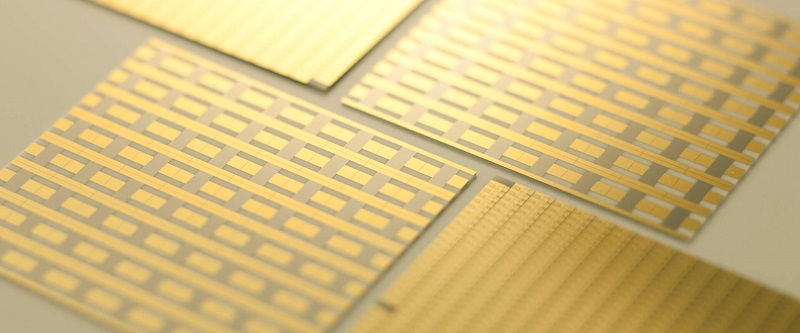
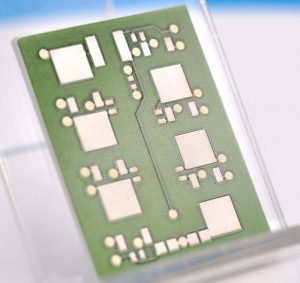
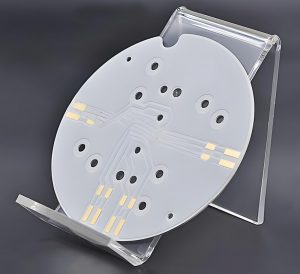
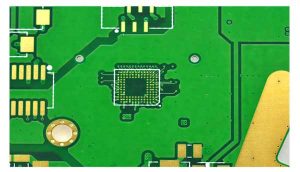
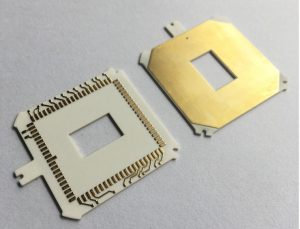
Alumina CTE describes the coefficient of thermal expansion of aluminum oxide ceramic, usually expressed in ppm/°C or ppm/K. For ceramic PCB and electronic packaging work, the number is useful only when it is tied to the alumina grade, temperature range, substrate thickness, copper design and the materials attached to the ceramic.
Most engineering discussions treat alumina as the practical ceramic baseline because it combines electrical insulation, mechanical stability, moderate thermal conductivity and lower cost than many high-performance ceramics. The key is not to use a single CTE value blindly. A ceramic substrate that looks acceptable on a datasheet can still create stress if the copper area is large, the temperature swing is wide, or the mounted device has a very different expansion rate.
What Does Alumina CTE Mean?
Alumina CTE is the rate at which alumina ceramic expands as temperature rises. In PCB and substrate work, it is normally discussed as linear expansion in ppm/°C. A value near 7 ppm/°C means a one-meter length would expand by about 7 micrometers for each 1°C temperature increase, but real designs must use the supplier’s stated test range.
Alumina is aluminum oxide ceramic, not aluminum metal. This distinction matters because aluminum metal has a much higher expansion rate and completely different electrical behavior. When a drawing says Al2O3, alumina ceramic or 96% alumina, the review should focus on ceramic substrate data rather than metal aluminum tables.
What Is a Typical Alumina CTE Value?
Common electronics-grade alumina is often specified around the mid-to-high single-digit ppm/°C range. For example, EBest’s existing Al2O3 substrate thermal expansion reference lists 7.4 ppm/K within 50°C to 100°C, while broader engineering references place alumina ceramic values in a similar range depending on purity and test method.
Use these values as screening data, not as release data. For a quote or design release, ask the supplier for the exact material grade, purity, thickness, measurement standard and temperature interval. 96% alumina, 99.6% alumina and metallized alumina substrates may not behave identically after firing, lapping, metallization and copper processing.
How Does Alumina CTE Change With Temperature?
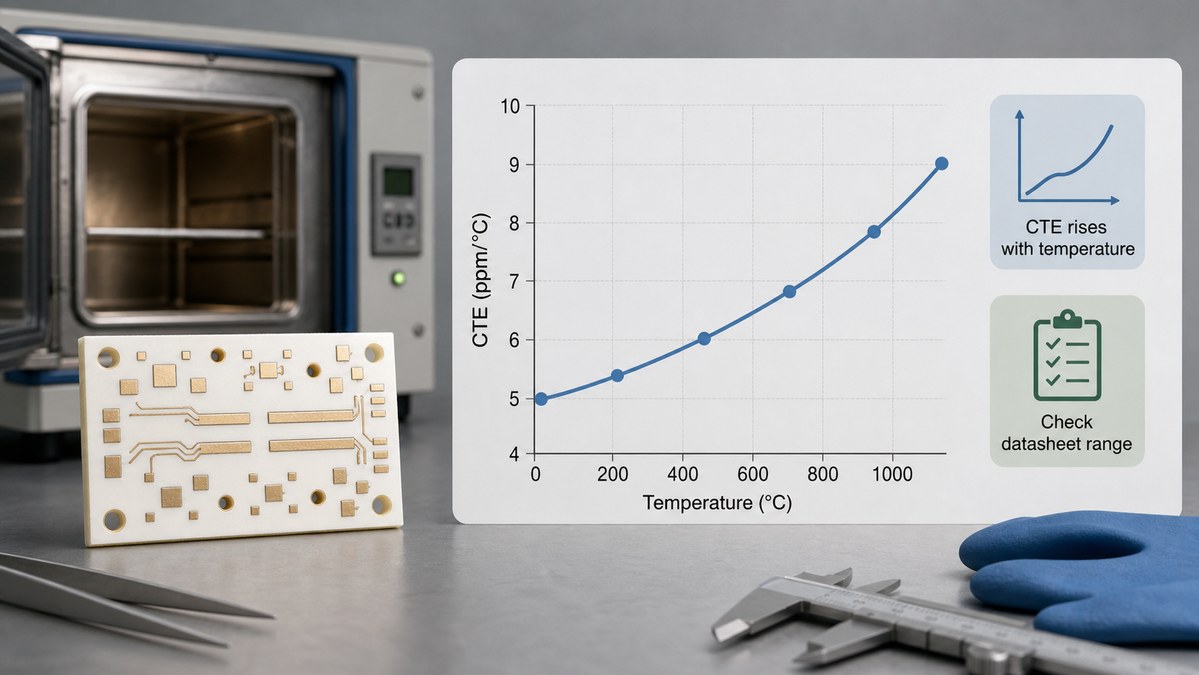
Alumina CTE is temperature-dependent. Published research on alpha-alumina shows that thermal expansion is not perfectly constant across high-temperature ranges, and crystal orientation can also affect measured expansion. For PCB users, the practical point is simple: a room-temperature value is not enough for designs that cycle between cold start, soldering, operation and shutdown.
Define the operating and process temperature windows separately. Reflow exposure, high-temperature storage, power cycling and field operation can stress the substrate in different ways. If the application includes repeated thermal cycling, the CTE review should include copper thickness, solder alloy, die attach material, package size and mounting method.
How Does Alumina Compare With AlN, Zirconia, Silicon, Copper and FR4?
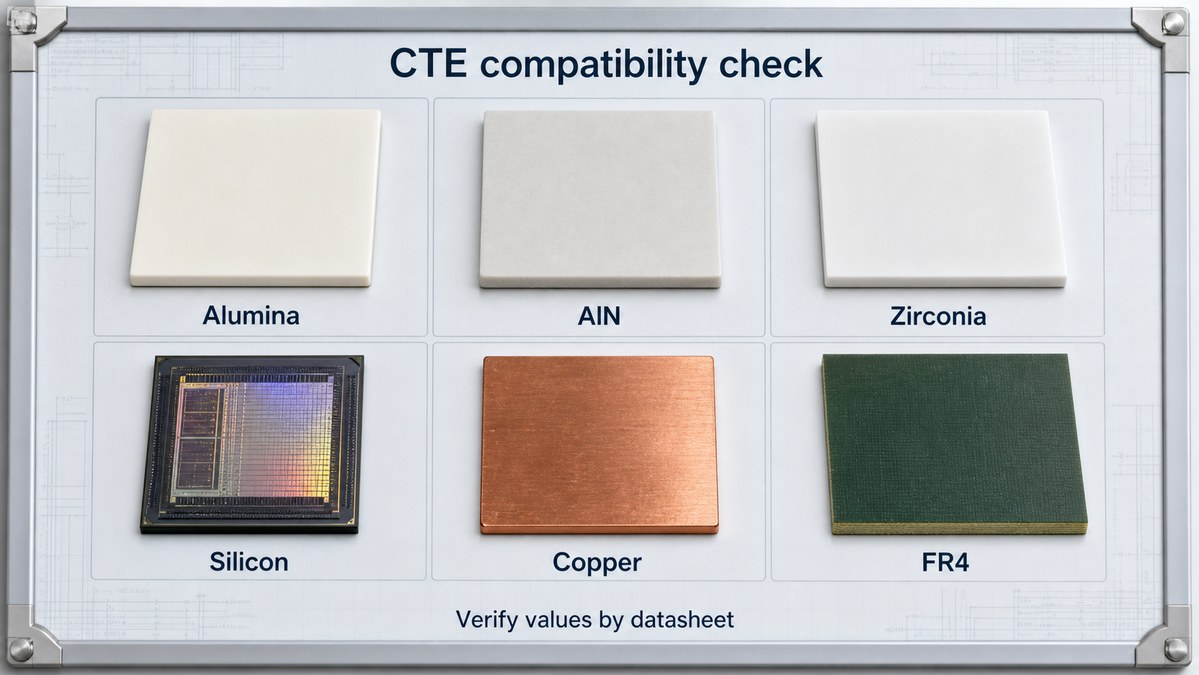
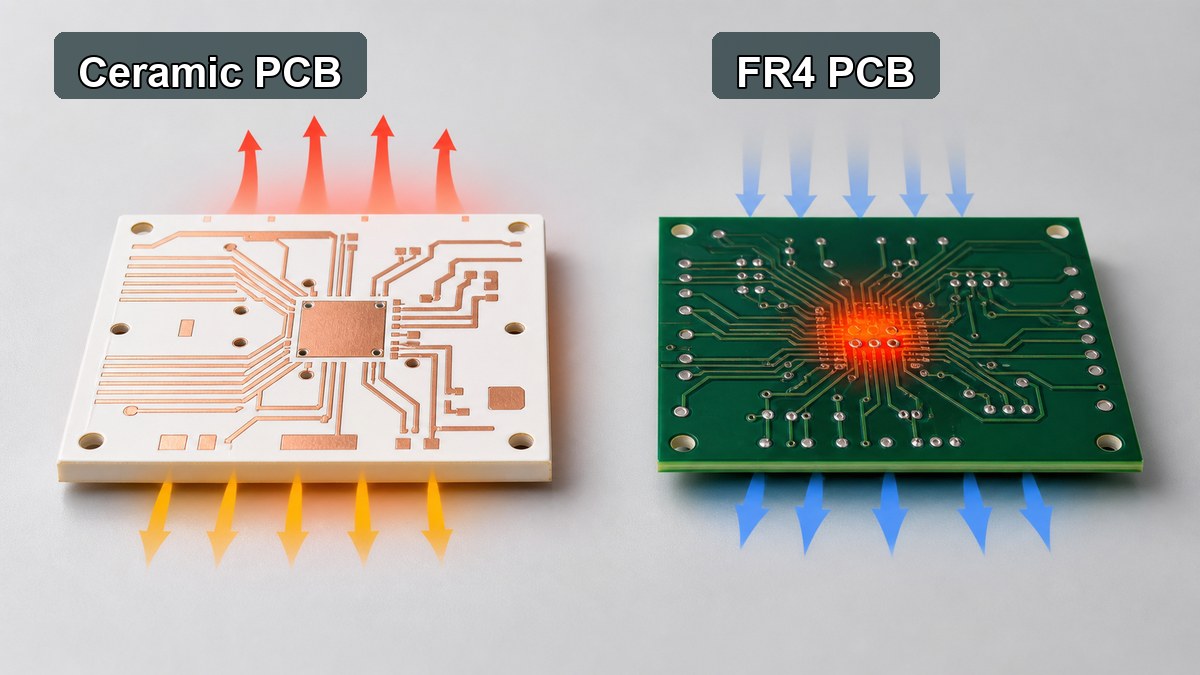
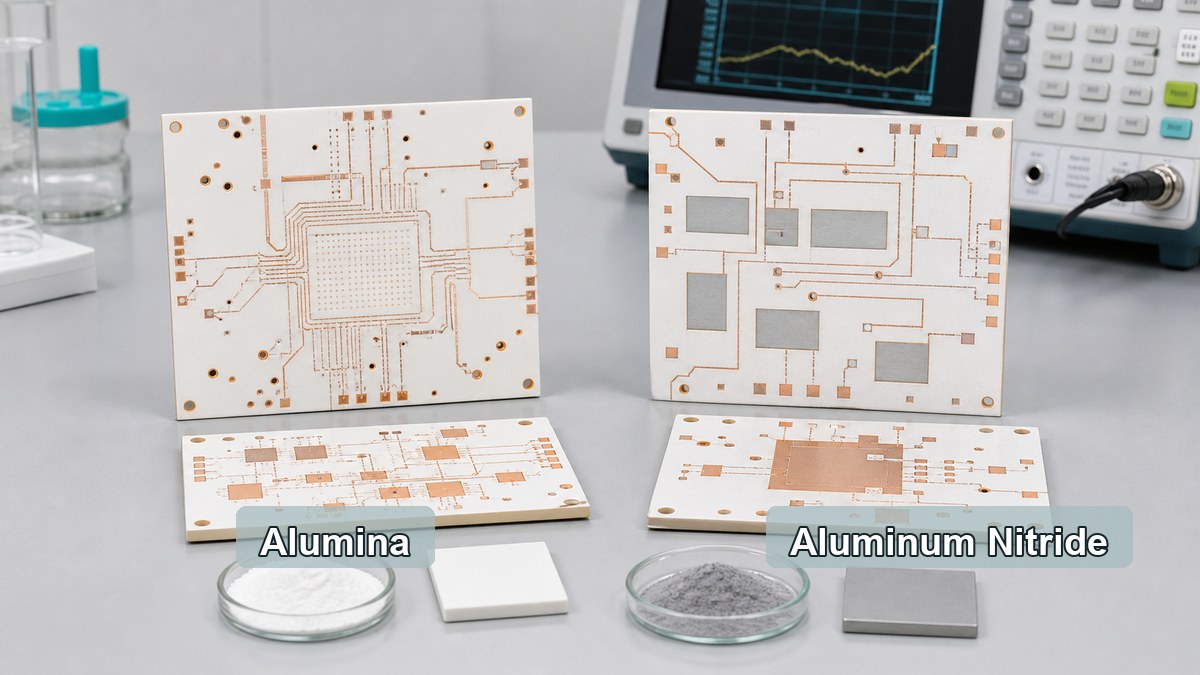
Alumina sits between low-expansion semiconductor materials and higher-expansion metals or organic laminates. That middle position is one reason it is useful in many ceramic PCB materials decisions, but it is not the best match for every device. Aluminum nitride PCB substrate is usually closer to silicon and offers much higher thermal conductivity; copper and FR4 expand much more, which can increase stress in some assemblies.
The decision logic should start with the parts being attached to the substrate. Silicon dies, power devices, copper planes, solder joints, ceramic body thickness and external heat sinks all participate in the stress system. A material with excellent thermal conductivity can still be the wrong choice if the expansion mismatch and mechanical constraints are not reviewed together.
Material
Typical Role in Electronics
CTE Selection Note
Alumina ceramic
Cost-effective ceramic PCB and hybrid circuit substrate
Good baseline for insulation, stability and moderate heat spreading
Aluminum nitride
High-thermal ceramic substrate for power modules and LEDs
Often chosen when thermal conductivity and silicon matching justify higher cost
Zirconia
Structural ceramic and specialty insulating component
Review only when toughness or mechanical behavior is central to the design
Silicon
Semiconductor die material
Lower expansion than alumina, so die attach and cycling conditions matter
Copper
Conductor, heat spreader and metallization layer
Higher expansion than alumina, so copper balance and area can drive stress
FR4
Standard organic PCB laminate
Lower cost, easier processing, but much weaker thermal and dimensional stability
Why Does CTE Matter in Ceramic PCB Substrate Design?
CTE matters because ceramic PCB substrates combine materials that expand at different rates. Alumina may be stable, but the copper circuit, solder joint, component termination, die attach layer and external fasteners can move differently as temperature changes. Stress often concentrates at corners, large copper areas, solder interfaces, vias, slots and brittle ceramic edges.
For alumina ceramic PCB design, review copper symmetry, copper thickness, pad size, isolation clearance, substrate thickness, edge distance and mounting holes before release. Thick copper can improve current and heat spreading, but it also increases mechanical loading during thermal cycling. Large asymmetric copper areas may warp or stress the ceramic more than a balanced layout.
When Should You Choose Alumina Instead of AlN or FR4?
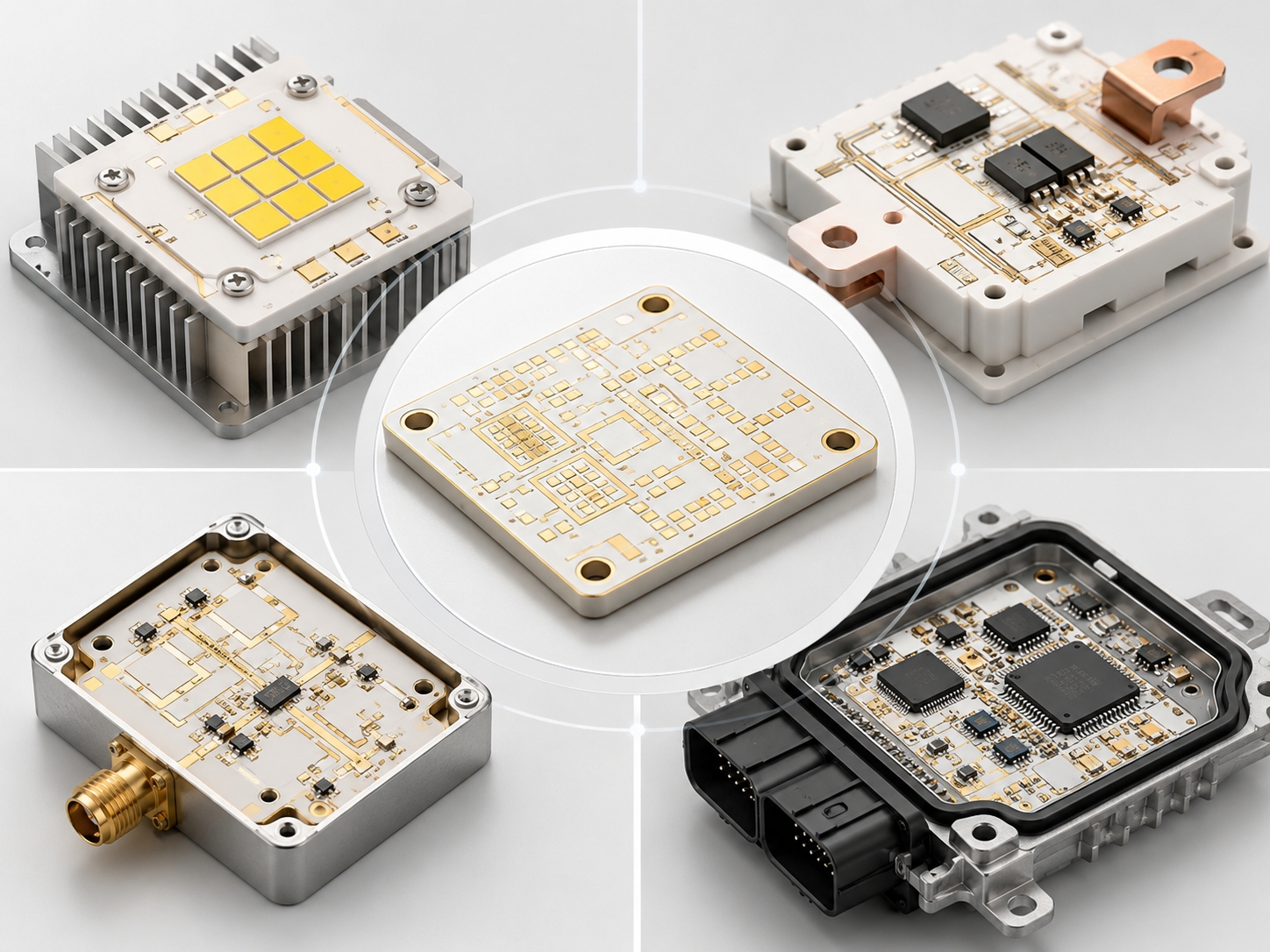
Choose alumina when the design needs a ceramic insulating base, better heat resistance than FR4, stable dimensions and moderate thermal performance without the higher cost of AlN. It is often practical for LED modules, sensors, thick-film circuits, high-temperature control boards, power electronics interfaces and ceramic PCBA where electrical insulation and mechanical stability are more important than maximum thermal conductivity.
Choose AlN when the heat flux is high, the package is sensitive to thermal gradients, or closer CTE alignment to semiconductor devices is worth the added material and process cost. Choose FR4 or high-Tg FR4 when the design does not need a ceramic substrate and can pass thermal, voltage, dimensional and reliability requirements with standard PCB manufacturing capability.
What Should You Specify for an Alumina Ceramic PCB Quote?
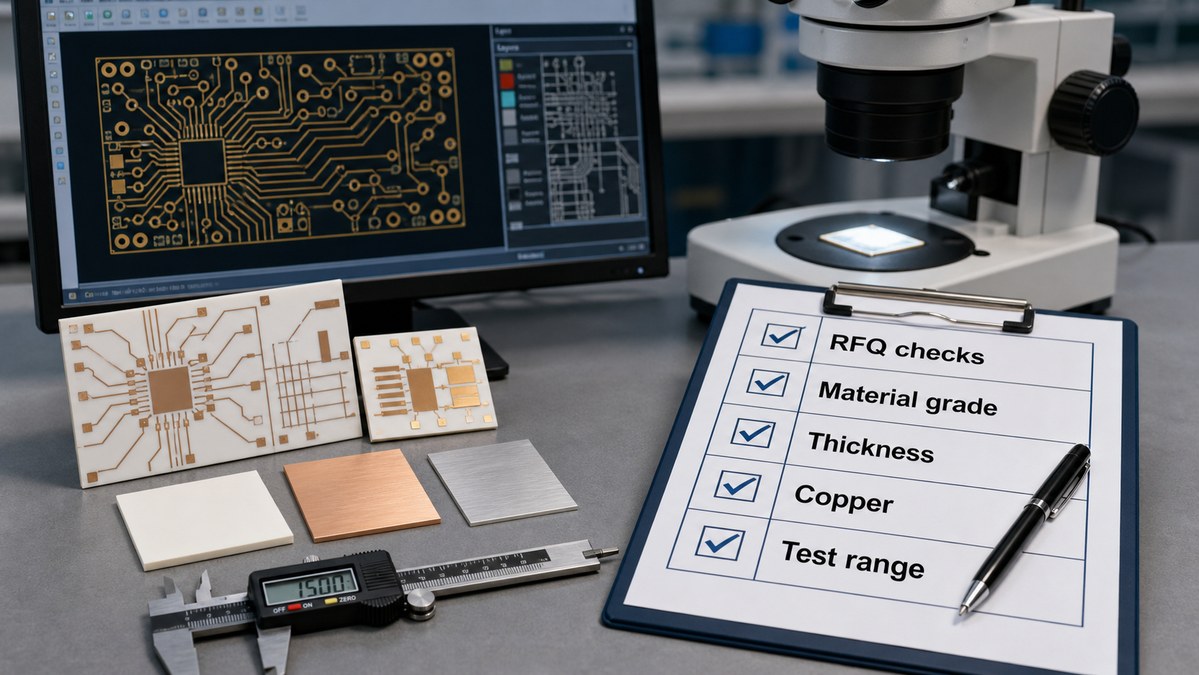
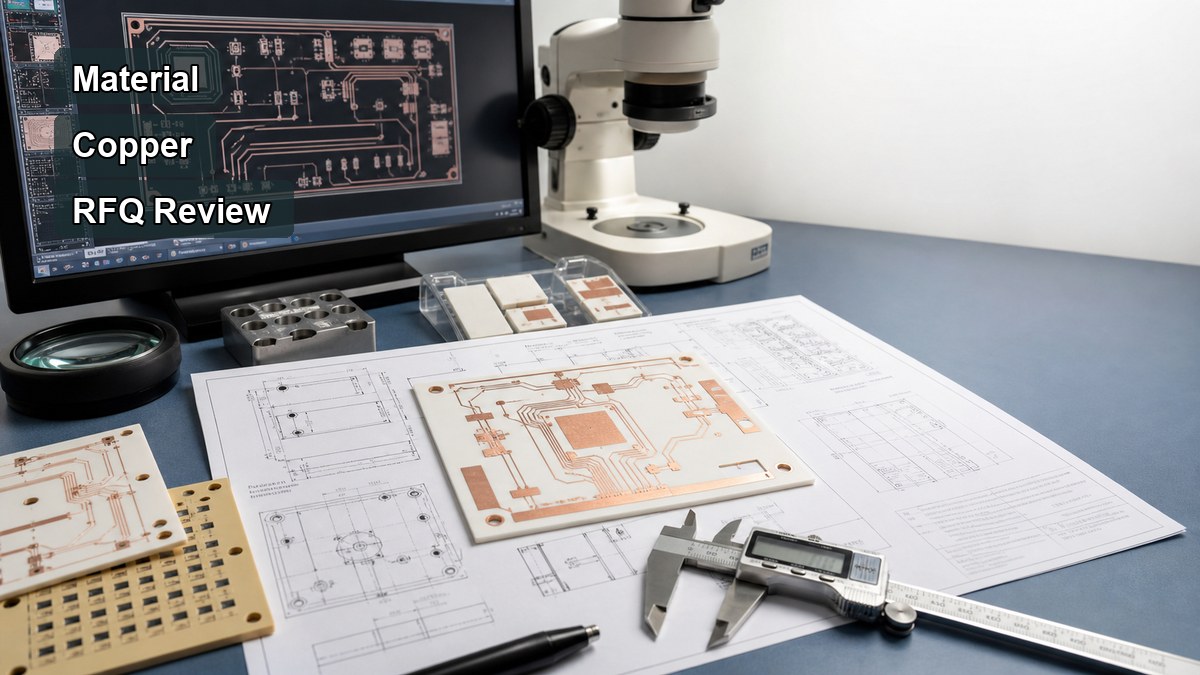
A quote-ready package should make the thermal and mechanical assumptions visible. If the RFQ only says “alumina substrate,” the manufacturer still has to clarify grade, thickness, copper process, surface finish, tolerance and temperature conditions before judging manufacturability.
For EBest Circuit (Best Technology), a useful ceramic PCB inquiry normally includes Gerber files, stackup intent, material grade, substrate thickness, copper thickness, surface finish, outline tolerances, working temperature range, peak process temperature, expected cycling profile and assembly requirements. For ceramic PCB prototype work, EBest’s published capability references Al2O3 thermal conductivity at ≥24 W/m·K and AlN at ≥170 W/m·K, subject to design and material review.
Material: 96% alumina, 99.6% alumina or specified supplier grade
Substrate: thickness, outline, holes, slots, edge distance and flatness needs
Metal: copper thickness, copper balance, metallization route and surface finish
Assembly: soldering process, die attach, SMT/THT requirements and inspection needs
Quality: dimensional inspection, electrical test, AOI, copper thickness check and reliability test request
FAQ
1. Is alumina CTE the same as aluminum CTE?
No. Alumina is aluminum oxide ceramic, while aluminum is metal. Alumina ceramic has much lower expansion and provides electrical insulation; aluminum metal has higher expansion and is conductive.
2. What unit is used for alumina CTE?
Alumina CTE is usually listed in ppm/°C or ppm/K. For temperature differences, 1°C and 1 K increments are equivalent, so the numerical ppm value is normally read the same way.
3. Is 96 alumina CTE different from 99.6 alumina CTE?
It can be different because purity, additives, porosity, firing process and supplier formulation affect ceramic properties. Always use the datasheet for the exact alumina grade being quoted.
4. Does lower CTE always mean a better ceramic PCB?
No. Lower CTE helps only when it improves the match to the attached materials and the thermal cycle. Thermal conductivity, dielectric strength, cost, copper process, mechanical strength and availability must be reviewed together.
5. Why does copper thickness affect alumina ceramic PCB reliability?
Copper expands more than alumina and adds mechanical force during heating and cooling. Thicker or unbalanced copper can increase stress, so copper area and symmetry should be reviewed with the substrate thickness and thermal cycle.
Conclusion
Alumina CTE is a useful starting point for ceramic PCB substrate selection, but it should be reviewed with material grade, temperature range, copper design, attached components and reliability expectations. Alumina is often the practical ceramic baseline when cost, insulation and dimensional stability matter; AlN or other materials belong in the review when heat flux, die matching or mechanical stress requires them. For alumina ceramic PCB fabrication or PCBA review, send your Gerbers, stackup, material notes and thermal requirements to EBest Circuit (Best Technology) at sales@bestpcbs.com.
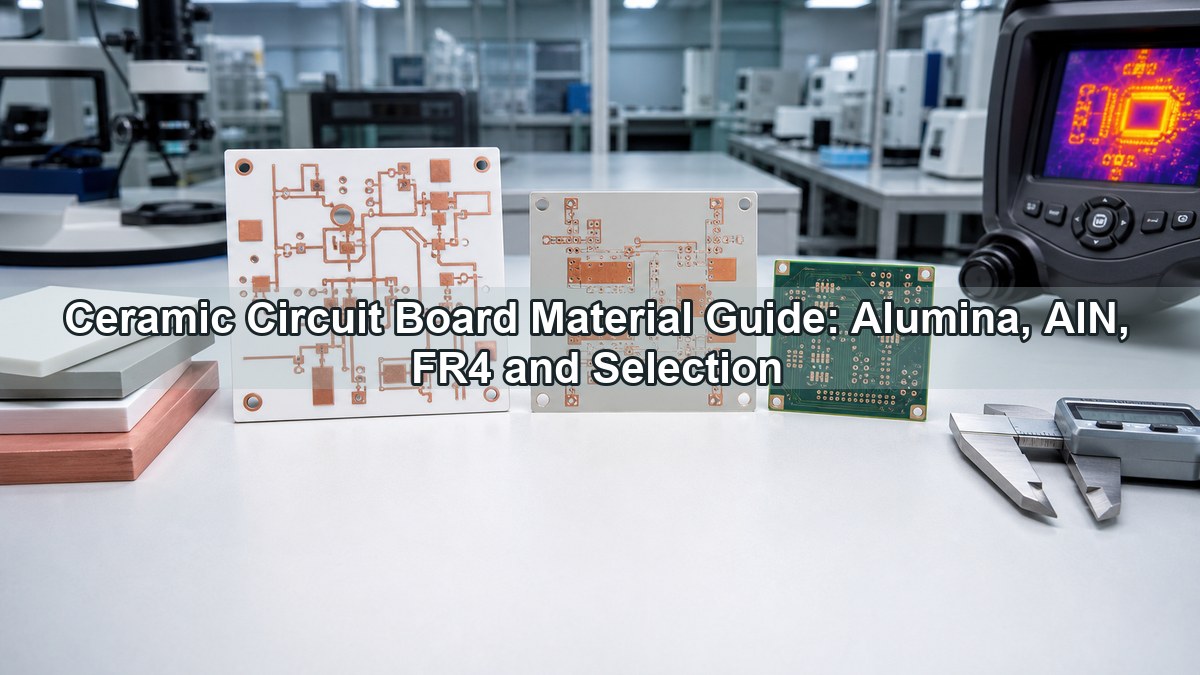
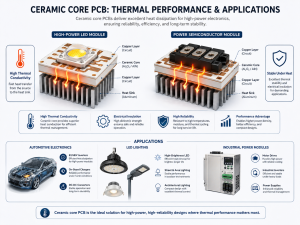
Ceramic circuit board material selection decides how a PCB handles heat, voltage, insulation, dimensional stability, assembly stress and long-term reliability. The practical choice is usually not simply ceramic versus non-ceramic; it is whether alumina, aluminum nitride, FR4, metal core PCB or another substrate can meet the electrical, thermal, mechanical and cost targets of the design.
This guide focuses on the material decisions that affect real PCB and PCBA projects: when ceramic is necessary, when FR4 PCB is still the better option, how alumina PCB differs from aluminum nitride PCB, and what information should be prepared before asking a ceramic PCB manufacturer for a quote.
What Is Ceramic Circuit Board Material?
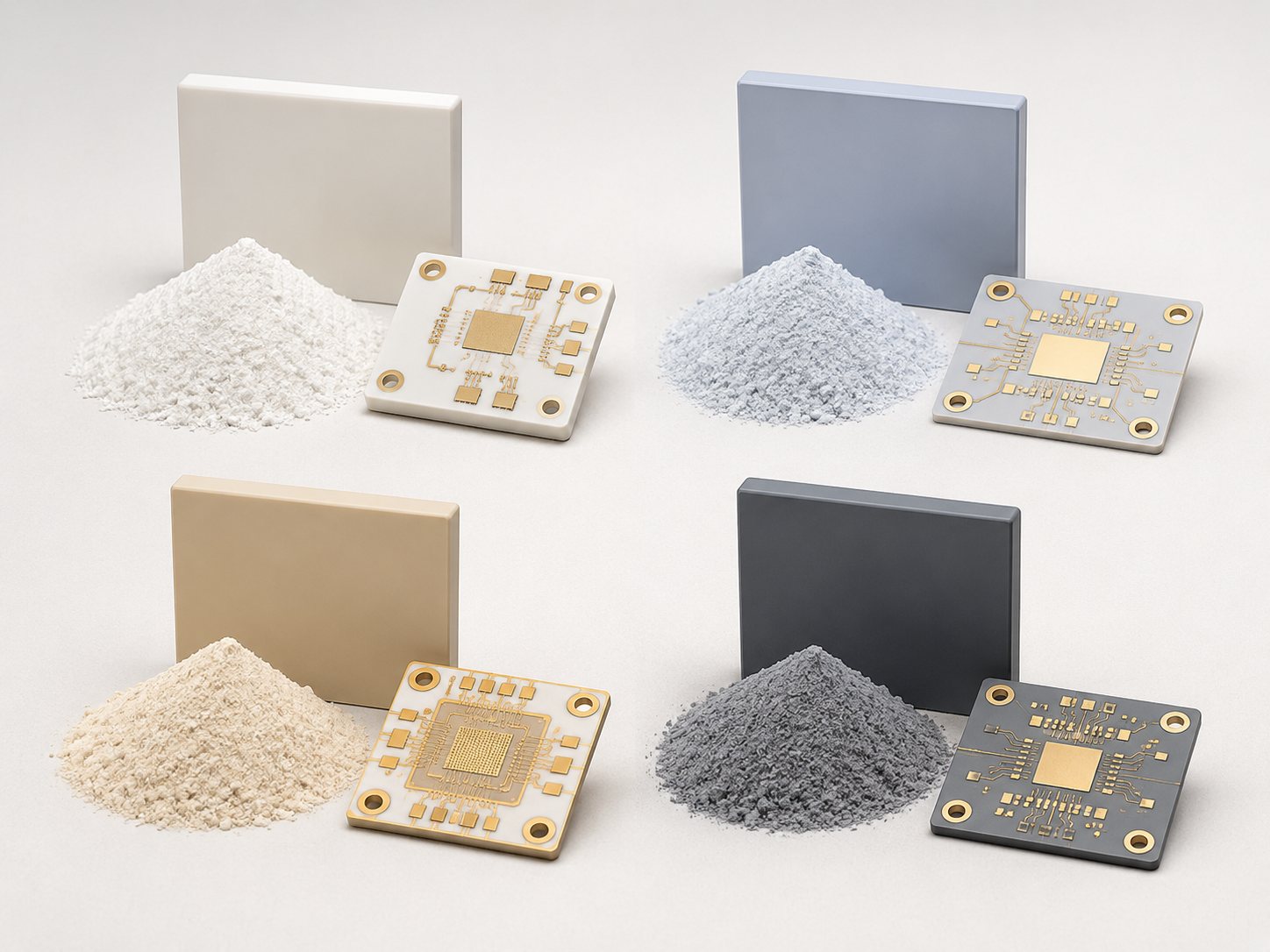
Ceramic circuit board material is an inorganic insulating substrate used as the base for copper circuitry. Common choices include alumina (Al2O3), aluminum nitride (AlN), beryllium oxide (BeO), silicon nitride (Si3N4), LTCC and HTCC materials. In a finished ceramic PCB, the ceramic base supports copper traces while providing electrical insulation and heat transfer.
Compared with organic laminates, ceramic substrates are selected for higher thermal conductivity, low moisture absorption, high-temperature stability, dimensional stability and good dielectric strength. These strengths are useful in LED modules, power devices, RF circuits, sensors, laser modules, semiconductor packaging and automotive electronics.
Why Use Ceramic PCB Instead of Standard FR4?
Use ceramic PCB instead of standard FR4 when the board must transfer heat through an electrically insulating substrate or operate in an environment where organic laminate properties are no longer enough. FR4 is economical, easy to process and flexible for multilayer routing, but ceramic provides a stronger platform for heat, voltage, stability and temperature resistance.
The decision should start from the stress in the design. If the circuit only needs standard digital routing, moderate current and normal operating temperature, FR4 is usually the practical first option. If the design concentrates heat under power devices, requires stable insulation at elevated temperature, or needs a compact high-power structure, ceramic PCB becomes worth reviewing.
Selection Factor
FR4 PCB
Ceramic PCB
Base material
Glass fiber reinforced epoxy laminate
Alumina, AlN, BeO, Si3N4, LTCC or HTCC ceramic
Thermal path
Limited through-thickness heat transfer
Better heat transfer through an insulating base
Routing flexibility
Excellent for multilayer signal routing
Usually simpler layer structures, depending on process
Temperature stability
Suitable for standard electronics and high-Tg options
Better for high-temperature and high-reliability environments
Cost position
Lower cost and broad availability
Higher cost, justified by thermal or environmental requirements
Which Ceramic Circuit Board Materials Are Commonly Used?
The most common ceramic circuit board materials are alumina and aluminum nitride, with other ceramic systems used when the application has special thermal, RF, packaging or reliability needs. The material name should be connected to the circuit process, copper thickness, surface finish, assembly method and reliability target.
Material
Practical Strength
Typical Use
Review Point
Alumina ceramic substrate
Balanced insulation, stability and cost
LED, sensors, power control, thick film and DPC ceramic circuits
Confirm purity, thickness, copper process and thermal target.
Aluminum nitride PCB
Higher thermal conductivity than alumina
High heat flux modules, laser drivers, power electronics and compact LED systems
Confirm handling, cost and metallization compatibility.
BeO ceramic PCB
Very high thermal conductivity
Special thermal applications where permitted
Confirm safety, compliance and supplier capability before selection.
LTCC / HTCC
Multilayer ceramic packaging and high-reliability structures
RF modules, sensors, hermetic or compact electronic packages
Confirm design rules, firing shrinkage, conductor system and lead time.
When Is Alumina PCB the Practical Choice?
Alumina PCB is often the practical choice when the design needs ceramic insulation, dimensional stability and better thermal behavior than FR4, but does not require the higher thermal performance or cost of AlN. It is commonly used for ceramic circuits where cost control, mature processing and stable electrical insulation matter together.
For many projects, 96% alumina provides a balanced ceramic substrate for DPC, thick film and other ceramic PCB routes. Higher-purity alumina can be considered when tighter dielectric performance, surface quality or material consistency is important. The decision should be made with substrate thickness, copper thickness, line width, dielectric test requirement and assembly conditions in the same review.
When Should Aluminum Nitride PCB Be Selected?
Aluminum nitride PCB should be selected when the limiting factor is heat spreading through the insulating substrate. AlN has much stronger thermal conductivity than alumina, so it is useful in compact power modules, high-power LED systems, laser modules, RF power circuits and applications where the heat source is small and concentrated.
AlN is not automatically the best material for every ceramic PCB. It usually costs more than alumina and requires careful handling and process control. It should be reviewed when thermal simulation, junction temperature, power density or module size shows that alumina cannot provide enough thermal margin.
How Do Ceramic Circuit Boards Compare With Metal Core PCB?
Ceramic circuit boards and metal core PCBs solve heat problems in different ways. A metal core PCB uses a metal base, usually aluminum or copper, with an insulating dielectric layer between the copper circuit and the metal. A ceramic PCB uses the ceramic itself as the electrically insulating and heat-conducting base.
Metal core PCB is often effective for LED lighting, power supplies and thermal spreading where the dielectric layer can meet the voltage and thermal requirements. Ceramic PCB becomes more relevant when the insulation layer must also be highly thermally conductive, dimensionally stable, low moisture absorption or suitable for elevated-temperature operation.
Which Manufacturing Processes Affect Ceramic PCB Material Selection?
The manufacturing process affects ceramic PCB material selection because the same substrate can behave differently in thick film, thin film, DPC, DCB or other ceramic circuit routes. The process determines achievable line width, copper thickness, adhesion, surface finish, layer count, vias, cost and lead time.
Thick film ceramic PCB: suitable for printed conductor and resistor systems, commonly used on alumina.
Thin film ceramic PCB: useful for fine features, tight tolerances and high-frequency or precision circuits.
DPC ceramic PCB: supports plated copper features and is often used for LED, sensor and compact power applications.
DCB / DBC ceramic PCB: supports bonded copper on ceramic for higher-current power structures.
LTCC / HTCC: used when multilayer ceramic integration, compact packaging or high-temperature firing processes are needed.
EBest Circuit (Best Technology) supports ceramic PCB routes including thick film ceramic PCB, thin film ceramic PCB, DCB ceramic PCB, alumina ceramic PCB and AlN ceramic PCB, subject to material, dimensions, copper design and engineering review.
What Applications Need Ceramic Circuit Board Material?
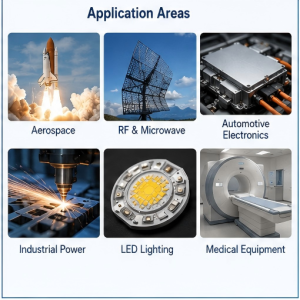
Ceramic circuit board material is most useful when the application combines heat, electrical insulation, compact size or environmental stress. It is not limited to one industry, but it is most common where ordinary organic laminates would create thermal, dielectric or reliability limits.
High-power LED modules and optical devices
Laser diode and laser driver circuits
Power semiconductor modules and gate driver substrates
RF and microwave ceramic circuits
Automotive sensors and power electronics
Medical electronics and high-reliability instruments
Industrial controls exposed to heat or electrical stress
What Should Be Checked Before Requesting a Ceramic PCB Quote?
A ceramic PCB quote should include more than the material name. The RFQ should define the complete substrate and circuit structure so the manufacturer can review feasibility, cost and reliability before production.
Ceramic material: alumina, AlN, BeO, LTCC, HTCC or open for recommendation
Substrate thickness, copper thickness and finished board size
Line width, line spacing, hole size, vias and edge clearance
Process route: thick film, thin film, DPC, DCB or another ceramic process
Surface finish and soldering or wire bonding requirement
Operating temperature, voltage, current and thermal load
Assembly method, component type, solder profile and inspection needs
Prototype quantity, annual volume and target lead time
For a first build, a PCB prototype is usually the most practical way to validate material choice, circuit layout, assembly behavior and thermal assumptions before committing to volume production.
How Should You Choose a Ceramic PCB Manufacturer?
A ceramic PCB manufacturer should be evaluated by material capability, process match, engineering communication, inspection methods and willingness to review trade-offs before quotation. A supplier that only accepts a material name without checking drawings may miss important limits in copper geometry, substrate thickness, thermal stress or assembly compatibility.
EBest Circuit (Best Technology) can review ceramic PCB drawings together with FR4 PCB, MCPCB and PCB assembly requirements when the project includes mixed technologies. This is useful when the final product uses a ceramic circuit for the high-heat section and conventional PCBA for control, sensing or communication circuits.
FAQ About Ceramic Circuit Board Material?
1. Is ceramic PCB always better than FR4?
No. Ceramic PCB is better when the project needs ceramic-specific thermal, dielectric or temperature performance. FR4 is usually better for cost-sensitive multilayer routing, standard digital circuits and general electronics.
2. Is alumina PCB the same as aluminum nitride PCB?
No. Alumina PCB and aluminum nitride PCB are different ceramic substrate options. Alumina is often more cost-effective, while aluminum nitride is selected when higher thermal conductivity is needed.
3. Can ceramic circuit boards be assembled like standard PCBs?
Some assembly steps are similar, but ceramic boards need attention to solder profile, component stress, handling, surface finish and thermal expansion behavior. Assembly review should happen before prototype production.
4. What files are needed for a ceramic PCB quote?
Gerber files, drill files, board drawing, stack details, material requirement, copper thickness, surface finish, quantity, assembly notes and thermal or electrical requirements are normally needed for a useful quotation.
5. Should circuit board cement or circuit board clay be used as article keywords?
No. Those terms usually do not match ceramic PCB material selection intent. They should not guide the article structure unless a specific repair, adhesive or educational material topic is being written separately.
Conclusion
Ceramic circuit board material should be selected only after the thermal path, voltage requirement, substrate thickness, copper design, assembly method and cost target are clear. Alumina PCB is often the balanced ceramic option, aluminum nitride PCB is stronger for high heat flux, and FR4 remains the practical choice for many standard circuits.
If you are comparing ceramic PCB, FR4 PCB, metal core PCB or PCBA options, EBest Circuit (Best Technology) can review your drawings, material requirements and quotation details. Send your files or questions to sales@bestpcbs.com or contact EBest Circuit.
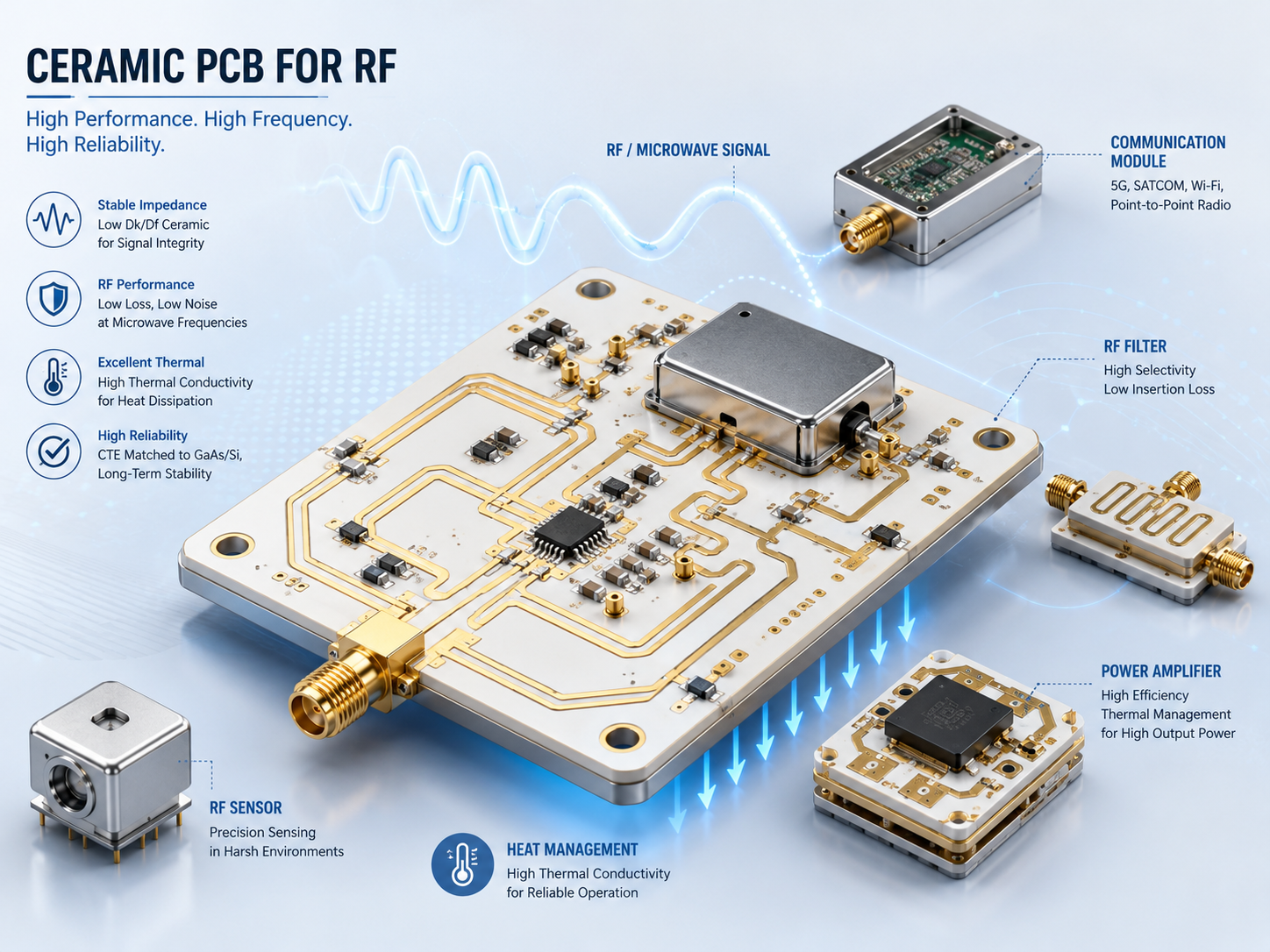
A ceramic PCB for RF is a circuit board or substrate used in high-frequency circuits where dielectric stability, low signal loss, dimensional accuracy, and thermal reliability matter more than standard PCB cost.
In RF and microwave applications, the substrate is part of the electrical design. It affects impedance, insertion loss, resonance behavior, signal phase, and long-term stability. This is why engineers often consider ceramic PCB substrate options such as alumina PCB for RF modules, microwave circuits, filters, sensors, power amplifiers, and hybrid circuits.
Why Ceramic PCB Substrate Matters in RF Circuits?
A ceramic PCB substrate matters in RF circuits because high-frequency signals are sensitive to material behavior. Small changes in dielectric constant, trace geometry, surface quality, or substrate thickness can shift impedance and affect performance.
For buyers, the key point is simple: RF ceramic PCB is not selected only for heat dissipation. The material must support stable signal behavior at the target frequency. A supplier must understand both ceramic PCB manufacturing and the RF requirements behind the drawing.
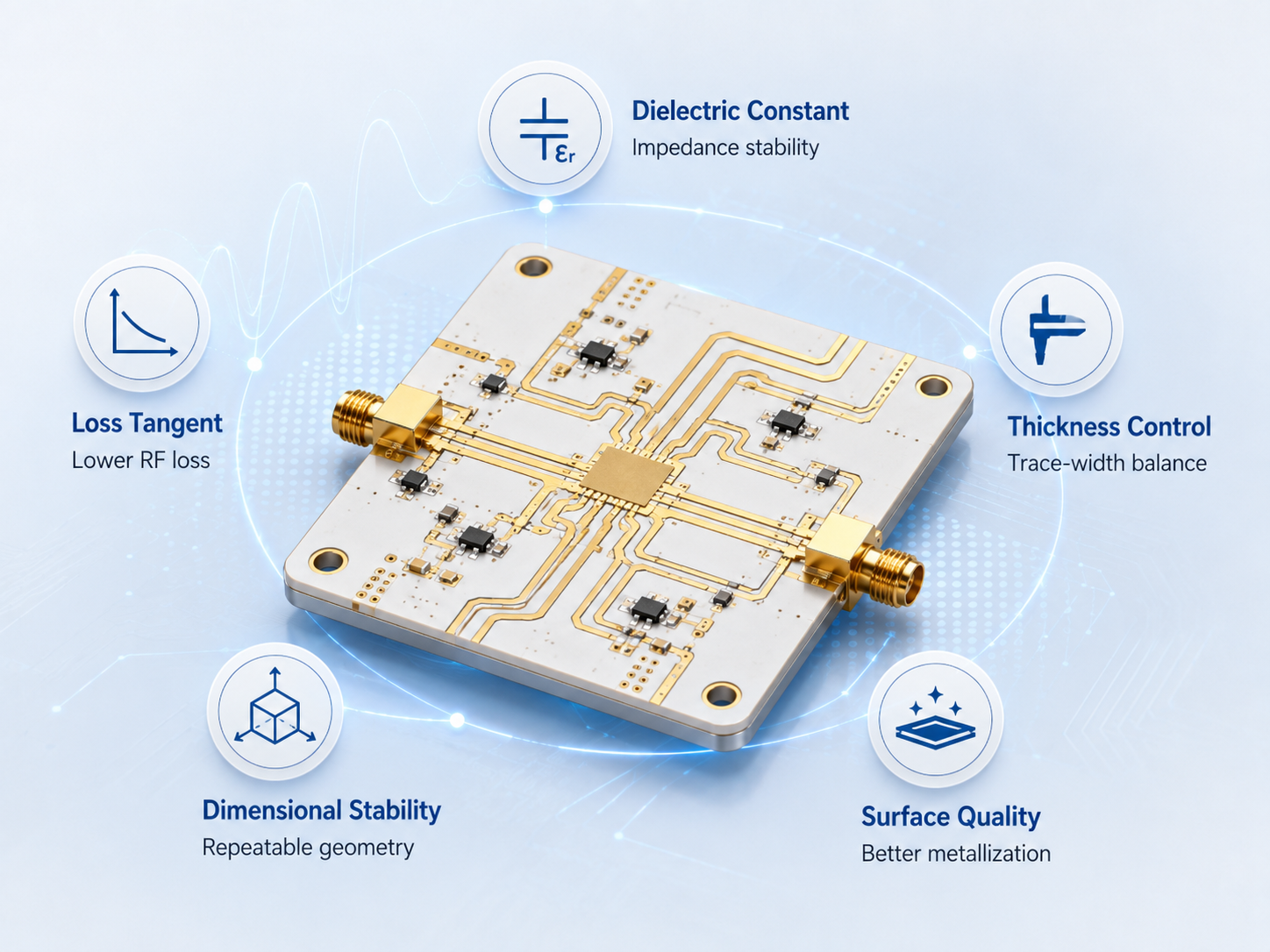
Key RF Properties: Dielectric Constant, Loss Tangent, and Dimensional Stability
For RF ceramic PCB projects, three material properties usually matter most: dielectric constant, loss tangent, and dimensional stability.
RF Property
Why It Matters
Buyer Note
Dielectric constant
Affects impedance, wavelength, trace width, and circuit size
Confirm the value required by the RF design, not only the material name
Loss tangent
Affects signal loss at high frequency
Lower loss is more important as frequency increases
Substrate thickness
Affects impedance and manufacturable line width
Keep thickness controlled and clearly specified
Dimensional stability
Helps maintain trace geometry and circuit repeatability
Important for filters, antennas, resonators, and microwave circuits
Surface quality
Affects metallization and high-frequency current behavior
Review finish and metallization process early
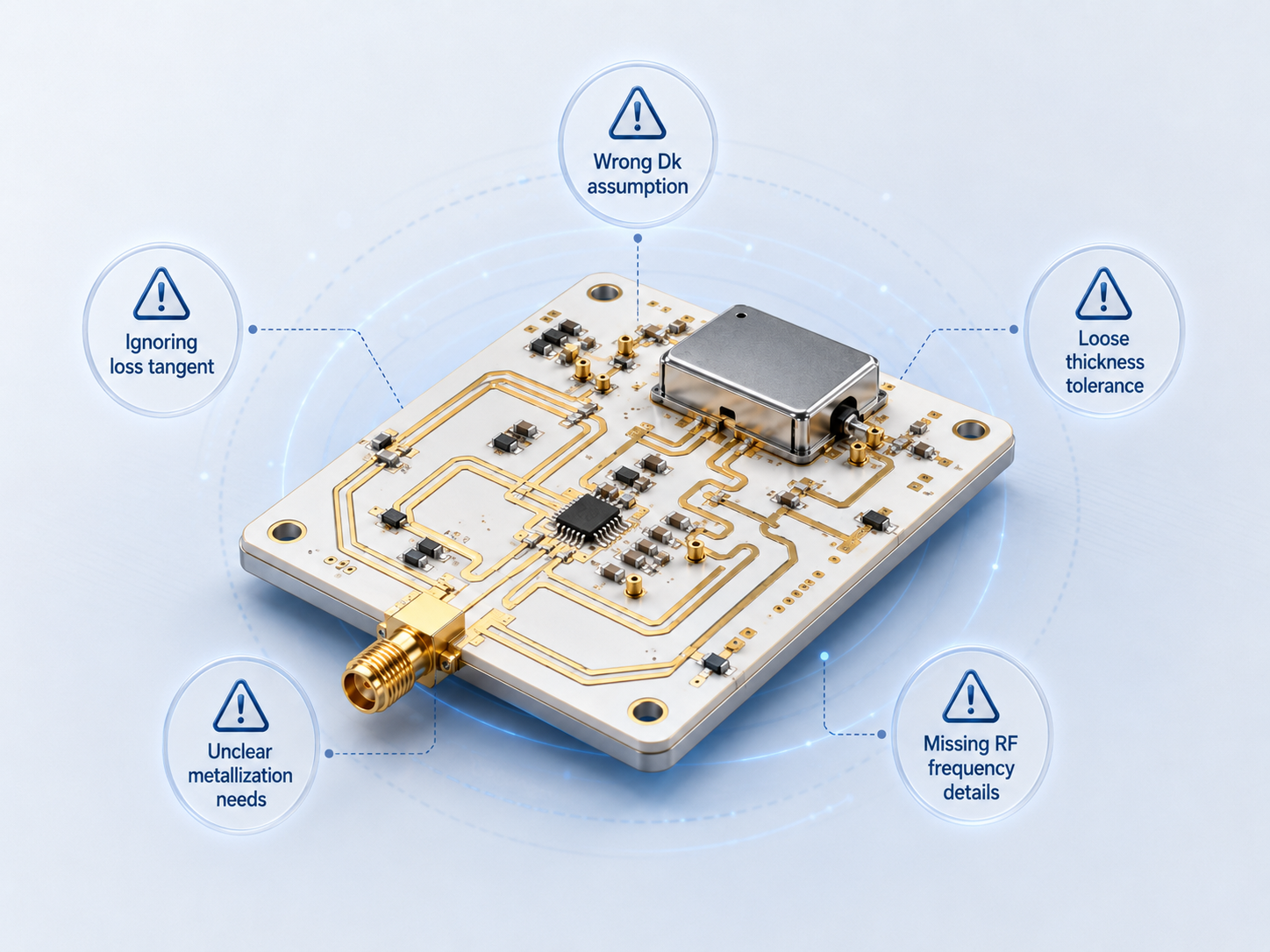
A good RF ceramic PCB quote should not start with “Can you make ceramic PCB?” It should start with frequency range, impedance target, material requirement, line width, tolerance, and metallization needs.
Common Materials: Alumina PCB, AlN, Rogers, and FR4
Material choice depends on frequency, loss target, thermal demand, cost, and manufacturing method. Alumina PCB is common in RF ceramic substrate applications, but it is not the only option.
Material
RF Strength
Limitation
Best Use
Alumina PCB
Stable ceramic substrate, good mechanical and thermal behavior, widely used in RF and hybrid circuits
Higher dielectric constant than many organic RF laminates; design must account for it
Higher cost; not always needed for RF unless heat is also a major issue
RF power modules, high-power microwave circuits, compact thermal designs
Rogers / PTFE-based RF laminate
Common for RF PCB design, lower-loss options available
Material and processing cost can be higher than FR4; thermal/mechanical behavior differs from ceramic
Antennas, RF boards, microwave circuits, communication devices
FR4
Low cost and easy to manufacture
Loss and dielectric variation become problematic at higher frequencies
Low-frequency or cost-sensitive circuits where RF loss is acceptable
For many RF ceramic PCB projects, alumina PCB is selected when the design needs ceramic stability, precision metallization, and reliable high-frequency behavior in a compact substrate.
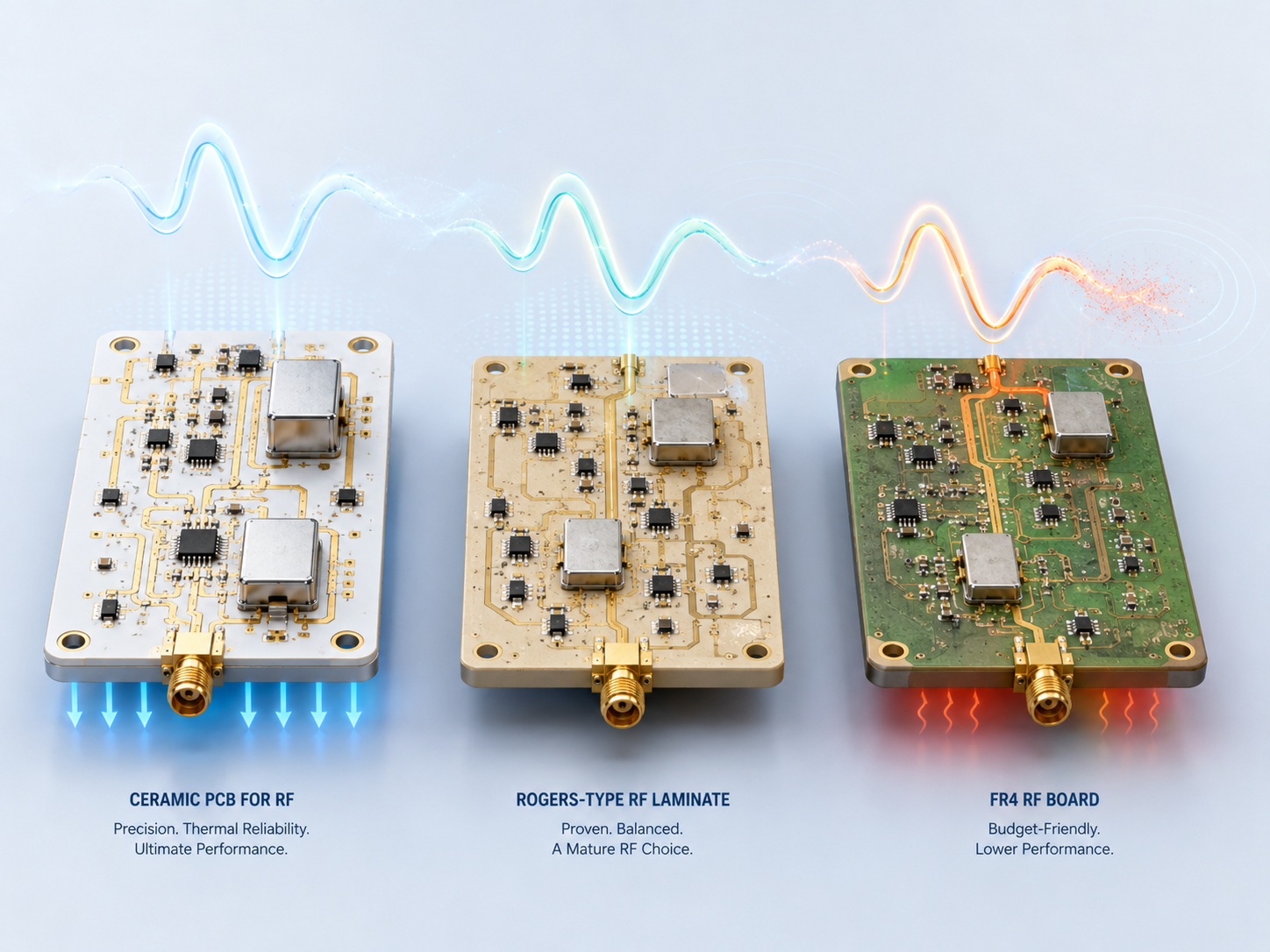
Ceramic PCB for RF vs Standard RF PCB Materials
The decision between ceramic PCB and standard RF laminate depends on circuit function, frequency, power level, size, and reliability environment.
Option
Advantage
Limitation
Better Fit
Ceramic PCB for RF
Stable substrate, good thermal behavior, suitable for hybrid and precision circuits
The practical takeaway: use FR4 only when RF loss and dielectric variation are acceptable. Use Rogers-type RF laminates for many standard RF boards. Use ceramic PCB when the design needs ceramic stability, compact structure, precision, or stronger thermal reliability.
Ceramic PCB Manufacturing Considerations for RF Applications
Ceramic PCB manufacturing for RF applications must control the details that affect signal performance. A small trace width error may be more serious in RF than in a normal power or control PCB.
Important manufacturing points include:
Substrate material and thickness control
Fine line and spacing capability
Metallization method, such as thick film, thin film, DBC, or other suitable process
Copper or conductor thickness
Surface roughness and finish
Dimensional tolerance
Via and hole quality if required
Flatness and warpage
Pattern registration
Cleanliness and handling
For RF ceramic PCB manufacturing, the supplier should review whether the requested geometry is manufacturable before production. If the layout uses very fine traces, tight impedance targets, or microwave structures, early engineering communication reduces prototype failure risk.
When Should You Choose Alumina PCB for RF?
Choose alumina PCB for RF when the circuit needs a stable ceramic substrate, good dimensional control, and reliable behavior in a compact or harsh environment.
Alumina PCB is often suitable for:
RF hybrid circuits
Microwave modules
Sensor circuits
Thin film or thick film RF substrates
Filters and matching networks
High-temperature or high-reliability electronics
Compact modules where ceramic stability is useful
Alumina may be unnecessary if the circuit can meet RF performance with a standard RF laminate at lower cost. It may also be the wrong choice if the design requires a different dielectric constant, lower loss material, or stronger thermal conductivity than alumina can provide.
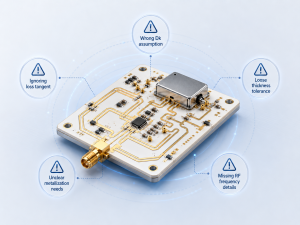
Common Design and Purchasing Mistakes
The most common mistake is treating RF ceramic PCB like a normal ceramic circuit board. RF performance depends on both material and geometry.
Mistake
Why It Causes Problems
Better Approach
Only asking for “ceramic PCB for RF”
Supplier cannot confirm material, frequency, or process
Provide frequency range, substrate material, and circuit function
Ignoring dielectric constant
Impedance and trace width may shift
Specify target dielectric constant or approved material
Ignoring loss tangent
High-frequency loss may become unacceptable
Define frequency and acceptable RF performance
Using vague tolerances
RF traces may not match design intent
Specify line width, spacing, substrate thickness, and dimensional tolerance
Choosing alumina automatically
Alumina may not fit every RF design
Compare alumina, AlN, Rogers, and FR4 based on real requirements
Sending only Gerbers
Supplier cannot judge RF function or risk
Include stackup, material notes, impedance targets, and application context
A good ceramic PCB manufacturer should ask technical questions before quotation if the RF requirements are unclear.
How to Choose a Ceramic PCB Manufacturer for RF Projects?
A ceramic PCB manufacturer for RF projects should be evaluated by engineering communication, material control, metallization capability, and tolerance control, not only by price.
Useful supplier checks include:
Experience with RF or microwave ceramic substrate projects
Ability to manufacture alumina PCB and other ceramic PCB substrate types
Clear process options for thin film, thick film, or metallized ceramic circuits
Fine line and spacing capability
Substrate thickness and dimensional tolerance control
Inspection process for metallization, surface finish, and pattern accuracy
Willingness to review drawings before quoting
Ability to support prototypes before mass production
Clear communication about manufacturing limits and alternatives
For EBest Circuit (Best Technology), RF ceramic PCB review should focus on whether the drawing, material, tolerance, and production method match the actual frequency and application requirement.
What to Provide When Requesting an RF Ceramic PCB Quote
A complete RFQ helps the supplier evaluate manufacturability, cost, and performance risk before production.
Provide these details when requesting a ceramic PCB quote:
Application type, such as RF module, microwave circuit, sensor, or power amplifier
Frequency range
Ceramic material preference, such as alumina PCB or AlN
Required dielectric constant if specified
Loss requirement if specified
Substrate dimensions and thickness
Line width and spacing
Metallization method or conductor requirement
Copper or metal thickness
Surface finish
Hole, via, or edge requirements
Dimensional tolerance
Quantity for prototype and mass production
Test or inspection requirements
Gerber files, drawings, and stackup notes
If the project is still in early design, provide the target frequency, operating environment, and performance concern. This allows the ceramic PCB manufacturer to suggest practical material and process options before the design is locked.
FAQ
Is ceramic PCB good for RF?
Yes. Ceramic PCB can be good for RF when the circuit needs dielectric stability, dimensional accuracy, thermal reliability, and compact substrate design. It is especially useful for RF modules, microwave circuits, hybrid circuits, sensors, and high-reliability electronics.
Why is alumina PCB used in RF circuits?
Alumina PCB is used in RF circuits because it provides a stable ceramic substrate, good mechanical strength, useful thermal behavior, and compatibility with thin film or thick film metallization. It is common in RF and microwave hybrid circuits.
Is ceramic PCB better than Rogers PCB for RF?
Not always. Rogers-type RF laminates are widely used for RF PCB designs, antennas, and microwave boards. Ceramic PCB is better when the design needs ceramic stability, compact substrate behavior, precision metallization, or stronger thermal/mechanical reliability.
Can FR4 be used for RF circuits?
FR4 can be used for lower-frequency or cost-sensitive RF circuits, but it becomes less predictable as frequency increases. Loss, dielectric variation, and tolerance control can limit performance in higher-frequency RF designs.
What affects RF performance in ceramic PCB manufacturing?
RF performance can be affected by dielectric constant, loss tangent, substrate thickness, line width, spacing, metallization quality, surface roughness, dimensional tolerance, and pattern registration.
What is the difference between alumina PCB and AlN PCB for RF?
Alumina PCB is commonly used for RF ceramic substrates and is usually more cost-effective. AlN PCB offers higher thermal conductivity, so it is useful when the RF circuit also has significant heat dissipation requirements.
What should I ask a ceramic PCB manufacturer before ordering?
Ask about material options, RF project experience, fine line capability, metallization process, substrate thickness tolerance, dimensional tolerance, inspection method, prototype support, and whether they can review RF-related drawing requirements before production.
Do I need impedance control for ceramic PCB for RF?
Many RF ceramic PCB designs need impedance awareness, even if the supplier does not provide full RF simulation. At minimum, the buyer should provide frequency range, trace geometry, substrate thickness, dielectric requirement, and critical RF areas.
Conclusion
A ceramic PCB for RF is not just a ceramic version of a normal PCB. The substrate affects impedance, signal loss, circuit size, stability, and long-term performance. Alumina PCB is often a practical RF ceramic substrate, while AlN, Rogers materials, and FR4 each fit different design conditions.
If you are evaluating ceramic PCB substrate options, alumina PCB, ceramic PCB manufacturing, or RF PCB prototype support, EBest Circuit (Best Technology) can help review your drawings, material requirements, tolerance needs, and quotation details. Contact us at sales@bestpcbs.com.
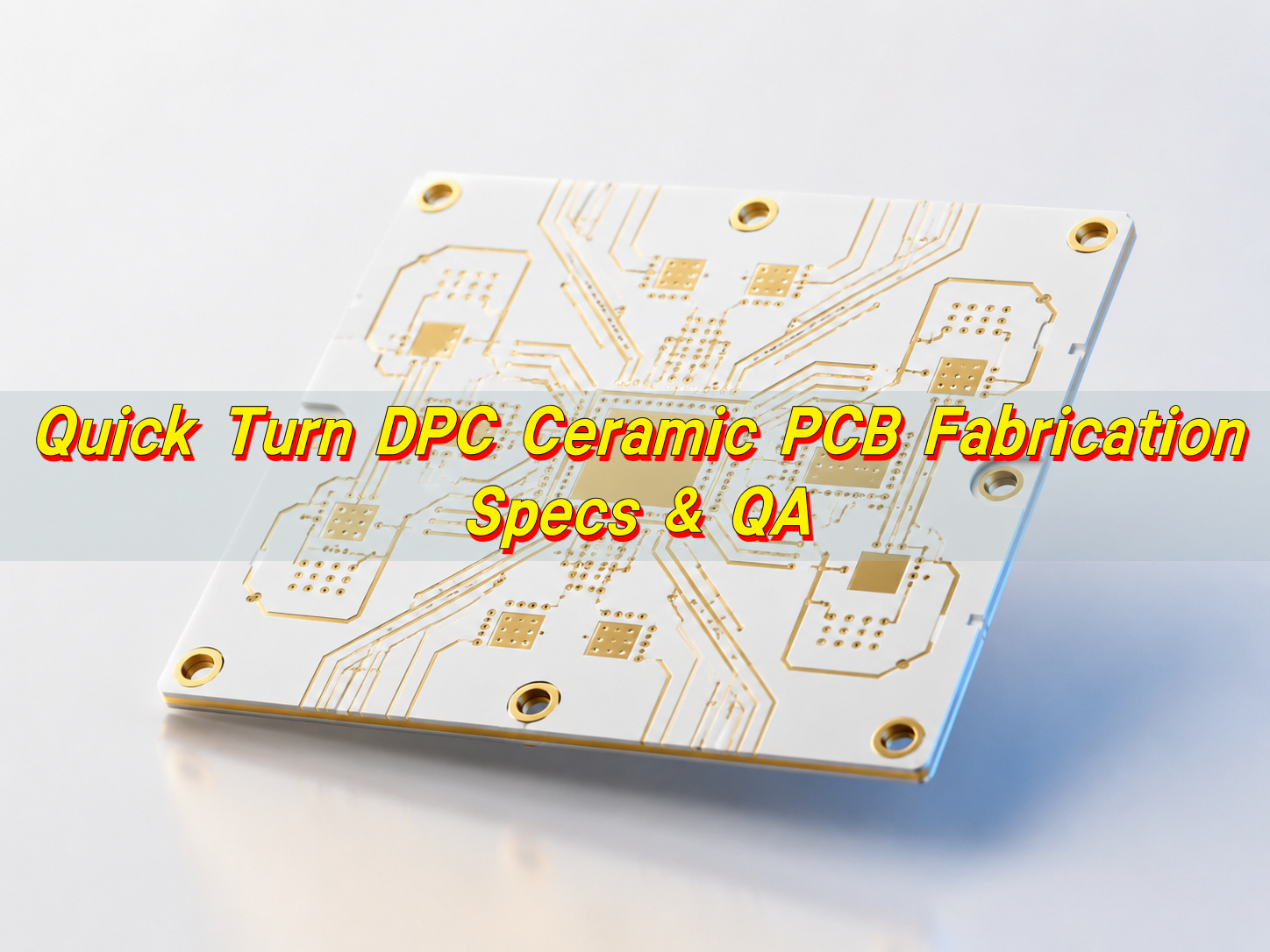
Quick turn DPC ceramic PCB fabrication refers to the fast manufacturing of ceramic circuit boards using Direct Plated Copper technology. In electronics manufacturing, DPC means Direct Plated Copper or Direct Plating Copper, where copper is deposited directly onto a ceramic substrate instead of using standard FR4 laminate construction.
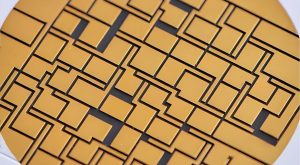
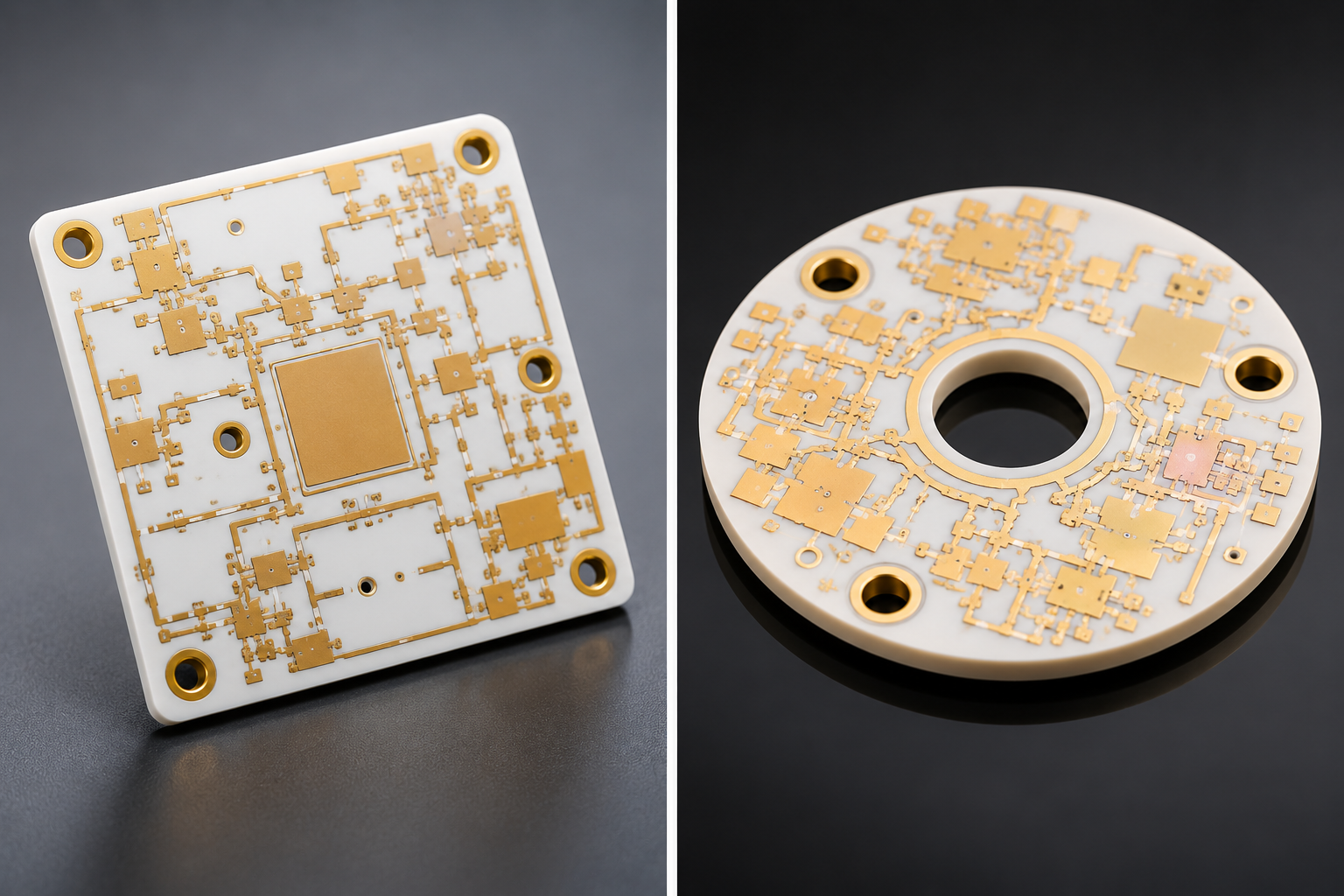
A DPC ceramic PCB usually uses alumina, aluminum nitride, or other ceramic materials as the insulating base. A thin metal seed layer is first formed on the ceramic surface, then copper is built up by electroplating. This makes the process suitable for fine circuits, good surface flatness, high thermal performance, and compact power modules. Some manufacturers describe DPC as a thin-film ceramic PCB process improved by copper plating.
For quick turn projects, the goal is not only fast delivery. The real goal is fast engineering validation without sacrificing adhesion, line accuracy, insulation performance, surface finish quality, or thermal reliability.
Why Is DPC Ceramic PCB Important for High-Power Electronics?
DPC ceramic PCB is important because many modern electronic products generate more heat in smaller spaces. FR4 can work well for general electronics, but it has practical limits when heat density, dielectric strength, thermal expansion, and long-term stability become critical.
DPC ceramic PCB fabrication helps solve several engineering problems:
Engineering Need
Why DPC Ceramic PCB Helps
Heat dissipation
Ceramic substrate transfers heat more efficiently than FR4
Fine circuit routing
Plated copper supports fine patterns and compact layouts
Electrical insulation
Ceramic provides strong dielectric performance
Dimensional stability
Ceramic has low expansion under heat
Power density
Suitable for LEDs, power modules, sensors, and RF devices
For products using high-power LEDs, laser diodes, SiC/GaN devices, high-current drivers, power sensors, medical modules, automotive lighting, and industrial control electronics, the substrate often becomes part of the thermal design, not just a carrier for copper traces.
How Does Direct Plated Copper Work?
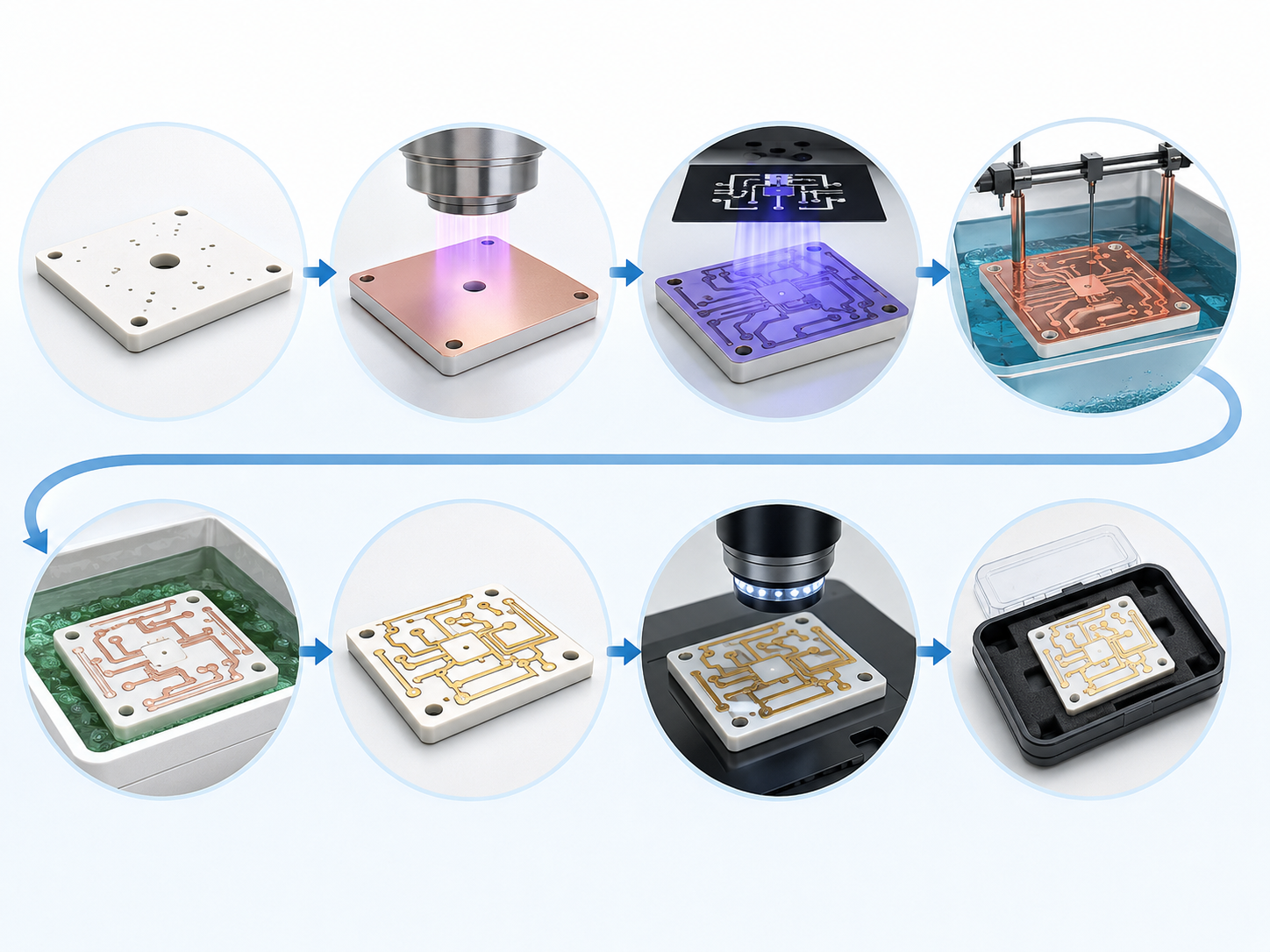
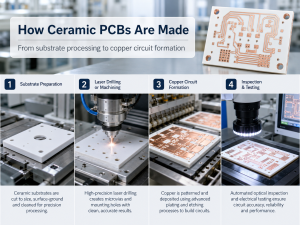
DPC manufacturing starts with a ceramic substrate. The surface is cleaned and prepared, then a very thin adhesion or seed layer is deposited. Titanium, copper, or similar metallization structures may be used depending on the process route. After that, copper is electroplated to the required thickness, patterned, etched, finished, and inspected.
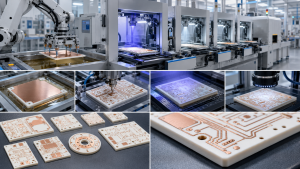
A typical DPC ceramic PCB process includes:
Ceramic substrate selection
Laser drilling or mechanical processing
Surface cleaning and activation
Thin-film sputtering or seed-layer formation
Photoresist coating
Exposure and development
Copper electroplating
Circuit etching
Surface finish
Electrical test
AOI and dimensional inspection
Packaging for shipment
The key difference from thick-film ceramic circuits is that DPC builds copper through plating instead of screen-printing conductive paste. Compared with DBC, it is usually better for finer line width, smaller pads, and precision circuit patterns. DPC is often described as close to standard PCB design logic because copper thickness can be controlled by plating after a seed layer is formed.
Which Materials Are Used for DPC Ceramic PCB Fabrication?
The most common substrate materials for DPC ceramic PCB are alumina and aluminum nitride. The right choice depends on heat, cost, mechanical strength, insulation, and application environment.
Material
Common Use
Main Strength
Alumina, Al₂O₃
LED modules, sensors, industrial electronics
Cost-effective ceramic insulation
Aluminum Nitride, AlN
High-power LEDs, power modules, laser systems
High thermal conductivity
Silicon Nitride, Si₃N₄
High-reliability power electronics
Strong mechanical toughness
Zirconia-based ceramics
Special mechanical or insulating uses
High strength and wear resistance
Aluminum nitride is widely used when thermal conductivity is a dominant requirement. Kyocera describes AlN as a material with high thermal conductivity and electrical insulation, used in heat-dissipating and heat-soaking components. MARUWA also highlights AlN for high thermal conductivity, electrical insulation, and a coefficient of thermal expansion close to silicon, making it useful for power modules and LEDs.
For most buyers, alumina is the practical starting point when cost matters. AlN becomes more attractive when junction temperature, power density, or device lifetime requires better heat transfer.
DPC vs DBC vs Thick Film Ceramic PCB
DPC, DBC, and thick film are all ceramic circuit technologies, but they serve different design needs.
Process
Best Fit
Main Advantage
Common Limitation
DPC
Fine circuits, compact pads, prototype validation
Precise pattern, good flatness
Higher process control requirement
DBC
High-current power modules
Thick copper, strong current capacity
Less suitable for very fine traces
Thick Film
Resistors, sensors, hybrid circuits
Mature and flexible
Conductive paste performance varies
LTCC/HTCC
Multilayer ceramic modules
Integrated ceramic package design
Longer development cycle
DPC is often the better choice when engineers need fine trace geometry, plated copper, ceramic heat dissipation, and quick prototype production. DBC is often selected for high-current power substrates where thicker copper is more important than fine routing. Thick film is useful for hybrid circuits, printed resistors, and sensor modules.
For quick turn DPC ceramic PCB fabrication, the design should stay realistic. Very thick copper, complex multilayer ceramic stacks, extremely tight spacing, and unusual surface finishes can extend lead time.
Key Specifications Engineers Should Confirm Before Fabrication
Before placing a quick turn order, confirm the specifications that directly affect manufacturability, cost, and reliability.
Specification
What to Confirm
Ceramic material
Al₂O₃, AlN, Si₃N₄, or other
Substrate thickness
Commonly selected by heat, strength, and package height
Copper thickness
Match current, heat, and etching capability
Line width and spacing
Confirm with manufacturer before layout release
Hole type
Laser hole, metallized hole, or non-plated hole
Surface finish
ENIG, immersion silver, OSP, or custom finish
Solder mask
Required or not required
Warpage control
Important for assembly and module bonding
Thermal path
Pad-to-ceramic-to-heatsink structure
Test method
E-test, AOI, adhesion check, insulation test
A common mistake is sending only Gerber files without explaining power load, device package, operating temperature, insulation requirement, or assembly method. DPC ceramic PCB fabrication is highly connected with final use conditions, so the manufacturer needs more than a drawing.
For R&D teams, quick turn service is valuable when the design still needs verification. It allows engineers to test solderability, thermal performance, die attach behavior, pad geometry, electrical isolation, and mechanical fit before releasing a production build.
The strongest value appears in projects where one failed thermal design can delay the whole product schedule. A well-made DPC prototype helps shorten that risk loop.
Limitations and Design Boundaries of DPC Ceramic PCB
DPC ceramic PCB is not a universal replacement for FR4, aluminum PCB, or DBC substrate. It has clear boundaries.
DPC may not be the best option when:
The product only needs low-cost signal routing
The board area is large and mechanically exposed
The design requires heavy copper beyond practical plating limits
The circuit needs complex multilayer routing
Mechanical shock is severe and ceramic cracking risk is high
The application does not need ceramic-level thermal performance
Ceramic is hard and stable, but it is also brittle compared with organic laminates. Layout, mounting holes, edge distance, screw pressure, fixture design, and packaging must be reviewed carefully. Many ceramic PCB failures are not caused by the circuit itself. They come from mechanical stress, poor thermal interface design, wrong panel handling, or unsuitable assembly fixtures.
Where Are DPC Ceramic PCBs Used?
DPC ceramic PCBs are widely used in electronic products that need compact routing, fast heat transfer, and stable insulation.
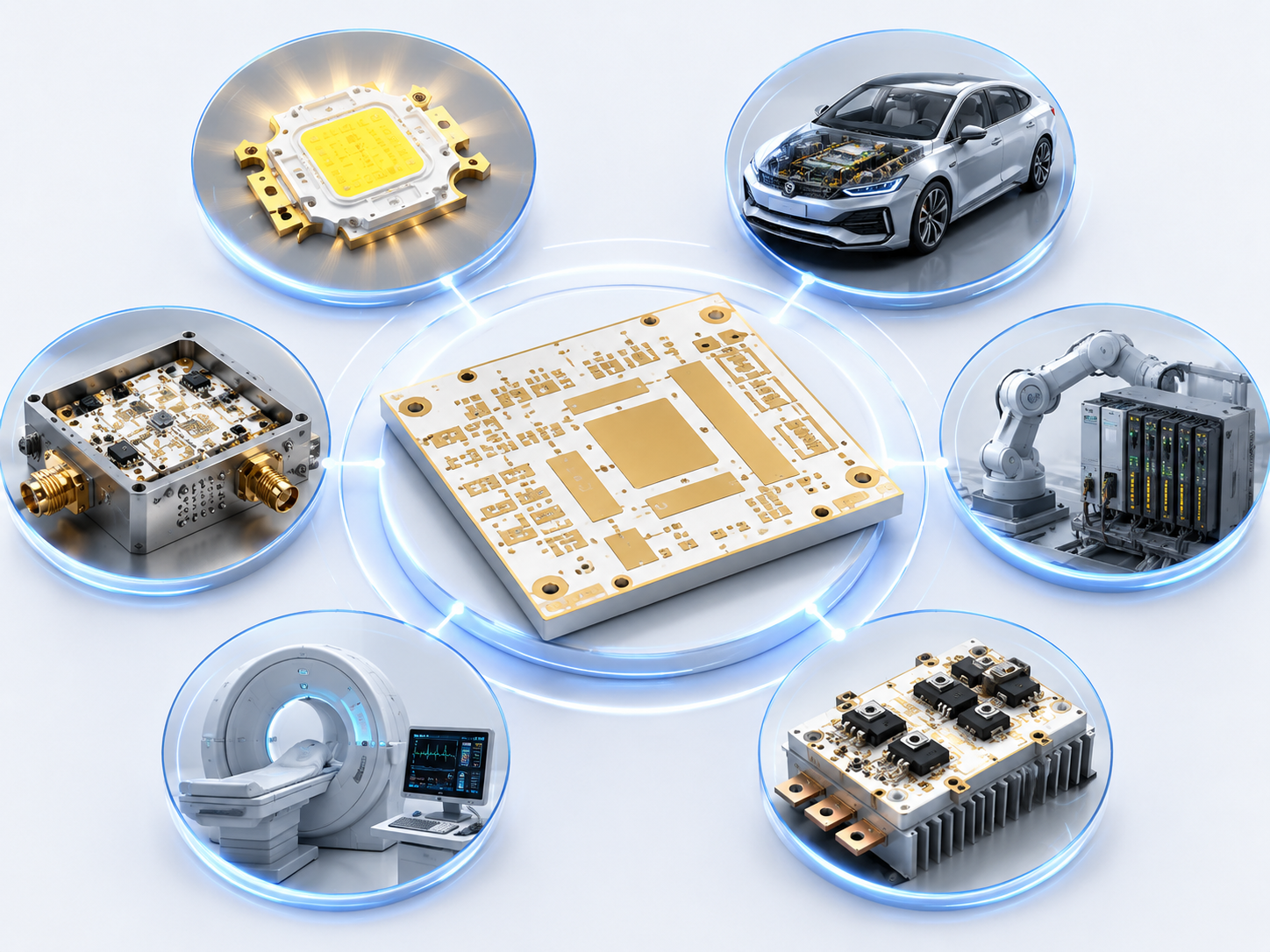
Common applications include:
High-power LED modules
UV LED curing systems
Laser diode modules
Automotive lighting
EV power electronics
SiC and GaN driver circuits
Power sensors
Semiconductor test modules
Medical electronics
RF and microwave modules
Industrial control electronics
Optical communication devices
In high-power LED projects, DPC ceramic PCB helps conduct heat away from the LED junction. In laser modules, it supports compact pads and stable heat spreading. In power electronics, it can serve as a high-insulation substrate for compact power devices.
For U.S. and European buyers, key concerns often include RoHS compliance, long-term reliability, documentation, and repeatable production quality. RoHS rules restrict hazardous substances in electrical and electronic equipment, and many electronics buyers require clear material and surface finish compliance records before approval.
Practical Engineering Case: High-Power LED Ceramic Substrate
A high-power LED module may fail early if the thermal path is too slow or uneven. In one typical project, the LED package, solder layer, copper pad, ceramic substrate, thermal interface material, and heatsink all form one heat-transfer chain.
For this type of project, engineers should review:
LED junction temperature target
Copper pad size
Ceramic material selection
Solder void control
Surface finish compatibility
Heatsink contact flatness
Mounting pressure
Thermal interface material thickness
If alumina cannot keep the temperature within the design target, AlN may be selected. If copper thickness is not enough for current spreading, the trace width and copper plating requirement should be adjusted early.
The lesson is simple: DPC ceramic PCB should be designed as a thermal component. Treating it like a normal PCB carrier can lead to overheating, light decay, solder fatigue, or unstable lifetime results.
Design Guidelines Before Sending Gerber Files
For quick turn DPC ceramic PCB fabrication, design files should be reviewed before ordering. A fast quote is helpful, but a fast technical review is more important.
Recommended design checks:
Keep enough distance from copper to board edge.
Avoid sharp inside corners in copper patterns.
Use rounded corners where stress may concentrate.
Confirm minimum line width and spacing with the factory.
Avoid unnecessary large copper imbalance.
Check pad size for soldering, wire bonding, or die attach.
Define plated and non-plated holes clearly.
Mark ceramic material and thickness in the drawing.
Add surface finish and tolerance requirements.
Confirm assembly temperature and soldering process.
For bare substrate projects, include Gerber, drill files, outline drawing, material requirement, copper thickness, surface finish, tolerance notes, and inspection requirements. For assembled projects, also include BOM, pick-and-place file, polarity drawing, solder paste layer, and test requirements.
Manufacturing Considerations for Fast Delivery
Quick turn ceramic PCB production depends on design complexity. A simple single-sided or double-sided DPC ceramic PCB can move faster than a complex board with tight spacing, many laser holes, special surface finish, thick copper, or strict cosmetic standards.
To improve lead time, buyers should provide:
Complete fabrication files
Clear material requirement
Quantity and panelization preference
Copper thickness
Surface finish
Tolerance drawing
Final application notes
Required test standard
Packaging requirement
Target delivery date
Fast delivery does not mean skipping inspection. A reliable manufacturer should still run incoming ceramic inspection, dimensional check, copper thickness measurement, surface finish inspection, AOI, electrical testing, and final visual inspection.
IPC standards are commonly used to align quality expectations in electronics manufacturing. IPC standards help define reliability, quality, and consistency across the electronics industry, while IPC-A-600 is widely used as a visual acceptability reference for printed boards.
Common Failure Modes in DPC Ceramic PCB
DPC ceramic PCB failures usually come from material mismatch, process instability, poor handling, or design stress.
Balanced copper and controlled firing/plating process
Poor bonding
Surface finish mismatch
Confirm wire bonding or die attach requirement early
Thermal failure
Wrong material or insufficient copper area
Thermal simulation and material upgrade
A practical failure analysis should not stop at “bad board.” It should check the full chain: substrate, copper adhesion, finish, soldering, fixture, thermal interface, device power, operating environment, and handling process.
What Affects DPC Ceramic PCB Cost?
The cost of DPC ceramic PCB fabrication depends on material, copper thickness, circuit density, tolerance, surface finish, inspection level, and delivery speed.
Main cost factors include:
Ceramic material: AlN costs more than common alumina.
Board thickness: Special thickness may require custom sourcing.
Copper thickness: More plating time increases cost.
Line width and spacing: Fine features require tighter process control.
Hole processing: Laser drilling adds cost.
Surface finish: ENIG and special finishes cost more than basic options.
Quantity: Prototype unit price is higher than batch price.
Testing: Extra reliability tests increase cost.
Lead time: Urgent production may need priority scheduling.
Packaging: Fragile ceramic boards need careful protection.
The best cost-control method is not choosing the cheapest material. It is matching the material to the real thermal, electrical, and mechanical requirement. Over-specification wastes budget. Under-specification creates redesign cost.
How to Ensure Quality in DPC Ceramic PCB Fabrication?
Quality control should start before production. For ceramic PCB, small design errors can become expensive after plating, finishing, or assembly.
Recommended quality controls include:
DFM review before production
Ceramic substrate inspection
Copper thickness measurement
Adhesion test
Line width and spacing inspection
Hole size and position inspection
Surface finish thickness check
AOI
Electrical test
Insulation resistance test
Solderability test when required
Final visual inspection
Moisture-proof and shock-resistant packaging
For high-reliability applications, buyers may also request cross-section analysis, thermal cycling, pull test, shear test, ionic contamination test, and traceability documentation.
A good quick turn supplier should not only say “we can make it fast.” The supplier should explain what can be accelerated, what cannot be shortened, and which specifications may affect risk.
How to Choose a DPC Ceramic PCB Supplier?
A suitable DPC ceramic PCB supplier should understand both ceramic substrate processing and electronic manufacturing requirements.
Use the following supplier checklist:
Can the factory support DPC ceramic PCB fabrication directly?
Does the team understand alumina and AlN material selection?
Can they review line width, spacing, copper thickness, and hole design?
Can they support quick turn prototype and batch production?
Do they provide DFM feedback before production?
Can they perform AOI, e-test, copper thickness inspection, and surface finish checks?
Can they support RoHS-compliant materials and documentation?
Do they have experience with LED, power, RF, medical, automotive, or industrial projects?
Can they package ceramic boards safely for international shipping?
Can they support custom OEM and ODM engineering projects?
For buyers sourcing from China, the best approach is to choose a real manufacturing partner with technical review capability, not only a trading quotation channel. Cross-border purchasing can work very well when files are complete, requirements are clear, and the factory has stable process control.
What Should Buyers Check Before Placing an Order?
Before ordering, confirm the information below:
Final application
Ceramic material
Board size
Thickness
Copper thickness
Layer structure
Line width and spacing
Hole type and size
Surface finish
Solder mask requirement
Quantity
Delivery requirement
Inspection standard
Assembly requirement
Packaging method
Shipping destination
Compliance requirement
For quick turn orders, avoid vague instructions such as “standard ceramic PCB” or “same as normal PCB.” DPC ceramic PCB fabrication needs precise material and process details.
A strong RFQ package reduces delays, prevents incorrect assumptions, and helps the manufacturer give a more accurate price.
FAQ About Quick Turn DPC Ceramic PCB Fabrication
What does DPC mean in ceramic PCB manufacturing? DPC means Direct Plated Copper or Direct Plating Copper. It is a ceramic PCB process where a metal seed layer is formed on the ceramic surface, then copper is built up by electroplating. It is often used for fine circuits, compact pads, thermal substrates, and high-power electronic modules.
Is DPC ceramic PCB better than FR4 PCB? DPC ceramic PCB is better when the project needs high thermal conductivity, electrical insulation, and stable performance under heat. FR4 is still better for many low-cost signal boards. The right choice depends on heat density, voltage, product lifetime, assembly method, and total project budget.
Is DPC better than DBC ceramic substrate? DPC is usually better for fine circuit patterns, smaller pads, and prototype validation. DBC is often better for thick copper and high-current power modules. If the project needs fine routing and good surface flatness, DPC may be preferred. If it needs heavy copper current capacity, DBC may fit better.
Can DPC ceramic PCB be made quickly? Yes, simple DPC ceramic PCB prototypes can often be produced with quick turn scheduling. Lead time depends on material availability, copper thickness, circuit density, hole processing, surface finish, testing, and order quantity. Complete files and clear specifications help reduce engineering delays before production starts.
Which material is better, alumina or aluminum nitride? Alumina is more cost-effective and works well for many LED, sensor, and industrial electronics projects. Aluminum nitride provides much better heat dissipation and is suitable for high-power LEDs, laser modules, power devices, and compact thermal designs. The selection should follow thermal load and budget.
Can DPC ceramic PCB support fine lines? Yes, DPC is suitable for fine circuit patterns because copper is plated and patterned with a precision process. However, actual minimum line width and spacing depend on the factory’s capability, copper thickness, ceramic size, and yield requirement. Always confirm the capability before final layout.
What files are needed for a DPC ceramic PCB quote? A complete quote package should include Gerber files, drill files, board outline, ceramic material, substrate thickness, copper thickness, surface finish, quantity, tolerance notes, and application details. For assembly, also provide BOM, pick-and-place file, polarity drawing, test method, and soldering requirement.
Why does DPC ceramic PCB cost more than FR4? DPC ceramic PCB costs more because ceramic material, surface preparation, thin-film metallization, copper plating, precision etching, and inspection are more specialized than standard FR4 production. The higher cost is usually justified when heat dissipation, insulation, or compact power density affects product reliability.
Can DPC ceramic PCB be used for high-power LED modules? Yes, high-power LED modules are one of the common applications. DPC ceramic PCB can help transfer heat from the LED pad to the ceramic substrate and heatsink. For best results, engineers should also control solder voids, pad design, mounting pressure, and thermal interface material.
What causes copper peeling on DPC ceramic PCB? Copper peeling may come from weak surface activation, poor seed-layer adhesion, plating issues, contamination, thermal stress, or unsuitable assembly conditions. Prevention requires proper ceramic cleaning, stable metallization, adhesion testing, controlled plating, compatible surface finish, and correct soldering or bonding process.
Can DPC ceramic PCB be used for RF applications? DPC ceramic PCB can be used in some RF and microwave-related modules when the material, dielectric properties, line geometry, surface finish, and grounding design are suitable. For RF designs, engineers should confirm dielectric constant, loss, copper roughness, impedance requirement, and frequency range before fabrication.
Is DPC ceramic PCB suitable for automotive electronics? Yes, it can be suitable for automotive lighting, power modules, sensors, and thermal management circuits. Automotive projects should pay close attention to thermal cycling, vibration, insulation, material traceability, process documentation, and long-term reliability validation before moving from prototype to mass production.
How can buyers reduce risk when ordering from a China factory? Buyers should provide complete files, request DFM review, confirm material and copper thickness, define inspection requirements, check compliance documentation, and start with prototypes before mass production. A real source factory with engineering support can reduce communication gaps and improve repeatability for global delivery.
What is the most common design mistake in DPC ceramic PCB? A common mistake is treating ceramic PCB like ordinary FR4. Ceramic is rigid and brittle, so edge distance, mounting pressure, hole position, copper balance, soldering method, and thermal interface design all matter. Early DFM review helps prevent cracks, peeling, poor soldering, and thermal failures.
When should a project move from prototype to batch production? Move to batch production after confirming electrical performance, thermal behavior, solderability, surface finish, dimensional fit, adhesion, and reliability under real operating conditions. For high-power or regulated applications, it is better to validate a small pilot batch before releasing full-volume production.
Conclusion:
Quick turn DPC ceramic PCB fabrication is most valuable when a project needs fast prototype validation, strong heat dissipation, compact routing, reliable insulation, and a clear path toward batch production. The core technical point is that DPC ceramic PCB should be designed as part of the thermal and electrical system, not only as a circuit carrier.
If you need quick turn DPC ceramic PCB fabrication, ceramic PCB prototypes, OEM manufacturing, ODM production, small-batch trial production, or custom engineering support, you are welcome to contact our engineering team for technical review and quotation service. Send your Gerber files, drawings, stack-up, material requirements, and quantity to sales@bestpcbs.com, and our team will help evaluate the most suitable manufacturing solution for your project.
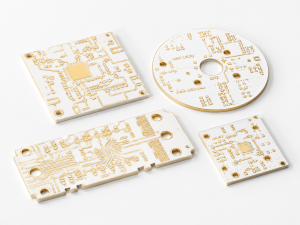
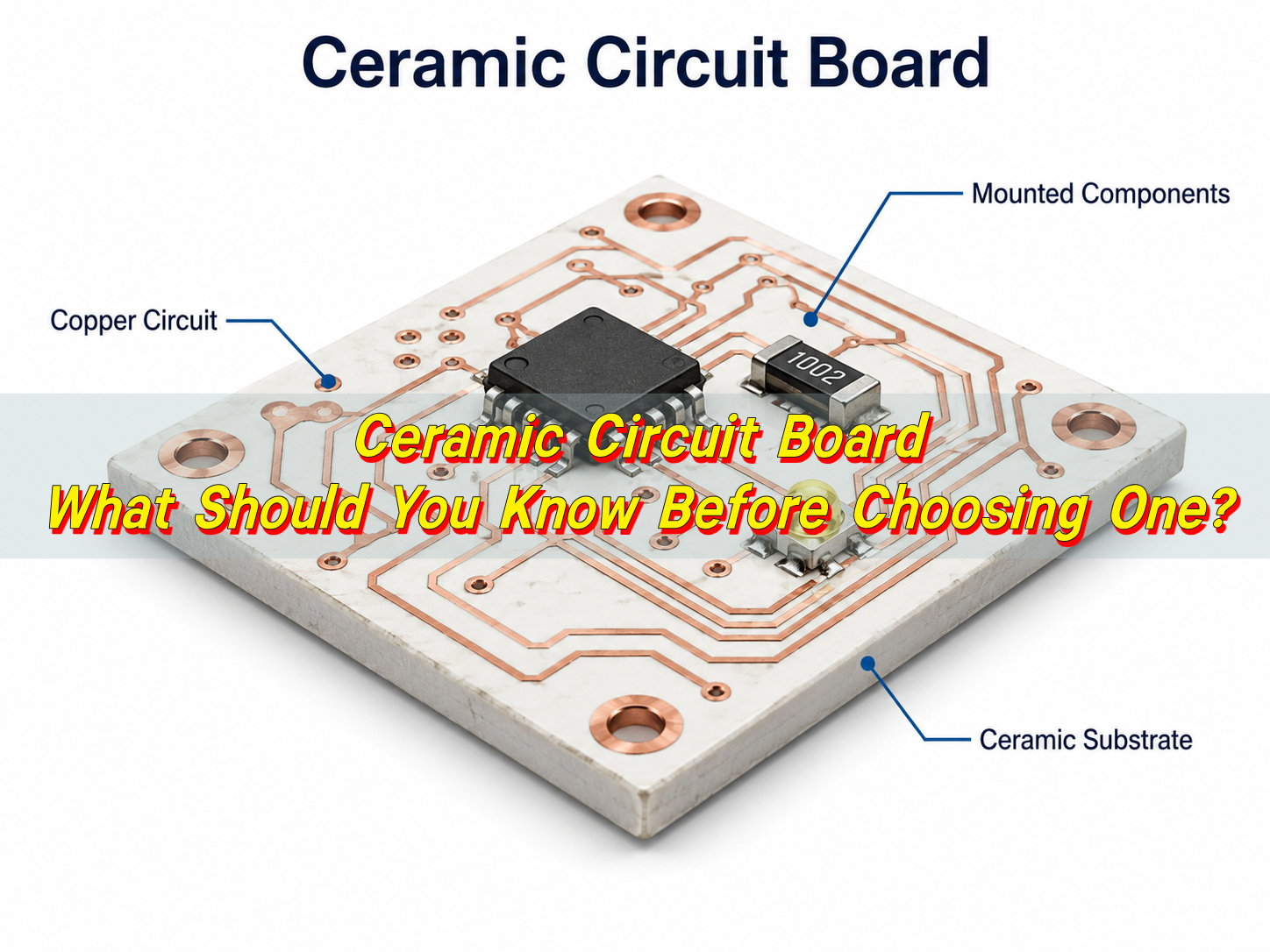
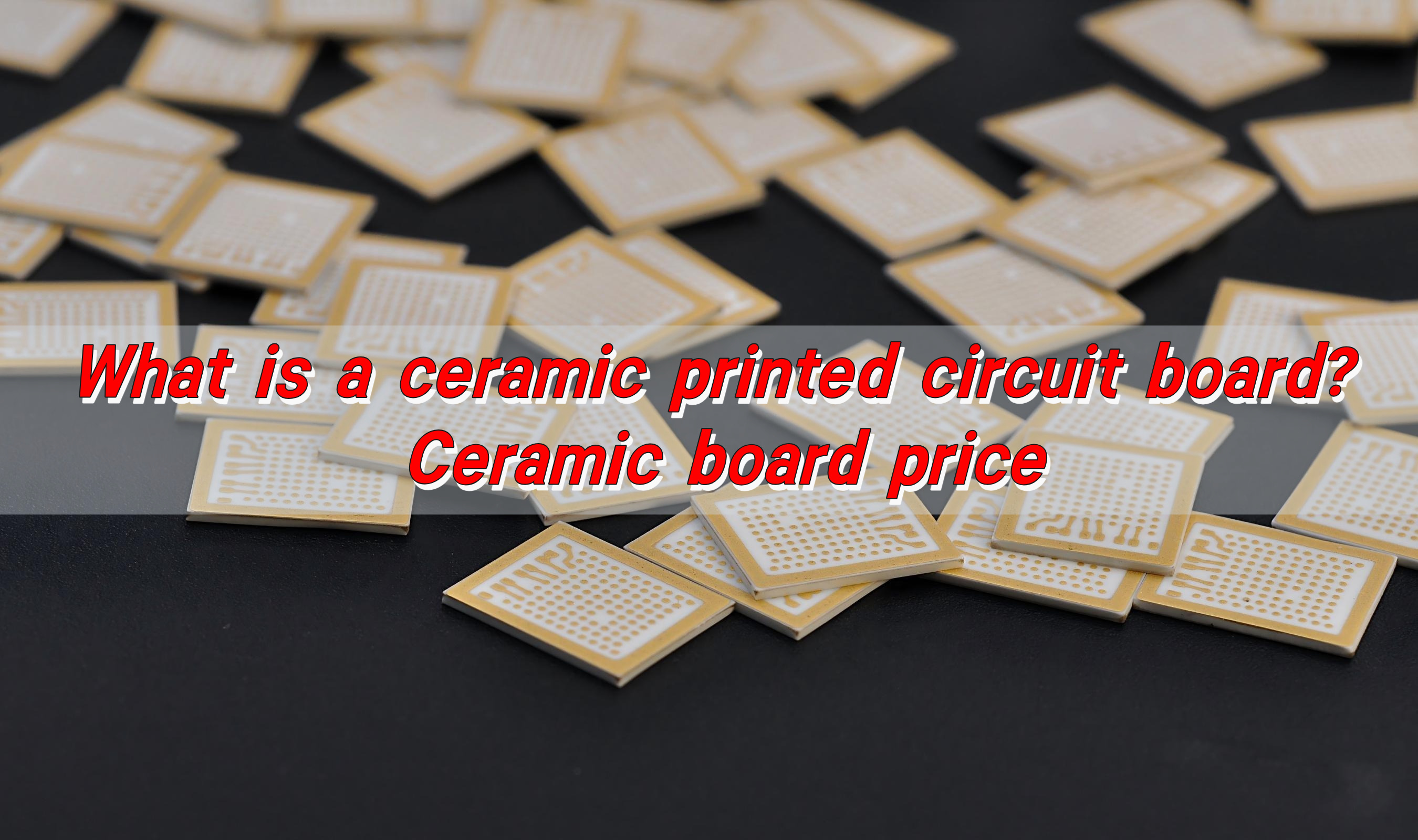
A ceramic circuit board is a printed circuit board that uses ceramic material as the insulating substrate instead of standard FR4 laminate. It supports copper circuits, carries electronic components, and helps manage heat in applications where ordinary PCB materials may not provide enough thermal or electrical performance.
Common ceramic circuit board materials include alumina, aluminum nitride, and silicon nitride. Each material has its own performance profile. Alumina is widely used because it offers a balanced combination of insulation, mechanical strength, thermal performance, and cost control. Aluminum nitride provides much higher thermal conductivity, making it suitable for high-power modules and compact thermal designs. Silicon nitride is often selected when mechanical toughness and thermal shock resistance are important.
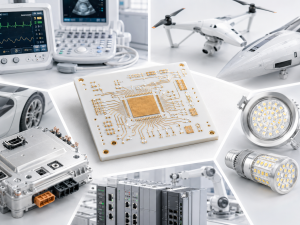
A ceramic printed circuit board is often used in products that require excellent heat dissipation, high insulation strength, stable dimensions, and long service life. Typical applications include LED modules, power electronics, automotive electronics, medical devices, RF modules, laser equipment, industrial control systems, and aerospace electronics.
Compared with standard FR4, ceramic is not selected only for appearance or premium positioning. It is chosen because the material can support more demanding electrical and thermal conditions. In high-power circuits, heat can build up around components quickly. A ceramic pcb substrate helps move that heat away from the source more effectively, improving the operating stability of the final product.
For buyers and engineers, choosing a ceramic circuit board should start with the application requirements. Important factors include working temperature, power density, voltage level, copper thickness, circuit precision, assembly method, and production volume. EBest Circuit (Best Technology) supports ceramic PCB fabrication with material guidance, DFM review, process control, testing, and assembly support, helping customers move from prototype verification to production with fewer design risks.
How Does a Ceramic Circuit Board Work?
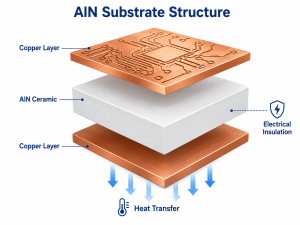
A ceramic circuit board works by combining an electrically insulating ceramic substrate with conductive copper circuits. The ceramic base provides mechanical support and insulation. The copper layer forms the electrical path for current and signals. When components generate heat, the ceramic substrate helps transfer that heat away from the component area and toward a heatsink, housing, or cooling structure.
This working principle is important in high-power electronics. For example, in an LED module, heat is generated near the LED chip. If the heat is not removed efficiently, brightness, color stability, and service life may be affected. A ceramic circuit board improves thermal transfer because ceramic materials conduct heat much better than standard FR4. This helps keep the operating temperature more stable.
The copper layer also plays a key role. It carries electrical current, spreads heat, and connects components. Depending on the board type, copper may be plated, bonded, printed, or brazed onto the ceramic surface. The bond between copper and ceramic must be strong enough to withstand soldering temperature, thermal expansion, electrical load, and repeated operating cycles.
A ceramic printed circuit board usually works through three functional parts:
Ceramic substrate: provides insulation, thermal transfer, and structural support.
Copper circuit layer: carries current, signals, and heat across the board.
Assembly layer: connects LEDs, chips, resistors, capacitors, sensors, connectors, or power devices.
The final performance depends on both material and design. Ceramic material gives the board strong thermal potential, but copper layout, substrate thickness, solder pad design, surface finish, and mounting method also affect the result. A ceramic board used in a power module, for example, needs a clear thermal path from the heat source to the cooling surface. A board used in RF equipment may need stable dimensions, tight tolerance, and controlled circuit geometry.
How Is a Ceramic Circuit Board Different from an FR4 PCB?
A ceramic circuit board and an FR4 PCB both provide electrical interconnection, but their base materials behave very differently. FR4 is made from glass fiber reinforced epoxy resin. It is widely used because it is cost-effective, easy to process, and suitable for many electronic products. Ceramic boards use inorganic ceramic substrates, which provide higher thermal conductivity, stronger insulation stability, and better dimensional control under heat.
The most important difference is thermal conductivity. Standard FR4 usually has thermal conductivity of about 0.3 W/m·K. Alumina ceramic is commonly around 20–30 W/m·K, while aluminum nitride can reach about 140–180 W/m·K, depending on material grade and production process.
FR4 remains a practical choice for many control boards, communication boards, consumer electronics, and general industrial products. Ceramic becomes more suitable when heat dissipation, high-voltage insulation, compact structure, or long-term reliability becomes a key design requirement.
Comparison Item
Ceramic Circuit Board
FR4 PCB
Base Material
Alumina, aluminum nitride, silicon nitride, or other ceramic material
Glass fiber reinforced epoxy laminate
Thermal Conductivity
About 20–180 W/m·K depending on material
About 0.3 W/m·K
Electrical Insulation
Excellent for high-voltage and high-power circuits
Good for standard electronic circuits
Heat Resistance
Strong performance in high-temperature applications
Suitable for normal PCB operating ranges
Dimensional Stability
Very stable under temperature changes
More affected by heat and moisture
Mechanical Behavior
Hard, stable, and brittle during processing
Easier to drill, route, and laminate
Cost Level
Higher material and process cost
More economical for general use
Typical Applications
LEDs, power modules, RF devices, medical, automotive, aerospace
Control boards, consumer electronics, communication modules, general PCBA
The right choice depends on the product environment. FR4 is suitable when the design has moderate power and enough space for thermal management. Ceramic is more suitable when the board itself must help handle heat, voltage, stability, or compact packaging. Cost should be reviewed together with the total product design. In some cases, ceramic can reduce the need for larger heatsinks or additional thermal structures.
Ceramic PCB vs FR4: Which One Should You Choose?
The choice between ceramic PCB and FR4 depends on power level, heat load, voltage requirement, product size, reliability target, and budget. FR4 is usually the preferred option for standard circuits because it offers good electrical performance, mature manufacturing, and lower cost. Ceramic circuit boards are better suited for applications that require stronger heat transfer, higher insulation strength, and stable operation under demanding conditions.
If the product is a low-power control board, sensor interface board, or general communication module, FR4 may be sufficient. If the product uses high-power LEDs, MOSFETs, IGBTs, laser diodes, RF power components, or compact power modules, ceramic should be evaluated early in the design stage.
Is the circuit mainly digital control or low-power signal processing?
FR4 PCB
Is high-voltage insulation a major requirement?
Ceramic circuit board
Is fast and economical multilayer production the main goal?
FR4 PCB
Does the product need compact size with better thermal transfer?
Ceramic circuit board
Is the application used in automotive, medical, aerospace, or industrial power systems?
Often ceramic, depending on design requirements
A practical material selection process should include thermal analysis, dielectric strength review, copper thickness selection, soldering method, mechanical mounting, and assembly requirements. Ceramic can provide strong performance, but it should match the actual design need. Over-specifying material may increase cost without adding meaningful value.
EBest Circuit (Best Technology) can review Gerber files, stackup information, power data, and application requirements to help determine whether ceramic, FR4, metal core PCB, or a hybrid structure is more suitable.
Why Are Ceramic Materials Used for Circuit Boards?
Ceramic materials are used for circuit boards because they combine electrical insulation, thermal conductivity, dimensional stability, and high-temperature resistance. This combination is valuable in electronic products that need to carry current while controlling heat.
In many circuits, the substrate must insulate copper traces and components from each other. At the same time, it may need to move heat away from active devices. Ceramic materials can perform both functions well. They are electrically insulating but thermally conductive, which makes them suitable for high-power and high-reliability applications.
The most common ceramic circuit board materials include alumina, aluminum nitride, and silicon nitride. Alumina is often used for LED modules, sensors, industrial electronics, and general ceramic PCB applications. Aluminum nitride is selected when thermal performance is the main concern. Silicon nitride is useful when the design needs higher mechanical strength and resistance to thermal shock.
Ceramic materials also have good chemical stability. They resist moisture, oxidation, and many harsh environments better than organic materials. Their low coefficient of thermal expansion helps reduce dimensional changes during heating and cooling. This is important for products exposed to repeated thermal cycles.
Main reasons ceramic materials are used include:
Better heat transfer for power components, LEDs, and compact modules.
Strong electrical insulation for high-voltage and high-density circuits.
High temperature capability for demanding operating environments.
Stable dimensions during thermal cycling and assembly.
Long-term reliability for industrial, automotive, medical, and aerospace applications.
Material selection should be based on real working conditions. Alumina is a balanced option for many projects. Aluminum nitride is preferred when heat dissipation is critical. Silicon nitride is considered when strength and thermal shock performance are priorities. A ceramic pcb manufacturer should help match the material to the application instead of recommending one substrate for every project.
What Are the Main Benefits of Ceramic Circuit Boards?
The main benefits of ceramic circuit boards are stronger thermal performance, excellent insulation, stable structure, and reliable operation in demanding environments. These benefits make ceramic suitable for products where heat, power density, and service life are important.
The most recognized benefit is heat dissipation. Heat affects component performance and product reliability. A ceramic pcb substrate provides a more efficient thermal path than FR4, helping components operate within a safer temperature range. This is useful for LEDs, power semiconductors, laser modules, and high-current circuits.
Ceramic circuit boards also provide excellent electrical insulation. This is important in power supplies, inverters, battery systems, medical devices, and high-voltage electronics. The material helps separate conductive layers and supports stable operation where insulation strength is a key requirement.
Another benefit is dimensional stability. Ceramic materials expand less than many organic PCB materials when temperature changes. This helps maintain circuit accuracy, component alignment, and solder joint stability. In precision electronics, RF devices, and high-reliability modules, this stability can improve consistency.
Benefit
Practical Value
High Thermal Conductivity
Helps remove heat from components more efficiently
Excellent Electrical Insulation
Supports high-voltage and high-power circuits
Strong Dimensional Stability
Helps maintain circuit accuracy under temperature changes
High Temperature Resistance
Suitable for heat-intensive applications
Compact Design Support
Helps reduce dependence on large thermal structures in some designs
Good Chemical Stability
Supports use in demanding environments
Long-Term Reliability
Suitable for products with extended operating life
Ceramic circuit boards are especially valuable when multiple requirements appear together. A board may need to handle high power, remain compact, provide insulation, and operate for many years. In these cases, ceramic can offer a strong technical foundation.
EBest Circuit (Best Technology) supports customers with ceramic PCB fabrication, PCB assembly, DFM review, material selection, testing, and production-quality support. This helps engineers select the right ceramic circuit board material and avoid issues related to copper adhesion, thermal bottlenecks, tolerance control, or assembly mismatch.
How Does a Ceramic Circuit Board Help with Heat Dissipation?
A ceramic circuit board helps with heat dissipation by transferring heat from components through the substrate and toward the cooling structure. In many electronic products, heat begins at the component junction, passes through the package, moves through the solder joint, enters the copper layer, and then travels into the board. If the substrate has poor thermal conductivity, heat may remain close to the component. Ceramic improves this path because it conducts heat much more effectively than standard FR4.
This advantage is important for high-power LEDs, power modules, RF power devices, laser diodes, and compact energy systems. These products often generate concentrated heat in small areas. A ceramic substrate helps spread and conduct that heat, reducing thermal stress around critical components.
The level of heat dissipation depends on the ceramic material. Alumina provides solid thermal performance for many applications. Aluminum nitride offers much higher thermal conductivity and is used when thermal control is a top priority. Copper thickness, copper area, substrate thickness, solder pad design, and mounting method also affect the final result.
Material
Typical Thermal Conductivity
Common Use
Standard FR4
About 0.3 W/m·K
General PCB circuits
Alumina Ceramic
About 20–30 W/m·K
LEDs, sensors, industrial electronics, power modules
Thermal design should consider the full heat path. The board material is only one part of the system. Component placement, copper layout, thermal pads, solder quality, thermal interface material, heatsink contact, and housing design all influence temperature control.
For example, a high-power LED module may use a ceramic substrate with a large copper pad under the LED. Heat moves from the LED package into the copper, through the ceramic, and then into the heatsink. If the design uses aluminum nitride, the heat transfer can be stronger, which helps compact lighting products and high-output modules.
How Are Ceramic Circuit Boards Manufactured?
Ceramic circuit boards can be manufactured through several processes, including DPC, DBC, AMB, thick film, and thin film technology. The right process depends on copper thickness, circuit precision, thermal demand, bonding strength, production volume, and application type.
DPC, or Direct Plated Copper, is often used for fine circuits and compact ceramic PCB designs. Copper is deposited onto the ceramic substrate through metallization and plating. This process supports good pattern accuracy, smooth surface quality, and smaller circuit features. DPC is common in LED modules, sensors, RF devices, and precision electronic modules.
DBC, or Direct Bonded Copper, bonds copper foil directly to ceramic under high temperature. It supports thicker copper and higher current capacity. DBC ceramic printed circuit boards are widely used in power electronics, motor drives, inverters, automotive power systems, and industrial control equipment.
AMB, or Active Metal Brazing, uses active brazing material to bond copper and ceramic. It provides strong bonding strength and good thermal cycling performance. AMB is often selected for demanding power modules and high-reliability applications.
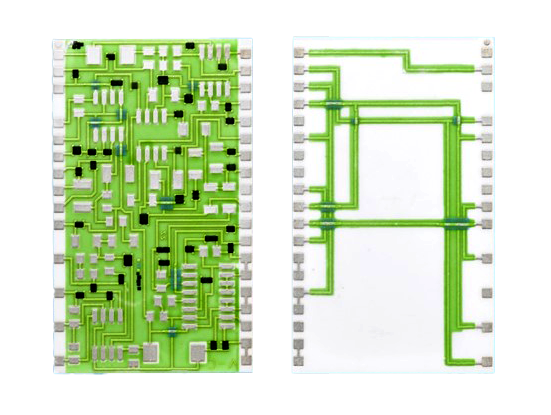
Thick film ceramic boards are made by printing conductive paste onto the ceramic surface and firing it at high temperature. This process is used for hybrid circuits, sensors, resistive circuits, and custom electronic modules. Thin film ceramic boards are used for high-precision circuits, RF designs, microwave products, and applications requiring stable electrical characteristics.
Process
Main Feature
Suitable Applications
DPC Ceramic PCB
Fine circuits and plated copper
LEDs, sensors, RF modules, compact electronics
DBC Ceramic PCB
Thick copper and high current capacity
Power modules, inverters, automotive electronics
AMB Ceramic PCB
Strong copper-to-ceramic bonding
High-reliability power electronics
Thick Film Ceramic PCB
Printed conductive paste and fired circuits
Hybrid circuits, sensors, custom modules
Thin Film Ceramic PCB
High precision and stable electrical behavior
RF, microwave, precision circuits
The manufacturing flow usually includes material selection, substrate preparation, cleaning, metallization, copper forming, imaging, etching, surface finishing, inspection, and testing. If the project includes assembly, SMT, chip bonding, wire bonding, or module assembly may follow.
Ceramic is harder and more brittle than FR4, so processing control is important. Cutting, drilling, laser processing, copper adhesion, surface finish, tolerance, and inspection must be managed carefully. A capable ceramic pcb manufacturer should understand both the material and the final product requirements.
EBest Circuit (Best Technology) provides ceramic PCB fabrication and PCBA support with DFM review, process evaluation, electrical testing, and production control. This helps customers reduce manufacturing risk and improve consistency from sample builds to volume production.
What Applications Use Ceramic Circuit Boards?
Ceramic circuit boards are used in applications that require reliable heat dissipation, high insulation strength, compact structure, and stable long-term performance. They are common in industries where the PCB must do more than provide basic electrical connection.
Common applications include:
High-power LED modules and lighting systems
Power semiconductor modules
Automotive lighting and electronic control units
Battery management and energy conversion systems
RF, microwave, and radar electronics
Medical sensors and diagnostic modules
Industrial control and automation equipment
Laser modules and optical electronics
Aerospace and high-reliability electronic systems
A ceramic circuit board is a strong choice when the product needs better heat dissipation, excellent insulation, stable dimensions, and dependable long-term performance. FR4 remains suitable for many standard PCB projects, while ceramic provides a higher-performance option for thermal, power, RF, medical, automotive, and industrial applications. Before choosing one, review the ceramic circuit board material, manufacturing process, copper thickness, thermal path, voltage requirement, tolerance, and assembly method together.
For ceramic printed circuit boards, PCB fabrication, PCBA assembly, and engineering support, EBest Circuit (Best Technology) can help evaluate your design and production needs. For project consultation or quotation, contact sales@bestpcbs.com
Ceramic substrate for PCB refers to a specialized base material made from advanced ceramic compounds, designed to support and interconnect electronic components. Unlike conventional fiberglass-based laminates such as FR-4, ceramic substrates are engineered to deliver exceptional thermal stability, electrical insulation, and mechanical strength under demanding conditions.
In practical terms, a ceramic substrate circuit board is typically constructed using thick-film or thin-film processes. Conductive traces are printed or deposited directly onto the ceramic surface, forming highly reliable electrical pathways. These boards are often used in applications where heat management, reliability, and dimensional stability are critical—such as power electronics, RF modules, and high-frequency communication systems.
From a design perspective, ceramic substrates offer a level of precision that is difficult to match with organic materials. Their low coefficient of thermal expansion (CTE) aligns closely with semiconductor devices, reducing mechanical stress during thermal cycling. This makes them particularly suitable for chip-on-board (COB) and direct die attachment configurations.
EBest Circuit (Best Technology), with its extensive experience in advanced PCB manufacturing, integrates ceramic substrate solutions into high-performance electronic assemblies. By combining precision fabrication techniques with strict quality control, We ensure that ceramic PCB substrates meet the rigorous demands of modern electronics.
What Materials Are Used for Ceramic Substrates PCB?
Ceramic substrate PCBs rely on a range of engineered ceramic materials, each selected based on performance requirements such as thermal conductivity, dielectric constant, and mechanical robustness. The most commonly used materials include:
Aluminum Oxide (Al₂O₃) Often referred to as alumina, this is the most widely used ceramic substrate material due to its cost-effectiveness and reliable performance. It provides good electrical insulation and moderate thermal conductivity, making it suitable for general-purpose applications.
Aluminum Nitride (AlN) Known for its exceptional thermal conductivity, aluminum nitride is ideal for high-power and heat-sensitive applications. It offers a thermal performance comparable to some metals while maintaining excellent electrical insulation.
Beryllium Oxide (BeO) This material delivers outstanding thermal conductivity but is less commonly used due to handling concerns. It is typically reserved for specialized, high-performance applications.
Silicon Nitride (Si₃N₄) Silicon nitride combines high mechanical strength with good thermal properties. It is particularly valued in applications requiring resistance to thermal shock and mechanical stress.
Each material brings a distinct set of advantages. For instance, alumina offers affordability and reliability, while aluminum nitride excels in thermal management.
In advanced manufacturing environments like those at EBest Circuit, material selection is guided by both engineering analysis and real-world application experience. This ensures that each ceramic PCB substrate is optimized for its intended use.
What are the substrates for PCB?
Printed circuit boards can be built on a variety of substrate materials, each designed to meet different electrical, thermal, and mechanical requirements.
The most common PCB substrate types include:
FR-4 (Fiberglass Epoxy) The industry standard for general electronics, offering a balance of cost and performance.
Metal Core PCBs (MCPCB) Incorporate a metal base (usually aluminum) to improve heat dissipation.
Flexible Substrates (Polyimide) Used in applications requiring bending or dynamic movement.
Rogers and High-Frequency Laminates Designed for RF and microwave applications with controlled dielectric properties.
Ceramic Substrates Provide superior thermal conductivity, electrical insulation, and dimensional stability.
To better understand how ceramic substrates compare with traditional materials, the following table provides a clear overview:
Property
FR-4
Metal Core PCB
Ceramic Substrate PCB
Thermal Conductivity
Low
Moderate
High
Dielectric Stability
Moderate
Moderate
Excellent
Mechanical Strength
Good
Good
Very High
Operating Temperature
Limited
Improved
Extremely High
Cost
Low
Medium
Higher
Reliability
Standard
Enhanced
Premium
Ceramic substrate PCBs distinguish themselves by delivering a unique combination of thermal and electrical performance. While they may involve higher upfront costs, their long-term reliability and efficiency often justify the investment.
How Does a Ceramic Substrate PCB Help with Heat Dissipation?
Heat management is one of the most compelling reasons to choose a ceramic substrate PCB. As electronic devices become more compact and powerful, efficient heat dissipation is no longer optional—it is essential for performance and longevity.
Ceramic materials inherently possess high thermal conductivity, allowing heat to spread rapidly across the substrate. This prevents localized hotspots, which can degrade components and reduce system reliability.
Several mechanisms contribute to the superior thermal performance of ceramic PCB substrates:
Direct Heat Conduction Heat generated by components is transferred directly into the ceramic substrate and distributed evenly.
Stable Thermal Expansion Matching CTE between the substrate and components reduces stress and improves heat cycling performance.
Integration with Heat Sinks Ceramic substrates can be easily paired with external cooling solutions for enhanced thermal management.
Compared to traditional PCBs, ceramic substrates eliminate the need for additional thermal management layers or complex cooling structures. This not only simplifies design but also reduces overall system weight and footprint.
EBest Circuit leverages these advantages by offering precision-engineered ceramic PCB solutions tailored for high-power applications. Their manufacturing expertise ensures consistent thermal performance across production batches.
What features does COB ceramic substrate PCB possess?
COB (Chip-On-Board) ceramic substrate PCBs represent a highly integrated approach to electronic assembly. In this configuration, semiconductor chips are mounted directly onto the ceramic substrate, eliminating the need for traditional packaging.
This design approach offers several distinctive features:
Compact Integration Direct chip attachment reduces size and improves signal integrity.
Enhanced Thermal Pathways Heat is transferred directly from the chip to the ceramic substrate.
Improved Electrical Performance Shorter interconnections minimize signal loss and latency.
High Reliability Fewer interconnect points reduce the risk of failure.
Precision Alignment Ceramic substrates provide a stable platform for accurate chip placement.
COB ceramic substrate PCBs are widely used in LED modules, sensors, and high-frequency devices. Their ability to combine compactness with performance makes them a preferred choice for advanced electronic systems.
At EBest Circuit, COB ceramic substrate solutions are developed with a focus on reliability and manufacturability. Their process control ensures consistent bonding quality and optimal performance.
What are ceramic PCBs used for?
Ceramic PCBs are deployed across a wide range of industries where performance and reliability are critical. Their unique properties make them indispensable in applications that demand high thermal efficiency and electrical precision.
Common applications include:
Power Electronics Used in inverters, converters, and power modules.
LED Lighting Systems Provide efficient heat dissipation for high-brightness LEDs.
Automotive Electronics Suitable for harsh environments and high-temperature conditions.
Telecommunications Ideal for RF and microwave circuits.
Medical Devices Ensure reliability in critical healthcare equipment.
Aerospace and Defense Deliver performance under extreme conditions.
These applications highlight the versatility of ceramic substrate PCBs. Whether in consumer electronics or mission-critical systems, they offer a dependable foundation for advanced circuitry.
What Are the Benefits of Ceramic Substrate PCBs?
Ceramic substrate PCBs deliver a compelling set of advantages that make them a preferred choice for high-performance applications. Their benefits extend beyond basic functionality, offering long-term value and reliability.
High Electrical Insulation Prevents leakage and ensures stable operation.
Dimensional Stability Maintains structural integrity under temperature variations.
Chemical Resistance Resists corrosion and environmental degradation.
High-Frequency Performance Supports fast signal transmission with minimal loss.
Long Service Life Reduces maintenance and replacement costs.
These advantages translate into improved system performance and reduced operational risks. For engineers and designers, ceramic PCBs provide a reliable platform for innovation.
EBest Circuit integrates these strengths into their manufacturing processes, delivering ceramic PCB substrates that meet stringent industry standards. Our commitment to quality ensures consistent performance across applications.
What is a major disadvantage of ceramics?
While ceramic substrate PCBs offer numerous benefits, it is important to acknowledge their limitations to make informed design decisions.
The primary disadvantage is cost. Ceramic materials and manufacturing processes are generally more expensive than traditional PCB technologies. This can impact project budgets, especially for large-scale production.
Additionally, ceramics can be brittle, making them more susceptible to mechanical damage if not handled properly. However, modern engineering techniques have significantly improved their durability.
Despite these challenges, the advantages of ceramic substrates often outweigh the drawbacks in high-performance applications. When reliability and efficiency are priorities, ceramic PCBs remain a strong choice.
FAQs About Ceramic Substrate PCB
1. Is ceramic substrate PCB better than FR-4? It depends on the application. Ceramic PCBs outperform FR-4 in thermal and high-frequency scenarios, while FR-4 remains suitable for cost-sensitive designs.
2. Can ceramic PCBs be used in consumer electronics? Yes, especially in devices requiring efficient heat management, such as LED lighting and power modules.
3. Are ceramic substrates environmentally stable? They offer excellent resistance to moisture, chemicals, and temperature variations.
4. What industries benefit most from ceramic PCBs? Automotive, aerospace, telecommunications, and medical industries are among the primary users.
5. How does EBest Circuit ensure quality? Through strict process control, advanced manufacturing techniques, and adherence to international standards.
Summary:
Ceramic substrate PCBs represent a powerful evolution in circuit board technology. By replacing traditional organic materials with advanced ceramics, they deliver superior thermal performance, electrical stability, and long-term reliability. From power electronics to aerospace systems, their applications continue to expand as technology demands higher efficiency and durability.
For inquiries or technical support, feel free to reach out: sales@bestpcbs.com
AlN PCB stands out as a top choice when companies need strong heat management and reliable performance in advanced electronics. This ceramic PCB substrate uses aluminum nitride, known for its high thermal conductivity and excellent electrical insulation. With electronics getting smaller and more powerful, keeping heat under control is more important than ever. That’s why many industries rely on AlN ceramic PCB to improve both performance and reliability.
At the same time, customers often want to know how AlN PCB fabrication works, how it compares to other options, and what affects its final price. Understanding these details helps engineers and buyers make smarter choices for their projects. In this blog, we’ll explore everything from the properties of aluminum nitride to the benefits, pricing factors, and even common assembly challenges.
If you’re searching for a reliable ceramic PCB substrate or want to understand how AlN PCB fits into your next design, this guide will help. Whether you’re working on high-frequency devices, power modules, or advanced communication systems, knowing the strengths of AlN PCB can make a big difference.
What is aluminum nitride PCB material?
AlN PCB stands for aluminum nitride PCB, which uses aluminum nitride ceramic as the base material. It is known for excellent thermal conductivity, strong electrical insulation, and reliability in harsh environments. Compared to standard FR4 boards, AlN PCB supports much better heat dissipation. That’s why engineers choose this material for high-power circuits, laser systems, and advanced communication devices.
Aluminum nitride acts as both the base and heat spreader. This unique structure reduces thermal stress, helping sensitive components stay cooler. As technology grows, more industries lean toward AlN PCB to handle performance needs.
Is aluminum nitride a ceramic?
Yes, aluminum nitride is a ceramic. It belongs to the advanced ceramic family, valued for its high strength, electrical insulation, and outstanding heat transfer abilities. Unlike traditional ceramic materials, aluminum nitride supports fast heat removal, which helps extend component life.
Since AlN is ceramic, it also resists chemicals, high temperatures, and mechanical wear. These benefits make it suitable for AlN ceramic PCB manufacturing. Today, designers rely on it for high-frequency devices, power electronics, and communication modules.
Is Aluminium nitride brittle?
Like other ceramics, aluminum nitride is somewhat brittle, especially under sudden mechanical shock. However, it still performs better than some other ceramics used in electronics. Proper design, combined with experienced fabrication techniques, helps reduce risks related to brittleness.
The good news is that once AlN PCB fabrication completes and the board is installed correctly, its durability is impressive. This balance of strength, heat management, and electrical insulation keeps AlN ceramic PCBs in high demand across industries like automotive, aerospace, and telecom.
How does AlN PCB compare to alumina PCB in thermal performance?
Thermal performance directly affects the reliability of modern electronics. When comparing AlN PCB to alumina PCB, aluminum nitride performs much better in heat transfer. Its thermal conductivity reaches around 170-200 W/mK, which is far higher than alumina’s 20-30 W/mK.
This major difference matters when components generate heat in compact spaces. Devices that push high power levels or require stable performance over time benefit from this advantage. While alumina PCB offers good insulation and is more affordable, AlN remains the first choice for heat-sensitive applications.
What is the difference between aluminum nitride PCB and aluminum PCB?
This is a common question from customers comparing materials. AlN PCB uses a ceramic core made from aluminum nitride, while aluminum PCB uses a metal aluminum base with a dielectric layer on top. Both manage heat, but they work in different ways.
AlN ceramic PCB offers excellent electrical insulation, which allows designers to place components closer together. It also handles extreme heat better without expanding too much. On the other hand, aluminum PCB, though cheaper, has limited electrical insulation, making it less suitable for high-frequency and precision circuits.
In short, AlN PCB fits better where thermal management and signal performance both matter. Aluminum PCB works well in simpler applications where cost matters more than advanced performance.
What factors affect AlN PCB price?
Several factors affect AlN PCB price, and understanding them helps customers plan projects better. First, the raw material cost plays a key role. Aluminum nitride is more expensive than standard PCB materials, but the benefits often outweigh the cost.
Next, fabrication complexity impacts price. Multilayer designs, micro vias, and precision routing need advanced technology, adding to the total. Batch size also matters. Larger runs usually lower the cost per piece, while small or custom orders cost more.
Lastly, surface treatment choices, tolerances, and assembly needs contribute to the final cost. That’s why working with an experienced AlN PCB fabrication supplier helps balance price and performance.
What are common PCB assembly issues with AlN ceramic PCBs?
Even with advanced materials like AlN ceramic PCB, assembly issues can happen without careful handling. One common challenge is matching the thermal expansion of components with the ceramic base. Sudden thermal changes can stress solder joints if not managed well.
Another potential issue comes from the surface finish. Choosing the wrong finish for high-frequency circuits or high-temperature processes can lead to signal loss or poor solderability.
Lastly, poor handling during assembly can crack the ceramic substrate. This highlights the importance of choosing experienced assembly partners with expertise in AlN PCB fabrication and assembly. By working with a trusted supplier, these risks can be minimized, improving reliability and performance.
What is the use of Aluminium nitride?
Aluminium nitride offers broad uses across multiple industries. Its high thermal conductivity makes it perfect for high-power electronics, such as laser drivers, RF amplifiers, and power modules. These systems generate heat that needs to move away quickly to protect components.
Besides electronics, AlN ceramic plays a role in NFC communication systems, where thermal stability and electrical insulation enhance performance. Medical devices also benefit from aluminum nitride’s biocompatibility and thermal management properties.
In short, AlN PCB supports applications that demand precise performance, stability, and long-term reliability, especially under demanding conditions.
How to select the right manufacturer for AlN PCB fabrication?
Selecting the right AlN PCB fabrication partner directly affects project success. Start by checking the manufacturer’s experience with ceramic PCB substrates. Not all PCB companies have the technology or skills to handle aluminum nitride.
Next, ask about in-house capabilities for drilling, plating, and precision routing. AlN requires specialized equipment and processes, so a capable supplier handles every step under one roof. This ensures quality control and reduces lead times.
Also, consider the manufacturer’s knowledge in PCB assembly issues, especially for ceramics. Experienced suppliers know how to manage thermal stress, select the right surface treatments, and optimize designs for both performance and manufacturability.
Finally, check for customer support and willingness to provide design advice. A good partner not only builds your boards but also helps improve designs to balance performance, cost, and reliability.
In a nutshell, choosing AlN PCB means investing in better thermal performance, electrical insulation, and reliability. With growing demand for aln ceramic pcb in high-power and high-frequency applications, more engineers turn to this advanced material.
Working with a professional AlN PCB fabrication partner ensures your boards meet both performance and cost goals. If you’re looking for a ceramic PCB substrate that can handle the heat, aluminum nitride offers one of the best options available.
At EBest Circuit (Best Technology), we specialize in advanced ceramic PCBs, including AlN inlay PCB, alumina PCB, and more. Our experts understand the challenges of aln pcb fabrication and assembly issues, delivering high-quality boards for demanding projects. For more information or inquiries, feel free to contact us at sales@bestpcbs.com.
This website uses cookies to enhance your experience, remember your preferences, and help us understand how visitors use our site. You can accept all cookies, reject non-essential cookies, or manage your settings.
This website uses cookies to improve your experience while you navigate through the website. Out of these cookies, the cookies that are categorized as necessary are stored on your browser as they are essential for the working of basic functionalities of the website. We also use third-party cookies that help us analyze and understand how you use this website. These cookies will be stored in your browser only with your consent. You also have the option to opt-out of these cookies. But opting out of some of these cookies may have an effect on your browsing experience.
Necessary cookies are absolutely essential for the website to function properly. These cookies ensure basic functionalities and security features of the website, anonymously.
Cookie
Duration
Description
cookielawinfo-checkbox-analytics
11 months
This cookie is set by GDPR Cookie Consent plugin. The cookie is used to store the user consent for the cookies in the category "Analytics".
cookielawinfo-checkbox-functional
11 months
The cookie is set by GDPR cookie consent to record the user consent for the cookies in the category "Functional".
cookielawinfo-checkbox-necessary
11 months
This cookie is set by GDPR Cookie Consent plugin. The cookies is used to store the user consent for the cookies in the category "Necessary".
cookielawinfo-checkbox-others
11 months
This cookie is set by GDPR Cookie Consent plugin. The cookie is used to store the user consent for the cookies in the category "Other.
cookielawinfo-checkbox-performance
11 months
This cookie is set by GDPR Cookie Consent plugin. The cookie is used to store the user consent for the cookies in the category "Performance".
viewed_cookie_policy
11 months
The cookie is set by the GDPR Cookie Consent plugin and is used to store whether or not user has consented to the use of cookies. It does not store any personal data.
Functional cookies help to perform certain functionalities like sharing the content of the website on social media platforms, collect feedbacks, and other third-party features.
Performance cookies are used to understand and analyze the key performance indexes of the website which helps in delivering a better user experience for the visitors.
Analytical cookies are used to understand how visitors interact with the website. These cookies help provide information on metrics the number of visitors, bounce rate, traffic source, etc.
Advertisement cookies are used to provide visitors with relevant ads and marketing campaigns. These cookies track visitors across websites and collect information to provide customized ads.