PCB manufacturing PCB manufacturing
Home > Blog

Ceramic PCB Board – Aerospace AlN Ceramic PCB Board Manufacturer

May 18th, 2026

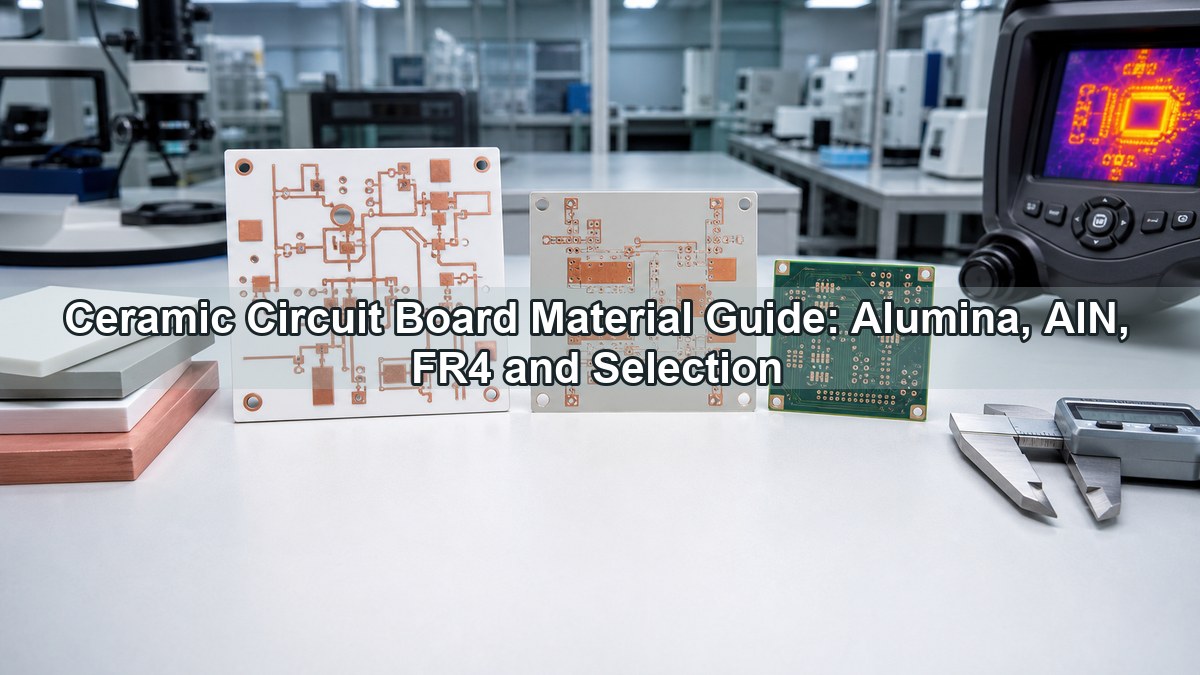
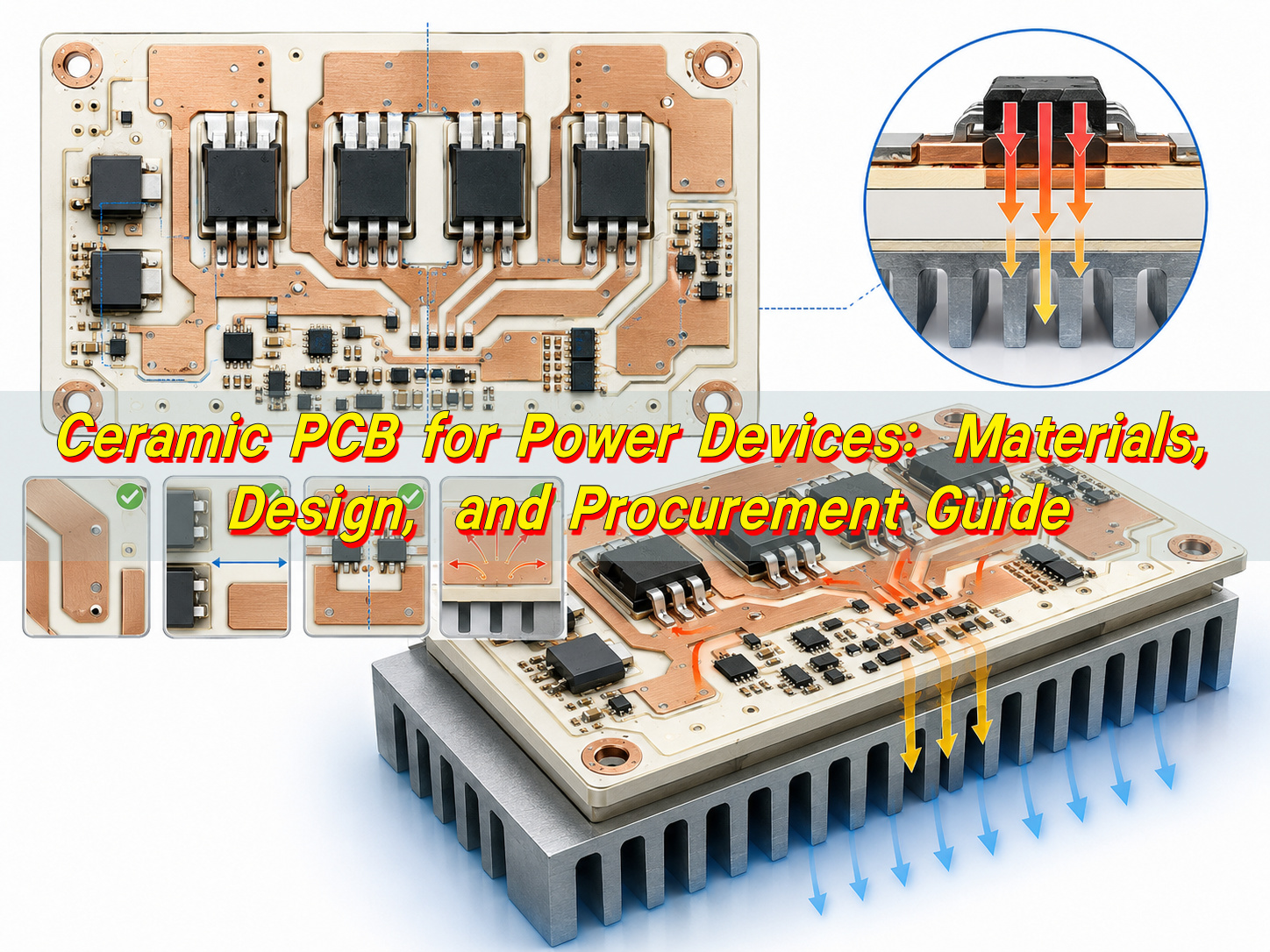
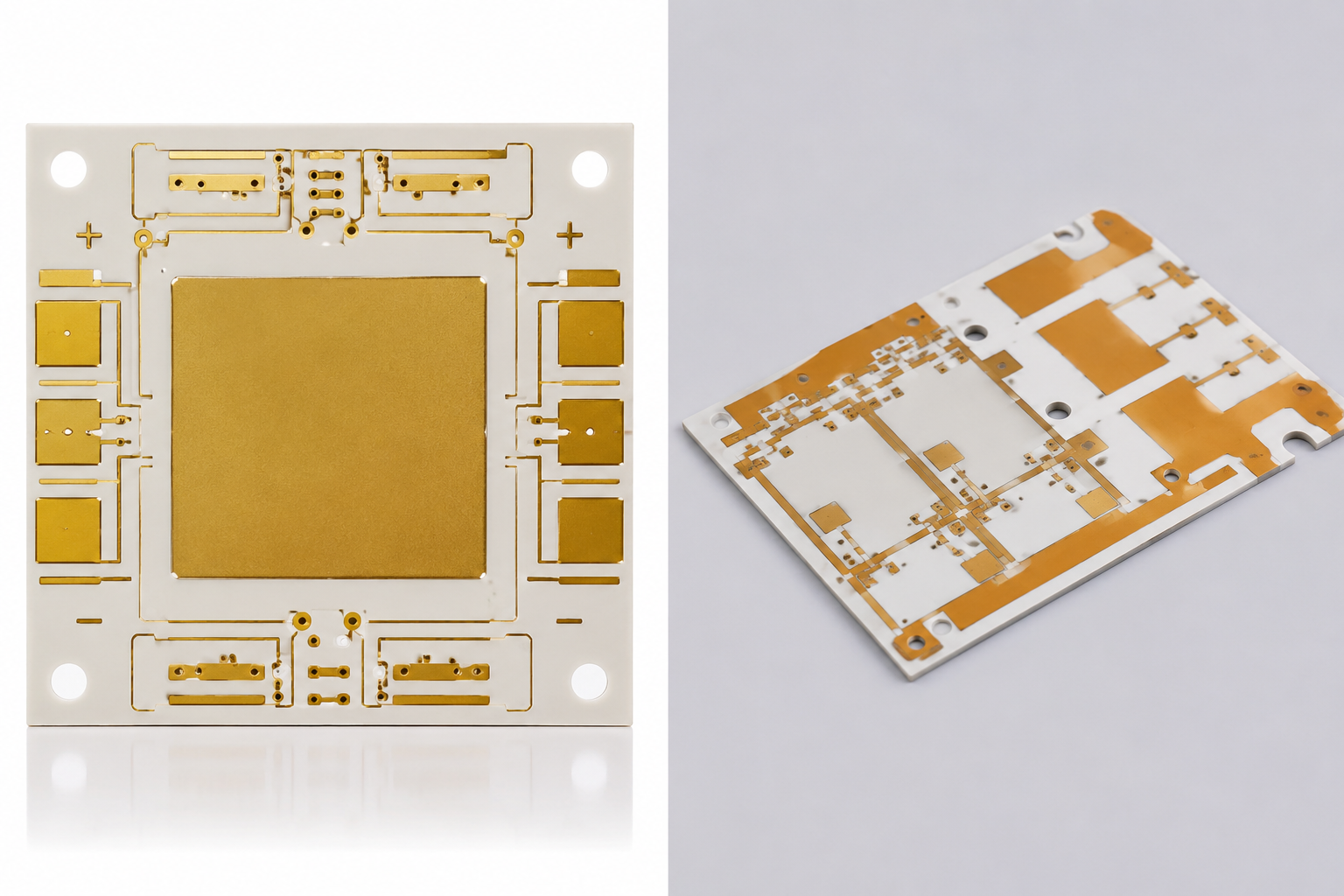
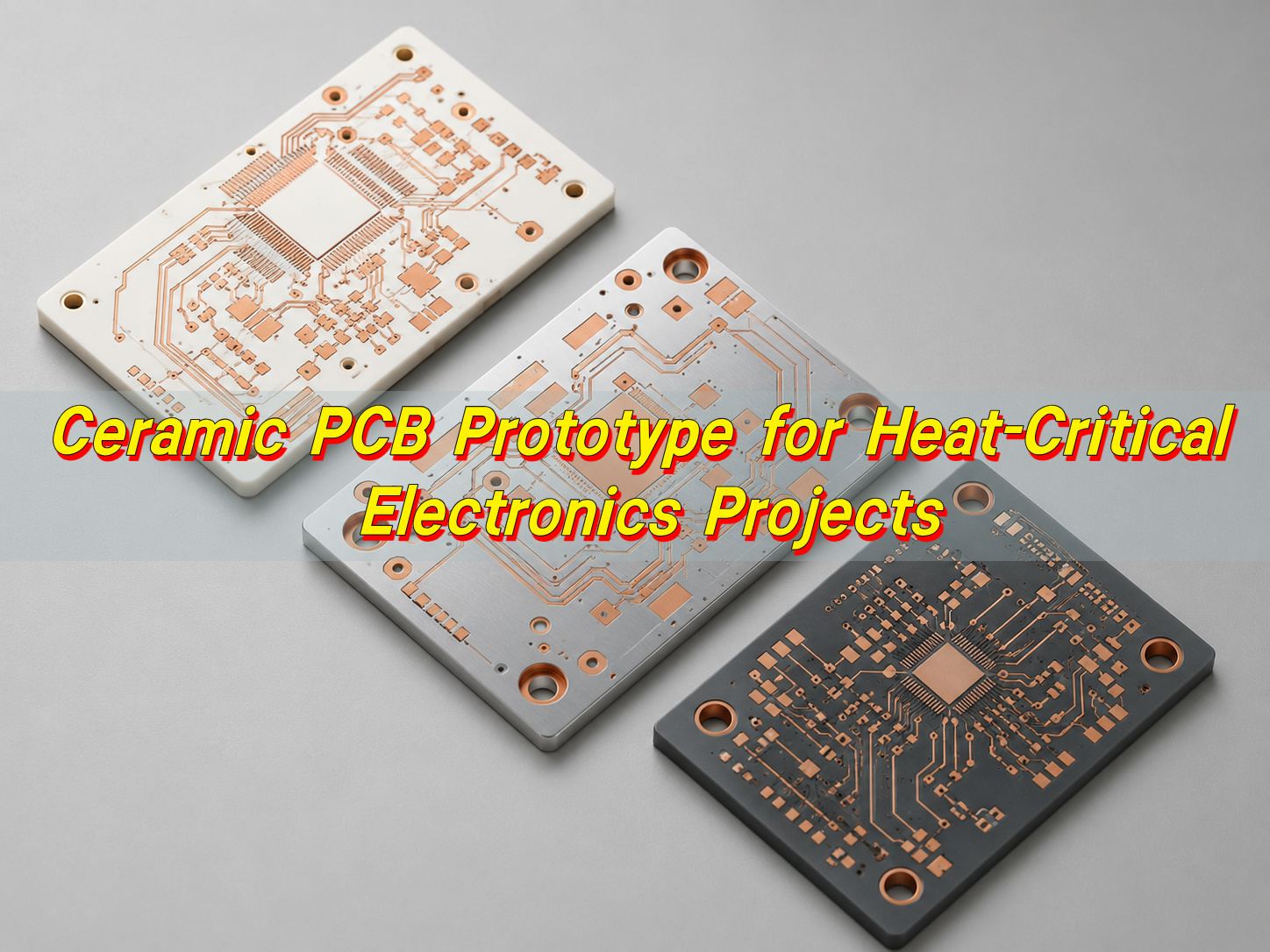
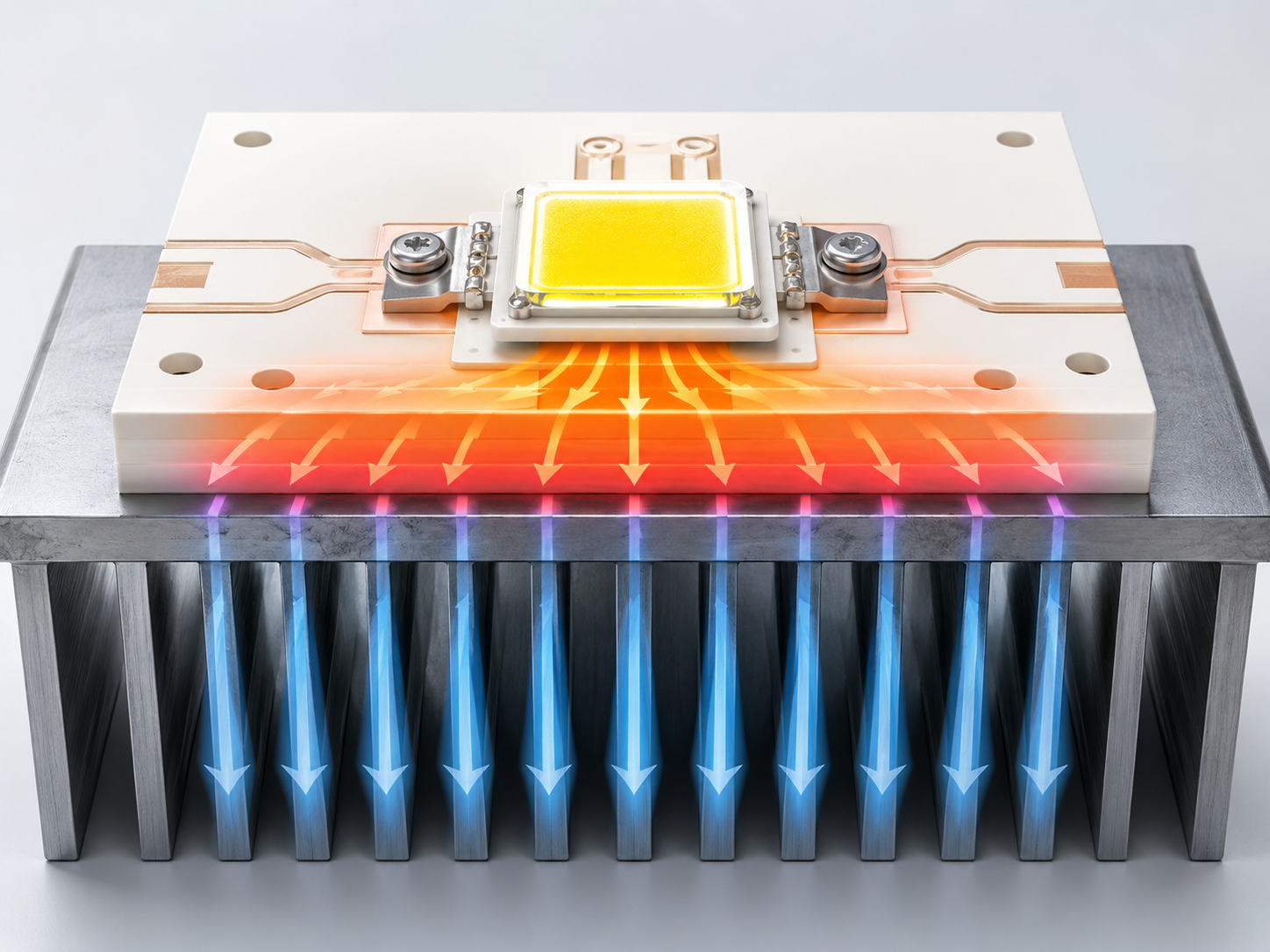
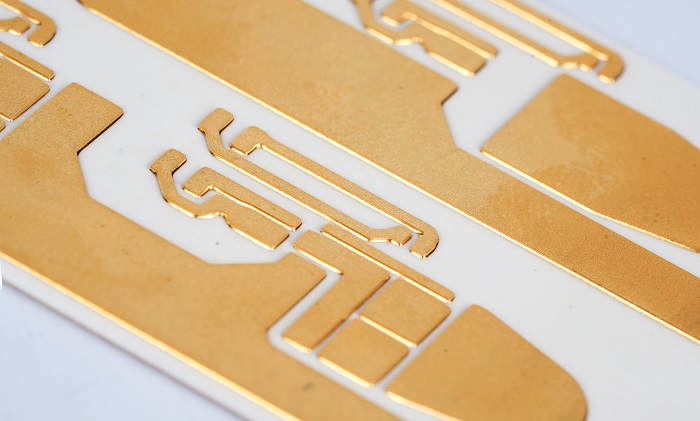
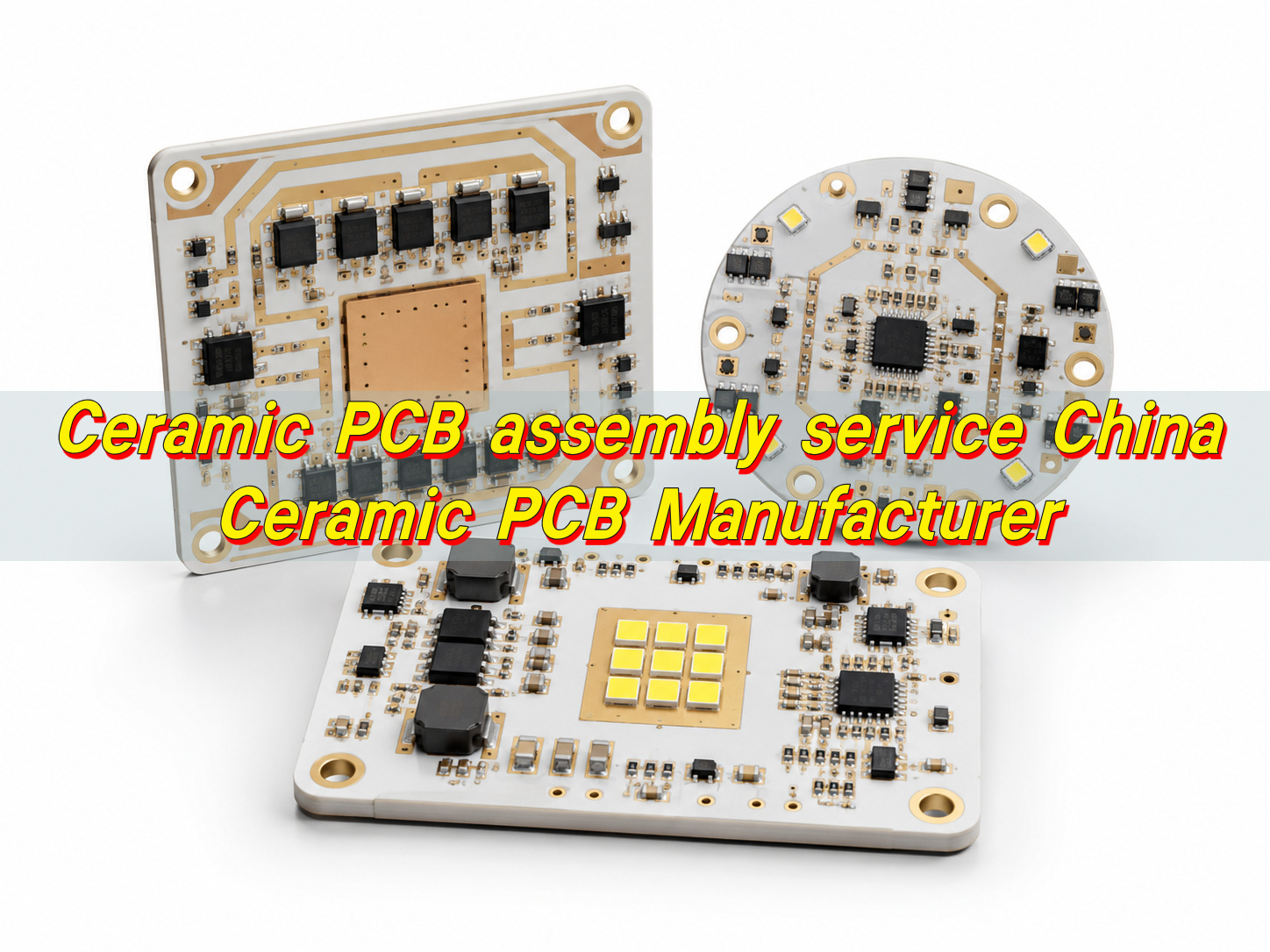
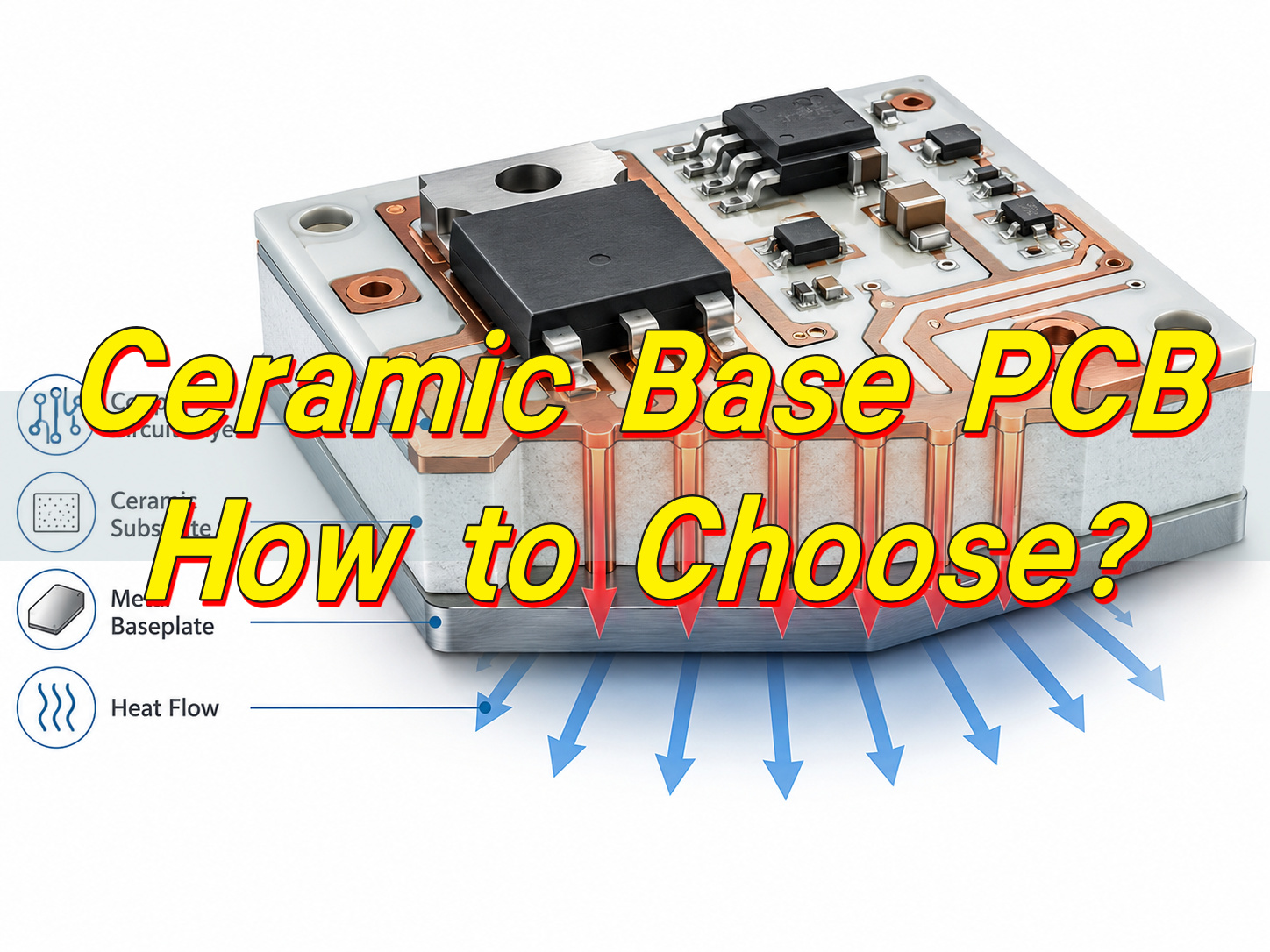
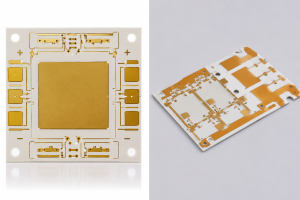
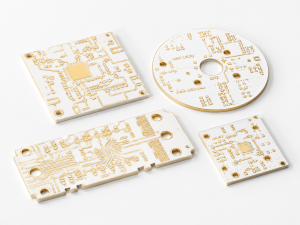
Ceramic PCB board is a high-performance circuit board built on a ceramic substrate instead of a conventional glass-fiber epoxy base. It is often selected when an electronic product needs excellent heat dissipation, dimensional stability, high insulation strength, and long-term reliability under demanding operating conditions. For aerospace electronics, power modules, RF devices, LED systems, medical equipment, and high-temperature industrial applications, ceramic circuit boards offer a strong foundation for designs where thermal and electrical performance matter from the first prototype to full production.

Ceramic PCB Board - Aerospace AlN Ceramic PCB Board Manufacturer

EBest Circuit (Best Technology) supports ceramic PCB fabrication, ceramic PCB prototype builds, ceramic substrate circuit board PCB PCBA projects, and engineering-driven manufacturing support for customers who need stable, production-ready solutions.

What Is a Ceramic PCB Board?

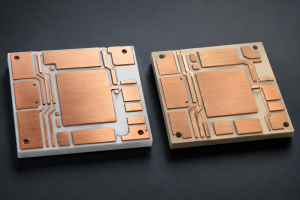
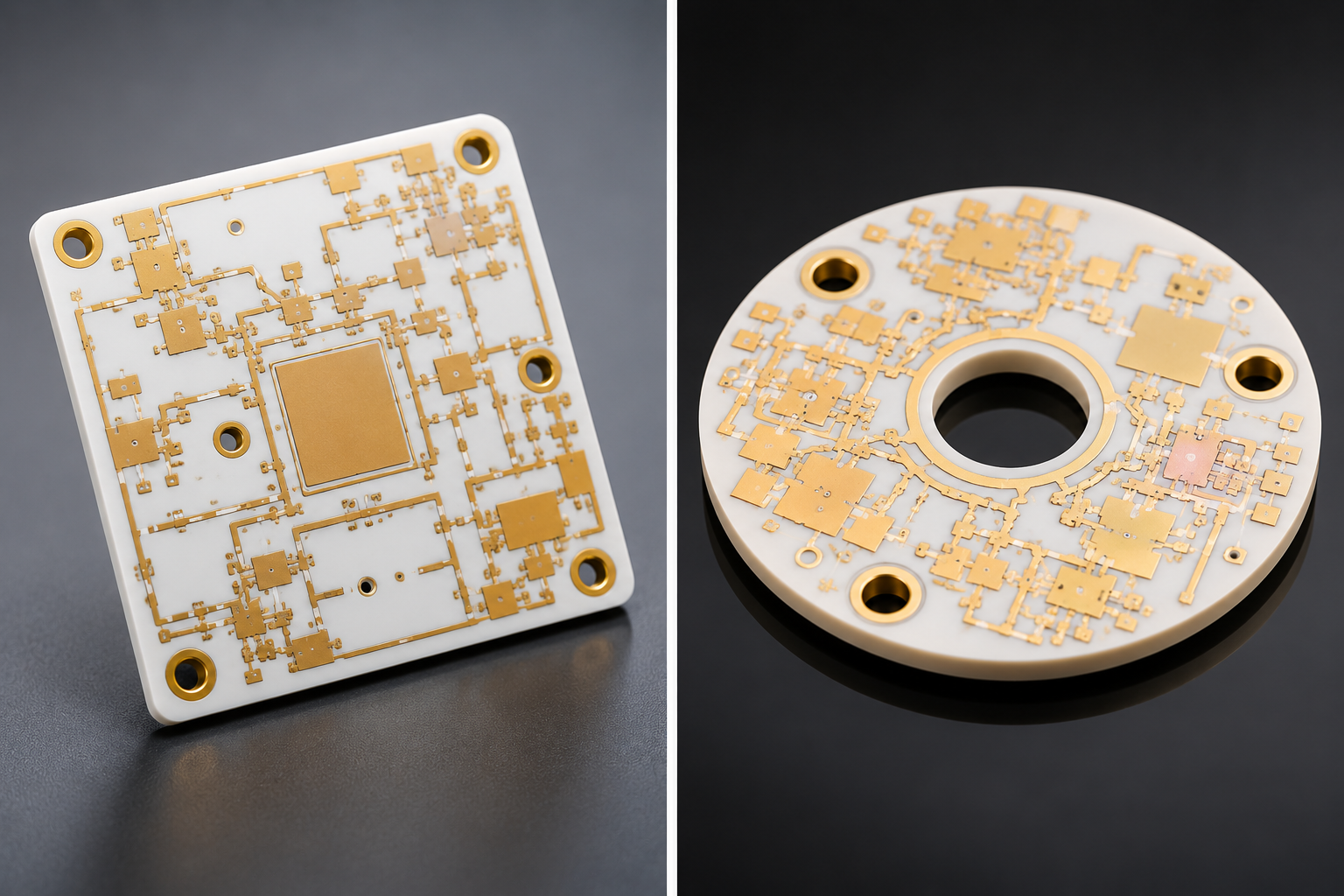
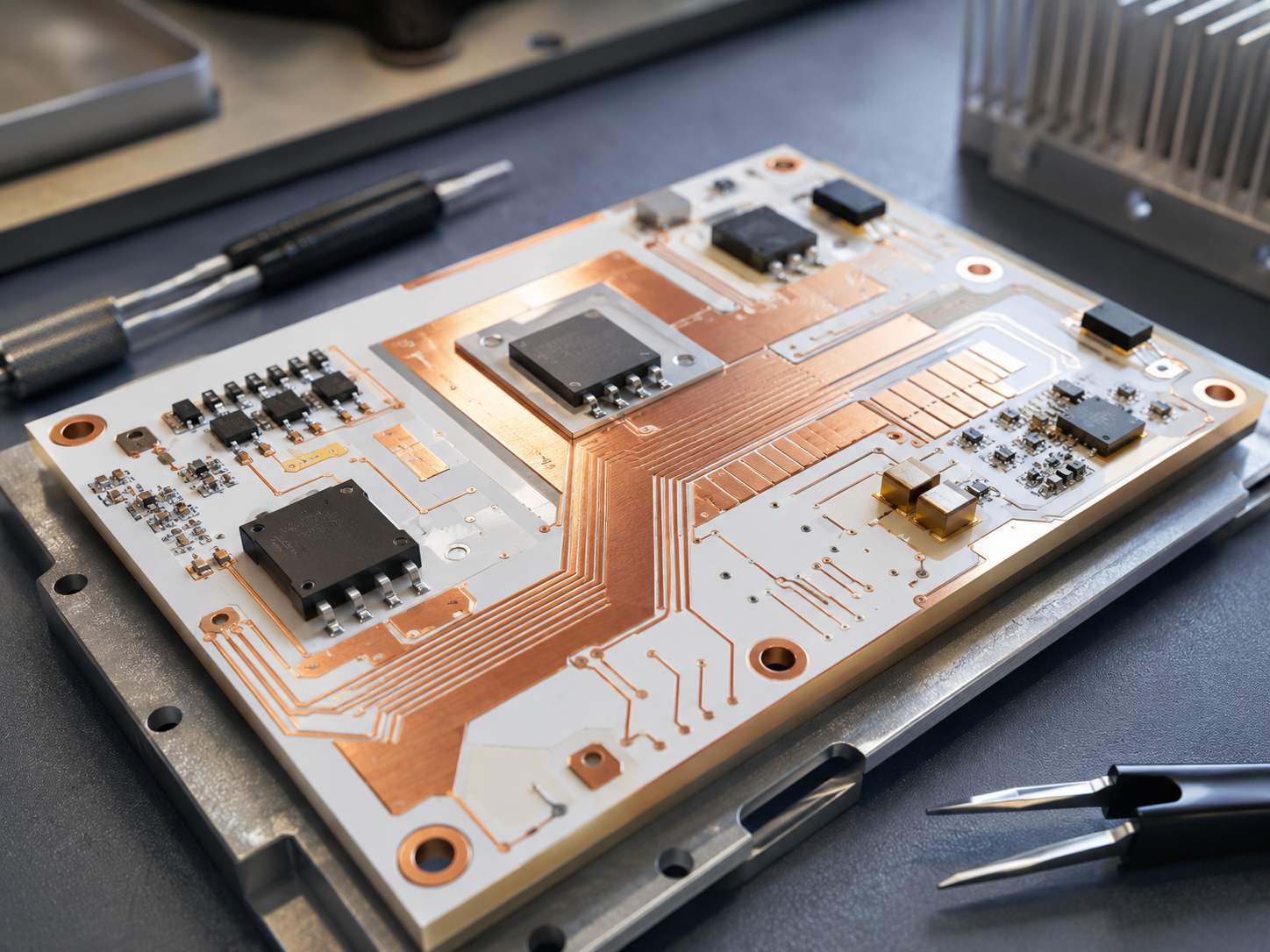
Ceramic PCB board is a printed circuit board that uses ceramic as the base substrate. The ceramic layer replaces the traditional FR4 laminate and provides stronger thermal conductivity, higher temperature resistance, and better electrical insulation. Conductive traces are formed on the ceramic surface through copper bonding, thick-film printing, thin-film metallization, or direct plated copper processes, depending on the application and performance target.

The main role of a ceramic PCB is to carry electronic circuits while also helping the product handle heat, stress, and electrical load more effectively. This makes it valuable for applications where a normal FR4 PCB may not provide enough thermal transfer or dimensional stability.

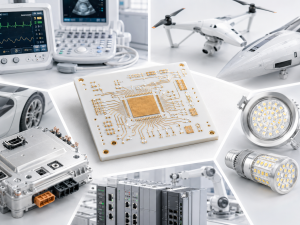
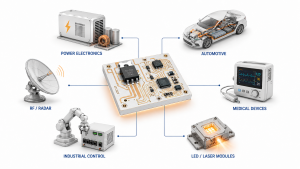
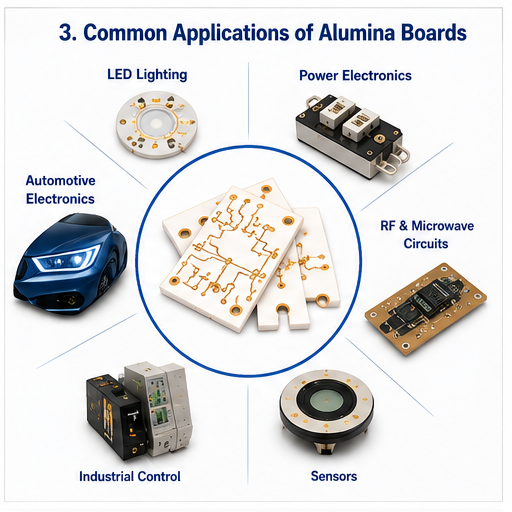
Ceramic circuit boards are often used in devices that must remain reliable for many years. These include aerospace power modules, RF amplifiers, laser systems, LED lighting modules, semiconductor test equipment, medical sensors, and industrial control products.

A ceramic PCB board may be supplied as a bare ceramic circuit board or as a fully assembled PCBA. A bare PCB board ceramic substrate includes the ceramic base, copper circuits, vias or pads if required, surface finish, and final inspection. A completed ceramic PCBA adds components, soldering, inspection, testing, and packaging. This full-process capability is useful when a customer wants one supplier to control fabrication, component sourcing, assembly, and quality verification.

How Is a Ceramic PCB Board Different from a Standard FR4 PCB?

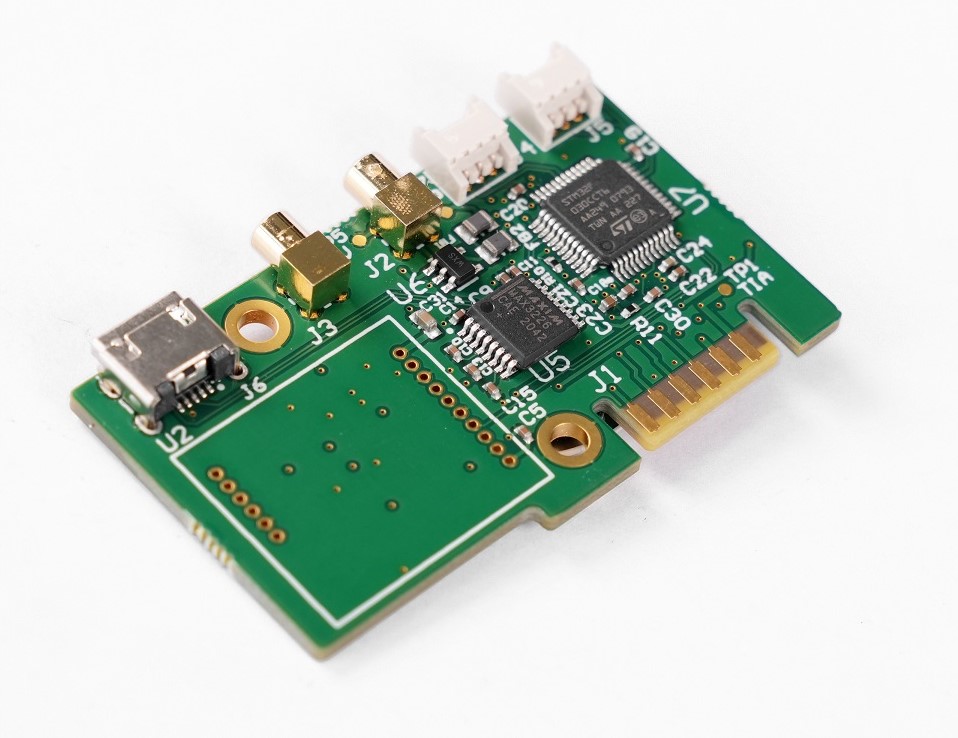
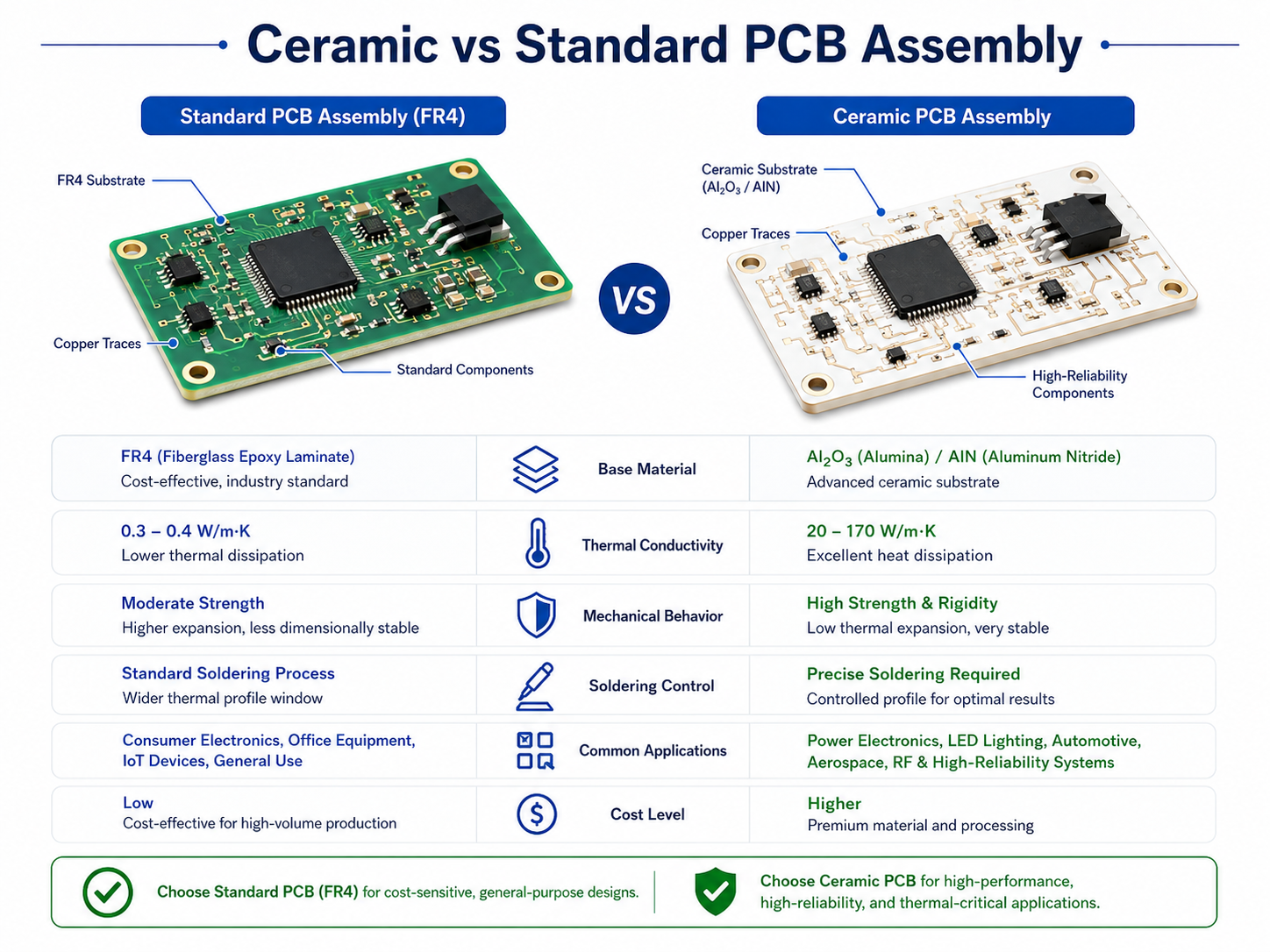
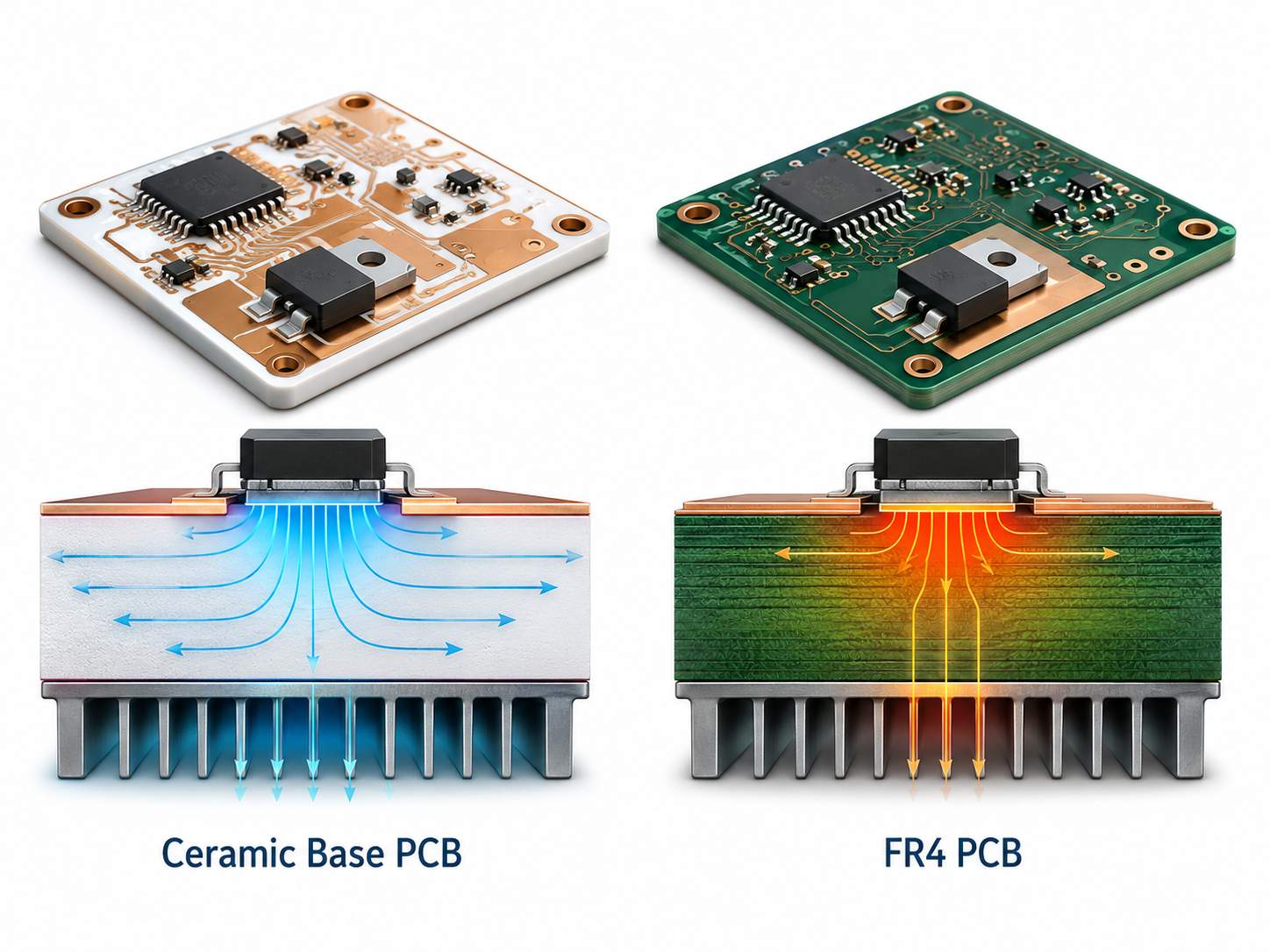
Ceramic PCB board and an FR4 PCB both provide electrical interconnection, but they are designed for different performance levels. FR4 is a glass-reinforced epoxy laminate widely used in consumer electronics, control boards, communication devices, and general industrial products. It is affordable, easy to process, and suitable for many standard designs.

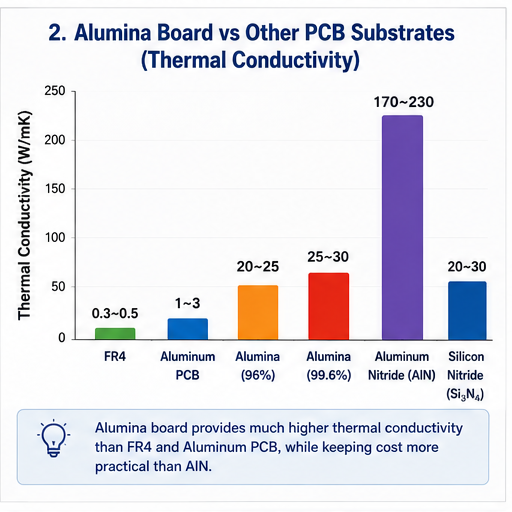
The biggest difference is the substrate. FR4 has relatively low thermal conductivity. It can work very well in many electronic products, but it does not move heat as quickly as ceramic. Ceramic materials such as aluminum nitride and alumina provide much stronger thermal paths.

Comparison ItemCeramic PCB BoardStandard FR4 PCB
Base MaterialAlumina, aluminum nitride, silicon nitride, or other ceramic substrateGlass fiber reinforced epoxy laminate
Thermal ConductivityHigh to very high, depending on ceramic materialLow, usually suitable for moderate heat loads
Temperature ResistanceExcellent for high-temperature environmentsGood for standard electronics, limited at higher temperatures
Electrical InsulationStrong insulation with good dielectric strengthGood insulation for common circuit designs
Dimensional StabilityVery stable under heatMore expansion under thermal stress
Typical ApplicationsAerospace, power electronics, RF, LED, medical, laser, semiconductor modulesConsumer electronics, general industrial boards, communication products
Cost LevelHigher because of material and process complexityLower and widely available
Prototype ConsiderationRequires careful design review and manufacturer experienceFaster and easier for common PCB factories
Assembly NeedsRequires controlled soldering and thermal process knowledgeMature and common SMT process flow

The choice is not about which material is always better. It is about whether the design needs the extra performance. For a simple control board with low heat, FR4 is often a smart choice. For a compact power module or aerospace AlN ceramic PCB board, ceramic can offer a stronger long-term solution.

What Are Ceramic Circuit Boards Used For?

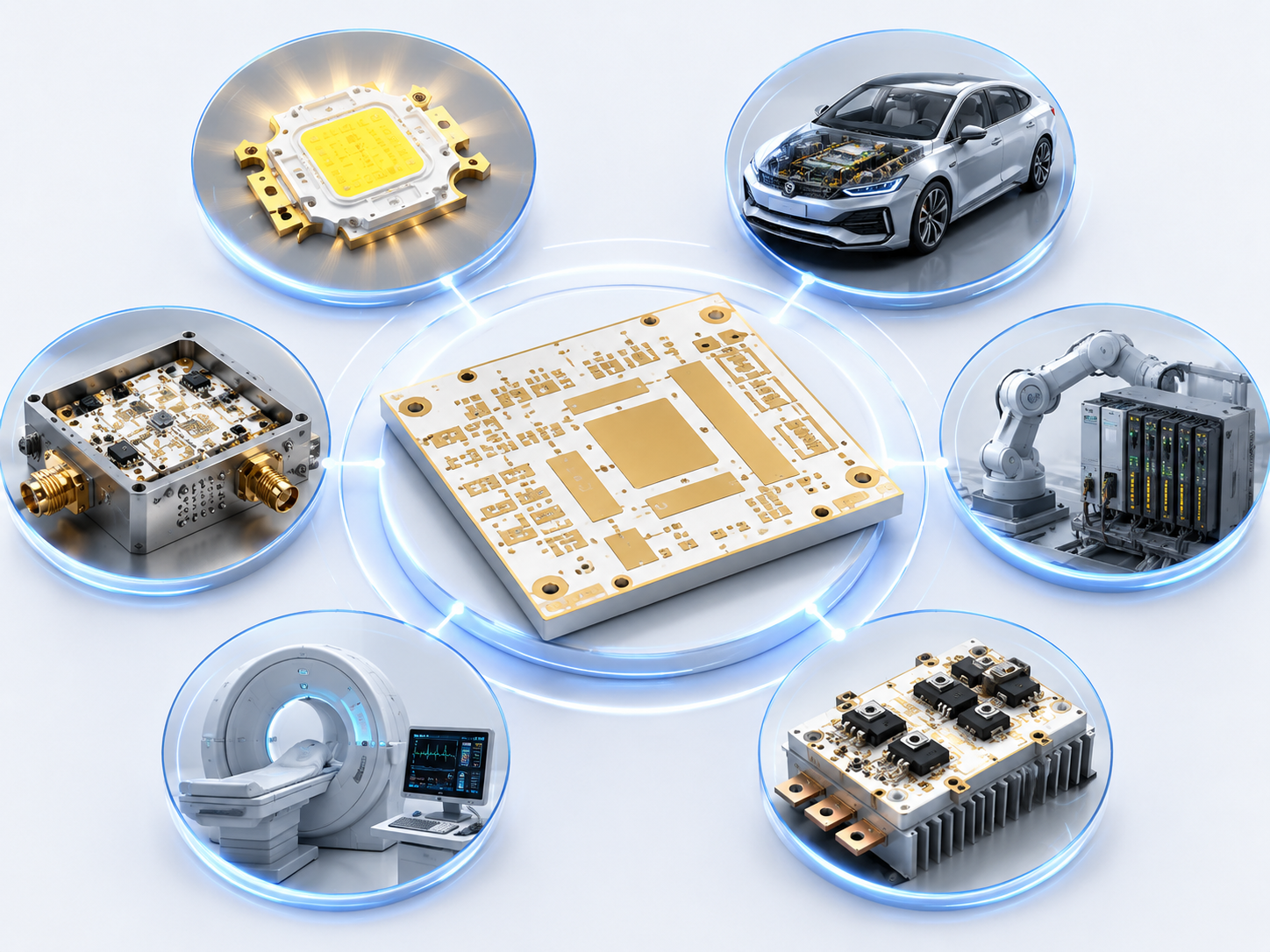
Ceramic circuit boards are used in products where heat, power density, precision, and reliability must be controlled carefully. They are often found in industries that value stable performance over the full product life cycle.

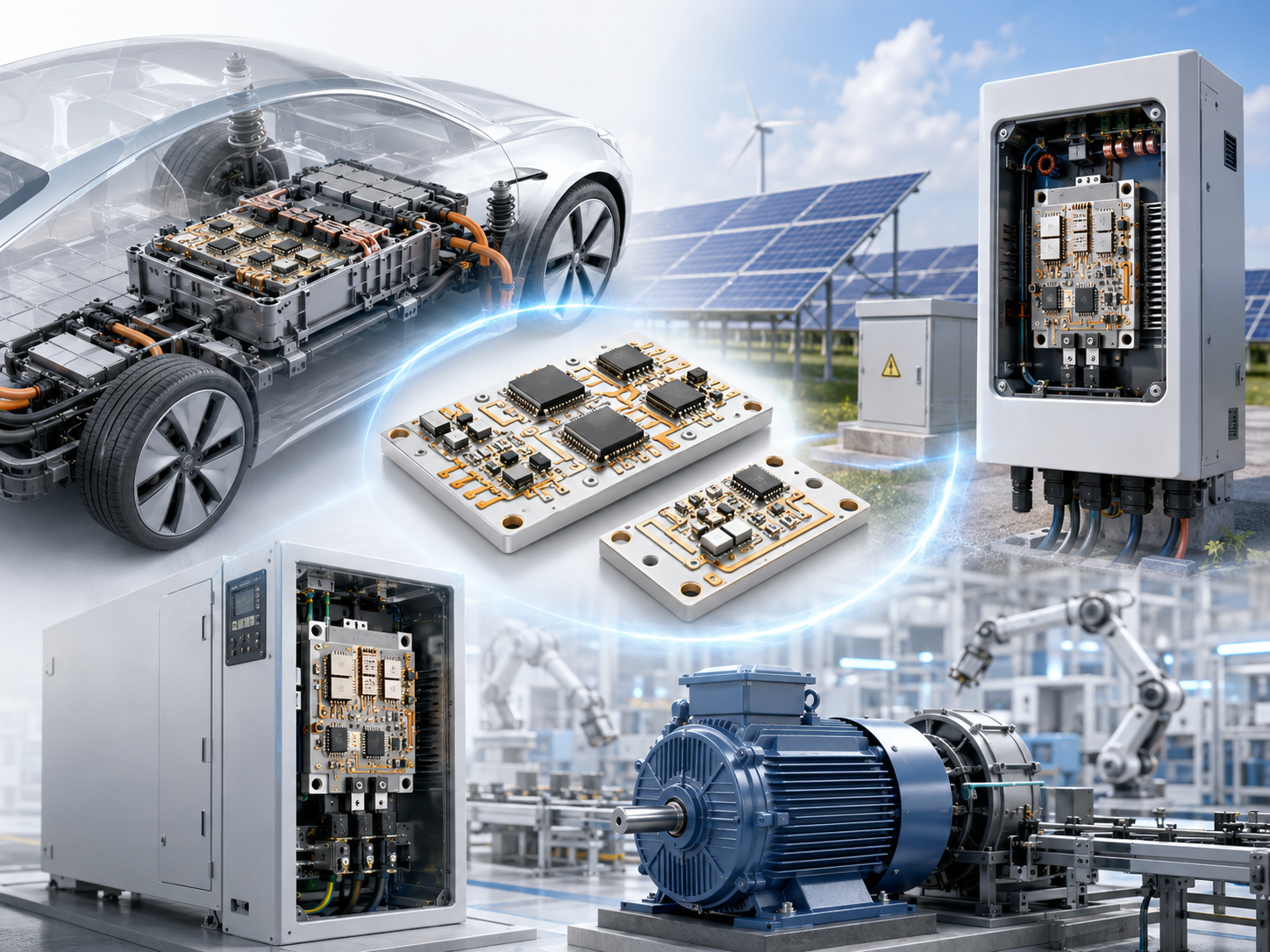
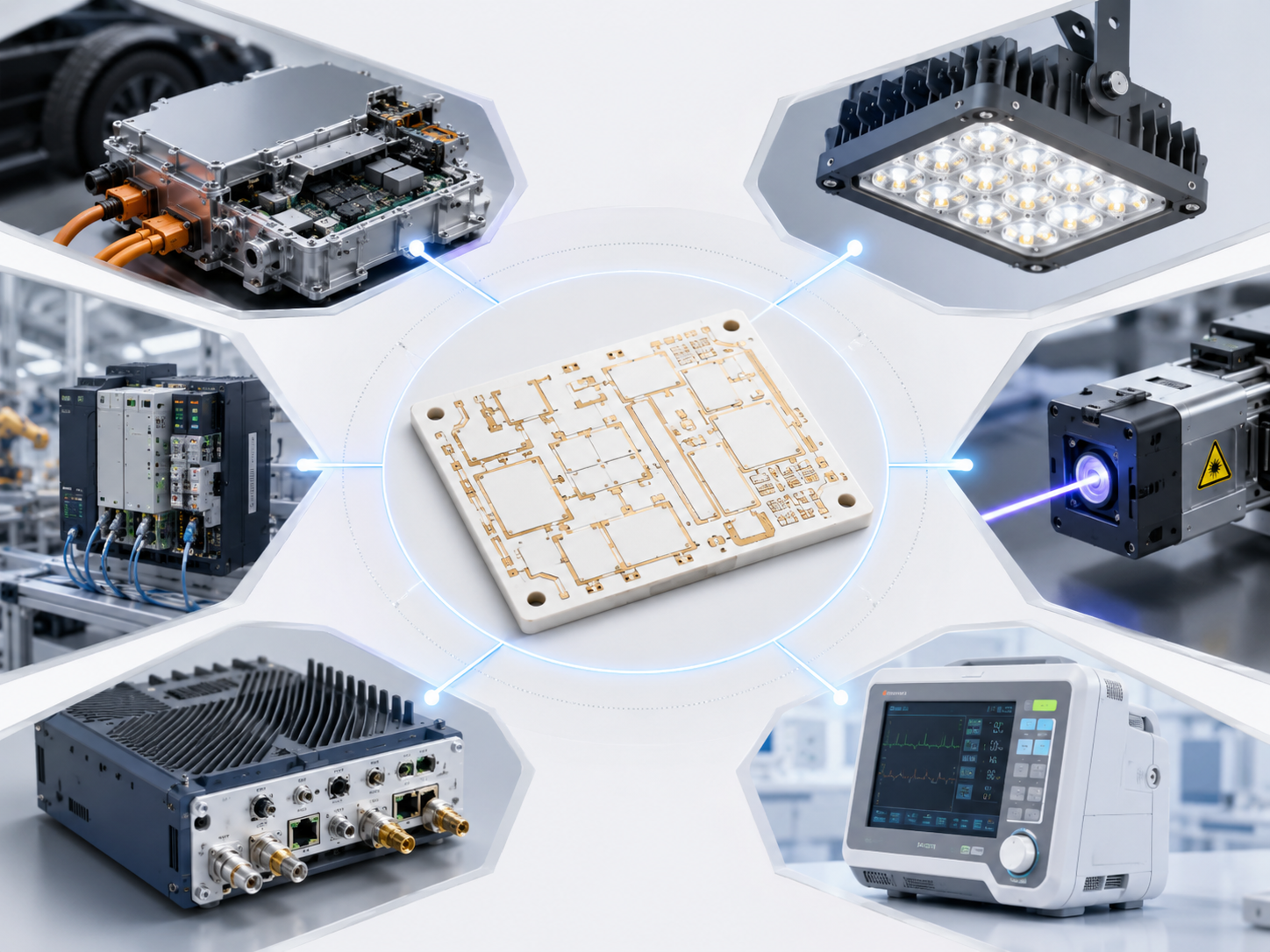
In aerospace electronics, ceramic boards are used in power control modules, RF communication devices, sensor systems, radar-related circuits, and high-reliability control units. These products often work in environments with temperature changes, vibration, and strict weight limitations. A ceramic PCB can help engineers reduce thermal stress and improve circuit stability.

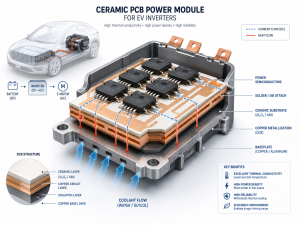
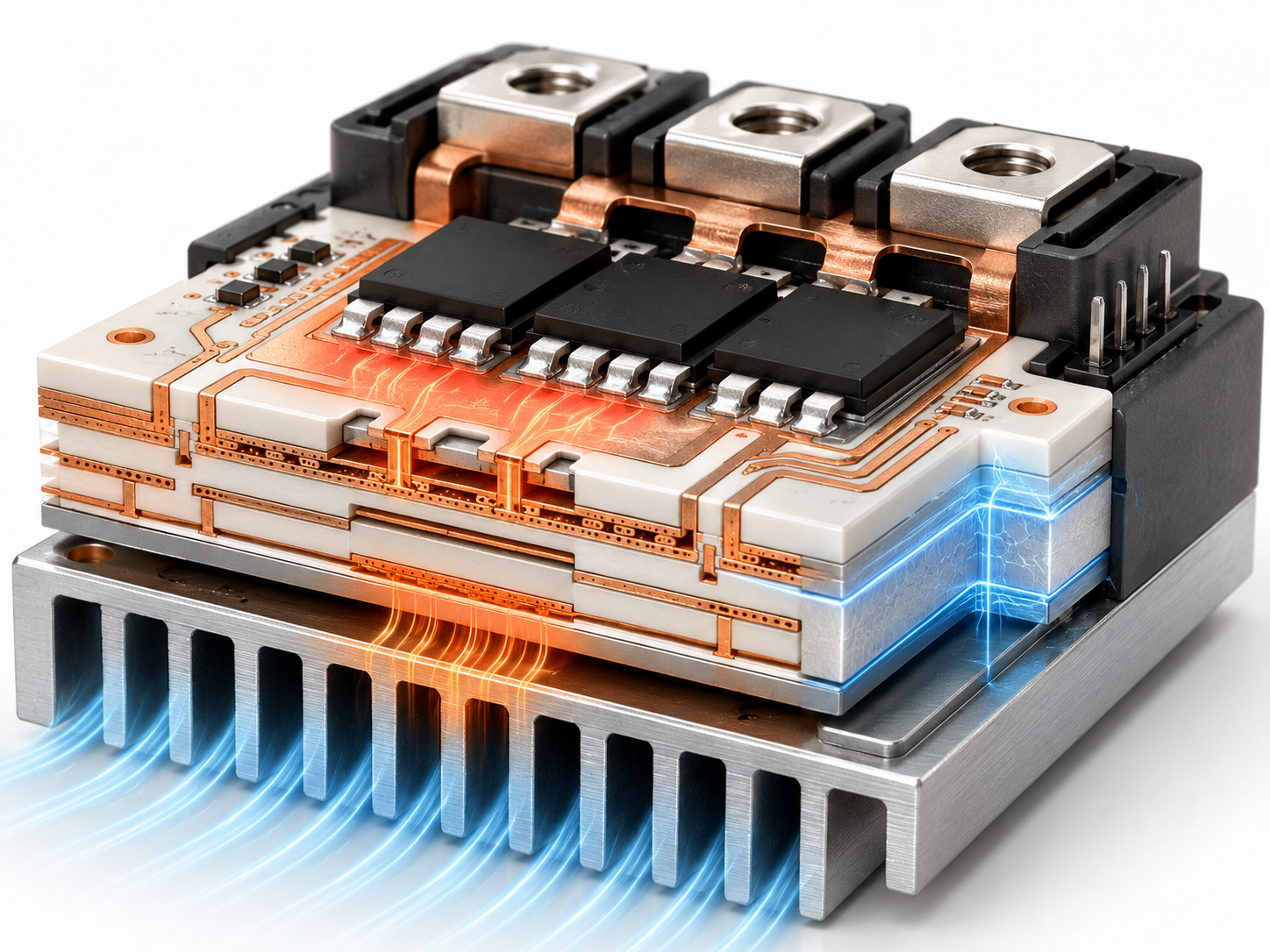
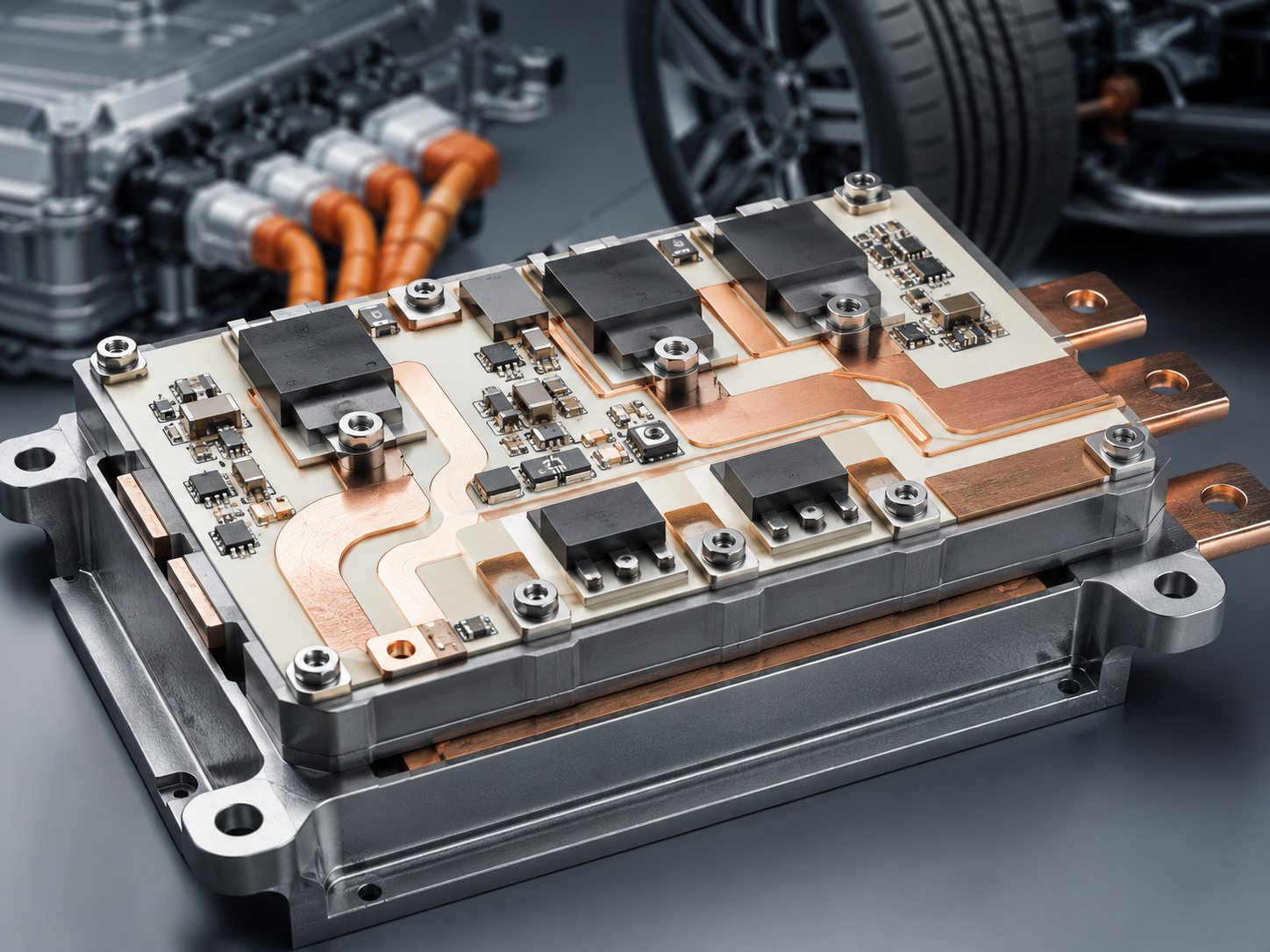
In power electronics, ceramic circuit boards are used for MOSFETs, IGBTs, power converters, motor drives, solid-state relays, and high-current modules. The ceramic substrate helps transfer heat from the power device to the heat spreader or housing. This supports smaller designs and more stable operating temperatures.

Ceramic PCB Board - Aerospace AlN Ceramic PCB Board Manufacturer

Common applications include:

  • Aerospace power modules, RF units, avionics sensors, and satellite-related electronic assemblies.
  • High-power LED modules, UV LED curing systems, automotive lighting, and industrial lighting engines.
  • RF and microwave circuits, including amplifiers, filters, antennas, and high-frequency ceramic substrate modules.
  • Medical electronics such as imaging equipment, sensor modules, laser systems, and diagnostic devices.
  • Semiconductor equipment, probe cards, laser diode carriers, and precision measurement instruments.
  • New energy products, charging modules, power conversion units, and thermal management assemblies.

Ceramic PCB boards are also widely used in high-end lighting. For example, LED chips generate concentrated heat. If that heat stays near the junction, brightness and life span can be affected. In RF applications, ceramic materials offer stable dielectric behavior. This is useful for circuits where signal loss, impedance control, and frequency stability are important.

What Ceramic PCB Materials Are Commonly Used?

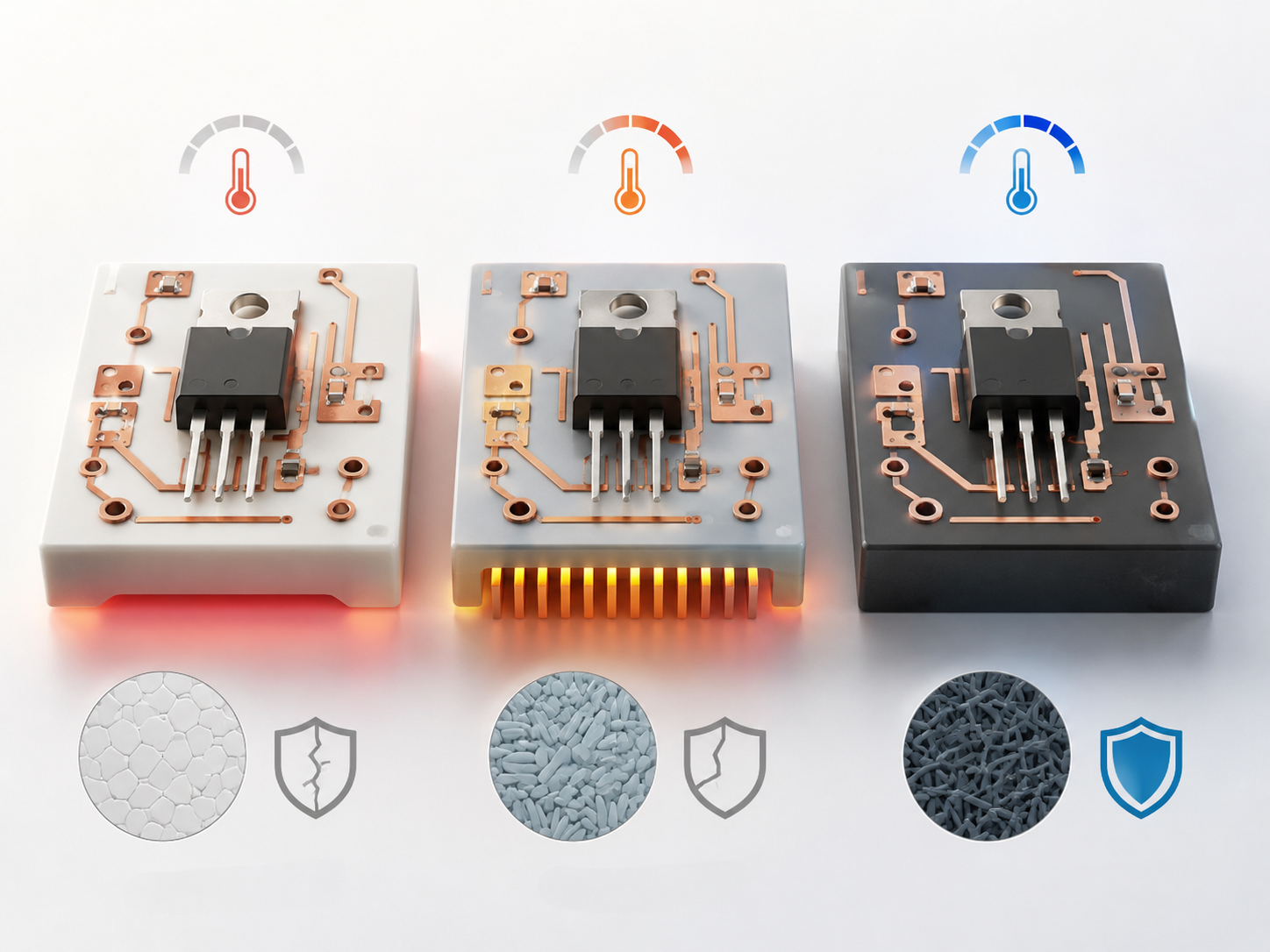
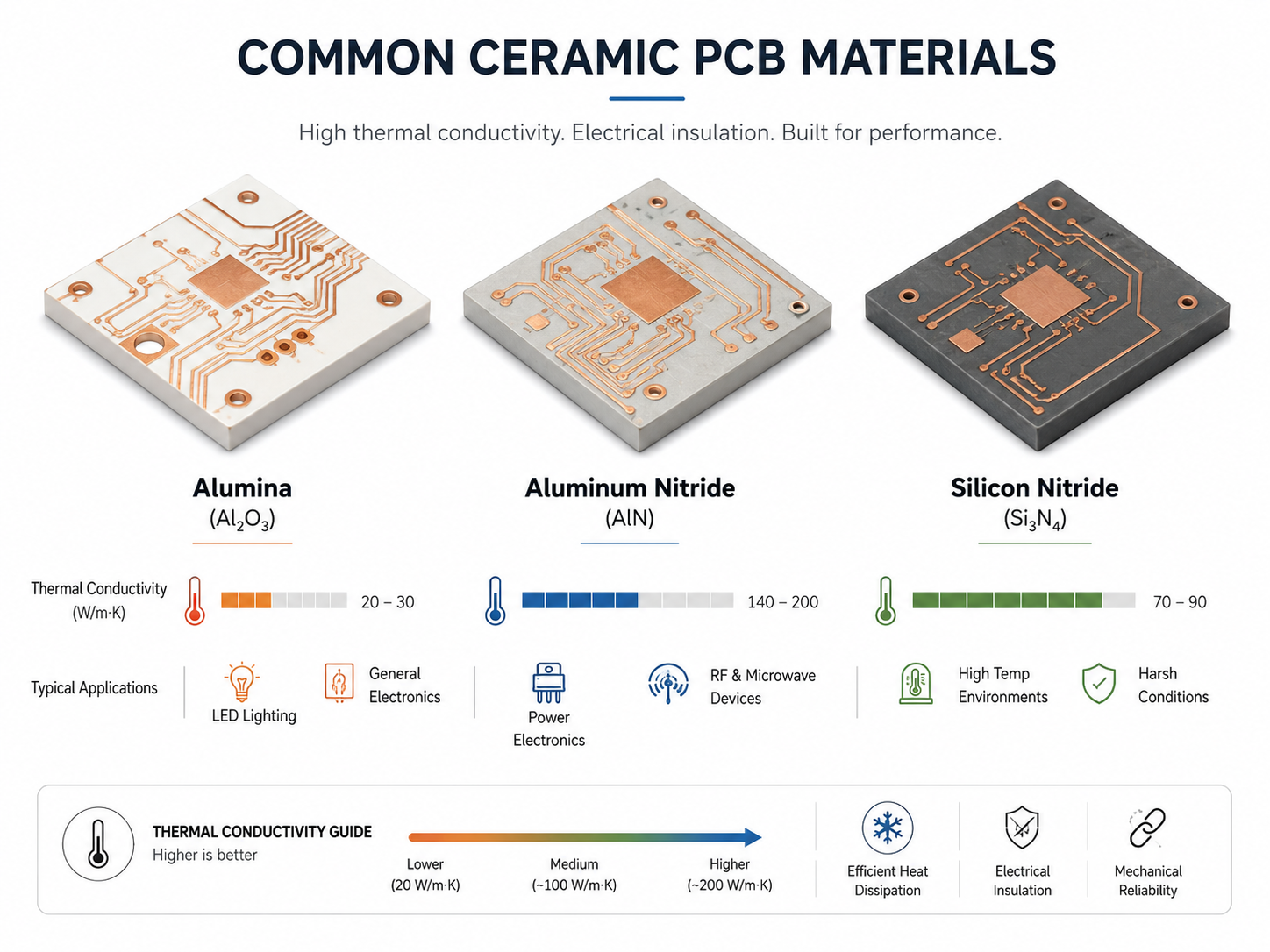
The most common ceramic PCB materials include alumina, aluminum nitride, silicon nitride, and sometimes beryllium oxide in special legacy or niche applications. For modern commercial and industrial projects, alumina and aluminum nitride are the most widely used because they offer a practical balance of performance, manufacturability, availability, and cost.

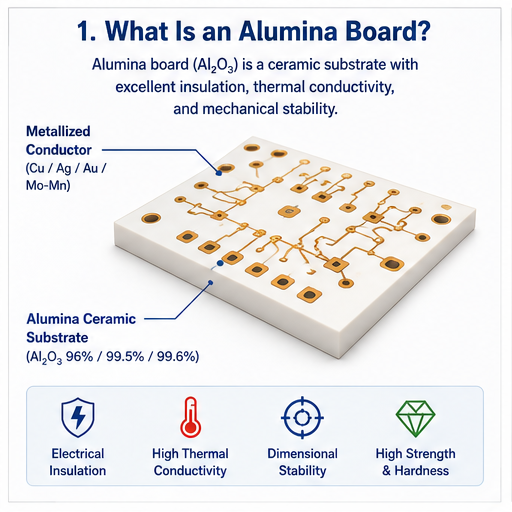
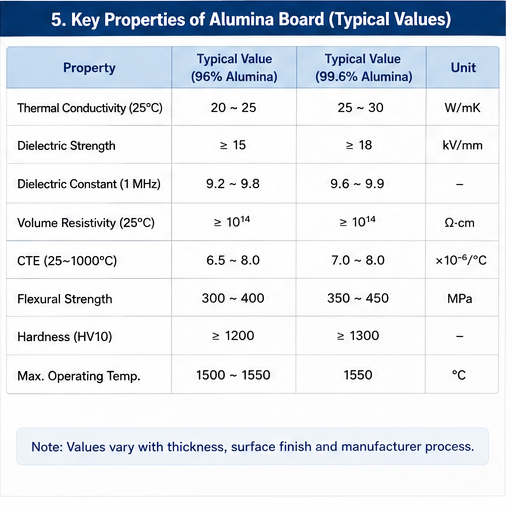
Alumina ceramic, often written as Al₂O₃, is the most familiar option. It offers good insulation, good mechanical strength, stable performance, and a cost level that is more accessible than aluminum nitride. Common purities include 96% alumina and 99% alumina.

Aluminum nitride, written as AlN, is used when much higher thermal conductivity is required. Some buyers may search for an “aluminum nitride AIN ceramic PCB board,” although the correct chemical abbreviation is AlN. This material is especially attractive for aerospace, high-power LED, RF, laser, and power semiconductor applications. It offers excellent heat transfer while maintaining electrical insulation.

Ceramic PCB Board - Aerospace AlN Ceramic PCB Board Manufacturer

Silicon nitride is known for strong mechanical toughness and thermal shock resistance. It can be useful in applications where the board may face mechanical stress, impact risk, or repeated heating and cooling.

A simple way to view the material choices is this:

Ceramic PCB MaterialMain StrengthTypical Use CaseCost Tendency
96% AluminaGood insulation, stable processing, balanced costLED modules, sensors, industrial electronics, general ceramic PCB prototypeModerate
99% AluminaBetter purity, stronger electrical performancePrecision circuits, medical modules, high-reliability electronicsModerate to higher
Aluminum NitrideExcellent thermal conductivityAerospace, power modules, RF, laser diodes, high-power LEDHigher
Silicon NitrideHigh toughness and thermal shock resistanceHarsh mechanical or thermal environmentsHigher
Beryllium OxideVery high thermal performance but special handling concernsLimited specialized applicationsSpecial-case material

When selecting ceramic PCB materials, engineers should not only compare thermal conductivity values. They should also review copper bonding method, via structure, surface finish, operating voltage, component type, board size, tolerance, and assembly process.

What Is an Aluminum Nitride AlN Ceramic PCB Board?

An aluminum nitride AlN ceramic PCB board is a circuit board made with an AlN ceramic substrate. It is selected mainly for its excellent thermal conductivity and strong electrical insulation. For products that generate concentrated heat, AlN can help transfer heat away from components while still keeping the circuit electrically isolated.

AlN ceramic PCB boards are often used in aerospace electronics, laser diode modules, RF power amplifiers, high-brightness LED systems, power semiconductor packages, and new energy modules. In these products, heat is not just a side issue. It is one of the main factors that shapes the product’s service life, efficiency, and safety margin.

Aerospace applications are a strong fit for AlN because engineers often need compact and lightweight solutions. They also need materials that can perform through temperature changes and long operating cycles. An aerospace AlN ceramic PCB board can support this goal by combining thermal efficiency with a stable ceramic platform.

However, AlN projects require careful manufacturing control. The material is harder and more brittle than organic laminates, so drilling, cutting, metallization, and handling must be done with suitable process knowledge. Copper adhesion, surface flatness, laser processing, and final inspection are also important.

EBest Circuit supports aluminum nitride ceramic PCB manufacturing for customers who need high thermal performance, stable process control, and engineering communication during the design-to-production stage. For aerospace or other high-reliability projects, early DFM review is especially useful because it can help refine copper layout, board thickness, surface finish, and assembly method before production begins.

When Should You Choose Alumina Ceramic PCB Materials?

Alumina ceramic PCB materials are a strong choice when the design needs better thermal performance than FR4, good electrical insulation, stable mechanical properties, and a more economical ceramic option than AlN. Alumina is widely used because it offers a practical balance between performance and cost.

You may choose alumina when the heat load is moderate to high but does not require the premium thermal performance of aluminum nitride. It is common in LED modules, sensor boards, power control circuits, thick-film ceramic circuits, medical devices, and industrial electronics.

Alumina is available in different purity levels. A 96% alumina ceramic substrate is popular because it is cost-effective and reliable for many applications. A 99% alumina substrate can offer better purity and performance for more demanding circuits.

Before choosing alumina, engineers should review several points:

  • Thermal requirement: Alumina is better than FR4, but AlN is stronger for very high heat transfer.
  • Circuit density: Fine traces may require a more precise metallization process.
  • Operating environment: Alumina performs well in high-temperature and stable insulation applications.
  • Cost target: Alumina often supports a more controlled ceramic board price than premium ceramic materials.
  • Assembly plan: Component size, soldering profile, and thermal mass should be reviewed early.

Alumina is also suitable for ceramic PCB prototype projects. When a customer wants to validate a ceramic design before mass production, alumina can provide a dependable starting point. It allows engineers to test thermal behavior, mechanical fit, surface finish, solderability, and electrical function without immediately moving to a more expensive material.

What Is a Bare PCB Board Ceramic Substrate?

A bare PCB board ceramic substrate is a ceramic circuit board before electronic components are assembled. It includes the ceramic base, conductive circuits, pads, vias if required, and surface finish.

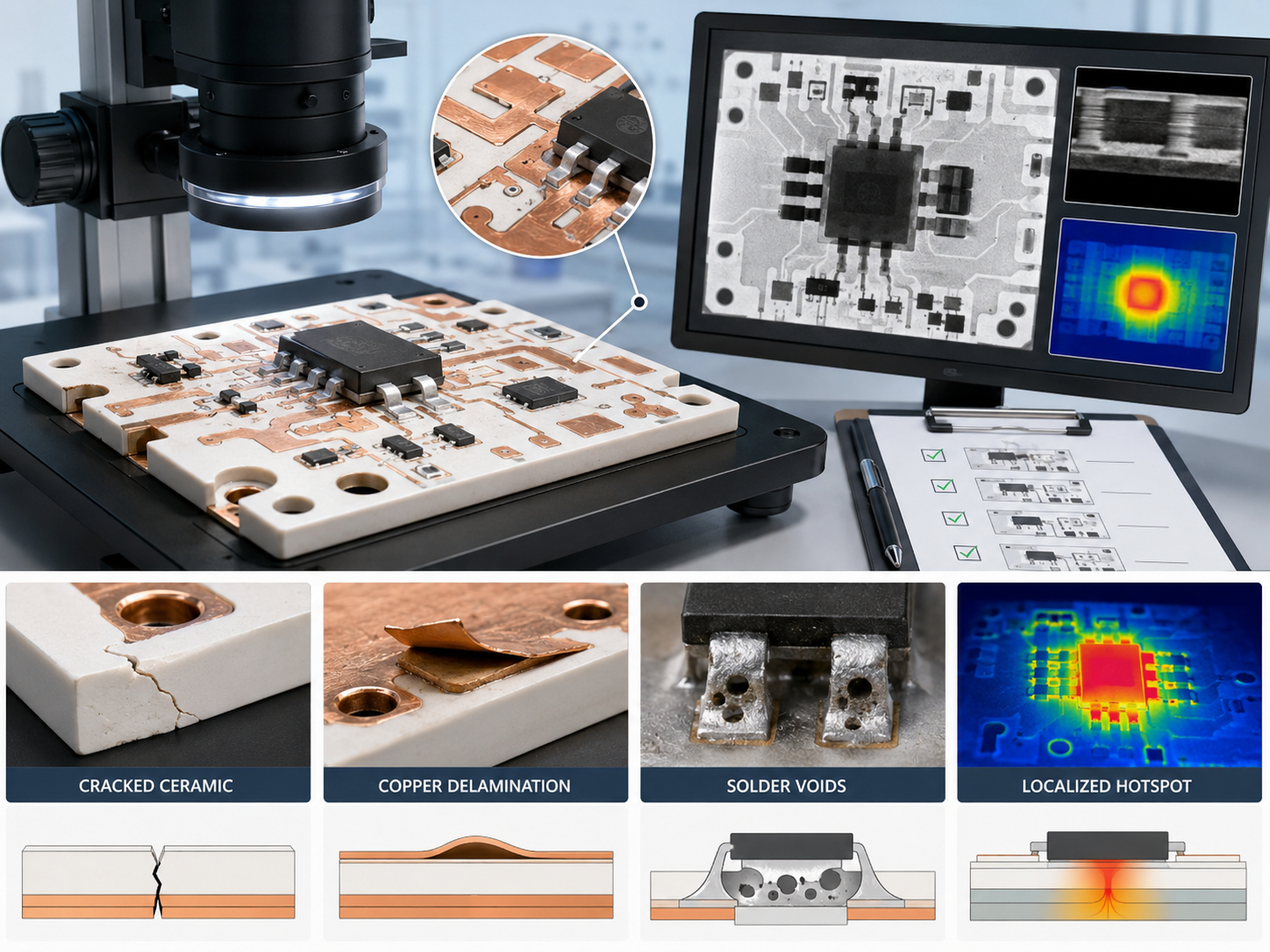
For a ceramic PCB, the bare board stage is especially important. The substrate material, copper bonding, circuit pattern accuracy, hole quality, surface finish, and inspection process all affect the final PCBA. If the bare ceramic circuit board is not controlled properly, assembly yield and long-term reliability can be affected.

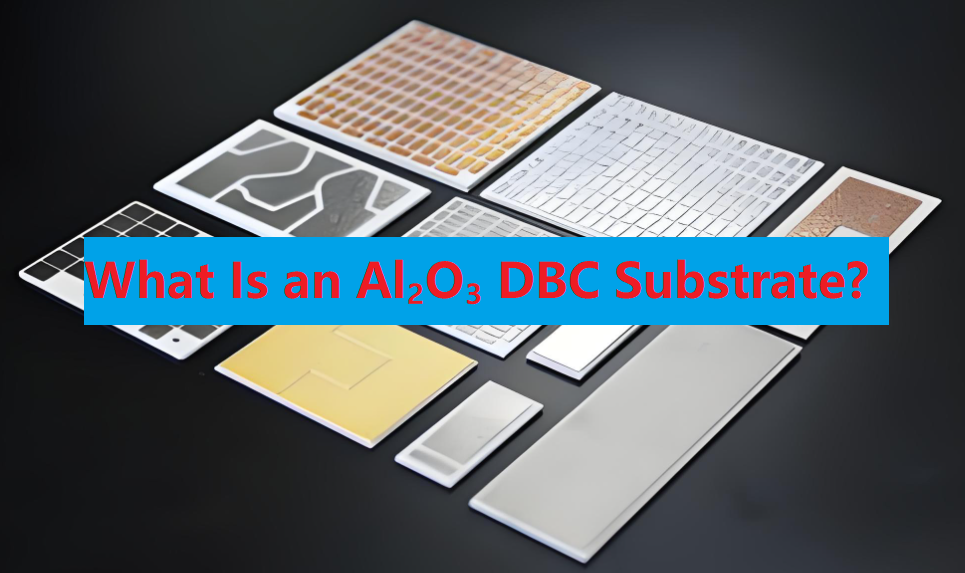
A bare ceramic board may use several circuit-forming technologies. Thick-film ceramic circuits are made by printing conductive paste and firing it at high temperature. Thin-film ceramic circuits use vacuum deposition and etching to create fine patterns. DBC, or direct bonded copper, bonds copper directly to ceramic at high temperature and is often used for power modules. DPC, or direct plated copper, can create more precise copper features and plated vias for advanced designs.

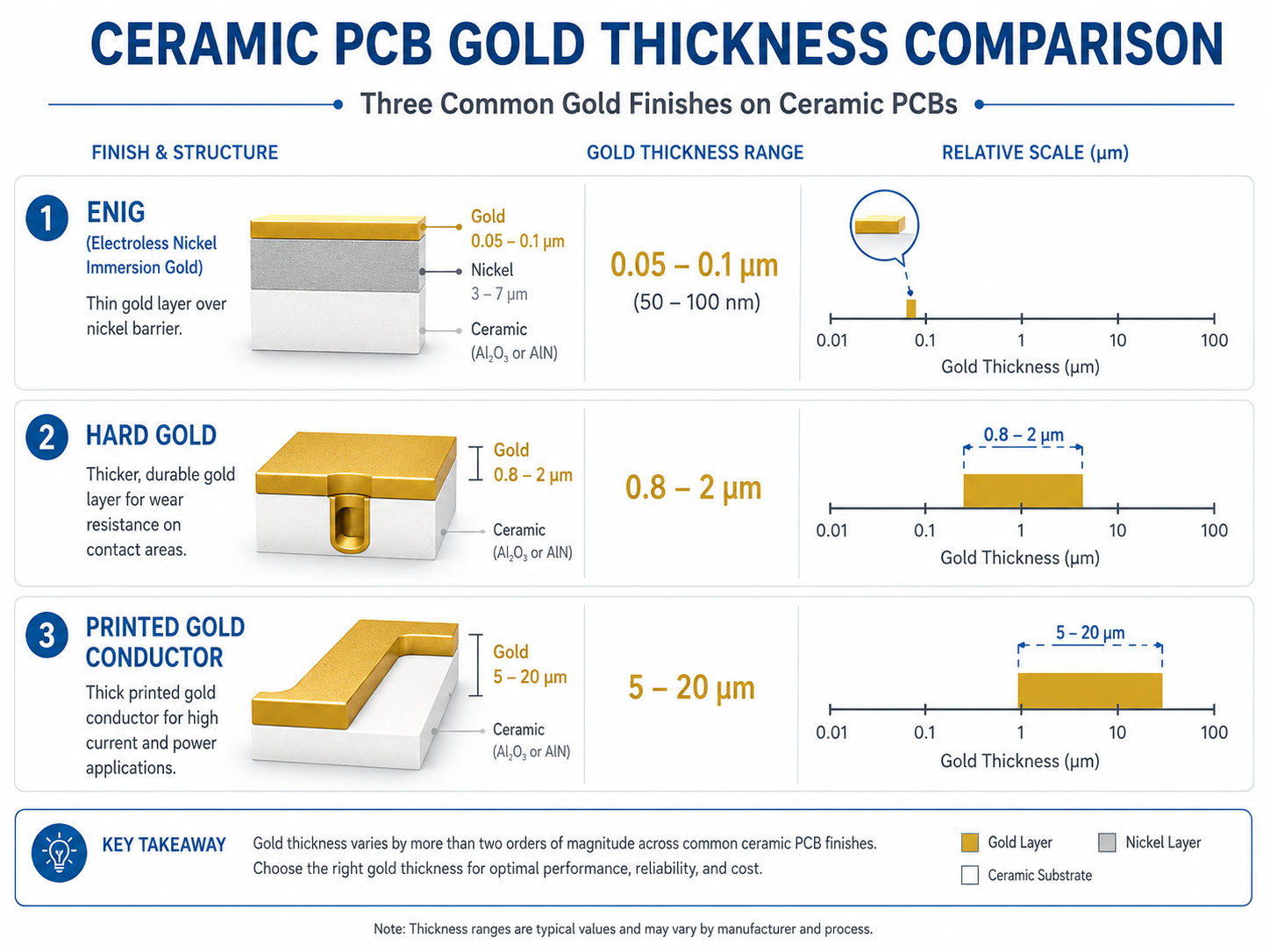
The surface finish is also important. Common options may include ENIG, silver, gold plating, nickel plating, or other finishes depending on soldering and bonding needs. For wire bonding, the finish must support reliable bond strength.

A bare PCB board ceramic product is often ordered by customers who handle assembly internally or send it to another EMS provider. However, many customers now prefer one-stop support because ceramic boards require closer coordination between fabrication and assembly.

EBest Circuit provides bare ceramic PCB board manufacturing as well as assembled ceramic PCBA service. This helps customers move from ceramic substrate design to finished electronic module with better process continuity.

How Is a PCB Ceramic Circuit Board Manufactured?

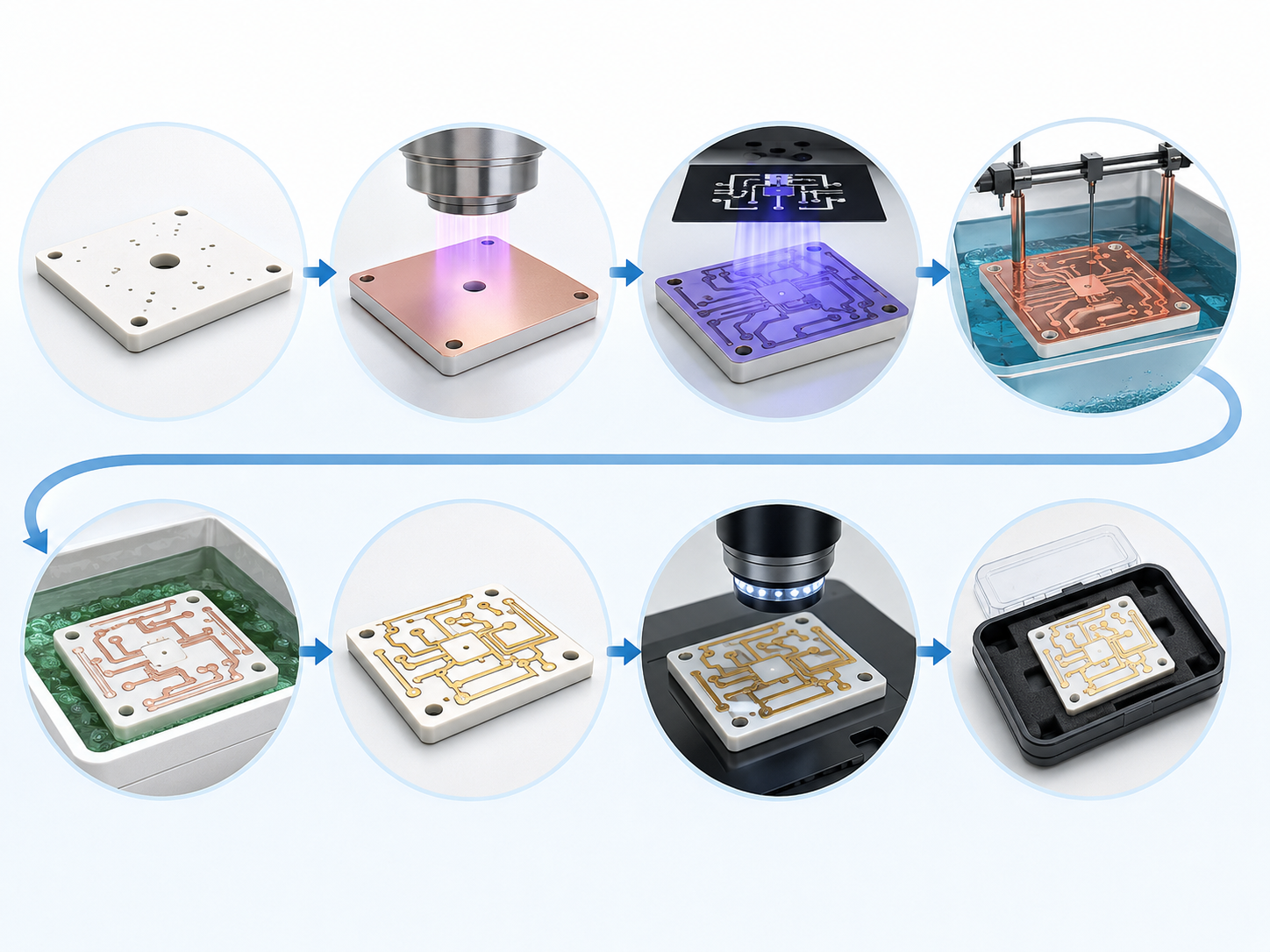
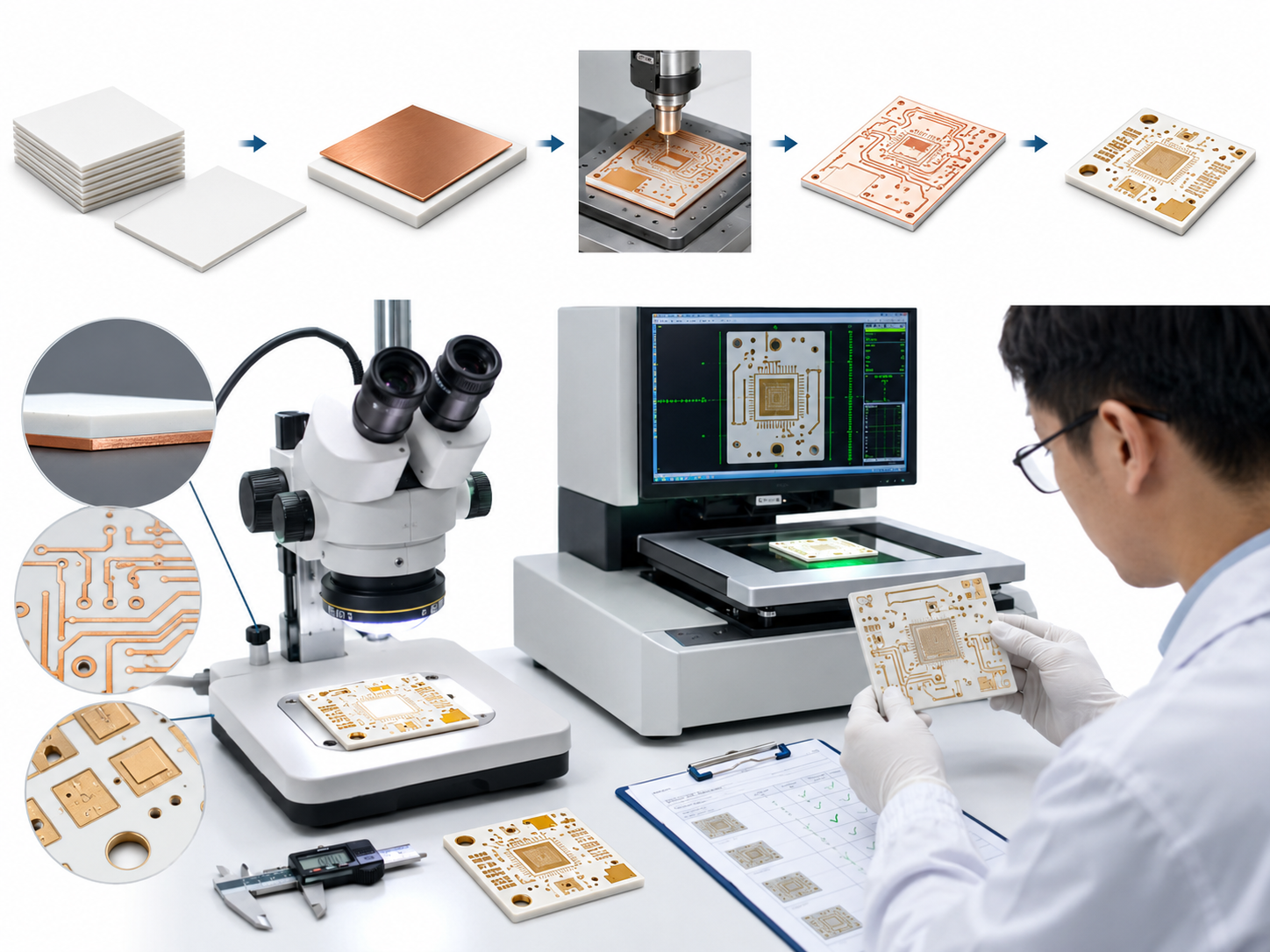
A PCB ceramic circuit board is manufactured through a controlled process that depends on the ceramic material, copper structure, circuit density, and end application.

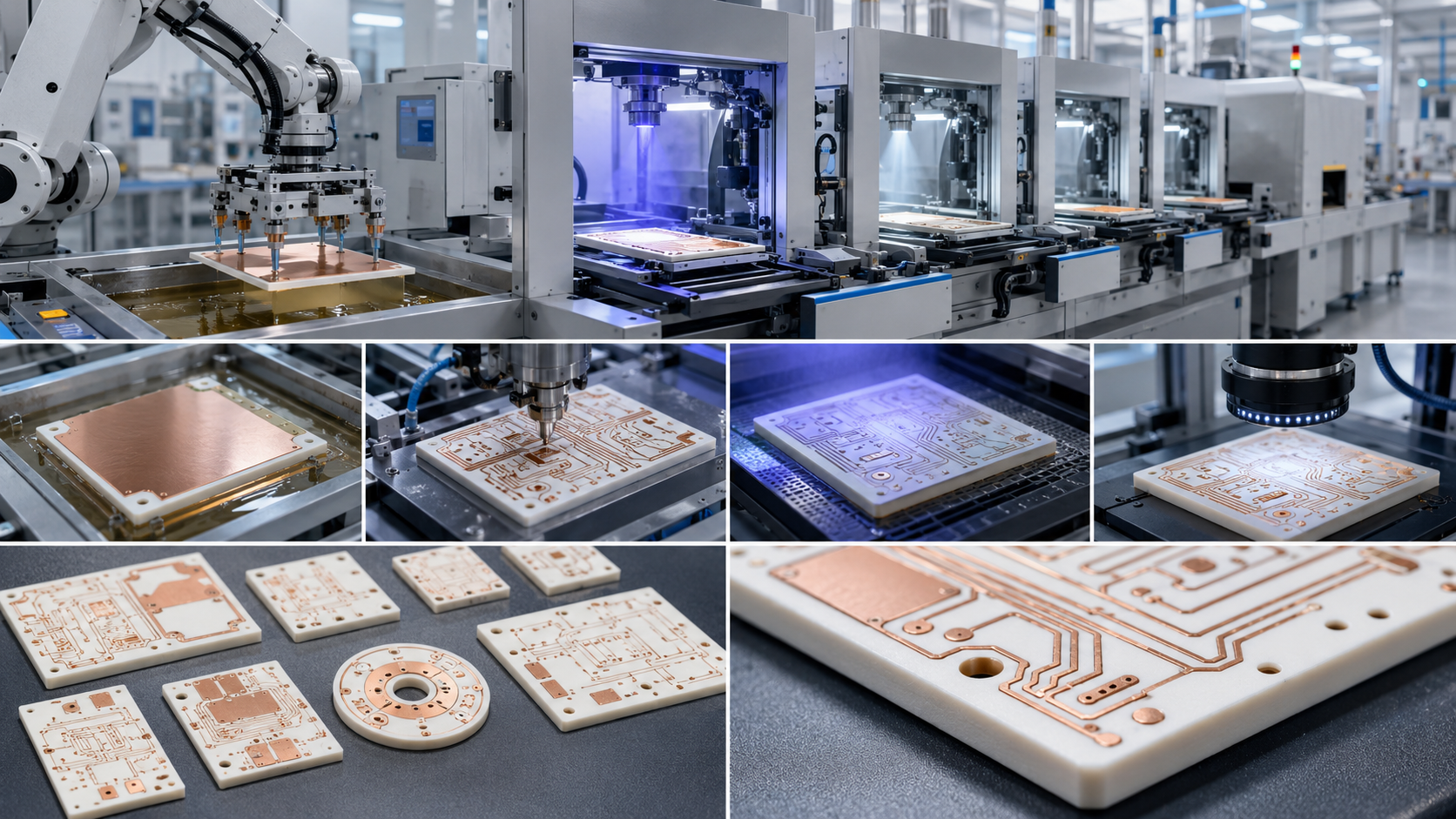
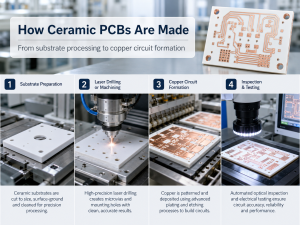
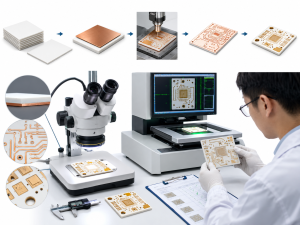
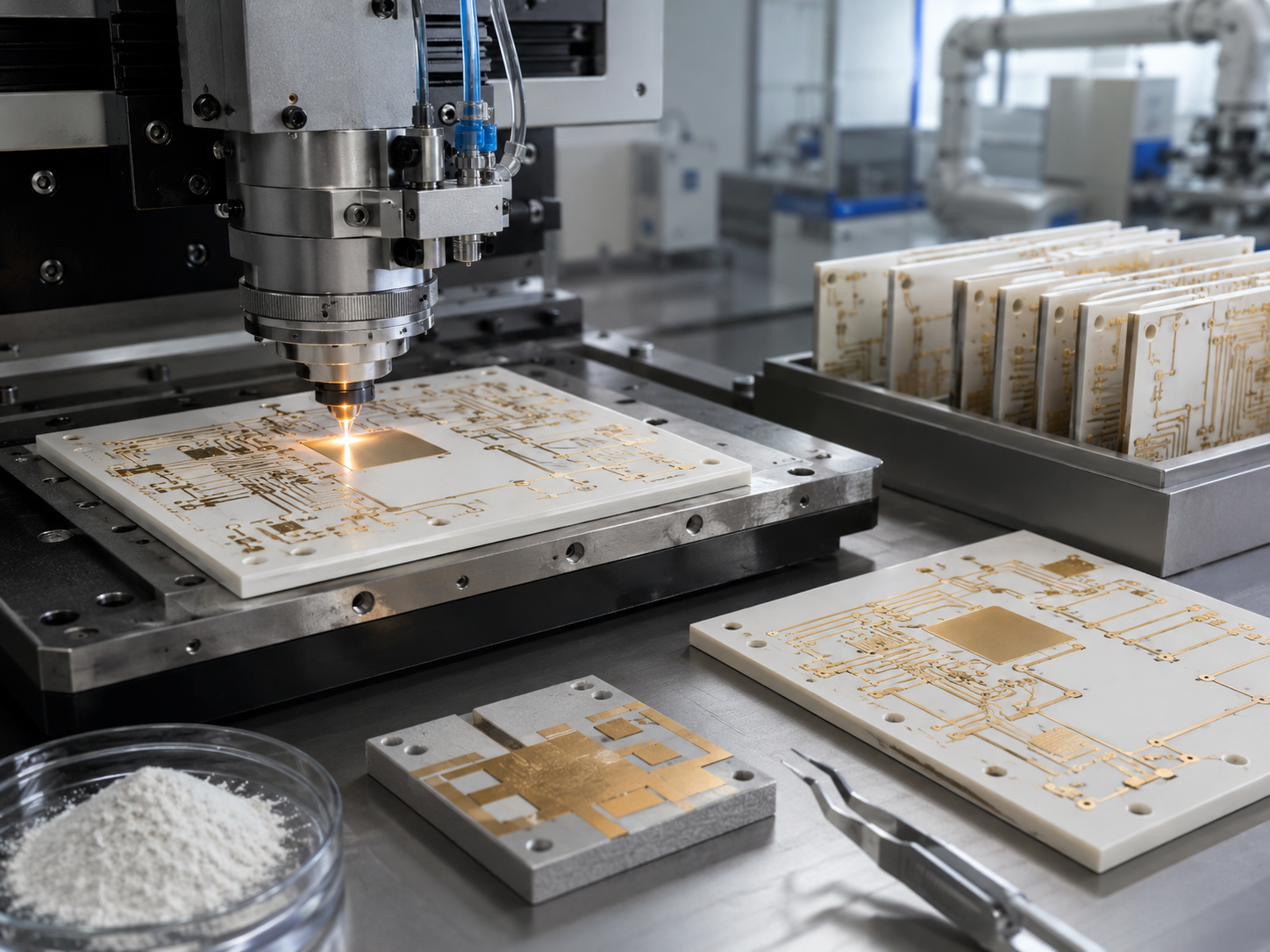
The manufacturing journey usually begins with engineering review. The manufacturer checks the Gerber files, stackup, substrate material, copper thickness, hole design, surface finish, tolerances, and assembly requirements. After the review, the ceramic substrate is prepared. The substrate must meet thickness, flatness, and surface quality requirements. Depending on the process, the circuit layer may be created by printing conductive paste, bonding copper foil, sputtering metal layers, or plating copper.

Typical manufacturing steps include:

  • Material selection and DFM review based on thermal, electrical, and mechanical requirements.
  • Ceramic substrate preparation, cleaning, thickness control, and surface inspection.
  • Circuit formation through thick film, thin film, DBC, DPC, or another suitable process.
  • Hole processing, laser drilling, mechanical drilling, or via formation where required.
  • Copper patterning, etching, plating, or metallization control according to the design.
  • Surface finish application for soldering, wire bonding, or corrosion protection.
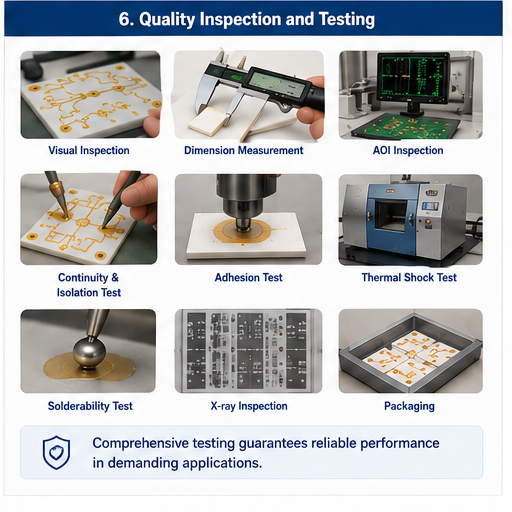
  • Electrical test, dimensional inspection, visual inspection, and packaging.

For DBC ceramic boards, copper is bonded to ceramic at high temperature. This method is excellent for power electronics because it supports thicker copper and strong thermal paths. For DPC ceramic boards, copper is built through plating, which can support finer features and plated vias. For thin-film ceramic boards, the process can create very precise patterns for RF, sensor, and high-frequency applications.

Ceramic PCB Board - Aerospace AlN Ceramic PCB Board Manufacturer

Can Ceramic PCB Boards Support PCBA Assembly?

Yes, ceramic PCB boards can support PCBA assembly, and many ceramic projects are built as complete assembled modules. In fact, ceramic substrates are often selected because they provide a better base for high-power components, LEDs, RF devices, sensors, and semiconductor packages.

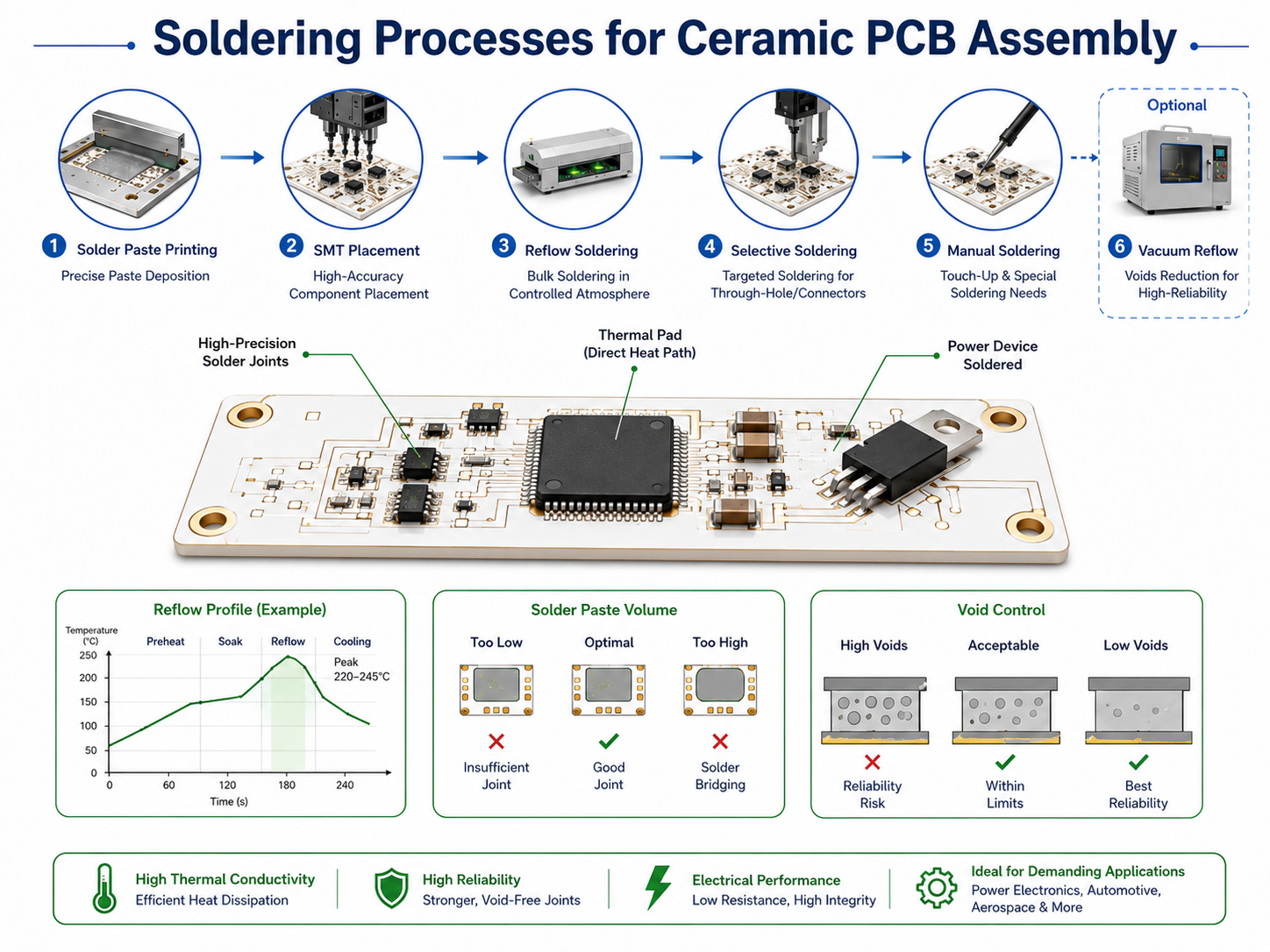
Ceramic PCBA assembly requires more process attention than standard FR4 assembly. The board has different thermal behavior, higher rigidity, and lower flexibility. Soldering profiles must be controlled carefully because ceramic substrates conduct and absorb heat differently. Components with large thermal pads, power packages, or bottom terminations may need special stencil design and solder paste control.

SMT assembly on ceramic boards can include LEDs, ICs, resistors, capacitors, MOSFETs, sensors, connectors, and custom components. Some designs may also use wire bonding, die attachment, or hybrid assembly methods.

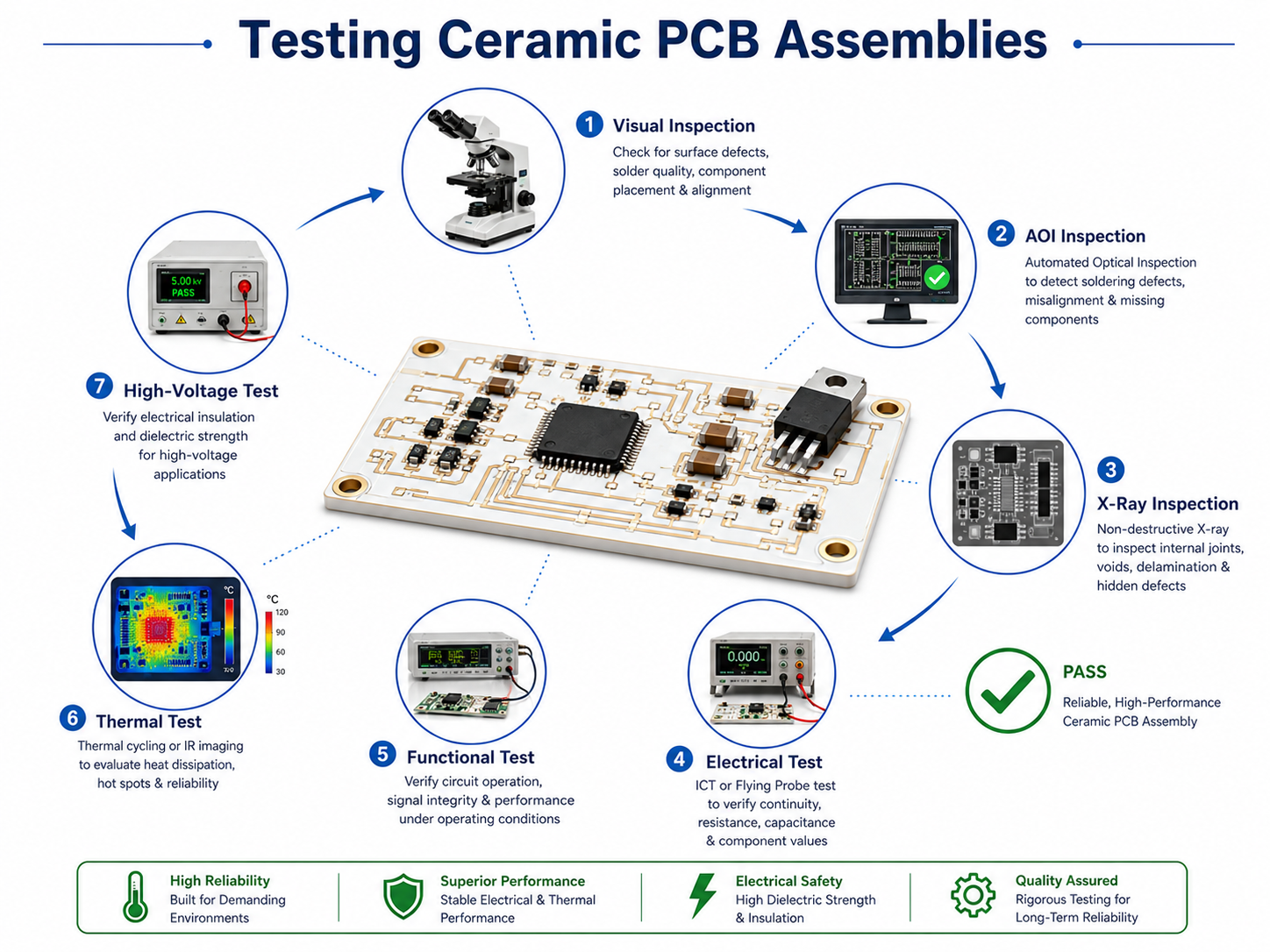
For ceramic substrate circuit board PCB PCBA projects, the best results usually come from close cooperation between the board manufacturer and assembly team. Pad design, surface finish, solder paste type, reflow curve, component thermal path, and inspection method should be considered together. A ceramic PCB can also support testing after assembly. Depending on the product, testing may include visual inspection, AOI, X-ray inspection, electrical testing, functional testing, thermal testing, or reliability screening..

EBest Circuit (Best Technology) offers one-stop PCB and PCBA manufacturing support, including ceramic PCB fabrication, component sourcing, SMT assembly, testing, and engineering communication. For customers who need both bare board ceramic substrates and assembled modules, this integrated support can reduce coordination gaps and help the project move faster from prototype to production.

How Do You Choose a Reliable Ceramics PCB Board Manufacturer?

Choosing a reliable ceramics PCB board manufacturer requires more than comparing unit price. Ceramic boards involve special materials, precision processing, thermal design, and assembly knowledge. A low quote may look attractive at the beginning, but the real value comes from stable quality, clear communication, process capability, and the ability to support your product through prototype and production.

First, review the manufacturer’s ceramic material experience. A capable supplier should understand alumina, aluminum nitride, and other ceramic PCB materials. They should be able to explain which material fits your application and why.

Second, check the process capability. Different ceramic circuit boards may require DBC, DPC, thick-film, thin-film, laser drilling, copper plating, precision cutting, or special surface finishes.

Third, evaluate engineering support. Ceramic PCB designs often benefit from DFM review before production. A good engineering team can help check pad design, thermal path, board thickness, surface finish, panelization, and manufacturability.

Fourth, confirm quality control and traceability. For aerospace, medical, industrial, and power electronics, documentation matters. Inspection records, material control, electrical testing, dimensional reports, and production traceability can give customers more confidence.

EBest Circuit (Best Technology) is positioned as an engineering-driven PCB and PCBA manufacturing partner. The company supports ceramic PCB board fabrication, ceramic circuit boards, ceramic PCB prototype builds, PCB ceramic circuit board production, component sourcing, PCBA assembly, and testing. For customers working on aerospace AlN ceramic PCB boards, LED thermal modules, power electronics, medical devices, or industrial control products, EBest provides practical support from design review to production delivery.

For ceramic PCB board manufacturing, ceramic PCB prototype support, or ceramic PCB PCBA assembly, you can contact EBest Circuit (Best Technology) at sales@bestpcbs.com

You may also like

High Thermal Conductivity PCB: Materials & Design

May 15th, 2026

What Is a High Thermal Conductivity PCB?

High thermal conductivity PCBs are special circuit boards that move heat away from electronic parts quickly. Regular FR-4 boards only conduct 0.3-0.5 W/m·K of heat, but these boards use metal or ceramic cores to do 2-100 times better. They work as both a circuit board and a heat spreader, so you often don’t need big separate heatsinks.

Aluminum PCBs are the most popular type, making up over 85% of the market. They are cheap and work well for most power products. Other types include copper core, IMS, and ceramic PCBs for more demanding uses.

Why Is High Thermal Conductivity Important in PCB Design?

Good heat conduction makes electronics last longer and work better. A 10°C drop in component temperature can double the life of semiconductors. Bad heat dissipation makes LEDs lose 70% of their brightness in 3 years and causes power parts to fail suddenly.

In cars, thermal stability keeps safety systems working from -40°C to 125°C. Without high thermal conductivity PCBs, modern small, high-power devices like EV chargers and 5G phones would overheat and break.

What Materials Are Used in High Thermal Conductivity PCBs?

High thermal conductivity PCBs use three main layers: a copper circuit layer, a thermally conductive dielectric layer, and a core base. The dielectric layer is the most important because it causes 70-90% of the total heat resistance

High thermal conductivity PCBs layer consture

Core Material Performance Comparison

Material TypeThermal Conductivity (W/m·K)Max Temperature (°C)Cost IndexBest For
Aluminum 6061150-2051301.0General power products
Pure Copper385-4001503.5High-current modules
Alumina Ceramic18-361000+2.5Sensors and industrial parts
Aluminum Nitride150-2301000+8.0Medical and aerospace

Aluminum PCB, Copper Core PCB, IMS PCB, and Ceramic PCB: What Is the Difference?

Each type has its own strengths for different jobs. Aluminum PCBs are the cheapest and most common. Copper core PCBs conduct heat better for high-power uses. IMS PCBs have better insulation, and ceramic PCBs work in extreme temperatures.

PCB Type Comparison

PCB TypeOverall Heat Conductivity (W/m·K)Insulation VoltageCostBest Use
Aluminum PCB1-51-3 kVLowLED lights, small power supplies
Copper Core PCB3-101-3 kVMediumMotor controls, EV chargers
IMS PCB1-9Up to 5 kVMediumPower converters, car electronics
Ceramic PCB18-230>15 kV/mmHighRF devices, medical lasers

How to Choose the Right Thermal Conductivity Rating?

The right rating depends on how much power your device uses. Too low and it overheats; too high and you waste money. A simple rule: add 0.5 W/m·K for every extra 10W of power.

For small LED bulbs under 50W, 1.0-1.5 W/m·K works fine. For street lights (50-150W), use 2.0-3.0 W/m·K. For industrial converters over 300W, you need 5.0+ W/m·K or a copper core PCB.

Thermal Conductivity vs Thermal Resistance: What Should Designers Know?

Thermal conductivity is how well a material moves heat. Thermal resistance is how hard it is for heat to pass through a whole structure. Many people mix these up, which leads to bad designs.

The formula is simple: Thermal Resistance = Thickness Ă· (Conductivity × Area). This means a thin, high-conductivity layer with a big area works best. For example, a 100ÎŒm thick 3 W/m·K dielectric is the same as a 200ÎŒm thick 6 W/m·K one.

How Does Copper Thickness Affect Thermal Performance?

Thicker copper carries more current and spreads heat better. It reduces resistive heating and moves heat away from hot parts faster. Increasing copper from 1 oz to 2 oz can lower component temperature by 5-10°C.

Copper Thickness Guide

Copper WeightThickness (ÎŒm)Current per 1mm WidthTypical Use
1 oz353-5 AGeneral circuits
2 oz706-10 APower supplies, LED drivers
3 oz10510-15 AHigh-current boards
4 oz+140+15-25 A+Heavy power modules

How to Improve Heat Dissipation in PCB Layout?

Layout choices often matter more than material selection. Even the best material won’t work if heat can’t flow to the cooling system. Follow these simple rules for better results.

First, put high-power parts near the board edges or mounting holes. Use big copper pads under hot components and add copper pours around them. Use thermal vias (0.3mm diameter, 1mm apart) under exposed pads. Also, keep heat-sensitive parts at least 10mm away from hot areas.

What Applications Use High Thermal Conductivity PCBs?

High thermal conductivity PCBs are used everywhere heat is a problem. The biggest use is LED lighting, where they make bulbs last 3-5 times longer. They are also common in car electronics, power supplies, and 5G communication devices.

Other uses include motor controls, medical equipment, and aerospace parts. Any device that is small but uses a lot of power will benefit from a high thermal conductivity PCB.

How to Choose a Reliable High Thermal Conductivity PCB Manufacturer?

A good manufacturer has experience with all types of high thermal conductivity PCBs and can help with design. Look for one that uses high-quality materials and has strict quality control.

Key things to check: experience with aluminum, copper, and ceramic PCBs; ability to do thermal analysis; stable material supply; and compliance with IPC, RoHS, and REACH standards. Also, make sure they can support both prototypes and mass production.

Why Choose EBest Circuit for High Thermal Conductivity PCB Projects?

EBest Circuit offers complete high thermal conductivity PCB services, from design review to mass production. We have over 10 years of experience with all types of thermal PCBs and work with top material suppliers.

Our team can help you optimize your stackup, select the right materials, and fix thermal issues before production. We support fast prototypes and reliable mass production, so you can get your products to market quickly.

FAQs About High Thermal Conductivity PCB

Q1: Can high thermal conductivity PCBs be multilayer?

A1: Yes, but they are more expensive than single-layer ones. Most designs use 1-2 layers, with 4+ layers only for special high-density needs.

Q2: How much more do they cost than FR-4?

A2: They usually cost 2-3 times more than FR-4. But they often eliminate the need for separate heatsinks, saving total system cost.

Q3: What is the maximum voltage they can handle?

A3: Standard aluminum PCBs handle 1-3kV. Special high-voltage designs can go up to 5kV, and ceramic PCBs offer even higher insulation.

Q4: Can aluminum PCBs be bent?

A4: Yes, 5052 aluminum alloy bends well. This is useful for curved LED lights and other custom shapes.

Q5: How do I test the actual thermal conductivity?

A5: Ask your manufacturer for laser flash analysis (LFA) test data. Datasheet values are often higher than real-world performance.

You may also like

Ceramic PCB vs FR4: Which PCB Material Should You Choose?

May 13th, 2026

Choosing between ceramic PCB VS FR4 PCB is not only a material decision. It affects heat flow, electrical stability, board thickness, cost, lead time, assembly reliability, and long-term product performance. For many standard electronic products, FR4 is practical, proven, and cost-friendly. For high-power, high-temperature, high-frequency, or high-reliability designs, ceramic PCB can offer a stronger technical foundation.

Ceramic PCB vs FR4: Which PCB Material Should You Choose?

At EBest Circuit (Best Technology), we usually recommend customers review the application first, not the material name first. Heat, voltage, frequency, size, reliability target, assembly method, and production volume should guide the decision. Once these points are clear, the comparison becomes much easier.

What Is a Ceramic PCB?

Ceramic PCB is a printed circuit board that uses a ceramic substrate instead of a traditional glass-reinforced epoxy base. The most common ceramic PCB materials include alumina, aluminum nitride, and sometimes silicon nitride. These materials are selected because they provide excellent thermal conductivity, strong electrical insulation, stable mechanical properties, and reliable performance under demanding conditions.

Ceramic PCBs are widely used in high-power LED modules, power electronics, RF circuits, semiconductor packaging, laser systems, medical equipment, sensor modules, and automotive electronics. These applications often need compact layouts and steady performance over long service life.

Common ceramic PCB manufacturing processes include thick film, thin film, direct plated copper, direct bonded copper, and active metal brazing. Each process has its own copper thickness range, bonding strength, line width capability, and cost level. For example, DPC ceramic PCBs are suitable for fine circuits and precision applications, while DBC and AMB ceramic substrates are often used for high-current and power module designs.

A ceramic PCB is often chosen when engineers need:

  • Better heat transfer from components to the substrate
  • Stable electrical insulation under high voltage or high temperature
  • Good dimensional stability for precision circuits
  • Long service life in harsh environments
  • Compact packaging for high-density power or RF designs

What Is an FR4 PCB?

An FR4 PCB is the most widely used type of printed circuit board in the electronics industry. FR4 refers to a glass fiber reinforced epoxy laminate. It acts as the insulating base material that supports copper circuits, solder mask, silkscreen, plated holes, and electronic components.

FR4 became popular because it offers a strong balance of performance, availability, manufacturability, and cost. It is easy to process, suitable for single-sided, double-sided, and multilayer boards, and compatible with most standard PCB fabrication and PCBA assembly workflows.

The key strength of FR4 is its versatility. It can support simple low-cost boards and advanced multilayer designs. Designers can select different Tg grades, copper weights, thicknesses, and finishes based on the application. High-Tg FR4 materials are also available for products that require better thermal resistance during soldering and operation.

FR4 PCB is commonly used for:

  • Control boards
  • Consumer electronics
  • Industrial automation circuits
  • Power supply control sections
  • Communication modules
  • IoT and smart devices
  • General LED driver boards
  • Automotive signal and control electronics

FR4 is a dependable choice when the board does not need extreme thermal conductivity from the base material. It can still handle many thermal designs through copper thickness, thermal vias, heat sinks, metal enclosures, and proper layout strategy. For many projects, this makes FR4 the most practical starting point.

Ceramic PCB vs FR4: What Is the Main Difference?

The main difference between ceramic PCB and FR4 PCB is the substrate material. Ceramic PCB uses a ceramic base with higher thermal conductivity, better dimensional stability, and stronger high-temperature performance. FR4 PCB uses glass fiber epoxy laminate, which is easier to manufacture, more flexible in multilayer design, and more cost-effective for general electronics.

Ceramic PCB vs FR4: Which PCB Material Should You Choose?

A clear comparison helps explain the practical difference:

Comparison ItemCeramic PCBFR4 PCB
Base materialAlumina, aluminum nitride, silicon nitride, or other ceramic substrateGlass fiber reinforced epoxy laminate
Main strengthThermal conductivity, insulation, stability, reliabilityCost efficiency, routing flexibility, broad availability
Typical thermal conductivityMuch higher, depending on ceramic materialLower, usually around standard epoxy laminate levels
High-temperature behaviorExcellent stability in demanding environmentsGood for standard electronics, improved with high-Tg material
Mechanical behaviorHard and dimensionally stableStrong, process-friendly, and more forgiving
Multilayer routingAvailable, but process depends on ceramic technologyVery mature and widely used
Fine circuit capabilityStrong with DPC or thin-film processStrong with HDI and advanced FR4 fabrication
Cost levelHigherLower
Best fitPower, RF, LED, medical, automotive, aerospace, high-heat modulesGeneral electronics, control boards, digital circuits, cost-sensitive products

In everyday engineering terms, FR4 is the reliable workhorse, while ceramic PCB is the performance-focused material for tougher electrical and thermal requirements. A well-designed FR4 board can serve many products beautifully. A ceramic board becomes valuable when ordinary thermal paths or insulation strategies are no longer enough.

EBest Circuit often helps customers review this point during DFM evaluation. Sometimes a customer asks for ceramic PCB because they believe it is always better. After checking the power, thermal path, size, and cost target, FR4 may be enough.

How Does Ceramic PCB vs FR4 Compare in Thermal Conductivity?

Thermal conductivity is one of the most important reasons engineers compare ceramic PCB vs FR4. Ceramic substrates conduct heat much better than standard FR4 materials. This allows heat generated by LEDs, power semiconductors, RF devices, and high-current components to move more efficiently through the board.

Here is a practical comparison:

Material TypeTypical Thermal Conductivity RangePractical Meaning
Standard FR4Around 0.3 W/m·KSuitable for general electronics with moderate heat
High-performance FR4 variantsHigher than standard FR4, but still limited compared with ceramicsUseful when better thermal resistance is needed without changing board family
Alumina ceramic PCBCommonly around 20–30 W/m·KStrong option for LED, sensors, power modules, and stable insulation
Aluminum nitride ceramic PCBCommonly around 150–180 W/m·K or higher depending on gradeExcellent choice for high-power and high-heat-density applications
Silicon nitride ceramic PCBStrong thermal and mechanical performance depending on gradeSuitable for advanced power modules and demanding environments

Thermal conductivity should be considered together with copper thickness, component package, solder layer, interface material, enclosure design, and airflow. A material with high conductivity can still perform poorly if the heat path is interrupted.

For LED lighting, ceramic PCB can help maintain lower junction temperature, which supports brightness stability and product life. For power electronics, it helps spread heat from MOSFETs, IGBTs, power diodes, and driver ICs. For RF circuits, stable temperature can also support more consistent electrical behavior.

In a practical design review, EBest Circuit usually checks heat source position, copper area, substrate thickness, via design, soldering process, and expected operating temperature. This prevents overpaying for materials in simple projects and helps select stronger substrates for products that require high thermal endurance.

Is Ceramic PCB Better Than FR4 for High-Power Applications?

Ceramic PCB is often better than FR4 for high-power applications because it provides a more efficient path for heat dissipation and offers excellent electrical insulation. High-power electronics create concentrated heat. If that heat stays near the component, it can affect output stability, solder joint reliability, and long-term product performance. Ceramic material helps move that heat away more effectively.

High-power applications where ceramic PCB is often considered include:

  • High-power LED modules
  • Laser diode modules
  • Power semiconductor substrates
  • EV power electronics
  • Industrial motor control modules
  • RF power amplifiers
  • Medical power devices
  • Aerospace and defense electronic modules
  • Compact DC-DC converters
  • High-voltage sensor and insulation circuits

Ceramic also performs well in applications where high voltage and heat appear together. Many ceramic substrates provide high dielectric strength, low moisture absorption, and stable insulation performance. These features are valuable for power modules that must operate safely and consistently over time.

FR4 remains widely used in power electronics as well. Many power supplies, inverters, chargers, and control boards use FR4 successfully. The key is that FR4 often needs additional thermal design support. This may include heavier copper, thermal vias, heat sinks, insulated metal substrates, or mechanical heat spreaders.

A useful way to decide is to review the heat path. If the main heat path depends on the PCB base material, ceramic is worth serious consideration. If the heat can be handled by copper, airflow, housing, or external heat sinks, FR4 may keep the project more cost-efficient.

Ceramic PCB vs FR4: Which PCB Material Should You Choose?

When Should You Choose an FR4 PCB?

You should choose an FR4 PCB when your project needs a proven, economical, and flexible board material for general electronic functions. FR4 is especially suitable for signal routing, digital circuits, control boards, moderate-power applications, and products where cost control matters.

FR4 is a strong choice when your design has these characteristics:

  • The circuit is mainly digital, analog, control, or mixed-signal.
  • Heat generation is moderate and manageable through layout.
  • The project needs multilayer routing.
  • The budget requires efficient material cost.
  • The board needs common PCB processes such as plated through holes, impedance control, solder mask, and standard surface finish.
  • The product does not require extreme thermal conductivity from the substrate.
  • The design needs quick prototyping and easy scaling to production.

Here is a simple guide:

Project RequirementIs FR4 a Good Choice?Reason
Low to medium heatYesThermal needs can usually be handled by layout and copper design
Complex multilayer routingYesFR4 multilayer fabrication is highly mature
Cost-sensitive productionYesMaterial and processing costs are efficient
General control electronicsYesFR4 supports stable, reliable circuit performance
Very high heat densityDependsAdditional thermal structures may be needed
High-power LED chip directly on boardSometimes, but ceramic or metal core may perform betterHeat path becomes more critical
RF or microwave circuitDependsSpecial RF laminates or ceramic may be needed for tighter performance

When customers contact EBest Circuit for a new PCB project, FR4 is often the first material we evaluate because it is practical and widely suitable. If the design review shows that FR4 can meet the electrical, thermal, and mechanical requirements, it often provides the best cost-performance ratio.

When Should You Choose a Ceramic PCB?

You should choose a ceramic PCB when your design needs high thermal conductivity, strong insulation, compact heat management, high-frequency stability, or long-term reliability in demanding environments. Ceramic is especially valuable when performance stability matters more than material cost.

Ceramic PCB is a strong choice when the project has these needs:

  • High heat generation from LEDs, power chips, laser diodes, or RF devices
  • Compact board size with limited heat-spreading area
  • Strong electrical insulation under high voltage
  • Stable dielectric properties for high-frequency circuits
  • High reliability under thermal cycling
  • Low moisture absorption for sensitive applications
  • Good dimensional stability for precision assembly
  • Longer service life in industrial, medical, automotive, or aerospace products

The type of ceramic also matters. Alumina is popular because it balances performance and cost. Aluminum nitride is preferred when thermal conductivity is the main priority. Silicon nitride can support applications that need strong mechanical reliability and thermal performance. The circuit process also matters because DPC, DBC, AMB, thick film, and thin film ceramic boards serve different design goals.

A practical selection table can help:

Application NeedSuitable Ceramic OptionWhy It Helps
Balanced thermal performance and costAlumina ceramic PCBReliable, widely used, stable, and cost-effective among ceramics
Very high thermal conductivityAluminum nitride ceramic PCBExcellent heat transfer for dense power designs
High-current power moduleDBC or AMB ceramic substrateStrong copper bonding and power handling
Fine lines and precision circuitsDPC or thin-film ceramic PCBSupports accurate circuit features
Harsh working environmentAlumina, AlN, or Si3N4 depending on designStable insulation and thermal performance

EBest Circuit (Best Technology) supports ceramic PCB material selection, DFM review, prototype production, and PCBA assembly support.

Ceramic vs PCB: Is Ceramic a PCB Material or a PCB Type?

Ceramic is a PCB material, and a ceramic PCB is a PCB type that uses ceramic as its substrate. Because PCB refers to the finished printed circuit board, while ceramic refers to the base material used to build a certain kind of PCB.

Think of PCB as the general product category. Inside that category, there are many material and structure options. FR4 PCB, ceramic PCB, aluminum PCB, copper core PCB, rigid-flex PCB, and high-frequency PCB are all different forms of printed circuit boards.

Here is a simple explanation:

TermMeaningExample
PCBPrinted circuit board used to connect and support componentsAny electronic circuit board
FR4 PCBPCB made with FR4 glass epoxy laminateControl board, IoT board, industrial PCB
Ceramic PCBPCB made with ceramic substrateLED module, power substrate, RF module
Ceramic materialThe substrate material used in ceramic PCBAlumina, aluminum nitride, silicon nitride
PCB typeA board category based on structure or materialFR4, ceramic, metal core, rigid-flex

This distinction matters because the design process still follows PCB principles. Engineers still need Gerber files, copper layers, pads, spacing, surface finish, soldering requirements, and testing plans. The difference is that ceramic substrates require specific manufacturing methods and design rules. Hole processing, edge treatment, copper bonding, and metallization are different from standard FR4 fabrication.

Which PCB Material Is Better for LED, Power, and RF Applications?

The better PCB material depends on the application. For standard LED driver boards, FR4 may be suitable. For high-power LED modules where heat must move quickly from the light source, ceramic PCB or metal core PCB is often stronger. For power electronics, FR4 works well in control sections, while ceramic is preferred for dense power substrates. For RF circuits, material choice depends on frequency, dielectric stability, loss, and thermal needs.

For LED applications, ceramic PCB is attractive when the LED package produces high heat in a small area. Ceramic helps move heat away from the LED, which can support stable brightness and longer product life. FR4 can still be used in LED driver circuits, control boards, and lower-power lighting products.

For power applications, ceramic PCB performs well when the substrate must provide both insulation and heat transfer. This is common in power modules, high-voltage circuits, and compact converters. FR4 is still widely used for power supply control boards, gate driver boards, and general power electronics where the thermal design can be handled with copper, vias, and external heat sinks.

For RF applications, ceramic can provide stable dielectric properties and good thermal behavior, especially in compact or high-power RF modules. However, many RF PCBs also use specialized laminates such as Rogers materials, PTFE-based materials, or hydrocarbon ceramic-filled laminates.

ApplicationFR4 PCBCeramic PCBPractical Recommendation
Low-power LED control boardVery suitableUsually more than neededFR4 is often practical
High-power LED modulePossible with careful thermal designVery suitableCeramic or metal core PCB is often preferred
LED driver circuitVery suitableSelected for special thermal or insulation needsFR4 is common
Power control boardVery suitableUsed when heat or insulation requirements are highChoose based on heat density
Power module substrateLimited in high heat density modulesExcellentCeramic is often stronger
RF low-frequency circuitSuitable in many casesSometimes selectedFR4 may work if requirements are moderate
RF high-power or high-stability circuitDepends on frequency and loss limitsStrong optionCeramic or RF laminate may be better
Medical or aerospace high-reliability electronicsSuitable for many control circuitsStrong for thermal and stable substrate needsReview reliability target carefully

The strongest material choice is usually application-specific. A product can also use more than one PCB type. For example, a power device may use an FR4 control board and a ceramic power substrate in the same assembly. EBest Circuit supports PCB fabrication and PCBA assembly for different material categories, including FR4, metal core PCB, ceramic PCB, RF PCB, and high-reliability boards.

Ceramic PCB vs FR4: Which PCB Material Should You Choose?

Why Is Ceramic PCB More Expensive Than FR4 PCB?

Ceramic PCB is more expensive than FR4 PCB because the raw material, manufacturing process, metallization method, processing difficulty, and inspection requirements are more demanding. Ceramic substrates are harder and more brittle than FR4 laminates, so cutting, drilling, edge processing, copper bonding, and surface preparation require specialized control.

FR4 manufacturing is extremely mature and widely scaled. Material supply is broad, production lines are optimized, and standard processes can produce large volumes efficiently. Ceramic PCB production is more specialized. The factory must control substrate quality, metallization adhesion, copper thickness, dimensional tolerance, and thermal reliability with greater precision.

The cost difference comes from several main factors:

Cost FactorCeramic PCBFR4 PCB
Raw materialHigher-cost ceramic substratesCost-efficient laminate materials
Processing methodSpecialized laser, mechanical, metallization, or bonding processesMature drilling, plating, imaging, etching, and lamination
Copper bondingRequires ceramic-compatible metallization or direct bondingStandard copper-clad laminate process
Tooling and handlingMore careful handling due to hardness and brittlenessMore forgiving in standard fabrication
Yield controlRequires tight control for cracks, adhesion, and flatnessHighly standardized yield management
Application requirementsOften used in high-reliability productsUsed across broad commercial and industrial products
Production scaleMore specialized volumesLarge global production scale

Ceramic PCB cost also depends on material type. Alumina is usually more economical than aluminum nitride. Aluminum nitride offers much higher thermal conductivity, so it carries a higher material cost. The circuit process also changes pricing. DPC, DBC, AMB, thick film, and thin film processes have different cost structures.

Board size, copper thickness, line width, spacing, hole design, surface finish, tolerance, and inspection level also affect price. A simple alumina ceramic PCB may be relatively manageable in cost. A high-power AMB substrate or fine-line DPC ceramic board may require a higher budget because it delivers more advanced performance.

EBest Circuit (Best Technology) can support material selection, DFM review, PCB fabrication, component sourcing, PCBA assembly, and testing for projects moving from prototype to production. For engineers comparing FR4 vs ceramic, our team can review your Gerber files, stackup, power conditions, and reliability targets before recommending the most suitable board solution.

For project review or quotation support, contact EBest Circuit (Best Technology) at sales@bestpcbs.com.
You may also like

What Is the Ceramic PCB Manufacturing Process?

May 13th, 2026

What Is the Ceramic PCB Manufacturing Process?

The ceramic PCB manufacturing process is the sequence of material preparation, substrate processing, circuit formation, metallization, finishing, inspection, and packaging used to produce ceramic-based printed circuit boards. Unlike standard FR4 boards, ceramic PCBs use inorganic ceramic substrates such as alumina, aluminum nitride, silicon nitride, or zirconia-toughened alumina.

The ceramic board itself is not only a carrier for copper circuits; it is also part of the thermal management structure. That is why the production route must be carefully controlled from raw ceramic substrate selection to final surface finish.

What Is the Ceramic PCB Manufacturing Process?

A typical ceramic PCB project may involve DPC, DBC, AMB, thick film, LTCC, or HTCC technology. Each process has its own material rules, conductor system, copper thickness range, and design restrictions. For example, DPC is often selected for fine circuits and high-density layouts, while DBC and AMB are widely used for higher-power applications that require thicker copper and stronger thermal paths.

EBest Circuit (Best Technology) supports ceramic PCB manufacturing and ceramic PCB assembly, with process capabilities covering materials such as Al2O3, AlN, ZTA, and Si3N4, as well as DPC, DBC, AMB, thick film, LTCC, and HTCC technologies. The company information also lists quality certifications including IATF 16949, ISO 9001:2015, ISO 13485:2016, AS9100D, REACH, RoHS, and UL.

What Ceramic PCB Materials Are Commonly Used?

Ceramic PCB materials are selected according to thermal conductivity, dielectric performance, mechanical strength, coefficient of thermal expansion, cost target, and end-use environment.

The most widely used ceramic PCB materials include alumina, aluminum nitride, silicon nitride, and zirconia-toughened alumina. Each material has a different engineering personality. Alumina is cost-effective and widely available. Aluminum nitride offers much higher thermal conductivity. Silicon nitride is valued for strength and thermal shock resistance. ZTA provides improved toughness compared with standard alumina.

Ceramic PCB MaterialMain StrengthTypical Use CasePractical Selection Note
Alumina PCB, Al2O3Good insulation, stable performance, balanced costLED modules, sensors, power electronics, general ceramic circuitsA common starting point for ceramic PCB prototype and volume production
Aluminum Nitride PCB, AlNHigh thermal conductivity, low thermal expansionHigh-power LED, laser diode, RF power, power semiconductor modulesChosen when heat dissipation is a leading design requirement
Silicon Nitride PCB, Si3N4High mechanical strength, thermal shock resistanceAutomotive power modules, harsh-environment electronicsSuitable for applications with mechanical and thermal stress
ZTA Ceramic PCBBetter toughness than pure aluminaIndustrial electronics, power control, demanding substratesUseful when designers need stronger mechanical durability
LTCC CeramicMultilayer ceramic structure, embedded conductorsRF modules, filters, compact electronic packagesSuitable for compact multilayer ceramic circuits
HTCC CeramicHigh-temperature co-fired ceramic structureAerospace, high-temperature sensors, hermetic packagesOften selected for high-temperature and high-reliability environments

Alumina is often the first choice when the design needs ceramic benefits at a reasonable cost. It offers good dielectric strength, chemical resistance, and mechanical stability. For many industrial and LED applications, alumina gives a practical balance between performance and budget.

Aluminum nitride is selected when thermal performance becomes more important. It transfers heat far more efficiently than alumina, which makes it attractive for high-power chips, laser components, high-brightness LED modules, and compact power devices. Its coefficient of thermal expansion is also closer to silicon, which can support better reliability in semiconductor-related designs.

Silicon nitride and ZTA are used when strength and fracture resistance become part of the design conversation. These materials are helpful in applications exposed to vibration, thermal cycling, or mechanical pressure. Although they may carry a higher cost, they provide valuable stability in demanding environments.

How Does the Ceramic Manufacturing Process Start?

For ceramic PCBs, the early stage usually includes engineering review and process selection. The supplier checks whether the design is better suited for DPC, DBC, AMB, thick film, LTCC, or HTCC. This decision has a direct influence on copper thickness, minimum line width, hole processing, surface finish, cost, and delivery time.

The beginning stage often includes:

  • Reviewing Gerber files, drill files, drawings, stack-up, and copper thickness requirements.
  • Confirming ceramic substrate type, such as alumina, AlN, Si3N4, or ZTA.
  • Checking whether the circuit needs fine traces, thick copper, high-voltage spacing, or strong thermal transfer.
  • Evaluating hole size, edge tolerance, board thickness, and panelization method.
  • Confirming the surface finish for soldering, wire bonding, or long-term storage.

This early review is highly valuable for ceramic PCB prototype projects. Many prototypes are built for electrical testing, thermal testing, or mechanical validation. The ceramic production process also begins with substrate procurement or in-house substrate preparation. For standard alumina or aluminum nitride thicknesses, manufacturers may use pre-sintered ceramic sheets.

What Is the Ceramic PCB Manufacturing Process?

How Are Ceramic Substrates Prepared?

Ceramic substrate preparation creates the foundation for the entire board. A stable substrate supports accurate circuit formation, reliable metallization, clean edge processing, and strong assembly results. Any issue in flatness, thickness, surface quality, or internal structure can influence later steps.

In a traditional ceramic production process, ceramic powder is mixed with binders, solvents, plasticizers, and other additives. The mixture is shaped by tape casting, dry pressing, extrusion, or injection molding, depending on the substrate type and final application. After forming, the green ceramic body is dried and sintered at high temperature. During sintering, organic materials burn out and ceramic particles bond together into a dense, hard substrate.

For ceramic PCB manufacturing, many projects start from fired ceramic substrates. These sheets are inspected for thickness, surface condition, warpage, cracks, chips, and contamination. The substrate may then be cleaned, lapped, polished, laser-cut, drilled, or prepared for metallization.

Typical ceramic substrate preparation steps include cleaning, dimensional inspection, surface activation, laser drilling, contour pre-processing, and panel arrangement. Cleanliness is especially important because ceramic surfaces must bond well with copper, tungsten, silver, gold, or other metallization systems. Dust, oil, or weak surface energy can affect adhesion and long-term stability.

EBest Circuit’s ceramic PCB capability information includes common substrate thicknesses such as 0.38 mm, 0.635 mm, and 1.0 mm for Al2O3 and AlN, as well as 0.25 mm and 0.32 mm for Si3N4.

How Are Circuits Formed on Ceramic PCBs?

Circuit formation on ceramic PCBs depends on the selected manufacturing technology. The circuit can be built through direct copper plating, bonded copper foil, active metal brazing, thick film printing, or co-fired ceramic processing. Each route produces a different structure and supports different applications.

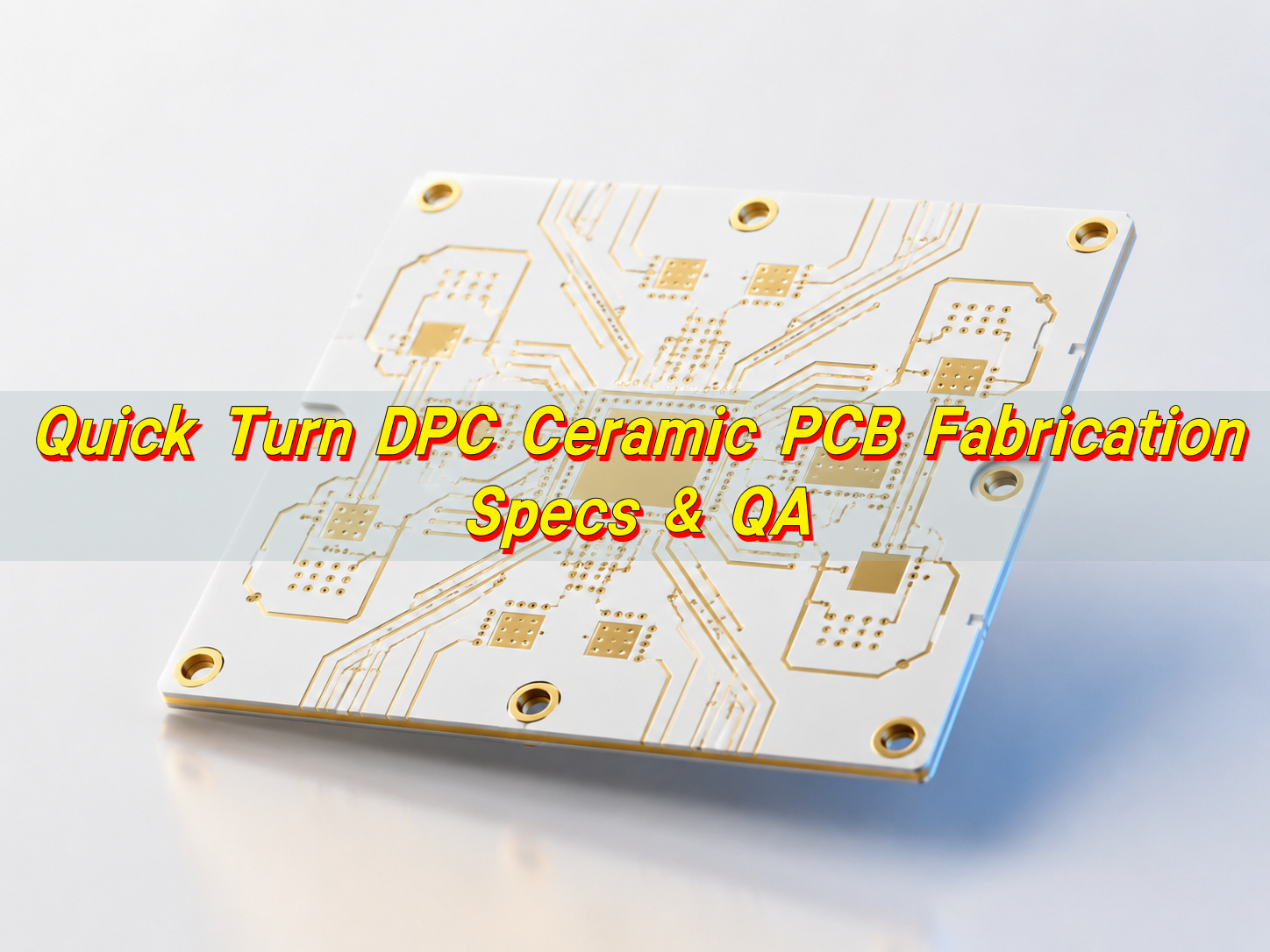
In DPC, or Direct Plated Copper, the ceramic surface is usually activated and plated with copper. This method supports fine circuits, good dimensional accuracy, and relatively thin copper layers compared with DBC or AMB. DPC is often chosen for LED substrates, sensors, optoelectronics, and ceramic PCB prototype work where precision is important.

In DBC, or Direct Bonded Copper, copper foil is bonded directly to the ceramic substrate through a high-temperature bonding process. DBC ceramic PCBs can carry higher current and dissipate heat well, which makes them popular in power electronics, IGBT modules, automotive power systems, and high-power LED modules.

AMB, or Active Metal Brazing, uses active brazing materials to bond copper to ceramic. It is often used with silicon nitride ceramic because the bond strength and mechanical reliability are well suited for demanding power modules. AMB substrates can provide excellent thermal cycling performance and strong copper adhesion.

Thick film ceramic PCBs use screen printing to apply conductive paste onto the ceramic substrate. The printed circuit is then dried and fired. Conductive materials may include silver, palladium silver, gold, or other paste systems. Thick film technology is useful for hybrid circuits, sensors, heaters, resistive networks, and certain compact electronic modules.

LTCC and HTCC use co-fired ceramic technology. Conductive patterns are formed on ceramic green tapes, then stacked, laminated, and fired together. LTCC is often used for RF modules and compact multilayer circuits. HTCC is used for high-temperature and high-reliability packages.

Circuit Formation MethodBrief DescriptionSuitable ApplicationsMain Advantage
DPCCopper is plated onto ceramic after surface activationFine circuits, LED, sensors, prototypesGood precision and clean circuit definition
DBCCopper foil is bonded directly to ceramicPower modules, high-current boardsThick copper and strong heat transfer
AMBCopper is brazed to ceramic with active metalAutomotive power, Si3N4 substratesStrong bonding and thermal cycling reliability
Thick FilmConductive paste is printed and firedHybrid circuits, sensors, heatersFlexible patterning and mature process
LTCCCeramic tapes and conductors are co-firedRF modules, compact multilayer designsMultilayer integration
HTCCHigh-temperature co-fired ceramic structureHermetic packages, aerospace, sensorsHigh-temperature endurance
What Is the Ceramic PCB Manufacturing Process?

What Is the Role of Metallization in Ceramic PCB Manufacturing?

Metallization is one of the most important steps in ceramic PCB manufacturing because ceramic itself is insulating. To create electrical circuits, solderable pads, vias, and bonding areas, the ceramic surface must receive a conductive metal layer. This metal layer must bond firmly to the ceramic and remain stable during thermal cycling, soldering, and long-term operation.

The metallization system depends on the process type. DPC commonly uses sputtering or seed-layer deposition followed by copper electroplating. Thick film ceramic PCBs use fired metal pastes. LTCC and HTCC may use tungsten, molybdenum, silver, gold, or other conductor systems that can withstand the firing environment. DBC and AMB rely on copper bonding technology to create strong metal-ceramic adhesion.

In real production, metallization is controlled through surface preparation, metal thickness, adhesion testing, pattern accuracy, and inspection. For high-power boards, copper thickness becomes especially important. EBest Circuit’s ceramic PCB process information lists outer copper capability for DPC and thicker copper ranges for DBC and AMB, which reflects the different roles these processes play in precision circuits and power substrates.

Metallization also affects assembly choices. If the customer plans to use soldering, ENIG, immersion silver, immersion tin, or other solderable finishes may be selected. If the customer plans to use wire bonding, gold-related finishes may be more suitable. If the board will operate in a high-temperature or high-current environment, the metallization structure must be reviewed carefully during DFM.

How Are Holes, Vias, and Edges Processed?

Holes, vias, and edges are processed through laser machining, mechanical drilling, grinding, routing, dicing, or precision cutting. Ceramic is harder and more brittle than FR4, so these operations require controlled tooling and stable process parameters.

For ceramic PCBs, holes may be plated through holes, non-plated holes, laser vias, mounting holes, or thermal vias. The hole design depends on the circuit requirement and mechanical assembly method. Small holes are often made by laser drilling because ceramic material is difficult to machine with standard PCB drilling tools. Larger holes and edges may use CNC grinding, laser cutting, waterjet cutting, or diamond tooling.

Edge processing is also important. Ceramic boards often have tight outline tolerances, especially when used in power modules, LED packages, sensors, or custom housings. Chips, microcracks, and rough edges should be controlled because they may influence mechanical strength and assembly fit.

Typical hole and edge processing considerations include:

  • Minimum plated and non-plated hole size.
  • Hole tolerance and position accuracy.
  • Aspect ratio for plated holes.
  • Distance from circuit to board edge.
  • Outline tolerance for custom shapes.
  • Edge smoothness and chipping control.
  • Panel format for production and assembly.

What Surface Finishes Are Used for Ceramic PCBs?

Surface finish protects exposed metal and supports soldering, wire bonding, storage, and assembly. Since ceramic PCBs are often used in high-reliability applications, the finish should match the component type, assembly method, bonding process, and operating environment.

What Is the Ceramic PCB Manufacturing Process?

Common ceramic PCB surface finishes include ENIG, ENEPIG, immersion silver, immersion tin, OSP, hard gold, and sometimes special gold systems for wire bonding. The best option depends on whether the customer needs solderability, aluminum wire bonding, gold wire bonding, high wear resistance, or stable shelf life.

Surface FinishBrief DescriptionSuitable UsePractical Note
ENIGNickel layer with thin immersion goldSMT assembly, general soldering, stable storagePopular and versatile for many ceramic PCB assemblies
ENEPIGNickel, palladium, and gold finishWire bonding and solderingGood for advanced packaging and mixed assembly needs
Immersion SilverThin silver finish over copperHigh-speed signals, solderingGood conductivity and solderability with proper storage
Immersion TinTin finish over copperSoldering applicationsCost-friendly for selected designs
OSPOrganic protective coatingShorter storage cycles and solderingSimple finish for certain copper surfaces
Hard GoldElectroplated nickel-gold finishWear areas, contacts, selected bonding padsUseful where contact durability is important

ENIG is often chosen because it gives good solderability and a flat pad surface. It is suitable for many ceramic PCB assembly projects. ENEPIG is selected when the board requires both soldering and wire bonding, especially in more advanced electronic packages. Hard gold may be used where repeated contact or wear resistance is required.

Surface finish thickness should be controlled. For example, nickel and gold thickness have a direct effect on soldering behavior and bondability. According to the supplied EBest Circuit capability data, available finishes include OSP, ENIG, immersion silver, immersion tin, ENEPIG, and hard gold, with listed thickness ranges for each finish.

What Factors Affect Ceramic PCB Cost?

Ceramic PCB cost is affected by material type, substrate thickness, copper thickness, process route, circuit density, hole structure, tolerance, surface finish, quantity, and assembly requirements.

The biggest cost factor is often the ceramic material itself. Alumina is usually more economical, while aluminum nitride and silicon nitride are more expensive because they offer stronger thermal or mechanical performance. The second major factor is the manufacturing process. DPC, DBC, AMB, thick film, LTCC, and HTCC do not share the same cost structure.

Copper thickness also matters. Thin copper for fine circuits is different from thick copper for power modules. DBC and AMB substrates with heavy copper require more material and tighter process control. Small holes, tight tolerances, complex outlines, and special surface finishes also increase production effort.

Cost FactorWhy It MattersCost Impact
Ceramic materialAl2O3, AlN, Si3N4, and ZTA have different raw material costsHigh
Manufacturing processDPC, DBC, AMB, thick film, LTCC, and HTCC use different equipment and stepsHigh
Copper thicknessThicker copper supports current and heat but needs more processing controlMedium to High
Board size and panel useLarger or irregular boards may reduce panel efficiencyMedium
Hole and via designSmall holes, dense vias, and tight tolerances increase machining timeMedium
Surface finishENEPIG and hard gold cost more than simpler finishesMedium
QuantityPrototype orders carry more setup cost per pieceMedium
Testing and inspectionHigh-reliability applications may require more documentation and checksMedium

A good way to manage cost is to align the design with the real performance target. For example, if alumina meets the thermal requirement, there may be no need to choose aluminum nitride. If DPC provides enough copper thickness and line accuracy, DBC may not be necessary. If ENIG is enough for soldering, ENEPIG may only be needed when wire bonding is required. This kind of DFM thinking helps customers receive a board that performs well without unnecessary specification inflation.

FAQs About Ceramic PCB Manufacturing Process

ItemCeramic Manufacturing ProcessCeramic PCB Manufacturing Process
Main GoalMake ceramic material or ceramic partsMake an electronic circuit board on ceramic
Key StepsForming, drying, sintering, polishingSubstrate prep, metallization, circuit formation, finish, testing
OutputCeramic plate, block, tube, or partCeramic printed circuit board
Main FocusMaterial density, shape, strengthElectrical path, heat transfer, solderability, reliability
Typical UsersCeramic parts buyers, industrial part makersElectronics engineers, EMS companies, power module designers
  • 2. What is the difference between alumina and aluminum nitride ceramic PCB materials?

Alumina and aluminum nitride are both popular ceramic PCB materials, but they serve different performance levels. Alumina is widely used because it is stable, insulating, cost-effective, and available in many specifications. It is a strong choice for general ceramic PCBs, LED boards, sensors, and industrial circuits.

Aluminum nitride has much higher thermal conductivity. It is selected when heat must move away from chips or power devices quickly. This makes AlN a strong fit for high-power LED modules, laser diodes, RF power devices, semiconductor packaging, and compact power electronics.

  • 3. Can ceramic PCB prototypes be made in small quantities?

Yes, ceramic PCB prototypes can be made in small quantities. Prototype production is common for thermal testing, electrical validation, LED module evaluation, power device testing, and new product development.

  • 4. Are ceramic PCBs suitable for high-power electronics?

Yes, ceramic PCBs are highly suitable for high-power electronics. Their strong thermal conductivity, high insulation strength, and dimensional stability make them a preferred choice for power modules, LED lighting, automotive power systems, RF power devices, laser modules, and energy-related electronics.

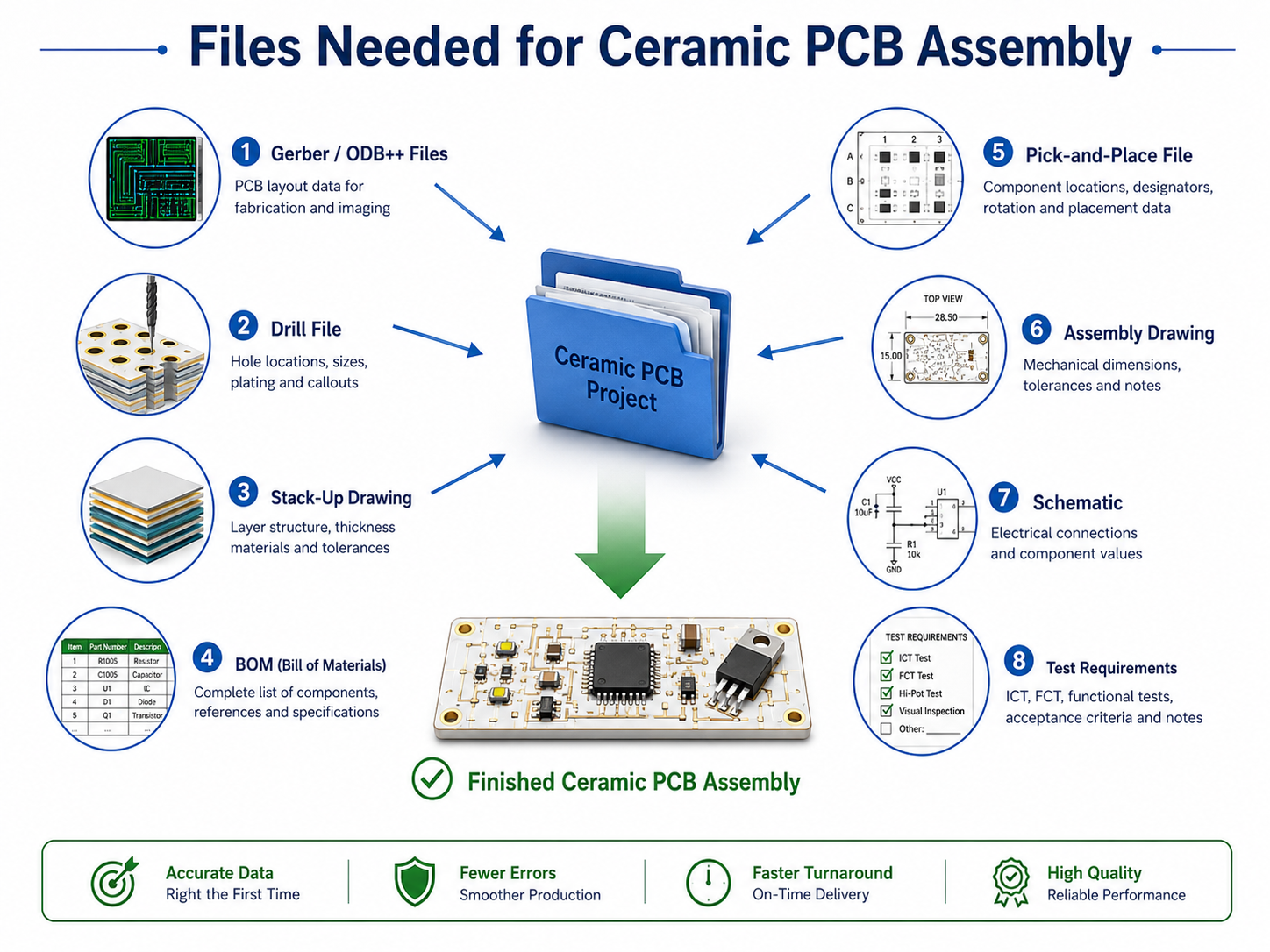
  • 5. What files does a ceramic PCB manufacturer need?

A ceramic PCB manufacturer usually needs complete production files and clear technical requirements. The more complete the documentation is, the smoother the review and quotation process will be.

Commonly requested files include:

  • Gerber files for circuit layers, solder mask, silkscreen, and paste layers.
  • Drill files for plated and non-plated holes.
  • Mechanical drawing with board outline, thickness, tolerance, and special notes.
  • Stack-up or substrate requirement, including ceramic material and thickness.
  • Copper thickness requirement and surface finish selection.
  • BOM and assembly drawing if ceramic PCB assembly is required.
  • Special test requirements, such as electrical test, thermal inspection, or visual criteria.
  • 6. How long does ceramic PCB production usually take?

Ceramic PCB production time depends on material availability, process type, quantity, complexity, surface finish, and whether assembly is included. A simple alumina DPC prototype may move faster than a customized AMB or LTCC project. Boards with special thickness, tight tolerances, heavy copper, or advanced finishes usually need more production planning.

  • 7. Why are ceramic PCBs more expensive than FR4 PCBs?

Ceramic PCBs are more expensive than FR4 PCBs because the materials, equipment, and process controls are more specialized. FR4 is easy to laminate, drill, route, and process in large volumes. Ceramic substrates are harder, more brittle, and more demanding during drilling, cutting, metallization, and finishing.

In brief, the ceramic PCB manufacturing process turns a high-performance ceramic substrate into a reliable electronic interconnect through careful material selection, substrate preparation, circuit formation, metallization, machining, finishing, and inspection. For engineers working on power, LED, RF, medical, automotive, or industrial electronics, choosing the right ceramic PCB materials and an experienced ceramic PCB manufacturer can make product development smoother and more predictable. For ceramic PCB manufacturing, ceramic PCB prototype, or ceramic PCB assembly support, you can contact sales@bestpcbs.com

You may also like

Ceramic PCB Manufacturer USA Serving | Alumina & AlN Boards

May 12th, 2026

What is a ceramic PCB manufacturer serving USA?

For many buyers, the phrase ceramic pcb manufacturer usa does not only mean “a factory physically located in the USA.” It often means a capable ceramic PCB supplier that can serve U.S. projects with dependable engineering support, export experience, and quality systems suitable for demanding applications.

Ceramic PCB Manufacturer USA Serving | Alumina & AlN Boards

Ceramic PCBs are different from standard FR4 boards because the base material is a ceramic substrate, such as alumina or aluminum nitride. These materials offer excellent thermal conductivity, electrical insulation, dimensional stability, and high-temperature endurance. That is why ceramic PCB technology is widely used in power electronics, LED modules, medical devices, aerospace electronics, RF modules, automotive electronics, sensors, and other products where heat, reliability, and compact design matter.

When a U.S. customer searches for a ceramic PCB partner, the real question is usually simple: can this supplier manufacture the correct ceramic substrate, control the process, support the design review, and deliver boards that perform as expected?

EBest Circuit(Best Technology), serves U.S. customers with ceramic PCB fabrication and assembly support for prototype, low-volume, medium-volume, and production requirements. The company provides custom ceramic PCB manufacturing, turnkey PCB and PCBA services, and multiple ceramic processes, including DPC, DBC, AMB, thick film, LTCC, and HTCC. Its ceramic PCB capabilities include alumina, aluminum nitride, ZTA, silicon nitride, several conductor options, multiple surface finishes, and certified quality systems including ISO 9001, ISO 13485, IATF 16949, AS9100D, RoHS, REACH, and UL recognition.

What materials do ceramic PCB manufacturers for USA offer?

Ceramic PCB manufacturers serving USA customers usually offer several substrate materials. The most common ceramic PCB materials are alumina and aluminum nitride, but advanced projects may also require silicon nitride, zirconia-toughened alumina, LTCC materials, or HTCC materials.

Alumina ceramic PCB is one of the most widely used choices because it provides a balanced mix of insulation, thermal performance, mechanical durability, and cost control. It is commonly used in LED lighting, power modules, sensors, hybrid circuits, and industrial electronics. Alumina is available in different purity levels, such as 92% and 96%, and some manufacturers can support special variants such as black alumina.

Aluminum nitride, often written as AlN, is selected when thermal performance is a main priority. Compared with alumina, AlN has much higher thermal conductivity and a thermal expansion behavior that works well with certain semiconductor and power device packages. This makes it a strong choice for high-power LED modules, laser diodes, power conversion modules, RF power devices, aerospace electronics, medical imaging electronics, and other compact systems that generate concentrated heat.

Some advanced projects also use silicon nitride, ZTA, LTCC, or HTCC. Silicon nitride offers high strength, high toughness, good thermal conductivity, and excellent thermal shock resistance. ZTA combines alumina with zirconia to improve toughness and mechanical reliability. LTCC and HTCC are often used for multilayer ceramic circuits, high-frequency modules, sensors, and compact electronic packages.

Ceramic PCB MaterialMain StrengthTypical Use CasesCommon Reason to Choose It
Alumina PCBGood insulation, stable performance, cost-effective ceramic baseLED modules, sensors, power circuits, industrial electronicsBalanced ceramic performance and practical cost
Aluminum Nitride PCBHigh thermal conductivity and good CTE behaviorPower electronics, RF power modules, laser modules, medical electronicsBetter heat dissipation in compact designs
Silicon Nitride PCBHigh mechanical strength and thermal shock resistanceAutomotive power modules, harsh environments, high-reliability electronicsStronger mechanical reliability
ZTA PCBImproved toughness compared with standard aluminaIndustrial and power applicationsBetter crack resistance and durability
LTCCMultilayer ceramic structure, good for compact circuitsRF modules, sensors, microwave devices, integrated packagesCompact multilayer ceramic integration
HTCCHigh-temperature ceramic circuit capabilityAerospace, defense-related commercial electronics, harsh applicationsHigh-temperature endurance and stable insulation

For most U.S. projects, the best starting point is to match the material to the real design challenge. If the main issue is controlled heat transfer at a reasonable cost, alumina may be suitable. If the design has a very hot component, tight thermal limits, or high power density, aluminum nitride may be the better direction. If the board needs extra toughness, silicon nitride or ZTA may deserve attention. If the product requires ceramic multilayer routing, LTCC or HTCC may be a stronger path than a simple single-sided or double-sided ceramic board.

EBest Circuit supports several ceramic PCB materials and process types, which gives U.S. customers more flexibility during design evaluation. Instead of forcing one standard material into every project, the engineering team can review thermal requirements, copper thickness, operating temperature, board size, assembly needs, and budget targets.

Can China ceramic PCB suppliers meet USA aerospace/medical standards?

China ceramic PCB suppliers can meet the expectations of USA aerospace and medical customers when they have the right manufacturing capability, quality certifications, process controls, and documentation discipline. The key is not the country alone. The key is whether the supplier can build to controlled requirements, maintain traceability, support audits, and provide reliable production records.

For advanced ceramic PCB projects, U.S. customers should evaluate the supplier’s quality system, engineering response, material control, inspection process, and shipment reliability before placing important orders.

Aerospace and medical electronics often require more than basic PCB fabrication. These markets value documented processes, controlled materials, repeatable production, inspection evidence, and clear communication. Aerospace customers may look for AS9100D alignment, first article inspection support, lot traceability, controlled process records, and stable supplier management. Medical customers may look for ISO 13485, process documentation, component traceability for assembly projects, clean handling practices, and long-term quality consistency.

EBest Circuit’s positioning is especially relevant here because the company supports ceramic PCB fabrication and ceramic PCB assembly under a quality framework that includes ISO 9001, ISO 13485, IATF 16949, AS9100D, RoHS, REACH, and UL. For U.S. medical, aerospace, automotive, and industrial customers, these certifications help show that the supplier has invested in quality management and controlled production practices.

For ceramic PCB projects going into regulated or high-reliability products, the manufacturer should provide practical support in several areas:

  • Material selection records, substrate specifications, and copper or conductor details.
  • Engineering review for manufacturability, tolerances, hole sizes, surface finish, and thermal design.
  • Inspection methods such as visual inspection, dimensional checks, electrical testing, and process-specific validation.
  • Production traceability by order, lot, material batch, and process route.
  • Clear export packaging, shipping documentation, and communication for USA delivery.

The best approach is to treat the supplier qualification step as part of the design process. U.S. customers can request the manufacturer’s certifications, capability table, sample reports, material options, and previous industry experience. They can also start with a prototype order, review the board quality, check communication speed, and then move toward repeat orders or volume production.

Ceramic PCB Manufacturer USA Serving | Alumina & AlN Boards

What certifications should a USA-serving ceramic PCB manufacturer have?

A USA-serving ceramic PCB manufacturer should have certifications that match the application risk level and target industry. For general industrial electronics, ISO 9001 is usually the baseline. For medical device electronics, ISO 13485 is highly valuable because it focuses on quality management for medical device-related manufacturing. For automotive electronics, IATF 16949 is an important signal of process control and automotive supply chain discipline. For aerospace electronics, AS9100D is especially relevant because it aligns with aerospace quality management expectations. RoHS and REACH are also important for material compliance, especially when products are sold into global markets.

Certification or Compliance ItemWhy It Matters for USA CustomersTypical Application Relevance
ISO 9001Shows a structured quality management systemGeneral PCB and PCBA manufacturing
ISO 13485Supports medical device quality expectationsMedical electronics, monitoring devices, diagnostic equipment
IATF 16949Supports automotive process disciplineAutomotive electronics, EV systems, lighting, control modules
AS9100DSupports aerospace quality management expectationsAerospace electronics, UAV electronics, avionics-related commercial projects
ULSupports recognized material or product safety-related requirementsProducts requiring UL-recognized manufacturing inputs
RoHSRestricts hazardous substances in electronicsGlobal electronics, consumer, industrial, medical, automotive
REACHSupports chemical compliance for global marketsElectronics exported to compliance-sensitive regions

A ceramic PCB manufacturer serving USA customers should also understand that certifications are not only marketing badges. They should influence how the supplier handles document control, incoming inspection, production routing, staff training, nonconforming material, corrective actions, equipment maintenance, and final inspection. This matters because ceramic PCB production can involve special processes such as metallization, firing, plating, laser drilling, DPC, DBC, AMB, or thick film printing. Each process needs stable control to produce boards with repeatable performance.

For U.S. buyers, the most efficient qualification method is to map the certification to the product use. A medical sensor PCB may need ISO 13485 support and strong traceability. An aerospace power module substrate may need AS9100D alignment, material control, and detailed inspection records. An automotive LED ceramic board may benefit from IATF 16949 discipline and thermal reliability evaluation. A general industrial ceramic PCB may be well served by ISO 9001, RoHS, REACH, and clear production documentation.

EBest Circuit (Best Technology)’s certification portfolio supports a wide range of ceramic PCB applications for U.S. customers. Our quality system coverage is helpful for customers who want one supplier for ceramic PCB fabrication, ceramic PCB assembly, and turnkey electronics manufacturing support.

How fast can a ceramic PCB supplier deliver orders to the USA?

Delivery time for ceramic PCB orders shipped to the USA depends on the material, process, board complexity, quantity, surface finish, inspection requirements, and assembly scope. A simple alumina ceramic PCB may move faster than a complex aluminum nitride, DBC, AMB, LTCC, or HTCC project. A bare ceramic board can usually be completed faster than a full turnkey PCBA order that includes component sourcing, assembly, inspection, and functional testing.

For ceramic PCB USA projects, buyers should think about lead time in two parts. The first part is production lead time, which includes engineering review, material preparation, substrate processing, metallization, plating, surface finishing, inspection, and packaging. The second part is shipping time, which includes export documentation, courier pickup, customs clearance, and delivery to the customer’s U.S. location.

A typical ceramic PCB project may follow this delivery flow: design file review, quotation confirmation, DFM feedback, purchase order, production preparation, manufacturing, inspection, packing, export shipment, and arrival in the USA. For urgent prototype orders, early DFM review is very important because a small design issue can slow down production if it is discovered after the order begins.

Lead time is also affected by material choice. Alumina is usually easier to source and process, so it is often faster. Aluminum nitride requires more careful handling and may need a longer production window depending on the structure. DBC and AMB boards with thicker copper often require more process control. LTCC and HTCC projects can require additional engineering discussion because they involve multilayer ceramic construction and firing behavior.

U.S. customers can improve delivery speed by preparing complete production data from the beginning. A good RFQ package should include Gerber files, drill files, stack-up or material requirement, copper thickness, board thickness, surface finish, solder mask and silkscreen requirements, tolerance notes, quantity, test requirements, and assembly files if PCBA is needed. For turnkey assembly, the BOM should include manufacturer part numbers, acceptable alternates, reference designators, and any approved sourcing rules.

EBest Circuit (Best Technology) supports rapid response for ceramic PCB manufacturing and turnkey PCB assembly projects. For USA customers, the company can review custom ceramic PCB designs, provide DFM suggestions, manufacture the boards, support assembly if required, and arrange international delivery.

Do ceramic PCB manufacturers serving USA provide DFM support?

A strong ceramic PCB manufacturer serving USA customers should provide DFM support before production. DFM, or design for manufacturability, is especially important for ceramic boards because ceramic substrates behave differently from FR4 laminates. The material is hard, dimensionally stable, thermally efficient, and electrically insulating, but it also needs suitable design rules for holes, edge clearance, copper geometry, metallization, solder mask, and final handling. A design that works well on FR4 may need adjustments when moved to alumina, AlN, or another ceramic substrate.

DFM support helps align the customer’s design intent with the supplier’s manufacturing process. This step can review whether the selected ceramic material matches the thermal requirement, whether the copper thickness is suitable, whether the hole sizes are manufacturable, whether the board outline tolerance is realistic, and whether the surface finish supports the assembly method. For high-power designs, DFM may also include discussion of thermal paths, component placement, copper coverage, solder joint reliability, and attachment method.

The value of DFM is high because ceramic PCB projects often involve expensive components or high-reliability applications. When the design is reviewed early, the supplier can identify small adjustments that improve production yield and long-term performance. This can save time during prototyping and make volume production easier. It also helps U.S. customers communicate with their internal engineering, purchasing, and quality teams because the project risks are explained in practical manufacturing language.

Ceramic PCB Manufacturer USA Serving | Alumina & AlN Boards

A useful ceramic PCB DFM review may cover:

  • Ceramic material selection, including alumina, aluminum nitride, silicon nitride, ZTA, LTCC, or HTCC.
  • Board thickness, copper thickness, conductor type, and surface finish.
  • Minimum line width, spacing, hole size, hole tolerance, and board outline tolerance.
  • Solder mask, silkscreen, metallized holes, edge clearance, and panelization method.
  • Thermal design, including heat flow, hot spot control, and copper distribution.
  • Assembly considerations, including component footprint, soldering method, and inspection access.

EBest Circuit (Best Technology) provides engineering support for custom ceramic PCB projects, including DFM pre-review and process recommendations. This is useful for U.S. customers who want to avoid repeated prototype revisions. The team can review whether the design should use DPC, DBC, AMB, thick film, LTCC, or HTCC, depending on the required thermal performance, copper structure, current capacity, board geometry, and end-use environment.

What’s the MOQ for custom ceramic PCB orders from USA clients?

The MOQ for custom ceramic PCB orders from USA clients depends on the material, process, size, tooling requirement, and production method. Many ceramic PCB manufacturers can support prototypes and small batches, but the price per piece is usually higher at low quantity because setup time, engineering review, tooling, process preparation, and inspection are spread across fewer boards.

For U.S. customers, the better question is not only “what is the MOQ?” but also “what quantity makes sense for my stage?” A new product may start with a small prototype batch for electrical and thermal validation. After the design is confirmed, the buyer may order a pilot run to check assembly, reliability, packaging, and field testing. Once the project is stable, the order can move into regular production.

MOQ can also vary by ceramic process. Simple alumina boards may allow more flexible prototype quantities. Aluminum nitride boards may have a different cost structure because the material is more expensive. DBC and AMB boards can involve thicker copper and special bonding processes, so setup and panel utilization become important. LTCC and HTCC designs may require more engineering preparation, especially for multilayer ceramic structures.

Order StageTypical Buyer GoalRecommended Quantity ThinkingSupplier Support Needed
PrototypeValidate thermal, electrical, and mechanical designSmall quantity for testing and design confirmationDFM review, material advice, quick feedback
Pilot RunCheck assembly, yield, inspection, and field performanceMedium quantity based on test planProcess control, PCBA support, inspection reports
ProductionSupport stable customer demandLarger batches for better unit costRepeatability, traceability, scheduled delivery
Engineering SampleCompare materials or processesMultiple small lots may be usefulSide-by-side technical guidance

EBest Circuit (Best Technology) supports low, medium, and larger quantity ceramic PCB manufacturing, which is useful for USA clients at different project stages. A startup developing a power module may need only a small number of samples first. A medical device company may need prototype boards, then a documented pilot run. An industrial equipment manufacturer may need recurring batches with stable quality and delivery.

For custom ceramic PCB orders, U.S. customers should share the estimated annual usage when requesting a quote, even if the first order is small. This helps the supplier recommend a practical production path. For example, the manufacturer may quote prototype pricing and also provide a production price range for later batches. This gives the buyer better visibility for cost planning. It also helps engineering and purchasing teams decide whether the selected material and process fit the long-term product target.

How to ensure quality control for ceramic PCBs shipped to the USA?

Quality control for ceramic PCBs shipped to the USA begins before production, not after the boards are finished. The first step is to define the technical requirements clearly. This includes substrate material, thickness, copper or conductor structure, surface finish, solder mask, hole sizes, tolerances, inspection criteria, testing needs, packaging requirements, and documentation expectations. When these points are confirmed before manufacturing, the supplier can control the process more effectively and the customer can inspect the delivered boards with a clear standard.

Ceramic PCB quality is built through process discipline. The manufacturer should control incoming ceramic substrates, conductor materials, metallization process, plating thickness, surface finish, dimensional accuracy, hole quality, solder mask quality, and final appearance. For high-reliability projects, the quality team may also check bond strength, insulation performance, thermal behavior, solderability, and electrical continuity.

For U.S. customers, quality control also includes documentation. A supplier serving the USA market should be comfortable providing inspection records, certificates of conformity, material-related information, production lot references, and packing records when required. For medical, aerospace, automotive, and industrial projects, traceability is often as important as the physical board quality.

A practical quality control plan for ceramic PCB USA shipments should include the following steps:

  • Confirm drawings, Gerber data, stack-up, tolerances, and special requirements before production.
  • Review material selection and ceramic process type during DFM.
  • Check critical dimensions, hole quality, copper features, and board outline during manufacturing.
  • Apply electrical testing or functional inspection based on project needs.
  • Inspect surface finish, solder mask, silkscreen, and appearance before packing.
  • Use protective packaging suitable for ceramic substrates and international shipping.
  • Keep order records, lot information, and inspection results for traceability.

Packaging deserves special attention because ceramic boards are hard and stable, but they should still be protected from edge damage, contamination, moisture exposure, and mechanical shock during international transit. A good supplier uses proper separation, vacuum packing or moisture-protective methods when needed, rigid outer cartons, and clear labels. For assembled ceramic PCBs, ESD protection and component-level packaging become even more important.

EBest Circuit (Best Technology) supports quality control through certified management systems, ceramic manufacturing capability, inspection procedures, and turnkey service support. For USA customers, this means one supplier can help manage bare ceramic PCB fabrication, component sourcing, assembly, and testing when the project requires PCBA delivery.

What industries do USA-serving ceramic PCB manufacturers support most?

USA-serving ceramic PCB manufacturers support industries where heat management, electrical insulation, compact packaging, and long-term reliability are important. Ceramic PCB technology is especially valuable when FR4 or conventional metal core PCB cannot provide enough thermal performance or dimensional stability.

Power electronics is one of the strongest application areas. Ceramic substrates can support high-power components, improve heat transfer, and help maintain electrical insulation. This makes them useful in power supplies, converters, inverters, motor control modules, semiconductor packages, and high-current electronic systems.

LED and laser electronics also use ceramic PCB technology extensively. High-power LED modules generate concentrated heat, and ceramic substrates can help move that heat away from the junction area. This supports better optical stability and longer product life. Ceramic PCBs are used in industrial lighting, automotive lighting, medical lighting, UV LED modules, laser diode modules, and other optoelectronic products.

Medical electronics can benefit from ceramic PCBs because they offer stable insulation, precision, and strong thermal behavior. Applications may include imaging systems, monitoring equipment, sensor modules, diagnostic devices, power control boards, and compact electronic modules. For this market, the supplier’s ISO 13485 capability, traceability, and documentation support are important. EBest Circuit (Best Technology)’s ceramic PCB and PCBA capabilities are a strong fit for medical device teams that need both manufacturing support and controlled quality processes.

Aerospace and UAV electronics also value ceramic PCBs because these systems often require stable performance under thermal stress, vibration, compact design constraints, and long service expectations. Ceramic substrates can support RF modules, power electronics, sensor packages, control modules, and high-reliability electronic assemblies.

Automotive and EV electronics are another major field. Ceramic PCBs are used in power modules, LED headlights, battery systems, charging equipment, sensors, and control electronics. The automotive market values thermal cycling reliability, process repeatability, and traceable production. A supplier with IATF 16949 capability and ceramic process knowledge can support automotive-related engineering teams more effectively.

Industrial automation, telecommunications, RF, microwave electronics, and new energy equipment also rely on ceramic PCB solutions. In these markets, ceramic boards can help manage high frequency, heat, insulation, and compact layout requirements. The exact material depends on the design. Alumina is often practical for many industrial and sensor products. Aluminum nitride is preferred when heat density is higher. LTCC can support compact RF and multilayer ceramic modules. DBC and AMB can support power electronics requiring thick copper and strong thermal behavior.

Ceramic PCB Manufacturer USA Serving | Alumina & AlN Boards

In brief, a qualified ceramic PCB manufacturer USA serving partner should provide more than ceramic substrates. The right supplier should help U.S. customers choose materials, review DFM, control quality, support documentation, manage delivery, and scale from prototype to production. EBest Circuit (Best Technology) provides ceramic PCB manufacturing, ceramic PCB assembly, and turnkey electronics manufacturing support for U.S. customers working in medical, aerospace, automotive, industrial, RF, power electronics, LED, and new energy applications. For ceramic PCB fabrication or assembly inquiries, contact sales@bestpcbs.com.
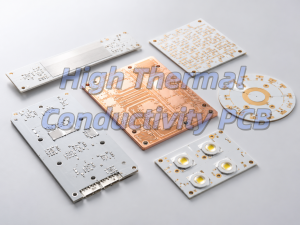
You may also like

Ceramic Core PCB | Alumina & Aluminum Nitride Ceramic PCB

May 11th, 2026

What is a ceramic core PCB?

Ceramic core PCB is a printed circuit board built on a ceramic substrate instead of a conventional organic laminate such as FR4. In this type of board, the ceramic layer works as the main supporting base and thermal pathway. It gives the circuit strong heat transfer, stable electrical insulation, and excellent dimensional consistency under demanding operating conditions.

Unlike standard PCB materials that rely on glass fiber and resin, ceramic PCB boards use inorganic ceramic materials such as alumina, aluminum nitride, or silicon nitride. These materials are valued in high-power, high-frequency, high-temperature, and high-reliability electronics.

In the PCB industry, ceramic core PCB is often used for applications where ordinary laminates cannot provide enough thermal conductivity or long-term stability. The board may support thick copper, thin-film circuits, DPC copper plating, DBC bonding, or AMB structures, depending on the electrical and mechanical requirements of the project.

EBest Circuit (Best Technology) supports ceramic PCB manufacturing for engineers who need more than a basic circuit board. With experience in alumina PCB, aluminum nitride PCB, DPC ceramic PCB, DBC ceramic substrate, AMB ceramic substrate, and customized ceramic PCB boards, EBest Circuit helps customers move from early design review to production with practical engineering support.

What is the difference between ceramic and FR4?

Ceramic PCB and FR4 PCB are both widely used in electronics, but they are designed for different performance levels. FR4 is the most common PCB substrate because it is cost-effective, easy to process, and suitable for many consumer, industrial, and general electronic products. Ceramic PCB is selected when the circuit needs higher thermal conductivity, better temperature resistance, and stronger dimensional stability.

FR4 is made from woven fiberglass cloth and epoxy resin. It performs well in standard electronic assemblies, but its thermal conductivity is limited. Ceramic boards, by contrast, use inorganic ceramic substrates that conduct heat much more efficiently while keeping excellent insulation. This is why ceramic core PCB is commonly found in LED modules, laser equipment, power electronics, sensors, medical devices, automotive electronics, and aerospace-related systems.

ItemCeramic Core PCBFR4 PCB
Main materialAlumina, aluminum nitride, silicon nitride, or other ceramic materialsGlass fiber reinforced epoxy laminate
Thermal conductivityHigh, suitable for heat-sensitive and power applicationsLow to moderate, suitable for general electronics
Temperature resistanceExcellent stability at elevated temperaturesGood for standard operating environments
Mechanical behaviorHard, stable, and rigid, but requires careful handlingTougher and more flexible during standard assembly
Electrical insulationVery strong insulation performanceReliable insulation for common circuit designs
Typical applicationsHigh-power LEDs, RF modules, power devices, sensors, automotive electronicsConsumer electronics, control boards, communication devices, general PCBA
Cost levelHigher due to material and process complexityLower and highly scalable

The choice should not be based only on price. If the circuit generates a high amount of heat or must keep stable performance in a harsh environment, ceramic PCB can provide a stronger technical foundation.

What’s the difference between alumina PCB and aluminum nitride PCB?

Alumina PCB and aluminum nitride PCB are two of the most common ceramic PCB materials. Both provide good insulation, stable structure, and better thermal performance than FR4. The key difference is thermal conductivity. Alumina is widely used because it offers a balanced combination of price, process maturity, and electrical performance. Aluminum nitride is chosen when the design needs much higher heat dissipation.

Alumina PCB usually refers to ceramic boards made from aluminum oxide. Common grades include 96% alumina and 99.6% alumina. It is a practical choice for many LED, sensor, power module, and industrial electronic applications. It has good mechanical strength, stable electrical insulation, and a more accessible ceramic board price compared with aluminum nitride.

Aluminum nitride PCB is often used in more demanding thermal designs. Its thermal conductivity can be several times higher than alumina, making it highly suitable for power semiconductors, high-brightness LEDs, laser diodes, automotive power modules, and compact high-power assemblies. It is usually more expensive than alumina because the raw material, sintering process, and manufacturing control are more demanding.

ItemAlumina PCBAluminum Nitride PCB
MaterialAluminum oxide ceramicAluminum nitride ceramic
Thermal conductivityGood, commonly used for medium to high thermal needsExcellent, suitable for high-power heat dissipation
CostMore economical among ceramic PCB optionsHigher due to material and process requirements
Mechanical strengthStrong and mature in productionStrong, with careful process control needed
Electrical insulationExcellentExcellent
Typical useLED modules, sensors, heaters, industrial controls, power circuitsPower modules, laser devices, high-power LEDs, RF and automotive electronics

EBest Circuit can help customers compare ceramic PCB materials during DFM review, so the final design matches both technical needs and production cost targets.

Why use ceramic PCB?

Ceramic PCB is used because it solves several practical engineering problems at the same time. It helps remove heat, keeps circuits electrically insulated, supports high-density layouts, and performs well in high-temperature environments.

One of the strongest reasons to use ceramic PCB is thermal management. As electronic products become smaller and more powerful, heat has less room to escape. If heat remains around chips, LEDs, or power components, performance can drop over time. A ceramic board gives heat a faster path away from the source, helping the assembly work in a more stable condition.

Ceramic PCB also supports excellent electrical properties. It can provide low dielectric loss, high insulation resistance, and stable performance across demanding operating conditions. This is important for RF circuits, sensor modules, high-voltage electronics, and power devices.

  • High thermal conductivity for better heat spreading
  • Strong electrical insulation for compact circuit layouts
  • Excellent temperature resistance for harsh environments
  • Stable dimensions during thermal cycling
  • Good compatibility with power devices, LEDs, sensors, and RF modules
  • Long service life in high-reliability electronic products

For manufacturers, ceramic PCB also brings value in quality consistency. The substrate has stable physical properties, which helps reduce performance drift in precision electronics. For engineers, it allows a cleaner thermal design and can reduce the need for bulky heat sinks in some compact products.

How much does a ceramic PCB cost?

Ceramic PCB cost is usually higher than standard FR4 PCB cost because the material, processing method, copper bonding, laser drilling, metallization, and quality control are more specialized. In high-power or high-reliability products, better heat transfer and longer operating stability can reduce the risk of field problems and improve product performance.

The ceramic board price depends on several technical factors. Material selection is one of the biggest cost drivers. Alumina PCB is generally more economical, while aluminum nitride PCB costs more because it provides much higher thermal conductivity. Board size, thickness, copper thickness, circuit precision, via structure, surface finish, tolerance control, and production quantity also affect the final quotation.

Cost FactorHow It Affects Ceramic PCB Cost
Ceramic materialAlumina is usually more economical; aluminum nitride is higher in cost but stronger in thermal performance.
Board sizeLarger ceramic boards use more raw material and may require tighter handling control.
Substrate thicknessSpecial thickness requirements may increase material preparation and processing cost.
Copper thicknessThicker copper improves current capacity but increases plating or bonding complexity.
Line width and spacingFine circuits require more precise manufacturing control.
Via structureFilled vias, laser vias, and conductive vias can raise process complexity.
Surface finishENIG, immersion silver, nickel gold, or other finishes may affect pricing.
Order quantityPrototype cost per piece is higher; batch production usually improves unit cost.

For a reliable ceramic PCB quotation, engineers should provide Gerber files, drawings, material requirements, board thickness, copper thickness, surface finish, tolerance needs, and expected quantity. If the design is still being evaluated, EBest Circuit can review the technical requirements and suggest a practical manufacturing route before final pricing.

Can ceramic core PCB be customized in size and layout?

Yes, ceramic core PCB can be customized in size, layout, thickness, copper pattern, surface finish, and structure. Customization is one of the main reasons ceramic PCB is used in advanced electronic products.

Custom ceramic PCB does require careful design planning. Ceramic materials are hard and stable, but they are processed differently from FR4. Features such as hole size, edge shape, slot position, via design, copper thickness, and board outline should be reviewed before production. A strong DFM check helps improve manufacturability and keeps the finished board aligned with the original electrical and thermal goals.

Common customization options include:

  • Alumina PCB or aluminum nitride PCB substrate selection
  • Custom board outline, size, and ceramic thickness
  • Single-sided, double-sided, or multilayer ceramic PCB structure
  • Thin-film or thick-film circuit design
  • DPC, DBC, or AMB ceramic core manufacturing process
  • ENIG, nickel gold, silver, or other surface finish options
  • Laser drilling, via filling, and precision routing
  • Thick copper design for higher current carrying capacity

EBest Circuit works with customers on customized ceramic PCB projects where standard PCB materials may not deliver enough thermal or mechanical stability. The engineering team can assist with material selection, stack-up review, ceramic core manufacturing process evaluation, and production feasibility checks.

How are ceramic cores made?

Ceramic cores are made through a controlled process that starts with ceramic powder preparation and ends with a dense, stable substrate suitable for circuit formation. The exact process depends on the material and final PCB structure.

In a typical ceramic substrate process, ceramic powder is mixed with binders and additives to form a workable material. The material is shaped into sheets or pressed forms, then dried and sintered at high temperature. Sintering gives the ceramic its hardness, density, and stable physical properties. After that, the substrate may be lapped, polished, laser drilled, metallized, plated, etched, and finished according to the PCB design.

For circuit formation, different ceramic PCB technologies can be used. DPC, or Direct Plated Copper, is often chosen for fine circuits and high-precision designs. DBC, or Direct Bonded Copper, bonds copper directly onto the ceramic surface and is often used for power modules. AMB, or Active Metal Brazing, provides very strong bonding and is suitable for high-reliability power electronics.

Process TypeMain FeatureTypical Application
DPC ceramic PCBUses copper plating technology for fine circuits and precision patternsLED modules, sensors, optical devices, high-density ceramic circuits
DBC ceramic PCBDirect copper bonding provides strong thermal and current capacityPower modules, IGBT substrates, high-power electronics
AMB ceramic PCBActive brazing creates strong copper-to-ceramic bondingAutomotive power modules, high-reliability energy electronics
Thick-film ceramic PCBConductive paste is printed and fired onto ceramicHeaters, sensors, hybrid circuits, industrial modules
Thin-film ceramic PCBHigh-precision metal layers are deposited on ceramicMicrowave circuits, precision sensors, RF electronics

A professional ceramic PCB manufacturer must control material quality, sintering conditions, copper adhesion, surface flatness, circuit accuracy, and inspection standards. EBest Circuit combines process knowledge with practical PCB engineering support, helping customers choose the right ceramic core manufacturing process for the final product environment.

What thermal performance does ceramic core PCB deliver?

Ceramic core PCB delivers much stronger thermal performance than standard FR4 boards. The main advantage is that ceramic materials can transfer heat efficiently while still providing electrical insulation.

Alumina PCB offers good thermal conductivity for many industrial and LED applications. Aluminum nitride PCB provides a much higher level of heat transfer and is often used where thermal density is more demanding. With the right copper thickness, layout, and mounting structure, ceramic PCB boards can move heat away from components quickly and help maintain stable operating temperatures.

Thermal performance is not only about the ceramic material itself. The final result also depends on copper design, substrate thickness, dielectric path, via structure, solder joint quality, component placement, and heat sink contact.

MaterialGeneral Thermal PerformanceBest-Fit Applications
FR4Limited thermal conductivityGeneral electronics and low-to-medium power circuits
Alumina ceramicGood thermal conductivity with balanced costLEDs, sensors, industrial modules, moderate power electronics
Aluminum nitride ceramicExcellent thermal conductivityHigh-power LEDs, laser modules, power semiconductors, automotive electronics
Silicon nitride ceramicStrong thermal and mechanical reliabilityHigh-reliability power modules and harsh operating environments

For thermal-sensitive designs, EBest Circuit can support layout review and material comparison. This is helpful when customers need to decide between alumina PCB and aluminum nitride PCB, or when they want to optimize the balance between ceramic PCB cost, heat dissipation, and long-term reliability.

What are ceramic cores used for?

Ceramic cores are used in electronic products that need better thermal control, high insulation, stable structure, and reliable performance under demanding conditions. They are especially useful where compact size and high power must coexist. Because ceramic materials can transfer heat efficiently while maintaining electrical separation, they are widely used in modern power, lighting, automotive, medical, and communication systems.

In LED products, ceramic PCB helps move heat away from LED chips and supports stable brightness. In power electronics, ceramic substrates are used for modules that handle high current and high voltage. In RF and microwave circuits, ceramic materials can provide stable electrical characteristics. In medical and aerospace electronics, ceramic PCB boards support reliability, precision, and long service life.

  • High-power LED modules and lighting engines
  • Laser diode modules and optical devices
  • Power semiconductor packages and IGBT modules
  • Automotive electronics and electric vehicle power modules
  • RF, microwave, and communication circuits
  • Medical sensors and monitoring devices
  • Industrial control modules and high-temperature electronics
  • Aerospace, UAV, and high-reliability electronic assemblies

Ceramic core PCB is a strong choice when the product needs more than ordinary PCB performance. Alumina PCB is suitable for balanced thermal and cost requirements, while aluminum nitride PCB is ideal for stronger heat dissipation. For custom ceramic PCB boards, ceramic PCB materials, ceramic PCB cost evaluation, and ceramic core manufacturing process support, EBest Circuit (Best Technology) can help engineers build a practical path from prototype to production.

Summary:

Ceramic core PCB is not simply a premium version of FR4. It is a specialized circuit platform for products that need excellent heat transfer, high insulation, stable operation, and compact design. If your project requires alumina PCB, aluminum nitride PCB, or custom ceramic PCB manufacturing support, you can contact sales@bestpcbs.com for project discussion and quotation support.

You may also like

Ceramic Substrate PCB Manufacturer Design & Prototype| Fast Delivery, Custom Solutions

March 30th, 2026

Why Choose EBest for Your Ceramic Substrate PCB Needs?

EBest stands as your premier choice for Ceramic Substrate PCB manufacturing and prototyping. We deliver unmatched lead times, rigorous quality control, industry-leading certifications, and comprehensive support throughout your project. Our commitment to excellence ensures your Ceramic Substrate PCB projects are completed efficiently, reliably, and to the highest standards.

  • Fast Delivery: Industry-leading turnaround times for prototypes and mass production, meeting your critical project deadlines.
  • Superior Quality: Precision manufacturing with zero-defect tolerance, ensuring optimal performance and long-term reliability.
  • Certified Excellence: Compliant with ISO 9001, IPC-A-600, and other international quality and safety standards.
  • Expert Support: A dedicated engineering team provides end-to-end technical assistance, from design to delivery.

What is a Ceramic Substrate PCB?

A Ceramic Substrate PCB is a specialized printed circuit board that uses ceramic materials (such as alumina Al₂O₃, aluminum nitride AlN, or silicon nitride Si₃N₄) as its base insulating layer instead of traditional organic materials like FR-4. These boards are engineered to excel in high-temperature, high-power, and high-frequency electronic applications where standard PCBs fail. The ceramic substrate provides exceptional thermal conductivity, electrical insulation, and mechanical stability, making it indispensable for modern, demanding electronics.

Ceramic Substrate PCB

Ceramic Substrate PCB Stackup

LayerMaterialThickness (Typical)Function
Top CopperElectrodeposited Copper1–5 oz (35–175 ÎŒm)Conductive traces, pads, and planes
Ceramic CoreAlumina (Al₂O₃) / Aluminum Nitride (AlN)0.25–2.0 mmInsulation, thermal management, structural support
Bottom CopperElectrodeposited Copper1–5 oz (35–175 ÎŒm)Conductive traces, pads, and planes
Surface FinishENIG / Immersion Silver / OSP0.05–0.5 ÎŒmProtect copper, improve solderability

Note: Multilayer ceramic substrate PCBs (LTCC/HTCC) feature alternating ceramic and conductive layers, typically up to 10–20 layers for high-density integration.

Ceramic Substrate PCB Manufacturing Process

Step 1: Ceramic Substrate Preparation

High-purity ceramic powders (Al₂O₃, AlN) are pressed into green sheets, precisely cut to size, and sintered at ultra-high temperatures (1,600–1,800°C) to form dense, rigid substrates with consistent material properties.

Step 2: Metallization & Circuit Patterning

Copper is bonded to the ceramic surface using advanced processes:

  • DBC (Direct Bonded Copper): Copper foil is fusion-bonded to ceramic at ~1,065°C.
  • DPC (Direct Plated Copper): Copper is electroplated onto a sputtered seed layer for fine-line precision.

Photolithography and etching define the circuit pattern, creating high-resolution traces and pads.

Step 3: Via Formation & Plating

Micro-vias are created using laser drilling for precision. The via walls are metallized through electroplating to establish vertical electrical connections between layers, critical for thermal and signal paths.

Step 4: Surface Treatment & Finishing

The board undergoes surface finishing (ENIG, immersion silver, etc.) to protect the copper circuitry and ensure reliable solderability during component assembly.

Step 5: Testing & Quality Assurance

Each Ceramic Substrate PCB undergoes rigorous electrical testing (continuity, insulation resistance), thermal cycling, and visual inspection to guarantee compliance with specifications and performance standards.

Ceramic Substrate PCB Design Guide

Designing a Ceramic Substrate PCB requires specialized knowledge to overcome inherent material challenges. Key pain points include material brittleness, CTE mismatch with components, thermal management, and fine-line manufacturing constraints. EBest’s engineering team provides expert guidance to navigate these challenges and optimize your design for success.

Key Design Considerations & Solutions

Material Compatibility & CTE Matching

  • Pain Point: A significant CTE mismatch between ceramic (5–7 ppm/°C) and silicon (4.5 ppm/°C) causes thermal stress, leading to solder joint fatigue and substrate cracking.
  • Solution: Select AlN (CTE ~4.5 ppm/°C) for silicon-based high-power devices. Use compliant materials and underfill in assembly to absorb stress.

Thermal Management Optimization

  • Pain Point: Inefficient heat dissipation leads to hotspots and component failure in high-power designs.
  • Solution: Maximize copper thickness in power paths, integrate thermal vias, and use large copper planes for heat spreading. AlN substrates offer 8–10x higher thermal conductivity than alumina.

Mechanical Stress & Fragility

  • Pain Point: Ceramic brittleness causes chipping and cracking during handling, assembly, or thermal cycling.
  • Solution: Avoid sharp corners; use rounded geometries. Design generous tolerances (+/–0.1 mm) and avoid V-cuts. Use robust panelization with thick connecting tabs.

Fine-Line & High-Density Design

  • Pain Point: Achieving fine line widths/spacing (<50 ÎŒm) is challenging with standard processes.
  • Solution: Utilize DPC technology for line widths down to 15 ÎŒm. Collaborate with EBest early for DFM analysis to ensure design manufacturability.

For flawless Ceramic Substrate PCB design, partner with EBest. Our experts provide complimentary DFM reviews and design optimization to ensure your project is built for performance and reliability.

Ceramic Substrate PCB Prototype: Rapid, Reliable, Custom

Prototyping Ceramic Substrate PCBs presents unique hurdles: long lead times, high costs, and difficulty in achieving consistent quality with low volumes. EBest specializes in rapid, high-quality Ceramic Substrate PCB prototyping, eliminating these barriers and accelerating your product development cycle.

Prototype Challenges & Our Solutions

Long Lead Times for Custom Prototypes

  • Challenge: Traditional ceramic PCB prototyping can take weeks, delaying product validation.
  • Solution: EBest offers rapid prototype services with industry-leading turnaround times, getting your boards in hand quickly.

High Cost for Low-Volume Runs

  • Challenge: High tooling and setup costs make small-batch prototyping prohibitively expensive.
  • Solution: We maintain flexible manufacturing lines optimized for low-volume, high-mix production, keeping prototype costs competitive.

Inconsistent Prototype Quality

  • Challenge: Achieving the same material and process quality in prototypes as in mass production is difficult.
  • Solution: Our prototypes use the exact same materials and production processes as full-scale manufacturing, ensuring reliable performance data.

Limited Design Iteration

  • Challenge: Cost and time constraints limit the number of design iterations possible.
  • Solution: Our efficient prototyping process allows for multiple design iterations, enabling you to refine and perfect your design before full production.

Trust EBest for your Ceramic Substrate PCB prototyping needs. We deliver fast, affordable, and production-quality prototypes to validate your design and accelerate your time-to-market.

How to Choose Ceramic Substrate PCB Raw Materials

Selecting the right ceramic material is critical for balancing performance, cost, and application suitability. The table below compares the most common materials:

MaterialThermal Conductivity (W/m·K)CTE (ppm/°C)Dielectric Constant (Δr)Key Applications
Alumina (96% Al₂O₃)20–25~7.09.5Consumer electronics, industrial control, LED lighting
Alumina (99% Al₂O₃)28–30~7.09.8Automotive electronics, medical devices, telecom
Aluminum Nitride (AlN)170–230~4.58.8High-power semiconductors, RF, EV power modules
Silicon Nitride (Si₃N₄)80–100~3.27.8Automotive, aerospace, high-reliability industrial

Ceramic Substrate PCB Applications

Ceramic Substrate PCBs are the backbone of high-performance electronics across critical industries, enabling innovation where thermal, electrical, and reliability demands are extreme.

Automotive Electronics

Ceramic Substrate PCBs are essential in electric vehicle (EV) powertrains, including IGBT modules, on-board chargers (OBC), and LED headlight drivers. They withstand extreme under-hood temperatures (-40°C to 150°C) and provide superior thermal management for high-voltage, high-power systems.

Communication & 5G Infrastructure

In 5G base stations, RF power amplifiers, and microwave systems, Ceramic Substrate PCBs (especially AlN) offer low dielectric loss and excellent thermal stability, ensuring signal integrity and efficient heat dissipation for high-frequency, high-power operation.

Industrial Automation & Power Electronics

Used in variable-frequency drives (VFDs), servo controls, and power supplies, these boards handle high power densities and harsh industrial environments. Their excellent thermal conductivity and mechanical strength ensure reliable operation in continuous-duty applications.

Medical Devices

Ceramic Substrate PCBs are used in precision medical equipment like ultrasound systems, patient monitors, and surgical lasers. They offer biocompatibility, high electrical insulation, and the ability to withstand repeated sterilization cycles, meeting strict medical device standards.

What Are the Key Advantages of Ceramic Substrate PCB Over FR4?

Ceramic Substrate PCBs offer transformative advantages over traditional FR-4 PCBs, particularly in high-performance applications. Key benefits include:

  • Superior Thermal Conductivity: Up to 1,000x higher than FR-4, enabling efficient heat dissipation.
  • Excellent Electrical Insulation: High dielectric strength prevents short circuits in high-voltage applications.
  • Extreme Temperature Resistance: Operates reliably from -50°C to over 350°C.
  • Mechanical Stability: High rigidity and resistance to warping under thermal stress.
  • Chemical Inertness: Resistant to most chemicals, ideal for harsh environments.

How Does Thermal Conductivity Impact Ceramic Substrate PCB Performance?

Thermal conductivity is the defining performance metric for Ceramic Substrate PCBs. It directly determines the board’s ability to dissipate heat generated by power components. Higher thermal conductivity (e.g., AlN at 200 W/m·K vs. alumina at 25 W/m·K) allows for:

  • Higher power density designs in smaller form factors.
  • Lower component operating temperatures, significantly increasing reliability and lifespan.
  • Elimination of bulky heat sinks, enabling more compact and efficient product designs.

What Are the Common Failure Modes in Ceramic Substrate PCBs?

The primary failure modes stem from thermal and mechanical stress:

  • Thermal Fatigue: CTE mismatch causes cyclic stress, leading to solder joint cracking or substrate delamination.
  • Mechanical Fracture: Brittleness leads to cracking from shock, vibration, or improper handling.
  • Metallization Degradation: Oxidation or poor adhesion of the copper layer causes open circuits.
  • Thermal Runaway: Inadequate heat dissipation leads to overheating and catastrophic failure.

Can Ceramic Substrate PCBs Be Used for High-Frequency Applications?

Absolutely. Ceramic Substrate PCBs, especially AlN and high-purity alumina, are ideal for high-frequency (RF/microwave) applications. They offer:

  • Low Dielectric Loss (tan ÎŽ): Minimizes signal attenuation and power loss.
  • Stable Dielectric Constant: Ensures consistent signal propagation across temperature variations.
  • Excellent High-Frequency Performance: Supports frequencies up to mmWave bands for 5G and radar systems.

What Is the Difference Between DBC and DPC Ceramic Substrate PCB?

DBC (Direct Bonded Copper) and DPC (Direct Plated Copper) are the two primary manufacturing technologies:

  • DBC: Copper foil is fusion-bonded to ceramic at high temperature. It is best for thick copper (up to 10 oz) and high-power applications. It offers excellent thermal performance but limited line resolution (~100 ÎŒm).
  • DPC: Copper is electroplated onto a sputtered seed layer. It enables ultra-fine line widths (<15 ÎŒm) for high-density, high-frequency designs. It is ideal for complex, miniaturized circuits.

Ceramic Substrate PCB FAQ

Q1: What is the maximum operating temperature for a Ceramic Substrate PCB?

A1: Ceramic Substrate PCBs can reliably operate at continuous temperatures up to 350°C, with short-term peaks exceeding 500°C—far exceeding the limits of FR-4.

Q2: Can you manufacture flexible Ceramic Substrate PCBs?

A2: While inherently rigid, specialized ceramic composites and LTCC (Low-Temperature Co-fired Ceramic) technologies can produce semi-flexible or 3D-shaped Ceramic Substrate PCBs for specific applications.

Q3: What is the minimum line width/spacing achievable?

A3: Using DPC technology, EBest can achieve line widths and spacing as fine as 15 ÎŒm, enabling high-density circuit designs.

Q4: Are Ceramic Substrate PCBs suitable for mass production?

A4: Yes. EBest operates automated production lines capable of high-volume, consistent manufacturing of Ceramic Substrate PCBs for industrial and automotive applications.

Q5: How do I get a quote for my Ceramic Substrate PCB project?

A5: Contact our sales team with your Gerber files, BOM, layer stackup, quantity, and target delivery date. We provide detailed, competitive quotes quickly.

Q6: What surface finishes are available for Ceramic Substrate PCBs?

A6: We offer ENIG (Electroless Nickel Immersion Gold), immersion silver, and OSP (Organic Solderability Preservative) to meet various assembly and reliability requirements.

Q7: Can you assemble components on Ceramic Substrate PCBs?

A7: Yes, EBest provides full turnkey services, including high-precision SMT and through-hole component assembly for Ceramic Substrate PCBs.

Ready to Start Your Ceramic Substrate PCB Project?

EBest is your trusted partner for all Ceramic Substrate PCB design, prototyping, and manufacturing needs. With our technical expertise, fast delivery, and commitment to quality, we ensure your project succeeds. Contact us today to discuss your requirements and get a free quote.

Email: sales@bestpcbs.com

You may also like

Ceramic PCB Design Guideline, Ceramic PCB Manufacturing Process

March 26th, 2026

Many electronic products now run hotter, smaller, and faster than before. That shift makes thermal design more important than ever. In many cases, standard FR4 works well. But when heat becomes harder to manage, ceramic substrates offer a more dependable path. With thermal conductivity that can reach 20 to 30 W/m·K for alumina and around 170 to 200 W/m·K for aluminum nitride, ceramic materials are often selected for power modules, LED lighting, RF products, and automotive electronics.

n this guide, you will learn what ceramic PCB design means, which materials are commonly used, how ceramic boards are manufactured, and how to choose between ceramic PCB and FR4 for different applications.

What Is Ceramic PCB Design?

Ceramic PCB design refers to the process of creating a printed circuit board on a ceramic substrate instead of a traditional FR4 base. In this type of board, the substrate does more than support the circuit. It also helps with heat transfer, insulation, and structural stability.

That is why ceramic PCB design is often used in applications where thermal control matters. A well-designed ceramic board can help reduce hot spots, support stable electrical performance, and improve product life in compact or high-power environments.

Typical application areas include:

  • High-power LED modules
  • Power semiconductor circuits
  • RF and microwave products
  • Automotive control systems
  • Medical and industrial electronics
Ceramic PCB Design

Ceramic PCB Design

Why Choose Ceramic PCBs?

Ceramic PCBs are widely used because they combine heat dissipation and electrical insulation in one structure. This can make the full product design more efficient, especially in space-limited applications. Main advantages include:

  • Better heat dissipation than standard FR4
  • Stable performance under temperature cycling
  • Strong electrical insulation
  • Good dimensional stability
  • Suitable for compact and high-density layouts

For many engineers, the main attraction is thermal performance. Standard FR4 is usually around 0.3 W/m·K, which is enough for many general products. But for higher heat loads, ceramic substrates offer a clear improvement.

Why Choose Ceramic PCBs?

Why Choose Ceramic PCBs?

Common Materials Used in Ceramic PCB Design

Choosing the right ceramic pcb material is one of the first decisions in the design process. Different materials offer different thermal and mechanical properties.

MaterialThermal ConductivityCost LevelTypical Use
Al2O320–30 W/m·KLowerLED, sensors, control boards
AlN170–200 W/m·KHigherPower modules, RF, high-heat products
Si3N470–90 W/m·KHigherHigh-reliability power electronics
BeOVery highHighSpecial industrial applications

In most commercial projects, the main decision is between Al2O3 and AlN.

Al2O3 vs AlN: Which One Is Suitable for Your Ceramic PCB Project?

Both materials are common in ceramic PCB design, but they fit different needs.

PropertyAl2O3AlN
CostMore economicalHigher
Thermal ConductivityModerateVery high
AvailabilityBroadMore specialized
Best ForGeneral ceramic circuitsHigh-power thermal applications

A simple selection logic is:

  1. Choose Al2O3 when you need a practical ceramic solution with balanced cost and performance.
  2. Choose AlN when your board must remove heat faster or work in a tighter thermal environment.
  3. Review the total thermal path before making the final decision.

If the product is compact, sealed, or power-dense, AlN often provides more design margin. If the thermal load is moderate, Al2O3 is often the more economical choice.

Ceramic PCB vs FR4 PCB: What’s the Difference?

The discussion around ceramic pcb vs fr4 is common because both materials serve important roles.

AspectCeramic PCBFR4 PCB
Thermal ConductivityHigherLower
Heat ResistanceBetterModerate
Dimensional StabilityStrongStandard
Mechanical NatureHarder, more brittleTougher, more flexible
CostHigherLower
Typical UsePower, RF, LEDGeneral electronics

In short:

  • FR4 is suitable for standard and cost-sensitive electronics.
  • Ceramic PCB is more suitable for high-heat and high-reliability designs.

So the real question is not which one is better overall, it based on which one fits your product conditions better.

Ceramic PCB Design Guidelines

Ceramic PCB design is not simply FR4 layout on a different substrate. The material behaves differently in thermal transfer, mechanical strength, copper bonding, and assembly response. If these factors are considered early, the board is easier to manufacture and more stable in use.

1. Start with thermal goals, not only electrical layout

Most ceramic PCB projects begin because heat is already a concern. So the design should first identify where the heat is generated, how much power is lost, and where that heat will go next.

A practical design review usually includes:

  • heat source location
  • power density of major components
  • thermal path from device to substrate
  • interface to heat sink or housing
  • operating ambient temperature

For example, if a board carries LED chips, power ICs, or RF devices, placing those parts without a clear heat path can waste the thermal advantage of the ceramic substrate.

2. Choose the right ceramic material for the real operating condition

Material selection affects the whole design window. Al2O3 is widely used because it offers good insulation, mature processing, and reasonable cost. AlN is better when the thermal load is higher and the product has less room for heat buildup.

This choice should match the actual project target, not only the material data sheet. A low-power control board and a compact power module should not use the same logic.

3. Match copper layout with current, heat, and process capability

Copper traces on ceramic boards should be designed with three things in mind:

  • current carrying ability
  • heat spreading
  • manufacturability

Very narrow traces may look efficient in layout, but they are not always ideal for yield or long-term reliability. Wider copper areas can help thermal spreading, but overly large copper imbalance may create stress during heating and cooling cycles.

4. Pay close attention to pad design and solder joint reliability

Pad design matters more than many designers expect. Ceramic substrates are rigid, and the expansion behavior differs from FR4. That means poor pad design can affect solder joint stability, especially in power devices or larger packages.

It is wise to check:

  • pad size versus component package
  • solder fillet space
  • thermal pad design
  • copper symmetry around large pads
  • assembly method and reflow profile

This is especially important for LED chips, bare die, power packages, and ceramic-mounted RF parts.

5. Consider brittleness in the mechanical design

Ceramic offers excellent stability, but it is also more brittle than FR4. That means the board design should avoid stress concentration.

Important mechanical points include:

  • leave enough clearance from holes to edges
  • avoid weak narrow bridges in the outline
  • reduce sharp internal corners where possible
  • design mounting areas with even force distribution
  • avoid layout features too close to cut edges

In short, ceramic PCB design should not only perform well electrically. It should also survive handling, assembly, fastening, and real product use.

6. Align the design with the selected manufacturing process

This point is often overlooked. Ceramic PCB design should always match the actual process route. If the board will be made by DPC ceramic PCB technology, then line width, spacing, via structure, copper thickness, and surface finish should all follow DPC process capability.

That is why early communication with the manufacturer is valuable. A design that fits the real process window usually moves to production faster and with fewer revisions.

Ceramic PCB Manufacturing Processes

There are several ceramic PCB manufacturing methods, but for projects that require fine lines, good adhesion, and precise circuit definition, DPC ceramic PCB is a widely used option. DPC stands for Direct Plated Copper. This process forms the copper circuit directly on the ceramic substrate through thin film metallization and copper plating steps.

Compared with thick film processes, DPC is often preferred for finer circuit patterns and more controlled conductor formation. It is commonly used in LED packaging, RF modules, sensors, and high-precision ceramic circuit applications.

DPC Ceramic PCB Manufacturing Flow

Here is the typical DPC ceramic PCB manufacturing process:

Ceramic PCB Manufacturing Processes

1. Ceramic substrate preparation

    The process begins with the selected ceramic substrate, usually Al2O3 or AlN. The surface must be cleaned carefully to remove particles, oil, and contamination. This step is important because good surface condition helps the following metal layer bond more reliably.

    2. Thin film metallization

    A thin metal seed layer is deposited on the ceramic surface. This layer often includes metals such as titanium, copper, or other adhesion and conductive layers depending on the process design. Its role is to provide a base for later copper plating.

    3. Photoresist coating

    A photoresist layer is applied to the metallized ceramic surface. This creates the imageable layer used to define the circuit pattern.

    4. Exposure and development

    The circuit image is transferred onto the photoresist by exposure. After development, the required copper pattern area is opened, while the rest remains protected.

    5. Copper electroplating

    Copper is plated onto the exposed circuit areas until the target thickness is reached. This step builds the actual conductive traces and pads. The plating thickness is controlled based on current requirement, pattern accuracy, and product application.

    6. Resist stripping

    After plating is completed, the remaining photoresist is removed. At this stage, the plated copper pattern remains on the substrate.

    7. Seed layer etching

    The exposed thin seed layer that is no longer needed is etched away. This leaves only the final circuit pattern on the ceramic substrate.

    8. Surface finish treatment

    A suitable surface finish is applied to improve solderability, bonding performance, or corrosion resistance. Common finishes depend on the product design and assembly method.

    9. Laser drilling or shaping if needed

    If the design requires slots, openings, or special board outlines, laser or precision machining processes are used. Ceramic substrates need careful shaping because the material is hard and brittle.

    10. Final inspection and testing

      The finished board goes through dimensional inspection, circuit inspection, adhesion testing, and appearance review. For higher-end applications, extra checks may include thermal cycling, insulation performance, and bonding quality verification.

      Applications of Ceramic PCB Design

      Ceramic PCB design is widely used in products that need strong thermal performance and stable operation over time.

      Common applications include:

      • LED lighting modules
      • Automotive electronics
      • Power control systems
      • RF and microwave devices
      • Medical equipment
      • Industrial power modules
      • Laser and communication products

      In high-power LED systems, ceramic substrates help transfer heat away from the LED source. In automotive and industrial electronics, they support more stable operation under repeated thermal cycling.

      Applications of Ceramic PCB Design

      Applications of Ceramic PCB Design

      Why Choose EBest Circuit for Ceramic PCB Design?

      With 20+ years of PCB and PCBA experience, EBest Circuit supports customers from early design review to full production. We have served 10,000+ engineers and 1,800+ customers, giving us broad experience across thermal management, high-reliability electronics, and complex PCB structures.

      Why many customers choose EBest Circuit for ceramic PCB design:

      • 20+ years of manufacturing experience in PCB and PCBA
      • Support for advanced materials, including Al2O3 ceramic PCB and AlN ceramic PCB
      • Engineering-driven support with free DFM review and process suggestions
      • One-stop capability from PCB fabrication to PCBA assembly and testing
      • Fast response for prototype and small-batch projects
      • Quality systems supported by ISO 9001, ISO 13485, IATF 16949, and AS9100D
      • MES-based traceability for better process control and production visibility

      We also understand that ceramic PCB projects are often tied to demanding applications such as LED lighting, power electronics, RF devices, and industrial controls. In these products, stable quality and process consistency are just as important as thermal performance on paper. That is why we focus on both engineering review and manufacturing control.

      If you need a ceramic PCB manufacturer that can support design optimization, material selection, and reliable production, EBest Circuit is ready to help. For project discussion or quotation, please contact sales@bestpcbs.com.
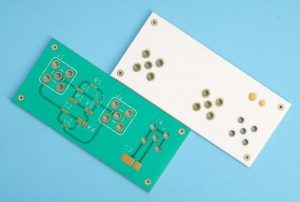
      FAQs About Ceramic PCB Design

      1. What is ceramic PCB design used for?

        Ceramic PCB design is used for electronic products that need better heat dissipation, strong insulation, and stable operation in demanding environments.

        2. Which ceramic pcb material is most common?

        Al2O3 is one of the most common materials because it offers a good balance of cost and performance.

        3. When should I choose AlN?

        AlN is a better choice when the design has high heat density or requires faster heat transfer.

        4. Is ceramic PCB better than FR4?

        For thermal-intensive applications, ceramic is usually a better option. For standard electronics, FR4 is often enough.

        5. Can a ceramic pcb manufacturer help optimize my design?

        Yes. Early design review can improve manufacturability, reduce risk, and shorten project cycles.

        6. Are ceramic PCBs suitable for LED products?

        Yes. They are widely used in high-power LED modules because heat dissipation is critical.

        You may also like

        Factors to Consider When Choosing Ceramic Substrates

        March 18th, 2026

        Understanding factors to consider when choosing ceramic substrates is critical for device performance and reliability. This guide covers all essential factors to consider when choosing ceramic substrates for professional engineering applications.

        Ceramic Substrates

        What are the key factors to consider when choosing ceramic substrates?

        The most important factors include thermal, electrical, mechanical, material, and application compatibility.

        These elements directly decide performance, stability, and service life.

        Selecting correctly avoids failures in high‑demand environments.

        • Thermal conductivity and thermal expansion
        • Dielectric constant and insulation performance
        • Mechanical strength and structural stability
        • Material type and manufacturing compatibility
        • Quality, supply chain, and delivery

        How do material properties affect ceramic substrate selection?

        Material properties form the foundation of ceramic substrate performance.

        Mismatched properties lead to overheating, signal loss, or mechanical breakage.

        Each parameter must align with your application needs.

        Thermal conductivity requirements

        Higher thermal conductivity improves heat dissipation for high‑power devices.

        It keeps components cool and extends service life.

        This is non‑negotiable for power and automotive electronics.

        Dielectric and insulation performance

        Dielectric constant impacts signal integrity.

        High insulation prevents leakage in high‑voltage systems.

        Low dielectric loss improves energy efficiency.

        Which thermal factors matter most for ceramic substrates?

        Thermal performance ensures long‑term stability under load and temperature cycles.

        Poor thermal design causes cracking, warping, and early failure.

        Thermal matching is vital for reliable assembly.

        • Coefficient of thermal expansion (CTE) matching
        • Thermal cycling stability
        • High temperature resistance
        • Heat dissipation path design
        • Compatibility with thermal interface materials

        How to match electrical requirements for ceramic substrates?

        Electrical properties protect circuits and ensure signal quality.

        They prevent interference and breakdown in demanding environments.

        Correct values keep systems safe and stable.

        Insulation resistance

        High insulation resistance supports high‑voltage applications.

        It reduces risk of short circuits and electrical failures.

        Critical for power electronics and industrial controls.

        Dielectric loss

        Low dielectric loss improves efficiency in high‑frequency devices.

        It reduces heat from signal transmission.

        Ideal for communication and server equipment.

        What mechanical standards should ceramic substrates meet?

        Mechanical strength prevents breakage during production and use.

        It supports handling, assembly, and harsh environments.

        Strong substrates maintain dimensional stability.

        • Bending strength
        • Fracture toughness
        • Hardness and wear resistance
        • Dimensional accuracy
        • Thermal shock resistance

        How to compare common ceramic substrate materials

        How to compare common ceramic substrate materials?

        The table below helps you choose based on performance and application.

        MaterialThermal Conductivity (W/m·K)Dielectric ConstantTypical Applications
        Alumina (Al₂O₃)20–309.8Consumer electronics, LED
        Aluminum Nitride (AlN)170–2308.8Automotive, power electronics
        Silicon Nitride (Si₃N₄)20–907.0High‑power devices
        Zirconia (ZrO₂)2–325.0Medical devices, sensors

        Which industries use ceramic substrates most widely?

        Ceramic substrates perform best in four high‑growth industries.

        Automotive electronics

        AlN substrates handle heat in EV power modules.

        They withstand vibration and extreme temperatures.

        Ensure stable performance in motor controls.

        Medical electronics

        High‑purity alumina offers biocompatibility and insulation.

        It meets strict medical standards for monitoring devices.

        Safe for long‑term implantable and diagnostic tools.

        LED & power electronics

        Ceramic substrates improve heat dissipation for LEDs.

        They extend lifespan and boost brightness.

        Widely used in industrial and outdoor lighting.

        Aerospace & industrial control

        Special ceramics resist extreme temperatures and corrosion.

        They meet aerospace reliability standards.

        Stable in automation and harsh factory environments.

        How to ensure processing compatibility of ceramic substrates?

        Processing compatibility lowers production difficulty and cost.

        Good metallization and bonding support strong assembly.

        Stable processing ensures consistent yields.

        • Machinability
        • Metal layer adhesion
        • Solderability and bonding strength
        • Compatibility with standard PCB processes
        • Tolerance control

        How to judge ceramic substrate quality and reliability?

        Quality control prevents inconsistent performance and failures.

        Certified materials and testing ensure long service life.

        Reliable substrates reduce maintenance and replacement cost.

        • Raw material purity
        • Dimensional accuracy
        • Thermal cycle testing
        • Insulation and voltage testing
        • Compliance with international standards

        Why supply chain & delivery matter for ceramic substrates?

        Stable supply avoids production delays and shortages.

        On‑time delivery keeps projects on schedule.

        Consistent quality supports mass production.

        • Steady raw material supply
        • On‑time delivery capability
        • Full quality traceability
        • Professional technical support
        • Mass production capacity

        Can ceramic substrates be customized for special uses?

        Customization meets unique design and performance needs.

        Tailored materials, sizes, and structures fit special equipment.

        Custom solutions improve overall device efficiency.

        • Custom material formulas
        • Special thickness and shape
        • Modified thermal or electrical properties
        • Application‑specific metallization
        • Unique packaging requirements

        FAQ: Top questions about factors to consider when choosing ceramic substrates

        What factors to consider when choosing ceramic substrates?

        Key factors include thermal performance, electrical properties, mechanical strength, material type, quality, supply chain, and application compatibility.

        Which ceramic substrate is best for high power?

        Aluminum nitride (AlN) is best for high power due to ultra‑high thermal conductivity.

        How to ensure thermal reliability of ceramic substrates?

        Match thermal expansion coefficients and use high‑thermal‑conductivity materials.

        What is the difference between AlN and alumina substrates?

        AlN has much higher thermal conductivity; alumina offers cost‑effective general use.

        Can ceramic substrates be used in medical devices?

        Yes, high‑purity alumina is widely used for biocompatibility and stability.

        How to select a reliable ceramic substrate supplier?

        Check quality system, delivery stability, technical support, and supply chain.

        Are ceramic substrates customizable for special applications?

        Yes, materials, dimensions, and performance can be customized for specific needs.

        Conclusion

        All factors to consider when choosing ceramic substrates must be evaluated together.

        The right choice improves performance, reliability, and product stability.

        Professional selection supports long‑term success in high‑end electronics.

        EBest provides premium ceramic substrates with stable supply, strict quality control, and professional support. For orders and inquiries, contact us at: sales@bestpcbs.com

        You may also like

        What is Empty Circuit Board? Empty Circuit Board vs Assembled PCB

        March 5th, 2026

        An empty circuit board is the starting point of almost every electronic product. Before chips, resistors, and connectors appear on a board, engineers begin with a bare platform that carries electrical pathways and mechanical structure. This base platform is the empty circuit board, also called a bare PCB.

        EBest Circuit (Best Technology) has more than 19 years of PCB fabrication and assembly experience. Our engineering team supports projects from design review to final assembly. With integrated PCB fabrication and PCBA production, customers receive consistent quality, fast delivery, and practical engineering support throughout the process.

        What Is an Empty Circuit Board?

        An empty circuit board refers to a printed circuit board before electronic components are mounted. It contains copper traces, vias, pads, and insulating substrate materials. These elements form the electrical network that later connects components.

        In manufacturing terms, an empty circuit board is often called:

        • Bare PCB
        • Blank PCB
        • Fabricated PCB

        The board becomes a finished electronic module only after component assembly. That stage is known as PCBA (Printed Circuit Board Assembly).

        What Materials Are Used in an Empty Circuit Board?

        The materials inside an empty circuit board determine electrical performance and durability. Most boards combine insulating substrate materials with conductive copper layers.

        1. Substrate Materials

        The substrate forms the structural foundation of the PCB. Common substrate materials include:

        • FR4 fiberglass epoxy – the most widely used PCB material
        • High-TG FR4 – suitable for higher thermal environments
        • Polyimide – used for flexible circuits
        • Aluminum core – used for heat dissipation
        • Ceramic materials – used in high-frequency electronics

        Among these options, FR4 remains the standard choice because it balances cost, strength, and electrical insulation.

        2. Copper Layers

        Copper forms the conductive pathways on the board. These traces connect electronic components. Copper thickness is measured in ounces (OZ) per square foot. Typical copper thickness values include:

        Copper WeightThicknessApplication
        0.5 oz~17 ”mFine-line circuits
        1 oz~35 ”mStandard electronics
        2 oz~70 ”mPower electronics
        3 oz+100 ”m+High-current circuits

        Higher copper thickness improves current capacity and thermal performance.

        3. Solder Mask

        Solder mask is the colored protective layer on top of the PCB. It prevents solder bridging during assembly. Common colors include:

        • Green
        • Black
        • Blue
        • White
        • Red

        Green remains the most common color because it offers good contrast for inspection.

        4. Surface Finish

        The copper pads require protective coating. Surface finishes prevent oxidation and improve solderability. Typical finishes include:

        • HASL (Hot Air Solder Leveling)
        • ENIG (Electroless Nickel Immersion Gold)
        • ENEPIG
        • Immersion silver
        • OSP coating

        Each finish has advantages depending on product requirements.

        How Is an Empty Circuit Board Manufactured?

        Manufacturing an empty circuit board involves multiple precision processes. Each step builds part of the board structure. Below is a simplified overview of the process.

        1. Design File Preparation

        Engineers prepare design files using PCB design software. These files define trace routing, drill holes, and board dimensions. Typical design files include:

        • Gerber files
        • Drill files
        • Stack-up specifications

        2. Material Preparation

        3. Inner Layer Imaging

        4. Etching

        5. Lamination

        6. Drilling

        7. Copper Plating

        8. Solder Mask Application

        9. Surface Finish

        10. Electrical Testing

        If you want to know more the manufacturing process of empty circuit board, you can watch below video from our PCB fabrication workshop:

        What Are the Different Types of Empty Circuit Boards?

        Empty circuit boards are not all built the same. Engineers select different PCB structures based on circuit complexity, signal speed, thermal conditions, and mechanical requirements. Below are the most common types of empty circuit boards used in modern electronics manufacturing.

        1. Single-Layer Empty Circuit Board

          A single-layer circuit board contains one conductive copper layer on one side of the substrate. All components and traces appear on the same surface.

          Typical applications include:

          • LED lighting modules
          • Power adapters
          • Small household electronics
          • Simple control boards

          However, routing space is limited because all connections must exist on one layer.

          2. Double-Layer Empty Circuit Board

          A double-layer circuit board contains copper layers on both the top and bottom surfaces of the substrate. Electrical connections between the two layers are created using plated through holes (vias).

          Double-layer PCBs are widely used in:

          • consumer electronics
          • industrial control systems
          • communication devices
          • embedded modules

          Because they provide more routing space than single-layer boards, they remain a practical solution for medium-complexity designs.

          3. Multilayer Empty Circuit Board

          A multilayer PCB contains three or more copper layers stacked together through lamination. Some advanced boards may include 8, 12, or even more layers.

          Common applications include:

          • smartphones and tablets
          • computer motherboards
          • networking equipment
          • high-speed communication systems

          Although multilayer PCBs require more manufacturing steps, they enable compact designs and higher performance.

          4. Flexible Circuit Boards

          A flexible PCB uses polyimide or similar flexible substrate materials instead of rigid fiberglass. The board can bend, twist, or fold without damaging the circuit. Flexible boards reduce connector usage and improve space utilization in compact devices.

          Typical applications include:

          • wearable electronics
          • camera modules
          • medical instruments
          • portable consumer devices

          5. Rigid-Flex Circuit Boards

          A rigid-flex PCB combines rigid circuit board sections with flexible interconnections in a single structure.

          Rigid-flex boards are often used in:

          • aerospace electronics
          • medical equipment
          • military systems
          • advanced communication devices

          Although the design and manufacturing process are more complex, rigid-flex PCBs offer excellent durability and compact integration.

          Rigid-Flex Circuit Boards

          6. Metal Core Circuit Boards

          A metal core PCB (MCPCB) uses a metal base layer, usually aluminum or copper, instead of standard fiberglass. Metal core boards are widely used in:

          • high-power LED lighting
          • automotive lighting systems
          • power converters
          • industrial power modules

          Because thermal performance is critical in these applications, metal core boards provide a reliable solution.

          Metal Core Circuit Boards

          7. Ceramic Circuit Board

          A ceramic PCB uses ceramic materials such as aluminum oxide (Al₂O₃) or aluminum nitride (AlN) as the substrate instead of fiberglass. Ceramic materials provide excellent thermal conductivity, electrical insulation, and dimensional stability.

          Key advantages include:

          • excellent heat dissipation
          • high electrical insulation strength
          • stable performance at high temperatures
          • low signal loss at high frequencies

          Ceramic PCBs are widely used in:

          • RF communication modules
          • power semiconductor modules
          • laser equipment
          • automotive electronics
          • aerospace electronics

          Although ceramic boards are more expensive than standard FR4 PCBs, they deliver superior performance in demanding environments.

          Ceramic Circuit Board

          Where Are Empty Circuit Boards Used?

          Empty circuit boards serve as the base platform for almost all electronic products. Before components are mounted, the board provides routing paths, grounding structures, and mechanical support for the final system.
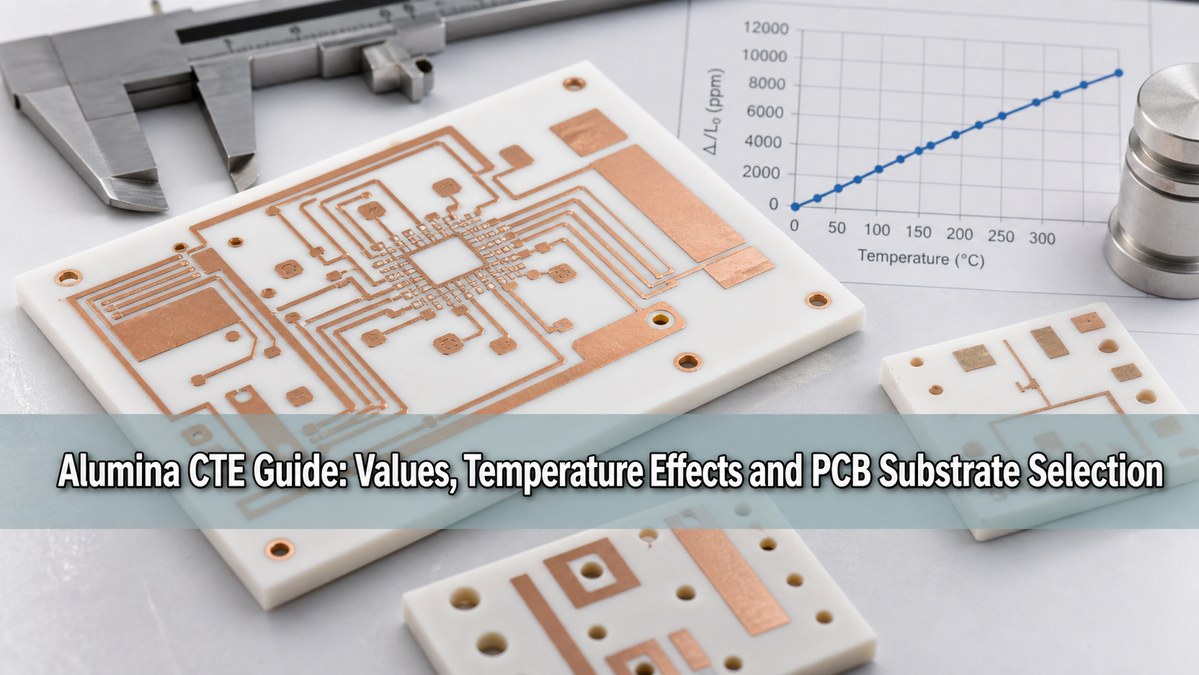
          Common applications include:

          • Consumer electronics – smartphones, smart home devices, wireless earbuds, and wearable gadgets
          • Computer hardware – motherboards, graphics cards, memory modules, and storage controllers
          • Automotive – engine control units, battery management systems, infotainment modules, and sensor interfaces
          • Industrial automation systems – PLC controllers, motor drivers, robotics control boards, and industrial power supplies
          • Communication equipment – routers, base stations, RF communication modules, and network switches
          • Medical devices – patient monitoring systems, diagnostic equipment, imaging systems, and portable healthcare electronics
          • LED lighting systems – commercial lighting, automotive lighting, and architectural illumination.
          How Much Does an Empty Circuit Board Cost?

          The cost of an empty circuit board varies widely. Several factors influence manufacturing price, major cost factors including:

          1. Board size

          2. Layer count

          3. Material type

          4. Copper thickness

          5. Surface treatment

          6. Production quantity

          Here is a general cost for empty circuit boards:

          PCB TypeTypical Cost Range
          Single layer$1 – $5
          Double layer$3 – $15
          Multilayer PCB$20 – $200+

          These values vary depending on complexity and quantity. Working with an experienced manufacturer helps control cost while maintaining quality.

          Empty Circuit Board vs Assembled PCB

          An empty circuit board and an assembled PCB represent two different stages in electronic manufacturing. The empty board provides the physical and electrical platform. The assembled PCB transforms that platform into a working electronic module. Below is comparison chart between them:

          ItemEmpty Circuit Board (Bare PCB)Assembled PCB (PCBA)
          DefinitionPCB structure without electronic componentsPCB with components soldered and fully functional
          Manufacturing StagePCB fabricationPCB assembly
          Main ProcessesLamination, drilling, plating, etching, solder mask, surface finishSMT placement, reflow soldering, wave soldering, inspection
          Electrical FunctionProvides conductive pathways but no active functionalityFully operational circuit
          Components InstalledNoneResistors, capacitors, ICs, connectors, sensors
          Typical Layer Count1–20+ layers depending on designSame as PCB but populated with parts
          Manufacturing TimeUsually 3–7 days for prototypes5–10 days depending on component sourcing
          Testing MethodElectrical continuity testFunctional test, AOI, X-ray inspection
          Cost StructureMostly determined by material, layer count, board sizeIncludes PCB cost, components, assembly labor
          WeightVery light since no components are installedHeavier due to electronic parts
          Application StageUsed during early design, testing, and prototypingUsed in final electronic products
          Production ComplexityMedium complexity fabricationHigher complexity due to placement accuracy
          Typical UseEngineering validation and prototypingConsumer electronics, industrial equipment, automotive electronics

          From a manufacturing perspective, the empty circuit board acts as the foundation of the electronic system. Once components are installed through SMT or THT assembly processes, the board becomes a functional PCBA ready for integration into a product.

          Why Choose EBest as Your Empty Circuit Board & Assembled PCB Manufacturer?

          Best Technology (EBest Circuit) is a PCB and PCBA manufacturer with 19 years of industry experience, headquartered in Shenzhen, one of the world’s most important electronics manufacturing hubs. To better support global customers and ensure flexible supply chains, we have established production facilities in both China and Vietnam, allowing us to provide stable manufacturing capacity and competitive lead times.

          Our advantages include:

          • 19 Years of PCB & PCBA Manufacturing Experience
          • Professional R&D and engineering team
          • 1+3 engineering support model
          • One-stop PCB Fabrication and PCBA Assembly
          • Rapid prototype and production turnaround
          • Full Digital Manufacturing System
          • No MOQ, flexible order quantities
          • Global customer support experience across North America, Europe, and Asia
          • ISO 9001, ISO 13485, IATF 16949, and AS9100D certificated

          If you are planning a new electronics project or looking for a dependable PCB manufacturing partner, feel free to contact our engineering team.

          📩 sales@bestpcbs.com

          We are always ready to support your next circuit board project.

          FAQs

          1. Is an empty circuit board the same as a PCB?

          Yes. An empty circuit board is commonly called a bare PCB. It includes copper traces and pads but no electronic components.

          2. What thickness do empty PCBs usually have?

          Typical PCB thickness ranges from 0.8 mm to 1.6 mm. Thinner boards exist for compact electronics, while thicker boards provide higher mechanical strength.

          3. What files are required to manufacture a PCB?

          Manufacturers usually require the following files:

          • Gerber files
          • Drill files
          • PCB stack-up information
          • Bill of materials (for assembly)

          These files define the complete board structure.

          You may also like