PCB manufacturing PCB manufacturing
Home > Blog

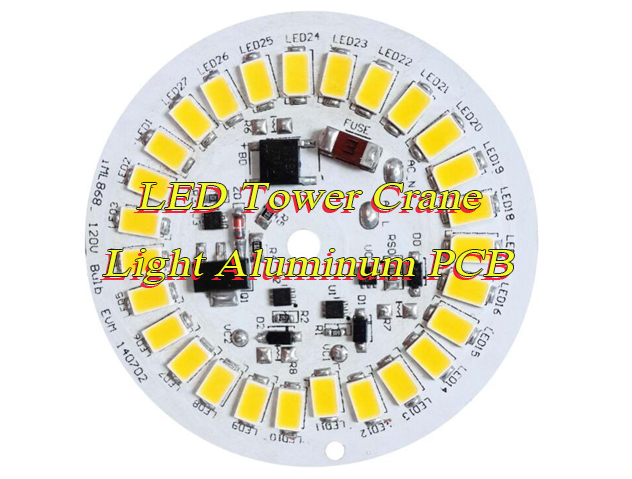
LED Module Assembly: Building Reliable Lighting Boards

June 22nd, 2026

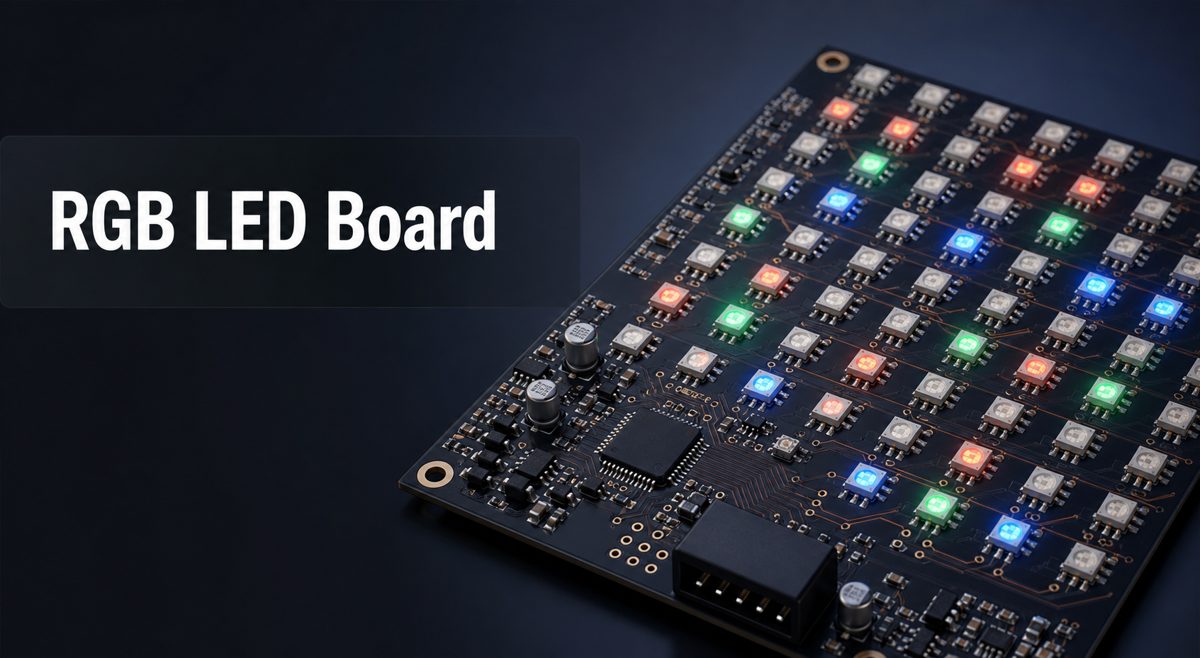
LED module assembly is not just about placing LEDs onto a PCB. A reliable lighting board needs the right PCB base, stable solder joints, correct LED polarity, controlled heat transfer, and suitable protection for the working environment.

For many lighting products, the customer already controls the final lamp housing, optics, driver, structure, and product-level validation. The PCB and PCBA partner focuses on the assembled lighting board: MCPCB fabrication, SMT LED mounting, soldering control, coating support, and basic testing.

This guide explains what buyers should know before sourcing LED module assembly for lighting boards.

LED Module Assembly

What Is LED Module Assembly?

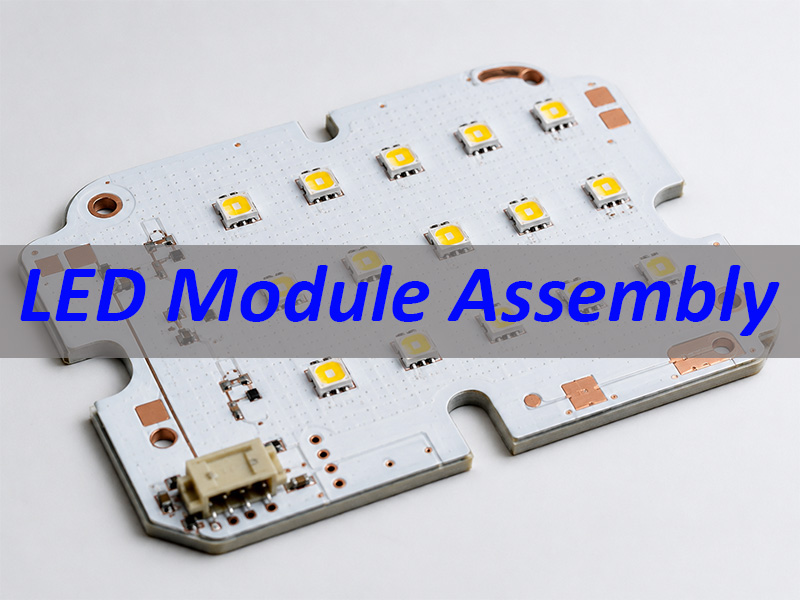
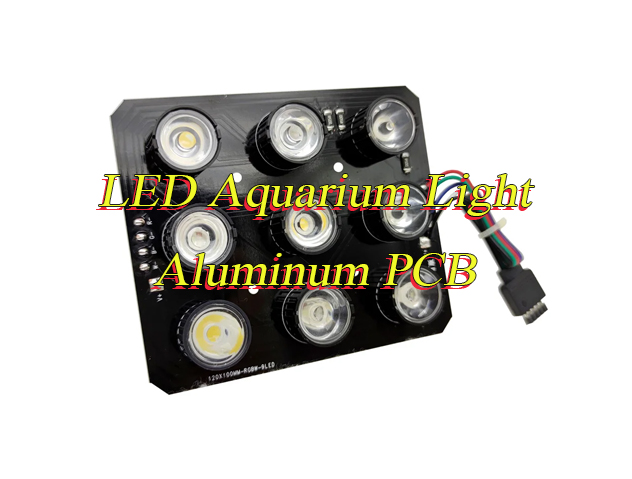
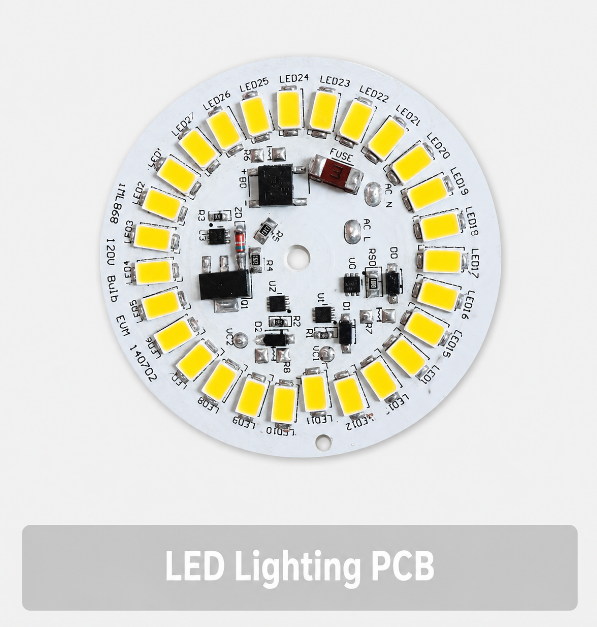
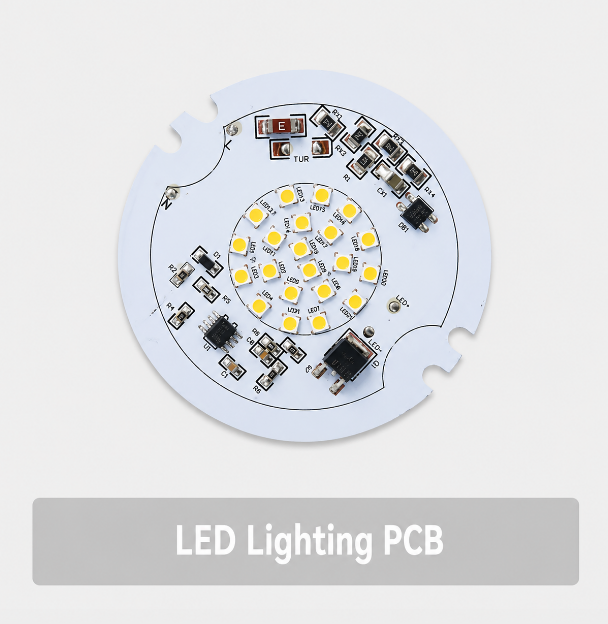
LED module assembly is the process of turning a bare LED PCB into an assembled lighting board. It usually includes PCB fabrication, solder paste printing, SMT LED mounting, lead-free reflow soldering, inspection, testing, and sometimes protective coating.

In PCB manufacturing, an LED module does not always mean a complete finished lamp. It usually means the LED board inside the product. The housing, lens, driver, thermal structure, final packaging, and product certification may still belong to the customer’s final product scope.

This distinction matters. If you need only the bare board, you are requesting LED PCB or MCPCB fabrication. If you need LEDs mounted and tested, you are requesting LED module assembly or LED PCB assembly.

ItemLED PCBLED Module
StatusBare boardAssembled lighting board
LEDsNot mountedMounted and soldered
FunctionCannot light up aloneCan be powered and tested
Main servicePCB fabricationPCB + SMT assembly
Quality focusMaterial, copper, finishSoldering, polarity, function
LED Module Assembly

Why Are MCPCBs Used in LED Lighting Boards?

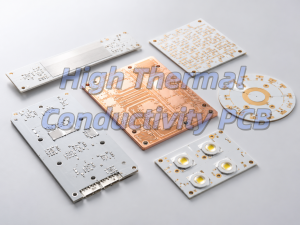
LEDs generate heat during operation. If heat stays near the LED package and solder joint, the module may face faster brightness decay, color shift, solder stress, or early failure. That is why many LED lighting boards use MCPCBs, especially aluminium core PCBs.

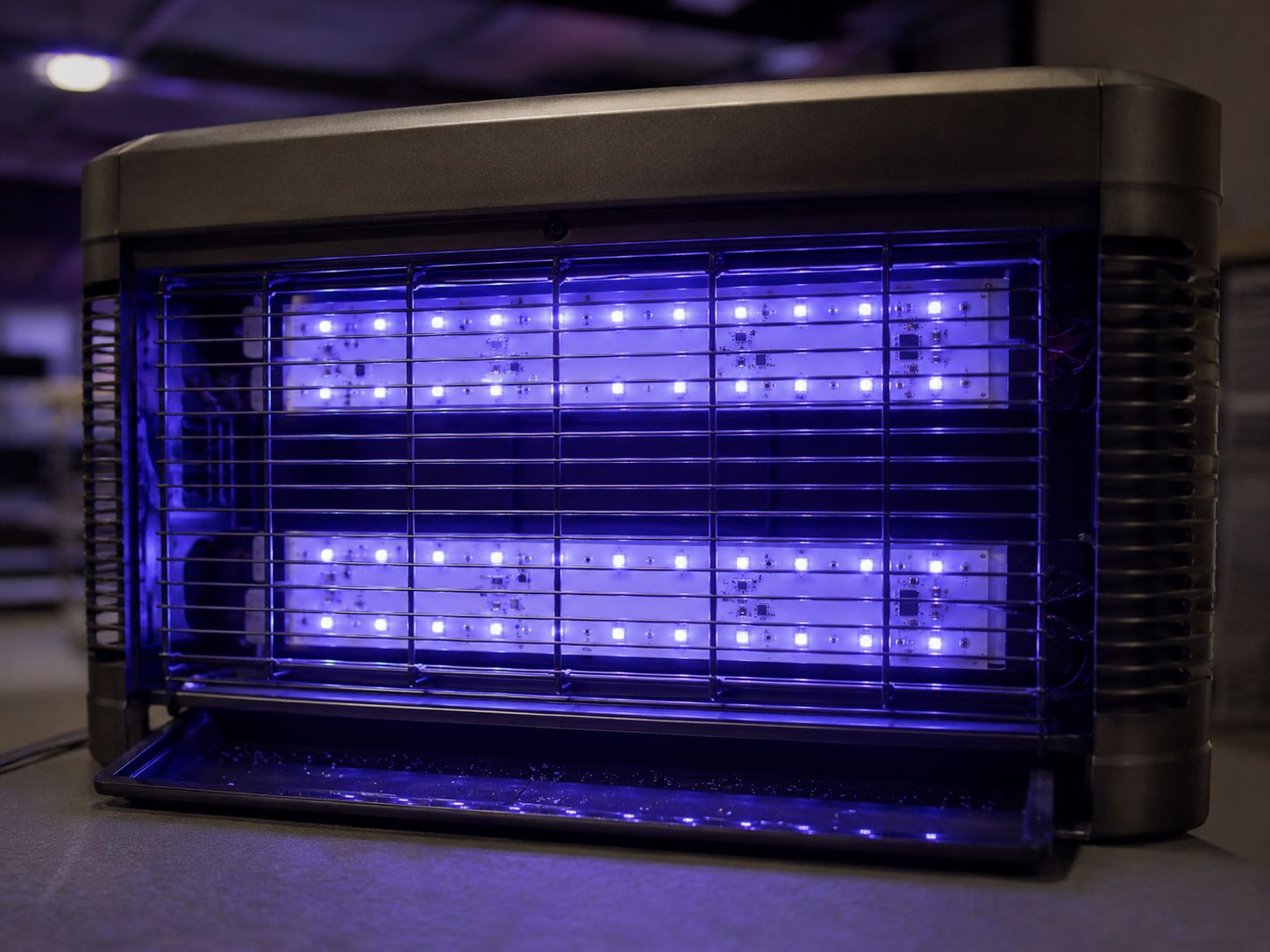
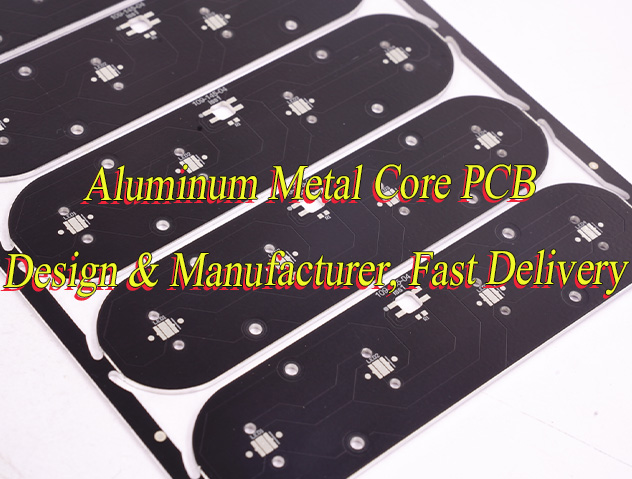
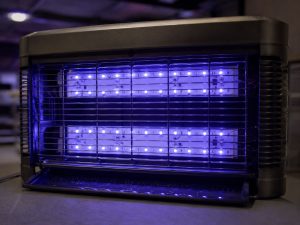
A metal-core PCB gives heat a better path from the LED pad area toward the metal base. This is especially useful for compact lighting boards, circular LED modules, UV LED boards, insect trap modules, and higher-power LED applications.

Thermal FactorFR4 ExampleIMS / MCPCB ExampleMeaning
Thermal conductivityAbout 0.25 W/m·KAbout 3 W/m·K dielectricBetter heat transfer
Junction-to-ambient thermal resistance61.56°C/W39.1°C/WLower thermal resistance
Main roleCircuit carrierCircuit carrier + heat-spreading baseMore suitable for many LED boards

This does not mean every LED board must use aluminum PCB. Low-power LED boards may still use FR4. But when heat, service life, compact space, or continuous operation matters, MCPCB is often the safer starting point.

The PCB manufacturer’s role is to build the selected board structure correctly: metal base, dielectric layer, copper thickness, solder mask, surface finish, outline, flatness, and solderability.

How Does LED Module Assembly Work?

A good LED module starts with file review. Before production, the manufacturer should check the Gerber files, BOM, pick-and-place file, LED datasheet, polarity information, coating requirement, and testing requirement.

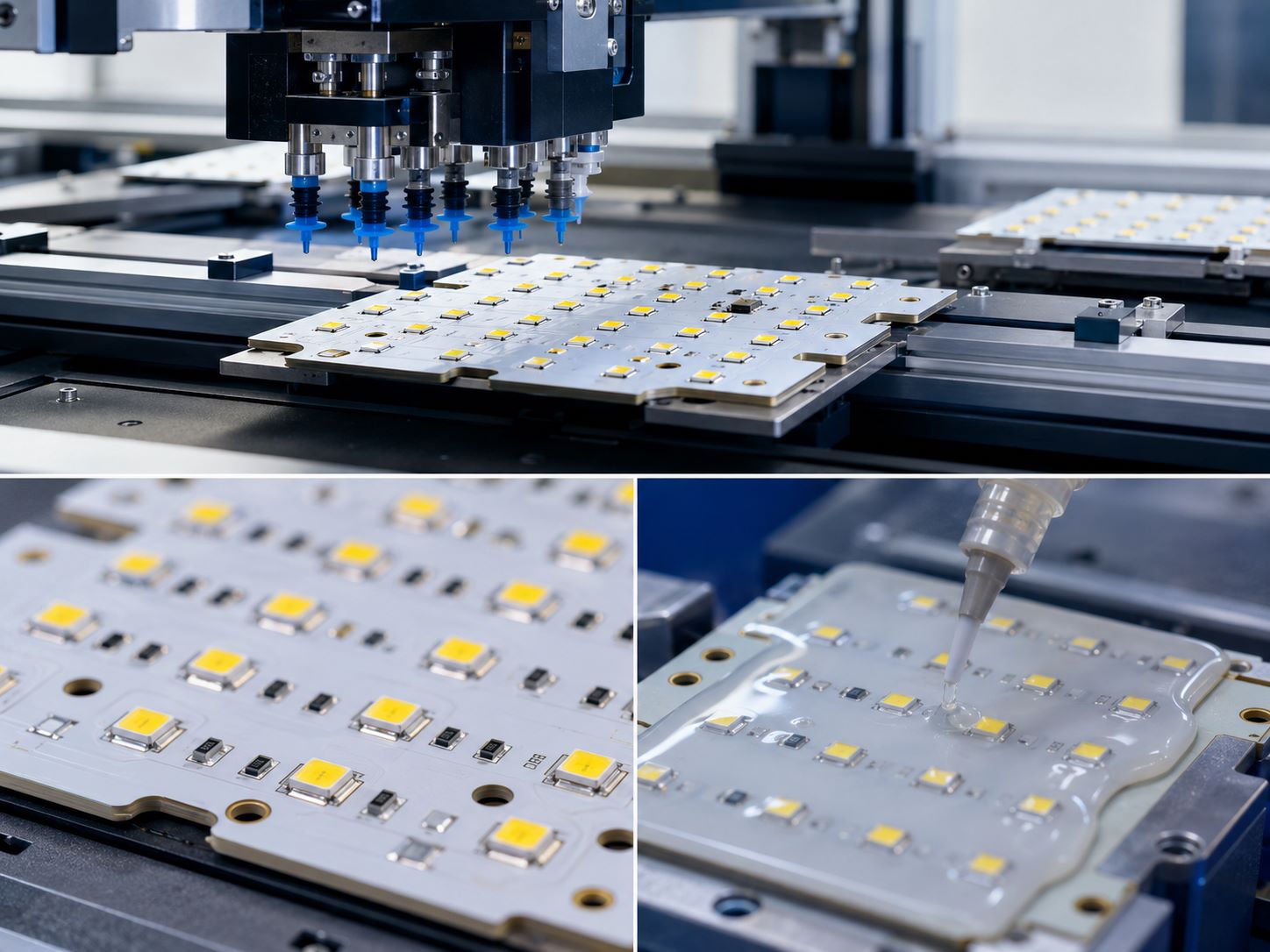
After that, the MCPCB is fabricated, LEDs are prepared, solder paste is printed, LEDs are placed by SMT equipment, and the board goes through lead-free reflow soldering. After reflow, the module is inspected, tested, and coated if required.

A practical flow looks like this:

StepWhat to Check
File reviewGerber, BOM, polarity, coating area
MCPCB fabricationMaterial, copper, finish, flatness
LED preparationPart number, bin, reel label, polarity
SMT mountingPaste volume, placement, reflow profile
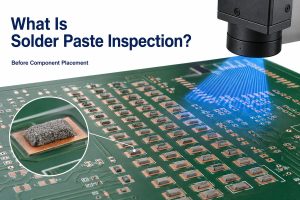
InspectionVisual, AOI, polarity check
TestingElectrical and power-on test
CoatingArea, thickness, keep-out zones

The process is straightforward, but the risk is in the details. Wrong LED polarity, unstable solder paste volume, poor pad wetting, or unclear coating areas can all create defects during batch production.

What Affects LED SMT Assembly Quality?

LED SMT quality depends on PCB solderability, LED package condition, solder paste control, placement accuracy, and reflow stability.

The first key point is polarity. LEDs are directional components. If polarity is reversed, the module may not light up. Polarity should be clear in the datasheet, BOM, assembly drawing, and first article inspection.

The second key point is solder volume. Too much solder can cause LED tilt or movement. Too little solder can create weak joints. On aluminum PCBs, the metal base also affects heat absorption during reflow, so the reflow profile should be verified with the actual board when needed.

The third key point is LED bin control. For lighting boards, mixed LED bins can cause visible brightness or color differences even if every LED turns on.

RiskResultControl Point
Wrong polarityLED does not lightPolarity check
Too much solderTilt or shiftingStencil and paste control
Too little solderWeak jointPaste process control
Poor wettingUnstable solderingSurface finish and reflow
Mixed LED binsColor or brightness mismatchReel and bin traceability

For customer-supplied LEDs, the assembler should confirm reel labels, bin codes, polarity marks, storage condition, and spare quantity before production.

How Does PCB Layout Support Heat Dissipation?

PCB layout can support heat dissipation, but it does not replace full lamp thermal design. This boundary should be clear.

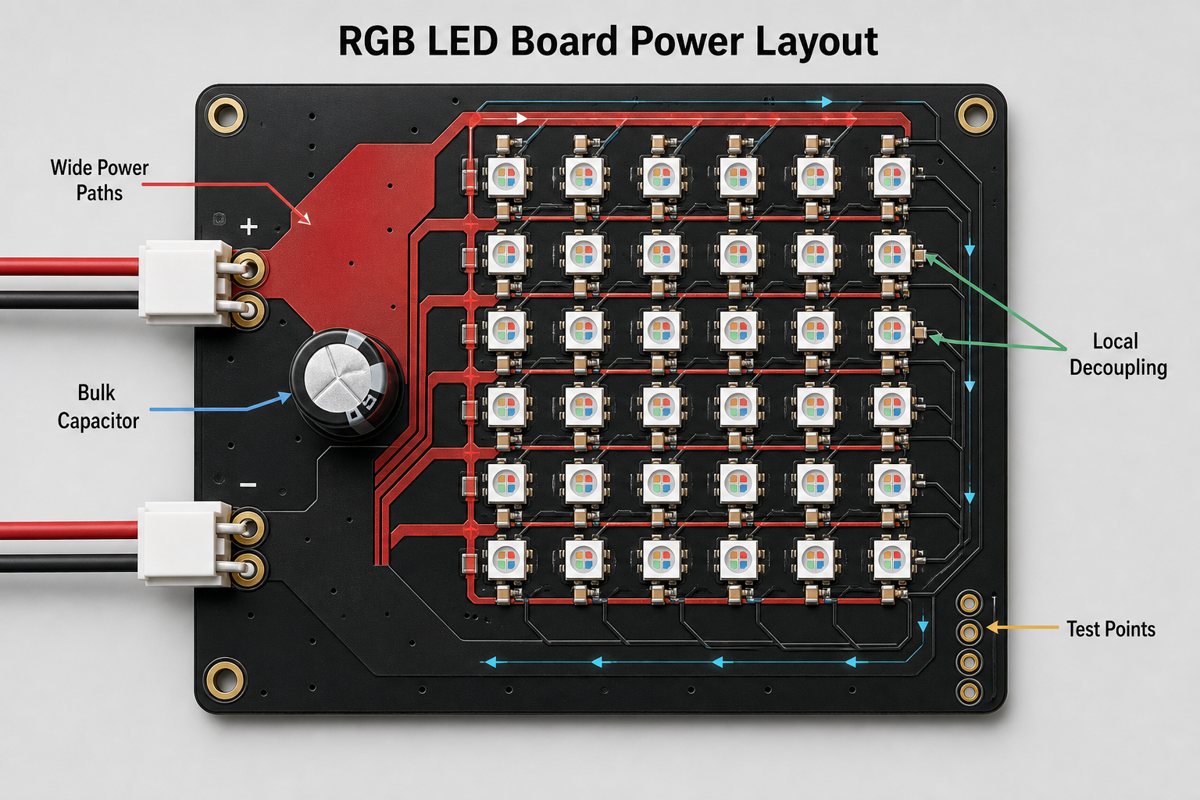
From the PCB and PCBA side, the focus is on manufacturable details: LED thermal pad connection, copper area, current path width, solder mask opening, pad solderability, board flatness, and MCPCB material selection.

A typical heat path in an aluminum PCB LED module is:

LED package → solder joint → copper pad → thermal dielectric layer → aluminum base → housing or air.

The PCB/PCBA manufacturer can support the first part of this path through board fabrication and SMT quality control. But final temperature still depends on the customer’s housing, heat sink, airflow, screw pressure, thermal interface, LED current, and working environment.

So the right message is not “we design the whole lamp thermal system.” The right message is: the PCB and assembly process help build a stable thermal path inside the LED lighting board.

When Is Protective Coating Needed?

Protective coating is useful when LED modules may face moisture, dust, insects, condensation, cleaning exposure, or semi-outdoor conditions. This is common in insect light traps, industrial lighting, agricultural lighting, and boards used in harsh environments.

Silicone conformal coating is often used on LED boards because it is flexible and suitable for environmental protection. But coating must be controlled carefully.

Coating TypeTypical Thickness Range
Acrylic / Epoxy / Urethane0.03–0.13 mm
Silicone0.05–0.21 mm
Parylene0.01–0.05 mm

The coating drawing should define where coating is required and where it must be avoided. Connectors, test points, screw holes, contact areas, and optical surfaces may need keep-out zones.

Poor coating control can create bubbles, uneven appearance, blocked connectors, contaminated pads, or reduced light performance. For LED modules, coating is both a protection process and a quality-control point.

LED Module Assembly

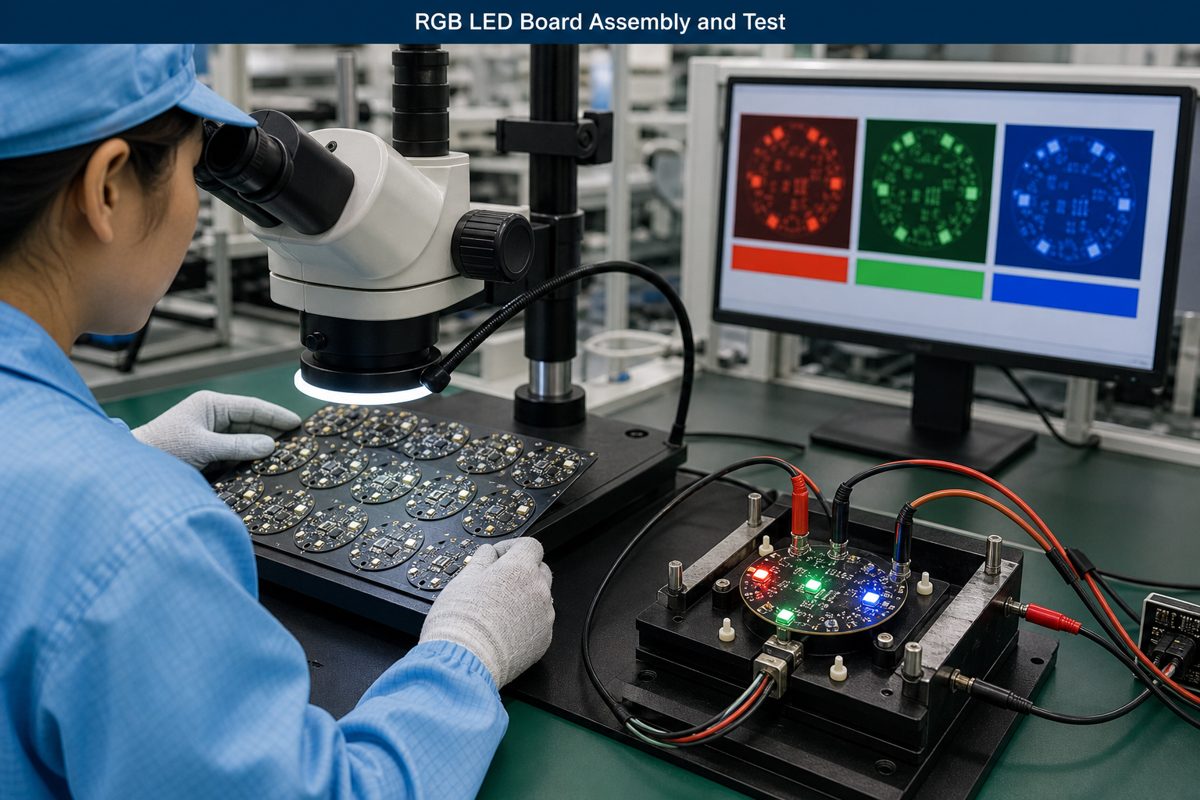
How Should LED Modules Be Tested?

Power-on testing is necessary, but it is not the whole quality check. A module can light up and still have weak solder joints, mixed LED bins, coating defects, or unstable current.

A practical LED module test plan may include:

Test ItemPurpose
Visual inspectionCheck appearance and contamination
AOICheck placement and visible solder joints
Polarity checkPrevent reversed LEDs
Electrical testCheck shorts, opens, continuity
Power-on testConfirm light-up function
Current checkConfirm operating condition
Coating inspectionCheck coverage and keep-out areas
Sample agingFind early failures before shipment

The test scope should match the application. A simple indoor board may need basic testing. A higher-reliability or semi-outdoor lighting board may need stricter inspection, current checks, coating inspection, and sample aging.

Buyers should define test voltage, current limit, inspection standard, coating acceptance criteria, and aging requirement before quotation.

What Should Buyers Prepare Before an LED Module RFQ?

A clear RFQ helps the supplier quote faster and avoid wrong assumptions. For early discussion, a rough drawing may be enough for a ballpark estimate. For formal quotation, complete engineering files are needed.

Useful RFQ documents include:

RFQ FileWhy It Matters
Gerber and drill filesPCB fabrication
BOMComponent and assembly review
Pick-and-place fileSMT programming
LED datasheetPackage, polarity, soldering data
Assembly drawingPlacement and special notes
Coating drawingCoating and keep-out control
Test requirementInspection and quotation scope
QuantityPrice and lead time

If LEDs are supplied by the customer, also provide part number, manufacturer, reel label, bin code, polarity mark, storage condition, MSL information if applicable, and spare quantity for SMT loss.

The more complete the RFQ, the easier it is to confirm feasibility, sample lead time, production cost, and quality control.

LED Module Assembly Case Study: How Does EBest Circuit Support MCPCB and SMT Projects?

A practical LED module assembly project often starts with a clear board specification. For one LED lighting board project, EBest Circuit supported a single-sided aluminum PCB with 2.0 mm finished thickness, 2 W/m·K thermal conductivity, 2 oz copper, white solder mask, black legend, and OSP surface finish.

Board RequirementSpecificationAssembly Value
PCB structureSingle-sided aluminum PCBLED board base
Finished thickness2.0 mm ±10%Board rigidity
Thermal conductivity2 W/m·KHeat transfer
Copper weight2 ozCurrent support
Solder maskWhite solder maskLight reflection
LegendBlack legendClear marking
Surface finishOSPSMT soldering

For this type of LED module assembly, the focus is not only PCB fabrication. The assembly process also needs to control LED polarity, solder paste volume, placement accuracy, and reflow soldering. If silicone conformal coating is required, the coating area and keep-out zones should be confirmed before production.

In this project type, EBest Circuit’s role is focused: manufacture the MCPCB, support SMT LED mounting, control soldering quality, and prepare the assembled lighting board for the customer’s next production step. The final lamp housing, optics, driver system, and product-level thermal validation remain part of the customer’s complete product design.

This case shows why LED module assembly should be evaluated as a combined PCB and SMT PCB manufacturing process. Board material, copper weight, surface finish, LED placement, and testing all affect the final reliability of the lighting board.

Why Choose EBest Circuit (Best Technology) for LED Module Assembly?

For LED module assembly projects, buyers need more than an SMT supplier who can simply place LEDs. A reliable LED lighting board often involves PCB fabrication, component control, SMT assembly, soldering quality, protective coating, inspection, and production traceability. When these steps are handled by separate suppliers, communication gaps and production risks can increase.

EBest Circuit (Best Technology) supports LED lighting board projects with an integrated PCB and PCBA manufacturing approach. Before production, our team can review Gerber files, BOM, pick-and-place data, LED datasheets, coating requirements, and test requirements to help customers identify potential manufacturing issues during the sample stage.

AdvantageValue for LED Module Assembly
PCB + PCBA factoriesFewer handoff risks
MCPCB and LED board experienceBetter process understanding
DFM and BOM reviewEarlier issue detection
SMT LED mountingPrototype to batch support
Consigned LED supportCustomer-specified parts
Coating and testing supportMore complete delivery
Digital traceabilityBatch and progress tracking
Quality certificationsHigher quality control needs

These advantages apply to different LED lighting board projects, including aluminum LED boards, FR4 LED boards, UV LED modules, industrial lighting boards, insect trap LED modules, customer-supplied LED assembly projects, and LED modules that require protective coating or basic function testing. The board material, copper weight, surface finish, LED package, and test requirements may vary, but the goal is the same: helping customers move from design files to controlled production.

EBest Circuit’s value is not claiming to design the complete finished lamp. Our focus is LED lighting board manufacturing: PCB fabrication, SMT LED mounting, process review, consigned material handling, coating support, inspection, and basic testing. The final lamp housing, optics, driver system, and product-level thermal validation remain part of the customer’s complete product design.

With 20 years of PCB and PCBA manufacturing experience, engineering support, quality systems, and traceable production management, EBest Circuit helps customers move LED lighting board projects from sample validation to more stable batch production.

FAQs About LED Module Assembly

What is LED module assembly?

LED module assembly is the process of fabricating an LED PCB, mounting LEDs and related components, soldering them, inspecting the board, and testing the assembled lighting board.

Is LED module assembly the same as finished lamp manufacturing?

No. LED module assembly usually focuses on the lighting board. Finished lamp manufacturing may also include housing, optics, driver integration, mechanical assembly, labeling, packaging, and product-level certification.

Why are aluminum PCBs used for LED modules?

Aluminum PCBs are used because they provide a better thermal path than standard FR4 in many LED lighting applications.

Can customer-supplied LEDs be used?

Yes. Consigned LEDs can be used if the buyer provides clear part numbers, reel labels, bin codes, polarity information, storage details, and enough spare quantity for SMT process loss.

What is silicone conformal coating used for?

Silicone conformal coating helps protect LED modules from moisture, dust, insect contamination, and environmental exposure.

What files are needed for a quote?

Gerber files, BOM, pick-and-place file, assembly drawing, LED datasheet, coating drawing, test requirements, and quantity are usually needed.

To summarize, LED module assembly is not only about mounting LEDs. A reliable lighting board depends on MCPCB material, copper layout, soldering quality, LED polarity, component traceability, protective coating, and defined testing.

For buyers, the better partner is not simply a supplier who can place LEDs. It is a PCB and PCBA manufacturer who understands how board fabrication and SMT assembly affect LED module reliability.

EBest Circuit supports LED lighting board projects with MCPCB fabrication, SMT LED mounting, consigned LED handling, conformal coating, and basic module testing. Pls feel free to send your Gerber files, BOM, pick-and-place data, LED datasheets, coating requirements, and test requirements to sales@bestpcbs.com for review.

You may also like

LED Lighting PCB Manufacturer

June 12th, 2026

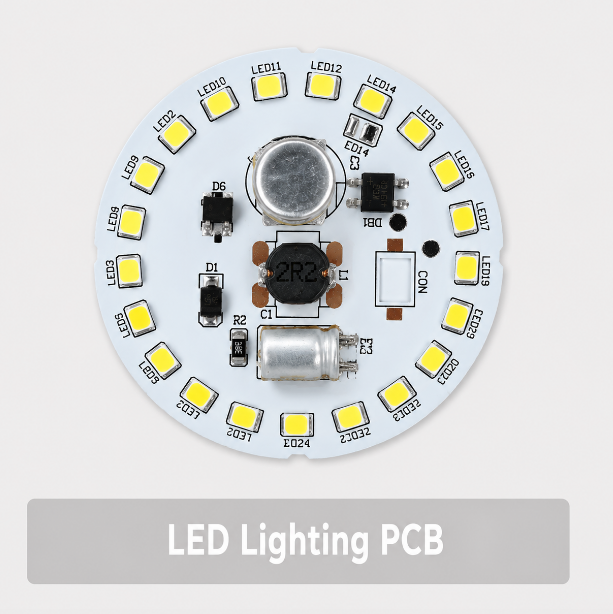
LED Lighting PCB provides electrical connection, mechanical support, and heat dissipation for LED modules. EBest Circuit manufactures custom LED Lighting PCB using aluminum PCB, FR4 PCB, and turnkey assembly services for residential, commercial, high-power, automotive, and outdoor lighting projects.

Are you worried about these problems in LED Lighting PCB projects?

  • Delivery delays: Unstable production cycles, slow sample approval, material shortages, or batch delays may disrupt your project schedule.
  • Hidden costs: Extra charges may appear after quotation approval, including tooling changes, material upgrades, testing fees, or assembly adjustments.
  • Quality instability: Batch variation may cause flickering, overheating, soldering defects, color inconsistency, or field failure risks.

As a 20+ years PCB manufacturer, EBest Circuit provides manufacturing and assembly solutions for global lighting brands, OEM factories, and engineering projects.

  • Delivery predictability: ERP + MES production tracking supports 7-day standard delivery, 48-hour urgent response, and delay rate controlled at ≤2%.
  • Cost transparency: BOM-level cost modeling locks pricing before production and covers material, fabrication, assembly, testing, packaging, and export documentation.
  • Quality reliability: AOI inspection, flying probe testing, thermal validation, and functional testing support 100% critical process inspection, ≤0.3% defect rate, and ≥98% batch consistency.

Welcome to contact us if you have any request for LED lighting PCB manufacturing and assembly: sales@bestpcbs.com.

What Is an LED Lighting PCB?

An LED lighting PCB is a printed circuit board used to mount, connect, and power LED components in lighting products. It provides current paths, mechanical support, thermal transfer, and assembly stability for LED modules.

Unlike standard circuit boards, LED lighting boards must handle heat, current load, brightness stability, and long operating hours. Poor PCB quality may cause hot spots, unstable light output, solder joint fatigue, and early LED failure.

EBest Circuit manufactures custom LED PCB, aluminum PCB, FR4 PCB, and assembled LED modules for residential, commercial, industrial, automotive, and outdoor lighting applications.

Why Do LED Lighting Products Need Reliable PCB Solutions?

LED lighting products rely on stable PCB performance because heat, current, and soldering quality directly affect lifespan. A weak PCB may reduce brightness, increase failure rates, and raise after-sales cost.

Reliable PCB solutions help control:

  • Thermal stability: Better heat transfer reduces LED junction temperature.
  • Electrical safety: Stable copper design supports consistent current flow.
  • Assembly yield: Accurate pads and solder mask control reduce SMT defects.
  • Batch consistency: Controlled fabrication keeps repeated orders stable.
  • Long-term reliability: Better materials reduce delamination, oxidation, and early failure.

Choosing the right manufacturer affects warranty risk, brand reputation, and total project cost.

What LED Lighting PCB Types Can We Manufacture?

EBest Circuit manufactures LED lighting boards according to power level, heat dissipation demand, product structure, and assembly requirements. Instead of using one fixed PCB type, we help customers choose the right structure for actual working conditions.

Common PCB types include:

  • Aluminum LED PCB: Suitable for high-power LED modules, street lights, flood lights, panel lights, and outdoor lighting products.
  • FR4 LED PCB: Suitable for low-power and medium-power residential lighting, commercial lighting, control circuits, and cost-sensitive products.
  • Metal Core PCB: Designed for products that require stronger thermal performance, stable mechanical support, and long operating life.
  • Heavy Copper LED PCB: Used for products with higher current load, stronger power demand, or long continuous operation.
  • High TG LED PCB: Suitable for lighting products exposed to higher working temperature or repeated thermal stress.
  • Multilayer LED PCB: Used when modules include driver circuits, control functions, sensors, communication modules, or compact routing.
  • Flexible and Rigid-Flex LED PCB: Suitable for curved lighting structures, automotive lighting, wearable lighting, compact modules, and special installation spaces.

The right type should match LED power, thermal path, fixture housing, installation environment, and production cost.

Aluminum PCB vs FR4 PCB for LED Lighting

Aluminum PCB and FR4 PCB solve different lighting problems. The choice affects heat dissipation, electrical stability, product cost, assembly yield, and long-term reliability.

ItemAluminum PCBFR4 PCB
Thermal Conductivity1.0–3.0 W/m·K0.3–0.5 W/m·K
Copper Thickness1oz–3oz1oz–2oz
Best UseHigh-power LEDLow to medium-power LED
Heat ControlStrongLimited
CostHigherLower
ApplicationsStreet light, flood light, panel lightIndoor lamp, control PCB, low-power module

Aluminum PCB is better for high-power LED lighting because it transfers heat away from LED components more efficiently. This helps reduce hot spots, solder joint stress, brightness decay, and early failure.

FR4 PCB is better for low-power LED lighting where heat is easier to control. It is often used in indoor lamps, control boards, small LED modules, and commercial lighting products where cost control matters more than extreme thermal performance.

From a project cost view, aluminum PCB is usually more expensive because the material and processing requirements are higher. However, for street lights, flood lights, grow lights, and high-power modules, better heat dissipation can reduce field failure and after-sales cost.

FR4 PCB is practical when the LED current is lower, the fixture has a separate heat sink, or the board mainly supports control functions. It can reduce material cost, simplify production, and support multilayer routing more easily.

In short, choose aluminum PCB for high-heat lighting products and choose FR4 PCB for low-power or cost-sensitive lighting applications.

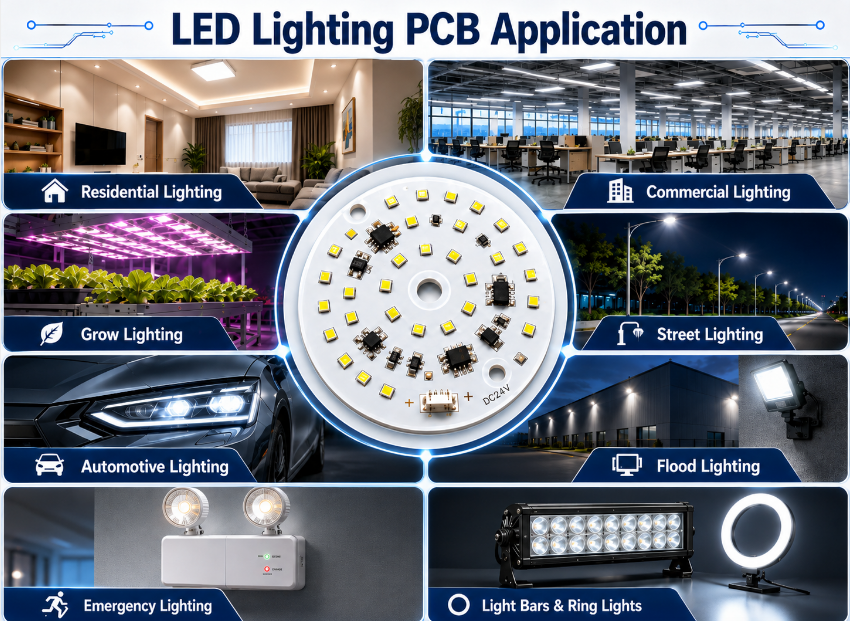
LED Lighting PCB Applications We Support

LED lighting boards are used in many lighting products, and each application has different priorities. Outdoor lighting focuses on heat, waterproof structure, and long service life. Indoor lighting focuses on cost, shape, brightness consistency, and assembly efficiency.

EBest Circuit supports PCB for:

  • Residential lighting: Ceiling lights, downlights, panel lights, and indoor lamps.
  • Commercial lighting: Office lighting, retail lighting, warehouse lighting, and display lighting.
  • Street lighting: High-power street light modules and aluminum PCB solutions.
  • Flood lighting: High-brightness PCB for outdoor and industrial lighting.
  • Grow lighting: Stable current and heat control for horticultural lighting.
  • Automotive lighting: Vehicle lamps, signal lights, and interior lighting.
  • Emergency lighting: Backup lighting systems and emergency light circuit boards.
  • Light bars and ring lights: Custom-shaped boards for compact lighting products.

For each application, we match material, copper thickness, LED layout, and assembly process to the final product structure.

LED Lighting PCB Applications

How Do We Improve Heat Dissipation for LED PCB?

Heat dissipation directly affects brightness stability, color consistency, solder joint life, and product lifespan. If heat is not controlled, LEDs may suffer brightness drop, color shift, solder fatigue, and early failure.

EBest Circuit improves thermal performance through:

  • Aluminum substrate selection: Aluminum PCB improves heat transfer for high-power LED modules.
  • Copper thickness optimization: 1oz, 2oz, or thicker copper supports current flow and heat spreading.
  • Thermal pad control: Proper LED pad design improves heat transfer from LED packages.
  • LED spacing optimization: Correct spacing reduces local hot spots and uneven heating.
  • Surface finish control: HASL and ENIG are selected based on soldering and reliability needs.
  • Thermal testing: Temperature rise is checked during sample validation and production testing.

For high-power projects, aluminum PCB, suitable copper thickness, and fixture-level thermal review are recommended before mass production.

What LED Lighting PCB Assembly Services Do We Provide?

EBest Circuit provides assembly services from bare PCB fabrication to finished LED modules. This helps customers reduce supplier coordination, shorten project cycles, and control quality from one source.

Assembly services include:

  • SMT assembly: For 2835, 5730, 3030, 5050, COB-related components, and LED driver parts.
  • Through-hole assembly: For connectors, terminals, switches, and power components.
  • Mixed assembly: For boards with both SMD and through-hole components.
  • Functional testing: Voltage, current, brightness, polarity, and continuity checks.
  • Turnkey service: PCB fabrication, component sourcing, assembly, testing, and packaging.

This service supports lighting brands, product developers, and OEM lighting manufacturers.

How Do We Control LED Lighting PCB Quality?

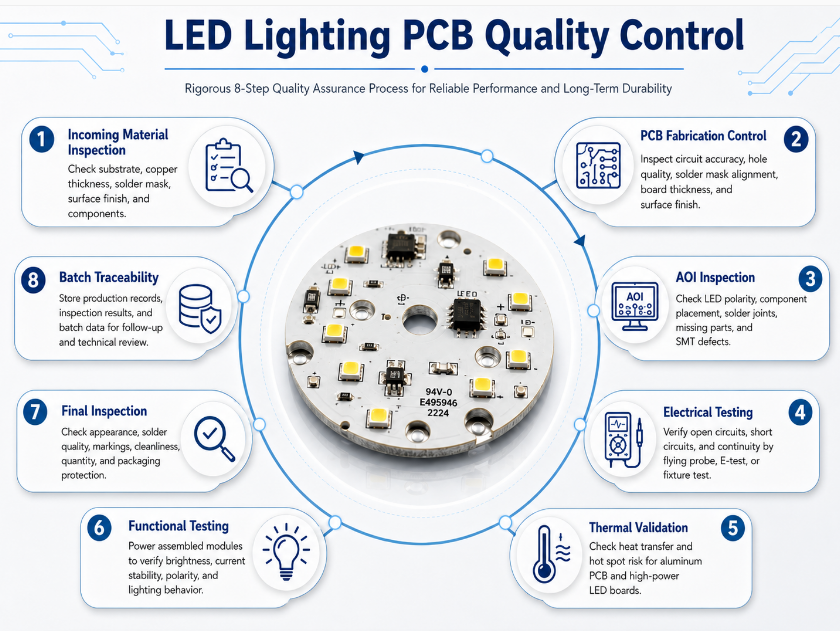
EBest Circuit controls quality from material inspection to final function testing. Each step reduces overheating, soldering defects, electrical failure, and batch inconsistency.

  • Incoming material inspection: We check substrate, copper thickness, solder mask, surface finish, and components before production.
  • PCB fabrication control: We inspect circuit accuracy, hole quality, solder mask alignment, board thickness, and surface finish.
  • AOI inspection: Automated optical inspection checks LED polarity, component placement, solder joints, missing parts, and visible SMT defects.
  • Electrical testing: Flying probe testing, E-test, or fixture testing checks open circuits, short circuits, and continuity.
  • Thermal validation: Aluminum PCB and high-power LED boards are checked for heat transfer and hot spot risk.
  • Functional testing: Assembled modules are powered under working voltage to verify brightness, current stability, polarity, and lighting behavior.
  • Final inspection: Board appearance, solder quality, markings, cleanliness, quantity, and packaging protection are checked before shipment.
  • Batch traceability: Production records, inspection results, and batch data are stored for follow-up and technical review.
LED Lighting PCB Quality Control

How Can We Help Optimize LED Light PCB Cost?

Cost optimization is not about choosing the cheapest board. It is about reducing unnecessary cost while keeping thermal performance, electrical stability, assembly yield, and long-term reliability under control.

Best Technology helps optimize cost through early engineering review, material selection, BOM checking, and production planning.

  • Choose the right material: Use aluminum PCB for high-heat products and FR4 PCB for low-power indoor lighting to avoid over-specification.
  • Optimize copper thickness: Select suitable copper weight based on current load and heat spreading. Too much copper increases cost, while too little copper increases heat risk.
  • Improve PCB size and panel utilization: Review board outline, spacing, and panel layout to reduce material waste and improve production efficiency.
  • Review LED layout before production: Proper spacing reduces hot spots, improves light uniformity, and avoids redesign after sampling.
  • Control BOM cost: Review LEDs, resistors, connectors, drivers, and other parts to find stable, cost-effective alternatives.
  • Reduce assembly defects: DFM review helps avoid solder bridging, wrong pad size, poor polarity marking, and SMT rework.
  • Verify prototype before mass production: Sample testing confirms thermal performance, brightness, current stability, and assembly quality.
  • Optimize order quantity: Proper batch planning reduces setup cost, material waste, packaging cost, and shipping cost per unit.

The final goal is stable LED performance, predictable delivery, and reliable mass production at a controlled total cost.

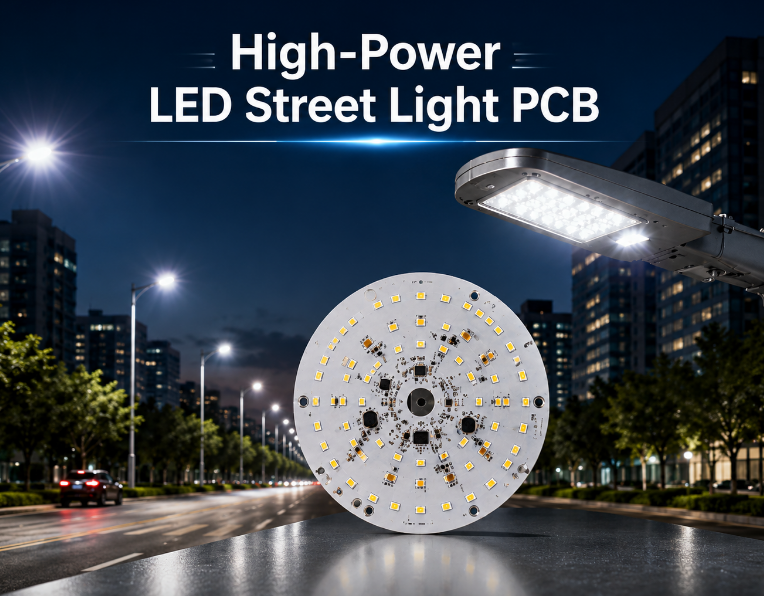
Case Study: High-Power LED Street Light PCB Project

Project Background
A European lighting customer was developing a high-power LED street light for city roads and industrial areas. Their previous supplier had unstable delivery, uneven batch quality, and poor heat dissipation, causing fixture assembly delays and higher project risk.

Project Requirements

  • Quantity: 5,000 high-power LED boards for outdoor street lighting.
  • Power: Support LED modules above 100W.
  • Material: Use aluminum PCB or high thermal conductivity material.
  • Quality: Control defect rate at ≤0.3% and batch consistency at ≥98%.
  • Compliance: Meet RoHS requirements.
  • Performance: Keep uniform light output, stable electrical performance, and long-term operation.

Project Solution

  • PCB structure optimization: Use 2oz aluminum PCB for better current capacity and heat spreading.
  • LED layout improvement: Adjust LED spacing and copper distribution to reduce hot spots and improve light uniformity.
  • Thermal management: Use high thermal conductivity aluminum substrate and optimized thermal paths.
  • Assembly control: Apply AOI inspection, electrical testing, thermal validation, and functional testing during production.
  • Delivery management: Use ERP + MES tracking to control schedule and reduce delivery uncertainty.

Project Results

  • On-time delivery: All 5,000 pieces were completed and shipped on schedule.
  • Stable thermal performance: Hot spot temperature was controlled below 45°C under defined test conditions.
  • Consistent quality: Batch consistency reached ≥98%, and defect rate was controlled at ≤0.3%.
  • Customer approval: The customer approved mass production and continued cooperation on related street light and flood light projects.

This project shows how Best Technology helps customers solve delivery, heat dissipation, and batch quality problems through proper material selection, production control, and full-process testing.

High-Power LED Street Light PCB

Why Choose EBest as Your LED Lighting PCB Manufacturer?

EBest Circuit, also known as Best Technology, is a China source PCB manufacturer with 20+ years of experience. We provide one-stop solutions from design support, prototype, and mass production to component sourcing, assembly, testing, and global delivery.

Here are reasons why choose EBest as your LED lighting PCB manufacturer:

  • Experienced manufacturer: 20+ years of PCB manufacturing experience reduces production risk.
  • One-stop service: Design support, prototype, mass production, sourcing, assembly, and testing are handled by one supplier.
  • Diverse PCB options: FR4, aluminum, metal core, heavy copper, high TG, multilayer, and impedance control PCB are available.
  • Strong production capacity: Monthly capability reaches 260,000 sq. ft / 28,900 sq. m, with 1,000+ boards completed monthly.
  • Fast delivery: Expedited boards can be shipped within 24 hours when project conditions allow.
  • Certified quality: IATF 16949, ISO 9001:2015, ISO 13485:2016, AS9100D, REACH, RoHS, and UL are supported.
  • Global supply: China source factory supply with worldwide shipping and export documentation.
  • Cost transparency: BOM-level cost planning helps lock total project cost before production.
  • Reliable quality: Critical processes are inspected, with defect rate controlled at ≤0.3% and batch consistency reaching ≥98%.
  • Custom project support: OEM and ODM services support residential, commercial, automotive, street light, flood light, grow light, and emergency lighting projects.

FAQs About LED Lighting PCB

Q1: What copper thickness is common for LED lighting PCB?
A1: Common copper thickness includes 1oz, 2oz, and 3oz. For high-power modules, 2oz copper is often used to improve current capacity and heat spreading.

Q2: What thermal conductivity is suitable for aluminum PCB?
A2: Common aluminum PCB thermal conductivity is 1.0–3.0 W/m·K. Higher thermal conductivity is better for high-power lighting with stronger heat output.

Q3: Can LED PCB be custom-shaped?
A3: Yes. Boards can be made in round, ring, bar, square, panel, or irregular shapes according to fixture structure and mounting requirements.

Q4: What surface finishes are common?
A4: HASL and ENIG are common. ENIG provides flatter pads and better solderability, especially for higher-reliability assembly projects.

Q5: Can you assemble 2835 and 5730 LEDs?
A5: Yes. We support 2835, 5730, 3030, 5050, and other standard SMD LED packages based on BOM and placement files.

Q6: What files are needed for quotation?
A6: Recommended files include Gerber, BOM, pick-and-place file, quantity, material, copper thickness, surface finish, and testing requirements.

Q7: How can I reduce LED PCB cost?
A7: Cost can be reduced by optimizing panel usage, material selection, copper thickness, BOM, DFM, and order quantity before production.

Q8: What causes LED PCB overheating?
A8: Common causes include poor thermal path, thin copper, dense LED spacing, weak substrate, or insufficient fixture-level cooling.

Q9: Do you provide prototypes?
A9: Yes. Prototypes help verify thermal performance, electrical stability, LED layout, brightness behavior, and assembly quality before mass production.

Q10: What is the typical lead time?
A10: Standard PCB orders can be completed in about 7 working days. Assembly lead time depends on BOM availability, quantity, and testing requirements.

Q11: Do you support outdoor LED projects?
A11: Yes. We support street lights, flood lights, grow lights, emergency lights, and other outdoor lighting products.

Q12: Can one order include aluminum and FR4 PCB?
A12: Yes. One project can include aluminum PCB for LED power modules and FR4 PCB for control circuits.

Q13: What defect rate is achievable?
A13: Under defined quality criteria, defect rate can be controlled at ≤0.3%, with batch consistency reaching ≥98%.

Q14: Do you provide global delivery?
A14: Yes. We support worldwide delivery by air, sea, or express, based on project urgency and order volume.

Q15: Can you review LED PCB design before production?
A15: Yes. We can review Gerber files, copper width, thermal path, panelization, pad design, and assembly risks before production.

Request a Quote for Your LED Lighting PCB Project

LED lighting PCB performance depends on material selection, heat dissipation, copper design, solder quality, and batch control. Aluminum PCB is suitable for high-power lighting, while FR4 PCB is practical for cost-sensitive indoor lighting.

For procurement, buyers should evaluate delivery stability, quality traceability, testing capability, material selection, and total project cost, not only unit price. EBest Circuit offers custom manufacturing, assembly, cost review, quality inspection, and global delivery from China.

Send your Gerber files, BOM, quantity, material requirement, and assembly details to sales@bestpcbs.com for a fast LED lighting PCB quotation.

You may also like