PCB manufacturing PCB manufacturing
Home > Blog

ceramic pcb design

Ceramic PCB for Power Devices: Materials, Design, and Procurement Guide
Friday, June 5th, 2026

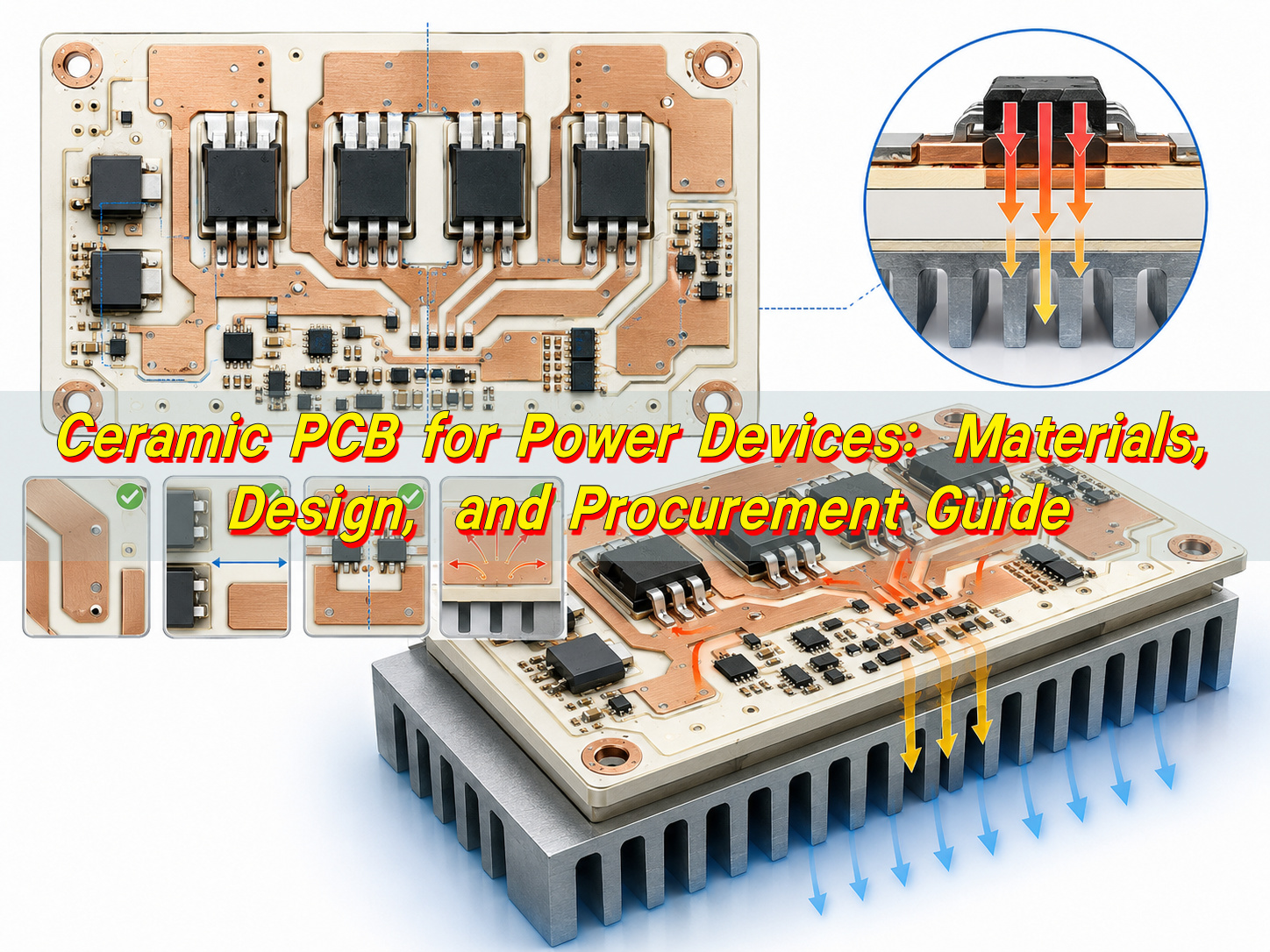
Power devices generate heat, carry high current, and often operate under voltage stress. A standard FR4 PCB can work well in many electronic products, but power modules, SiC devices, GaN devices, IGBT modules, MOSFET packages, rectifiers, high-power LEDs, solar inverters, EV systems, and industrial drives often need stronger thermal paths and better electrical insulation. This is where a ceramic PCB becomes valuable.
Ceramic PCB for Power Devices: Materials, Design, and Procurement Guide

A ceramic PCB for power devices uses a ceramic substrate such as alumina, aluminum nitride, or silicon nitride as the base material. It can dissipate heat faster than common organic laminates, provide stable insulation, and support compact layouts where thermal reliability is a real production concern. The right choice depends on power density, thermal cycling, copper thickness, voltage, device package, assembly method, and cost target.

What Is a Ceramic PCB for Power Devices?

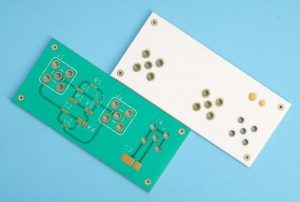
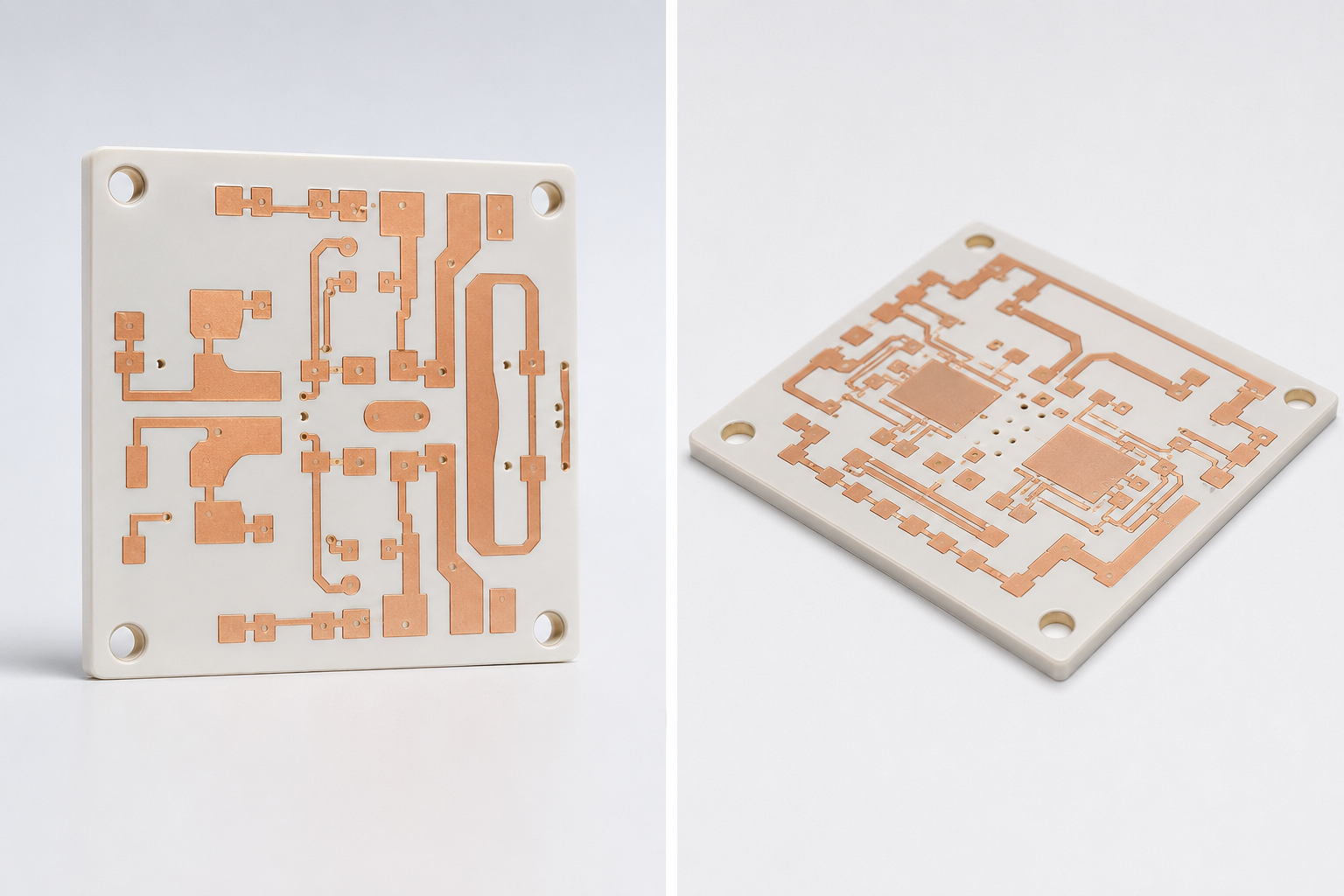
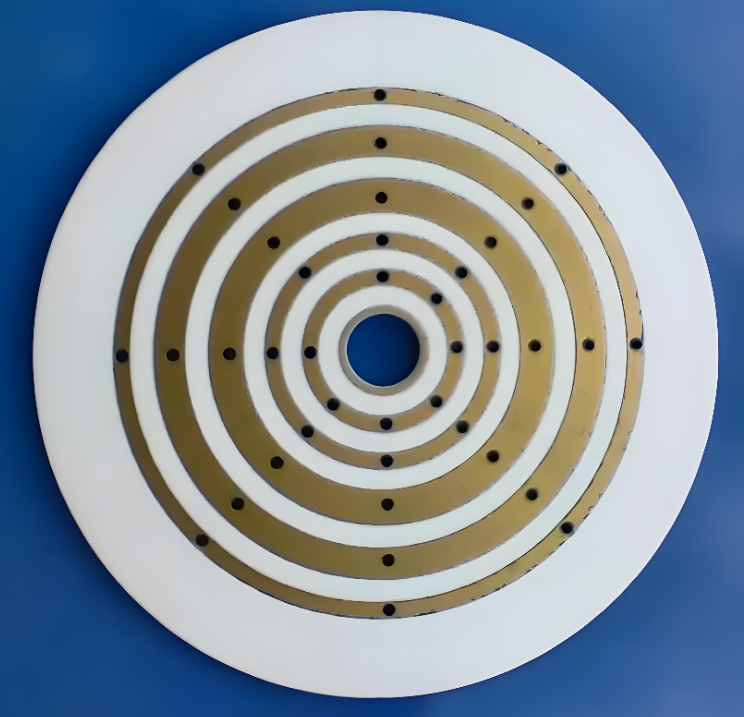
A ceramic PCB for power devices is a circuit board made with a ceramic substrate and metallized conductive layers. Unlike FR4, which uses glass-reinforced epoxy, ceramic boards use inorganic materials that offer high thermal stability, strong dielectric insulation, and excellent dimensional stability.

In power electronics, the board is more than a carrier for components. It also becomes part of the heat-transfer path. Heat moves from the semiconductor junction to the package, solder layer, copper circuit, ceramic substrate, thermal interface material, heat sink, and finally the ambient environment.

Common ceramic PCB structures for power devices include:

StructureTypical Use
DBC ceramic substrateIGBT modules, power modules, motor drives, inverters
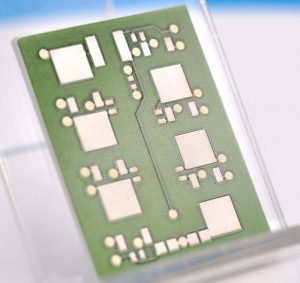
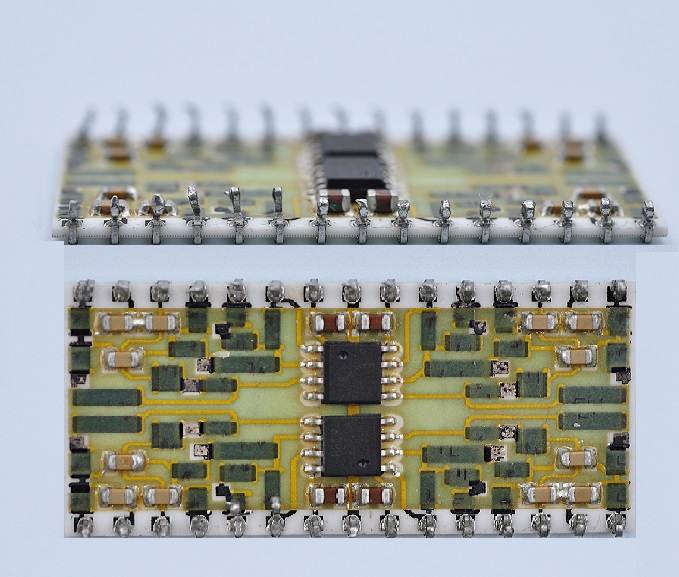
DPC ceramic PCBHigh-precision circuits, LEDs, sensors, compact power modules
AMB ceramic substrateSiC modules, EV power modules, high-reliability power electronics
Thick film ceramic PCBHybrid circuits, resistive circuits, high-temperature electronics
Thin film ceramic PCBFine-line circuits, high-frequency and precision applications

For power devices, the most common discussion usually centers on DBC, DPC, and AMB because they support thermal management, copper bonding, and power module packaging.

Why Do Power Devices Need Ceramic PCBs?

Power devices convert, switch, regulate, or distribute electrical energy. During operation, they generate heat. If heat cannot leave the device efficiently, junction temperature rises, efficiency drops, solder joints age faster, and long-term reliability becomes harder to control.

Ceramic PCB helps solve this problem by combining thermal conductivity and electrical insulation in one structure. Aluminum nitride ceramic substrates can offer much higher thermal conductivity than alumina, while silicon nitride provides strong mechanical reliability for demanding thermal cycling environments. Rogers’ ceramic substrate data lists typical thermal conductivity values such as 24 W/mK for Al2O3, 90 W/mK for Si3N4, and 170 W/mK for AlN.

Power devices also need insulation between high-current conductors and the heat sink. Ceramic materials can conduct heat while remaining electrically insulating, which makes them useful for compact power modules where heat and voltage must be managed at the same time.

How Does a Ceramic PCB Work in Power Electronics?

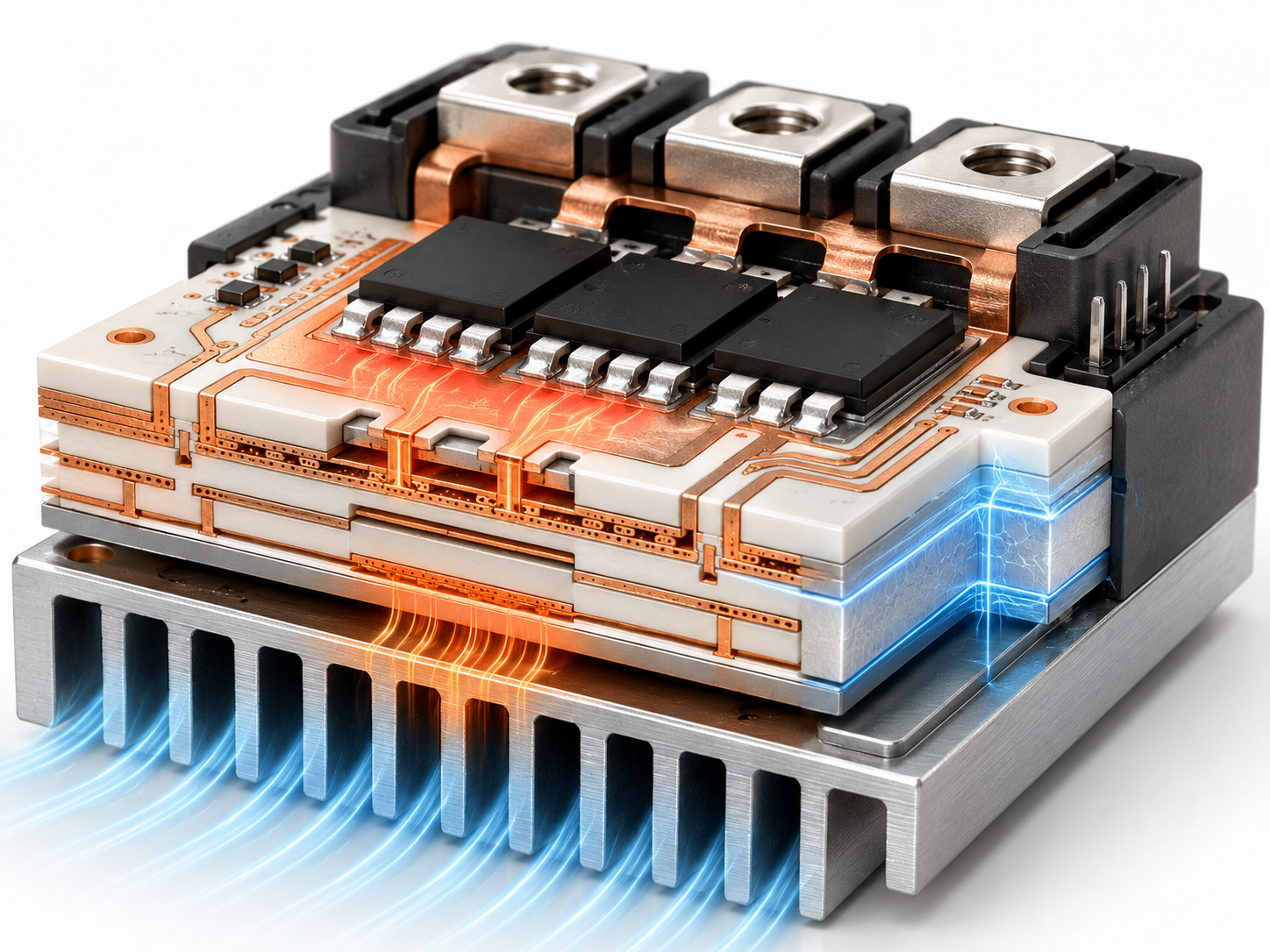
A ceramic PCB works by shortening the thermal path between the power device and the heat sink. In a typical power assembly, copper spreads heat laterally, while the ceramic substrate conducts heat vertically to the cooling structure. The ceramic layer also provides electrical isolation.
Ceramic PCB for Power Devices: Materials, Design, and Procurement Guide

The working logic is simple:

FunctionHow Ceramic PCB Supports It
Heat dissipationCeramic substrate transfers heat away from power chips
Electrical insulationCeramic separates conductive copper from heat sink or housing
Current carryingCopper layer supports power paths and device interconnection
Mechanical supportCeramic base supports chips, solder joints, and terminals
ReliabilityStable material behavior helps resist heat-related deformation

For high-current designs, copper thickness and copper layout matter as much as the ceramic material. A good ceramic substrate with poor copper distribution may still create hot spots. A strong power PCB design should balance thermal spreading, conductor width, copper thickness, clearance, creepage, solder area, and heat sink contact.

What Types of Ceramic PCBs Are Used for Power Devices?

Different ceramic PCB technologies are used for different power levels and manufacturing goals. The best choice depends on the device package, current, voltage, thermal load, circuit accuracy, and reliability requirement.

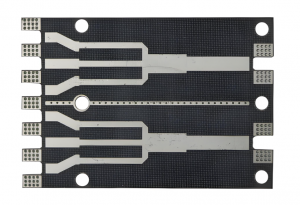
DBC Ceramic PCB

DBC means Direct Bonded Copper. In this process, copper is bonded directly to ceramic through a high-temperature bonding process. It is widely used in power modules because it offers thick copper, good heat spreading, and reliable insulation.

DBC is often used for IGBT modules, rectifier modules, DC-DC converters, motor drives, solar inverters, and industrial power modules.

DPC Ceramic PCB

DPC means Direct Plated Copper. It uses thin-film metallization and electroplating to build copper circuits on ceramic. DPC supports finer lines, smaller spacing, plated vias, and higher circuit precision than traditional thick copper ceramic substrates.

DPC is useful for compact power devices, LED modules, sensors, laser modules, and applications where fine circuit features are required.

AMB Ceramic PCB

AMB means Active Metal Brazing. It uses active brazing alloy to bond copper to ceramic. AMB is especially valuable for silicon nitride ceramic substrates, where mechanical toughness and thermal cycling performance are important.

AMB ceramic substrates are increasingly used in EV power modules, SiC power modules, traction inverters, renewable energy systems, aerospace electronics, and harsh industrial applications. Ferrotec lists AMB substrates on AlN and Si3N4 and DBC substrates on alumina and AlN for power electronic applications.

Thick Film Ceramic PCB

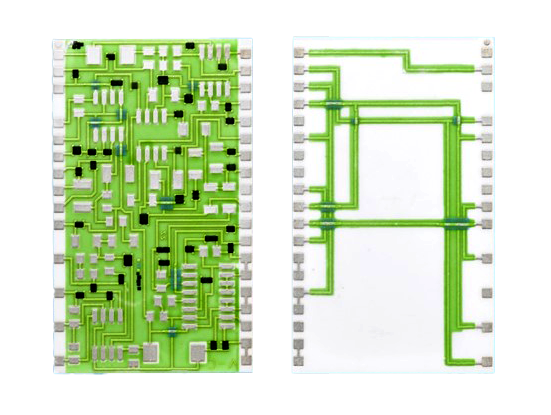
Thick film ceramic PCB uses screen-printed conductor, resistor, or dielectric pastes fired onto ceramic. It is suitable for hybrid circuits, heating circuits, resistive networks, and some high-temperature electronics.

Thin Film Ceramic PCB

Thin film ceramic PCB uses sputtering, photolithography, and etching to create fine and accurate patterns. It is used when precision, stable impedance, or fine-line geometry is required.

Which Ceramic Materials Are Best for Power Devices?

Material selection is one of the most important decisions in ceramic PCB manufacturing. No single ceramic material is best for every project.

MaterialMain StrengthTypical Power Device UseSelection Note
Alumina Al2O3Cost-effective, stable, widely availableMedium-power modules, LED, industrial electronicsGood balance for cost-sensitive projects
Aluminum Nitride AlNHigh thermal conductivityHigh-power LED, RF power, laser, power modulesBetter for high heat flux
Silicon Nitride Si3N4High toughness and thermal cycling reliabilityEV power modules, SiC modules, harsh environmentsGood for reliability-critical modules
Zirconia-toughened alumina ZTAImproved strength over standard aluminaPower substrates needing better mechanical reliabilityIntermediate option
Beryllium Oxide BeOVery high thermal conductivityLegacy or special applicationsLimited use due to health and handling concerns

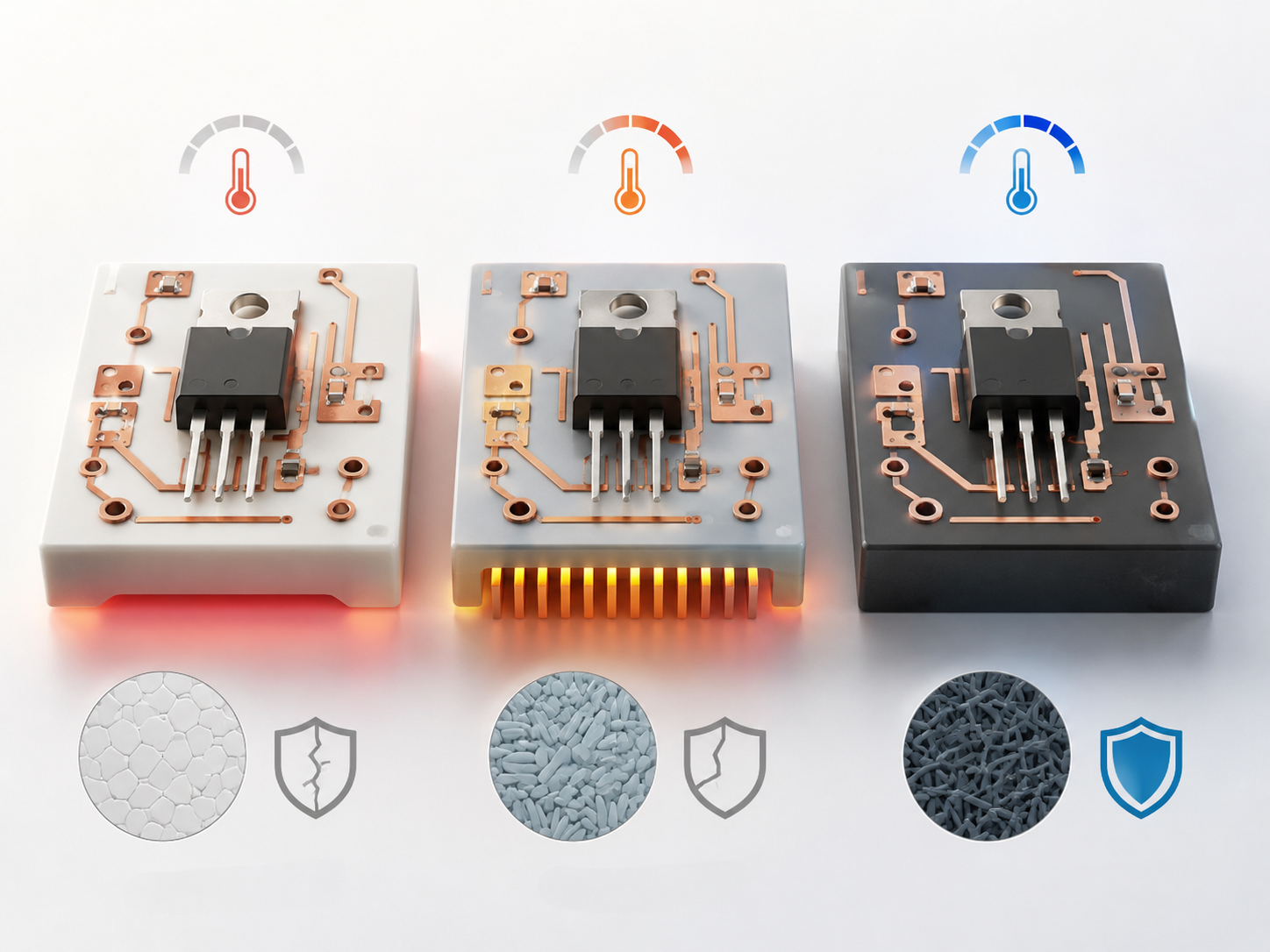
Alumina is often selected when the power level is moderate and cost control matters. AlN is preferred when heat dissipation is the main challenge. Si3N4 is selected when thermal cycling, vibration, or mechanical stress is more demanding.
Ceramic PCB for Power Devices: Materials, Design, and Procurement Guide

For SiC and GaN devices, buyers should be especially careful. These devices may operate at higher switching speeds and higher power density. The substrate must support heat transfer, insulation, partial discharge resistance, copper adhesion, and package-level reliability.

What Key Features Should Engineers Check?

A ceramic PCB for power devices should not be selected only by material name. Engineers and buyers should check measurable parameters.

FeatureWhy It Matters
Thermal conductivityAffects heat transfer from device to heat sink
Dielectric strengthSupports voltage isolation
Copper thicknessImpacts current capacity and heat spreading
Copper peel strengthAffects bonding reliability
Ceramic thicknessBalances insulation, thermal resistance, and strength
Surface finishInfluences solderability, wire bonding, and assembly
Warpage controlImportant for chip mounting and module assembly
Line width and spacingDetermines circuit density and manufacturability
Via structureImportant for DPC ceramic PCB and compact modules
Thermal cycling performancePredicts long-term reliability under repeated heating and cooling

For power devices, the most dangerous mistake is focusing only on thermal conductivity. A high thermal conductivity material may still fail if copper thickness, solder joint design, ceramic thickness, or thermal interface control is not suitable.

What Advantages and Limits Should Buyers Understand?

Ceramic PCB has strong advantages, but it is not a universal replacement for every PCB type.

Advantages

Ceramic PCB offers excellent heat dissipation, strong insulation, good dimensional stability, and better high-temperature performance than many organic board materials. It supports compact power modules where heat needs to move quickly from the device to the heat sink.

It also helps reduce the number of thermal interface layers in some structures. Fewer layers can lower thermal resistance and simplify the thermal path.

Limits

Ceramic materials are harder and more brittle than FR4 or aluminum PCB. Processing, drilling, metallization, and singulation require controlled manufacturing. Cost is usually higher than FR4 or standard metal core PCB. Lead time may also be longer for customized substrates, special copper thickness, tight tolerances, or high-reliability testing.

Ceramic PCB is a strong option when performance justifies the cost. It is not always the lowest-cost solution for low-power products.

How Does Ceramic PCB Compare with FR4, Metal Core PCB, DBC, DPC, and AMB?

Many buyers compare ceramic PCB with FR4 PCB, aluminum PCB, copper substrate PCB, and different ceramic processes. The right answer depends on heat, voltage, current, space, and reliability.

OptionThermal PerformanceElectrical InsulationCost LevelBest Fit
FR4 PCBLow to mediumGoodLowGeneral electronics, control boards
High-Tg FR4 PCBMediumGoodLow to mediumHigher soldering or operating temperature
Aluminum PCBMedium to goodDepends on dielectric layerMediumLED, power supply, moderate thermal load
Copper substrate PCBGoodDepends on dielectric layerMedium to highHigh-power thermal spreading
DPC ceramic PCBGood to excellentExcellentHighFine-line ceramic circuits, compact modules
DBC ceramic PCBExcellent for powerExcellentHighIGBT, inverter, power modules
AMB ceramic PCBExcellent reliabilityExcellentHighSiC, EV, high thermal cycling applications

For many power modules, DBC and AMB are more relevant than ordinary ceramic PCB. For high-precision ceramic circuits, DPC may be more suitable. For simple high-power LED boards, aluminum PCB may still be enough if the thermal requirement is moderate.

How Should You Select the Right Ceramic PCB for a Power Project?

Selection should start with the power device and operating environment. Before choosing Al2O3, AlN, Si3N4, DBC, DPC, or AMB, clarify the real engineering target.

A practical selection path looks like this:

Project RequirementRecommended Direction
Cost-sensitive medium-power boardAlumina ceramic PCB
High heat flux and compact sizeAlN ceramic PCB
High thermal cycling reliabilitySi3N4 AMB ceramic substrate
Thick copper and power module structureDBC ceramic substrate
Fine circuit pattern and plated viasDPC ceramic PCB
Hybrid circuit with printed resistorsThick film ceramic PCB
Fine-line precision circuitThin film ceramic PCB

For procurement teams, the safest method is to share the power device type, voltage, current, heat dissipation target, ceramic material preference, copper thickness, board size, surface finish, assembly method, and annual demand. A factory can then check manufacturability and suggest a stable production route.

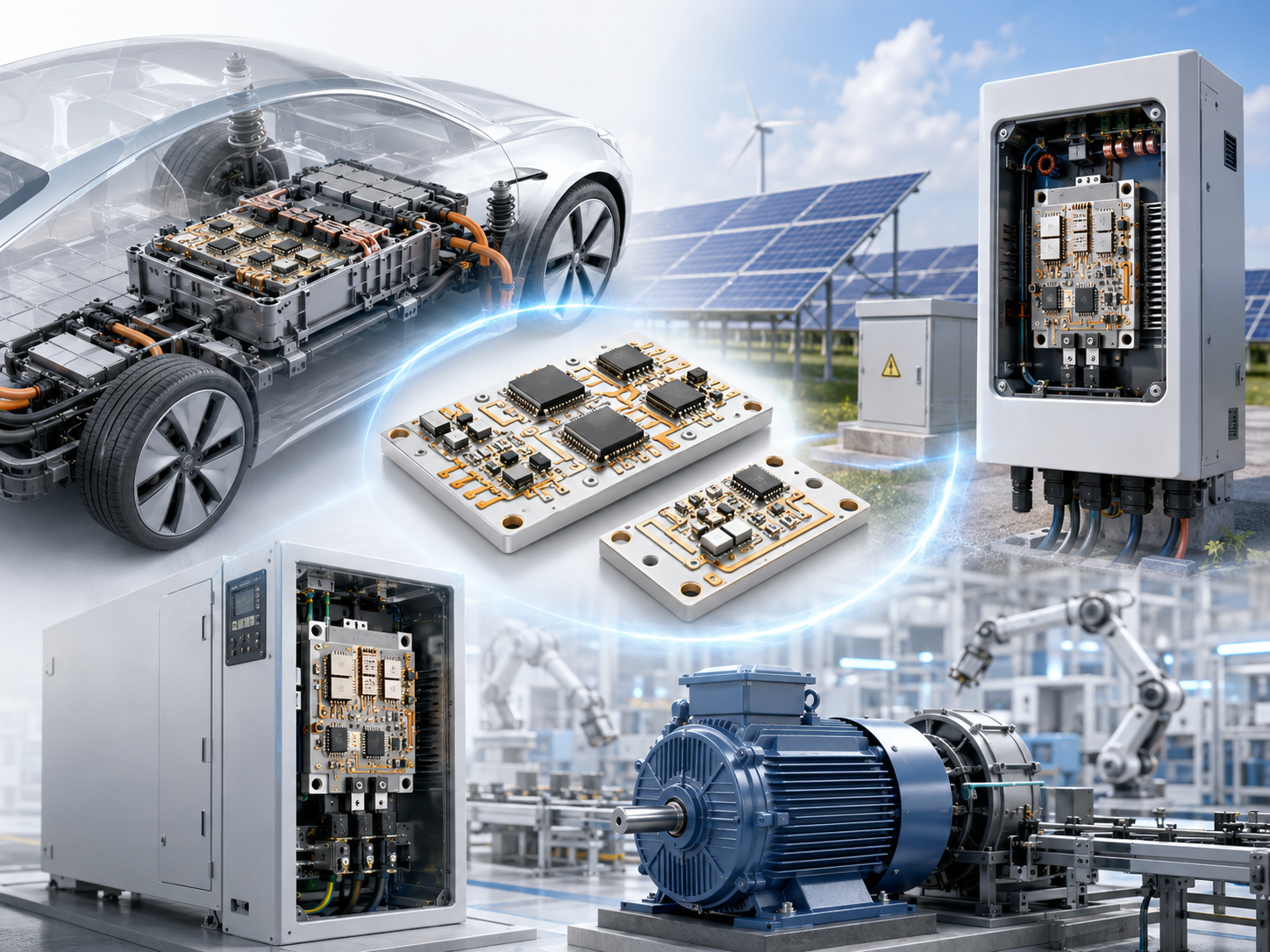
Where Are Ceramic PCBs Used in Power Electronics?

Ceramic PCB is used in industries where heat, current, insulation, and reliability are tied together.
Ceramic PCB for Power Devices: Materials, Design, and Procurement Guide

Electric Vehicles and Charging Systems

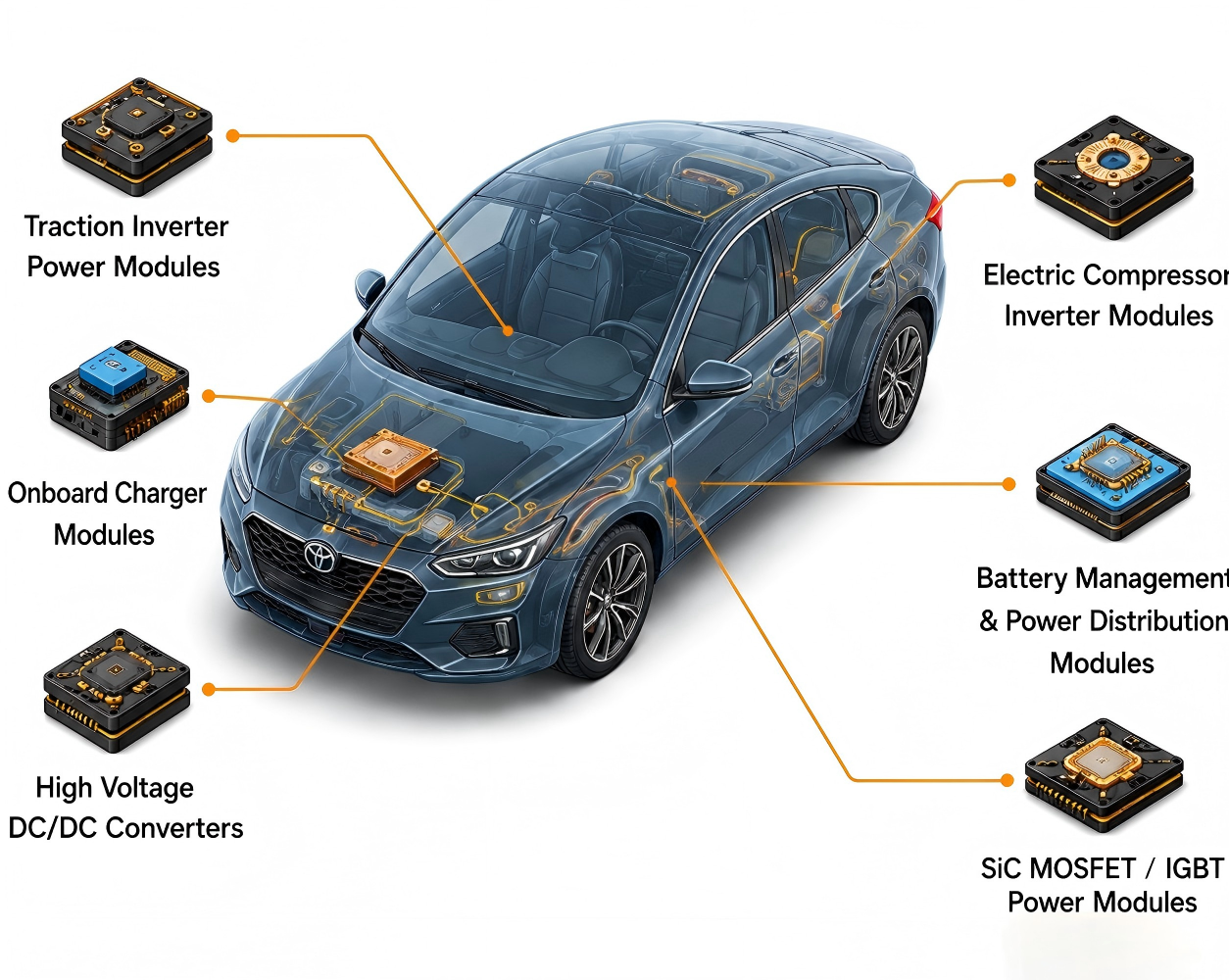
EV traction inverters, onboard chargers, DC-DC converters, battery management systems, and charging modules often use high-density power devices. SiC modules and IGBT modules may require ceramic substrates with strong thermal cycling resistance.

Renewable Energy

Solar inverters, wind power converters, and energy storage systems need long service life and stable thermal behavior. DBC and AMB ceramic substrates can support power conversion modules in demanding operating environments.

Industrial Drives and Automation

Motor drives, servo drives, power controllers, welding equipment, and industrial power supplies generate heat during long operation. Ceramic PCB helps improve thermal transfer and insulation.

High-Power LED and Laser Modules

High-power LED, UV LED, laser diode, and optical modules use ceramic PCB to control junction temperature and keep light output stable.

Aerospace and Defense Electronics

These applications may require higher reliability, thermal shock resistance, and stable performance under vibration or temperature cycling.

Medical and Scientific Equipment

Power supply modules, imaging systems, laser modules, and precision instruments may use ceramic PCB when heat control and dimensional stability are important.

What Practical Cases Show Ceramic PCB Value?

A common case is a high-power LED module that suffers from brightness decay and solder fatigue. Replacing a standard board with AlN ceramic PCB can reduce thermal bottlenecks and help maintain more stable heat transfer from the LED chip to the heat sink.

Another case is an EV inverter power module. The module may face repeated heating and cooling during acceleration, braking, charging, and environmental temperature changes. In this situation, Si3N4 AMB may be preferred because mechanical toughness and copper bonding reliability become more important than material price alone.

A third case is a compact industrial power module. The buyer needs thick copper, high insulation, and stable soldering. DBC ceramic substrate can provide a direct thermal path and support high-current operation in a smaller package.

These cases show a clear point: ceramic PCB selection is not only about ā€œhigher thermal conductivity.ā€ It is about matching the substrate structure to the failure risk of the actual product.

What Design and DFM Points Matter Before Fabrication?

Ceramic PCB design should be reviewed early because ceramic materials are less forgiving than standard FR4. A small layout decision can affect yield, cost, and long-term reliability.

Important DFM points include:

DFM ItemWhy It Matters
Copper thicknessImpacts etching tolerance, current capacity, and stress
Copper balanceHelps control warpage and thermal stress
Corner radiusReduces stress concentration in copper patterns
Ceramic thicknessBalances insulation, strength, and thermal resistance
Clearance and creepageImportant for high-voltage power devices
Solder pad sizeAffects solder voiding and assembly reliability
Via designCritical for DPC structures
Edge distancePrevents cracking during cutting or handling
Surface finishMust match soldering, wire bonding, or die attach process
PanelizationAffects cost, yield, and production handling

For high-power modules, engineers should avoid sharp copper corners where possible. Rounded copper features can reduce local stress during thermal cycling. For thick copper DBC or AMB substrates, copper pattern geometry should be reviewed with the manufacturer before tooling.

How Are Ceramic PCBs Manufactured and Tested?

Manufacturing depends on the ceramic material and process route. DPC, DBC, AMB, thick film, and thin film all use different production methods.

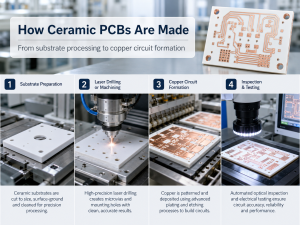
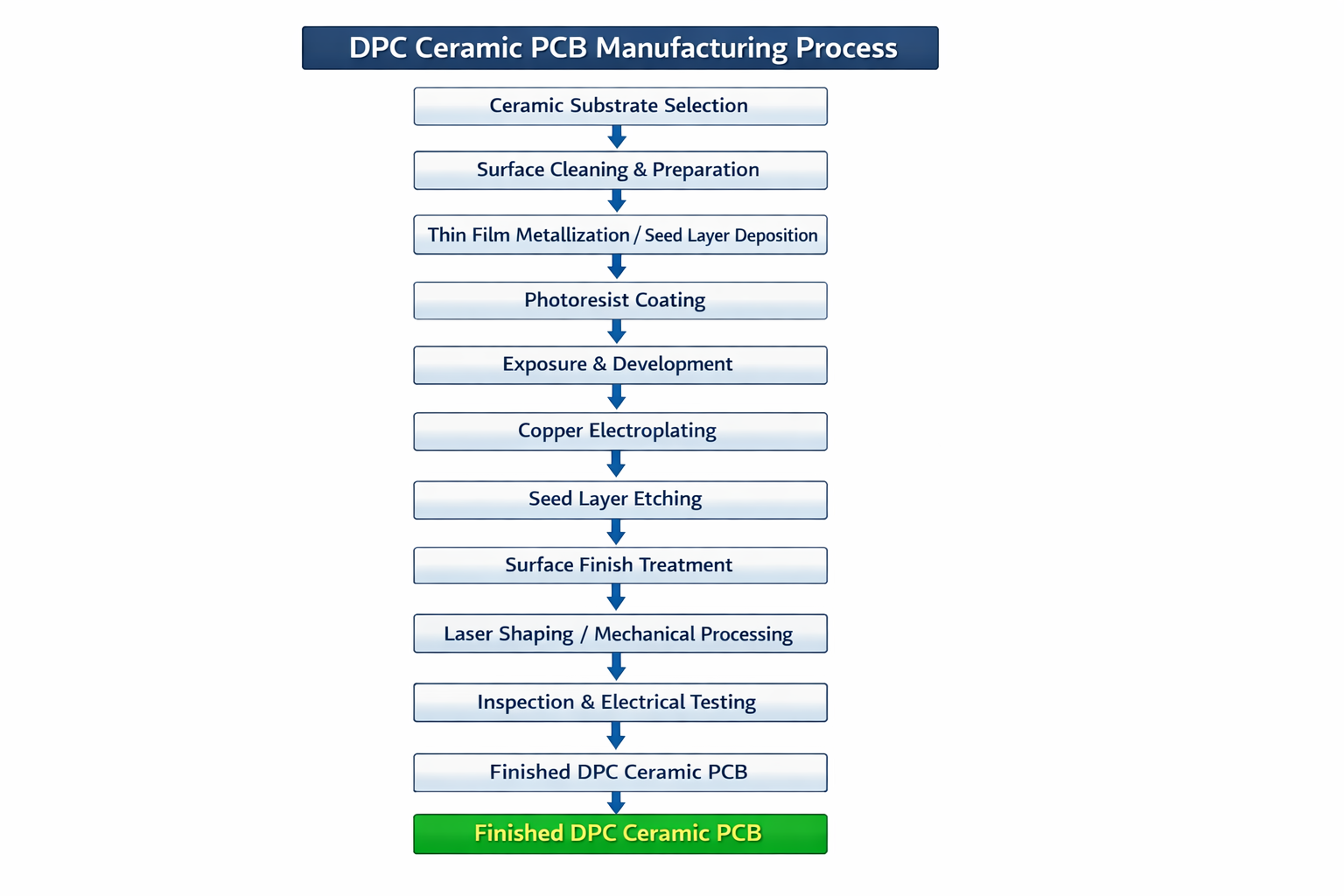
A simplified manufacturing flow may include ceramic substrate preparation, cleaning, metallization, copper bonding or plating, imaging, etching, drilling or laser processing, surface finishing, inspection, electrical testing, and packaging.

Quality testing should be built around the final use. For power devices, common checks include:

Test or InspectionPurpose
Visual inspectionChecks surface defects, contamination, copper damage
Dimensional inspectionConfirms outline, hole, pad, and pattern tolerance
Electrical testChecks open and short circuits
Insulation resistance testConfirms isolation performance
Dielectric withstand testVerifies high-voltage insulation capability
Copper thickness testConfirms current and thermal design assumptions
Peel strength testChecks copper bonding strength
Solderability testSupports assembly reliability
Warpage measurementHelps control module assembly quality
Thermal cycling testEvaluates reliability under temperature changes
X-ray inspection after assemblyChecks voids, solder joints, and hidden defects

IPC-6012F covers qualification and performance requirements for rigid printed boards, including plating, conductors, holes, acceptance testing, and mechanical and environmental requirements. While ceramic substrates may need project-specific criteria beyond standard FR4 PCB checks, IPC-based inspection language is still useful for documentation and customer communication.

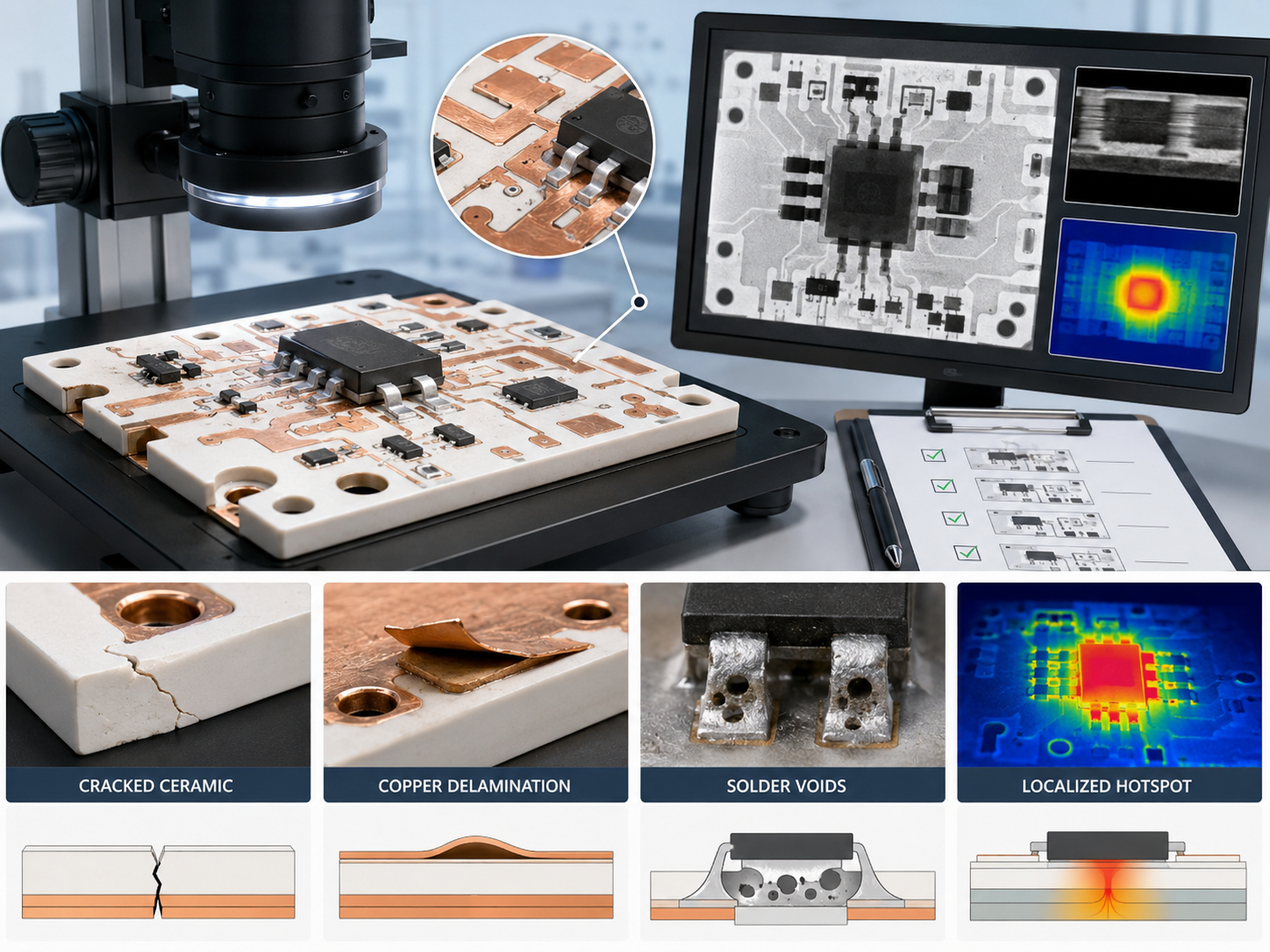
What Failure Modes Should Be Checked in Power Ceramic PCBs?

Power ceramic PCB failure usually comes from heat, stress, poor bonding, contamination, or unsuitable assembly conditions. Failure analysis should look at the whole stack, not only the ceramic board.
Ceramic PCB for Power Devices: Materials, Design, and Procurement Guide

Common failure modes include:

Failure ModePossible CausePrevention Method
Ceramic crackingMechanical shock, poor panel design, edge stressControl handling, edge distance, cutting method
Copper delaminationWeak bonding, thermal cycling, poor process controlVerify peel strength and bonding process
Solder voidingPoor paste control, unsuitable reflow, pad design issueOptimize soldering profile and pad geometry
Hot spotsPoor copper spreading, bad thermal interface, uneven die attachImprove copper layout and thermal path
Insulation breakdownInsufficient ceramic thickness, contamination, voltage stressCheck dielectric strength and cleanliness
Partial dischargeHigh voltage, voids, insulation weaknessImprove insulation design and test criteria
WarpageCopper imbalance, thermal stress, substrate mismatchBalance copper and control process conditions
Surface oxidationPoor storage or finish controlUse proper packaging and surface finish

Thermal cycling is one of the most important reliability concerns. Copper and ceramic expand at different rates. Repeated heating and cooling can create stress at bonded interfaces, solder joints, and copper corners. This is why material toughness, copper geometry, bonding quality, and assembly process control all matter.

What Affects Ceramic PCB Cost and Lead Time?

Ceramic PCB cost depends on material, process, copper thickness, tolerance, testing, and order volume. AlN and Si3N4 usually cost more than alumina. AMB and DBC substrates also need controlled high-temperature bonding processes, so they are normally more expensive than simple FR4 or aluminum PCB.

Major cost factors include:

Cost FactorImpact
Ceramic materialAl2O3 is usually lower cost; AlN and Si3N4 cost more
Board sizeLarger ceramic panels increase material and yield risk
Copper thicknessThicker copper increases processing difficulty
Circuit toleranceFine lines and tight spacing increase cost
Surface finishENIG, silver, gold, or special finishes affect price
Via structureDPC vias increase process complexity
Testing requirementExtra reliability tests add cost and time
Order quantityPrototype price is higher per piece than batch production
Custom toolingNew shapes and special processes may need tooling
Packaging requirementVacuum packing, dry packing, and export packing add handling steps

A useful cost-control method is to avoid over-specification. For example, do not choose AlN if alumina can meet the thermal target. Do not request ultra-tight tolerance if the module assembly does not require it. Do not use AMB when DBC can meet the reliability requirement.

How Can Buyers Choose a Ceramic PCB Supplier?

A good ceramic PCB supplier should understand materials, manufacturing limits, testing, and power electronics reliability. Price matters, but low price without process control can create higher cost later through assembly failure, field returns, or unstable delivery.

Before choosing a supplier, buyers should check:

Supplier CheckWhat to Confirm
Ceramic material capabilityAl2O3, AlN, Si3N4, ZTA availability
Process capabilityDPC, DBC, AMB, thick film, thin film support
Copper capabilityCopper thickness, bonding strength, pattern tolerance
Quality controlElectrical test, insulation test, peel strength, dimensional report
Engineering supportDFM review, stack-up review, material suggestion
DocumentationRoHS, REACH, material data, inspection report
Production experiencePrototype, small batch, and volume manufacturing
Export supportGlobal shipping, packaging, customs documentation
CommunicationFast feedback on technical questions and drawings
Long-term stabilityRepeat production control and traceability

For Europe and North America, buyers often care about compliance documentation, stable repeatability, and long-term quality records. For Southeast Asia and emerging manufacturing regions, lead time, flexible MOQ, and total landed cost can be decisive. A China-based source factory can support global buyers with custom fabrication, batch production, DFM feedback, and export delivery without claiming false local manufacturing locations.

RoHS compliance is also important for many electrical and electronic products. The European Commission states that RoHS currently restricts ten substances in electrical and electronic equipment, including lead, cadmium, mercury, hexavalent chromium, PBB, PBDE, and four phthalates.

What Should Be Checked Before Ordering Ceramic PCB for Power Devices?

Before placing an order, buyers should prepare a clear technical package. This helps the manufacturer quote accurately and reduce engineering back-and-forth.

Recommended order checklist:

ItemRequired Information
ApplicationPower module, LED, inverter, charger, laser, sensor, etc.
Power deviceIGBT, MOSFET, SiC, GaN, diode, LED chip
Ceramic materialAl2O3, AlN, Si3N4, or open for recommendation
ProcessDPC, DBC, AMB, thick film, thin film
Copper thicknessTop and bottom copper thickness
Ceramic thicknessRequired insulation and thermal target
Surface finishENIG, silver, gold, OSP, or other finish
Drawing filesGerber, DXF, mechanical drawing, stack-up
ToleranceLine width, spacing, outline, hole, thickness
TestingElectrical test, Hi-Pot, insulation resistance, thermal cycling
Assembly needsSoldering, wire bonding, die attach, SMT, module assembly
QuantityPrototype, pilot run, mass production forecast
CertificationRoHS, REACH, UL file if applicable, inspection report

A complete file package gives the factory enough information to evaluate manufacturability, cost, and lead time. It also helps prevent wrong material selection and avoids delay before production.

FAQ About Ceramic PCB for Power Devices

Is ceramic PCB better than FR4 for power devices?

Ceramic PCB is better when the project needs high heat dissipation, strong insulation, compact structure, or stable operation under high temperature. FR4 is still suitable for many control circuits and low-to-medium power electronics. The choice depends on power density, temperature rise, voltage, current, cost target, and reliability requirement.

Which ceramic material is best for high-power devices?

Aluminum nitride is often selected for high thermal conductivity. Silicon nitride is preferred when thermal cycling and mechanical toughness are critical. Alumina is a practical choice for medium-power projects with cost control. For EV modules, SiC modules, and harsh environments, Si3N4 AMB is often considered a strong option.

What is the difference between DBC and DPC ceramic PCB?

DBC uses bonded copper and is suitable for thick copper power substrates. DPC uses metallization and plating, allowing finer circuit patterns and plated vias. DBC is common in IGBT and inverter modules. DPC is often used in compact, high-precision ceramic circuits, LED modules, and sensor-related products.

What is the difference between DBC and AMB ceramic substrate?

DBC bonds copper directly to ceramic, usually alumina or AlN. AMB uses active brazing alloy to bond copper to ceramic and is especially useful for Si3N4 substrates. AMB is often chosen for higher reliability under thermal cycling, while DBC is widely used in established power module applications.

Can ceramic PCB carry high current?

Yes, ceramic PCB can support high-current applications when copper thickness, conductor width, thermal path, and bonding quality are properly designed. The ceramic itself provides insulation and heat transfer, while copper carries current. Current capacity should be calculated based on copper geometry, temperature rise, cooling method, and device layout.

Is AlN ceramic PCB always better than alumina ceramic PCB?

No. AlN has much higher thermal conductivity, but alumina is more cost-effective and suitable for many medium-power applications. If the heat load is not extreme, alumina may provide a better cost-performance balance. AlN is more suitable when thermal resistance must be reduced in a compact structure.

Why is silicon nitride used in EV power modules?

Silicon nitride has strong mechanical toughness and good thermal cycling reliability. EV power modules may face repeated temperature changes, vibration, and high power density. Si3N4 AMB substrates can help improve long-term reliability where standard ceramic substrates may be more vulnerable to stress-related cracking.

What surface finish is used on ceramic PCB?

Common surface finishes include ENIG, immersion silver, gold plating, and other application-specific finishes. The right finish depends on soldering, wire bonding, die attach, storage time, and assembly process. For power modules, solderability and bonding compatibility should be confirmed before production.

What causes ceramic PCB cracking?

Cracking may come from mechanical impact, poor edge design, excessive stress during assembly, thermal shock, sharp copper geometry, or unsuitable panelization. Ceramic materials are hard but brittle, so handling, cutting, packaging, and assembly process control are important for yield and reliability.

How can solder voids be reduced on ceramic PCB assemblies?

Solder voids can be reduced through proper pad design, solder paste selection, stencil control, reflow profile optimization, vacuum reflow when needed, and clean surface finish. For power devices, void control is important because voids increase thermal resistance and may create local hot spots.

How much does ceramic PCB cost?

Cost depends on ceramic material, board size, copper thickness, process type, surface finish, tolerance, testing, and quantity. Alumina is usually more economical. AlN and Si3N4 cost more. DBC and AMB structures also cost more than standard FR4 or aluminum PCB because the process is more specialized.

What files are needed for a ceramic PCB quotation?

A complete quotation package should include Gerber files, mechanical drawing, stack-up, material request, copper thickness, ceramic thickness, surface finish, quantity, tolerance, testing requirement, and application notes. If the material is not decided, share the power device, voltage, current, and thermal target for review.

Can ceramic PCB be used for SiC and GaN devices?

Yes. Ceramic PCB is often used for SiC and GaN power devices because these devices can generate high heat density and require strong insulation. Material and process selection should consider switching frequency, voltage stress, thermal cycling, soldering method, and module structure.

How do buyers verify ceramic PCB quality?

Buyers can request dimensional reports, electrical test records, copper thickness measurement, insulation resistance, Hi-Pot testing, peel strength data, solderability checks, and material compliance documents. For power modules, thermal cycling or application-specific reliability testing may also be needed.

How should I choose between a prototype supplier and a mass production factory?

For power ceramic PCB, choose a supplier that can support both engineering validation and repeat production. Prototype speed is useful, but batch consistency matters more for long-term projects. A capable source factory should provide DFM feedback, stable material sourcing, process control, inspection records, and global delivery support.

Conclusion:

Ceramic PCB for power devices is selected when heat dissipation, insulation, current handling, and reliability must work together in a compact structure. Alumina is suitable for cost-sensitive and medium-power applications. Aluminum nitride is better for high heat flux. Silicon nitride, especially with AMB technology, is a strong choice for thermal cycling and harsh operating environments.

For engineering selection, do not judge the board by thermal conductivity alone. Review copper thickness, ceramic thickness, process type, surface finish, insulation distance, soldering method, thermal cycling risk, and test requirements. For procurement, choose a manufacturer that can support DFM review, custom ceramic PCB fabrication, prototype development, batch production, quality documentation, and global delivery from a real China-based source factory.

If you need ceramic PCB for IGBT modules, SiC devices, GaN power devices, high-power LEDs, inverters, chargers, industrial drives, renewable energy equipment, or customized power electronics, working with an experienced ceramic PCB manufacturer can reduce trial-and-error cost and improve production stability.
You may also like

What is a Ceramic PCB Testing Process, and Why Is It Necessary?
Wednesday, May 20th, 2026

Ceramic PCBs are widely recognized for their thermal stability, outstanding insulation performance, and long-term reliability in demanding electronic applications. From automotive control systems to aerospace electronics and medical instruments, ceramic-based circuit boards are chosen when standard FR4 materials can no longer meet thermal or electrical requirements.

What is a Ceramic PCB Testing Process, and Why Is It Necessary?

Testing is not simply a routine quality checkpoint. It is a carefully controlled verification system that confirms whether the board can survive electrical loads, thermal cycling, mechanical stress, and long operating hours without failure. In high-performance electronics, even a tiny defect in a ceramic substrate can influence signal transmission, solderability, or heat dissipation.

At EBest Circuit (Best Technology), ceramic PCB testing is integrated into every production stage, from incoming raw material inspection to final electrical verification. This approach helps ensure that each ceramic PCB prototype and production batch achieves consistent quality, dimensional precision, and dependable functionality for industrial applications.

What Is the Ceramic PCB Testing Process?

The ceramic PCB testing process refers to a series of inspections, measurements, and validation procedures performed before, during, and after production. Its purpose is to confirm that the ceramic PCB design matches technical specifications and can operate reliably under real application conditions.

Unlike ordinary printed circuit boards, ceramic PCBs use substrates such as aluminum oxide (Al2O3), aluminum nitride (AlN), or silicon nitride (Si3N4). These materials provide excellent thermal conductivity and electrical insulation, but they also require more specialized processing and inspection methods.

Testing usually begins long before manufacturing starts. Engineering teams first evaluate design files, Gerber data, drilling accuracy, copper layout, and thermal management structures. During production, additional inspections monitor ceramic surface quality, metallization consistency, dimensional tolerance, and layer alignment. After fabrication, the boards undergo electrical and reliability testing to verify performance.

The complete ceramic PCB manufacturing process typically includes testing stages such as:

  • Raw material inspection
  • Design verification
  • Dimensional measurement
  • Circuit continuity testing
  • Insulation resistance testing
  • Thermal shock testing
  • Surface finish evaluation
  • Solderability analysis
  • Environmental reliability validation

Because ceramic materials behave differently from FR4 laminates, testing standards are often tighter. Small cracks, uneven metallization, or microscopic voids may influence long-term stability, especially in high-power applications.

For manufacturers like EBest Circuit (Best Technology), testing is not treated as a final step alone. It is a continuous quality management strategy integrated throughout the entire production workflow.

What Main Tests Are Included in Ceramic PCB Testing Process?

Ceramic PCB testing involves multiple inspection categories. Each test targets a different aspect of board reliability and electrical performance.

Visual and Microscopic Inspection

The first stage usually focuses on surface quality. Engineers inspect the board under magnification to identify:

  • Surface scratches
  • Ceramic cracks
  • Metallization defects
  • Copper contamination
  • Misaligned drilling
  • Uneven solder mask coverage

Since ceramic materials are rigid and brittle compared with traditional PCB materials, microscopic inspection becomes especially important.

Dimensional Accuracy Testing

Precision dimensions directly affect assembly compatibility. Automated optical measurement systems verify:

Inspection ItemPurpose
Board thicknessEnsures thermal consistency
Hole diameterSupports component fitting
Pad spacingPrevents short circuits
Outline toleranceGuarantees assembly alignment
Layer registrationConfirms multilayer accuracy

Even slight dimensional deviations can influence mounting accuracy in high-density applications.

Electrical Testing

Electrical verification is one of the most critical parts of the ceramic PCB testing process. This stage confirms that conductive paths operate exactly as designed.

Common electrical tests include:

  • Continuity testing
  • Open/short circuit detection
  • High-voltage insulation testing
  • Dielectric strength testing
  • Resistance measurement

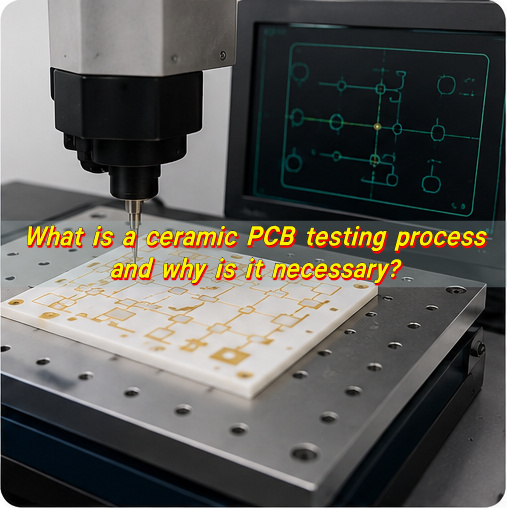
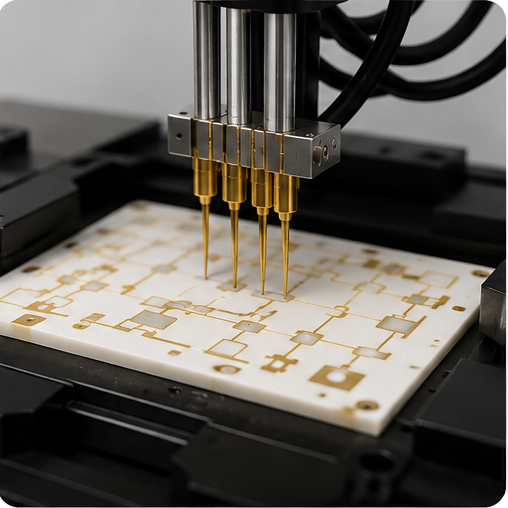
Flying probe systems and bed-of-nails fixtures are commonly used depending on production volume.

What is a Ceramic PCB Testing Process, and Why Is It Necessary?

Thermal Reliability Testing

Ceramic PCBs are often selected for their superior thermal conductivity. Testing therefore focuses heavily on heat performance.

Typical thermal tests include:

  • Thermal cycling
  • Thermal shock exposure
  • High-temperature storage
  • Heat dissipation validation
  • Power load simulation

These procedures help determine whether the board structure remains stable after repeated heating and cooling cycles.

Mechanical Strength Testing

Although ceramic substrates offer excellent rigidity, their brittleness requires careful evaluation. Mechanical tests may include:

  • Flexural strength analysis
  • Peel strength testing
  • Shear testing
  • Drop impact simulation

These tests help verify structural durability during assembly and operation.

Surface Finish Evaluation

Surface finishes directly influence soldering reliability and oxidation resistance. Inspection methods evaluate coating uniformity, thickness, and adhesion.

Popular surface finishes for ceramic PCBs include:

  • ENIG (Electroless Nickel Immersion Gold)
  • Silver plating
  • Tin plating
  • OSP coating

Each finish requires specific testing methods to verify quality consistency.

What Standards Are Followed in Ceramic PCB Testing?

The ceramic PCB industry follows strict international standards to maintain manufacturing consistency and reliability. These standards provide measurable benchmarks for inspection, electrical safety, thermal performance, and environmental durability.

Several major organizations define testing criteria for ceramic PCBs.

IPC Standards

IPC standards are widely adopted across the electronics industry. Important IPC specifications include:

IPC StandardFunction
IPC-6012Qualification and performance of rigid PCBs
IPC-6013Flexible and rigid-flex PCB qualification
IPC-A-600Acceptability of printed boards
IPC-TM-650Standardized PCB test methods

These standards help ensure that ceramic PCBs meet industry-accepted quality levels.

MIL Standards

Military electronics often require additional reliability testing due to harsh operating environments. MIL standards emphasize:

  • Extreme temperature endurance
  • Shock resistance
  • Vibration durability
  • Long operational lifespan

Many aerospace and defense applications rely on these advanced testing procedures.

ISO Quality Systems

Manufacturers operating under ISO9001 quality management systems maintain tighter production controls and traceability. At EBest Circuit (Best Technology), ISO-driven procedures help ensure stable manufacturing consistency across ceramic PCB production batches.

RoHS and REACH Compliance

Environmental compliance testing also plays a major role. Ceramic PCBs are often inspected for hazardous material restrictions under:

  • RoHS directives
  • REACH regulations

These certifications support global product compatibility and environmental responsibility.

Why Is Ceramic PCB Testing Important?

Testing protects product reliability, customer safety, and long-term operational stability. In many high-power electronic systems, board failure can cause expensive downtime or complete equipment malfunction.
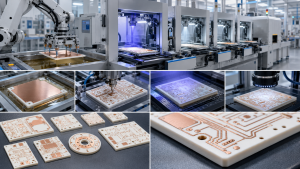
Ceramic PCBs are commonly used in:

  • Power electronics
  • Automotive systems
  • LED lighting
  • RF communication
  • Aerospace electronics
  • Medical devices

In these applications, performance consistency matters tremendously.

What is a Ceramic PCB Testing Process, and Why Is It Necessary?

Ensuring Thermal Reliability

One major reason for ceramic PCB popularity is heat management capability. Testing confirms whether thermal conductivity remains stable under real operating loads.

Without proper thermal verification, overheating can damage:

  • Power semiconductors
  • LED chips
  • RF modules
  • High-frequency circuits

Reliable testing helps prevent thermal failure before products reach the field.

Preventing Electrical Failures

Electrical testing detects hidden defects that may not appear during visual inspection. Tiny shorts, weak insulation areas, or incomplete conductive paths can create intermittent failures later.

This is especially critical in:

  • High-voltage applications
  • RF communication systems
  • Medical monitoring equipment

Consistent testing greatly improves operational confidence.

Supporting Long-Term Product Stability

Ceramic materials are engineered for long service life. Reliability testing helps predict performance under extended operating conditions, including temperature fluctuations and humidity exposure.

Long-term testing also reduces warranty risks and improves customer satisfaction.

Improving Production Yield

Testing identifies process weaknesses early in production. Manufacturers can adjust parameters quickly before large-scale defects occur.

This helps improve:

  • Manufacturing efficiency
  • Product consistency
  • Cost control
  • Delivery stability

For ceramic PCB manufacturing, early defect detection can significantly reduce production waste.

How Does Ceramic PCB Design Affect Testing Results?

The ceramic PCB design stage directly influences testing performance and manufacturing success. A well-designed board is easier to fabricate, inspect, and validate.

Poor layout decisions can increase thermal stress, signal interference, or assembly challenges.

Trace Width and Spacing

Proper conductor spacing is critical for electrical reliability. Overly narrow spacing may increase short-circuit risk during manufacturing.

Design engineers carefully calculate:

  • Current capacity
  • Voltage clearance
  • Signal integrity
  • Thermal expansion effects

Accurate design improves both manufacturability and test pass rates.

Thermal Layout Optimization

Ceramic substrates are often selected for high thermal conductivity, especially aluminum nitride materials. Thermal simulation during ceramic PCB design helps engineers distribute heat efficiently.

Good thermal design improves:

  • Component lifespan
  • Temperature uniformity
  • Power handling capability

Testing usually confirms whether these thermal objectives are achieved.

Via Structure Design

Via placement and metallization quality strongly affect electrical testing results. Improper via structures may create resistance instability or heat concentration areas.

Engineers often optimize:

Design ElementTesting Influence
Via diameterCurrent stability
Via densityHeat transfer
Pad sizeSoldering reliability
Copper thicknessResistance performance

Thoughtful design reduces manufacturing complexity and improves reliability outcomes.

Layer Stackup Accuracy

Multilayer ceramic PCBs require extremely precise alignment. Any layer offset can affect impedance control or RF performance.

Testing validates whether the actual board matches the intended stackup configuration.

What Files Are Checked Before Ceramic PCB Production?

Before manufacturing begins, engineering teams carefully review customer files to minimize production risks and avoid dimensional inconsistencies.

This pre-production analysis is a highly important part of the ceramic PCB testing process.

Gerber File Review

Gerber files contain the complete circuit layout data for fabrication. Engineers verify:

  • Copper layer accuracy
  • Pad alignment
  • Trace spacing
  • Board outline dimensions
  • Aperture consistency

Software tools help identify potential manufacturability issues before production starts.

Drill File Analysis

Drill files define hole positions and sizes. Accurate drilling is essential for multilayer alignment and component assembly.

Inspection focuses on:

  • Hole diameter tolerance
  • Hole-to-pad registration
  • Mechanical clearance

For ceramic substrates, drilling precision becomes even more critical due to material hardness.

Stackup Verification

Engineers review stackup information to confirm:

  • Layer sequence
  • Ceramic material type
  • Copper thickness
  • Dielectric spacing

This stage helps ensure that the finished board can meet thermal and electrical requirements.

DFM Evaluation

Design for Manufacturability (DFM) analysis identifies production risks early. Manufacturers may recommend layout adjustments to improve:

  • Yield rate
  • Reliability
  • Assembly compatibility
  • Cost efficiency

At EBest Circuit (Best Technology), DFM verification is routinely integrated before ceramic PCB prototype production begins.

How Is a Ceramic PCB Prototype Tested?

A ceramic PCB prototype serves as an early validation stage before mass production. Prototype testing helps engineers confirm whether the design performs correctly in real-world conditions.

Compared with full-scale production, prototype testing is often more detailed and application-focused.

Functional Verification

Prototype boards are assembled and powered under controlled conditions. Engineers monitor:

  • Signal transmission
  • Voltage stability
  • Thermal behavior
  • Component interaction

This stage validates the overall ceramic PCB design concept.

Thermal Imaging Analysis

Infrared thermal cameras help visualize heat distribution across the board.

Thermal imaging can quickly reveal:

  • Hotspots
  • Uneven heat flow
  • Insufficient thermal dissipation
  • Overloaded components

This information is valuable for optimizing high-power applications.

Environmental Stress Testing

Prototype boards may undergo accelerated environmental simulations, including:

  • High humidity exposure
  • Temperature cycling
  • Vibration testing
  • Salt spray evaluation

These tests help predict long-term field performance.

Assembly Compatibility Testing

Engineers also verify whether the board integrates smoothly with:

  • SMT assembly processes
  • Reflow soldering profiles
  • Housing structures
  • Connectors and components

This reduces integration issues before full production begins.

How Are Ceramic PCB Circuits Electrically Tested?

Electrical testing ensures that every conductive path functions correctly and meets design specifications. Because ceramic PCBs are often used in high-frequency and high-power systems, electrical accuracy is especially important.

Flying Probe Testing

Flying probe systems use movable test probes to inspect circuits without requiring custom fixtures.

Advantages include:

  • Flexible testing for prototypes
  • Fast setup changes
  • High accuracy for small batches

This method is commonly used during ceramic PCB prototype validation.

Bed-of-Nails Testing

For larger production volumes, bed-of-nails fixtures provide faster inspection speed.

This method simultaneously contacts multiple test points, improving production efficiency.

Testing MethodBest Application
Flying probePrototype and low-volume runs
Bed-of-nailsMass production
AOI inspectionSurface defect detection
X-ray inspectionHidden structure analysis

Insulation Resistance Testing

This procedure measures resistance between conductive paths to ensure proper electrical isolation.

High insulation resistance is critical for:

  • High-voltage circuits
  • RF modules
  • Medical electronics

High-Potential Testing

High-potential (Hipot) testing applies elevated voltage to verify dielectric integrity.

This test helps identify:

  • Weak insulation zones
  • Material defects
  • Potential leakage paths

Reliable Hipot performance demonstrates strong board insulation quality.

What Surface Finish Tests Are Used for Ceramic PCBs?

Surface finish quality strongly influences solderability, corrosion resistance, and assembly reliability.

Different finishes require different inspection methods during the ceramic PCB testing process.

Thickness Measurement

Coating thickness directly affects durability and soldering performance.

Testing methods may include:

  • X-ray fluorescence analysis
  • Microscopic cross-section inspection
  • Chemical thickness measurement

Manufacturers carefully control plating uniformity to maintain stable assembly quality.

Solderability Testing

Solderability evaluation confirms whether components can bond properly to the board surface.

Testing usually simulates real soldering conditions under controlled temperatures.

Strong solderability helps improve:

  • Joint reliability
  • Assembly yield
  • Long-term conductivity

Adhesion Testing

Adhesion tests evaluate how firmly the surface finish bonds to the ceramic substrate.

Poor adhesion may lead to peeling or cracking during thermal cycling.

Corrosion Resistance Testing

Environmental exposure testing helps verify oxidation resistance under humid or corrosive conditions.

This is especially valuable for:

  • Automotive electronics
  • Outdoor LED systems
  • Industrial control equipment

Reliable surface finish performance contributes significantly to overall product lifespan.

What is a Ceramic PCB Testing Process, and Why Is It Necessary?

In today’s advanced electronics industry, the ceramic PCB testing process plays a central role in ensuring product reliability, thermal stability, and electrical accuracy. From design verification and raw material inspection to prototype validation and final electrical testing, every stage contributes to the long-term performance of ceramic PCBs.

At EBest Circuit (Best Technology), testing procedures are integrated throughout the complete ceramic PCB manufacturing process to maintain precision, reliability, and consistent quality standards for every project. Whether customers require a ceramic PCB prototype or full-volume production, comprehensive testing remains one of the most valuable safeguards for long-term electronic performance.

For more information about ceramic PCB manufacturing, ceramic PCB design, or prototype services, feel free to contact EBest Circuit (Best Technology) at sales@bestpcbs.com

You may also like

Ceramic PCB Design Guideline, Ceramic PCB Manufacturing Process
Thursday, March 26th, 2026

Many electronic products now run hotter, smaller, and faster than before. That shift makes thermal design more important than ever. In many cases, standard FR4 works well. But when heat becomes harder to manage, ceramic substrates offer a more dependable path. With thermal conductivity that can reach 20 to 30 W/mĀ·K for alumina and around 170 to 200 W/mĀ·K for aluminum nitride, ceramic materials are often selected for power modules, LED lighting, RF products, and automotive electronics.

n this guide, you will learn what ceramic PCB design means, which materials are commonly used, how ceramic boards are manufactured, and how to choose between ceramic PCB and FR4 for different applications.

What Is Ceramic PCB Design?

Ceramic PCB design refers to the process of creating a printed circuit board on a ceramic substrate instead of a traditional FR4 base. In this type of board, the substrate does more than support the circuit. It also helps with heat transfer, insulation, and structural stability.
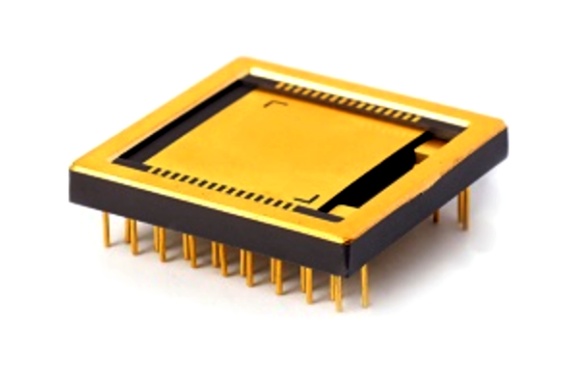
That is why ceramic PCB design is often used in applications where thermal control matters. A well-designed ceramic board can help reduce hot spots, support stable electrical performance, and improve product life in compact or high-power environments.

Typical application areas include:

  • High-power LED modules
  • Power semiconductor circuits
  • RF and microwave products
  • Automotive control systems
  • Medical and industrial electronics
Ceramic PCB Design

Ceramic PCB Design

Why Choose Ceramic PCBs?

Ceramic PCBs are widely used because they combine heat dissipation and electrical insulation in one structure. This can make the full product design more efficient, especially in space-limited applications. Main advantages include:

  • Better heat dissipation than standard FR4
  • Stable performance under temperature cycling
  • Strong electrical insulation
  • Good dimensional stability
  • Suitable for compact and high-density layouts

For many engineers, the main attraction is thermal performance. Standard FR4 is usually around 0.3 W/mĀ·K, which is enough for many general products. But for higher heat loads, ceramic substrates offer a clear improvement.

Why Choose Ceramic PCBs?

Why Choose Ceramic PCBs?

Common Materials Used in Ceramic PCB Design

Choosing the right ceramic pcb material is one of the first decisions in the design process. Different materials offer different thermal and mechanical properties.

MaterialThermal ConductivityCost LevelTypical Use
Al2O320–30 W/mĀ·KLowerLED, sensors, control boards
AlN170–200 W/mĀ·KHigherPower modules, RF, high-heat products
Si3N470–90 W/mĀ·KHigherHigh-reliability power electronics
BeOVery highHighSpecial industrial applications

In most commercial projects, the main decision is between Al2O3 and AlN.

Al2O3 vs AlN: Which One Is Suitable for Your Ceramic PCB Project?

Both materials are common in ceramic PCB design, but they fit different needs.

PropertyAl2O3AlN
CostMore economicalHigher
Thermal ConductivityModerateVery high
AvailabilityBroadMore specialized
Best ForGeneral ceramic circuitsHigh-power thermal applications

A simple selection logic is:

  1. Choose Al2O3 when you need a practical ceramic solution with balanced cost and performance.
  2. Choose AlN when your board must remove heat faster or work in a tighter thermal environment.
  3. Review the total thermal path before making the final decision.

If the product is compact, sealed, or power-dense, AlN often provides more design margin. If the thermal load is moderate, Al2O3 is often the more economical choice.

Ceramic PCB vs FR4 PCB: What’s the Difference?

The discussion around ceramic pcb vs fr4 is common because both materials serve important roles.

AspectCeramic PCBFR4 PCB
Thermal ConductivityHigherLower
Heat ResistanceBetterModerate
Dimensional StabilityStrongStandard
Mechanical NatureHarder, more brittleTougher, more flexible
CostHigherLower
Typical UsePower, RF, LEDGeneral electronics

In short:

  • FR4 is suitable for standard and cost-sensitive electronics.
  • Ceramic PCB is more suitable for high-heat and high-reliability designs.

So the real question is not which one is better overall, it based on which one fits your product conditions better.

Ceramic PCB Design Guidelines

Ceramic PCB design is not simply FR4 layout on a different substrate. The material behaves differently in thermal transfer, mechanical strength, copper bonding, and assembly response. If these factors are considered early, the board is easier to manufacture and more stable in use.

1. Start with thermal goals, not only electrical layout

Most ceramic PCB projects begin because heat is already a concern. So the design should first identify where the heat is generated, how much power is lost, and where that heat will go next.

A practical design review usually includes:

  • heat source location
  • power density of major components
  • thermal path from device to substrate
  • interface to heat sink or housing
  • operating ambient temperature

For example, if a board carries LED chips, power ICs, or RF devices, placing those parts without a clear heat path can waste the thermal advantage of the ceramic substrate.

2. Choose the right ceramic material for the real operating condition

Material selection affects the whole design window. Al2O3 is widely used because it offers good insulation, mature processing, and reasonable cost. AlN is better when the thermal load is higher and the product has less room for heat buildup.

This choice should match the actual project target, not only the material data sheet. A low-power control board and a compact power module should not use the same logic.

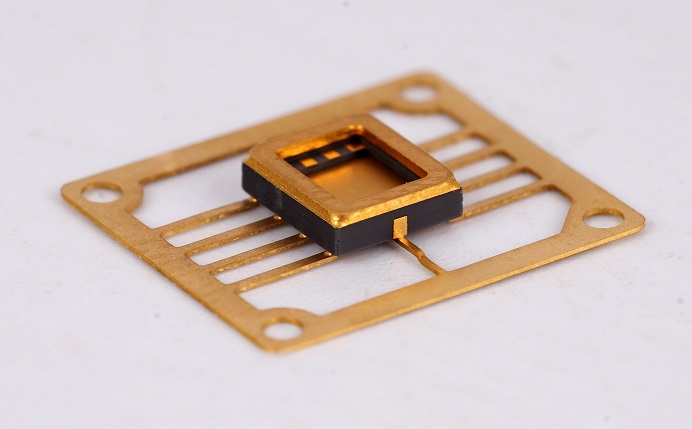
3. Match copper layout with current, heat, and process capability

Copper traces on ceramic boards should be designed with three things in mind:

  • current carrying ability
  • heat spreading
  • manufacturability

Very narrow traces may look efficient in layout, but they are not always ideal for yield or long-term reliability. Wider copper areas can help thermal spreading, but overly large copper imbalance may create stress during heating and cooling cycles.
4. Pay close attention to pad design and solder joint reliability

Pad design matters more than many designers expect. Ceramic substrates are rigid, and the expansion behavior differs from FR4. That means poor pad design can affect solder joint stability, especially in power devices or larger packages.

It is wise to check:

  • pad size versus component package
  • solder fillet space
  • thermal pad design
  • copper symmetry around large pads
  • assembly method and reflow profile

This is especially important for LED chips, bare die, power packages, and ceramic-mounted RF parts.

5. Consider brittleness in the mechanical design

Ceramic offers excellent stability, but it is also more brittle than FR4. That means the board design should avoid stress concentration.

Important mechanical points include:

  • leave enough clearance from holes to edges
  • avoid weak narrow bridges in the outline
  • reduce sharp internal corners where possible
  • design mounting areas with even force distribution
  • avoid layout features too close to cut edges

In short, ceramic PCB design should not only perform well electrically. It should also survive handling, assembly, fastening, and real product use.

6. Align the design with the selected manufacturing process

This point is often overlooked. Ceramic PCB design should always match the actual process route. If the board will be made by DPC ceramic PCB technology, then line width, spacing, via structure, copper thickness, and surface finish should all follow DPC process capability.
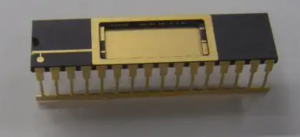
That is why early communication with the manufacturer is valuable. A design that fits the real process window usually moves to production faster and with fewer revisions.

Ceramic PCB Manufacturing Processes

There are several ceramic PCB manufacturing methods, but for projects that require fine lines, good adhesion, and precise circuit definition, DPC ceramic PCB is a widely used option. DPC stands for Direct Plated Copper. This process forms the copper circuit directly on the ceramic substrate through thin film metallization and copper plating steps.

Compared with thick film processes, DPC is often preferred for finer circuit patterns and more controlled conductor formation. It is commonly used in LED packaging, RF modules, sensors, and high-precision ceramic circuit applications.

DPC Ceramic PCB Manufacturing Flow

Here is the typical DPC ceramic PCB manufacturing process:

Ceramic PCB Manufacturing Processes

1. Ceramic substrate preparation

    The process begins with the selected ceramic substrate, usually Al2O3 or AlN. The surface must be cleaned carefully to remove particles, oil, and contamination. This step is important because good surface condition helps the following metal layer bond more reliably.

    2. Thin film metallization

    A thin metal seed layer is deposited on the ceramic surface. This layer often includes metals such as titanium, copper, or other adhesion and conductive layers depending on the process design. Its role is to provide a base for later copper plating.

    3. Photoresist coating

    A photoresist layer is applied to the metallized ceramic surface. This creates the imageable layer used to define the circuit pattern.

    4. Exposure and development

    The circuit image is transferred onto the photoresist by exposure. After development, the required copper pattern area is opened, while the rest remains protected.

    5. Copper electroplating

    Copper is plated onto the exposed circuit areas until the target thickness is reached. This step builds the actual conductive traces and pads. The plating thickness is controlled based on current requirement, pattern accuracy, and product application.

    6. Resist stripping

    After plating is completed, the remaining photoresist is removed. At this stage, the plated copper pattern remains on the substrate.

    7. Seed layer etching

    The exposed thin seed layer that is no longer needed is etched away. This leaves only the final circuit pattern on the ceramic substrate.

    8. Surface finish treatment

    A suitable surface finish is applied to improve solderability, bonding performance, or corrosion resistance. Common finishes depend on the product design and assembly method.

    9. Laser drilling or shaping if needed

    If the design requires slots, openings, or special board outlines, laser or precision machining processes are used. Ceramic substrates need careful shaping because the material is hard and brittle.

    10. Final inspection and testing

      The finished board goes through dimensional inspection, circuit inspection, adhesion testing, and appearance review. For higher-end applications, extra checks may include thermal cycling, insulation performance, and bonding quality verification.

      Applications of Ceramic PCB Design

      Ceramic PCB design is widely used in products that need strong thermal performance and stable operation over time.

      Common applications include:

      • LED lighting modules
      • Automotive electronics
      • Power control systems
      • RF and microwave devices
      • Medical equipment
      • Industrial power modules
      • Laser and communication products

      In high-power LED systems, ceramic substrates help transfer heat away from the LED source. In automotive and industrial electronics, they support more stable operation under repeated thermal cycling.

      Applications of Ceramic PCB Design

      Applications of Ceramic PCB Design

      Why Choose EBest Circuit for Ceramic PCB Design?

      With 20+ years of PCB and PCBA experience, EBest Circuit supports customers from early design review to full production. We have served 10,000+ engineers and 1,800+ customers, giving us broad experience across thermal management, high-reliability electronics, and complex PCB structures.

      Why many customers choose EBest Circuit for ceramic PCB design:

      • 20+ years of manufacturing experience in PCB and PCBA
      • Support for advanced materials, including Al2O3 ceramic PCB and AlN ceramic PCB
      • Engineering-driven support with free DFM review and process suggestions
      • One-stop capability from PCB fabrication to PCBA assembly and testing
      • Fast response for prototype and small-batch projects
      • Quality systems supported by ISO 9001, ISO 13485, IATF 16949, and AS9100D
      • MES-based traceability for better process control and production visibility

      We also understand that ceramic PCB projects are often tied to demanding applications such as LED lighting, power electronics, RF devices, and industrial controls. In these products, stable quality and process consistency are just as important as thermal performance on paper. That is why we focus on both engineering review and manufacturing control.

      If you need a ceramic PCB manufacturer that can support design optimization, material selection, and reliable production, EBest Circuit is ready to help. For project discussion or quotation, please contact sales@bestpcbs.com.

      FAQs About Ceramic PCB Design

      1. What is ceramic PCB design used for?

        Ceramic PCB design is used for electronic products that need better heat dissipation, strong insulation, and stable operation in demanding environments.

        2. Which ceramic pcb material is most common?

        Al2O3 is one of the most common materials because it offers a good balance of cost and performance.

        3. When should I choose AlN?

        AlN is a better choice when the design has high heat density or requires faster heat transfer.

        4. Is ceramic PCB better than FR4?

        For thermal-intensive applications, ceramic is usually a better option. For standard electronics, FR4 is often enough.

        5. Can a ceramic pcb manufacturer help optimize my design?

        Yes. Early design review can improve manufacturability, reduce risk, and shorten project cycles.

        6. Are ceramic PCBs suitable for LED products?

        Yes. They are widely used in high-power LED modules because heat dissipation is critical.

        You may also like

        Aluminum Nitride PCB | Aluminum Nitride Ceramic PCB Design
        Thursday, October 10th, 2024

        What is Aluminum Nitride PCB?

        Aluminum nitride PCB also known as Aluminum nitride ceramic PCB or short for AlN PCB. It is a high-performance circuit board made from aluminum nitride ceramic, a material known for its exceptional thermal conductivity and electrical insulation properties. These boards are commonly used in industries where efficient heat dissipation is crucial, such as in power electronics, LED applications, and high-frequency devices. AlN PCBs are gaining popularity due to their ability to withstand extreme temperatures.

        Aluminum Nitride PCB | Aluminum Nitride Ceramic PCB

        Benefits of AlN PCBs

        One of the key advantages of AlN PCBs is their excellent thermal conductivity, which helps prevent overheating in electronic components. With exceptional thermal conductivity of 170 W/mK, strong dielectric strength, and a low thermal expansion coefficient (CTE <4 ppm/°C), AlN is widely used in applications like high-power LEDs, lasers, high-current switches, and even ultra-low temperature vacuum electronics such as those in quantum computing. In addition to these features, AlN offers the same benefits as other ceramic materials, including rigidity, environmental and chemical resistance, and 0% water absorption.

        Key reasons for choosing Aluminum Nitride over other PCB materials include:

        • Outstanding thermal conductivity of 170 W/mK
        • Excellent dielectric properties
        • High operating temperatures exceeding 350°C
        • Low thermal expansion coefficient (<4 ppm/°C)
        • Compact designs due to better integration
        • Hermetically sealed packages with 0% water absorption
        • Minimal to no outgassing

        What is the Thermal Conductivity of Aluminum Nitride PCB?

        ā€ŒThe thermal conductivity of aluminum nitride PCB ranges from 170-230W/(mĀ·K).

        The high thermal conductivity of aluminum nitride PCB is due to its unique structure and chemical composition. The thermal conductivity of aluminum nitride ceramic substrate is 2-3 times higher than that of traditional alumina ceramics and silicon-based ceramics, and 10-20 times higher than that of titanium substrate. This high thermal conductivity allows them to effectively dissipate heat from high-power electronic components, preventing overheating and ensuring stable performance. The ability to manage heat efficiently makes AlN PCBs an ideal choice for applications that generate a significant amount of heat, such as power modules, LEDs, and RF components. In comparison to other materials like aluminum oxide, which has lower thermal conductivity (around 20-30 W/mK), aluminum nitride stands out as a top choice for heat-sensitive applications.

        Factors affect thermal conductivity of AlN PCB

        Although the theoretical thermal conductivity of AlN is extremely high, its performance in practical applications is limited by a number of factors, mainly including:

        • Microstructure

        Phonon scattering is a key mechanism for heat conduction. Grain boundaries, interfaces, second phases, and defects can all affect the mean free path of phonons, thereby influencing thermal conductivity. High-purity, low-defect single-crystal AlN has a longer phonon mean free path and higher thermal conductivity.

        • Oxygen Impurity Content

        AlN’s strong affinity with oxygen leads to the easy introduction of oxygen impurities, which form alumina films and lattice defects, such as aluminum vacancies. These significantly reduce the phonon mean free path, lowering thermal conductivity. When the oxygen concentration is below 0.75%, oxygen atoms primarily replace nitrogen atoms in the lattice; however, exceeding this concentration causes aluminum vacancies to disappear and results in the formation of extended defects, further affecting thermal conductivity.

        • Sintering Process and Additives

        By selecting appropriate sintering additives (such as Yā‚‚Oā‚ƒ-Liā‚‚O, Yā‚‚Oā‚ƒ-CaCā‚‚ composite systems), densification can be achieved at lower temperatures, while reducing the formation of oxygen impurities and second phases, effectively improving the thermal conductivity of AlN ceramics. These additives help purify grain boundaries and optimize the microstructure, facilitating more efficient phonon transmission.

        What is Aluminum Nitride PCB Used For?

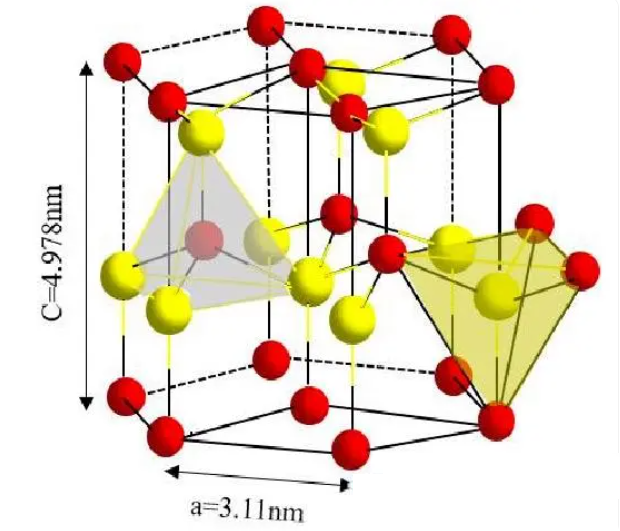
        Aluminum nitride as a stable hexagonal wurtzite covalent bond compound, has shown extensive application potential in the field of electronics and optoelectronics due to its unique physical and chemical properties. Its crystal structure takes AlN4 tetrahedron as the basic unit, space group P63mc, belongs to the hexagonal crystal system, which gives AlN a series of excellent properties and use in advanced applications.

        Aluminum Nitride PCB | Aluminum Nitride Ceramic PCB

        Some common applications include:

        • Optical Communication
        • Integrated Circuits and High-Power Electronic Devices
        • Power Electronics
        • Wafer chips
        • Epoxy Resin Packaging
        • Optical Devices and Piezoelectric Devices
        • Industrial Materials
        • Acoustic Devices
        • Aerospace
        • Military

        Why is Aluminum Nitride Expensive?

        The high cost of aluminum nitride PCBs stems from several factors.

        First of all, the raw material cost of aluminum nitride PCB is higher. The preparation of aluminum nitride powder requires high purity raw materials, synthesis methods include direct nitriding method, carbothermal reduction method, self-propagating high temperature synthesis and chemical vapor deposition method, etc. These methods have high requirements on equipment and technology, resulting in higher costs.

        Secondly, the production process is complicated. The preparation process of aluminum nitride PCB is complex, including multiple steps such as molding and sintering, which has high requirements for equipment and technology and a high production threshold.

        Finally, the market demand is large. Aluminum nitride PCB in power electronics, communication equipment, automotive electronics and other fields have a wide range of applications, especially in high power, high frequency and other occasions, its excellent heat dissipation and insulation performance can not be replaced, resulting in short supply in the market, the price of natural rising.

        Aluminum Nitride PCB vs. Alumina Oxide PCB

        Both aluminum nitride (AlN) and alumina oxide (Al2O3) are ceramic materials used in PCB manufacturing, but they differ significantly in terms of performance. AlN offers superior thermal conductivity, typically 170-230 W/mK, compared to aluminum oxide’s lower range of 20-30 W/mK. This makes AlN the better option for applications requiring efficient heat dissipation, such as high-power electronics and LED lighting.

        However, aluminum oxide is more cost-effective and is often used in applications where high thermal conductivity is not as crucial. While Al2O3 provides good electrical insulation and is easier to produce, it may not perform as well in heat-sensitive environments as AlN. Therefore, the choice between AlN and Al2O3 depends on the specific thermal and budgetary requirements of the application. Here are the parameters of AlN and Al2O3 materials:

        ParameterAluminum Nitride (AlN)Alumina Oxide (Al2O3)
        Thermal conductivity170-230 W/m.k24-30 W/m.k
        Dielectric constant8.89.2-10
        Dielectric strength15-25kV/mm10-15kV/mm
        Temperature resistance1000-1500C1000-1200C
        CTE4.0 ppm/K6.5-7 ppm/K
        Flexural strength450MPa320MPa
        Dielectric breakdown voltage14 V/m10 V/m

        AlN Ceramic PCB Design Considerations

        When designing an aluminum nitride PCB, several factors need to be considered to optimize performance:

        1. Trace Width

        The trace width on AlN PCBs should be a minimum of 10 mils. This ensures that the conductor cross-section is sufficient to handle the current and heat dissipation needs. Given the thermal advantages of AlN, wider traces help in spreading heat more efficiently, minimizing the risk of overheating in power-dense applications.

        2. Trace Clearance

        Clearances between adjacent traces should be at least 8 to 10 mils. AlN PCBs often work with higher voltage levels, making spacing critical to prevent arcing or dielectric breakdown. In high-power designs, careful spacing between traces reduces the likelihood of signal interference and maintains the board’s insulation integrity.

        3. Via Pads

        For via pads, a minimum diameter of 16 mils is recommended. This provides sufficient area for stable soldering and ensures proper electrical connection through the via. Depending on the board’s application, larger via pads may be necessary to accommodate higher currents or thermal dissipation needs. Via sizing should also account for assembly techniques, such as reflow soldering or thermal management features, like thermal vias, which enhance heat transfer away from components.

        4. Pad Geometry Adjustments

        Unlike FR-4 designs, AlN PCBs often require specific adjustments in pad geometries. The mechanical and thermal properties of AlN are quite different from those of traditional PCBs. The expansion rate, hardness, and substrate fragility mean that pad designs should allow for thermal expansion and contraction without causing stress fractures. Proper pad design also ensures better solder joint reliability, particularly for components exposed to continuous thermal cycling.

        5. Gold Plating for Wire Bonding Pads

        In high-performance applications, wire bonding is often used, and gold plating is a preferred surface finish for wire bonding pads. The use of gold provides a stable, corrosion-resistant surface that improves bond integrity and longevity. Wire bonding is especially critical in high-frequency, high-reliability devices, where the connections must maintain integrity under thermal stress or in harsh environments.

        Aluminum Nitride PCB | Aluminum Nitride Ceramic PCB

        6. Component and Solder Matching

        All components and solder materials must match the electrical and mechanical properties of the AlN substrate. Mismatches in thermal expansion between the PCB material and components can lead to stress, causing cracking or delamination. It’s important to select components and solder that can withstand high temperatures and thermal cycles while maintaining compatibility with AlN’s characteristics, especially in applications like power electronics and RF circuits.

        7. Hermetic Sealing and Height Restrictions

        For applications requiring hermetic sealing, such as aerospace or medical devices, height restrictions may apply to the components on the PCB. Hermetic seals protect against moisture and environmental contaminants, ensuring long-term reliability in sensitive applications. The overall component height should be kept in line with the sealing requirements, and compact designs are often necessary to meet stringent packaging constraints.

        8. Thermal Expansion Management

        When attaching large dies or high-power devices, it’s crucial to model and account for thermal expansion. Even though AlN has a low thermal expansion coefficient (<4 ppm/°C), the difference in expansion rates between components and the substrate can create mechanical stress, especially during thermal cycling. Careful design, including flexible connections or underfill materials, can help mitigate these effects.

        9. Thermal Vias

        Thermal vias are essential for managing heat in high-power applications. By placing thermal vias directly underneath hot components, heat can be efficiently transferred away from sensitive areas, extending the lifespan of both the components and the PCB itself. In many designs, a network of thermal vias is integrated with heat sinks or spreaders to further improve heat dissipation.

        10. Surface Finishes and Coatings

        Aluminum nitride PCBs can benefit from surface finishes such as electroless nickel immersion gold (ENIG) or immersion silver, which protect the copper traces from oxidation and provide excellent solderability. The choice of surface finish may also depend on the specific application environment and the reliability requirements, especially in high-power or high-frequency circuits.
        FAQs About AlN PCBs

        1. How durable are aluminum nitride PCBs?

          AlN PCBs are highly durable and can withstand extreme temperatures and harsh environments.

          2. Can AlN PCBs be used in high-frequency applications?

          Yes, aluminum nitride PCBs are well-suited for high-frequency and high-speed applications due to their excellent electrical insulation and low signal loss.

          3. Are aluminum nitride PCBs environmentally friendly?

          While the production process can be resource-intensive, AlN PCBs offer longer lifespans and higher efficiency, which can reduce the environmental impact over time.

          4. How do AlN PCBs compare with metal-core PCBs?

          Metal-core PCBs, such as those with an aluminum core, provide good thermal management but lack the superior electrical insulation of AlN PCBs. AlN PCBs are preferred for applications requiring both high thermal conductivity and insulation.

          5. What industries typically use aluminum nitride PCBs?

          Industries like power electronics, aerospace, automotive, and telecommunications commonly use AlN PCBs for their high-performance needs.

          You may also like