PCB manufacturing PCB manufacturing
Home > Blog

Automotive PCB Suppliers

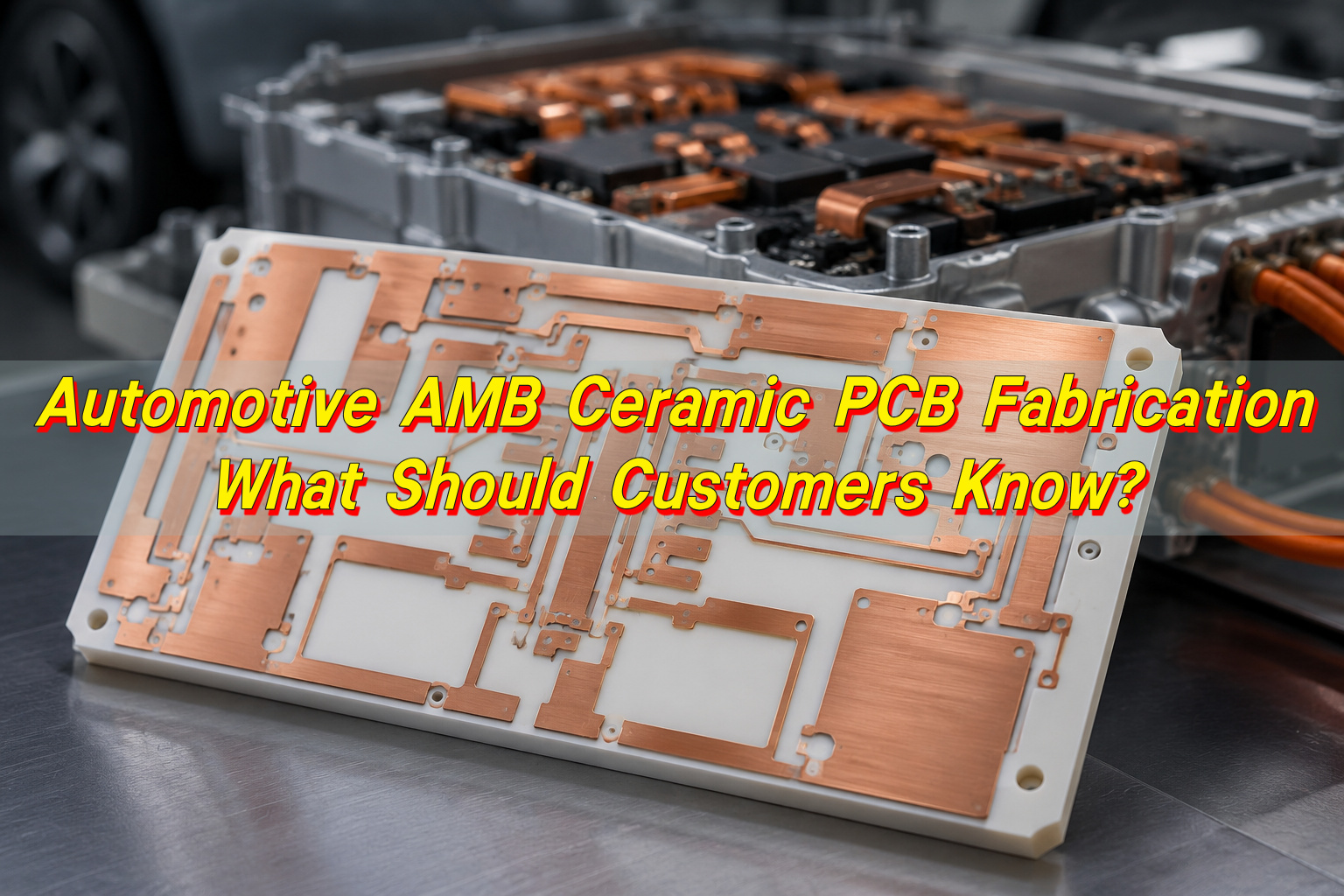
Automotive AMB Ceramic PCB Fabrication: What Should Customers Know?
Wednesday, May 20th, 2026

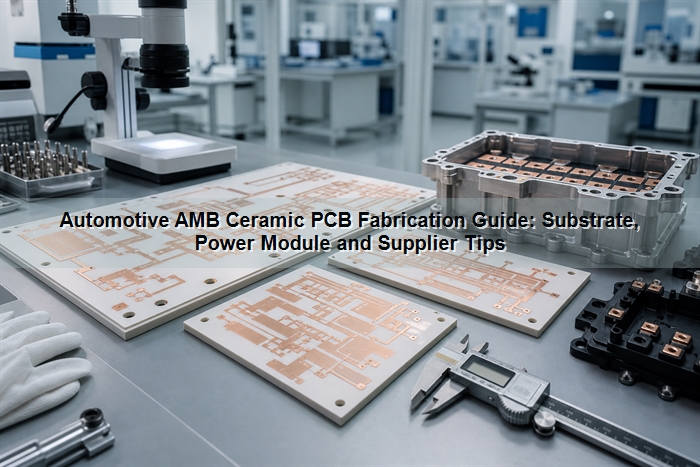
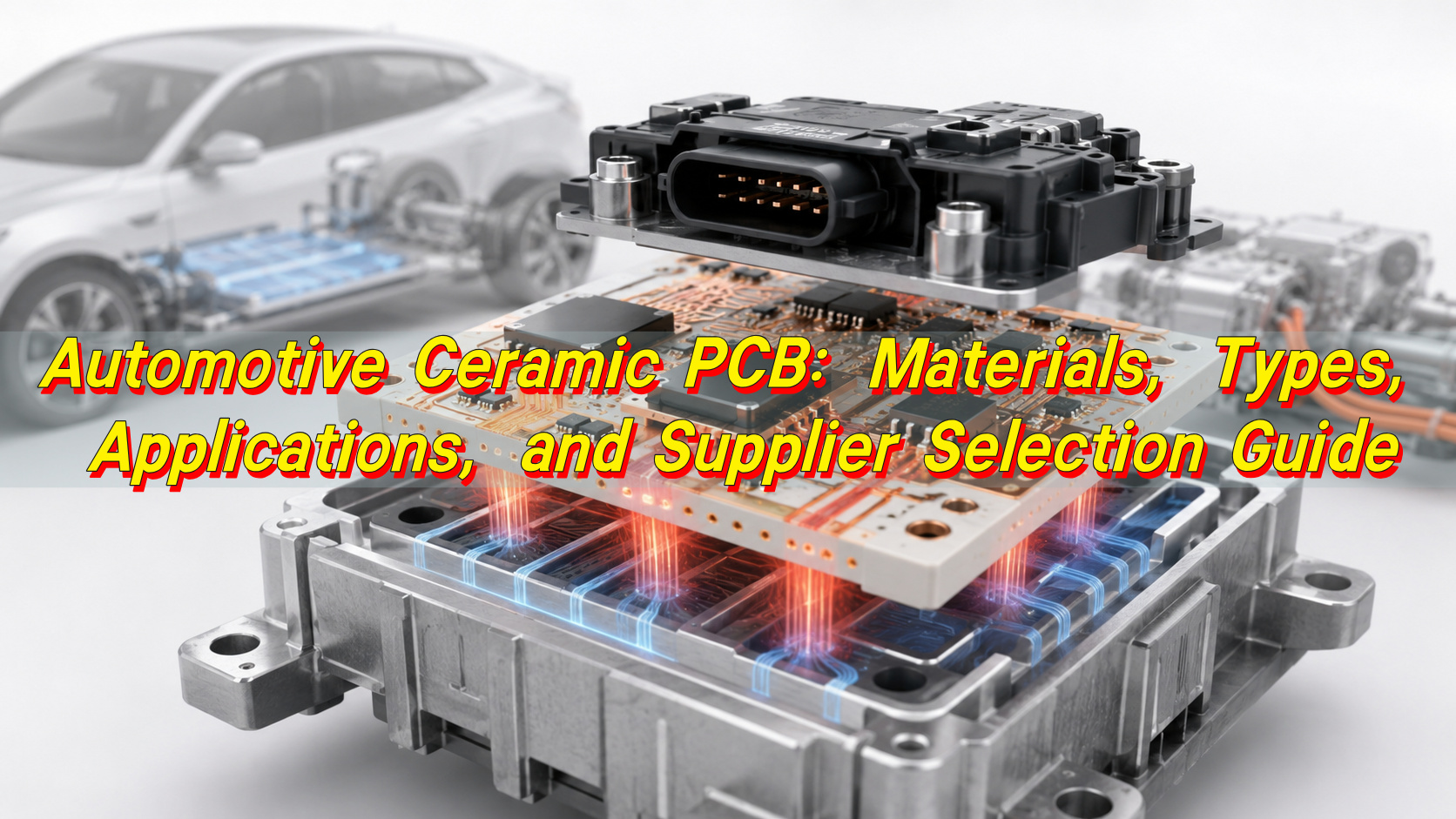
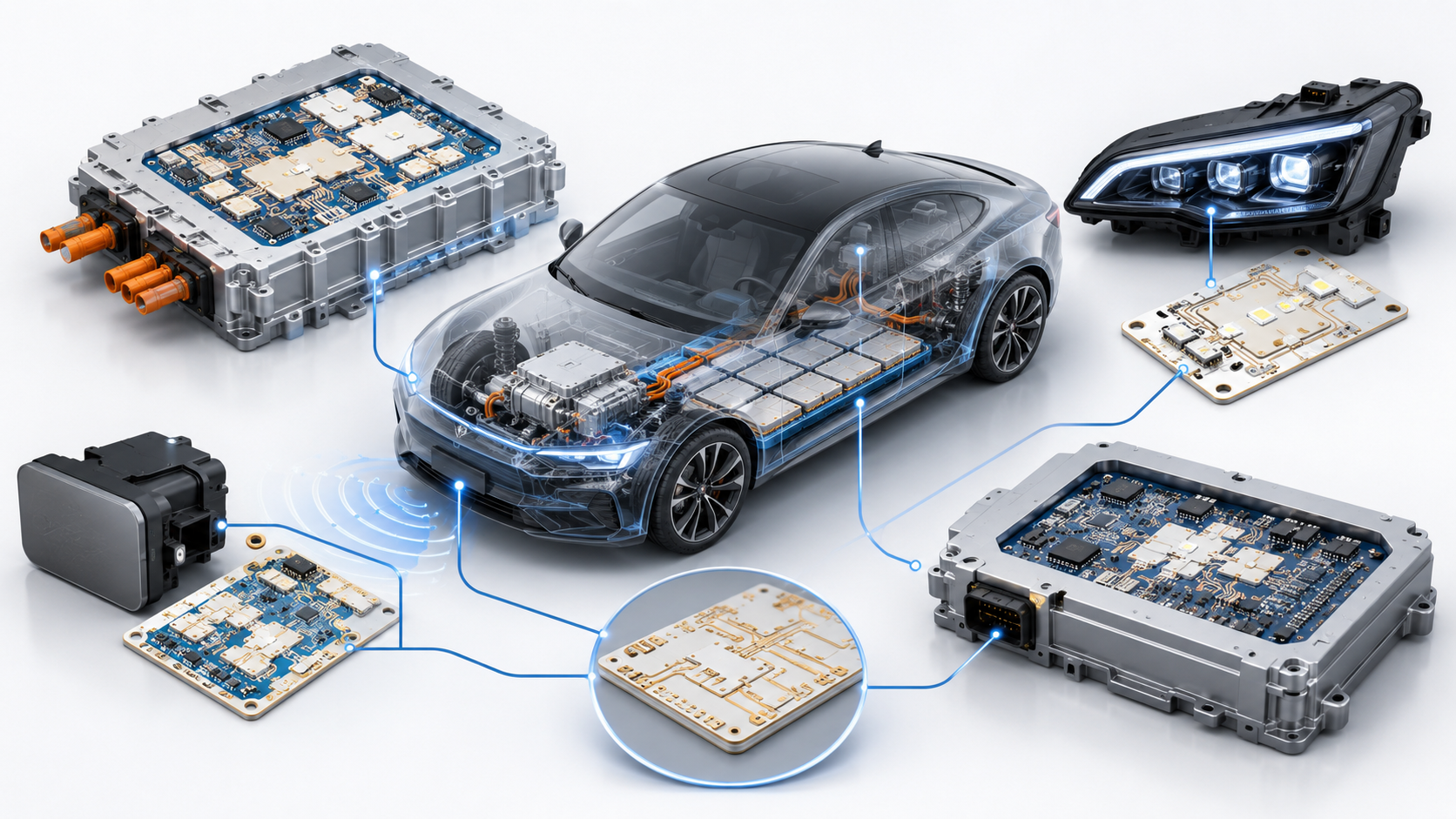
Automotive AMB ceramic PCB fabrication has become a critical topic as electric vehicles, hybrid vehicles, onboard chargers, traction inverters, DC DC converters, and high power automotive control systems continue to move toward higher current density, higher working temperature, and smaller module size. For customers, this subject is not only about choosing a ceramic board. It is about selecting a power substrate structure that can help manage heat, support electrical insulation, carry heavy current, and remain stable under long term thermal cycling.

Automotive AMB Ceramic PCB Fabrication: What Should Customers Know?

EBest Circuit (Best Technology) supports customers who need engineering driven ceramic PCB manufacturing, including ceramic material evaluation, DFM review, copper pattern optimization, surface finish selection, fabrication control, and production quality documentation.

What Is an AMB Ceramic Substrate?

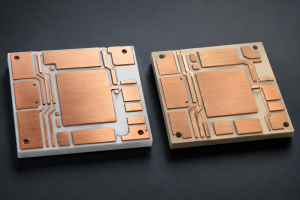
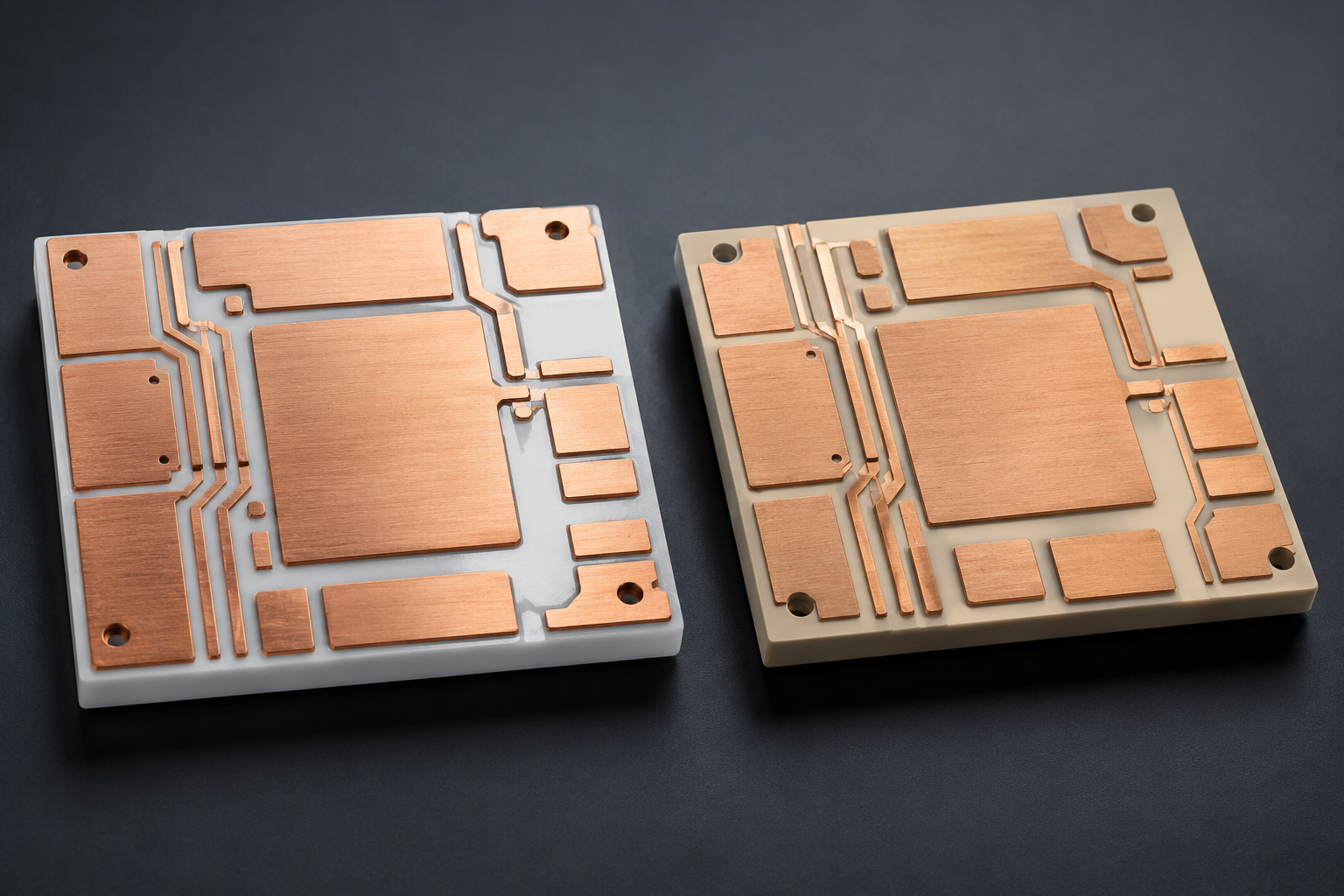
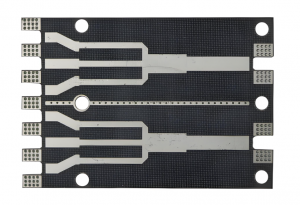
An AMB ceramic substrate is a metallized ceramic substrate made by bonding copper to a ceramic base through active metal brazing. “AMB” stands for Active Metal Brazing. In this process, a brazing filler containing active elements, often titanium based, forms a strong metallurgical bond between the copper layer and the ceramic material. The result is a substrate that combines the high electrical conductivity of copper with the high insulation strength and heat resistance of ceramic.

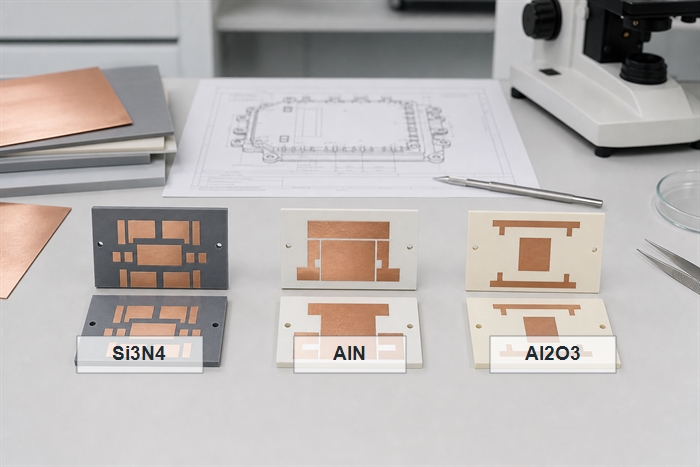
In a typical AMB ceramic substrate, the ceramic core may be silicon nitride, aluminum nitride, or another suitable ceramic material. For demanding automotive power modules, silicon nitride is widely valued because it offers strong mechanical toughness and good thermal performance. Aluminum nitride is also attractive where high thermal conductivity is a leading design requirement.

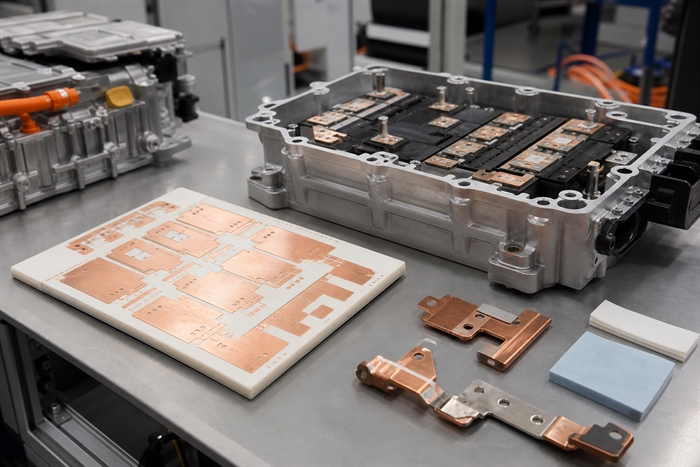
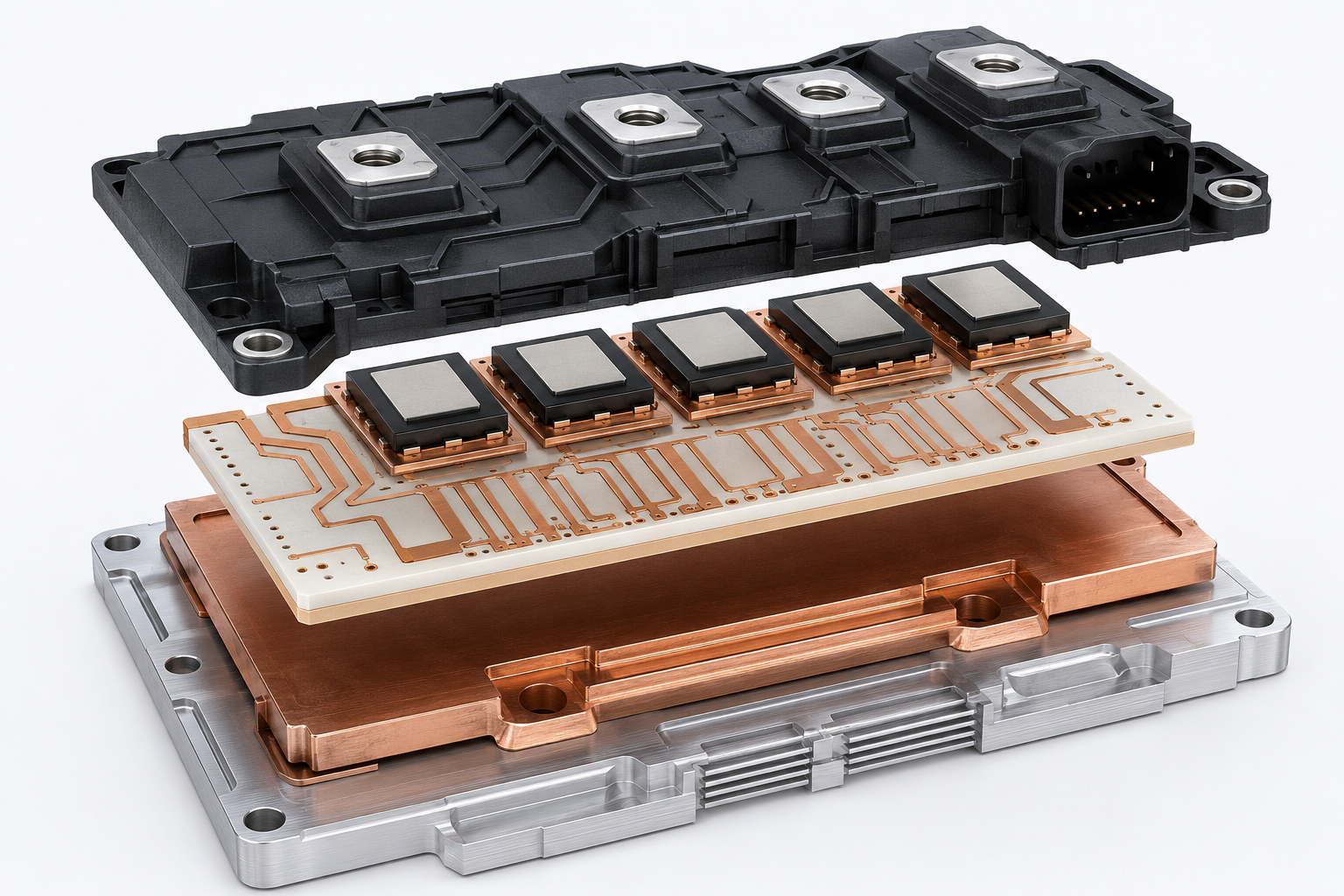
Unlike FR4 PCB or standard metal core PCB, an AMB ceramic substrate is designed for power density and thermal stress. It is not simply a board with better heat dissipation. It is a structural part of the power module. The substrate may need to handle fast switching, high voltage isolation, solder layer stress, thermal expansion mismatch, and repeated heating and cooling during vehicle operation. That is why AMB ceramic is often selected for electric vehicle traction inverter modules, onboard chargers, high voltage DC DC modules, and other high reliability automotive PCB components.

What is automotive AMB ceramic PCB fabrication?

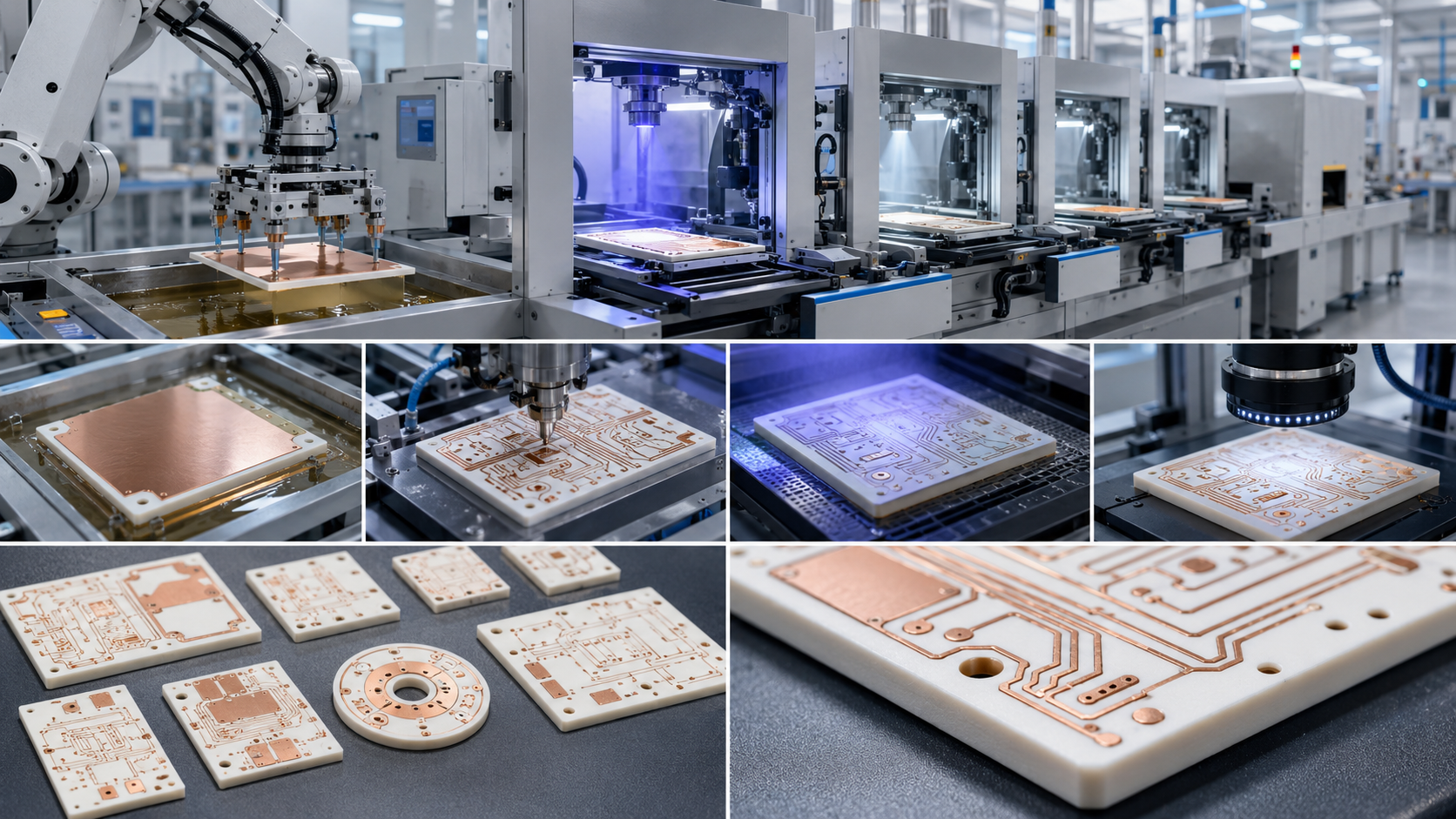
Automotive AMB ceramic PCB fabrication refers to the controlled manufacturing of AMB ceramic substrates for automotive power electronics. It includes ceramic material selection, copper bonding, pattern imaging, copper etching, plating, surface finishing, inspection, and reliability related process control.

In practical terms, automotive AMB ceramic PCB fabrication is more demanding than ordinary PCB fabrication because the product is used in a harsher environment. A vehicle may experience cold starts, high ambient temperature, vibration, load cycling, humidity, and long operating hours. In electric vehicle power systems, the AMB substrate may sit directly under power semiconductor chips. It must move heat from the chip to the cooling structure while maintaining dielectric isolation between the high voltage circuit and the baseplate or cooling system.

Automotive AMB Ceramic PCB Fabrication: What Should Customers Know?

A customer usually needs to define several project details before fabrication starts. These include ceramic type, ceramic thickness, copper thickness, copper pattern tolerance, isolation voltage, partial discharge target, surface finish, solderability requirement, module layout, and assembly process.

For EBest Circuit (Best Technology), the engineering value lies in helping customers review whether the design is manufacturable and whether the substrate structure is aligned with the module’s real use conditions.

What makes an AMB ceramic substrate different from standard PCBs?

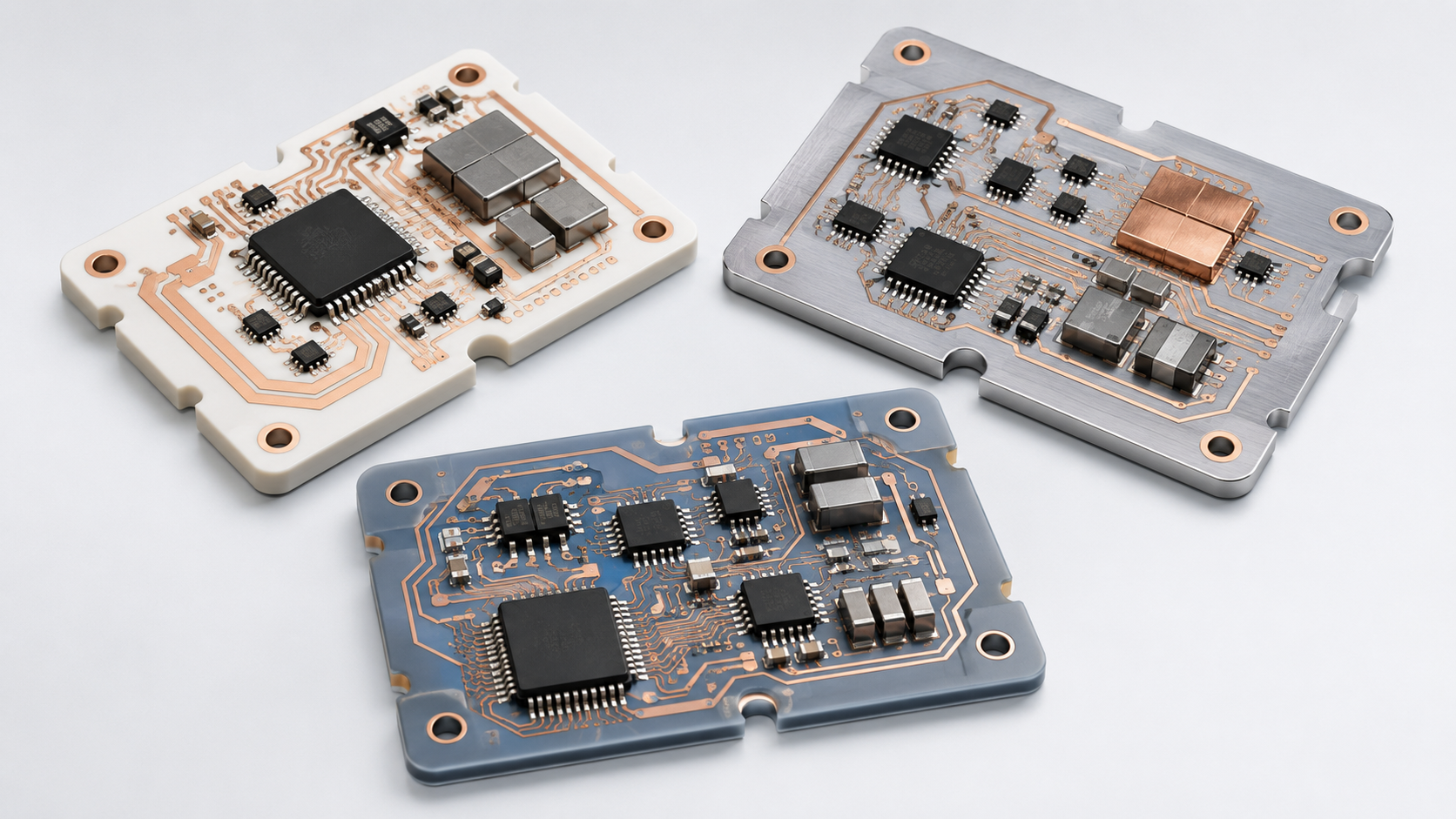
An AMB ceramic substrate is different from a standard PCB in material system, bonding method, thermal behavior, current carrying ability, and long term reliability expectation. A standard FR4 PCB uses woven glass reinforced epoxy as the insulating core. It is excellent for signal circuits, control electronics, and many general applications.

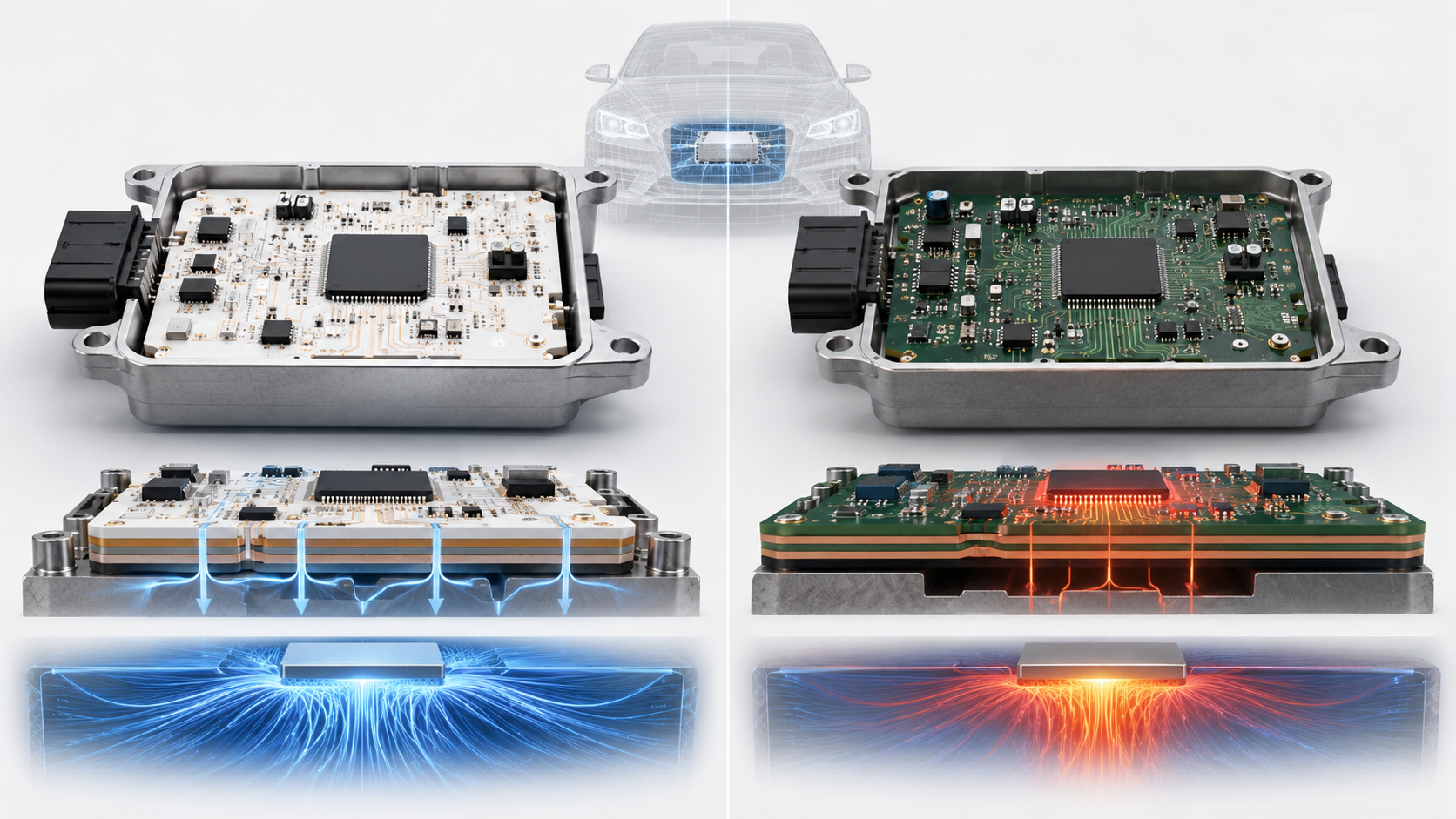
Metal core PCBs can improve thermal dissipation compared with FR4, especially in LED lighting and moderate power electronics. Even so, the dielectric layer in a metal core PCB often becomes the thermal bottleneck. AMB ceramic substrates use ceramic as the insulating and heat conducting layer, so they offer a stronger combination of thermal transfer, insulation, and mechanical strength for power modules.

ItemAMB Ceramic SubstrateStandard FR4 PCBMetal Core PCB
Main insulation materialCeramic such as Si₃N₄ or AlNEpoxy glass laminatePolymer dielectric over metal base
Copper structureThick copper bonded to ceramicCopper foil laminated to FR4Copper foil over dielectric layer
Main advantageHigh power density, strong insulation, good heat pathCost efficient and versatileBetter heat spreading than FR4
Typical useAutomotive power modules, inverter modules, SiC/IGBT modulesControl boards, signal boards, low to medium power electronicsLED boards, power supply boards, thermal interface boards
Thermal pathChip to copper to ceramic to cooling systemChip to copper to FR4, often with viasChip to copper to dielectric to metal base
Mechanical concernCeramic and copper stress balanceLaminate expansion, via reliabilityDielectric aging and thermal resistance
Automotive relevanceStrong fit for high voltage power modulesStrong fit for control and communication boardsUseful for thermal boards with moderate power density

The difference becomes clear when you look at system level performance. A standard PCB usually supports electronic interconnection. An AMB ceramic substrate supports interconnection, insulation, heat transfer, and module reliability at the same time.

What thermal conductivity requirements for automotive AMB PCB?

Thermal conductivity requirements for an automotive AMB PCB depend on the semiconductor device, power loss, chip size, cooling method, ceramic material, copper thickness, and target junction temperature. There is no universal value that fits every power module.

In many automotive power modules, the design target is to move heat away from the chip as quickly and evenly as possible. The substrate must reduce hot spots, support stable solder or sintered silver layers, and help maintain a safe junction temperature during load cycling. A high thermal conductivity ceramic can improve heat flow, but thickness, copper coverage, void control, and interface quality also influence the final result.

For customers, it is useful to evaluate thermal requirements through several connected factors:

  • Power loss per chip: Higher switching and conduction losses require a stronger heat path.
  • Chip technology: SiC devices often support high power density and high temperature operation, so substrate design must keep pace.
  • Ceramic material: AlN usually offers excellent thermal conductivity, while Si₃N₄ offers a strong balance of thermal performance and mechanical toughness.
  • Ceramic thickness: Thicker ceramic improves insulation margin but may raise thermal resistance.
  • Copper thickness and layout: Thick copper improves current capacity and heat spreading, but it also increases mechanical stress.
  • Cooling method: Liquid cooled modules, baseplate structures, and direct cooling designs all change the thermal calculation.

EBest Circuit can support early review of ceramic PCB stack up, copper layout, and process feasibility so that the final AMB ceramic substrate is easier to manufacture and more suitable for the automotive module.

What Automotive PCB Components Use AMB Ceramic Substrates?

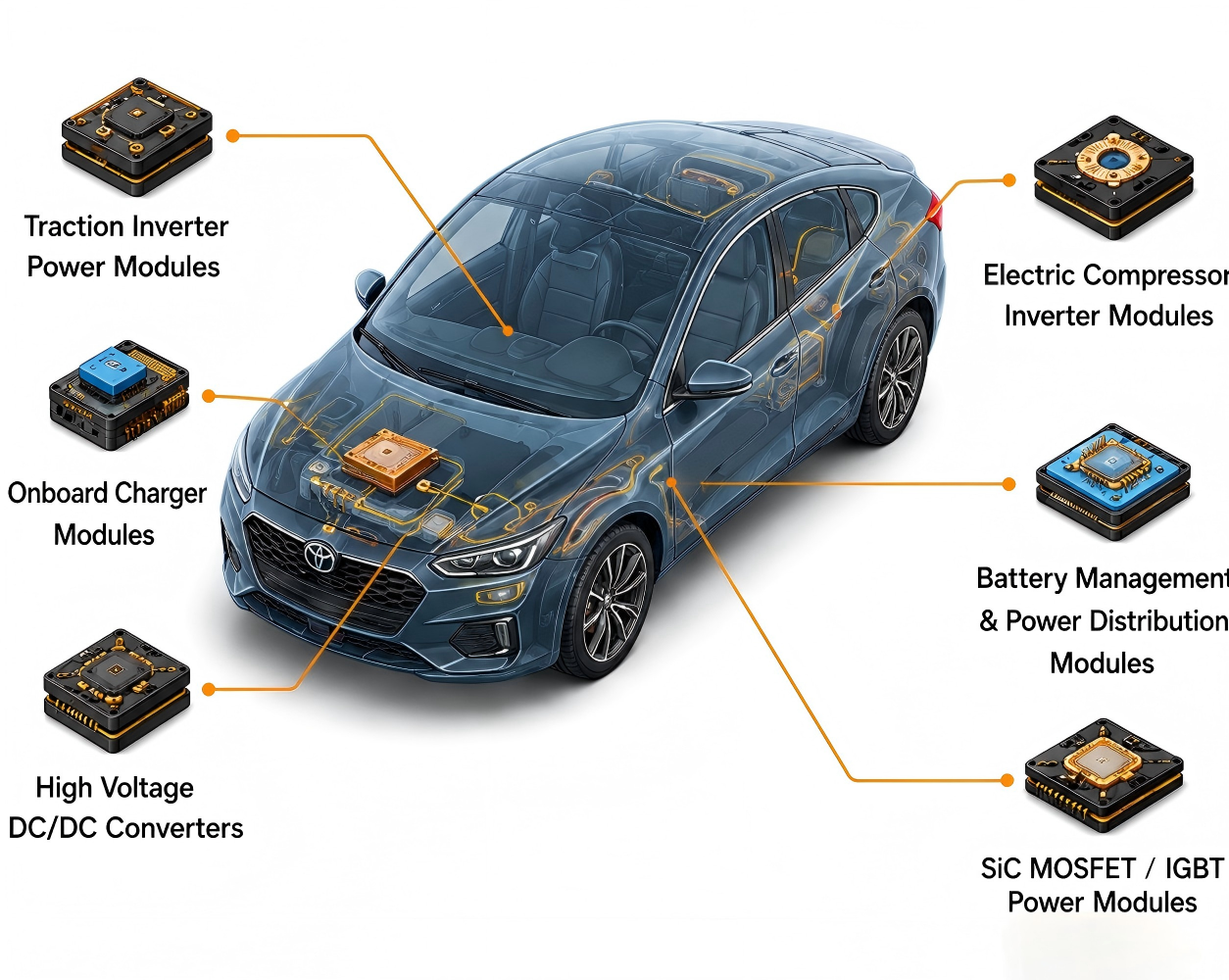
AMB ceramic substrates are mainly used in automotive PCB components that handle high voltage, high current, and high temperature. They are especially common in power conversion and motor drive systems where semiconductor chips generate concentrated heat.

Automotive AMB Ceramic PCB Fabrication: What Should Customers Know?

Typical automotive applications include:

  • Traction inverter power modules used in electric vehicle motor control.
  • Onboard charger modules that convert AC input into DC battery charging power.
  • High voltage DC DC converter modules used to step voltage between battery systems and auxiliary systems.
  • Electric compressor inverter modules for EV thermal management systems.
  • Battery management and power distribution modules where high voltage insulation and thermal control are required.
  • SiC MOSFET and IGBT power modules used in high efficiency switching systems.
  • Power control units that combine several automotive power conversion functions.

Why do modern automotive power modules require AMB technology?

Modern automotive power modules require AMB technology because EV power systems are becoming smaller, faster, hotter, and more power dense.

Another reason is insulation. In high voltage EV systems, the substrate must separate live power circuits from the cooling structure or baseplate. Ceramic materials provide strong dielectric properties, and the copper pattern can be designed for creepage and clearance needs. When the module operates in a vehicle, insulation quality must remain stable through temperature change and humidity exposure. That makes material choice and manufacturing control very important.

AMB is also useful for thermal expansion management. Power modules contain many materials, including silicon or silicon carbide chips, solder or sinter layers, copper, ceramic, baseplate materials, and encapsulants. Each material expands differently during temperature change. Silicon nitride AMB substrates are often selected when mechanical toughness and thermal cycling reliability are important. The copper to ceramic bond created by active metal brazing helps the substrate withstand repeated stress when the design is properly balanced.

How does AMB compare directly to traditional DBC (Direct Copper Bonding)?

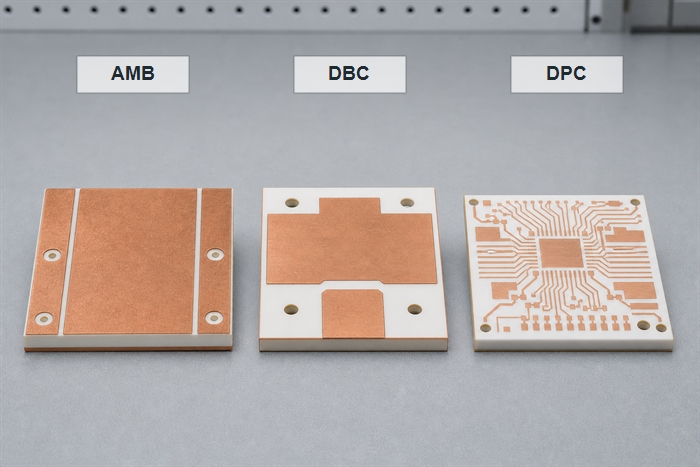
AMB and DBC are both ceramic substrate technologies used in power electronics. Both use copper and ceramic to create a thermally conductive, electrically insulating circuit carrier. The main difference is the bonding method. AMB uses an active metal brazing layer to join copper and ceramic. DBC uses a high temperature bonding process that relies on copper oxide interaction with oxide ceramic surfaces.

DBC remains valuable in many power applications. It is mature, cost effective, and well suited for alumina and aluminum nitride ceramic systems. AMB becomes especially attractive when the project requires silicon nitride ceramic, higher mechanical robustness, stronger thermal cycling capability, or a substrate structure designed for demanding automotive power modules.

Comparison ItemAMB Ceramic SubstrateDBC Ceramic Substrate
Full nameActive Metal BrazingDirect Bonded Copper
Bonding principleActive metal brazing layer bonds copper to ceramicCopper is directly bonded to ceramic through a high temperature process
Common ceramic choicesSi₃N₄, AlN, and selected ceramic systemsAl₂O₃, ZTA, AlN, and oxide based ceramic systems
Strength in automotive useStrong fit for high reliability power modules and thermal cyclingMature option for many power electronic modules
Mechanical toughnessOften excellent with Si₃N₄ ceramicDepends strongly on ceramic material
Thermal performanceStrong, depending on ceramic and structureStrong, especially with AlN based DBC
Cost tendencyUsually higher due to process complexityOften more economical for suitable applications
Design flexibilitySuitable for thick copper and demanding module layoutsSuitable for many proven power substrate layouts
Best fitEV traction inverter, SiC module, high reliability automotive moduleGeneral power modules, industrial power electronics, cost sensitive designs

The choice between AMB and DBC should not be made by trend alone. A well designed DBC substrate can perform very well in the right application. A well designed AMB substrate can provide a stronger reliability margin in high stress automotive power modules. The better decision comes from comparing power loss, operating voltage, expected temperature swing, module lifetime target, ceramic choice, copper thickness, and qualification plan.

For customers working with EBest Circuit, the practical approach is to share the operating condition, target module structure, and reliability expectation. Then the engineering team can help review whether AMB ceramic, DBC ceramic, or another PCB technology provides the best balance of performance, manufacturability, and cost.

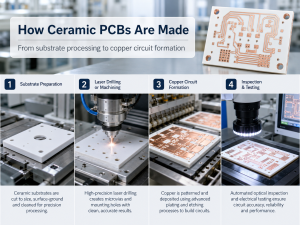
What are the key steps in the AMB ceramic manufacturing process?

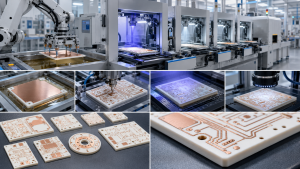
The AMB ceramic manufacturing process requires careful control because each step can affect bonding strength, insulation quality, copper pattern accuracy, and final module reliability.

The main steps usually include:

  • Material selection and incoming inspection: The process begins with ceramic sheets and copper foils or copper plates. The ceramic material, thickness, flatness, surface condition, and mechanical quality must match the project requirement.
  • Surface preparation: Ceramic and copper surfaces are cleaned and prepared to support strong brazing. Contamination, oxidation condition, and surface roughness must be controlled.
  • Active metal brazing: Copper is bonded to the ceramic using an active brazing material under a controlled high temperature process. This step forms the metallurgical interface between copper and ceramic.
  • Copper pattern formation: After bonding, the copper layer is imaged and etched to create circuit patterns, power pads, chip attach areas, and connection features.
  • Surface finishing: Depending on the assembly process, the substrate may receive nickel plating, gold plating, silver plating, or another suitable surface finish.
  • Solder mask or protective coating when required: Some designs need protective areas or defined solderable regions. The process must remain compatible with high power module assembly.
  • Dimensional and visual inspection: Copper geometry, edge quality, pattern accuracy, surface condition, and ceramic integrity are checked.
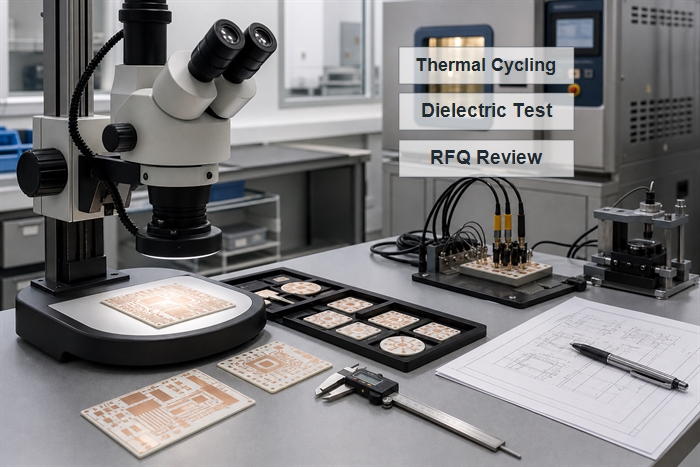
  • Electrical and reliability related testing: Tests may include dielectric withstand, insulation resistance, partial discharge evaluation, peel strength, solderability, and thermal related checks depending on project needs.

In automotive AMB ceramic PCB fabrication, the manufacturing process must be stable and repeatable. Small changes in surface condition, brazing uniformity, etching quality, or plating thickness may affect downstream assembly.

This is why customers should treat AMB ceramic production as an engineering process rather than a simple purchase order. EBest Circuit supports communication between customer engineering, production, and quality teams so that drawings, tolerances, testing items, and delivery expectations are aligned before fabrication begins.

How to ensure AQG324 compliance in AMB fabrication?

AQG324 compliance starts with understanding that the guideline is mainly focused on qualification of automotive power modules, not only the bare ceramic substrate. However, the AMB substrate plays a central role in module reliability, so substrate fabrication must support the final module qualification plan.

For AMB fabrication, the customer and supplier should connect substrate requirements with module level qualification targets. This means the bare substrate drawing should not only show dimensions and copper patterns. It should also define critical items that influence the final AQG324 test result, such as ceramic material, copper thickness, plating structure, dielectric performance, partial discharge expectation, void control, peel strength, and traceability.

Automotive AMB Ceramic PCB Fabrication: What Should Customers Know?

A practical AQG324 aligned approach may include the following actions:

  • Define the automotive use condition early. The supplier needs to know whether the substrate will be used in a traction inverter, onboard charger, DC DC converter, or another module type.
  • Confirm ceramic and copper structure. Material selection should support thermal resistance, insulation voltage, mechanical reliability, and cycling demand.
  • Control process parameters. Brazing, etching, plating, cleaning, and inspection must follow stable and documented process windows.
  • Build traceability. Material lot, production batch, process records, inspection data, and shipment records should be retained in a controlled way.
  • Use proper reliability screening. Depending on project requirement, this may include thermal cycling, power cycling support data, dielectric withstand, insulation resistance, partial discharge, and peel strength testing.
  • Align with module assembly needs. Substrate flatness, surface finish, solderability, bonding surface, and cleanliness must support soldering, sintering, wire bonding, or clip bonding processes.
  • Document deviations clearly. Any material change, process change, or supplier change should be controlled through a formal change management process.

The power module manufacturer usually completes module level AQG324 qualification because final performance depends on the complete module structure, including chips, die attach, interconnects, encapsulation, cooling, and housing.

EBest Circuit helps customers prepare AMB ceramic PCB manufacturing data in a way that supports automotive review. That includes DFM feedback, drawing review, process feasibility comments, material and finish discussion, and quality documentation support.
What Design Factors Affect AMB Ceramic PCB Performance?

Several design factors affect AMB ceramic PCB performance, and many of them are connected. A strong AMB substrate design balances heat transfer, insulation, current carrying ability, manufacturability, and mechanical reliability. If one factor is pushed too far, another factor may suffer.

The first factor is ceramic material. Silicon nitride is often selected for high reliability automotive modules because it provides strong mechanical toughness and good thermal performance. Aluminum nitride is attractive when thermal conductivity is the leading concern. Alumina and zirconia toughened alumina are also used in many ceramic substrate applications.

The second factor is ceramic thickness. A thinner ceramic layer can improve heat transfer, while a thicker layer can support higher insulation requirements. In automotive power modules, the decision should be based on working voltage, isolation test target, partial discharge behavior, and safety margin.

The third factor is copper thickness and copper balance. Thick copper supports high current and better heat spreading. However, copper and ceramic expand at different rates. If the copper pattern is unbalanced between the top and bottom sides, the substrate may warp or carry uneven stress.

The fourth factor is copper pattern geometry. Sharp corners, narrow necks, isolated heavy copper islands, and abrupt width changes may create stress concentration or current crowding. In high voltage designs, copper spacing, creepage, clearance, and edge radius also affect insulation behavior.

The fifth factor is surface finish. The finish must match the assembly process. Nickel gold, nickel silver, and other finishes may be considered based on soldering, sintering, wire bonding, storage life, and customer assembly conditions.

The sixth factor is module level thermal design. AMB ceramic works best when the whole heat path is engineered properly. The path may include chip attach material, top copper, ceramic, bottom copper, solder layer, baseplate, thermal interface material, and cooler.

The seventh factor is manufacturability. A drawing with very tight tolerances, complex copper shapes, or aggressive spacing may increase cost and production difficulty. Early DFM review can help the customer adjust the design without weakening performance. EBest Circuit (Best Technology) supports this stage by reviewing ceramic PCB drawings, copper geometry, surface finish needs, and inspection requirements before production.

In brief, automotive AMB ceramic PCB fabrication should be treated as a system level engineering decision. The best result comes from matching AMB ceramic material, copper structure, thermal design, insulation target, process control, and automotive quality documentation. For customers developing automotive power modules, EBest Circuit (Best Technology) can support ceramic PCB fabrication, DFM review, material discussion, process control, and production quality support from prototype to batch production. For project evaluation or technical discussion, contact sales@bestpcbs.com

You may also like

Top Automotive MCPCB Supplier: IATF16949 & AEC-Q200 Qualified
Thursday, April 23rd, 2026

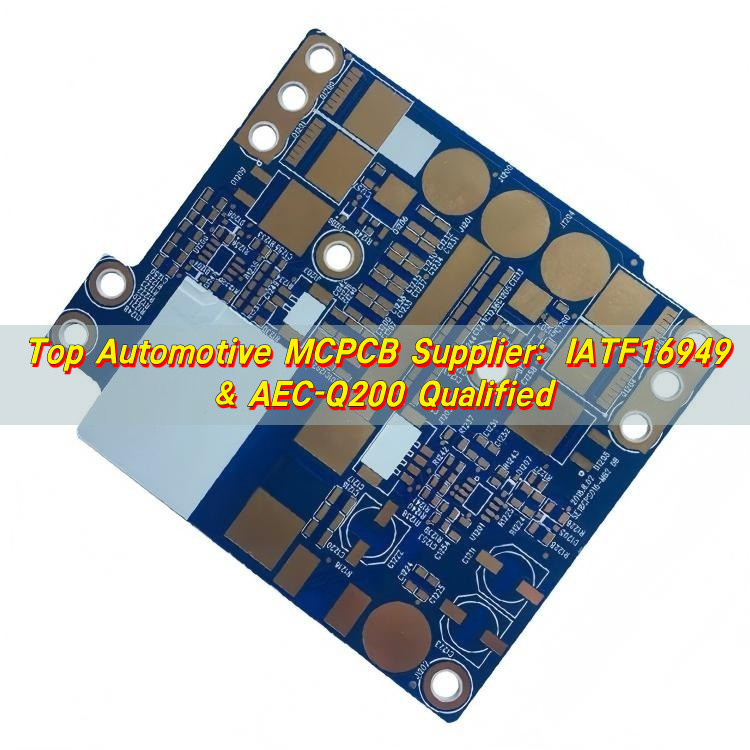
As a professional Automotive MCPCB supplier, EBest delivers high-performance automotive MCPCBs with thermal conductivity up to 3.0 W/m.K, full automotive-grade certifications, and reliable adaptation to the extreme high-temperature, high-vibration automotive environments. With over 19 years of experience, we solve your core pain points and provide one-stop, reliable solutions for automotive electronic projects.

Top Automotive MCPCB Supplier: IATF16949 & AEC-Q200 Qualified

Why Choose EBest as Your Trusted Automotive MCPCB Supplier?

EBest is the preferred Automotive MCPCB supplier for global automotive electronic enterprises, with core parameters and advantages that fully meet automotive industry demands. Our automotive MCPCBs support 1–10 layers, with thermal conductivity ranging from 0.8~3.0 W/m.K, dielectric strength exceeding 3.0 Kv (L/S >3.0mm), and compliance with all automotive-grade standards. Contact us today to place your order and get customized solutions tailored to your project.
Why Choose Our Automotive MCPCB Supplier Services?

  • Quality: We implement full-process quality control, from raw material selection to finished product delivery, with 100% full inspection to ensure product consistency and reliability, meeting the strict requirements of automotive electronic applications.
  • Lead Time: Our monthly production capacity reaches 260,000 square feet, with an expedited service that allows urgent automotive MCPCB orders to be shipped within 24 hours, ensuring your project progress is not delayed.
  • Service: We provide one-stop services, including custom substrate selection, design optimization, prototype production, and mass production, with a professional technical team to provide real-time support throughout the project.
  • Supply Chain: We have a stable, comprehensive supply chain for electronic components and MCPCB raw materials, ensuring continuous production and avoiding supply chain risks that affect your orders.

What Are the Core Services and Qualification Certifications of EBest Automotive MCPCB Supplier?

Qualification CertificationsPractical Value for Automotive MCPCB Applications
IATF 16949The exclusive quality management system certification for the automotive industry, ensuring full-process controllable production of automotive MCPCBs and eliminating quality hazards.
ISO 9001:2015Standardizes our production and service processes, ensuring consistent quality of automotive MCPCBs in mass production.
ISO 13485:2016Meets the quality requirements for automotive medical-grade electronic components, suitable for high-reliability automotive MCPCB applications.
AS9100DEnsures our automotive MCPCBs have high reliability and stability, adapting to the harsh working environment of automotive electronic systems.
REACHComplies with European environmental standards, ensuring our automotive MCPCBs are environmentally friendly and meet international export requirements.
RoHSRestricts harmful substances in automotive MCPCBs, ensuring product safety and compliance with global automotive environmental regulations.
ULCertifies the safety performance of our automotive MCPCBs, ensuring they can operate stably in high-temperature, high-voltage automotive environments.

In addition to the above certifications, EBest, as a professional Automotive MCPCB supplier, provides a full range of services including PCB Fabrication, Component Sourcing, BGA Assembly, Flex PCB Assembly, and Injection Molding, covering the entire automotive MCPCB production and supporting process.

What Pain Points Do Automotive MCPCB Users Face, and How Does EBest Solve Them?

Many users encounter various challenges when selecting and using automotive MCPCBs, and EBest, as an experienced Automotive MCPCB supplier, has targeted solutions for each pain point.

  • Pain Point 1: Poor Thermal Conductivity Leading to Short Product Life

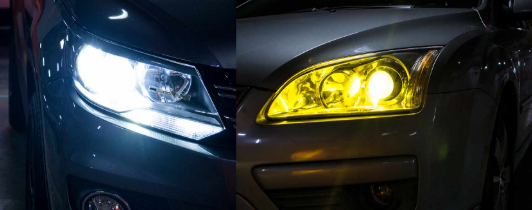
Automotive MCPCBs in LED headlights, BMS systems, and motor controllers generate significant heat during operation. Poor thermal conductivity can cause overheating and shorten service life.

Our Solution: We offer automotive MCPCBs with high thermal conductivity (up to 3.0 W/m.K), which is 2–3 times higher than ordinary MCPCBs. This effectively reduces component junction temperature and extends product service life by 50% or more.

  • Pain Point 2: Quality Instability Affecting Automotive Safety

Inconsistent product quality during mass production can lead to automotive electronic failures, posing safety risks and damaging brand reputation.

Our Solution: We adopt fully automatic assembly equipment and more than 19 quality inspection processes, with IATF 16949 certification to ensure each automotive MCPCB meets strict quality standards, with a pass rate of over 99.7%.

  • Pain Point 3: Long Lead Time Delaying Project Progress

Many suppliers cannot meet urgent order requirements, leading to project delays and increased costs for users.

Our Solution: With a monthly production capacity of 260,000 square feet, we provide 24-hour expedited service for urgent automotive MCPCB orders, ensuring timely delivery and supporting your project progress.

  • Pain Point 4: Lack of Customization Capabilities for Special Requirements

Automotive electronic projects have diverse requirements for MCPCB thickness, size, and surface treatment, which many suppliers cannot fulfill.

Our Solution: We provide full customization services, supporting board thickness from 0.3mm to 4.0mm, a maximum board size of 610*1625mm, and multiple surface treatments (ENIG, HAL, OSP, etc.) to meet your specific project needs.

Choose EBest as your Automotive MCPCB supplier, and we will solve all your pain points with professional technology and reliable service. Contact us now to start your customized project.

Top Automotive MCPCB Supplier: IATF16949 & AEC-Q200 Qualified

FAQ: Common Questions About Automotive MCPCB Supplier Services

  • Q1: What thermal conductivity options does EBest’s Automotive MCPCB supplier provide?

EBest, as a professional Automotive MCPCB supplier, provides two types of thermal conductivity options: normal (0.8~1.0, 1.5 W/m.K) and high (2.0, 3.0 W/m.K). You can choose based on your automotive electronic application scenario and heat dissipation needs.

  • Q2: Can EBest’s Automotive MCPCB meet the high-temperature requirements of automotive environments?

Yes. Our automotive MCPCBs can withstand thermal stress of 3 x 10 Sec @ 280 ℃, with a flammability rating of 94V-0, and can operate stably in the high-temperature environment near automotive engines and battery packs (up to 150℃ for long-term use).

  • Q3: Does EBest provide prototype production for automotive MCPCBs?

Yes. We provide prototype PCB assembly services for automotive MCPCBs, supporting small-batch prototype production, and can complete prototype samples in a short time to help you verify design schemes quickly.

  • Q4: What is the maximum layer count of EBest’s automotive MCPCBs?

As a professional Automotive MCPCB supplier, we can produce automotive MCPCBs with a maximum layer count of 10 layers, which can meet the complex wiring needs of automotive electronic control units (ECUs) and ADAS systems.

  • Q5: How does EBest ensure the supply chain stability of automotive MCPCBs?

We have a dedicated purchasing team and a stable supply chain for electronic components and MCPCB raw materials, covering SMD, BGA, QFN, QFP, and other components. This ensures continuous production and avoids supply chain disruptions.

  • Q6: Can EBest’s automotive MCPCBs meet international export standards?

Yes. Our automotive MCPCBs have passed REACH, RoHS, UL, and other international certifications, complying with the environmental and safety standards of European, American, and other global markets, and can be directly exported.

  • Q7: What surface treatment options are available for EBest’s automotive MCPCBs?

We provide a variety of surface treatment options, including ENIG, Flash Gold, Hard Gold Finger, Gold Plating, ENEPIG, ENIPIG, HAL, HASL(LF), OSP, Silver Immersion, and Tin Immersion, to meet different automotive application requirements.

What Is the Application of EBest’s Automotive MCPCBs in the Automotive Electronics Industry?

EBest’s automotive MCPCBs are widely used in various automotive electronic scenarios, with practical cases proving their reliability and performance advantages.

Case 1: Automotive LED Headlight MCPCB Solution

A global automotive lighting manufacturer faced the problem of short LED life due to poor heat dissipation of ordinary MCPCBs. The LED chip junction temperature reached 160℃, and the service life was far below expectations.

We provided high thermal conductivity (3.0 W/m.K) automotive MCPCBs, optimizing the heat dissipation structure. After replacement, the chip junction temperature was stabilized below 110℃, and the LED service life was extended by 60%, fully meeting the manufacturer’s requirements.

Case 2: Automotive BMS System MCPCB Solution

A new energy vehicle manufacturer needed MCPCBs with high dielectric strength and stable performance for their BMS systems to avoid short circuits and safety hazards caused by voltage fluctuations.

Our automotive MCPCBs have a dielectric strength of over 3.0 Kv (L/S >3.0mm), with a double insulation structure design. This effectively prevents short circuits and ensures the stable operation of the BMS system in high-voltage environments.

How to Choose a Reliable Automotive MCPCB Supplier?

Choosing a reliable Automotive MCPCB supplier is crucial for the quality and progress of automotive electronic projects. Focus on three core points: certification, production capacity, and customization capabilities.

First, ensure the supplier has automotive-grade certifications such as IATF 16949, which is the basic requirement for entering the automotive supply chain. Second, check the production capacity to ensure it can meet your order quantity and lead time requirements. Finally, confirm the supplier has strong customization capabilities to adapt to your project’s special needs.

EBest meets all the above requirements, making us your ideal Automotive MCPCB supplier.

Top Automotive MCPCB Supplier: IATF16949 & AEC-Q200 Qualified

What Are the Key Parameters of EBest’s Automotive MCPCBs?

As a professional Automotive MCPCB supplier, EBest’s automotive MCPCBs have strict parameter control to ensure performance and reliability. The key parameters are as follows:

  • Max Layer Count: 10 Layers
  • Board Thickness: 0.3mm (12 mil) to 4.0mm (157 mil)
  • Max Board Dimension: 610*1625mm (24*64″)
  • Conductor Thickness: 0.7 mil (1/2 OZ) to 14 mil (10 OZ)
  • Min Trace Width/Space: 0.15/0.15mm (6/6 mil)
  • Thermal Conductivity: 0.8~3.0 W/m.K
  • Dielectric Strength: >1.5 Kv (L/S >1.5mm); >3.0 Kv (L/S >3.0mm)

How Does EBest Ensure the Quality of Automotive MCPCBs?

Quality is the core competitiveness of EBest as an Automotive MCPCB supplier. We have established a full-process quality control system to ensure product quality from raw materials to finished products.

First, we strictly select raw materials, only using A+ grade substrates and components from reliable suppliers. Second, we adopt fully automatic production equipment and standardized processes to reduce human error.

Finally, we implement 100% full inspection before delivery, including thermal conductivity testing, dielectric strength testing, and dimensional accuracy testing, ensuring each automotive MCPCB meets the required standards.

What Makes EBest Different from Other Automotive MCPCB Suppliers?

Compared with other Automotive MCPCB suppliers, EBest has four core advantages that make us stand out in the industry.

Comparison ItemsEBest Automotive MCPCB SupplierOther Common Suppliers
Industry Experience19+ years of experience in PCB manufacturing, focusing on automotive MCPCB solutionsShort experience, lack of professional automotive industry experience
CertificationsComplete automotive-grade certifications (IATF 16949, ISO 13485, etc.)Incomplete certifications, failing to meet automotive industry requirements
Lead Time24-hour expedited service, monthly capacity of 260,000 square feetLong lead time, no expedited service for urgent orders
Customization CapabilitiesFull customization of thickness, size, thermal conductivity, and surface treatmentLimited customization capabilities, unable to meet special requirements

Can EBest Provide One-Stop Services for Automotive MCPCBs?

Yes. As a professional Automotive MCPCB supplier, EBest provides one-stop services covering the entire automotive MCPCB production process, from design optimization and prototype production to mass production and component supply.

We also provide supporting services such as Injection Molding, CNC Machining, and Sheet Metal, helping you reduce the number of suppliers and improve project efficiency.

Top Automotive MCPCB Supplier: IATF16949 & AEC-Q200 Qualified

How to Place an Order with EBest Automotive MCPCB Supplier?

Placing an order with EBest is simple and efficient. You only need to send your project requirements (including MCPCB parameters, quantity, and delivery time) to our email, and our professional team will reply within 24 hours.

We will provide you with a detailed solution and prototype confirmation, and start mass production after your approval, ensuring on-time delivery and product quality.

EBest, your trusted Automotive MCPCB supplier, is now offering priority production support for urgent orders and exclusive technical guidance for bulk orders. We provide high-quality automotive MCPCBs with reliable performance, fast delivery, and professional service. If you need automotive MCPCB products, place your order with us immediately! Our email is sales@bestpcbs.com

You may also like

Automotive PCB Manufacturers, Automotive PCB Suppliers
Thursday, April 3rd, 2025

Automotive PCB manufacturers are the backbone of modern vehicle electronics. From engine management to infotainment systems, these circuit boards ensure smooth operations and long-term reliability. As the automotive industry shifts towards electric and autonomous vehicles, the demand for advanced PCBs is at an all-time high. This blog explores everything you need to know about automotive PCB manufacturers, their role in vehicles, and how to choose the best one for your needs.

EBest Circuit (Best Technology) is a global Automotive PCB solutions provider‌, delivering premium-grade automotive PCB systems worldwide through strategically located SMT facilities in China and Vietnam. Our dedicated R&D team combines DFM expertise to ensure precision across automotive PCB design, fabrication, and full turnkey assembly. Our quality certificate is across industries‌ like automotive electronics, medical devices, and aerospace. All manufacturing processes are audited under ISO 9001:2015. For OEM or ODM automotive PCB projects requiring automotive-grade reliability (AEC-Q100 compliant), contact our engineering team at ‌sales@bestpcbs.com‌.

Automotive PCB Manufacturers, Automotive PCB Suppliers

What is a PCB Used in the Automotive Industry?

PCBs in the automotive industry are essential for controlling various electronic functions. These include power distribution, lighting systems, infotainment, safety features, and navigation. As vehicles become more sophisticated, automotive PCB manufacturers are innovating to meet industry demands. They produce specialized PCBs that handle higher power loads, extreme temperatures, and vibrations.

Electric vehicles (EVs) and hybrid cars rely heavily on high-performance PCBs. These boards manage battery systems, electric motor controllers, and regenerative braking mechanisms. With safety being a top priority, manufacturers design these PCBs with multilayer structures, thermal resistance, and high durability.

What is PCB in Toyota?

Toyota, one of the world’s leading automakers, integrates PCBs into almost every part of its vehicles. From engine control units (ECUs) to infotainment systems, these circuit boards play a critical role. Toyota prioritizes efficiency, safety, and reliability, pushing automotive PCB manufacturers to develop cutting-edge solutions.

The company focuses on innovation, using advanced PCBs in hybrid and electric models like the Toyota Prius. These PCBs regulate battery management, motor control, and power distribution to ensure optimal performance. Toyota’s push for sustainable and fuel-efficient vehicles further drives advancements in automotive PCB technology.

What is PCB in an Engine?

PCBs inside an engine control and monitor various parameters such as fuel injection, ignition timing, and emission control. They work in harsh environments, withstanding high temperatures, vibrations, and exposure to fuel and oil. Automotive PCB manufacturers use high-quality materials like ceramic or metal-core substrates to ensure durability.

Modern engines rely on electronic control units (ECUs) that include PCBs to process real-time data. These boards communicate with sensors and actuators, adjusting performance for better fuel efficiency and reduced emissions. Without these advanced PCBs, modern engines would not achieve the precision and efficiency they deliver today.

What Are the Requirements for PCB in Automotive?

Automotive PCBs need to meet stringent industry standards due to the challenging conditions they operate in. Here are some key requirements:

  • High-temperature resistance: PCBs must withstand extreme heat, especially in engine and powertrain applications.
  • Vibration durability: Vehicles generate constant vibrations, so PCBs must remain stable and intact.
  • Moisture and chemical resistance: Exposure to oil, fuel, and humidity requires protective coatings.
  • Multi-layered design: Complex systems like ADAS (Advanced Driver-Assistance Systems) need multilayer PCBs for high-speed data processing.
  • Compliance with industry standards: Automotive PCB manufacturers must follow certifications such as IATF 16949, AEC-Q100, and ISO 9001.

Meeting these requirements ensures reliability, safety, and long-lasting performance in vehicles.

Automotive PCB Manufacturers

Why Do Automotive Component Manufacturers Rely on High-Quality PCBs?

Automotive component manufacturers depend on premium PCBs because low-quality boards can lead to system failures, recalls, and safety risks. High-quality PCBs provide:

  • Better signal integrity: Ensures stable communication between vehicle electronics.
  • Improved heat dissipation: Reduces overheating in high-power applications.
  • Enhanced durability: Prevents early failures due to environmental stress.
  • Reduced maintenance costs: Long-lasting PCBs lower repair and replacement needs.

Since modern vehicles rely heavily on electronics, automotive PCB manufacturers must deliver consistent and high-reliability products.

What Are the Key Certifications for Automotive PCB Manufacturers?

Certifications are a crucial factor in selecting a reliable automotive PCB manufacturer. Some of the most important ones include:

  • IATF 16949: The global standard for automotive quality management systems. EBest Circuit (Best Technology) is one of the direct automotive PCB manufacturers in China. Our automotive PCB factory possesses an IATF 16949 certificate.
  • ISO 9001: Ensures the manufacturer follows quality control and management processes. Apart from the ISO9001 held by EBest Circuit (Best Technology), we hold other quality certifications like ISO13485 and AS9100D. These certifications act as a guarantee of automotive PCB product excellence, ensuring customers and partners a good quality assurance practices.
  • AEC-Q100 & AEC-Q200: Validates the reliability of electronic components used in automotive applications. As a leading automotive PCB manufacturer in China, we ensure that all automotive components used in our products meet AEC-Q100 standards. Every IC component within our supply chain has successfully passed AEC-Q100 certification.
  • RoHS Compliance: Restricts hazardous substances in PCB manufacturing to protect the environment. All of the automotive PCBs in EBest Circuit (Best Technology) are compliant to RoHS, Reach.

Choosing a manufacturer with these certifications guarantees high-quality PCBs that meet industry standards.

Automotive PCB Suppliers

Who Are the Top Automotive PCB Manufacturers in the World?

Several companies lead the automotive PCB manufacturing industry. Here are some of the top names:

  • EBest Circuit (Best Technology): A trusted manufacturer offering custom automotive PCBs with superior thermal management.
  • TTM Technologies: Specializes in high-reliability PCBs for advanced automotive applications.
  • Unimicron: Provides PCBs for electric and hybrid vehicles.
  • Shenzhen Kinwong: Known for its durable and high-precision automotive circuit boards.

Partnering with an industry leader ensures access to high-performance PCBs that support vehicle reliability and safety.

How to Choose the Best Automotive PCB Manufacturers?

Finding the right automotive PCB manufacturer requires careful evaluation. Here’s what to consider:

  • Industry experience: A manufacturer with years of experience understands automotive PCB challenges. EBest Circuit (Best Technology) has been a trusted automotive PCB Partner Since 2006.‌ With 18+ years of specialized expertise, EBest Circuit (Best Technology) has been delivering mission-critical automotive PCB solutions including ‌FR4 PCBs‌, ceramic substrate PCBs‌ for high-temperature automotive electronics‌, and metal core PCBs (MCPCB)‌ with high thermal conductivity. Our global footprint spans ‌1,700+ strategic partnerships‌ across 40+ countries. ‌
  • Certifications: Ensures compliance with safety and quality standards in automotive industry.
  • Material quality: High-quality materials enhance PCB performance and lifespan. All automotive PCB components procured by EBest Circuit (Best Technology) are in line with AEC-Q100 & AEC-Q200 standards.
  • Testing capabilities: A reputable manufacturer conducts thorough testing for durability and reliability. Providing high-quality automotive PCB with 2-3 weeks delivery time is the competitive edge in EBest Circuit (Best Technology). All of our PCB products are through strict inspection and checking.
  • Customer support: Reliable Pre-sale service and after-sales service helps resolve technical issues quickly. EBest Circuit (Best Technology) has a strong R&D department, no matter what complicated automotive PCB projects, we deliver actionable solutions from design validation to production ramp-up.

By selecting a manufacturer with these qualities, automotive brands can secure durable and high-performing PCBs for their vehicles.

Automotive PCB Manufacturers

In conclusion, automotive PCB manufacturers play a vital role in vehicle electronics. Their products support everything from infotainment and ADAS to engine control and battery management. Choosing a certified and experienced manufacturer ensures reliability, safety, and long-term performance. As the industry moves toward electric and autonomous vehicles, high-quality automotive PCBs will become even more critical.

With 18 years of expertise in the automotive PCB industry, EBest Circuit (Best Technology) delivers customizable solutions for cutting-edge automotive applications. Our portfolio includes high-performance flex PCBs‌ for space-constrained designs, multi-layer PCBs‌ engineered for ADAS systems, and metal core PCBs (MCPCBs)‌ with superior thermal management for electric vehicles. All solutions are fully customizable to meet specific project requirements. For specialized automotive PCB needs, contact our team at ‌sales@bestpcbs.com‌. EBest Circuit (Best Technology) is one of the leading automotive PCB suppliers.

You may also like