PCB manufacturing PCB manufacturing
Home > Blog

aluminum nitride ceramic pcb

Aluminum Nitride Ceramic PCB | High Thermal Conductivity AlN Board
Tuesday, May 19th, 2026

What Is an Aluminum Nitride AlN Ceramic PCB Board?

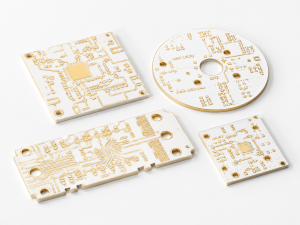
An Aluminum Nitride ceramic PCB board is a high-performance circuit platform built on a ceramic base material rather than traditional fiberglass (FR4) or metal core substrates. Unlike standard boards, this structure uses aluminum nitride ceramic as the foundation, offering exceptional thermal conductivity combined with reliable electrical insulation.
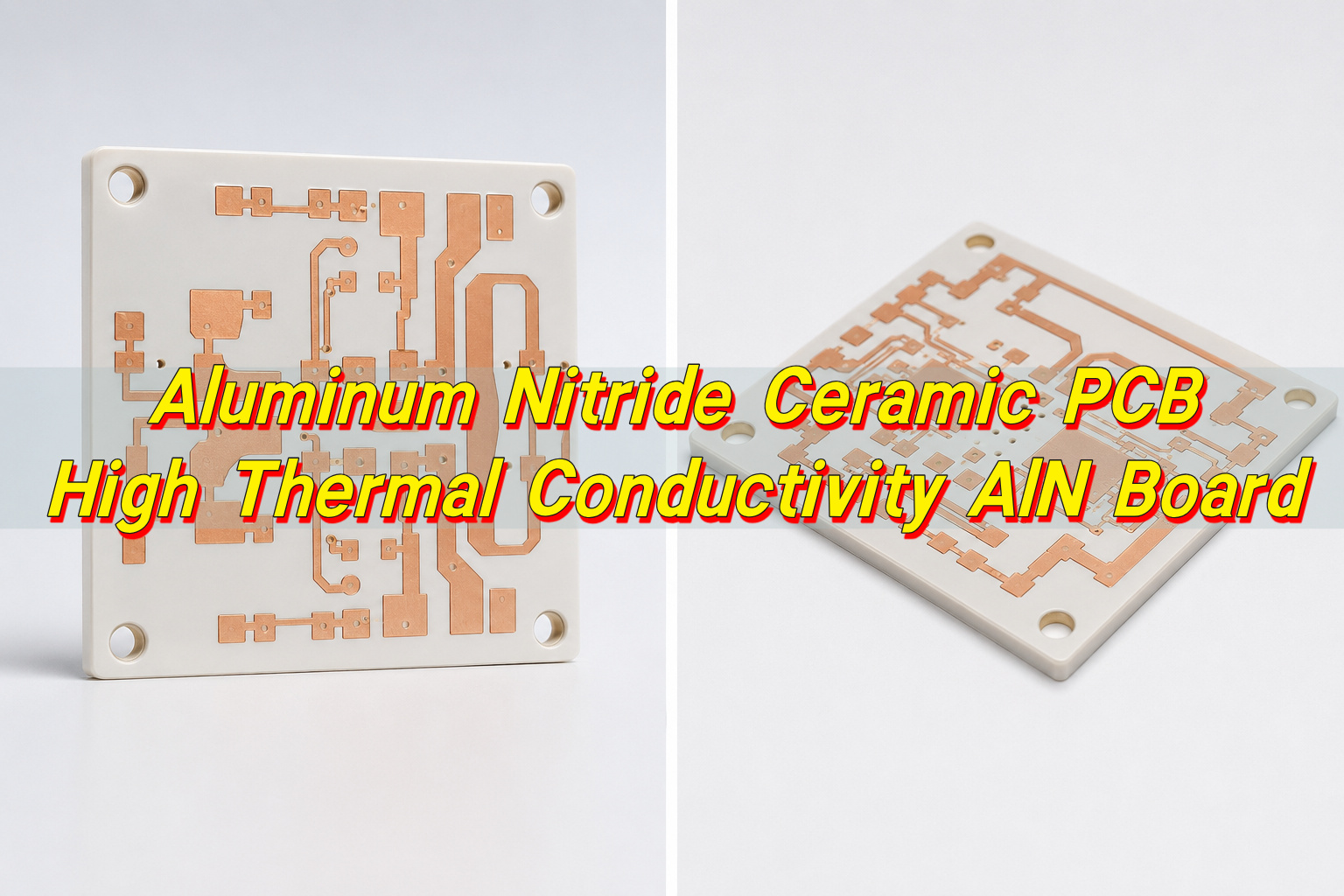
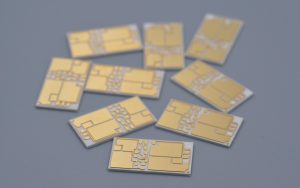
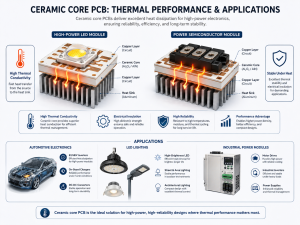
At its core, an AlN ceramic PCB integrates conductive copper circuitry onto a dense ceramic substrate. The ceramic layer acts as both a mechanical support and a thermal pathway, enabling heat to dissipate quickly away from active components.

From a practical perspective, engineers often turn to AlN boards when conventional PCB materials reach their limits. Whether dealing with high-power semiconductors, compact designs with high heat density, or harsh operating environments, this type of ceramic circuit delivers stability where other materials struggle.

In industries where failure is not an option, the use of aluminum nitride ceramic PCB boards continues to grow. Their ability to combine thermal efficiency, mechanical strength, and electrical reliability positions them as a premium solution for next-generation electronic systems.

Why Is Aluminum Nitride Used for Ceramic PCBs?

Aluminum nitride stands out among ceramic materials because of its unique balance of thermal and electrical properties. While many materials offer either good insulation or good heat conduction, AlN achieves both at a high level, which is rare and highly valuable in electronic design.

One of the defining characteristics of aluminum nitride is its thermal conductivity, which typically ranges from 170 to 230 W/m·K. This is significantly higher than alumina ceramics and approaches the performance of some metals, yet without sacrificing electrical insulation. Another key reason for its widespread use is its coefficient of thermal expansion (CTE). Aluminum nitride closely matches the CTE of silicon, making it an excellent substrate for semiconductor devices.

In addition to thermal and mechanical advantages, aluminum nitride also offers:

  • Strong dielectric strength, ensuring electrical isolation even under high voltage conditions
  • Excellent chemical stability, allowing it to perform well in corrosive environments
  • Low dielectric constant, supporting high-frequency signal integrity
  • Non-toxic composition, making it environmentally safer compared to some alternatives

These attributes make aluminum nitride an ideal material choice for ceramic PCBs used in demanding sectors such as automotive electronics, power modules, RF systems, and industrial control equipment.

Manufacturers like EBest Circuit (Best Technology) carefully select high-purity AlN powders and optimize sintering conditions to ensure consistent material performance.

What Is an Aluminum Nitride Ceramic Substrate?

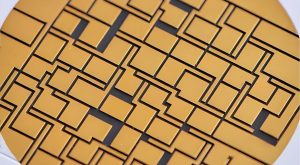
An aluminum nitride ceramic substrate is the foundational layer of an AlN PCB. It is a dense, engineered ceramic plate that provides both structural support and thermal conduction for the circuit.

This substrate is produced by pressing and sintering aluminum nitride powder at high temperatures, typically above 1,800°C. During this process, the material densifies into a solid structure with minimal porosity, which is critical for achieving high thermal conductivity and mechanical strength.

The substrate itself does not conduct electricity, but it efficiently transfers heat. To create a functional circuit, conductive layers—usually copper—are bonded or deposited onto the surface. This combination forms the complete ceramic PCB.
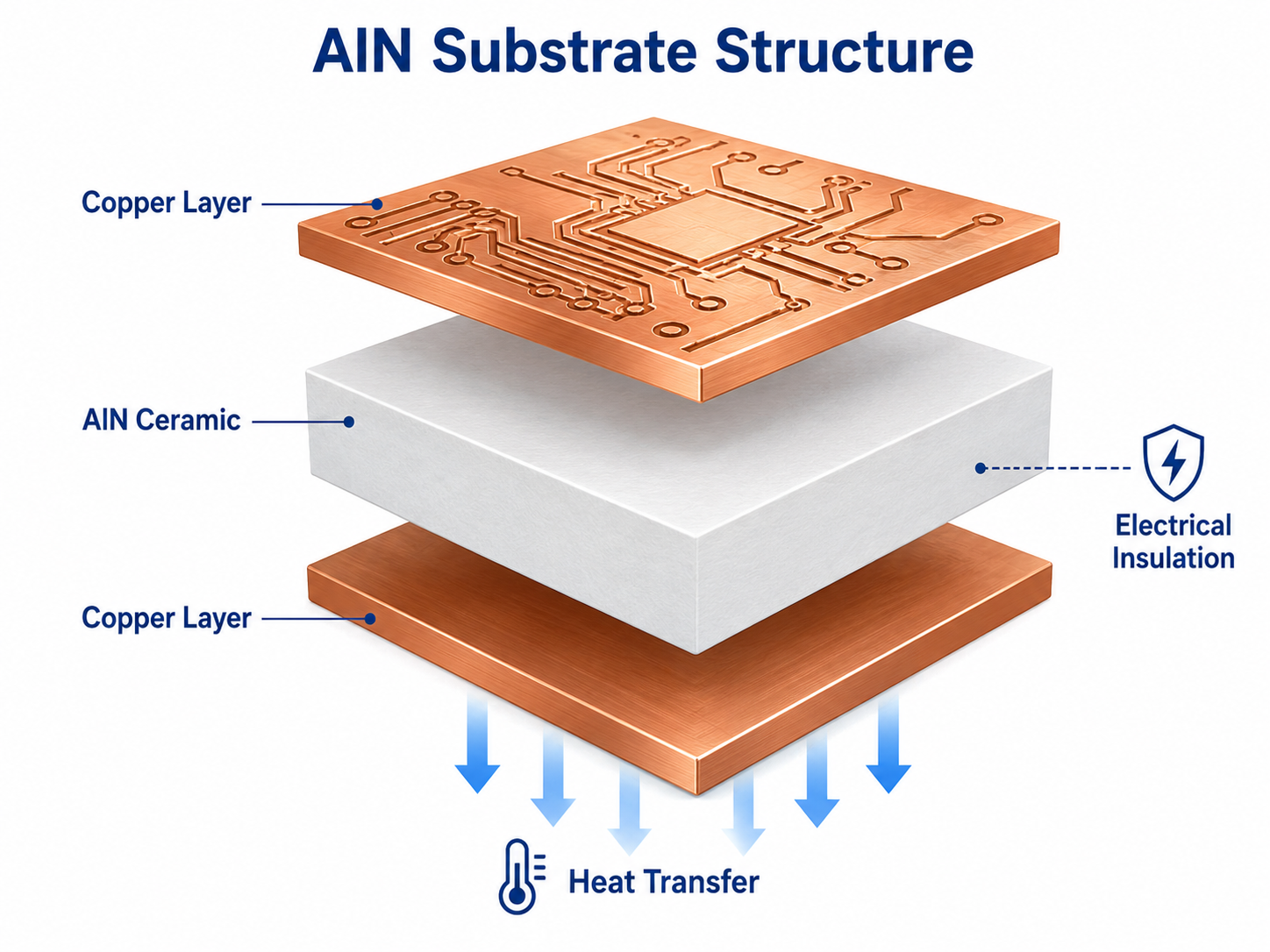
In practical applications, the substrate plays several important roles:

  • It acts as a heat spreader, rapidly dissipating thermal energy
  • It provides mechanical stability for mounted components
  • It ensures electrical insulation between conductive layers
  • It supports fine circuit patterning for complex designs

Depending on the application, aluminum nitride substrates can be customized in terms of thickness, surface finish, and metallization type. For example, thinner substrates may be used for compact devices, while thicker ones are preferred for high-power modules requiring enhanced heat spreading.

At EBest Circuit (Best Technology), aluminum nitride ceramic substrates are engineered with tight dimensional control and excellent surface flatness. This ensures compatibility with advanced assembly processes, including wire bonding and surface mount technology.

How Is an Aluminum Nitride PCB Different from Alumina PCB?

Aluminum nitride and alumina (Al₂O₃) are the two most widely used ceramic materials in PCB manufacturing. While both offer excellent electrical insulation and mechanical stability, their performance differs significantly, especially in thermal management.

Alumina has been the industry standard for many years due to its cost-effectiveness and mature manufacturing processes. However, as electronic devices become more compact and power-dense, its relatively low thermal conductivity has become a limitation.
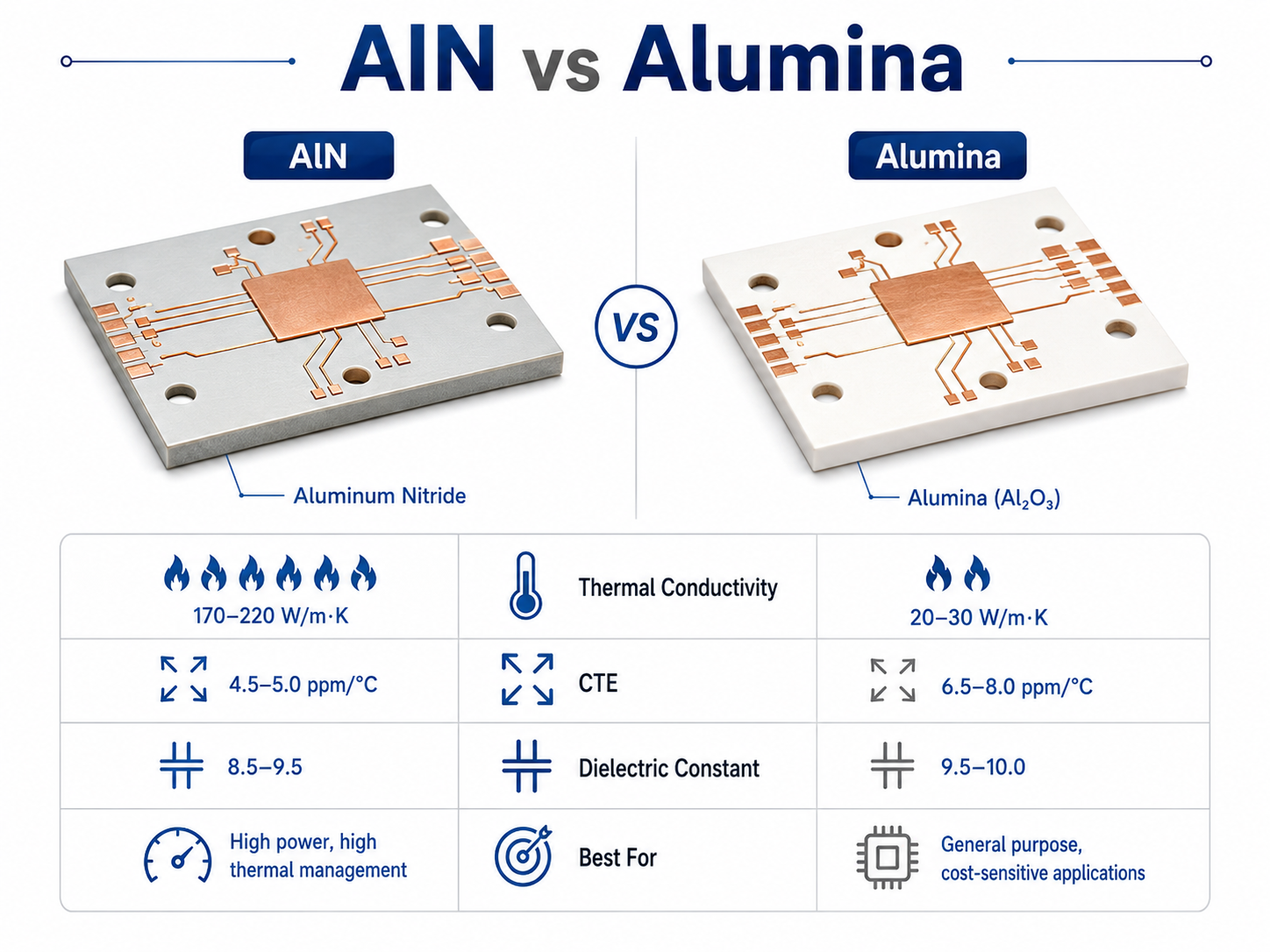
Below is a clear comparison between the two materials:

PropertyAluminum Nitride (AlN)Alumina (Al₂O₃)
Thermal Conductivity170–230 W/m·K20–30 W/m·K
Dielectric Constant~8.5~9.8
Coefficient of ExpansionClose to siliconHigher mismatch
Mechanical StrengthHighModerate
CostHigherLower
Application FocusHigh-power, high-endGeneral purpose

While alumina remains a solid choice for many standard applications, aluminum nitride becomes the preferred option when thermal performance is critical. Engineers working on power modules, LED systems, and RF devices often find that AlN delivers measurable improvements in efficiency and reliability.

What Are the Main Benefits of Aluminum Nitride Ceramic PCB?

Aluminum nitride ceramic PCBs offer a combination of properties that directly address the challenges of modern electronic design.

Key advantages include:

  • Superior heat dissipation
    High thermal conductivity allows heat to move away from components quickly, reducing operating temperatures and extending lifespan.
  • Reliable electrical insulation
    Even under high voltage conditions, AlN maintains strong dielectric properties, ensuring safe operation.
  • Enhanced mechanical stability
    The material resists warping and deformation, even under thermal stress or mechanical load.
  • Compatibility with semiconductors
    Its CTE closely matches silicon, minimizing stress during temperature fluctuations.
  • High-frequency performance
    Low dielectric loss supports stable signal transmission in RF and microwave applications.
  • Compact design capability
    Efficient heat management enables smaller, more powerful device designs.

These advantages make aluminum nitride ceramic PCBs a strategic choice for engineers seeking both performance and reliability. EBest Circuit (Best Technology) integrates these benefits into every product by maintaining strict material selection and process control standards.

What Are Aluminum Nitride PCBs Used For?

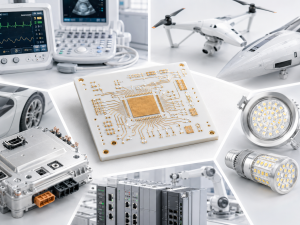
Aluminum nitride ceramic PCBs are widely used in industries where performance, durability, and thermal management are critical. Their versatility allows them to support a broad range of advanced technologies.
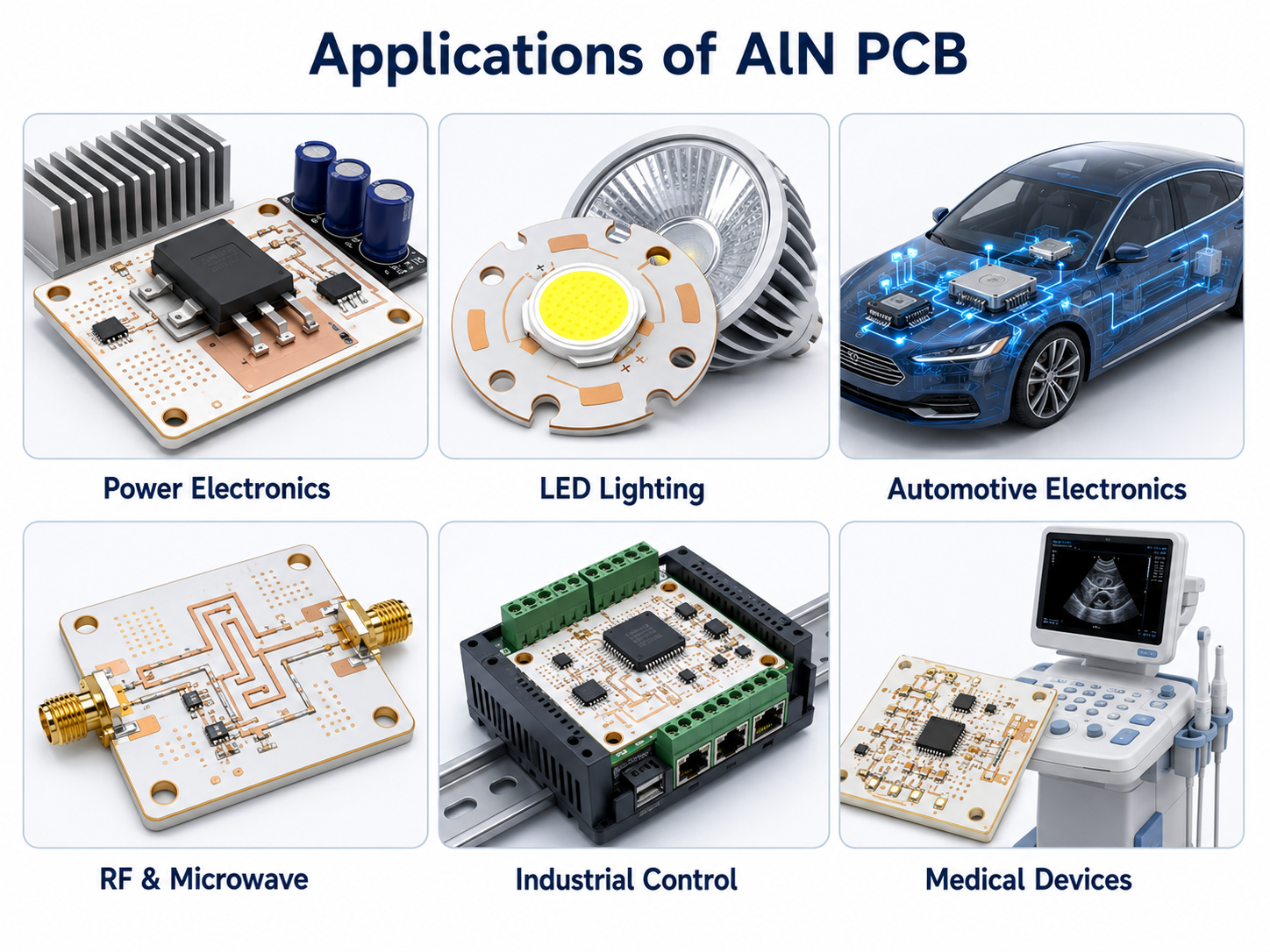
Common applications include:

  • Power electronics
    Used in IGBT modules, power converters, and inverters where heat generation is significant.
  • LED lighting systems
    High-power LEDs benefit from efficient heat dissipation, improving brightness stability and lifespan.
  • Automotive electronics
    Electric vehicles and advanced driver systems require reliable thermal management under harsh conditions.
  • RF and microwave devices
    Ideal for high-frequency circuits due to low dielectric loss.
  • Industrial control systems
    Ensures stable operation in environments with fluctuating temperatures.
  • Medical devices
    Supports precision electronics where reliability is essential.

As industries continue to evolve toward higher power densities and smaller form factors, the demand for aluminum nitride PCBs is expected to grow steadily.

How Are Aluminum Nitride Ceramic PCBs Manufactured?

The manufacturing process of aluminum nitride ceramic PCBs is more complex than that of traditional PCBs. It requires specialized equipment and expertise to achieve consistent quality.
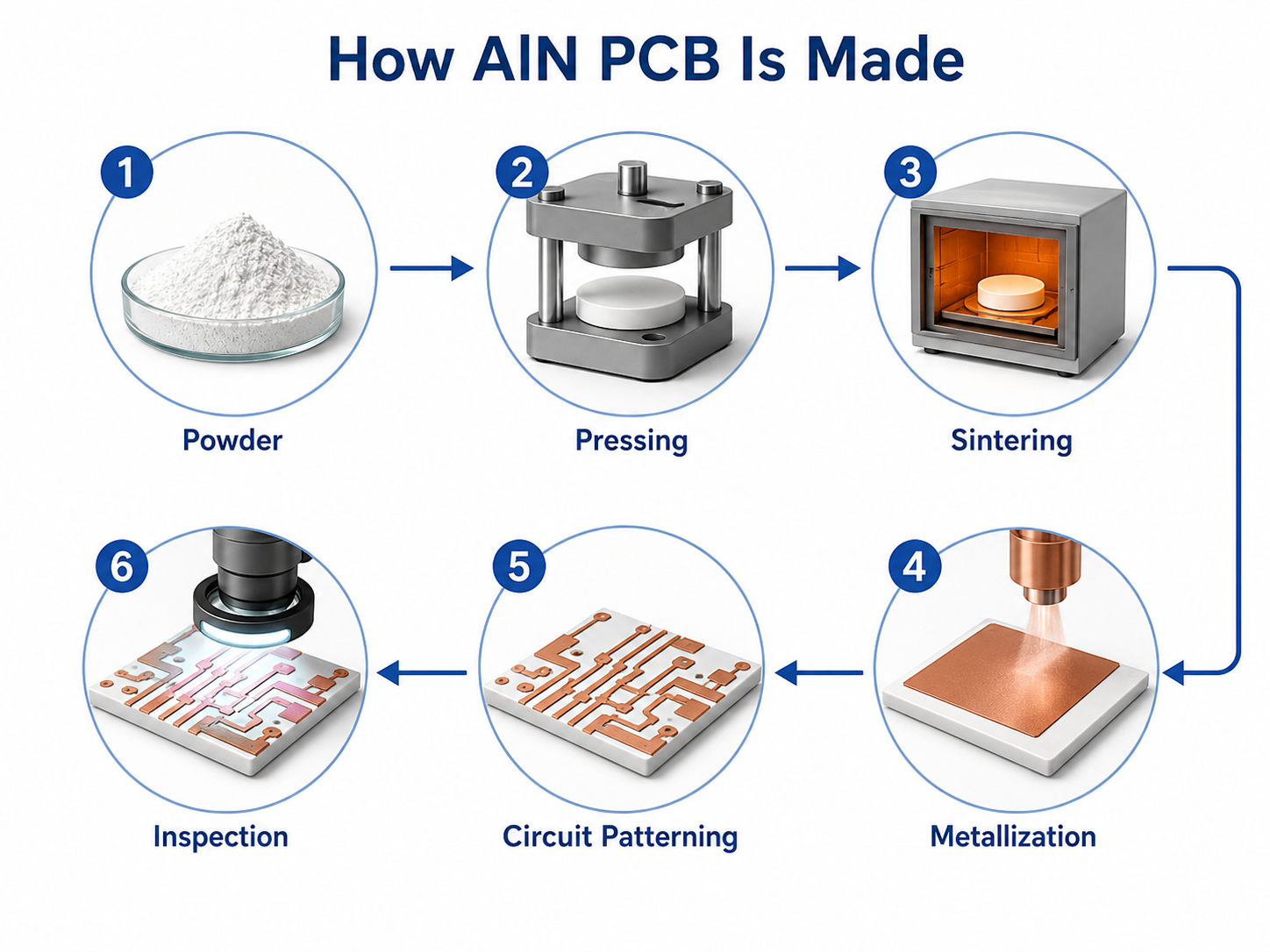
The process generally involves several key steps:

  • Powder preparation
    High-purity aluminum nitride powder is selected and processed.
  • Forming and sintering
    The powder is shaped and sintered at high temperatures to create a dense ceramic substrate.
  • Surface preparation
    The substrate is polished to achieve the required flatness and surface quality.
  • Metallization
    Conductive layers are applied using techniques such as Direct Bonded Copper (DBC) or Thin Film deposition.
  • Circuit patterning
    Photolithography and etching are used to define precise circuit patterns.
  • Surface finishing
    Additional coatings are applied to enhance solderability and corrosion resistance.
  • Inspection and testing
    Each board undergoes rigorous quality checks to ensure performance standards are met.

At EBest Circuit (Best Technology), advanced manufacturing capabilities ensure tight tolerances and consistent performance across all production batches. Our specialized expertise in the field of ceramic PCB manufacturing enables us to provide customized solutions for complex applications.

Can Aluminum Nitride Ceramic PCBs Support Fine Circuits?

Yes, aluminum nitride ceramic PCBs can support fine circuit patterns, especially when thin-film or advanced metallization processes are used. This capability is essential for modern electronics, where compact designs and high circuit density are increasingly common.

Fine circuit support depends on several factors, including surface smoothness, metallization method, and process control. Aluminum nitride substrates can achieve excellent surface flatness, which is critical for high-resolution patterning.

Typical capabilities include:

  • Fine line widths suitable for high-density layouts
  • Precise spacing for complex circuit routing
  • Compatibility with microelectronic assembly techniques

Thin-film technology, in particular, allows for extremely fine features, making AlN PCBs suitable for RF modules, sensors, and advanced semiconductor packaging. With proper engineering and manufacturing expertise, aluminum nitride ceramic PCBs can meet the demands of even the most intricate designs.

What Surface Finishes Are Used for Aluminum Nitride PCBs?

Surface finishes play a crucial role in ensuring reliable assembly and long-term performance. For aluminum nitride PCBs, several finishing options are available depending on the application.

Common surface finishes include:

  • ENIG (Electroless Nickel Immersion Gold)
    Provides excellent solderability and corrosion resistance.
  • ENEPIG
    Adds a palladium layer for improved wire bonding performance.
  • Immersion Silver
    Offers good conductivity and is suitable for high-frequency applications.
  • OSP (Organic Solderability Preservative)
    A cost-effective option for certain applications.

Each finish has its own advantages, and the selection depends on factors such as assembly method, environmental conditions, and performance requirements. EBest Circuit (Best Technology) offers a range of surface finishing options to meet diverse customer needs, ensuring compatibility with various assembly processes.

What Factors Affect Aluminum Nitride PCB Cost?

The cost of aluminum nitride ceramic PCBs is influenced by multiple factors, reflecting the complexity and precision required in their production.

Key cost drivers include:

  • Material quality
    High-purity aluminum nitride powder increases performance but also cost.
  • Substrate thickness and size
    Larger and thicker substrates require more material and processing time.
  • Metallization method
    Advanced techniques like DBC or thin film can significantly impact cost.
  • Circuit complexity
    Fine features and multi-layer designs require more precise processing.
  • Surface finish
    Premium finishes such as ENEPIG add to the overall cost.
  • Production volume
    Higher volumes can reduce per-unit cost through economies of scale.

While aluminum nitride PCBs are generally more expensive than standard options, their performance benefits often justify the investment. In many cases, improved reliability and thermal efficiency lead to lower total system costs over time.

EBest Circuit (Best Technology) works closely with customers to optimize design and manufacturing parameters, helping balance performance and cost effectively.

Summary:

Aluminum nitride ceramic PCBs represent a powerful solution for modern electronics that demand efficient thermal management and reliable performance. Their ability to combine high thermal conductivity with strong electrical insulation makes them ideal for high-power and high-frequency applications.

If you are exploring high-performance ceramic PCB solutions, EBest Circuit (Best Technology) is ready to support your project with advanced manufacturing capabilities and tailored engineering expertise.

For inquiries, feel free to contact: sales@bestpcbs.com
You may also like

Aluminum Nitride PCB | Aluminum Nitride Ceramic PCB Design
Thursday, October 10th, 2024

What is Aluminum Nitride PCB?

Aluminum nitride PCB also known as Aluminum nitride ceramic PCB or short for AlN PCB. It is a high-performance circuit board made from aluminum nitride ceramic, a material known for its exceptional thermal conductivity and electrical insulation properties. These boards are commonly used in industries where efficient heat dissipation is crucial, such as in power electronics, LED applications, and high-frequency devices. AlN PCBs are gaining popularity due to their ability to withstand extreme temperatures.

Aluminum Nitride PCB | Aluminum Nitride Ceramic PCB

Benefits of AlN PCBs

One of the key advantages of AlN PCBs is their excellent thermal conductivity, which helps prevent overheating in electronic components. With exceptional thermal conductivity of 170 W/mK, strong dielectric strength, and a low thermal expansion coefficient (CTE <4 ppm/°C), AlN is widely used in applications like high-power LEDs, lasers, high-current switches, and even ultra-low temperature vacuum electronics such as those in quantum computing. In addition to these features, AlN offers the same benefits as other ceramic materials, including rigidity, environmental and chemical resistance, and 0% water absorption.

Key reasons for choosing Aluminum Nitride over other PCB materials include:

  • Outstanding thermal conductivity of 170 W/mK
  • Excellent dielectric properties
  • High operating temperatures exceeding 350°C
  • Low thermal expansion coefficient (<4 ppm/°C)
  • Compact designs due to better integration
  • Hermetically sealed packages with 0% water absorption
  • Minimal to no outgassing

What is the Thermal Conductivity of Aluminum Nitride PCB?

‌The thermal conductivity of aluminum nitride PCB ranges from 170-230W/(m·K).

The high thermal conductivity of aluminum nitride PCB is due to its unique structure and chemical composition. The thermal conductivity of aluminum nitride ceramic substrate is 2-3 times higher than that of traditional alumina ceramics and silicon-based ceramics, and 10-20 times higher than that of titanium substrate. This high thermal conductivity allows them to effectively dissipate heat from high-power electronic components, preventing overheating and ensuring stable performance. The ability to manage heat efficiently makes AlN PCBs an ideal choice for applications that generate a significant amount of heat, such as power modules, LEDs, and RF components. In comparison to other materials like aluminum oxide, which has lower thermal conductivity (around 20-30 W/mK), aluminum nitride stands out as a top choice for heat-sensitive applications.

Factors affect thermal conductivity of AlN PCB

Although the theoretical thermal conductivity of AlN is extremely high, its performance in practical applications is limited by a number of factors, mainly including:

  • Microstructure

Phonon scattering is a key mechanism for heat conduction. Grain boundaries, interfaces, second phases, and defects can all affect the mean free path of phonons, thereby influencing thermal conductivity. High-purity, low-defect single-crystal AlN has a longer phonon mean free path and higher thermal conductivity.

  • Oxygen Impurity Content

AlN’s strong affinity with oxygen leads to the easy introduction of oxygen impurities, which form alumina films and lattice defects, such as aluminum vacancies. These significantly reduce the phonon mean free path, lowering thermal conductivity. When the oxygen concentration is below 0.75%, oxygen atoms primarily replace nitrogen atoms in the lattice; however, exceeding this concentration causes aluminum vacancies to disappear and results in the formation of extended defects, further affecting thermal conductivity.

  • Sintering Process and Additives

By selecting appropriate sintering additives (such as Y₂O₃-Li₂O, Y₂O₃-CaC₂ composite systems), densification can be achieved at lower temperatures, while reducing the formation of oxygen impurities and second phases, effectively improving the thermal conductivity of AlN ceramics. These additives help purify grain boundaries and optimize the microstructure, facilitating more efficient phonon transmission.

What is Aluminum Nitride PCB Used For?

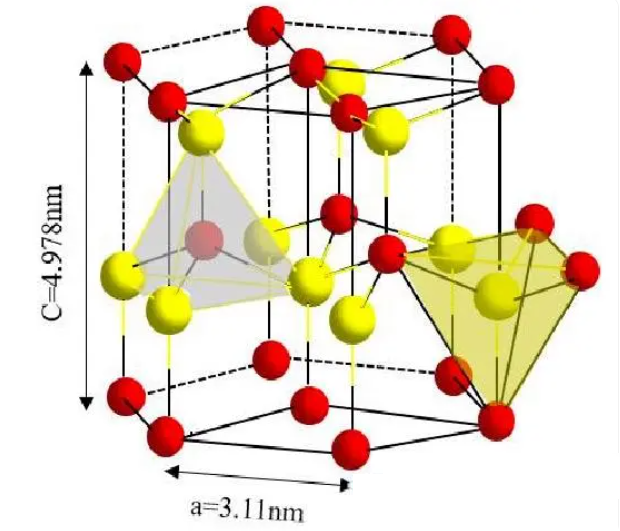
Aluminum nitride as a stable hexagonal wurtzite covalent bond compound, has shown extensive application potential in the field of electronics and optoelectronics due to its unique physical and chemical properties. Its crystal structure takes AlN4 tetrahedron as the basic unit, space group P63mc, belongs to the hexagonal crystal system, which gives AlN a series of excellent properties and use in advanced applications.

Aluminum Nitride PCB | Aluminum Nitride Ceramic PCB

Some common applications include:

  • Optical Communication
  • Integrated Circuits and High-Power Electronic Devices
  • Power Electronics
  • Wafer chips
  • Epoxy Resin Packaging
  • Optical Devices and Piezoelectric Devices
  • Industrial Materials
  • Acoustic Devices
  • Aerospace
  • Military

Why is Aluminum Nitride Expensive?

The high cost of aluminum nitride PCBs stems from several factors.

First of all, the raw material cost of aluminum nitride PCB is higher. The preparation of aluminum nitride powder requires high purity raw materials, synthesis methods include direct nitriding method, carbothermal reduction method, self-propagating high temperature synthesis and chemical vapor deposition method, etc. These methods have high requirements on equipment and technology, resulting in higher costs.

Secondly, the production process is complicated. The preparation process of aluminum nitride PCB is complex, including multiple steps such as molding and sintering, which has high requirements for equipment and technology and a high production threshold.

Finally, the market demand is large. Aluminum nitride PCB in power electronics, communication equipment, automotive electronics and other fields have a wide range of applications, especially in high power, high frequency and other occasions, its excellent heat dissipation and insulation performance can not be replaced, resulting in short supply in the market, the price of natural rising.

Aluminum Nitride PCB vs. Alumina Oxide PCB

Both aluminum nitride (AlN) and alumina oxide (Al2O3) are ceramic materials used in PCB manufacturing, but they differ significantly in terms of performance. AlN offers superior thermal conductivity, typically 170-230 W/mK, compared to aluminum oxide’s lower range of 20-30 W/mK. This makes AlN the better option for applications requiring efficient heat dissipation, such as high-power electronics and LED lighting.

However, aluminum oxide is more cost-effective and is often used in applications where high thermal conductivity is not as crucial. While Al2O3 provides good electrical insulation and is easier to produce, it may not perform as well in heat-sensitive environments as AlN. Therefore, the choice between AlN and Al2O3 depends on the specific thermal and budgetary requirements of the application. Here are the parameters of AlN and Al2O3 materials:

ParameterAluminum Nitride (AlN)Alumina Oxide (Al2O3)
Thermal conductivity170-230 W/m.k24-30 W/m.k
Dielectric constant8.89.2-10
Dielectric strength15-25kV/mm10-15kV/mm
Temperature resistance1000-1500C1000-1200C
CTE4.0 ppm/K6.5-7 ppm/K
Flexural strength450MPa320MPa
Dielectric breakdown voltage14 V/m10 V/m

AlN Ceramic PCB Design Considerations

When designing an aluminum nitride PCB, several factors need to be considered to optimize performance:

1. Trace Width

The trace width on AlN PCBs should be a minimum of 10 mils. This ensures that the conductor cross-section is sufficient to handle the current and heat dissipation needs. Given the thermal advantages of AlN, wider traces help in spreading heat more efficiently, minimizing the risk of overheating in power-dense applications.

2. Trace Clearance

Clearances between adjacent traces should be at least 8 to 10 mils. AlN PCBs often work with higher voltage levels, making spacing critical to prevent arcing or dielectric breakdown. In high-power designs, careful spacing between traces reduces the likelihood of signal interference and maintains the board’s insulation integrity.

3. Via Pads

For via pads, a minimum diameter of 16 mils is recommended. This provides sufficient area for stable soldering and ensures proper electrical connection through the via. Depending on the board’s application, larger via pads may be necessary to accommodate higher currents or thermal dissipation needs. Via sizing should also account for assembly techniques, such as reflow soldering or thermal management features, like thermal vias, which enhance heat transfer away from components.

4. Pad Geometry Adjustments

Unlike FR-4 designs, AlN PCBs often require specific adjustments in pad geometries. The mechanical and thermal properties of AlN are quite different from those of traditional PCBs. The expansion rate, hardness, and substrate fragility mean that pad designs should allow for thermal expansion and contraction without causing stress fractures. Proper pad design also ensures better solder joint reliability, particularly for components exposed to continuous thermal cycling.

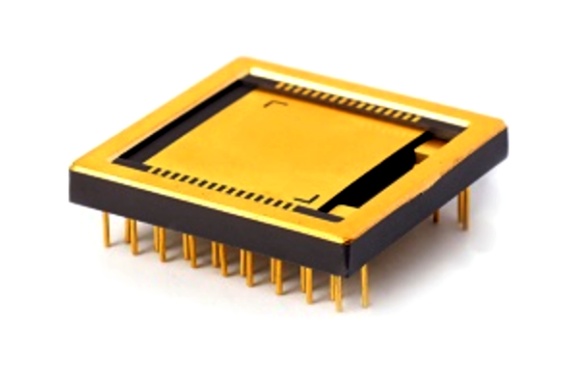
5. Gold Plating for Wire Bonding Pads

In high-performance applications, wire bonding is often used, and gold plating is a preferred surface finish for wire bonding pads. The use of gold provides a stable, corrosion-resistant surface that improves bond integrity and longevity. Wire bonding is especially critical in high-frequency, high-reliability devices, where the connections must maintain integrity under thermal stress or in harsh environments.

Aluminum Nitride PCB | Aluminum Nitride Ceramic PCB

6. Component and Solder Matching

All components and solder materials must match the electrical and mechanical properties of the AlN substrate. Mismatches in thermal expansion between the PCB material and components can lead to stress, causing cracking or delamination. It’s important to select components and solder that can withstand high temperatures and thermal cycles while maintaining compatibility with AlN’s characteristics, especially in applications like power electronics and RF circuits.

7. Hermetic Sealing and Height Restrictions

For applications requiring hermetic sealing, such as aerospace or medical devices, height restrictions may apply to the components on the PCB. Hermetic seals protect against moisture and environmental contaminants, ensuring long-term reliability in sensitive applications. The overall component height should be kept in line with the sealing requirements, and compact designs are often necessary to meet stringent packaging constraints.

8. Thermal Expansion Management

When attaching large dies or high-power devices, it’s crucial to model and account for thermal expansion. Even though AlN has a low thermal expansion coefficient (<4 ppm/°C), the difference in expansion rates between components and the substrate can create mechanical stress, especially during thermal cycling. Careful design, including flexible connections or underfill materials, can help mitigate these effects.

9. Thermal Vias

Thermal vias are essential for managing heat in high-power applications. By placing thermal vias directly underneath hot components, heat can be efficiently transferred away from sensitive areas, extending the lifespan of both the components and the PCB itself. In many designs, a network of thermal vias is integrated with heat sinks or spreaders to further improve heat dissipation.

10. Surface Finishes and Coatings

Aluminum nitride PCBs can benefit from surface finishes such as electroless nickel immersion gold (ENIG) or immersion silver, which protect the copper traces from oxidation and provide excellent solderability. The choice of surface finish may also depend on the specific application environment and the reliability requirements, especially in high-power or high-frequency circuits.

FAQs About AlN PCBs

1. How durable are aluminum nitride PCBs?

    AlN PCBs are highly durable and can withstand extreme temperatures and harsh environments.

    2. Can AlN PCBs be used in high-frequency applications?

    Yes, aluminum nitride PCBs are well-suited for high-frequency and high-speed applications due to their excellent electrical insulation and low signal loss.

    3. Are aluminum nitride PCBs environmentally friendly?

    While the production process can be resource-intensive, AlN PCBs offer longer lifespans and higher efficiency, which can reduce the environmental impact over time.

    4. How do AlN PCBs compare with metal-core PCBs?

    Metal-core PCBs, such as those with an aluminum core, provide good thermal management but lack the superior electrical insulation of AlN PCBs. AlN PCBs are preferred for applications requiring both high thermal conductivity and insulation.

    5. What industries typically use aluminum nitride PCBs?

    Industries like power electronics, aerospace, automotive, and telecommunications commonly use AlN PCBs for their high-performance needs.

    You may also like