PCB manufacturing PCB manufacturing
Home > Blog

high frequency circuit board

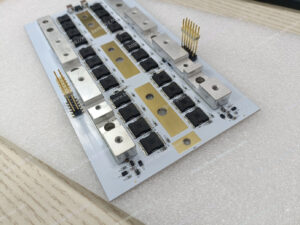
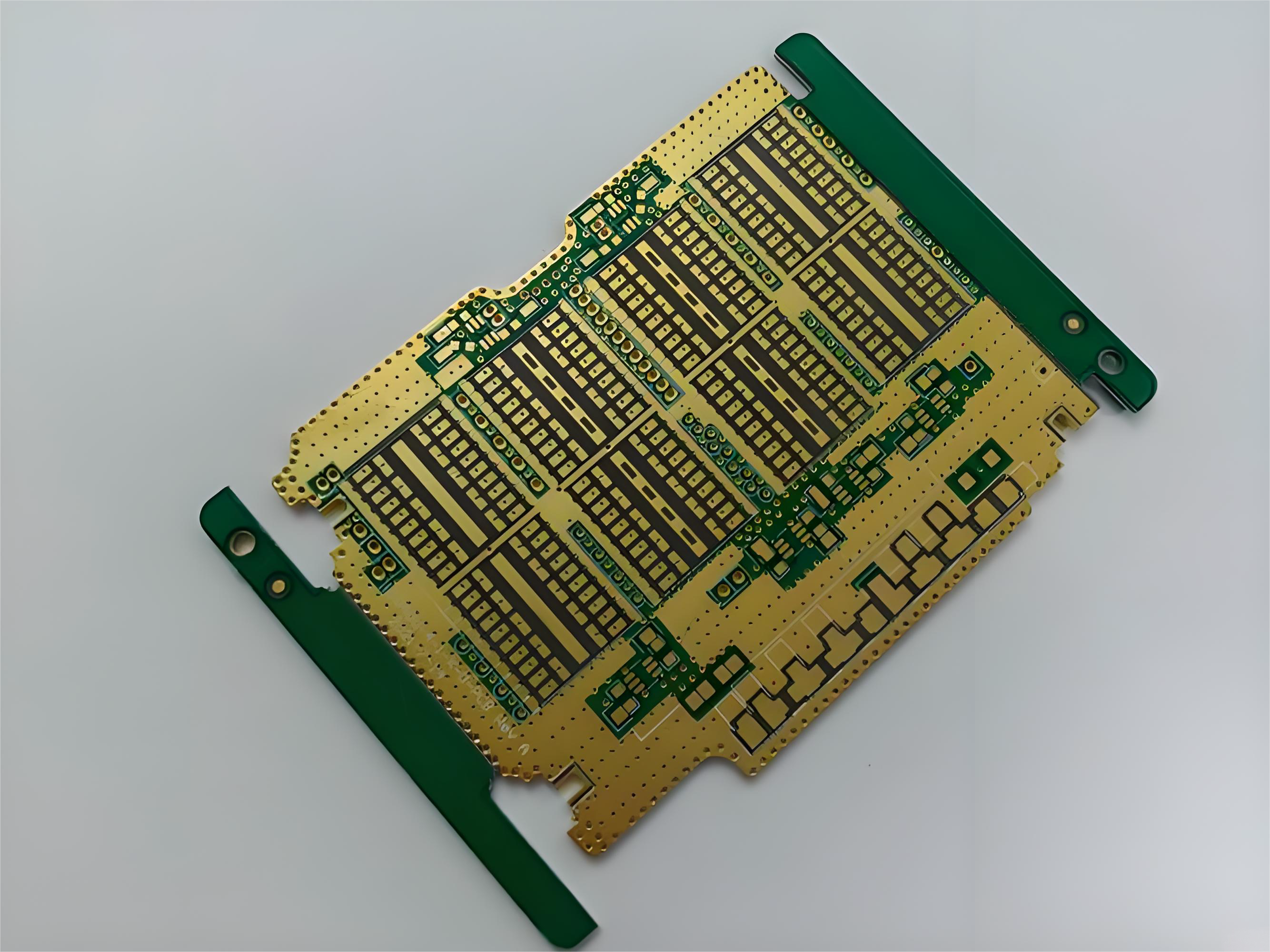
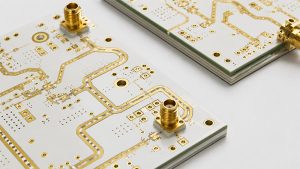
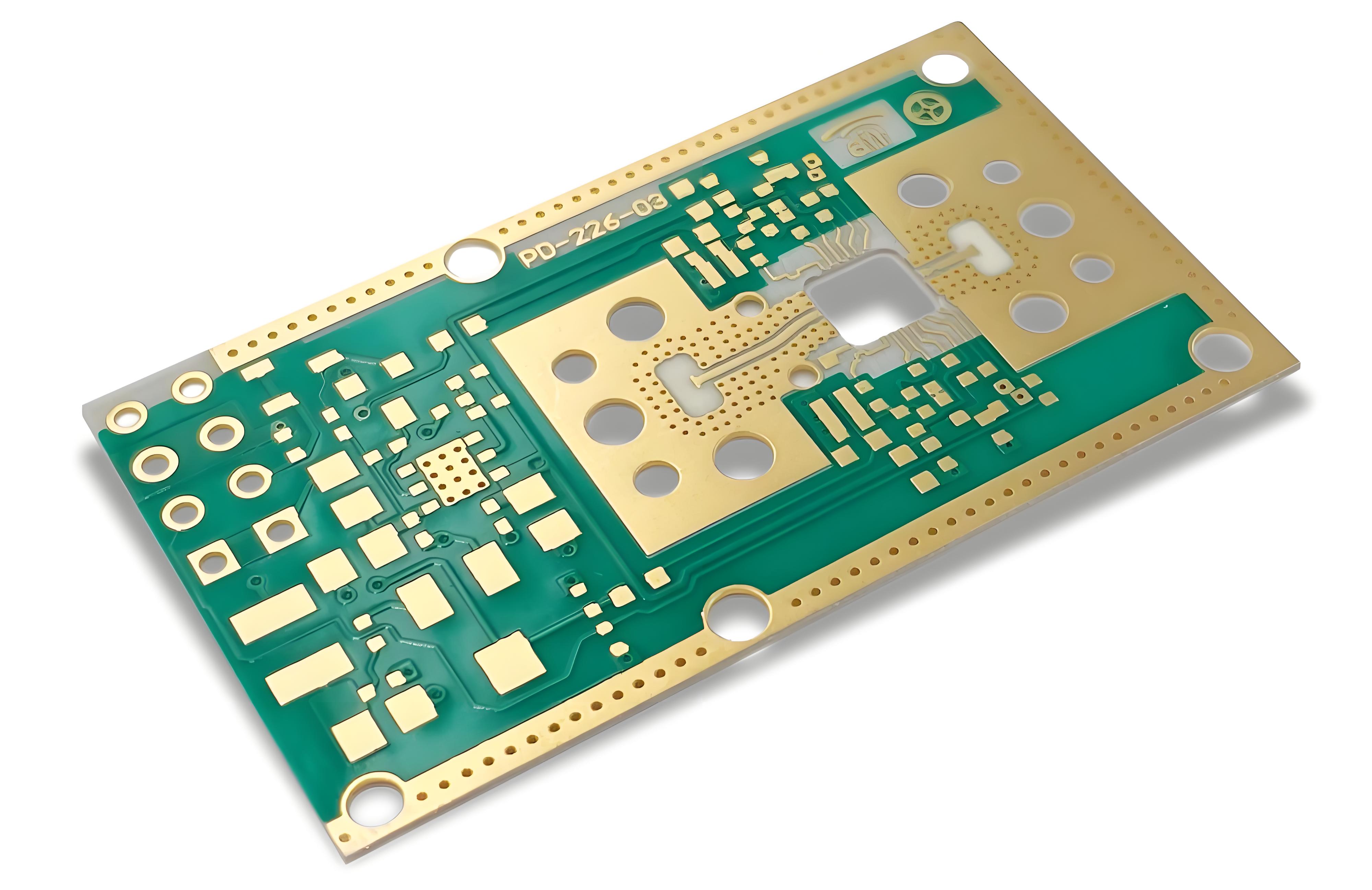
High Frequency Ceramic PCB for RF Application
Tuesday, May 26th, 2026

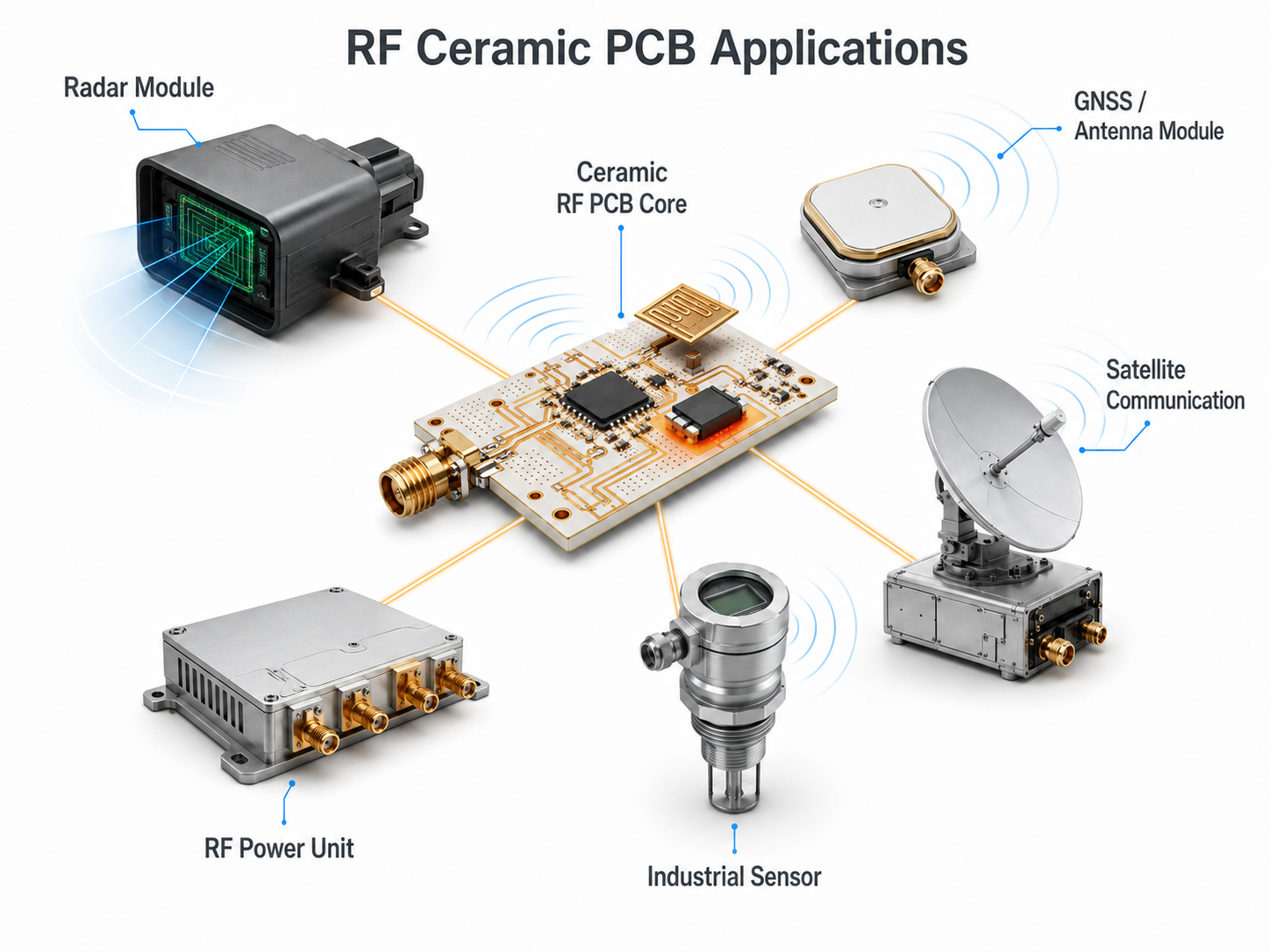
A ceramic PCB for RF application is designed for circuits where signal stability, low dielectric loss, thermal control, and dimensional accuracy matter more than basic interconnection. In RF, microwave, antenna, radar, satellite communication, and high-power wireless modules, the PCB substrate directly affects impedance, insertion loss, phase stability, and long-term reliability.

High Frequency Ceramic PCB for RF Application

EBest Circuit (Best Technology) supports ceramic PCB fabrication for RF-related projects, including material selection, stackup review, DFM analysis, ceramic substrate processing, copper pattern control, inspection, and production support.

What Is a Ceramic PCB for RF Application?

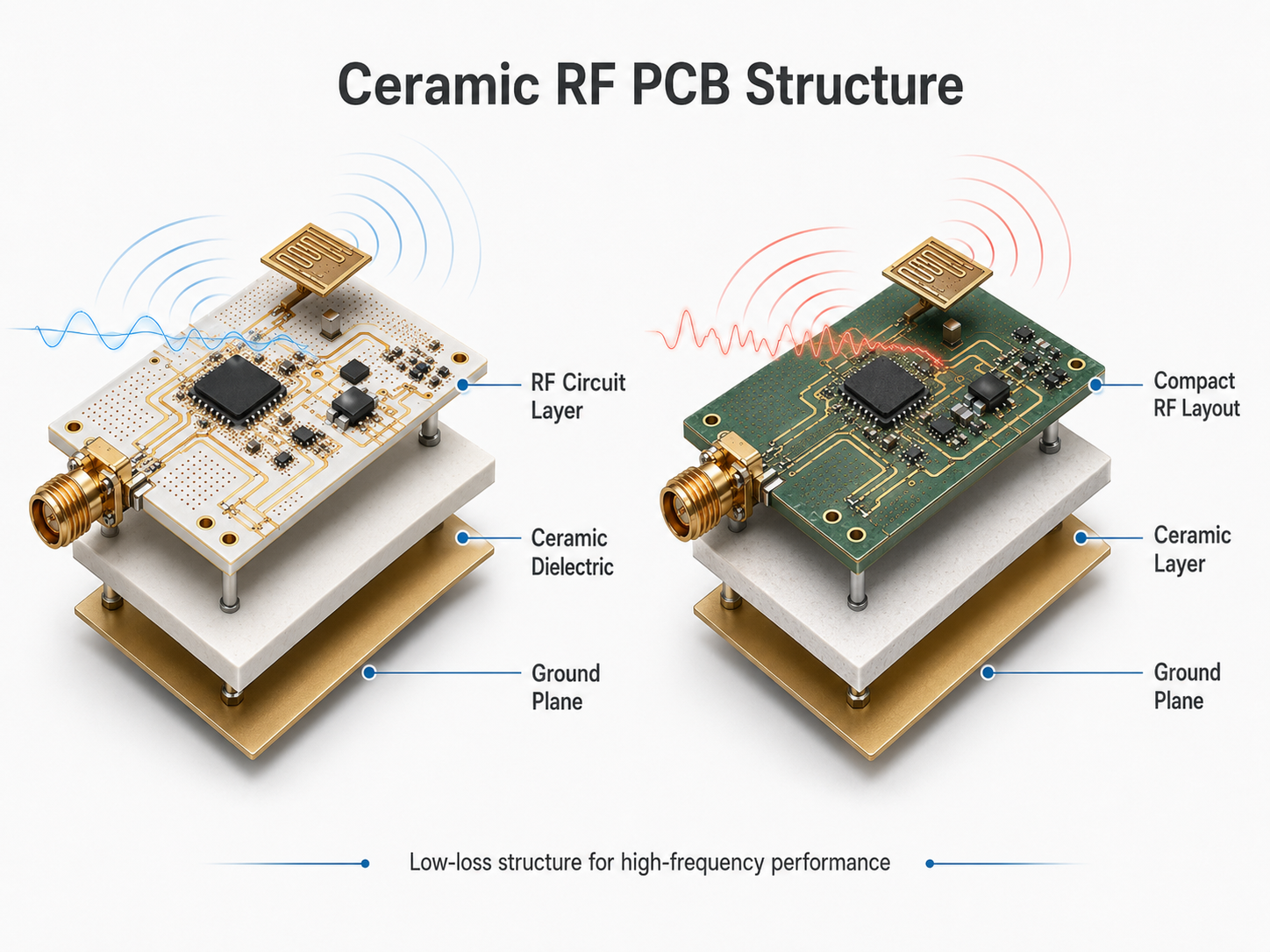
A ceramic PCB for RF application is a printed circuit board made with a ceramic substrate instead of an organic laminate such as FR4. The ceramic layer acts as the dielectric base, while copper or other metallization forms the conductive circuit pattern. In RF designs, this substrate is selected because it provides more stable electrical and thermal behavior at higher frequencies.

For low-frequency or general digital circuits, the PCB mainly provides mechanical support and electrical connection. In RF circuits, the board also controls signal transmission. Trace width, dielectric thickness, dielectric constant, copper roughness, via structure, and ground design all influence impedance and signal loss.

Ceramic PCB technology is often used when the design needs:

  • Stable dielectric behavior at high frequencies
  • Lower signal loss than common FR4 materials
  • Better heat dissipation around RF power devices
  • Compact circuit dimensions
  • High insulation strength
  • Reliable performance under temperature changes

Common ceramic PCB processes include thick film, thin film, DPC, DBC, and AMB. Thin film ceramic circuits are often used for precision RF circuits, filters, attenuators, and microwave modules. DPC ceramic PCBs are suitable for fine circuit patterns, high-density layouts, and good copper bonding. DBC and AMB are more common in high-power designs where thicker copper and strong thermal transfer are required.

Why Are Ceramic PCBs Used in RF Circuits?

Ceramic PCBs are used in RF circuits because high-frequency signals are sensitive to substrate variation. At higher frequencies, even small changes in dielectric constant, material thickness, trace width, or copper surface condition can affect impedance, phase, and insertion loss.

Ceramic materials offer better dimensional and dielectric stability than many standard PCB materials. This helps RF circuits maintain more consistent performance during operation and production. For RF modules that need repeatable tuning, this stability is valuable.

High Frequency Ceramic PCB for RF Application

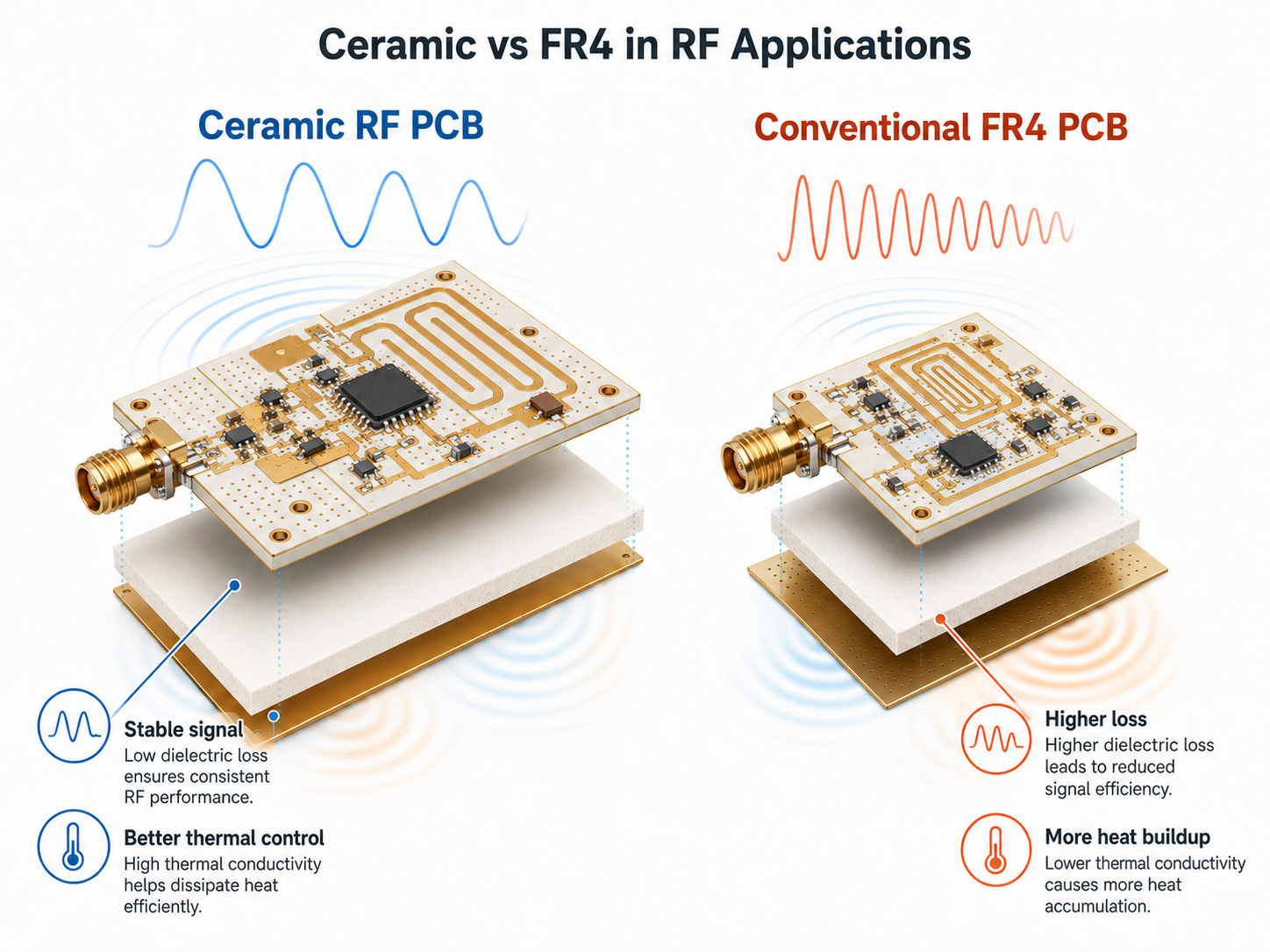
Thermal performance is another major reason. RF power amplifiers, transmitters, radar modules, and microwave circuits often generate heat in small areas. If heat is not removed efficiently, device gain, frequency response, and long-term reliability may shift. Ceramic substrates, especially aluminum nitride, can move heat away from active components more effectively than FR4.

PropertyStandard FR4Alumina Ceramic PCBAluminum Nitride Ceramic PCB
Typical dielectric constantAbout 4.0–4.8About 9.0–10.0About 8.5–9.0
Thermal conductivityAbout 0.3 W/m·KAbout 20–30 W/m·KAbout 140–180 W/m·K
Dielectric stabilityModerateHighHigh
High-frequency lossHigherLowerLower
Dimensional stabilityModerateHighHigh
Common useGeneral electronicsRF modules, sensors, microwave circuitsRF power modules, high-heat applications

FR4 is still widely used in many wireless products, especially when cost is the main factor and the RF section is not highly demanding. Ceramic becomes more suitable when the design needs low loss, compact RF geometry, better heat control, or stable performance over a wide temperature range.

How Does Ceramic PCB Improve RF Signal Performance?

A ceramic PCB improves RF signal performance by creating a more stable transmission environment. In RF design, signal quality depends on impedance consistency, dielectric loss, conductor loss, grounding, and layout control. Ceramic materials help reduce several common sources of signal variation.

One key benefit is dielectric stability. The dielectric constant affects wave speed, impedance, resonant frequency, and phase behavior. If the dielectric constant changes with temperature or varies between batches, the circuit response may shift.

Another important benefit is low dielectric loss. RF signals lose energy as they move through the transmission path. Lower-loss materials help preserve signal strength, improve efficiency, and reduce unwanted heating.

Ceramic materials can also support compact design. Many ceramic substrates have a higher dielectric constant than FR4, which shortens the guided wavelength on the board. This allows certain RF structures, such as resonators, filters, and antennas, to be made smaller.

Thermal stability also supports better signal performance. RF active devices can change behavior as temperature rises. Good heat transfer helps keep the operating point more stable, which is useful for amplifiers, radar modules, and high-power communication systems.

Main RF performance benefits include:

  • More consistent impedance control
  • Lower dielectric loss
  • Better thermal spreading
  • Stable geometry during temperature cycling
  • Compact RF circuit layout
  • Better repeatability from prototype to production

These benefits depend on both material and manufacturing control. A ceramic substrate alone is not enough. Line width, copper thickness, via design, metallization quality, surface finish, and inspection standards must also match the RF design requirements.

What Ceramic PCB Materials Are Used for RF Applications?

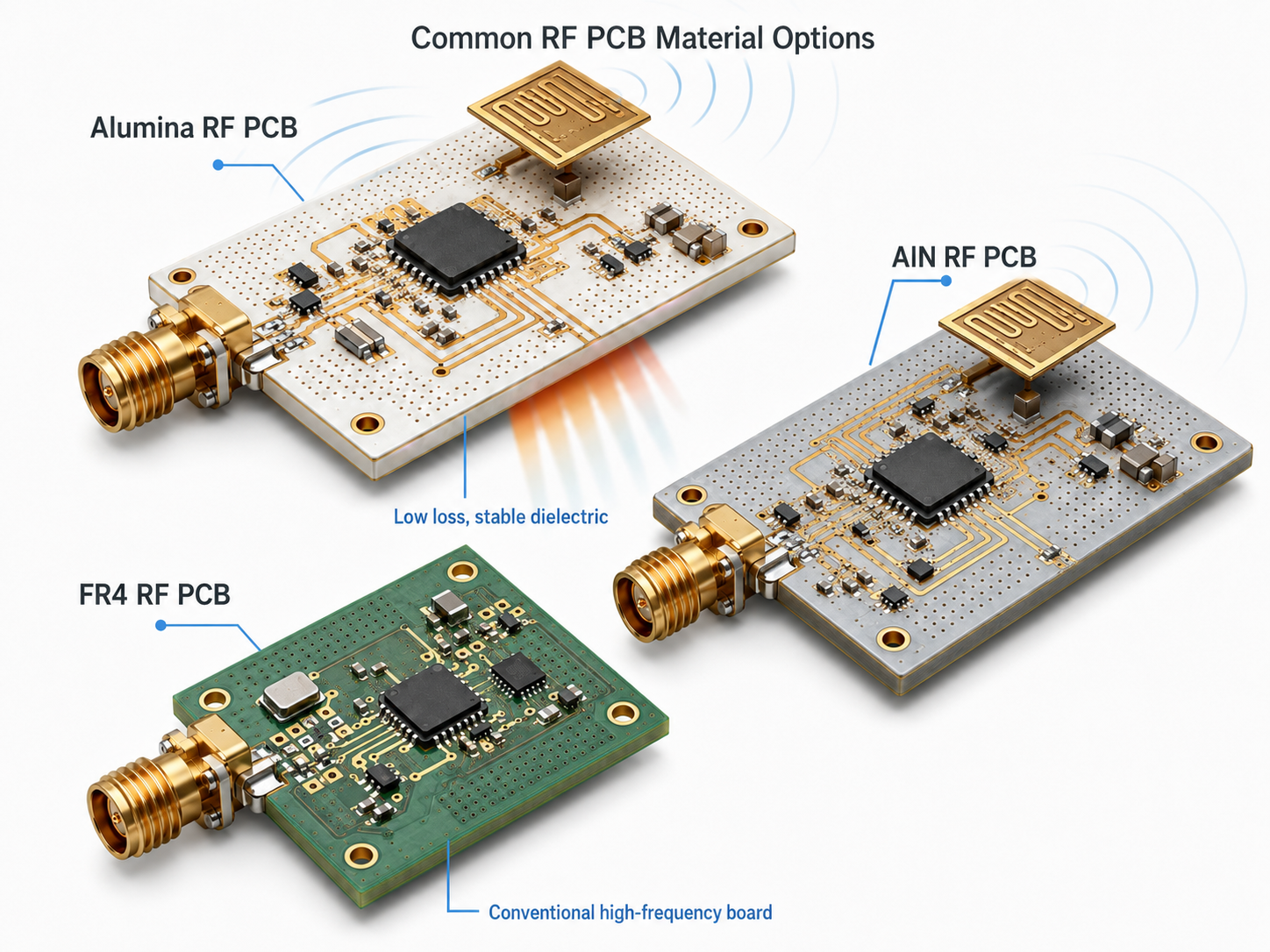
The most common ceramic PCB materials for RF applications are alumina and aluminum nitride. Other advanced ceramics may be used in specialized microwave or high-power projects, but alumina and aluminum nitride cover many practical RF design needs.

Alumina ceramic is widely used because it offers stable electrical insulation, good mechanical strength, practical cost, and reliable high-frequency behavior. It is suitable for RF modules, sensors, microwave circuits, antenna substrates, medical electronics, automotive electronics, and industrial equipment. Common grades include 96% alumina and 99.6% alumina. Higher-purity alumina is often selected when tighter stability or finer circuit features are required.

Aluminum nitride ceramic is selected when thermal performance is a priority. Its thermal conductivity is much higher than alumina, while it still provides good electrical insulation. This makes it useful for RF power amplifiers, high-power microwave modules, laser drivers, radar electronics, and compact power devices.

Specialized microwave ceramics may be used when a design needs a specific dielectric constant, low loss, or temperature coefficient. These materials are usually selected for filters, resonators, millimeter-wave modules, and other frequency-sensitive circuits.

MaterialTypical Dielectric ConstantTypical Thermal ConductivityMain AdvantageTypical RF Use
96% AluminaAround 9.4–9.8About 20–25 W/m·KStable and cost-effectiveRF modules, sensors, antenna substrates
99.6% AluminaAround 9.8–10.1About 25–30 W/m·KHigher purity and tighter stabilityThin film circuits, precision RF circuits
Aluminum NitrideAround 8.5–9.0About 140–180 W/m·KStrong thermal conductivityRF power modules, radar electronics
Microwave CeramicVariesVariesTuned RF propertiesFilters, resonators, millimeter-wave circuits

Material selection should be made together with the manufacturing process. Thick film is suitable for robust hybrid circuits. Thin film supports fine-line precision circuits. DPC offers good copper adhesion and controlled circuit features. DBC and AMB are suitable when thicker copper and stronger thermal transfer are required.

EBest Circuit (Best Technology) can help review ceramic material options based on RF frequency, heat load, circuit density, copper thickness, and final assembly requirements.

How Does Dielectric Constant Affect RF Ceramic PCB Design?

Dielectric constant, often called Dk or εr, describes how strongly a material affects electromagnetic wave propagation. In RF ceramic PCB design, it influences impedance, wavelength, trace width, coupling, resonant frequency, and antenna size.

A higher dielectric constant shortens the wavelength on the board. This allows certain RF structures to become smaller. For example, filters, resonators, and patch antennas can often be reduced in physical size when built on a high-Dk ceramic substrate.

However, higher Dk also requires tighter design control. A small variation in Dk can shift antenna resonance or filter frequency response. Trace widths for controlled impedance may also become narrower, which increases the need for accurate fabrication.

Design FactorLower Dk MaterialHigher Dk Ceramic Material
RF structure sizeLargerMore compact
Trace width for same impedanceWiderNarrower
Signal field distributionMore field in airMore field in substrate
Antenna bandwidthOften easier to widenMay become narrower
Resonator sizeLargerSmaller
Fabrication sensitivityModerateHigher for fine features

The best Dk value depends on the design target. Compact antennas and resonators may benefit from higher-Dk ceramic materials. Wider-band antennas may need careful simulation to balance size and bandwidth. RF engineers should use material data measured close to the actual operating frequency whenever possible.

For ceramic RF boards, simulation and fabrication must work together. The design model should reflect the actual substrate thickness, copper profile, dielectric constant, and process tolerance. This helps reduce tuning rounds after prototype production.

Why Is Low Loss Important in RF Ceramic PCBs?

Low loss is important because RF signal energy should reach the load, antenna, receiver, or next circuit stage with minimal attenuation. In high-frequency circuits, material loss and conductor loss can reduce signal strength, lower efficiency, and increase heat.

Dielectric loss is usually described by loss tangent or dissipation factor. A lower loss tangent means the substrate absorbs less RF energy. This is important in microwave circuits, radar systems, high-frequency communication modules, and low-noise receiver paths.

For transmitters, lower loss helps more power reach the antenna. For receivers, lower loss before amplification helps protect weak incoming signals. For filters and resonators, low loss supports cleaner frequency response and higher Q performance.

Conductor loss also matters. At high frequencies, current travels near the copper surface because of skin effect. Copper roughness, plating quality, trace width, and metallization thickness can all affect insertion loss.

RF Design GoalWhy Low Loss Matters
Higher transmitter efficiencyMore RF power reaches the output
Better receiver sensitivityWeak signals lose less energy before amplification
Cleaner filter responseResonant circuits maintain stronger selectivity
Lower operating temperatureLess signal energy becomes heat
Better high-frequency marginSignal quality remains stronger as frequency increases
Stable module behaviorLess heat-related drift in compact circuits

In production, low-loss performance depends on the full board structure. Material choice, copper surface, line width, solder mask, ground design, and via transitions all need review. For this reason, EBest Circuit (Best Technology) checks manufacturability details before ceramic RF PCB fabrication.

When Should You Choose Ceramic PCB Instead of FR4 for RF Applications?

Ceramic PCB should be considered instead of FR4 when the RF design requires low loss, stable dielectric behavior, better thermal conductivity, compact geometry, or high reliability in demanding environments.

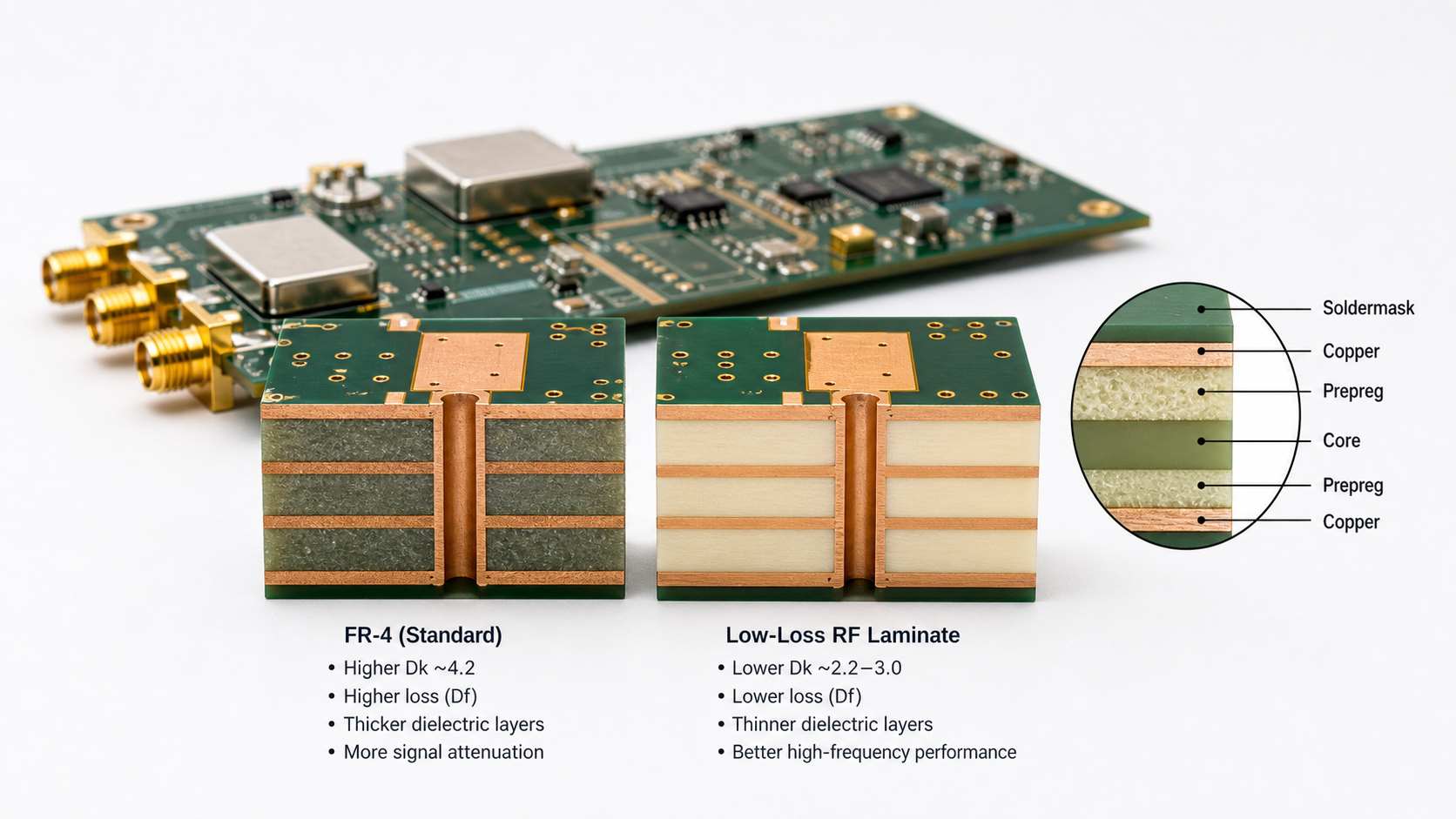
FR4 remains suitable for many general electronic products. It is cost-effective, widely available, and easy to manufacture. Many low-cost wireless devices, control boards, and mixed-signal products use FR4 successfully.

Ceramic becomes more suitable when frequency, power, temperature, or dimensional stability becomes more important. It is often used for microwave circuits, compact antennas, RF power modules, radar sensors, satellite communication circuits, and high-reliability electronics.

Selection FactorFR4 PCBCeramic PCB
CostLowerHigher
AvailabilityVery broadSpecialized
High-frequency lossHigherLower
Thermal conductivityLowMedium to very high
Dimensional stabilityModerateHigh
Compact RF designLimitedStronger support
RF power useNeeds extra thermal designBetter natural heat path
Typical useGeneral electronics, low-cost wirelessMicrowave, radar, antenna, RF power modules

Choose ceramic when the project has one or more of these requirements:

  • Operating frequency reaches microwave or millimeter-wave range
  • Insertion loss must be tightly controlled
  • RF power devices create concentrated heat
  • Antenna or resonator size must be reduced
  • The design needs stable performance across temperature changes
  • The product is used in aerospace, automotive, medical, industrial, or communication equipment

In some products, a hybrid structure may be more practical. The RF section may use ceramic or another high frequency pcb substrate, while the control section uses FR4.

What RF Applications Use Ceramic PCBs?

Ceramic PCBs are used in RF applications where electrical stability, low loss, thermal control, and compact packaging are required. They are common in communication, radar, aerospace, automotive, medical, industrial, and sensing systems.

Common RF applications include:

  • RF power amplifiers
  • Microwave amplifier modules
  • Radar sensors
  • Antenna substrates
  • RF filters and resonators
  • Couplers and attenuators
  • Satellite communication modules
  • High-frequency medical equipment
  • Industrial wireless sensors
  • Millimeter-wave sensing modules
  • High-reliability communication devices

Ceramic PCBs are also suitable for harsh-environment electronics. Aerospace and defense systems may need stable operation across wide temperature ranges. Automotive radar and industrial RF equipment often require durable substrates that support repeatable performance. Medical and communication products may need stable high-frequency behavior over long service life.

High Frequency Ceramic PCB for RF Application

For these applications, the PCB manufacturer must control substrate quality, copper adhesion, line accuracy, hole processing, surface finish, and inspection. EBest Circuit (Best Technology) supports ceramic PCB manufacturing for RF, microwave, antenna, and power-related applications with engineering review before production.

Can Ceramic PCB Support High-Frequency Antenna Designs?

Ceramic PCB can support high-frequency antenna designs, especially when the antenna needs compact size, stable resonance, and controlled dielectric behavior. The substrate affects resonant frequency, bandwidth, impedance matching, radiation efficiency, and thermal stability.

High-Dk ceramic materials can reduce antenna size because they shorten the guided wavelength. This is useful for compact wireless modules, radar sensors, embedded antennas, and high-frequency communication devices. Ceramic substrates are often used for patch antennas, chip antennas, slot antennas, and integrated RF antenna modules.

Design ItemImportance in Ceramic Antenna Design
Dielectric constantAffects antenna size and resonant frequency
Substrate thicknessInfluences impedance, bandwidth, and efficiency
Copper pattern accuracyHelps keep resonance close to the target value
Ground structureAffects radiation pattern and matching
Material lossInfluences antenna efficiency
Thermal performanceSupports nearby RF power components
Production toleranceImproves batch-to-batch consistency

A ceramic PCB for RF application provides a stable platform for high-frequency circuits that require low loss, controlled impedance, compact design, and better heat dissipation. It is widely used in RF modules, radar circuits, antenna substrates, microwave components, and high-power communication electronics. For projects that require reliable high frequency ceramic solutions, EBest Circuit (Best Technology) can support material review, ceramic PCB fabrication, DFM checking, inspection, and production support. Send your Gerber files, stackup, RF requirements, or project questions to sales@bestpcbs.com for an engineering review and quotation.

You may also like

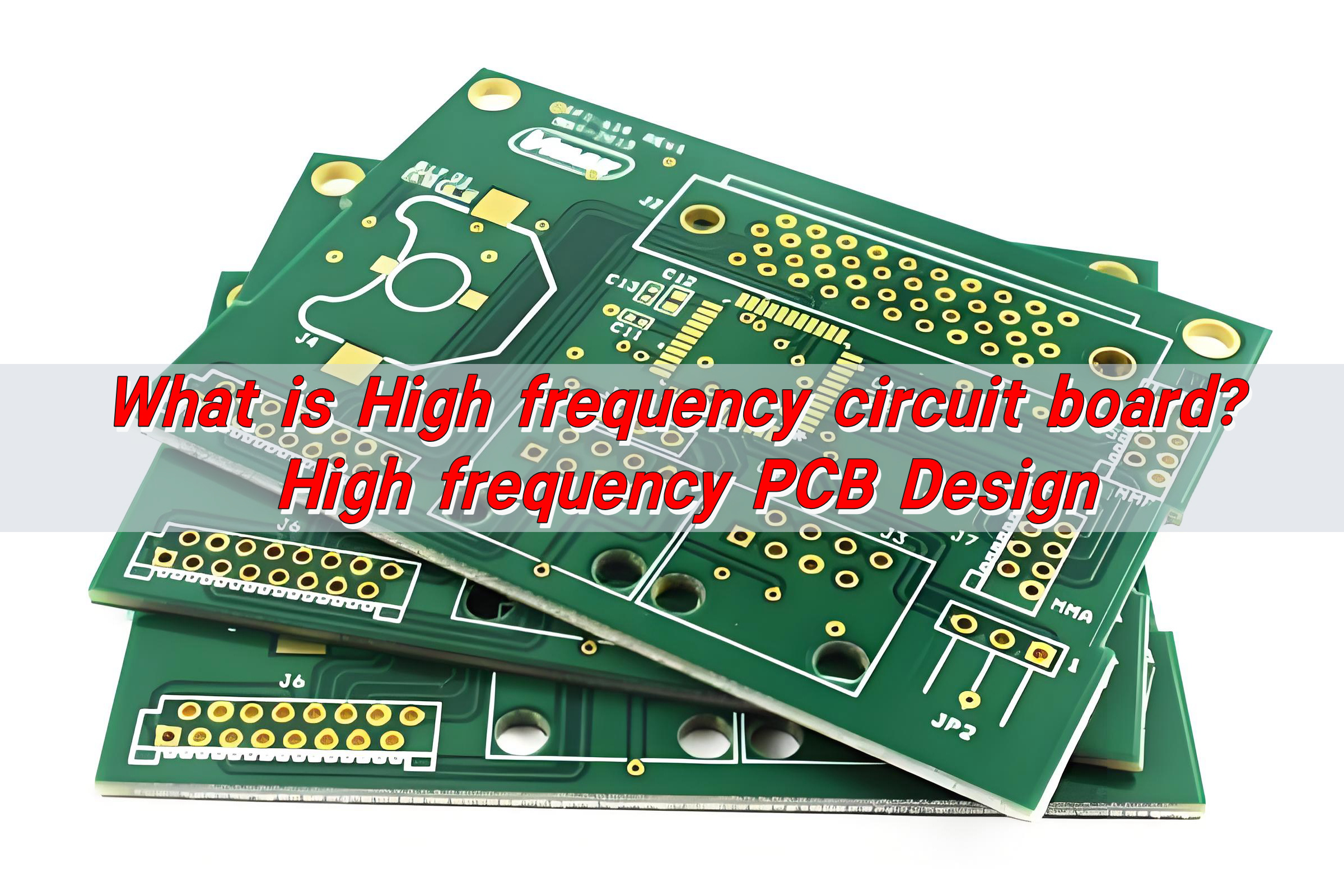
What is High frequency circuit board? High frequency PCB Design
Tuesday, November 25th, 2025

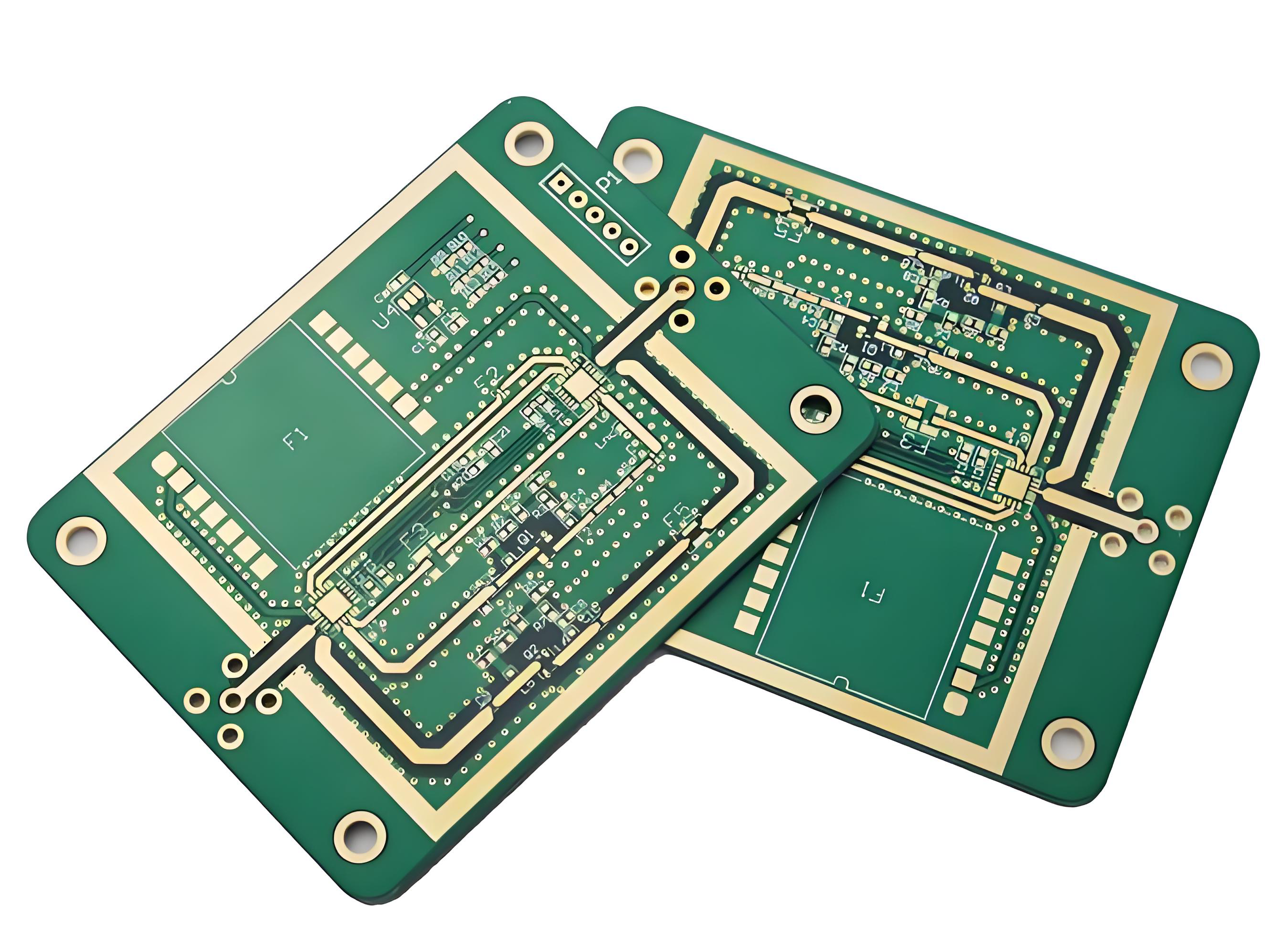
High frequency circuit board is a PCB built to handle signals that move at very high speeds with minimal loss. It uses special materials that keep signals stable, even when the frequency rises. These materials help reduce noise, keep impedance steady, and maintain strong signal integrity.

What is High frequency circuit board? High frequency PCB Design

What Is a High-Frequency PCB?

A high frequency circuit board, sometimes called a high frequency printed circuit board, is a board made to carry signals at very high speeds. These signals often run above 500 MHz and can climb to several GHz.

That means the board must offer tight control, low loss, and stable performance even when the signal moves at extreme velocity. In simple terms: A high frequency PCB helps a device talk fast, respond fast, and stay accurate.

The layout, the copper, the materials, and even tiny distances all matter more here than on standard boards. Every trace acts like a small transmission line. Every layer impacts performance.

Because of this, these boards follow strict high frequency PCB design guidelines to keep everything stable.

What Are the Advantages of High Frequency Circuit Boards?

High frequency boards bring real-world advantages that normal boards can’t offer. If you need to transfer data quickly and keep it accurate, then you can choose this.

  • They Deliver Faster, Cleaner Signals

High-frequency signals can be delicate. They hate distortion. They hate delay. A high frequency board keeps signals clean even at high speed. This helps products work with precision and smooth flow.

  • They Offer Strong Performance Stability

High frequency materials stay stable even when temperatures shift. This leads to reliable data flow, fewer losses, and greater accuracy.

  • They Support High-Quality Wireless Performance

WiFi, radar, GPS, and 5G all rely on clean high-frequency signals. A high frequency PCB handles these signals without breaking a sweat.

  • They Enable Slim, Compact Designs

Better materials and tighter control allow compact layouts. This makes devices smaller, lighter, and more stylish. They Improve Power Efficiency

Lower loss means better conversion and lower waste. The device stays cool and runs longer.

These advantages feel small one by one, but together, they create a powerful boost across the entire system.

Which High Frequency PCB Materials Work Best?

Materials are the heart of performance for a high frequency board. In fact, everyone believes that material selection is the primary decision that determines everything else.

Why Material Matters So Much?

High-frequency signals react to even tiny changes in dielectric properties. If the material is unstable, the signal weakens. If the material is too lossy, the device feels slow. If the material varies with temperature, the system becomes unreliable.

What is High frequency circuit board? High frequency PCB Design

Most Popular Options

  • PTFE-Based Materials: These are common in high-end RF and microwave designs. They offer low loss and stable dielectric values. They also work well with GHz-level signals.
  • Ceramic-Filled Materials: These deliver excellent thermal stability. They support consistent performance across temperatures.
  • Hydrocarbon-Based Materials: These offer good performance but are easier to fabricate than PTFE. Great for designs that need both quality and reasonable cost.
  • Modified Epoxy Systems: These are good for mid-frequency applications. They work well for cost-sensitive projects that still need solid stability.

Each material fits a different level of performance and budget. The “best” one depends on speed, cost, thermal needs, size, and end-use demands.

How Does a High-Frequency Circuit Differ From a Standard PCB?

The difference between high-frequency circuits and standard PCBs is significant. They may look similar at first glance, but their internal structures are completely different.

Key Differences

  • 1. Material Characteristics

Standard FR4 does not offer stable performance at high frequencies. It cannot maintain low loss or tight impedance at high speeds. High frequency PCBs use advanced materials that keep everything stable.

  • 2. Signal Integrity Requirements

A standard PCB tolerates more variation in length and width. A high frequency circuit cannot. Even small changes can shift impedance and distort the signal.

  • 3. Stricter Design Rules

High frequency PCB design follows guidelines for trace width, spacing, ground layout, and layer stack. Standard PCBs are more flexible.

  • 4. Tighter Manufacturing Tolerances

A tiny shift in etching can affect performance. So fabrication must be more accurate.

  • 5. More Sensitive Thermal Behavior

High frequency materials react more predictably to heat. This adds stability during real-world use.

In short, high frequency boards are built for speed, clarity, and precision.

What Affects High Frequency PCB Performance?

High frequency performance depends on a chain of factors. One weak link affects the whole system. Here are the main forces that steer performance.

  • 1. Dielectric Constant (Dk)

The dielectric constant shapes how signals travel through the board. If Dk is unstable, the signal wobbles. A steady Dk makes the circuit feel sharp, clean, and fast.

  • 2. Dissipation Factor (Df)

This controls energy loss. Lower Df means the signal stays clean and strong. Higher Df means more heat and weaker flow.

  • 3. Copper Roughness

Smooth copper helps signals glide with less loss. Rough copper slows everything down.

  • 4. Trace Width and Spacing

These shape impedance. Small changes can shift impedance and hurt signal quality.

  • 5. Via Design and Placement

Each via adds inductance. Too many vias interrupt the path. Smart via design keeps the system balanced.

  • 6. Layer Stack-Up Structure

Stack-up controls grounding, shielding, and loss. A good stack-up enhances signal flow.

  • 7. Ground Layout

Ground shape and size guide return paths. Poor ground layout causes noise. Strong ground layout protects the signal.

  • 8. Temperature Stability

High frequency boards must keep dielectric values steady across temperature changes.

What is High frequency circuit board? High frequency PCB Design

These factors bring life to the entire system and shape how smoothly it performs.

What Are the Applications of High-Frequency PCBs?

High frequency PCBs show up everywhere today. They power advanced technologies that shape modern life. The following are their main application areas.

  • 5G Telecommunications: 5G needs fast, stable, high-frequency signals. These boards make that possible.
  • Satellite and Aerospace Systems: Navigation and communication systems rely on accurate RF circuits. High frequency boards offer stability under extreme conditions.
  • Radar Systems: Vehicle radar, weather radar, and military radar all depend on precision. Only high frequency PCBs can handle the demands.
  • Automotive Electronics: ADAS, blind spot systems, radar sensors, and infotainment systems rely on fast, clean signals.
  • Medical Devices: MRI scanners, imaging systems, and mobile medical tools use high frequency signals.
  • Consumer Electronics: WiFi routers, Bluetooth devices, smart home hubs, and high-speed wearables rely on these boards.
  • Industrial Control Systems: Factories need accurate, fast data movement.
  • IoT Systems: Smart sensors communicate at high frequencies to stay fast and efficient.

In each field, the board supports speed, accuracy, and reliability.

What Matters Most in High-Frequency Circuit Design?

High-frequency PCB design is extremely delicate. All components must work in harmony to achieve perfect balance. Here are some of the most important parts.

  • Impedance Control: Impedance must stay consistent along every trace. This keeps reflection low and signal quality high.
  • Return Path Design: A clean return path keeps noise low and improves clarity.
  • Layer Stack Strategy: A stable stack sets the foundation for signal flow.
  • Trace Routing: Shorter paths help signals move quickly. Smooth curves reduce reflection. Clean routing limits crosstalk.
  • Material Selection: This affects loss, speed, temperature stability, and cost.
  • Grounding and Shielding: Strong grounding protects signals from noise. Shielding helps maintain signal integrity.
  • Controlled Transitions: Via transitions must stay smooth.
  • Thermal Management: High frequency circuits generate heat.
What is High frequency circuit board? High frequency PCB Design

These design choices protect the signal like a shield. They keep performance strong and predictable.

What Problems Often Occur in High Frequency PCB Design?

Despite the maturity of high-frequency PCB design technology, challenges remain. Most problems stem from the extremely high frequency sensitivity of signals. Below are some frequently encountered issues.

  • 1. Signal Loss

Loss grows as frequency rises. If materials or copper are not ideal, performance drops.

  • 2. Impedance Problems

Wrong trace width, copper changes, or bad stack-up cause impedance mismatch. Mismatch creates reflections.

  • 3. Crosstalk

When traces sit too close, they talk to each other. This hurts accuracy.

  • 4. Poor Via Design

Too many vias act like road bumps. They disrupt the signal flow.

  • 5. Weak Ground Design

A poor ground path increases noise. Noise spreads across the system.

  • 6. Thermal Drift

Temperature changes can shift dielectric constant. This affects timing and performance.

  • 7. Fabrication Tolerance Issues

High frequency designs rely on tight tolerances. Even small etching errors can create problems.

  • 8. Material Incompatibility

Some materials require special fabrication steps. If not handled correctly, results suffer.

Smart planning and strong guidelines help avoid these issues and keep performance at its best.

Conclusion:

High frequency circuit board plays a powerful role in modern electronics. It guides signals at high speed. It improves clarity. It boosts wireless strength.

If you need high-quality high-frequency PCB support or professional guidance, feel free to reach out anytime at: sales@bestpcbs.com

You may also like

High Frequency Circuit Board Manufacturer, Rapid Prototyping
Thursday, September 11th, 2025

What is high frequency circuit board? Let’s discover its material, technical parameter, design guideline, production processes and recommended manufacturer.

Are you troubled with these issues?

  • Is phase distortion caused by unstable Dk/Df in your high-frequency design?
  • How to reduce HF material costs without compromising performance?
  • How to ensure material consistency from prototype to mass production?

As a high frequency PCB manufacturer, EBest Circuit (Best Technology) can provide you service and solution:

  • Full-band Dk±0.02 Control: Phase error <1° across 24-77GHz, eliminating signal distortion.
  • Custom Ceramic Formulation: 40% lower loss, 50% cost saving vs PTFE.
  • Closed-loop Control System: <2% Dk variation in mass production, ensuring parameter consistency.

Welcome to contact us if you have any request for high frequency PCB board: sales@bestpcbs.com.

What Is High Frequency Circuit Board?

High Frequency Circuit Board is a printed circuit board specifically designed to handle high-frequency signals (such as RF, microwave, and high-speed digital signals). Its core features include the use of low dielectric loss materials (e.g., PTFE, ceramic-filled substrates) and optimized layout design to achieve low signal attenuation, high signal integrity, and stable electromagnetic performance. This meets the stringent requirements of high-speed transmission and low noise in high-frequency scenarios such as 5G communications, radar systems, and satellite equipment.

What Is High Frequency Circuit Board?

What is the Best Material for High Frequency Circuit Board?

PTFE-Based Composites (e.g., Rogers 4350B, RO4003C)

  • Features: Low dielectric constant (Dk ≈ 3.38–3.48), ultra-low dissipation factor (Df ≈ 0.002–0.0037), stable performance across GHz frequencies.
  • Applications: Ideal for microwave/millimeter-wave systems (5G antennas, radar modules)
  • Trade-offs: Higher cost and processing complexity (such as specialized drilling/etching techniques required).

Ceramic-Filled Substrates (e.g., Rogers RO4000 Series, Nelco N4000-13)

  • Features: Enhanced thermal conductivity (0.6–0.7 W/m·K), low moisture absorption, and mechanical robustness.
  • Applications: High-power RF amplifiers, automotive electronics (harsh environment resistance), and hybrid stack-ups with FR4 for cost optimization.
  • Trade-offs: Stiffer than PTFE, may require thermal management design adjustments.

Hydrocarbon/Ceramic Blends (e.g., Isola IS680, Panasonic Megtron Series)

  • Features: Balanced Dk (≈3.0–3.66) and Df (≈0.001–0.008), compatible with standard PCB fabrication processes.
  • Applications: High-speed digital/RF co-design (e.g., 5G base stations, satellite comms), offering a cost-performance compromise.
  • Trade-offs: Slightly higher Df than pure PTFE, limiting use in ultra-high-frequency (>50GHz) scenarios.

Liquid Crystal Polymer (LCP)

  • Features: Ultra-low Dk (≈3.0), minimal moisture absorption, and flexible/rigid-flex compatibility.
  • Applications: Miniaturized wearables, millimeter-wave modules (e.g., 28/39GHz 5G front-ends), and aerospace systems.
  • Trade-offs: Premium pricing and limited availability for large-format boards.

High-Performance FR4 Variants (e.g., FR408HR)

  • Features: Improved Dk (≈3.66) and Df (≈0.008) over standard FR4, cost-effective for mid-range frequencies.
  • Applications: Budget-sensitive projects (e.g., IoT devices, low-tier RF systems) where FR4’s limitations are acceptable.
  • Trade-offs: Unsuitable for >10GHz applications due to signal attenuation and impedance mismatches.How to Make a High Frequency Circuit Board?

High Frequency Printed Circuit Board Technical Parameter

‌Parameter Category‌‌Design Requirements‌
‌Substrate Material‌PTFE/Ceramic-filled Hydrocarbon/Modified PPO
‌Dielectric Constant (Dk)‌2.2~3.5 (±0.05 tolerance)
‌Dissipation Factor (Df)‌≤0.002 (@10GHz)
‌Trace Width/Spacing‌3mil/3mil (minimum)
‌Impedance Control‌±5% (100% impedance testing)
‌Copper Foil Type‌RTF/VLP (roughness ≤1.5μm)
‌Layer Alignment Tolerance‌±25μm
‌Surface Finish‌ENEPIG (Ni layer >0.1μm)
‌Insertion Loss‌≤0.5dB/inch (@40GHz)
‌Phase Consistency‌±2° (@25GHz differential pairs)

How to Design a High-Frequency PCB?

1. Requirement Analysis & Specification Definition

    • Frequency Range: 2.4GHz (Wi-Fi routers), 5GHz (5G base stations), millimeter wave (radar/satellite communications), different frequency bands correspond to different transmission characteristics;
    • Signal Type: Digital signals (e.g., DDR5 clock lines require precise timing), RF signals (5G antennas require low-loss transmission), mixed signals (AD/DA interfaces require noise immunity);
    • Power Level: High-power scenarios (>10W PA modules) require enhanced thermal design using metal substrates or thermal via arrays;
    • Interface Standard: PCIe 4.0 (16GT/s data rate), HDMI 2.1 (48Gbps bandwidth), USB 3.2 (20Gbps rate), ensuring interface compatibility and signal integrity;

    2. Material Selection & Stackup Design

      • Material Type: PTFE substrate (Dk≈2.2, Df≈0.002, suitable for high-frequency), ceramic-filled substrate (Dk≈3.0-10, Df≤0.001, high-power scenarios), high-speed FR4 (Dk≈3.66, Df≈0.008, cost-sensitive);
      • Stackup Design: Signal layer-ground layer-power layer alternating arrangement, high-frequency signal layers adjacent to ground layers to reduce crosstalk, ground layers must be continuous without splits;
      • Dielectric Thickness: Thin dielectrics (3-5mil) for high-frequency bands (>10GHz, e.g., RO4350B), 8-12mil for mid/low-frequency;
      • Copper Thickness: ≥1oz (35μm) for high-frequency signal layers to reduce loss, ≥2oz (70μm) for ground layers to enhance heat dissipation, power layers adjusted based on current requirements.

      3. Layout Planning & Component Placement

        • Components: RF modules (e.g., LNA, PA) placed near antennas to minimize transmission loss, high-speed chips (e.g., FPGA, CPU) placed near connectors to shorten signal paths;
        • Signal Path: Minimize length of high-frequency signal lines, avoid 90-degree corners (use 135-degree or curved routing), serpentine routing compensates DDR clock line timing deviations (length matching error ≤5mil);
        • Thermal Management: Thermal vias (≥10mil diameter) under high-power components or metal substrates (e.g., Aluminum PCB) to prevent hotspots;
        • EMC: Sensitive components (e.g., crystals) kept away from noise sources (e.g., switching power supplies), high-frequency regions isolated with dedicated power supplies and filtering capacitors.

        4. Routing Design & Impedance Control

          • Differential Pair: Impedance strictly controlled at 100Ω (e.g., USB 3.0/PCIe), trace width/spacing ratio 1:1 (e.g., 5mil/5mil), length matching error ≤5mil;
          • Microstrip/Stripline: 50Ω RF signal lines (trace width ≈8mil, dielectric thickness ≈5mil), 75Ω video signal lines (trace width ≈12mil), high-frequency lines avoid crossing split planes;
          • Minimum Trace Spacing: ≥3× trace width (e.g., 5mil trace width requires ≥15mil spacing) to suppress crosstalk, high-frequency line spacing ≥λ/10 (e.g., 5GHz signal λ=60mm, spacing ≥6mm);
          • Crossing Split Planes: High-frequency signal lines crossing split planes bridged via capacitors or vias to reduce reflections/radiation.

          5. EMC Optimization

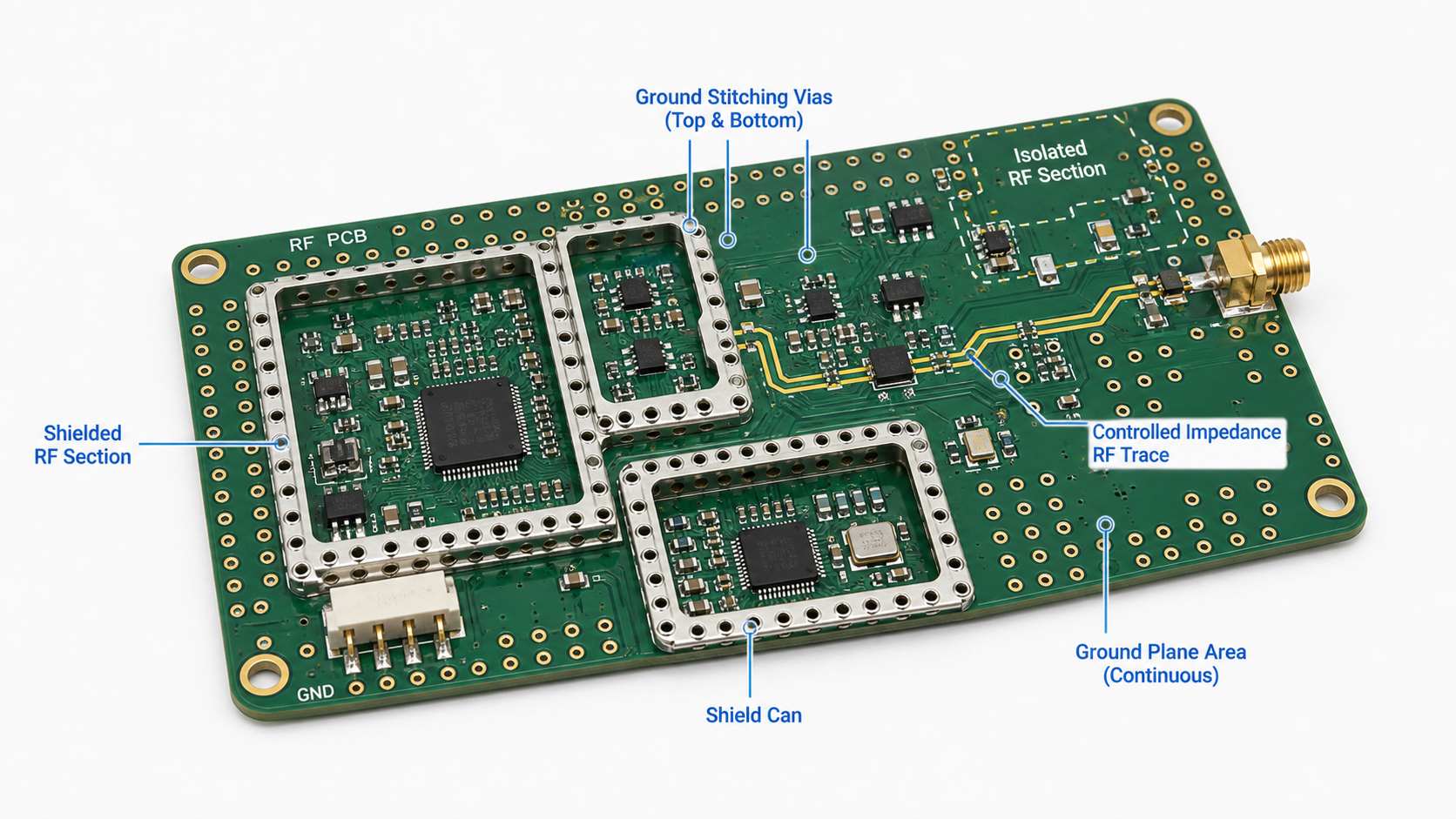
            • Ground Via: Array spacing ≤λ/10 (e.g., 5GHz signal λ=60mm, via spacing ≤6mm) for low-impedance ground paths;
            • Shielding Structure: Metal cavities (thickness ≥0.2mm) or shielding layers (copper foil + conductive adhesive) to suppress resonances and electromagnetic radiation, high-frequency regions shielded independently;
            • Decoupling Capacitor: 0.1μF (high-frequency) + 10μF (low-frequency) paralleled near power pins (≤5mm) to reduce power noise;
            • Filter: LC filters (e.g., π-network) suppress power noise, ferrite beads absorb high-frequency noise for signal purity.

            6. Simulation Verification & Iteration

              • Frequency Domain Simulation: ADS/HFSS analyze S-parameters (return loss ≤-10dB, insertion loss ≤1dB), radiation patterns (antenna optimization);
              • Time Domain Simulation: SIwave/Altium verify signal integrity (eye diagram openness ≥80%, crosstalk ≤5%) for high-speed digital signals;
              • 3D EM Simulation: CST Microwave Studio evaluates antenna performance, radiation leakage, and coupling effects to optimize layout/shielding;
              • Iteration: Adjust layout/routing (e.g., add shielding, optimize impedance) based on simulation results until performance metrics are met.

              7. Manufacturing Process Control & Testing

                • Lamination Process: Precise control of dielectric thickness (tolerance ≤±5%) to avoid delamination and bubbles;
                • Drilling Process: Microvia (0.15mm) copper plating uniformity (thickness variation ≤10%) to prevent via wall fractures and conductivity issues;
                • Impedance Testing: TDR verifies impedance matching (error ≤±5%) for signal quality;
                • Eye Diagram Testing: High-speed digital signal eye diagram analysis (eye height ≥800mV, eye width ≥80%UI), radiation scanning (anechoic chamber) confirms EMI compliance to regulatory standards.
                How to Design a High-Frequency PCB?

                How to Make a High Frequency Circuit Board?

                1. Material Cutting & Selection: Select low-loss substrates (e.g., PTFE, ceramic-filled substrates), cut panels to design specifications, ensure clean edges without burrs to prevent stress cracks or signal transmission loss in subsequent processes.

                2. Inner Layer Pattern Transfer: Use high-precision exposure machine (resolution ≤5μm) for inner layer pattern transfer, precisely remove excess copper with alkaline etching solution, control line width/spacing tolerance within ±10μm to ensure high-frequency signal path accuracy.

                3. Lamination & Stacking: Stack multilayer boards and perform vacuum lamination, strictly control temperature (180-200℃) and pressure (300-500PSI) profiles to avoid interlayer bubbles or uneven dielectric thickness, ensuring impedance stability for high-frequency signal transmission.

                4. Drilling & Plating: Use precision drill bit (hole diameter tolerance ±2μm) for through-hole/blind via drilling, control copper plating uniformity (thickness variation ≤10%) to prevent via cracking or conductivity issues, ensuring high-quality vertical interconnection for high-frequency signals.

                5. Outer Layer Pattern Transfer: After copper plating thickening, transfer outer layer patterns, optimize line width/spacing (e.g., 50Ω microstrip requires precise matching of dielectric thickness and copper thickness) using impedance calculation software to ensure consistent impedance for high-frequency signal transmission.

                6. Solder Mask Application: Apply liquid photo-imageable solder mask ink, form protective layer through exposure/development, reduce signal transmission loss and surface contamination, avoid excessive solder mask thickness affecting high-frequency signal radiation efficiency.

                7. Surface Finish: Apply ENIG (Electroless Nickel Immersion Gold) or OSP (Organic Solderability Preservative) surface finish to enhance solderability and long-term reliability, prevent oxidation affecting high-frequency signal conductivity, ensuring solder joint quality and product longevity.

                8. Testing & Verification: Perform TDR (Time Domain Reflectometry) for impedance matching (error ≤±5%), eye diagram analysis (eye height/width meets standards), radiation scanning (anechoic chamber testing for EMI compliance) to ensure high-frequency signal integrity and regulatory adherence.

                9. Packaging & Shipping: Vacuum-pack for moisture/dust protection, include quality inspection report and material certificate (e.g., Dk/Df test data), ensure safe transportation and traceability, maintaining high-frequency PCB performance stability in real-world applications.

                How to Make a High Frequency Circuit Board?

                Why Choose EBest Circuit (Best Technology) as High Frequency Circuit Board Manufacturer?

                Reasons why choose us as high frequency circuit board manufacturer:

                • 19-Year High Frequency PCB Manufacturing Expertise – Specialized in PTFE/hydrocarbon processing with core technologies (microvias, buried blind holes, hybrid pressing). Completed 5,000+ High Frequency PCB projects across 5G/radar/satellite.
                • Certified Quality System – ISO 9001/14001/IATF 16949 certified, RoHS/REACH compliant. Regular customer/third-party audits maintain system effectiveness.
                • Transparent Pricing & Cost Optimization – Leverage bulk procurement for raw material savings and lean production to minimize waste. Tiered pricing ensures industry-leading competitiveness with no hidden fees.
                • 48-72 Hours Rapid Prototyping – Mature production lines + smart scheduling enable 7-10 day standard delivery, with urgent orders achievable in 2-3 days. Optimized supply chain ensures project timelines.
                • Full-Cycle Technical Support – Free DFM analysis, in-process optimization, and post-sales troubleshooting. 24/7 engineer team resolves issues within 48 hours.
                • Strict Quality Control – Raw material inspection, in-process IPQC, final AOI, environmental testing, impedance microsection, and third-party audits. Defect rate <0.3% surpasses industry norms.
                • Customization Flexibility – Supports any-layer HDI design, custom impedance (50Ω±2%), finishes (ENIG/OSP), and thicknesses (0.1-3.0mm) for tailored solutions.
                • Experience-Driven Problem Solving – 19-year fault database enables rapid diagnosis of common issues (e.g., signal loss, layer misalignment) with solutions to accelerate time-to-market.

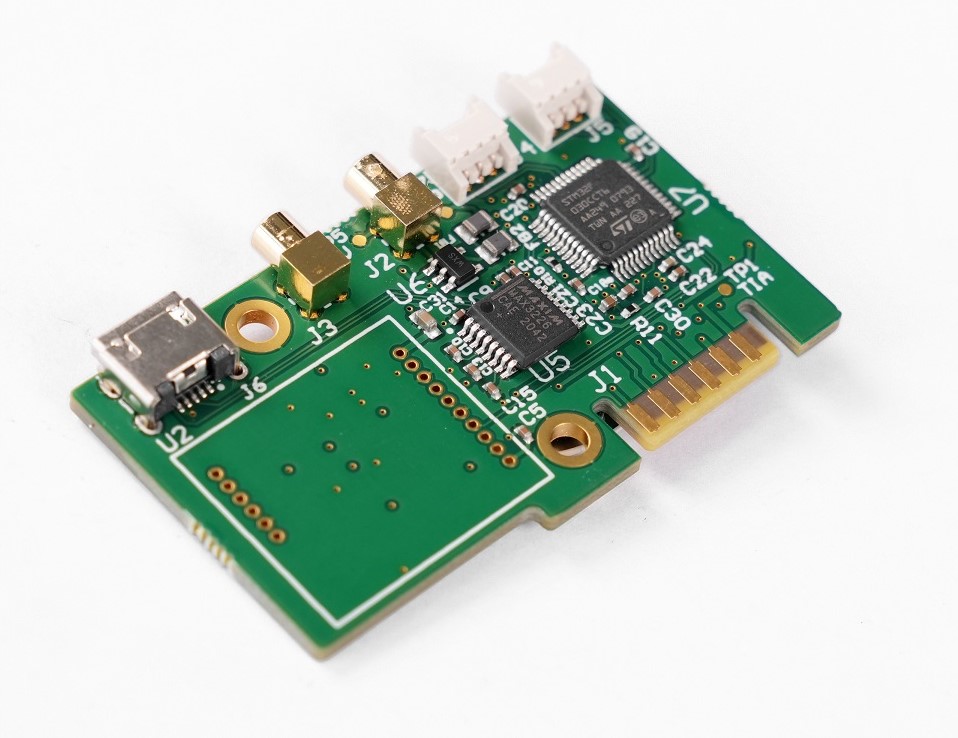
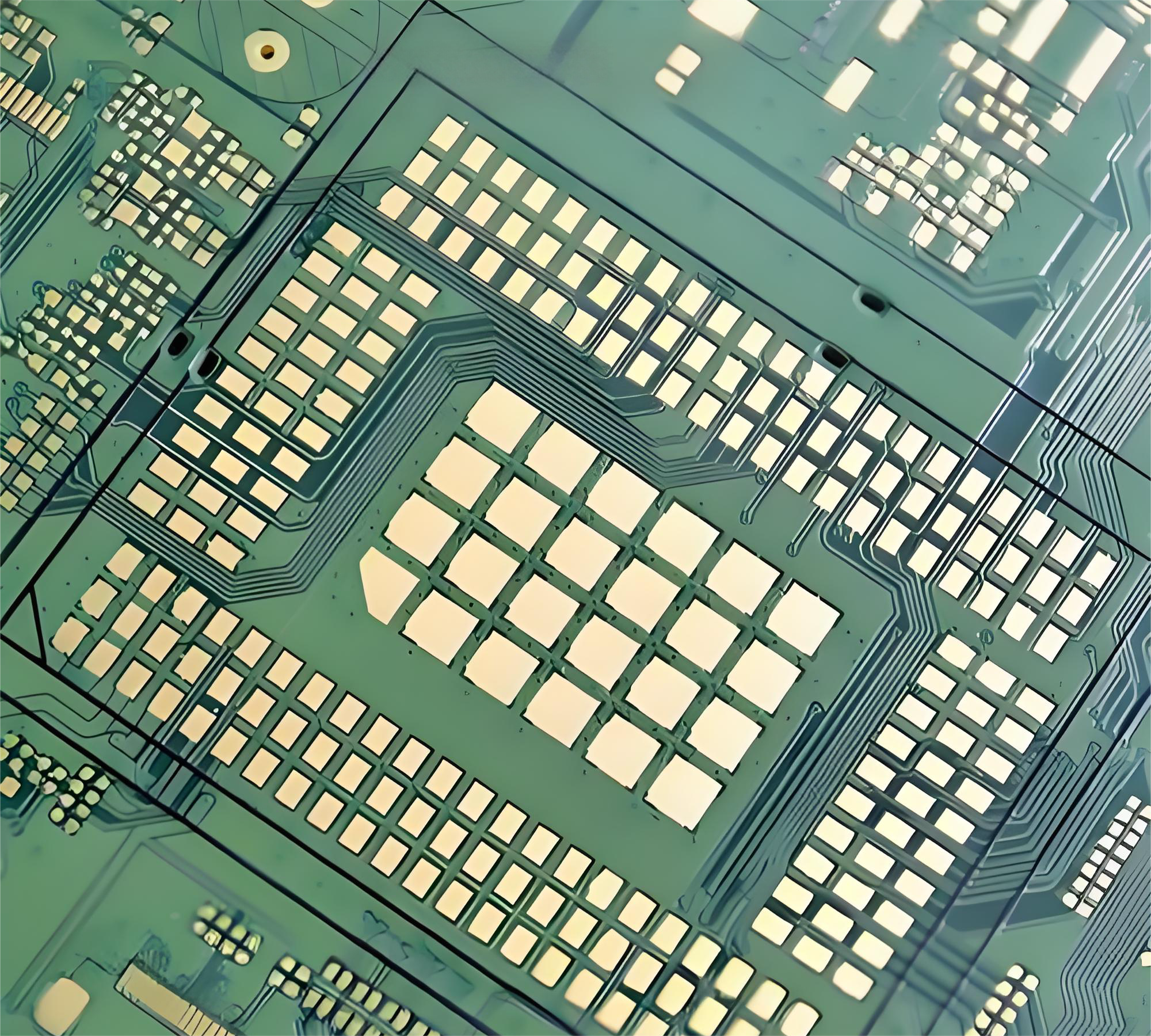
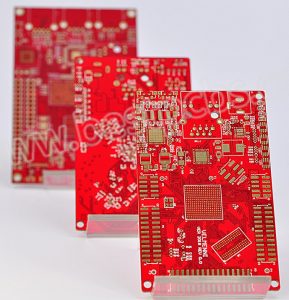
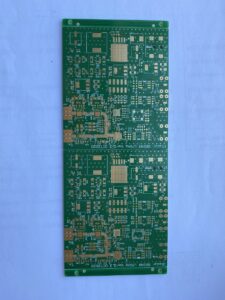
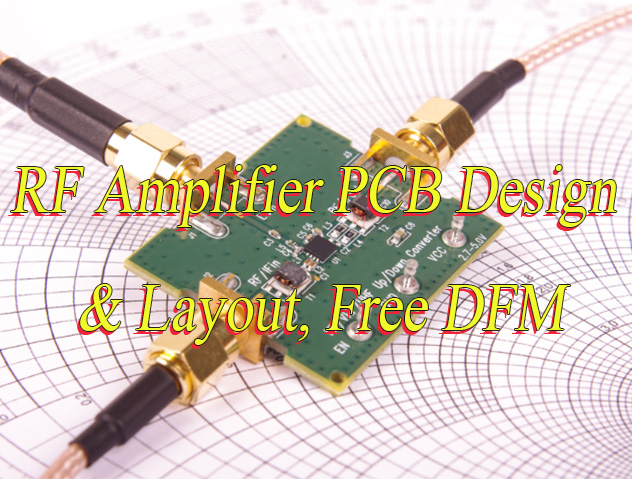
                Below is a photo of high frequency high frequency circuit board we made before:

                Why Choose EBest Circuit (Best Technology) as High Frequency Circuit Board Manufacturer?

                  Our High Frequency PCB Capabilities

                  Base material:Rogers/Telfon
                  Board Thickness:0.5mm~3.0mm(0.02″~0.12″)
                  Copper thickness:    0.5 OZ, 1.0 OZ, 2.0 OZ, 3.0 OZ
                  Outline:Routing, punching, V-Cut
                  Soldermask:White/Black/Blue/Green/Red Oil
                  Legend/Silkscreen Color:      Black/White
                  Surface finishing:Immersion Gold, HASL, OSP
                  Max Panel size:  600*500mm(23.62″*19.68″)
                  Packing:Vacuum/Plastic bag
                  Samples L/T:7~9 Days
                  MP L/T: 8~10 Days

                  How to Get a Quote for Your Project?

                  List of materials required for quotation:

                  • Gerber files: Complete hierarchical data to ensure the design is complete.
                  • Design files: Original files in Altium/OrCAD format, reproducing layout details.
                  • BOM: Clearly specify component model, package, quantity, and supplier.
                  • Technical parameters: Dimensions, number of layers, line width/space, aperture, and board thickness.
                  • Material and process: Substrate type (e.g., PTFE), surface finish (ENIG), and copper thickness.
                  • Impedance requirements: Target value (e.g., 50Ω) and signal integrity indicators.
                  • Testing standards: Acceptance criteria such as impedance, eye diagrams, and radiation scans.
                  • Quantity and delivery: Order size and expected delivery time.
                  • Certification standards: Quality (e.g., IPC) and environmental (e.g., RoHS) compliance certifications.

                  Welcome to submit your files to get a quote via this email: sales@bestpcbs.com.
                  You may also like