PCB manufacturing PCB manufacturing
Home > Blog

Any Layer HDI PCB Manufacturer in China for Microvia and Complex Stackup Boards

July 1st, 2026

Any layer HDI PCB is designed for compact electronics that cannot be routed with standard multilayer PCB or ordinary HDI PCB. It supports stacked copper-filled microvias, fine-line routing, thin dielectric layers and complex layer-to-layer interconnection, making it suitable for fine-pitch BGA, high-speed modules and miniature electronic products.

For engineers, the main concern is whether the stackup, microvia structure, impedance control and material selection are manufacturable. For buyers, the key concerns are quotation accuracy, prototype lead time, batch consistency and supplier reliability. A professional manufacturer should solve both design risk and purchasing risk before fabrication starts.

Are you worried about these problems in any layer HDI PCB projects?

  • Delivery delays: Complex stackup review, sequential lamination, laser drilling, material lead time and repeated DFM corrections may slow down prototype and batch production.
  • Hidden costs: Extra charges may appear after quotation, including copper-filled via processing, impedance control, material upgrades, additional inspection, stencil revision or SMT assembly adjustment.
  • Quality instability: Stacked microvia cracks, weak copper filling, BGA soldering defects, warpage, impedance deviation or unstable surface finish may cause electrical failure, rework or field return risk.

As a China source factory with 20+ years PCB manufacturing experience, EBest Circuit provides solutions to above problems as below:

  • Delivery predictability: Early stackup review, material planning, engineering confirmation and production tracking help reduce repeated changes before fabrication.
  • Cost transparency: Quotation can cover PCB fabrication, prototype production, copper-filled microvias, surface finish, SMT assembly, testing, packaging and export documentation.
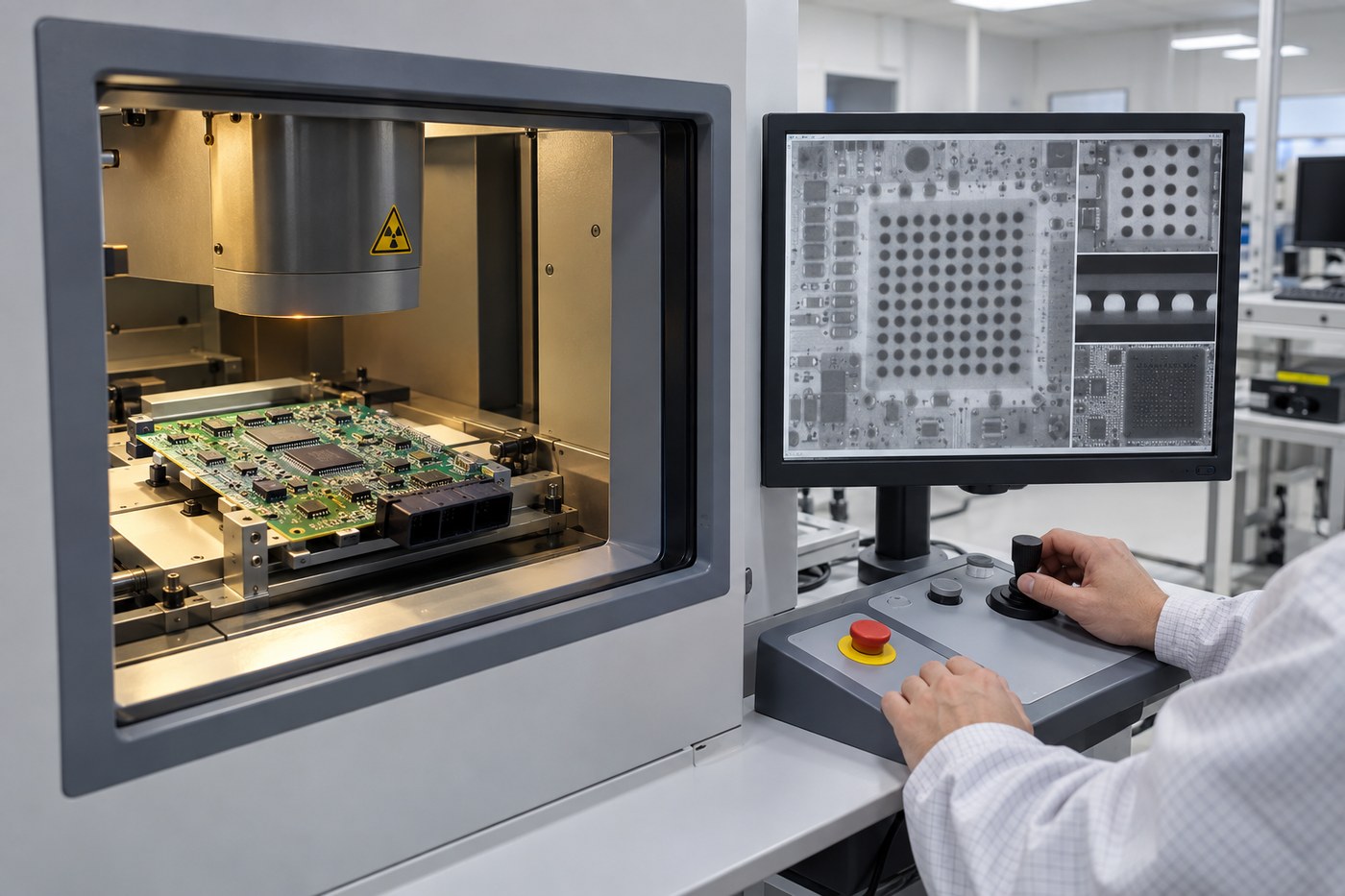
  • Quality reliability: AOI, X-ray, flying probe test, impedance test, microsection, thermal stress test and functional testing help control HDI PCB quality from prototype to batch production.

Welcome to contact us if you have any request for any layer HDI PCB manufacturing and assembly: sales@bestpcbs.com.

Any Layer HDI PCB, https://www.bestpcbs.com/blog/2026/07/any-layer-hdi-pcb/

What Is Any Layer HDI PCB?

Any layer HDI PCB is an advanced HDI PCB structure that uses laser microvias to connect almost every layer of the circuit board. It is also called ELIC PCB, which means Every Layer Interconnect PCB.

This structure uses stacked copper-filled microvias, thin dielectric layers, fine traces and sequential lamination. It is designed for compact products where standard multilayer PCB or standard HDI PCB cannot provide enough routing space.

The main value of any layer HDI PCB is simple: it helps place more circuits in a smaller board area. It also shortens signal paths and supports complex layer-to-layer routing for fine-pitch BGA, high-speed chips and miniature electronic devices.

Any Layer HDI vs Standard HDI PCB: What Is the Difference?

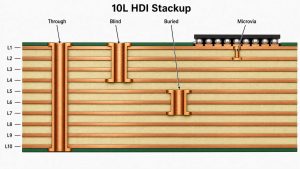
The main difference is routing freedom. Standard HDI PCB usually uses limited blind vias, buried vias or build-up structures such as 1+N+1 and 2+N+2. Any layer HDI PCB uses stacked copper-filled microvias, so signals can move between layers more directly.

Standard HDI is usually better for medium-density products with controlled cost. Any layer HDI PCB is better for compact, high-density and high-speed products where routing space is limited. It costs more, but it gives stronger BGA escape capability, shorter signal paths and better miniaturization potential.
ItemStandard HDI PCBAny Layer HDI PCB
Via structureLimited blind vias and buried viasStacked copper-filled microvias
Layer connectionPartial layer interconnectionAlmost every layer can be interconnected
Common stackup1+N+1, 2+N+2ELIC / every layer interconnect
Routing densityMedium to highVery high
BGA supportSuitable for larger or moderate-pitch BGABetter for fine-pitch BGA and CSP
Signal pathMay need longer routingShorter layer-to-layer transition
Board sizeMay require larger PCB areaHelps reduce PCB size
Lamination cyclesFewer cyclesMore sequential lamination cycles
Manufacturing difficultyModerateHigh
Cost levelLowerHigher
Reliability focusGeneral HDI process controlStacked microvia reliability
Best useMedium-density electronicsCompact, high-density and high-speed electronics
Any Layer HDI vs Standard HDI PCB, https://www.bestpcbs.com/blog/2026/07/any-layer-hdi-pcb/

What Is the Stackup Structure of Any Layer HDI PCB?

Any layer HDI PCB stackup is built with multiple copper layers, thin dielectric layers and stacked copper-filled microvias. Unlike standard HDI, the microvias can be built layer by layer, allowing almost every layer to connect with another layer.

A typical stackup may have 6 layers, 8 layers, 10 layers, 12 layers or more. Each build-up layer is laser drilled, copper filled, planarized and laminated again. This repeated process creates a compact vertical interconnection structure.

A good stackup should balance signal layers, ground planes, power planes, dielectric thickness, copper thickness and microvia placement. If the stackup is too aggressive, the board may face plating stress, lamination misalignment, warpage or low yield.

Stackup TypeExample StructureTypical Use
6-layer any layer HDIL1-L2-L3-L4-L5-L6 with stacked microviasCompact modules, small BGA
8-layer any layer HDIEvery layer connected through filled microviasIoT, RF and wearable devices
10-layer any layer HDISignal, power and ground layers combinedMedical and industrial control boards
12-layer any layer HDIDense signal layers with controlled impedanceAutomotive and communication modules
14+ layer any layer HDIComplex high-speed multilayer structureAdvanced computing and high-reliability systems

In real projects, the stackup should be confirmed before layout starts. This helps avoid unbuildable microvia structures, unstable impedance and unnecessary cost increases.

Any Layer HDI PCB Stackup, https://www.bestpcbs.com/blog/2026/07/any-layer-hdi-pcb/

What Thickness Options Are Available for Any Layer HDI PCB?

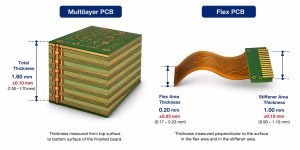
Common any layer HDI PCB thickness ranges from 0.4 mm to 2.0 mm, depending on layer count, stackup design and mechanical requirements. Ultra-thin boards are used for compact devices, while thicker boards are selected for connectors, rigidity and stronger mechanical support.

Thickness must be reviewed together with microvia depth, copper weight, dielectric thickness and assembly warpage risk. A thinner board helps miniaturization, but it can increase handling difficulty during lamination, routing, SMT assembly and reflow. For stable batch production, thickness should balance space, reliability and process yield.

ThicknessTypical UseDesign Note
0.4 mmWearables, compact modulesHigher handling control
0.6 mmSensor boards, small electronicsGood miniaturization
0.8 mmIoT modules, RF boardsBalanced option
1.0 mmIndustrial compact electronicsBetter rigidity
1.2 mmCommunication modulesStable assembly
1.6 mmControl boards, embedded systemsCommon thickness
2.0 mmHigh-strength designsMore mechanical support

What Microvia Size Is Used in Any Layer HDI PCB?

Typical any layer HDI PCB microvia diameter is 0.075 mm to 0.15 mm, while pad diameter is often 0.20 mm to 0.30 mm. The final value depends on dielectric thickness, laser drilling capability, plating quality and reliability requirements.

Smaller microvias provide higher routing density, but they also increase manufacturing difficulty. For stacked microvias, copper filling, plating uniformity and thermal stress control are critical. Before layout is finalized, the microvia size should be reviewed with the PCB manufacturer to avoid low yield, weak interconnection or later redesign.
ParameterTypical Value
Laser microvia diameter0.075–0.15 mm
Microvia pad diameter0.20–0.30 mm
Microvia depth0.05–0.10 mm
Preferred aspect ratio≤0.75:1
Via fillingCopper filled
BGA via-in-padAvailable

For high-reliability projects, microvia design should not be pushed to the smallest possible size without purpose. The better approach is to choose the smallest structure that still leaves safe manufacturing margin.

What Minimum Trace Width and Spacing Can Any Layer HDI PCB Support?

Any layer HDI PCB commonly supports 50–75 μm trace width and spacing, depending on copper thickness, material, etching control and yield target. Some advanced fine-line HDI PCB projects may use tighter values, but the actual capability must be confirmed case by case.

Fine lines help route dense BGA and reduce board size. However, very narrow spacing increases the risk of etching variation, impedance deviation, solder mask bridge issues and lower production yield. For mass production, the design should not only pursue the smallest value but also leave enough process margin.

ItemTypical Value
Standard fine line75/75 μm
Advanced fine line50/50 μm
BGA escape routing50–75 μm
Copper thickness12–35 μm
Impedance tolerance±10% typical
Solder mask bridgeProject-dependent

Therefore, minimum trace width should be selected based on real product goals. A slightly wider rule may improve yield, reduce cost and make batch production more stable.

What Materials Should Be Selected for Any Layer HDI PCB?

Any layer HDI PCB materials should be selected based on signal speed, dielectric thickness, thermal stress and lamination reliability. Standard FR4 may work for low-speed compact boards, while high-speed, RF or high-reliability projects often require high-Tg, low-Dk or low-Df laminate.

Material selection affects laser drilling quality, copper adhesion, CAF resistance, dimensional stability, impedance control and reflow reliability. Before production, EBest Circuit can review material availability, stackup symmetry, Tg, Dk, Df and lead time to reduce prototype delays and batch variation.

Material FactorRecommended Focus
Tg≥170°C for higher reliability
DkStable value for impedance control
DfLower value for high-speed loss control
CTELower Z-axis expansion
CAF resistanceImportant for fine spacing
Dimensional stabilityImportant for registration
Lead timeImportant for prototype schedule

For global OEM projects, material selection should also consider long-term supply stability. A material that is technically suitable but difficult to source may delay future batch production.

How to Design Any Layer HDI PCB?

Any layer HDI PCB design should start with stackup planning, not routing. The stackup affects BGA escape, microvia depth, impedance control, material selection, cost and manufacturing reliability.

Step 1: Confirm component density and BGA pitch.
Fine-pitch BGA, CSP and dense connectors decide whether via-in-pad, stacked microvias and fine-line routing are needed. The BGA escape plan should be confirmed before detailed layout.

Step 2: Define the stackup with the PCB manufacturer.
Layer count, dielectric thickness, copper thickness, signal layers, ground planes and power planes should be reviewed together. This helps prevent impedance mismatch, poor lamination balance and unbuildable microvia structures.

Step 3: Use manufacturable microvia rules.
Typical laser microvia diameter is 0.075–0.15 mm, and the preferred microvia aspect ratio is usually ≤0.75:1. Avoid unnecessary tall stacked vias because they increase plating stress and reliability risk.

Step 4: Control trace width and spacing.
Common fine-line capability is 50–75 μm. Very tight lines improve routing density, but they may reduce production yield. For batch production, the design should keep enough manufacturing margin.

Step 5: Protect high-speed signal paths.
Keep critical signals close to continuous ground reference planes. Avoid return path gaps, excessive layer transitions and poorly controlled differential pair spacing.

Step 6: Balance copper distribution.
Uneven copper distribution may cause lamination pressure imbalance and board warpage. Copper balance should be checked across signal layers, power layers and ground layers.

Step 7: Review assembly risk before fabrication.
Via-in-pad flatness, BGA pad size, solder mask bridge, stencil design and reflow warpage should be checked early. A good HDI design must be easy to manufacture and stable during SMT assembly.

How Does the Any Layer HDI PCB Manufacturing Process Work?

Any layer HDI PCB manufacturing uses repeated lamination, laser drilling, copper filling and plating to build every layer interconnection. Each build-up cycle must be accurately controlled because small errors may affect microvia alignment and final reliability.

Step 1: Material preparation and inner layer imaging.
The process starts with laminate, copper foil and prepreg preparation. Inner layers are imaged, etched and inspected to confirm circuit accuracy before lamination.

Step 2: Inner core lamination.
The inspected inner layers are laminated under controlled temperature, pressure and time. Stable lamination is important because later microvia alignment depends on dimensional stability.

Step 3: Laser microvia drilling.
Laser drilling creates small microvias between adjacent layers. The process must control via diameter, depth and position accuracy.

Step 4: Desmear, plating and copper filling.
After drilling, the microvias are cleaned, plated and copper filled. Copper filling creates a solid vertical connection and prepares a flat surface for stacked microvia construction.

Step 5: Planarization and next build-up layer.
The filled microvias are planarized. Then the next dielectric and copper layer are laminated. The same drilling, filling and plating process is repeated layer by layer.

Step 6: Outer layer imaging and solder mask.
After the full stackup is completed, the outer circuit is formed. Solder mask is applied to protect copper areas and define soldering pads.

Step 7: Surface finish and profiling.
ENIG, ENEPIG or other surface finishes are applied based on assembly and reliability requirements. The board is then routed or profiled to final size.

Step 8: Final inspection and testing.
Electrical testing, AOI, X-ray, microsection, impedance testing and reliability inspection are used to confirm that the HDI board meets project requirements.

Any Layer HDI PCB Manufacturing Process, https://www.bestpcbs.com/blog/2026/07/any-layer-hdi-pcb/

How Does Any Layer HDI PCB Improve Signal Integrity?

Any layer HDI PCB improves signal integrity by shortening signal paths and reducing unnecessary through-hole via stubs. In high-speed circuits, long traces, poor return paths and via stubs may cause reflection, crosstalk, insertion loss and timing problems.

With stacked microvias, signals can move between layers more directly. This helps designers keep critical traces close to ground planes, reduce loop area and create cleaner return paths. It is especially useful for fine-pitch BGA, RF modules and compact high-speed circuits.

However, HDI structure alone does not guarantee good signal integrity. The stackup must still control dielectric thickness, impedance, copper roughness, differential pair spacing, via transition and reference plane continuity.

Good signal integrity design should focus on:

  • Shorter interconnect paths to reduce signal delay and loss.
  • Continuous reference planes to keep return current stable.
  • Controlled impedance to reduce reflection.
  • Fewer through-hole via stubs to improve high-speed performance.
  • Proper differential pair routing to control skew and crosstalk.
  • Stable material selection to reduce dielectric loss.
  • Clean power and ground structure to reduce noise coupling.

For high-speed any layer HDI PCB projects, signal integrity should be reviewed during stackup design. Waiting until prototype testing may lead to redesign, delayed delivery and higher total cost.

What Applications Commonly Use Any Layer HDI PCB?

Any layer HDI PCB is used in electronics where size, routing density and performance are critical. It is especially useful when the product contains fine-pitch BGA, high-speed chips, RF sections, dense connectors or strict mechanical space limits.
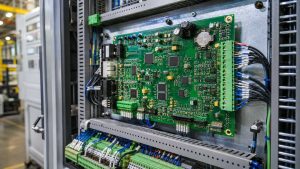

Common applications include:

  • Smartphones, tablets and wearable electronics
  • IoT modules and compact wireless devices
  • Medical monitoring and diagnostic electronics
  • Automotive sensor modules and control boards
  • Communication modules and high-speed networking devices
  • Industrial control boards with compact form factors
  • Aerospace and defense electronics
  • Camera modules and miniature embedded systems

These applications share one requirement: more reliable interconnections in a smaller PCB area. Therefore, the board should be reviewed as a complete product platform, not only as a bare PCB.

What Reliability Tests Are Required for Any Layer HDI PCB?

Any layer HDI PCB requires strict reliability testing because stacked microvias carry critical layer-to-layer connections. Testing should verify plating quality, microvia strength, impedance stability, solderability and assembly reliability.

Key reliability tests include:

  • AOI inspection: Detects opens, shorts, line defects, spacing problems and etching errors before final shipment.
  • Flying probe test: Verifies electrical continuity and isolation, especially for prototype and small-batch HDI PCB orders.
  • Impedance test: Confirms whether controlled impedance traces meet the target tolerance, commonly ±10% depending on project requirements.
  • X-ray inspection: Checks copper-filled microvias, via-in-pad areas and BGA solder joints after assembly.
  • Microsection analysis: Verifies copper plating thickness, via filling quality, lamination structure and microvia connection reliability.
  • Thermal stress test: Evaluates whether stacked microvias can survive heat exposure, reflow and temperature change.
  • Solderability test: Confirms whether the surface finish can support stable SMT assembly and BGA soldering.
  • Ionic contamination test: Checks board cleanliness to reduce leakage, corrosion and long-term reliability risk.
  • Functional test: Verifies the assembled PCBA under real working conditions when assembly service is included.

For automotive, medical, aerospace or long-life industrial products, buyers should also confirm material traceability, inspection records, test reports and production process control before batch production.

How Much Does Any Layer HDI PCB Cost?

Any layer HDI PCB costs more than standard HDI PCB because it uses more lamination cycles, laser drilling, copper filling, tighter registration and advanced inspection. The final price depends on design difficulty, material choice, quantity, testing level and assembly scope.

Main cost factors include:

  • Layer count: More layers increase material use, lamination time and inspection workload.
  • Lamination cycles: Any-layer structures need repeated build-up processing, which increases production time and cost.
  • Microvia structure: Stacked copper-filled microvias cost more than simple blind vias because plating and filling control are stricter.
  • Trace width and spacing: Fine-line rules such as 50/50 μm require tighter process control and may reduce yield.
  • Material grade: High-Tg, low-Dk or low-Df materials cost more than standard FR4, but they may be necessary for high-speed or high-reliability products.
  • Surface finish: ENIG and ENEPIG are more expensive than HASL, but they are better for fine-pitch BGA and flat soldering pads.
  • Testing requirements: X-ray, impedance testing, microsection and thermal stress testing increase cost but reduce quality risk.
  • Assembly scope: SMT assembly, BGA soldering, stencil, functional testing and packaging should be included when calculating total project cost.
  • Order quantity: Prototype cost per piece is higher because engineering review, tooling and setup costs are shared by fewer boards.

A fixed any layer HDI PCB pricelist is usually not accurate before DFM review. For a reliable quotation, buyers should provide Gerber or ODB++ files, stackup requirements, material preference, quantity, surface finish, impedance requirements and assembly scope.

What Services Can EBest Circuit Provide for Any Layer HDI PCB Projects?

EBest Circuit provides one-stop support for any layer HDI PCB projects, covering design, prototype, production, sourcing and assembly.

  • PCB Design: Review stackup, microvia structure, BGA escape, fine-line routing and manufacturability before fabrication.
  • PCB Prototype: Validate microvia reliability, impedance control, material selection and assembly risk before batch production.
  • Mass Production: Support stable repeat orders with controlled process planning and production management.
  • Component Sourcing: Help coordinate BOM, component matching and PCBA preparation.
  • PCB Assembly: Provide SMT assembly, BGA soldering, X-ray inspection and functional testing.
  • Engineering Support: Reduce redesign risk, DFM issues, hidden cost and prototype-to-production differences.

What Quality Certifications Support EBest Circuit’s HDI PCB Manufacturing?

EBest Circuit supports HDI PCB manufacturing with certified quality systems and global compliance requirements.

  • ISO 9001:2015: Supports stable quality management and repeatable production control.
  • IATF 16949: Supports automotive electronics projects with stricter process control and traceability.
  • ISO 13485:2016: Supports medical electronics manufacturing quality requirements.
  • AS9100D: Supports aerospace and high-reliability electronic projects.
  • UL: Supports material safety, traceability and compliance review.
  • RoHS: Supports restricted substance compliance for global electronics markets.
  • REACH: Supports chemical compliance requirements for export projects.

These certifications help strengthen process control, material traceability, inspection records and long-term production stability for any layer HDI PCB manufacturing.

Any Layer HDI PCB Manufacturing Cases from EBest Circuit

Project Background

A wearable medical electronics project required a compact control board with a fine-pitch BGA, dense signal routing and strict size limits. The original design used standard HDI routing, but the available escape channels were not enough. The board also needed stable signal performance, reliable SMT assembly and repeatable production after prototype approval.

Project Requirements

The project required an 8-layer any layer HDI PCB with stacked copper-filled microvias, microvia-in-pad for BGA escape and controlled impedance routing. Key requirements included 0.10 mm laser microvias, 50/50 μm fine-line routing, ENIG surface finish, BGA X-ray inspection, impedance test coupons and functional testing after assembly.

EBest Circuit Solution

EBest Circuit reviewed the stackup, dielectric thickness, copper balance, BGA escape path and assembly risk before fabrication. The team adjusted the microvia structure to reduce unnecessary stacked via stress, optimized copper distribution to reduce warpage risk and confirmed the impedance model before production. PCB fabrication, component sourcing, SMT assembly, X-ray inspection and functional testing were coordinated in one project flow.

Output Results

The prototype passed 100% flying probe testing, BGA X-ray inspection and functional testing. Controlled impedance was verified within the project tolerance target of ±10%. The final board achieved stable BGA assembly, reduced routing congestion and supported a smoother transition from prototype to small-batch production. This case shows how early engineering review, HDI process control and assembly coordination can reduce redesign risk for complex any layer HDI PCB projects.

Any Layer HDI PCB, https://www.bestpcbs.com/blog/2026/07/any-layer-hdi-pcb/

Why Choose EBest Circuit as China Any Layer HDI PCB Manufacturer?

EBest Circuit helps make any layer HDI PCB projects easier to move from design review to prototype, assembly and batch production. For complex HDI boards, the real value is not only fabrication capability, but also lower redesign risk, clearer cost control and more stable production quality.

  • Reduce design and DFM risk: Stackup, microvia structure, BGA escape, fine-line routing, impedance control and assembly feasibility can be reviewed before production, helping reduce redesign and repeated engineering changes.
  • Shorten prototype-to-production time: PCB design review, prototype fabrication, mass production, component sourcing and PCB assembly can be handled in one project flow, reducing communication gaps between different suppliers.
  • Control total project cost: Early review helps identify risky microvia structures, material mismatch, excessive fine-line rules and unnecessary process upgrades before quotation is locked.
  • Support urgent and batch orders: With strong monthly PCB production capability and expedited service, EBest Circuit can support urgent prototype demand and stable repeat production when project requirements are confirmed.
  • Improve HDI PCB assembly reliability: SMT assembly, BGA soldering, X-ray inspection and functional testing help reduce solder voids, via-in-pad issues, reflow problems and final PCBA failure risk.
  • Strengthen quality confidence: ISO 9001, IATF 16949, ISO 13485, AS9100D, UL, RoHS and REACH support process control, material traceability and compliance needs for global electronics projects.
  • Work with one China source factory: PCB fabrication, HDI engineering support, component sourcing, assembly, testing and shipment can be coordinated together, reducing handoff risk and improving project control.

For any layer HDI PCB projects with fine-pitch BGA, stacked microvias, controlled impedance or compact layout requirements, EBest Circuit provides a practical manufacturing path from engineering review to finished PCBA.

FAQs About Any Layer HDI PCB

Q1: What files should be prepared before requesting an any layer HDI PCB quote?

A1: A useful quotation should include Gerber or ODB++ files, drill files, stackup drawing, impedance requirements, material preference, copper thickness, surface finish, quantity and assembly scope. If BOM and CPL files are available, the supplier can also review SMT assembly risk earlier.

Q2: Why is DFM review important before any layer HDI PCB production?

A2: DFM review helps find unbuildable stackups, risky microvia structures, tight spacing issues, poor copper balance and assembly risks before production. This reduces repeated engineering changes, hidden cost and prototype delay.

Q3: Can any layer HDI PCB be used for both prototype and mass production?

A3: Yes. The key is to keep stackup, material, microvia structure, impedance rules, surface finish and testing standards consistent from prototype to batch production. This helps reduce variation after sample approval.

Q4: What is the best surface finish for fine-pitch BGA on any layer HDI PCB?

A4: ENIG is commonly used because it provides flat pads, good solderability and stable BGA assembly support. ENEPIG may be selected for higher reliability or special bonding requirements. HASL is usually not preferred for dense HDI layouts.

Q5: Why does via-in-pad need copper filling in any layer HDI PCB?

A5: Via-in-pad normally needs copper filling and planarization to create a flat soldering surface. Without proper filling, solder may flow into the via, causing weak joints, voids or BGA assembly defects.

Q6: How can stacked microvia failure be reduced?

A6: Stacked microvia failure can be reduced by using proper aspect ratio, stable copper filling, controlled plating thickness, balanced stackup design and thermal stress testing. Avoiding unnecessary tall via stacks also helps improve reliability.

Q7: Is any layer HDI PCB suitable for high-speed interfaces?

A7: Yes, it can support high-speed interfaces when the stackup controls impedance, dielectric thickness, reference planes, copper roughness and via transitions. The design should be reviewed before prototype production to avoid signal integrity problems.

Q8: What is the main risk when choosing the lowest any layer HDI PCB price?

A8: The lowest price may hide risks such as weak microvia filling, limited inspection, unstable material sourcing, poor impedance control or assembly failure. For complex HDI boards, total project cost matters more than bare PCB unit price.

Q9: Can EBest Circuit support any layer HDI PCB assembly?

A9: Yes. EBest Circuit can support PCB fabrication, component sourcing, SMT assembly, BGA soldering, X-ray inspection and functional testing. This helps reduce handoff risk between PCB production and PCBA assembly.

Q10: What industries commonly require strict any layer HDI PCB traceability?

A10: Automotive, medical, aerospace, industrial control and communication electronics often require stricter traceability. Important records may include material lot data, production traveler records, inspection reports, microsection results and test documentation.

Q11: How can any layer HDI PCB lead time be shortened?

A11: Lead time can be shortened by confirming stackup, material, microvia rules, surface finish, testing plan and assembly files before order release. Clear files reduce DFM back-and-forth and help production start faster.

Q12: What should be checked before moving from prototype to batch production?

A12: Before batch production, check prototype test results, impedance reports, X-ray results, microsection records, solderability, functional testing and BOM stability. The approved prototype should match the planned mass production process.

Q13: Does any layer HDI PCB require special material selection?

A13: Yes. Material should match signal speed, Tg, Dk, Df, CTE, CAF resistance, thickness control and long-term availability. For high-speed or high-reliability products, standard FR4 may not always be the best option.

Q14: How do I know if my project really needs any layer HDI PCB?

A14: This structure is suitable when standard HDI cannot handle fine-pitch BGA escape, compact layout, high-density routing, short signal paths or strict product size limits. If standard HDI can meet the design, it may be more cost-effective.

Q15: What makes EBest Circuit suitable for any layer HDI PCB projects?

A15: EBest Circuit supports PCB Design, PCB Prototype, Mass Production, Component Sourcing and PCB Assembly. With 20+ years of PCB manufacturing experience, certified quality systems and one-stop project support, it can help reduce technical, production and assembly risk.

Get a Fast Quote for Your Any Layer HDI PCB Project

Any layer HDI PCB is a strong solution for compact products that require fine-pitch BGA routing, stacked copper-filled microvias, controlled impedance and reliable assembly. The key is not only making smaller vias, but building a manufacturable stackup that can stay stable through prototype, SMT assembly, inspection and batch production.

For purchasing, compare more than unit price. Review the supplier’s HDI engineering capability, microvia process control, material support, assembly service, testing method and quality documentation. If you need any layer HDI PCB design review, prototype production, PCB fabrication, component sourcing or assembly service, contact EBest Circuit for a clear quotation: sales@bestpcbs.com.

You may also like

Traceability in Electronics Manufacturing for PCBA

July 1st, 2026

Traceability in electronics manufacturing helps PCBA buyers verify materials, production history, inspection results, test records, and shipment batches when choosing a reliable manufacturer in China. For customers, it is not just a factory management term. It directly affects component control, production consistency, failure analysis, and long-term product reliability. In PCBA manufacturing, strong traceability helps confirm whether the correct components were used, which production batch made the boards, what SMT process records were captured, and whether AOI, X-ray, functional test, rework, and shipment records can be reviewed when needed.

At Best Technology, our SMT production lines have been fully connected to an MES system, helping us manage material usage, process records, inspection data, and batch traceability in a more structured way. This gives customers clearer manufacturing visibility and stronger quality control from components to shipment. If your PCBA project requires stable quality and clear process control, you can send your Gerber files, BOM, assembly drawings, and testing requirements to sales@bestpcbs.com.

Traceability in Electronics Manufacturing

What Is Traceability in Electronics Manufacturing?

Traceability in electronics manufacturing is the ability to follow materials, production steps, inspection data, testing results, and shipment records across the full manufacturing process.

For PCBA manufacturing, traceability usually begins before assembly. It starts when components and bare PCBs arrive at the factory. The manufacturer should check part numbers, manufacturers, date codes, lot numbers, quantities, packaging condition, and incoming inspection results.

Then traceability continues through SMT assembly, DIP assembly, inspection, testing, rework, packing, and shipment.

Buyer takeaway:
Traceability tells you whether a PCBA supplier can explain how your boards were built, not just whether they can build them.

A traceable PCBA process may include:

  • Component lot records
  • PCB batch records
  • SMT line records
  • Solder paste batch records
  • Reflow profile records
  • AOI inspection results
  • X-ray inspection records
  • Functional test data
  • Rework and repair history
  • Final packing and shipment labels

For buyers, this creates transparency. Instead of receiving only finished boards, you receive products backed by process evidence.

MES makes this process more organized. It helps connect production information with the actual manufacturing workflow, especially during SMT assembly, where material setup, machine operation, inspection, and process control all affect final PCBA quality.

Traceability in Electronics Manufacturing

Why Traceability Matters When Choosing a PCBA Manufacturer?

A PCBA project involves many hidden variables. A finished board may contain hundreds of components, multiple soldering steps, several inspection stages, and different test requirements. Without traceability, it is difficult to know where a problem started.

This matters when choosing a PCBA manufacturer because quality is not only about the final appearance of the board. Quality also depends on how well the supplier controls materials, process changes, testing data, and production consistency.

For buyers, traceability reduces uncertainty.

It helps answer important sourcing questions:

  • Did the supplier use approved components?
  • Were alternative parts approved before production?
  • Were inspection results recorded?
  • Can the supplier separate one production batch from another?
  • Can the supplier support failure analysis after delivery?

This is especially valuable when working with an overseas PCBA supplier. Distance and time zone differences can make production less visible. A strong traceability system gives buyers a clearer view of what happened inside the factory.

For high-reliability projects, traceability is not optional. It supports quality control, customer audits, corrective actions, and long-term product maintenance.

A supplier with MES-enabled SMT production usually has better control over production data than a factory that relies only on manual records. MES helps standardize how production information is collected, stored, and reviewed. This is important when customers need stable quality across prototypes, small batches, and mass production.

How PCBA Traceability Works with MES?

PCBA traceability works by linking each production stage to a work order, batch number, barcode, QR code, or serial number.

The exact method depends on the project. Some products only need batch-level traceability. Others need unit-level traceability, where each PCBA has its own unique serial number and test record.

With MES, the traceability flow becomes more connected. Instead of keeping separate records in different places, the system helps link production information to the actual work order and production batch.

A typical MES-supported PCBA traceability flow includes:

1. Incoming material control
The factory checks components, PCBs, solder paste, and other materials before production.

2. Material labeling and storage
Approved materials are labeled by part number, lot number, date code, and storage requirement.

3. Work order management
The production order is created and linked with BOM information, material usage, assembly requirements, and process flow.

4. SMT production tracking
The factory records the SMT line, machine program, feeder setup, solder paste batch, stencil, and reflow profile.

5. Inspection tracking
SPI, AOI, X-ray, visual inspection, and other inspection results are recorded and linked to the production batch when required.

6. Testing records
ICT, flying probe, firmware programming, and functional test results can be connected to the batch or individual board depending on project requirements.

7. Rework records
Any repair action should be recorded, retested, and linked to the PCBA history.

8. Shipment tracking
Finished boards are packed and shipped with clear batch or serial number information.

Buyer takeaway:
A good China PCBA manufacturer should know which materials, process settings, inspection results, and test data belong to your production batch. MES helps make this information easier to control and retrieve.

What PCBA Records Should Be Tracked?

Not every PCBA project needs the same traceability depth. A simple prototype may only need basic records. A medical, automotive, or industrial product may need much more detailed tracking.

However, most reliable PCBA manufacturers should be able to track the following core records.

AreaKey Records Buyers Should Care About
MaterialsMPN, supplier, lot number, date code
SMT ProcessSMT line, solder paste, stencil, reflow profile
InspectionSPI, AOI, X-ray, visual inspection
TestingICT, functional test, firmware version
ShipmentBatch number, serial number, packing label

This table is not meant to cover every factory document. It gives buyers a simple way to judge whether a supplier has practical traceability.

The most important point is consistency. Records should not exist only when a problem occurs. They should be part of the normal production process.

With MES used across SMT lines, production records can be managed in a more structured way. This is especially helpful for tracking material usage, line information, production status, inspection data, and batch history.

For more demanding projects, buyers may also request:

  • Incoming quality inspection records
  • Moisture-sensitive component control records
  • Solder paste thawing records
  • First article inspection reports
  • X-ray images for BGA or QFN parts
  • Functional test logs
  • Rework reports
  • Final quality inspection reports
  • Certificate of conformity if required

Buyer takeaway:
The more critical the product, the more detailed the traceability records should be. MES gives the manufacturer a stronger foundation for managing those records.

Component Traceability

Component traceability is one of the most important parts of PCB assembly quality control.

Many PCBA problems are caused by component issues, not assembly alone. Wrong parts, mixed lots, expired materials, poor storage, unapproved substitutions, or counterfeit components can all affect final product reliability.

A responsible PCBA manufacturer should control components from receiving to assembly.

This includes checking:

  • Customer-approved BOM
  • Manufacturer part number
  • Component brand
  • Package type
  • Electrical rating
  • Date code
  • Lot number
  • Supplier source
  • Storage condition

The key risk for buyers is not only “wrong value.” It is “wrong approved part.”

For example, two capacitors may have the same capacitance but different voltage ratings, dielectric materials, or temperature behavior. Two connectors may look similar but have different plating, height, or locking structure. A substitute IC may have the same function but different firmware compatibility or lifecycle status.

That is why component substitutions should be controlled carefully. A PCBA manufacturer should not replace critical components without customer approval.

MES can support component traceability by linking material usage with the production order. When a batch is produced, the manufacturer can better review which material lots were used and whether they were connected to the correct work order.

Good component traceability helps buyers confirm:

  • Which components were used
  • Whether they matched the approved BOM
  • Which supplier provided them
  • Which lot was installed
  • Whether the same lot was used in other orders

Buyer takeaway:
Component traceability helps prevent wrong parts, mixed materials, and unapproved substitutions. MES makes the material-to-production link more visible.

MES Traceability in SMT Assembly

SMT assembly is one of the most important stages for PCBA traceability. It is also one of the most data-intensive stages.

During SMT production, many details can affect quality: solder paste condition, stencil use, feeder setup, placement accuracy, machine program, reflow profile, inspection result, and operator control. If these details are only managed manually, records may become fragmented or difficult to retrieve later.

MES helps make SMT traceability more systematic.

For buyers, this matters because SMT problems are often process-related. Solder bridges, tombstoning, missing parts, wrong polarity, open circuits, insufficient solder, BGA defects, and placement errors may all require process review.

With MES-supported SMT traceability, a manufacturer can manage key production data such as:

  • Work order information
  • SMT line assignment
  • Material usage records
  • Solder paste batch information
  • Stencil information
  • Machine program records
  • Production time
  • Inspection results
  • Rework status
  • Batch history

This does not mean every project needs the same reporting depth. But it does mean the factory has a stronger system for controlling production information.

At Best Technology, our SMT lines are fully connected to MES. This helps us improve production visibility, reduce manual record gaps, and support more efficient traceability for customer projects.

Buyer takeaway:
MES-supported SMT production gives buyers more confidence because the assembly process is controlled through a structured manufacturing system, not scattered manual records.

PCBA Testing Traceability

Testing is more useful when the test result can be traced.

A simple “pass” or “fail” is not enough for many projects. Buyers need to know which board was tested, what test was performed, when it was tested, and what result was recorded.

PCBA testing traceability may include:

  • AOI inspection results
  • X-ray inspection records
  • ICT or flying probe results
  • Functional test data
  • Firmware programming version
  • Test fixture information
  • Repair and retest records

For SMT assembly, AOI can identify missing components, polarity errors, solder bridges, tombstoning, offset parts, and visible soldering defects. X-ray inspection is useful for hidden solder joints such as BGA, QFN, LGA, and bottom-terminated components.

Functional testing is often more customer-specific. It may check power-on behavior, voltage output, current consumption, communication function, LED response, button response, signal quality, firmware operation, or sensor performance.

When these results are traceable, the supplier can provide stronger support during quality review.

For example, if a customer reports a communication failure, the supplier can check whether that board passed functional testing, which firmware version was loaded, and whether similar boards from the same batch had the same issue.

MES can also help connect inspection and testing information with production history. This gives the engineering team a clearer path when reviewing defects, checking batch quality, or preparing customer reports.

Buyer takeaway:
Testing traceability gives buyers more than a verbal promise. It gives production evidence. When combined with MES, that evidence is easier to organize and review.

Traceability for High-Reliability Electronics

Traceability becomes more important when PCBAs are used in high-reliability products.

These products often require better process control, clearer records, and faster failure analysis. Common examples include:

  • Medical devices
  • Automotive electronics
  • Industrial control systems
  • Power electronics
  • Communication equipment
  • Aerospace-related electronics
  • Safety-related electronic systems

In these applications, a PCBA may work inside equipment that runs for years. A small quality issue can create field failures, maintenance costs, or customer complaints.

For high-reliability projects, buyers may need stronger traceability such as:

  • Unit-level serial number tracking
  • Full functional test records
  • Component lot traceability
  • Long-term document retention
  • Controlled engineering changes
  • Detailed repair history
  • Process change approval

Batch-level traceability may be enough for some products. But for critical applications, unit-level traceability is often more useful. It allows each PCBA to be connected to its own test data and production history.

MES is especially valuable for high-reliability electronics because these products require consistent process control. When material, SMT, inspection, testing, and rework records are better connected, the manufacturer can respond faster to quality reviews and failure analysis requests.

Buyer takeaway:
High-reliability products need traceability because quality issues must be found, contained, and corrected quickly. MES helps support that control with a more structured production record system.

What Buyers Should Check?

When evaluating a PCBA manufacturer, do not only ask, “Do you have traceability?” Most suppliers will say yes.

A better approach is to ask practical questions.

Ask about MES implementation

  • Are the SMT lines connected to an MES system?
  • This is a strong sign that the supplier has invested in structured production management instead of relying only on manual records.

Ask about material control

  • Can the supplier track component lot numbers, date codes, suppliers, and approved MPNs?
  • This helps confirm whether the factory controls the real components used in production.

Ask about substitution control

  • Will the supplier get approval before using alternative components?
  • This is important when the market has shortages, long lead times, or discontinued parts.

Ask about SMT process records

  • Can the supplier track SMT line, solder paste batch, stencil, reflow profile, and production date?
  • This helps support soldering quality and process review.

Ask about inspection data

  • Can AOI or X-ray results be linked to the production batch or serial number?
  • This is important for BGA, QFN, LGA, fine-pitch ICs, and high-density PCB assemblies.

Ask about functional testing

  • Can test results be saved and connected to each PCBA or production lot?
  • This matters for products that require firmware, calibration, communication testing, or customer-specific test procedures.

Ask about rework records

  • Can the supplier record defect type, repair action, replaced component, operator, and retest result?
  • Rework is common in PCBA manufacturing, but it must be controlled.

Ask about record retention

  • How long can the supplier keep production records?
  • Different projects need different retention periods. High-reliability products usually require longer documentation support.

Buyer takeaway:
A real traceability system should be explainable, repeatable, and supported by records. If SMT production is supported by MES, the supplier usually has a stronger foundation for traceability.

Traceability in Electronics Manufacturing

How Traceability Helps Failure Analysis?

When a PCBA fails, the most important question is not only how to repair it. The more important question is why it failed.

Traceability helps the supplier investigate the root cause more efficiently.

A traceable production history allows the engineering team to check:

  • Which components were used
  • Which batch the board came from
  • Which SMT line produced it
  • Which inspection results were recorded
  • Whether the board had rework history
  • Whether similar failures appeared in the same batch
  • Whether the issue may relate to material, process, design, or handling

This is much more useful than guessing.

MES strengthens this process because production information is easier to retrieve and compare. If several boards show the same failure, the engineering team can review whether they share the same work order, material lot, SMT line, process condition, inspection result, or test history.

For example, if several boards show the same power failure, the supplier can check whether they used the same power IC lot, same soldering process, or same functional test setup. If only one unit failed, the supplier can review its individual repair and test history.

Traceability also helps contain risk. Once the likely cause is found, the supplier can identify which boards are affected and which boards are not.

That means the customer does not need to treat the entire shipment as uncertain.

Buyer takeaway:
Traceability helps turn a quality issue into a controlled engineering investigation. MES makes that investigation faster, clearer, and better supported by production data.

FAQs about Traceability in Electronics Manufacturing

Q1: What is the main purpose of traceability in PCBA manufacturing?
The main purpose is to connect materials, production processes, inspection results, testing records, and shipment information. This helps manufacturers control quality and investigate issues quickly.

Q2: How does MES improve PCBA traceability?
MES helps connect production orders, material usage, SMT process data, inspection results, and batch history. This makes traceability more structured and easier to review.

Q3: Is traceability only needed for mass production?
No. Prototypes and small batches can also benefit from traceability. It helps track engineering changes, compare different builds, and avoid confusion during product development.

Q4: What is batch-level traceability?
Batch-level traceability tracks a group of PCBAs produced under the same work order, material batch, or production run.

Q5: What is unit-level traceability?
Unit-level traceability gives each PCBA its own serial number, barcode, or QR code. Test results and repair history can then be linked to each individual board.

Q6: Why is component traceability important?
It helps confirm which components were used, where they came from, and whether they matched the approved BOM. It also helps prevent wrong parts and unapproved substitutions.

Q7: Can traceability help after delivery?
Yes. If a customer reports a failure, traceability helps the manufacturer review material records, process history, inspection data, and test results.

Q8: What records should buyers ask for?
Buyers can ask for component lot records, SMT process records, AOI reports, X-ray records, functional test results, rework records, and shipment batch information.

Q9: Does traceability increase cost?
Detailed unit-level traceability may add some management cost. However, it can reduce failure analysis time, recall risk, and communication cost.

Q10: Is traceability useful for turnkey PCBA service?
Yes. Turnkey PCBA includes component sourcing, PCB fabrication, assembly, testing, and shipment. Traceability is valuable because the supplier controls more stages.

Q11: What type of products need stronger traceability?
Medical electronics, automotive electronics, industrial control equipment, power electronics, communication devices, and long-life electronic products usually need stronger traceability.

All in all, traceability in electronics manufacturing helps buyers understand how a PCBA was built, tested, repaired, and shipped. It connects components, process records, inspection data, testing results, and final delivery information into one clear manufacturing history.

For customers choosing a China PCBA manufacturer, this is a practical way to reduce sourcing risk. A supplier with strong PCBA traceability can help prevent wrong parts, control production batches, support quality analysis, and respond faster when issues appear.

MES makes this advantage stronger. At Best Technology, our SMT production lines have been fully connected to MES, helping us manage production data, material usage, inspection records, and batch traceability more systematically. This gives customers better visibility into the manufacturing process and stronger support when quality records are needed.

Best Technology provides PCB fabrication, component sourcing, turnkey PCBA assembly, inspection, testing, and shipment support for customers in industrial, medical, automotive, communication, power electronics, and consumer electronics fields. For projects that require stable quality and clear process control, you can send your Gerber files, BOM, assembly drawings, and testing requirements to sales@bestpcbs.com. Our team will review your project and help confirm the right PCBA manufacturing and traceability plan before production.

You may also like

What Is a Presensitized PCB? A Guide to Board Material, Exposure and Etching

June 30th, 2026

A presensitized PCB is a pre-coated copper clad board used to transfer circuit patterns with UV light, developer and chemical etching. It is mainly used for prototype circuits, electronics learning, repair testing and simple low-volume PCB experiments.

The process looks simple, but the result depends on artwork density, board storage, exposure control, developer strength and etching time. For basic circuits, this material offers a fast way to make a board without coating photoresist by hand. For repeatable production, it also helps users understand why professional PCB imaging and quality control matter.

Presensitized PCB, https://www.bestpcbs.com/blog/2026/06/presensitized-pcb/

What Is a Presensitized PCB?

A presensitized PCB is a copper clad board with a light-sensitive resist layer already applied to the copper surface. During exposure, UV light reacts with selected areas of the coating through printed artwork.

Most boards are positive presensitized PCB products. In this format, the exposed resist becomes removable in developer, while the unexposed resist stays on the copper and protects the circuit image during etching.

This board type is useful for fast prototypes and simple circuit tests. However, it does not replace full PCB manufacturing when plated through holes, solder mask, fine-pitch assembly, controlled impedance or certified production quality is required.

What Is a Presensitized PCB Board Made Of?

A presensitized PCB board is made of base laminate, copper foil, photosensitive resist and a protective film. Each layer affects mechanical strength, image quality and final etching accuracy.

LayerMaterialPurpose
BaseFR4, CEM, phenolicInsulation and support
CopperCopper foilTraces and pads
ResistPositive photoresistImage transfer
FilmLight-blocking filmSurface protection

A presensitized copper clad board should stay sealed before use. Heat, humidity and light can weaken the coating, so storage quality directly affects exposure contrast and trace definition.

Presensitized PCB Board, https://www.bestpcbs.com/blog/2026/06/presensitized-pcb/

How to Cut Presensitized PCB Board?

A presensitized PCB board should be cut before exposure, with the protective film still attached. This keeps the photoresist surface safe from scratches, dust and accidental light exposure.

Step 1: Keep the protective film on.
Do not peel the film before cutting. The coating is light-sensitive and easy to damage, so the film should stay in place until the board is ready for artwork alignment.

Step 2: Mark the board size.
Mark the cutting line according to the PCB outline or prototype size. Leave a small edge margin around traces, pads and mounting holes to avoid damaging the circuit area.

Step 3: Use a suitable cutting tool.
For thin boards, a scoring knife or PCB shear is usually enough. For thicker FR4 boards, use a small saw, rotary cutter or PCB cutting machine. Keep the board flat during cutting to prevent cracks or laminate stress.

Step 4: Remove burrs carefully.
After cutting, smooth the edge with fine sandpaper or a small file. Do this gently and keep dust away from the coated surface.

Step 5: Clean before exposure.
Remove loose dust with clean air or a lint-free method. Do not rub the resist surface hard. Once the board is clean, align the artwork and continue with exposure.

How to Make a Presensitized PCB?

To make a presensitized PCB, you need to prepare the artwork, expose the coated board, develop the image, etch the copper, clean the board and drill the holes. The process is simple, but each step affects the final circuit quality.

Step 1: Prepare clear artwork.
Print the PCB pattern on transparent film. The black areas should be dark and sharp enough to block UV light. If the artwork is weak, traces may become thin or incomplete.

Step 2: Cut and clean the board.
Cut the board to the required size before exposure. Keep the protective film on during cutting, then remove dust and particles from the surface area.

Step 3: Align the artwork.
Peel off the protective film only when the board is ready for exposure. Place the artwork tightly against the coated copper surface. Good contact helps create clean trace edges.

Step 4: Expose the board.
Use a UV exposure unit with stable light and timing. Start with a small test strip if the board, lamp or artwork is new. This helps avoid underexposure or overexposure.

Step 5: Develop the image.
Place the exposed board into the correct developer. Stop when the unwanted resist is removed and the copper pattern is clear. Do not keep developing after the image is already visible.

Step 6: Check the pattern before etching.
Inspect the traces, pads and clear copper areas. If the image is weak, blurry or broken, fix the exposure or development problem before etching.

Step 7: Etch the copper.
Put the board into the etchant and move the solution gently. When unwanted copper is removed, rinse the board immediately to stop chemical action.

Step 8: Drill and inspect.
Drill component holes after etching. Then check for shorts, open traces, thin pads and copper residue. For important prototypes, test continuity with a multimeter before soldering.

How to Make a Presensitized PCB, https://www.bestpcbs.com/blog/2026/06/presensitized-pcb/

What Exposure Time Is Needed for Presensitized PCB?

Presensitized PCB exposure time depends on UV intensity, wavelength, lamp distance, artwork opacity, resist sensitivity and board age. A fixed time from another setup should only be used as a starting point.

UV SourceRangeControl Point
UV exposure box2–5 minutesRepeatable timing
UV LED lamp3–8 minutesDistance and wavelength
UV tube5–10 minutesUniform coverage
SunlightUnstablePoor repeatability

For this reason, a small test strip is the safest method. Underexposure leaves weak image contrast and copper residue. Overexposure can narrow traces, remove small pads and make fine details difficult to keep.

What UV Exposure Unit Is Best for Presensitized PCB?

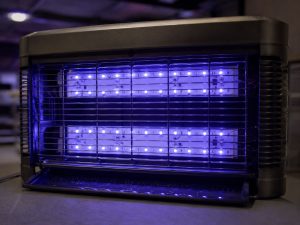
The best UV exposure unit for presensitized PCB work is a UV LED exposure box with even light, a stable timer, firm artwork contact and repeatable board placement. It gives more reliable results than sunlight or a handheld UV lamp.

Even light distribution is the first requirement. If the light is uneven, one part of the board may be overexposed while another part remains underexposed. This can cause thin traces, missing pads or poor development.

A timer is also important. Presensitized PCB exposure time changes with lamp power, distance, artwork density and board age. A stable timer makes each test repeatable and reduces failed boards.

Good artwork contact is another key point. The film should sit flat against the photoresist surface. If there is an air gap, trace edges may become blurry. For most prototype work, a compact UV LED box with a flat glass plate, safety cover and fixed distance is a good choice.

What Developer Is Used for Presensitized PCB?

The developer is usually a mild alkaline solution matched to the photoresist type, and many positive boards use sodium hydroxide-based chemistry. The safest ratio is always the supplier’s recommended concentration.

Presensitized PCB developer sodium hydroxide must be handled carefully. If the solution is too strong, it can remove good resist and destroy the circuit image. If it is too weak, exposed resist may remain on the copper and block etching.

Use gloves, eye protection and a clean plastic container. Development should stop when the copper areas to be etched are fully visible. After that, rinse the board gently and inspect the pattern before moving to etching.

How Does the Presensitized PCB Etching Process Work?

The presensitized PCB etching process removes exposed copper while the remaining resist protects the required traces, pads and copper areas. In this process, the resist works as a temporary chemical barrier.

Step 1: Confirm the developed image.
Before etching, check that the unwanted resist has been removed and the copper areas to be etched are fully exposed. If the image is incomplete, do not start etching yet.

Step 2: Prepare the etchant.
Ferric chloride and ammonium persulfate are common choices for small PCB work. The etchant should be active, clean and suitable for the copper thickness. Weak or exhausted solution can leave copper residue.

Step 3: Place the board into the solution.
Put the board into the etchant carefully and make sure the copper surface is fully covered. Do not scrape the resist surface, because damaged resist can cause broken traces.

Step 4: Move the solution gently.
Gentle movement helps fresh chemical reach the copper surface. Etching speed changes with copper thickness, temperature, chemical strength and agitation. Avoid aggressive movement that may damage fine patterns.

Step 5: Stop when unwanted copper is gone.
Do not leave the board in the etchant longer than needed. Over-etching can narrow traces, weaken pads and reduce dimensional accuracy.

Step 6: Rinse and inspect immediately.
Rinse the board with clean water as soon as etching is complete. Then check for shorts, open traces, thin pads, copper residue and damaged edges before drilling or soldering.

What Is the Difference Between Presensitized PCB and Dry Film PCB?

Presensitized PCB vs dry film is mainly a choice between easier setup and stronger process control. A presensitized board is ready to expose, while dry film needs lamination before exposure.

PointPresensitized PCBDry Film PCB
SetupFaster and simplerRequires lamination
EquipmentUV unit and developerLaminator, UV unit and developer
Skill LevelEasier for beginnersBetter for experienced users
CoatingFactory pre-coatedApplied by the user
Main RiskOld coating or wrong exposureBubbles, wrinkles or poor adhesion
Fine TracesGood for simple prototypesBetter when lamination is well controlled
StorageBoard coating ages over timeFilm and copper board stored separately
Cost ControlConvenient for small testsFlexible for repeated prototype work
Best UseLearning, repair and simple boardsControlled prototype production

For beginners, a positive acting presensitized PCB board is usually easier to handle. For users with proper cleaning, lamination pressure and temperature control, dry film can offer more flexibility for repeated prototype work.

Presensitized PCB vs Dry Film PCB, https://www.bestpcbs.com/blog/2026/06/presensitized-pcb/

What Common Problems Happen When Using Presensitized PCBs?

Common problems include faint images, thin traces, copper residue, broken tracks, bridged pads, over-etching and double-sided misalignment. Most issues come from artwork quality, exposure time, developer strength, etching control or poor storage.

  • Faint image: The board may be underexposed, the UV source may be weak, or the material may be old. Use a test strip, check lamp distance and make sure the artwork is pressed flat.
  • Thin traces: This usually comes from overexposure, weak black artwork or excessive development. Reduce exposure time, improve artwork density and stop development once the image is clear.
  • Copper residue: The exposed resist may not be fully removed, or the etchant may be weak. Check the developed image before etching and replace exhausted etchant when copper removal becomes slow.
  • Broken tracks: Scratches, dust and over-etching can cut narrow traces. Keep the coating clean, avoid hard rubbing and rinse the board as soon as etching is complete.
  • Bridged pads: Blurry artwork, poor contact or incomplete etching can leave copper between pads. Use sharper artwork, improve film contact and continue etching only until unwanted copper is gone.
  • Double-sided mismatch: Top and bottom patterns can shift if the films are not aligned correctly. Use registration holes and check pad-to-hole matching before exposure.
  • Uneven results: Uneven UV light, unstable developer strength or poor etchant movement can cause inconsistent patterns across the board. A controlled UV box and gentle chemical movement improve repeatability.

How Long Is the Shelf Life of Presensitized PCB?

Presensitized PCB shelf life is limited because the photosensitive coating slowly changes with time, light, heat and humidity. The exact storage period depends on the manufacturer and package quality.

Old boards may need longer exposure, develop unevenly or fail to hold fine traces. Once a pack is opened, unused material should be resealed, kept flat and stored in a dark, cool and dry place.

Before using old stock for an important circuit, expose a small test piece first. If the image looks weak, patchy or unstable during development, replacing the material is more reliable than changing every process setting.

How Much Does Presensitized PCB Price Usually Depend On?

Presensitized PCB price usually depends on board size, base laminate, copper thickness, single or double sided structure, package content, shelf condition and supplier reliability. The lowest price may not be the best value if the coating is old or uneven.

FactorImpactBuying Note
SizeLarger area costs moreMatch real design size
SideDouble sided costs moreCheck alignment needs
CopperThicker copper costs moreEtching takes longer
BaseFR4 costs moreBetter strength
PackKit pricing variesCheck shelf life
SupplierStorage affects qualityAvoid unknown old stock

A presensitized PCB pack can be useful for learning or lab use because it may include boards and developer. For production-ready projects, custom PCB fabrication is usually more stable because it includes controlled imaging, solder mask, drilling, plating, inspection and electrical testing.

FAQs About Presensitized PCB

Q1: Can this board support fine traces?
A1: Yes, but only within the limits of artwork quality, exposure control and etching accuracy. Simple fine traces can work well when the film is sharp and pressed tightly against the board. For very narrow spacing or repeatable production, factory PCB fabrication is more reliable.

Q2: What copper thickness is commonly used?
A2: A common copper thickness is 1 oz, about 35 μm. Thicker copper can carry more current, but it takes longer to etch and may reduce edge accuracy. For simple prototypes, standard copper is easier to process.

Q3: Can it be used for SMD components?
A3: Yes, simple SMD layouts can work. The main risks are solder bridges, pad undercut and missing solder mask. For fine-pitch ICs, dense pads or assembly production, a factory-made PCB with solder mask is a better option.

Q4: Does it need solder mask?
A4: A basic test board can work without solder mask, but exposed copper oxidizes more easily. Solder mask improves insulation, soldering control and surface protection. It is strongly recommended for commercial products or dense SMD designs.

Q5: Can it make plated through holes?
A5: No, normal exposure and etching cannot make plated through holes. Plated holes need drilling, hole wall activation, copper deposition and electroplating. If the design needs vias or plated component holes, use professional PCB manufacturing.

Q6: What artwork film is best?
A6: Use transparent film with high resolution and strong black density. Weak black areas allow UV light to leak through and may make traces thinner. The film should be clean, flat and tightly attached to the coated surface.

Q7: Can the developer be reused?
A7: It can be reused for simple boards, but the result becomes less stable over time. Photoresist residue weakens the solution. For fine traces or important boards, fresh developer gives better control.

Q8: Is sodium hydroxide developer dangerous?
A8: Yes, sodium hydroxide is corrosive. Use gloves, eye protection and proper ventilation. Mix the solution according to the supplier’s instructions and avoid skin contact. A solution that is too strong can also damage the circuit image.

Q9: Can drilling be done before exposure?
A9: Yes, especially for double-sided alignment, but dust must be removed carefully. Any particle on the coating can block UV light. For simple single-sided boards, drilling after etching is usually cleaner.

Q10: Is it suitable for RF circuits?
A10: Only simple RF experiments are suitable. RF and antenna designs often need controlled impedance, stable dielectric material and precise trace geometry. For commercial RF products, professional PCB fabrication is recommended.

Q11: Can it be used for mass production?
A11: It is not ideal for mass production. Manual exposure, development and etching create variation. Factory PCB production provides controlled imaging, drilling, plating, solder mask, electrical testing and final inspection.

Q12: What files are needed for a factory PCB quote?
A12: Gerber files, drill files, board thickness, copper thickness, solder mask color, surface finish, quantity and assembly requirements are the main details. If the prototype has been tested, also share current, voltage and application environment.

Conclusion

Presensitized PCB is a practical material for learning, repair testing and simple prototype verification. Its result depends on artwork quality, UV exposure, developer control, etching stability and careful handling. It is useful for early experiments, but it is not the best choice for plated holes, solder mask, fine-pitch assembly or repeatable production.

For stable PCB production, choose a supplier with strong material control, fabrication capability, inspection process and assembly support. EBest Circuit is a China source factory supporting custom PCB manufacturing, PCB assembly, OEM/ODM projects and global supply. Send your Gerber files, BOM and project requirements to sales@bestpcbs.com for a quotation.

You may also like

Best Manufacturers for High-Density Interconnect Circuit Boards in China

June 30th, 2026

Best manufacturers for high-density interconnect circuit boards in China should be evaluated by HDI process capability, microvia reliability, lamination control, fine-line accuracy, and engineering support. For HDI PCB buyers, the key question is whether a supplier can consistently produce laser microvias, blind vias, buried vias, via-in-pad structures, controlled impedance, and high-density BGA fanout—not just standard multilayer boards.

China is a major sourcing region for HDI circuit boards because of its mature PCB supply chain, strong production capacity, and experience with compact electronic products. This guide compares the Top 10 HDI PCB manufacturers in China to help OEM buyers, engineers, and product teams identify suitable suppliers for communication modules, wearable electronics, automotive electronics, medical electronics, IoT devices, high-density sensor modules, and other compact applications.

Best Manufacturers for High-Density Interconnect Circuit Boards in China

1. EBest Circuit (Best Technology)

EBest Circuit (Best Technology) is a China-based HDI PCB manufacturer supporting projects that require laser blind/buried vias, fine-line routing, multilayer stack-up review, BGA fanout support, impedance-related engineering review, prototype verification, pilot runs, and mass production. It is suitable for OEMs and engineers who need a supplier that can review HDI manufacturability before production, not just provide a fast quotation.

Location: Shenzhen, Guangdong, China

Best For: OEMs and engineers needing complex HDI board projects from prototype and pilot run to small, medium, and mass production, especially designs involving BGA fanout, laser microvias, blind/buried vias, fine lines, and impedance control.

Key Differentiator: Supports HDI projects with 0.10mm laser blind/buried vias, 3/3mil fine line capability under selected process conditions, multilayer stack-up review, BGA fanout DFM, and engineering support from prototype to mass production.

Industries Served:

  • Communication modules
  • Medical handheld devices
  • Automotive control modules
  • Industrial compact controllers
  • Wearable electronics
  • IoT devices
  • High-density sensor modules
  • Miniaturized electronic products
Best Manufacturers for High-Density Interconnect Circuit Boards in China

2. Shennan Circuits Company (SCC)

Shennan Circuits Company is one of China’s leading high-end PCB manufacturers and is suitable for demanding HDI PCB programs that require stable process control, advanced engineering capability, and large-scale production support. It is often considered for complex HDI boards used in communication, computing, automotive, and high-reliability electronic systems.

Location: Shenzhen, Guangdong, China

Best For: Large OEM HDI programs that require advanced process control, high-reliability production, and stable mass manufacturing for communication, computing, and automotive electronics.

Key Differentiator: Strong capability in high-end HDI PCB production for communication, computing, and automotive applications.

Industries Served:

  • Communication infrastructure
  • Server hardware
  • Automotive electronics
  • High-speed computing
  • Data transmission equipment
  • High-reliability electronic systems

3. Avary Holding (Shenzhen)

Avary Holding is one of China’s largest PCB manufacturers and is strongly positioned in high-volume HDI PCB production for compact electronic products. It is especially relevant for buyers in consumer electronics, mobile devices, communication terminals, computers, and automotive electronics where thin, dense, and high-volume HDI boards are required.

Location: Shenzhen, Guangdong, China

Best For: High-volume HDI PCB production for smartphones, wearable devices, communication terminals, laptops, and compact consumer electronics.

Key Differentiator: Large-scale HDI manufacturing capacity for global electronics supply chains.

Industries Served:

  • Smartphones
  • Tablets
  • Wearable devices
  • Laptops
  • Communication terminals
  • Automotive electronics
  • Compact consumer electronics

4. Unimicron Technology Corporation

Unimicron Technology Corporation is a major PCB and substrate manufacturer with strong experience in HDI boards for advanced electronics. It is suitable for high-density applications that require mature interconnect technology, fine routing, reliable microvia processing, and production stability for mobile, computing, automotive, and communication products.

Location: Taiwan-based, with manufacturing operations in Greater China

Best For: Advanced HDI PCB projects for mobile devices, AI hardware, servers, optical communication modules, and automotive electronics that require mature high-density interconnect technology.

Key Differentiator: Strong experience in HDI and advanced interconnect manufacturing for high-density electronic platforms.

Industries Served:

  • Smartphones
  • AI hardware
  • Server systems
  • Optical communication modules
  • Automotive electronics
  • Notebooks
  • Advanced communication devices

5. WUS Printed Circuit

WUS Printed Circuit is a long-established PCB manufacturer with experience in multilayer and HDI circuit boards. It is suitable for buyers that need mature production control for HDI boards used in networking, automotive electronics, industrial electronics, computing equipment, and high-speed electronic systems.

Location: Taiwan and mainland China operations, including Kunshan, Jiangsu, China

Best For: Medium-to-large HDI and high-speed PCB production for networking, automotive electronics, computing hardware, and industrial electronic systems.

Key Differentiator: Mature HDI and multilayer PCB manufacturing experience for communication and automotive electronics.

Industries Served:

  • Network communication
  • Automotive electronics
  • Semiconductor-related equipment
  • Industrial electronics
  • Computing hardware
  • High-speed signal systems

6. LeadsIntec Group

LeadsIntec Group provides HDI PCB manufacturing support for compact electronic projects that require microvias, blind vias, buried vias, and dense routing. It is suitable for OEM buyers and engineering teams that need HDI PCB fabrication with design communication and manufacturability review.

Location: Shenzhen, Guangdong, China

Best For: OEM HDI projects that need design communication, manufacturability review, microvia structures, and compact electronic product support.

Key Differentiator: HDI PCB support combined with design and DFM communication for compact electronic products.

Industries Served:

  • IoT devices
  • Smart hardware
  • Automotive electronics
  • Industrial electronics
  • Medical electronics
  • Communication modules
  • New energy control devices
  • Compact AI-related hardware

7. LHDPCB

LHDPCB provides HDI PCB fabrication services from prototype to production, including microvia, blind via, buried via, and compact multilayer structures. It is suitable for customers who need flexible sourcing for HDI prototypes, small batches, and multilayer high-density boards.

Location: China, with operations connected to Shenzhen and Huizhou

Best For: HDI prototypes, small-batch HDI PCB sourcing, and multilayer high-density boards that need flexible manufacturing support.

Key Differentiator: Flexible HDI PCB service from prototype to production.

Industries Served:

  • Communication electronics
  • Industrial control
  • Power control modules
  • Medical instruments
  • Security electronics
  • Aerospace electronics
  • Automotive electronics
  • Compact consumer devices

8. PCBWay

PCBWay is an online PCB prototyping and manufacturing platform that offers HDI PCB fabrication for projects requiring blind vias, buried vias, and microvia structures. It is suitable for engineers, startups, and small-to-medium projects that need accessible online quoting and prototype HDI PCB ordering.

Location: China

Best For: Engineers, startups, and development teams needing online HDI prototype ordering for microvia, blind via, or buried via PCB projects.

Key Differentiator: Convenient online quotation system for prototype and small-batch HDI PCB projects.

Industries Served:

  • Hardware prototypes
  • IoT devices
  • Robotics controllers
  • Medical electronics prototypes
  • Automotive electronic modules
  • Compact industrial devices
  • Engineering development boards

9. JLCPCB

JLCPCB is a widely recognized online PCB manufacturer known for fast quotation and cost-effective prototype production. For HDI-related projects, it is more suitable for standard or less complex high-density designs that fit its online manufacturing rules and do not require highly customized HDI stack-ups.

Location: China

Best For: Cost-sensitive prototypes and standard high-density PCB designs that fit online manufacturing rules and do not require highly customized HDI stack-ups.

Key Differentiator: Fast and low-cost online PCB prototyping for standard designs.

Industries Served:

  • Hardware startups
  • Education labs
  • IoT prototypes
  • Consumer electronics prototypes
  • Engineering development boards
  • Standard compact electronic devices

10. Viasion Technology

Viasion Technology is a Shenzhen-based PCB manufacturer offering HDI PCB manufacturing for boards that require smaller traces, microvias, blind vias, buried vias, and compact multilayer routing. It is suitable for low-to-medium volume HDI projects in industrial, automotive, medical, IoT, communication, and compact electronic applications.

Location: Shenzhen, Guangdong, China

Best For: Low-to-medium volume HDI PCB projects involving microvias, blind vias, buried vias, fine lines, and compact multilayer routing.

Key Differentiator: HDI PCB support for microvias, blind vias, buried vias, fine lines, and compact multilayer structures.

Industries Served:

  • Industrial control
  • Automotive electronics
  • IoT devices
  • Medical electronics
  • Robotics controllers
  • New energy electronics
  • Telecommunications
  • Aerospace electronics
  • Compact consumer electronics

11. Comparison Table of China HDI PCB Manufacturers

ManufacturerBest FitMain HDI Strength
EBest CircuitPrototype to mass productionDFM + laser vias
SCCLarge OEM programsHigh-end HDI
Avary HoldingConsumer electronics volumeMass HDI capacity
UnimicronAdvanced electronicsHDI interconnect
WUS Printed CircuitMedium-large productionProcess control
LeadsIntecOEM design supportHDI DFM
LHDPCBPrototype and small batchFlexible HDI
PCBWayOnline prototypesOnline quote
JLCPCBStandard prototypesLow-cost prototype
Viasion TechnologyLow-medium volumeMicrovia HDI
Best Manufacturers for High-Density Interconnect Circuit Boards in China

12. FAQs About Best Manufacturers for High-Density Interconnect Circuit Boards

Q1: What are high-density interconnect circuit boards?
High-density interconnect circuit boards, also called HDI PCBs, are printed circuit boards designed with higher routing density than standard PCBs. They commonly use microvias, blind vias, buried vias, fine lines, smaller pads, and sequential lamination.

Q2: Why do buyers need HDI circuit boards?
HDI boards help reduce PCB size, shorten signal paths, increase routing density, and support fine-pitch components such as BGA, CSP, and high-I/O ICs. They are widely used in compact, high-speed, and high-performance electronic products.

Q3: How do I choose the best manufacturer for high-density interconnect circuit boards?
Check the supplier’s HDI stack-up capability, laser drilling process, minimum via size, minimum line width and spacing, microvia plating control, via-in-pad experience, material options, impedance support, inspection process, and engineering response.

Q4: What is the difference between HDI PCB and standard multilayer PCB?
A standard multilayer PCB mainly uses mechanical through-holes for layer interconnection. An HDI PCB uses microvias, blind vias, buried vias, finer traces, smaller pads, and sequential lamination to achieve higher routing density in a smaller area.

Q5: What files should I prepare before asking for an HDI PCB quote?
Prepare Gerber files, drill files, stack-up information, material requirements, copper thickness, impedance requirements, surface finish, solder mask color, board thickness, via structure, BGA package information, IPC class requirement, and order quantity.

Q6: Are all PCB manufacturers able to produce HDI boards?
No. HDI manufacturing requires laser drilling, accurate registration, controlled lamination, reliable microvia plating, fine-line imaging, and strong process control. Some suppliers can make standard multilayer PCBs but may not be suitable for complex HDI boards.

Q7: Is China a good place to source HDI circuit boards?
Yes. China has a mature PCB supply chain, strong material access, advanced production capacity, and many experienced HDI PCB manufacturers. Buyers should still evaluate HDI capability, engineering support, quality control, delivery stability, and communication quality.

Q8: What industries need HDI circuit boards most?
HDI boards are commonly used in smartphones, communication modules, wearable devices, medical electronics, automotive electronics, aerospace electronics, industrial controllers, IoT devices, AI hardware, and high-speed computing products.

Q9: Why is DFM review important for HDI PCB projects?
DFM review helps identify risks in microvia design, BGA fanout, trace spacing, annular ring, stack-up design, dielectric thickness, via-in-pad structure, and impedance control before production. This can reduce fabrication delays and improve final board reliability.

Q10: What makes a good HDI PCB manufacturer different from a standard PCB supplier?
A good HDI PCB manufacturer has stable laser drilling, accurate layer registration, reliable microvia plating, controlled lamination, fine-line imaging, impedance control, and engineering review capability. These factors are more important than low price alone.

Q11: When should I choose Best Technology instead of a large HDI factory?
Best Technology is suitable when your project needs responsive engineering communication, HDI DFM review, prototype verification, pilot production, and future mass production support. Large factories may be strong for very high-volume programs, but engineering flexibility and communication speed are also important during early product development.

Q12: Why consider EBest Circuit (Best Technology) for HDI PCB projects?
EBest Circuit is suitable for customers who need HDI PCB manufacturing, prototype support, DFM review, fine-line routing, laser blind/buried vias, BGA fanout support, impedance-related review, and stable production from prototypes to mass production. For HDI PCB quotation or engineering review, contact sales@bestpcbs.com.

All in all, the best manufacturers for high-density interconnect circuit boards in China should be evaluated by HDI capability, not general PCB service range. HDI manufacturing requires stable laser microvia processing, blind and buried via control, fine-line imaging, sequential lamination, impedance management, material control, and practical engineering support.

The companies listed above serve different HDI PCB needs. Some are suitable for large-volume HDI production, some are better for online prototype ordering, and others are more flexible for custom HDI projects. If your design requires HDI PCB fabrication, DFM support, prototype-to-mass-production service, and reliable engineering communication, EBest Circuit (Best Technology) can support your project from early design review to finished HDI circuit board delivery. If you are working on an HDI PCB project and need quotation support or engineering review, pls feel free to contact our team at sales@bestpcbs.com. We will be glad to review your files and discuss the best manufacturing approach for your design.

You may also like

Transistor Symbol Explained: BJT, MOSFET, JFET, PCB Design, and Selection Guide

June 30th, 2026

A transistor symbol is the schematic graphic used to represent a transistor in an electronic circuit diagram. It tells engineers the transistor type, terminal names, current-control method, and sometimes whether the device is NPN, PNP, N-channel, P-channel, enhancement mode, or depletion mode.

For PCB design and PCBA manufacturing, reading the transistor symbol correctly is more than a classroom skill. A wrong symbol, wrong pin mapping, or wrong footprint can cause reversed polarity, failed switching, excessive heat, unstable signal behavior, or a complete board failure after assembly.

What Is a Transistor Symbol?

A transistor symbol is a standardized drawing used in schematics to show how a transistor connects and functions inside a circuit. It does not show the physical package. Instead, it shows the electrical role of the device.

A transistor normally has three terminals. In a BJT, these terminals are collector, base, and emitter. In a FET, they are usually drain, gate, and source. This distinction matters in real engineering work. A schematic symbol may look correct, but the physical transistor may use a different pin order depending on the package and manufacturer.

For example, one SOT-23 transistor may use pin order B-C-E, while another similar-looking part may use E-B-C. The schematic symbol is the electrical language. The PCB footprint is the manufacturing language. Both must match.

transistor symbol meaning

Why Is the Transistor Symbol Important in Circuit Design?

The transistor symbol is important because it helps engineers understand signal flow, bias direction, switching logic, and pin connection before the PCB is built. A clear symbol prevents mistakes during schematic review, BOM checking, layout, assembly, and testing.

In many electronic products, transistors work as switches, amplifiers, level shifters, current drivers, signal buffers, protection elements, or power-control devices. If the transistor symbol is misread, the circuit may still look complete on paper but fail during startup.

For example, an NPN transistor used as a low-side switch must have the emitter connected to the lower potential side, usually ground. If a PNP transistor symbol is used by mistake, the control logic changes. The base drive, load direction, and turn-on condition become different. The PCB may pass a visual check but fail functional testing.

How Does a Transistor Symbol Work?

A transistor symbol works by showing the terminals and control path of the transistor. The graphic structure tells the reader which terminal controls conduction and which terminals carry the main current.

For BJT symbols, the base controls current between the collector and emitter. The small arrow is placed on the emitter. In an NPN transistor symbol, the arrow points outward. In a PNP transistor symbol, the arrow points inward.

For MOSFET and JFET symbols, the gate controls the channel between drain and source. A MOSFET symbol often shows an insulated gate structure, while a JFET symbol shows a junction-controlled gate.

How Does a Transistor Symbol Work?

Main Types of Transistor Symbols

The most common transistor symbols are BJT, MOSFET, JFET, IGBT, Darlington transistor, and phototransistor symbols. Each type has a different control method and a different use case.

Transistor TypeCommon Symbol TerminalsCommon UseKey Symbol Feature
NPN BJTCollector, Base, EmitterLow-side switching, signal amplificationEmitter arrow points out
PNP BJTCollector, Base, EmitterHigh-side switching, complementary circuitsEmitter arrow points in
N-channel MOSFETDrain, Gate, SourcePower switching, motor control, LED driversGate separated from channel
P-channel MOSFETDrain, Gate, SourceHigh-side switching, reverse protectionP-channel direction marking
JFETDrain, Gate, SourceLow-noise analog circuits, input stagesGate forms a junction with channel
IGBTCollector, Gate, EmitterHigh-voltage power switchingMOS gate with bipolar output path
Darlington transistorCollector, Base, EmitterHigh-gain switchingTwo-transistor combined symbol
PhototransistorCollector, Emitter, sometimes BaseOptical sensingLight arrows point toward transistor

NPN Transistor Symbol vs PNP Transistor Symbol

The fastest way to identify NPN and PNP transistor symbols is to look at the emitter arrow. NPN points out. PNP points in.

FeatureNPN Transistor SymbolPNP Transistor Symbol
Arrow directionOutward from emitterInward toward emitter
Common switching positionLow-side switchHigh-side switch
Typical turn-on conditionBase higher than emitterBase lower than emitter
Common load pathLoad to supply, transistor to groundTransistor near supply side
Common beginner mistakeReversing collector and emitterDriving base with wrong polarity

A practical memory aid is: NPN = Not Pointing iN. The arrow points away from the base. PNP points toward the base.

NPN Transistor Symbol vs PNP Transistor Symbol

MOSFET Symbol vs BJT Symbol

A MOSFET symbol is different from a BJT symbol because a MOSFET is voltage-controlled, while a BJT is current-controlled. In a BJT, the base current controls collector-emitter current. In a MOSFET, the gate voltage controls the drain-source channel.

ItemBJT SymbolMOSFET Symbol
TerminalsCollector, Base, EmitterDrain, Gate, Source
Control methodBase currentGate-source voltage
Input behaviorRequires base currentVery high input impedance
Common PCB useSignal switching, simple driversPower switching, load control, DC-DC converters
Typical design concernBase resistor, gain variationGate drive, body diode, VGS limit
Symbol riskNPN/PNP confusionDrain/source/body diode confusion

MOSFET symbols may show enhancement or depletion mode. Depletion MOSFET symbols usually indicate a normally conductive channel, while enhancement-mode MOSFETs are normally off and are much more common in digital switching and power control.

MOSFET Symbol vs BJT Symbol

What Materials Are Used in Transistors?

Most common transistors use silicon as the semiconductor material, but advanced applications may use silicon carbide, gallium nitride, or other semiconductor materials. The symbol usually does not show the material, so the datasheet must provide that information.

MaterialCommon DevicesTypical StrengthCommon Application
SiliconBJT, MOSFET, small-signal transistorMature, cost-effective, widely availableConsumer, industrial, communication, control boards
Silicon carbideSiC MOSFET, SiC diode modulesHigh voltage, high temperature, high efficiencyEV, solar inverter, industrial power
Gallium nitrideGaN FETFast switching, high power densityChargers, RF, high-frequency power
GermaniumOlder transistor typesLow forward voltage, historical useVintage audio, legacy repair

For most PCB projects, the main issue is not the semiconductor material itself. The more urgent questions are package type, voltage rating, current rating, thermal path, availability, and assembly compatibility.

Transistor Symbol Standards and Schematic Conventions

Transistor symbols are commonly based on established diagram conventions such as IEC 60617 and IEEE/ANSI-style schematic practices. In PCB projects, the standard symbol is only one part of the library system.

Library ItemPurposeCommon Risk
Schematic symbolShows electrical functionWrong terminal naming
PCB footprintDefines copper pads and package outlineWrong pad size or pin order
3D modelChecks mechanical clearanceHeight or body mismatch
BOM dataDefines manufacturer part numberWrong substitute part
Pick-and-place dataGuides SMT placementRotation or origin error
Assembly drawingHelps inspectionMissing polarity or orientation note

A reliable symbol library saves time during engineering review. It also reduces avoidable communication problems between design teams and PCB assembly suppliers.

How to Read a Transistor Symbol on a PCB Schematic?

To read a transistor symbol correctly, start with the terminal names, then identify the transistor type, arrow direction, control pin, and connected circuit function.

StepWhat to CheckEngineering Reason
Check the reference designatorUsually Q or sometimes TConfirms it is a transistor-type component
Identify the typeBJT, MOSFET, JFET, IGBTDetermines control method
Read terminal namesC/B/E or D/G/SPrevents wrong net connection
Check arrow directionNPN, PNP, channel indicationConfirms polarity and current logic
Review nearby resistorsBase resistor, gate resistor, pull-downConfirms drive stability
Check load positionHigh-side or low-sideConfirms switching topology
Compare with datasheetPinout, ratings, packagePrevents symbol-footprint mismatch
Verify PCB footprintPad order and land patternPrevents assembly failure

A transistor symbol should never be reviewed in isolation. The symbol, component value, manufacturer part number, footprint, and circuit context must be checked together.

Transistor Symbol vs Transistor Footprint

A transistor symbol shows electrical function, while a footprint shows the physical solder pad layout on the PCB. Confusing the two is one of the most common mistakes in hardware design.

ItemTransistor SymbolTransistor Footprint
Used inSchematicPCB layout
ShowsElectrical pins and functionCopper pads, body outline, courtyard
ExampleNPN BJT symbolSOT-23, TO-92, SOT-223, DPAK
Main riskWrong circuit interpretationWrong assembly or pin connection
Checked bySchematic review, ERCDRC, footprint review, assembly drawing
Transistor Symbol vs Transistor Footprint

The transistor symbol may be electrically correct, but the PCB can still fail if the footprint is wrong. A SOT-23 transistor footprint may look simple, but pin 1, pin 2, and pin 3 must match the selected part.

How to Choose the Right Transistor Symbol for Your Circuit?

Choose the transistor symbol based on the actual transistor type, control method, circuit position, and manufacturer part number. Do not select a symbol only because it looks familiar.

Design NeedBetter Symbol ChoiceKey Check
Simple low-side load switchNPN BJT or N-channel MOSFETLoad current and drive level
High-side switchPNP BJT or P-channel MOSFETGate/base drive voltage
Fast digital switchingMOSFETGate charge and switching loss
Small-signal amplificationBJT or JFETBias point and noise level
High-voltage power controlMOSFET or IGBTVoltage rating, creepage, thermal path
Optical sensingPhototransistorLight direction and response time
High gain with simple driveDarlington transistorSaturation voltage and heat

For production boards, the symbol should include clear pin names, package link, manufacturer part number, and verified footprint mapping. Generic symbols are acceptable for early discussion, but they should be replaced or fully defined before quotation, PCB fabrication, and assembly.

Common Transistor Symbol Mistakes in PCB Design

Most transistor symbol mistakes are small on the screen but expensive after assembly. They often appear during prototype bring-up, when the board does not switch, the output is inverted, or the transistor overheats.

Common Transistor Symbol Mistakes in PCB Design

A useful factory-side check is to compare the schematic symbol, footprint, BOM, and pick-and-place file before production. This review is especially valuable for small SOT-23, SOT-223, DPAK, DFN, and QFN transistor packages.

Transistor Symbol in PCB Manufacturing and PCBA Assembly

In PCB manufacturing and PCBA assembly, the transistor symbol becomes part of a larger production data chain. It starts in the schematic, moves into the PCB layout, appears in the BOM, and finally reaches SMT placement and inspection.

StageFile or DataTransistor-Related Check
Schematic designCircuit schematicCorrect symbol and pin names
PCB layoutGerber and CAD dataFootprint and copper thermal path
BOM reviewManufacturer part numberCorrect transistor type and package
SourcingApproved supplier listAvailability and substitute control
SMT programmingPick-and-place fileRotation, pin 1, centroid
Assembly inspectionAOI, visual inspectionOrientation and solder quality
Electrical testICT or functional testSwitching, gain, leakage, voltage drop

For transistor-heavy boards, quality control should not stop at solder appearance. Functional behavior must also be checked because a transistor can look correctly soldered but still be electrically wrong due to symbol, footprint, or BOM mismatch.

Testing Methods for Transistor Symbol and Circuit Accuracy

The transistor symbol itself is not tested with lab equipment, but the circuit built from that symbol can and should be verified. Testing should begin before PCB fabrication and continue through assembly and functional validation.

Test MethodWhen UsedWhat It Finds
ERC checkSchematic stageFloating base/gate, missing connections
CAD library auditBefore layout releaseSymbol-footprint mismatch
DRC checkPCB layout stageClearance, copper, pad, and routing issues
BOM reviewBefore sourcingWrong transistor type or package
Multimeter diode testDebug stageBJT junction behavior and pin identification
Oscilloscope testFunctional testSwitching waveform, ringing, delay
Thermal cameraLoad testHot transistor or weak copper area
AOI/visual inspectionAssembly stageOrientation and solder defects
X-ray inspectionHidden joints or advanced packagesVoid, bridge, or hidden solder issue

For small BJT circuits, a multimeter diode mode can help confirm base-emitter and base-collector junctions. For MOSFET circuits, check gate-source voltage, drain-source voltage, body diode direction, and gate pull-down behavior. For power circuits, thermal testing under realistic load is essential.

Quality Standards and Documentation for Transistor-Based PCB Projects

A transistor-based PCB project needs more than a correct schematic. It needs controlled documentation so the manufacturer can build the same board repeatedly.

DocumentWhy It Matters
Schematic PDFShows intended circuit function and transistor symbols
Gerber filesDefines copper, solder mask, silkscreen, and fabrication data
BOM with MPNPrevents wrong transistor sourcing
Pick-and-place fileControls SMT placement and rotation
Assembly drawingShows component orientation and special notes
Approved substitute listControls alternates without changing circuit behavior
Test planDefines switching, voltage, current, and functional checks
Quality requirementDefines IPC class, inspection criteria, and acceptance level

For overseas procurement, clear documentation reduces back-and-forth communication. It also prevents a common problem: the purchasing team buys a transistor with the same package and similar rating, but with a different pinout or switching behavior.

Industry Applications of Transistor Symbols and Transistor Circuits

Transistor symbols appear in nearly every electronic industry because transistors are core building blocks in modern circuits. The symbol helps engineers understand how control, switching, amplification, and protection are implemented.

IndustryTypical Transistor UsePCB Design Concern
Consumer electronicsSignal switching, charging, display controlCompact layout and cost control
Automotive electronicsLoad switching, sensor interface, motor controlReliability, thermal cycling, vibration
Industrial controlRelay drivers, PLC I/O, isolation circuitsSurge protection and long service life
Medical electronicsSignal conditioning, sensor circuitsStability, traceability, clean assembly
LED lightingConstant-current control, dimmingThermal management and current handling
Communication devicesRF switching, bias circuits, amplificationNoise control and impedance behavior
Power electronicsMOSFET and IGBT switchingCreepage, heat, copper thickness
Smart home devicesLow-power switching and interface circuitsStandby power and compact PCBA

In high-reliability industries, the transistor symbol is not just a drawing. It is part of design traceability. Engineers must know why a transistor was selected, how it is driven, what failure mode is expected, and whether the PCB layout supports the electrical and thermal requirement.

FAQs About Transistor Symbols

Q1: What does a transistor symbol mean?

A transistor symbol represents the electrical function of a transistor in a schematic. It shows the transistor type and terminals, such as collector, base, and emitter for BJT devices or drain, gate, and source for FET devices. The symbol helps engineers understand control direction, current path, and circuit behavior before the PCB is designed or assembled.

Q2: How can I identify an NPN transistor symbol?

An NPN transistor symbol has an arrow on the emitter pointing outward. The arrow direction shows conventional current direction at the emitter. In many low-side switching circuits, the emitter connects toward ground, the collector connects to the load, and the base receives the control signal through a resistor. Always confirm the physical pinout with the datasheet.

Q3: How can I identify a PNP transistor symbol?

A PNP transistor symbol has an arrow on the emitter pointing inward. PNP transistors are often used in high-side switching or complementary circuits. They usually turn on when the base is pulled lower than the emitter. The symbol helps identify the bias direction, but the package pinout still needs datasheet verification before PCB layout.

Q4: What is the difference between a BJT symbol and a MOSFET symbol?

A BJT symbol uses collector, base, and emitter terminals, while a MOSFET symbol uses drain, gate, and source terminals. A BJT is controlled by base current. A MOSFET is controlled by gate-source voltage. In PCB design, MOSFET symbols also require careful attention to body diode direction, gate drive voltage, and thermal dissipation.

Q5: What does the arrow mean in a transistor symbol?

The arrow usually shows conventional current direction and helps identify transistor type. In a BJT symbol, the arrow is placed on the emitter. NPN points outward, while PNP points inward. In FET symbols, arrow direction may indicate channel type or junction direction, depending on the symbol convention used in the schematic library.

Q6: Is the transistor symbol the same as the transistor footprint?

No. The transistor symbol is used in the schematic to show electrical function. The footprint is used in PCB layout to show pad shape, pad spacing, and component body position. A design can have a correct symbol but a wrong footprint. That mismatch can cause assembly failure even when the circuit idea is correct.

Q7: Why do transistor pinouts differ between similar packages?

Package appearance does not guarantee the same pin order. Two SOT-23 or TO-92 transistors may have different internal pin arrangements depending on manufacturer and part number. This is why engineers must verify the datasheet, symbol-to-footprint mapping, and BOM before releasing PCB files for fabrication and assembly.

Q8: What is the common reference designator for a transistor?

The common reference designator for a transistor is usually Q, such as Q1, Q2, or Q15. Some older drawings may use other letters, but Q is widely recognized in PCB schematics. A clear reference designator helps connect schematic symbols, BOM lines, PCB footprints, assembly drawings, and inspection records.

Q9: Can I use a generic transistor symbol in my schematic?

A generic symbol can be used during early concept design, but production schematics should define the exact transistor type, pin names, package, and manufacturer part number. Generic symbols increase the risk of wrong pin mapping, wrong package selection, and sourcing mistakes. For PCBA production, a controlled library is much safer.

Q10: What causes a transistor circuit to fail after PCB assembly?

Common causes include wrong NPN/PNP selection, incorrect MOSFET drain-source direction, symbol-footprint mismatch, missing gate or base resistor, floating gate, wrong substitute part, insufficient copper for heat dissipation, or incorrect assembly orientation. A complete review should compare the schematic, datasheet, BOM, footprint, pick-and-place file, and functional test result.

Conclusion

A transistor symbol is small, but it carries critical design information. It identifies the transistor type, terminal function, current direction, control method, and circuit behavior. For reliable PCB and PCBA production, the symbol must match the datasheet, footprint, BOM, assembly orientation, and test plan.

If you are sourcing reliable PCB/PCBA manufacturing, including OEM, ODM, prototyping, mass production, or custom engineering solutions, reach out to our engineering team for technical support and a quote at sales@bestpcbs.com.

You may also like

Top 10 Quick Turn PCB Assembly Manufacturers in China

June 30th, 2026

Quick turn PCB assembly manufacturer selection is not only about finding the fastest supplier; it is about choosing a partner that can turn your PCB files into reliable assembled boards with fewer delays, fewer sourcing risks, and fewer production surprises. For engineers, startups, and OEM buyers, quick-turn PCBA is often needed for functional testing, pilot runs, certification samples, investor demos, urgent design revisions, or low-volume production. A capable manufacturer should support PCB fabrication, BOM review, component sourcing, SMT assembly, through-hole assembly, inspection, testing, and delivery under one controlled workflow.

China has become a strong destination for quick turn PCB assembly because its PCB supply chain is complete, component sourcing is efficient, and low-volume production is highly flexible. However, not every supplier is suitable for time-sensitive or quality-critical projects. This guide compares the top 10 quick turn PCB assembly manufacturers in China to help you understand each company’s services, strengths, industries served, and certifications. If your project requires fast response, engineering support, reliable assembly quality, and one-stop PCB-to-PCBA service, EBest Circuit (Best Technology) is a practical partner to consider.

Quick Turn PCB Assembly Manufacturer

1. EBest Circuit (Best Technology)

EBest Circuit (Best Technology) is a professional PCB and PCBA manufacturer in China with strong capability in quick turn prototypes, small-batch PCB assembly, and advanced PCB manufacturing. The company supports a wide range of PCB types, including FR4 PCB, metal core PCB, ceramic PCB, heavy copper PCB, extra-thin PCB, rigid-flex PCB, and PCB assembly. For PCB layout, prototyping, ODM, DFM, PCB assembly, and box building services, pls feel free to contact us via sales@bestpcbs.com.

For customers looking for a China quick turn PCB assembly manufacturer, EBest Circuit is a practical option because it combines PCB fabrication, component sourcing, SMT assembly, testing, and engineering support. This is especially helpful for projects where the customer needs more than a bare PCB, such as medical electronics, automotive modules, LED lighting products, industrial control boards, communication devices, and high-reliability prototypes.

Location: Shenzhen, Guangdong, China

Services:

  • PCB prototyping
  • Quick turn PCB assembly
  • SMT assembly
  • Through-hole assembly
  • Mixed assembly
  • BOM sourcing
  • DFM and engineering support
  • Ceramic PCB manufacturing
  • Metal core PCB manufacturing
  • Rigid-flex PCB and flexible PCB
  • Box build assembly

Industries Served: Medical, automotive, aerospace, industrial control, LED lighting, communication, consumer electronics, and power electronics

Key Differentiators:

  • Strong one-stop PCB and PCBA service
  • Quick turn prototype and small-batch assembly support
  • Advanced PCB options including ceramic PCB, MCPCB, heavy copper PCB, and rigid-flex PCB
  • Engineering-driven DFM support before production
  • Suitable for customers who need both prototype speed and production reliability
  • Broad certification coverage for regulated or high-reliability industries

Certifications:

  • IATF 16949
  • ISO 9001:2015
  • ISO 13485:2016
  • AS9100D
  • UL
  • RoHS
  • REACH

2. FS Circuits

FS Circuits is a China-based PCB and PCBA manufacturer offering PCB prototyping, PCB manufacturing, component procurement, turnkey PCB assembly, SMT assembly, THT assembly, small-volume PCB assembly, and conformal coating. Its website describes the company as an ISO-certified PCBA provider with more than 15 years of industrial experience, 8 SMT lines, 2 THT lines, and support for 0201 components and 0.4mm BGA pitch.

For buyers comparing quick turn PCB assembly manufacturers, FS Circuits is relevant because it provides both fabrication and assembly under one supplier. Its service pages also mention testing and packaging, which are important for customers who need a finished PCBA instead of only bare boards.

Location: Shenzhen, Guangdong, China

Services:

  • PCB prototyping
  • PCB manufacturing
  • Turnkey PCB assembly
  • SMT PCB assembly
  • THT PCB assembly
  • Small-volume PCB assembly
  • Component procurement
  • Testing and packaging
  • Conformal coating

Industries Served: IoT, industrial control, aerospace, telecommunications, medical, automotive, security systems, computer equipment, new energy, and smart home

Key Differentiators:

  • One-stop PCB and PCBA manufacturing service
  • 8 SMT lines and 2 THT lines
  • Support for fine-pitch components and BGA assembly
  • Material procurement, PCB production, PCBA assembly, testing, and packaging
  • Suitable for prototype and small-volume production
  • Factory address publicly listed in Shenzhen

Certifications:

  • ISO9000
  • ISO9001
  • ISO14001
  • UL
  • TS16949
  • UL/CE export standards

3. NextPCB

NextPCB is a well-known PCB manufacturing and assembly provider in China, offering turnkey PCB assembly, prototype PCBA, component sourcing, DFM/DFA review, testing, and order tracking. Its PCB assembly page highlights assembly launch within 24 hours once parts are confirmed, superfast turnkey PCBA from 7 working days, access to a large verified component inventory, and global shipping support.

NextPCB is suitable for engineers and hardware teams that need an online ordering process, structured file review, and clear assembly workflow. It is also a strong option for customers who need Rev 0 prototypes, BOM handling, and scalable PCB assembly from prototype to higher-volume production.

Location: Shenzhen, Guangdong, China

Services:

  • PCB fabrication
  • Turnkey PCB assembly
  • Prototype PCBA
  • BOM handling
  • Component sourcing
  • SMT assembly
  • THT and mixed assembly
  • Rigid-flex PCB integration
  • DFM/DFA review
  • AOI and X-ray inspection
  • ICT, flying probe, and functional circuit testing

Industries Served: Aerospace, medical electronics, consumer electronics, industrial electronics, communication, and hardware development

Key Differentiators:

  • Free DFM/DFA review for orders
  • Zero MOQ for PCB assembly
  • Component sourcing support
  • Real-time order tracking
  • AOI and X-ray inspection support
  • Functional testing available on request
  • Good fit for online prototype and engineering projects

Certifications:

  • ISO 9001
  • UL
  • IATF 16949
  • RoHS
  • REACH
  • IPC-A-610 quality control practices mentioned on its assembly service page

4. Swimbi

Swimbi presents itself as an electronic manufacturing service company focused on high-end engineering, PCB manufacturing, and SMT assembly. Its website positioning is concise, but it clearly places PCB manufacturing and SMT assembly as core services.

For buyers searching for a quick turn PCB assembly manufacturer, Swimbi may be considered when the project needs EMS-style support rather than only PCB fabrication. Since its public website provides limited details compared with larger PCB platforms, buyers should confirm factory location, lead time, testing process, and certification documents before placing urgent orders.

Location: Public factory address not clearly listed on the reviewed page

Services:

  • PCB manufacturing
  • SMT assembly
  • Electronic manufacturing services
  • Engineering support

Industries Served: Electronics engineering, prototype development, industrial electronics, and customized EMS projects

Key Differentiators:

  • EMS positioning
  • Focus on engineering-oriented electronic manufacturing
  • PCB manufacturing and SMT assembly support
  • Suitable for buyers who want to discuss customized production requirements

Certifications:

  • UL

5. Wintech Technology

Wintech Technology is a China-based electronic contract manufacturer that supports PCB assembly, SMT assembly, through-hole assembly, box build, and full system integration. Its website states that Wintech specializes in contract manufacturing of electronic assemblies, from prototypes to small and medium production volumes. It also serves markets such as industrial controls, medical instruments, defense, aerospace, automotive, energy, oil and gas, and consumer electronics.

Wintech is a useful option for customers who need a quick turn PCB assembly manufacturer with broader EMS capability. In addition to PCB assembly, its public information mentions PCB fabrication, electro-mechanical assembly, mechanical tooling, plastic injection molding, metal stamping, die-casting, final box build assembly, full system integration, function testing, and burn-in.

Location: Shenzhen, Guangdong, China

Services:

  • PCB design and layout
  • PCB manufacturing
  • PCB assembly and PCBA SMT
  • Quick turn PCB prototype service
  • Through-hole assembly
  • Box build assembly
  • Full system integration
  • Function testing
  • Burn-in testing
  • New product introduction support

Industries Served: Industrial control, medical devices, defense, aerospace, automotive electronics, energy, oil and gas, consumer electronics, clean technology, communication, computing, and storage

Key Differentiators:

  • EMS and contract manufacturing experience
  • Prototype to small and medium production volume support
  • SMT, through-hole, box build, and full system integration
  • Strong fit for customers who need complete product assembly, not only PCB assembly
  • Engineering support for NPI and DFM

Certifications:

  • ISO13485
  • ISO16949

6. LHD Technology

LHD Technology, also shown as LHD TECH or LHDPCB, provides PCB fabrication and PCB assembly from prototype design to mass production. Its website describes the company as a one-stop PCB assembly manufacturer with professional PCB fabrication, rapid prototyping, a component supply chain, more than 20 years of experience, and customized assembly solutions.

LHD is relevant for customers seeking quick turn PCB assembly because it lists quick turn PCB assembly, turnkey PCB assembly, through-hole PCB assembly, HDI PCB, flexible PCB, heavy copper PCB, multilayer PCB, and Rogers PCB among its products and services. It also highlights factory locations in Shenzhen, Zhuhai, and Jiangxi, China.

Location: Shenzhen, Zhuhai, and Jiangxi, China

Services:

  • PCB fabrication
  • Quick turn PCB assembly
  • Turnkey PCB assembly
  • Through-hole PCB assembly
  • Component sourcing
  • HDI PCB
  • Flexible PCB
  • Heavy copper PCB
  • Multilayer PCB
  • Rogers PCB
  • Testing and shipping support

Industries Served: Aerospace, industrial electronics, medical electronics, robotics, drones, IoT, communication, and custom electronics

Key Differentiators:

  • One-stop PCB assembly service
  • Rapid prototyping support
  • Factory locations in multiple Chinese manufacturing regions
  • Component sourcing support
  • PCBs up to 64 layers mentioned on its public page
  • Engineering and one-on-one service support

Certifications:

  • ISO
  • UL
  • RoHS

7. PCBTok

PCBTok is a PCB and PCB assembly service manufacturer in China. Its website states that the company can offer quick-turn PCB fabrication, including 24-hour prototypes for single-sided and double-sided boards and 48-hour service for multilayer boards. It also provides turnkey PCB assembly from prototype to medium and large-volume production.

PCBTok is suitable for customers who need PCB fabrication, PCB layout support, electronic component sourcing, and assembly under one supplier. Its public page also lists SMT assembly, BGA assembly, through-hole assembly, mixed assembly, and other PCB assembly services.

Location: Ganzhou, Jiangxi Province, China

Services:

  • Quick turn PCB fabrication
  • PCB assembly
  • Turnkey PCB assembly
  • SMT assembly
  • BGA assembly
  • Through-hole assembly
  • Mixed assembly
  • PCB layout and design
  • Electronic component sourcing
  • Prototype to volume production support

Industries Served: Industrial electronics, consumer electronics, communication, power electronics, custom hardware, and electronic product development

Key Differentiators:

  • 24-hour prototype support for simple PCB types
  • 48-hour multilayer PCB support
  • Turnkey PCB assembly service
  • Electronic component sourcing support
  • PCB layout and design assistance
  • Suitable for prototype, medium-quantity, and large-volume orders

Certifications:

  • ISO9001:2015
  • ISO14001:2015
  • USA UL
  • Canada UL
  • REACH
  • RoHS

8. RAYPCB

RAYPCB, also known as Rayming Technology, is a Chinese PCB and PCBA manufacturer offering rapid PCB prototyping and complete turnkey assembly services. Its website describes full turnkey PCBA services, premium PCB manufacturing, reliable PCB assembly, authentic component procurement, and advanced PCBA testing and quality control.

RAYPCB is a strong candidate for customers who need a quick turn PCB assembly manufacturer with experience in end-to-end manufacturing. It can be considered for projects that need PCB production, component sourcing, PCBA assembly, testing, and engineering communication under one workflow.

Location: China

Services:

  • PCB manufacturing
  • Rapid PCB prototyping
  • Turnkey PCB assembly
  • Component procurement
  • PCBA testing
  • Quality control
  • Prototype and production support

Industries Served: Industrial electronics, communication, automotive electronics, medical electronics, power electronics, consumer electronics, and custom electronic products

Key Differentiators:

  • End-to-end PCB and PCBA service
  • Rapid prototyping support
  • Turnkey assembly with component procurement
  • Advanced PCBA testing and quality control
  • Suitable for customers who need one supplier for fabrication, sourcing, and assembly

Certifications:

  • ISO 9001
  • IATF 16949

9. Unit Circuits

Unit Circuits is a China-based EMS provider specializing in turnkey PCB assembly, PCB manufacturing, component sourcing, SMT/THT assembly, testing, and global shipping. Its website states that it supports startups, hardware engineers, and OEM brands with flexible MOQ, fast delivery, and reliable quality.

For quick turn projects, Unit Circuits is especially relevant because its public FAQ says the company supports quick-turn PCB production, with PCB bare boards in 1–3 working days and turnkey PCB assembly in 5–10 days. It also states that the company has no MOQ requirements and supports prototypes, small batches, and growing production volumes.

Location: Shenzhen, Guangdong, China

Services:

  • PCB assembly
  • PCB manufacturing
  • Component procurement
  • SMT assembly
  • Through-hole assembly
  • BGA assembly
  • PCBA stencil
  • Function testing
  • Box-build assembly
  • Electronics product development
  • DFM and DFA support

Industries Served: Startups, hardware engineering teams, OEM electronics brands, industrial electronics, consumer electronics, communication, smart devices, and low-to-medium volume manufacturing

Key Differentiators:

  • No MOQ requirements
  • Quick-turn PCB production support
  • Turnkey PCB assembly in 5–10 days for suitable projects
  • PCB bare boards in 1–3 working days
  • SMT, through-hole, BGA, and box-build support
  • DFM/DFA engineering assistance
  • Factory and office address publicly listed in Shenzhen

Certifications:

  • UL
  • ISO9001:2015
  • RoHS
  • REACH
  • IPC Class 2/3 support

10. PCBGOGO

PCBGOGO is a PCB prototype and PCB assembly manufacturer in China. Its website states that it has offered PCB and PCB assembly service worldwide since 2015 and specializes in quick-turn PCB prototyping and turnkey PCB assembly. The site also lists 24/48-hour expedited manufacturing for FR4 prototype PCBs and PCB assembly support with component sourcing.

PCBGOGO is suitable for engineers, hobbyists, startups, and product developers who need fast PCB prototypes, small-volume PCBA, online quotation, PCB assembly, and component sourcing. Its platform-style ordering process makes it convenient for customers who already have Gerber, BOM, and pick-and-place files ready.

Location: China

Services:

  • PCB prototype manufacturing
  • Quick-turn PCB prototype service
  • PCB assembly
  • Turnkey SMT assembly
  • Component sourcing
  • SMT stencil
  • Flexible PCB
  • Rigid-flex PCB
  • Aluminum PCB
  • Copper PCB
  • Rogers PCB
  • Online PCB and PCBA quotation

Industries Served: Electronics engineers, hardware startups, hobbyist projects, consumer electronics, IoT, industrial electronics, LED products, and custom electronic devices

Key Differentiators:

  • Quick-turn prototype PCB service
  • Turnkey PCB assembly support
  • Low minimum order quantity for PCB assembly
  • Component sourcing available
  • Online quotation and order tracking
  • Suitable for prototype and small-volume assembly orders

Certifications:

  • ISO9001
  • UL
  • RoHS

11. FAQs About Quick Turn PCB Assembly Manufacturer

Q1: What is a quick turn PCB assembly manufacturer?
A quick turn PCB assembly manufacturer is a supplier that can complete PCB fabrication, component sourcing, SMT assembly, through-hole assembly, inspection, testing, and delivery within a shorter production cycle than standard PCBA services. These manufacturers are often used for prototypes, engineering validation, urgent samples, and low-volume production.

Q2: Why choose a China quick turn PCB assembly manufacturer?
China has a mature PCB and electronics manufacturing supply chain. Many Chinese manufacturers can provide PCB fabrication, BOM sourcing, SMT assembly, testing, and shipping in one place. This can help reduce communication time, sourcing delays, and total prototype cost.

Q3: What files are needed for a quick turn PCB assembly quote?
Most manufacturers need Gerber files, BOM, pick-and-place files, assembly drawings, PCB specifications, quantity, testing requirements, and any special instructions. If the project includes programmed ICs, conformal coating, box build, or functional testing, those details should be provided at the RFQ stage.

Q4: How fast can quick turn PCB assembly be completed?
Lead time depends on PCB complexity, component availability, assembly difficulty, testing requirements, and order quantity. Simple bare PCB prototypes may be completed within 24 to 72 hours by some suppliers. Full PCBA usually takes longer because it includes BOM checking, component sourcing, SMT setup, assembly, inspection, and testing.

Q5: What is the difference between quick turn PCB manufacturing and quick turn PCB assembly?
Quick turn PCB manufacturing refers to producing the bare printed circuit board. Quick turn PCB assembly refers to mounting electronic components onto the PCB to create a functional PCBA. Assembly usually requires more preparation because the manufacturer must review the BOM, source components, prepare SMT machines, inspect soldering quality, and run tests.

Q6: Is quick turn PCB assembly suitable for startups?
Yes. Startups often need fast PCBA samples for product testing, investor demos, certification preparation, crowdfunding validation, and early customer trials. A good quick turn PCB assembly manufacturer can help startups move from design files to working prototypes faster.

Q7: Can quick turn PCB assembly manufacturers support low-volume orders?
Many Chinese PCB assembly manufacturers support prototypes, small batches, and low-volume production. Some suppliers offer no MOQ or very low MOQ options, which is useful when the product is still under development or market demand is not yet stable.

Q8: What affects the lead time of quick turn PCB assembly?
The main factors include PCB layer count, surface finish, material type, component stock, BOM accuracy, BGA or fine-pitch components, stencil preparation, testing requirements, conformal coating, programming, packaging, and shipping method. In most urgent orders, component availability is one of the biggest lead-time risks.

Q9: How can I choose a reliable quick turn PCB assembly manufacturer?
Check whether the supplier offers DFM review, BOM checking, component sourcing, SMT and THT assembly, AOI, X-ray inspection, functional testing, quality traceability, and clear communication. Also review certifications such as ISO9001, ISO13485, IATF16949, UL, RoHS, and REACH when your product requires compliance.

Q10: Why should buyers consider EBest Circuit (Best Technology) for quick turn PCB assembly?
EBest Circuit is suitable for customers who need fast PCB prototyping, low-volume PCB assembly, advanced PCB manufacturing, and one-stop engineering support. Its strengths include FR4 PCB, ceramic PCB, metal core PCB, heavy copper PCB, rigid-flex PCB, SMT assembly, BOM sourcing, DFM support, and broad certifications for medical, automotive, aerospace, and industrial applications.

To conclude, choosing the right quick turn PCB assembly manufacturer is not only about finding the fastest supplier. A reliable partner should also understand your PCB design, review your BOM, check manufacturability, source correct components, control SMT quality, inspect solder joints, and deliver working PCB assemblies on time.

For buyers searching for a China quick turn PCB assembly manufacturer, the companies listed above offer different strengths. Some are strong in online prototype ordering, some focus on turnkey PCBA, and others provide broader EMS or advanced PCB support. If your project requires fast delivery, low-volume production, engineering support, and high-reliability PCB capability, EBest Circuit (Best Technology) can help you move from prototype to production with a more controlled and efficient process. To discuss your PCB assembly project or request a fast quotation, pls feel free to contact us at sales@bestpcbs.com.

You may also like

What Are Standard PCB Drill Sizes? PCB Hole Size Chart and Design Guide

June 30th, 2026

PCB drill sizes define the original hole diameter used during PCB fabrication, while the finished hole size is the final usable diameter after plating and processing. The correct size affects component insertion, solder quality, via plating, annular ring, inspection yield and PCB manufacturing cost. This guide explains standard PCB drill sizes, PCB drill bit size conversion, through-hole component holes, via drill sizes, HDI microvias, drill tolerance, aspect ratio limits, IPC-based design checks and quotation details for reliable PCB production.

PCB Drill Sizes, https://www.bestpcbs.com/blog/2026/06/pcb-drill-sizes/

What Are PCB Drill Sizes?

PCB drill sizes are the hole diameters used to create vias, through holes, mounting holes, tooling holes and mechanical openings on a PCB. These holes can be produced by mechanical drilling or laser drilling, depending on the required diameter, depth and PCB structure.

In production, the drill size is only the starting value. After drilling, the PCB may go through desmear, copper plating, surface finish and final inspection. These steps can change the usable hole diameter, especially for plated holes.

A correct drill size must be selected together with finished hole size, pad diameter, annular ring, plating thickness, board thickness, drill tolerance and hole type. If these factors are not matched, the PCB may have poor insertion, soldering defects, weak vias or low production yield.

What Is the Difference Between Drill Size and Finished Hole Size?

Drill size is the original hole made by the drill bit, while finished hole size is the final hole diameter after plating and fabrication. This difference is most important for plated through holes because copper plating reduces the internal hole diameter.

For example, if a PCB design requires a 0.80 mm finished PTH hole, the actual drill size before plating may be larger. This extra allowance gives space for copper to be deposited on the hole wall while keeping the final opening suitable for the component lead.

For NPTH holes, the final size is usually closer to the mechanical drill diameter because the hole wall is not plated. PCB drawings should clearly state whether each value refers to drill size or finished hole size. This prevents CAM review errors, incorrect tool selection and assembly fit problems.

What Are Standard PCB Drill Sizes?

Standard PCB drill sizes usually range from 0.20 mm to 1.20 mm or larger for common mechanical drilling. Smaller HDI or advanced small vias may use tighter drilling processes or laser drilling, while larger holes are used for connectors, terminals, mounting screws, tooling holes and mechanical positioning.

mmmilinchUse
0.1560.0059HDI / advanced small via
0.2080.0079Small via
0.25100.0098Fine-pitch via
0.30120.0118Standard via
0.40160.0157Signal via
0.50200.0197Large via
0.60240.0236Small lead
0.80310.0315Resistor lead
1.00390.0394Connector pin
1.20470.0472Terminal hole

The standard PCB drill sizes chart should be treated as a common design reference, not a universal rule for every PCB factory. Final selection still depends on finished hole size, plating allowance, tolerance, PCB thickness, aspect ratio and the manufacturer’s proven production capability.

Standard PCB Drill Sizes, https://www.bestpcbs.com/blog/2026/06/pcb-drill-sizes/

How Do You Read a PCB Drill Size Chart?

A PCB drill size chart helps convert hole sizes between mm, mil and inch, and it helps compare drill size with finished hole requirements. This is useful when component datasheets, CAD libraries and fabrication notes use different units.

mmmilinch
0.207.870.0079
0.259.840.0098
0.3011.810.0118
0.4015.750.0157
0.5019.690.0197
0.6023.620.0236
0.8031.500.0315
1.0039.370.0394
1.2047.240.0472

The key conversion is 1 inch = 25.4 mm, 1 mil = 0.001 inch, and 1 mm = 39.37 mil. A PCB drill bit size chart mm to inches prevents unit mistakes, while PCB drill size mm vs mil conversion helps engineers review Gerber files, datasheets and fabrication drawings more accurately.

What Size Drill Is Used for PCB Through Holes?

The drill size for PCB through holes depends on component lead diameter, insertion clearance, plating allowance and manufacturing tolerance. A through-hole component hole should not equal the lead diameter because the component must insert smoothly before soldering.

Lead Dia.Finished HoleTypical Production Drill
0.40 mm0.55–0.60 mm0.65–0.70 mm
0.50 mm0.65–0.70 mm0.75–0.80 mm
0.60 mm0.75–0.80 mm0.85–0.90 mm
0.80 mm0.95–1.00 mm1.05–1.10 mm
1.00 mm1.15–1.20 mm1.25–1.30 mm

For most through-hole component drill sizes, the finished hole is commonly 0.15–0.25 mm larger than the maximum lead diameter. For engineers asking what size drill for PCB in mm, the safest method is to start from the datasheet lead diameter, add insertion clearance, then confirm the final production drill with the PCB manufacturer.

What Are Common PCB Via Drill Sizes?

Common PCB via drill sizes usually range from 0.20 mm to 0.50 mm for mechanical vias. The selected size depends on routing density, current requirement, thermal design, PCB thickness, layer count and plating capability.

Via TypeDrill SizeTypical Pad SizeUse
Microvia0.075–0.15 mm0.20–0.35 mmHDI routing
Small via0.20–0.25 mm0.45–0.55 mmDense layout
Standard via0.30–0.40 mm0.60–0.80 mmSignal routing
Power via0.50 mm+0.90 mm+Current path
Thermal via0.30–0.50 mm0.60–1.00 mmHeat transfer

Small vias save routing space and support fine-pitch fanout. However, smaller vias increase drilling difficulty, plating risk, inspection demand and cost, especially in thick multilayer PCB boards. For power or thermal use, larger vias may be more reliable than many undersized vias because they provide stronger copper plating and lower resistance.

Common PCB Via Drill Sizes, https://www.bestpcbs.com/blog/2026/06/pcb-drill-sizes/

What Is the Minimum PCB Drill Size?

The minimum PCB drill size depends on drilling method, PCB thickness, aspect ratio, plating requirement and process capability. In standard mechanical drilling, a practical minimum is often around 0.20–0.30 mm for many PCB projects.

For HDI PCB designs, laser-drilled microvias can be smaller, commonly around 0.075–0.15 mm, depending on stack-up and dielectric thickness. The minimum drill size for PCB via / HDI microvia should be confirmed before layout because it affects lamination, plating, reliability and cost.

Blind buried microvia drill size standard should be reviewed as part of the HDI stack-up, not as a standalone hole diameter. The smallest possible hole is not always the best option; stable mass production depends on proven capability, reliable plating and proper aspect ratio control.

What Is the Difference Between PTH and NPTH Drill Sizes?

PTH drill sizes must allow for copper plating, while NPTH drill sizes are mainly controlled by mechanical drilling accuracy. PTH holes are used for electrical connection, and NPTH holes are used for mechanical location, screws, tooling or insulation clearance.

ItemPTHNPTH
Full NamePlated Through HoleNon-Plated Through Hole
Hole WallCopper platedNo copper plating
Final SizeSmaller after platingClose to drilled size
UseVias, leads, electrical holesMounting, tooling, locating
Design FocusConductivity and solderabilityMechanical fit
Tolerance FactorDrilling plus platingDrilling accuracy

PTH vs NPTH drill sizes tolerance should be separated in the fabrication drawing. Mixing plated and non-plated holes in one unclear drill table can cause wrong hole processing, poor fit or assembly problems. For mounting holes, NPTH design often gives better mechanical control because no copper plating changes the final diameter.

PTH vs NPTH Drill Sizes, https://www.bestpcbs.com/blog/2026/06/pcb-drill-sizes/

What Is the PCB Drill Hole Tolerance Standard?

PCB drill hole tolerance is the allowed size variation between the specified finished hole and the actual manufactured hole. It is affected by drilling accuracy, plating thickness, hole size, board thickness, material movement and inspection requirements.

The following values are common manufacturing tolerance ranges, not universal IPC limits. Final tolerance should be confirmed according to PCB class, hole type, size, thickness and supplier capability.

Hole TypeCommon ToleranceControl Point
PTH small hole±0.075–0.10 mmFinished hole
NPTH hole±0.05–0.10 mmMechanical fit
Mounting hole±0.10 mm+Diameter and position
Tight hole±0.05 mmExtra inspection

For normal PCB production, PTH finished hole tolerance is often around ±0.075–0.10 mm, while tighter holes may increase cost. IPC drill size guidelines focus less on one universal drill table and more on finished hole quality, annular ring, plating integrity, hole wall reliability and acceptance class. For critical holes, finished hole inspection, annular ring review, hole wall plating check and cross-section inspection are common quality controls.

How Do Aspect Ratio Limits Affect PCB Drill Sizes?

Aspect ratio decides whether a drilled hole can be plated reliably through the PCB thickness. The basic formula is PCB thickness divided by finished hole diameter. A small hole in a thick board creates a high aspect ratio and makes copper plating more difficult.

ThicknessHole Dia.Aspect Ratio
1.60 mm0.40 mm4:1
1.60 mm0.25 mm6.4:1
2.00 mm0.25 mm8:1
3.20 mm0.30 mm10.7:1

Many standard PCB designs stay within practical aspect ratio limits such as 6:1, 8:1 or 10:1, depending on factory capability. Higher aspect ratio holes increase plating risk, especially in thick multilayer PCB boards. When the board is thicker than 2.0 mm, small vias should be reviewed carefully before mass production.

What Is the Difference Between Mechanical Drill and Laser Drill?

Mechanical drilling is used for standard through holes, vias, NPTH holes and mounting holes, while laser drilling is used for small HDI microvias and blind vias. The process is selected according to hole size, depth, stack-up and routing density.

ItemMechanical DrillLaser Drill
Size Range0.20 mm+ common; 0.15 mm possible in advanced process0.075–0.20 mm common
Hole TypeThrough hole, via, NPTHBlind microvia
CostLowerHigher
Best UseStandard PCB drillingHDI breakout
LimitTool wear, drill wanderDepth control

Mechanical drilling is more economical for common PCB drill sizes and high-volume standard holes. Laser drilling is better for fine-pitch BGA breakout, compact HDI routing and blind microvia structures. Using laser drilling only where necessary helps control PCB cost without sacrificing routing density.

How Do Non-Standard Drill Sizes Affect PCB Cost?

Non-standard drill sizes can increase PCB cost because they add tool changes, setup work, slower drilling, higher inspection demand and greater tool breakage risk. The cost impact becomes stronger when the PCB has many holes or very small diameters.

Key cost factors include:

  • Extra drill tool changes, which increase machine time.
  • Uncommon drill bits, which may require special preparation.
  • Very small holes, which increase tool wear and breakage risk.
  • Tight tolerance holes, which require additional measurement.
  • High hole count, which extends drilling cycle time.
  • High aspect ratio holes, which increase plating difficulty.
  • Special inspection requirements, which add quality control time.

For cost-sensitive PCB projects, use standard PCB drill sizes whenever possible and avoid unnecessary custom hole diameters. During quotation, provide hole count, finished hole size, PTH/NPTH separation, tolerance and board thickness so the PCB manufacturer can price the drilling process accurately.

How Should You Choose the Right PCB Drill Size?

Choose the right PCB drill size by starting with the finished hole requirement, then checking plating allowance, tolerance, component lead diameter, aspect ratio and supplier capability. This prevents design problems before fabrication.

  • Confirm the hole function. Vias, resistor holes, connector holes, mounting holes and tooling holes require different rules.
  • Define the finished hole size. PTH holes require plating allowance; NPTH holes focus on mechanical fit.
  • Check the component datasheet. Use the maximum lead diameter, not only the typical value.
  • Protect the annular ring. Pad size must leave enough copper around the drilled hole.
  • Review aspect ratio. Small holes in thick PCB boards are harder to plate reliably.
  • Check inspection needs. Critical holes may require finished hole measurement, cross-section review or plating verification.
  • Use standard drill sizes. Standard options reduce cost and improve production stability.
  • Prepare quotation data. Send board thickness, hole count, smallest drill size, PTH/NPTH list, tolerance and HDI structure if applicable.
  • Confirm special requirements early. HDI microvias, blind vias, buried vias, press-fit holes and tight tolerance holes should be reviewed before file release.

FAQs About PCB Drill Sizes

Q1: Can one PCB design use several different PCB drill sizes?
A1: Yes. One PCB can use different holes for vias, connector pins, resistor leads, mounting holes, tooling holes and test access. However, too many drill diameters increase drill tool changes and manufacturing time. A compact drill table with standard PCB drill sizes helps reduce cost, improve production consistency and simplify CAM review.

Q2: Is the drill size in a CAD library always correct for production?
A2: Not always. A CAD footprint may use a generic hole size, but real production must consider the component datasheet, plating allowance, insertion clearance and PCB supplier tolerance. Before mass production, the finished hole size should be checked against the actual component lead diameter and assembly method.

Q3: Should mounting holes be PTH or NPTH?
A3: Mounting holes are often NPTH when they are used only for screws, spacers or mechanical alignment. PTH mounting holes may be selected when grounding, shielding or chassis connection is required. The choice depends on mechanical fit, electrical function, clearance requirement and whether the screw area should connect to copper.

Q4: What should be included in a PCB drill file?
A4: A complete drill file should include hole coordinates, drill diameters, units, plated hole data, non-plated hole data and slot information if applicable. The fabrication drawing should also define finished hole size, tolerance and special holes. Clear drill data reduces CAM questions and prevents wrong hole processing.

Q5: Why do Gerber files and drill files sometimes show different hole information?
A5: Gerber files describe copper, solder mask and silkscreen layers, while Excellon drill files define drilled hole positions and sizes. If the CAD export is incomplete, the drill table may not match the layout. Before ordering PCB fabrication, check that Gerber, drill file and fabrication drawing use the same units and hole definitions.

Q6: What is drill wander in PCB manufacturing?
A6: Drill wander means the drill shifts slightly away from the intended center point during drilling. It can reduce annular ring width, cause breakout or create reliability risk in small pads. Proper annular ring allowance, manufacturable pad size and stable drill diameters help reduce the effect of drill wander.

Q7: How does annular ring affect PCB drill size selection?
A7: Annular ring is the copper area between the drilled hole edge and the pad edge. If the drill is too large or the pad is too small, the remaining copper ring may be weak. Drill size and pad size must be selected together to maintain electrical reliability and pass inspection.

Q8: Do PCB drill sizes affect solder mask design?
A8: Yes. Large holes, dense vias and exposed test points may require proper solder mask openings or tenting rules. For vias near fine-pitch components, mask design affects solder bridging and contamination risk. Drill size, pad size and solder mask clearance should be reviewed together during PCB layout.

Q9: Can vias be plugged, tented or filled after drilling?
A9: Yes. Vias can be tented with solder mask, plugged with resin or filled and capped for HDI and BGA designs. The choice depends on assembly process, via location and reliability target. Via filling requirements should be stated clearly because they affect cost, lead time and surface flatness.

Q10: Do PCB drill sizes affect high-speed signal quality?
A10: Yes. Via drill diameter, pad size, anti-pad size and via stub length can affect impedance and signal integrity in high-speed PCB designs. For fast signals, uncontrolled vias may create reflection or loss. Controlled impedance boards should review via structure together with stack-up and return path.

Q11: How does copper thickness affect PCB drilling?
A11: Heavy copper PCB may require larger pads, stronger annular ring control and careful hole wall plating. Thick copper also increases manufacturing difficulty around small holes and dense vias. For heavy copper boards, drill size, copper weight, spacing and plating capability should be reviewed before production.

Q12: What is the best way to reduce PCB drilling cost?
A12: The best approach is to use common drill diameters, reduce unnecessary hole count, avoid overly tight hole tolerance and confirm minimum drill capability early. Non-standard sizes and very small holes increase machining and inspection time. A clean drill table helps the PCB factory quote faster and manufacture more efficiently.

Q13: Are blind vias and buried vias more expensive than through vias?
A13: Yes. Blind and buried vias usually increase cost because they require additional drilling, lamination and inspection steps. HDI microvias may also require laser drilling and via filling. They should be used where routing density or BGA breakout requires them, not as a default replacement for standard through vias.

Q14: What inspection methods are used for PCB drilled holes?
A14: Common inspection methods include finished hole measurement, annular ring check, visual inspection, electrical continuity testing and cross-section inspection for critical PTH holes. For high-reliability PCB, hole wall plating quality is especially important. Inspection confirms that the drilled hole meets size, plating and reliability requirements.

Q15: What information should buyers send for a PCB drill size review?
A15: Buyers should send Gerber files, Excellon drill files, fabrication drawings, board thickness, stack-up, PTH/NPTH separation, finished hole tolerance, smallest drill size and special via requirements. For HDI, press-fit connectors or thick multilayer PCB, complete drill information helps prevent delays and improves quotation accuracy.

Choosing proper PCB drill sizes directly affects PCB manufacturability, assembly quality and long-term reliability. A reliable design should confirm finished hole size, PTH or NPTH type, annular ring, tolerance, aspect ratio, via structure and inspection requirements before releasing files for production.

If your PCB project includes HDI microvias, thick multilayer boards, press-fit connectors, tight tolerance holes, heavy copper or custom drilling requirements, our China PCB factory can review your Gerber files and drill table before production. Send your PCB files, board thickness, stack-up, PTH/NPTH list and tolerance notes to EBest Circuit via sales@bestpcbs.com. We can help you optimize drill sizes, reduce manufacturing risk and provide a fast PCB quotation for prototype or batch production.

You may also like

PCB Thieving Guide for Better Copper Balance and Manufacturing Quality

June 30th, 2026

PCB thieving is a non-functional copper pattern added to sparse areas of a PCB or production panel to balance copper distribution, improve plating uniformity, and support stable etching. It usually appears as small copper dots, squares, bars, or grid-like features in open areas. This manufacturing method is especially useful for PCBs with uneven copper density, fine traces, heavy copper, HDI structures, plated through holes, or controlled impedance requirements.

At Best Technology, PCB thieving is reviewed from a manufacturing perspective during CAM and DFM preparation. It is not treated as random copper filling. It must be checked together with copper thickness, spacing, panel layout, impedance requirements, high-voltage clearance, RF areas, solder mask rules, and customer keep-out notes.

Before going deeper, here are the main points to remember:

  • PCB thieving is usually non-functional copper.
  • It improves manufacturing consistency.
  • It helps balance copper density.
  • It is different from copper pour.
  • It must be controlled near RF, impedance, and high-voltage areas.
  • It is often handled during CAM and DFM review.
PCB Thieving

What Is PCB Thieving?

PCB thieving refers to extra copper features added to unused or copper-sparse areas of a PCB. These copper features normally do not connect to any signal, power, or ground net. They support the fabrication process, not the circuit function.

In simple terms, PCB thieving means placing controlled “dummy copper” where the board has too little copper. This helps reduce the gap between dense copper areas and empty areas.

A PCB may need thieving when it has:

  • Dense traces and vias in one area.
  • Large blank areas in another area.
  • Fine traces that need stable etching.
  • Plated holes that need consistent copper deposition.
  • Panel borders that need copper balance.

Common names include:

TermSimple Meaning
PCB thievingCopper balancing feature
Copper thievingExtra process copper
Dummy copperNon-functional copper
Thieving patternDots, squares, or grids
Plating thievesCopper for plating control

The key point is simple: PCB thieving is not part of the working circuit. It is a manufacturing support feature.

PCB Thieving

Why Is PCB Thieving Used in PCB Manufacturing?

PCB thieving is used because PCB manufacturing depends heavily on copper distribution. A board with balanced copper is easier to plate, etch, laminate, and finish with stable results.

When copper is unevenly distributed, one area may plate faster, another area may etch differently, and large blank areas may behave differently from dense trace areas. These differences may affect copper thickness, line width, hole wall quality, and production yield.

1. To balance copper density

  • Copper density means how much copper exists in a specific area. If one area has a large copper plane and another area has only a few fine traces, the copper distribution is not balanced.
  • Thieving copper helps fill sparse regions with controlled non-functional copper. This creates a more even copper layout across the board or production panel.

2. To improve plating uniformity

  • During copper electroplating, current distribution matters. Different copper geometries may receive copper at different rates.
  • Proper thieving helps make plating more stable. This supports more consistent copper thickness on outer layers and plated through holes.

3. To support etching consistency

  • Etching removes unwanted copper to form the final circuit pattern. If copper density varies too much, etching may also vary.
  • Thieving copper can reduce local copper density differences. This helps improve trace width control, especially for fine-line PCBs.

4. To reduce manufacturing variation

  • PCB fabrication includes many controlled processes. Large copper imbalance can increase variation in plating, etching, lamination, and finishing.
  • Thieving patterns help reduce this risk by making the panel more consistent.

5. To improve production yield

  • Better copper balance can support better yield. This is especially useful for fine-line PCBs, HDI boards, heavy copper PCBs, large panels, and controlled impedance boards.
  • For customers, PCB thieving is not just a small CAM detail. It can help protect final PCB quality.
PCB Thieving

How Does PCB Thieving Improve Plating Uniformity?

Plating thieving on PCB is mainly related to current distribution during copper electroplating. When a PCB is plated, copper is deposited onto conductive surfaces. The result can be affected by copper pattern, hole density, board size, chemistry, plating current, and panel layout.

If one area has many copper features and another area is almost empty, plating may not distribute evenly. Some areas may receive more copper, while others may receive less. This can affect copper thickness, plated hole quality, and outer layer consistency.

Thieving copper helps by adding controlled conductive features in sparse zones. These features help distribute the plating effect more evenly across the production panel.

Without ThievingWith Proper Thieving
Uneven copper densityBetter copper balance
Higher plating variationMore stable copper
Local over-plating riskBetter current spread
Hole plating variationMore consistent plating
Less predictable etchingBetter process control

This does not mean every PCB needs heavy thieving. Too much dummy copper may create new risks. Copper placed too close to high-speed traces, RF areas, antennas, or high-voltage gaps may affect performance or safety clearance.

A responsible PCB manufacturer should review thieving together with:

  • copper weight
  • hole structure
  • trace width and spacing
  • board size
  • panel layout
  • controlled impedance areas
  • high-voltage clearance
  • RF and antenna zones
  • customer keep-out requirements

This is why plating thieving is usually handled during CAM and DFM review, not as a simple pattern added anywhere on the board.

What Does a PCB Thieving Pattern Look Like?

A PCB thieving pattern usually appears as repeated copper features placed in unused spaces or panel borders. These features may look simple, but their size, shape, spacing, and location are chosen for manufacturing control.

Common PCB thieving patterns include:

  • Copper dots
  • Square copper islands
  • Short copper bars
  • Grid copper
  • Crosshatch copper
  • Panel rail thieving
  • Custom dummy copper
PatternAppearanceUse
DotsRound islandsGeneral balance
SquaresSmall padsDensity control
BarsShort stripsLocal balance
GridMesh copperLarge open areas
Panel railEdge copperPanel plating
CustomFactory-definedSpecial needs

Small dots and squares are common because they are easy to control. The CAM engineer can adjust the number, spacing, and placement of these features without changing the customer’s functional circuit.

PCB thieving often uses repeated shapes instead of one large copper area for several reasons:

  • Copper density can be adjusted more precisely.
  • The pattern can stay away from sensitive areas.
  • It is easier to inspect during CAM review.
  • It reduces the risk of unwanted coupling.
  • It gives the manufacturer more process control.

A large copper block may look cleaner, but it may not be the best choice. It can affect spacing, impedance, RF behavior, or solder mask design if placed incorrectly. Repeated thieving patterns give better control.

This is also why customers should not add random dummy copper without checking with the PCB manufacturer. A pattern that looks acceptable in layout software may not match the actual fabrication process.

PCB Thieving

PCB Thieving vs Copper Pour: What Is the Difference?

PCB thieving and copper pour are easy to confuse because both involve copper in open areas. However, they serve different purposes.

Copper pour belongs to the circuit. PCB thieving belongs to the manufacturing process.

Copper pour is usually connected to a net, such as GND, power, or shielding. It may help with return paths, heat spreading, current capacity, EMI control, or voltage reference stability.

PCB thieving is usually isolated copper. It is normally not connected to any electrical net. Its purpose is to improve copper balance and manufacturing consistency.

ItemPCB ThievingCopper Pour
PurposeManufacturing balanceCircuit function
NetUsually isolatedUsually connected
Added byCAM/manufacturerLayout engineer
Main valuePlating and etchingGround, power, heat
Common areaSparse areas, railsFunctional areas

This difference is important for customers. If copper must support circuit performance, it should be defined in the PCB layout and connected to the correct net. If copper is only needed to improve fabrication balance, it is better reviewed as thieving copper during CAM preparation.

A good PCB manufacturer will not treat all copper the same. Functional copper, dummy copper, copper pour, test coupons, shielding copper, and panel rail features should be reviewed separately.

PCB Thieving

Where Should PCB Thieving Be Used or Avoided?

PCB thieving should be placed only where it supports manufacturing without affecting electrical performance, mechanical clearance, or assembly reliability.

It is usually suitable in areas such as:

  • large blank areas
  • sparse outer layer regions
  • production panel borders
  • non-critical open areas
  • areas far from sensitive routing
  • copper-sparse regions
  • approved DFM areas

Thieving copper should be avoided or carefully controlled in sensitive regions.

Areas that need special caution:

  • RF traces
  • Antenna areas
  • High-speed differential pairs
  • Controlled impedance traces
  • High-voltage clearance zones
  • Creepage and clearance areas
  • Fine-pitch component areas
  • Test pads and probe areas
  • Slots, cutouts, and board edges
  • Sensitive analog circuits

Even if thieving copper is not connected to a net, it still exists physically on the board. Copper can influence electric fields, impedance behavior, capacitance, clearance, thermal distribution, and solder mask design if placed incorrectly.

For example, dummy copper near an RF trace may affect signal behavior. Extra copper near a high-voltage isolation area may reduce clearance. Copper near fine-pitch pads may create solder mask or assembly concerns.

For this reason, Best Technology reviews PCB thieving together with customer requirements. If a project includes RF, high-speed, high-voltage, or impedance-controlled areas, these areas should be clearly marked before fabrication.

Is Thieving Needed on Inner Layers of a PCB?

Thieving may be needed on inner layers, but the reason is not always the same as outer layer thieving.

Outer layer thieving is often discussed because outer layers are directly involved in plating processes. Plated through holes and outer copper deposition require stable plating behavior, so copper balance on outer layers can be important.

Inner layers do not follow the same outer-layer plating process. However, inner layer copper balance can still matter for etching, lamination, resin flow, and mechanical stability.

For example, an inner layer may contain a large solid plane on one side and sparse routing on another side. This imbalance may influence:

  • etching consistency
  • lamination balance
  • resin distribution
  • local stress
  • board flatness
  • multilayer stability

In this case, the manufacturer may recommend dummy copper or copper balancing features. The goal may be different from outer layer plating thieving, but the manufacturing value is still real.

The decision depends on:

  • layer stack-up
  • copper weight
  • pattern density
  • board thickness
  • resin flow
  • lamination symmetry
  • impedance control
  • RF or high-voltage restrictions

Customers should not assume that every inner layer needs thieving. They should provide complete production files and allow the PCB manufacturer to review the copper distribution during DFM.

The practical rule is this: outer layer thieving is often related to plating uniformity, while inner layer copper balancing is more related to etching, lamination, and structural stability.

Should PCB Thieving Be Handled During CAM and Manufacturing?

In many projects, PCB thieving should be handled during CAM and manufacturing review. This is because it depends on the actual fabrication process, not only the layout view.

PCB layout and PCB design are not the same scope. PCB design is broader. It may include schematic design, circuit architecture, component selection, power strategy, signal planning, firmware requirements, and product-level decisions. PCB layout is narrower. It focuses on component placement, routing, stack-up implementation, spacing, impedance rules, manufacturability, and production data.

For PCB thieving, the correct workflow is usually:

  • The customer or layout team defines the functional PCB layout.
  • Sensitive areas are marked clearly.
  • The PCB manufacturer reviews the files.
  • Copper density is checked.
  • Thieving is added, adjusted, or avoided.
  • Critical changes are confirmed before production.

This workflow prevents misunderstandings. The manufacturer should not change functional copper without approval. At the same time, the customer does not need to manually create every non-functional manufacturing feature.

During CAM review, the engineering team may check:

  • copper balance
  • large open areas
  • fine trace areas
  • plated hole distribution
  • impedance-controlled traces
  • RF or antenna keep-out areas
  • high-voltage clearance
  • panel rail thieving
  • solder mask impact
  • assembly impact

Some layout tools and EDA platforms can generate copper thieving features. This is why searches such as “Allegro PCB thieving” appear. However, tool-generated thieving still needs manufacturing validation. A software-generated pattern may not match every PCB factory’s plating line, etching process, copper weight, or panel rule.

At Best Technology, PCB thieving is reviewed together with CAM preparation, DFM analysis, copper density, panelization, customer notes, and manufacturing constraints. The goal is not only to add copper, but to add the right copper in the right place for stable production.

Who Should Care About PCB Thieving Before Ordering PCBs?

Not every customer needs to focus deeply on PCB thieving. For simple, low-density, standard FR4 boards, the manufacturer may handle copper balance without much discussion.

However, some projects deserve more attention. PCB thieving becomes more relevant when the board has strict process requirements or uneven copper distribution.

This topic matters most for:

  • HDI board projects
  • Fine-line PCB layouts
  • Heavy copper PCBs
  • Controlled impedance boards
  • RF and high-frequency PCBs
  • Large-size PCB panels
  • Multilayer PCBs with uneven copper planes
  • Boards with many plated through holes
  • Power electronics PCBs
  • Automotive and industrial control boards
  • Medical or reliability-sensitive electronics
  • Customers with strict copper thickness requirements
  • Buyers who received CAM or DFM questions from PCB suppliers in China

If your PCB project falls into one of these categories, it is better to ask the manufacturer to review copper balance before fabrication.

A practical file package should include:

  • Gerber files
  • Drill files
  • Stack-up requirements
  • Copper thickness
  • Board thickness
  • Surface finish
  • Controlled impedance notes
  • Solder mask requirements
  • High-voltage clearance notes
  • RF or antenna keep-out areas
  • Assembly requirements if PCBA is needed
  • Special manufacturing instructions

This helps the PCB manufacturer understand what can be adjusted and what must remain unchanged.

For example, if a board has fine traces and one large blank area, the CAM team may add controlled thieving copper in the blank area or panel rail. But if that blank area is part of an antenna keep-out region, adding copper may be wrong. Clear communication prevents this type of issue.

For buyers, the value is simple: a qualified PCB manufacturer can help find manufacturing risks before the board enters production. That can save time, reduce rework, and improve consistency.

FAQs about PCB Thieving

Q1: What does PCB thieving mean?
PCB thieving means adding non-functional copper features to a PCB or production panel to balance copper density and support more stable fabrication.

Q2: Is PCB thieving the same as copper thieving?
Yes. In most manufacturing contexts, PCB thieving and copper thieving describe the same method. Both refer to dummy copper added for process control.

Q3: Is PCB thieving part of the electrical circuit?
Usually, no. Thieving copper is normally isolated and does not connect to signal, power, or ground nets.

Q4: What is the purpose of plating thieves on a PCB?
Plating thieves help distribute plating current more evenly. They can improve copper thickness consistency and reduce plating variation.

Q5: What does a PCB thieving pattern look like?
It may look like small copper dots, squares, bars, grids, crosshatch patterns, or copper features on panel rails.

Q6: Can PCB thieving affect signal performance?
It can if placed incorrectly. Extra copper near RF traces, antennas, impedance-controlled lines, or high-speed signals may affect performance. This is why DFM review is important.

Q7: Should PCB thieving be connected to ground?
Normally, no. If copper is connected to ground, it is usually copper pour or shielding copper, not pure thieving copper.

Q8: Is PCB thieving needed on inner layers?
Sometimes. Inner layer copper balancing may help with etching, lamination, resin flow, and board stability. It depends on stack-up and copper distribution.

Q9: Should customers add PCB thieving themselves?
In many cases, the PCB manufacturer should handle it during CAM review. Customers should clearly mark sensitive areas and provide complete production files.

Q10: Does PCB thieving increase PCB cost?
Standard thieving added during normal CAM preparation usually does not create a major cost change. However, complex copper balancing, tight tolerances, heavy copper, or special approval requirements may affect manufacturing review.

In short, PCB thieving is a small detail with a practical manufacturing purpose. It helps balance copper distribution, improve plating uniformity, support etching consistency, and reduce process variation. It should not be confused with copper pour, ground copper, or power planes because thieving copper is usually non-functional.

For customers, the key is not to add random dummy copper, but to work with a PCB manufacturer that understands CAM review, DFM control, copper balancing, spacing rules, impedance protection, and production panel behavior.

As a reliable PCB manufacturer in China, Best Technology supports customers with PCB layout review, CAM preparation, DFM analysis, PCB fabrication, and PCBA manufacturing. If your project includes fine traces, HDI structures, heavy copper, controlled impedance, RF areas, high-voltage clearance, or uneven copper distribution, pls feel free to send your Gerber files, stack-up, copper thickness, surface finish, and special notes to sales@bestpcbs.com. Our engineering team can review the manufacturing risks and provide a practical PCB quotation for your project.

You may also like

Board Level Shielding Guide: Material Selection, Design Rules & EMI Shielding Tips

June 30th, 2026

Board level shielding is used to control EMI and RF noise directly on a PCB. It protects sensitive circuits, limits interference between nearby components, and helps electronic products meet EMC requirements before final testing.

This shielding method is common in RF modules, wireless products, medical electronics, automotive control boards, industrial devices and compact consumer electronics. A good design is not only about placing a metal can over a circuit. It must work together with PCB layout, grounding, material selection, aperture control, venting holes and assembly quality.

This guide explains how PCB level shielding works, which shield can structures are commonly used, how to select materials, and what design rules affect shielding effectiveness in PCB manufacturing and PCBA assembly.

Board Level Shielding, https://www.bestpcbs.com/blog/2026/06/board-level-shielding/

What Is Board Level Shielding?

Board level shielding is a metal shield structure mounted directly on a PCB to reduce electromagnetic interference around selected circuits. It is also called PCB level shielding, board level EMI shielding, PCB board level shielding, board level shield or BLS shielding.

The shield usually covers RF chips, oscillators, power circuits, sensors, high-speed ICs or other noise-sensitive areas. Together with the PCB ground plane, the metal shield forms a local barrier that limits electromagnetic energy from entering or leaving the protected circuit area.

Unlike full enclosure shielding, this method controls EMI near the source. This makes it useful for compact PCB designs where different functional circuits are placed close together.

Why Is Board Level Shielding Used on PCBs?

This shielding method is used on PCBs to reduce EMI, improve signal stability, protect sensitive components and support EMC compliance. In modern electronic products, high-speed signals, wireless circuits and switching power supplies often operate on the same PCB, creating more coupling risk.

A shield can help isolate RF sections, clock circuits, DC-DC converters, analog front ends and sensor areas. It also reduces the chance that one circuit will interfere with another circuit during normal operation.

For manufacturing projects, stable EMI performance reduces redesign risk, certification delay, field failure and product return risk. It is especially valuable when the product must meet FCC, CE, CISPR, EN 55032 or project-specific EMC requirements.

How Does Board Level EMI Shielding Work?

Board level EMI shielding works by reflecting, absorbing and grounding electromagnetic energy. When EMI reaches the metal shield, part of the energy is reflected by the conductive surface, part is absorbed by the material, and the remaining current is directed to ground.

The shield can forms the top and side walls of the protected area, while the PCB ground plane works as the bottom reference. This creates a small Faraday cage around the circuit.

However, the shield only works well when it has a low-impedance ground connection. Poor grounding, long seams, large holes or broken ground pads can allow EMI leakage and reduce shielding effectiveness.

What Are the Common Types of Board Level Shielding Cans?

Common board level shielding cans can be divided by structure into one-piece shields, two-piece shields and multi-cavity shields. This classification uses the same standard: how the metal shield is physically built and accessed.

TypeStructureBest FitLimitation
One-piece shieldFixed single metal coverLow cost, compact layout, mass productionDifficult rework after soldering
Two-piece shieldSoldered frame plus removable coverDebugging, RF tuning, repair accessHigher part cost and more height control
Multi-cavity shieldOne shield with internal partitionsSeveral RF or mixed-signal zones in one areaMore complex tooling and grounding

Surface mount shielding is a mounting method, not a structural type. Custom board level shielding is a manufacturing option, not a separate can structure. Keeping the classification consistent makes selection easier and avoids mixing different standards.

Board Level Shielding Types, https://www.bestpcbs.com/blog/2026/06/board-level-shielding/

What Is the Difference Between One Piece and Two Piece Board Level Shielding?

One-piece shielding focuses on cost and compact production, while two-piece shielding focuses on access and serviceability. The choice should match the product stage, RF tuning requirement, rework plan and cost target.

ItemOne-Piece ShieldTwo-Piece Shield
StructureSingle soldered coverSoldered frame plus removable lid
CostLowerHigher
PCB spaceMore compactSlightly larger
AssemblySimple SMT solderingFrame soldering plus cover fitting
ReworkHarder to removeEasier access after assembly
RF tuningLess convenientBetter for tuning and inspection
Production fitStable mass productionPrototype, RF module, repairable design
Main riskDamage during removalLid looseness or contact variation

For stable high-volume products, one-piece shielding is usually more economical. For wireless modules, prototypes and circuits that may require adjustment after assembly, two-piece shielding is more practical.

When Should You Use Multi-Cavity Board Level Shielding?

Multi-cavity board level shielding should be used when several circuits on the same PCB need separate EMI isolation within limited space. Instead of using multiple separate cans, one shield body uses internal walls to divide different circuit areas.

This structure is useful for RF transmit and receive paths, GPS, WiFi, Bluetooth, LTE, clock circuits, analog circuits and power sections placed close together.

Main use cases include:

  • Separating RF input and output stages.
  • Isolating noisy power circuits from sensitive signals.
  • Reducing coupling between wireless modules.
  • Saving PCB space compared with several independent shields.
  • Improving assembly efficiency in compact products.

The internal walls must be properly grounded. If the partitions are not connected to ground, cavity-to-cavity leakage may still occur.

How to Select Board Level Shielding Materials?

Board level shielding material selection should consider EMI performance, frequency range, solderability, corrosion resistance, forming difficulty and cost. Common materials include tin-plated steel, nickel silver, copper alloy, stainless steel and aluminum.

MaterialFeatureManufacturing FitTypical Use
Tin-plated steelGood shielding and solderabilityStamping, low costGeneral PCB shield cans
Nickel silverCorrosion resistant and solderableStable formingRF modules, durable electronics
Copper alloyHigh conductivityMay need platingHigh-performance EMI shielding
Stainless steelStrong and corrosion resistantHarder to formHarsh environments
AluminumLightweight and conductivePoor direct solderabilitySpecial enclosure designs

Tin-plated steel is widely used for cost-effective PCB shield cans. Nickel silver is suitable when appearance, corrosion resistance and solderability matter. Copper alloy is better for high-performance EMI & RFI board level shielding, but it usually increases material cost.

How to Design Board Level Shielding for PCB Layout?

Shield design should start during PCB layout, not after EMI failure. The shield footprint, ground pads, component clearance, via stitching and assembly process must be planned before prototype production.

Step 1: Define the protected circuit area.
Place the noisy or sensitive circuit inside a clear shield boundary. RF chips, oscillators, switching regulators, high-speed ICs and analog front ends should not be mixed without purpose. A clear boundary helps control coupling and simplifies shield can design.

Step 2: Reserve enough mechanical clearance.
The shield wall should not touch components, solder joints or tall parts. Clearance should include component tolerance, shield tolerance, solder paste thickness, PCB warpage and possible lid deformation. A 3D PCB model should be checked before tooling.

Step 3: Create a continuous ground pad ring.
The shield footprint should use exposed ground pads around the shield perimeter. Avoid broken pads, narrow necks or isolated copper islands. A continuous pad ring improves soldering stability and reduces EMI leakage through the shield base.

Step 4: Add ground vias near the shield wall.
Ground vias should connect the shield pad ring to the main ground plane. For high-frequency circuits, via spacing should be tighter because long gaps behave like EMI leakage paths. The vias should be placed close to the shield wall instead of far inside the PCB.

Step 5: Keep critical traces away from shield gaps.
High-speed traces, RF lines and clock signals should not cross shield seams or openings. If a signal must enter or leave the shielded area, use controlled routing, filtering or ground reference continuity to reduce noise leakage.

Step 6: Check antenna and keep-out areas.
Grounded shield metal can detune antennas or reduce radiation efficiency. Antenna keep-out areas should stay clear unless the RF design intentionally includes the shield as part of the ground structure.

Step 7: Review assembly and inspection access.
The footprint should support solder paste printing, SMT placement, reflow soldering and visual inspection. Best practices for board level shielding are effective only when the PCB layout, shield structure and PCBA process are checked together.

Board Level Shielding Design, https://www.bestpcbs.com/blog/2026/06/board-level-shielding/

How to Ground Board Level Shielding on a PCB?

The shield must connect to a continuous, low-impedance ground path around the protected area. If the shield has only a few weak ground points, EMI can leak through seams and openings.

Step 1: Use a solid ground reference under the shield.
The PCB ground plane should remain continuous below the shielded area. Split planes, slots or broken return paths under the shield can reduce EMI control and create unexpected coupling.

Step 2: Connect the shield frame to exposed ground pads.
Most PCB shield cans are soldered directly to exposed copper pads connected to ground. These pads should be wide enough for stable solder joints and should not be covered by solder mask.

Step 3: Place stitching vias close to the shield wall.
Ground vias should be placed near the soldered shield pads to reduce inductance. For RF products, closer via spacing gives better high-frequency grounding and reduces leakage through the shield perimeter.

Step 4: Avoid random split-ground connections.
The shield should not be connected to different ground regions without checking return current flow. Poor ground strategy can create noise paths, ESD issues or ground loop risk.

Step 5: Keep the ground path short and direct.
The shield current should return to the main ground plane through the shortest practical path. Long thin traces between the shield and ground reduce performance because they add impedance at high frequency.

Step 6: Confirm continuity after assembly.
After soldering, the shield-to-ground path should be checked by inspection and electrical continuity testing. Poor wetting, solder voids or lifted shield tabs can weaken the final grounding result.

What Is the Board Level Shielding Aperture Size Rule?

The aperture size rule is simple: holes, slots, seams and gaps should be much smaller than the wavelength of the highest problem frequency. Long narrow openings leak more EMI than small round openings, even when the total open area looks similar.

FrequencyWavelengthSafer Opening TargetDesign Note
300 MHz1000 mmBelow 50 mmAvoid long slots
1 GHz300 mmBelow 15 mmUse dense grounding
2.4 GHz125 mmBelow 6 mmControl seams carefully
5 GHz60 mmBelow 3 mmMinimize apertures

The longest opening dimension is usually the key risk. For RF designs, one large vent slot is usually worse than several small round holes. The final size should be checked with the operating frequency, shield height, cavity shape and shielding effectiveness target.

How Should Venting Holes Be Designed in PCB Shield Cans?

PCB shield can venting holes design should release heat, flux vapor and trapped air without creating large EMI leakage paths. Hole size, hole shape and hole position all affect soldering reliability and shielding performance.

  • Use several small holes instead of one large opening.
    Small distributed holes reduce gas trapping during reflow while limiting EMI leakage compared with long slots.
  • Prefer round holes or short openings.
    Long narrow slots are more likely to act as slot antennas, especially in RF and high-speed digital products.
  • Keep holes away from RF hot spots.
    Venting holes should not sit directly above RF traces, antennas, oscillators or high-noise switching nodes.
  • Balance venting with shielding effectiveness.
    More holes improve gas release and thermal relief, but too much open area reduces EMI performance.
  • Consider pick-and-place stability.
    Hole placement should not affect vacuum nozzle pickup, shield flatness or SMT placement accuracy.
  • Review holes before tooling.
    Once a stamped shield tool is made, changing venting hole size or location can increase cost and delay production.

How to Prevent Board Level Shielding Resonance?

Board level shielding resonance can occur when the shield cavity supports standing waves at certain frequencies. The result may be poor EMI reduction or new noise peaks after the shield is installed.

  • Keep the shield cavity only as large as necessary.
    Oversized cavities increase resonance risk and may reduce performance at higher frequencies.
  • Avoid unnecessary shield height.
    A taller can creates a larger internal cavity and may shift resonance into a problematic frequency band.
  • Use grounded partitions when circuits are close together.
    Multi-cavity shielding can reduce internal coupling and help control resonance between functional zones.
  • Reduce large empty spaces inside the shield.
    Empty volume can support stronger cavity modes. Component placement and internal wall design should be reviewed together.
  • Control seams and apertures.
    Gaps, holes and long seams can interact with cavity resonance and increase radiated leakage.
  • Validate with near-field scanning.
    If the shield reduces one noise band but increases another, the cavity size, grounding, partition design or aperture layout should be adjusted.
Board Level Shielding, https://www.bestpcbs.com/blog/2026/06/board-level-shielding/

What Factors Affect Board Level Shielding Effectiveness?

Shielding effectiveness is affected by material, thickness, conductivity, permeability, grounding, seams, apertures, cavity size and assembly quality. A good material alone cannot guarantee good EMI performance.

Important factors include:

  • Shield material and plating quality.
  • Metal thickness and mechanical rigidity.
  • Ground pad continuity around the shield wall.
  • Via stitching density near the shield perimeter.
  • Aperture size, venting holes and seam length.
  • Shield height and cavity size.
  • Distance between shield wall and noisy components.
  • Solder joint quality and shield coplanarity.
  • PCB ground plane integrity and stack-up design.

In mass production, EMI performance depends on both design and process control. A small soldering defect, bent wall or poor ground connection can reduce the final shielding result.

Where Is Board Level Shielding Commonly Used?

Board level shielding is commonly used in electronic products where RF, high-speed, power and sensitive analog circuits share the same PCB. It is especially useful when the product has limited space and strict EMI requirements.

Common applications include:

  • WiFi, Bluetooth, GPS, LTE and 5G wireless modules.
  • RF front-end circuits and antenna matching sections.
  • Switching power supplies and DC-DC converters.
  • Medical monitoring and diagnostic electronics.
  • Automotive control modules and battery systems.
  • Industrial controllers, robotics and automation boards.
  • IoT gateways, smart terminals and wearable devices.
  • Telecom, networking and high-speed digital equipment.

For medical and automotive projects, traceability and reliability are usually more important. For consumer IoT products, compact size, cost control and repeatable SMT yield are often the main concerns.

When Do You Need Custom Board Level Shielding?

Custom board level shielding is needed when standard shield cans cannot match the PCB layout, component height, EMI target or assembly requirements. Standard cans work for simple rectangular areas, but many modern PCB designs need special shapes or internal partitions.

Custom board level EMI RF shield support is useful when:

  • The PCB has limited space or irregular component placement.
  • The shield height must match a tight enclosure.
  • Multiple circuits need separate cavities.
  • Venting holes must avoid sensitive RF areas.
  • The design requires one-piece or two-piece shielding options.
  • The project needs stable OEM/ODM mass production.
  • Standard shield cans cannot meet the required footprint or grounding method.

For custom projects, the quotation package should include Gerber files, PCB stack-up, component height data, 3D files, quantity, material preference and EMI concerns. This helps review fit, tooling, solderability and production risk before sampling.

FAQs About Board Level Shielding

Q1: Can board level shielding cans be assembled by standard SMT reflow?
A1: Yes. Most board level shielding cans can be assembled by SMT reflow when the footprint, solder paste opening and coplanarity are correct. The shield tabs should sit flat on exposed ground pads. Poor flatness or insufficient solder paste can cause weak grounding, tilted cans or EMI leakage after assembly.

Q2: Should solder mask be opened under shield can pads?
A2: Yes. Shield can pads should have exposed copper for stable solder wetting and low-impedance grounding. If solder mask covers the pad area, the shield may not bond correctly to ground. This can weaken mechanical strength and reduce EMI performance, especially for RF or high-speed PCB designs.

Q3: What surface finish is suitable for PCB shield can soldering?
A3: ENIG, immersion tin, HASL and lead-free HASL can be used depending on the PCB process. The key requirement is stable solderability on the exposed shield pads. For fine-pitch, RF or high-reliability designs, ENIG is often selected because it offers flat surface quality and good storage stability.

Q4: Can a PCB shield can be removed after soldering?
A4: Yes, but removal can damage pads, nearby components or solder mask if not controlled. One-piece shield removal is harder because the full can must be heated and lifted. Two-piece shielding is easier because the lid can be removed while the frame stays soldered to the PCB.

Q5: How does shield height affect PCB shielding performance?
A5: Shield height affects cavity volume, resonance risk, mechanical stiffness and enclosure clearance. A taller shield gives more component clearance but may increase resonance risk. A lower shield saves space and reduces cavity volume, but it must still leave enough clearance above the tallest component.

Q6: Can shield cans cause short circuits on a PCB?
A6: Yes. Short circuits can occur if the shield touches components, exposed pads, vias or solder joints inside the covered area. The design should reserve safe internal clearance, avoid exposed copper near shield walls and check tolerance stack-up before tooling. A 3D file review helps reduce this risk.

Q7: What is the difference between a PCB shield can and an enclosure shield?
A7: A PCB shield can controls EMI around a selected circuit area on the board. An enclosure shield controls EMI at the product housing level. PCB shield cans are better for local noise control, while enclosure shielding is better for whole-product protection. Many products use both methods together.

Q8: Does BLS shielding help with both EMI and RFI?
A8: Yes. BLS shielding can reduce both EMI and RFI when the material, grounding and aperture design match the frequency range. EMI includes broader interference from digital, power and RF sources. RFI focuses on radio-frequency interference, so RF products usually need tighter grounding and smaller openings.

Q9: Can board level shields improve ESD protection?
A9: They can help when connected to a defined ground or chassis strategy. A grounded shield can provide a discharge path and protect sensitive circuits from nearby ESD events. However, it should not be treated as the only ESD solution. TVS devices, grounding, spacing and enclosure design are still important.

Q10: What causes poor solder joints on PCB shield cans?
A10: Common causes include uneven shield tabs, poor pad design, insufficient solder paste, oxidation, wrong reflow profile and PCB warpage. Poor solder joints reduce both mechanical strength and EMI grounding quality. Pad size, paste aperture, coplanarity and material plating should be checked before mass production.

Q11: Can shielding cans be used on both rigid and rigid-flex PCBs?
A11: Yes, but the soldered shield area should normally stay on the rigid section. Shield cans are not suitable for bending areas because mechanical stress can crack solder joints or deform the metal. For rigid-flex PCB designs, the shield footprint should be placed away from bend zones.

Q12: What files are needed for custom board level shielding?
A12: A complete file package should include Gerber files, PCB stack-up, component height data, 3D files, shield outline, target material, surface finish, quantity and EMI concern. Component height and shield footprint data are especially important. Clear files reduce tooling errors and improve sample accuracy.

Q13: Is nickel silver better than tin-plated steel for PCB shield cans?
A13: Nickel silver offers better corrosion resistance and clean appearance, while tin-plated steel is usually more cost-effective. The better choice depends on environment, solderability, cost target and EMI requirement. For many general PCB shield cans, tin-plated steel is enough. For durable RF modules, nickel silver is often considered.

Q14: Can shield cans affect PCB thermal performance?
A14: Yes. A shield can may trap heat if the covered circuit has high power loss. Venting holes, copper area, thermal vias and component placement should be reviewed together. For switching regulators or RF power circuits, shielding and thermal design should be checked before final layout approval.

Q15: What affects the cost of custom PCB shield cans?
A15: Cost is affected by material, shield size, wall height, cavity count, tooling method, tolerance, surface finish, order volume and assembly process. Multi-cavity, tight tolerance and special materials usually increase cost. The best option should balance EMI performance, manufacturability and long-term production stability.

Conclusion

The technical point is that PCB shielding only works well when material selection, grounding, aperture control, PCB layout and assembly quality are designed as one system. A shield can is not a simple cover for fixing poor routing, weak grounding or uncontrolled return paths. For reliable EMI performance, the shield footprint, ground vias, venting holes, cavity size and testing method should be planned before prototype production.

For selection, use one-piece shielding for cost-sensitive mass production, two-piece shielding for debugging and RF tuning, and multi-cavity shielding for compact circuits that require internal isolation. For custom PCB, PCBA and board level shielding solutions from a China source factory, send your project files and requirements to EBest Circuit via sales@bestpcbs.com for a quotation.

You may also like

Electronic Product Design & Test

June 30th, 2026

Electronic product design & test is the complete process of turning an electronic idea into a stable, manufacturable, and testable product. It covers circuit design, PCB layout, component selection, prototype validation, functional testing, reliability checks, and preparation for mass production.

At Best Technology, our engineering work is closely connected with PCB fabrication, component sourcing, PCB assembly, prototype builds, and mass production. This gives customers a practical advantage: design decisions can be checked from the manufacturing side before they become expensive production problems. For projects that need OEM manufacturing, ODM development, sample validation, or custom engineering support, electronic product design and testing should begin before the first PCB is ordered.

What Is Electronic Product Design & Test?

Electronic product design & test means designing an electronic device and verifying that it works safely, reliably, and consistently before full production.

The design part usually includes product requirements, circuit architecture, schematic design, PCB layout, firmware coordination, enclosure fit, thermal planning, power design, and component selection. The test part checks whether those decisions perform correctly in real hardware.

In a PCB-based product, design and testing are strongly connected. A board may pass a basic power-on test but still fail under vibration, heat, EMI exposure, long operating time, or load changes. That is why professional electronic product testing does not stop at “does it turn on?” It checks function, stability, manufacturability, and production repeatability.

AreaWhat It CoversWhy It Matters
Circuit designSchematic, power rails, signal paths, protection circuitsDefines the product’s electrical behavior
PCB layoutStack-up, routing, grounding, impedance, spacingAffects EMI, heat, reliability, and assembly
Component selectionICs, passives, connectors, sensors, power devicesControls cost, availability, and lifecycle risk
Prototype testingBring-up, debugging, measurement, modificationFinds design issues before tooling or batch orders
Functional testingInput/output behavior, firmware response, load operationConfirms the product performs its intended function
Reliability testingThermal, aging, vibration, humidity, cyclingReduces field failure risk
Production testingICT, FCT, AOI, X-ray, final inspectionEnsures batch consistency

In short, electronic product design & test is the bridge between an idea and a product that can be manufactured repeatedly.

Why Is Electronic Product Design & Test Important?

Electronic product design & test is important because most product failures are cheaper to solve during design than after mass production.

A common mistake is treating testing as the final step. In reality, testing should influence the design from the beginning. Test points, programming access, fixture access, connector orientation, thermal margins, and inspection visibility all need to be planned early.

For example, if a PCB has no test pads for key voltage rails, factory functional testing becomes slower and less stable. If an RF trace is routed without proper impedance control, the prototype may work in a short bench test but fail in certification or long-range communication. If a high-current path is too narrow, the board may pass a short load test but overheat after extended use.

How Does Electronic Product Design & Test Work from Concept to Mass Production?

Electronic product design & test usually follows a staged process: requirement definition, design, prototype, validation, pilot run, and mass production.

The process starts with a clear product requirement. This includes input voltage, output power, operating temperature, expected lifetime, communication interface, mechanical size, certification market, and production volume. Without these details, engineers may design a board that works electrically but does not fit the enclosure, pass compliance, or meet cost targets.

For many hardware teams, EVT, DVT, and PVT are useful checkpoints. EVT checks whether the engineering concept works. DVT checks whether the design meets product requirements under more realistic conditions. PVT checks whether the product can be built consistently in a production environment.

How Does Electronic Product Design & Test Work from Concept to Mass Production?

What Are the Main Types of Electronic Product Design Services?

Electronic product design services can be divided into concept design, circuit design, PCB design, firmware coordination, mechanical integration, and production engineering.

Different customers need different service depth. Some customers already have a complete schematic and only need PCB layout optimization. Others have an idea, enclosure size, and performance target but need full ODM development.

Service TypeSuitable ForKey Deliverables
Concept-to-prototype designStartups, new product teamsArchitecture, schematic, PCB, sample
Schematic designCustomers with clear function requirementsCircuit diagram, BOM, design notes
PCB layout designHardware teams with existing schematicPCB layout, Gerber, stack-up
DFM/DFT reviewBuyers preparing productionManufacturing and testability feedback
Prototype developmentTeams before certification or toolingSample PCBA, debug support
Firmware coordinationEmbedded electronics projectsFirmware interface support
Component sourcingOEM/ODM production buyersAVL, BOM review, lifecycle check
PCBA manufacturingProduct brands and equipment companiesSMT, DIP, testing, final assembly

The best service model depends on how mature the project is. A mature design may only need design-for-manufacturing review and assembly testing. An early-stage idea needs deeper engineering support before PCB production begins.

Which Materials and Components Matter Most in Electronic Product Design?

For PCB-based products, material selection is not only about choosing FR4. The correct material depends on frequency, heat, voltage, mechanical structure, size, and environment. A low-power sensor may work well on standard FR4. A high-power LED product may need aluminum PCB or copper base PCB. A high-frequency communication product may need RF material with stable dielectric properties.

Design ItemCommon OptionsSelection Concern
PCB materialFR4, high Tg FR4, aluminum, copper base, ceramic, flexible PCBHeat, frequency, cost, reliability
Copper thickness1 oz, 2 oz, heavy copperCurrent capacity and thermal rise
Surface finishHASL, lead-free HASL, OSP, ENIG, immersion silverSolderability, flatness, storage life
ConnectorsWire-to-board, board-to-board, terminal blocksCurrent, vibration, mating cycle
CapacitorsMLCC, electrolytic, tantalum, filmRipple current, polarity, voltage margin
Power devicesMOSFET, diode, regulator, driver ICHeat, efficiency, switching speed
SensorsTemperature, pressure, motion, opticalAccuracy, calibration, interface
Protection partsTVS diode, fuse, NTC, MOVSurge, ESD, overload protection

Component availability is also a design issue. A product may fail commercially if it depends on a part with long lead time, unstable supply, or a short lifecycle. For production projects, the BOM should be reviewed for alternatives, package availability, brand approval, and procurement risk before pilot production.

Which Materials and Components Matter Most in Electronic Product Design?

What Tests Are Used to Validate an Electronic Product?

Electronic product testing includes electrical tests, functional tests, reliability tests, safety checks, and production inspections.

The exact test plan depends on the product type. A medical device, automotive controller, LED driver, smart home module, and industrial sensor will not need the same test depth. However, most PCB-based products share several basic test layers, including:

Test TypeWhat It ChecksTypical Method
Visual inspectionAssembly defects, solder quality, missing partsManual inspection, AOI
Electrical testShorts, opens, resistance, voltage railsMultimeter, flying probe, ICT
Functional testWhether the device performs its intended taskCustom test fixture, firmware test
Power testLoad behavior, efficiency, ripple, startupPower supply, oscilloscope, load meter
Thermal testHeat rise, hot spots, thermal stabilityThermal camera, chamber test
Signal testClock, waveform, impedance, communicationOscilloscope, logic analyzer, VNA
Aging testLong-time operation stabilityBurn-in rack, cycling test
Environmental testHeat, humidity, vibration, thermal shockEnvironmental chamber, vibration table
Safety testInsulation, creepage, clearance, protectionHi-pot, leakage, safety review
Production testBatch repeatabilityICT, FCT, AOI, X-ray, final QC

For assembled PCBs, AOI is useful for visible solder and placement defects. X-ray is important for hidden solder joints such as BGA, QFN thermal pads, and some through-hole conditions that cannot be fully inspected from the surface. Functional circuit testing checks whether the real product works under controlled factory conditions.

What Standards Should Be Considered During Electronic Product Design & Test?

For PCB and PCBA projects, IPC standards are commonly used for design, assembly workmanship, soldering process control, and acceptability. IPC-2221 is widely used as a foundation design standard for printed boards. IPC J-STD-001 focuses on soldered electrical and electronic assemblies. IPC-A-610 is commonly used for acceptability of electronic assemblies.

For products entering specific markets, safety and compliance requirements may also apply. IEC 62368-1 is widely relevant to audio/video, information, and communication technology equipment. Products with radio frequency functions may need FCC-related authorization for the U.S. market. Products entering the EU may need RoHS compliance for hazardous substance restrictions.

AreaCommon ReferencePractical Meaning
PCB designIPC-2221 seriesPrinted board design requirements
Soldered assembliesIPC J-STD-001Soldering materials, methods, and process criteria
Assembly acceptanceIPC-A-610Visual acceptability for electronic assemblies
Product safetyIEC 62368-1, IEC 61010, IEC 60601 depending on productSafety requirements by product category
Environmental complianceRoHS, REACH where applicableRestricted substances and material declarations
Wireless/RF productFCC, CE RED depending on target marketRF emission and equipment authorization
Automotive electronicsIATF 16949 system, customer-specific requirementsProcess control and traceability
Medical electronicsISO 13485 system, applicable medical device standardsQuality management and risk control

How to Choose the Right Design and Test Plan for Your Product?

The right design and test plan should match product risk, operating environment, market requirements, and production volume.

A simple consumer LED module may need schematic review, PCB layout, prototype testing, thermal check, and functional testing. A medical or automotive-related control board may need deeper documentation, traceability, reliability testing, risk analysis, and stricter inspection.

Use these questions before choosing the test plan:

  • What is the product’s input voltage and maximum current?
  • Will it operate continuously or intermittently?
  • What is the operating temperature range?
  • Does it contain RF, high-speed signals, motors, relays, batteries, or high-voltage sections?
  • Will it be used in consumer, industrial, automotive, medical, or outdoor environments?
  • What certifications or customer standards are required?
  • What is the expected production quantity?
  • What failure would be most costly: safety issue, downtime, warranty return, or certification delay?
How to Choose the Right Design and Test Plan for Your Product?

Which Industries Need Electronic Product Design & Test?

Electronic product design & test is needed wherever hardware must perform reliably after shipment.

The demand is especially strong in industries where PCB failure can cause downtime, safety concerns, service cost, or brand damage. These industries need more than basic PCB assembly. They need design review, process control, and test coverage matched to real operating conditions.

IndustryTypical ProductsMain Design and Test Concerns
Industrial controlPLC modules, sensors, motor controllersNoise immunity, connectors, long service life
Medical electronicsMonitoring devices, diagnostic modulesReliability, traceability, safety-related design
Automotive electronicsLighting, control modules, charging systemsVibration, temperature, process control
LED lightingDrivers, aluminum PCBs, power modulesHeat dissipation, current stability
Smart homeWi-Fi modules, sensors, control boardsRF performance, power consumption, safety
Consumer electronicsChargers, handheld devices, audio productsCost, size, user safety, durability
Communication equipmentRF boards, network devices, antennasImpedance, EMI, signal integrity
Energy productsBattery systems, inverters, power boardsHigh current, protection, thermal design

What Should Engineers Check Before PCB Manufacturing and Assembly?

Before PCB manufacturing and assembly, engineers should check manufacturability, testability, component risk, and production documentation.

If you required PCB assembly, then a clean Gerber package alone is not enough. The manufacturer also needs BOM, pick-and-place file, assembly drawing, test requirements, surface finish, material specification, copper thickness, impedance needs, and any special process notes.

Checklist ItemWhat to ConfirmWhy It Matters
Gerber and drill filesCorrect revision, complete layers, drill dataPrevents wrong board fabrication
Stack-upThickness, material, copper weight, impedanceControls electrical and mechanical performance
BOMPart number, brand, package, alternativesReduces sourcing and assembly risk
FootprintsPad size, polarity, pin orientationAvoids soldering and placement errors
Test pointsPower rails, signals, programming padsImproves fixture testing
Thermal designCopper area, vias, metal core needControls hot spots
Creepage and clearanceHigh-voltage spacingSupports safety requirements
DFM reviewMinimum trace, spacing, annular ring, solder maskImproves manufacturability
DFT reviewFixture access, test sequence, pass/fail limitsImproves production consistency
Inspection planAOI, X-ray, ICT, FCTMatches product risk
PackagingESD protection, moisture control, labelingPrevents transport and storage damage

The best time to find these problems is before fabrication. Once PCBs are built and components are mounted, even a small design correction can require new boards, new stencils, and a new validation cycle.

What Affects the Cost of Electronic Product Design & Test?

The cost of electronic product design & test depends on design complexity, validation depth, component risk, PCB structure, test fixture needs, and production volume.

A simple two-layer control board is very different from a high-speed, high-current, RF, or medical-related product. The more constraints a product has, the more engineering time and test coverage it usually needs.

Cost FactorWhy It Changes Cost
Circuit complexityMore power rails, ICs, interfaces, and protection circuits need more design time
PCB layer countMultilayer boards require more layout planning and manufacturing control
Signal speedHigh-speed and RF designs need impedance control and measurement
Thermal demandHigh-power products may need aluminum, copper base, ceramic, or extra copper
Component availabilityHard-to-source parts increase BOM review and procurement work
Firmware interactionEmbedded testing may require programming and debugging support
Test fixtureCustom fixtures improve speed but add upfront cost
Reliability test depthAging, thermal cycling, vibration, and humidity testing increase validation cost
Compliance targetSafety, EMC, RF, or medical requirements add review and lab testing
Production quantityHigher volume often justifies better fixtures and stricter process control

Cost control should start with design decisions. Choosing a stable component package, avoiding unnecessary layer count, planning test pads, and using a manufacturable PCB structure can reduce total project cost without weakening product quality.

How to Choose a Reliable Electronic Product Design & Test Supplier?

A reliable supplier should understand both engineering design and manufacturing reality.

Many design problems happen because the design team and factory team work separately. The design may look elegant, but the PCB may be difficult to fabricate, hard to assemble, or slow to test. A better supplier can review the project from the full product path: schematic, PCB layout, BOM, fabrication, PCBA, testing, and shipment.

When selecting a supplier, check these points:

  • Can they support PCB design, prototyping, component sourcing, PCB assembly, and mass production?
  • Do they review DFM and DFT before production?
  • Can they explain which tests are needed and which are unnecessary?
  • Do they support AOI, X-ray, functional testing, and engineering feedback?
  • Can they handle custom PCB materials such as FR4, aluminum, copper base, ceramic, flexible PCB, rigid-flex PCB, or high-frequency PCB?
  • Do they understand OEM and ODM project workflows?
  • Can they support small-batch samples and later volume production?
  • Do they provide clear communication on technical files, BOM issues, and production risks?

For global buyers sourcing from a China-based source factory, the advantage is often stronger cost control, flexible customization, and direct manufacturing communication. The important point is transparency. A supplier should not claim fake local factories or local warehouses. Instead, it should clearly explain how engineering support, production, inspection, shipping, and documentation are handled.

Best Technology supports customers who need PCB design, PCB prototype, component sourcing, PCB assembly, and mass production from one engineering and manufacturing workflow. This is especially useful when customers need fast samples, custom PCB structures, or production feedback before placing larger orders.

Common Failure Analysis in Electronic Product Design & Test

In real projects, failures are often caused by several small issues rather than one obvious mistake. A product may fail because of marginal component selection, weak thermal design, solder joint stress, firmware timing, poor grounding, or insufficient test coverage.

Failure SymptomPossible Root CausePractical Correction
Board does not power onShort circuit, wrong polarity, missing componentElectrical test, BOM check, polarity review
Random resetPower ripple, poor decoupling, firmware watchdog issueOscilloscope test, capacitor placement review
OverheatingNarrow copper path, weak heat spreading, poor airflowThermal simulation, copper increase, material change
Communication errorImpedance mismatch, EMI, grounding issueLayout review, shielding, signal measurement
High defect ratePoor footprint, solder mask issue, weak process windowDFM review, stencil tuning, AOI feedback
Field failureEnvironment not tested, vibration, humidity, agingReliability test and material review
Certification delayEMI or safety spacing issuePre-compliance review and layout correction

What Files Should You Prepare Before Requesting a Quote?

Before requesting a quote for electronic product design & test, prepare clear technical files and project requirements.

If the project is still at the idea stage, a block diagram, product function description, target size, expected power input, and use environment are helpful. If the project already has PCB files, send the Gerber, BOM, schematic, pick-and-place file, test requirements, and quantity.

File or InformationWhy It Helps
Product function descriptionHelps engineers understand the design target
SchematicAllows circuit review and debugging
Gerber filesNeeded for PCB fabrication review
BOMAllows component sourcing and assembly quotation
Pick-and-place fileNeeded for SMT programming
Assembly drawingShows polarity, placement notes, and mechanical details
Test requirementsDefines pass/fail criteria
Sample or reference productHelps compare function and structure
Target marketHelps identify compliance concerns
Quantity forecastHelps choose prototype, pilot, or mass production strategy

Clear files lead to faster quotation and fewer misunderstandings. They also allow the supplier to provide useful feedback before production starts.

FAQs

Q1: What is the difference between electronic product design and PCB design?

Electronic product design is the broader process. It includes product function, circuit architecture, schematic design, PCB layout, component selection, firmware coordination, testing, enclosure fit, and production planning. PCB design is one important part of that process. It focuses on board structure, routing, stack-up, grounding, spacing, and manufacturability.

Q2: Why should testing be considered during the design stage?

Testing should be planned during design because test access, fixture points, programming pads, and inspection visibility must be built into the PCB. If these items are added after layout, the board may need redesign. Early test planning makes production testing faster, more reliable, and easier to repeat during batch manufacturing.

Q3: What is the first step in electronic product development?

The first step is defining the product requirement. Engineers need to know the function, input voltage, output power, size, operating environment, target market, quantity, and compliance needs. Without these details, the design may work electrically but fail in cost, mechanical fit, certification, or production.

Q4: What tests are required for a new electronic product?

Most products need visual inspection, electrical testing, functional testing, power testing, and basic reliability checks. More complex products may need thermal testing, RF testing, EMI pre-checks, aging tests, vibration testing, humidity testing, or safety testing. The correct test plan depends on product risk and market requirements.

Q5: What is EVT in electronic product testing?

EVT means Engineering Validation Test. It checks whether the early engineering design works as intended. During EVT, engineers usually test power rails, main functions, interfaces, firmware behavior, signal quality, and thermal performance. EVT often produces a list of design changes before the product moves to deeper validation.

Q6: What is the difference between DVT and PVT?

DVT checks whether the completed design meets product requirements under realistic use conditions. PVT checks whether the product can be manufactured consistently through the planned production process. DVT focuses on design maturity. PVT focuses on production readiness, fixture stability, yield, process control, and batch consistency.

Q7: Can a manufacturer help improve my existing electronic product design?

Yes. A manufacturer with engineering capability can review schematic files, PCB layout, BOM, test points, material selection, assembly risk, and production files. This is especially useful when a product has unstable yield, overheating, sourcing problems, EMI concerns, or repeated assembly defects.

Q8: Why does a prototype work but mass production fails?

A prototype may be hand-built, manually tested, or assembled under special attention. Mass production depends on repeatable process windows. Problems often appear when footprints are marginal, test points are missing, components vary, soldering is difficult, or thermal margins are too narrow. Pilot production helps find these risks.

If you need support for electronic product design & test, PCB prototyping, PCB assembly, OEM manufacturing, ODM development, sample validation, or batch production, you can contact our engineering team at sales@bestpcbs.com for technical review and quotation support. 

You may also like