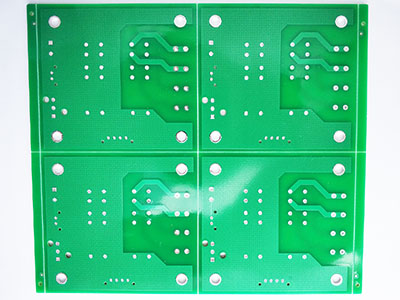
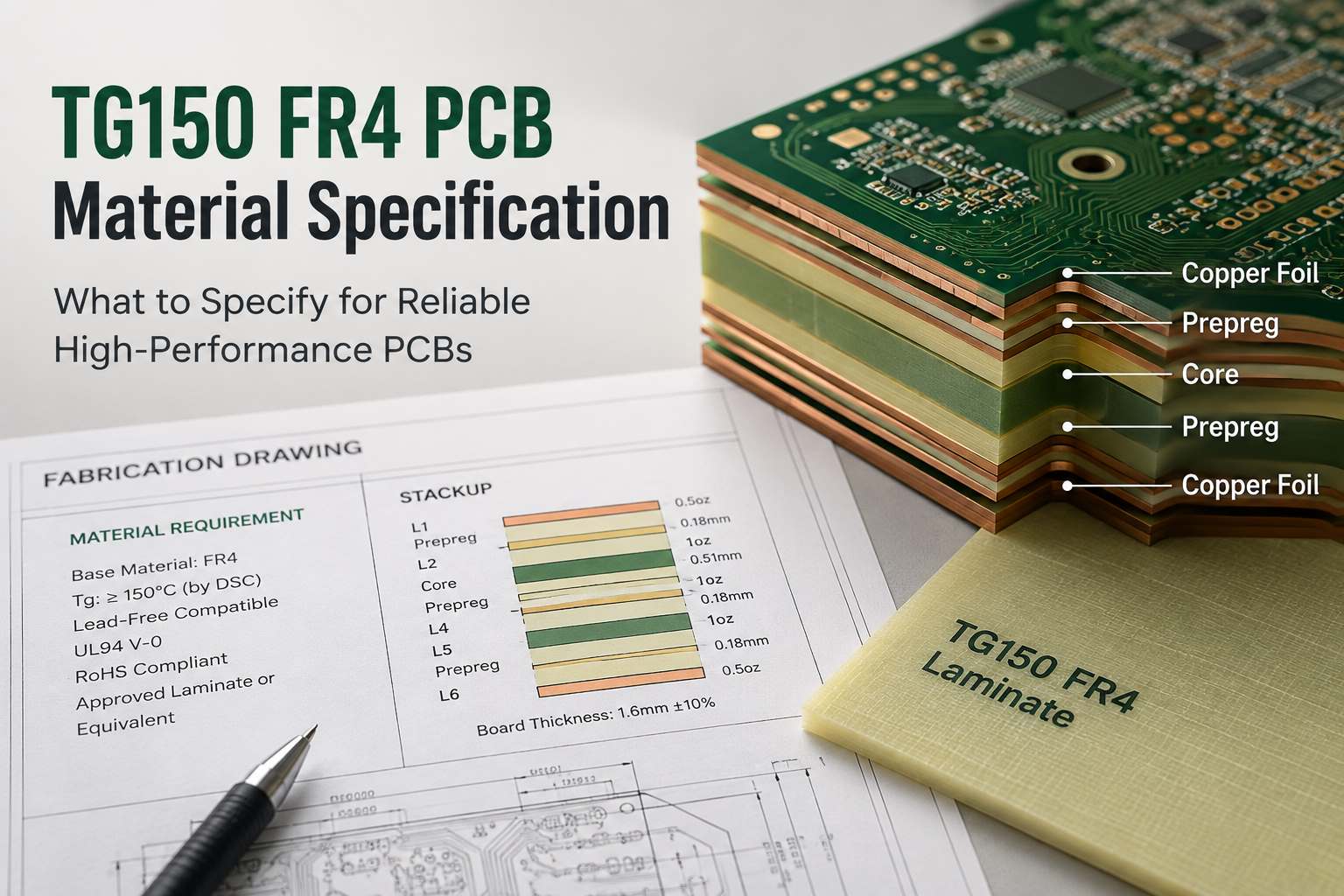
A TG150 FR4 PCB material specification should define more than “FR4 Tg150.” Tg describes only one property of the laminate. If the PCB depends on controlled impedance, repeated lead-free reflow, material traceability, or tighter reliability requirements, the fabrication package should also clarify critical thermal properties, electrical requirements, approved materials, stackup, and substitution rules. The objective is simple: remove material ambiguity without over-specifying the board.
What Is TG150 Material in a PCB Specification?
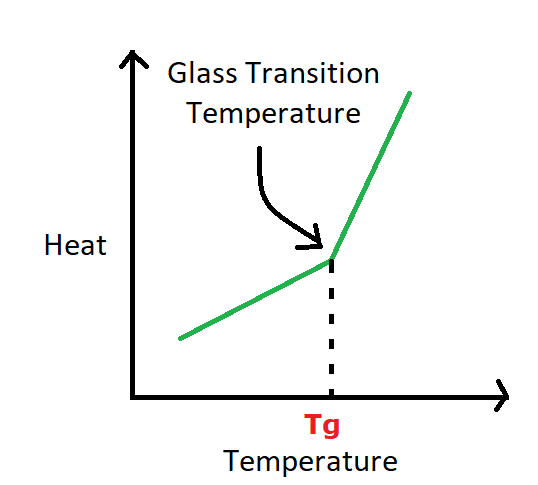
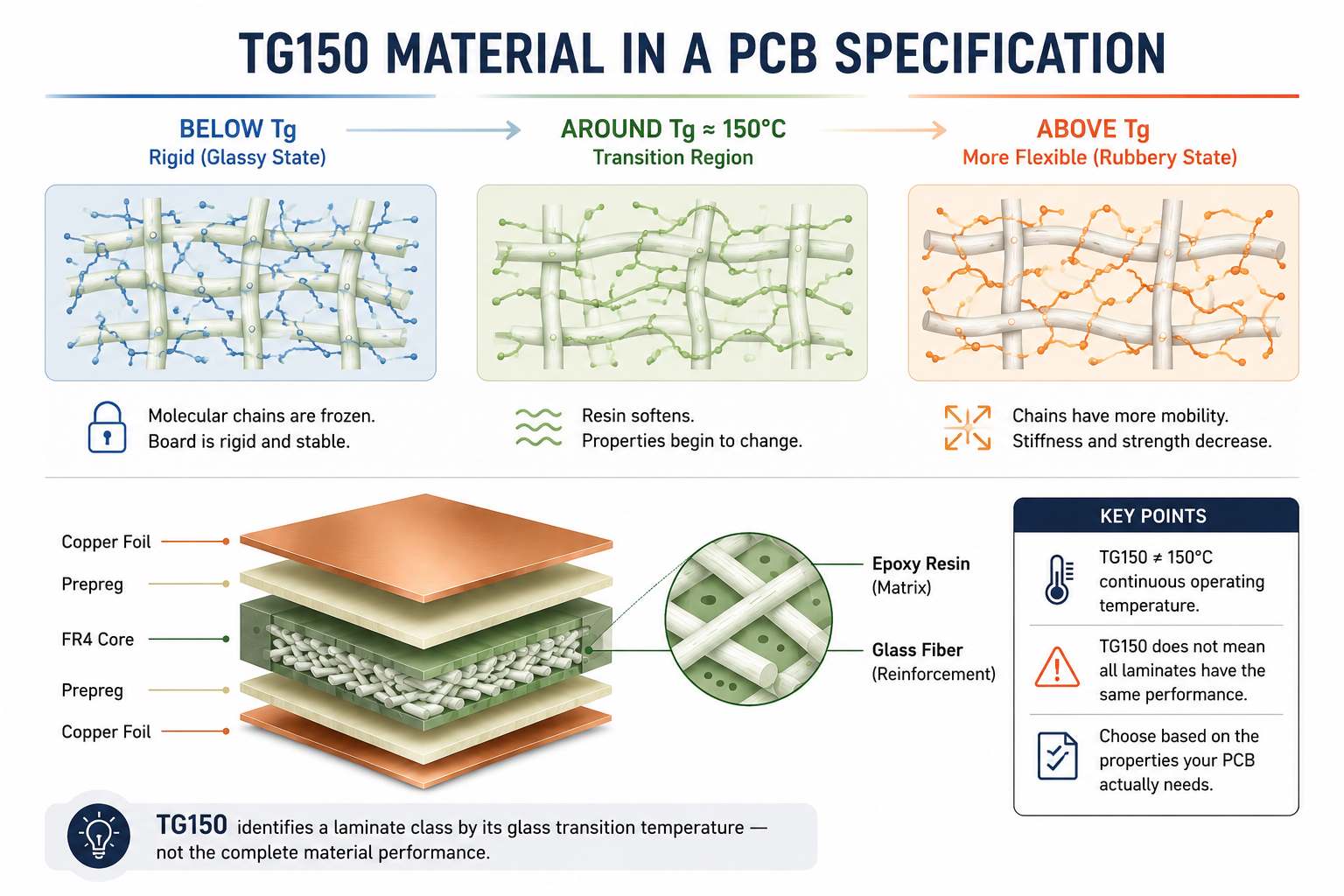
TG150 material generally refers to an FR4 laminate with a glass transition temperature around the 150°C class. Tg marks the temperature region where the cured resin changes from a relatively rigid glassy state to a more compliant state.
However, TG150 does not mean:
- The PCB can continuously operate at 150°C.
- Every TG150 laminate has the same thermal reliability.
- Every TG150 material has the same Dk or Df.
- All TG150 laminates behave identically during lead-free reflow.
For fabrication purposes, TG150 should therefore be treated as a material-selection criterion, not a complete laminate specification.
A basic drawing may begin with:
Base material: FR4, Tg ≥150°C
Whether more information is required depends on the electrical, thermal, and qualification requirements of the board.
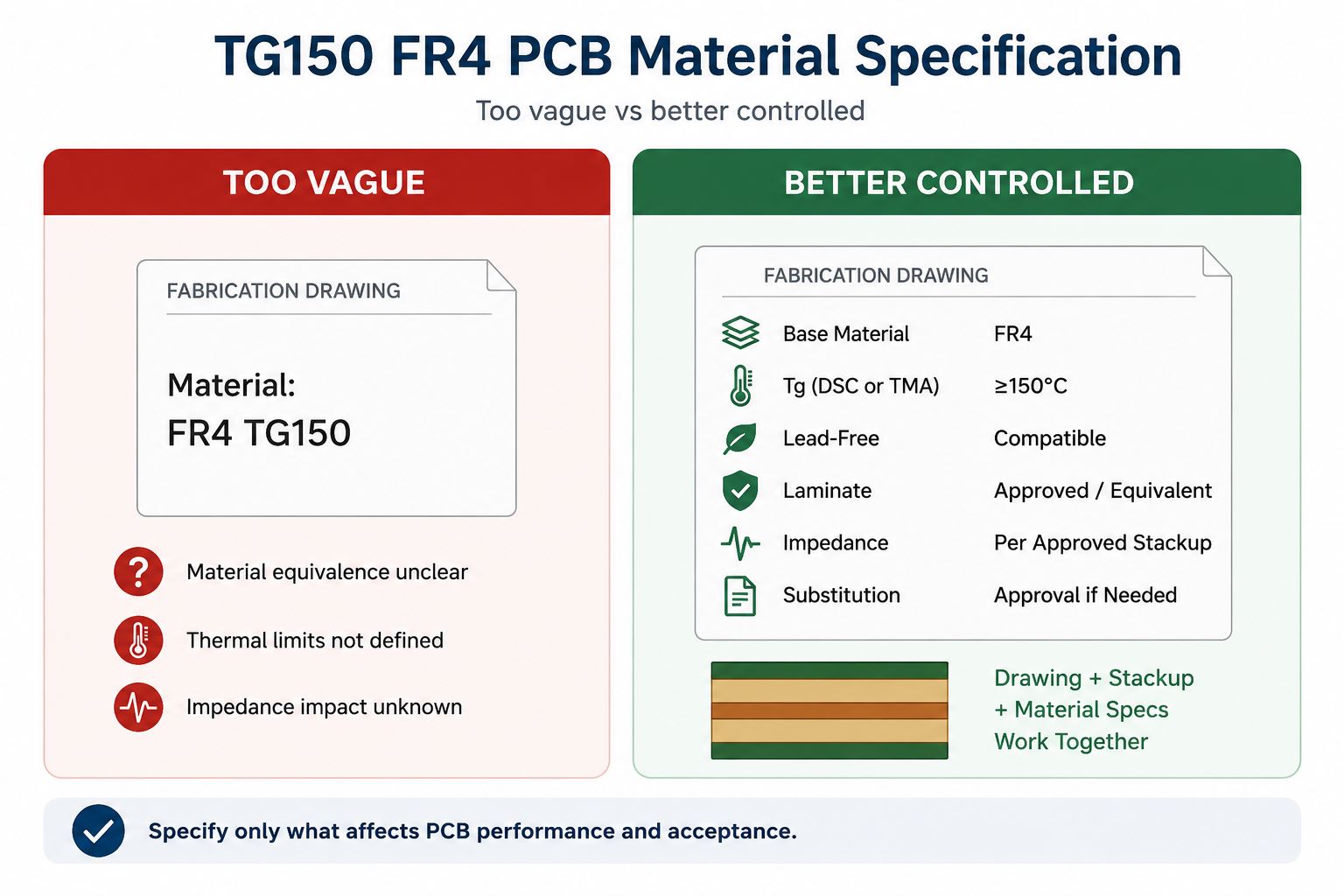
Is FR4 TG150 Enough on a Fabrication Drawing?
For a routine PCB, FR4 TG150 may be enough. For a controlled-impedance, thermally demanding, or qualified product, it is often incomplete.
A note such as:
Material: FR4, Tg ≥150°C
still leaves several decisions to the PCB manufacturer.
Depending on the project, the drawing may also need to control:
- Approved laminate or equivalent-material rules
- Critical thermal properties
- Controlled-impedance requirements
- Material substitution approval
That flexibility is not necessarily bad. For a standard industrial control board, allowing the fabricator to select a qualified TG150 laminate can improve material availability and lead time.
The key is to specify only the properties that affect PCB performance or acceptance. There is little value in copying an entire laminate datasheet onto the fabrication drawing.
Which TG Test Method Should Be Referenced?
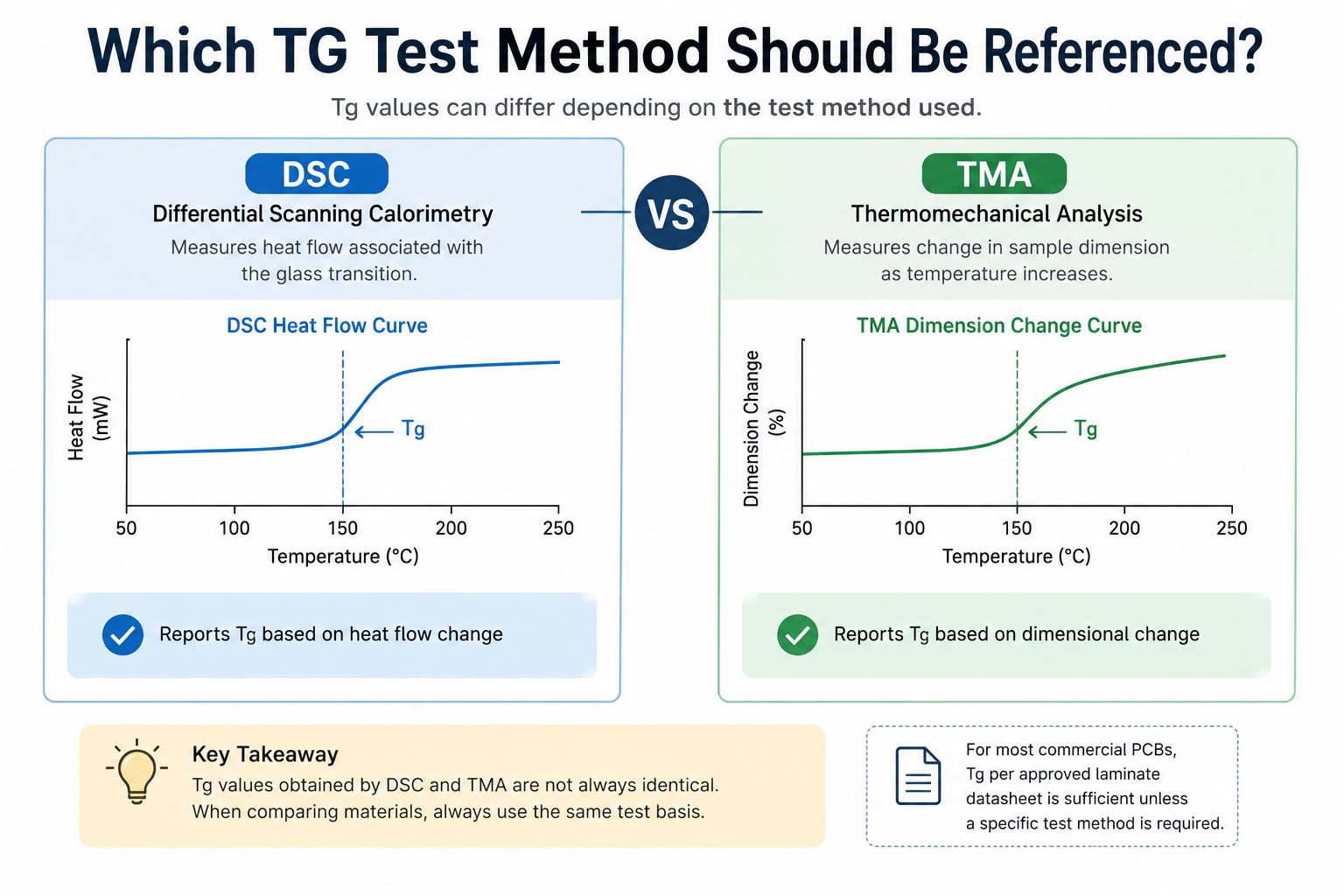
Tg can be measured using methods such as DSC or TMA, and the reported values may differ slightly because the methods evaluate material behavior differently.
For many commercial PCB projects, this is sufficient:
Tg ≥150°C per approved laminate datasheet
If the customer needs a defined test basis, the drawing can instead state:
Tg ≥150°C by DSC
or:
Tg ≥150°C by TMA
The important rule is consistency. When comparing two laminate options, check whether their Tg values were obtained using the same or comparable test methods.
Unless a specific method is required by the project or qualification plan, using the approved laminate manufacturer’s published Tg value usually avoids unnecessary material restrictions.
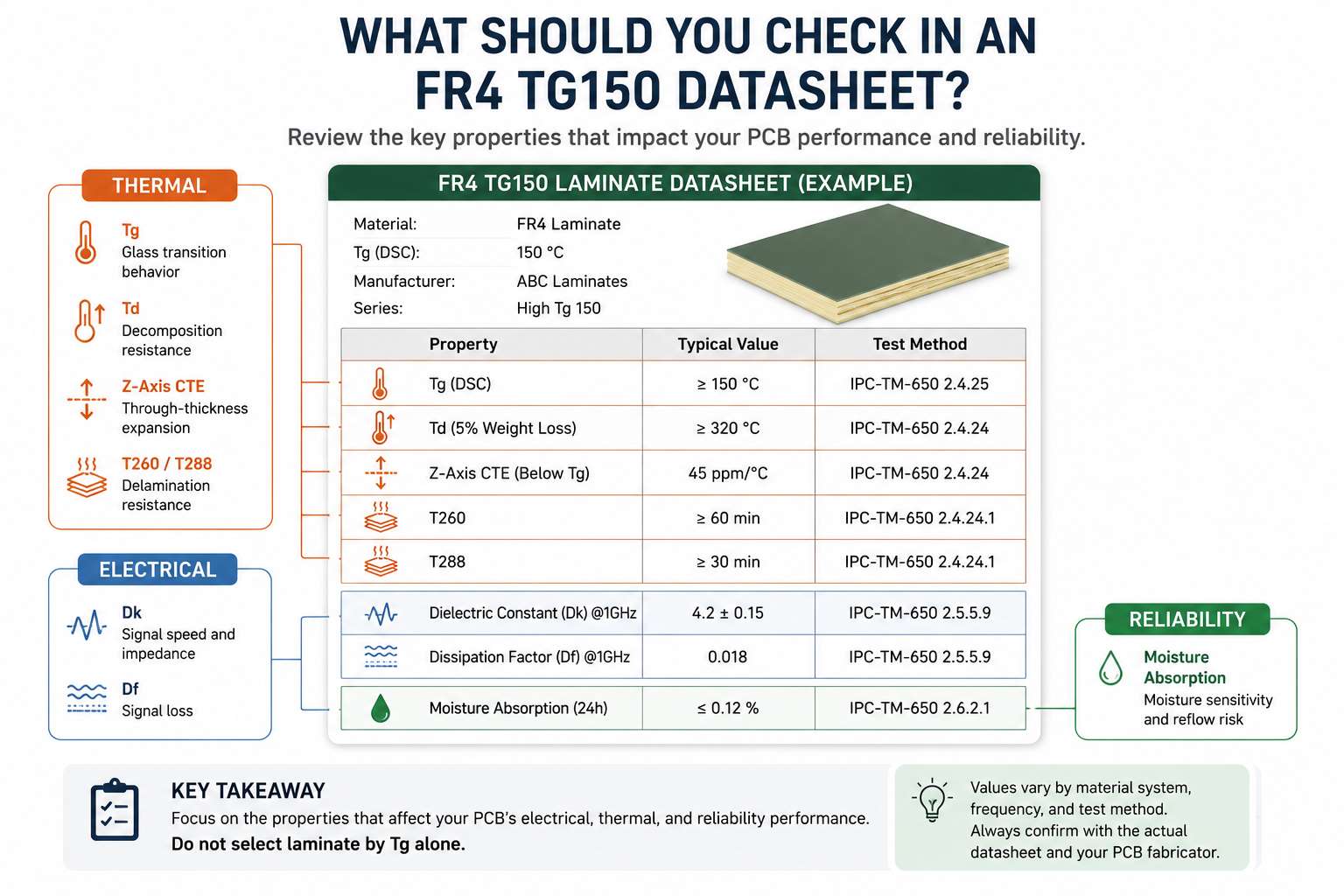
What Should You Check in an FR4 TG150 Datasheet?
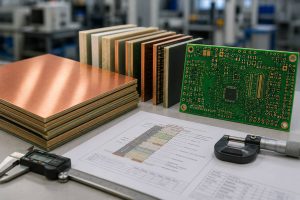
An FR4 TG150 datasheet should be reviewed as a set of material properties rather than simply checking whether Tg is 150°C or higher.
| Property | Why check it |
|---|---|
| Tg | Glass-transition behavior |
| Td | Thermal decomposition resistance |
| Z-axis CTE | Expansion through PCB thickness |
| T260 / T288 | Resistance to thermal delamination |
| Dk | Controlled impedance and signal propagation |
| Df | Dielectric loss |
| Moisture absorption | Moisture and reflow reliability |
Which properties matter depends on the board.
A thick multilayer PCB with many plated through-holes deserves closer attention to Z-axis expansion and thermal durability. A controlled-impedance board needs reliable dielectric data. A board that sees several reflow or rework cycles needs more than a Tg number.
Do not control every datasheet parameter by default. Control the properties that have a measurable impact on the finished PCB.
Should You Specify a TG150 Laminate Brand or Allow an Equivalent?
Both approaches can be correct.
| Material rule | Best suited to |
|---|---|
| Exact laminate required | Qualified stackups, validated products, regulated applications |
| Approved equivalent allowed | General PCB production, flexible sourcing, shorter lead time |
An exact material callout is useful when a particular laminate has already been validated electrically, thermally, or through product qualification.
An approved-equivalent rule gives the PCB manufacturer more flexibility when the project only requires a defined material performance level.
But “equivalent” should not simply mean:
Same Tg = same material.
The alternative laminate should meet the properties that made the original material acceptable.
If impedance, thermal cycling, CAF performance, or another characteristic is controlled, the replacement material should be reviewed against those requirements before production.
Does TG150 Define Dielectric Constant?
No. Tg and dielectric constant are different properties.
Two TG150 laminates can have different Dk values because dielectric behavior is influenced by:
- Resin system
- Glass style
- Resin content
- Test frequency
- Test method
This is why using a generic value such as:
FR4 Dk = 4.5
for every production stackup can be misleading.
For controlled-impedance designs, use the selected laminate system and the actual production stackup supplied or confirmed by the PCB manufacturer.
A useful fabrication note is:
Controlled impedance per approved stackup. Final dielectric values to be confirmed before fabrication.
TG150 tells you the material’s Tg class. It does not tell you the exact Dk to use for impedance calculation.
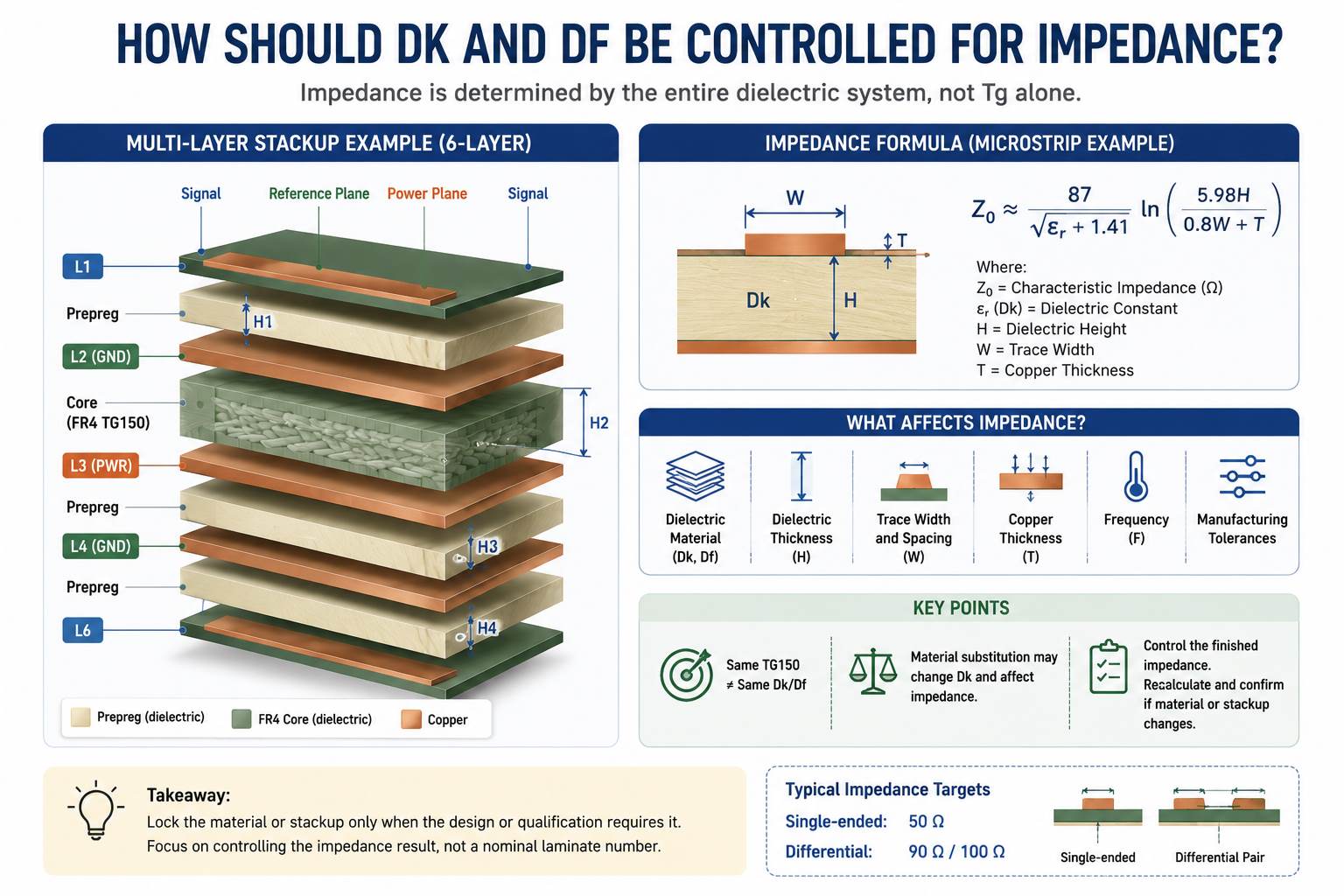
How Should Dk and Df Be Controlled for Impedance?
For a PCB without controlled impedance, tight Dk and Df requirements may add cost without providing practical benefit.
For impedance-controlled boards, review the complete dielectric system:
- Core and prepreg construction
- Dielectric thickness
- Copper thickness
- Trace width and spacing
- Target impedance
- Dk used for calculation
- Effect of any material substitution
The goal is usually to control the finished impedance, not just a nominal laminate number.
If a fabricator changes to another qualified TG150 laminate, the stackup or trace geometry may need to be recalculated to maintain the specified impedance.
For some products, that adjustment is acceptable. For a previously validated or qualification-controlled design, any material or stackup change may require customer approval.
Control the electrical result first. Lock the exact material only when the project requires it.
Is a TG150 PCB Suitable for Lead-Free Reflow?
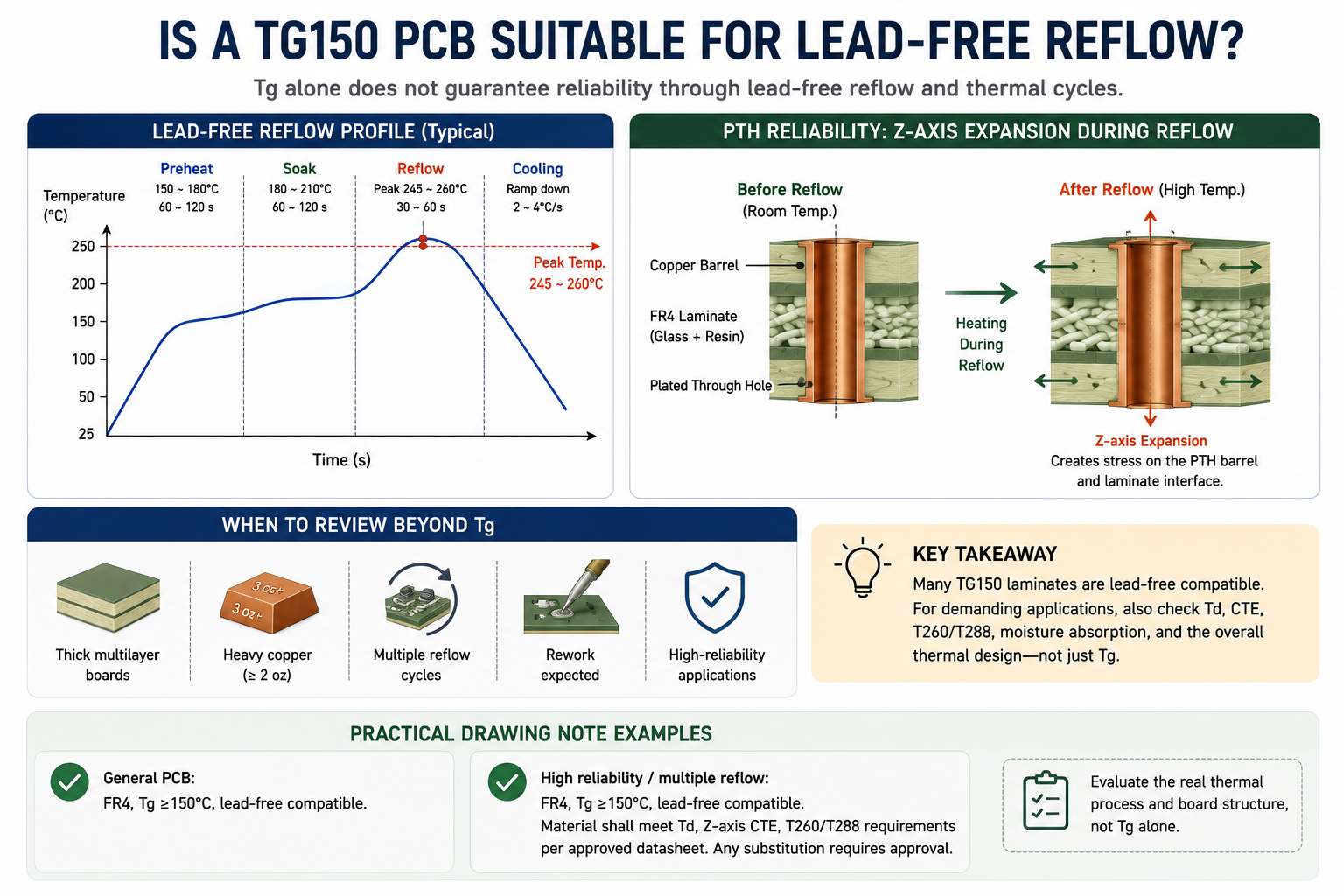
Yes, many TG150 PCB materials are suitable for lead-free assembly. However, Tg alone does not guarantee performance through repeated thermal cycles.
Additional review becomes more important for:
- Thick multilayer PCBs
- Heavy-copper boards
- Multiple reflow cycles
- Boards expected to undergo rework
- High-reliability applications
The laminate’s Td, Z-axis CTE, delamination resistance, moisture behavior, and overall thermal system can matter as much as Tg.
For a typical project, a practical drawing note may be:
FR4, Tg ≥150°C, lead-free compatible
For demanding assemblies, confirm the actual laminate datasheet rather than assuming every TG150 material has identical lead-free process capability.
The decision should be based on the real thermal process, not Tg alone.
Does TG150 Replace the PCB Stackup Specification?
No.
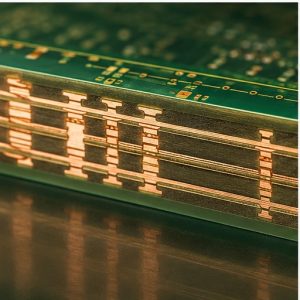
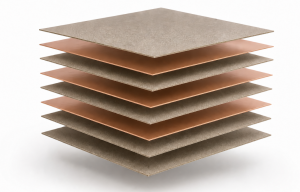
TG150 controls the material class. The stackup controls how the PCB is constructed.
A proper stackup may define:
- Layer sequence
- Core thickness
- Prepreg thickness
- Copper weight
- Dielectric spacing
- Finished PCB thickness
- Reference planes
- Controlled-impedance targets
For example:
FR4 TG150
1.6 mm finished thickness
1 oz copper
still does not fully define a multilayer impedance-controlled board.
Two PCBs can use the same TG150 laminate class but have very different electrical and mechanical behavior because their layer constructions differ.
A useful rule is:
Material specification defines acceptable laminate performance; stackup specification defines PCB construction.
Both may be needed on the same project.
How Should TG150 Material Substitution Be Controlled?
Define the substitution rule before production. Avoid a vague “or equivalent” note when material properties affect the design.
Flexible sourcing
Approved equivalent TG150 FR4 permitted if all controlled properties are met.
Controlled impedance
Equivalent material requires approval if it changes the approved impedance stackup.
Locked material
No material substitution without written customer approval.
The correct rule depends on qualification risk.
A standard 2-layer control PCB may benefit from flexible sourcing. A validated multilayer medical, automotive, or high-reliability design may need much tighter material control.
The important point is to decide what makes an equivalent material acceptable before the factory substitutes it.
What Should a TG150 FR4 PCB Material Specification Include?
A practical TG150 FR4 PCB material specification does not need to be long.
| Requirement | Typical callout |
|---|---|
| Base material | FR4 |
| Tg | ≥150°C |
| Tg basis | Datasheet, DSC, or TMA when required |
| Laminate | Exact material or approved equivalent |
| Thermal limits | Td / CTE / T260 / T288 when required |
| Electrical | Dk/Df or controlled impedance requirements |
| Assembly | Lead-free compatible if required |
| Substitution | Allowed, restricted, or approval required |
For a routine PCB, this may be sufficient:
Base material: FR4, Tg ≥150°C, lead-free compatible, approved equivalent permitted.
A more controlled multilayer design could use:
Base material: FR4, Tg ≥150°C per approved laminate datasheet. Final laminate must meet the specified thermal and impedance requirements. Any substitution affecting the approved stackup requires customer approval.
The second specification controls more without unnecessarily dictating every laminate property.
The best material note is not the longest one. It is the one that clearly controls the properties that affect the finished PCB.
What Files Should Be Sent With the TG150 Requirement?
Do not send the TG150 requirement as an isolated email note. Include it in the released manufacturing package.
A typical package includes:
- Gerber or ODB++
- Fabrication drawing
- PCB stackup
- Impedance table, if applicable
- Drill files
- Approved material list, when required
The fabrication drawing should remain the primary source for material requirements.
Avoid situations where the Gerber package says one thing, the purchase order says another, and a material restriction exists only in an old email thread.
A controlled drawing makes quotation, DFM review, material purchasing, and production much easier to manage.
FAQs About TG150 FR4 PCB Material Specification
What is TG150 material?
TG150 material generally refers to an FR4 laminate with a glass transition temperature around the 150°C class. Tg represents one thermal-mechanical property rather than the complete performance of the laminate.
Is TG150 the same as FR4?
No. FR4 is a broad family of flame-retardant glass-reinforced epoxy laminates. TG150 describes a Tg class within the FR4 material family.
What should I check in an FR4 TG150 datasheet?
Check the properties relevant to your PCB, typically Tg, Td, Z-axis CTE, T260/T288, Dk, Df, and moisture absorption. Not every project needs every parameter controlled.
Is a TG150 PCB suitable for lead-free assembly?
Many TG150 materials are suitable for lead-free assembly. For thick boards, multiple reflow cycles, heavy copper, or higher-reliability products, review the actual laminate’s thermal properties rather than relying on Tg alone.
Can a PCB manufacturer substitute another TG150 material?
Yes, if the fabrication specification allows an approved equivalent. For impedance-controlled or qualified products, the substitute should meet all controlled properties and may require customer approval.
Need help reviewing a TG150 FR4 PCB material specification before fabrication? Send your Gerber files, fabrication drawing, stackup, impedance requirements, and material notes to sales@bestpcbs.com. Our engineering team can review the material callout, laminate alternatives, stackup, substitution requirements, and manufacturability before production.