PCB manufacturing PCB manufacturing
Home > Blog

flexible PCB

Flexible PCB Materials
Thursday, June 4th, 2026

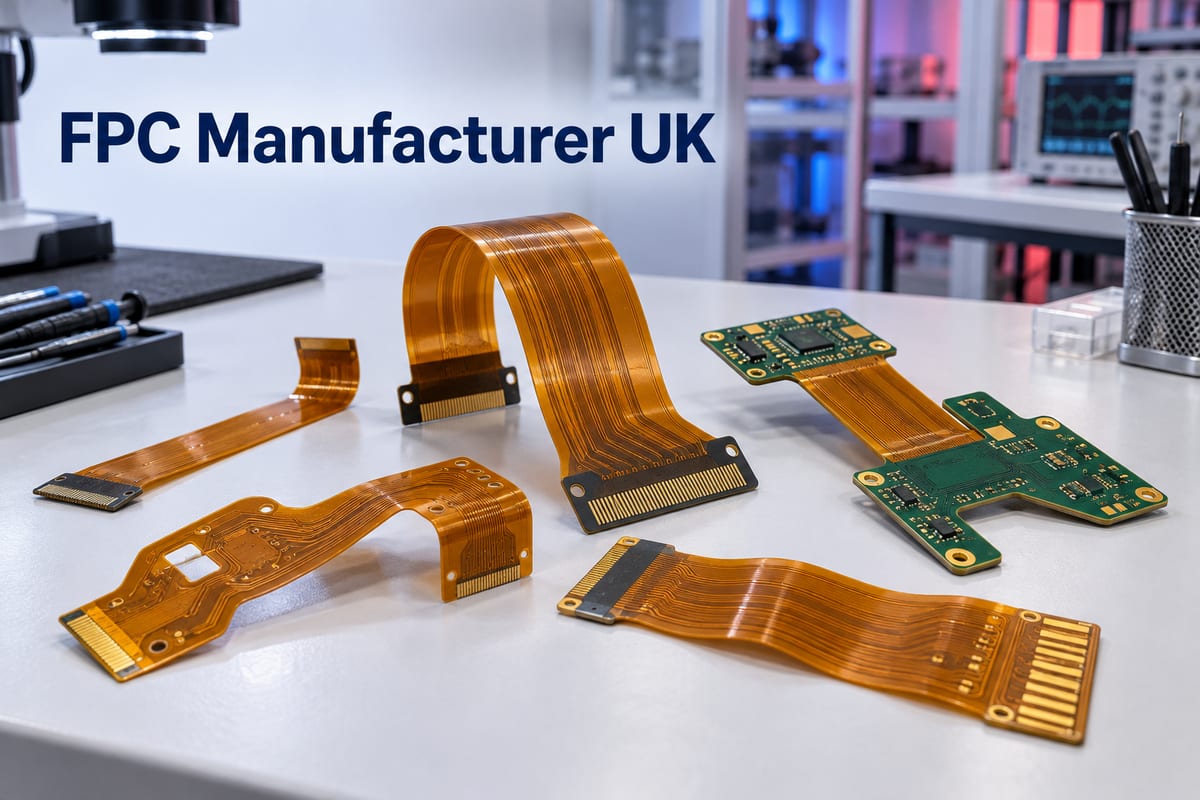
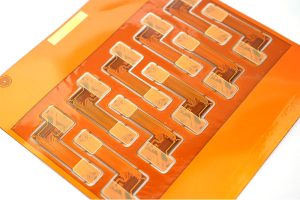
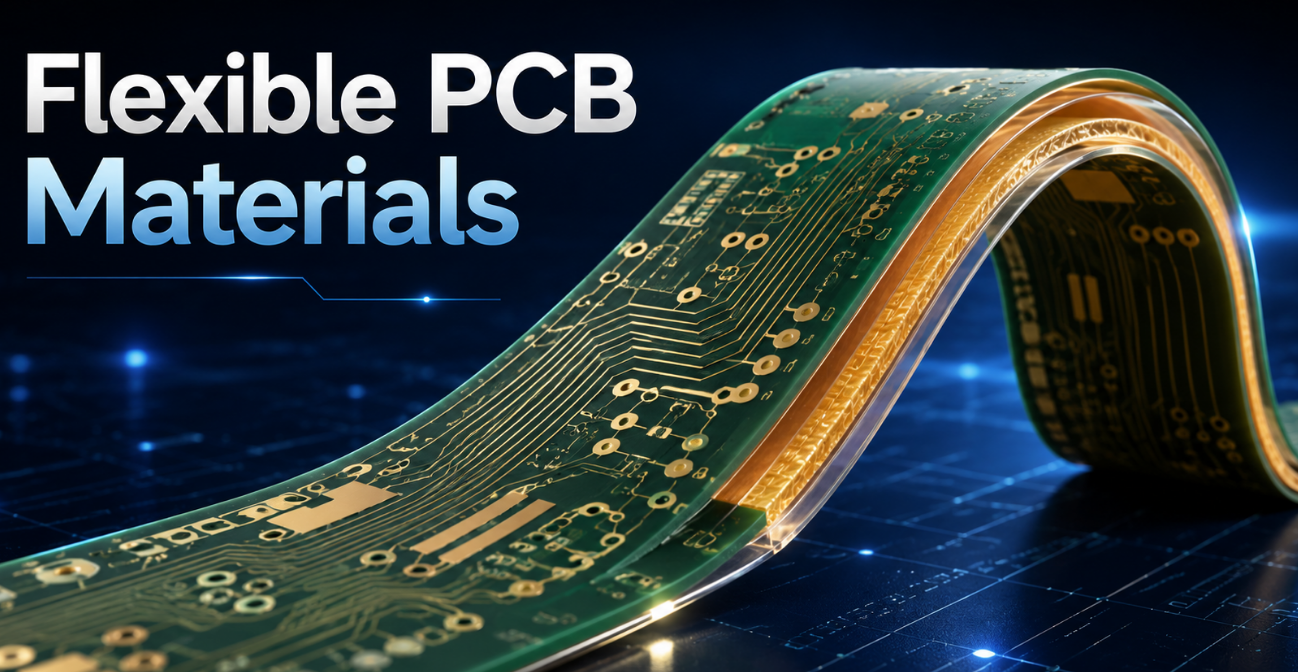
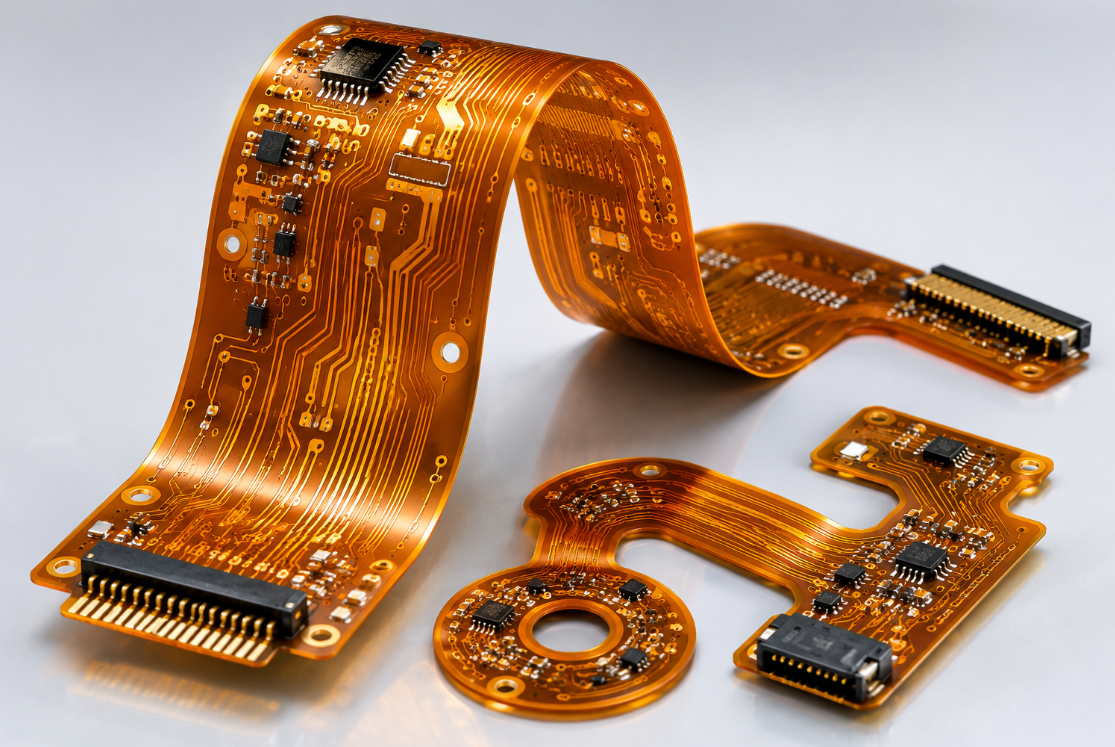
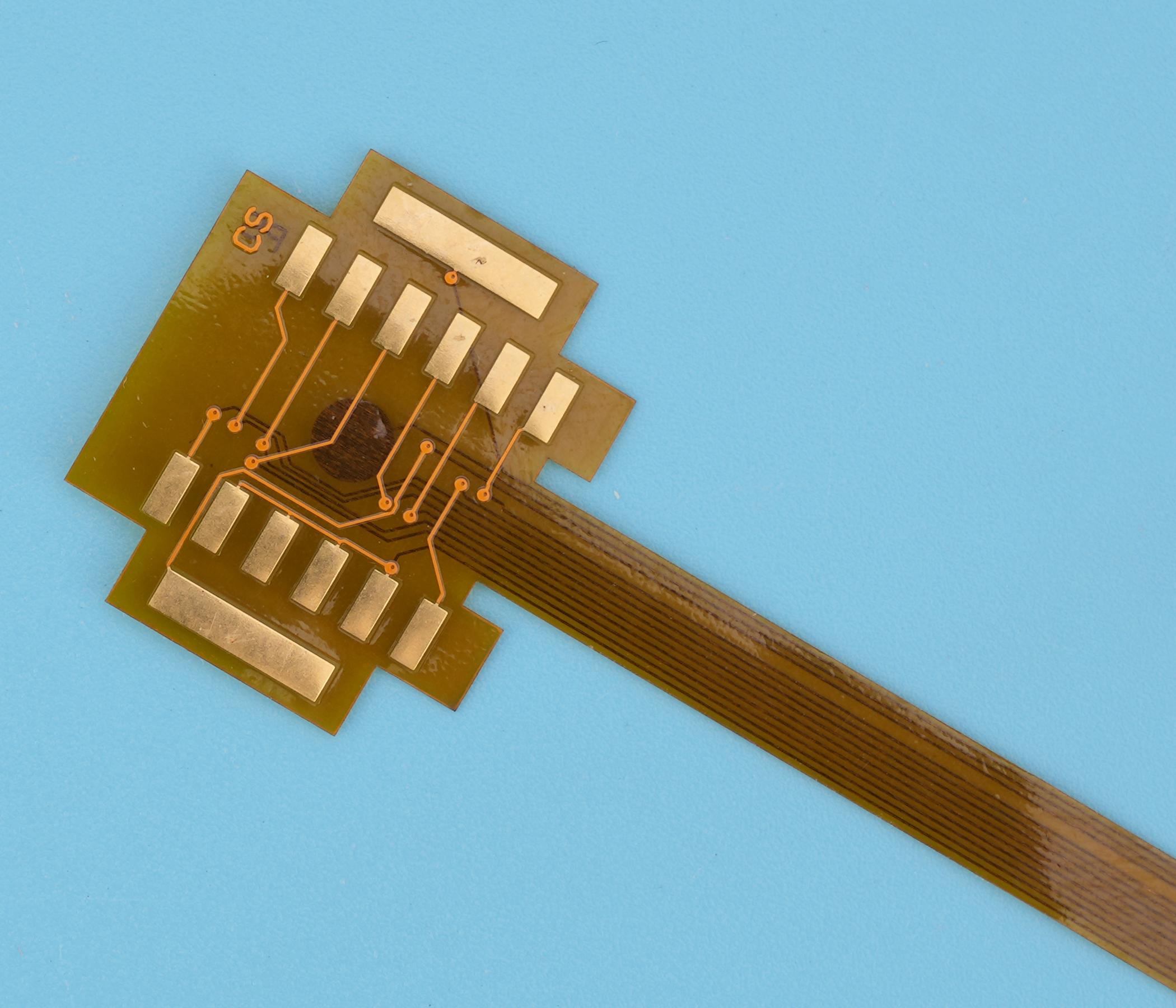
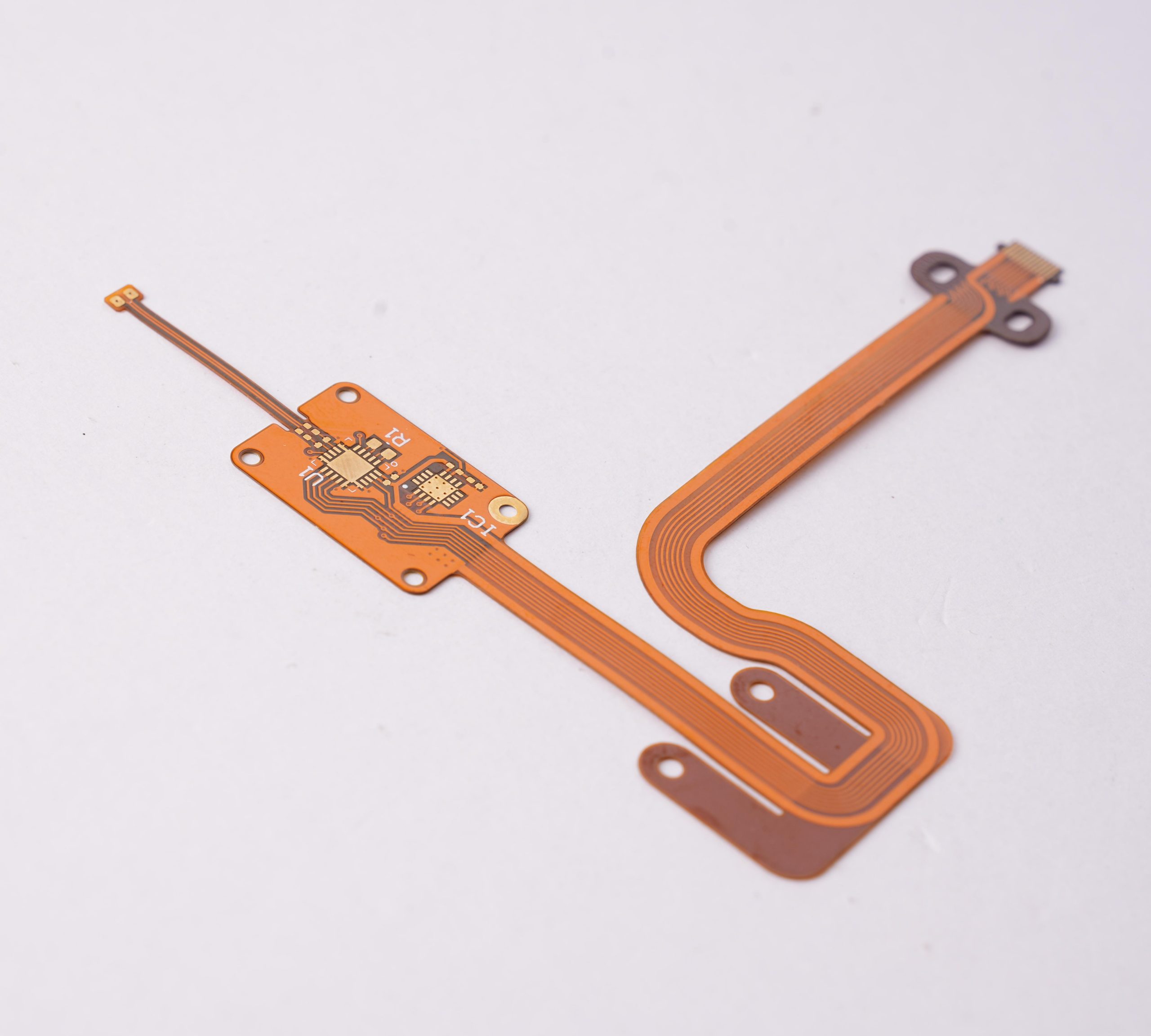
Flexible PCB materials are used to build circuits that can bend, fold, twist, and fit into compact electronic products without losing electrical performance. A flexible PCB usually uses a thin flexible base film, copper foil, adhesive or adhesiveless bonding layers, coverlay, stiffeners, and surface finishes. These materials directly affect bend radius, dynamic flex life, soldering reliability, insulation strength, thickness control, and long-term durability in real applications.
flexible PCB materials, https://www.bestpcbs.com/blog/2026/06/flexible-pcb-materials/

What Are Flexible PCB Materials?

Flexible PCB materials are the base films, conductive foils, adhesives, coverlays, stiffeners, and surface finishes used to manufacture flexible printed circuits. Unlike rigid FR4 boards, flexible PCBs are designed to support movement, space saving, lightweight structure, and three-dimensional assembly.

The most common flexible PCB material stack includes polyimide film, copper foil, adhesive or adhesiveless laminate, coverlay, solder mask, stiffener, and surface finish. Each material has a different function. The base film provides flexibility and insulation, copper carries signals or power, and coverlay protects the circuit.

For product development, choosing the right flexible PCB materials is not only a material decision. It affects mechanical reliability, electrical stability, manufacturing yield, assembly quality, and final product lifetime.

Why Are Flexible PCB Materials Important?

Flexible PCB materials are important because flexible circuits often work in tight spaces, moving areas, or products with strict size and weight limits. If the wrong material is selected, the circuit may suffer from copper cracking, delamination, poor solderability, insulation failure, short flex life, or unstable signal transmission.

A flexible PCB may look thin and simple, but its reliability depends heavily on the material stack. The base film, copper type, adhesive system, coverlay thickness, stiffener location, and surface finish must match the product’s bending condition and assembly process.

In mass production, material consistency is also critical. A small change in adhesive thickness, copper type, or coverlay opening may affect bend performance, impedance, dimensional accuracy, and component assembly quality.

How Do Flexible PCB Materials Work?

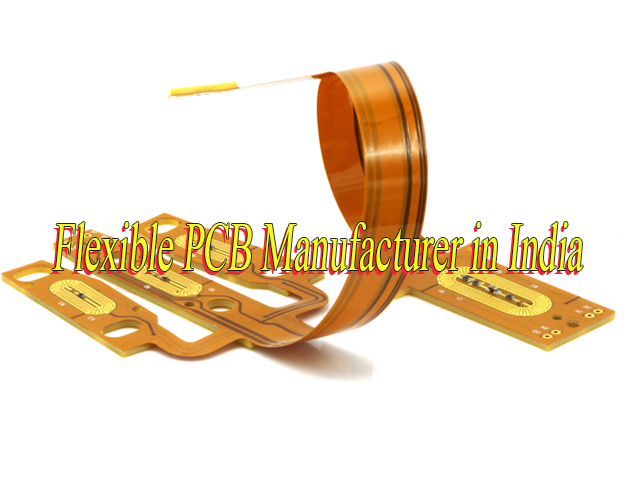
Flexible PCB materials work by combining a flexible insulating substrate with copper conductors and protective layers. The base film supports bending, the copper foil carries electrical current or signals, and the coverlay protects the traces from moisture, abrasion, and short circuits.

When a flexible PCB bends, the material stack experiences mechanical stress. The copper layer is usually the most vulnerable part because repeated bending can cause fatigue. That is why copper type, copper thickness, bend radius, and trace direction are important.

For high-reliability designs, flexible PCB materials must balance flexibility, adhesion, insulation, heat resistance, soldering compatibility, and dimensional stability. A good material stack allows the board to bend without damaging the circuit.

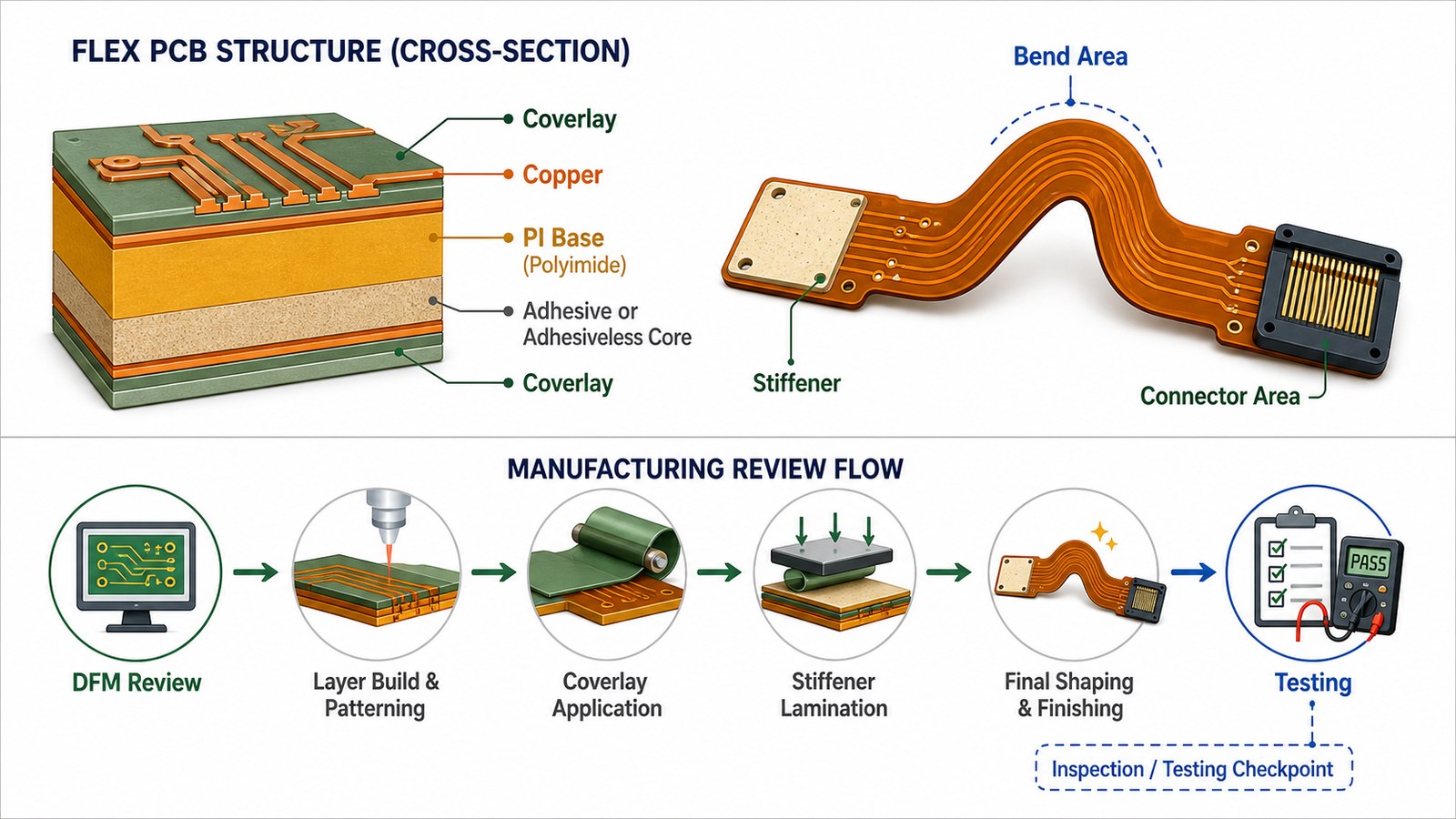
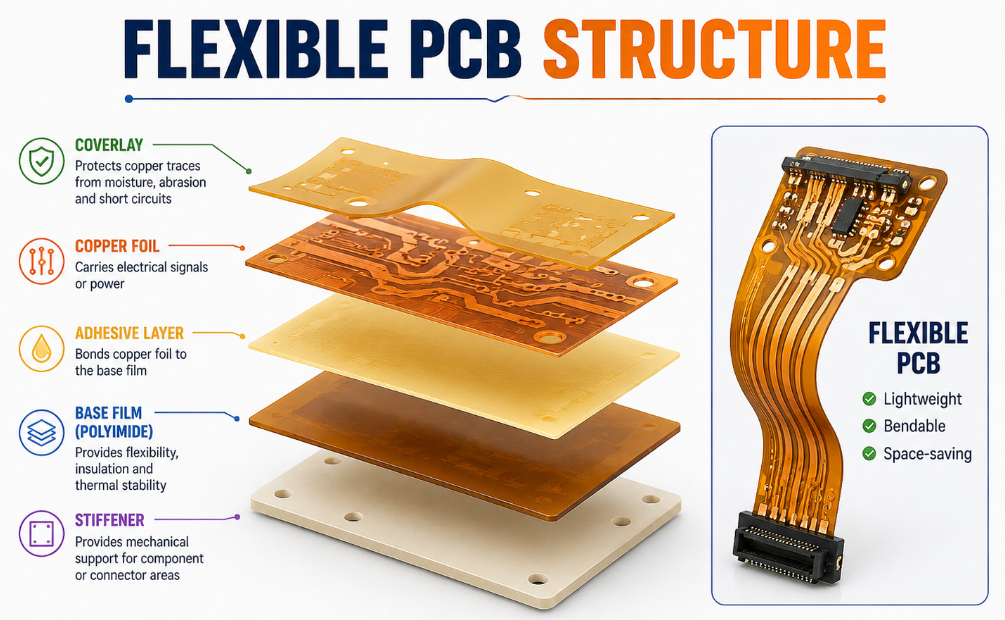
What Is the Structure of a Flexible PCB?

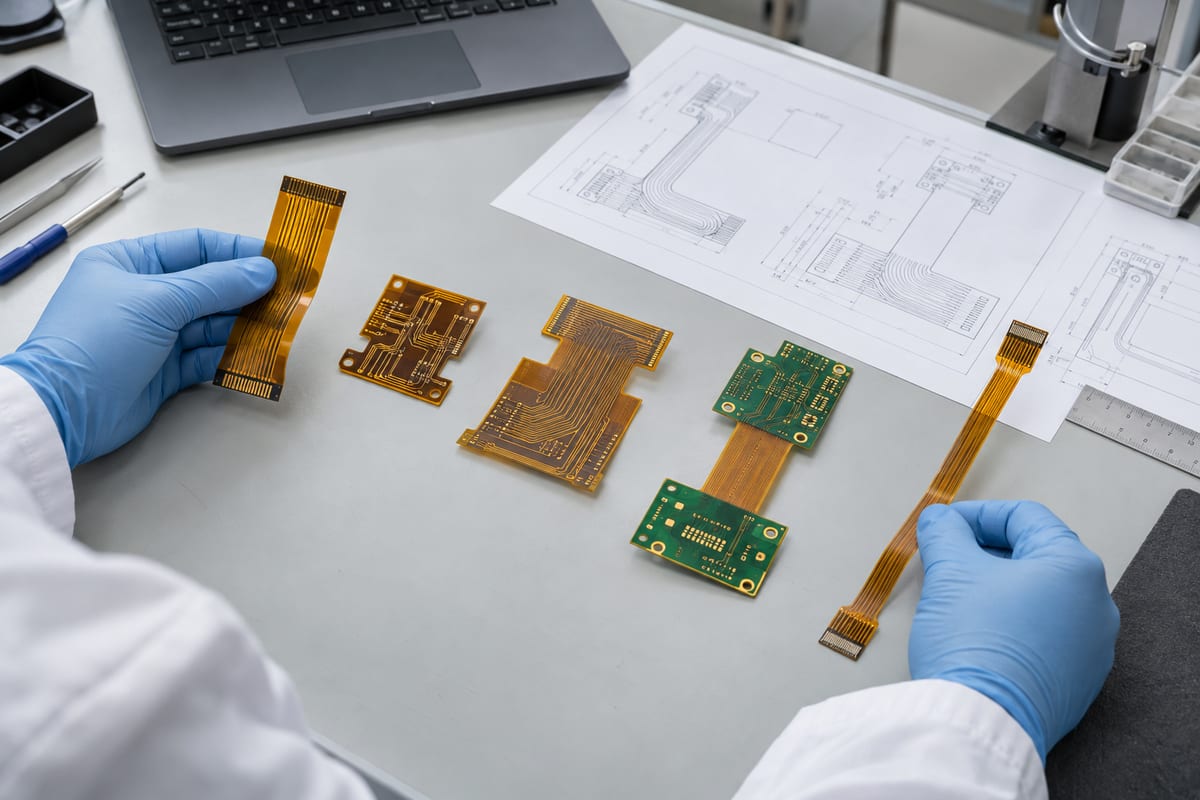
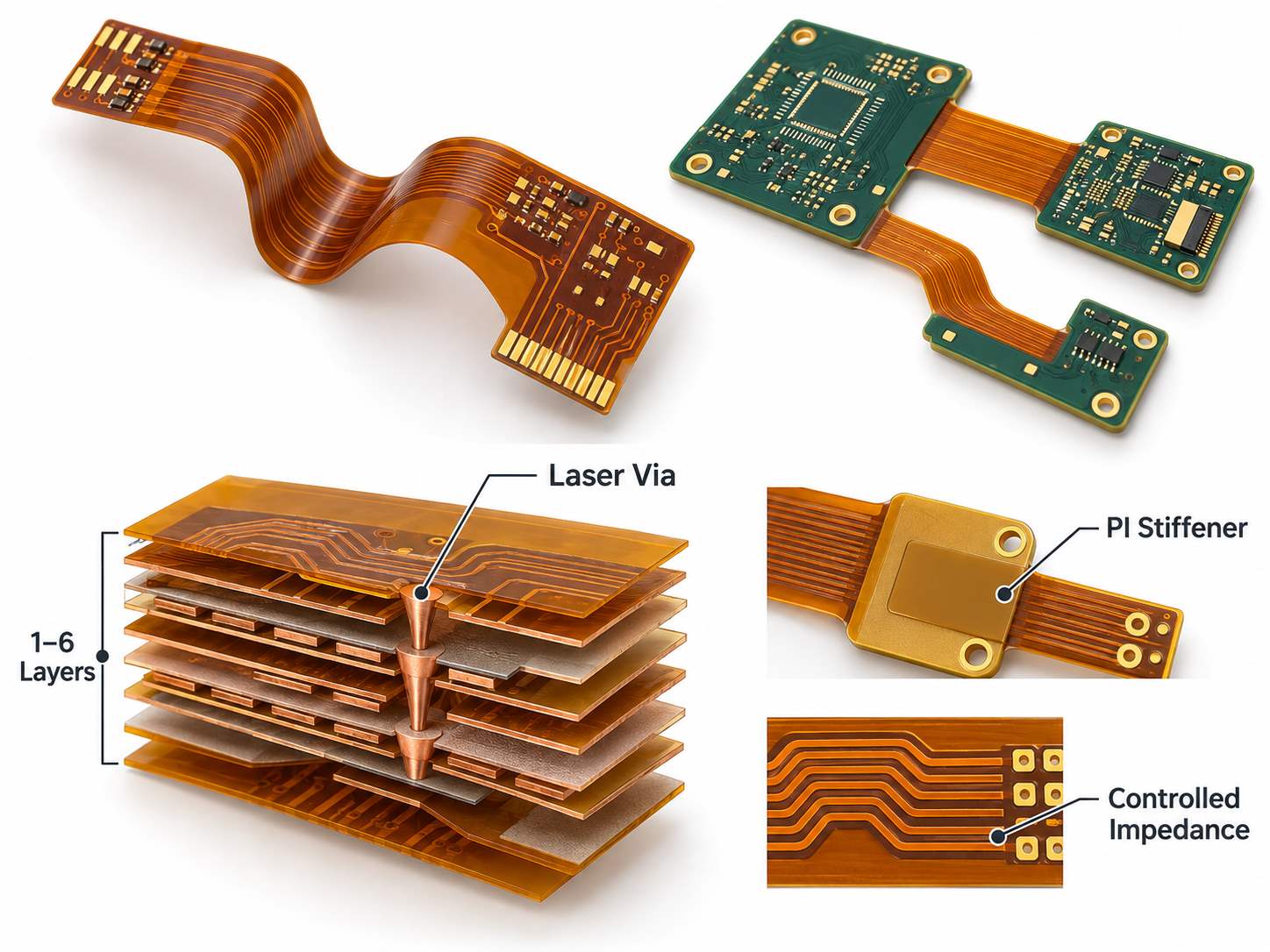
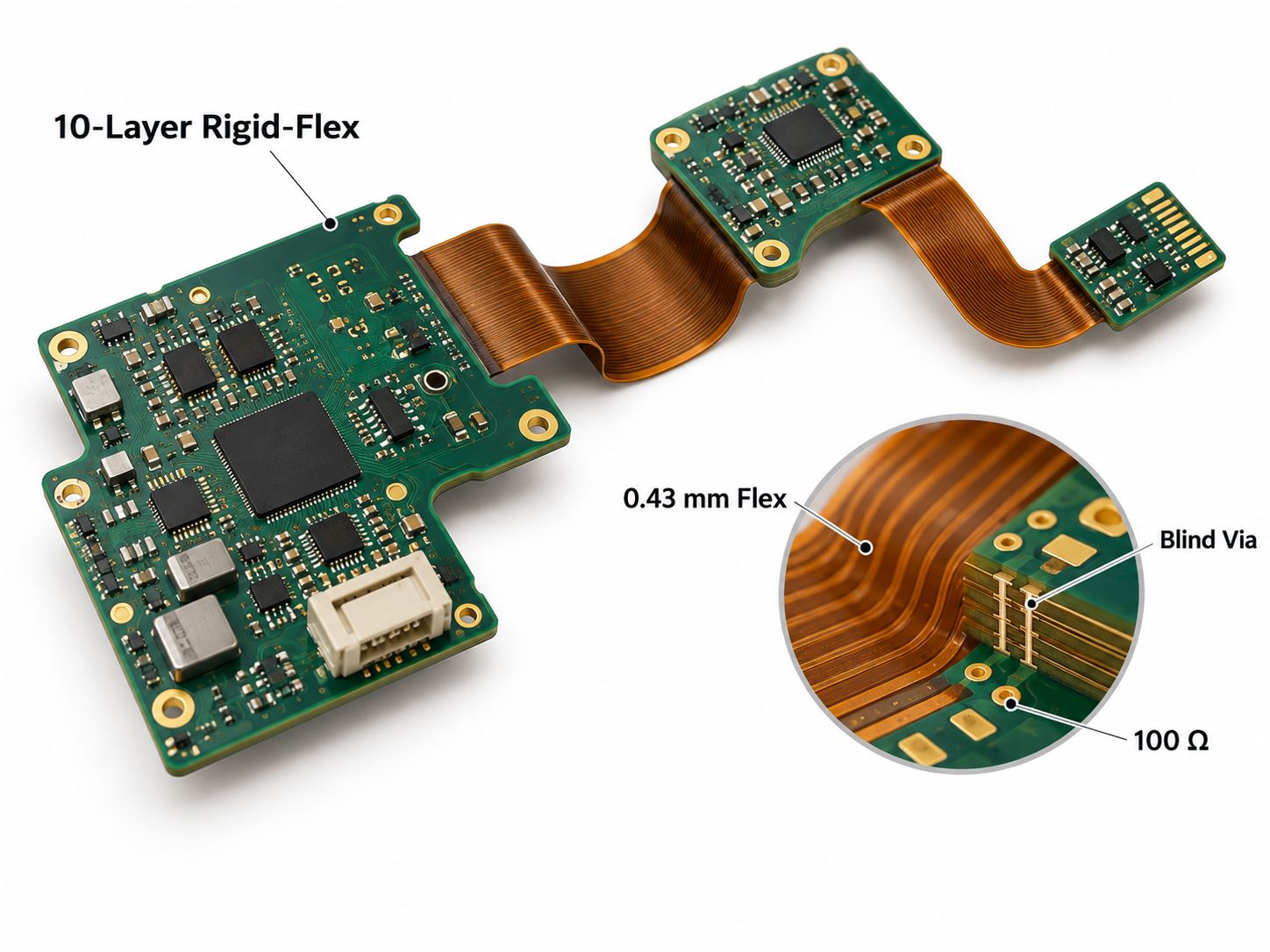
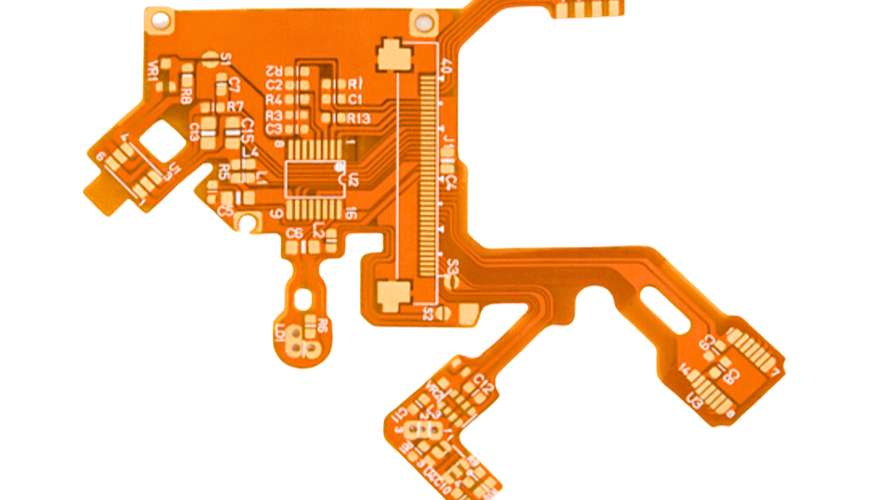
A typical flexible PCB includes base film, copper foil, adhesive or adhesiveless laminate, coverlay, surface finish, and optional stiffeners. The structure may change depending on whether the board is single-sided, double-sided, multilayer, or rigid-flex.

LayerMain FunctionKey Selection Points
Polyimide base filmSupports flexibility and insulationThickness, heat resistance, dimensional stability
Copper foilCarries current and signalsCopper type, thickness, bend life
Adhesive layerBonds copper to base filmFlexibility, thermal resistance, bonding strength
CoverlayProtects copper tracesThickness, opening accuracy, insulation
Surface finishProtects exposed padsSolderability, shelf life, assembly compatibility
StiffenerSupports component or connector areasMaterial, thickness, bonding method

For most flexible circuits, the base film, copper foil, and coverlay determine the core mechanical reliability. Stiffeners are added only where extra support is needed, such as connector zones or component mounting areas.

flexible PCB structure, https://www.bestpcbs.com/blog/2026/06/flexible-pcb-materials/

What Base Films Are Used in Flexible PCB Materials?

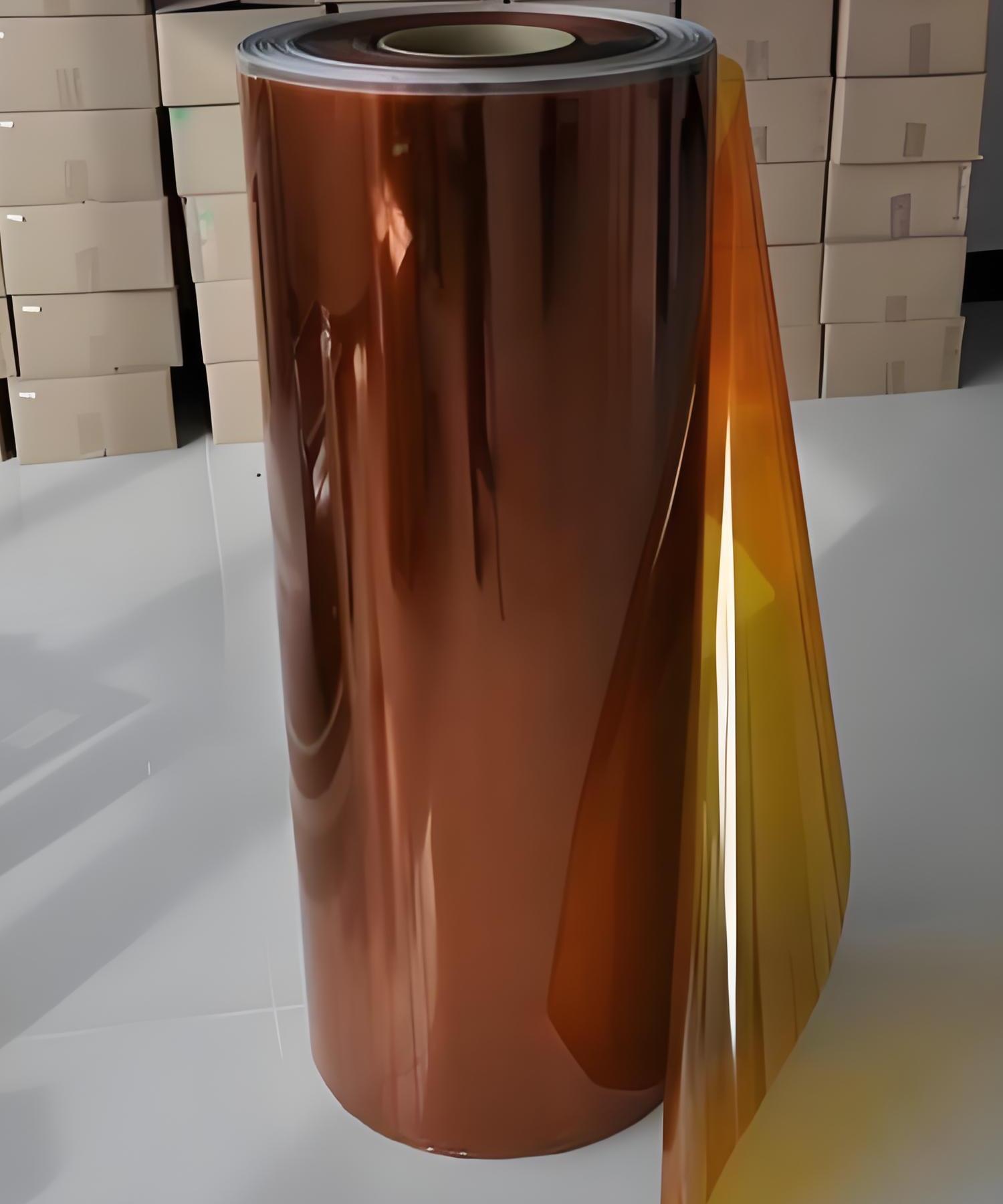
The base film is the foundation of a flexible PCB. It provides electrical insulation and mechanical flexibility. The most common base material is polyimide, while polyester and other films may be used in cost-sensitive or special applications.

Base FilmMain FeaturesCommon Use
PolyimideHigh heat resistance, excellent flexibility, strong insulationMost flexible PCB applications
PolyesterLower cost, good flexibility, lower heat resistanceSimple low-cost circuits
LCPLow moisture absorption, good high-frequency performanceRF, antenna, high-speed applications
PENBetter heat resistance than PET, lower than PISelected flexible electronics

Polyimide is widely used because it handles soldering heat better and supports stronger long-term reliability. For dynamic bending, compact electronics, and industrial products, polyimide is usually the preferred flexible PCB base material.

What Copper Foils Are Used in Flexible PCB Materials?

Copper foil is the conductive layer of a flexible PCB. It forms traces, pads, ground areas, and signal paths. The two common copper types are rolled annealed copper and electrodeposited copper.

Copper TypeTypical FeaturesBest Use
Rolled annealed copperBetter ductility and flex fatigue resistanceDynamic bending and repeated flexing
Electrodeposited copperCost-effective and widely availableStatic flex or limited bending
Heavy copperHigher current capacityPower flexible circuits
Thin copperBetter flexibility and fine tracesCompact and fine-pitch designs

Rolled annealed copper is often selected for applications that require repeated bending because it has better grain structure for flexing. Electrodeposited copper is common in applications where the circuit bends during installation but does not move repeatedly afterward.

What Adhesive Materials Are Used in Flexible PCB Materials?

Adhesive materials bond copper foil to the base film and help build the flexible laminate. Flexible PCBs may use adhesive-based materials or adhesiveless materials depending on reliability, thickness, and thermal requirements.

Material TypeAdvantagesLimitations
Adhesive-based laminateCost-effective, widely used, good bondingThicker stack, lower heat resistance than adhesiveless
Adhesiveless laminateThinner, better thermal performance, improved flex lifeHigher cost, tighter process control required
Acrylic adhesiveGood flexibility and bondingMay have lower heat resistance
Epoxy adhesiveGood strength and stabilityMay be less flexible in repeated bending

Adhesiveless flexible PCB materials are often preferred for high-reliability or fine-line circuits because they reduce thickness and improve bend performance. Adhesive-based materials remain practical for many standard applications where cost control matters.

What Coverlay Materials Are Used in Flexible PCBs?

Coverlay is a protective layer used over copper traces on flexible PCBs. It usually consists of polyimide film with adhesive. Coverlay protects the circuit from scratches, moisture, dust, solder bridging, and mechanical damage.

Unlike standard solder mask on rigid PCBs, coverlay is more flexible and better suited for bending areas. It is especially important in circuits that move, fold, or pass through narrow mechanical spaces.

Coverlay FactorWhy It Matters
Coverlay thicknessAffects flexibility and protection
Adhesive thicknessAffects bending and bonding reliability
Opening accuracyControls pad exposure and assembly quality
Heat resistanceSupports soldering and long-term operation
FlexibilityPrevents cracking during bending

Coverlay openings must be designed carefully. If openings are too small, soldering may be difficult. If openings are too large, traces may lose protection near pads or bending areas.

What Stiffener Materials Are Used in Flexible PCB Materials?

Stiffeners are added to selected areas of a flexible PCB to provide mechanical support. They are not part of the electrical circuit, but they improve assembly, connector insertion, and component stability.

Common stiffener materials include FR4, polyimide, stainless steel, aluminum, and pressure-sensitive adhesive-backed materials. The choice depends on the required thickness, rigidity, temperature resistance, and assembly method.

Stiffener MaterialCommon Use
FR4 stiffenerComponent mounting, connector support
Polyimide stiffenerFlexible support with better heat resistance
Stainless steel stiffenerStrong mechanical support in thin areas
Aluminum stiffenerLightweight support and heat spreading
PSA-backed stiffenerFast bonding for selected applications

Stiffeners should be placed only where needed. A poorly designed stiffener edge can create stress concentration and cause cracking near bending zones.

What Surface Finishes Are Used with Flexible PCB Materials?

Surface finish protects exposed copper pads and supports soldering. Common flexible PCB surface finishes include ENIG, OSP, immersion tin, immersion silver, HASL, and hard gold.

Surface FinishMain AdvantagesCommon Use
ENIGFlat surface, good shelf life, stable solderingFine pitch, connectors, reliable assembly
OSPThin, economical, good for fast assemblyCost-sensitive flexible circuits
Immersion tinGood solderability and flatnessSelected connector and soldering areas
Immersion silverGood conductivity and solderabilityHigh-performance applications
HASLCost-effectiveLess common for very thin flex
Hard goldWear resistanceContact fingers and repeated mating areas

ENIG is often used for flexible PCBs because it provides flat pads and reliable solderability. For contact fingers, hard gold may be required to handle repeated insertion or wear.

How Do Flexible PCB Materials Compare with Rigid PCB Materials?

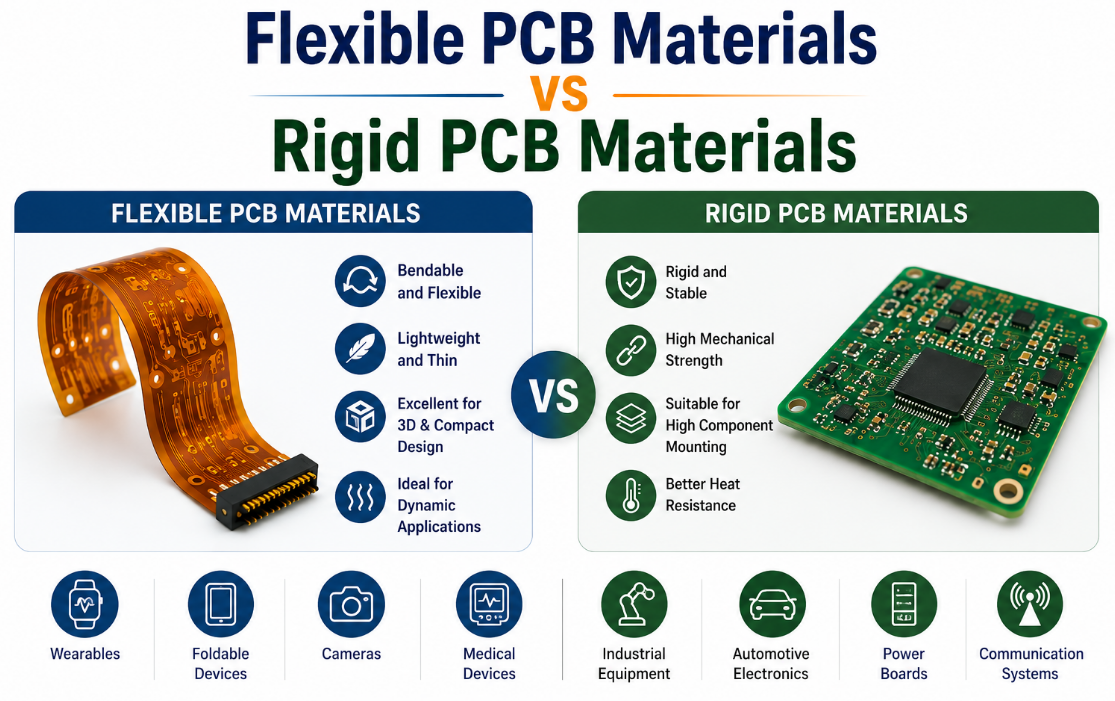
Flexible PCB materials and rigid PCB materials are used for different mechanical needs. Rigid boards provide strong structural support, while flexible materials allow bending, folding, and compact installation.

Comparison ItemFlexible PCB MaterialsRigid PCB Materials
Base materialPolyimide, PET, LCPFR4, high Tg FR4, ceramic, metal core
Mechanical behaviorBendable and lightweightRigid and stable
Space savingExcellentLimited in 3D layouts
Assembly supportMay require stiffenersStrong by default
CostOften higher than simple FR4Lower for standard boards
Best useCompact, moving, foldable productsMain control boards and structural circuits
Design riskBend cracking and delaminationWarpage, cracking, thermal stress

Flexible PCB materials are ideal when the product needs movement or compact packaging. Rigid PCB materials are better when the board must support heavy components, connectors, or mechanical loads.

Flexible PCB Materials vs Rigid PCB Materials, https://www.bestpcbs.com/blog/2026/06/flexible-pcb-materials/

How Do Flexible PCB Materials Compare with Rigid-Flex PCB Materials?

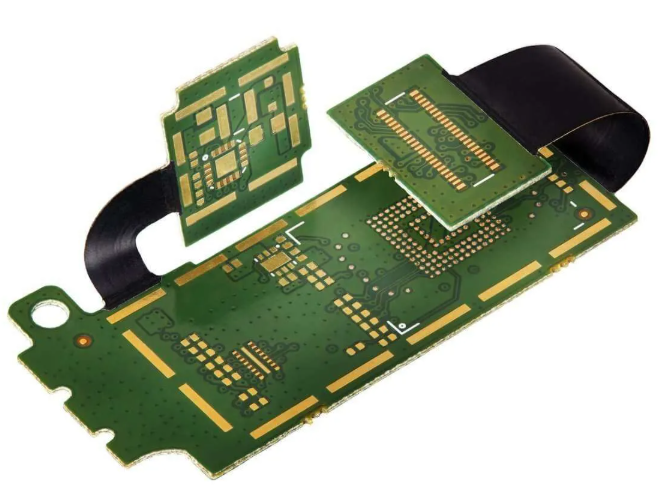
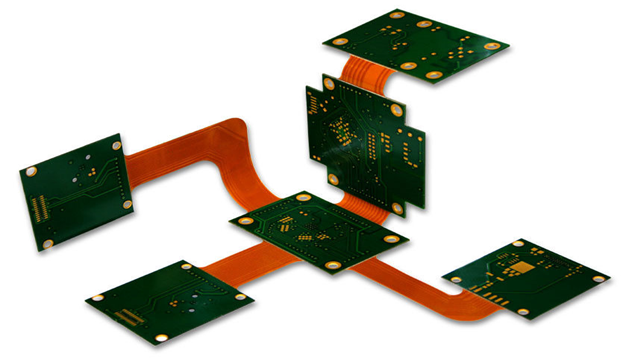
Flexible PCB materials are used in both flexible circuits and rigid-flex boards. The difference is that rigid-flex boards combine flexible sections with rigid PCB sections into one integrated structure.

Comparison ItemFlexible PCBRigid-Flex PCB
StructureFlexible circuit onlyRigid sections plus flexible sections
AssemblyOften needs connectors or stiffenersReduces connectors and cables
CostLower than rigid-flex in many casesHigher manufacturing cost
ReliabilityGood when designed correctlyBetter for complex compact assemblies
Space useVery goodExcellent in 3D products
Best useSimple bending or cable replacementHigh-reliability compact electronics

Rigid-flex PCB is usually selected when the product needs fewer connectors, higher assembly reliability, and compact three-dimensional packaging. Flexible PCB is often better when the design needs a simpler bendable circuit at lower cost.

What Bend Radius Should Be Considered for Flexible PCB Materials?

Bend radius is one of the most important factors for flexible PCB material selection. A smaller bend radius creates higher stress on copper traces and coverlay. If the bend radius is too tight, the flexible PCB may crack or delaminate.

The required bend radius depends on copper thickness, number of layers, base film thickness, adhesive type, coverlay thickness, and whether the bend is static or dynamic. Dynamic bending usually requires a larger bend radius and more careful material selection.

For safer design, traces should be routed perpendicular to the bend direction when possible, and copper should be kept away from sharp bend edges. The bend area should be as simple, thin, and stress-free as possible.

What Electrical Properties Should Be Checked?

Flexible PCB materials must provide stable electrical performance while bending or fitting into compact spaces. Important properties include dielectric strength, insulation resistance, impedance control, copper thickness, current capacity, dielectric constant, and moisture resistance.

Electrical PropertyWhy It Matters
Dielectric strengthPrevents insulation breakdown
Insulation resistanceReduces leakage current
Copper thicknessSupports current capacity
Dielectric constantAffects high-speed and RF signals
Impedance controlSupports stable signal transmission
Moisture resistanceImproves reliability in humid environments

For high-speed, RF, or antenna applications, LCP or special low-loss materials may be considered. For standard industrial products, polyimide-based flexible PCB materials are often sufficient.

What Manufacturing Processes Are Used for Flexible PCBs?

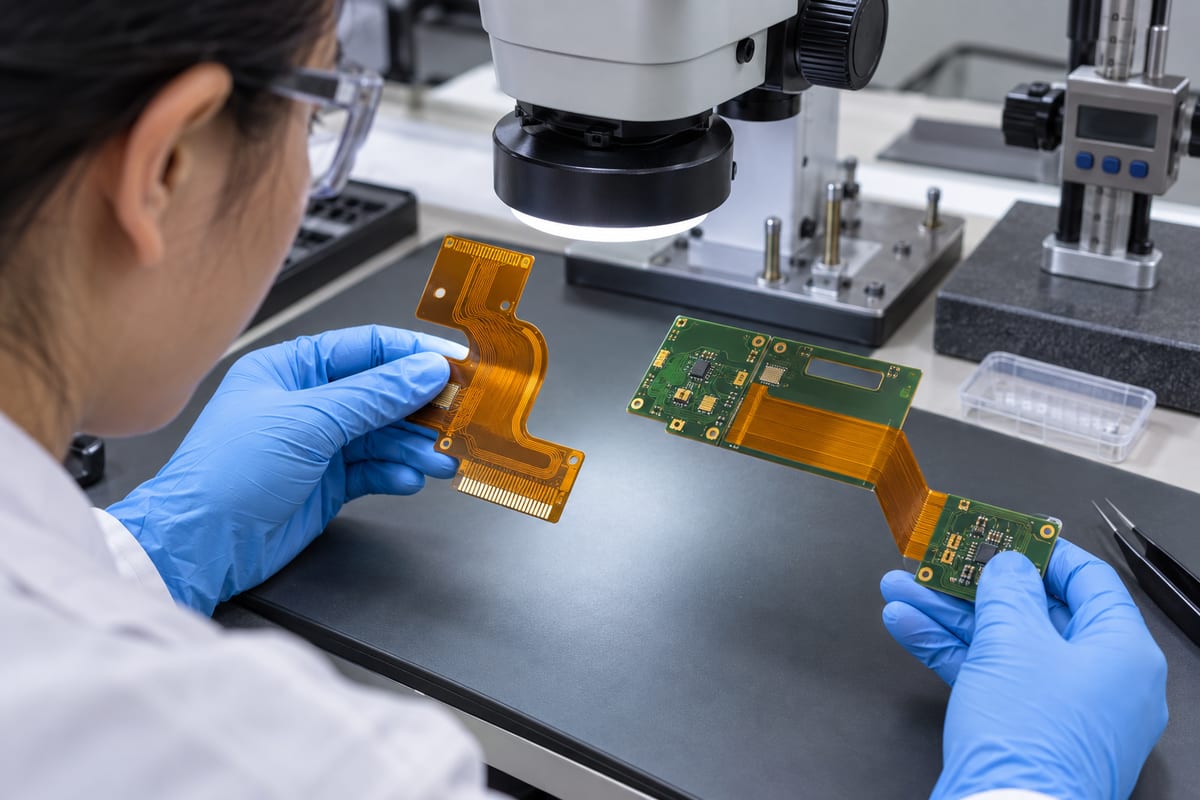
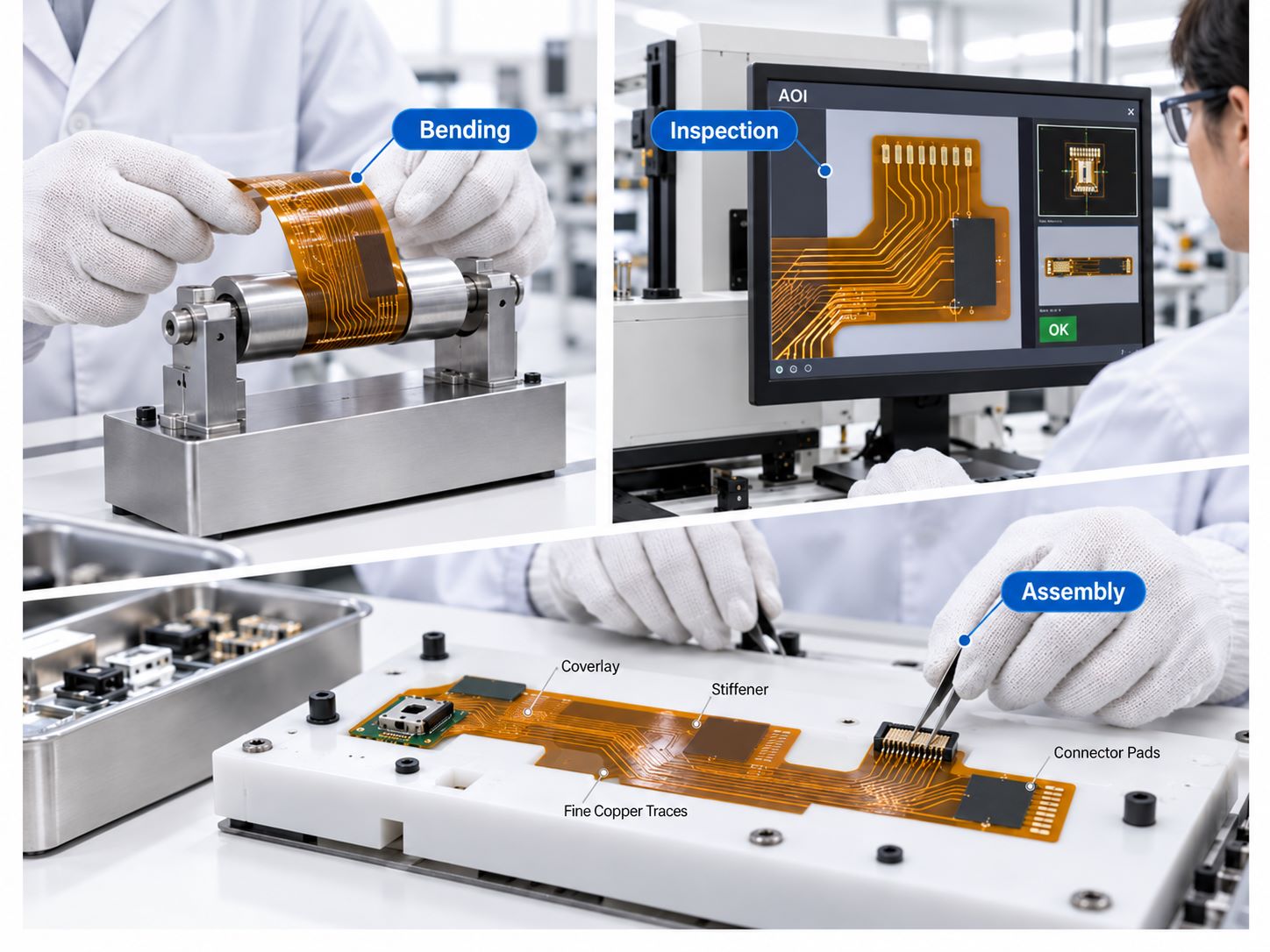
Flexible PCB manufacturing includes material cutting, drilling, imaging, etching, coverlay lamination, surface finishing, electrical testing, profiling, stiffener bonding, and final inspection. The process requires careful handling because flexible materials are thin and easily deformed.

Common production steps include laminate preparation, copper patterning, drilling or laser processing, coverlay alignment, lamination, surface finish, outline cutting, electrical test, and packaging.

Manufacturing quality depends on precise control of coverlay openings, dimensional stability, adhesive flow, copper adhesion, and surface cleanliness. Poor process control may cause misalignment, wrinkles, delamination, or poor soldering results.

What Quality Tests Are Needed for Flexible PCB Materials?

Flexible PCB materials should be tested for mechanical, electrical, thermal, and assembly reliability. Quality control should check not only the circuit, but also the flexibility, adhesion, coverlay bonding, and dimensional stability.

Test ItemPurpose
Visual inspectionChecks scratches, stains, coverlay defects, and exposed copper
Electrical testConfirms open and short performance
Dimensional inspectionChecks outline, hole size, and pad position
Peel strength testConfirms copper adhesion
Bend testEvaluates flex performance
Solderability testConfirms assembly readiness
Thermal stress testChecks heat resistance
Insulation resistance testConfirms electrical isolation

For moving applications, bend testing is especially important. Static bend and dynamic bend requirements should be clearly defined before production.

What Common Problems Happen with Flexible PCB Materials?

Common problems include copper cracking, coverlay delamination, adhesive overflow, poor solderability, pad lifting, stiffener misalignment, trace fracture, impedance instability, and insulation failure.

Copper cracking often happens when the bend radius is too small, copper is too thick, or the wrong copper type is used. Delamination may come from weak bonding, moisture, poor lamination, or repeated thermal cycling. Stiffener misalignment can affect connector insertion and assembly accuracy.

Many failures can be avoided by reviewing the material stack early. The design should match bend type, bend radius, copper thickness, coverlay structure, stiffener placement, and assembly temperature.

How to Choose the Right Flexible PCB Materials?

Choosing the right flexible PCB materials starts with the product’s movement and environment. Confirm whether the board will be bent once during installation or flexed repeatedly during use. Then check thickness, copper type, base film, coverlay, stiffener, surface finish, and reliability requirements.

For dynamic bending, choose polyimide, rolled annealed copper, thinner copper, thinner dielectric, and smooth bend routing. For static bending, electrodeposited copper or adhesive-based materials may be suitable if the design is not highly stressed.

For high-temperature, automotive, medical, or industrial products, material selection should also consider thermal cycling, humidity, vibration, soldering process, chemical exposure, and lifetime expectations.

What Factors Affect the Cost of Flexible PCB Materials?

Flexible PCB material cost depends on base film type, copper type, copper thickness, layer count, adhesive type, coverlay thickness, surface finish, stiffeners, tolerance, testing, and order quantity.

Cost FactorWhy It Affects PriceCost Control Suggestion
Base filmPolyimide and LCP cost more than PETMatch material to real application needs
Copper typeRolled annealed copper costs more than ED copperUse RA copper where dynamic bending is required
Layer countMore layers increase lamination complexityKeep flex areas simple where possible
Adhesiveless laminateImproves performance but increases costUse for high-reliability or thin designs
Surface finishENIG and hard gold cost moreChoose by assembly and contact needs
StiffenersAdd material and bonding stepsUse only where mechanical support is needed
TestingBend and reliability tests add costApply critical tests to high-risk applications

A low-cost flexible material may not be cheaper if it causes field failure. Cost control should focus on correct material selection, simplified bend zones, and stable manufacturability.

Where Are Flexible PCB Materials Commonly Used?

Flexible PCB materials are used in products that require lightweight circuits, movement, compact structure, or repeated bending.

Consumer electronics: smartphones, tablets, cameras, wearables, foldable devices, and display modules.

Automotive electronics: sensors, lighting, battery systems, dashboards, cameras, and control modules.

Medical devices: diagnostic equipment, wearable monitors, imaging devices, probes, and compact instruments.

Industrial equipment: sensors, robotic arms, control modules, HMI systems, and moving machine assemblies.

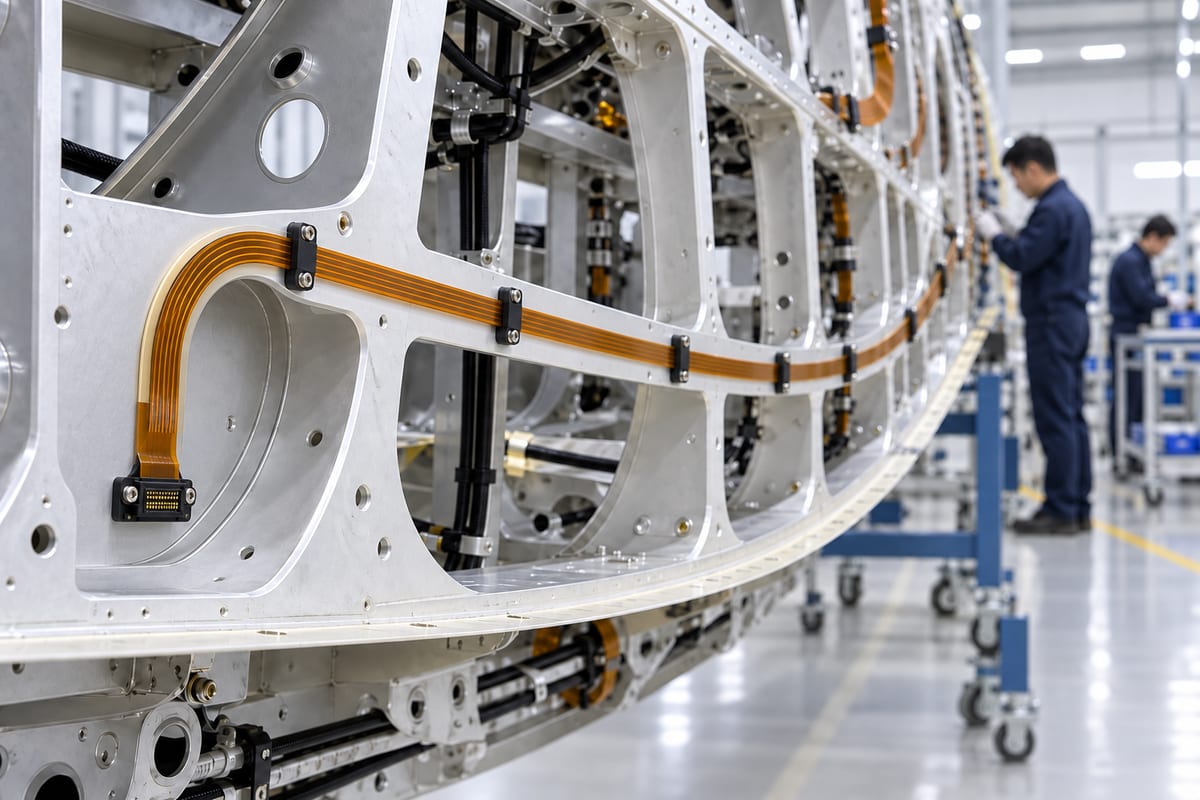
Aerospace and defense electronics: lightweight assemblies, compact modules, and high-reliability interconnects.

Communication products: antennas, RF modules, optical modules, and compact signal interconnects.

What Should You Confirm Before Ordering Flexible PCBs?

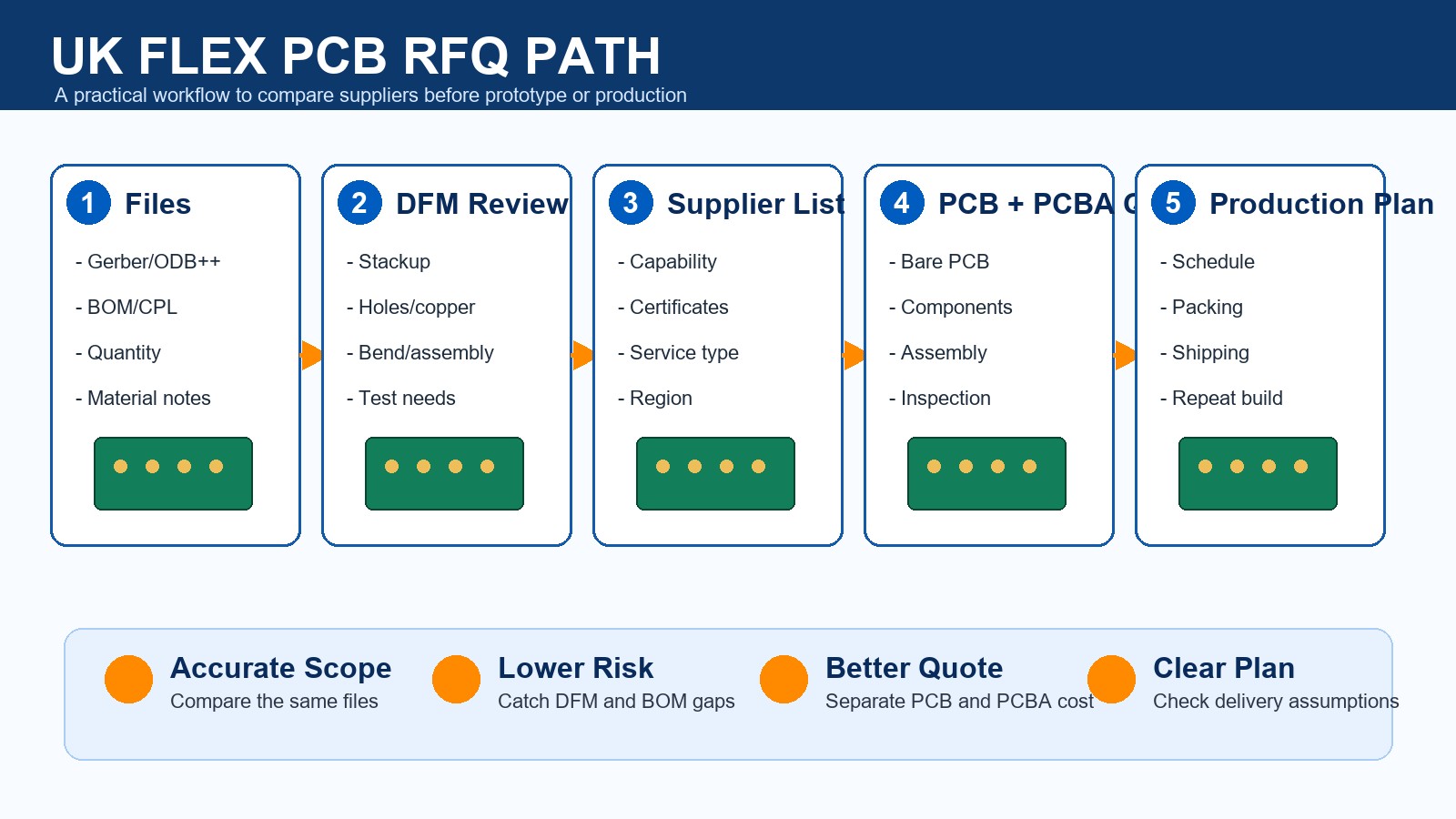
Before ordering flexible PCBs, confirm material stack, base film thickness, copper type, copper thickness, coverlay thickness, bend radius, surface finish, stiffener material, tolerance, and testing requirements.

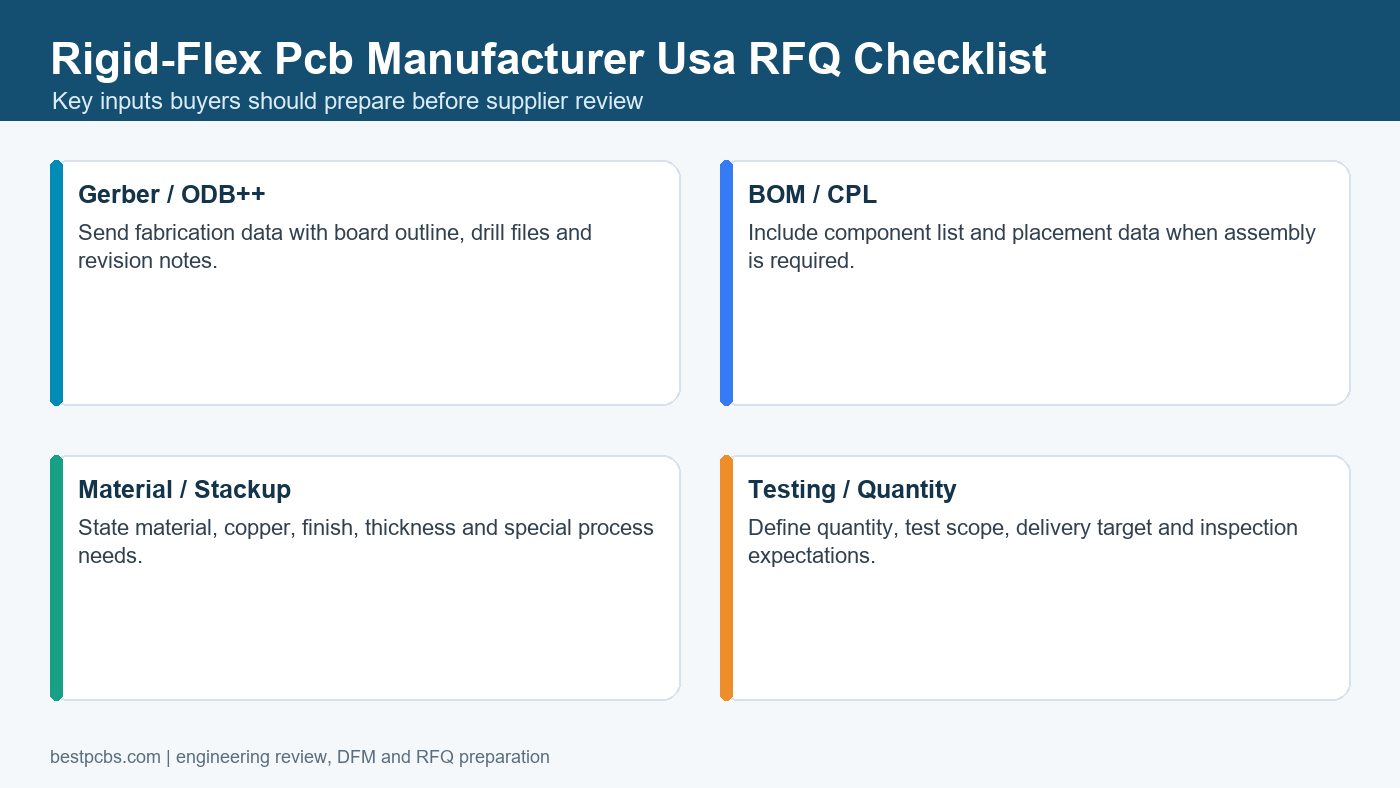
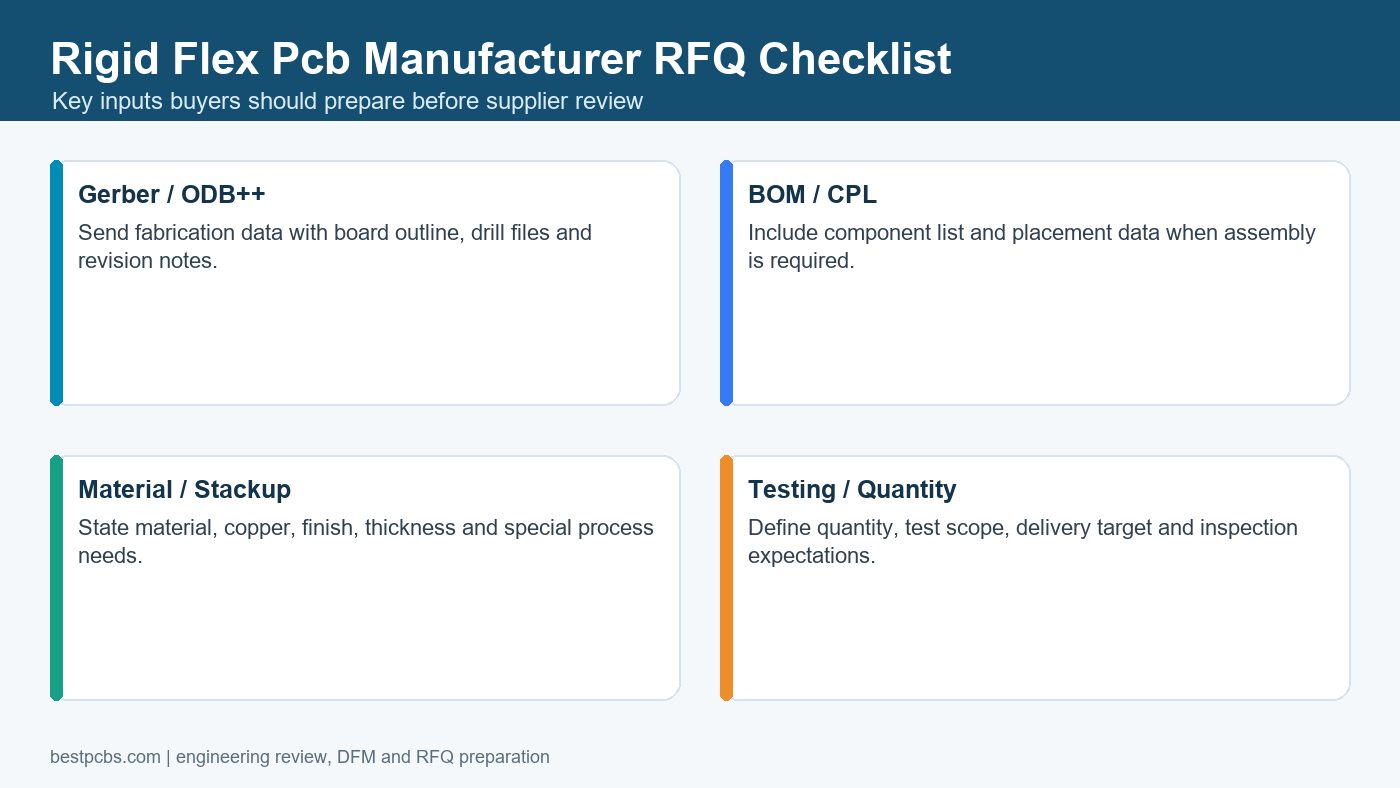
You should also provide Gerber files, drill files, stack-up notes, drawings, bend area requirements, stiffener drawings, BOM if assembly is needed, quantity, and final application details.

For dynamic bending or high-reliability products, prototype validation is recommended before mass production. Testing under real bending, temperature, and assembly conditions helps reduce batch risk.

Why Choose EBest for Flexible PCB Manufacturing?

EBest Technology provides one-stop PCB solutions, including PCB design, PCB prototype, mass production, component sourcing, PCB assembly, and box-build assembly. Its product range includes standard FR4 PCB, multilayer PCB, metal-based PCB, ceramic PCB, flexible PCB, rigid-flex PCB, and high frequency PCB, supporting customers with different electronic manufacturing needs.

For flexible PCB projects, EBest can support material selection, stack-up review, prototype validation, batch production, assembly coordination, and quality inspection. This is useful when a project involves compact routing, connector areas, stiffeners, bend zones, and final product assembly.

EBest also supports quality and compliance systems such as IATF 16949, ISO 9001:2015, ISO 13485:2016, AS9100D, REACH, RoHS, and UL-related requirements. These capabilities help customers manage industrial, automotive, medical, aerospace, and export-oriented projects with more confidence.

flexible PCB, https://www.bestpcbs.com/blog/2026/06/flexible-pcb-materials/

FAQs About Flexible PCB Materials

Q1: What are flexible PCB materials made of?
A1: Flexible PCB materials usually include polyimide base film, copper foil, adhesive or adhesiveless bonding layers, coverlay, surface finish, and optional stiffeners. These materials work together to provide flexibility, insulation, electrical connection, mechanical support, and circuit protection.

Q2: What is the most common flexible PCB base material?
A2: Polyimide is the most common base material because it offers excellent heat resistance, strong insulation, good flexibility, and stable long-term performance. It is widely used in consumer electronics, automotive systems, medical devices, and industrial electronics.

Q3: What copper type is best for flexible PCB materials?
A3: Rolled annealed copper is often better for dynamic bending because it has stronger flex fatigue resistance. Electrodeposited copper is more cost-effective and suitable for static flex or applications where the board bends only during installation.

Q4: What is the difference between coverlay and solder mask?
A4: Coverlay is a flexible protective film, usually made from polyimide and adhesive. It is better for bending areas. Solder mask is more common on rigid PCBs and may not provide the same flexibility for repeated bending applications.

Q5: Are adhesiveless flexible PCB materials better?
A5: Adhesiveless materials can provide thinner structure, better thermal performance, improved dimensional stability, and better flex life. They are often used for high-reliability, fine-line, or dynamic bending applications, but they usually cost more.

Q6: How do I choose flexible PCB material thickness?
A6: Material thickness depends on bend radius, layer count, current load, mechanical space, and assembly needs. Thinner materials generally bend better, while thicker materials may provide stronger support but increase bending stress.

Q7: What causes copper cracking in flexible PCBs?
A7: Copper cracking may happen when the bend radius is too small, copper is too thick, the wrong copper type is used, or traces are placed poorly in the bend area. Proper material selection and bend design help prevent this issue.

Q8: Can flexible PCB materials support high-speed signals?
A8: Yes. Flexible PCBs can support high-speed signals when material dielectric properties, impedance control, copper roughness, trace geometry, and stack-up are properly designed. LCP or low-loss materials may be used for demanding RF applications.

Q9: Why are stiffeners used in flexible PCBs?
A9: Stiffeners provide mechanical support in selected areas, such as connectors, soldering zones, and component mounting locations. They help improve assembly stability but should not be placed in active bending zones unless carefully designed.

Q10: What surface finish is best for flexible PCBs?
A10: ENIG is commonly selected because it provides flat pads, good shelf life, and reliable soldering. OSP may be used for cost-sensitive and fast assembly projects, while hard gold is used for contact fingers or wear-resistant areas.

Q11: Are flexible PCB materials suitable for medical devices?
A11: Yes. Flexible PCB materials are widely used in medical devices because they support compact size, lightweight structure, and flexible interconnection. Material selection should consider reliability, cleanliness, insulation, biocompatible packaging, and long-term operating conditions.

Q12: What files are needed for a flexible PCB quotation?
A12: Provide Gerber files, drill files, stack-up requirements, copper thickness, base material, coverlay information, stiffener drawing, surface finish, quantity, bend radius requirements, and application details. For assembly, also provide BOM and placement files.

Conclusion

Flexible PCB materials determine how well a circuit can handle bending, insulation, soldering, current, thermal stress, dimensional control, and long-term reliability. The right material stack should be selected based on the real bending condition, operating environment, assembly process, and product lifetime target.

For product development, do not choose flexible PCB materials only by price or thickness. Review base film, copper type, adhesive system, coverlay, stiffener placement, surface finish, bend radius, and testing requirements before confirming the stack-up. For procurement, work with a manufacturer that can support prototype review, batch consistency, quality inspection, assembly coordination, and reliable delivery.

If you need flexible PCB materials, flexible PCB manufacturing, PCB assembly, OEM production, ODM development, sample testing, batch production, or custom engineering solutions, please contact our team at sales@bestpcbs.com for technical support and quotation service.

You may also like

Top 15 Flexible PCB Manufacturers in the USA
Friday, March 20th, 2026

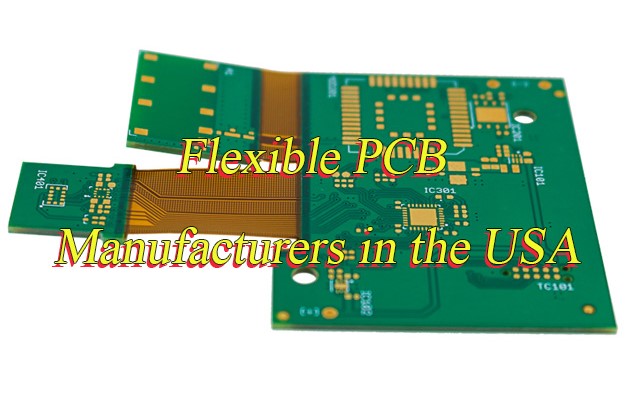
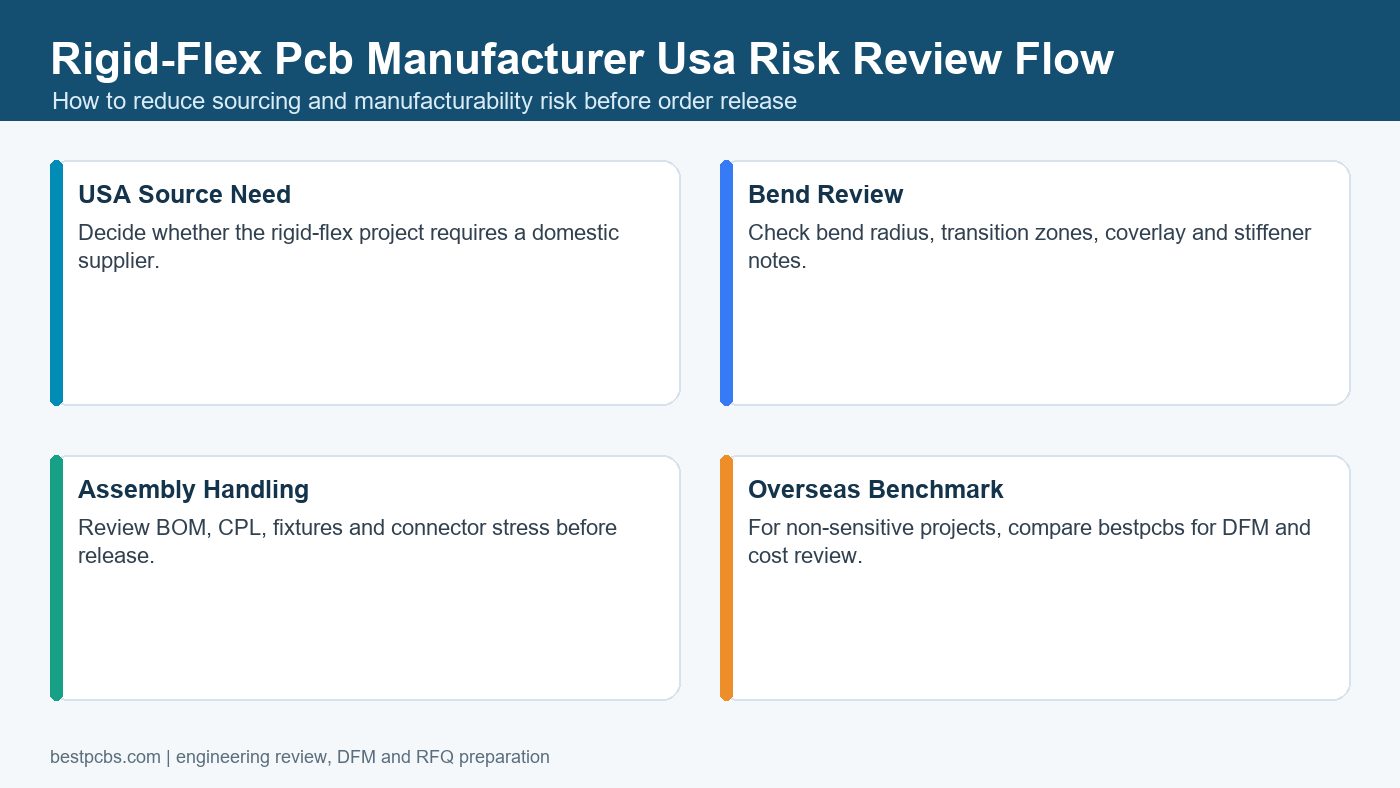
Tired of unreliable flexible PCB manufacturers in the USA? Many teams waste time and delay project launches due to untrustworthy flexible PCB manufacturers in the USA that miss deadlines, deliver inconsistent quality, and offer little to no technical support for custom flex circuit designs. Choosing qualified flexible PCB manufacturers in the USA with end-to-end support, strict quality control, and industry-specific compliance is non-negotiable for medical, aerospace, and industrial equipment applications. This guide breaks down real manufacturing pain points, full-cycle solutions, the top 15 certified US manufacturers, and practical evaluation steps to simplify your sourcing and avoid costly project delays.

Flexible PCB Manufacturers in the USA, https://www.bestpcbs.com/blog/2026/03/flexible-pcb-manufacturers/

Are You Facing these Pain Points of Flexible PCB Manufacturing in the USA?

  • Do you struggle with unplanned production delays from local flexible PCB makers?
  • Are you dealing with poor design feedback that leads to failed flex PCB prototypes?
  • Do you lack access to certified manufacturing for high-reliability medical or aerospace flex circuits?
  • Are you facing inconsistent part quality across small-batch and mass production runs?
  • Do you have trouble getting accurate lead time estimates from US-based flex PCB suppliers?
  • Are complex rigid-flex PCB designs causing repeated manufacturing roadblocks?

End-to-End Flexible PCB Solutions from Design to Requirement

  • Design & DFM Engineering Support: Our full-cycle solution starts with detailed Design for Manufacturing (DFM) reviews to eliminate prototype failures and design flaws before production. We correct bend radius errors, trace width issues, and layer registration gaps common in flex PCB design, directly solving poor design feedback pain points. This step ensures every design is optimized for reliable production, even for complex medical implant or aerospace navigation systems.
  • Custom Prototyping & Full-Scale Production: We offer rapid prototyping for initial testing and scalable production for large OEM orders, eliminating delays from mismatched batch capabilities. Our production lines handle single-sided, double-sided, and multilayer flex PCBs, plus rigid-flex assemblies for industrial control panels and aerospace communication devices. This consistent workflow removes quality inconsistencies between small and large runs.
  • Quality Testing & Compliance Validation: Every flex PCB undergoes rigorous electrical testing, thermal cycling, and bend durability testing to meet industry standards. We provide full compliance documentation for medical, aerospace, and industrial applications, resolving the lack of certified manufacturing pain point and ensuring your circuits pass all regulatory checks on the first try.
  • On-Time Delivery & Project Tracking: We provide fixed, accurate lead time quotes upfront and offer real-time project tracking to eliminate unplanned delays. Dedicated production coordinators prioritize your order, ensuring timely delivery for time-sensitive industrial equipment launches and medical device certifications, fixing unreliable lead time and delivery pain points entirely.

Why Choose EBest for Flexible PCB Manufacturers in the USA?

When sourcing from top flexible PCB manufacturers in the USA, you need a partner that directly solves your biggest pain points and delivers consistent, risk-free results for mission-critical applications. EBest combines decades of expertise, client-centric services, and industry-leading systems to stand out from standard US flex PCB makers.

Backed by 20 years of specialized flex and rigid-flex PCB production experience, we focus exclusively on medical, aerospace, and industrial equipment applications, with deep knowledge of strict industry requirements and performance standards. We eliminate prototype failures, missed deadlines, and quality inconsistencies to keep your critical projects on track.

We provide free DFM (Design for Manufacturing) reviews for all orders with no minimum quantity required. Our in-house engineering team identifies and fixes bend radius errors, weak trace layouts, and layer registration issues before production starts, cutting prototype rejections and revision delays completely at no extra cost to your project.

We offer true one-stop, end-to-end flexible PCB solutions fully in-house, covering design consultation, rapid prototyping, full-scale production, compliance testing, and final delivery. You will never manage multiple vendors; we streamline your entire workflow and shorten lead times for both small custom batches and large OEM production runs.

Our MES system enables full production traceability, a key competitive edge over other flexible PCB manufacturers in the USA. Every material lot, production step, and quality test is logged and tracked in real time, ensuring full regulatory compliance for medical and aerospace projects and enabling fast, accurate issue resolution without timeline disruptions.

We hold strict, industry-specific certifications, including IPC-6013, UL 796, ISO 13485 (medical), and AS9100D (aerospace). We also provide fixed, transparent lead times, dedicated order coordination, and expert support for high-complexity rigid-flex designs, guaranteeing consistent quality across every production run even for extreme operating conditions.

In short, EBest delivers more than just flexible PCBs, we deliver reliability, efficiency, and full accountability, making us the ideal long-term partner for your high-reliability flex circuit needs across medical, aerospace, and industrial sectors in the US market.

Why Choose EBest for Flexible PCB Manufacturers in the USA, https://www.bestpcbs.com/blog/2026/03/flexible-pcb-manufacturers/

Top 15 Flexible PCB Manufacturers in the USA

Company NameCore AdvantagesFlex PCB Process CapabilitiesStandard Lead Time
EBestEnd-to-end DFM support, medical/aerospace certified, rigid-flex specialization, consistent quality1-12 layer flex, rigid-flex, medical-grade, aerospace-grade, fine pitch, bend testingPrototype: 3-5 days; Production: 10-18 days
Q-Flex Inc.California-based, quick-turn prototyping, small-batch focus1-8 layer flex, standard flex circuits, commercial gradePrototype: 4-6 days; Production: 14-21 days
TTM TechnologiesLarge-scale production, aerospace/defense expertise, ITAR registered1-20 layer flex, rigid-flex, high-frequency, military-gradePrototype: 7-10 days; Production: 20-30 days
Advanced Circuits (4PCB)Domestic quick-turn, military-approved, broad industry coverage1-10 layer flex, standard flex, rigid-flex basicsPrototype: 2-4 days; Production: 12-20 days
Flex Interconnect Technologies (FIT)Specialized flex engineering, AS9100 certified, medical focus1-12 layer flex, rigid-flex, medical implant-grade, high-reliabilityPrototype: 5-7 days; Production: 15-22 days
American Standard CircuitsISO certified, industrial/automotive focus, consistent quality1-8 layer flex, rigid-flex, industrial-grade flex circuitsPrototype: 4-7 days; Production: 16-24 days
SanminaGlobal-local support, high-complexity flex, full system assembly1-30 layer flex, rigid-flex, aerospace/industrial high-densityPrototype: 7-12 days; Production: 22-35 days
Tramonto CircuitsSmall-batch priority, fast quoting, IPC Class III compliance1-10 layer flex, standard flex, rigid-flex, commercial/industrialPrototype: 3-6 days; Production: 13-21 days
All Flex Inc.Medical device specialization, ultra-thin flex, catheter-grade circuits1-6 layer ultra-thin flex, medical-grade, miniaturized flexPrototype: 5-8 days; Production: 18-25 days
Bay Area CircuitsWest Coast quick-turn, prototype specialization, transparent lead times1-6 layer flex, standard flex circuits, small-batch productionPrototype: 2-5 days; Production: 14-22 days
Epec Engineered TechnologiesCustom rigid-flex, ITAR registered, military/aerospace focus1-14 layer flex, rigid-flex, military-grade, high-temperaturePrototype: 6-9 days; Production: 20-28 days
Summit InterconnectDFM expert support, high-reliability flex, industrial automation focus1-12 layer flex, rigid-flex, industrial control flex circuitsPrototype: 4-7 days; Production: 15-23 days
MV Flex CircuitSmall-batch custom flex, medical/aerospace niche, tight tolerances1-8 layer flex, rigid-flex, miniaturized high-precision flexPrototype: 5-8 days; Production: 17-24 days
Flex Ltd. (US Division)Mass production capacity, global supply chain, commercial electronics focus1-10 layer flex, standard flex, high-volume commercial gradePrototype: 7-10 days; Production: 25-35 days
Andwin Circuits (US Operations)Domestic support, tight tolerance flex, cross-industry compliance1-10 layer flex, rigid-flex, industrial/medical standard gradePrototype: 4-6 days; Production: 14-22 days

What Quality Certifications Should Flex PCB Manufacturers in the USA Hold?

Here are quality certifications should flex PCB manufacturers in the USA have:

  • IPC-6013: Mandatory standard specifically for flexible & rigid-flex PCB quality and performance; non-negotiable for all reliable flex PCB makers.
  • UL 796: Safety certification for printed circuit boards, required for US market compliance and product safety validation.
  • ISO 9001: Core quality management system certification, ensuring consistent production and process control.
  • ISO 13485: Required for medical device flexible PCBs, covering strict regulatory and cleanroom production standards.
  • AS9100D: Aerospace & defense industry certification, mandatory for high-reliability, mission-critical flex circuits.
  • ITAR Registration: Required for aerospace/defense projects involving US military-controlled technology.
  • IATF 16949: Automotive industry-specific certification for flex PCBs used in vehicle electronics.
  • RoHS Compliance: Environmental certification, restricting hazardous materials for global market eligibility.

What Is the Typical Lead Time of Flexible PCB Manufacturers in the USA?

Order TypeBoard TypeTypical Lead Time (Business Days)
Rapid PrototypeStandard Flex PCB (1-6 layers)2–7 days
Rapid PrototypeRigid-Flex / High-Layer-Count Flex (7+ layers)5–10 days
Small-Batch ProductionStandard Flex PCB10–22 days
Small-Batch ProductionRigid-Flex / High-Complexity Flex15–25 days
Mass ProductionAll Flex/Rigid-Flex Types20–35 days

How to Evaluate the Production Capacity of USA Flexible PCB Manufacturer?

Evaluation guide to the production capacity of USA flexible PCB manufacturer:

  • Verify flex & rigid-flex technical capabilities: Top US flexible PCB manufacturers support 1–32 layer flex/rigid-flex designs, with fine pitch down to 30–50μm and minimum bend radius down to 0.5mm for dynamic flex applications. They must be compatible with medical-grade polyimide and high-temperature (200°C+) substrates for aerospace and industrial use.
  • Confirm batch size flexibility: Qualified manufacturers cover full order ranges: 1–50 piece rapid prototypes, 51–5,000 piece small-batch custom runs, and 5,000+ piece mass production, all in-house with no core process outsourcing, eliminating quality gaps between batch sizes.
  • Check in-house production equipment & automation: Reliable producers use LDI (Laser Direct Imaging) lines for ±10μm precision, automated etching and plating systems, and in-line electrical testing. High-capacity facilities maintain 85%+ production line utilization rate for consistent, on-schedule output.
  • Review industry-specific production expertise: Look for proven track records: ISO 13485 for medical devices (cleanroom Class 8 production), AS9100D for aerospace (100% traceability for critical components), and industrial-grade compliance for equipment operating in -40°C to 125°C environments.
  • Assess quality control & testing capacity: Trusted manufacturers perform 100% electrical continuity testing, thermal cycling (-40°C to 125°C for 100+ cycles), and bend durability testing (up to 1 million flex cycles without failure) , all in-house, no third-party delays.
  • Evaluate production traceability systems: Prioritize manufacturers with a dedicated MES tracking system that logs every material lot, production step, and test result in real time, enabling full lot traceability and 99%+ batch consistency for repeat orders.
How to Evaluate the Production Capacity of USA Flexible PCB Manufacturer, https://www.bestpcbs.com/blog/2026/03/flexible-pcb-manufacturers/

How to Evaluate the Delivery Capability of USA Flexible PCB Manufacturers?

Evaluation guide to the delivery capability of USA flexible PCB manufacturer:

  • Check on-time delivery rate: Top reliable flexible PCB manufacturers in the USA maintain a 95%+ on-time delivery rate for both prototypes and production orders, with consistent performance across small and large batches.
  • Confirm fixed, upfront lead time quotes: Trusted manufacturers provide binding lead time commitments, with no unplanned delays or last-minute timeline changes for standard and certified medical/aerospace orders.
  • Verify real-time order tracking systems: Qualified suppliers offer full production visibility, with regular progress updates and quick issue resolution to keep orders on schedule.
  • Assess raw material inventory stability: Reputable US flex PCB makers keep 3+ months of critical substrate and component inventory on hand, eliminating material shortage delays.
  • Check rush order support capabilities: Reliable manufacturers offer expedited prototyping (2–3 business days) and rush production services for time-sensitive projects, without sacrificing quality.
  • Review order volume flexibility: Top suppliers meet tight delivery targets for 1–50 piece prototypes and 5,000+ piece mass orders alike, with consistent turnaround times across all order sizes.
How to Evaluate the Delivery Capability of USA Flexible PCB Manufacturers, https://www.bestpcbs.com/blog/2026/03/flexible-pcb-manufacturers/

FAQs About Flexible PCB Manufacturing in the USA

Q1: Can US flexible PCB manufacturers handle medical-grade flex circuits for implantable devices?
A1: Yes, top certified flexible PCB manufacturers in the USA with ISO 13485 and medical-grade production lines produce implantable and diagnostic flex circuits. These makers follow strict cleanroom protocols, biocompatible material standards, and rigorous testing to meet medical regulatory requirements, with proven use in surgical tools, diagnostic monitors, and implantable sensors.

Q2: How do I fix flex PCB trace cracking issues during production with US manufacturers?
A2: Partner with a US flex maker that offers full DFM reviews to correct bend radius, trace width, and stiffener placement before production. Reputable manufacturers use high-quality polyimide substrates and controlled etching processes to prevent trace cracking, and conduct bend durability testing to validate performance for repeated flex applications.

Q3: Do US flexible PCB manufacturers offer ITAR-registered production for aerospace projects?
A3: Many top flexible PCB manufacturers in the USA are ITAR registered and hold AS9100D certification for aerospace and defense projects. These facilities follow strict security and quality standards, producing high-reliability flex circuits for navigation systems, communication equipment, and satellite components used in aerospace applications.

Q4: What is the difference between standard flex and rigid-flex PCBs from US manufacturers?
A4: Standard flex PCBs are fully flexible for compact, bendable applications, while rigid-flex PCBs combine rigid and flexible sections for stable mounting and dynamic bending. US manufacturers specialize in both, with rigid-flex options ideal for industrial control panels, aerospace assemblies, and medical devices that need both stability and flexibility in one unit.

Q5: How can I ensure consistent quality across multiple production runs with US flex PCB makers?
A5: Choose a manufacturer with documented quality control processes, IPC Class III compliance, and locked material sourcing for repeat orders. Reliable flexible PCB manufacturers in the USA retain complete project documentation, conduct batch testing for every run, and assign dedicated account managers to maintain consistency from prototype to full production, eliminating quality variations.

You may also like

What material is used for flexible PCB?
Thursday, October 24th, 2024

Flexible PCB is a printed circuit board made of flexible substrate, which can be bent, folded or twisted to a certain extent to meet the needs of various complex electronic device structures.

What are flexible PCBs made of?

Flexible PCBs are mainly made of polyimide or polyester film. These materials have good flexibility and insulation properties, which enable flexible PCBs to maintain stable working conditions in various bending and twisting environments.

What material is used for flexible PCB?

The manufacturing process of flexible PCBs includes the following main steps:

  • Design phase: Use design software to create a prototype of the circuit board, determine the required lines, circuits and components, and design the shape and size of the flexible PCB according to the shape and size of the product.
  • Board making phase: Print the required lines and patterns on the plastic substrate, usually using photolithography techniques such as coating photolithography and inkjet printing.
  • Surface treatment and coating: Clean the circuit board and apply a protective coating to prevent chemical and mechanical wear, moisture, corrosion, etc.
  • Electroplating copper: Apply electroplating copper to certain parts of the flexible PCB to thicken the line.
  • Pattern chemical etching: Etch away the unnecessary parts of the circuit board and retain the required lines and components.
  • Molding and perforation: Cut the flexible PCB into the desired shape.

What is the difference between FR4 and flex PCB?

Material composition and performance

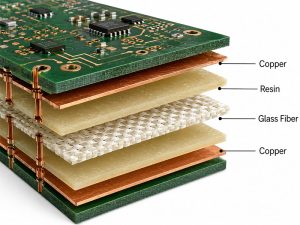
  • FR4: FR4 is the most common PCB substrate, mainly composed of glass fiber and epoxy resin. It has good electrical, thermal and mechanical properties.
  • Flexible PCB: Flexible PCB (FPC) is mainly made of materials such as polyimide (PI) and is flexible and bendable. They are often used in application scenarios that require frequent bending or limited space.

Application scenarios

  • FR4: Due to its rigidity and stability, FR4 is often used in applications that require high mechanical strength and stability, such as computer motherboards, mobile phone motherboards, etc.
  • Flexible PCB: Flexible PCB is often used in applications in car curves and corners, display screens and reverse cam screens, etc. due to its flexibility and bendability.

Manufacturing process and cost

  • FR4: The manufacturing process includes drilling, etching, copper plating, etc., with moderate cost, suitable for most consumer electronic products.
  • Flexible PCB: The manufacturing process is relatively complex and the cost is high, but it can meet the needs of specific applications.

In summary, FR4 and flexible PCBs have significant differences in material composition, performance and application scenarios. Choosing the right material depends on the specific application requirements.

What is the difference between a rigid PCB and a flexible PCB?

The main differences between rigid PCBs and flexible PCBs include softness, load-bearing capacity, durability, heat resistance and other aspects.

  • Softness: Flexible PCBs (FPCs) have good flexibility and can be easily twisted, bent and even folded, and are suitable for application scenarios that require flexible wiring. Rigid PCBs, on the other hand, are harder and cannot be bent, and are usually used in devices that require stability and high load capacity.
What material is used for flexible PCB?
  • Load-bearing capacity: Flexible PCBs have relatively weak current carrying capacity and are suitable for applications with smaller currents. Rigid PCBs have stronger current carrying capacity and are suitable for high-load electronic devices.
  • Durability and heat resistance: Flexible PCBs can better absorb vibration and shock, have high durability and heat resistance, and can be used in extreme environments. Although rigid PCBs are thicker, they are easily damaged under the influence of high temperatures and chemicals.
  • Manufacturing process and materials: Flexible PCBs use flexible materials such as polyimide, and a cover layer process is used during the manufacturing process to protect the circuit. Rigid PCBs use thicker materials, usually made of glass-like materials, and require reinforcement.
  • Application scenarios: Flexible PCBs are widely used in modern smart devices such as smartphones, tablets, and wearable devices due to their flexibility and thinness. Rigid PCBs are often used in devices that require stability and high load capacity, such as laptops and desktop computers.

In summary, there are significant differences between rigid PCBs and flexible PCBs in terms of softness, load-bearing capacity, durability, heat resistance, and application scenarios. The selection of the appropriate type of circuit board should be determined according to specific application requirements.

What is the advantage of flex PCB?

Flexible PCB (Flexible Printed Circuit, FPC for short) has the following main advantages:

  • Flexibility: The main advantage of flexible PCBs is their elasticity and bending ability. They can be easily twisted, bent, and even folded, suitable for design requirements of various complex shapes.
  • Reduce weight and space: Flexible PCBs not only provide greater design freedom, but also have better space utilization and weight efficiency. Due to their thin and light characteristics, flexible PCBs can greatly reduce weight and space, especially for small devices.
  • Suitable for harsh environments: Flexible PCBs can be made of various corrosion-resistant materials and can withstand harsh environmental conditions.
  • Better thermal management: Flexible PCBs are made of polyimide, which has excellent thermal stability and can withstand extremely high heat.
  • Reduce costs: Flexible PCBs reduce assembly costs by reducing space requirements and the number of components. Since the need for wiring and connectors is reduced, testing and rework time is also reduced, improving productivity and efficiency.

In summary, flexible PCBs have significant advantages in flexibility, weight, space utilization, environmental adaptability and cost-effectiveness, making them an ideal choice for many high-tech products and applications requiring high reliability.

What are the disadvantages of flexible PCB?

The main disadvantages of flexible PCBs (FPCs) include:

  • High one-time initial cost: Since flexible PCBs are designed and manufactured for special applications, the cost of circuit design, wiring and photographic plates is high.
  • Difficult to change and repair: Once a flexible PCB is made, changes must start from the base map or the compiled photolithography program, so it is not easy to change. Its surface is covered with a protective film, which needs to be removed before repair and restored after repair, which is a relatively difficult task.
What material is used for flexible PCB?
  • Size is limited: Flexible PCB is usually manufactured by intermittent process when it is not yet popular. Therefore, it is limited by the size of production equipment and cannot be made very long or wide.
  • Improper operation can easily cause damage: Improper operation by the assembly personnel can easily cause damage to the flexible circuit. Its soldering and rework require trained personnel to operate.

How thick is a flex PCB board?

The common thickness of flexible PCB board is 0.2mm. The thickening layer will be added behind the parts to be soldered. The thickness of the thickening layer is generally 0.2mm or 0.4mm12.

In addition, the thickness of flexible PCB board usually ranges from 0.1mm to 0.4mm, of which the thickness of 0.1mm to 0.4mm is called ultra-thin PCB board.

Where are flexible PCBs used?

Flexible PCB (Flexible Printed Circuit Board, FPC) is widely used in many fields, mainly including the following aspects:

  • Consumer electronics: Flexible PCB is widely used in consumer electronics such as smartphones, tablets, smart watches, etc.
  • Medical equipment: In medical equipment, flexible PCB can bend and adapt to specific shapes, and is often used in electrocardiographs, blood pressure monitors, monitoring equipment and medical sensors, etc.
  • Automotive electronics: Flexible PCB plays an important role in automotive electronic systems, connecting in-vehicle entertainment systems, navigation systems, dashboards, body control modules and safety systems, etc.
  • Aerospace: Flexible PCB is also widely used in the aerospace field, such as satellite communications, spacecraft control, etc.
  • Industrial control and automation: In the field of industrial control and automation, flexible PCB is used to connect sensors, actuators, control modules and data acquisition equipment, etc.
What material is used for flexible PCB?
  • LED lighting: Flexible PCB is also used in LED lighting products to provide connection and signal transmission functions.

In summary, the material combination of flexible PCBs gives them unique properties and a wide range of application prospects. The flexible substrate provides bendability and durability, the conductive layer ensures efficient transmission of electronic signals, and the cover layer provides protection for the entire structure. The continuous innovation and optimization of these materials will continue to promote the development of flexible PCBs.

You may also like