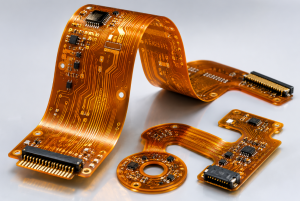
Polyester printed circuitry usually refers to conductive circuits printed on polyester film, often PET, using silver ink or other conductive materials. It is commonly used in membrane switches, low-current flexible circuits, wearable electronics, printed sensors, control panels, and lightweight electronic interfaces.
For engineers, the important question is not only “What is polyester printed circuitry?” but also “Is polyester the right material for this product, or should the project use polyimide circuit board, copper flex, rigid-flex PCB, or another flexible PCB structure?” EBest Circuit (Best Technology) supports flexible PCB, rigid-flex PCB, PCB fabrication, component sourcing, PCBA assembly, DFM review, and manufacturing feasibility checks. If you are comparing polyester printed circuitry with FPC manufacturing, send your drawings, Gerber data, stackup notes, material requirements, connector area, stiffener needs, and application environment to sales@bestpcbs.com for engineering review.
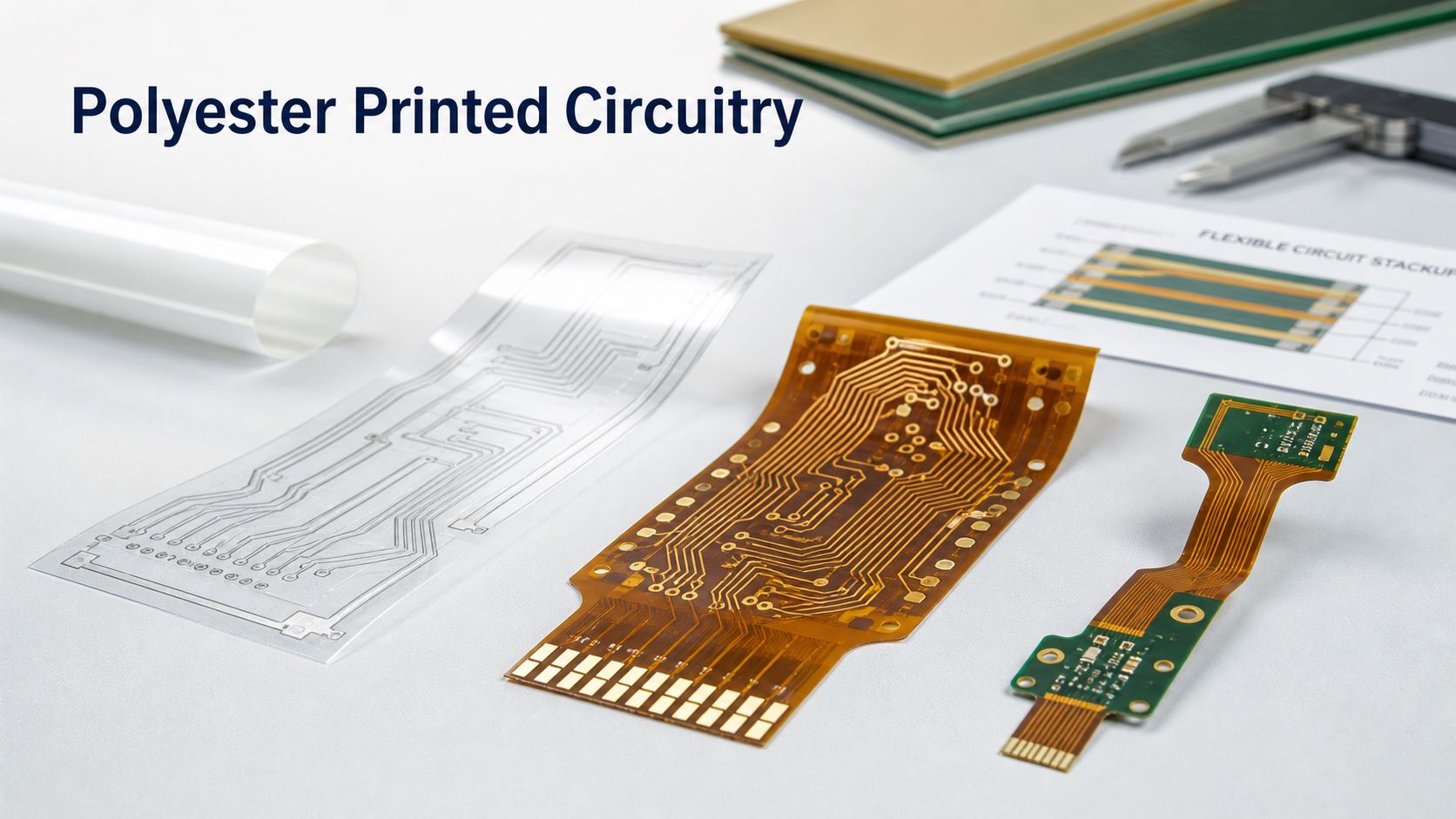
What Is Polyester Printed Circuitry?
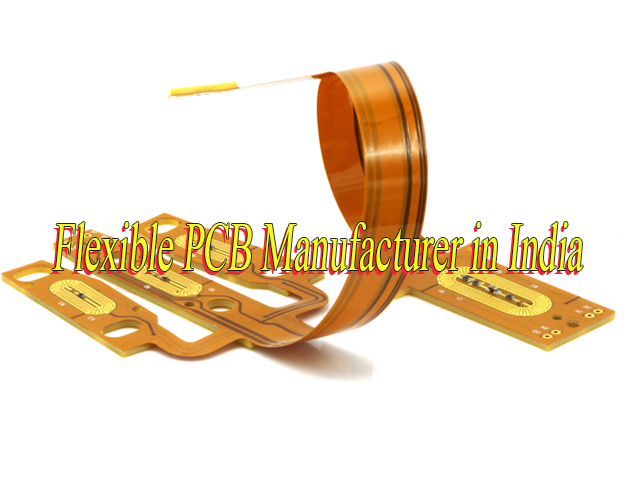
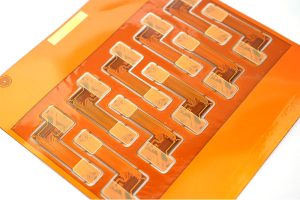
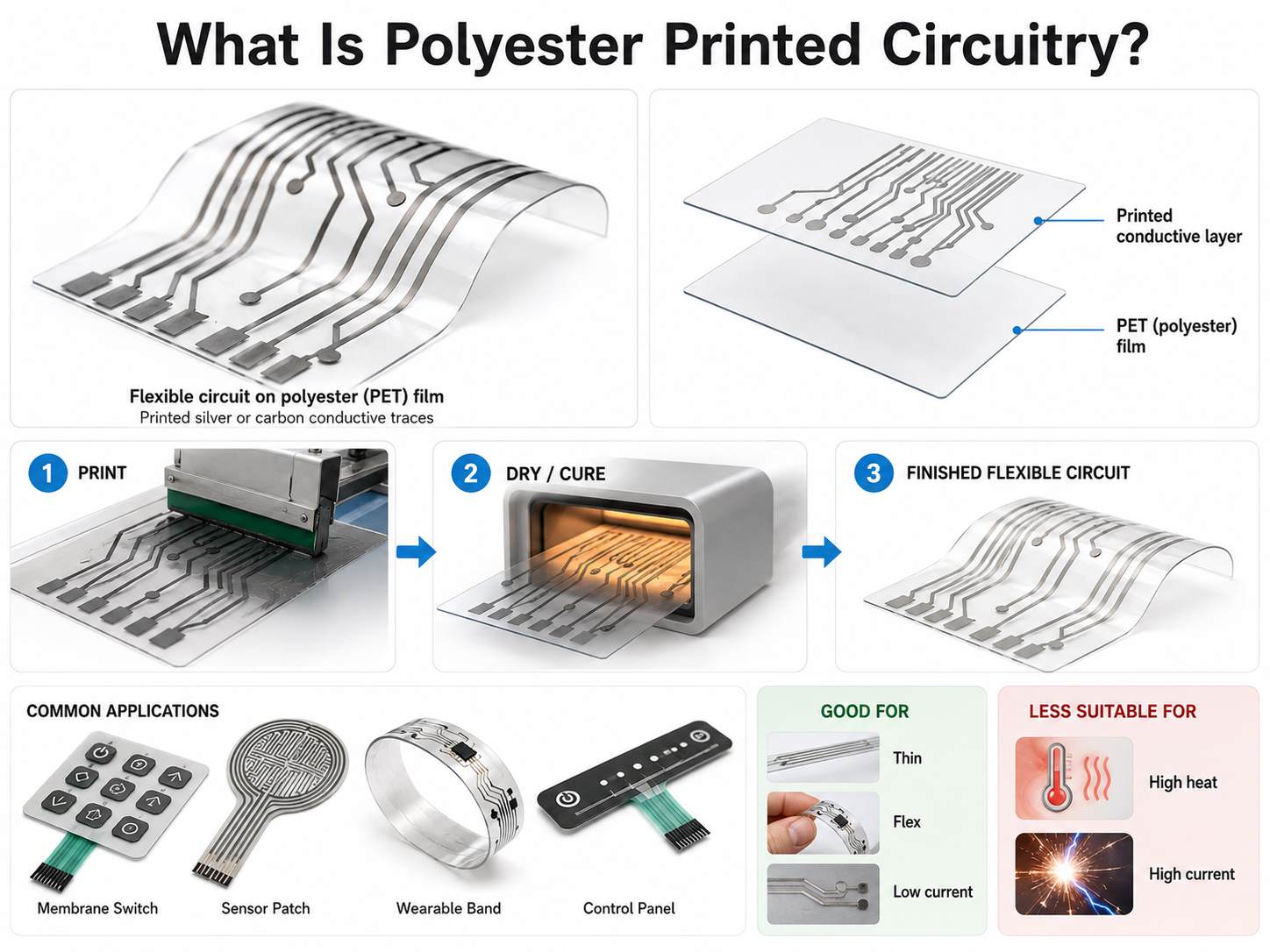
Polyester printed circuitry is a type of flexible circuit made by printing conductive material onto polyester film. The base material is usually PET polyester, and the conductive path is often made with printed silver ink, carbon ink, or other conductive materials.
It is different from traditional copper flexible PCB manufacturing. In many polyester printed circuits, the circuit pattern is printed rather than etched from copper foil.
Common features include:
| Feature | Polyester Printed Circuitry |
|---|---|
| Base material | PET polyester film |
| Conductive material | Silver ink, carbon ink, or conductive ink |
| Manufacturing method | Printing process |
| Typical circuit type | Low-current, flexible, lightweight circuit |
| Common use | Membrane switches, sensors, wearables, control panels |
| Strength | Thin, flexible, cost-effective for selected applications |
| Limitation | Not ideal for every high-reliability or high-current application |
Polyester printed circuitry is useful when the circuit needs to be thin, flexible, and cost-efficient, especially for switch circuits or simple conductive paths. However, if the product needs soldered components, tighter copper features, higher temperature resistance, plated through holes, ENIG pads, or stronger long-term reliability, polyimide FPC may be a better choice.
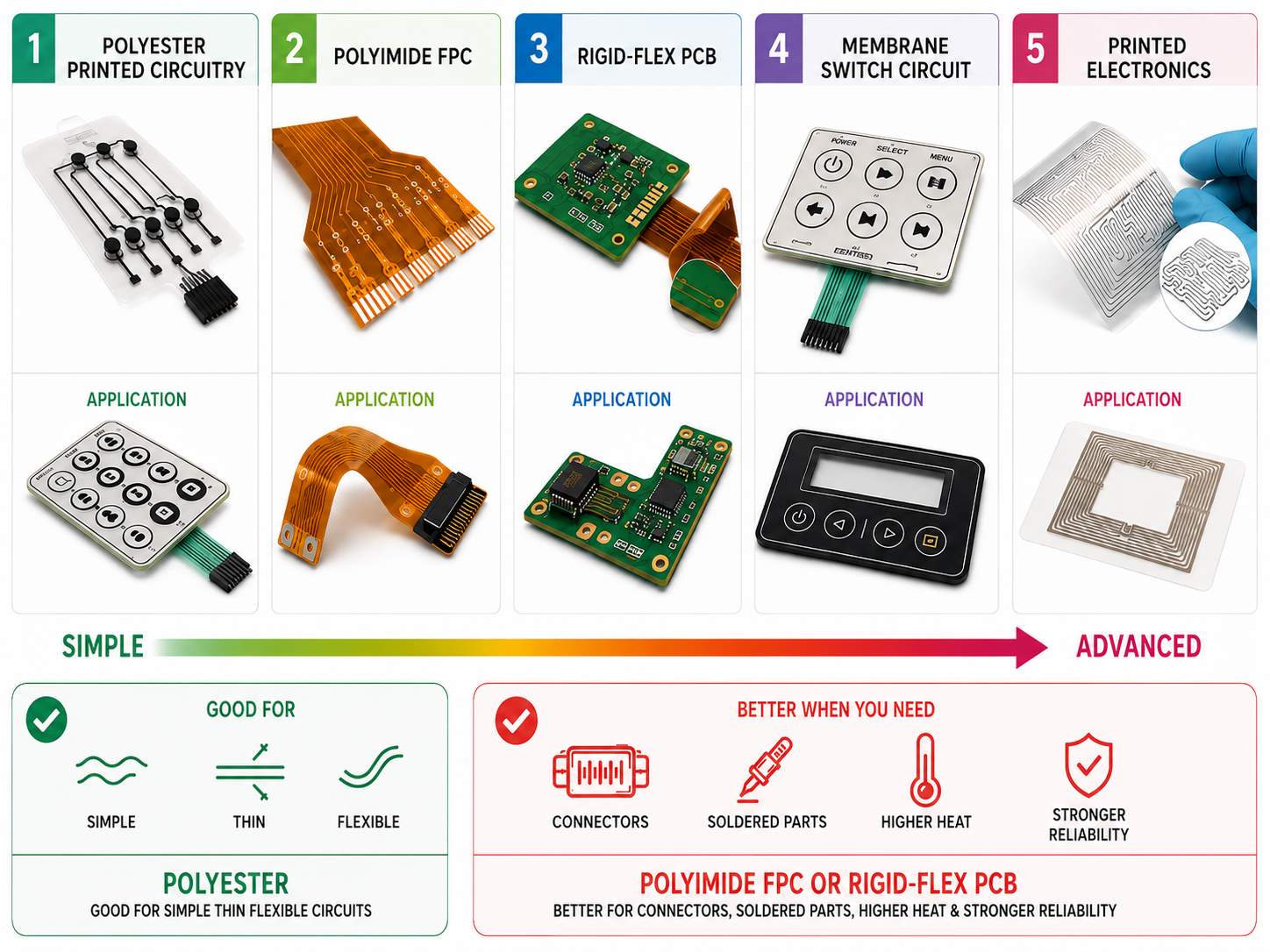
Polyester PCB Boards and Flexible Printed Circuits
The term “polyester PCB boards” can be confusing. In many cases, it refers to a flexible circuit built on polyester film, not a traditional rigid PCB board.
Flexible printed circuits can use different materials and processes:
| Circuit Type | Typical Material | Common Process |
|---|---|---|
| Polyester printed circuitry | PET polyester | Printed conductive ink |
| Polyimide FPC | PI film | Copper etching and plating |
| Rigid-flex PCB | FR4 + PI | Multilayer PCB fabrication |
| Membrane switch circuit | Polyester or polyimide | Printed or etched circuit |
| Printed electronics | PET, paper, textile, or film | Conductive ink printing |
For simple switch panels, polyester may be suitable. For fine-pitch connectors, soldered components, higher reliability, and plated copper structures, polyimide FPC is often more practical.
This is why material selection should be reviewed before production. A project may look like “polyester printed circuitry” at the concept stage, but the final manufacturing path may need polyimide FPC or rigid-flex PCB depending on reliability, connector, temperature, and assembly requirements.
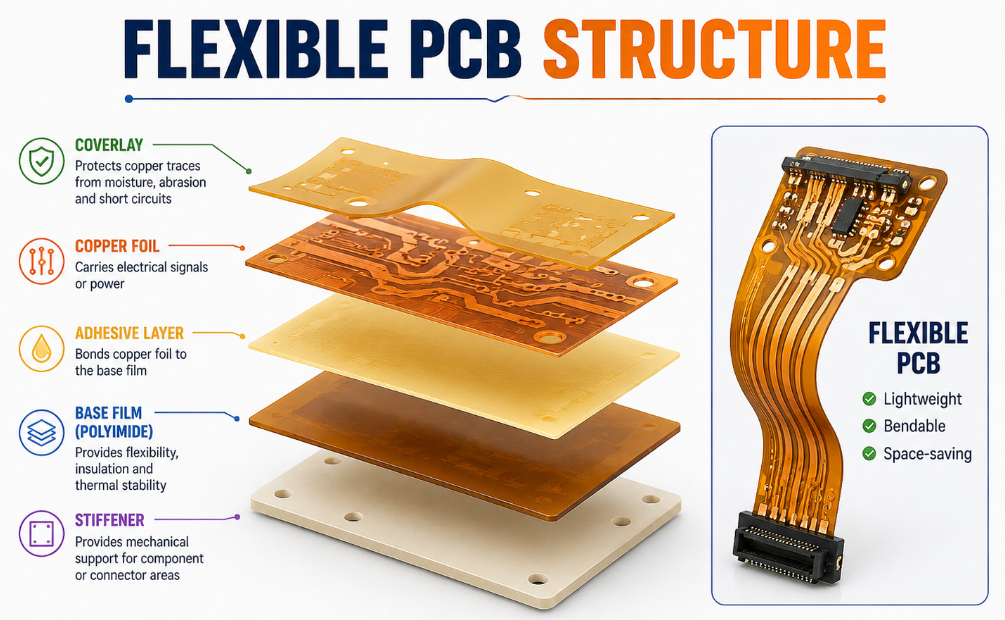
Polyester Printed Circuitry Materials and Structure
A typical polyester printed circuit may include several layers.
| Layer | Purpose |
|---|---|
| Polyester film | Flexible base substrate |
| Conductive ink | Forms the circuit pattern |
| Insulating layer | Separates conductive paths |
| Adhesive layer | Bonds layers together |
| Overlay or graphic layer | Protects or labels the surface |
| Connector tail | Connects to another board or device |
| Stiffener if needed | Adds support at connector area |
The exact structure depends on the product. A membrane switch circuit may need a graphic overlay and spacer layers. A printed sensor may need exposed conductive areas. A wearable circuit may need flexibility, low thickness, and stable connection to a module.
Key engineering checks include:
- Current requirement
- Flexing requirement
- Contact resistance
- Connector method
- Operating temperature
- Humidity exposure
- Surface protection
- Adhesive selection
- Assembly method
- Expected product lifetime
Polyester film is useful for many low-current applications, but it does not replace every flexible PCB material. If a project has soldering, plating, dense copper traces, or high-temperature assembly, polyimide FPC should be considered.
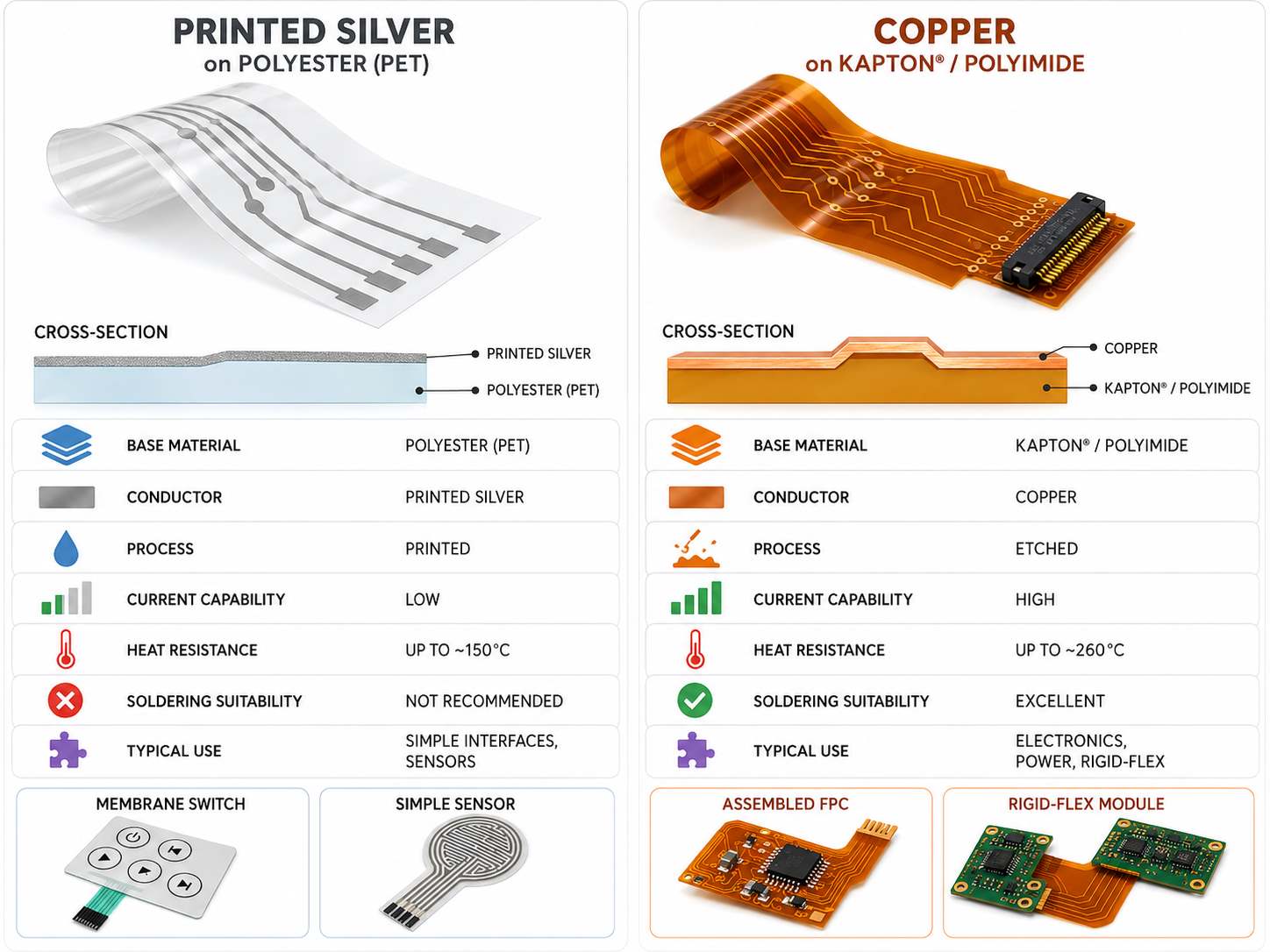
Printed Silver on Polyester vs Copper on Kapton
One of the most important comparisons is printed silver on polyester vs copper on Kapton.
Kapton is a common trade name associated with polyimide film. In PCB manufacturing, copper on polyimide is widely used for flexible printed circuits.
| Item | Printed Silver on Polyester | Copper on Kapton / Polyimide |
|---|---|---|
| Base material | PET polyester | Polyimide |
| Conductor | Printed silver ink | Copper foil |
| Process | Printing | Etching, plating, lamination |
| Current capacity | Usually lower | Usually stronger |
| Temperature resistance | Lower than PI | Better thermal resistance |
| Fine features | Process-dependent | Better for PCB-style routing |
| Soldering | Limited | More suitable |
| Typical use | Membrane switches, sensors, low-current circuits | FPC, rigid-flex, assembled flex circuits |
Printed silver on polyester can be cost-effective for selected applications. Copper on polyimide is usually better when the circuit needs stronger conductivity, plated pads, component assembly, or more demanding reliability.
The right choice depends on the application. A low-current user interface may work well with polyester printed circuitry. A compact electronic module with connectors, ENIG pads, or SMT assembly usually needs FPC manufacturing.
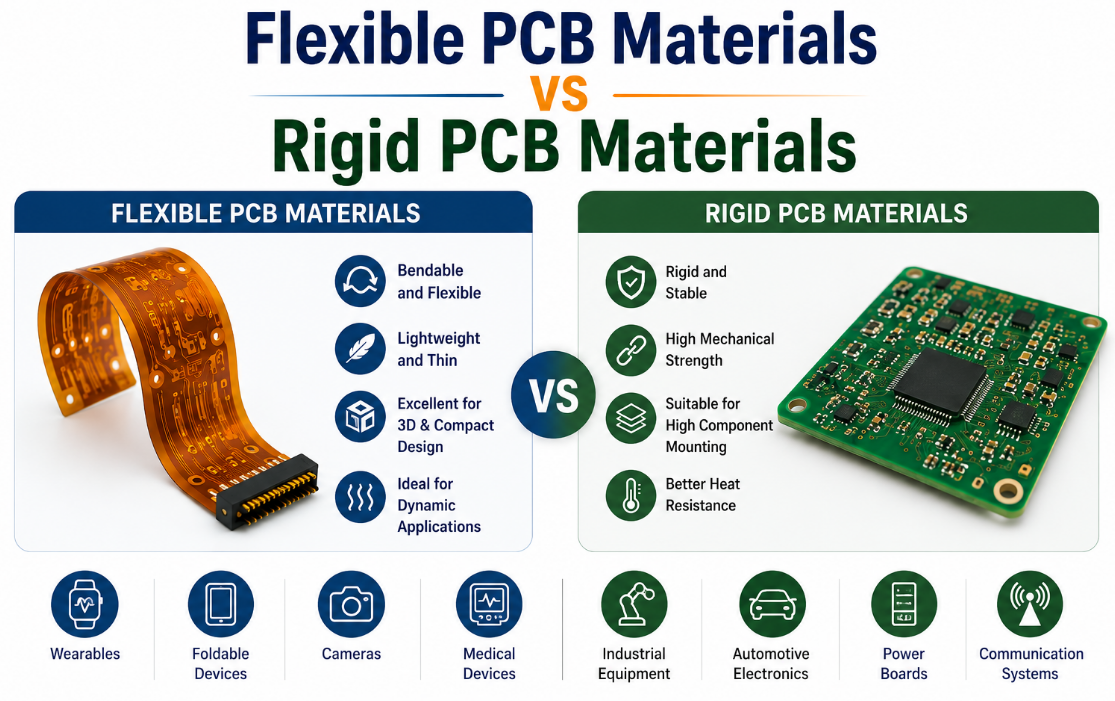
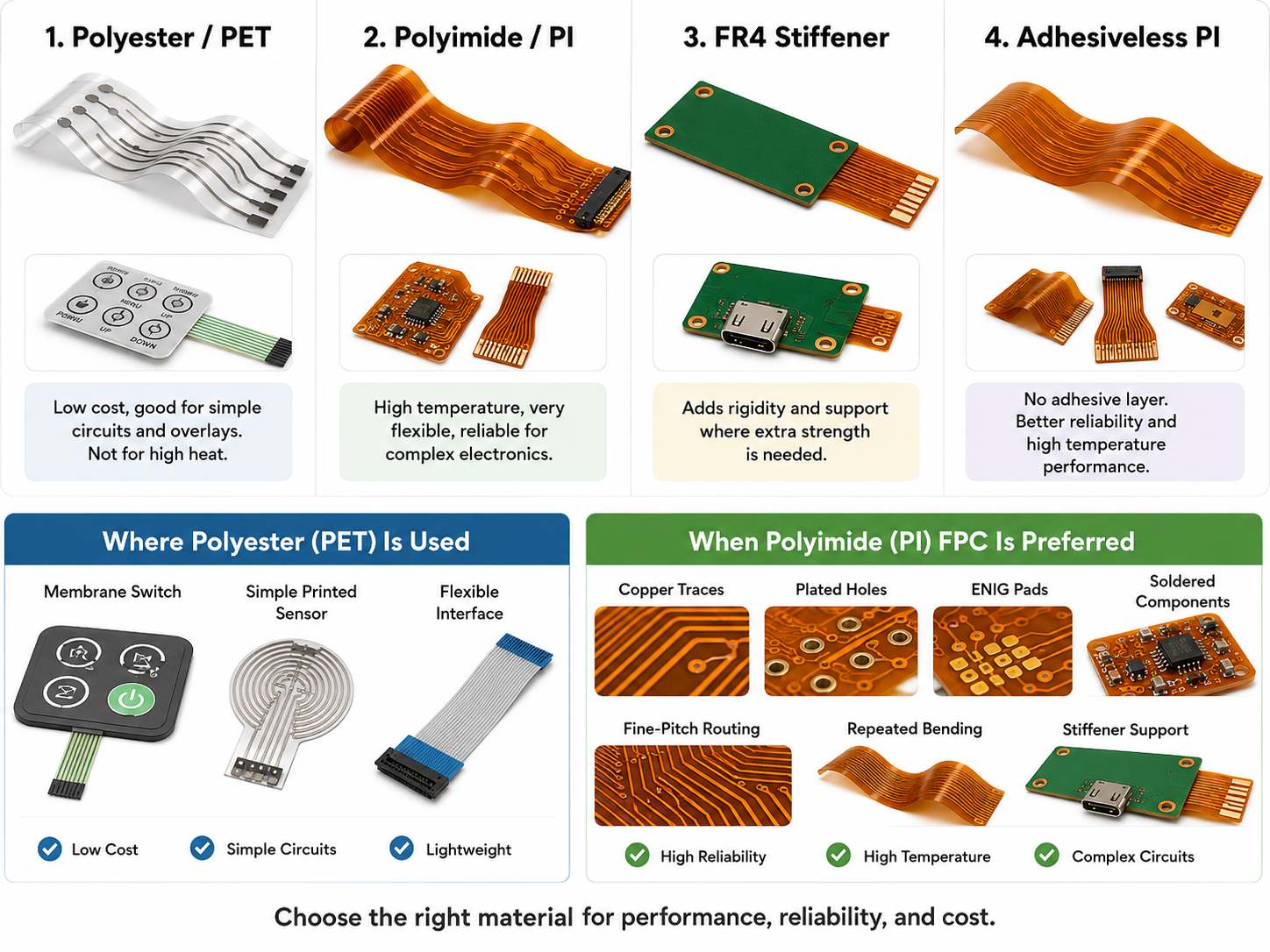
Polyester vs Polyimide Flexible PCB Materials
Polyester and polyimide are both used in flexible electronics, but they are not the same.
| Material | Strength | Limitation |
|---|---|---|
| Polyester / PET | Cost-effective, flexible, good for printed circuits | Lower heat resistance |
| Polyimide / PI | Higher heat resistance, stronger for FPC manufacturing | Usually higher cost |
| FR4 stiffener | Adds mechanical support | Not flexible |
| Adhesiveless PI | Good for thin, reliable FPC | Needs careful manufacturing control |
Polyester can be useful for membrane switches, simple printed circuits, low-current sensors, and flexible interfaces. Polyimide is usually preferred for flexible PCB manufacturing when the project needs:
- Copper traces
- Plated holes
- ENIG finish
- Soldered components
- Connector fingers
- Fine pitch routing
- Better heat resistance
- Repeated bending reliability
- FR4 or PI stiffener
- PCBA assembly
This difference matters for sourcing. If a buyer searches for polyester printed circuitry but actually needs a copper FPC with ENIG and stiffeners, the project should be reviewed as an FPC manufacturing project, not only a printed electronics project.
Where Polyester Flexible Circuits Are Commonly Used
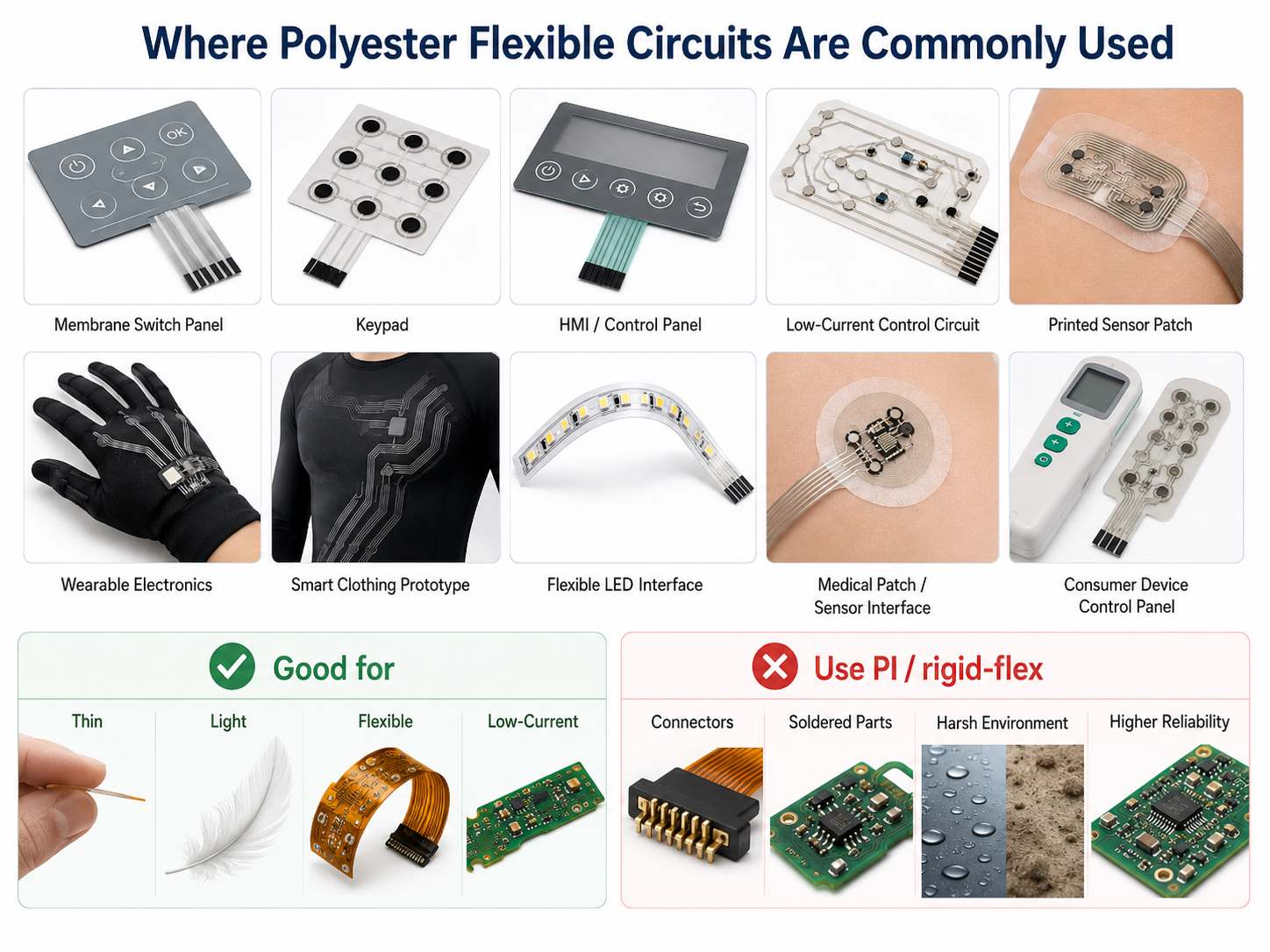
Polyester flexible circuits are often used where the circuit must be thin, lightweight, and flexible.
Common applications include:
- Membrane switch panels
- Keypads
- Human-machine interfaces
- Low-current control circuits
- Printed sensors
- Wearable electronics
- Smart clothing prototypes
- Disposable or semi-disposable electronics
- Flexible LED interface circuits
- Medical patches or sensor interfaces
- Consumer device control panels
Polyester is especially useful when the circuit is not exposed to high temperature, high current, or demanding soldering conditions.
For industrial electronics, medical electronics, automotive electronics, or compact modules with connectors and soldered parts, polyimide FPC or rigid-flex PCB may be safer. The final choice should be based on electrical load, bending life, environment, assembly method, and reliability requirements.
Double-Sided Printed Electronics on Polyester Film
Double-sided printed electronics on polyester film can support more routing options than a single-sided printed circuit. It may use conductive vias, printed interconnects, or other connection methods depending on the manufacturing process.
A double-sided structure may be useful when:
- Routing is limited on one side
- Switch matrix layout needs crossing paths
- Sensor electrodes need more complex connections
- The product needs a compact flexible circuit
- The connector tail requires a specific pin arrangement
However, double-sided printed electronics is not the same as a plated copper double-sided FPC. If the project needs plated through holes, fine copper traces, ENIG pads, or soldered components, a copper-based FPC may be more suitable.
Before choosing double-sided polyester printed circuitry, engineers should confirm:
- Required resistance
- Current level
- Bend area
- Connector method
- Environmental exposure
- Expected lifetime
- Assembly process
- Testing method
Polyester Printed Circuitry for Membrane Switches and Wearables
Polyester printed circuitry is widely used in membrane switches and wearable electronics because it can be thin, flexible, and lightweight.
Membrane switch circuits
In membrane switches, polyester printed circuitry can form key matrix circuits, contact pads, and flexible tails. The circuit is often combined with graphic overlays, spacer layers, adhesives, and connector tails.
Important checks include:
- Contact resistance
- Tail length
- Connector pitch
- Key life cycle
- Adhesive compatibility
- Surface protection
- Moisture exposure
- Bend area
Wearable electronics
For wearables, polyester printed circuitry may be used for low-current signal paths, sensors, or lightweight flexible connections. But if the product needs repeated bending, soldered components, washable structure, or higher reliability, polyimide FPC or textile electronics may need to be evaluated.
This is why material selection is not only about flexibility. It is about the real product environment.
Polyester Printed Circuitry Manufacturing Case Study
A European customer was developing a thin flexible circuit for a compact electronic interface. At the early sourcing stage, the customer compared polyester printed circuitry with copper-based flexible PCB manufacturing. After reviewing the connection area, thickness requirement, finish, and reinforcement needs, the project was handled as a 2-layer polyimide FPC rather than a printed silver polyester circuit.
Project snapshot
- Customer: Europe
- Application: Compact flexible interface circuit
- Final process: 2L FPC
- Panel format: Customer-specified panelization, single panel delivery
- Panel size: 250mm x 70mm
- Copper: 1/2oz copper + plating
- Base material: 2mil adhesiveless PI
- Bottom coverlay: 1mil coverlay
- Top coverlay: Not required
- FPC thickness: 0.15mm +/-0.03mm
- Stiffener: 0.35mm FR4 stiffener
- Final stiffened thickness: 0.5mm +/-0.05mm
- Surface finish: ENIG, Au 1u”
- Silkscreen: White silkscreen
- Production control: Production files and stackup required customer confirmation before mass production
Why polyester printed circuitry was not the final choice
The customer needed a thin flexible circuit, but the project also required copper traces, plating, ENIG surface finish, controlled thickness, FR4 stiffener support, and production stackup confirmation. These requirements were closer to polyimide FPC manufacturing than printed silver on polyester.
EBest Circuit review focus
- Checked the 2-layer FPC stackup before production
- Reviewed 2mil adhesiveless PI and 1mil bottom coverlay structure
- Confirmed the no-top-coverlay requirement
- Checked 0.15mm +/-0.03mm FPC thickness control
- Reviewed FR4 stiffener thickness and final 0.5mm +/-0.05mm area
- Confirmed ENIG Au 1u” for contact reliability
- Prepared production files and stackup for customer confirmation before production
Customer value
For the customer, the value was not only receiving a flexible circuit. The important value was choosing the right manufacturing path. Polyester printed circuitry may be suitable for printed switch or low-current applications, but this project needed a copper-based FPC structure with ENIG and FR4 stiffener. EBest Circuit helped clarify the material and manufacturing requirements before production, reducing the risk of using the wrong flexible circuit process.
How to Choose Between Polyester Printed Circuitry and Flexible PCB Manufacturing
Choosing between polyester printed circuitry and flexible PCB manufacturing depends on the real product requirements.
Polyester printed circuitry may be suitable when the project needs:
- Low-current flexible circuit
- Membrane switch
- Printed sensor
- Simple conductive path
- Thin PET structure
- Cost-sensitive flexible interface
- No soldered components
- Lower thermal demand
Polyimide FPC may be better when the project needs:
- Copper traces
- Plated holes
- ENIG pads
- Soldering
- Connector fingers
- FR4 stiffener
- Higher heat resistance
- More reliable flex performance
- SMT assembly
- PCBA integration
A practical supplier should ask for:
- Drawing or Gerber data
- Material requirement
- Thickness requirement
- Bend area
- Connector area
- Stiffener requirement
- Surface finish
- Current and voltage needs
- Assembly notes
- Application environment
- Reliability requirement
EBest Circuit supports flexible PCB, rigid-flex PCB, PCB fabrication, component sourcing, PCBA assembly, and DFM review. If your project is not suitable for polyester printed circuitry, our engineering team can help review whether polyimide FPC, rigid-flex PCB, or another PCB structure is more practical for manufacturing.
FAQs about Polyester Printed Circuitry
1. What is polyester printed circuitry?
Polyester printed circuitry is a flexible circuit made by printing conductive material, often silver ink, onto polyester film. It is commonly used in membrane switches, low-current flexible circuits, printed sensors, and lightweight electronic interfaces.
2. Is polyester printed circuitry the same as flexible PCB?
Not exactly. Polyester printed circuitry often uses printed conductive ink on PET film. Flexible PCB usually refers to copper circuits on polyimide film, produced with PCB fabrication processes such as etching, plating, lamination, and surface finishing.
3. What is the difference between polyester and polyimide flexible circuits?
Polyester is cost-effective and useful for printed circuits and membrane switches. Polyimide has better heat resistance and is more suitable for copper FPC, ENIG pads, soldering, stiffeners, and more demanding electronic assemblies.
4. Can polyester printed circuitry use double-sided circuits?
Yes, double-sided printed electronics on polyester film are possible, but the structure is different from plated copper double-sided FPC. The right choice depends on routing, resistance, connector, and reliability requirements.
5. When should I choose polyimide FPC instead of polyester printed circuitry?
Choose polyimide FPC when the project needs copper traces, plated holes, ENIG, soldered components, FR4 stiffener, tight thickness control, or higher reliability than a printed polyester circuit can provide.
To conclude, if you are comparing polyester printed circuitry, polyester PCB boards, polyimide FPC, or rigid-flex PCB for a new project, send your drawings, Gerber data, material notes, thickness requirement, connector area, stiffener requirement, surface finish, and application environment to sales@bestpcbs.com. EBest Circuit’s engineering team can help review the manufacturing path before production and help you avoid choosing the wrong flexible circuit structure.