PCB manufacturing PCB manufacturing
Home > Blog

Automotive PCB

Custom PCB Design for Automotive: From DFM to Production
Thursday, May 21st, 2026

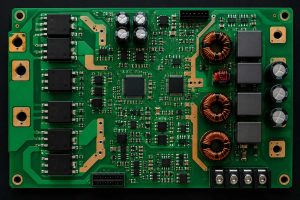
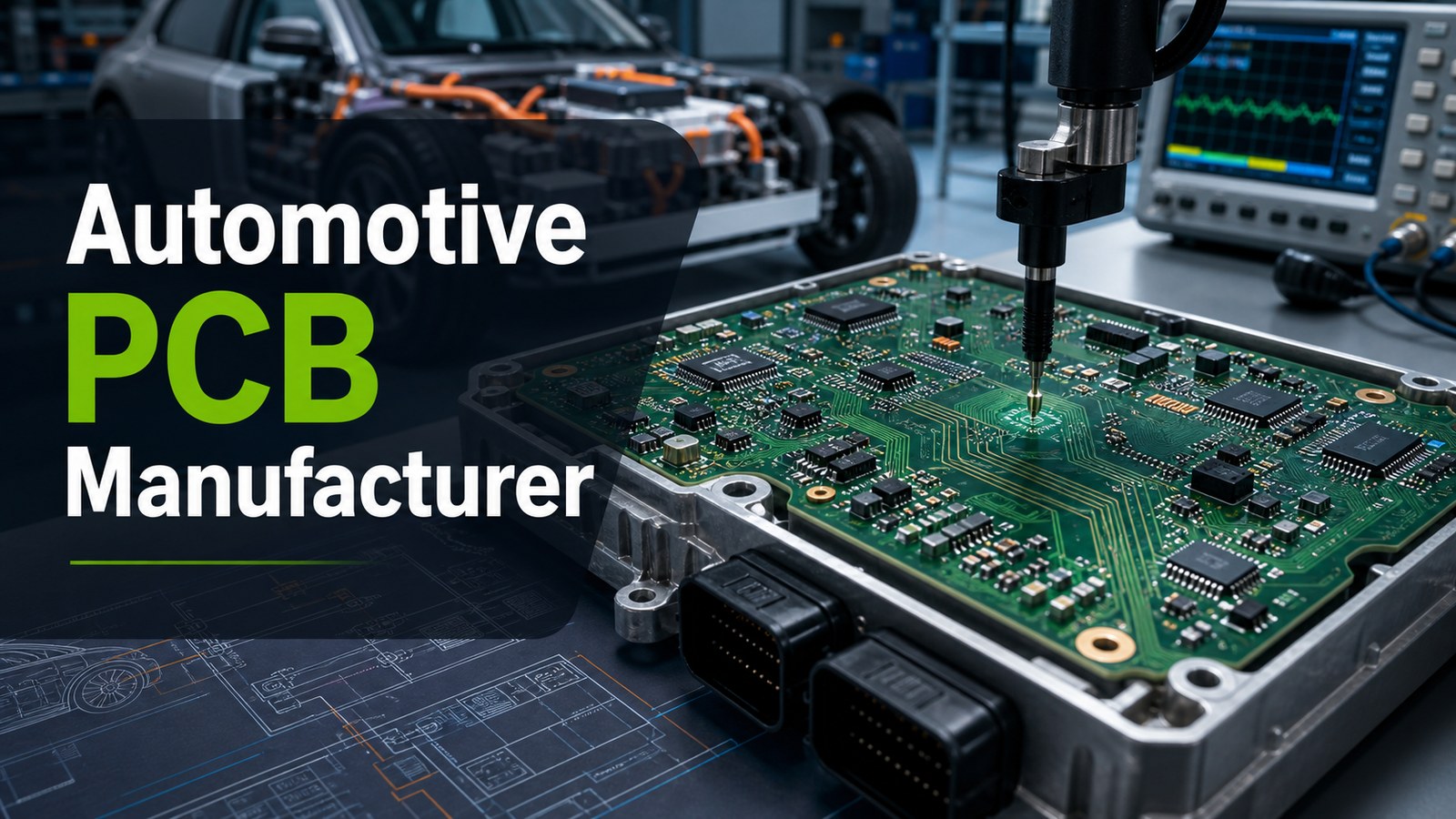
Custom PCB design for automotive means creating a circuit board that matches the electrical, thermal, mechanical, and production needs of a specific vehicle application, from control modules and BMS boards to lighting systems, radar PCBs, sensors, and power electronics.

At EBest Circuit (Best Technology), we support automotive PCB projects with DFM review, material and stackup suggestions, PCB fabrication, component sourcing, PCBA assembly, testing, and traceability, helping customers reduce design risks before production starts.

With our engineering-driven support and experience in high Tg FR4, heavy copper PCB, aluminum PCB, ceramic PCB, Rogers high-frequency PCB, and automotive-related quality control, we help customers move from prototype to stable production. If you are developing an automotive PCB project and need technical feedback before manufacturing, you can send your files or requirements to sales@bestpcbs.com for review.

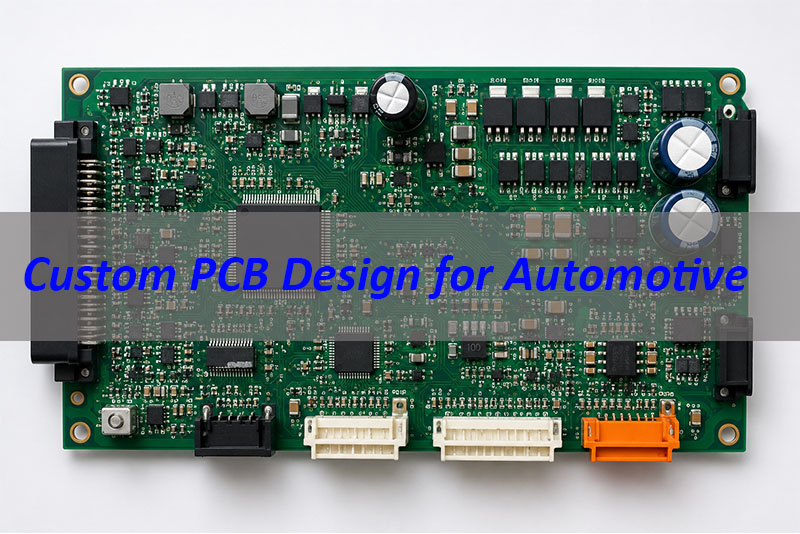
Custom PCB Design for Automotive

What Is Custom PCB Design for Automotive?

Custom PCB design for automotive means designing a PCB for a specific vehicle application. At the same time, the board must be ready for manufacturing, assembly, inspection, and stable production.

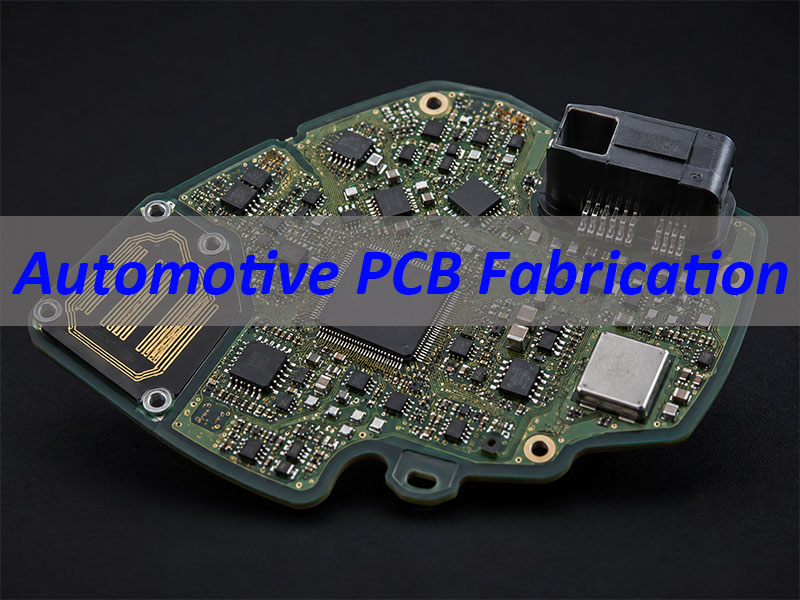
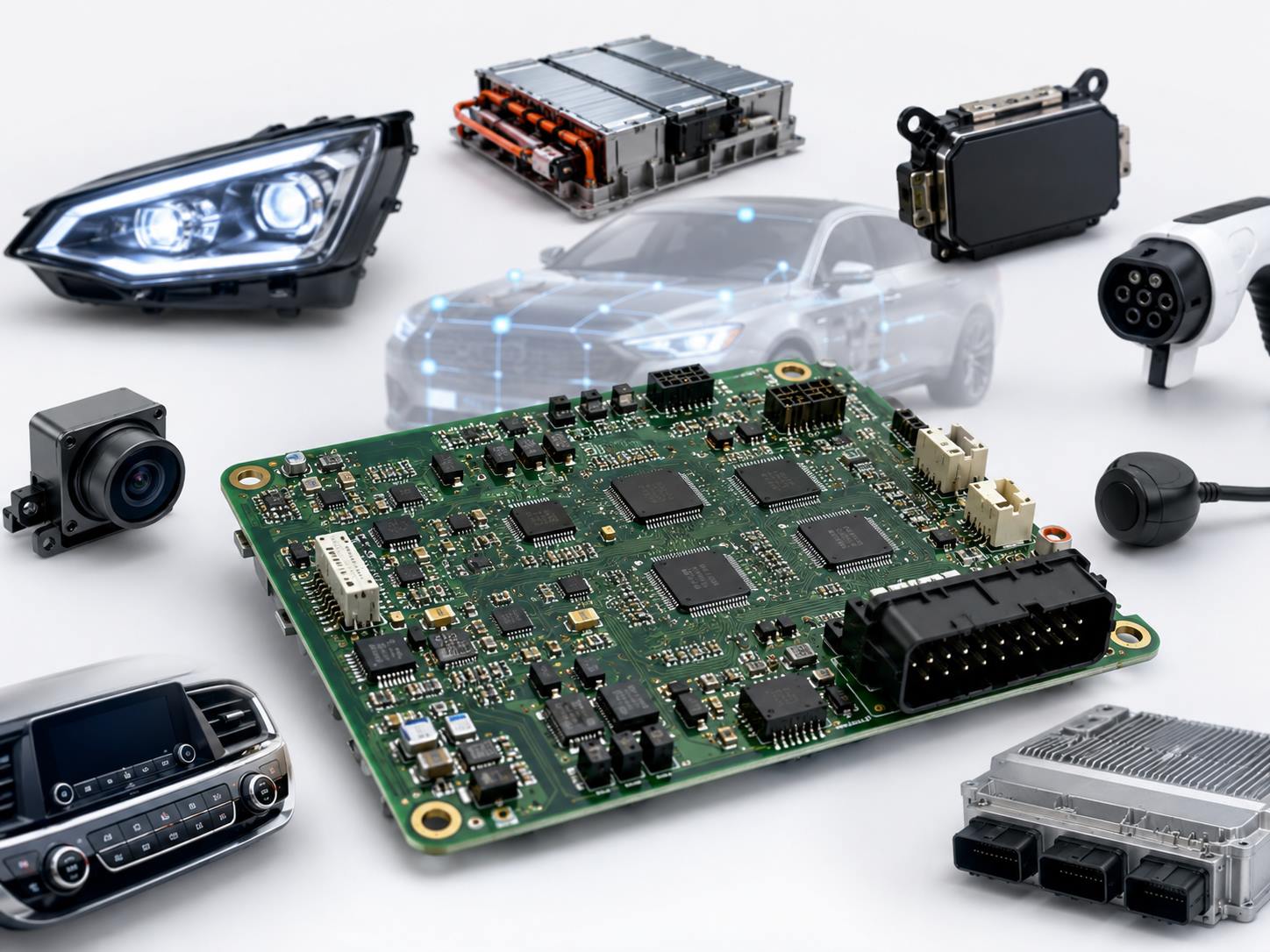
Automotive PCBs are used in lighting modules, BMS boards, radar modules, sensors, cameras, power control units, charging systems, and ADAS products. These boards often work in tough conditions. They may face heat, vibration, moisture, high current, and electrical noise. Therefore, automotive PCB design must be planned with care.

Custom PCB Design for Automotive

What Quality Standards Should Custom PCB Design for Automotive Follow?

Automotive PCB projects need strict quality control. Even a small PCB problem can affect system performance or long-term reliability.

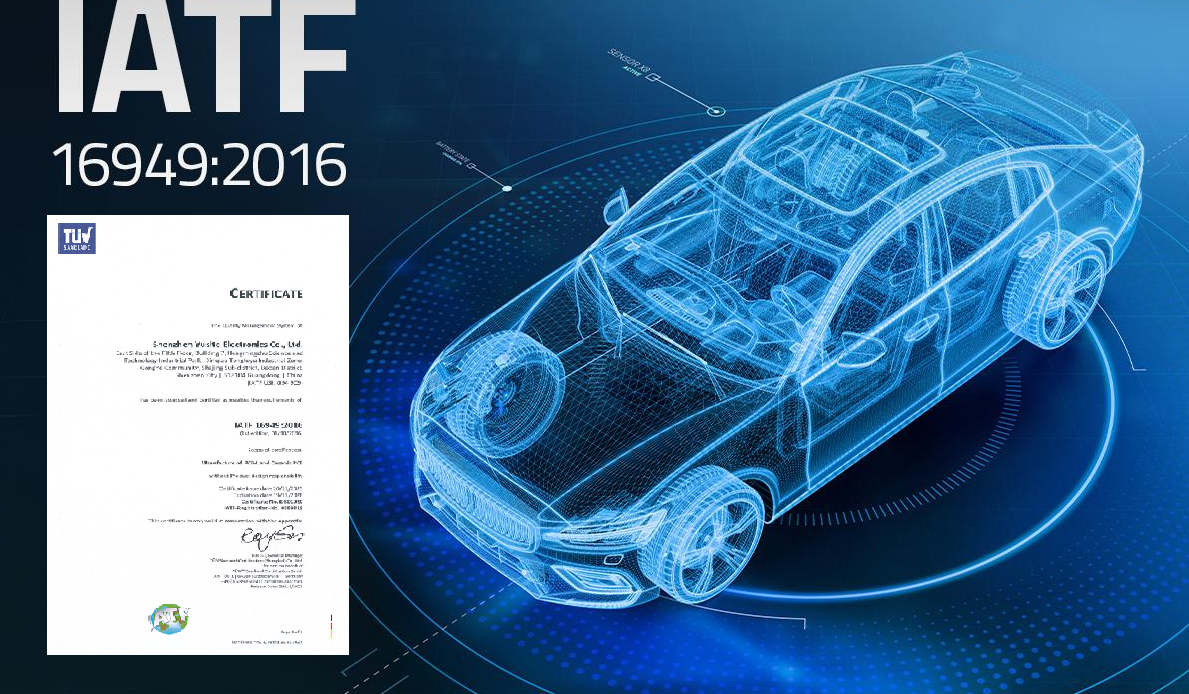
One common standard is IATF 16949. It is not a PCB layout rule. Instead, it is a quality management standard for automotive production. It helps control process stability, traceability, supplier quality, and corrective actions.

In addition, automotive PCB projects may follow IPC standards, ISO systems, material rules, and customer-specific requirements.

Standard or RequirementWhy It Matters
IATF 16949Supports automotive quality control and process stability
ISO 9001Builds a basic quality system for production
IPC-A-600Defines bare PCB acceptance requirements
IPC-A-610Defines PCBA acceptance requirements
IPC-6012 / IPC-6013Supports rigid PCB and flexible PCB performance
RoHS / REACHSupports material compliance
Customer RequirementsCovers special tests, marking, packaging, and traceability

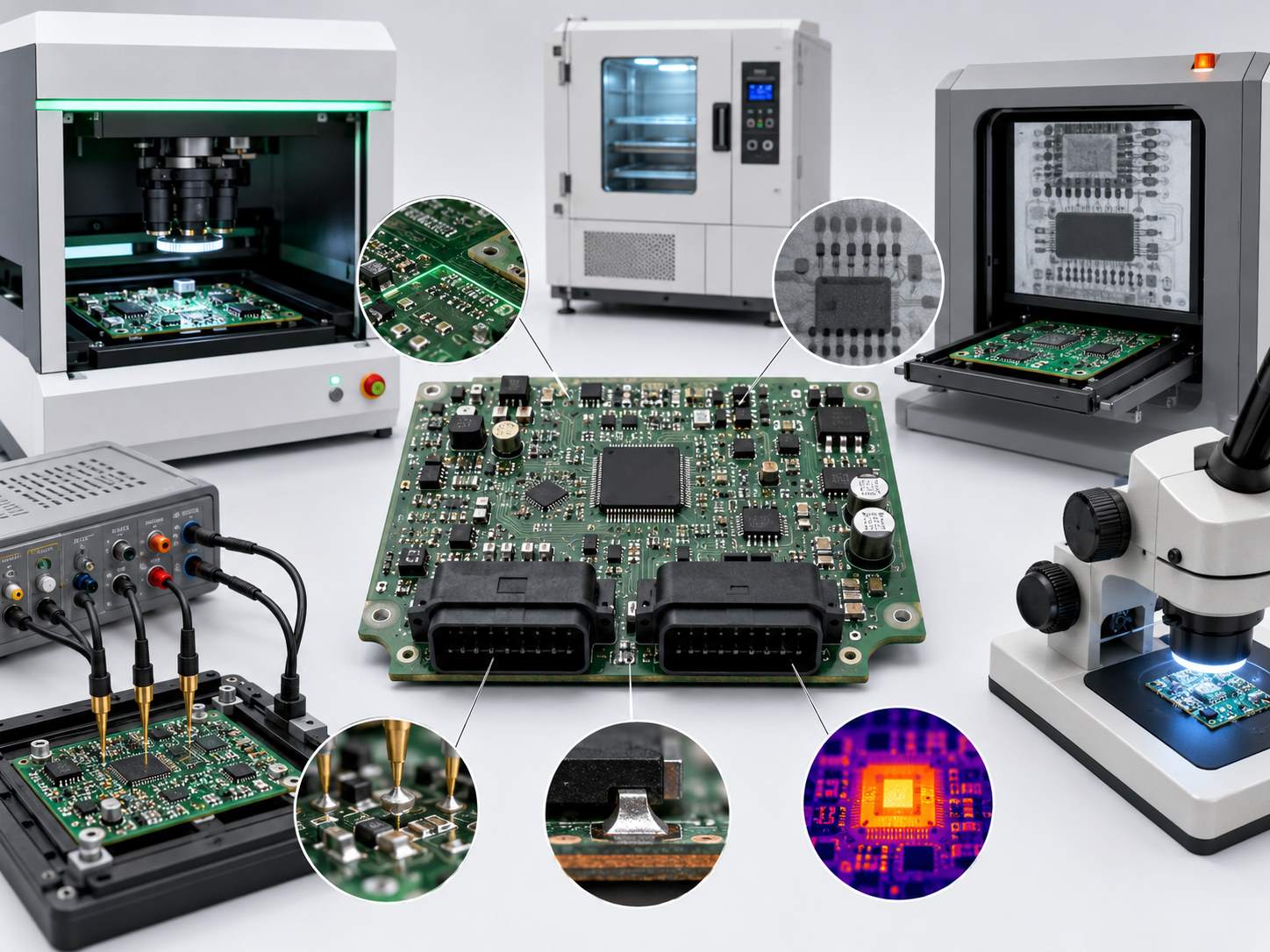
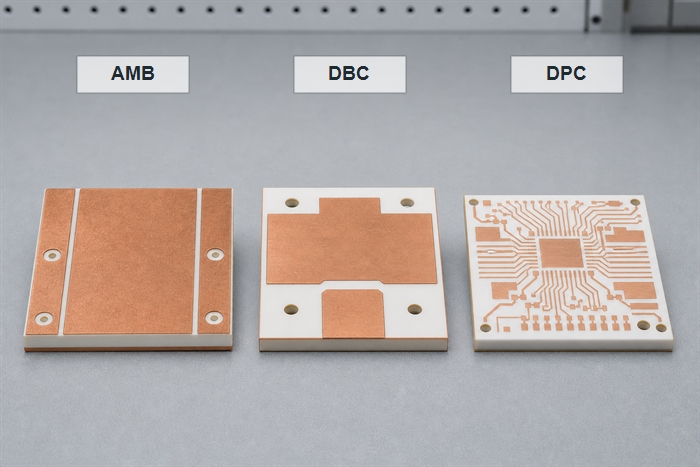
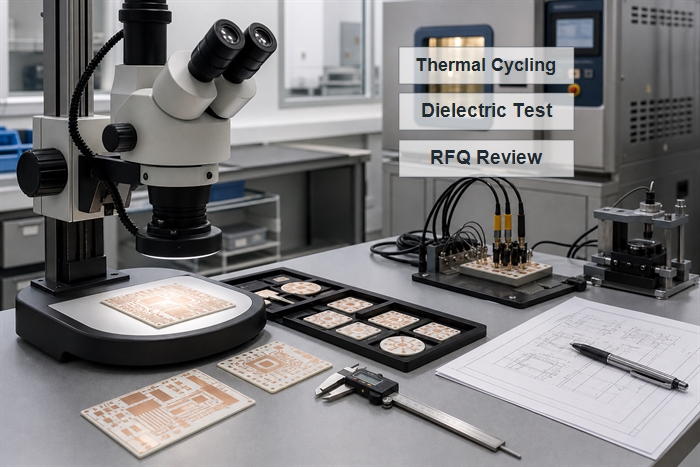
Also, some customers may request extra reliability tests. These may include thermal cycling, vibration testing, humidity testing, solderability checks, impedance testing, and cross-section analysis.

As a result, a good supplier should do more than produce the board. It should also understand the quality path behind the project. This gives customers more confidence before prototype, trial production, and mass production.
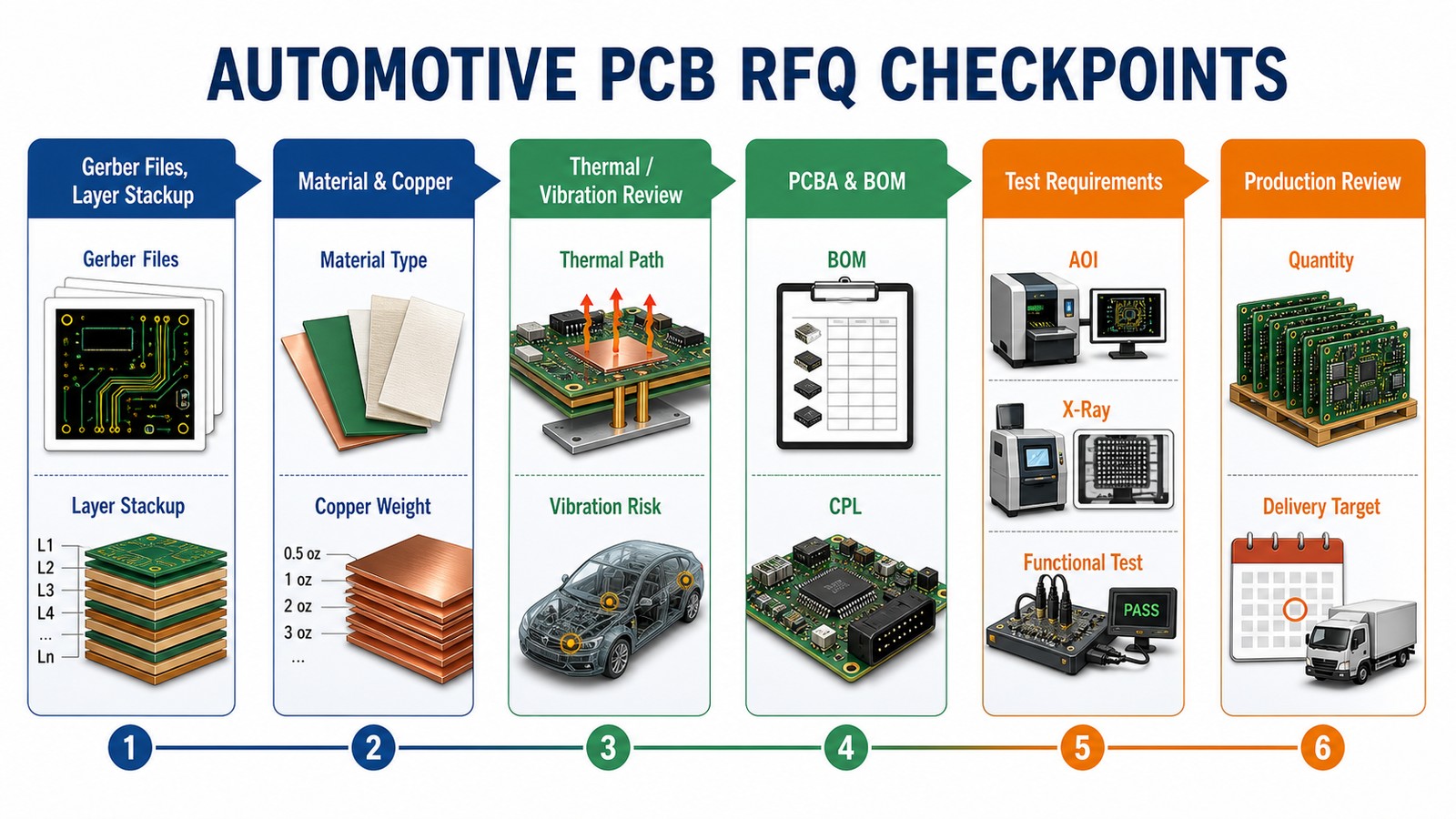
What Engineering Documents Are Needed for Automotive PCB Production?

Automotive PCB production often needs more documents than standard PCB orders. These documents help both sides confirm the same requirements before production starts.

For early prototypes, the document package can be simple. However, for automotive production, customers may need more formal records.

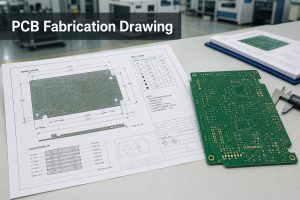
Gerber Files and Fabrication Drawing

  • These files define copper layers, drill data, board outline, tolerances, copper thickness, surface finish, material, and special notes.

Stackup Drawing

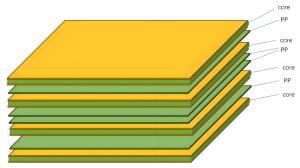
  • This shows the layer structure, dielectric thickness, copper weight, impedance layers, and reference planes. It is important for high-speed, RF, and EMI-sensitive designs.

BOM and Assembly Drawing

  • For PCBA projects, the BOM and assembly drawing confirm part numbers, placement, polarity, package size, and assembly needs.

DFM Report

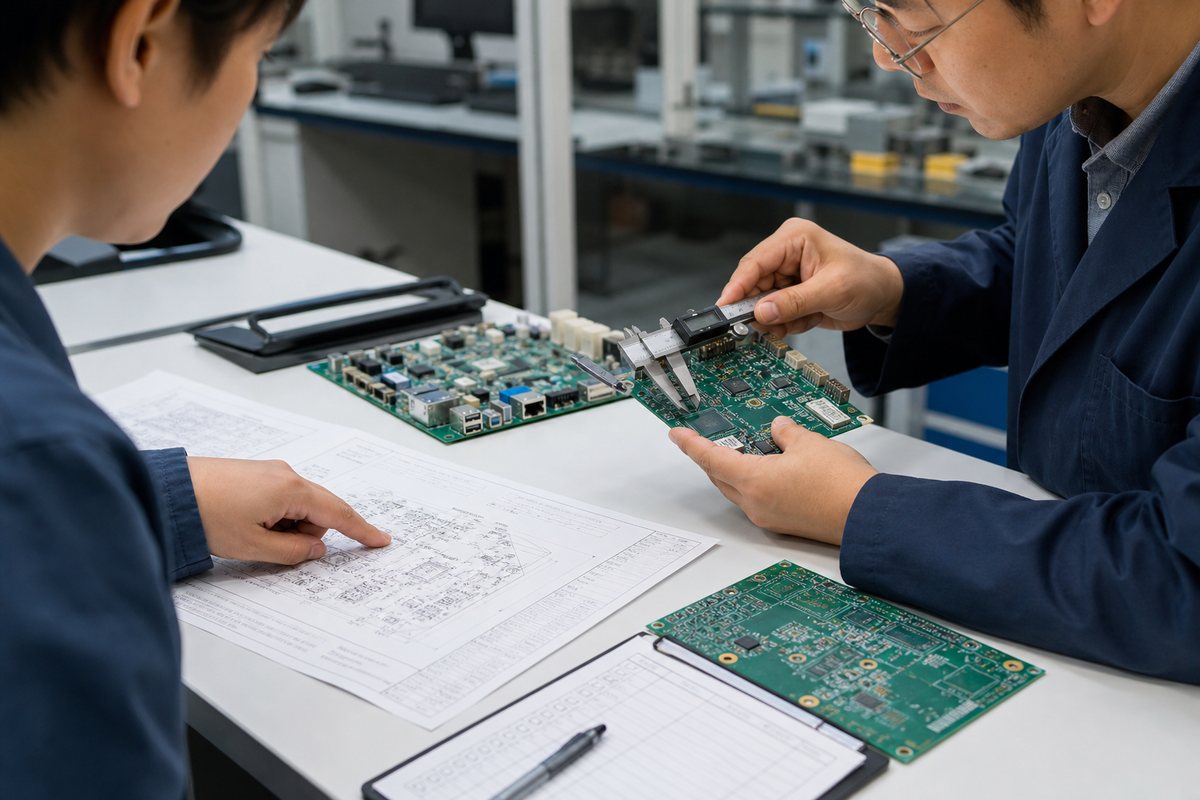
  • A DFM report shows possible manufacturing risks before production. It may cover trace width, spacing, hole size, via design, copper balance, solder mask clearance, and panelization.

APQP

  • APQP means Advanced Product Quality Planning. It helps plan quality before production. For automotive PCB projects, it can cover material choice, process planning, testing needs, and production control.

FMEA

  • FMEA helps review possible failure risks. For PCB projects, it may cover open circuits, short circuits, via cracks, plating issues, solder defects, thermal stress, and wrong components.

Control Plan

  • A control plan lists what must be checked during production. It can include board thickness, copper thickness, hole size, impedance, surface finish, AOI, E-test, X-ray, and final inspection.

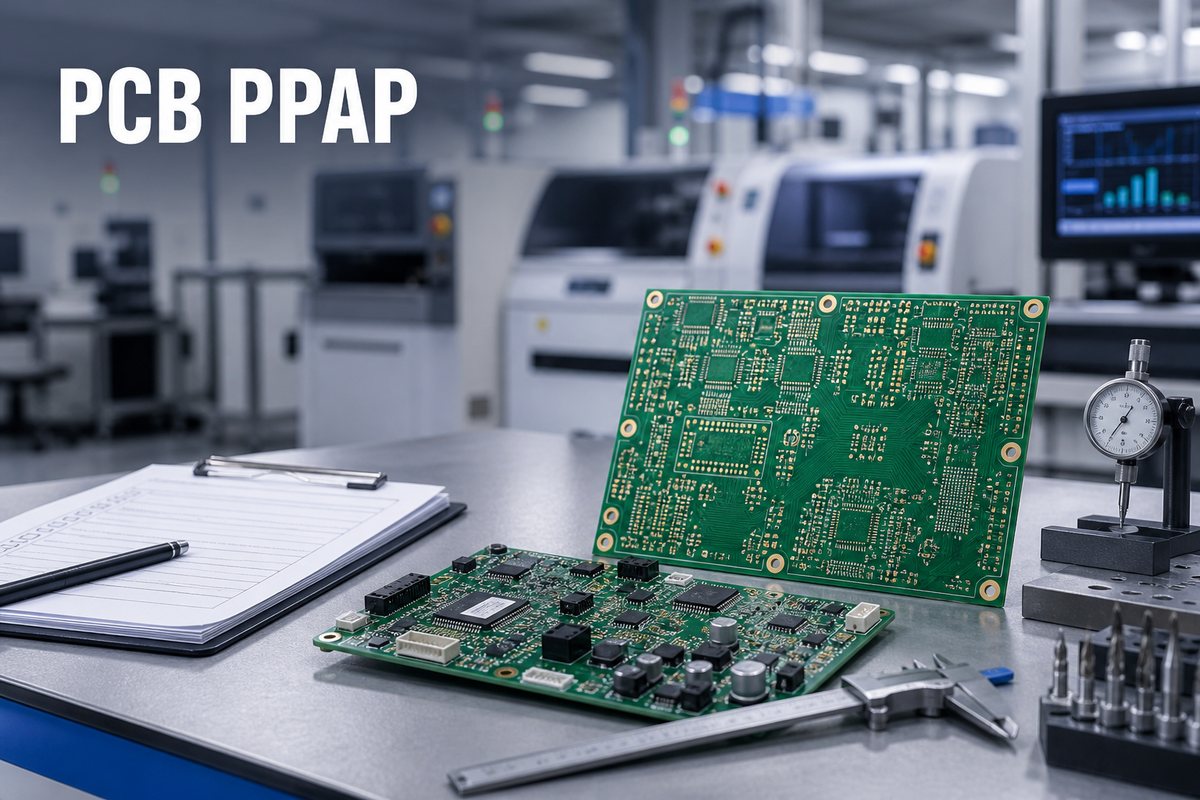
PPAP

  • PPAP means Production Part Approval Process. It helps prove that the production process can meet customer requirements. It may include design records, process flow, FMEA, control plan, test results, sample approval, and inspection reports.

FAI Report

  • First Article Inspection checks the first sample against the approved drawing, files, and specifications.

These documents reduce confusion. Also, they help customers move from samples to stable production with better control.

How Does EBest Circuit Support Custom PCB Design for Automotive with DFM Review?

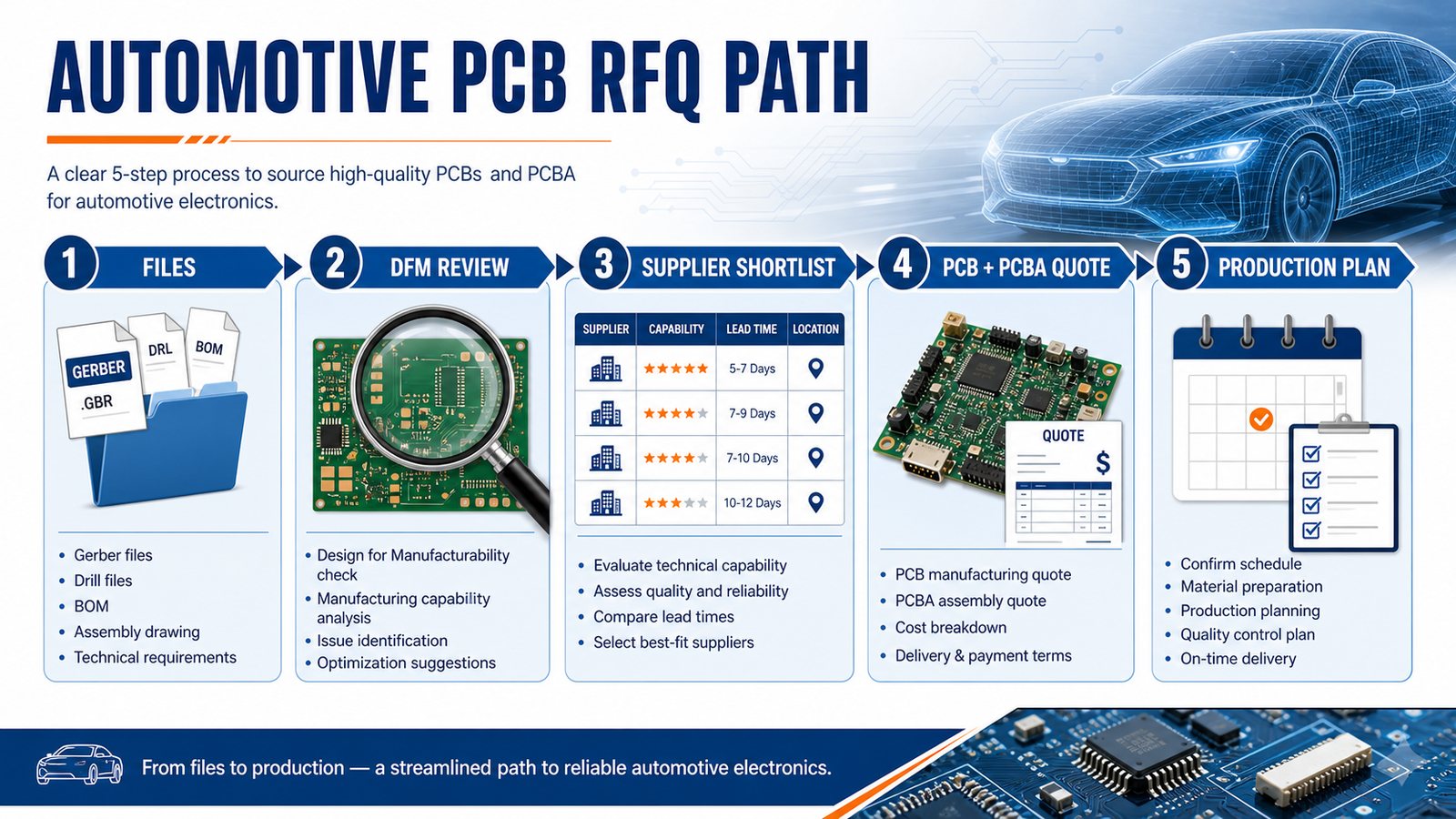
DFM review is one of the most useful steps before PCB fabrication. It helps find design risks before they become production problems.

EBest Circuit (Best Technology) supports custom PCB design for automotive with practical DFM review before fabrication and assembly. The goal is to improve manufacturability, reduce redesign work, and prepare the project for production.

During DFM review, EBest Circuit can check:

  • Trace width and spacing
  • Drill size and annular ring
  • Via type and via reliability
  • Copper thickness and current capacity
  • Impedance design and stackup feasibility
  • Solder mask clearance
  • Pad size and footprint accuracy
  • Thermal relief design
  • High-current copper areas
  • Panelization method
  • Surface finish choice
  • SMT and DIP assembly risks

For example, a power board may need thicker copper and better heat paths. A radar PCB may need controlled impedance and stable materials. A lighting PCB may need an aluminum base or copper base. Also, a BMS board may need proper spacing, isolation, and traceability.

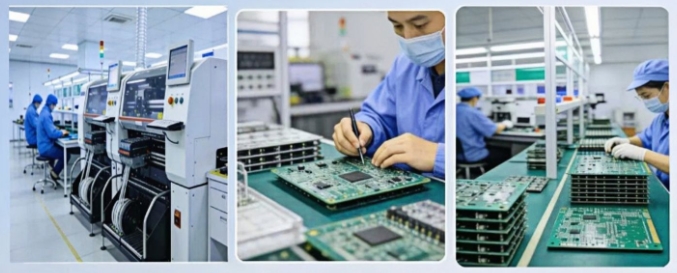
In addition, EBest Circuit can review the project from both PCB and PCBA angles. This is useful because many problems appear between fabrication and assembly. With PCB manufacturing, component sourcing, assembly, and testing support in one place, customers can reduce communication work and speed up the project.
How to Choose Materials and Stackups for Custom PCB Design for Automotive?

Material and stackup choices affect automotive PCB reliability. The right choice depends on working temperature, current load, signal speed, board size, and cost target.

  • For many control boards, high Tg FR4 is a practical choice. It offers better heat resistance than standard FR4. Therefore, it is often used in sensors, control modules, interior electronics, and general vehicle electronics.
  • For power boards, heavy copper PCB may be better. Thick copper helps carry higher current and spread heat. It is often used in BMS boards, motor control boards, DC-DC converters, and charging systems.
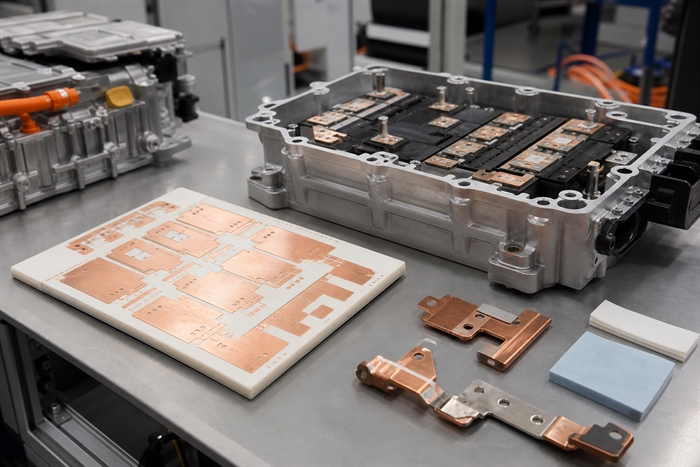
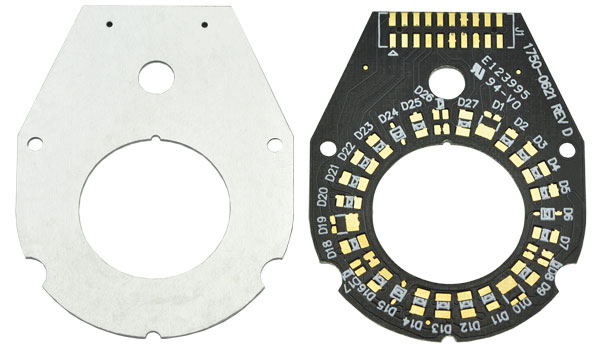
  • For LED lighting and power modules, aluminum PCB or copper-based PCB can improve heat transfer. These materials help move heat away from LEDs and power components.
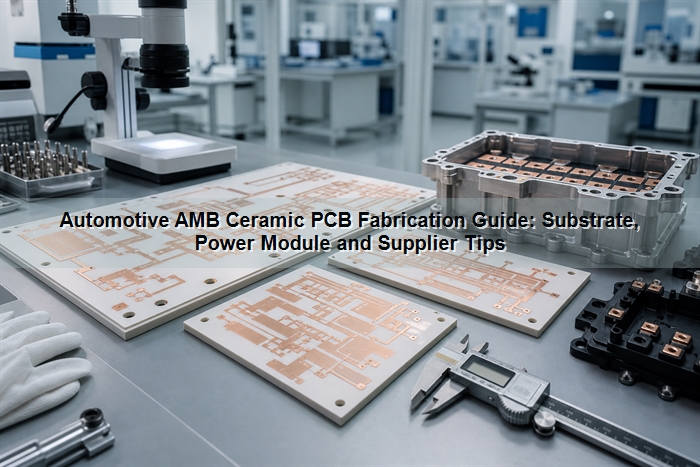
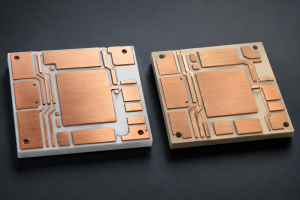
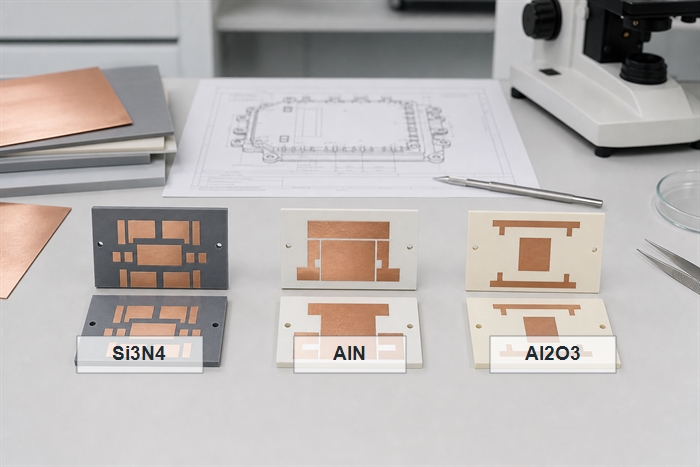
  • For high-power or high-temperature applications, ceramic PCB may be considered. Alumina, aluminum nitride, and silicon nitride can offer stronger thermal performance.
  • For radar, antenna, and high-frequency modules, Rogers or other RF materials may be used. These materials help reduce signal loss and support stable frequency performance.
PCB MaterialCommon Automotive Use
High Tg FR4Control modules, sensors, general vehicle electronics
Heavy Copper PCBBMS, motor control, power boards, charging systems
Aluminum PCBLED headlights, tail lights, lighting modules
Copper-Based PCBHigher power lighting and thermal products
Ceramic PCBPower modules and high-temperature applications
Rogers RF MaterialRadar, antenna, RF, and high-frequency boards

Also, stackup design should support both performance and production. Engineers should review layer count, ground planes, power planes, impedance, copper balance, thermal path, board thickness, and spacing.

The best material is not always the most expensive one. Instead, it should match the application, reliability target, and production budget.

What Testing and Inspection Are Needed for Automotive Custom PCBs?

Testing and inspection help confirm that automotive custom PCBs meet the approved requirements. They also help find issues before system testing or mass production.

The test plan depends on the project. A simple control PCB may need standard electrical testing and visual inspection. However, a high-reliability automotive PCB may need more checks and records.
Testing or Inspection MethodPurpose
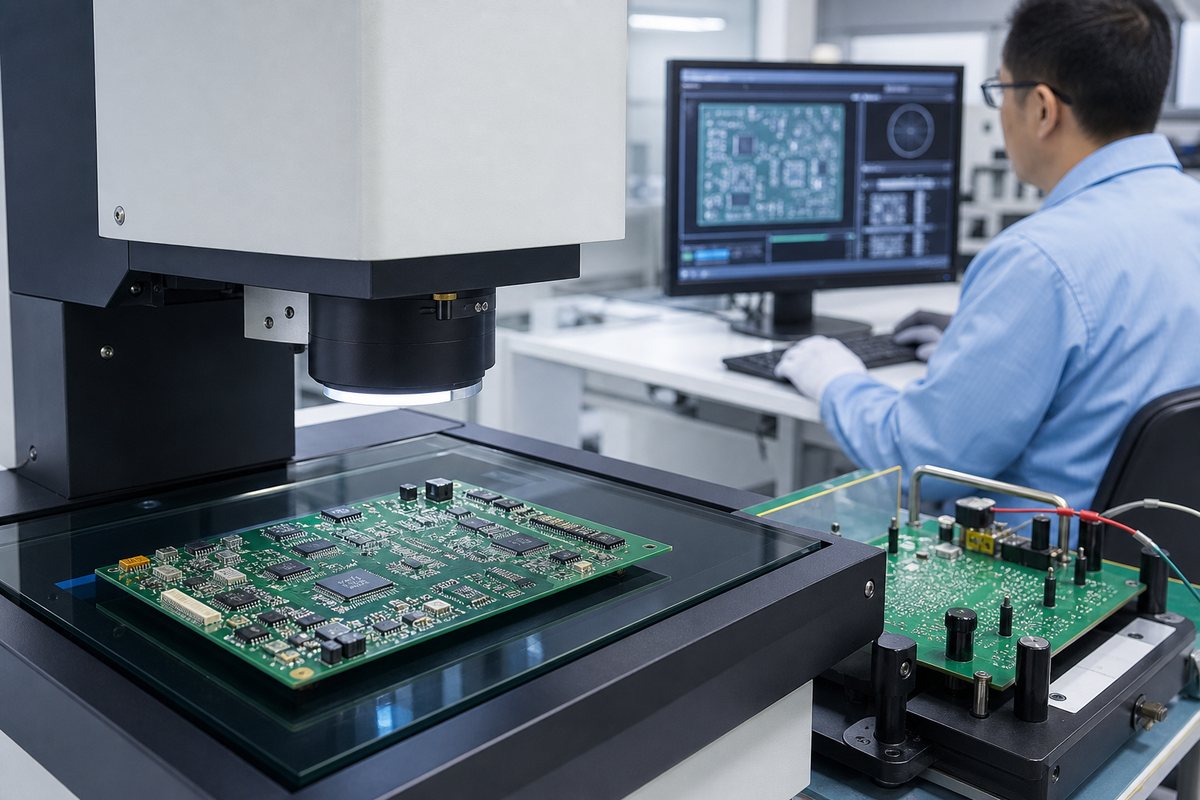
AOIChecks line defects, shorts, opens, and surface issues
E-testConfirms electrical continuity and isolation
X-ray InspectionChecks hidden solder joints, BGAs, and internal risks
Impedance TestingConfirms controlled impedance requirements
Cross-Section AnalysisChecks plating, hole wall quality, and internal structure
Solderability TestingConfirms pad soldering performance
Thermal CyclingChecks reliability under temperature change
Functional TestingConfirms that the assembled board works correctly
FAIChecks the first sample against approved requirements
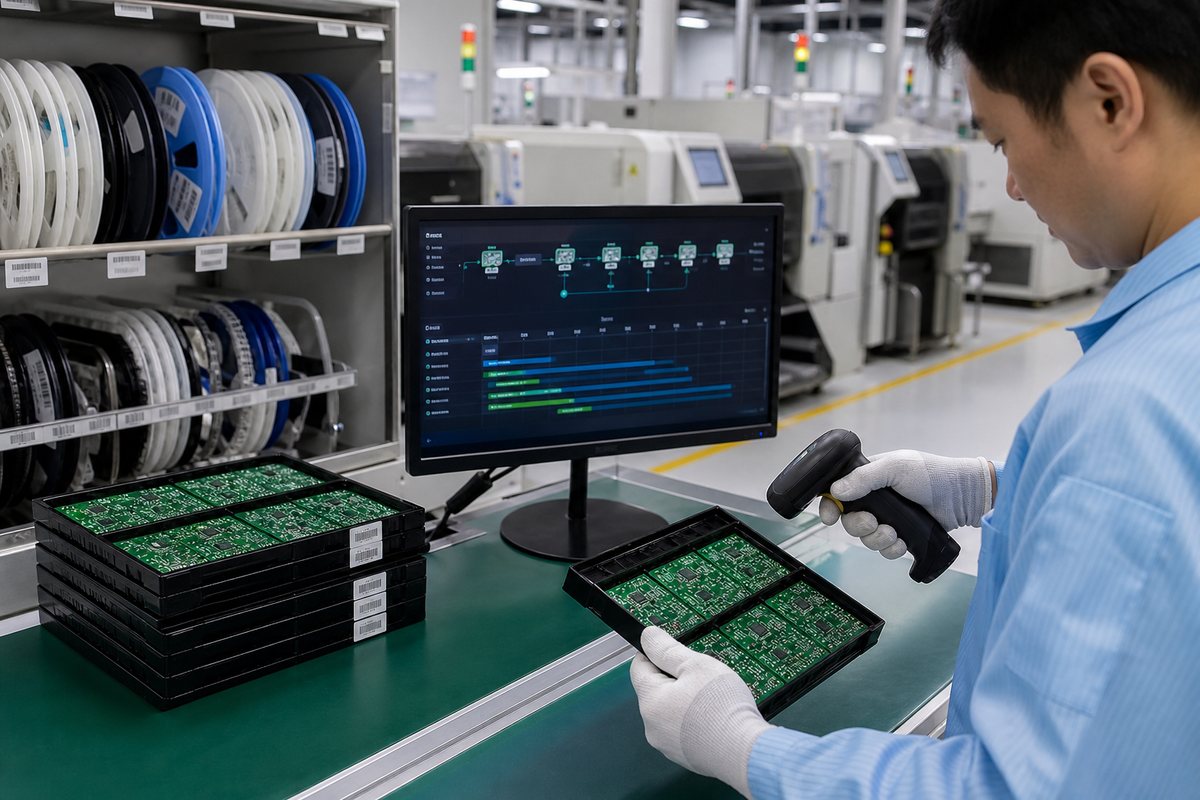
Traceability CheckLinks materials, batches, process steps, and inspection records
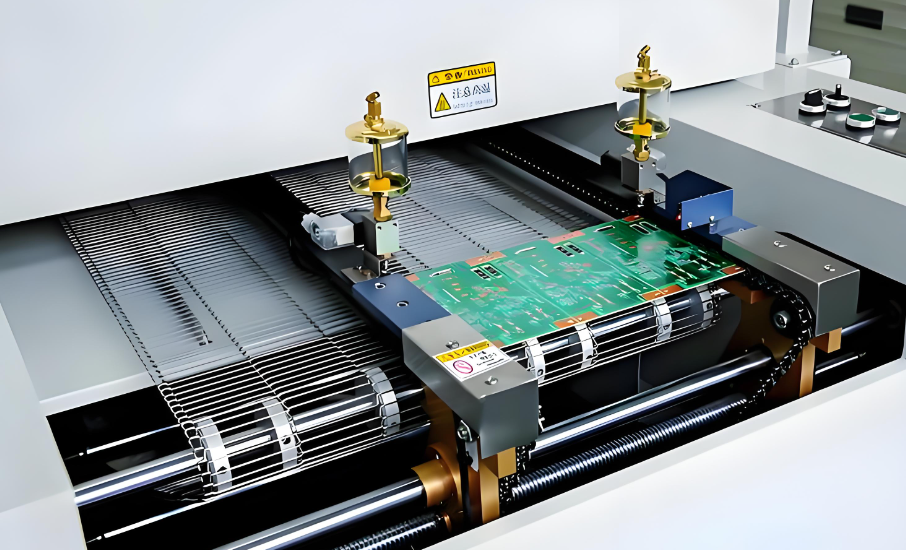
  • For PCBA projects, assembly inspection is also important. Solder paste printing, component placement, reflow profile, polarity, solder joints, and cleaning can all affect reliability.
  • In addition, traceability is important for automotive projects. Customers may need material batches, inspection records, production dates, component sources, and shipment details. Good traceability helps both sides respond faster if a quality question appears later.

EBest Circuit can support PCB fabrication, component sourcing, PCBA assembly, and testing. Therefore, customers can manage more steps through one supplier and reduce communication gaps.

Custom PCB Design for Automotive

Why Work with EBest Circuit for Automotive Custom PCB Design and Manufacturing?

Choosing an automotive PCB supplier is not only about price. Customers also need engineering support, material knowledge, quality control, testing ability, and stable production.

EBest Circuit (Best Technology) supports automotive PCB projects from design review to fabrication, assembly, testing, and production follow-up.

DFM Support Before Production

  • EBest Circuit reviews design files before fabrication. This helps customers find risks in spacing, vias, copper, stackup, solder mask, impedance, and assembly.

Multiple PCB Technologies

  • EBest Circuit can support FR4 PCB, high Tg PCB, heavy copper PCB, aluminum PCB, copper-based PCB, ceramic PCB, Rogers high-frequency PCB, and rigid-flex PCB.

Prototype to Mass Production Support

  • Customers can start with samples, improve the design, move to small batches, and then prepare for mass production. As a result, the project path becomes clearer.

PCB and PCBA One-Stop Service

  • EBest Circuit can provide PCB fabrication, component sourcing, SMT assembly, DIP assembly, testing, and box-build support. This helps customers reduce supplier coordination work.

Automotive Quality Support

  • With quality systems such as ISO 9001 and IATF 16949, EBest Circuit can support automotive-related quality needs. The team can also work with customers on inspection records, testing plans, and traceability.

Testing and Traceability

  • AOI, X-ray, E-test, impedance testing, functional testing, first article checks, and batch traceability can be arranged based on project needs.

Material and Stackup Suggestions

  • EBest Circuit can help customers choose practical materials and stackups based on heat, current, signal speed, reliability, and cost.

If you are developing automotive control modules, LED lighting boards, BMS boards, radar PCBs, sensor boards, power boards, or communication modules, EBest Circuit can help review the files and support production.

To discuss your project, pls feel free to send Gerber files, BOM, drawings, stackup needs, application details, and target quantity to sales@bestpcbs.com.

FAQs About Custom PCB Design for Automotive

What makes custom PCB design for automotive different from normal PCB design?
It must consider heat, vibration, EMI, EMC, current load, material stability, testing, documents, and traceability. These needs are higher than many standard PCB projects.

Does every automotive PCB project need IATF 16949 support?
Not always. Early prototypes may not need full automotive documentation. However, production projects often benefit from IATF 16949 quality control.

What files should I provide for quotation?
You should provide Gerber files, drill files, stackup details, fabrication drawing, BOM, pick-and-place file, assembly drawing, impedance needs, copper thickness, surface finish, test needs, and target quantity.

Can EBest Circuit help if my design is not ready for production?
Yes. We can review your Gerber files, BOM, drawings, and stackup from a manufacturing point of view. Our team can provide DFM suggestions on material choice, copper thickness, drilling, solder mask, panelization, surface finish, controlled impedance requirements, and assembly risks. We do not replace circuit design or PCB layout work, but we help make the design more ready for fabrication, PCBA assembly, and production.

What materials are used in automotive custom PCBs?
Common options include high Tg FR4, heavy copper PCB, aluminum PCB, copper-based PCB, ceramic PCB, and Rogers high-frequency material. The right choice depends on the application.

Does automotive PCB production need PPAP?
Some production projects may need PPAP, especially when the PCB enters a formal automotive supply chain. The need depends on customer requirements and project risk.

Can one supplier handle PCB fabrication and PCBA assembly?
Yes. A one-stop supplier can manage PCB fabrication, component sourcing, assembly, inspection, testing, and traceability. This helps reduce communication gaps.

How can I start a custom automotive PCB project with EBest Circuit?
You can send your Gerber files, BOM, drawings, technical requirements, and application details to sales@bestpcbs.com. EBest Circuit can review your files and provide DFM, material, fabrication, assembly, and testing support.

You may also like

IATF 16949 Certified PCB Supplier: Automotive-Grade PCBs You Can Trust
Tuesday, December 16th, 2025

Selecting an IATF 16949 certified PCB supplier is not just a purchasing decision—it is a risk management strategy for automotive electronics. With vehicles increasingly dependent on electronics for safety, performance, and connectivity, PCB quality directly impacts system reliability and brand reputation.

This in-depth guide explains what IATF 16949 certification means for PCB manufacturing, how it affects automotive applications, how to evaluate certified suppliers, and why EBest Circuit (Best Technology) is a trusted partner for automotive PCB projects.

What Is an IATF 16949 Certified PCB?

An IATF 16949 certified PCB is a printed circuit board manufactured under a quality management system that complies with IATF 16949, the global automotive industry standard that replaced ISO/TS 16949.

Unlike general ISO 9001 certification, IATF 16949 is automotive-specific and focuses on:

  • Defect prevention rather than detection
  • Risk-based process control
  • Continuous improvement throughout the supply chain
  • Traceability and accountability at every manufacturing stage

For PCB manufacturing, this means every process—from laminate sourcing and copper plating to imaging, drilling, surface finish, and final inspection—is documented, controlled, audited, and continuously improved.

An IATF 16949 certified PCB supplier is qualified to support automotive OEMs, Tier 1 suppliers, and Tier 2 suppliers globally.

IATF 16949 Certified PCB Supplier: Automotive-Grade PCBs You Can Trust https://www.bestpcbs.com/blog/2025/12/iatf-16949-certified-pcb-supplier/

Typical Applications for IATF 16949 Certified PCBs

Automotive electronics operate in environments that are far more demanding than consumer or industrial electronics. As a result, IATF 16949 certified PCBs are widely used in systems where failure is unacceptable, like:

  • Electric vehicle (EV) systems – BMS, OBC, inverters, DC-DC converters
  • ADAS & autonomous driving modules – radar, camera, LiDAR control boards
  • Powertrain & engine control units (ECU)
  • Infotainment and cockpit electronics
  • Body electronics – lighting control, window and seat modules
  • Chassis and safety systems – ABS, EPS, airbag controllers

These applications demand high reliability, thermal stability, and long service life, often exceeding 10–15 years.

Why IATF 16949 Certification Is Critical in Automotive Electronics?

Automotive PCBs must survive:

  • Temperature ranges from -40°C to +125°C or higher
  • Continuous vibration and mechanical shock
  • Long-term exposure to humidity, oils, and chemicals
  • 10–20 years of operational life

IATF 16949 certification ensures that a PCB supplier has systems in place to manage these risks through:

  • APQP (Advanced Product Quality Planning) for new product introduction
  • FMEA (Failure Mode and Effects Analysis) to identify and mitigate risks
  • SPC (Statistical Process Control) to maintain consistency
  • Root cause analysis and corrective actions (8D, PDCA)
  • Supplier quality management for raw materials

Without IATF 16949, PCB quality may rely too heavily on final inspection rather than process stability, which is unacceptable for automotive use.

Why IATF 16949 Certification Is Critical in Automotive Electronics?  https://www.bestpcbs.com/blog/2025/12/iatf-16949-certified-pcb-supplier/

Does IATF 16949 Mean Zero Defects?

No quality standard can guarantee absolute zero defects—but IATF 16949 is designed to make defects rare, predictable, and preventable. Instead of reacting to failures, IATF 16949 requires:

  • Early risk identification
  • Process capability monitoring
  • Immediate corrective action when trends appear
  • Continuous reduction of variation

In practice, this leads to dramatically lower defect rates, improved field reliability, and reduced recall risk for automotive customers.

Does IATF Certification Automatically Mean Automotive Capability?

No, not always. IATF 16949 certifies the quality management system, not the technical capability alone.

A truly automotive-capable IATF 16949 certified PCB supplier must also demonstrate:

  • Experience with automotive-grade laminates (high Tg, low CTE, CAF-resistant)
  • Tight control of dielectric thickness and impedance
  • Stable copper plating and via reliability
  • High-reliability surface finishes (ENIG, ENEPIG, Immersion Silver)
  • Proven performance in thermal cycling and reliability testing

Certification plus real automotive project experience is the key.

What Makes an IATF 16949 Certified PCB Manufacturer Different?

Compared to standard PCB manufacturers, IATF 16949 certified suppliers offer:

  • Full lot and serial traceability
  • Controlled change management (ECN & PCN)
  • PPAP documentation upon request
  • Automotive-focused process audits
  • Long-term supply consistency

These differences are essential for OEMs who cannot afford field failures or recalls.

What Makes an IATF 16949 Certified PCB Manufacturer Different? https://www.bestpcbs.com/blog/2025/12/iatf-16949-certified-pcb-supplier/

How to Verify an IATF 16949 Certified PCB Supplier?

Before selecting a supplier, always verify:

  1. Valid IATF 16949 certificate (issued by an accredited certification body)
  2. Certificate scope explicitly covering PCB manufacturing
  3. Evidence of automotive project experience
  4. Ability to provide PPAP, FMEA, control plans, and traceability records
  5. Clear change management and corrective action procedures

A professional IATF 16949 certified PCB supplier will proactively provide this information.

EBest Circuit (Best Technology) – Your Reliable IATF 16949 Certified PCB Supplier

EBest Circuit (Best Technology) is a trusted IATF 16949 certified PCB supplier, supporting automotive electronics manufacturers with stable quality, engineering expertise, and long-term production reliability.

At EBest Circuit (Best Technology), our automotive PCBs are manufactured under a fully implemented IATF 16949 quality management system, ensuring process stability, traceability, and long-term reliability for safety-critical automotive electronics.

Our Automotive PCB Manufacturing Capability

CategoryCapability Details
CertificationIATF 16949 (Automotive Quality Management System)
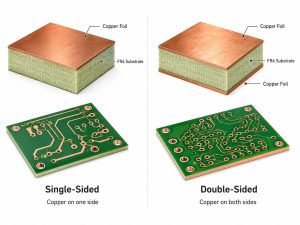
PCB TypesSingle-sided, Double-sided, Multilayer Automotive PCBs
Layer Count1–20+ layers (automotive control & power applications)
Base MaterialsFR-4 (High Tg), Low-loss laminates, Automotive-grade materials
Tg Range≄170°C (automotive and high-reliability requirements)
Board Thickness0.4 mm – 3.2 mm (custom thickness available)
Copper Thickness0.5 oz – 6 oz (inner & outer layers)
Heavy Copper PCBUp to 6 oz for EV power electronics
Min Line / Space4 / 4 mil (HDI options available)
Min Hole Size0.20 mm (laser vias for HDI upon request)
Aspect RatioUp to 10:1
Impedance Control±5% tolerance (automotive signal integrity requirements)
Surface FinishesENIG, ENEPIG, Immersion Silver, Immersion Tin, OSP
Solder MaskAutomotive-grade epoxy, green / black / red (others on request)
SilkscreenWhite, yellow (high contrast for traceability)
Panel SizeUp to 600 × 1200 mm
CAF ResistanceCAF-resistant material selection & process control
Thermal ReliabilityDesigned for −40°C to +125°C operating environments
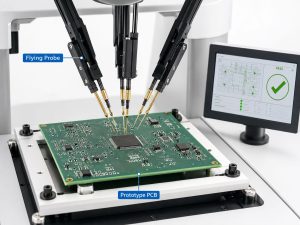
Electrical TestingFlying Probe Test, Fixture E-Test (100% testing)
InspectionAOI, X-ray (for HDI & fine-pitch designs)
Reliability TestingThermal shock, thermal cycling (upon request)
TraceabilityFull lot & material traceability per IATF 16949
Documentation SupportPPAP, Control Plan, PFMEA, SPC records

Our Services for IATF 16949 Certified PCB Projects

We provide comprehensive support throughout the product lifecycle:

  • Automotive PCB DFM and engineering review
  • Prototype, NPI, and mass production support
  • PPAP and quality documentation assistance
  • Long-term supply and lifecycle management
  • PCB & PCBA one-stop manufacturing solutions

Our goal is to help customers reduce risk, shorten development cycles, and scale confidently. If you’re searching for a dependable iatf 16949 certified pcb supplier, EBest Circuit (Best Technology) is ready to support your automotive electronics projects.

Frequently Asked Questions (FAQ)

1. Is IATF 16949 mandatory for automotive PCBs?

    Most automotive OEMs and Tier 1 suppliers require IATF 16949 certification for PCB suppliers.

    2. Can IATF 16949 certified suppliers support EV and ADAS projects?

    Yes. IATF 16949 is widely adopted in EV, hybrid, and autonomous vehicle electronics.

    3. Does IATF 16949 cover PCB assembly?

    Only if PCBA is included in the certification scope. Always verify the certificate details.

    4. How often is IATF 16949 audited?

    Certified suppliers undergo annual surveillance audits and full recertification every three years.

    You may also like

    Automotive PCB Manufacturers, Automotive PCB Suppliers
    Thursday, April 3rd, 2025

    Automotive PCB manufacturers are the backbone of modern vehicle electronics. From engine management to infotainment systems, these circuit boards ensure smooth operations and long-term reliability. As the automotive industry shifts towards electric and autonomous vehicles, the demand for advanced PCBs is at an all-time high. This blog explores everything you need to know about automotive PCB manufacturers, their role in vehicles, and how to choose the best one for your needs.

    EBest Circuit (Best Technology) is a global Automotive PCB solutions provider‌, delivering premium-grade automotive PCB systems worldwide through strategically located SMT facilities in China and Vietnam. Our dedicated R&D team combines DFM expertise to ensure precision across automotive PCB design, fabrication, and full turnkey assembly. Our quality certificate is across industries‌ like automotive electronics, medical devices, and aerospace. All manufacturing processes are audited under ISO 9001:2015. For OEM or ODM automotive PCB projects requiring automotive-grade reliability (AEC-Q100 compliant), contact our engineering team at ‌sales@bestpcbs.com‌.

    Automotive PCB Manufacturers, Automotive PCB Suppliers

    What is a PCB Used in the Automotive Industry?

    PCBs in the automotive industry are essential for controlling various electronic functions. These include power distribution, lighting systems, infotainment, safety features, and navigation. As vehicles become more sophisticated, automotive PCB manufacturers are innovating to meet industry demands. They produce specialized PCBs that handle higher power loads, extreme temperatures, and vibrations.

    Electric vehicles (EVs) and hybrid cars rely heavily on high-performance PCBs. These boards manage battery systems, electric motor controllers, and regenerative braking mechanisms. With safety being a top priority, manufacturers design these PCBs with multilayer structures, thermal resistance, and high durability.

    What is PCB in Toyota?

    Toyota, one of the world’s leading automakers, integrates PCBs into almost every part of its vehicles. From engine control units (ECUs) to infotainment systems, these circuit boards play a critical role. Toyota prioritizes efficiency, safety, and reliability, pushing automotive PCB manufacturers to develop cutting-edge solutions.

    The company focuses on innovation, using advanced PCBs in hybrid and electric models like the Toyota Prius. These PCBs regulate battery management, motor control, and power distribution to ensure optimal performance. Toyota’s push for sustainable and fuel-efficient vehicles further drives advancements in automotive PCB technology.

    What is PCB in an Engine?

    PCBs inside an engine control and monitor various parameters such as fuel injection, ignition timing, and emission control. They work in harsh environments, withstanding high temperatures, vibrations, and exposure to fuel and oil. Automotive PCB manufacturers use high-quality materials like ceramic or metal-core substrates to ensure durability.

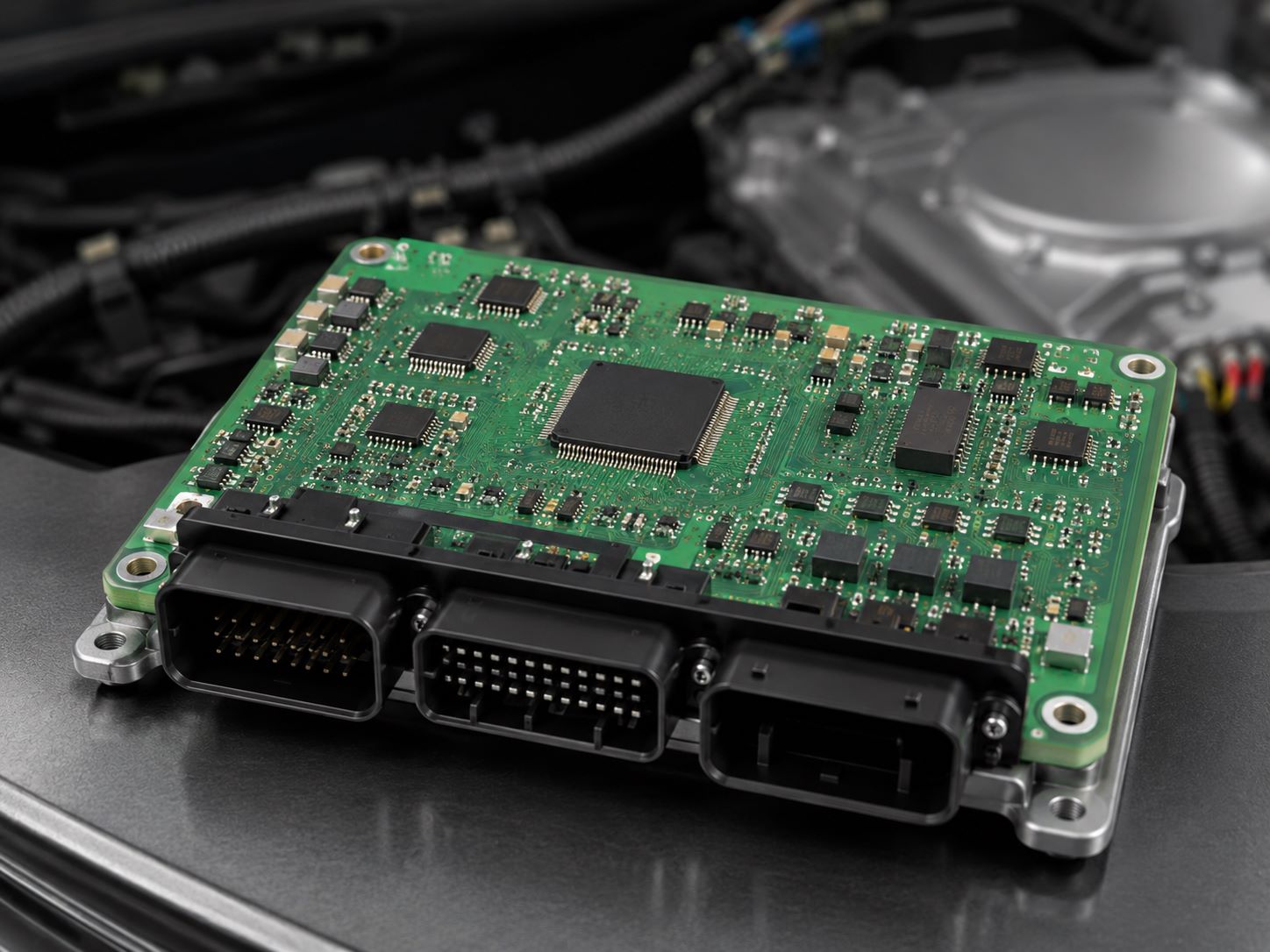
    Modern engines rely on electronic control units (ECUs) that include PCBs to process real-time data. These boards communicate with sensors and actuators, adjusting performance for better fuel efficiency and reduced emissions. Without these advanced PCBs, modern engines would not achieve the precision and efficiency they deliver today.

    What Are the Requirements for PCB in Automotive?

    Automotive PCBs need to meet stringent industry standards due to the challenging conditions they operate in. Here are some key requirements:

    • High-temperature resistance: PCBs must withstand extreme heat, especially in engine and powertrain applications.
    • Vibration durability: Vehicles generate constant vibrations, so PCBs must remain stable and intact.
    • Moisture and chemical resistance: Exposure to oil, fuel, and humidity requires protective coatings.
    • Multi-layered design: Complex systems like ADAS (Advanced Driver-Assistance Systems) need multilayer PCBs for high-speed data processing.
    • Compliance with industry standards: Automotive PCB manufacturers must follow certifications such as IATF 16949, AEC-Q100, and ISO 9001.

    Meeting these requirements ensures reliability, safety, and long-lasting performance in vehicles.

    Automotive PCB Manufacturers

    Why Do Automotive Component Manufacturers Rely on High-Quality PCBs?

    Automotive component manufacturers depend on premium PCBs because low-quality boards can lead to system failures, recalls, and safety risks. High-quality PCBs provide:

    • Better signal integrity: Ensures stable communication between vehicle electronics.
    • Improved heat dissipation: Reduces overheating in high-power applications.
    • Enhanced durability: Prevents early failures due to environmental stress.
    • Reduced maintenance costs: Long-lasting PCBs lower repair and replacement needs.

    Since modern vehicles rely heavily on electronics, automotive PCB manufacturers must deliver consistent and high-reliability products.

    What Are the Key Certifications for Automotive PCB Manufacturers?

    Certifications are a crucial factor in selecting a reliable automotive PCB manufacturer. Some of the most important ones include:

    • IATF 16949: The global standard for automotive quality management systems. EBest Circuit (Best Technology) is one of the direct automotive PCB manufacturers in China. Our automotive PCB factory possesses an IATF 16949 certificate.
    • ISO 9001: Ensures the manufacturer follows quality control and management processes. Apart from the ISO9001 held by EBest Circuit (Best Technology), we hold other quality certifications like ISO13485 and AS9100D. These certifications act as a guarantee of automotive PCB product excellence, ensuring customers and partners a good quality assurance practices.
    • AEC-Q100 & AEC-Q200: Validates the reliability of electronic components used in automotive applications. As a leading automotive PCB manufacturer in China, we ensure that all automotive components used in our products meet AEC-Q100 standards. Every IC component within our supply chain has successfully passed AEC-Q100 certification.
    • RoHS Compliance: Restricts hazardous substances in PCB manufacturing to protect the environment. All of the automotive PCBs in EBest Circuit (Best Technology) are compliant to RoHS, Reach.
    Choosing a manufacturer with these certifications guarantees high-quality PCBs that meet industry standards.

    Automotive PCB Suppliers

    Who Are the Top Automotive PCB Manufacturers in the World?

    Several companies lead the automotive PCB manufacturing industry. Here are some of the top names:

    • EBest Circuit (Best Technology): A trusted manufacturer offering custom automotive PCBs with superior thermal management.
    • TTM Technologies: Specializes in high-reliability PCBs for advanced automotive applications.
    • Unimicron: Provides PCBs for electric and hybrid vehicles.
    • Shenzhen Kinwong: Known for its durable and high-precision automotive circuit boards.

    Partnering with an industry leader ensures access to high-performance PCBs that support vehicle reliability and safety.

    How to Choose the Best Automotive PCB Manufacturers?

    Finding the right automotive PCB manufacturer requires careful evaluation. Here’s what to consider:

    • Industry experience: A manufacturer with years of experience understands automotive PCB challenges. EBest Circuit (Best Technology) has been a trusted automotive PCB Partner Since 2006.‌ With 18+ years of specialized expertise, EBest Circuit (Best Technology) has been delivering mission-critical automotive PCB solutions including ‌FR4 PCBs‌, ceramic substrate PCBs‌ for high-temperature automotive electronics‌, and metal core PCBs (MCPCB)‌ with high thermal conductivity. Our global footprint spans ‌1,700+ strategic partnerships‌ across 40+ countries. ‌
    • Certifications: Ensures compliance with safety and quality standards in automotive industry.
    • Material quality: High-quality materials enhance PCB performance and lifespan. All automotive PCB components procured by EBest Circuit (Best Technology) are in line with AEC-Q100 & AEC-Q200 standards.
    • Testing capabilities: A reputable manufacturer conducts thorough testing for durability and reliability. Providing high-quality automotive PCB with 2-3 weeks delivery time is the competitive edge in EBest Circuit (Best Technology). All of our PCB products are through strict inspection and checking.
    • Customer support: Reliable Pre-sale service and after-sales service helps resolve technical issues quickly. EBest Circuit (Best Technology) has a strong R&D department, no matter what complicated automotive PCB projects, we deliver actionable solutions from design validation to production ramp-up.

    By selecting a manufacturer with these qualities, automotive brands can secure durable and high-performing PCBs for their vehicles.

    Automotive PCB Manufacturers

    In conclusion, automotive PCB manufacturers play a vital role in vehicle electronics. Their products support everything from infotainment and ADAS to engine control and battery management. Choosing a certified and experienced manufacturer ensures reliability, safety, and long-term performance. As the industry moves toward electric and autonomous vehicles, high-quality automotive PCBs will become even more critical.

    With 18 years of expertise in the automotive PCB industry, EBest Circuit (Best Technology) delivers customizable solutions for cutting-edge automotive applications. Our portfolio includes high-performance flex PCBs‌ for space-constrained designs, multi-layer PCBs‌ engineered for ADAS systems, and metal core PCBs (MCPCBs)‌ with superior thermal management for electric vehicles. All solutions are fully customizable to meet specific project requirements. For specialized automotive PCB needs, contact our team at ‌sales@bestpcbs.com‌. EBest Circuit (Best Technology) is one of the leading automotive PCB suppliers.

    You may also like