





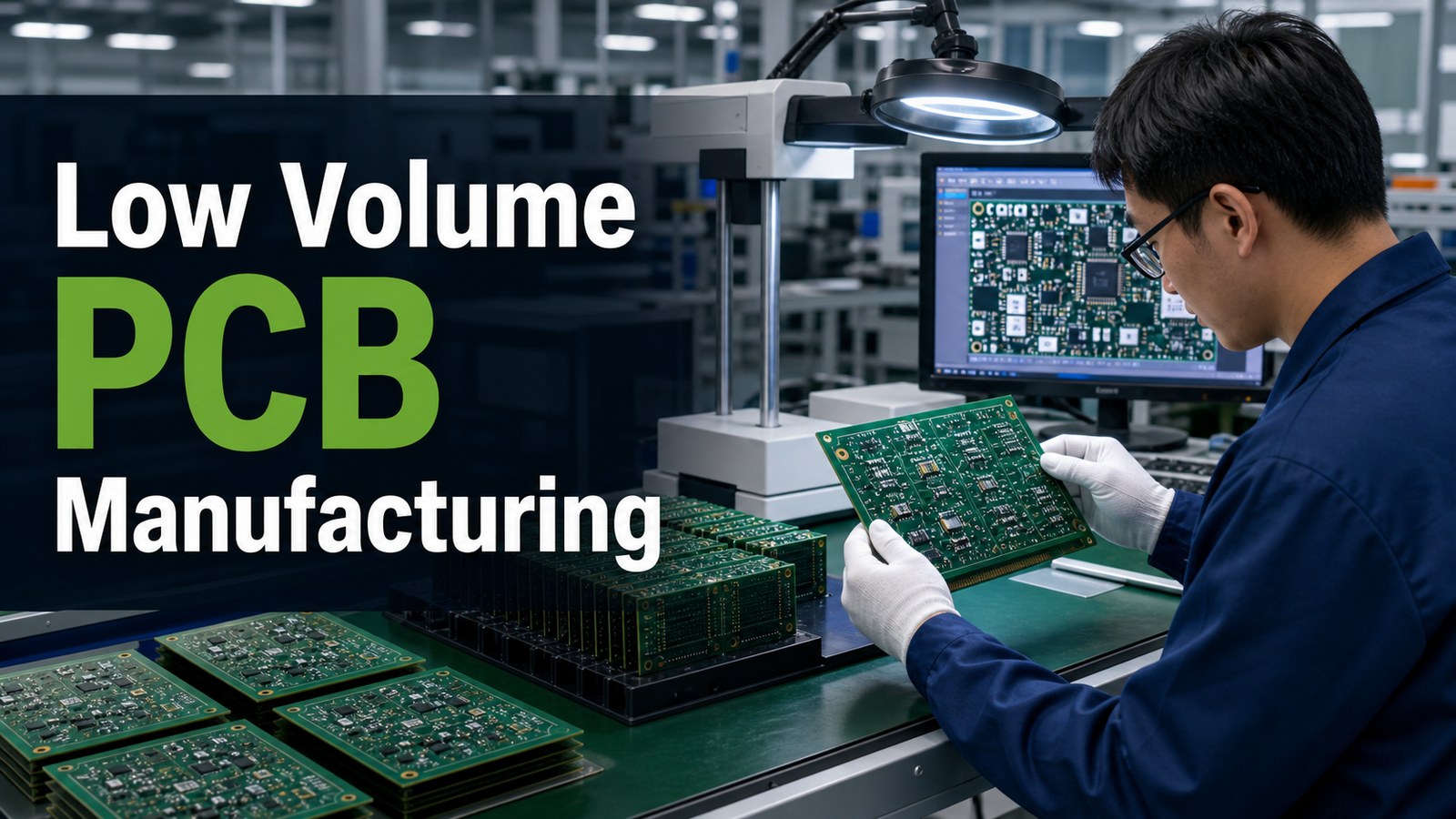
Low volume PCB manufacturing is the controlled production of small batches of printed circuit boards for prototypes, engineering validation, pilot runs, service parts, or early product launch. The goal is not only to make a few boards cheaply. The goal is to catch design, material, assembly, and testing risks before the project moves into larger production.
This guide is for engineers and buyers preparing a low-volume PCB order. It explains how to decide quantity, what affects price, what files to send, how to reduce rework, and how to compare suppliers when the build needs both flexibility and manufacturing discipline.
Low Volume PCB Manufacturing at a Glance
A low-volume PCB manufacturing order should combine fast engineering feedback with enough process control to support the next build. Small quantity does not mean the board can skip DFM review, material confirmation, or inspection planning.
| Use case | Typical goal | Buyer focus |
|---|---|---|
| Prototype | Validate circuit and layout | Fast DFM feedback, clear file review, basic testing. |
| Pilot run | Prepare for production | Repeatability, assembly planning, BOM risk, inspection. |
| Service or niche product | Build limited demand boards | Stable quality, cost control, revision tracking. |
When Low Volume Manufacturing Makes Sense
Low volume manufacturing makes sense when you need real boards for testing, customer samples, pilot production, or controlled market launch before committing to higher quantities. It is also useful for industrial equipment, replacement boards, custom electronics, and product variants where demand is limited but reliability still matters.
Choose low volume when the design may still change, when component availability is uncertain, or when the product needs field feedback before scaling. If the board includes mounted components, coordinate the fabrication plan with the PCBA and PCB assembly service requirements early.
Low Volume PCB vs Prototype PCB
A prototype PCB proves a design concept, while a low-volume PCB build should also prepare the project for repeatable production. The two can overlap, but the buyer expectations are different.
Prototype orders often prioritize speed and design learning. Low-volume orders also need revision control, stable material choices, packaging requirements, BOM review, test expectations, and cost visibility for the next production step. Treat the low-volume build as a bridge between engineering and supply-chain decisions.
DFM Review Before Small Batch Production
DFM review is still important in low-volume PCB manufacturing because a small batch can expose problems before they become expensive at scale. Do not skip review simply because the order quantity is low.
Review trace and spacing, annular ring, drill files, solder mask clearances, board outline, panelization, copper balance, component clearance, test point access, and any special process notes. The PCB design for manufacturability checklist can help your team prepare design files before requesting a quote.
What Affects Low Volume PCB Cost?
Low volume PCB cost depends on setup effort, board complexity, material, finish, testing, assembly needs, and how many assumptions the supplier must resolve before production. Unit price can look high because setup and engineering review are spread across fewer boards.
| Cost factor | Why it matters | How to manage it |
|---|---|---|
| Quantity | Setup cost is divided across fewer boards. | Ask for price breaks at practical quantity points. |
| Complexity | Small holes, dense routing, multilayer stackups, and special finishes add process work. | Send complete design notes and accept manufacturable alternatives when possible. |
| Assembly | BOM sourcing, setup, placement, and inspection add cost. | Provide BOM, CPL, alternates, and test requirements early. |
| Testing | Functional tests or fixtures can cost more than the boards in small runs. | Define must-test items and optional checks separately. |
Board Specifications to Confirm Before Quoting
Confirm the board specifications before quoting so suppliers compare the same build instead of quoting different assumptions. The most common missing details are finished thickness, copper weight, material, surface finish, impedance, and special drill or slot requirements.
For low-volume orders, it is often better to state “target” requirements and ask for engineering confirmation than to leave fields blank. This keeps the quote useful while still allowing the manufacturer to flag better options.
Assembly and Component Sourcing for Low Volume Builds
Low-volume PCBA projects need extra attention to BOM availability, substitutions, package fit, CPL accuracy, and inspection method. A small run can be delayed by a single unavailable component or a mismatch between BOM and footprint.
Send the BOM, CPL, assembly drawing, polarity notes, and approved substitution rules. If supplier sourcing is needed, clarify who approves alternates and whether partial kits or customer-supplied parts are allowed. See component sourcing support for the supply-chain side of a PCBA build.
Testing and Quality Control for Small Batches
Testing for low-volume PCB manufacturing should match the risk of the board, not just the quantity ordered. A small batch used in field equipment may need more careful inspection than a larger batch used for a simple fixture.
Define whether you need bare-board electrical test, AOI, X-ray for hidden solder joints, dimensional checks, functional testing, firmware loading, or customer-defined acceptance criteria. If functional testing needs special fixtures or software, provide those requirements before the quote.
Lead Time and Schedule Risks
Low-volume schedule risk usually comes from incomplete files, unresolved DFM questions, material availability, BOM shortages, and unclear test requirements. A supplier can only move quickly when the technical package is complete enough to start.
Send the latest revision, identify which details are fixed, and separate urgent needs from negotiable preferences. If the order is tied to an engineering milestone, say which date matters most: bare board delivery, assembled samples, test completion, or shipment.
How to Compare Low Volume PCB Suppliers
Compare low-volume suppliers by engineering response quality, quote clarity, assembly support, and ability to handle changes without losing traceability. The lowest initial price is not useful if the quote hides missing files, weak BOM assumptions, or unclear test scope.
- Does the supplier ask DFM questions before production?
- Can they support both bare boards and assembly when needed?
- Do they explain cost drivers and quantity price breaks?
- Can they manage BOM alternates and customer approvals?
- Do they document revision, packaging, inspection, and test requirements?
RFQ Checklist for Low Volume PCB Manufacturing
A complete RFQ package helps the supplier quote the build you actually need, not a simplified version that changes later. For low-volume orders, clarity is especially valuable because every extra communication loop can consume the schedule.
- Gerber or ODB++ files, drill data, and board outline
- Stackup, material, copper weight, surface finish, and impedance notes
- Quantity options and target delivery date
- BOM, CPL, assembly drawing, and approved alternates for PCBA
- Inspection, functional test, programming, packaging, and labeling requirements
If you want to organize files before uploading or emailing them, the PCB manufacturer online guide gives a practical RFQ preparation path.
Common Low Volume PCB Manufacturing Mistakes
The most common mistakes are treating a low-volume order as a throwaway prototype, hiding unfinished requirements, comparing incomplete quotes, and postponing assembly or test questions. These mistakes usually cause quote revisions, delivery delays, or rework.
Be clear about what the build must prove. If the goal is electrical validation, say so. If the goal is pilot production, ask for repeatability and inspection planning. If the goal is customer samples, include packaging, labeling, and cosmetic requirements.
Frequently Asked Questions About Low Volume PCB Manufacturing
What is considered low volume PCB manufacturing?
Low volume generally means a small production quantity used for prototypes, pilot runs, service parts, engineering validation, or limited product demand. The exact quantity depends on project type and supplier setup.
Is low volume PCB manufacturing more expensive per board?
Usually yes, because setup, engineering review, tooling, testing, and communication effort are divided across fewer boards. A higher unit price can still be cost-effective if it prevents production mistakes.
Can low volume PCB orders include assembly?
Yes. Low-volume PCBA can include component sourcing, SMT, through-hole assembly, inspection, testing, and packaging when BOM, CPL, drawings, and test requirements are provided.
How can I reduce low volume PCB quote delays?
Send complete fabrication and assembly files, define quantity options, state material and finish needs, provide approved component alternates, and separate must-have requirements from flexible preferences.
Final RFQ Recommendation
For low volume PCB manufacturing, the best quote is the one based on complete files, clear assumptions, and the right level of quality control for the next project stage. Prepare the order as a serious engineering build even when the quantity is small.
For a low-volume PCB or PCBA quotation, send Gerber or ODB++ files, drill data, stackup notes, BOM, CPL, drawings, quantity options, material expectations, surface finish, testing requirements, and target lead time to sales@bestpcbs.com. The Best Technology / bestpcbs team can review the files, identify missing details, and help you move from prototype or pilot build toward a more stable production plan.
You may also like





Tags: low volume PCB, pcb manufacturing, PCB Quote