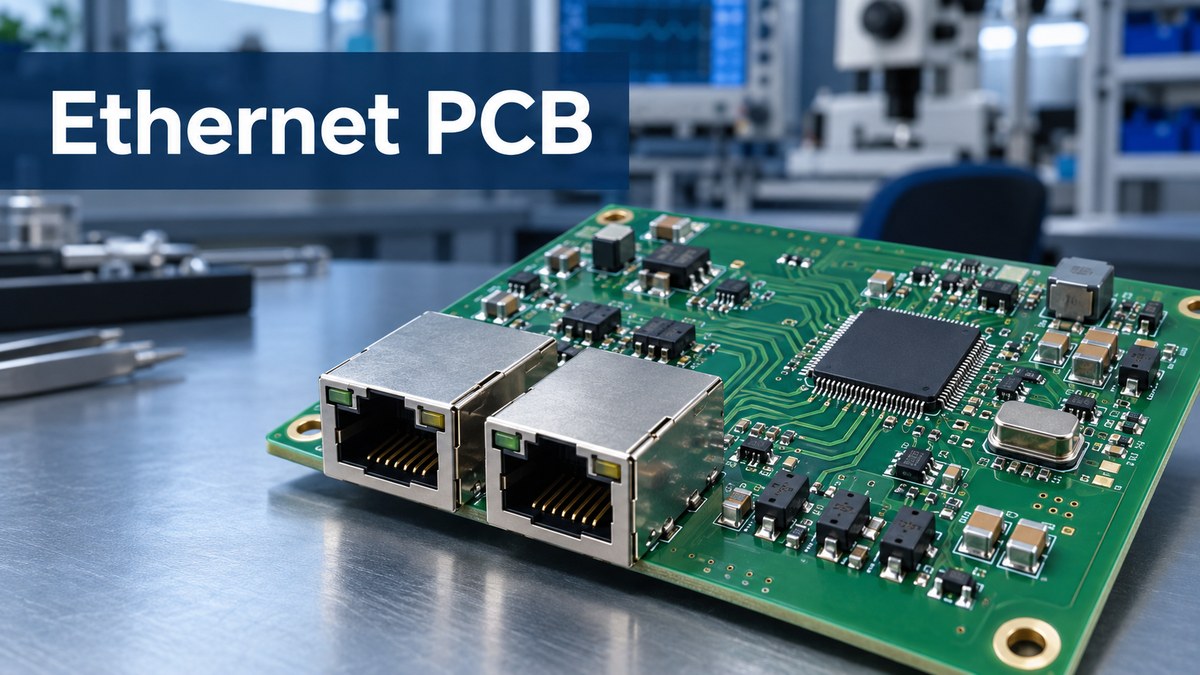
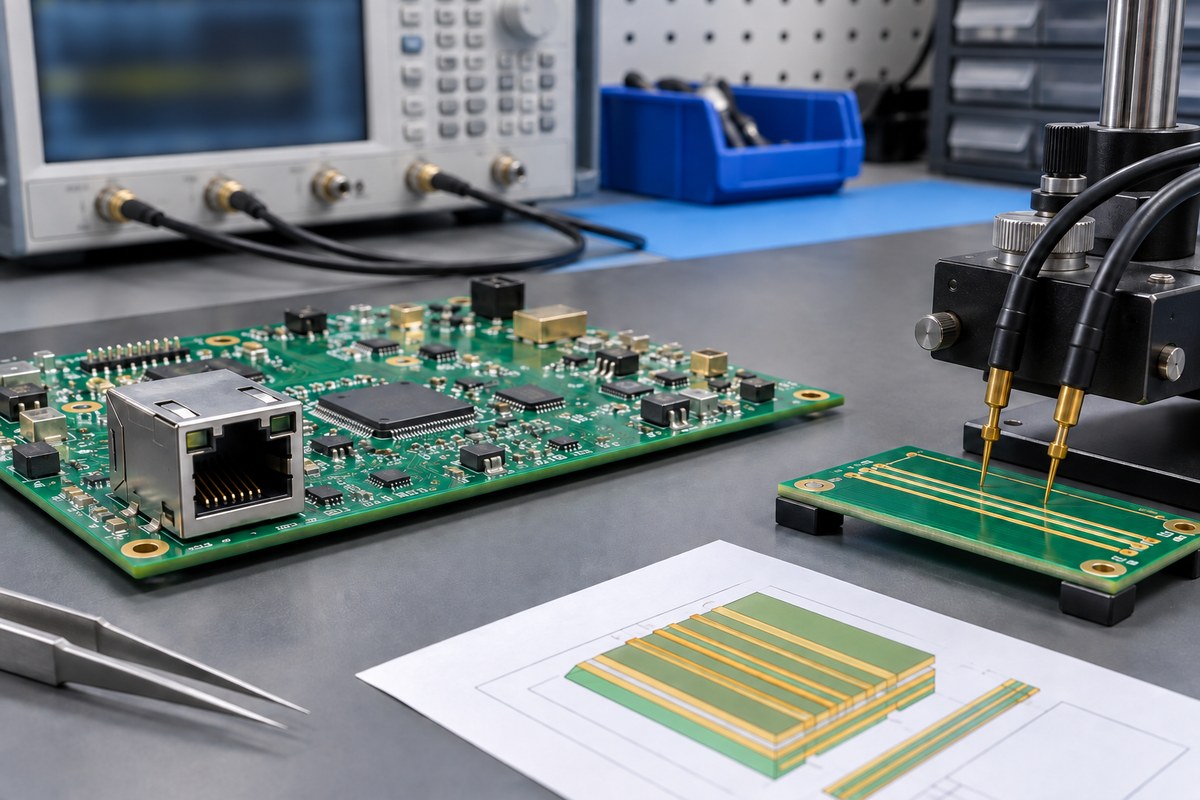
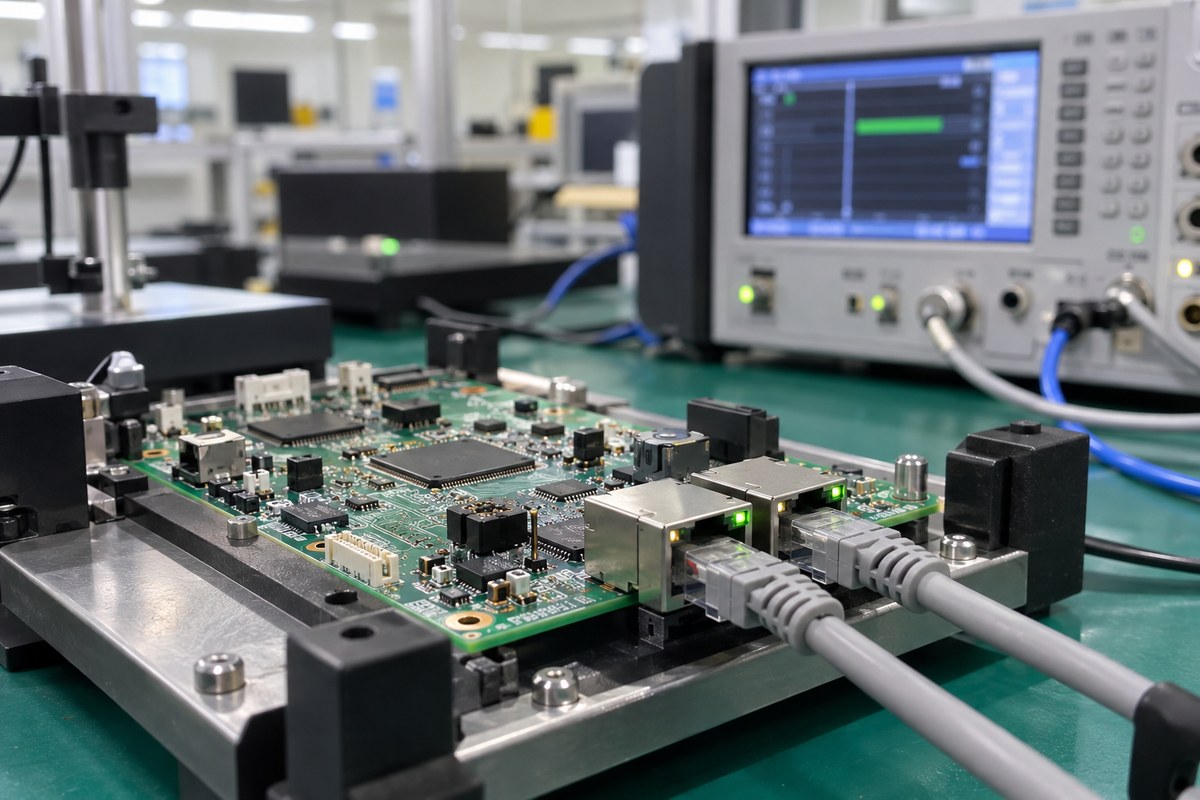
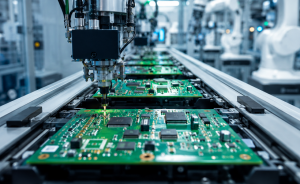
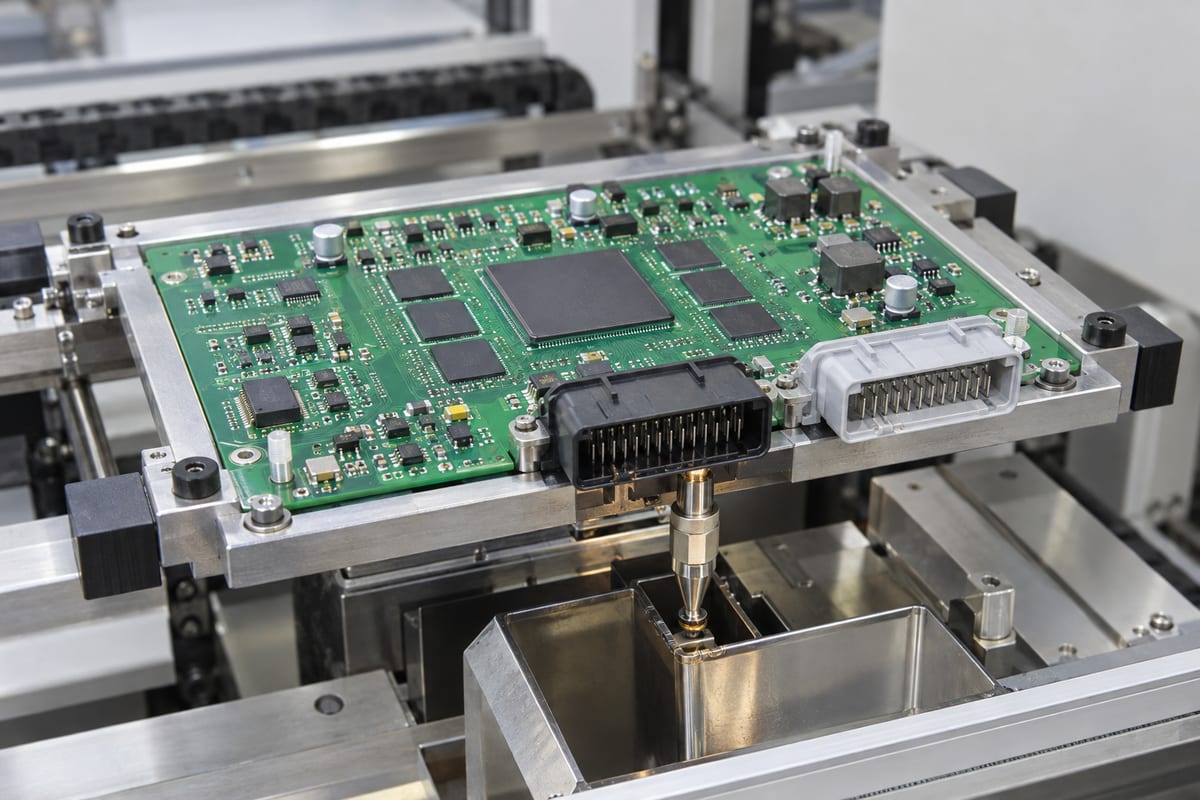
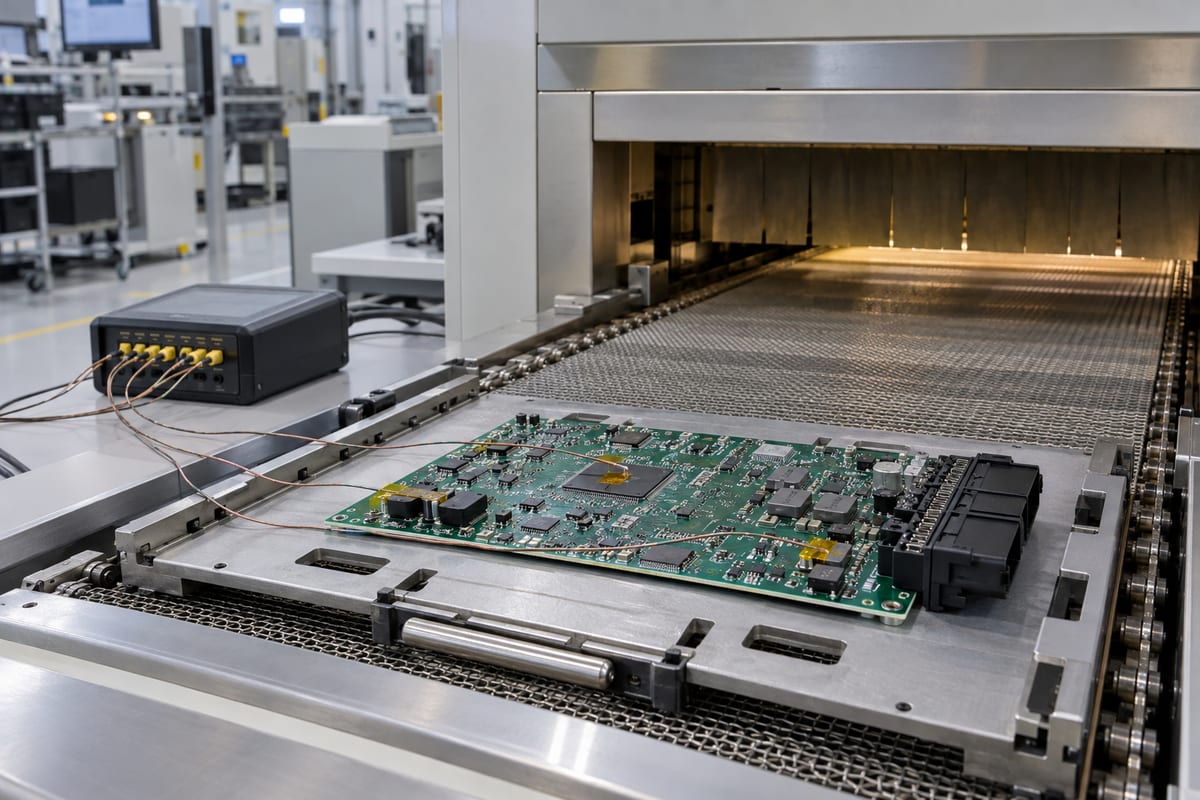
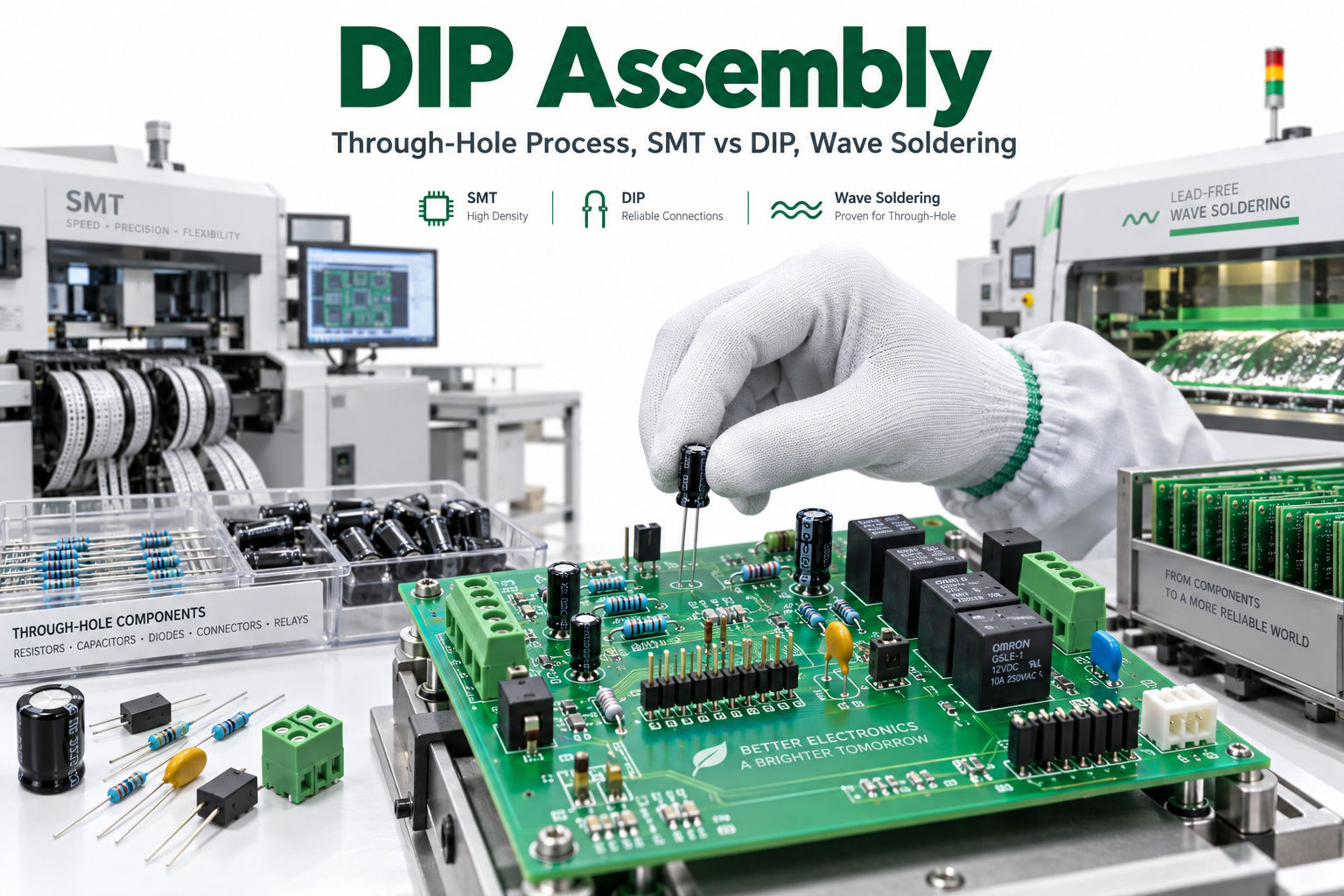
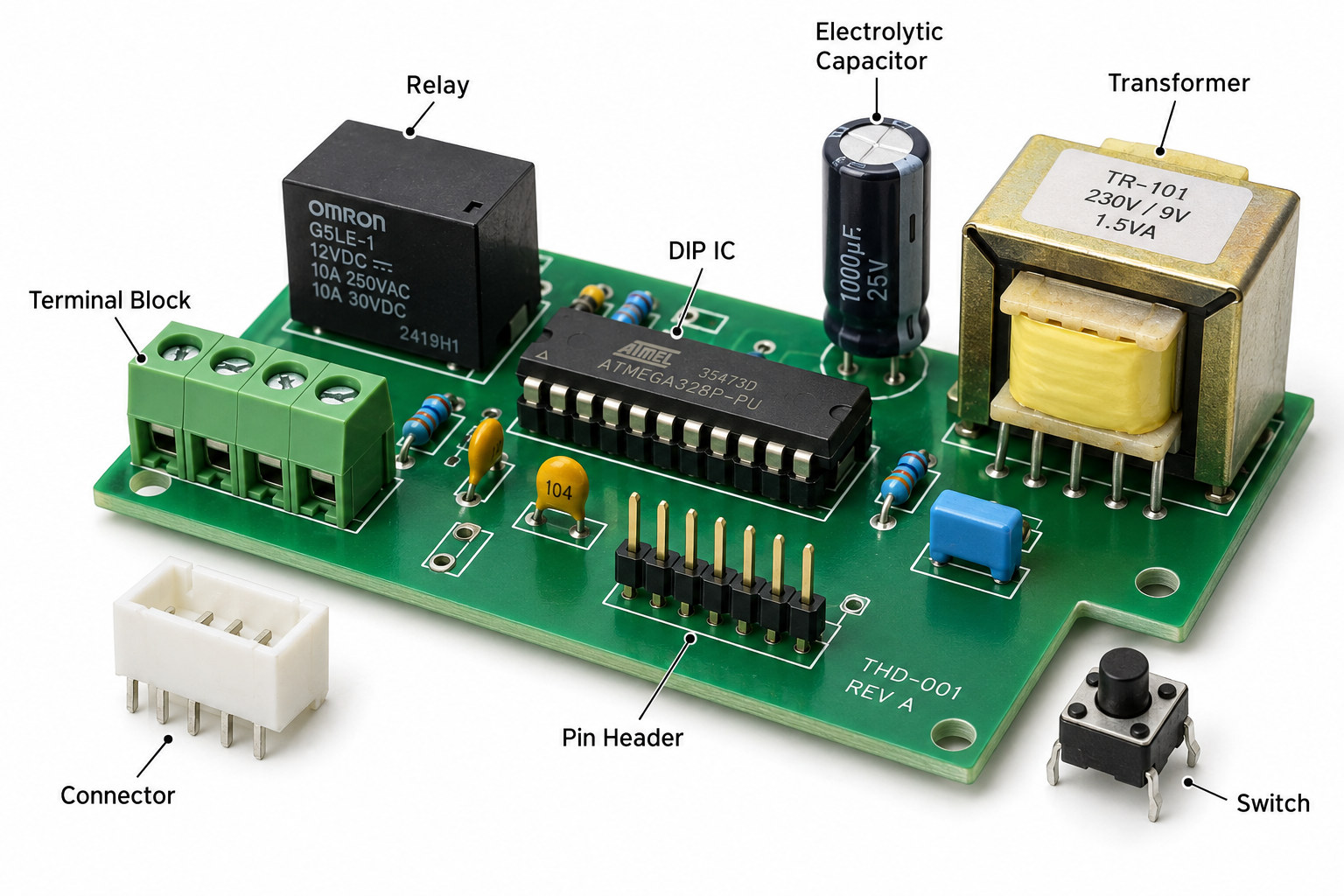
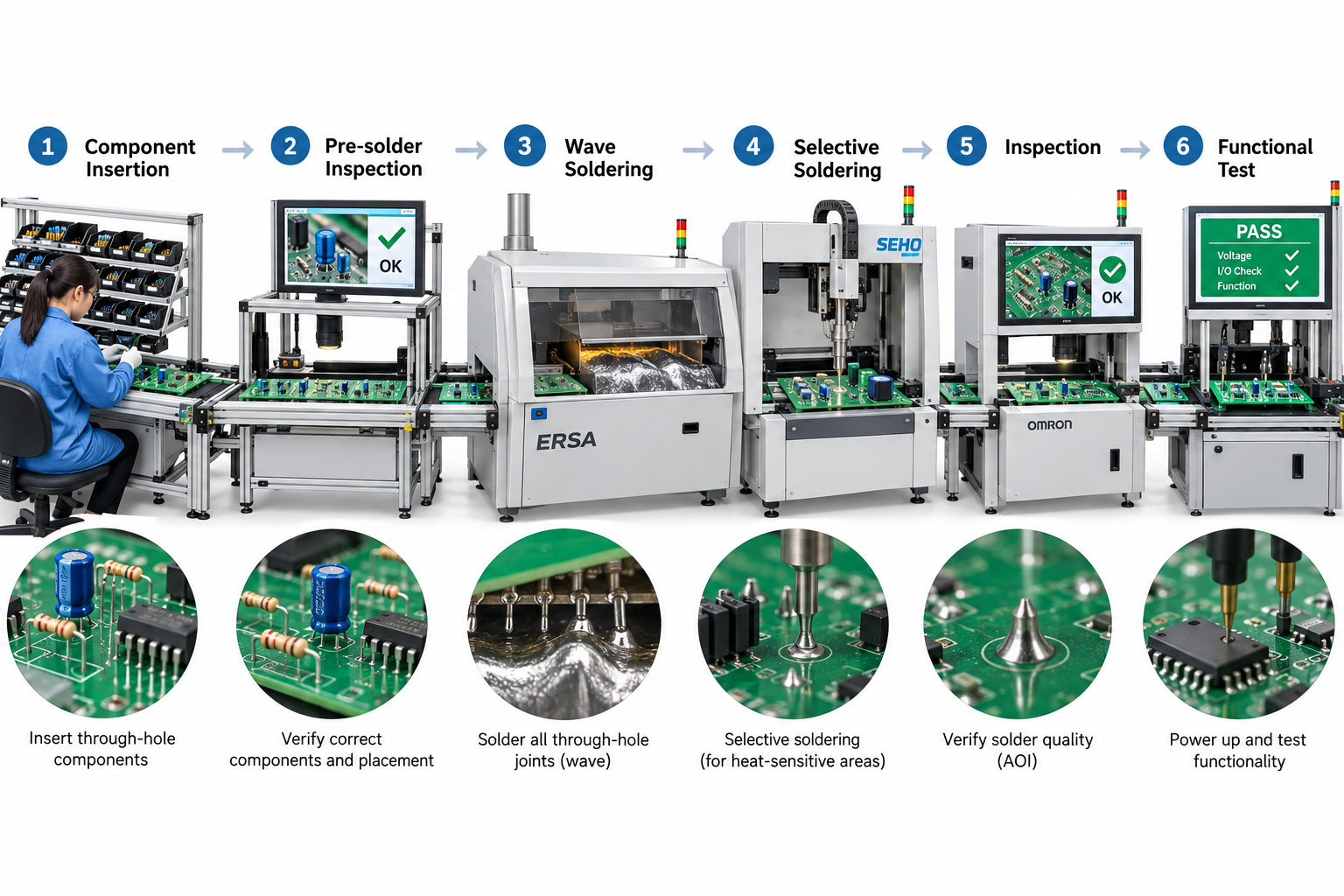
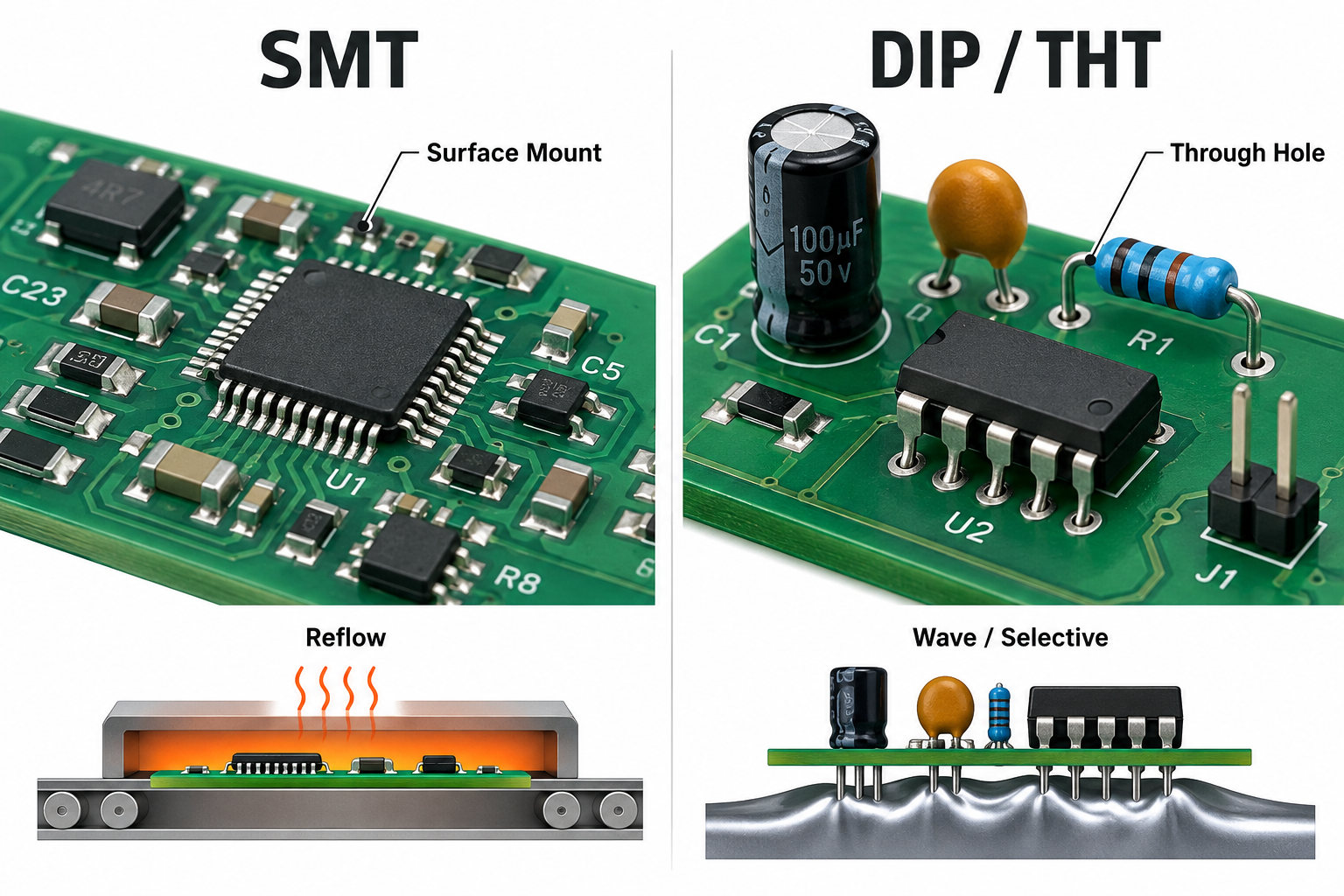
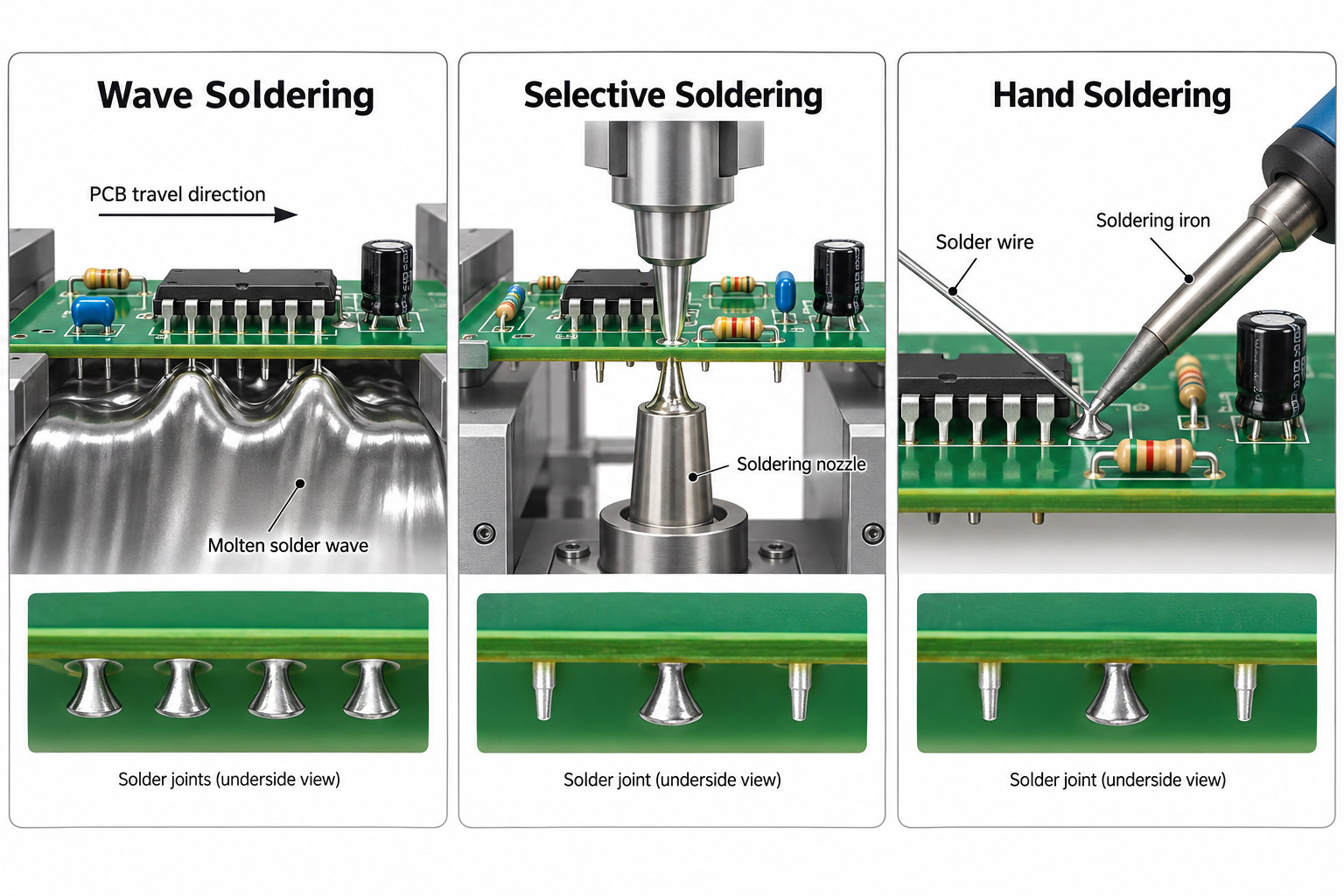
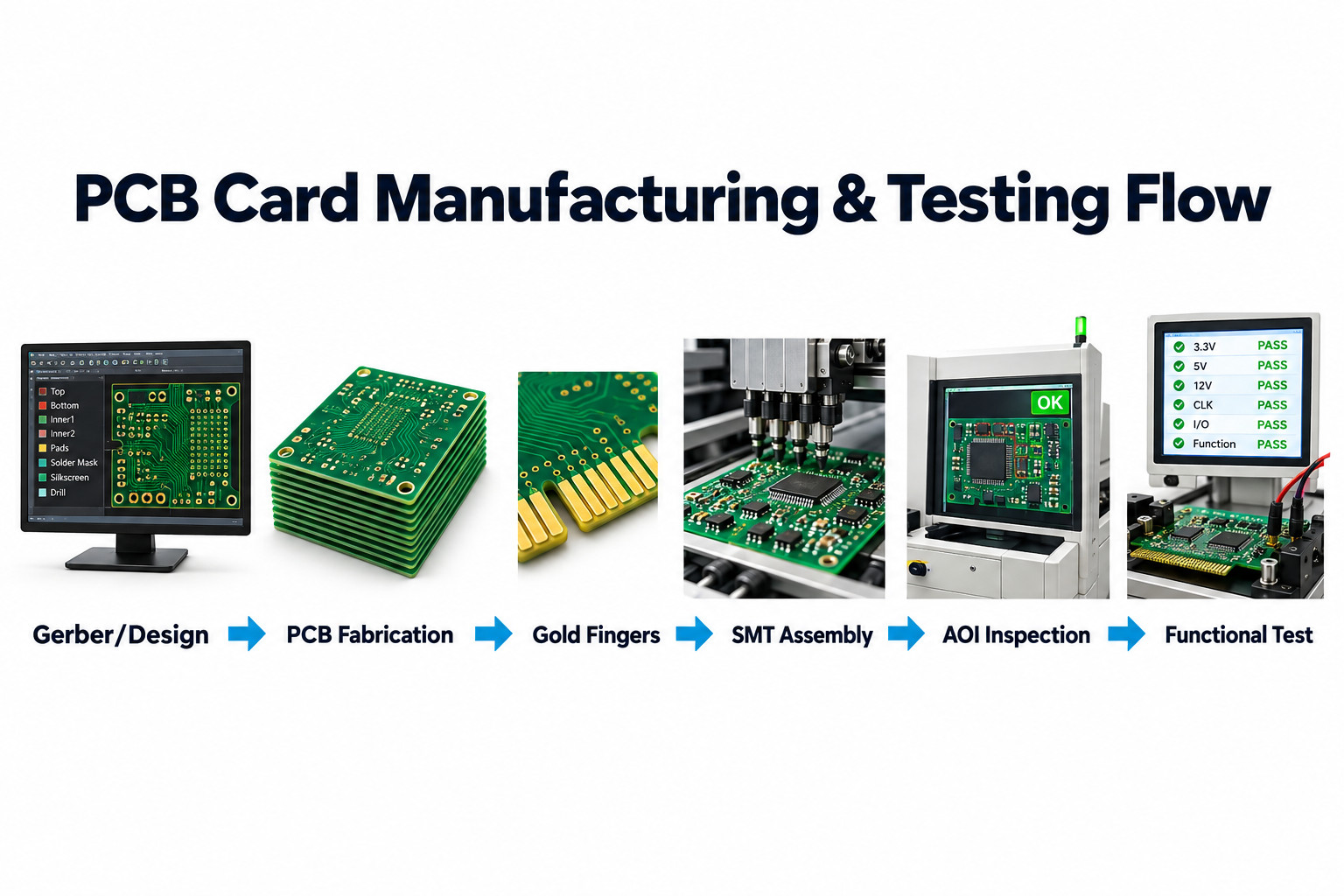
Electronic assembly manufacturing refers to the end-to-end process of building functional electronic products from bare printed circuit boards (PCBs), components, wiring systems, and enclosures. It goes far beyond simple PCB population. It includes SMT and THT assembly, cable and wire harness integration, testing, and full box build.
For engineers and sourcing teams, understanding how electronic assembly manufacturing worksâand how to evaluate the right supplierâdirectly impacts product reliability, lead time, and total cost.
Is Manufacturing and Electronic Assembly the Same Thing?
No, they are not the same.
Manufacturing is a broad concept covering the entire production lifecycle. Electronic assembly manufacturing is a specialized subset focused on assembling electronic systems.
These tools enhance production visibility and consistency.
In conclusion, electronic assembly manufacturing is where engineering design becomes a real product. Precision, process control, and integration capability all converge at this stage. For companies building advanced electronics, selecting the right electronics contract manufacturing assembly partner is not just about productionâit defines product quality, scalability, and long-term success. If you are looking for a reliable electronic assembly manufacturing partner, feel free to contact us at sales@bestpcbs.com for a fast quotation and engineering support.
FAQs About Electronic Assembly Manufacturing
What is electronic assembly manufacturing? Electronic assembly manufacturing is the process of assembling PCBs, components, cables, and enclosures into functional electronic products.
What is contract manufacturing electronic assembly? It means outsourcing production to a specialized company that handles assembly, testing, and integration.
What is electronic manufacturing assembly service? It is a full-service solution covering PCB assembly, sub-assembly, and final system build.
What is the difference between EMS and electronic assembly manufacturing? EMS is broader and includes logistics and supply chain, while electronic assembly manufacturing focuses on production.
What are electronics assembly machine manufacturers? These companies produce equipment such as pick-and-place machines, reflow ovens, and inspection systems.
When sourcing reliable medical grade PCB suppliers, EBestpcb is your top choice for certified, highâreliability, and regulatoryâcompliant printed circuit boards for medical devices.
Are You Facing These Pain Points in ISO 13485 Medical Grade PCB Sourcing?
Do you struggle to find suppliers with valid ISO 13485 certification for medicalâgrade production?
Are you worried about inconsistent quality and nonâcompliance with IPC Class 3 standards?
Do you face long lead times and poor support for urgent medical device prototypes?
Is it hard to get clean, burrâfree laser depaneling for delicate medical assemblies?
Can your current supplier support highâfrequency materials for wireless medical devices?
Do you lack traceability and full documentation for regulatory submissions?
Are you limited by rigid designs and cannot get medical grade custom rigid flex pcb solutions?
How Does EBest Solve Your Medical Grade PCB Pain Points?
We maintain active ISO 13485:2016 certification for full medical manufacturing compliance.
We strictly follow IPCâ6012 and IPCâAâ610 Class 3 for zeroâdefect medical assembly.
We offer 24âhour expedite prototyping to accelerate your medical device development.
We use precision UV laser depaneling for clean, stressâfree cutting of sensitive boards.
We support Rogers and other highâfrequency materials for WiâFi, BLE, and wireless charging.
We provide full material traceability, test reports, and process documentation.
We deliver medical grade vias flexible pcb and custom rigidâflex designs for wearable devices.
Why Choose EBest for Best ISO 13485 Medical Grade PCB Suppliers in China?
EBest is a proven, longâterm partner for medical grade PCB projects, combining regulatory certification, Class 3 quality, advanced processing, scalable capacity, and medicalâfocused engineering. We help you reduce risk, speed up launches, and meet strict regulatory demands.
ISO 13485 certified site â fully compliant for medical device manufacturing.
IPCâ6012 / Aâ610 Class 3 compliance â highest reliability for lifeâcritical applications.
4â8 layer rigid & HDI capability â ideal for compact, highâdensity medical electronics.
ISO 13485:2016 â Mandatory quality management system for medical device PCBs, emphasizing risk control, full traceability, and regulatory compliance throughout the production lifecycle.
IPCâ6012 (Class 3) â Rigid printed board qualification standard specifying strict structural, dimensional, and reliability requirements for highâperformance medical applications.
IPCâAâ610 (Class 3) â Highest acceptability criteria for electronic assemblies, ensuring zero critical defects in solder joints, components, and board structure for lifeâsupport devices.
IPCâAâ600 (Class 3) â Visual and structural acceptance standard for finished PCBs, banning delamination, excessive voids, and critical conductor spacing errors.
IEC 60601â1 â Medical electrical equipment safety standard requiring strict insulation, leakage control, and creepage/clearance for patientâcontact devices.
RoHS / REACH â Restriction of hazardous substances to ensure biocompatibility and safety for clinical and wearable applications.
UL safety certification â Verifies electrical safety, flammability resistance, and longâterm stability under operational stress.
Cleanroom & contamination control â Compliance with ISO 14644â1 (Class 7 or higher) and IPCâ5704 for low ionic contamination and particulate control.
Full traceability â Batch tracking from raw materials to finished goods, with records archived for regulatory audits and postâmarket surveillance.
What Are EBestâs Quality Inspection for MedicalâGrade PCB Orders?
Incoming material qualification (IQC) â 100% verification of laminates, copper foils, and surface finishes against medicalâgrade specs; certificates of compliance (CoC) checked and archived for full traceability.
Solder paste inspection (SPI) â 3D optical measurement of paste volume, height, and alignment to prevent cold joints, bridges, and insufficient solder in SMT assembly.
Layer & inner circuit AOI â Highâresolution automated optical inspection of all inner and outer layers to detect opens, shorts, and line defects before lamination.
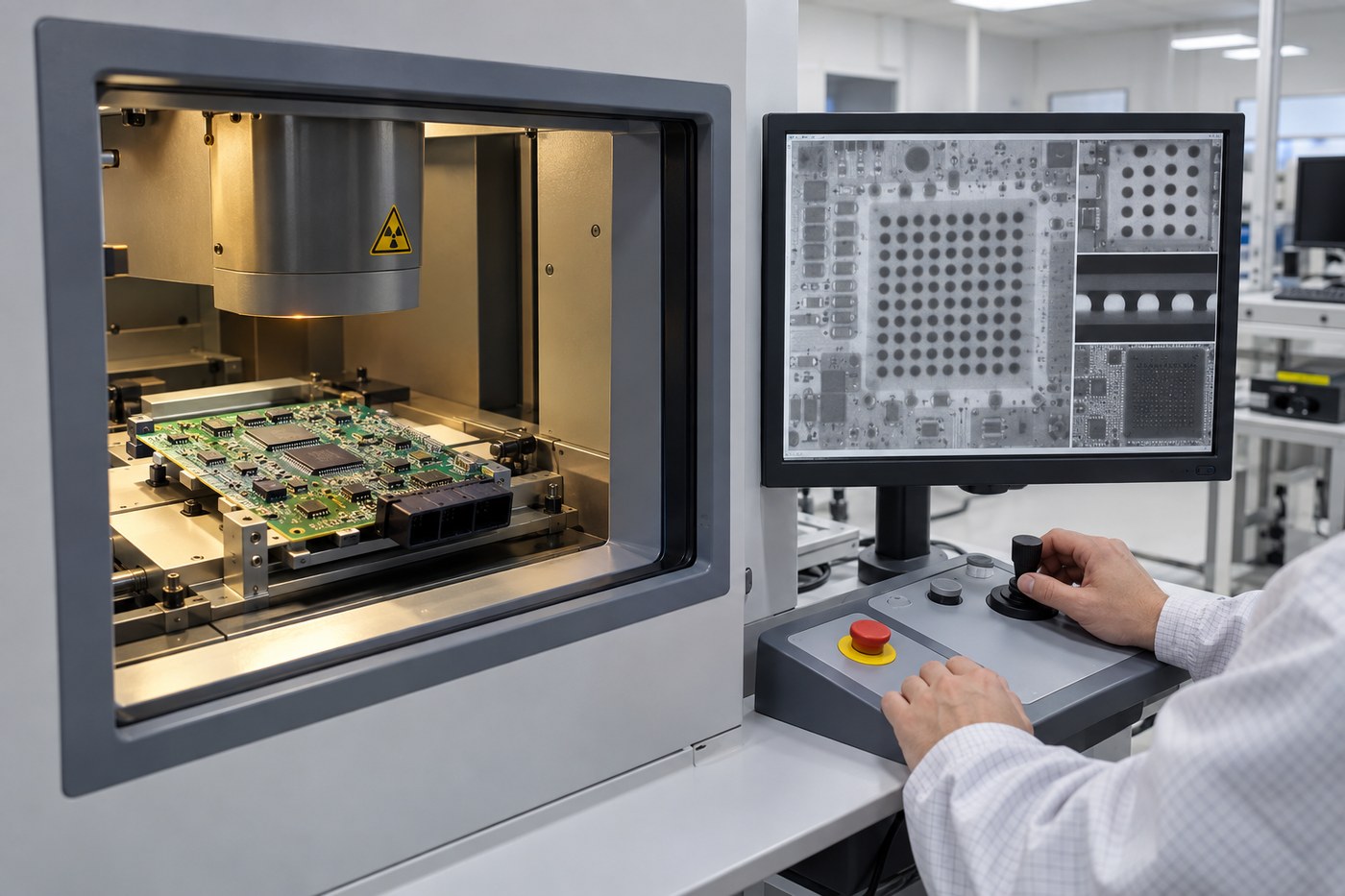
Xâray inspection (AXI) â Nonâdestructive examination of BGA, microvias, and hidden interconnects; void rate controlled below 5% for Class 3 medical reliability.
Electrical testing (Eâtest) â 100% flyingâprobe or bedâofânails testing for continuity, isolation, and impedance compliance; no boards skip electrical verification.
Ionic contamination testing â Measurement of surface residues to meet IPCâ5704 limits (<1.56 ÎŒg/cmÂČ NaCl eq.) to prevent corrosion and electrical leakage.
Thermal & reliability testing â Thermal cycling, humidity resistance, and mechanical stress testing for highâreliability medical and aerospace applications.
Final visual & dimensional inspection â Certified IPC inspectors perform 100% visual checks per IPCâAâ610 Class 3, plus precision measurement of critical features.
Documentation package â Full test reports, material traceability records, and CoC provided with every shipment to support regulatory submissions.
How We Ensure OnâTime Delivery for Medical Grade PCB Orders?
We operate a dedicated medicalâgrade PCB production line isolated from standard jobs to eliminate scheduling conflicts, crossâcontamination, and process delays. Our ISO 13485âaligned workflow is optimized for speed without compromising Class 3 quality.
Our MES & ERP systems provide realâtime order tracking from material release to shipping, with automated alerts for bottlenecks. Parallel processing of fabrication and component procurement cuts lead times, while dedicated engineering teams handle DFM reviews within 24 hours to resolve design risks upfront.
We maintain safety stock of critical medicalâgrade materials (highâTG FRâ4, flex substrates, Rogers, ENIG finishes) to reduce material lead times. For prototypes, our 24âhour expedite service supports urgent device development. For volume orders, we offer fixed weekly shipping slots with 99%+ onâtime performance.
Our logistics team coordinates priority shipping and customs clearance for global clients, ensuring your medical PCBs arrive on schedule for clinical trials, regulatory approvals, and mass production launches.
Medical Client Case Study: Portable Patient Monitor MedicalâGrade PCB Project
Project Background
A global medical device manufacturer developed a portable multiâparameter patient monitor for emergency, clinic, and home care. The device required a compact, lightweight medicalâgrade PCB with rigidâflex architecture, wireless BLE communication, and longâterm operational stability. The client needed full regulatory compliance and scalable volume support.
Project Requirements
ISO 13485 and IPCâAâ610 Class 3 certification
6âlayer medical grade custom rigid flex pcb with controlled impedance
Rogers highâfrequency material for reliable BLE transmission
Ultraâlow defect rate and 5+ year product lifespan
Full traceability, test reports, and documentation for FDA & CE filing
Prototype to mass production scaling with annual volume >100K units
Our Solution
Deployed ISO 13485 dedicated production line and Class 3 process controls
Integrated Rogers highâfrequency laminate for stable wireless connectivity
Applied UV laser depaneling to avoid mechanical stress on delicate rigidâflex sections
100% AOI, Xâray, electrical, and ionic contamination testing
Provided batch traceability, material certificates, and full test dossiers
Established dedicated line for volume production with consistent quality output
Outcome
The client successfully obtained FDA clearance and CE certification. The medicalâgrade PCB delivered stable performance in field use, with zero critical failures in clinical trials. EBest now supports annual volume production of 100K+ units with consistent onâtime delivery and quality. The client extended the partnership to include additional wearable and diagnostic medical devices.
FAQs About MedicalâGrade PCB Manufacturing
Q1: What certification is required for medical grade PCB?
A1: ISO 13485 is the core certification for medical device PCBs. Suppliers also need IPC Class 3, RoHS, REACH, and often UL. EBest holds ISO 13485:2016 and full industry approvals.
Q2: Why is IPC Class 3 important for medical devices?
A2: IPC Class 3 ensures the highest reliability for lifeâsupporting and criticalâcare equipment, reducing failure risk in clinical environments.
Q3: Can you handle flexible and rigidâflex for medical wearables?
A3: Yes, we specialize in medical grade vias flexible pcb and medical grade custom rigid flex pcb for endoscopes, wearables, and portable tools.
Q4: Do you support highâfrequency materials for wireless medical devices?
A4: We have extensive experience with Rogers and other highâfrequency materials for WiâFi, BLE, and wireless charging in diagnostic and monitoring devices.
Q5: Can you support prototype to mass production?
A5: Yes, we provide seamless prototypeâtoâvolume scaling, with annual volumes over 100K+ units for medicalâgrade PCB assembly.
Contact EBest for Your MedicalâGrade PCB Needs
EBest provides highâquality medical grade PCB and medicalâgrade PCB solutions for diagnostic, monitoring, implantable, and wearable medical devices. For inquiries and orders, email us at: sales@bestpcbs.com.
When discussing Automotive MCPCB temperature range, engineers are not just referring to a simple specification window. This rangeâtypically from -40°C to 150°Cârepresents a carefully engineered balance between material stability, thermal conductivity, electrical reliability, and long-term durability under harsh automotive conditions. From LED headlights to power control modules, MCPCBs (Metal Core Printed Circuit Boards) have become the backbone of thermal management in modern vehicles.
This article takes a practical, engineering-driven look at how MCPCBs operate across this wide temperature spectrum, what design considerations truly matter, and how to ensure consistent performance in demanding automotive environments.
What Does Automotive MCPCB Temperature Range Really Mean?
The Automotive MCPCB temperature range defines the safe operating limits within which the board can function without degradation in electrical or mechanical performance. In automotive electronics, this range is commonly specified as:
Low temperature limit: -40°C
High temperature limit: 125°C to 150°C (depending on design and materials)
This range aligns with automotive standards such as AEC-Q100 and ISO 16750, which simulate real-world conditions including cold starts, engine heat exposure, and environmental stress.
Unlike standard FR4 boards, MCPCBs are designed with a metal base layer, typically aluminum or copper, which significantly improves heat dissipation. This allows them to maintain stable operation even when ambient and junction temperatures rise.
Why Is -40°C to 150°C Critical in Automotive Applications?
Automotive systems operate in environments far more aggressive than consumer electronics. Temperature fluctuations are not gradualâthey can be abrupt and extreme.
Key real-world scenarios include:
Cold starts in winter climates (below -30°C)
Engine compartment heat exposure (above 120°C)
Thermal cycling during daily operation
Heat accumulation in enclosed lighting systems
A properly designed MCPCB must handle all of these without:
Cracking of dielectric layers
Delamination between layers
Solder joint fatigue
Electrical drift
This is why the Automotive MCPCB temperature range is not just a design targetâit is a reliability requirement.
How Does MCPCB Structure Support Wide Temperature Ranges?
MCPCBs achieve their thermal resilience through a multi-layer structure engineered for heat flow and mechanical stability.
Thermal conductivity: 1.0â3.0 W/m·K (standard) or higher for advanced designs
Dielectric breakdown voltage
Coefficient of Thermal Expansion (CTE) matching
High Tg (glass transition temperature) performance
The metal base acts as a heat spreader, quickly transferring heat away from hotspots such as LEDs or power components. This minimizes thermal gradients, which are often the root cause of mechanical stress.
What Happens at Low Temperatures (-40°C)?
Low-temperature performance is often underestimated, but it plays a critical role in automotive reliability.
At temperatures approaching -40°C:
Materials contract, increasing mechanical stress
Solder joints become more brittle
Dielectric layers may lose flexibility
Contact resistance can change slightly
A well-designed MCPCB compensates for these effects by:
Using materials with matched CTE values
Selecting flexible yet stable dielectric layers
Ensuring robust solder joint design
This ensures that the circuit remains functional during cold starts, especially in regions with extreme winter conditions.
What Happens at High Temperatures (Up to 150°C)?
High temperatures introduce a different set of challenges, primarily related to thermal aging and material degradation.
At elevated temperatures:
Dielectric materials may soften or degrade
Copper oxidation rates increase
Solder joints experience creep and fatigue
Electrical insulation resistance may decrease
To maintain performance within the Automotive MCPCB temperature range, manufacturers typically use:
In LED applications, for example, maintaining junction temperature is critical. Even a small reduction in heat dissipation efficiency can significantly shorten LED lifespan.
How Does Thermal Cycling Affect MCPCB Reliability?
Thermal cyclingârepeated heating and coolingâis one of the most demanding stress factors for automotive electronics.
A typical cycle might look like:
Start at -40°C
Heat up to 125°C or higher during operation
Cool down again when the vehicle is off
This repeated expansion and contraction can lead to:
Micro-cracks in dielectric layers
Solder joint fatigue
Delamination between layers
To address this, high-quality MCPCBs undergo:
Thermal cycling tests (hundreds to thousands of cycles)
Accelerated life testing
Cross-section analysis for structural integrity
Designing for the full Automotive MCPCB temperature range means planning for long-term durability, not just initial functionality.
Which Automotive Applications Require This Temperature Range?
MCPCBs are widely used in automotive systems where heat management is critical.
Typical applications include:
LED headlights and tail lights
Daytime running lights (DRL)
Engine control units (ECU)
Power modules (IGBT, MOSFET-based systems)
Battery management systems (BMS) in EVs
On-board chargers and DC-DC converters
Each of these applications has unique thermal profiles, but all demand reliable operation across the full Automotive MCPCB temperature range.
How to Design MCPCB for -40°C to 150°C Operation?
Designing for this temperature range requires a multi-disciplinary approach combining materials science, thermal engineering, and PCB layout optimization.
Key design strategies:
Optimize copper thickness for current and heat spreading
Use high-performance dielectric materials
Minimize thermal resistance between components and metal base
Ensure proper heat sinking and mechanical mounting
Design for uniform heat distribution
Layout considerations:
Avoid sharp thermal gradients
Place heat-generating components strategically
Use thermal vias where applicable (in hybrid designs)
A well-optimized design ensures that the MCPCB operates comfortably within its thermal limits, even under peak load conditions.
Material Selection: Aluminum vs Copper Core
The choice of base material significantly affects performance within the Automotive MCPCB temperature range.
Material Type
Thermal Conductivity
Weight
Cost
Typical Use
Aluminum Core
Moderate
Light
Lower
LED lighting, general automotive
Copper Core
High
Heavy
Higher
Power electronics, high-current systems
Aluminum is widely used due to its balance of cost and performance, while copper is preferred for high-power applications requiring superior heat dissipation.
How Does MCPCB Compare to FR4 in Temperature Performance?
Traditional FR4 boards struggle in high-temperature environments due to limited thermal conductivity.
Comparison:
Feature
MCPCB
FR4 PCB
Thermal conductivity
High
Low
Heat dissipation
Excellent
Limited
Max operating temp
Up to 150°C+
Typically <130°C
Reliability in automotive
High
Moderate
This is why MCPCBs are the preferred choice for thermal-critical automotive applications.
Common Challenges in Automotive MCPCB Design
Even with advanced materials, certain challenges require careful attention.
Addressing these early in the design phase significantly improves long-term performance.
Why Choose a Reliable MCPCB Manufacturer?
Achieving stable performance across the full Automotive MCPCB temperature range depends heavily on manufacturing quality.
A capable manufacturer should offer:
Material traceability
Thermal simulation support
DFM (Design for Manufacturability) analysis
Advanced testing (thermal cycling, X-ray, AOI)
Automotive certifications (IATF 16949)
For example, providers like Best Technology integrate PCB fabrication, material sourcing, and assembly into one workflow, ensuring tighter process control and faster turnaround.
In closing, the Automotive MCPCB temperature range is not just a specificationâit is a reflection of how well a design can withstand real-world stress. From freezing cold starts to high-temperature engine environments, MCPCBs provide a robust platform for reliable automotive electronics.
By selecting the right materials, optimizing thermal design, and working with experienced manufacturers, engineers can ensure consistent performance across the full -40°C to 150°C range. In modern automotive systems, that level of reliability is not optionalâit is expected. If you are looking for a dependable partner for automotive MCPCB prototyping or volume production, EBest Circuit can support your project with fast feedback, engineering review, and reliable manufacturing service. Pls feel free to contact our team at sales@bestpcbs.com to discuss your design requirements and get a tailored solution for your automotive application.
FAQs About Automotive MCPCB Temperature Range
What is the typical Automotive MCPCB temperature range? Most automotive MCPCBs operate between -40°C and 125°C or 150°C, depending on material selection and design requirements.
Can MCPCBs handle temperatures above 150°C? Yes, but this requires specialized materials such as ceramic substrates or high-end dielectric systems, often used in extreme environments.
Why are MCPCBs better for automotive lighting? They dissipate heat efficiently, which helps maintain LED brightness, color stability, and lifespan.
How long can an MCPCB last under thermal cycling? With proper design and materials, MCPCBs can withstand thousands of thermal cycles, meeting automotive reliability standards.
Does shock sensor needs resistor? This is one of the most common questions engineers face when designing circuits involving vibration or impact detection. The short answer is: in most cases, yesâbut it depends on the sensor type and output structure.
Some shock sensors behave like simple mechanical switches and require external resistors for stable operation. Others, especially integrated modules, already include internal biasing components. If this detail is misunderstood, it often leads to unstable signals, false triggers, or even system malfunction. This guide breaks down the topic from an engineering perspective, helping you make correct decisions during schematic design, PCB layout, and product development.
What Does a Shock Sensor Actually Output?
Before deciding whether a resistor is needed, itâs important to understand what a shock sensor outputs electrically.
Shock sensors generally fall into three output categories:
1. Switch-Type Output (Digital Contact)
Acts like a momentary switch
Output is either:
Open (floating)
Closed (connected to GND or VCC)
2. Analog Signal Output
Produces voltage variation based on vibration intensity
Requires ADC (Analog-to-Digital Conversion)
3. Conditioned Digital Output
Comes from modules with:
Comparator (e.g., LM393)
Built-in threshold adjustment
Outputs clean HIGH/LOW signals
👉 The key factor: If the output node is floating, a resistor is required.
Does a Shock Sensor Need a Resistor?
✔ Short Answer:
Mechanical shock sensors â YES (required)
Module-based sensors â USUALLY NO
MEMS sensors â ONLY for communication lines
Why Do Shock Sensors Need Resistors?
This is not just a wiring preferenceâitâs about signal integrity and circuit stability.
👉 Whether your design uses a simple vibration switch or a MEMS sensor, we ensure stable and production-ready circuits.
Finally, does a shock sensor need a resistor?
The correct answer depends on design context:
Mechanical sensors â always require resistor
Sensor modules â usually not required
MEMS sensors â only for communication lines
From an engineering standpoint, resistors are not optional componentsâthey are critical for ensuring signal stability, noise immunity, and reliable system behavior. If your goal is a robust PCB design, understanding this detail early will save significant debugging time and improve overall product quality.
Quick Summary
Shock sensors often output floating signals
Pull-up or pull-down resistors stabilize the signal
A metal core circuit board (MCPCB) is a specialized printed circuit board designed to solve one critical issue in modern electronicsâheat. By replacing traditional FR4 with a thermally conductive metal base, MCPCBs significantly improve heat dissipation, making them essential for high-power and high-reliability applications.
Compact Design Support Higher power density enables smaller and lighter products.
Reduced System Cost Integrated thermal design reduces need for external cooling.
One-Stop Manufacturing From prototype to mass production with stable quality and pricing.
EBest Circuit is a professional metal core printed circuit board manufacturer specializing in high-performance thermal solutions. We support applications from LED lighting to telecom and automotive systems. Our strength lies in combining material expertise with strict process control. Whether you need a single double sided metal core printed circuit board prototype or large-scale production, we ensure consistent thermal and electrical performance. For fast quotation and engineering support, pls feel free to contact us via sales@bestpcbs.com.
What Is a Metal Core Circuit Board?
A metal core circuit board replaces the standard FR4 substrate with a metal base, typically aluminum or copper. This metal layer acts as a heat spreader, allowing heat to move away from critical components efficiently.
The typical MCPCB structure includes:
Circuit Layer â Copper traces for electrical connection
In practice, MCPCB integrates heat management directly into the PCB itself, making it ideal for high-power electronic designs.
Why Choose MCPCB Over FR4?
The key difference lies in thermal performance. FR4 is cost-effective but thermally inefficient, while MCPCB is designed specifically for heat management.
In practice, the best choice depends on your project scale, complexity, and support needs.
What Affects MCPCB Cost?
Key cost drivers include:
Material Type â copper vs aluminum
Thermal Conductivity â higher = higher cost
Layer Count â multilayer increases complexity
Copper Thickness â heavy copper adds cost
Board Size & Shape â affects material usage
Order Volume â larger quantity reduces unit price
As a result, optimizing design early can significantly reduce total cost.
In short, a metal core circuit board is not just a PCBâit is a thermal solution. By integrating heat dissipation into the board itself, MCPCBs enable higher performance, longer lifespan, and more compact designs.
For projects that demand reliable thermal management, choosing the right partner is essential. EBest Circuit provides full support from prototype to mass production, ensuring your design meets both electrical and thermal requirements. Pls kindly note that free DFM and thermal design support available. A warm welcome to get a fast quote within 24 hours via sales@bestpcbs.com.
Technical FAQs About Metal Core Circuit Board
1. Why Is an Aluminum PCB More Reliable Than FR4 for LED Surgical Lights?
Aluminum PCBs are better suited for surgical lighting because their high thermal conductivity helps prevent lumen depreciation and color shifting during critical procedures. Unlike FR4, which tends to trap heat, an aluminum substrate quickly transfers thermal energy away from the LED dies. This helps maintain a stable junction temperature, so light output remains consistent and the color rendering index (CRI) stays reliable. For medical lighting, that level of stability is essential.
2. What Are the Primary Cost Drivers in MCPCB Manufacturing?
The cost of a metal core PCB is mainly influenced by the thermal conductivity of the dielectric layer and the choice of base material.
Thermal conductivity of the dielectric layer: High-performance dielectric materials, such as 3.0 W/mK and above, are usually much more expensive than standard 1.0 W/mK options.
Base material selection: Copper substrates provide stronger thermal performance, but they are much more expensive and heavier than aluminum substrates.
Secondary processing requirements: Extra processes such as ENIG surface finish, heavy copper foil, or complex mechanical routing for custom housings will also increase the total cost.
3. How Is Dielectric Breakdown Prevented in High-Voltage MCPCB Designs?
Dielectric breakdown is prevented by selecting an insulating layer with sufficient dielectric strength to handle the maximum operating voltage of the application. In power electronics and automotive systems, the insulation layer between the copper circuit and the metal base must provide stable electrical isolation. High-quality MCPCBs are often designed to pass Hi-Pot testing from 2000 VAC to 6000 VAC, depending on the dielectric thickness and material composition.
4. How Do Metal Core PCBs Perform in Extreme Outdoor Environments?
Metal core PCBs perform very well in harsh outdoor environments because they offer strong mechanical stability and excellent resistance to thermal shock. In applications such as street lights and construction warning lights, the metal base helps prevent warping during repeated temperature changes. At the same time, the rigid aluminum or copper core protects solder joints from cracking under vibration or physical impact, which is a common issue with traditional FR4 boards used outdoors.
Learning how to read a circuit board is an essential skill for troubleshooting, design review, assembly inspection, and quality control in the electronics industry. This guide breaks down how to read a circuit board with clear steps, component identification, trace analysis, and real-world industry examples to help you master this skill efficiently.
What Are the Basic Steps to Read a Circuit Board for Beginners?
Beginners can learn to read a circuit board in five straightforward steps: inspect silkscreen labels, identify components, locate power and ground, trace signal paths, and cross-reference with schematics.
Start by examining silkscreen markings such as R, C, U, and D for component reference designators.
Distinguish passive and active components by their shape, size, and polarity indicators.
Locate VCC and GND regions to understand the boardâs power distribution structure.
Follow copper traces to map input, output, and control signal routing.
How to Identify Electronic Components on a Circuit Board?
Electronic components are easily identified using standard reference codes, printed values, and physical characteristics.
Resistors (R): Current-limiting devices marked with resistance values or color codes.
Capacitors (C): Energy-storage components with clear polarity markings on polarized types.
Integrated Circuits (U/IC): Pin 1 is indicated by a dot or notch on the package.
Diodes/Transistors (D/Q): Polarity and pin functions marked by bars or printed symbols.
How to Read PCB Silkscreen Markings and Labels?
Silkscreen labels display component designators, polarity, test points, and pin numbers to assist with assembly, testing, and diagnosis.
Silkscreen text matches reference designators in schematics and BOM documents.
Polarity indicators prevent reversed installation of sensitive components.
Test points (TP) are marked for debugging and electrical parameter measurement.
Connector pin labels ensure correct wiring and interface connections.
How to Trace Copper Traces and Signal Paths on a PCB?
Tracing circuits from the power input toward output sections helps you understand logical signal flow.
Begin at power connectors and follow traces to voltage regulators and main integrated circuits.
Use a multimeter in continuity mode to verify connections between components.
Differentiate power, ground, and signal traces by trace width.
Separate high-speed and low-speed paths to identify noise-reduction design principles.
How to Read Multilayer Circuit Boards and Inner Layers?
Multilayer PCBs use stacked layers for power, ground, and signal routing, connected by vias for compact layout.
Vias connect inner layers to surface traces for space-efficient routing.
Dedicated inner ground and power planes improve stability and reduce electromagnetic interference.
Blind and buried vias enable high-density miniaturized designs.
Layer stack-up labels specify the total layer count and the function of each layer.
What Tools Are Needed to Read a Circuit Board Accurately?
A digital multimeter, magnifier, schematic documentation, and anti-static tools ensure accurate and safe PCB analysis.
Digital multimeter for continuity testing and voltage measurement.
Magnifier or microscope for reading tiny SMD component markings.
Schematic and BOM for cross-referencing physical and logical circuit design.
Anti-static equipment to protect sensitive electronic components.
How to Read a Circuit Board Without a Schematic?
Locate power and ground, identify core ICs, map I/O connectors, and group components by function to infer circuit purpose.
First identify the main power input and voltage regulation section.
Locate key components such as microcontrollers, FPGAs, and interface chips.
Use connectors to determine input, output, and communication functions.
Group components into power, signal, control, and protection circuits.
How to Read Polarity Markings on PCB Components?
Polarity markings prevent component damage and circuit failure; common indicators include bars, dots, and flat edges.
Electrolytic capacitors: a colored stripe marks the negative terminal.
Diodes: a bar indicates the cathode side.
Integrated circuits: a dot or notch shows the Pin 1 position.
LEDs: a flat edge denotes the cathode pin.
How to Read a Circuit Board for Automotive Electronics?
Automotive PCBs are engineered for high-temperature resistance, vibration tolerance, and stable voltage performance.
Automotive BMS PCBs monitor battery cells in electric vehicles to ensure safe charging and discharging.
Engine control PCBs feature high-temperature layouts and anti-interference routing.
ADAS interface boards use shielded traces to protect sensor signals from interference.
We support on-demand customization and provide free DFM reports for automotive PCBs.
How to Read a Circuit Board for Industrial Control & Automation?
Industrial PCBs prioritize noise immunity, electrical isolation, and long-term reliability in harsh operating environments.
PLC I/O PCBs use isolated signal paths for factory automation equipment.
Motor drive PCBs use heavy copper traces for high-current handling and improved thermal management.
Sensor interface boards resist interference from industrial machinery and power systems.
How to Read a Circuit Board for Consumer Electronics & Communications?
Consumer and communication PCBs focus on miniaturization, high density, and RF signal integrity.
Smartphone mainboards use HDI design for compact component placement.
Router and base station PCBs maintain clean signal paths for stable wireless communication.
Wearable device PCBs use flexible or ultra-thin layouts for space efficiency.
FAQ: Frequently Asked Questions About Reading a Circuit Board
1. What do R, C, U, D, and Q mean on a circuit board? R = resistor, C = capacitor, U = integrated circuit, D = diode, Q = transistor; these designators match schematic references.
2. How can I identify positive and negative terminals on PCB components? Look for stripes, dots, or flat edges; capacitors and diodes have clearly marked polarities.
3. Why are some PCB traces wider than others? Wider traces carry higher current levels, while narrow traces are used for low-power signal transmission.
4. What is the difference between a schematic and a physical PCB? A schematic shows logical circuit connections, while a PCB displays physical layout and copper routing.
5. How do I locate ground (GND) on a circuit board? Ground typically appears as large copper planes connected to mounting holes or power connector terminals.
6. Can I learn to read a circuit board without formal electronics training? Basic PCB reading is achievable with this guide; advanced analysis requires fundamental circuit knowledge.
7. What common errors occur when reading a circuit board? Missing polarity checks, blurred markings, and unrecognized test points often lead to misinterpretation.
8. How can I find broken or open traces on a PCB? Use a multimeter in continuity mode to detect open circuits or cold solder joints.
9. What are vias and why are they used on PCBs? Vias are conductive holes that connect layers in multilayer boards, enabling compact and efficient routing.
10. How do I correctly interpret high-frequency PCB layouts? Focus on impedance control, matched trace lengths, and ground plane isolation for signal integrity.
11. What does âTPâ stand for on a circuit board? TP means test point, used for debugging, measurement, and quality inspection.
12. How can I distinguish power traces from signal traces? Power traces are wider to carry higher current; signal traces are narrower and routed away from noise sources.
EBest PCB provides professional custom circuit board manufacturing for automotive electronics, industrial control, consumer electronics, and communications equipment. We support on-demand customization and offer free DFM reports to optimize your design for manufacturability and reliability. For inquiries or orders, contact us at sales@bestpcbs.com.
Electronic contract manufacturing (ECM) refers to outsourcing the entire or partial production of electronic productsâfrom PCB fabrication to final assemblyâto specialized third-party providers, enabling businesses to reduce operational costs, accelerate time-to-market, and leverage industry expertise. This article explores how one-stop EMS solutions streamline electronics production and highlights key considerations for choosing the right partner.
What Is Electronic Contract Manufacturing in PCBA?
Electronic contract manufacturing in PCBA (Printed Circuit Board Assembly) encompasses end-to-end production services for electronic devices, starting from bare PCB fabrication to fully assembled, tested products. It bridges the gap between design and commercialization by integrating multiple processes under one roof.
Core scope: Includes PCB design, fabrication, component sourcing, SMT (Surface Mount Technology) and THT (Through-Hole Technology) assembly, testing, and final packaging.
Key value: Eliminates the need for in-house production infrastructure, reduces capital expenditure, and allows teams to focus on R&D and market expansion.
Industry alignment: Supports sectors like consumer electronics, automotive, medical devices, and industrial equipmentâall requiring reliable, scalable production.
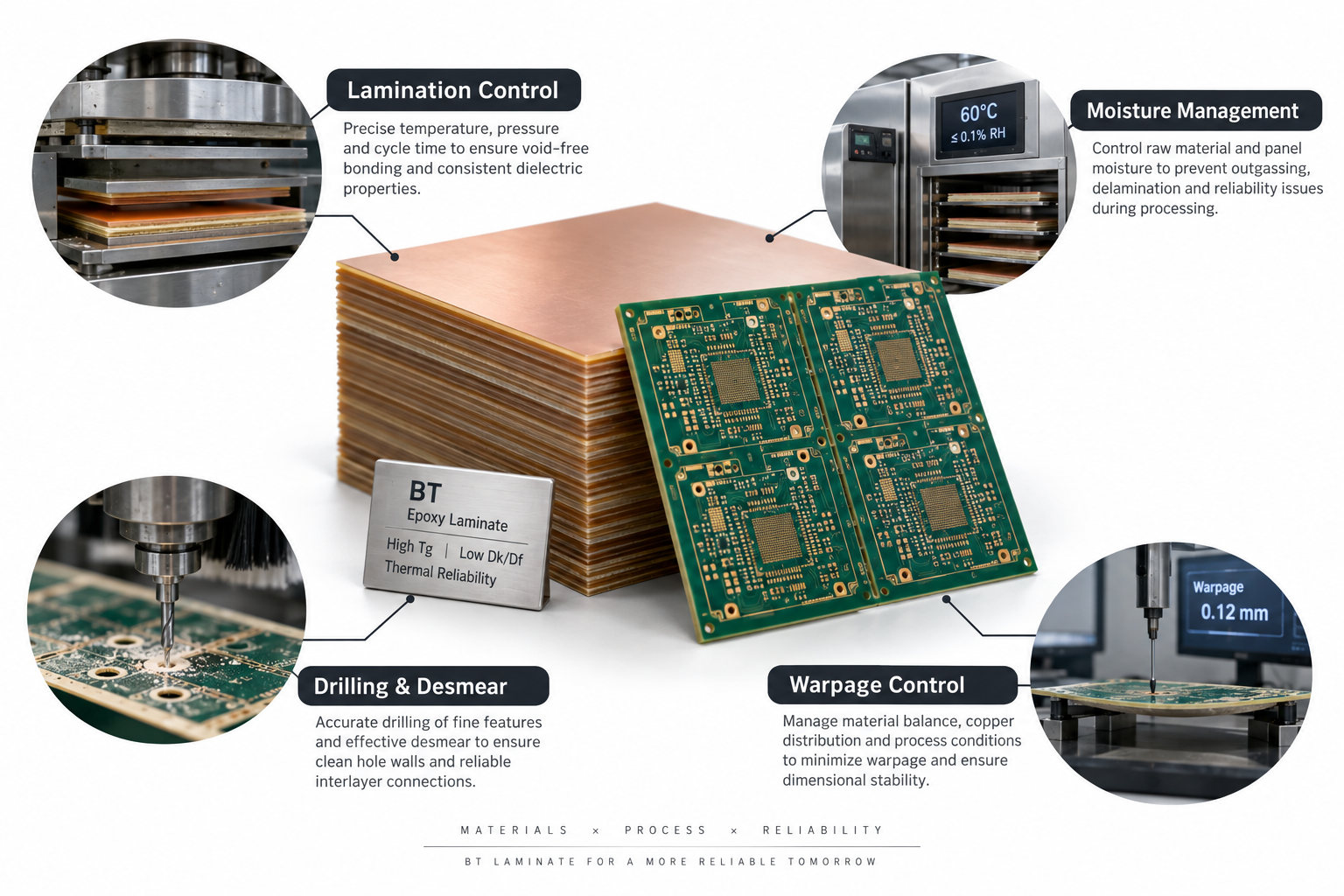
In short, ECM in PCBA transforms conceptual designs into functional products through streamlined, expert-led workflows.
Why Choose Electronic Contract Manufacturing Services for Your PCB Assembly Projects?
Choosing electronic contract manufacturing services solves critical pain points in PCB assembly while delivering measurable benefits for project efficiency and quality.
Cost efficiency: Avoids upfront investments in equipment, labor, and facility maintenanceâcosts are optimized through economies of scale.
Speed to market: Accelerates timelines via parallel processing (e.g., simultaneous PCB fabrication and component sourcing) and expedited services (e.g., 24-hour prototypes).
Quality assurance: Leverages certified processes (ISO 9001, IATF 16949) and advanced inspection tools (AOI, X-ray) to minimize defects.
Supply chain resilience: Access to global component networks (Digikey, Mouser, Avnet) ensures timely sourcing and reduces shortages.
Scalability: Supports everything from low-volume prototypes to high-volume mass production without retooling.
These advantages make ECM services indispensable for businesses aiming to launch products quickly and reliably.
What Services Are Included in Electronics Contract Manufacturing?
Electronics contract manufacturing covers a comprehensive suite of services tailored to PCB assembly needs, ensuring a seamless transition from design to delivery.
DFM (Design for Manufacturability) checks, engineering support, WIP tracking.
From initial design validation to final product packaging, these services integrate to deliver fully functional assemblies.
How Much Does Electronic Contract Manufacturing Cost?
Electronic contract manufacturing cost varies based on project complexity, volume, and service scopeâbut strategic partnerships help optimize expenses.
Key cost drivers: PCB layer count, material type (e.g., high-TG FR4 vs. ceramic), component pricing, assembly complexity, and testing requirements.
Cost-saving factors: Bulk material discounts, reduced labor overhead, and elimination of in-house equipment costs.
Transparency: Reputable EMS providers offer detailed quotes with breakdowns for PCB fabrication, components, assembly, and testing.
For example, standard FR4 prototypes (1â2 layers, 0.4â1.6mm thickness) start at competitive rates, with volume discounts available for mass production.
How to Choose the Right Electronic Contract Manufacturer?
Selecting the right electronic contract manufacturer requires evaluating technical capabilities, reliability, and alignment with your project goals.
Certifications: Prioritize ISO 9001, IATF 16949, and RoHS compliance for quality assurance.
Technical capacity: Check max PCB layers (up to 32 layers), min trace width (2/2 mil for HDI), and assembly capabilities (01005 components, 0.25mm BGA).
Lead time: Look for expedited options (24-hour prototypes, 1â5 days for assembly) to meet tight deadlines.
Supply chain strength: Ensure access to authorized distributors and inventory of common components to avoid delays.
These criteria help identify partners capable of delivering consistent quality and speed.
Which Electronic Contract Manufacturers Offer Quick Turnaround?
For businesses needing rapid production, Best Technologyâ stands out as a leader in quick-turn electronic contract manufacturing.
Prototype speed: 24-hour delivery for 1â2 layer FR4 PCBs; 48-hour for 4-layer; 72-hour for 6â8 layer.
Assembly lead time: 1â5 days for standard orders, with expedited options available.
Production capacity: Monthly output of 260,000 sq ft (28,900 sq m), supporting urgent large-scale orders.
Global reach: Serves 40+ countries with 97% on-time delivery rate.
This combination of speed and scale makes Best Technology ideal for time-sensitive projects.
What Are the Key Industries Using Contract Electronics Manufacturing?
Contract electronics manufacturing serves diverse industries where reliability, speed, and customization are critical.
Consumer electronics: Smartphones, wearables, IoT devicesârequiring compact designs and fast iteration.
Automotive: ECUs, sensors, infotainment systemsâdemanding high-temperature resistance (up to 180°C TG FR4) and durability.
Medical devices: Diagnostic equipment, implantsâneeding ISO 13485 compliance and precision assembly.
Industrial equipment: PLCs, roboticsârequiring heavy copper PCBs (up to 20 OZ) for power handling.
Military/aerospace: Ruggedized electronicsâneeding high-reliability materials (Rogers, Taconic) and strict testing.
Each sector benefits from tailored ECM solutions that address unique technical and regulatory requirements.
Electronic contract manufacturing remains a strategic lever for businesses seeking to accelerate product launches, reduce costs, and ensure quality. This article has outlined its role in PCBA, key services, cost considerations, and selection criteriaâwith a focus on quick-turn solutions.
For reliable, fast electronic contract manufacturing services, Best Technologyâ delivers 19 years of expertise, 97% on-time delivery, and one-stop EMS solutions. Pls feel free to contact us anytime at sales@bestpcbs.comâ to discuss your project needs.
FAQs About Electronic Contract Manufacturing
What is contract electronic manufacturing?â Itâs the outsourcing of electronic production (PCB fabrication, assembly, testing) to specialized providers.
How is software transforming electronics contract manufacturers?â Software enables DFM analysis, automated inspection (AOI/X-ray), and real-time WIP tracking for efficiency.
Where are the contract manufacturers for electronic wearables?â Providers like Best Technology offer compact PCB assembly (01005 components) and quick-turn prototypes for wearables.
Is ultra electronics in yapbank ny a contract manufacturer?â While Ultra Electronics operates in defense, Best Technology is a leading contract manufacturer for global clients.
A blank circuit board (also called bare or empty PCB) is an unpopulated electronic assembly foundation requiring precision engineering for reliability. High-quality blank PCBs need strict process controls and professional design, where EBest, a top China blank PCB manufacturer, offers full solutions from design to mass production to meet your needs.
Why Choose EBest for China Blank Circuit Board Manufacturers?
EBest, a leading China-based blank circuit board manufacturer with over 20 years of experience, specializes in high-reliability blank PCBs for mission-critical sectors, supported by IATF 16949, ISO 13485, AS9100D, RoHS, REACH and UL. Our advanced facilities produce diverse solutions: rigid, flexible, metal-core, 1-30 layers for modern electronic applications.
Full-Cycle Turnkey Capabilities: Save you 30% of project time and 25% of coordination costs by integrating design optimization, rapid prototyping, manufacturing, and testing in-houseâeliminating the need to coordinate 3+ suppliers, while ensuring 99.9% quality consistency across all production stages.
Stringent Quality Assurance: Reduce your product failure rate to 0.05% or lower with 100% electrical testing, AOI inspection, and impedance verification; our strict process controls ensure blank PCBs meet IPC 6013 Class 3 standards, extending your end-product service life by 20%.
Fast, Reliable Delivery: Cut your product development cycle by 40% with 3-5 day standard prototype delivery and 7-10 day mass production turnaround; 24-hour express service for urgent orders ensures you meet market launch deadlines, boosting your time-to-market advantage by 35%.
Tailored Custom Solutions: Match your unique application needs with customized substrates, surface finishes, and specs, reducing material waste by 15% and ensuring 100% compatibility with your end-product, avoiding costly redesigns due to mismatched standard boards.
Competitive, Transparent Pricing: Leverage our 260,000 square feet monthly production capacity to save 18-30% on unit costs vs. small manufacturers; volume discounts (up to 25% for orders over 10,000 pieces) further reduce your mass production expenses without compromising quality.
Dedicated Technical Support: Our DFM analysis reduces prototype iterations by 40%, cutting prototype costs by 30% and accelerating your time-to-market by an average of 2-3 weeksâensuring your design is manufacturable and cost-effective from the start.
Blank circuit board design transforms electronic concepts into manufacturable substrates balancing electrical performance, mechanical integrity, and production feasibility. Poor blank PCB design causes signal interference, manufacturing failures, and costly delays. EBest’s engineering team resolves these challenges through specialized expertise.
What Are Common Design Challenges?
Signal Integrity Issues: High-speed signals suffer reflection, crosstalk, and EMI without proper impedance control
Thermal Management: Inadequate heat dissipation leads to component failure in high-power applications
Space Constraints: Compact layouts create routing conflicts and assembly difficulties
Manufacturing Compatibility: Non-standard features cause production errors and low yields
Material Selection: Choosing inappropriate substrates for operating environments
How EBest Solves Design Challenges?
Advanced Simulation: Signal integrity and thermal analysis before production
DFM Expertise: Optimize layouts for manufacturing, reducing prototypes by 40%
Layer Stack Expertise: Proper plane separation ensures signal quality and noise reduction
Precision Routing: Controlled impedance, differential pairs, and minimal 90° angles
Industry-Specific Design: Medical (ISO 13485), aerospace (AS9100D), and industrial standards
Medical Case Study: Designed a 6-layer blank PCB for a portable ultrasound device with 0.2mm trace/space, controlled impedance (±5%), and ENIG finish. The design passed all IPC 6013 Class 3 requirements and supported 500+ hour continuous operation.
For superior blank circuit board design that balances performance and manufacturability, partner with EBest. Our engineering team delivers optimized layouts for any application.
Blank circuit board prototype development validates designs before mass production identifying issues early. Common challenges include long lead times, poor quality, and inconsistent performance. EBest provides rapid, reliable blank PCB prototype services with strict quality controls.
What Prototype Challenges Do Users Face?
Long Lead Times: Traditional manufacturing delays product development
Quality Inconsistencies: Prototypes failing testing or not matching specifications
High Costs: Small-quote premiums and repeated iterations increase expenses
Limited Materials: Restricted access to specialized substrates
Documentation Errors: Incorrect files cause manufacturing failures
How EBest Delivers Superior Prototypes?
Our blank circuit board prototype services solve these issues:
Rapid Turnaround: 24-hour express, 3-5 day standard delivery
Precision Manufacturing: Advanced laser plotting and plating technologies
Full Material Selection: FR-4, high-TG, aluminum, Rogers, and flexible substrates
Strict Quality Control: 100% electrical test, AOI, and microsection analysis
DFM Feedback: Free design review to optimize for mass production
Aerospace Case Study: Produced 10 prototype 8-layer blank printed circuit boards for a satellite communication module using Rogers 4350B substrate. The prototypes passed thermal cycling (55°C to 125°C) and vibration testing (20G), validating performance for space applications.
Accelerate your development with reliable blank circuit board prototype solutions from EBest. We deliver high-quality samples quickly to validate your design efficiently.
Blank circuit board assembly transforms bare substrates into functional electronic assemblies. Challenges include component placement accuracy, solder quality, and process controls. EBest’s blank PCB assembly services ensure flawless execution from prototypes to mass production.
What Assembly Challenges Exist?
Solder Defects: Cold joints, bridges, and tombstoning cause failures
Quality Inspection: AOI, X-ray, and functional testing for all assemblies
Material Management: Complete BOM support and component sourcing
Industrial Case Study: Assembled blank PCB for a factory automation PLC with 1,200+ components including 0402 passives and QFP devices (0.5mm pitch). Achieved 99.8% first-pass yield and 30,000+ hour MTBF for continuous operation.
For reliable blank circuit board assembly with exceptional quality, choose EBest. Our comprehensive services ensure your assemblies perform flawlessly.
What Is a Blank Printed Circuit Board?
A blank circuit board, also known as a bare circuit board or empty circuit board, is an unpopulated electronic substrate that provides a mechanical foundation and pre-designed electrical pathways (traces, pads, and vias) for mounting electronic components. Unlike assembled PCBs, it contains no soldered components serving as the base structure that is later populated with resistors, capacitors, chips, and other parts to form a functional electronic circuit. Blank circuit boards are manufactured with precise materials and processes to ensure electrical conductivity, mechanical stability, and compatibility with various component types making them essential for all electronic devices across medical, aerospace, and industrial sectors.
What is a Blank Circuit Board Called?
A blank circuit board has several industry terms:
Bare circuit board / bare PCB: Most common description
Empty circuit board: Emphasizes unpopulated state
Blank PCB: Standard industry abbreviation
Blank printed circuit board: Full technical designation
Circuit board blanks: Plural reference to unprocessed substrates
These terms all describe the same unpopulated substrate before component assembly.
What Are Types of Blank PCB Circuit Board?
The layer count of a blank circuit board refers to the number of conductive copper layers embedded in the substrate directly impacting its complexity and functionality.
Single-sided: Features a single conductive layer making it the simplest and most cost-effective option. It is ideal for low-density designs and simple electronics where component placement is straightforward such as basic sensors or simple control circuits.
Double-sided: Equipped with two conductive layers allowing for more component placement and more complex circuit routing compared to single-sided boards. This type is widely used in most consumer electronics including remote controls, small appliances, and basic communication devices.
Multilayer (3-30 layers): Consists of alternating conductive and insulating layers enabling high-density component placement and efficient signal routing. These boards are designed for high-speed, complex devices like smartphones, medical equipment, aerospace systems, and industrial control units that require advanced functionality in a compact space.
What is HS Code of Blank Circuit Board?
The primary HS code for blank circuit board (unpopulated) is 85340090 in China. This classification covers:
Bare printed circuit boards without components
Blank PCB substrates of all materials
Single, double, and multilayer circuit board blanks
Additional documentation may include:
Substrate material specification
Layer count and thickness
Copper weight
Surface finish type
Proper classification ensures smooth customs clearance for international shipments.
What Materials Are Used for Blank Circuit Boards?
Material Category
Specific Types
Composition/Key Features
Properties
FR-4 Glass Reinforced Epoxy
Standard FR-4, High-TG FR-4
Epoxy resin with glass fiber reinforcement; High-TG variant for enhanced thermal stability
Good mechanical strength, electrical insulation, flame retardant (UL94 V-0); Standard TG: 130°C-150°C; High-TG: 170°C+
High-Frequency Materials
Rogers, Taconic, PTFE (Teflon)
Specialized substrates designed for high-frequency applications
Bendable, lightweight substrates for flexible applications
Polyimide: Temperature resistance (200°C to 260°C), flexibility; PET: Lower cost, limited temperature range
Metal Core Substrates
Aluminum, Copper
Metal core (aluminum or copper) for heat dissipation
Excellent thermal conductivity; Copper has superior thermal performance but higher cost than aluminum
Specialty Materials
Ceramic, Composite (CEM-1/CEM-3)
Specialized substrates for unique application needs
Ceramic: High-temperature resistance, excellent insulation; CEM-1/CEM-3: Cost-effective alternative to FR-4
Material selection for blank circuit boards depends on operating temperature, electrical requirements, and environmental conditions. The table above summarizes the key materials, their features, and properties to help you make the right choice for your application.
How to Use Blank Circuit Board?
Using a blank circuit board involves several key, sequential steps that ensure proper assembly, functionality, and reliability critical for medical, aerospace, and industrial applications. Each step focuses on precision to avoid assembly errors and component failure leveraging best practices for blank PCB utilization:
1. Preparation & Verification
Confirm the blank circuit board dimensions, layer count, copper weight, and surface finish match your design specifications (e.g., ENIG finish for medical devices, high-TG substrate for industrial use).
Inspect the bare circuit board for defects: scratches on conductive traces, delamination of layers, irregularities in solder mask, or contamination that could impact soldering.
Clean the empty circuit board surface with isopropyl alcohol or specialized cleaning agents to remove dust, oil, or residue ensuring strong solder adhesion and electrical conductivity.
2. Component Preparation
Gather all electronic components (resistors, capacitors, chips, connectors) and verify their specifications (value, size, voltage rating) match the BOM (Bill of Materials) for your blank PCB.
Prepare solder paste (matching alloy type for your application), a precision stencil aligned to the blank circuit boardâs pad layout, and assembly tools (soldering iron, pick-and-place equipment for high-volume projects).
Develop or load a component placement program (for automated assembly) based on your design files (Gerber, BOM) ensuring accurate alignment with the blank printed circuit boardâs pads and vias.
3. Assembly Process
Apply solder paste to the blank circuit board using a precision stencil ensuring uniform paste thickness (critical for small components like 0402 passives or QFP chips).
Place components on the blank PCB manually for small prototypes or via automated SMT lines for mass production aligning pins perfectly with pads to avoid short circuits.
Reflow solder in a controlled oven following a temperature profile tailored to the component type and solder alloy ensuring proper melting and adhesion without damaging the circuit board blank or components.
Clean the assembled blank circuit board to remove flux residues (especially critical for medical or aerospace applications) using a solvent compatible with the boardâs surface finish.
4. Testing & Validation
Perform a visual inspection (manual or AOI) to check for solder defects (cold joints, bridges, tombstoning) and component misalignment on the blank PCB assembly.
Conduct electrical testing (flying probe or fixture test) to verify continuity, isolation, and impedance control ensuring the blank circuit boardâs pathways function as designed.
Complete functional testing to confirm the assembled board operates as intended matching the performance requirements of your application (e.g., signal integrity for aerospace communication).
Optional environmental stress testing (thermal cycling, vibration, humidity) for high-reliability sectors ensuring the bare circuit board assembly withstands harsh operating conditions.
5. Integration
Install the tested blank circuit board assembly into the final product housing ensuring secure mounting to prevent damage from vibration (critical for industrial equipment).
Connect the assembly to other system components (power supplies, sensors, displays) using appropriate connectors ensuring proper electrical connections and signal integrity.
Complete system-level testing to verify the blank printed circuit board works seamlessly with the entire system resolving any integration issues before final deployment.
How to Make Circuit Board Blanks?
Circuit board blanks manufacturing involves precise, standardized multi-step processes that ensure consistency, electrical performance, and mechanical durability essential for high-reliability blank circuit board applications. Below are the key steps focusing on critical details that impact the quality of bare circuit boards:
1. Material Preparation
Select the appropriate substrate material (FR-4, high-TG, aluminum, Rogers, or polyimide) based on the blank PCBâs intended use (e.g., Rogers for high-frequency aerospace applications, polyimide for flexible medical implants).
Laminate copper foil (typically 1oz-4oz) to the dielectric substrate under controlled high heat (170°C-200°C) and pressure ensuring strong adhesion between layers for multi-layer circuit board blanks.
Cut the laminated core material to the required panel size and prepare multilayer stacks with prepreg (insulating material) between layers to ensure electrical isolation and structural integrity.
2. Imaging Process
Apply a photosensitive photoresist (liquid or dry film) to both sides of the copper-clad substrate ensuring uniform coverage to protect the copper during etching.
Expose the photoresist-coated blank circuit board to UV light through a precision artwork film (containing the circuit pattern) hardening the photoresist in areas that will remain as conductive traces.
Develop the board to remove the unexposed (unhardened) photoresist revealing the copper areas that will be etched away leaving the desired circuit pattern on the blank PCB.
3. Etching Process
Etch the exposed copper using a chemical solution (typically ferric chloride or cupric chloride) removing unwanted copper to leave only the conductive traces, pads, and vias of the blank circuit board.
Strip the remaining hardened photoresist using a chemical stripper revealing the clean copper circuit pattern on the bare circuit board.
Clean and inspect the panels for etching defects (over-etching, under-etching, trace damage) using AOI or manual inspection ensuring the circuit pattern matches design specifications.
4. Drilling & Plating
Drill precision holes (through-hole or micro-vias for HDI boards) using CNC drilling equipment ensuring accurate hole size and location for component pins and interlayer connections in multi-layer blank PCBs.
Desmear the hole walls to remove resin residue from drilling then clean the holes to ensure proper copper adhesion for plating.
Apply electroless copper plating (thin, uniform copper layer) to the hole walls and board surface followed by electrolytic copper plating to achieve the desired copper thickness (1oz-4oz) for the blank circuit board.
Perform pattern plating (if needed) to thicken copper on critical traces (e.g., power traces) for enhanced current-carrying capacity ensuring the circuit board blanks meet electrical requirements.
5. Final Processing
Apply a solder mask (typically green but available in other colors) to the blank circuit board covering all areas except pads and vias to protect traces from oxidation, short circuits, and physical damage.
Add legend/identification printing (silk screen) to the solder mask marking component designators, logos, and polarity indicators for easy assembly and troubleshooting.
Apply the desired surface finish (HASL, lead-free HASL, ENIG, OSP, or immersion silver) to the pads ensuring strong solderability and corrosion resistance for the blank PCB.
Route or punch the panels to the final blank circuit board dimensions removing excess material and ensuring clean, precise edges.
Conduct final electrical testing (continuity, isolation, impedance) and visual inspection rejecting any bare circuit boards with defects to ensure only high-quality products are delivered.
Where to Buy Blank Circuit Boards?
For high-quality blank circuit boards, partner with specialized manufacturers like EBest. Key considerations when selecting a supplier:
Q4: Can blank circuit boards withstand high temperatures?
A4: Standard FR-4 handles up to 130°C continuously. High-TG materials work up to 170°C+. Metal core and ceramic substrates handle even higher temperatures for specialized applications.
Q5: What testing is performed on blank circuit boards?
A5: Standard tests include: flying probe or fixture electrical test, AOI (Automated Optical Inspection), solder mask adhesion, and dimension verification. Special testing available upon request.
Q6: Can you manufacture custom-sized blank circuit boards?
A6: Yes, EBest produces fully customized blank circuit board dimensions, shapes, and specifications according to your design files.
Ready to Order Your Blank Circuit Boards?
EBest delivers high-quality blank circuit board solutions for medical, aerospace, industrial, and commercial applications. As a leading China blank printed circuit board manufacturer, we provide comprehensive services from design through mass production.
Our blank PCB products meet the strictest quality standards with fast delivery and competitive pricing. Whether you need prototypes or large-scale production, we offer tailored solutions to meet your exact requirements.
Contact us today to discuss your blank circuit board needs. Send your specifications and requirements to sales@bestpcbs.com for a free quote and DFM analysis. Partner with EBest for reliable circuit board blanks that power your success.
Circuit boards applications uses electronics devices refers to how Printed Circuit Boards support, connect, and control the functions of modern electronic products across consumer, industrial, medical, automotive, and other advanced sectors. This article explains where PCBs are used, how they work, which board types and materials fit different scenarios, and how to choose the right PCB partner for reliable results.
What problems do customers usually face when selecting PCBs for electronic devices?
The device works in theory, but the PCB fails in real operating conditions.
The board is too bulky for compact product design.
Heat, moisture, or vibration shortens product life.
Material choice is unclear, especially for RF, power, or harsh environments.
A supplier can build boards, but cannot support application-driven optimization.
A capable PCB manufacturer solves these issues by matching the board to the real application environment.
Use application-specific PCB structures and stackups.
Reduce board size through HDI and optimized layout support.
Improve durability with thermal and environmental design controls.
Recommend the right substrate for signal, power, and reliability needs.
Provide engineering support from DFM review to mass production.
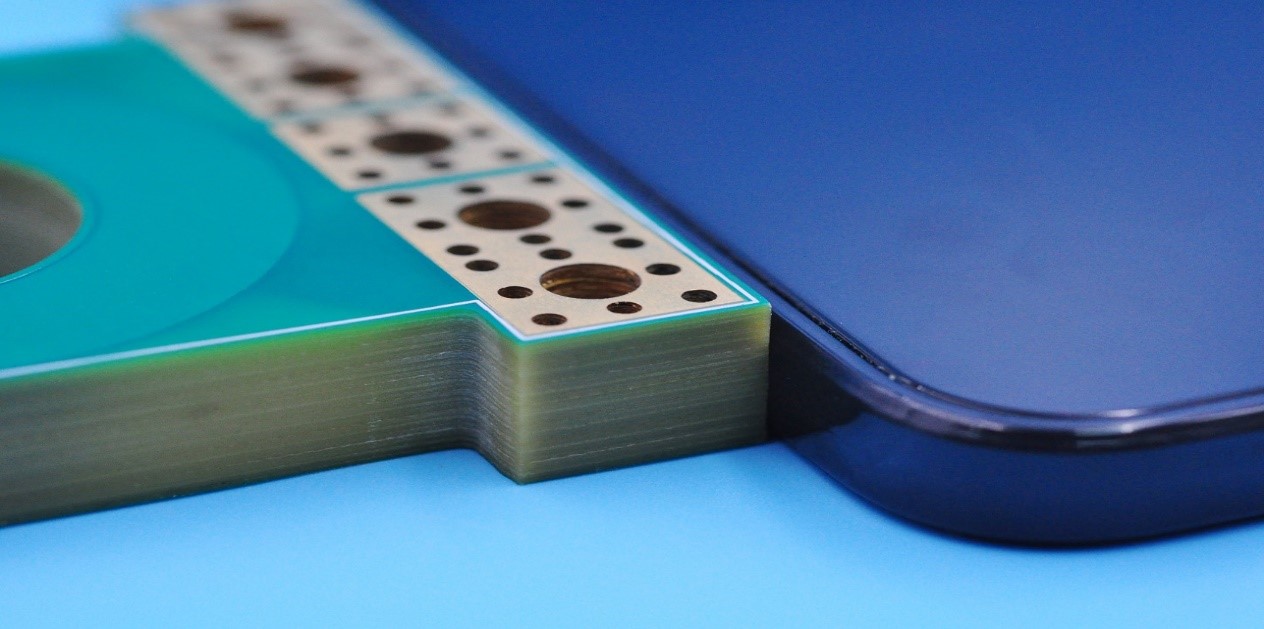
EBest Circuit (Best Technology) is a professional PCB and PCBA manufacturer serving customers across consumer electronics, industrial control, medical devices, automotive electronics, RF products, LED systems, and high-reliability applications. We support projects with engineering review, material selection, PCB fabrication, component sourcing, SMT assembly, testing, and fast communication throughout the process. For project support, pls feel free to contact us via sales@bestpcbs.com.
What Are Circuit Boards Applications Uses in Electronic Devices?
When people search for Applications of circuit boards in electronic devices or Circuit board applications in electronics, they are usually asking a practical question: where are PCBs used, and what do they actually do inside a product? A PCB is not just a mounting platform. It is the electrical foundation that links components, manages signals, distributes power, and helps a device operate as one complete system.
At the application level, PCBs serve several core functions:
Electrical connection: link ICs, resistors, capacitors, connectors, and sensors
Signal routing: guide analog, digital, RF, and high-speed signals through controlled paths
Power distribution: deliver stable voltage and current to all functional blocks
Mechanical support: hold components in fixed positions for reliable assembly
Thermal assistance: help move heat away from power devices and LEDs
System integration: combine control, sensing, communication, and power modules on one board
A quick application view looks like this:
PCB Role
What It Does in a Device
Connection
Links all electronic parts
Control
Supports processing and logic
Power
Feeds current to subsystems
Communication
Carries data and RF signals
Thermal support
Helps reduce hot spots
Structure
Supports assembly and compact design
In short, circuit boards uses applications electronics devices is really about how PCBs make modern electronics possible. Without them, devices would be larger, less reliable, harder to manufacture, and far more expensive to integrate.
Why Are Circuit Boards Essential in Modern Electronic Devices?
Modern electronics demand more than simple connectivity. Devices now combine processors, wireless modules, displays, sensors, batteries, cameras, and power circuits in very limited space. PCBs are essential because they organize this complexity into a manufacturable, repeatable, and scalable platform.
Their importance becomes even clearer when products must meet commercial targets such as lower size, faster speed, stable performance, and long service life. A good PCB design improves both engineering performance and business outcomes.
Key reasons PCBs are essential include:
They enable compact integration Multilayer PCBs allow many circuits to fit into a small area.
They improve electrical consistency Controlled traces and reference planes help stabilize signal behavior.
They support mass production Standardized fabrication and assembly make large-scale manufacturing possible.
They increase product reliability Well-designed PCBs reduce loose wiring, assembly errors, and connection failure.
They help optimize cost Integrating more functions into one board can reduce cable, connector, and labor costs.
They support modern interfaces Bluetooth, Wi-Fi, GPS, USB, CAN, Ethernet, and RF systems all rely on PCB design quality.
For many products, PCB quality directly affects user experience. A smartphone with poor board design may overheat. A medical monitor with unstable signal routing may lose data accuracy. An automotive controller with weak vibration resistance may fail early.
So when discussing circuit board applications in electronics, the real point is not only where the board is used, but why it is indispensable to modern product architecture.
What Types of Electronic Devices Use Circuit Boards Today?
PCBs appear in almost every category of electronic equipment. Some devices use a basic single-sided board. Others rely on complex HDI, rigid-flex, RF, ceramic, or metal-core designs. The device category usually determines the PCB structure, material system, thermal requirement, and assembly complexity.
Energy systems: solar inverters, battery storage controllers, smart meters, charging systems
A simple way to view this is by application demand:
Device Type
Typical PCB Need
Smartphone
HDI, multilayer, compact layout
LED light
Thermal management, MCPCB
Automotive ECU
High reliability, vibration resistance
Medical monitor
Stable signals, compliance support
Router / RF unit
Controlled impedance, low-loss material
Industrial controller
Durability, long service life
This wide adoption explains why Applications of circuit boards in electronic devices is such a strong topic. It covers both daily-use electronics and critical systems that must operate under far more demanding conditions.
What Are the Most Common Circuit Board Applications in Electronics?
Although PCBs are used almost everywhere, certain applications appear far more often in search behavior and purchasing demand. These common uses create the best bridge between SEO traffic and practical buyer intent.
The most common PCB applications in electronics include the following:
Signal control boards Used in logic control, processing, and communication modules.
Power conversion boards Used in chargers, power supplies, inverters, and motor drives.
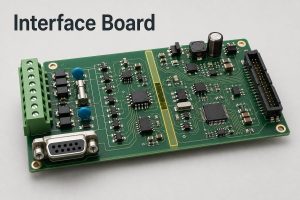
Interface boards Used for display control, user input, connectors, and external communication.
Sensor boards Used in wearables, automotive systems, industrial monitoring, and IoT products.
RF and wireless boards Used in Bluetooth, Wi-Fi, GPS, and antenna-linked systems.
LED and lighting boards Used in home lighting, automotive lights, indicators, and medical illumination.
Embedded controller boards Used in smart appliances, industrial machines, and automotive modules.
In summary, the most common applications combine control, power, communication, sensing, and interface management. That is why PCB demand remains broad across nearly all electronics markets.
How Do Circuit Boards Function Inside Electronic Devices?
Inside an electronic device, a PCB works as a coordinated electrical platform. It does not âthinkâ by itself, but it allows processors, memory, sensors, connectors, and power devices to exchange energy and information in a controlled way.
A PCB functions through several structural elements:
Copper traces carry electrical signals and current
Pads create solderable connection points for components
Vias connect different copper layers
Planes provide stable ground and power reference areas
Solder mask protects copper and controls solder bridging
Silkscreen supports identification and assembly
Substrate provides insulation and mechanical strength
A simplified function path inside a device often follows this logic:
Power enters the board through a connector or battery terminal.
Power circuits regulate voltage for each subsystem.
A controller or processor receives input data.
Signals move through traces to memory, sensors, or output modules.
The board sends commands to motors, displays, communication chips, or LEDs.
For high-speed or RF devices, PCB function also depends on electrical design rules such as:
controlled impedance
return path continuity
trace length balance
isolation between noise-sensitive circuits
reference plane integrity
A commonly used signal principle is:
This reminds designers that transmission line impedance depends on inductance and capacitance per unit length. In practical PCB design, trace width, dielectric thickness, and material properties all affect signal quality.
So, in real product operation, a PCB is the controlled environment that allows electronic components to behave correctly, safely, and repeatedly.
What Types of Circuit Boards Are Used in Different Applications?
Different applications need different board structures. A low-cost toy and a medical control unit should not use the same PCB strategy. The board type must fit the deviceâs electrical, thermal, mechanical, and cost requirements.
The most common PCB types include:
Single-sided PCB Used in simple, low-cost electronics with limited circuitry.
Double-sided PCB Used where moderate circuit density is required.
Multilayer PCB Used in smartphones, computers, telecom, and industrial controls with complex routing needs.
HDI PCB Used in compact, high-performance devices that need fine lines, microvias, and dense interconnection.
Flexible PCB Used where bending, folding, or space-saving interconnect is required.
Rigid-flex PCB Used in medical, military, aerospace, and premium compact devices.
Metal Core PCB Used mainly in LED and power applications for better heat transfer.
A selection summary:
PCB Type
Best Fit
Single-sided
Basic consumer products
Double-sided
General electronics control
Multilayer
Computing, telecom, industrial
HDI
Smartphones, wearables
Flex
Cameras, foldable interconnect
Rigid-flex
Medical, aerospace, compact systems
MCPCB
LED, power modules
Choosing the correct board type improves not only function, but also assembly yield, product lifetime, and cost efficiency. That is why board type selection should always follow actual application conditions, not habit alone.
What Materials Are Used in Circuit Boards for Different Applications?
PCB material selection has a direct impact on electrical performance, thermal stability, durability, manufacturability, and cost. Many buyers begin with FR4, but not every application should stay there.
The most common PCB materials are:
FR4: the standard choice for general electronics
High-Tg FR4: better for higher thermal stress and lead-free assembly
Aluminum base: strong heat transfer for LED and power boards
Copper base: excellent heat spreading for demanding thermal designs
Rogers / PTFE materials: used in RF and microwave circuits
Ceramic substrates: used in high-temperature, high-power, or high-reliability electronics
Polyimide: common in flexible and rigid-flex PCB construction
Material comparison:
Material
Typical Use
FR4
General electronics
High-Tg FR4
Industrial and automotive control
Aluminum
LED lighting, power modules
Rogers
RF, antenna, microwave
Ceramic
Power, aerospace, high-heat environments
Polyimide
Flex and rigid-flex boards
Two important parameters often influence material choice:
Dielectric constant (Dk): affects signal speed and impedance
Thermal conductivity: affects heat transfer ability
For example, an RF design may prioritize low and stable Dk. An LED board may prioritize thermal conductivity. A compact wearable may prioritize thin profile and flex endurance.
In short, materials should be selected by application physics, not by default preference. That is one of the most overlooked but most valuable parts of Circuit board applications in electronics.
How Do Circuit Boards Differ Across Industries Like Medical, Automotive, and Aerospace?
A PCB used in a Bluetooth speaker is very different from one used in a medical monitor or flight-related control module. Industry differences shape design rules, material selection, testing methods, certification expectations, and documentation depth.
Here is how industry priorities differ:
Medical electronics Focus on precision, long-term stability, traceability, and strict process control.
Automotive electronics Focus on vibration resistance, thermal cycling, long life, and high reliability.
Aerospace electronics Focus on extreme durability, low weight, performance consistency, and rigorous compliance.
Industrial electronics Focus on robustness, uptime, electrical isolation, and long service life.
Consumer electronics Focus on compactness, speed, appearance, and cost-sensitive manufacturing.
A compact view:
Industry
Main PCB Priority
Medical
Accuracy and reliability
Automotive
Heat and vibration resistance
Aerospace
Harsh-environment performance
Industrial
Durability and stability
Consumer
Miniaturization and cost control
This matters because the same âPCBâ cannot be optimized for every field in the same way. Application-driven design is what separates commodity production from real engineering support.
For buyers, this means supplier capability should be judged by industry understanding, not only by quoted price.
How Do Thermal Management and Environmental Conditions Affect PCB Performance?
Thermal load and environmental stress are two of the most common reasons a PCB underperforms in real-world use. A board may pass an electrical test on the bench and still fail later in field operation because heat buildup, humidity, contamination, shock, or vibration were underestimated.
Common environmental stress factors include:
High temperature
Thermal cycling
Humidity and condensation
Dust and contamination
Mechanical vibration
Chemical exposure
Outdoor UV and weathering
Thermal and environmental design responses include:
Use higher-Tg or specialty substrates.
Add thermal vias and copper balance.
Choose aluminum or copper core when needed.
Apply conformal coating for moisture or contamination risk.
Reinforce assembly for vibration-sensitive environments.
Optimize spacing for high-voltage or high-heat regions.
For power devices, heat generation can be estimated by:
This simple relationship shows why current load and resistance matter so much in trace heating, connector temperature rise, and power device stress.
A brief design matrix:
Condition
Typical PCB Response
High heat
MCPCB, thermal vias, thicker copper
Humidity
Conformal coating, sealed design
Vibration
Rigid support, stronger assembly
RF heat + signal
Low-loss laminate + thermal design
Outdoor use
Protective finish and weather resistance
In practical terms, good PCB performance is never only about schematic correctness. It is also about surviving the environment where the product will actually live.
How Is High-Density Interconnect (HDI) Used in Advanced Electronic Devices?
HDI PCB technology is one of the main reasons modern electronics can be thinner, lighter, and more powerful. It allows more electrical connections in less space, which is essential for advanced electronic devices.
HDI typically involves:
finer trace and space
microvias
blind and buried vias
higher pad density
tighter component pitch support
HDI is widely used in:
smartphones
tablets
smartwatches
compact medical devices
camera modules
advanced communication devices
Why HDI matters:
Smaller footprint for dense circuit integration
Shorter signal paths for better performance
More routing freedom in compact products
Support for finer-pitch components such as BGAs and chip-scale packages
Improved electrical efficiency in dense digital systems
A simple comparison:
Standard Multilayer PCB
HDI PCB
Moderate density
Very high density
Larger vias
Microvias possible
More board area needed
Smaller area possible
Standard routing
Fine-pitch routing support
For companies building portable electronics, HDI often shifts from ânice to haveâ to ânecessary to compete.â It is one of the clearest examples of how PCB technology directly shapes product form and function.
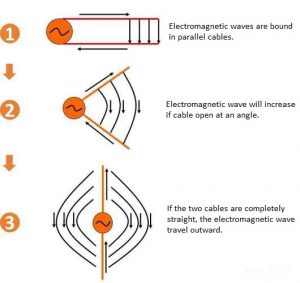
How to Choose the Right Circuit Board for Electronic Devices?
Choosing the right PCB starts with the application, not the fabrication method alone. Many selection problems happen because teams begin with a familiar board type instead of asking what the device actually demands.
A practical PCB selection path includes these questions:
What is the product environment? Indoor, outdoor, medical, industrial, automotive, or RF?
How much space is available? Does the product need HDI, flex, or rigid-flex?
How much heat will it generate? Is FR4 enough, or is MCPCB or ceramic better?
What signal type is involved? Low-speed control, high-speed digital, RF, or power?
What reliability level is required? Consumer-grade, industrial-grade, or mission-critical?
What volume and budget are expected? Prototype, low-volume, or mass production?
What assembly and test support is needed? SMT, THT, X-ray, ICT, functional test, coating?
A fast decision guide:
Design Need
Better PCB Direction
Lowest cost
Single or double-sided FR4
High function density
Multilayer or HDI
Heat dissipation
Aluminum, copper core, ceramic
Bending / compact packaging
Flex or rigid-flex
RF performance
Rogers or other low-loss laminate
Harsh conditions
High-Tg, coating, reinforced design
This is where a strong supplier adds value. The right manufacturer should not only build to print, but also help refine stackup, manufacturability, thermal strategy, assembly method, and risk control before production begins.
Why Choose a Professional PCB Manufacturer for Your Electronic Device Applications?
A professional PCB manufacturer brings more than factory capacity. The real value is application understanding, engineering coordination, process control, and consistency from prototype through volume production.
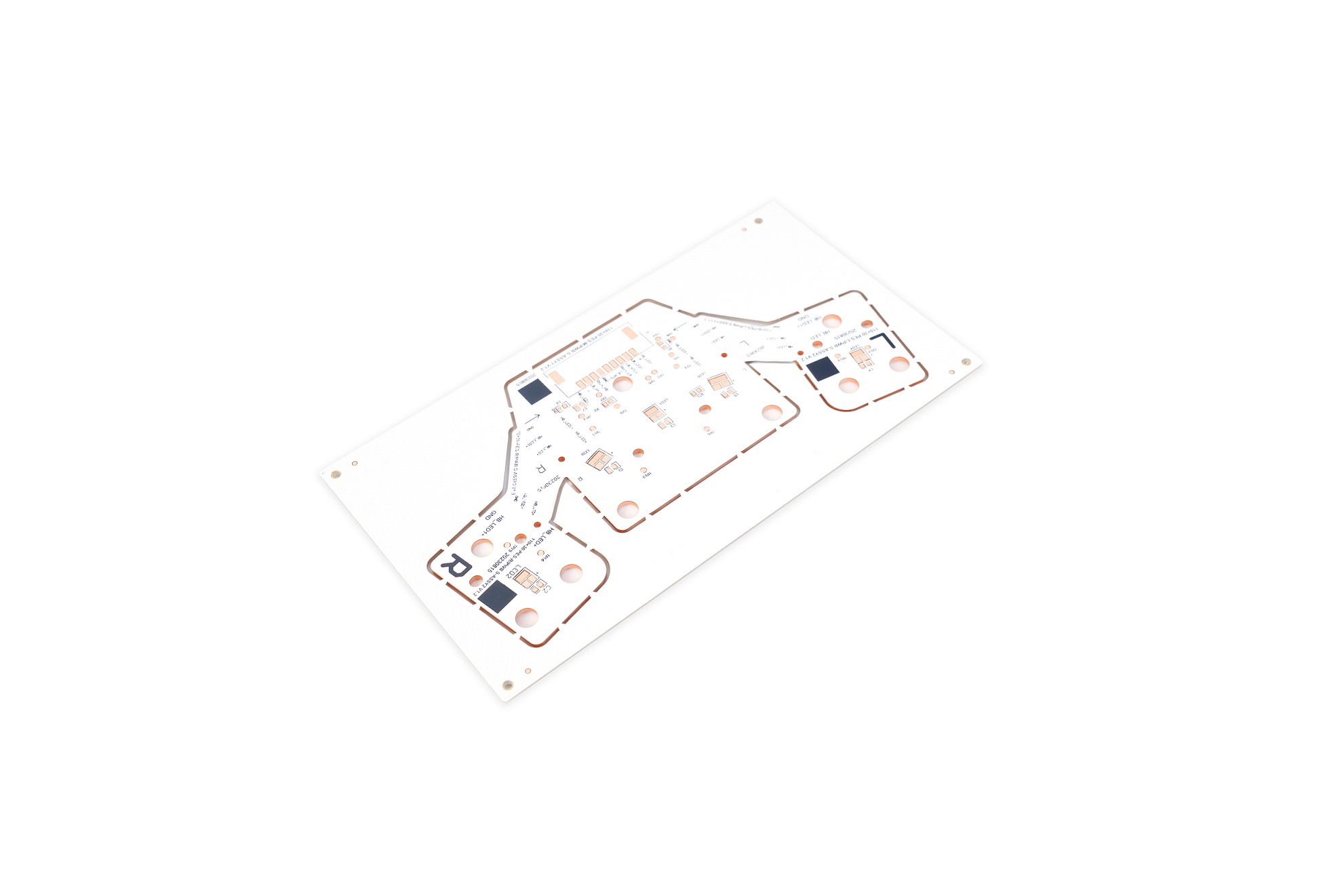
For electronic device projects, the supplier should help with:
material selection
stackup recommendation
DFM and DFA review
impedance and thermal considerations
prototype-to-production transition
assembly quality and testing
traceability and communication
Why customers work with EBest Circuit (Best Technology):
Support for diverse industries including medical, industrial, automotive, RF, and LED
Engineering-first communication for manufacturability and cost balance
Flexible production support from prototypes to volume orders
Fast response and practical project coordination
A good manufacturer helps reduce redesign loops, lower risk, and shorten time to market. That matters even more when the product is compact, thermally sensitive, or expected to work under demanding field conditions.
If your project involves Applications of circuit boards in electronic devices, working with a capable manufacturing partner can determine whether the product merely functions, or performs reliably in the real world.
For support on PCB and PCBA projects, contact sales@bestpcbs.com.
To sum up, circuit boards applications uses electronics devices describes the many ways PCBs enable connection, control, power delivery, signal transmission, and product integration across modern electronics. From consumer products to medical systems, automotive electronics, industrial equipment, and RF devices, the right PCB structure, material, and manufacturing strategy directly affect performance, reliability, and cost.
EBest Circuit (Best Technology) provides professional PCB and PCBA solutions for a wide range of electronic device applications, with practical engineering support, stable manufacturing quality, and responsive service for both prototypes and production orders. To discuss your project, contact sales@bestpcbs.com.
FAQs About Circuit Boards Applications Uses in Electronic Devices
What is the main use of a circuit board? The main use of a circuit board is to electrically connect and support components so the device can process signals, distribute power, and perform its intended function.

Which electronic devices use circuit boards the most? Smartphones, computers, TVs, industrial controllers, automotive systems, medical devices, and communication equipment all use PCBs extensively.
Are circuit boards used in all electronic devices? Almost all modern electronic devices use some form of PCB, although the board type and complexity vary by product function and size.
What industries rely most on circuit boards? Consumer electronics, automotive, medical, industrial automation, telecom, aerospace, energy, and security sectors all rely heavily on PCBs.
What materials are commonly used in PCBs? FR4 is the most common. Aluminum, copper core, Rogers, ceramic, and polyimide are also widely used for specialized applications.
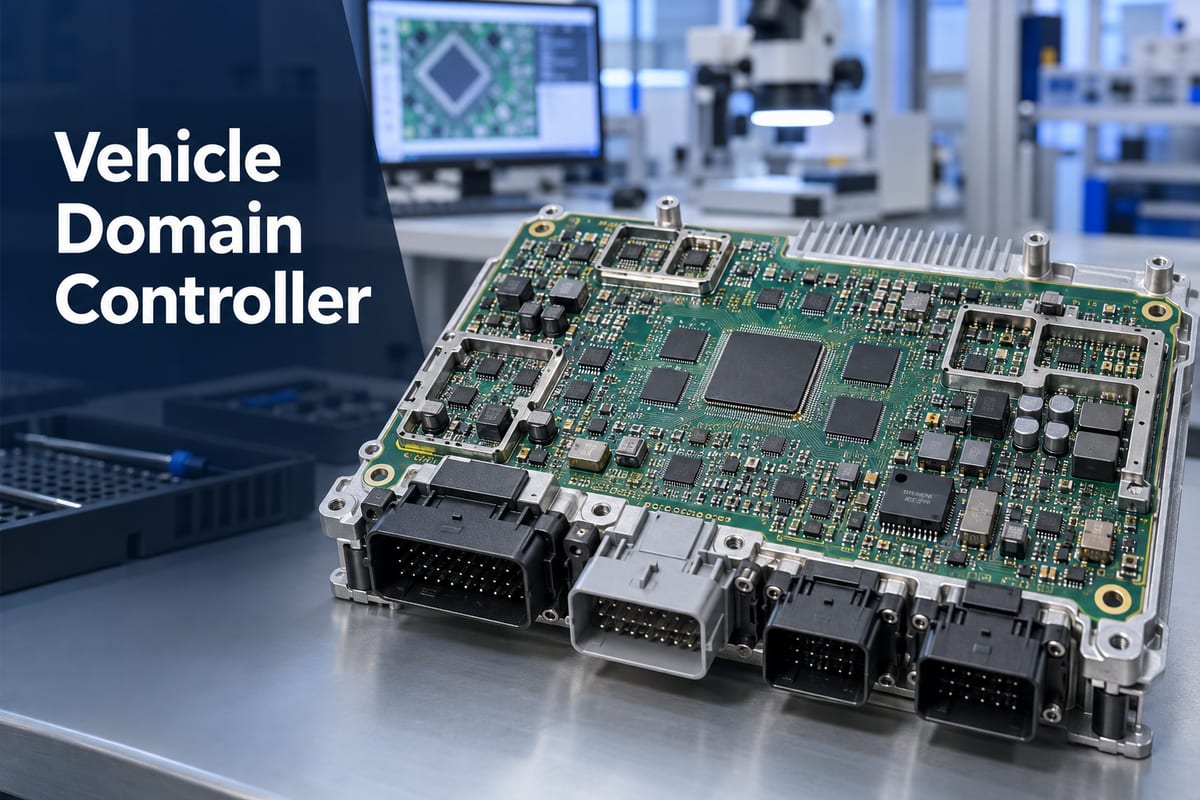
How do environmental factors affect PCB performance? Heat, humidity, vibration, dust, chemicals, and outdoor exposure can shorten PCB life or reduce performance if the design and material choice are not matched to the environment.
What is HDI PCB and where is it used? HDI PCB is a high-density interconnect board using finer features and microvias. It is commonly used in smartphones, wearables, compact medical devices, and other advanced electronics.
How to select the right PCB for a specific application? Selection should be based on electrical performance, thermal demand, size constraints, reliability target, operating environment, and manufacturing volume.
PCB thermal hotspot map is a visual representation of temperature distribution across a PCB, used to identify high-temperature regions and optimize thermal performance. This article explains how hotspot maps are created, interpreted, and applied in real PCB design to improve reliability and efficiency.
Many engineers face recurring thermal challenges. What are the most common pain points?
Hotspots appear unexpectedly after assembly
Components fail early due to overheating
Thermal simulation results donât match real testing
EBest Circuit (Best Technology) is a professional PCB and PCBA manufacturer with strong expertise in thermal-optimized PCB design and manufacturing, including high-power boards, metal core PCBs, and multilayer stack-ups. We provide one-stop services from PCB fabrication to PCBA, helping engineers reduce thermal risks and improve product reliability. Pls feel free to contact us via sales@bestpcbs.com.
What Is a PCB Thermal Hotspot Map and Why Does It Matter in PCB Design?
A PCB thermal hotspot map is a temperature heatmap that shows where heat accumulates on a board.
How Do Thermal Vias and Heat Sinks Reduce Hotspots?
Thermal vias and heat sinks enhance heat transfer.
Key Techniques
Thermal vias under power components
Via-in-pad design
Heat sink attachment
Copper plane connection
These structures create efficient thermal pathways.
What Cooling Methods Help Control PCB Hotspots?
Cooling methods can be passive or active.
Cooling Types
Passive cooling using copper planes and heat sinks
Active cooling using fans
Advanced cooling using heat pipes or TEC
Cooling ensures heat is removed from the system efficiently.
Common PCB Thermal Hotspot Design Mistakes and How to Avoid Them
Common Mistakes
Ignoring thermal simulation
Clustering high-power components
Insufficient copper usage
Poor via design
Improper airflow planning
How to Avoid
Perform early thermal analysis
Optimize layout spacing
Use proper materials
Validate before production
Avoiding these mistakes improves reliability.
In Conclusion, PCB thermal hotspot map is a critical tool for identifying and controlling heat distribution in PCB design. By combining simulation, layout optimization, and proper material selection, engineers can significantly improve thermal performance and reliability.
EBest Circuit (Best Technology) provides advanced PCB and PCBA solutions for high thermal performance applications, helping customers achieve stable and reliable designs. Pls feel free to contact us via sales@bestpcbs.com.
FAQs About PCB Thermal Hotspot Map
What tools are used for PCB thermal hotspot analysis? Common tools include ANSYS, FloTHERM, and Altium Designer.
How do you validate PCB thermal performance before production? Use simulation, prototype testing, and infrared imaging.
What temperature is considered a hotspot in PCB design? Typically above 85 to 100 degrees Celsius depending on components.
How many thermal vias are enough under a power IC? As many as possible within design and manufacturing limits.
Can FR4 handle high thermal hotspots? FR4 can handle moderate heat, but high-power designs require advanced materials.