





A telecom board supports signal transfer, power control, data exchange, and network communication inside telecom equipment. It may look like a common PCB, but it often needs tighter control over layout, materials, impedance, assembly, and testing. Therefore, engineers and buyers should understand how each manufacturing step affects final performance. In this guide, we explain what a telecom board is, where it works, what layout details matter, how manufacturers build it, and how EBest Circuit supports telecom PCB fabrication and assembly from prototype to production.
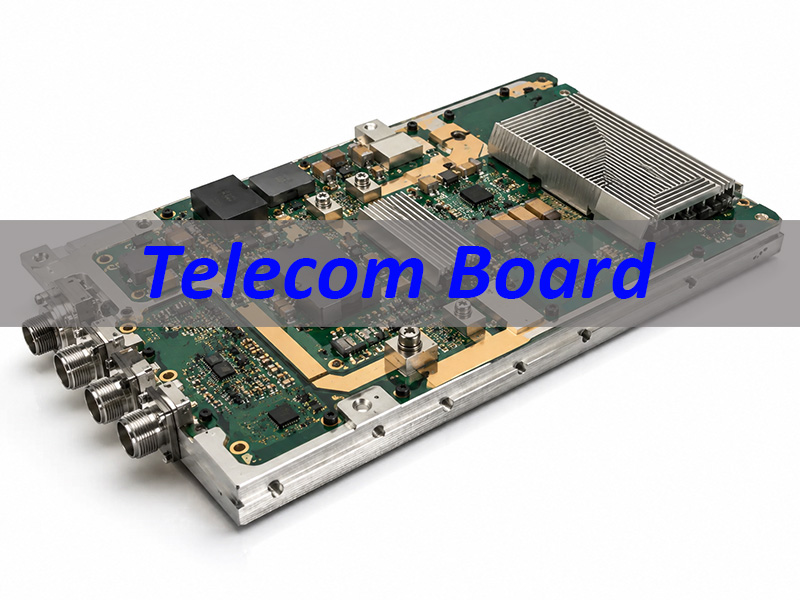
What Is a Telecom Board?
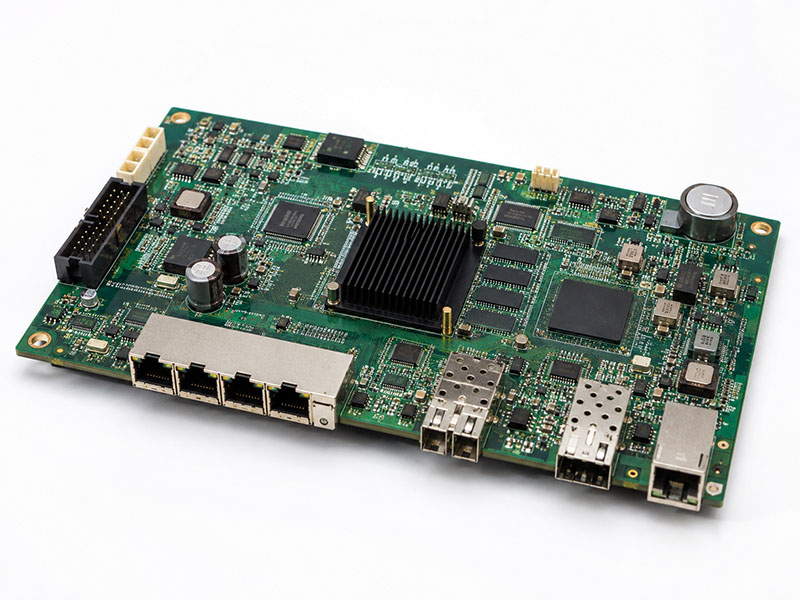
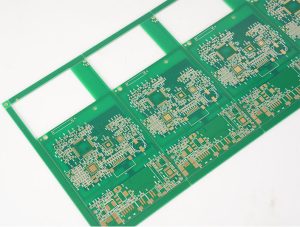
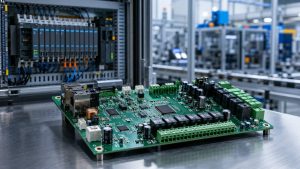
A telecom board is a printed circuit board for communication equipment. People may also call it a telecommunications board, telecom PCB, or telecom circuit board.
In simple terms, this board helps electronic devices send, receive, process, or control communication signals. These signals may come from RF modules, optical devices, routers, switches, gateways, or wireless systems.
Unlike a simple control board, a telecom board often needs better signal control. For example, it may need controlled impedance, stable grounding, low signal loss, clean power delivery, or high-speed data routing. Also, many telecom products run for long hours. So, the board must support stable operation over time.
A telecom board can use different structures. It may be a standard FR4 PCB, a high-frequency PCB, a multilayer PCB, a rigid-flex PCB, or a metal core PCB. The right choice depends on the product design, working frequency, heat level, size, and assembly needs.
In real production, a good telecom board does not depend on one factor alone. Instead, it comes from a full process. Layout review, material selection, stack-up control, PCB fabrication, component sourcing, SMT assembly, inspection, and testing all matter.
| Item | What It Means for a Telecom Board |
|---|---|
| Signal transmission | The board must support clean and stable signal paths. |
| Power control | The board must deliver steady power to ICs, RF parts, and modules. |
| Material choice | The laminate must match frequency, loss, heat, and cost needs. |
| Assembly quality | Components must be placed and soldered with good process control. |
| Testing | Electrical, impedance, AOI, X-ray, and functional tests help confirm quality. |
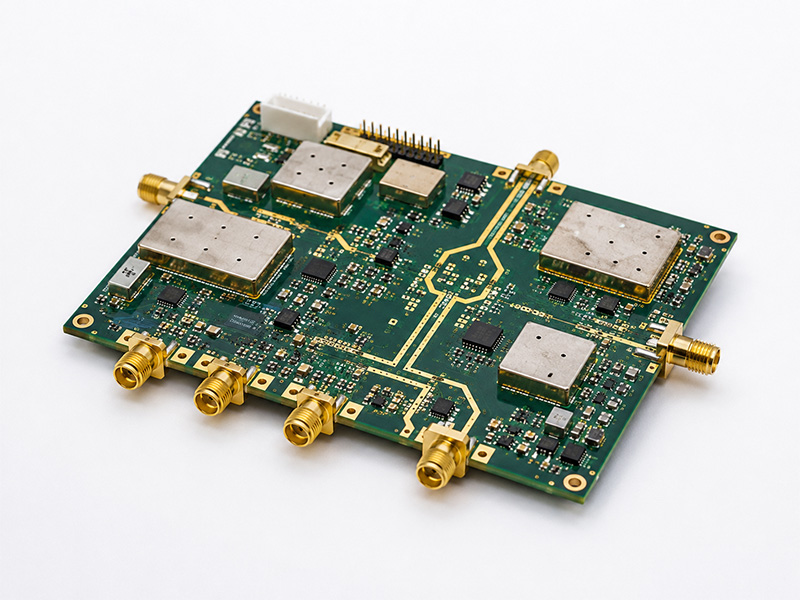
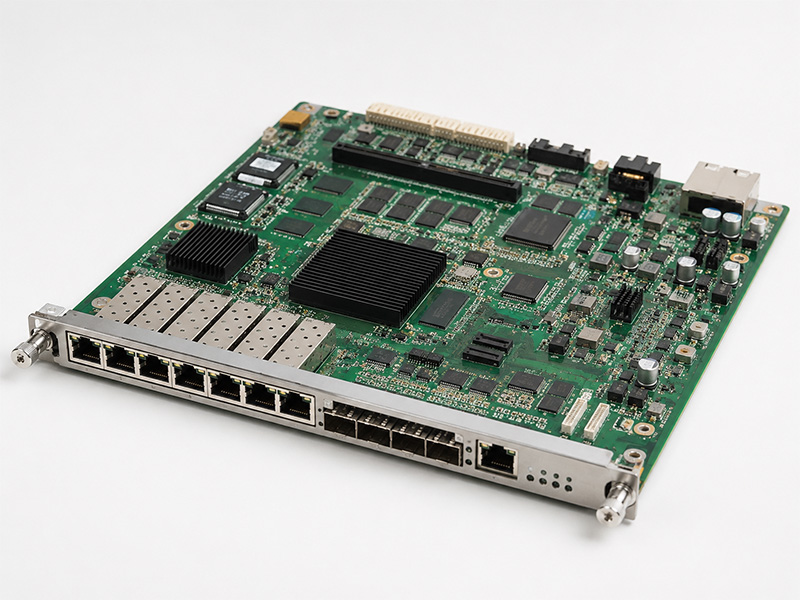
Telecom Board vs Telecommunications Board: Are They the Same?
In most PCB manufacturing contexts, telecom board and telecommunications board mean nearly the same thing. Both refer to circuit boards for communication products.
However, the word “board” can create confusion. In some searches, a telecom board may mean a cable installation backer board. In other searches, it may mean a company board of directors or a telecom job board. Because of this, a PCB article should make the meaning clear from the beginning.
In this article, a telecom board means a PCB or PCBA for electronic communication equipment.
| Term | Common Meaning | In This Article |
|---|---|---|
| Telecom board | A short term with several possible meanings | A PCB or PCBA used in telecom equipment |
| Telecommunications board | A more formal term | A circuit board for communication systems |
| Telecom PCB | A clear manufacturing term | A bare printed circuit board for telecom use |
| Telecom PCBA | An assembled board | A telecom PCB with components mounted on it |
The shorter term telecom board sounds more common and easier to search. The term telecommunications board sounds more formal. Still, both can describe the same product type when we talk about PCB manufacturing.
For buyers, the name matters less than the actual requirement. A real telecommunications board must support stable signal paths, reliable solder joints, suitable materials, and repeatable production quality. Therefore, the focus should stay on engineering and manufacturing details.
What Are Telecom Circuit Boards Used For?
Telecom circuit boards work in many communication systems. Some boards process high-speed digital signals. Some handle RF signals. Others manage power, interfaces, control logic, or network connections.
| Application | Common Board Function | Typical PCB Requirement |
|---|---|---|
| 5G and wireless equipment | Signal transmission, antenna control, RF processing | Controlled impedance, low-loss material, stable copper geometry |
| Routers and switches | Data routing, interface control, power regulation | Multilayer PCB, BGA assembly, high-speed routing |
| Optical communication devices | Signal conversion and data transfer | Compact layout, stable soldering, fine-pitch assembly |
| Industrial gateways | Machine communication and data exchange | Reliable connectors, power control, functional testing |
| RF and microwave modules | Wireless signal amplification or filtering | High-frequency laminate, RF trace control, grounding |
| IoT communication products | Wireless connection and sensor communication | Small size, stable assembly, cost control |
For example, 5G modules, antenna systems, repeaters, base station parts, and wireless transmission devices often need telecom circuit boards. These boards may require controlled impedance, low-loss materials, and stable copper patterns.
Routers and switches also need telecom boards. These boards support data transfer, power regulation, interface control, and signal processing. Also, they often include BGA chips, Ethernet interfaces, fine-pitch components, and high-speed signal lines.
In industrial communication, gateway boards connect machines, sensors, PLCs, and cloud systems. Therefore, their boards often combine communication interfaces, power circuits, isolation areas, and control units.
As a result, telecom circuit boards cover a wide range of products. However, they share one common goal: they must help communication signals move with stability and low interference.
What Telecom PCB Layout Factors Affect Signal Integrity?
Telecom PCB layout has a strong effect on signal quality. EBest Circuit does not position itself as a full circuit design company. However, we can support layout review, DFM suggestions, stack-up review, impedance coordination, and manufacturability checks.
Before production, engineers should check several layout details.
| Layout Factor | Why It Matters | What to Review Before Production |
|---|---|---|
| Controlled impedance routing | It helps reduce signal reflection. | Trace width, spacing, copper thickness, dielectric thickness |
| Differential pair control | It supports balanced high-speed transmission. | Pair spacing, length matching, routing symmetry |
| Ground plane continuity | It gives signals a stable return path. | Split planes, via stitching, reference layer design |
| RF trace clearance | It reduces noise and coupling. | Distance from power, clock, and digital lines |
| Via placement | It can affect RF and high-speed signals. | Via count, via position, via type, stub length |
| Power layout | It supports stable IC operation. | Decoupling placement, power plane design |
| Assembly clearance | It reduces SMT risk. | Component spacing, pad size, solder mask clearance |
Many telecom boards need controlled impedance. This is common in RF lines, Ethernet lines, differential pairs, and high-speed digital interfaces. Trace width, spacing, copper thickness, dielectric thickness, and material type all affect impedance. Therefore, the layout and stack-up should match each other.
Grounding also deserves attention. A clean return path helps signals move with less noise. If a signal crosses a split ground plane, the return path may become unstable. So, ground plane continuity should be checked early.
RF traces need enough distance from noisy power lines, clock signals, and digital circuits. In many telecom PCBs, engineers also use via fences, shielding areas, or grounded copper to improve isolation.
A layout may look perfect in design software. However, real PCB production has tolerances. Etching, drilling, plating, solder mask registration, and lamination can all change final results. Therefore, DFM review helps reduce risk before fabrication.
At EBest Circuit, our layout-related support focuses on practical production checks. We help customers review manufacturability, stack-up feasibility, impedance needs, soldering risks, and assembly clearance.
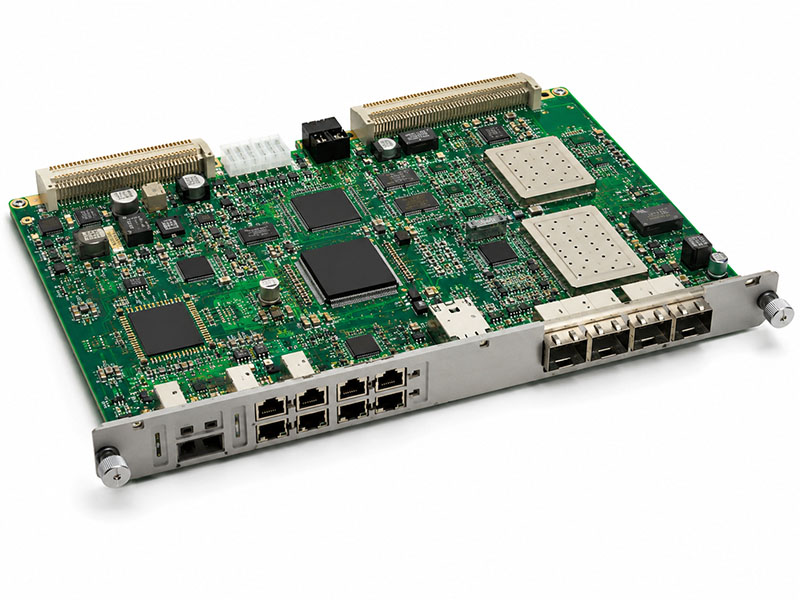
How Do Telecom Board Manufacturing Processes Support Stable Signal Transmission?
Telecom board performance does not come from layout alone. The manufacturing process also plays a major role. Even small process changes can affect impedance, signal loss, solderability, and long-term stability.
| Manufacturing Process | What EBest Controls | How It Supports Telecom Board Performance |
|---|---|---|
| Stack-up control | Layer order, dielectric thickness, copper thickness | Supports impedance and signal stability |
| Imaging and etching | Trace width and spacing | Helps keep signal traces close to design targets |
| Copper plating | Hole copper and surface copper | Supports via reliability and current flow |
| Drilling | Hole position and hole quality | Supports layer connection and dense routing |
| Lamination | Pressure, temperature, resin flow | Helps maintain board flatness and layer bonding |
| Surface finish | ENIG, OSP, HASL, immersion silver, etc. | Supports solderability and assembly quality |
| Electrical testing | Circuit continuity | Confirms open and short testing before shipment |
| Impedance testing | Actual impedance value | Helps verify high-speed and RF requirements |
The stack-up defines layer order, dielectric thickness, copper thickness, and reference planes. For controlled impedance boards, stack-up control is very important. EBest can review the stack-up and match it with material and impedance needs.
Signal traces must stay close to the design target. If etching changes the trace width too much, impedance may shift. Therefore, manufacturers need stable imaging and etching control.
Vias also matter. Multilayer telecom boards often include many vias. Accurate drilling helps keep layer connections stable. Also, good hole wall preparation supports reliable copper plating.
Surface finish selection affects assembly quality. Telecom boards may use ENIG, OSP, immersion silver, HASL, or other finishes. ENIG often works well for fine-pitch components and BGA assembly. However, the best finish depends on the product, storage needs, and assembly process.
In short, stable telecom board manufacturing needs tight process control. Each step should support the electrical goal of the board.
What Materials Are Best for High-Frequency Telecom Circuit Boards?
Material choice has a direct effect on telecom board performance. Different products need different materials. Therefore, engineers should not choose a material only by price or habit.
| Material Type | Best-Fit Telecom Application | Main Advantage |
|---|---|---|
| Standard FR4 | Control boards, network boards, low-to-mid frequency boards | Mature process and cost control |
| High-Tg FR4 | Multilayer boards and higher-temperature products | Better thermal stability |
| Rogers material | RF, microwave, antenna, and high-frequency boards | Lower loss and stable dielectric behavior |
| PTFE-based laminate | Low-loss RF and microwave boards | Good high-frequency performance |
| Metal core PCB | Power modules and heat-generating telecom boards | Better heat spreading |
| Hybrid stack-up | Boards with both RF and digital sections | Balance between cost and performance |
FR4 works well for many standard telecom control boards, digital boards, and network interface boards. It offers good cost control, easy sourcing, and mature processing.
High-Tg FR4 supports better thermal stability than standard FR4. It suits multilayer telecom boards, dense assemblies, and products with higher working temperatures.
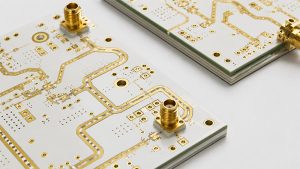
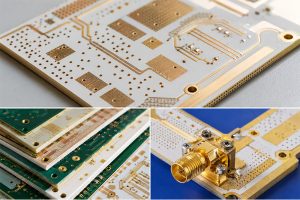
Rogers laminates are common in RF, antenna, microwave, and high-frequency telecom PCBs. These materials offer more stable dielectric performance and lower signal loss than standard FR4 in many high-frequency designs.
Some RF and microwave boards use PTFE-based materials. These materials can support low-loss signal transmission. However, they need careful fabrication control because they behave differently from FR4.
Some telecom modules generate more heat. For example, power modules or RF amplifier boards may need better thermal paths. In these cases, aluminum or copper base PCBs can help spread heat.
Also, some telecom boards combine FR4 and high-frequency materials. This can reduce cost while keeping RF layers stable. As a result, hybrid stack-ups often work well when only part of the board needs high-frequency performance.
When choosing materials, engineers should review dielectric constant, dissipation factor, copper foil type, Tg, CTE, thermal conductivity, thickness tolerance, and supply stability.
How Does Custom Telecom PCB Assembly Work at EBest?
Telecom PCB assembly at EBest follows a controlled process from files to finished PCBA. This section does not only talk about “reliability.” Instead, it shows the actual assembly flow and process capability.
EBest supports telecom PCB assembly for RF modules, communication control boards, network gateway boards, and other telecom-related products.
| Assembly Step | What EBest Does | Customer Benefit |
|---|---|---|
| BOM review | Checks part availability, package, lead time, and alternatives | Helps reduce sourcing risk |
| DFM review | Checks pad size, spacing, polarity, stencil needs, and panelization | Helps reduce SMT issues |
| Stencil control | Matches stencil design with component packages | Improves solder paste printing |
| SMT placement | Controls component position and direction | Supports stable assembly quality |
| Reflow control | Matches temperature profile with board and components | Helps form stable solder joints |
| BGA/QFN assembly | Handles hidden and fine-pitch packages | Supports dense telecom PCBAs |
| AOI inspection | Checks visible solder joints and placement | Finds common assembly defects |
| X-ray inspection | Checks hidden solder joints under BGA/QFN | Improves inspection confidence |
| Functional testing | Follows customer test requirements | Helps verify board operation |
First, EBest reviews the BOM and checks component availability. This step helps customers find supply risks early. Also, it helps confirm package type, part lifecycle, lead time, and possible alternatives.
Next, our team checks assembly-related details. These include pad size, component spacing, solder mask clearance, stencil needs, polarity marks, panelization, and connector placement. As a result, customers can reduce SMT risks before production.
Telecom boards may include QFN, BGA, small passive parts, RF connectors, and shielding parts. Therefore, stencil design and solder paste control matter. Good solder paste printing helps improve solder joint consistency.
During SMT placement, EBest controls component position, feeder setup, package direction, and program accuracy. Then, the reflow profile must match the board and component mix. A proper profile helps form stable solder joints and reduces soldering defects.
Finally, AOI and X-ray inspection help confirm assembly quality. AOI checks visible solder joints, missing parts, polarity, and alignment. X-ray inspection checks hidden solder joints under BGA and QFN packages.
Through this process, EBest helps customers move from bare telecom PCB to assembled PCBA with fewer handoff issues.
Telecom Board Manufacturing Across Communication Applications – EBest Case Studies
EBest Circuit supports telecom board projects across different communication applications. The examples below show how manufacturing choices can support real product needs.
| EBest Project Type | Main Challenge | EBest Support |
|---|---|---|
| RF communication module board | Signal loss and impedance control | Stack-up review, high-frequency material support, impedance testing |
| Industrial network gateway PCBA | Dense assembly and stable interfaces | Multilayer PCB, component sourcing, SMT assembly, AOI, X-ray |
| Communication control board | Stable operation inside equipment | DFM review, prototype support, assembly, testing |
| High-power communication module board | Heat and current handling | Copper thickness review, thermal via feedback, material suggestions |
RF Communication Module Board
An RF communication module board often needs controlled impedance, stable material performance, and accurate trace control. For this type of board, EBest focuses on stack-up review, high-frequency material handling, copper thickness control, and impedance testing.
For example, a customer may need an RF board for wireless signal transmission. In this case, material choice and trace accuracy matter. So, EBest reviews the stack-up, confirms the laminate, controls line width, and checks impedance. This helps the board meet the expected signal target.
Industrial Network Gateway PCBA
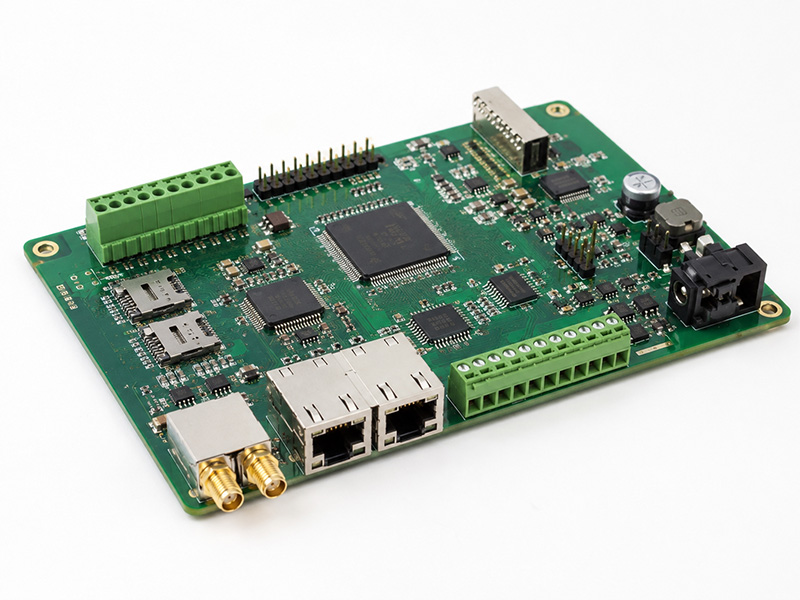
An industrial network gateway often includes processors, memory, power circuits, communication interfaces, connectors, and I/O terminals. Therefore, this project needs both PCB fabrication and PCBA assembly.
For this type of board, EBest can support multilayer PCB production, component sourcing, SMT assembly, AOI, X-ray inspection, and functional testing. In addition, our team can review assembly risks before production. This helps the customer improve production consistency.
Communication Control Board for Equipment Integration
Some telecom boards work as control boards inside larger communication equipment. These boards may not use very high RF frequencies. However, they still need stable routing, clean power, reliable solder joints, and good connector strength.
For this type of project, EBest supports prototype builds, small-batch production, and later volume production. Also, we help review material choice, stack-up, DFM issues, assembly process, and testing needs.
High-Power Communication Module Board
Some communication modules carry higher current or generate more heat. In these cases, EBest can support copper thickness review, thermal via design feedback, material suggestions, and assembly process control. As a result, the board can handle heat more effectively.
These examples show one point clearly. A telecom board needs more than basic PCB production. It needs careful control from design files to final assembly.
How Do You Choose a Telecom Board Manufacturer?
Choosing a telecom board manufacturer requires more than checking price. A good supplier should understand materials, impedance, fabrication, assembly, testing, and project communication.
| Selection Factor | What to Check | Why It Matters |
|---|---|---|
| Telecom PCB experience | RF boards, high-frequency boards, network boards | Helps the supplier find risks faster |
| Fabrication capability | Multilayer PCB, impedance control, via plating | Supports board performance and production quality |
| Material knowledge | FR4, High-Tg FR4, Rogers, PTFE, metal core | Helps match material with application |
| PCBA capability | SMT, BGA, QFN, connectors, testing | Supports complete board delivery |
| DFM support | Layout, pad, spacing, stack-up, panelization review | Helps reduce production risk |
| Testing options | Electrical, impedance, AOI, X-ray, functional test | Helps confirm quality before shipment |
| Production support | Prototype, small batch, mass production | Supports product growth |
| Communication speed | Clear feedback and practical suggestions | Reduces mistakes and delays |
First, check whether the manufacturer has experience with telecom PCBs, RF boards, high-frequency boards, and multilayer boards. Experience helps the supplier find risks faster.
Next, review fabrication capability. The manufacturer should support controlled impedance, multilayer PCB production, fine line control, via plating, surface finishes, and electrical testing.
If your project needs assembly, choose a supplier with SMT assembly, BGA/QFN experience, AOI, X-ray inspection, component sourcing, and testing support.
DFM review is also important. It helps find layout and production risks before manufacturing. This step can save time, especially for dense telecom boards or high-frequency boards.
Finally, consider communication speed. Your supplier should respond clearly, explain risks, and give practical suggestions. This helps reduce mistakes during production.
Why Choose EBest Circuit as Your Telecom Board Manufacturer?
EBest Circuit, also known as Best Technology, supports telecom board customers with PCB fabrication, component sourcing, PCBA assembly, testing, and engineering support.
| EBest Capability | How It Helps Telecom Board Projects |
|---|---|
| One-stop PCB and PCBA service | Customers can manage PCB, components, assembly, and testing with one partner. |
| DFM and layout review support | EBest helps review spacing, pads, stack-up, impedance, panelization, and assembly risks. |
| High-frequency PCB experience | EBest supports FR4, High-Tg FR4, Rogers, ceramic, metal core, and special PCB structures. |
| Component sourcing support | EBest helps check part availability, lead time, package match, and supply risks. |
| SMT assembly | EBest supports fine-pitch parts, BGA, QFN, connectors, and module-level assembly. |
| Inspection and testing | AOI, X-ray, electrical testing, and functional testing can support quality control. |
| Prototype and batch support | Customers can move from sample runs to production with a stable process. |
| Quality control and traceability | Production records and inspection steps support long-term manufacturing needs. |
EBest supports bare PCB fabrication and assembled PCBA production. Therefore, customers can manage PCB, components, assembly, and testing through one manufacturing partner.
EBest can also review manufacturability-related layout details. These include spacing, pad design, solder mask clearance, stack-up feasibility, impedance needs, panelization, and assembly risk. This support is useful for telecom boards with RF traces, dense parts, or mixed signal and power sections.
In addition, EBest has experience with FR4, High-Tg FR4, Rogers materials, ceramic PCBs, metal core PCBs, and other special PCB structures. This helps customers choose a better material path for telecom applications.
For assembly projects, EBest supports SMT assembly for telecom PCBs, including fine-pitch parts, BGA, QFN, connectors, and module-level assemblies. Also, AOI, X-ray inspection, electrical testing, and functional testing can support quality control.
If you need telecom PCB fabrication, telecom PCB assembly, or one-stop telecom board manufacturing support, contact EBest Circuit at sales@bestpcbs.com for a project review or quotation.
FAQs About Telecom Board
1. Is a telecom board the same as a telecom PCB?
Yes. In PCB manufacturing, a telecom board usually means a telecom PCB or telecom PCBA for communication equipment.
2. What is the difference between telecom board and telecommunications board?
The meaning is usually similar. Telecom board sounds shorter, while telecommunications board sounds more formal.
3. Can FR4 work for telecom circuit boards?
Yes. FR4 works for many telecom control boards, network boards, and digital communication boards. For RF or low-loss designs, high-frequency materials may work better.
4. When should a telecom board use Rogers materials?
Rogers materials suit RF, microwave, antenna, and high-frequency telecom boards that need lower signal loss and stable dielectric performance.
5. Does every telecom board need impedance control?
No. However, boards with RF traces, differential pairs, Ethernet lines, or high-speed signals often need controlled impedance.
6. What does EBest check during telecom PCB layout review?
EBest checks manufacturability items such as spacing, stack-up, impedance needs, pad design, solder mask clearance, panelization, via structure, and assembly risk.
7. Can EBest provide telecom PCB assembly?
Yes. EBest supports telecom PCB assembly, including SMT assembly, component sourcing, BGA/QFN assembly, AOI, X-ray inspection, and testing support.
8. What files should I provide for a telecom board quotation?
You can provide Gerber files, BOM, pick-and-place file, assembly drawing, stack-up requirements, impedance requirements, material preference, quantity, and testing needs.
9. How do I choose a telecom board manufacturer?
Choose a supplier with telecom PCB experience, material knowledge, impedance control, PCBA assembly, testing support, DFM review, and clear communication.
You may also like

Tags: high-frequency PCB, PCB Assembly, telecom board, Telecom PCB