PCB manufacturing PCB manufacturing
Home > Blog

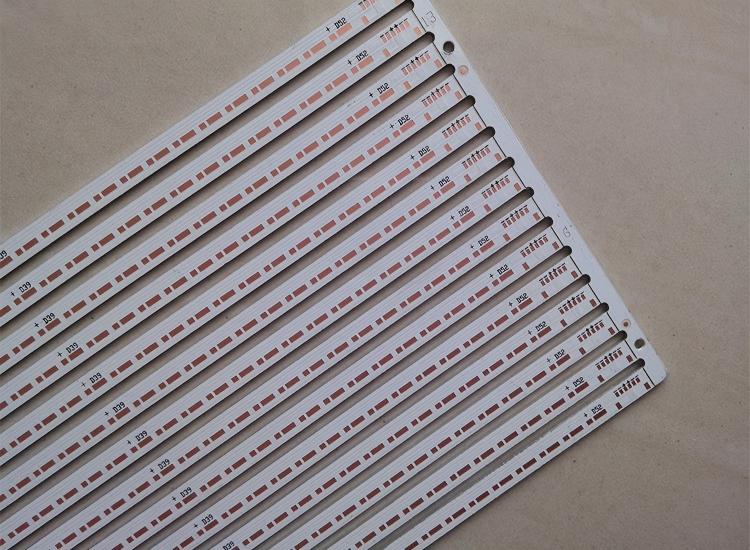
LED aluminum pcb

LED Machine Tool Light Aluminum PCB | High Thermal MCPCB for Industrial Lighting
Friday, April 3rd, 2026

Why Choose EBest for Your LED Machine Tool Light Aluminum PCB?

When sourcing LED Machine Tool Light Aluminum PCB, EBest is your most reliable partner—offering high-performance, durable, and precision-engineered products tailored to your needs. Our core parameters ensure optimal performance for machine tool lighting applications.

Core parameters of our LED Machine Tool Light Aluminum PCB: Thermal conductivity 1.0-4.0 W/(m·K), aluminum base thickness 0.8-3.0mm, copper foil thickness 35-200μm, operating temperature range -50℃ to 100℃, insulation voltage ≥2.5kV, and dimensional tolerance ±0.1mm. Order from EBest today for consistent quality and tailored solutions.
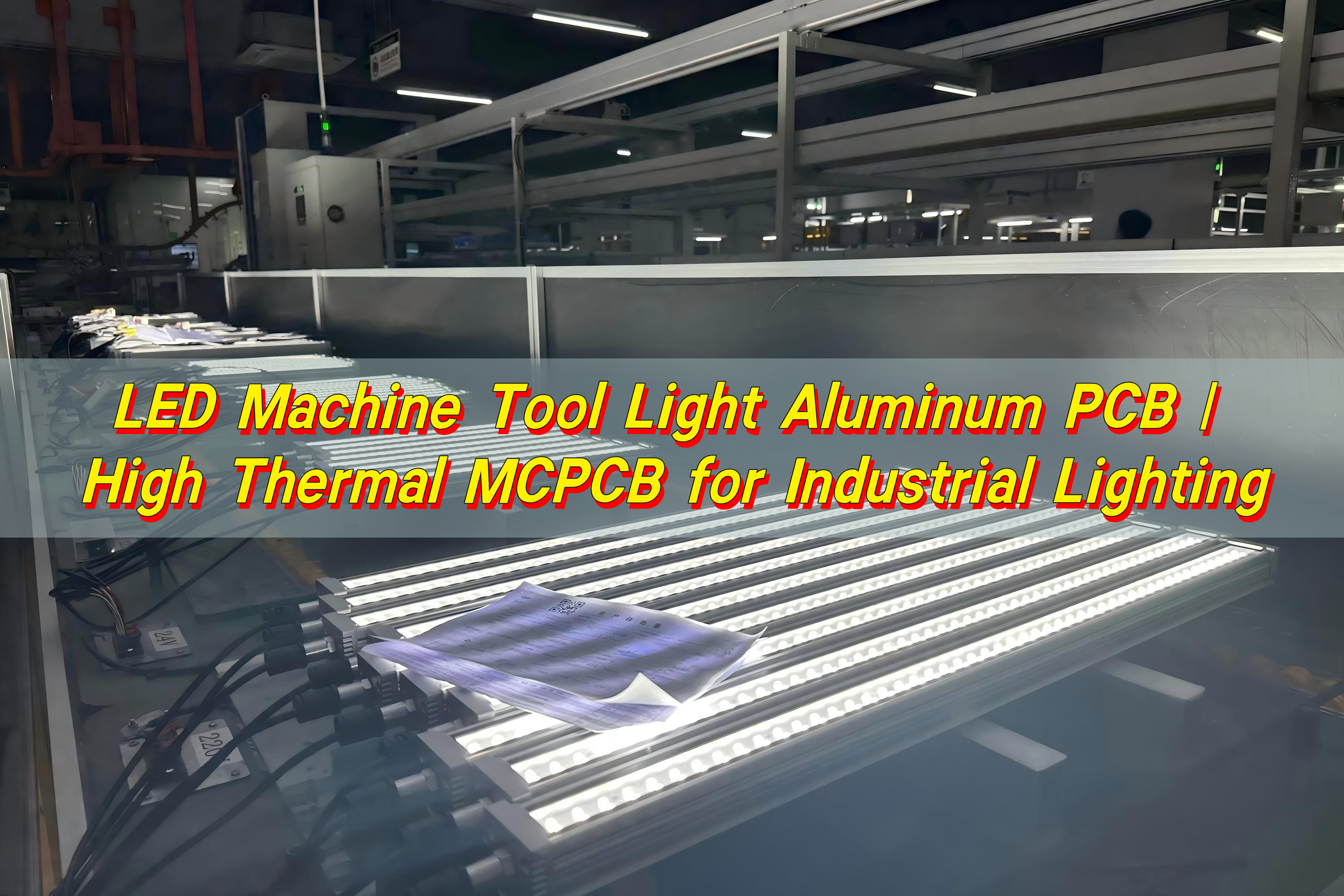
LED Machine Tool Light Aluminum PCB | High Thermal MCPCB for Industrial Lighting

Why Choose EBest for LED Machine Tool Light Aluminum PCB?

  • Quality: We use A-grade 6061/5052 aluminum substrates and high-quality insulation layers, with 100% full inspection before delivery to eliminate defects. Our products pass strict aging tests (85°C/85%RH for 1000 hours) to guarantee long-term reliability.
  • Lead Time: With a monthly production capacity of 260,000 square feet (28,900 square meters), we deliver standard orders in 3-5 business days and urgent orders within 24 hours—guaranteeing zero delays.
  • Supply Chain: Our stable, integrated supply chain covers all electronic components (SMD, BGA, QFN, QFP) and aluminum substrates, ensuring consistent material supply and preventing production interruptions.
  • Service: We offer one-stop solutions, including custom design, prototype production, and after-sales support. Our team provides personalized guidance to resolve your specific application challenges.

What Are the Key Pain Points of LED Machine Tool Light Aluminum PCB, and How Does EBest Solve?

Many users face common issues with LED Machine Tool Light Aluminum PCB, including poor heat dissipation, unstable performance, short service life, and inconsistent supply. EBest addresses each pain point with targeted, practical solutions.

  • Poor Heat Dissipation: Our aluminum PCBs feature high-thermal-conductivity insulation layers (1.0-10.0 W/(m·K)) and optimized circuit layout, reducing LED junction temperature by 15-20°C and preventing overheating damage.
  • Unstable Performance: We implement strict manufacturing process controls—using rigid alloy drills for precision drilling (15,000-30,000rpm) and laser engraving for accurate circuit patterning, ensuring signal integrity and steady operation.
  • Short Service Life: Our products undergo rigorous quality control, with anti-oxidation surface treatment (OSP/chemical nickel-gold) and 100% full inspection, extending their service life to over 100,000 hours.
  • Inconsistent Supply: With 19+ years of industry experience and a robust, stable supply chain, we guarantee on-time delivery even for large bulk orders. Choose EBest to eliminate supply chain risks and keep your production on track.

What Is LED Machine Tool Light Aluminum PCB, and Why Is It Essential?

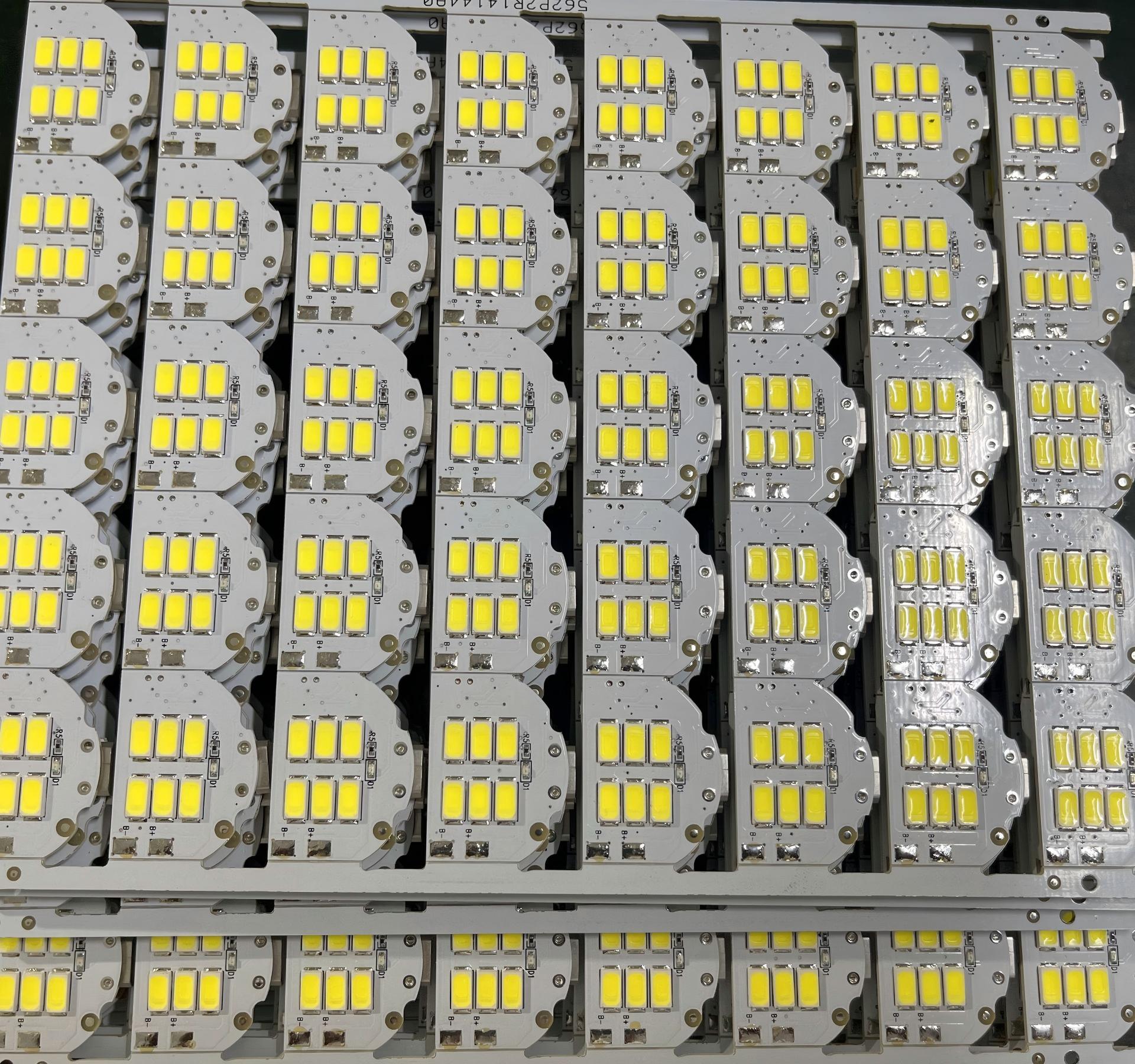
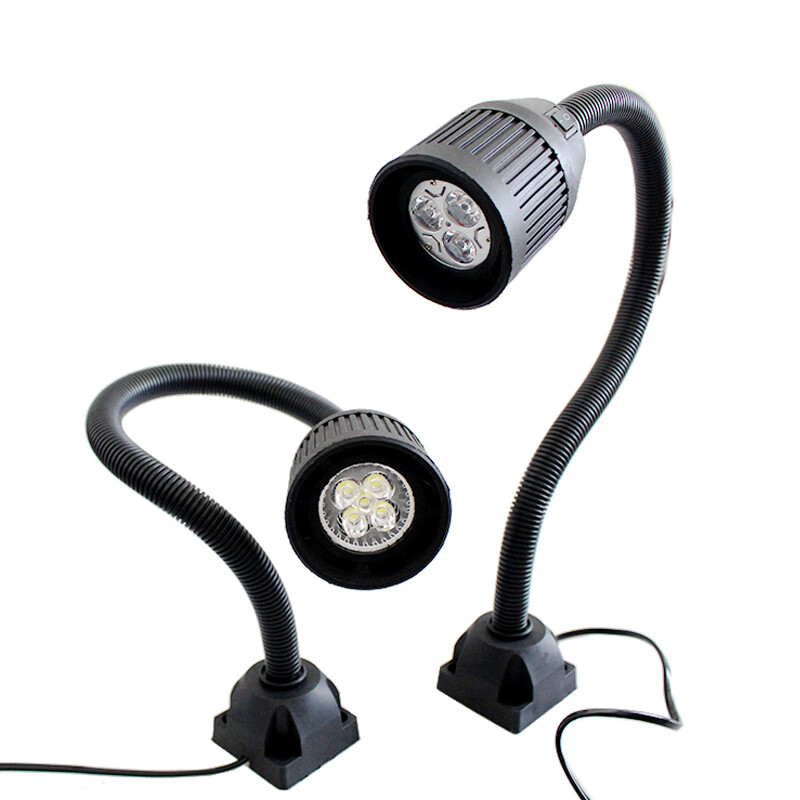
LED Machine Tool Light Aluminum PCB is a specialized metal-core PCB designed for machine tool lighting systems, combining aluminum’s excellent thermal conductivity with the electrical functionality of standard PCBs. It is indispensable for reliable, long-lasting machine tool lighting.

Unlike traditional FR4 PCBs (0.3-0.5 W/(m·K)), aluminum PCBs boast far higher thermal conductivity (1.0-4.0 W/(m·K)), which quickly dissipates heat from high-power LEDs—critical for machine tools running 24/7.

Its rigid aluminum base also delivers superior mechanical strength, resisting vibration and impact in harsh machine shop environments, and ensuring stable performance even in extreme working conditions.
LED Machine Tool Light Aluminum PCB | High Thermal MCPCB for Industrial Lighting

How to Design LED Machine Tool Light Aluminum PCB for Optimal Performance?

Designing LED Machine Tool Light Aluminum PCB for peak performance requires careful focus on thermal management, circuit layout, and material selection—follow this step-by-step guide for best results.

1. Choose the Right Aluminum Substrate

For high-power LED machine tool lights (>3W per chip), use a 1.5mm+ aluminum base with an insulation layer thermal resistance of <1.0°C·in²/W. For medium-power lights (0.5-3W per chip), a 1.0-1.5mm aluminum base is sufficient.

2. Optimize Layout & Wiring

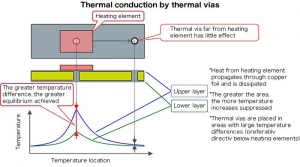
Add thermal via arrays in high-heat zones, maintain at least 3mm spacing between LEDs for effective heat diffusion, and use grid-shaped ground layers to improve uniform heat distribution. Avoid routing precision signal lines directly over the aluminum base.

3. Select Appropriate Copper Foil Thickness

Use 1oz (35μm) copper foil for 0.5-1W LEDs and 2oz (70μm) copper foil for 1-3W LEDs. Calculate copper foil width based on current load (1A requires 0.5-1mm width) to avoid current loss and uneven brightness.

What Are the Differences Between LED Machine Tool Light Aluminum PCB and FR4 PCB?

Choosing between LED Machine Tool Light Aluminum PCB and FR4 PCB depends on your specific application needs—below is a detailed comparison to help you make the right choice.

Comparison FactorLED Machine Tool Light Aluminum PCBFR4 PCB
Thermal Conductivity1.0-4.0 W/(m·K), excellent heat dissipation0.3-0.5 W/(m·K), poor heat dissipation
Mechanical StrengthHigh, rigid aluminum base resists vibration and impactLow, brittle and prone to damage in harsh environments
Operating Temperature Range-50℃ to 100℃, suitable for harsh machine shop conditions-20℃ to 80℃, only for mild working environments
LED Service Life ImpactExtends LED lifespan by 30-50% via efficient thermal managementShortens LED lifespan due to heat buildup, especially for high-power LEDs
Application SuitabilityIdeal for 24/7 machine tool lighting and high-power LED setupsOnly suitable for low-power, intermittent-use machine lights

Which Industries Rely on LED Machine Tool Light Aluminum PCB?

LED Machine Tool Light Aluminum PCB is widely used in industries that demand high-performance, durable machine tool lighting. Below are four proven industry cases from EBest’s clients.

1. Automotive Manufacturing

A leading automotive parts manufacturer required LED machine tool lights for CNC lathes. EBest’s aluminum PCBs lowered LED junction temperature by 18°C, ensuring uninterrupted 24/7 operation for over 2 years without failures.

2. Aerospace Component Production

An aerospace client needed precision machine tool lighting with strict reliability standards. Our AS9100D-certified aluminum PCBs met their rigorous high-temperature and vibration resistance requirements.

3. Medical Equipment Manufacturing

A medical device manufacturer needed sterile, stable machine tool lighting. EBest’s ISO 13485-certified aluminum PCBs delivered consistent performance and easy cleaning, fully complying with medical industry standards.

4. Heavy Machinery Repair

A heavy machinery repair company needed rugged machine tool lights for outdoor field use. Our IP65-protected aluminum PCBs with -50℃ cold resistance performed reliably in harsh outdoor working conditions.

How to Test the Quality of LED Machine Tool Light Aluminum PCB?

Testing LED Machine Tool Light Aluminum PCB is critical to verify performance and long-term reliability—follow these key steps to ensure quality compliance.

1. Thermal Conductivity Test

Use a professional thermal conductivity meter to measure the substrate’s thermal conductivity. Confirm it falls within the 1.0-4.0 W/(m·K) range for machine tool applications.

2. Insulation Voltage Test

Test the insulation voltage between the circuit layer and aluminum base—it must measure ≥2.5kV to prevent electrical leakage in industrial machine shop environments.

3. Mechanical Strength Test

Check vibration resistance (10-500Hz) and impact resistance (10J) to ensure the PCB can withstand constant mechanical vibrations from operating machinery.

4. Aging Test

Conduct an 85°C/85%RH aging test for 1000 hours. The PCB should show no signs of delamination, discoloration, or performance degradation after testing.
LED Machine Tool Light Aluminum PCB | High Thermal MCPCB for Industrial Lighting

What Are the Latest Trends in LED Machine Tool Light Aluminum PCB Technology?

The LED Machine Tool Light Aluminum PCB industry is continuously evolving to meet higher performance demands—here are the top trends shaping the market.

  • High Thermal Conductivity Materials: Nanofilled insulation layers (thermal conductivity >3W/m·K) are growing in popularity, further boosting heat dissipation for high-power LED modules.
  • Thin-Film Design: 0.3mm ultra-thin aluminum PCBs are gaining traction for compact machine tool light designs, reducing overall product size without compromising performance.
  • Integration: Aluminum PCBs are being integrated with built-in heat sinks, eliminating the need for separate cooling components and simplifying machine light assembly.

How to Choose the Right Thickness for LED Machine Tool Light Aluminum PCB?

The thickness of LED Machine Tool Light Aluminum PCB directly affects its performance—select the right thickness based on LED power rating, application environment, and mechanical demands.

  • Low-Power LED Machine Tool Lights (≤0.5W)

Use a 0.8-1.0mm aluminum base. This thickness balances heat dissipation and cost efficiency, perfect for low-intensity, intermittent-use machine lights.

  • Medium-Power LED Machine Tool Lights (0.5-3W)

Use a 1.0-1.5mm aluminum base. It delivers sufficient heat dissipation and mechanical strength for most standard machine tool lighting setups.

  • High-Power LED Machine Tool Lights (>3W)

Use a 1.5-3.0mm aluminum base. The thicker substrate enhances heat dissipation and vibration resistance, ideal for 24/7 high-intensity industrial operation.

What Surface Treatments Are Best for LED Machine Tool Light Aluminum PCB?

Surface treatments for LED Machine Tool Light Aluminum PCB improve solderability, corrosion resistance, and durability—these are the top options for industrial machine tool applications.

  • OSP (Organic Solderability Preservative)

Cost-effective and ideal for most general machine tool applications. It provides reliable solderability and protects copper circuits from oxidation.

  • Chemical Nickel-Gold

Offers superior corrosion resistance and consistent solderability, perfect for machine tool lights used in humid or harsh industrial environments (e.g., heavy machinery repair).

  • Immersion Tin

Provides a flat, uniform surface for SMT assembly, ensuring stable and consistent LED soldering. Suitable for high-precision machine tool light designs.

What Services & Quality Certifications Does EBest Offer for LED Machine Tool Light Aluminum PCB?

EBest provides comprehensive one-stop services and holds industry-leading certifications to deliver premium-quality LED Machine Tool Light Aluminum PCB for your needs.

Our Core Services

  • PCB Fabrication: Custom LED Machine Tool Light Aluminum PCB prototypes and low-to-high volume production, with specialized substrate and material customization.
  • Component Supply: Stable, reliable sourcing of all electronic components (SMD, BGA, QFN, QFP) for seamless PCB assembly.
  • Full Turnkey PCB Assembly: End-to-end solutions covering design, prototyping, assembly, and final delivery.
  • Value-Added Services: Injection molding, CNC machining, and sheet metal fabrication to support complete machine tool light assembly.
  • Quick Turn Service: Expedited LED Machine Tool Light Aluminum PCB orders shipped within 24 hours for urgent production needs.

Our Quality Certifications

Certification NameRelevance to LED Machine Tool Light Aluminum PCB
IATF 16949Meets automotive industry standards for reliability and strict quality control
ISO 9001:2015Ensures standardized production processes and consistent product quality
ISO 13485:2016Complies with medical industry requirements for sterile, high-reliability components
AS9100DMeets aerospace industry standards for high-precision, ultra-reliable components
REACHEnsures full compliance with EU environmental and safety regulations
RoHSFree of hazardous substances, suitable for global market distribution
ULMeets strict safety standards for electrical components in industrial machinery

FAQ: Common Questions About LED Machine Tool Light Aluminum PCB (Answered)

1. How long does LED Machine Tool Light Aluminum PCB last?

LED Machine Tool Light Aluminum PCB from EBest has a service life of over 100,000 hours. This exceptional lifespan comes from our premium raw materials, strict quality control, and efficient thermal management design that prevents overheating and component wear.

2. Can EBest customize LED Machine Tool Light Aluminum PCB for my specific needs?

Yes, EBest offers full customization for LED Machine Tool Light Aluminum PCB. We can adjust aluminum base thickness, copper foil thickness, thermal conductivity rating, and physical dimensions to match your machine tool light’s unique specifications.

3. What is the lead time for LED Machine Tool Light Aluminum PCB orders?

Standard orders for LED Machine Tool Light Aluminum PCB ship in 3-5 business days. We also offer dedicated expedited services, with urgent orders processed and shipped within 24 hours to meet tight production schedules.

4. Does LED Machine Tool Light Aluminum PCB require special maintenance?

No, our LED Machine Tool Light Aluminum PCB requires minimal maintenance. The anti-oxidation surface treatment and heavy-duty industrial materials resist corrosion and abrasion, ensuring stable performance with no routine upkeep.

5. Can LED Machine Tool Light Aluminum PCB withstand harsh machine shop environments?

Yes. Our aluminum PCBs are engineered to withstand vibration (10-500Hz), impact (10J), and extreme temperatures (-50℃ to 100℃), making them fully suitable for harsh industrial machine shop conditions.

6. How does EBest ensure the quality of LED Machine Tool Light Aluminum PCB?

EBest guarantees quality through 100% full inspection before shipment, strict raw material testing, and compliance with top industry certifications (IATF 16949, ISO 9001:2015, etc.). We also perform mandatory aging and thermal performance tests to verify product reliability.

7. Is LED Machine Tool Light Aluminum PCB compatible with SMT assembly?

Yes, our LED Machine Tool Light Aluminum PCB is fully compatible with standard SMT assembly. We use professional surface treatments (OSP, chemical nickel-gold) that enhance solderability, ensuring seamless integration with LED components.

How to Ensure Consistent Performance of LED Machine Tool Light Aluminum PCB?

Consistent performance of LED Machine Tool Light Aluminum PCB depends on quality material selection, precise manufacturing processes, and strict quality control—follow these tips to maintain reliable operation.

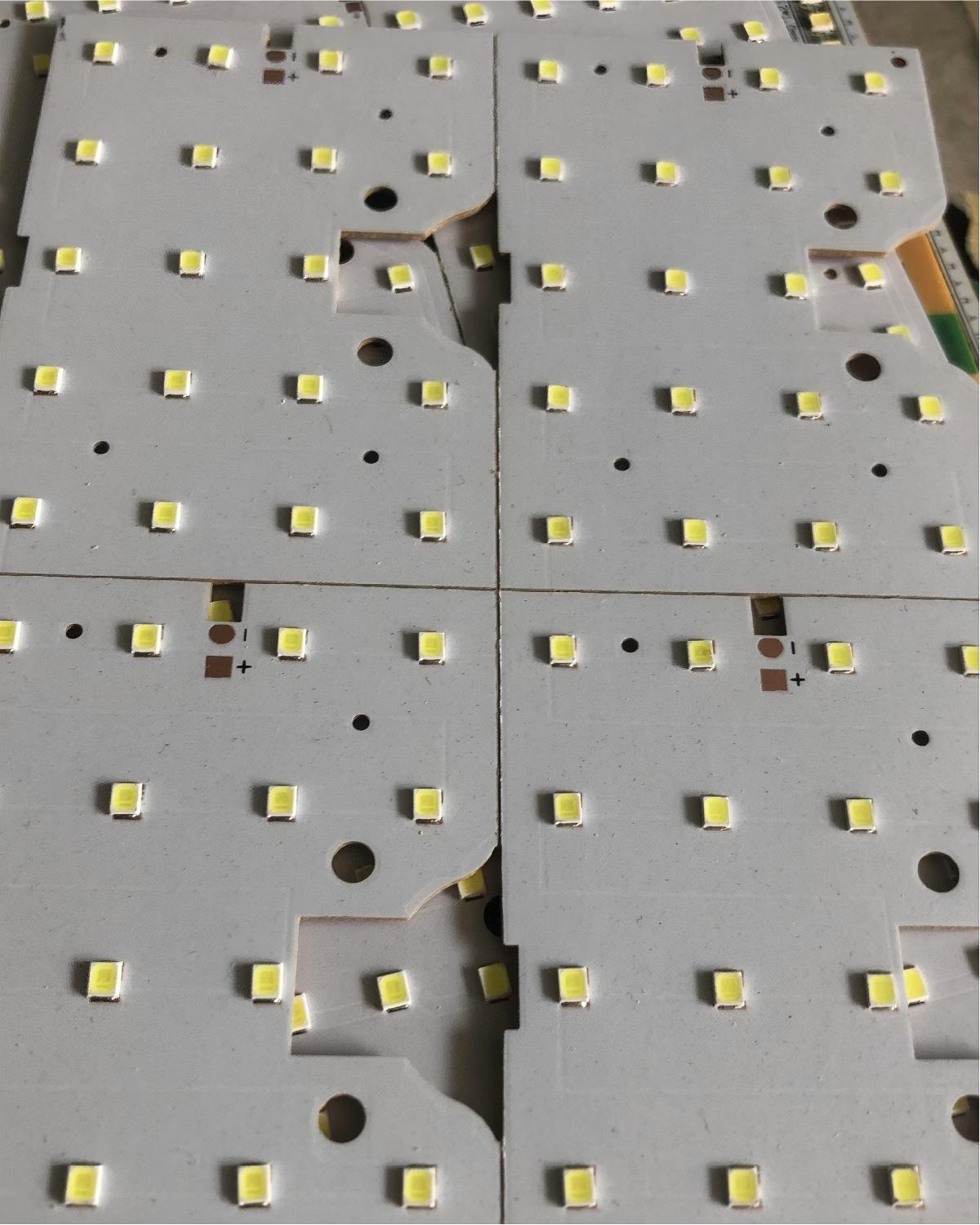
Choose high-grade 6061/5052 aluminum alloy substrates and premium insulation layers to avoid thermal degradation over time. Partner with a manufacturer that uses precision processes like laser drilling and rigid alloy machining to ensure uniform dimensions and circuit quality.

Work with a trusted supplier like EBest, backed by a stable supply chain and rigorous quality checks, to avoid material inconsistencies. Regular performance testing (thermal, insulation, aging) also helps catch potential issues early before they impact operation.
LED Machine Tool Light Aluminum PCB | High Thermal MCPCB for Industrial Lighting

Why Is Thermal Management Critical for LED Machine Tool Light Aluminum PCB?

Thermal management is critical for LED Machine Tool Light Aluminum PCB because LED chips convert 75-85% of electrical energy into heat—poor heat dissipation directly leads to degraded performance and shortened service life.

Excessive heat raises LED junction temperature, causing brightness decay (up to 40% for high-power LEDs) and premature component failure. Efficient thermal management via high-conductivity aluminum PCBs cuts junction temperature by 15-20°C, extending LED lifespan by 30-50%.

For 24/7 operating machine tools, reliable thermal management ensures steady lighting output, reduces unplanned downtime, and lowers long-term maintenance costs.

Choose EBest for Your LED Machine Tool Light Aluminum PCB Needs

EBest offers premium, custom LED Machine Tool Light Aluminum PCB solutions tailored to your industry and application requirements. With 19+ years of industry expertise, industry-leading certifications, and a stable global supply chain, we are your trusted partner for reliable, high-performance products.

We provide end-to-end one-stop solutions, from custom design and prototyping to full assembly and delivery, with fast lead times and personalized technical support. For all your LED Machine Tool Light Aluminum PCB needs, place your order today by emailing us at sales@bestpcbs.com
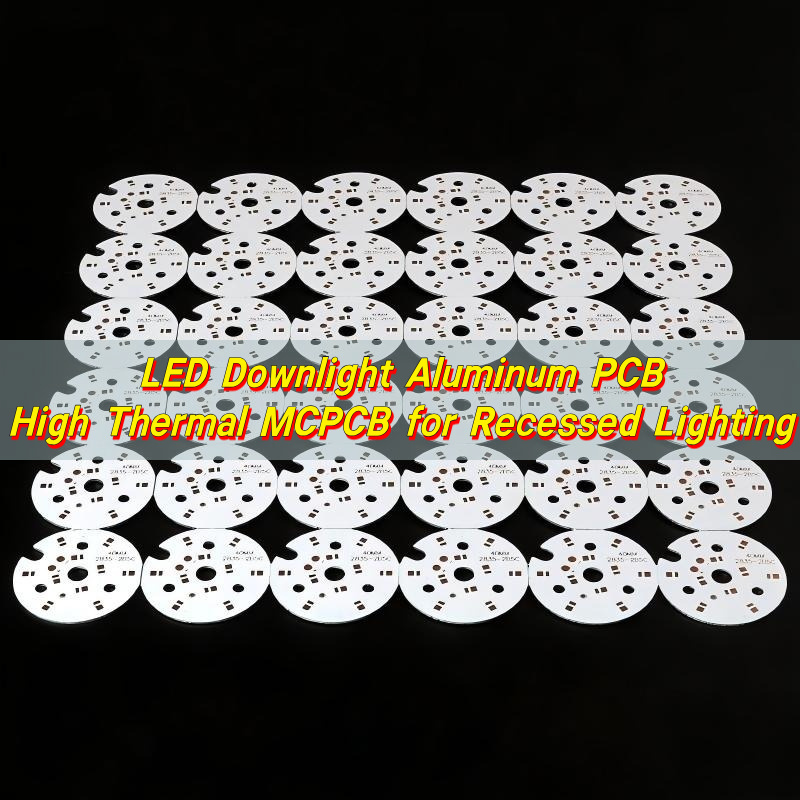
LED Downlight Aluminum PCB | High Thermal MCPCB for Recessed Lighting
Thursday, March 26th, 2026

Why Choose EBest for Your LED Downlight Aluminum PCB?

EBest is your first choice for high-performance LED Downlight Aluminum PCB, with core parameters designed to meet the strict demands of LED downlight applications. Our products feature thermal conductivity ranging from 1.0 to 4.0 W/m·K, copper thickness of 1oz-4oz, and operating temperature range of -50℃ to 100℃, ensuring stable performance in all scenarios.

We offer customizable sizes, precise dimensional tolerance of ±0.01mm, and compatibility with SMD, BGA, and QFN components. For a reliable, long-lasting LED Downlight Aluminum PCB that boosts your product’s lifespan and efficiency, place your order with EBest today.

LED Downlight Aluminum PCB | High Thermal MCPCB for Recessed Lighting

Why Choose Us for LED Downlight Aluminum PCB?

  • Quality: Our LED Downlight Aluminum PCB undergoes 100% full inspection before delivery, with strict quality control throughout the production process, complying with global industry standards.
  • Delivery: With a monthly production capacity of 260,000 square feet, we offer expedited service—urgent LED Downlight Aluminum PCB orders can be shipped within 24 hours.
  • Service: We provide one-stop solutions, from custom design and component sourcing to assembly, with 24/7 technical support for all your LED Downlight Aluminum PCB needs.
  • Supply Chain: Our stable, integrated supply chain ensures a consistent raw material supply, avoiding delays and ensuring steady production of your LED Downlight Aluminum PCB.

What Are the Key Advantages of LED Downlight Aluminum PCB Over FR-4 PCB?

LED Downlight Aluminum PCB outperforms FR-4 PCB primarily in heat dissipation, which is critical for LED downlight longevity. An aluminum PCB’s thermal conductivity is 3-8 times higher than that of FR-4, preventing LED overheating and light decay.

FeatureLED Downlight Aluminum PCBFR-4 PCB
Thermal Conductivity (W/m·K)1.0-4.00.3-0.4
Operating Temperature Range-50℃ to 100℃-40℃ to 85℃
LED Lifespan ImpactExtends lifespan to over 100,000 hoursShortens lifespan due to poor heat dissipation
Mechanical StrengthHigh hardness, strong load-bearing capacityGood toughness, easy to process but less durable

How to Design LED Downlight Aluminum PCB for Optimal Heat Dissipation?

Optimal heat dissipation for a LED Downlight Aluminum PCB starts with three key design steps: expand heat pads, add sufficient thermal vias, and use appropriate copper thickness.

Key Design Tips for Heat Dissipation

  • 1. Enlarge heat pads: Extend LED pad areas to increase heat transfer, avoiding minimal pad sizes that trap heat.
  • 2. Add thermal vias: Use 0.3mm vias spaced 1.5mm apart, with plugging and copper cladding to form a 3D heat dissipation channel.
  • 3. Choose proper copper thickness: Use 2oz (70μm) copper for LEDs over 1W to enhance heat conduction efficiency.
LED Downlight Aluminum PCB | High Thermal MCPCB for Recessed Lighting

What Are the Most Commons with LED Downlight Aluminum PCB, and How Do We Solve Them?

Many users face issues like poor heat dissipation, unstable performance, and delivery delays with LED Downlight Aluminum PCB. EBest addresses these with targeted, proven solutions.

  • How to Fix Poor Heat Dissipation in LED Downlight Aluminum PCB?

Solution: We use high-quality aluminum substrates and optimize layout, adding thermal vias and enlarged heat pads to reduce junction temperature by 20-30℃, extending lifespan significantly.

  • How to Ensure Consistent Quality for LED Downlight Aluminum PCB?

Solution: Real-time production monitoring, from raw material inspection to final testing, ensures 100% compliance with industry standards.

  • How to Avoid Long Delivery Times for LED Downlight Aluminum PCB?

Solution: Our large production capacity and expedited service deliver standard orders in 3-5 days and urgent orders within 24 hours.

  • How to Simplify Customization for LED Downlight Aluminum PCB?

Solution: Our R&D team provides personalized design support, tailoring size, copper thickness, and thermal parameters to your needs.

What Industries Rely on LED Downlight Aluminum PCB? 4 Real-World Cases

LED Downlight Aluminum PCB is widely used in industries that demand efficient, reliable lighting solutions. Below are four key industries and our successful cases.

  • 1. Residential Lighting

Case: We supplied LED Downlight Aluminum PCB for a global residential lighting brand, reducing LED light decay by 40% and extending the product’s lifespan to 100,000 hours, meeting household durability needs.

  • 2. Commercial Lighting (Malls & Retail Stores)

Case: For a large shopping mall chain, our LED Downlight Aluminum PCB with enhanced heat dissipation supported 24/7 operation, reducing annual maintenance costs by 35%.

  • 3. Office Lighting

Case: We customized LED Downlight Aluminum PCB for an office building project, ensuring uniform brightness and low energy consumption, cutting the client’s lighting energy costs by 25%.

  • 4. Industrial Lighting (Factories & Warehouses)

Case: Our LED Downlight Aluminum PCB with high-temperature resistance (-50℃ to 100℃) was used in a manufacturing plant, withstanding harsh industrial environments and reducing downtime by 50%.

How to Choose the Right Thickness for LED Downlight Aluminum PCB?

The right thickness of a LED Downlight Aluminum PCB depends on LED power, installation space, and heat dissipation needs. We recommend matching the thickness to your specific application for optimal performance.

Thickness Selection Guide

  • 1. 1oz (35μm) copper: Suitable for low-power LED downlights (≤1W), ideal for small, compact designs.
  • 2. 2oz (70μm) copper: The most common choice for medium-power downlights (1-5W), balancing heat dissipation and cost-effectiveness.
  • 3. 3-4oz (105-140μm) copper: For high-power downlights (>5W), providing maximum heat conduction and stability.
LED Downlight Aluminum PCB | High Thermal MCPCB for Recessed Lighting

What Are the Key Technical Specifications of High-Quality LED Downlight Aluminum PCB?

A high-quality LED Downlight Aluminum PCB must meet strict technical standards to ensure performance and reliability. Below are the core specifications you should prioritize.

• Thermal Conductivity: 1.0-4.0 W/m·K (higher is better for heat dissipation)

• Copper Thickness: 1oz-4oz (customizable based on power needs)

• Dimensional Tolerance: ±0.01mm (ensures precise fit with LED components)

• Operating Temperature: -50℃ to 100℃ (adapts to various environments)

• Insulation Resistance: ≥10^12Ω (prevents short circuits and ensures safety)

How Does LED Downlight Aluminum PCB Improve LED Downlight Lifespan?

LED Downlight Aluminum PCB directly extends LED downlight lifespan by solving the core issue: heat buildup. LEDs fail prematurely when their junction temperature exceeds 85℃, and aluminum PCB efficiently dissipates heat to keep temperatures in check.

By conducting heat away from LED chips quickly, LED Downlight Aluminum PCB reduces thermal stress on components, slowing aging and light decay. This extends the downlight’s lifespan from 50,000 hours (with FR-4 PCB) to over 100,000 hours.

What Services and Certifications Does EBest Offer for LED Downlight Aluminum PCB?

EBest provides comprehensive services for LED Downlight Aluminum PCB, supported by global quality certifications to ensure reliability and compliance. Below are our service and certification details in table form.

Service/Certification TypeDetails
Core ServicesPCB Fabrication, Component Sourcing, BGA Assembly, Through-Hole Assembly, Flex/Ceramic PCB Assembly, Prototype & Quick Turn Service, Full Turnkey Solutions
Value-Added ServicesInjection Molding, CNC Machining, Sheet Metal, Component Sourcing (SMD, BGA, QFN, QFP)
Quality CertificationsIATF 16949, ISO 9001:2015, ISO 13485:2016, AS9100D, REACH, RoHS, UL

Can LED Downlight Aluminum PCB Be Customized for Specific Applications?

Yes, LED Downlight Aluminum PCB can be fully customized to meet your specific application needs. EBest offers flexible customization options to match your design requirements.

We customize size, shape, copper thickness, thermal conductivity, and component compatibility. Whether you need a compact design for residential downlights or a high-power solution for industrial use, we tailor the LED Downlight Aluminum PCB to your exact specifications.

LED Downlight Aluminum PCB | High Thermal MCPCB for Recessed Lighting

What Is the Difference Between LED Downlight Aluminum PCB and Copper PCB?

While both aluminum and copper PCBs offer excellent heat dissipation, they differ in performance, cost, and application. Choose based on your LED downlight’s power and budget.

FeatureLED Downlight Aluminum PCBCopper PCB
Thermal Conductivity (W/m·K)1.0-4.0300-400
Application1-10W LED downlights (residential, commercial, office)≥50W high-power downlights (industrial, large-scale lighting)
Processing DifficultyEasy to process, suitable for mass productionDifficult to process, higher production complexity

FAQ: Common Questions About LED Downlight Aluminum PCB (Answered)

1. How long does LED Downlight Aluminum PCB last?

LED Downlight Aluminum PCB has a lifespan of over 100,000 hours when used with proper heat dissipation. This aligns with the lifespan of high-quality LEDs, ensuring long-term reliability without frequent replacement.

2. Can LED Downlight Aluminum PCB work in high-temperature environments?

Yes, our LED Downlight Aluminum PCB operates reliably in temperatures ranging from -50℃ to 100℃. It is suitable for both indoor and outdoor LED downlights, including industrial environments with high heat.

3. How to test the quality of LED Downlight Aluminum PCB?

Test quality by checking thermal conductivity (using a thermal tester), insulation resistance (with a megohmmeter), and dimensional accuracy (with a caliper). EBest provides a full test report for every batch of LED Downlight Aluminum PCB.

4. Do you offer prototype service for LED Downlight Aluminum PCB?

Yes, we offer prototype service for LED Downlight Aluminum PCB, with quick turnaround times to help you test and validate your design before mass production. Prototypes can be shipped within 24-48 hours.

5. How to ensure LED Downlight Aluminum PCB is compatible with my LED components?

Our engineering team reviews your LED component specifications (size, pin layout, power) and designs the LED Downlight Aluminum PCB to ensure perfect compatibility. We also offer sample testing to confirm fit and performance.

6. What is the lead time for LED Downlight Aluminum PCB orders?

Standard orders take 3-5 days, while urgent orders (for prototypes or small batches) can be shipped within 24 hours. Our large production capacity ensures we meet even tight deadlines.

Is There a Better Alternative to LED Downlight Aluminum PCB for High-Power Downlights?

For high-power LED downlights (>5W), the only alternative to LED Downlight Aluminum PCB is copper PCB, which offers higher thermal conductivity (300-400 W/m·K) but is more complex and costly to produce.

Aluminum PCB remains the most cost-effective and practical choice for 1-10W downlights, balancing heat dissipation, performance, and production efficiency. EBest offers both aluminum and copper PCB options to meet your needs.

LED Downlight Aluminum PCB | High Thermal MCPCB for Recessed Lighting

How to Maintain LED Downlight Aluminum PCB for Long-Term Performance?

Maintaining LED Downlight Aluminum PCB is simple and ensures long-term performance. Follow these easy steps to keep your PCB in top condition.

1. Keep the PCB clean: Remove dust and debris regularly to avoid blocking heat dissipation channels.

2. Avoid overvoltage: Use a stable power supply to prevent damage to PCB components and LED chips.

3. Inspect regularly: Check for signs of corrosion or damage, especially in outdoor or harsh environments.

We provide high-quality LED Downlight Aluminum PCB with customizable solutions, strict quality control, and fast delivery. Whether you need prototypes, small batches, or mass production, place your order with EBest today. For inquiries and orders, please contact us at sales@bestpcbs.com

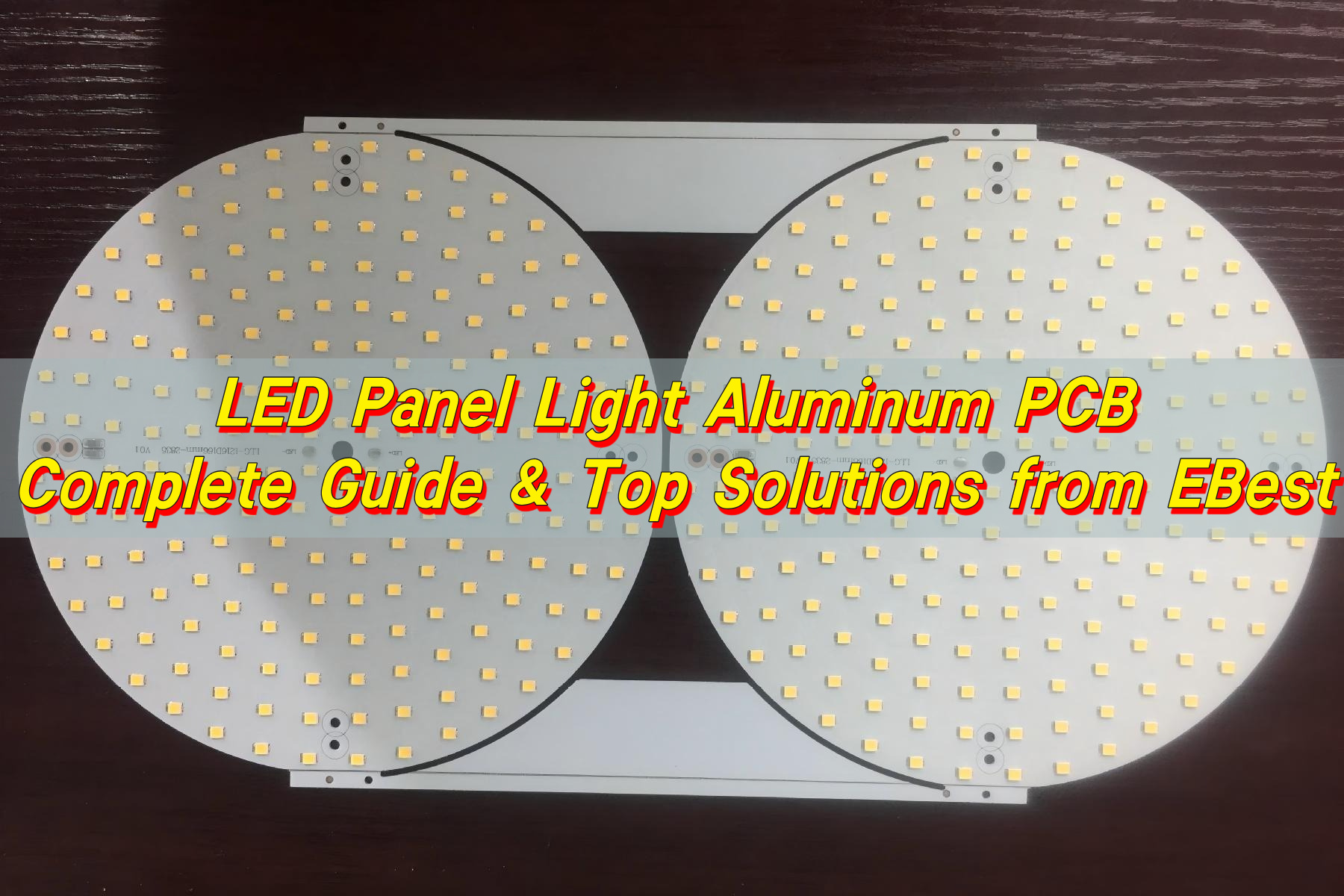
LED Panel Light Aluminum PCB: Complete Guide & Top Solutions from EBest
Thursday, March 19th, 2026

Why Choose EBest for Your LED Panel Light Aluminum PCB?

EBest is your first choice for high-performance LED Panel Light Aluminum PCB, with core parameters designed to meet the strictest industry standards. Our LED Panel Light Aluminum PCB features thermal conductivity of 1.0-4.0 W/(m·K), copper thickness of 1oz-4oz, board thickness of 0.8mm-3.0mm, and operating temperature range of -40℃ to 125℃.

We offer custom solutions for all LED panel light applications, ensuring stable performance and long service life. For your next LED Panel Light Aluminum PCB project, choose EBest—we deliver reliability you can count on. Contact us to place your order today.

LED Panel Light Aluminum PCB: Complete Guide & Top Solutions from EBest

Why Choose Us for LED Panel Light Aluminum PCB?

Quality: Our LED Panel Light Aluminum PCB undergoes 100% full inspection before delivery, with strict adherence to international quality standards and advanced production processes to ensure stable performance and low failure rates.

Delivery: With a monthly production capacity of 260,000 square feet, we offer expedited service—urgent LED Panel Light Aluminum PCB orders can be shipped within 24 hours, ensuring you meet tight project deadlines.

Service: We provide one-stop solutions, from custom design and component sourcing to assembly and after-sales support, tailored to your unique LED Panel Light Aluminum PCB needs.

Supply Chain: Our stable and perfect supply chain ensures consistent access to high-quality materials for LED Panel Light Aluminum PCB, eliminating delays and supply risks.

What Are the Key Advantages of LED Panel Light Aluminum PCB?

LED Panel Light Aluminum PCB offers three core advantages that make it superior to standard PCBs for LED lighting applications. First, its excellent thermal conductivity (1.0-4.0 W/(m·K)) efficiently dissipates heat from LED chips, reducing light decay and extending product life.

Second, it features lightweight and high mechanical strength, making it easy to install and suitable for various LED panel light designs. Third, it supports integrated design, reducing component count and simplifying production processes.

How to Design LED Panel Light Aluminum PCB for Optimal Performance?

To optimize LED Panel Light Aluminum PCB performance, start with thermal management—use 2oz copper thickness for high-power LED panels and add sufficient heat-dissipating vias (0.3mm孔径, 1.5mm spacing) to enhance heat transfer.

Separate digital and analog grounds, with ground line width ≥50mil, to avoid signal interference. Arrange components in a grid pattern and ensure power line width matches current requirements (e.g., 1.7mm width for 2A current with 1oz copper).

Avoid placing mounting holes near component edges and add clear polarity marks for LED chips and power sockets to prevent assembly errors.

What Are the Common Pain Points of LED Panel Light Aluminum PCB and How Do We Solve Them?

Many users face challenges with LED Panel Light Aluminum PCB, but EBest has proven solutions to every key pain point. We address these issues head-on to deliver reliable, high-performance products that meet your needs.

Pain Point 1: Poor Heat Dissipation Leading to Light Decay

Solution: Our LED Panel Light Aluminum PCB uses high-quality aluminum substrates and optimized copper layout, including extended heat pads and “plugged via + copper cladding” technology, to ensure efficient heat dissipation and reduce light decay by 30%.

Pain Point 2: Solder Joint Failure Due to Oxidation

Solution: We use nitrogen-protected soldering and special flux to prevent aluminum oxidation, ensuring strong, stable solder joints. All LED Panel Light Aluminum PCB products undergo strict solder joint inspection to eliminate defects.

Pain Point 3: Inconsistent LED Brightness and Color

Solution: We design independent current-limiting circuits for each LED (or each color channel) and use high-precision constant current ICs (current accuracy ±3%) to ensure uniform brightness and color consistency across the entire panel.

Pain Point 4: Supply Chain Delays and Material Quality Issues

Solution: Our stable supply chain ensures consistent access to high-grade aluminum substrates and components. We conduct strict incoming material inspections to guarantee the quality of every LED Panel Light Aluminum PCB we produce.

For hassle-free, high-quality LED Panel Light Aluminum PCB solutions that solve these pain points, choose EBest—your trusted partner for all PCB needs.

Which Industries Benefit Most from LED Panel Light Aluminum PCB? 4 Real-World Cases

LED Panel Light Aluminum PCB is widely used across industries that require efficient, reliable LED lighting. Below are four popular industries and our successful project cases.

1. Commercial Lighting Industry

Case: We supplied LED Panel Light Aluminum PCB for a large shopping mall in Europe, with 3000K warm white light and 80+ CRI. The PCBs featured 2oz copper thickness and optimized thermal design, ensuring 50,000+ hours of service life with minimal light decay.

2. Industrial Lighting Industry

Case: For a manufacturing plant, we designed dust-proof, high-temperature resistant LED Panel Light Aluminum PCB with IP65 protection. The PCBs supported 10W high-power LEDs and stable operation in environments up to 85℃.

3. Residential Lighting Industry

Case: We provided custom LED Panel Light Aluminum PCB for a residential lighting brand, featuring slim design (1.0mm board thickness) and energy-saving performance. The PCBs integrated driver circuits, reducing installation complexity for homeowners.

4. Automotive Lighting Industry

Case: Our LED Panel Light Aluminum PCB was used in automotive interior lighting, meeting IATF 16949 standards. The PCBs had excellent vibration resistance and thermal stability, ensuring reliable performance in harsh automotive environments.

LED Panel Light Aluminum PCB: Complete Guide & Top Solutions from EBest

How Does LED Panel Light Aluminum PCB Compare to FR4 PCB? A Detailed Comparison

Comparison FactorLED Panel Light Aluminum PCBFR4 PCB
Thermal Conductivity1.0-4.0 W/(m·K), excellent heat dissipation0.2-0.5 W/(m·K), poor heat dissipation
Suitable LED Power1-10W (medium to high power)<0.5W (low power, indicators only)
Mechanical StrengthHigh, lightweight,resistant to warpingMedium, prone to warping at high temperatures
Design FlexibilitySupports integrated design, suitable for slim panelsLimited, requires additional heat sinks for high power
Application ScopeCommercial, industrial, residential, automotive lightingLow-power indicators, simple electronic devices

What Are the Key Design Rules for LED Panel Light Aluminum PCB?

Follow these key design rules to ensure your LED Panel Light Aluminum PCB performs optimally and avoids common errors.

  • Power line width: ≥50mil for digital power lines; calculate width based on current (line width (mm) = current (A) / (copper thickness (oz) * 1.378) + 0.2mm margin).
  • Via parameters: 50mil outer diameter, 28mil inner diameter for outdoor panels; at least 40mil outer diameter, 24mil inner diameter for indoor panels.
  • Silk screen: Mark board parameters, polarity, and connection direction clearly; avoid overlapping silk screen with solder pads.
  • Static protection: Add TVS diodes at power inputs and ESD protection diodes for signal lines to prevent electrostatic damage.

How to Choose the Right Copper Thickness for LED Panel Light Aluminum PCB?

The right copper thickness for LED Panel Light Aluminum PCB depends on LED power and current requirements. For low-power panels (≤1W), 1oz (35μm) copper thickness is sufficient.

For medium-power panels (1-5W), 2oz (70μm) copper is recommended to enhance heat dissipation and current-carrying capacity. For high-power panels (>5W), 3oz-4oz copper thickness is ideal to handle higher currents and reduce heat buildup.

What Surface Treatments Are Best for LED Panel Light Aluminum PCB?

The best surface treatments for LED Panel Light Aluminum PCB balance corrosion resistance, solderability, and thermal performance. Here are the top options:

1. Anodizing

Improves corrosion resistance and hardness, suitable for outdoor LED panel lights exposed to harsh environments.

2. HASL (Hot Air Solder Leveling)

Enhances solderability, ideal for panels with complex component layouts and high-volume production.

3. ENIG (Electroless Nickel Immersion Gold)

Provides excellent conductivity and corrosion resistance, suitable for high-precision, high-reliability applications like automotive lighting.

LED Panel Light Aluminum PCB: Complete Guide & Top Solutions from EBest

What Quality Certifications Does EBest Hold for LED Panel Light Aluminum PCB?

EBest holds a full range of international quality certifications, ensuring our LED Panel Light Aluminum PCB meets the highest industry standards for quality and reliability.

Certification NameApplicable Scope for LED Panel Light Aluminum PCB
IATF 16949Automotive-grade LED panel light PCBs, ensuring compliance with automotive industry quality requirements
ISO 9001:2015General quality management system, covering all LED Panel Light Aluminum PCB production processes
ISO 13485:2016Medical-grade LED panel light PCBs, suitable for healthcare lighting applications
AS9100DAerospace-grade PCBs, for high-reliability LED panel lights in aerospace applications
REACHCompliance with EU chemical regulations, ensuring safe materials for LED Panel Light Aluminum PCB
RoHSRestriction of hazardous substances, making our PCBs environmentally friendly
ULSafety certification, ensuring our LED Panel Light Aluminum PCB meets global safety standards

What Services Does EBest Offer for LED Panel Light Aluminum PCB?

EBest provides one-stop solutions for LED Panel Light Aluminum PCB, covering every stage of your project from design to delivery.

  • PCB Fabrication: Custom LED Panel Light Aluminum PCB prototypes and low-volume production, with support for special substrates and materials.
  • Component Sourcing: Stable supply of all electronic components (SMD, BGA, QFN, QFP) for your PCB assembly needs.
  • Assembly Services: BGA Assembly, Through-Hole Assembly, and Full Turnkey PCB Assembly, with 100% full inspection before delivery.
  • Value-Added Services: Injection molding, CNC Machining, and Sheet Metal services to support integrated LED panel light production.
  • Expedited Service: Urgent LED Panel Light Aluminum PCB orders shipped within 24 hours to meet tight deadlines.

FAQ: Common Questions About LED Panel Light Aluminum PCB (Answered)

1. What is the typical service life of EBest’s LED Panel Light Aluminum PCB?

The typical service life of our LED Panel Light Aluminum PCB is 50,000+ hours. This is achieved through high-quality materials, optimized thermal design, and strict quality control, ensuring minimal light decay and stable performance over time.

2. Can EBest provide custom LED Panel Light Aluminum PCB designs?

Yes, EBest specializes in custom LED Panel Light Aluminum PCB designs. We work with you to understand your project requirements (size, power, thermal needs, and application) and deliver tailored solutions that meet your exact specifications.

3. How long does it take to deliver LED Panel Light Aluminum PCB orders?

Standard LED Panel Light Aluminum PCB orders are delivered within 3-7 business days. We also offer expedited service, with urgent orders shipped within 24 hours to help you meet tight project deadlines.

4. Does LED Panel Light Aluminum PCB require special soldering processes?

Yes, LED Panel Light Aluminum PCB requires special soldering processes to prevent aluminum oxidation. We use nitrogen-protected soldering and special flux to ensure strong, reliable solder joints and consistent performance.

5. How to test the thermal performance of LED Panel Light Aluminum PCB?

To test thermal performance, we measure the LED junction temperature during operation using thermal imaging tools. Our LED Panel Light Aluminum PCB is designed to keep junction temperatures below 85℃, ensuring minimal light decay and long service life.

6. Can EBest produce LED Panel Light Aluminum PCB for outdoor applications?

Yes, we produce LED Panel Light Aluminum PCB for outdoor applications. These PCBs feature waterproof, dust-proof, and corrosion-resistant designs, with surface treatments like anodizing to withstand harsh outdoor environments.

7. What is the maximum power capacity of EBest’s LED Panel Light Aluminum PCB?

Our LED Panel Light Aluminum PCB can handle up to 10W per LED, with support for high-power LED panels. We use 3oz-4oz copper thickness and optimized thermal design to handle higher currents and heat buildup.

What Are the Latest Trends in LED Panel Light Aluminum PCB Technology?

The latest trends in LED Panel Light Aluminum PCB focus on efficiency, integration, and intelligence. One key trend is the development of high-thermal-conductivity aluminum substrates (up to 4.0 W/(m·K)) for better heat dissipation.

Another trend is integrated design, combining LED chips, drivers, and sensors on a single LED Panel Light Aluminum PCB for smart lighting applications. Additionally, lightweight and slim designs are becoming more popular for residential and commercial lighting.

How to Ensure LED Panel Light Aluminum PCB Meets Industry Standards?

To ensure LED Panel Light Aluminum PCB meets industry standards, we follow strict quality control processes at every stage. This includes incoming material inspection, in-process testing (DRC, solder joint inspection), and final full inspection before delivery.

We also adhere to all relevant certifications (IATF 16949, ISO 9001:2015, RoHS, etc.) and conduct regular audits to maintain compliance with industry standards.

We provide high-quality LED Panel Light Aluminum PCB solutions, including custom design, fabrication, assembly, and expedited delivery. Whether you need prototypes or mass production, EBest has the expertise and capacity to meet your needs. Place your order today by emailing us at sales@bestpcbs.com
led light circuit board
Friday, July 26th, 2024

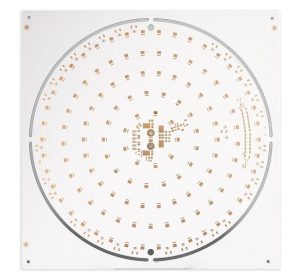
The led light circuit board, also called the LED circuit board, is actually the abbreviation of the printed circuit board (PCB). PCB is a stable carrier of electronic components, which not only realizes electrical connection, but also plays a supporting role. In LED lamps, the PCB board integrates LED components, and through this integrated PCB board, the LED lamp can realize its function. The driving circuit of the LED lamp, such as constant voltage drive, constant current drive, PWM drive, etc., are all integrated on this small circuit board, which is necessary to light up the LED lamp beads. Therefore, it can be said that the circuit board of the LED lamp is the printed circuit board inside it, which is responsible for converting electrical energy into visible light, and controlling the brightness and performance of the LED through different driving methods.

Customized process of led light circuit board

  1. Support small and medium batch orders of 1-14 layers, consult customer service for more layers;
  2. Can do HDI blind buried hole process;
  3. The board uses Jiantao A-grade board (KB-6164), which can be made into halogen-free board;
  4. The maximum size can be one meter;
  5. Various ink colors such as pink, transparent, purple, etc.;
  6. Support copper thickness of 10oz, hole copper 35μm;
  7. Multi-layer board can be customized with pressing structure;
  8. Support multi-level impedance matching;
  9. Board edge copper package, two-color ink, plug hole, countersunk hole, square groove, stepped hole, stepped groove, nickel palladium gold and other special processes;
  10. PCBA can be pasted in one set, single and double sides can be pasted;
led light circuit board

led light circuit board

What fields can led light circuit board be applied in?

PCB LED lamp has excellent energy efficiency, low cost and maximum design flexibility, so it can be incorporated into many lighting applications.

Telecommunications: LED indicators and displays are always used in telecommunications equipment due to the surrounding machinery, and they have great heat transfer capabilities. Therefore, aluminum-based LED PCBs play an important role in their applications.
Automotive: Aluminum PCB LEDs are also used in the indicator lights, brake lights, and headlights of automobiles, among other applications. There are factors that make aluminum PCBs ideal in the automotive industry, such as durability and competitive pricing.
Computers: LED displays and indicator lights are becoming increasingly popular in computer applications. Aluminum PCB LEDs are an ideal solution due to the heat sensitivity of computer machinery. In addition to LED applications, aluminum PCBs are also used in computer components such as power supply units and CPU boards due to their ability to dissipate and transfer heat.
Medical: Lighting tools used in surgical procedures and medical examinations often use high-power LED lights, which often use aluminum PCBs, mainly because of the durability and heat transfer capabilities of aluminum PCB LEDs – this ensures that medical equipment operates properly, regardless of the number of patients that are cycled through the medical office. In addition to lighting tools, medical scanning technology also often uses aluminum PCBs.

led light circuit board

What fields can LED PCB be applied in?

Advantages of led light circuit board

Lower power consumption: Replacing incandescent lamps with LED lamps can reduce power consumption by more than 80%.

Longer life: The service life of LEDs can generally exceed 20,000 hours, and they can be used around the clock for 3 years, which is 25 times longer than incandescent lamps. Not only can it save costs, but it also reduces the frequency of replacement.

Higher efficiency: Incandescent lamps release more heat. LED lamps can reduce it by up to 20%. This means that while using more powerful LED lamps, unnecessary heating can be reduced.

Smaller size: Due to their small size, LED lamps can have various sizes and can be used in different places. Manufacturers can add LEDs to anything, whether it is electronic equipment or cars, and even traffic lights and signs on the road.

Environmental protection: Compared with other bulbs, LED lamps do not contain mercury. Therefore, LEDs have less impact on the environment and are easier to handle.

LED is the abbreviation of light-emitting diode, which is a semiconductor diode. LEDs are soldered to a printed circuit board and equipped with a chip that generates light through electrical connections. A heat sink and a ceramic base are used to connect the chip. Undoubtedly, LED PCB is the core of LED lighting. An LED PCB tends to generate a lot of heat, but it is difficult to cool it by traditional methods. Metal core PCB is widely used in LED applications due to its strong heat dissipation ability, especially aluminum is often used in the production of PCB for LED lamps. Usually, aluminum PCB contains a thin layer of thermal conductive medium material, which can transfer and dissipate heat much more efficiently than traditional rigid PCB.

Why led light circuit board use mcpcb

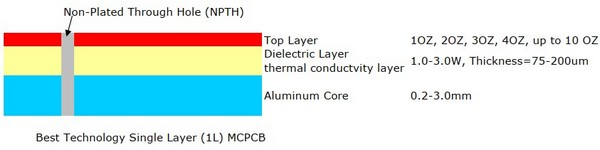
Aluminum substrate is a metal-based copper-clad board with good heat dissipation function. Generally, a single-sided board consists of three layers, namely circuit layer (copper foil), insulation layer and metal base layer. There are also designs for high-end use as double-sided boards, with the structure of circuit layer, insulation layer, aluminum base, insulation layer and circuit layer. Very few applications are multi-layer boards, which can be made of ordinary multi-layer boards with insulation layer and aluminum base.
LED aluminum substrate is PCB, which also means printed circuit board, but the material of the circuit board is aluminum alloy. In the past, our general circuit board material was glass fiber, but because LED generates more heat, the circuit board used for LED lamps is generally aluminum substrate, which can conduct heat quickly. The circuit boards used for other equipment or electrical appliances are still glass fiber boards!

How are LED patches installed on PCB boards?

Use double-sided PCB board, patch LED on the front, and drive power circuit on the back. LED can be designed into a circle shape, through metallized holes to the back, there are plenty of places to handle these leads
On the corresponding pads of PCB board, brush tin, use patch machine to apply it, and then reflow soldering, it is on, but in actual operation, you need to pay attention to many problems, anti-static, equipment quality, etc.

Your Reliable LED PCB Board Manufacturer – EBest Circuit (Best Technology)
Thursday, June 27th, 2024

Nowadays, LED lighting has become increasingly popular in our daily life. With its rapidly rise in popularity, the term LED PCB has become commonplace. LED PCB also referred to as LED circuit board, LED aluminum PCB, or simply LED PCB board. Today, our team will share some informational knowledges about LED PCB circuit board, let’s keep reading if you are interested!

What is a LED PCB Circuit Board?

A LED PCB circuit board is a unique type of board crafted to hold and connect light-emitting diodes (LEDs). They are specially designed for lighting applications, like LED car headlights, pool lighting, UV LED, hotel lighting, grow light, high bay lights, stair lights, supermarket lighting, street light, etc. They are used almost everywhere. These boards provide the support and connections needed for LEDs to function efficiently and last longer. They are crucial in areas like lighting, automotive, and electronics, thanks to their ability to manage heat effectively and enhance the lifespan of LEDs.

What are the Different Types of LED PCB?

LED PCB boards are preferred over traditional lighting methods like fluorescent and incandescent bulbs. There are in total five types of LED PCBs, each designed for specific applications:

  • Aluminum based LED PCB

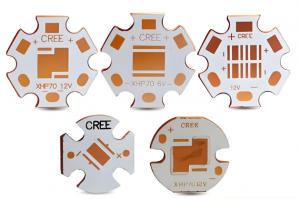
An LED PCB board, often made of aluminum alloy, serve as the base for mounting LEDs. This is the most common type of LED PCB, since it has good thermal management and cost-effective compared to other materials. The thermal conductivity of aluminum can be 1.0-3.0W/m.k, it can meet the almost heat requirements of low-middle power applications, like streetlights and floodlights. Additionally, EBest Circuit (Best Technology) developed a new product called semi-flexible aluminum PCB for specific device. It can be bent and folded when necessary.

  • Copper core LED PCB

Copper core LED circuit board can be divided into two types: normal copper core LED PCB and thermoelectric separation copper-based LED PCB. The copper material has higher thermal conductivity than that of aluminum, and it can up to 400W/m.k when made by thermoelectric separation technology. Copper based LED PCB board commonly used in high power devices like new energy vehicles.

  • Ceramic LED PCB

Ceramic LED PCB boards are made from ceramic substrates like aluminum oxide (Al2O3) or aluminum nitride (AlN). They have superior thermal management, and it can withstand extreme environment when used in high-temp and low temperatures. Ceramic substrates can handle high power and thermal cycling better than other materials, making them ideal for automotive, aerospace, and high-power LED applications.
  • FR4 LED PCB

FR4 LED PCB boards are made from woven fiberglass cloth with an epoxy resin binder, which provides good mechanical strength and insulation properties. FR4 is a widely used material for general-purpose PCBs due to its cost-effectiveness and versatility. While it has lower thermal conductivity (around 0.3W/m.k) compared to aluminum or copper, FR4 LED PCBs are suitable for low to medium power applications where thermal management is less critical. These PCBs are commonly used in consumer electronics, LED displays, and indoor lighting.

  • Flexible LED PCB

Flexible LED PCB boards are constructed using flexible plastic substrates like polyimide or polyester. This flexibility allows the PCBs to be bent, folded, and shaped to fit various applications. Flexible LED PCBs are ideal for products that require dynamic or complex designs, such as wearable electronics, flexible displays, and medical devices. Despite their lower thermal conductivity compared to rigid PCBs, flexible LED PCBs offer unique design advantages and are increasingly used in innovative LED applications.

What are the Benefits of Using Aluminum LED PCB Boards?

Aluminum LED PCB boards offer numerous advantages that other materials cannot achieved.

1. Better Heat Management: LED PCBs, particularly aluminum ones, help in cooling LEDs, preventing overheating and extending their lifespan.

2. Compact and Light: These boards are small and lightweight, making them perfect for applications with space and weight constraints.

3. Dimensional stability: Aluminum LED PCB board has good dimensional stability compared with flexible LED PCBs. And it has low CTE during the manufacturing.

4. Cost-Effective: Producing aluminum LED PCBs is relatively affordable, making them a budget friendly option for various applications.

5. Versatile: Available in different shapes and sizes, Aluminum LED PCBs can be customized to meet specific needs, enhancing their usefulness in various scenarios.

The Structures of a LED PCB Board in Manufacturing?

A LED PCB is similar to traditional rigid board, the only one difference is the LED mounting on the pads. Herein, we listing the basic composition of a LED pcb board, let’s see it together.

1. Substrate – The base of the PCB, which can be flexible (like polyimide), metal alloy (aluminum, copper), or ceramic, depending on the required thermal performance.

2. Copper foil – A thin layer of copper is used for forming the circuit paths on the PCB.

3. Solder mask – This is a protective layer covers the copper paths to prevent oxidation and short circuits. It also aids in SMT (surface mounted technology) soldering.

4. Silkscreen – Used to print labels, logos, vendors, symbols, and pick and place on the PCB for easy identification during assembly.

5. Adhesives – Aiming to bond different PCB layers, different material used different adhesive, always are prepreg (PP).

6. LEDs: The main components mounted on the PCB, available in various sizes, colors, power ratings, voltages and so on.

Your Reliable LED PCB Board Manufacturer – EBest Circuit (Best Technology)

EBest Circuit (Best Technology) stands out as a leading manufacturer of high-quality LED PCB boards. We offer a wide range of products and services to cater to various needs. With extensive experience and expertise in the industry, we are committed to providing reliable and cost-effective solutions.

  • Advanced Facilities

We are equipped with advanced machinery and technology, ensuring precision and efficiency in production.

  • Experienced Team

Our skilled professionals are dedicated to delivering topnotch LED printed circuit boards. Most of our core members has more than 10 years-experience in the PCB manufacturing.

  • Quality Assurance

We have passed ISO9001, ISO13485, IATF16949 certifications, and integrated them into our daily manufacturing process. These strict quality control measures can make sure every product meets the highest standards of industry.

  • Customization

We offer tailored customized LED PCB board solutions to meet customer specific requirements.

  • Competitive Pricing

EBest Circuit (Best Technology) has our own factory in China and Vietnam, we can provide most affordable solutions without compromising on quality.

Choosing EBest Circuit (Best Technology) means opting for excellence, reliability, and superior service. Partner with us for your LED PCB needs and experience the difference we bring.