PCB manufacturing PCB manufacturing
Home > Blog

PCB Procurement

Best PCB Manufacturers for Prototypes, PCBA and Production
Wednesday, July 15th, 2026
Best PCB manufacturers supplier evaluation checklist

The best PCB manufacturers are not the same for every buyer; the right choice depends on prototype speed, production repeatability, material capability, assembly support, quality control, cost transparency, and how well the supplier reviews your RFQ files. A hobby project, a controlled-impedance industrial board, an LED thermal board, and a turnkey PCBA order can all point to different supplier choices.

This guide is written for engineers and procurement teams comparing PCB manufacturers before sending Gerber files, BOMs, assembly drawings, and production requirements. It explains what the current search results show, how to compare supplier types, and when a buyer may choose bestpcbs instead of only selecting a local or low-cost prototype vendor.

Best PCB Manufacturers: What Buyers Should Compare First

Buyers should compare PCB manufacturers by project fit before comparing price. The most useful supplier is the one that can handle the board technology, order stage, quality risk, assembly scope, and communication requirements of the project.

Comparison point Why it matters What to ask
Project stage Prototype and production need different controls Can the supplier support prototype, pilot, and repeat orders?
Board type FR-4, MCPCB, ceramic, flex, HDI, and heavy copper need different process routes Which board types are actually supported for this design?
Assembly scope PCBA adds BOM, CPL, sourcing, soldering, and test risk Can fabrication and assembly files be reviewed together?
Quality checks Inspection should match board complexity and application risk What testing or inspection is included or optional?

What the Current Top Results Tell Buyers

The current search results show that buyers want a mix of recommendations, forums, comparison tools, manufacturer pages, and supplier lists. This is not a single-intent query. Some searchers want the cheapest hobby prototype board. Others want a supplier for production, PCBA, or special board requirements.

Representative top results include Reddit and Arduino forum discussions, JLCPCB, EEVblog’s manufacturer wiki, PCBShopper, PCB Unlimited, supplier list articles, and video content. This means a useful page should not simply repeat a company list. It should explain how to choose the right manufacturer by use case, files, risk, and buying stage.

Top PCB Manufacturer Types in the Market

The market includes several different PCB manufacturer types, and each type serves a different buyer problem. A fast online prototype supplier can be excellent for early boards, while an engineering-supported manufacturer may be better for complex materials, PCBA, or production planning.

Supplier type Typical strength Possible limitation
Online prototype platforms Fast quote, low-friction upload, low-volume boards May be less suitable for complex review or special process questions
Local or regional manufacturers Local communication, proximity, compliance or domestic sourcing needs Cost, capability, and capacity can vary widely
Turnkey PCBA suppliers Fabrication, BOM sourcing, assembly, and testing in one flow Need a complete BOM, CPL, and assembly drawing for accurate quoting
Special PCB manufacturers MCPCB, ceramic, flex, rigid-flex, HDI, heavy copper, or thermal boards Exact capability must be confirmed against files and drawings

Prototype PCB Manufacturers vs Production PCB Manufacturers

A prototype-focused PCB manufacturer is not always the best production supplier, and a production supplier is not always the fastest prototype option. Buyers should decide whether the current order is meant to validate a design, build a pilot batch, or support repeatable production.

Prototype work rewards fast file review, quick quote response, and flexible engineering feedback. Production work rewards stable material control, repeatable process planning, incoming material review, test definition, packaging, and change control. If the same supplier can support both stages, ask how prototype learnings are transferred into production planning.

PCB Fabrication, PCBA and Turnkey Sourcing

Buyers comparing PCB manufacturers should separate bare-board fabrication from PCBA and turnkey sourcing. Bare PCB fabrication focuses on the board itself. PCBA adds component sourcing, placement, soldering, inspection, and testing.

If your project needs a finished assembled board, compare suppliers by how they handle Gerber or ODB++, BOM, CPL, assembly drawings, polarity, test requirements, and approved alternates. The bestpcbs PCBA service is a relevant internal path when buyers want fabrication and assembly support in one procurement flow.

Cost, Lead Time and Hidden Quote Assumptions

PCB quotes can look very different because suppliers make different assumptions about material, copper, surface finish, testing, component sourcing, and delivery. A low number is not always a lower total project cost if important requirements are missing from the quote.

  • Check whether the quote includes bare PCB only or assembly as well.
  • Confirm material, layer count, copper, finish, thickness, and impedance assumptions.
  • Ask whether testing, programming, packaging, and special inspection are included.
  • For PCBA, ask whether BOM sourcing, alternates, and shortages are already considered.

For cost-specific planning, use the custom PCB cost guide together with the RFQ checklist below.

Quality Control and Testing Questions

A good PCB manufacturer should explain what inspection and testing are appropriate for the board, not just say that quality is controlled. The right checks depend on board type, density, component package, application risk, and buyer requirements.

Ask about bare-board electrical testing, AOI, visual inspection, X-ray where hidden joints matter, functional testing when the buyer provides requirements, and how nonconforming findings are handled. For assembled projects, quality planning should connect PCB fabrication and PCBA inspection instead of treating them as separate steps.

Materials and Special PCB Capability

Special PCB capability matters when the project involves heat, high frequency, high current, tight mechanical limits, or flexible movement. General FR-4 manufacturers can be a good fit for standard work, but special applications may require MCPCB, ceramic PCB, high Tg material, HDI, flex, rigid-flex, or heavy copper.

Bestpcbs has internal product references for metal core PCB, ceramic PCB, SinkPAD-style thermal paths, PCBA, and other board types. Exact limits should always be confirmed from the supplied files and capability tables before production.

When to Choose a Local PCB Manufacturer

A local PCB manufacturer can be the better choice when domestic sourcing, in-person visits, local compliance, or very short local logistics are hard requirements. Some projects require local manufacturing because of customer policy, regulated sourcing, or time-sensitive engineering access.

Even then, buyers should compare capability, quote clarity, test coverage, and communication quality. Local does not automatically mean better for every board. It means the local factor has real value for that project.

When to Consider an Overseas PCB Manufacturer

An overseas PCB manufacturer can be a practical choice when the project values cost control, material options, scalable production, PCBA support, or special board experience more than local proximity. For many commercial electronics projects, buyers use overseas suppliers when the files are clear and the supplier can communicate engineering questions quickly.

Bestpcbs should not be presented as a local US factory. It can be considered when buyers need engineering review, PCB fabrication, PCBA, material discussion, cost planning, and RFQ support for projects that do not require domestic-only manufacturing.

Why Buyers May Consider bestpcbs

Buyers may consider bestpcbs when they need PCB fabrication, PCBA support, component sourcing discussion, and special board review in one procurement path. The fit is strongest when the buyer can provide clear files and wants supplier feedback before production.

Relevant internal paths include the PCB manufacturing information page, PCBA service, and component sourcing service. These pages should help buyers move from general supplier comparison into a specific RFQ discussion.

RFQ Checklist for Comparing PCB Manufacturers

The best comparison starts with the same complete RFQ package sent to each supplier. If each manufacturer receives different information, the quotes will not be comparable.

  • Gerber or ODB++ files and drill data
  • Stackup, material, copper, board thickness, finish, and impedance requirements
  • Quantity for prototype, pilot, and production
  • BOM, approved alternates, and sourcing rules if assembly is needed
  • CPL / pick-and-place file and assembly drawing
  • Testing, programming, inspection, packaging, and delivery requirements
  • Any application risks such as heat, vibration, voltage, current, or size limits

Common Mistakes When Choosing a PCB Manufacturer

The most common mistake is choosing from a list of famous names without matching the supplier to the actual board and buying stage. A supplier can be strong in one use case and weak in another.

  • Choosing only the lowest unit price without checking assumptions.
  • Using a hobby prototype supplier for a board that needs special material review.
  • Ignoring assembly, sourcing, and test requirements until after PCB fabrication.
  • Assuming local suppliers are always better, or assuming overseas suppliers are always cheaper after all risk is included.
  • Not sending the same RFQ package to each manufacturer.

Frequently Asked Questions

Who are the best PCB manufacturers?

The best PCB manufacturers depend on the project. A hobby prototype may fit an online low-volume platform, while a production PCBA project may need a supplier that can review fabrication files, BOM, CPL, assembly drawings, sourcing, testing, and repeat production needs.

Is the cheapest PCB manufacturer the best choice?

Not always. Low price is useful only when the quote includes the same material, finish, tolerances, inspection, sourcing assumptions, and delivery requirements. Missing assumptions can create rework or delays.

Should I choose a local or overseas PCB manufacturer?

Choose local when domestic sourcing, compliance, or in-person access is required. Consider overseas suppliers when the project allows global sourcing and needs cost control, scalable production, special materials, PCBA, or broader manufacturing support.

How do I compare PCB manufacturers fairly?

Send the same complete RFQ package to each supplier and compare capability, price assumptions, lead time, inspection, communication, BOM support, and how quickly they identify file or design risks.

Can one supplier handle PCB manufacturing and assembly?

Yes, if the supplier can review fabrication files, BOM, CPL, assembly drawings, component sourcing, soldering, and testing together. This is often useful for turnkey PCBA projects.

Send a PCB Manufacturer Comparison RFQ

If you are comparing PCB manufacturers, send your Gerber or ODB++ files, BOM, CPL, quantity, material, finish, assembly drawing, testing requirements, and target delivery plan to the Best Technology / bestpcbs engineering team at sales@bestpcbs.com. The team can review the files, identify cost and manufacturing questions, and help you decide whether bestpcbs is a practical fit for prototype, PCBA, special board, or production sourcing.


You may also like

LED PCB Manufacturer for Lighting and Power Electronics
Wednesday, July 15th, 2026
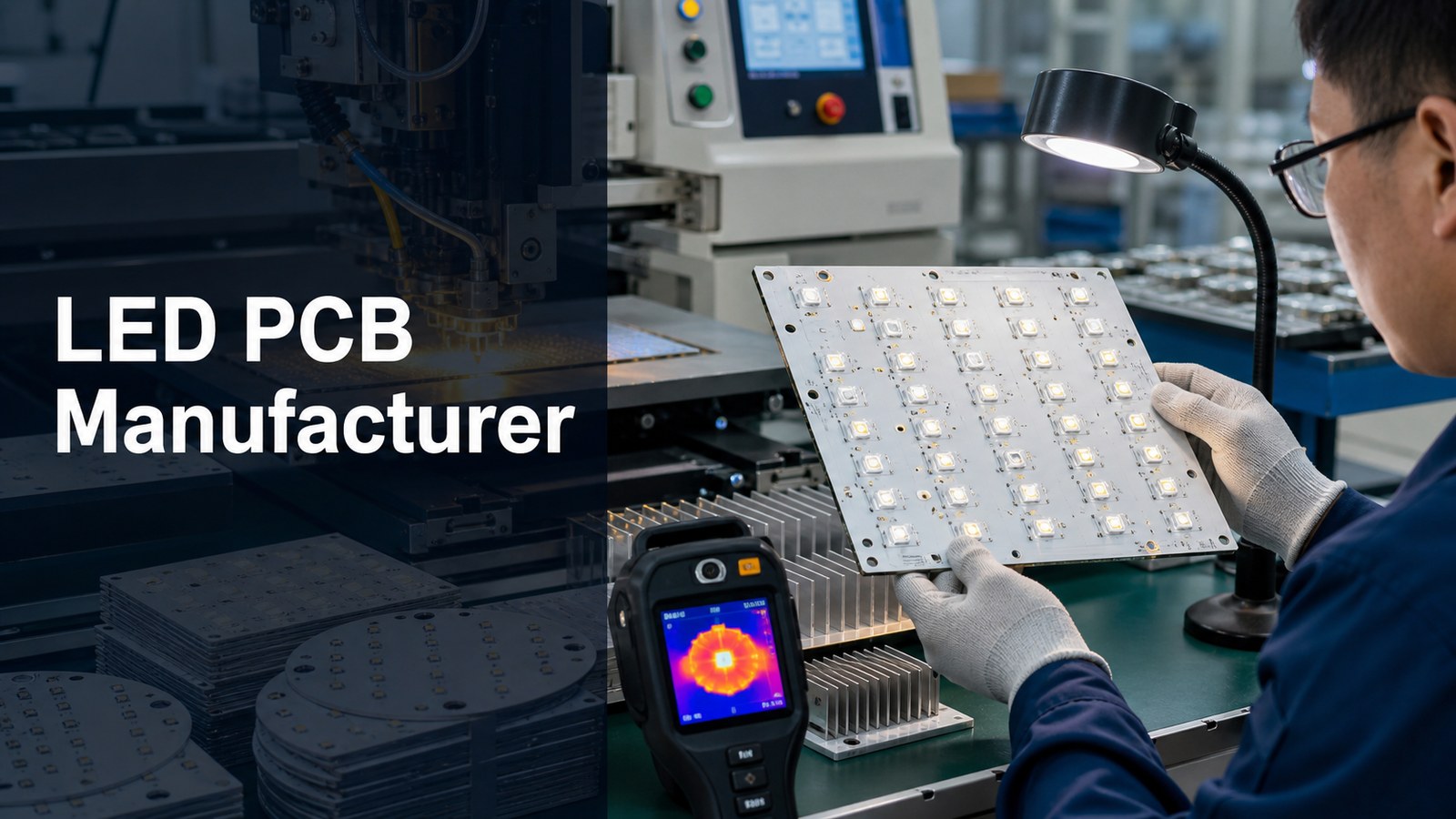
LED PCB manufacturer thermal inspection

An LED PCB manufacturer builds circuit boards that carry LEDs, manage heat, support reliable solder joints, and fit the mechanical and optical design of the final lighting product. For buyers, the main decision is not simply whether a supplier can make a PCB. The decision is whether the supplier can review thermal needs, substrate choice, copper design, LED placement, driver connections, assembly risk, testing, and RFQ files before production starts.

This guide is written for lighting engineers, purchasing teams, and product developers comparing LED PCB manufacturers for prototypes, pilot builds, and production. It focuses on commercial sourcing decisions: material, heat path, assembly, quality control, cost, and the files needed for a useful quote.

LED PCB Manufacturer Selection at a Glance

A good LED PCB manufacturer should help match board material, heat dissipation path, LED placement, assembly method, and inspection scope to the lighting application. LED boards are often more thermally sensitive than ordinary signal boards because light output, color stability, solder joint life, and product safety can all be affected by heat.

Buyer decision What to confirm Why it matters
Substrate FR-4, aluminum, copper, ceramic, or direct thermal path design Controls heat transfer, cost, weight, and manufacturability
Thermal path LED pad design, dielectric, copper, metal core, heat sink interface Affects LED life, brightness stability, and field reliability
Assembly LED package, polarity, driver parts, connectors, soldering method Reduces placement errors and solder defects
Testing Visual, AOI, polarity, illumination, electrical and thermal checks Finds issues before boards reach final products

When You Need an LED PCB Manufacturer Instead of a General PCB Supplier

You need an LED PCB manufacturer when heat, brightness, LED placement, mechanical fit, or assembly reliability are central to the project. A general PCB supplier may fabricate a board correctly from Gerber files, but LED products often need deeper review of heat path, component polarity, substrate choice, and how the board will be mounted into a fixture or power module.

Projects such as high-power lighting, automotive lighting modules, signage, industrial lamps, grow lights, UV LED systems, and compact consumer lighting need a supplier that can read the PCB files together with the LED package data, driver circuit, housing constraints, and expected operating conditions.

LED PCB Materials: FR-4, Aluminum, Copper, Ceramic and DTP Options

LED PCB material selection should follow the thermal and mechanical requirements of the product, not only the lowest board price. FR-4 may be acceptable for low-power indicator boards or lower thermal stress designs. Metal core PCB, copper core PCB, ceramic PCB, or direct thermal path structures may be considered when heat density is higher.

Bestpcbs has relevant product references for metal core PCB, SinkPAD-style thermal paths, ceramic PCB, and PCBA service. Exact material limits and construction options should be confirmed from the project files and capability tables before quoting. The safe RFQ approach is to share LED power, board outline, mounting surface, target temperature conditions, and thermal interface expectations early.

Thermal Design Questions to Answer Before RFQ

Thermal design questions should be answered before quote approval because heat problems are expensive to fix after LED placement and fixture design are locked. Even a well-fabricated board can fail if the heat path from LED junction to board, heat sink, housing, and ambient environment is not considered.

  • What is the LED package and power level?
  • Is the board mounted to a heat sink, housing, or metal frame?
  • Does the design need aluminum, copper, ceramic, or direct thermal path construction?
  • Are there thermal vias, exposed pads, or special copper areas?
  • Will the buyer provide thermal simulation, test conditions, or acceptance criteria?

Copper, Dielectric, Board Thickness and Surface Finish Choices

Copper, dielectric, board thickness, and surface finish choices affect both thermal behavior and manufacturing cost. For LED products, board thickness may be tied to mechanical fit, copper may be tied to current and heat spreading, and surface finish may affect solderability and storage conditions.

Do not assume all LED boards require the same build. A decorative LED board, a high-current lighting module, a compact driver board, and a high-power thermal board may need different substrate and assembly planning. The RFQ should state current, LED density, operating environment, finish preference, board thickness target, and mounting constraints.

LED PCB Assembly: LEDs, Drivers, Connectors and Polarity

LED PCB assembly requires careful handling of LED polarity, package orientation, driver components, connectors, and heat-sensitive placement details. A correct bare board is not enough if the assembled board has rotated LEDs, weak solder joints, or inconsistent brightness caused by component or process issues.

For assembly projects, provide BOM, CPL, assembly drawing, polarity notes, LED binning requirements if any, connector direction, and test expectations. If component sourcing support is needed, the component sourcing service is relevant for BOM availability, approved alternates, and supply risk review.

DFM Review for LED PCB Manufacturing

DFM review for LED PCB manufacturing checks whether the board can be fabricated, assembled, inspected, and mounted without avoidable production risk. This review should happen before production, not after defects appear.

Typical checks include LED pad size, solder mask clearance, copper balance, thermal pad design, mechanical holes, panelization, board outline, silkscreen clarity, polarity marking, connector placement, heat sink interface, and test point access. If the board also needs assembly, the review should connect Gerber, BOM, CPL, and assembly drawing data.

Testing and Inspection for LED PCB Projects

LED PCB testing should match the actual product risk, including electrical function, polarity, solder quality, visual appearance, and thermal behavior where required. Not every project needs every test, but the buyer should define what must be checked before shipment.

Possible checks include bare-board electrical testing, AOI, visual inspection, polarity verification, lighting function, driver output, current draw, and project-specific thermal checks. For assembled boards, the PCBA service path is relevant because assembly quality and board quality must be controlled together.

What Drives LED PCB Manufacturing Cost?

LED PCB cost is driven by thermal structure, material, copper, surface finish, assembly complexity, component sourcing, testing, and quantity. A low-power FR-4 LED indicator board and a metal-core high-power lighting module should not be priced or evaluated the same way.

Cost factor Impact on quote
Substrate FR-4, aluminum, copper, ceramic, and DTP structures follow different process routes.
Thermal design Thermal vias, metal cores, copper areas, and heat sink interface can add review and processing needs.
LED package and quantity Package size, polarity, and density affect assembly time and inspection risk.
BOM sourcing LED bins, drivers, connectors, and approved alternates can change price and schedule.
Testing Lighting, electrical, programming, or thermal checks add process time.

For a broader pricing view, compare this LED-specific checklist with the custom PCB cost guide.

Prototype, Pilot and Production LED PCB Planning

LED PCB prototypes should validate thermal and assembly assumptions before the buyer commits to production tooling, BOM purchasing, or fixture integration. Early prototypes help find LED spacing, brightness, driver, connector, and heat path issues while the design can still be changed.

For pilot and production, confirm whether the BOM is stable, whether LED binning matters, whether test fixtures are needed, and whether the same board build can be repeated. For engineering-stage builds, the prototype PCB assembly page is a useful internal reference.

How to Compare LED PCB Manufacturers

Compare LED PCB manufacturers by their ability to review thermal design, material choice, assembly data, sourcing risk, and testing requirements, not only by the first quoted unit price. A supplier that ignores heat and polarity can look inexpensive until the first failed build.

  • Can the supplier discuss LED substrate options and thermal path decisions?
  • Can they review Gerber, BOM, CPL, assembly drawing, and test needs together?
  • Do they ask about LED power, mounting, heat sink, operating environment, and brightness requirements?
  • Can they support both PCB fabrication and LED PCB assembly if needed?
  • Do they explain cost drivers instead of giving only a flat price?

Common LED PCB Sourcing Risks

Common LED PCB sourcing risks include weak thermal assumptions, missing polarity notes, unclear LED binning, wrong substitutions, and incomplete test requirements. These risks are easier to prevent before production than to repair after boards are assembled.

  • Thermal mismatch: substrate or heat path does not match LED power and fixture design.
  • Polarity error: LED orientation is unclear in CPL or assembly drawings.
  • BOM ambiguity: LED bins, drivers, connectors, or alternates are not approved.
  • Mechanical conflict: board holes, outline, or heat sink interface do not fit the final product.
  • Testing gap: brightness, current, function, or temperature checks are not defined.

RFQ Checklist for LED PCB Manufacturing

An LED PCB RFQ should include board files, LED and driver details, thermal requirements, assembly data, quantity, and inspection expectations. The more specific the RFQ, the fewer assumptions the supplier must make.

  • Gerber or ODB++ files and drill data
  • Board material, thickness, copper, finish, and thermal path notes
  • LED package, power, density, binning or brightness requirements if applicable
  • BOM with manufacturer part numbers and approved alternates
  • CPL / pick-and-place file and assembly drawing
  • Mounting, heat sink, housing, or mechanical constraints
  • Quantity for prototype, pilot, and production
  • Electrical, lighting, polarity, functional, or thermal test requirements

Frequently Asked Questions

What is an LED PCB?

An LED PCB is a printed circuit board designed to mount LEDs and related components while supporting electrical connection, heat transfer, mechanical fit, and product reliability. The board may use FR-4, metal core, ceramic, or other construction depending on power and thermal needs.

Is aluminum PCB always required for LED lighting?

No. Aluminum PCB is common for many lighting applications, but not every LED board requires it. Low-power designs may use FR-4, while higher heat-density designs may need aluminum, copper, ceramic, or direct thermal path structures.

Can one supplier handle LED PCB fabrication and assembly?

Yes, if the supplier can review the bare-board files, BOM, CPL, LED polarity, assembly drawing, and testing requirements together. This is often useful when the project has thermal and assembly risks.

What files are needed for an LED PCB quote?

Send Gerber or ODB++ files, drill files, material and thermal notes, BOM, CPL, assembly drawing, quantity, test requirements, and any mechanical or heat sink constraints.

What causes LED PCB quote differences between suppliers?

Quotes can differ because suppliers make different assumptions about substrate, copper, surface finish, LED package, component sourcing, assembly method, inspection, test scope, and production quantity.

Send an LED PCB Manufacturing RFQ

If you need LED PCB manufacturing or LED PCB assembly support, send your Gerber or ODB++ files, BOM, CPL, LED package details, quantity, material notes, thermal requirements, surface finish, testing requirements, and target delivery plan to the Best Technology / bestpcbs engineering team at sales@bestpcbs.com. The team can review the project for board build, heat path, sourcing, assembly, inspection, and quote preparation before production starts.

You may also like

Custom PCB Cost: Quote Factors, Quantity and Cost-Saving Checks
Monday, July 13th, 2026

The cost of a custom PCB is determined by the complete manufacturing specification, not by board dimensions alone. Layer count, finished size, panel utilization, laminate, copper weight, hole and via structure, surface finish, test scope, quantity, and requested lead time all change the quote.

For a useful price comparison, send the same released data package to each supplier and make sure every quote covers the same revision, quantity, quality requirements, testing, tooling, and delivery terms. A low total is not a saving if a missing item returns later as an extra charge or a reliability problem.

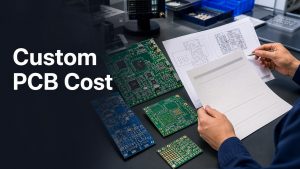
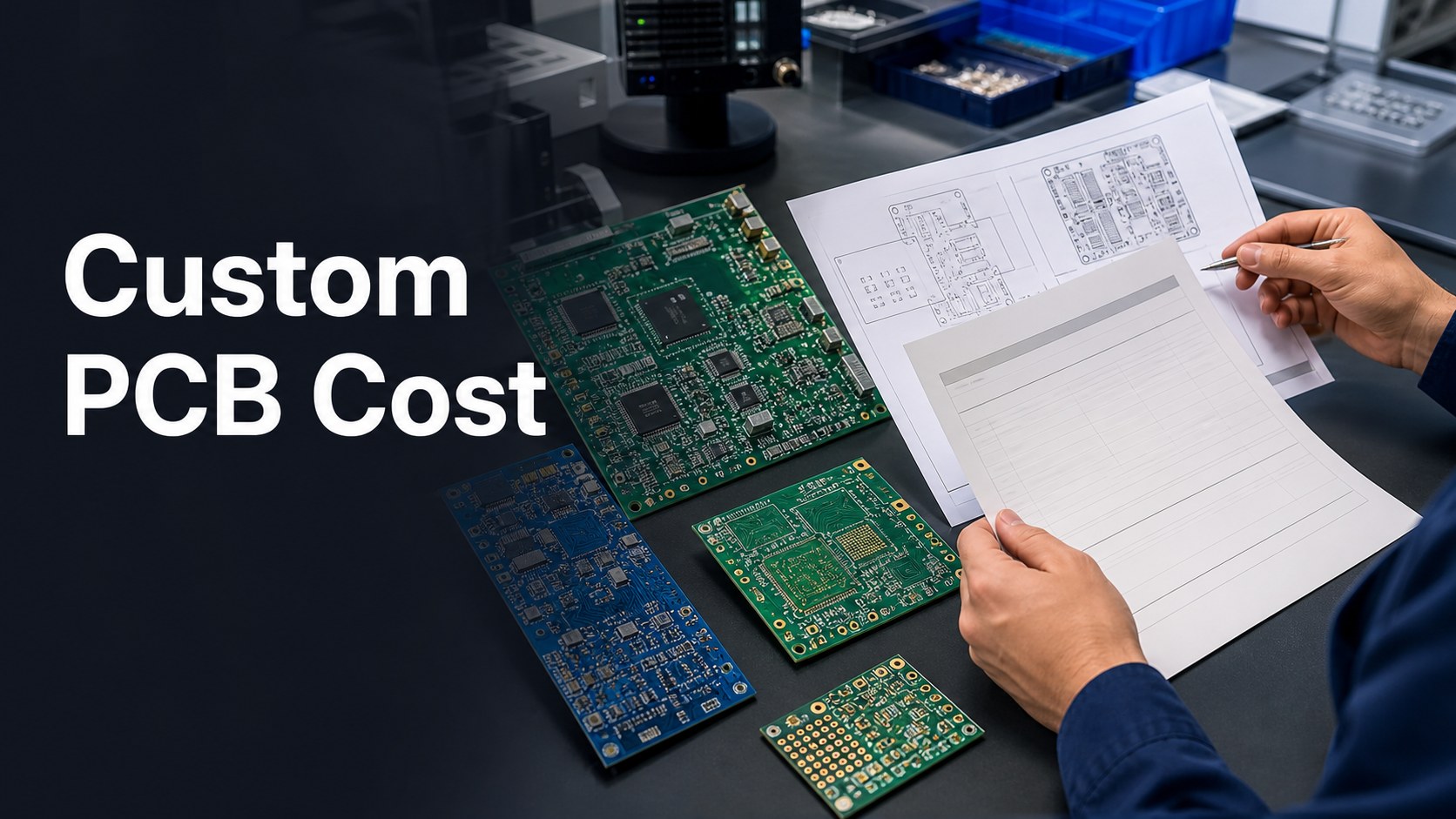
Engineer reviewing different custom PCB designs and quotation documents
Custom PCB pricing starts with the released board data, manufacturing specification, quantity, test scope, and delivery requirement.

What Does a Custom PCB Quote Actually Include?

A custom PCB quote should define the boards being fabricated, the manufacturing setup, the verification included, and the commercial terms used to calculate the total. Buyers should not compare only the unit price because suppliers may place tooling, electrical test, certificates, freight, or expedite charges on separate lines.

Quote area What to confirm Why it changes the comparison
Board fabrication Revision, dimensions, layer count, material, copper, finish, quantity Confirms that every supplier priced the same physical board
Engineering and tooling Data review, phototools, routing programs, test setup, special fixtures Fixed charges can dominate prototype and small-batch totals
Inspection and test Electrical test, impedance coupons, reports, microsection or special acceptance records Different verification scopes can make two prices look comparable when they are not
Commercial terms Lead time, freight, taxes, packaging, payment terms, quote validity The delivered cost may differ from the fabrication subtotal

Before approving a purchase order, ask whether the price is for bare boards only. Assembly, components, stencils, programming, functional test, cables, enclosures, and box build belong to a PCBA or turnkey scope unless the quotation states otherwise.

Which Inputs Change Custom PCB Cost the Most?

The largest cost changes usually come from the board’s layer structure, material area, production quantity, feature difficulty, and verification requirements. The dominant factor varies by design: panel yield can control a large simple board, while sequential lamination or controlled-depth drilling can control an HDI design.

Input Typical cost effect Best buyer check
Finished size and array Changes laminate use and boards per production panel Confirm finished outline, edge features, and permitted panelization
Layer count and stackup Adds copper layers, prepreg/core, imaging, registration, and lamination work Release an approved stackup or performance requirements
Hole and via structure Changes drilling, plating, filling, capping, and lamination sequence Identify through, blind, buried, microvia, back-drill, and filled-via requirements
Material and copper Changes raw material cost, process windows, and availability Specify exact grade when required; otherwise state the electrical and thermal need
Quantity Spreads fixed setup over more boards but increases total material Request the quantities you may genuinely purchase
Test and documentation Adds machine time, coupons, reports, fixtures, or destructive samples Define acceptance evidence before suppliers quote

These inputs interact. A smaller outline may lower material use, but very tight routing could require finer fabrication capability. A cheaper laminate may be unsuitable for high-speed, high-temperature, or RF performance. Cost review should therefore follow the board’s functional risks rather than a universal list of cuts.

How Do Board Area and Panel Utilization Affect Price?

Board area affects cost through laminate consumption and the number of usable circuits that fit on a production panel. A few millimeters added to one edge can sometimes reduce the boards-per-panel count, so price does not always change in a smooth line with area.

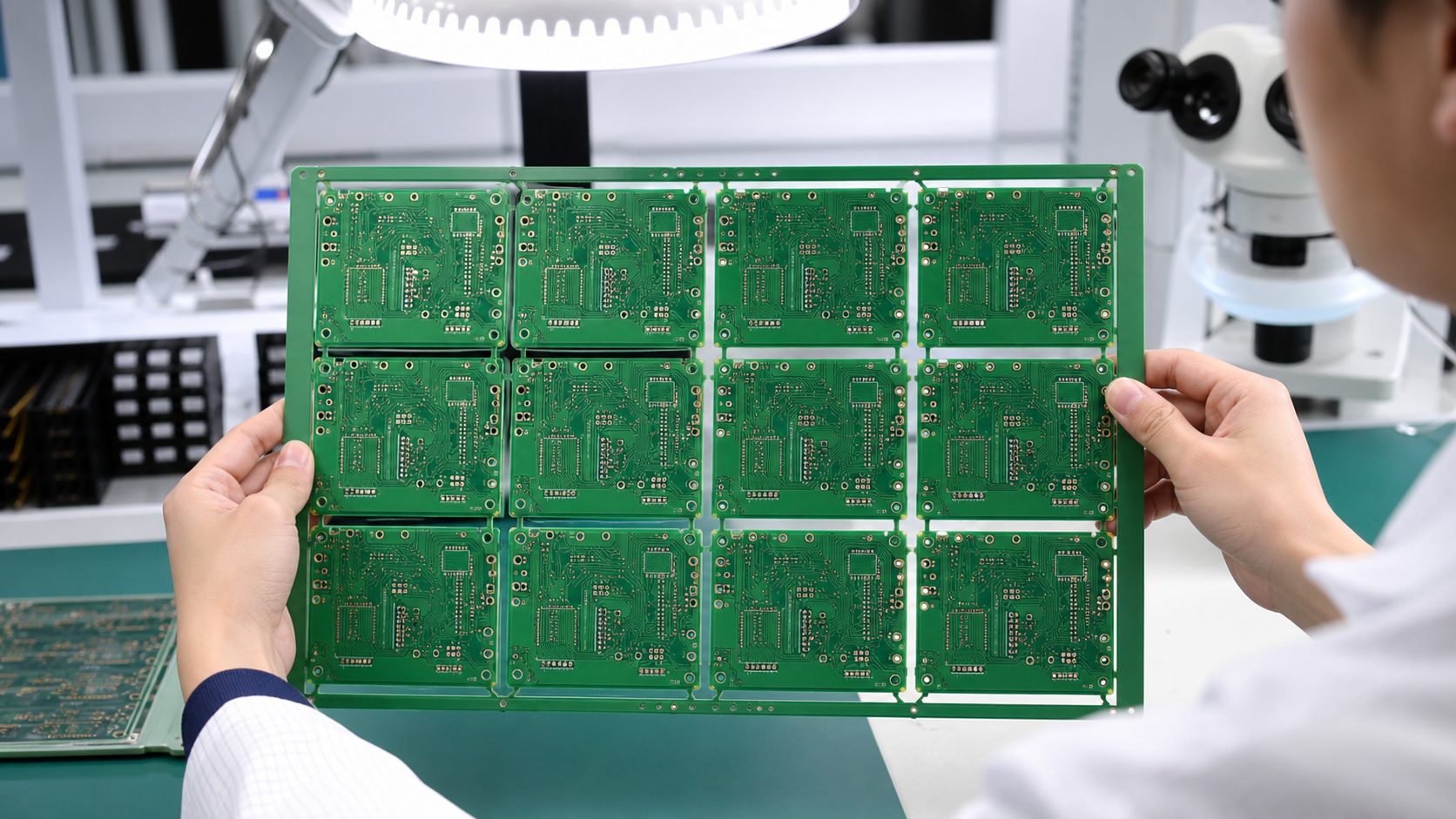
Irregular outlines, large cutouts, edge connectors, routing clearance, coupons, tooling rails, and spacing rules also affect panel yield. Ask the fabricator whether a small outline adjustment or a different delivery array would improve utilization without changing the enclosure, creepage distance, mechanical strength, or assembly process.

Engineer inspecting a twelve-up bare PCB production panel
Panel utilization changes material yield and can materially affect both prototype and production quotations.

Why Do Layer Count and Lamination Cycles Raise PCB Cost?

More layers require additional cores or copper foils, imaging steps, registration control, inspection, and lamination work. The increase is not simply the price of extra copper; the stackup creates more process stages and more opportunities for scrap if alignment or material flow is not controlled.

Blind and buried vias may require sequential lamination, which adds complete drilling, plating, imaging, and pressing cycles. Before removing layers to save money, confirm that routing density, reference planes, return paths, impedance control, isolation, and power distribution still meet the design need. For conventional constructions, review available FR4 printed circuit board options with the fabricator instead of naming a costly specialty material by habit.

When Do Materials and Copper Weight Change the Quote?

Materials change the quote when their purchase price, stocking status, panel format, processing behavior, or required certification differs from a standard production laminate. High-Tg FR4, low-loss RF laminates, polyimide, metal-core structures, ceramic substrates, and specified laminate brands should not be treated as interchangeable cost items.

Copper weight affects both raw material and processing. Heavier copper can require different etching allowances, wider conductor spacing, more resin to fill around copper features, and tighter control of the finished surface. Specify heavy copper only where current capacity, thermal behavior, mechanical strength, or an approved design standard requires it.

How Do Hole Size, Via Type, and Routing Density Affect Fabrication Cost?

Small holes, dense drilling, blind or buried vias, laser microvias, filled vias, capped vias, controlled-depth drilling, and back-drilling add cost because they require different equipment, more machine time, extra plating or filling, and additional inspection.

A design that moves from ordinary through vias to an HDI PCB structure should be quoted from the actual via map and stackup. The supplier needs to know which layers each via connects, whether microvias are stacked or staggered, whether via-in-pad is filled and capped, and whether any holes have finished-size or aspect-ratio constraints. A drill table that only lists diameters is not enough for a reliable HDI quote.

What Do Surface Finish and Solder Mask Choices Cost?

Surface finish changes the quote through chemistry, process control, coverage area, handling, shelf-life requirements, and local availability. HASL, lead-free HASL, ENIG, immersion silver, immersion tin, OSP, hard gold, and other finishes solve different solderability, flatness, wear, wire-bonding, or storage needs.

Solder mask color alone is often less important than the required dam width, registration, via treatment, thickness, and compatibility with the assembly process. Unusual colors, multiple mask operations, selective plating, carbon ink, peelable mask, edge plating, or hard-gold fingers should be clearly marked in fabrication notes and drawings so the supplier does not price a standard board and revise it later.

How Does Quantity Change Tooling and Unit Cost?

Quantity changes unit cost because engineering review, CAM preparation, imaging setup, routing programs, and some test preparation are fixed or semi-fixed for a released revision. A prototype batch carries those costs across few boards; a larger repeat order spreads them across more usable circuits.

The lowest unit price is not always the lowest project cost. Ordering too many boards before electrical, mechanical, assembly, and field risks are verified can turn a favorable unit price into obsolete inventory. A practical comparison often requests prototype, pilot, and expected production quantities on the same data package, then checks which charges repeat after a revision.

How Do Electrical Testing and Quality Requirements Affect Price?

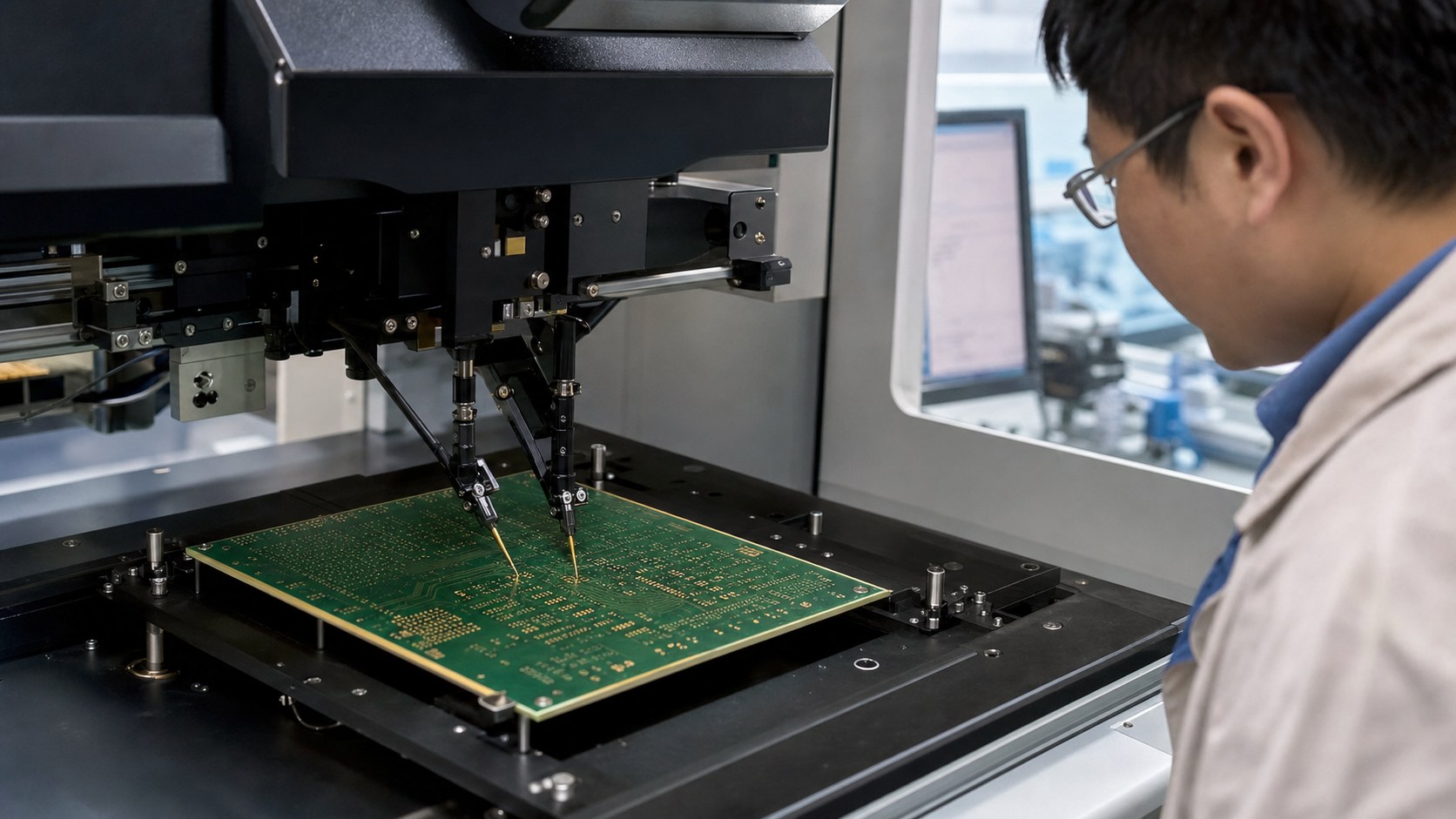
Test scope affects price through machine time, fixture cost, sample consumption, engineering review, and the records delivered with the order. Flying-probe testing is flexible for prototypes and changing designs, while fixture-based testing can become more efficient when stable volume justifies dedicated tooling.

Controlled-impedance coupons, test reports, microsections, solderability checks, ionic cleanliness requirements, thermal stress, first-article records, lot traceability, or customer-specific acceptance plans should be included in the RFQ. Do not remove a required test only to lower the quote; instead, identify which failure the test is intended to catch and whether a different verification method provides adequate evidence.

Flying-probe electrical testing of a bare multilayer PCB
Electrical-test method, coverage, reporting, and dedicated fixtures should be aligned with revision stability and order volume.

How Do Lead Time and Expedite Requests Change Pricing?

A shorter lead time can change pricing when the order requires reserved capacity, off-schedule material purchasing, overtime, faster external processing, split shipments, or priority logistics. The effect depends on the board technology and material availability, not only the requested number of days.

Ask suppliers to separate fabrication time from material procurement, engineering questions, approval holds, transit, and customs time. A nominal quick-turn quote is not comparable if one supplier starts the clock after every engineering question is closed while another includes data review. Freeze the revision and answer DFM questions promptly if schedule is the real priority.

What Is the Difference Between Bare PCB Cost and PCBA Cost?

Bare PCB cost covers fabrication of the unpopulated circuit board; PCBA cost adds component procurement, stencil and programming setup, SMT or through-hole assembly, inspection, cleaning, programming, functional test, rework allowances, packaging, and sometimes box build.

Component availability can dominate a PCBA total even when the bare board is simple. If you need an assembled prototype, request a separate view of board fabrication, components, assembly labor/setup, and test. The prototype PCB assembly scope should state BOM revision, approved alternatives, placement data, assembly drawings, programming files, and test responsibility. For supply-risk work, define the expected component sourcing controls rather than comparing only BOM totals.

Where Can PCB Cost Cutting Create Reliability Risk?

Cost cutting becomes false economy when it removes a requirement that controls an actual electrical, thermal, mechanical, assembly, or environmental risk. Common examples include changing laminate without checking Tg or electrical behavior, reducing copper without reviewing current and temperature rise, shrinking annular rings, relaxing test coverage, or accepting unapproved component substitutions.

  • Do not remove reference planes only to reduce layer count if return paths and EMC depend on them.
  • Do not substitute a surface finish without checking component pitch, storage, multiple reflow cycles, contact wear, and downstream bonding.
  • Do not loosen impedance requirements unless simulations or system margins support the change.
  • Do not compare suppliers with different inspection, traceability, or test obligations.
  • Do not treat unapproved laminate or copper substitutions as harmless purchasing changes.

How Can You Reduce Custom PCB Cost Without Weakening the Board?

The safest cost reductions remove unnecessary complexity while preserving the functions and acceptance evidence the product needs. Start with a DFM and value-engineering review before the layout and sourcing choices are frozen.

  1. Confirm that finished dimensions and arrays use material efficiently.
  2. Use standard stackups, materials, copper weights, finishes, and drill sizes where performance permits.
  3. Remove blind vias, via filling, back-drilling, controlled depth, or sequential lamination only when the design can function without them.
  4. Separate mandatory tolerances from drawing defaults and cosmetic preferences.
  5. Plan prototype, pilot, and production quantities instead of buying volume before validation.
  6. Freeze released data and consolidate documentation so suppliers do not price uncertainty.
  7. Ask which one or two specification changes would produce the largest saving, then review the engineering consequence of each.

A supplier familiar with the full custom PCB board fabrication flow can usually identify cost drivers more accurately from Gerber or ODB++, drill data, stackup, and fabrication notes than from a short parameter list.

How Should You Compare Two Custom PCB Quotes?

Compare quotes line by line against one controlled RFQ package. Normalize the revision, quantity, delivery destination, test scope, tooling treatment, commercial terms, and exceptions before deciding that one supplier is cheaper.

Comparison check Questions to ask
Technical match Did both suppliers quote the same stackup, material, copper, finish, via treatment, tolerances, and special processes?
Quantity and yield Are shipped quantity, overrun/underrun rules, panel delivery, and scrap assumptions clear?
Tooling Which setup charges repeat after reorder or data revision?
Test and evidence Are electrical test, impedance, reports, coupons, traceability, and acceptance records equivalent?
Schedule When does the lead-time clock start, and are material procurement and shipping included?
Exceptions Which requirements were excluded, changed, or left for engineering review?
Delivered total Are freight, packaging, payment fees, duties, and taxes treated consistently?

If a low quote omits a difficult requirement, ask for a corrected quotation instead of relying on a verbal promise. The purpose of quote comparison is to expose technical and commercial differences before production, not after a purchase order is placed.

What Files Are Needed for an Accurate Custom PCB Quote?

An accurate quote requires enough controlled information for the fabricator to identify every material, process, tolerance, inspection, and delivery obligation. Sending only Gerber files may leave the supplier guessing about the stackup, finished hole sizes, controlled impedance, special processes, and acceptance documentation.

  • Gerber, ODB++, or another agreed fabrication data set
  • NC drill files with plated and non-plated hole definitions
  • Fabrication drawing and released revision identifier
  • Approved stackup or electrical/material performance requirements
  • Board dimensions, outline, cutouts, edge details, and delivery-array requirements
  • Material grade, finished copper, board thickness, solder mask, legend, and surface finish
  • Controlled-impedance table and coupon/report requirements where applicable
  • Via filling, capping, back-drill, depth, edge plating, countersink, or other special-process notes
  • Inspection, electrical test, traceability, certificate, and acceptance requirements
  • Prototype, pilot, and production quantities with target delivery location and date

For a project-specific cost review, send the released fabrication package and quantity breaks to sales@bestpcbs.com. Ask the engineering team to identify assumptions, excluded items, and the largest safe cost-reduction opportunities before you compare the quotation.

Frequently Asked Questions

Can a PCB supplier give an accurate price from board dimensions alone?

No. Dimensions help estimate material area, but a usable quote also needs layer count, stackup, material, copper, drill and via data, surface finish, tolerances, test scope, quantity, and lead time. A dimension-only number should be treated as an early estimate, not a released production quotation.

Why is a prototype PCB more expensive per board?

Prototype orders spread CAM review, imaging, routing setup, test preparation, and other fixed work across few boards. The total may be manageable while the unit price appears high. Prototype pricing also reflects low panel utilization when the batch cannot be combined efficiently with other compatible work.

Does a larger order always reduce the total PCB cost?

No. A larger order usually reduces unit cost by spreading setup and improving production efficiency, but total spend rises with material and processing volume. Buying more before validating the revision can also create obsolete inventory, so quantity decisions should follow prototype and pilot evidence.

Is a two-layer PCB always cheaper than a four-layer PCB?

A conventional two-layer board is normally simpler to fabricate, but the complete design still matters. A forced two-layer layout may become larger, need difficult routing, create EMC problems, or require costly rework. Compare the total project consequence rather than layer count in isolation.

Does ENIG always cost more than HASL?

ENIG commonly has a higher process cost than standard HASL options, but the correct choice depends on pad flatness, component pitch, storage, soldering, contact, and bonding needs. Pricing and availability vary by supplier, so the RFQ should specify the required finish and acceptance standard.

Why do filled vias or via-in-pad increase cost?

Filled and capped vias require additional filling, curing, planarization, plating, and inspection. They may also interact with sequential lamination and microvia reliability. Use them where package escape, thermal transfer, or pad geometry requires them, not as an automatic default across the board.

What is NRE in a PCB quotation?

NRE means non-recurring engineering or setup cost. Depending on the supplier, it may cover CAM preparation, tooling, test fixtures, special programming, or other order-specific work. Ask which NRE items repeat after a reorder, quantity change, or data revision.

Can changing PCB color reduce the price?

Using a supplier’s standard solder mask and legend options may avoid special scheduling or material handling, but color is rarely the largest cost driver. Layer structure, panel yield, material, via technology, test scope, quantity, and lead time usually deserve attention first.

Should freight be included when comparing PCB suppliers?

Yes. Compare the delivered commercial scope, not only the fabrication subtotal. Confirm freight method, packaging, shipment splits, insurance, duties, taxes, and delivery destination. Two similar board prices can produce different landed costs and schedules.

How long should a custom PCB quote remain valid?

Quote validity depends on material pricing, availability, exchange rates, workload, and commercial policy. The supplier should state the validity period. Reconfirm price and lead time when the revision, quantity, material source, delivery date, or market conditions change.

Final Recommendation

Treat custom PCB pricing as an engineering comparison, not a single-number auction. Release one complete RFQ package, require suppliers to identify assumptions and exceptions, compare equivalent test and delivery scopes, and challenge the few design choices that create the largest cost without protecting product performance.

Request a Custom PCB Cost Review

If you are budgeting a custom PCB prototype or production order, send your Gerber or ODB++ data, drill files, fabrication drawing, stackup, quantity breaks, test requirements, and target delivery date to sales@bestpcbs.com and request a quotation. The Best Technology engineering team can review the package, clarify quote assumptions, and prepare a project-specific quotation without replacing required reliability controls with false savings.

You may also like