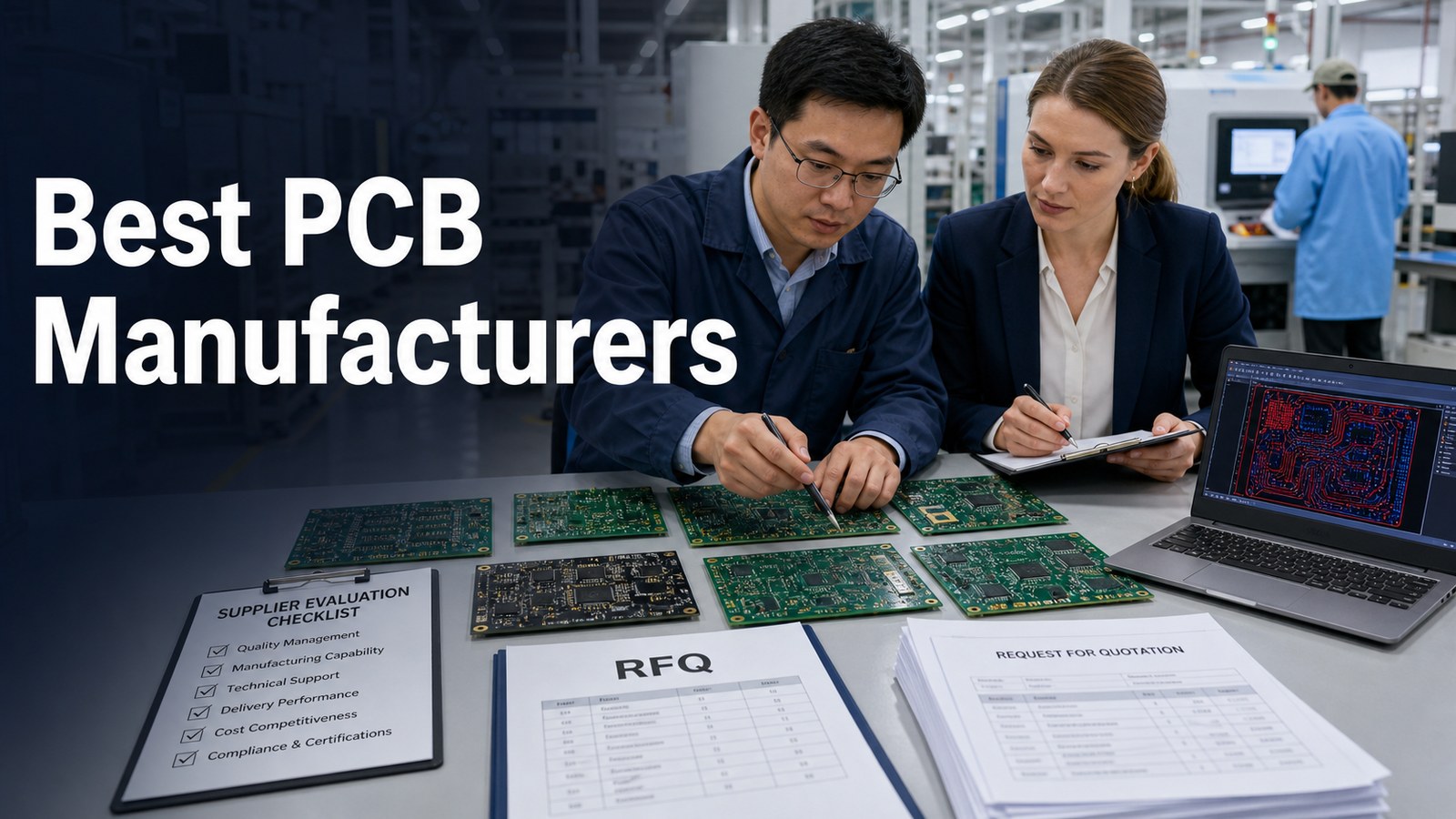
The best PCB manufacturers are not the same for every buyer; the right choice depends on prototype speed, production repeatability, material capability, assembly support, quality control, cost transparency, and how well the supplier reviews your RFQ files. A hobby project, a controlled-impedance industrial board, an LED thermal board, and a turnkey PCBA order can all point to different supplier choices.
This guide is written for engineers and procurement teams comparing PCB manufacturers before sending Gerber files, BOMs, assembly drawings, and production requirements. It explains what the current search results show, how to compare supplier types, and when a buyer may choose bestpcbs instead of only selecting a local or low-cost prototype vendor.
Best PCB Manufacturers: What Buyers Should Compare First
Buyers should compare PCB manufacturers by project fit before comparing price. The most useful supplier is the one that can handle the board technology, order stage, quality risk, assembly scope, and communication requirements of the project.
| Comparison point | Why it matters | What to ask |
|---|---|---|
| Project stage | Prototype and production need different controls | Can the supplier support prototype, pilot, and repeat orders? |
| Board type | FR-4, MCPCB, ceramic, flex, HDI, and heavy copper need different process routes | Which board types are actually supported for this design? |
| Assembly scope | PCBA adds BOM, CPL, sourcing, soldering, and test risk | Can fabrication and assembly files be reviewed together? |
| Quality checks | Inspection should match board complexity and application risk | What testing or inspection is included or optional? |
What the Current Top Results Tell Buyers
The current search results show that buyers want a mix of recommendations, forums, comparison tools, manufacturer pages, and supplier lists. This is not a single-intent query. Some searchers want the cheapest hobby prototype board. Others want a supplier for production, PCBA, or special board requirements.
Representative top results include Reddit and Arduino forum discussions, JLCPCB, EEVblog’s manufacturer wiki, PCBShopper, PCB Unlimited, supplier list articles, and video content. This means a useful page should not simply repeat a company list. It should explain how to choose the right manufacturer by use case, files, risk, and buying stage.
Top PCB Manufacturer Types in the Market
The market includes several different PCB manufacturer types, and each type serves a different buyer problem. A fast online prototype supplier can be excellent for early boards, while an engineering-supported manufacturer may be better for complex materials, PCBA, or production planning.
| Supplier type | Typical strength | Possible limitation |
|---|---|---|
| Online prototype platforms | Fast quote, low-friction upload, low-volume boards | May be less suitable for complex review or special process questions |
| Local or regional manufacturers | Local communication, proximity, compliance or domestic sourcing needs | Cost, capability, and capacity can vary widely |
| Turnkey PCBA suppliers | Fabrication, BOM sourcing, assembly, and testing in one flow | Need a complete BOM, CPL, and assembly drawing for accurate quoting |
| Special PCB manufacturers | MCPCB, ceramic, flex, rigid-flex, HDI, heavy copper, or thermal boards | Exact capability must be confirmed against files and drawings |
Prototype PCB Manufacturers vs Production PCB Manufacturers
A prototype-focused PCB manufacturer is not always the best production supplier, and a production supplier is not always the fastest prototype option. Buyers should decide whether the current order is meant to validate a design, build a pilot batch, or support repeatable production.
Prototype work rewards fast file review, quick quote response, and flexible engineering feedback. Production work rewards stable material control, repeatable process planning, incoming material review, test definition, packaging, and change control. If the same supplier can support both stages, ask how prototype learnings are transferred into production planning.
PCB Fabrication, PCBA and Turnkey Sourcing
Buyers comparing PCB manufacturers should separate bare-board fabrication from PCBA and turnkey sourcing. Bare PCB fabrication focuses on the board itself. PCBA adds component sourcing, placement, soldering, inspection, and testing.
If your project needs a finished assembled board, compare suppliers by how they handle Gerber or ODB++, BOM, CPL, assembly drawings, polarity, test requirements, and approved alternates. The bestpcbs PCBA service is a relevant internal path when buyers want fabrication and assembly support in one procurement flow.
Cost, Lead Time and Hidden Quote Assumptions
PCB quotes can look very different because suppliers make different assumptions about material, copper, surface finish, testing, component sourcing, and delivery. A low number is not always a lower total project cost if important requirements are missing from the quote.
- Check whether the quote includes bare PCB only or assembly as well.
- Confirm material, layer count, copper, finish, thickness, and impedance assumptions.
- Ask whether testing, programming, packaging, and special inspection are included.
- For PCBA, ask whether BOM sourcing, alternates, and shortages are already considered.
For cost-specific planning, use the custom PCB cost guide together with the RFQ checklist below.
Quality Control and Testing Questions
A good PCB manufacturer should explain what inspection and testing are appropriate for the board, not just say that quality is controlled. The right checks depend on board type, density, component package, application risk, and buyer requirements.
Ask about bare-board electrical testing, AOI, visual inspection, X-ray where hidden joints matter, functional testing when the buyer provides requirements, and how nonconforming findings are handled. For assembled projects, quality planning should connect PCB fabrication and PCBA inspection instead of treating them as separate steps.
Materials and Special PCB Capability
Special PCB capability matters when the project involves heat, high frequency, high current, tight mechanical limits, or flexible movement. General FR-4 manufacturers can be a good fit for standard work, but special applications may require MCPCB, ceramic PCB, high Tg material, HDI, flex, rigid-flex, or heavy copper.
Bestpcbs has internal product references for metal core PCB, ceramic PCB, SinkPAD-style thermal paths, PCBA, and other board types. Exact limits should always be confirmed from the supplied files and capability tables before production.
When to Choose a Local PCB Manufacturer
A local PCB manufacturer can be the better choice when domestic sourcing, in-person visits, local compliance, or very short local logistics are hard requirements. Some projects require local manufacturing because of customer policy, regulated sourcing, or time-sensitive engineering access.
Even then, buyers should compare capability, quote clarity, test coverage, and communication quality. Local does not automatically mean better for every board. It means the local factor has real value for that project.
When to Consider an Overseas PCB Manufacturer
An overseas PCB manufacturer can be a practical choice when the project values cost control, material options, scalable production, PCBA support, or special board experience more than local proximity. For many commercial electronics projects, buyers use overseas suppliers when the files are clear and the supplier can communicate engineering questions quickly.
Bestpcbs should not be presented as a local US factory. It can be considered when buyers need engineering review, PCB fabrication, PCBA, material discussion, cost planning, and RFQ support for projects that do not require domestic-only manufacturing.
Why Buyers May Consider bestpcbs
Buyers may consider bestpcbs when they need PCB fabrication, PCBA support, component sourcing discussion, and special board review in one procurement path. The fit is strongest when the buyer can provide clear files and wants supplier feedback before production.
Relevant internal paths include the PCB manufacturing information page, PCBA service, and component sourcing service. These pages should help buyers move from general supplier comparison into a specific RFQ discussion.
RFQ Checklist for Comparing PCB Manufacturers
The best comparison starts with the same complete RFQ package sent to each supplier. If each manufacturer receives different information, the quotes will not be comparable.
- Gerber or ODB++ files and drill data
- Stackup, material, copper, board thickness, finish, and impedance requirements
- Quantity for prototype, pilot, and production
- BOM, approved alternates, and sourcing rules if assembly is needed
- CPL / pick-and-place file and assembly drawing
- Testing, programming, inspection, packaging, and delivery requirements
- Any application risks such as heat, vibration, voltage, current, or size limits
Common Mistakes When Choosing a PCB Manufacturer
The most common mistake is choosing from a list of famous names without matching the supplier to the actual board and buying stage. A supplier can be strong in one use case and weak in another.
- Choosing only the lowest unit price without checking assumptions.
- Using a hobby prototype supplier for a board that needs special material review.
- Ignoring assembly, sourcing, and test requirements until after PCB fabrication.
- Assuming local suppliers are always better, or assuming overseas suppliers are always cheaper after all risk is included.
- Not sending the same RFQ package to each manufacturer.
Frequently Asked Questions
Who are the best PCB manufacturers?
The best PCB manufacturers depend on the project. A hobby prototype may fit an online low-volume platform, while a production PCBA project may need a supplier that can review fabrication files, BOM, CPL, assembly drawings, sourcing, testing, and repeat production needs.
Is the cheapest PCB manufacturer the best choice?
Not always. Low price is useful only when the quote includes the same material, finish, tolerances, inspection, sourcing assumptions, and delivery requirements. Missing assumptions can create rework or delays.
Should I choose a local or overseas PCB manufacturer?
Choose local when domestic sourcing, compliance, or in-person access is required. Consider overseas suppliers when the project allows global sourcing and needs cost control, scalable production, special materials, PCBA, or broader manufacturing support.
How do I compare PCB manufacturers fairly?
Send the same complete RFQ package to each supplier and compare capability, price assumptions, lead time, inspection, communication, BOM support, and how quickly they identify file or design risks.
Can one supplier handle PCB manufacturing and assembly?
Yes, if the supplier can review fabrication files, BOM, CPL, assembly drawings, component sourcing, soldering, and testing together. This is often useful for turnkey PCBA projects.
Send a PCB Manufacturer Comparison RFQ
If you are comparing PCB manufacturers, send your Gerber or ODB++ files, BOM, CPL, quantity, material, finish, assembly drawing, testing requirements, and target delivery plan to the Best Technology / bestpcbs engineering team at sales@bestpcbs.com. The team can review the files, identify cost and manufacturing questions, and help you decide whether bestpcbs is a practical fit for prototype, PCBA, special board, or production sourcing.
You may also like


Tags: PCB Manufacturers, PCB Procurement, PCB Supplier Selection