PCB manufacturing PCB manufacturing
Home > Blog

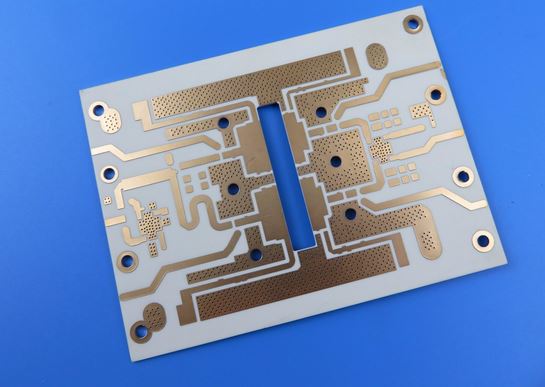
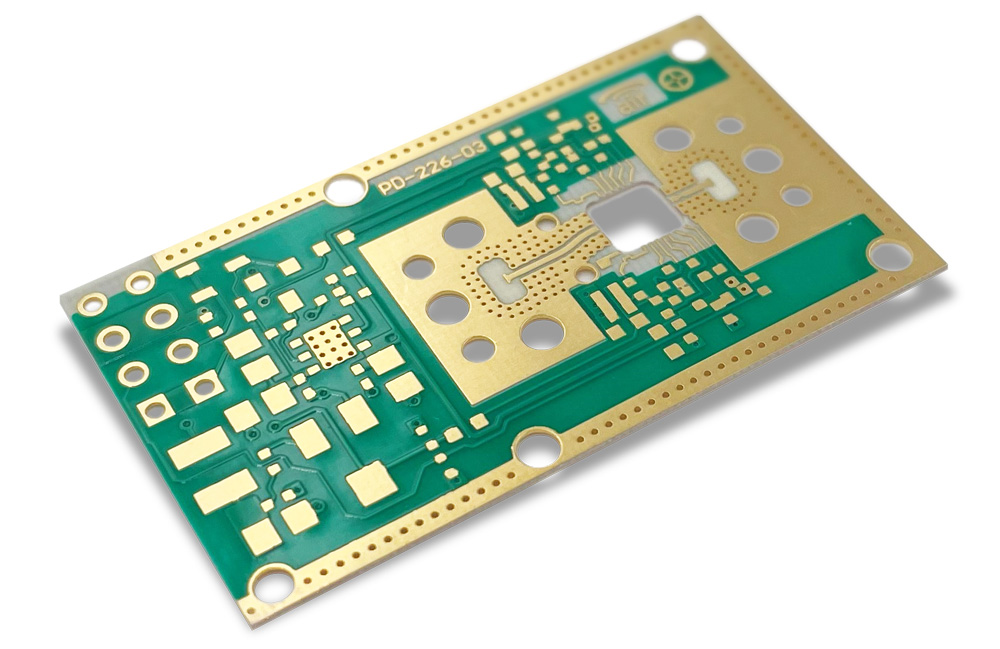
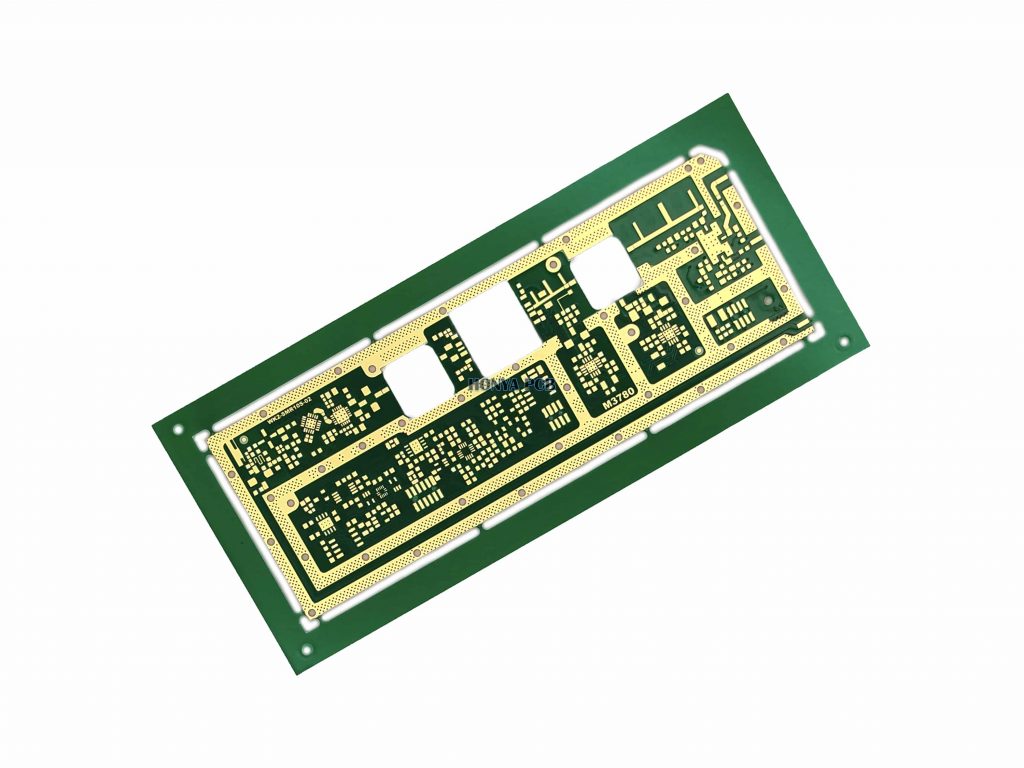
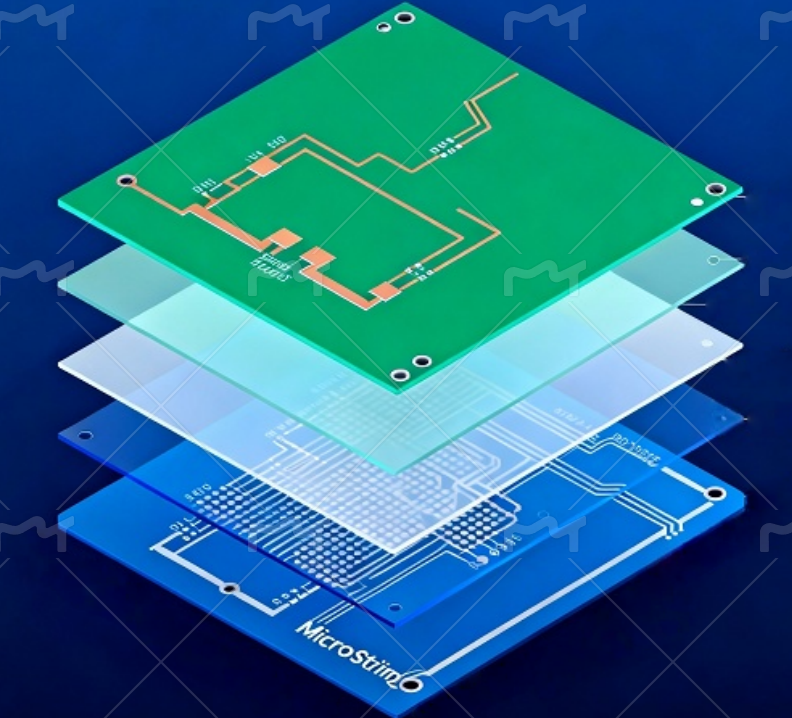
High Dielectric PCB Material Properties & Selection Guide

October 8th, 2025

Why choose high dielectric PCB material? Let’s discover its definition, material list and properties, benefits, selection guide, cost and recommend material supplier through this blog.

Are you troubled with these problems?

  • Is high-frequency signal instability plaguing your designs? Could PCB dielectric constant fluctuations be causing impedance mismatch?
  • Struggling with cost containment? Has the price surge of high-Dk materials disrupted your inventory planning?
  • Is sample testing taking too long? Can you receive small-batch verification materials within 72 hours?

As a high dielectric PCB material supplier, EBest Circuit (Best Technology) can provide you service and solutions:

  • Precise Dk/Df parameter matching: Full Rogers/Taconic inventory with 24-hour parameter traceability to eliminate design validation discrepancies.
  • Price volatility buffer: Long-term agreements lock in costs, with off-season stock support and peak-season priority allocation.
  • Sample readiness: 72-hour rapid slicing and delivery with batch-specific COA reports to accelerate design iterations.

Welcome to contact us if you have any inquiry for high dielectric PCB materials: sales@bestpcbs.com.

What is High Dielectric PCB Material?

High Dielectric PCB Material (High Dk PCB) refers to specialized substrate materials engineered for high-frequency circuit applications (typically >1 GHz), characterized by two core attributes: high dielectric constant (Dk > 10) to enable compact signal transmission structures, and low dielectric loss (Df < 0.01) to minimize signal attenuation.

These materials are typically formulated using polytetrafluoroethylene (PTFE)-ceramic composites, hydrocarbon resins, or modified epoxy resins, with ceramic powders (such as barium titanate) incorporated to enhance dielectric performance. Such materials are particularly suitable for applications requiring miniaturization and high-frequency stability, including millimeter-wave radar systems and 5G base stations, where both compact design and signal integrity are critical.

What is High Dielectric PCB Material?

High Dielectric Constant PCB Material List & Properties

Material ModelDielectric Constant (Dk)Dielectric Loss (Df)Thermal Conductivity [W/(m路K)]Thermal Stability (掳C)PropertiesApplication
Rogers 4350B3.48卤0.050.0037@10GHz0.69280Low loss, excellent high-frequency stability, glass fiber reinforced5G base station antennas, mmWave radar
Taconic RF-353.5卤0.050.0023@10GHz0.7260Ultra-low loss, PTFE substrate, ideal for high-frequency transmissionSatellite communications, RF front-end modules
Isola I-SPEED3.3-3.50.0025@10GHz0.45230Low-profile design, precise impedance control, suitable for multi-layer stackingHigh-speed server backplanes, optical modules
Nelco N4000-134.0卤0.20.012@10GHz0.35200Balanced high Dk and cost, suitable for mid-band applicationsAutomotive radar, consumer electronics
Mitsubishi M66.0卤0.50.015@10GHz0.3180High Dk enables miniaturization, but higher lossMiniaturized antennas, IoT devices
Arlon AD350A3.5卤0.10.0028@10GHz0.68290High-temperature PTFE material for extreme environmentsAerospace electronics, military equipment

Why Choose High Dielectric PCB Material for High Speed Applications?

Reasons why choose high dielectric PCB material for high speed applications:

  • Signal Integrity Boost: Stable Dk minimizes phase distortion/impedance mismatch in 10GHz+ scenarios, preventing signal reflection-induced eye closure.
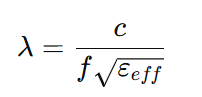
  • Size Optimization: Enables shorter traces (位 鈭 1/鈭欴k) for compact designs like 5G mmWave arrays, reducing layer count and cost.
  • Crosstalk/EMI Reduction: Enhanced field confinement reduces adjacent trace coupling, with low Df (<0.005) mitigating 77GHz automotive radar crosstalk.
  • Thermal Stability: Ceramic-filled variants (e.g., MEGTRON6) maintain Dk stability <卤2% across -40掳C~125掳C, critical for base station reliability.
  • High-Frequency Adaptability: Tunable Dk (2.2鈥10.4) supports 24GHz/60GHz radar and satellite comms, avoiding FR-4 resonance defects.
  • Power Efficiency: Low Df reduces heat generation, improving PA efficiency for 56Gbps+ SerDes in data centers.
  • Design Simplification: Stable Dk enables precise impedance calculations (e.g., 50惟 lines), cutting simulation-to-production cycles for optical modules.
Why Choose High Dielectric PCB Material for High Speed Applications?

How to Choose PCB Dielectric Materials for High Speed Applications?

High Dielectric PCB Material Selection Guide for High Speed Applications:

1. Electrical Performance Key Parameters

Dielectric Constant (Dk)

  • Low Dk Priority: Signal speed is inversely proportional to Dk. High-frequency scenarios require Dk 鈮 3.5; millimeter-wave (e.g., 28GHz) applications recommend Dk 鈮 2.2 (e.g., Taconic TLY-5, Dk=2.2卤0.02@10GHz).
  • Frequency Stability: Dk fluctuation 鈮5% across frequencies ensures impedance matching accuracy (e.g., Rogers RO4350B maintains Dk=3.48卤0.03 from 1-10GHz).

Loss Tangent (Df)

  • Ultra-Low Df Dominates: Df directly determines signal attenuation. Millimeter-wave applications require Df 鈮 0.002 (PTFE substrate, Df=0.001); 5G base stations recommend Df 鈮 0.0035 to avoid 25Gbps+ signal degradation.
  • Dispersion Control: Dk/Df variation 鈮5% at high frequencies minimizes signal distortion.

2. Thermal-Mechanical & Reliability Requirements

Thermal Performance

  • High Glass Transition Temperature (Tg 鈮 220掳C): Compatible with lead-free soldering (e.g., RO4350B Tg=280掳C), preventing delamination.
  • Low Coefficient of Thermal Expansion (CTE 鈮 15ppm/掳C): Matches copper foil to reduce thermal cycle stress (e.g., ceramic-filled PTFE CTE=12ppm/掳C).

Moisture Absorption & Thermal Conductivity

  • Low Moisture Absorption (鈮0.01%): Moisture increases Dk/Df (FR4 Dk rises from 4.5 to 5.2 post-absorption); PTFE substrates absorb <0.01%.
  • High Thermal Conductivity (鈮1W/m路K): Metal-core boards (e.g., aluminum) or thermal via arrays (via diameter 鈮0.3mm) enhance heat dissipation in high-power scenarios.

3. Scenario-Based Material Recommendations

Application ScenarioRecommended MaterialCore ParametersTypical Use Cases
5G Millimeter Wave (24-40GHz)Taconic TLY-5/RO3003Dk=2.2, Df=0.001, Tg=280掳CBase station antennas, radar
High-Speed Digital (25G+)Panasonic Megtron 7Dk=3.4, Df=0.002, CTE=13ppm400G Ethernet, AI servers
Satellite Communication (Ka/Ku-band)Ceramic-filled PTFEDk=2.1, Df=0.001, moisture absorption 0.01%Low-earth-orbit satellite payloads
Automotive Electronics (ADAS)Shengyi S7439 (Domestic)Dk=3.8, Df=0.004, Tg=200掳CDomain controllers, LiDAR
Consumer High-Frequency (5G Phones)Rogers RO4350BDk=3.48, Df=0.0037, process-friendly5G modules, WiFi 6 routers

4. Design Collaboration & Process Optimization

Impedance Control

  • Simulation Verification: Use Polar SI9000 or ADS tools to calculate trace width/spacing based on material Dk, ensuring 50惟卤10% impedance matching.
  • Differential Pair Design: Spacing tolerance 鈮5% reduces crosstalk; differential impedance targets 100惟卤10%.

Stack-Up & Thermal Management

  • Hybrid Laminate: High-frequency signal layers use premium materials (e.g., RO4350B), while inner power/ground planes use FR4 to balance cost/performance.
  • Thermal Solutions: Metal-core boards + high-frequency dielectric layers, paired with thermal vias (diameter 鈮0.3mm) for efficient heat dissipation.

Process Compatibility

  • Copper Foil Selection: Very-low-profile (VLP) copper (roughness 鈮2渭m) for high-frequency signals minimizes skin-effect losses.
  • Drilling & Plating: Laser-drilled microvias (鈮0.15mm) with electroplated fill avoid burrs and reflections; hole wall roughness 鈮20渭m.

5. Supply Chain & Cost Considerations

  • Domestic Material Alternatives: Shengyi S7G series offers Df 鈮0.004 at 10GHz, 30% lower cost than imports, suitable for mid-high frequency applications.
  • Lead Time Management: High-frequency substrates require 3-6 months advance procurement; RO4350B has stable inventory, while PTFE needs custom production (8-12 weeks).
  • Environmental Compliance: RoHS and halogen-free compliance; 鈮20% recycled content aligns with sustainability trends (e.g., ISO 14001-certified materials).
How to Choose PCB Dielectric Materials for High Speed Applications?

How Much Does High Dielectric PCB Material Cost?

Material TypePrice Range (USD)Representative Model
Standard FR45-8IS410/IT180A
Modified Epoxy Resin15-25Nelco N4000-13
Ceramic Filled Substrate40-70Rogers RO4350B
PTFE High Frequency Material80-180Rogers RT/duroid 6002
Special Composite Material200-350Taconic RF-35A2 (Copper included)

Why Choose EBest Circuit (Best Technology) as High Dielectric PCB Material Supplier?

Reasons why choose us as high dielectric PCB material supplier:

  • Material Performance Validation Package: Third-party certified dielectric/loss factor reports ensure precise parameter matching with design specs, eliminating guesswork in high-frequency PCB development.
  • Eco-Compliance Solutions: RoHS/REACH dual-certified substrates enable seamless EU/NA market entry while boosting green brand value through regulatory compliance.
  • Cost Optimization Algorithms: Proprietary stack-up design reduces BOM costs by 10-18% without compromising performance, maximizing profit margins.
  • Failure Analysis Center: SEM/X-ray labs cut pilot production yield loss by 15% through root-cause diagnosis, minimizing trial costs.
  • RF Application Database: 3000+ proven RF module designs provide turnkey reference from material selection to circuit layout, accelerating time-to-market.
  • 24/7 Technical Support: 4h response/24h solution delivery by senior engineers resolves material application challenges, ensuring project continuity.
  • Dielectric Constant Calibration: Precision tuning of dielectric properties for 5G/mmWave applications achieves 20% signal loss reduction, enhancing product competitiveness.
  • Global Logistics Network: 48-hour rapid prototyping delivery supported by strategic inventory minimizes R&D cycle delays.
Why Choose EBest Circuit (Best Technology) as High Dielectric PCB Material Supplier?

How to Get a Quote for High Dielectric PCB Material?

High-Dielectric PCB Material Quotation Request Checklist

1. Basic Technical Parameters

  • Dielectric Constant (Dk) Range: Specify exact range (e.g., Dk=3.0卤0.05)
  • Loss Tangent (Df) Requirement: e.g., Df鈮0.003@10GHz
  • Substrate Model: Include brand/model (e.g., Rogers RO4350B, Taconic RF-35)

2. Structural Design Files

  • Laminate Structure Diagram: Indicate copper thickness (e.g., 1oz/2oz) and dielectric layer thickness (mm/mil)
  • Stack-Up Scheme: For multi-layer boards, provide layer sequence (e.g., PP+Core combination)

3. Process Requirements

  • Surface Finish: Specify ENIG, Immersion Silver, etc.
  • Special Processes: Laser drilling, blind/buried vias, impedance control tolerance (e.g., 卤5%)

4. Quantity & Delivery

  • Estimated Annual Volume: Phased quantities (e.g., initial order 100銕, subsequent monthly 50銕)
  • Lead Time Requirement: Note urgency and acceptance of expedited fees

5. Certifications & Compliance

  • Industry Certifications: UL Certification, IPC-4101 Standard, etc.
  • Environmental Standards: RoHS/Halogen-free declaration

Welcome to contact us if you have any request for high Dk PCB material: sales@bestpcbs.com.

You may also like

4-layer PCB for UHF RFID Application| EBest Circuit (Best Technology)

October 7th, 2025

Why choose 4-layer PCB for UHF RFID applications? Let’s explore material selection, design guide, impedance control requirements, RF interference mitigation, and cost-performance optimization for robust UHF RFID designs.

Are you troubled with these problems?

  • Is signal attenuation killing your UHF RFID read range due to impedance mismatch?
  • Does RF interference from digital circuits sabotage your antenna performance?
  • Struggling to balance high-frequency stability and cost? Tired of 2-layer boards falling short?

As a professional 4- layer PCB manufacturer, EBest Circuit (Best Technology) can provide you service and solutions:

  • Precision 50惟 impedance control with 4-layer stackup 鈥 ensures 860-960MHz full-band match, boosting read range by 30%+.
  • Dedicated RF layer + ground plane shielding 鈥 cuts crosstalk by 50%, maximizing antenna efficiency without compromise.
  • Cost-effective 4-layer optimization 鈥 reduces via loss by 20% vs 6-layer boards, delivering pro-grade performance at budget-friendly rates.

Welcome to contact us if you have any request for 4-layer PCB: sales@bestpcbs.com.

Why Choose 4-Layer PCB for UHF RFID Application?

Reasons why choose 4-layer PCB for UHF RFID application:

  • Cost-Performance Balance: 4-layer PCBs meet UHF band (860-960MHz) signal integrity requirements at significantly lower costs compared to 6+ layer boards, ideal for mass commercial deployment.
  • Optimized Signal Return Path: The “Signal-GND-Power-Signal” stackup provides a low-impedance return path via the ground plane, minimizing signal crosstalk and EMI radiation while enhancing noise immunity.
  • Precise Impedance Control: Interlayer dielectric structure between power/ground planes enables accurate 50惟 characteristic impedance tuning (e.g., adjustable microstrip widths), ensuring efficient antenna-chip impedance matching.
  • Adequate Routing Space: Four layers offer sufficient space for antenna feedlines, matching networks, and filter circuits, avoiding signal interference issues common in 2-layer designs due to space constraints.
  • Mature Manufacturing Process: High production yield and standardized testing procedures make 4-layer PCBs cost-effective for volume production, supporting surface finishes like HASL/ENIG to balance cost and reliability.
  • Thermal & Power Integrity: The embedded power layer integrates decoupling capacitor arrays, forming a low-impedance power network with the ground plane to reduce voltage ripple and suppress high-frequency noise.
  • Regulatory Compliance: The structure simplifies CE/FCC certification by meeting radiation power limits (e.g., EIRP 鈮3.2W) and spectrum compliance, avoiding costly rework due to regulatory non-conformance.
Why Choose 4-Layer PCB for UHF RFID Application?

How to Choose Material for 4-Layer UHF RFID PCBs?

Below is a material selection guide for 4-layer UHF RFID PCBs:

1. Prioritize High-Frequency Performance: Select substrates with low dielectric constant (Dk 鈮 3.9) and low loss tangent (Df 鈮 0.01), such as RO4003C or Taconic RF-35. For UHF bands (860-960MHz), low Dk/Df minimizes signal attenuation, directly enhancing RFID tag read range and sensitivity to boost client product performance.

2. Ensure Precise Impedance Control: Match characteristic impedance (typically 50惟) strictly. Use copper foil with uniform thickness (e.g., 1/2oz) and substrates with thickness tolerance 鈮 卤5%. Combined with microstrip/coplanar waveguide designs, this ensures signal integrity, avoids reflections/crosstalk, and raises first-pass design validation rates for engineers.

3. Adapt Thermal Management: Choose high-Tg (鈮170掳C) and high-thermal-conductivity (鈮0.8W/m路K) materials like FR4-Tg180 or I-Tera MT40. These dissipate heat from UHF RFID modules, preventing delamination/joint failures and extending product lifespan in high-temperature environments.

4. Guarantee Mechanical Stability: Match CTE (coefficient of thermal expansion) to copper foil (X/Y-axis 鈮13ppm/掳C) to avoid warping or drilling shifts after lamination. For reflow-soldered PCBs, select shock-resistant materials (e.g., Panasonic M6) to reduce line defects and rework costs.

5. Balance Cost & Process: Select material tiers based on volume: RO4350B for low-volume prototypes (high performance, higher cost), FR4+high-frequency coating (e.g., Taconic TLY-5) for mass production (20-30% cost reduction while maintaining performance), boosting project margins.

6. Ensure Compliance & Eco-Friendliness: Prioritize halogen-free (HF), RoHS/REACH-compliant materials like IT180A. This avoids regulatory delays in global markets and reduces end-of-life recycling costs, aligning with sustainability goals.

7. Secure Supply Chain Reliability: Partner with stable suppliers (such as Rogers) with short lead times (鈮2 weeks). This prevents material shortages from delaying client projects, ensuring production schedule control and inventory risk mitigation.

8. Validate Manufacturability: Coordinate with PCB fabricators early on processing parameters (e.g., lamination temps, drilling settings, copper plating). For PTFE substrates, specialized drills and low-temp press cycles prevent trial-production scrap, shortening development cycles for engineers.

4-Layer PCB Design Guide for UHF RFID Application

A design guide to 4-Layer PCB for UHF RFID application:

1. Layer Stackup Design

  • Structural Selection: Adopt the standard 4-layer structure of “Signal Layer – Ground Plane – Power Plane – Signal Layer” to minimize crosstalk between signal layers through a complete reference plane.
  • Spacing Control: Strictly control the spacing between signal layers and reference planes to 0.15-0.2mm. Outer layer copper thickness 鈮35渭m (1oz), inner layer 鈮18渭m (0.5oz), with layer-to-layer alignment accuracy verified per IPC-4101 standards (鈮ぢ50渭m).
  • Interlayer Coupling Optimization: Short-circuit the ground plane and power plane via metallized via arrays to form a low-impedance coupling network, suppressing interlayer noise coupling.

2. Impedance Control

  • Trace Width Design: Uniformly adopt 50惟 microstrip design across the board. Use PCB manufacturer impedance calculators (e.g., Polar SI9000) to back-calculate trace width with error 鈮ぢ5%.
  • Routing Standards: Prohibit 90掳 right-angle bends; use 135掳 mitered corners or circular arcs to reduce signal reflection loss (鈮0.5dB@900MHz).
  • Differential Signal Handling: For high-speed signals (e.g., SPI, I2C), use differential pair routing with length matching error 鈮5mil and spacing 鈮2脳 trace width. Adjust length errors via serpentine routing to reduce crosstalk to below -40dB.

3. Grounding and Power Integrity

  • Ground Plane Design: Maintain a continuous, unsegmented ground plane. Short-circuit via dense metallized via arrays (spacing 鈮5mm) to form low-impedance return paths, with ground impedance 鈮1惟@100MHz.
  • Ground Via Optimization: Add 鈮4 grounding vias near critical ICs to reduce ground impedance and suppress ground bounce noise.
  • Decoupling Capacitor Layout: Implement a “0.1渭F ceramic capacitor (high-frequency decoupling, distance 鈮3mm) + 10渭F tantalum capacitor (low-frequency energy storage)” combination at power pins. Ensure power plane impedance 鈮1惟@100MHz to avoid power noise interference with sensitive circuits.

4. Antenna Layout Optimization

  • Position Planning: Place antennas on the top/bottom layer edges, away from digital signal traces (spacing 鈮3脳 trace width) to avoid coupling interference.
  • Structural Selection: Use spiral or dipole structures. Adjust gain 鈮3dBi and beamwidth 鈮60掳 via HFSS simulation to ensure coverage of target areas.
  • Metal Environment Adaptation: For proximity to metal surfaces, adopt loop antenna structures. Leverage the ground plane to balance parasitic parameters, with resonant frequency stability error 鈮ぢ10MHz, compliant with ETSI 302 208 standards.

5. EMC Shielding

  • Shielding Design: Install metal shields over critical circuit areas (e.g., RF modules). Integrate common-mode chokes and 蟺-type filters (e.g., FC-L3C) at interfaces to suppress high-frequency noise.
  • EMC Compliance: System-level EMC tests meet CISPR 22 Class B standards, with radiated noise 鈮40dB渭V/m@30MHz-1GHz and conducted emissions 鈮10dB渭V.

6. Signal Integrity and Thermal Management

  • Signal Processing: Use serpentine routing for differential signals to match lengths. Add 22惟 series resistors to critical signals to suppress reflections and reduce overshoot (鈮10%).
  • Thermal Management: For high-power devices (e.g., RF power amplifiers), deploy via arrays (鈮10 vias/cm?) beneath components, connecting to bottom-layer thermal pads. Validate temperature rise 鈮30掳C via ANSYS Icepak thermal simulation to prevent thermal failure.

7. Manufacturing Verification and Testing

Manufacturing Specifications:

  • Execute laser drilling (via diameter 鈮0.2mm), plating uniformity 卤10%, and lamination temperature control 卤2掳C. Use ENIG or OSP surface finishes to ensure soldering reliability.

Testing and Tuning:

  • Measure S-parameters (S11鈮-15dB, S21鈮-3dB) using a network analyzer to confirm antenna resonance within 860-960MHz.
  • Monitor noise floor (鈮-120dBm@1GHz) via spectrum analyzer to optimize filter circuits.
  • Inspect pad integrity and internal defects (e.g., voids, shorts) via AOI/X-ray to ensure manufacturability.
4-Layer PCB Design Guide for UHF RFID Application

      Impedance Control Requirements for 4-Layer UHF RFID PCBs

      Chip Scale Matching

      • Typical input impedance of UHF RFID chips is 50卤10惟 (conjugate matching value). Antenna input impedance must precisely match this value to ensure maximum power transmission efficiency.
      • For example, a design case requires antenna impedance of 50惟卤5% to achieve over 95% power transfer efficiency.

      Layer-to-Layer Impedance Zoning Control

      • Single-ended impedance for signal layers (e.g., Top/Bottom) is typically controlled within 50-75惟, while differential impedance requires 100卤10惟 or 90卤9惟 (specific values adjusted per design requirements).
      • Power/ground layer spacing must be strictly controlled: errors in interlayer dielectric thickness (e.g., FR4 material) 鈮5% directly impact impedance tolerance ranges.

      Transmission Line Geometric Parameter Constraints

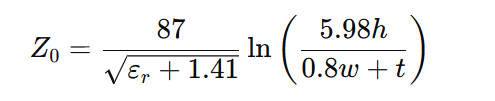
      • Microstrip impedance depends on trace width (W), copper thickness (T), substrate dielectric constant (蔚r鈮4.2-4.5), and interlayer height (H). Typical formula: Z?鈮87/鈭毼祌 脳 ln(5.98H/0.8W+T)
      • Differential pair spacing must satisfy the “3W” rule (W = trace width). For high-frequency scenarios (>1GHz), upgrade to “5W” or minimum 30mil spacing; clock signals require 鈮50mil isolation.

      Impedance Tolerance & Verification Standards

      • Manufacturing specifications must define impedance tolerance (e.g., 卤10%) and verify via TDR (Time-Domain Reflectometry) or 2D/3D field solvers.
      • For instance, a 4-layer HDI PCB case requires 100惟卤10% impedance, with measured values at 100.46惟 meeting design needs.

      Ground & Power Layer Optimization

      • Internal ground layers must form low-impedance return paths with signal layers to minimize signal reflection.
      • Typical 4-layer stackup: Signal-GND-Power-Signal. Ground layer thickness 鈮1oz copper foil, while power layers require decoupling capacitors (e.g., 0.1渭F) to suppress noise.

      Special Structural Design

      • High-frequency scenarios (>3GHz) require blind/buried via designs to reduce interlayer signal loss, with controlled via diameter (e.g., 0.2mm) and spacing (鈮ノ/20).
      • Antenna regions must avoid via interference, using solid fills or adding impedance matching networks (e.g., LC resonant circuits) for frequency tuning.

      How to Reduce RF Interference in 4-Layer UHF RFID PCBs?

      Layer Stackup Optimization

      • Adopt “Signal-GND-Power-Signal” 4-layer stackup. Maintain 3-5mil (0.076-0.127mm) spacing between UHF antenna layer (e.g., Top) and GND plane for effective EM shielding.
      • Keep power-GND spacing at 10-12mil to reduce voltage ripple and suppress high-frequency noise coupling. GND plane must remain intact without gaps to avoid radiation coupling from signal traces crossing gaps.

      Impedance Matching Precision

      • Design 50惟 microstrip feedlines with calculated trace widths (e.g., 3.5mil for FR4 with 蔚r=4.2). Validate impedance continuity via TDR across 200MHz-1GHz with 卤8% tolerance.
      • For coplanar waveguides, set ground-trace gap 鈮2脳 trace width to minimize edge radiation, especially for antenna feed points.

      Zonal Isolation Standards

      • Isolate RFID chip/antenna from digital circuits (e.g., MCU) with 鈮15mm grounded copper-filled barriers. Keep high-speed digital traces (e.g., SPI clocks) 鈮20mm from RFID zones to prevent harmonic coupling.
      • For sensitive analog circuits (e.g., LNA input), implement 5mm-wide trench isolation in GND plane, bridged with 100pF high-frequency capacitors to balance shielding and signal integrity.

      Grounding System Optimization

      • Implement star-hybrid grounding: RFID chip GND pins connect directly to GND plane via 鈮12mil vias (no shared vias with digital ground). Single-point connect power/digital ground at PCB edge with large copper area to minimize ground impedance. Avoid 90掳 cuts in GND plane; use 45掳 chamfers or arcs to reduce skin-effect losses at high frequencies.

      Decoupling Capacitor Placement

      • Use “0.1渭F ceramic + 100pF” parallel decoupling at RFID VCC pins, with 0.1渭F caps 鈮1.5mm from pins (via-in-pad technology) and 100pF caps directly under chip GND.
      • Add 蟺-filter (10nH ferrite inductor + 100pF/10渭F caps) at power entry, using low-loss inductors (e.g., TDK VLF series) to suppress >100MHz noise.

      Shielding & Material Selection

      • Cover sensitive areas (antenna/chip) with 0.5oz copper shielding foil, bonded 360掳 to GND via conductive tape to form continuous Faraday cages.
      • Limit shielding window size to 位/10 (鈮30mm) to prevent signal leakage. Use low-loss FR4 (tan未鈮0.012@1GHz) or Rogers RO4350B (蔚r=3.66, tan未=0.0031) to minimize signal attenuation.

      Routing Precision

      • Route high-speed traces with 45掳 bends (radius 鈮3脳 width) to avoid 90掳 impedance discontinuities. Equalize differential pair lengths to 卤2mil via serpentine routing to suppress common-mode noise.
      • Enhance power-GND capacitance coupling with via spacing 鈮5mm to form a low-impedance power plane.

      Antenna Matching Tuning

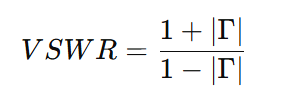
      • Tune UHF antenna with T/蟺-network using network analyzer. Optimize for |S11|鈮-15dB (VSWR鈮1.43) across 860-960MHz.
      • Use C0G capacitors and low-ESR inductors to avoid temperature drift. Maintain 鈮80mm clearance from metal objects and verify radiation efficiency >85% via HFSS simulation.
      How to Reduce RF Interference in 4-Layer UHF RFID PCBs?

      How to Balance Cost and Performance in Custom 4-Layer UHF RFID PCBs?

      Material Selection and Layering

      • Use Rogers RO4350B (loss tangent 0.0037) in high-frequency regions (antennas, feedlines) and FR4 (loss tangent 0.015) in non-critical areas, reducing material costs by 30-50% while ensuring signal integrity.
      • Select copper thickness based on needs: 1oz (35渭m) suffices for UHF band (860MHz-960MHz) current requirements; thicken to 2oz (70渭m) locally for high-current paths to avoid full-board cost increases.

      Stack-up and Impedance Control

      • Standard 4-layer structure: L1 signal layer – L2 ground layer – L3 power layer – L4 signal layer. Maintain 鈮10mil (0.254mm) spacing between ground and power layers to minimize crosstalk and EMI.
      • For 50惟 microstrip design on FR4, use ~3.5mil (0.089mm) trace width and 鈮4mil (0.102mm) spacing, validated against PCB manufacturer鈥檚 minimum capabilities (typically 3mil/3mil).

      Antenna Design and Radiation Efficiency

      • Adopt folded dipole antennas (e.g., Meander lines) to reduce size by 40%, paired with T-matching networks for 50惟 impedance. Simulations show 2dB gain improvement at 920MHz and 15% extended read range.
      • Implement differential feeding or coplanar waveguide (CPW) structures: CPW exhibits ~0.3dB/10cm loss on FR4, outperforming microstrip鈥檚 0.5dB/10cm to reduce feedline losses.

      Manufacturing Process Optimization

      • Choose trace width/spacing supporting 3mil/3mil to prevent yield drops (10% yield loss increases costs by 5-10%).
      • Surface finishes: ENIG for connector areas (high reliability), OSP for large pads (cost-effective).
      • Via design: Use backdrilling or buried/blind vias for density, noting ~20% cost increase for buried vias.

      Testing and Reliability Verification

      • Validate impedance with TDR (卤10% tolerance) for critical paths.
      • Measure antenna gain, radiation patterns, and read range in an anechoic chamber, optimizing against simulation results.
      • Conduct reliability tests: 85鈩/85% RH for high humidity, -40鈩儈125鈩 thermal shock for long-term stability.
      How to Balance Cost and Performance in Custom 4-Layer UHF RFID PCBs?

      FAQs of 4-Layer PCB Design for UHF RFID Application

      Q1: How to achieve impedance matching for UHF RFID antennas in 4-layer PCBs?

      A1: UHF RFID antennas require 50惟 impedance matching via PCB microstrip/stripline design. Calculate trace width/spacing with ground layer in top/bottom signal layers to align antenna-chip impedance. Poor matching increases reflection (VSWR), reducing read range and sensitivity.

      Q2: How to allocate 4-layer PCB stackup for optimal UHF RFID performance?

      A2: Use “Signal-Ground-Power-Signal” or “Signal-Power-Ground-Signal” stackup. Middle layers act as shielding cavity to minimize crosstalk. Top/bottom layers host antennas/critical signals, using adjacent ground to cut losses. Keep ground plane intact to avoid broken return paths affecting high-frequency integrity.

      Q3: How to solve EMI issues in 4-layer UHF RFID PCBs?

      A3: Apply “3W rule” routing, add ground via arrays to reduce interlayer noise. Isolate sensitive traces (e.g., antenna feeds) from noise sources (e.g., switching regulators). Use filter caps (0.1渭F+10nF parallel) to suppress power noise. Shield signals with ground copper on both sides and dense via connections to ground.

      Q4: What are special trace design rules for UHF RFID PCBs?

      A4: Limit trace length 鈮の/10 (位鈮34cm@868MHz) to avoid resonance. Use rounded corners, not 90掳 bends, to cut impedance jumps. Match differential signal length (error 鈮5mil) with controlled impedance. Avoid crossing split ground planes; prefer inner-layer stripline to reduce radiation and via count for lower parasitics.

      Q5: How to validate 4-layer UHF RFID PCB performance?

      A5: Test impedance with TDR, measure S11/S21 via VNA for antenna efficiency. Scan EMI with near-field probes to meet EN 302 208. Verify via real-world read tests (range/success rate). Check hotspots with thermal imaging. Simulate early with ADS/HFSS to predict signal/EMI issues.

      You may also like

      What is high speed board design? High Speed Design Guidelines

      September 16th, 2025

      High speed board design is the process of creating printed circuit boards that handle signals with extremely fast rise times and high data rates. Impedance, crosstalk, and signal reflections become critical factors, so every layout detail matters.

      What is high speed board design? High Speed Design Guidelines

      Unlike standard PCBs, high speed boards require controlled impedance traces, precise layer stack-ups, and low-loss materials. Designers plan the stack, routing, and grounding from the start to maintain clean waveforms and stable timing. The goal is to move large amounts of data quickly while preserving signal integrity and meeting strict electromagnetic compatibility standards.

      Do you have the following questions about high-speed PCB design?

      • What are the consequences of impedance mismatch in high-speed PCB design?
      • What are the effects of close traces in high-speed PCB design?
      • How can a PCB both be affected by and generate interference?
      • How should return current paths be considered in high-speed PCB design?
      • This can cause signal reflections and waveform distortion (such as overshoot and ringing), leading to data errors and timing errors, seriously impacting system stability.
      • This primarily causes crosstalk, which is electromagnetic coupling interference between adjacent signal lines. This can contaminate signal quality, affect impedance, and exacerbate electromagnetic radiation (EMI) issues.
      • High-speed signals on PCBs are inherently high-frequency noise sources that can emit electromagnetic interference (EMI) through radiation or conduction. Furthermore, external electromagnetic fields can couple onto PCB traces, making them receptors for interference.
      • For high-speed signals, a complete reference plane (ground or power plane) must be provided close to the signal lines to ensure a continuous, low-inductance return path and avoid plane segmentation. When changing layers, ground vias should be added next to signal vias to provide a path for return current.

      BEST Technology ensures high-frequency, high-speed performance and reliability of PCBs through comprehensive material, design, and process control.

      We test material Dk values 鈥嬧媡o provide scientific stackup and linewidth solutions, and rigorously control the production process to ensure impedance matching.

      We also provide Design for Factoring (DFM) analysis to proactively mitigate crosstalk and EMI risks, and offer a variety of high-frequency material options to meet EMC requirements.
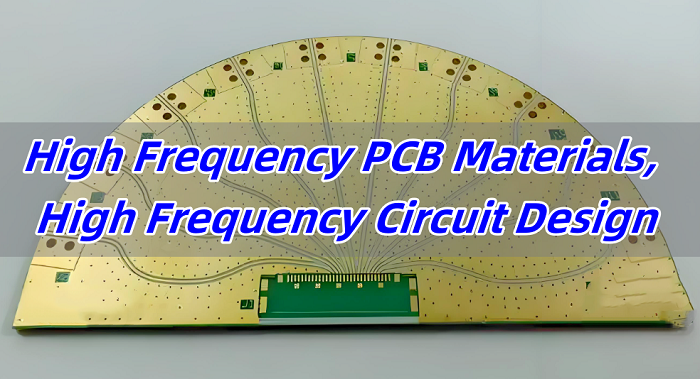
      We also utilize a symmetrical stackup design with strict control over alignment and hole metallization processes to ensure a complete and reliable return path.

      What is a high speed PCB?

      High speed PCBs are designed specifically for high-speed digital circuits. They are primarily optimized for high-frequency signals (typically 100MHz to several GHz) and high data rates (such as PCIe 4.0, which reaches 16Gbps). Their design must address transmission line effects such as signal reflection, crosstalk, and impedance matching.

      High-speed PCBs have the following core features:

      1. Signal Integrity Control:

      • Differential signaling, impedance matching (e.g., 50惟 or 100惟), and shielded grounding techniques are used to reduce signal distortion.
      • Electrical rule-driven routing simultaneously calculates overshoot and crosstalk, outperforming traditional physical rule-driven routing.

      2. Materials and Processing:

      • High-frequency laminates (such as Rogers and Isola FR4 high-speed grades) are used to minimize the frequency variation of dielectric loss (Df) and dielectric constant (Dk).
      • Copper foil roughness must be extremely low (e.g., HVLP type), and routing accuracy must reach micron levels. 鈥屸

      3. Thermal Management and EMC:

      • Multi-layer board design optimizes heat dissipation paths and keeps power and ground planes close together to reduce noise. 鈥屸
      • Verify electromagnetic compatibility using simulation tools (such as Ansys HFSS). 鈥屸

      4. Strict Routing Rules:

      • Shorten critical signal paths (such as clock lines), avoid right-angle routing, and use differential pair routing.
      • Multi-layer board design provides a complete ground plane to reduce electromagnetic interference (EMI).

      5. Power Integrity (PI):

      • Optimize the power distribution network (PDN), reduce power supply noise, and use decoupling capacitors and low-impedance power planes.

      Typical Application Scenarios:

      • 5G 鈥嬧媍ommunications equipment
      • High-speed data converters (ADC/DAC)
      • Servers and high-end computing hardware
      • Radar and RF systems
      What is high speed board design? High Speed Design Guidelines

      What makes high speed boards different from standard PCBS?

      The main differences between high-speed PCBs and standard PCBs (ordinary PCBs) lie in design requirements, material selection, and manufacturing processes. The specific differences are as follows:

      • Design Principles

      High-speed PCBs prioritize signal integrity (SI), electromagnetic compatibility (EMC), and power integrity (PI). They employ differential pair routing and impedance matching techniques to minimize signal loss. Standard PCB design focuses primarily on circuit functionality, with lower requirements for signal integrity and EMI.

      • Material Selection

      High-speed PCBs often utilize substrate materials with low dielectric constant (Dk) and low loss (e.g., FR-4, Rogers), and may use thicker copper foil to increase current carrying capacity. Standard PCBs typically use lower-cost substrates such as FR-2/3 and thinner copper foil.

      • Manufacturing Process

      High-speed PCBs require precise control of trace width and spacing, and employ blind and buried via technology to optimize signal transmission. Standard PCB manufacturing processes are relatively simple, prioritizing a balance between cost and functionality.

      • Stackup Structure

      High-speed PCBs feature multi-layer designs (six or more layers) with integrated ground and power planes to reduce EMI. Standard PCBs typically have two to four layers, and power and ground planes may be incomplete.

      • Performance Requirements

      High-speed PCBs require rigorous testing to verify signal timing performance and prioritize thermal management to maintain stability in high-temperature environments. Standard PCBs have lower requirements for heat dissipation and signal integrity.

      What is high speed PCB design?

      High-speed PCB design is a circuit board design technology designed for high transmission rates and high signal frequencies. It is primarily used in high-speed digital signal transmission scenarios and must address issues such as signal reflection, crosstalk, and electromagnetic interference.

      Through techniques such as impedance matching, differential signal design, and layered routing, signal stability is ensured during transmission, preventing distortion and interference.

      Key Technical Points:

      • Impedance Matching: aligning transmission line impedance with terminal impedance to reduce reflections;
      • Differential Signal Design: utilizing differential pair transmission to reduce crosstalk;
      • Layered Routing: optimizing signal paths through a multi-layer structure to reduce crosstalk;
      • Electromagnetic Compatibility (EMC): minimizing the effects of electromagnetic radiation through shielding and grounding.

      How to follow high speed board design guidelines?

      Follow these steps to avoid common issues and create stable boards.

      • 1. Start With a Clear Schematic

      Keep signal paths short and direct. Identify clocks and other critical nets early. Mark high speed nets clearly for the layout stage.

      • 2. Define the Stack-Up First

      Determine layer sequence, dielectric thickness, and copper weight. Lock these details before routing. Controlled impedance depends on accurate stack-up data.

      • 3. Control Trace Impedance

      Calculate trace width and spacing for each layer. Use microstrip or stripline geometry as required.

      • 4. Keep Return Paths Clean

      Always provide a continuous ground plane. Avoid splits or gaps under high speed traces. A clean return path limits radiation and keeps impedance stable.

      • 5. Minimize Crosstalk

      Separate aggressive signals from sensitive ones. Increase spacing between differential pairs when possible. Route high speed lines over solid reference planes.

      • 6. Reduce Via Count

      Every via adds inductance and reflection. Use them only when needed. If a via is required, back-drill or use blind/buried vias to shorten the stub.

      • 7. Plan Power Delivery

      Place decoupling capacitors close to each IC pin. Use multiple values to handle different frequency ranges. Ensure the power plane is wide and continuous.

      Transitioning between them carefully ensures the design remains stable from concept to production.

      What are the key considerations for designing a high speed PCB?

      What is the frequency of a high-speed PCB?

      The operating frequency range for high-speed PCBs typically starts at 300MHz and can reach tens of GHz. Depending on the application scenario and technical requirements, these frequency bands can be categorized into the following typical bands:

      What is high speed board design? High Speed Design Guidelines
      • 1. High-frequency starting point: 300MHz-1GHz (commonly used in wireless communications, RF modules, and other applications)
      • 2. High-frequency/RF range: Above 1GHz (Wi-Fi, Bluetooth, 5G, and other applications)
      • 3. Microwave band: 300MHz-30GHz (including 5G Sub-6GHz, satellite communications, radar, and other applications)
      • 4. Millimeter-wave band: Above 30GHz (such as 5G indoor millimeter-wave applications)

      What material is used for high speed PCB design?

      Material choice is critical. Standard FR-4 can work up to a point, but its loss and dielectric constant may not stay stable at very high frequencies.

      Popular options include:

      • Rogers laminates with low dielectric loss and tight Dk control.
      • Isola high speed materials for stable performance across temperature.
      • Megtron series for ultra-low loss in 10 Gbps and faster systems.

      When selecting materials, consider cost, availability, and the required frequency range.

      What layer stack-up works for high speed boards?

      High-speed circuit boards typically use a six-layer stackup, a design that balances signal integrity, power management, and electromagnetic shielding requirements. A typical high speed PCB might use:
      • Top signal layer for components and short traces.
      • Ground plane directly beneath for clean return paths.
      • Internal signal layers sandwiched between power and ground.
      • Bottom signal layer for low-speed connections.

      For higher-frequency applications (such as FPGAs and high-end CPUs), eight or more layers may be used to support multiple power domains and complex bus designs.

      How to control EMI in high-speed design?

      Controlling EMI in high-speed designs requires multiple approaches, including device selection, layout optimization, and signal processing.  Careful layout reduces EMI and keeps devices compliant with regulations.

      What is high speed board design? High Speed Design Guidelines

      Here are proven methods:

      • Continuous Ground Planes: Provide a low-impedance return path to reduce loop area.
      • Short Traces: Keep high speed lines as short as possible to limit radiation.
      • Proper Termination: Use series or parallel termination to prevent reflections.
      • Shielding: Place ground pours or metal shields near critical circuits.
      • Differential Pairs: Route balanced differential signals to cancel magnetic fields.

      Combining these strategies lowers emissions and helps pass EMC tests on the first attempt.

      Conclusion:

      EBest Circuit (Best Technology) Co., Ltd. brings nearly two decades of expertise in creating low-loss, controlled-impedance boards for 5G, networking, medical, and advanced consumer electronics. For expert support or to request a quote, contact sales@bestpcbs.com

      You may also like

      High Frequency PCB Board for RFID Readers

      September 15th, 2025

      Why choose high frequency PCB for RFID readers? Let鈥檚 discover its benefits, applications, material selection, design technical parameter, design optimize solutions, recommended PCB manufacturer.

      Are you worried about these problems?

      • How to select high frequency PCB board materials?
      • How to control high frequency PCB board processes?
      • How to balance cost vs lead time of high frequency PCB?

      As a high frequency PCB manufacturer, EBest Circuit (Best Technology) can provide services and solutions:

      • Low-loss Material Supply鈥: Stocked PTFE/Rogers laminates ensure stable dielectric constant (Dk鈮3.0), reducing signal loss by 40%+.
      • Precision Impedance Control鈥:卤0.02mm trace width tolerance maintains 鈮5% impedance variation for flawless signal transmission.
      • Rapid-response Flexible Production鈥: Prototypes in 5-7 days, bulk order lead time shortened by 30% with 15%+ cost optimization.

      Welcome to contact us if you have any inquiry for high-frequency PCB board: sales@bestpcbs.com.

      Why Choose High Frequency PCB for RFID Readers?

      Reasons why choose high frequency PCB for RFID readers:

      • Breakthrough in Reading Distance: Adopting low-loss substrates like Rogers RO4350B reduces signal transmission loss by 40%, enabling UHF-band reading distances exceeding 12 meters, ideal for large-scale logistics and warehouse scanning.
      • Enhanced Anti-Interference Capability: Optimized microstrip layout and multi-layer shielding grounding meet ETSI EN 302 208 standards, improving signal stability by 60% in industrial electromagnetic environments.
      • High-Speed Signal Integrity: Precise 50惟 impedance matching and decoupling capacitor configurations ensure data transmission rates up to 100Mbps, guaranteeing rapid tag response.
      • Precision Manufacturing Process: 0.1mm line/space blind-buried via technology with 卤5% copper plating thickness tolerance minimizes signal loss and enhances system reliability.
      • TCO Optimization Proven: Case studies like DHL show 35% improvement in asset tracking efficiency, 99.2% inventory accuracy, 28% reduction in 5-year maintenance costs, and an 18-month payback period.
      • 5G IoT Compatibility: Supports sub-6GHz bands and millimeter-wave integration, complying with 3GPP Release 17 specifications for future smart logistics and autonomous driving scenarios.
      • Global Standard Compliance: Passes GS1 certification, IEEE 802.11 compatibility tests, and RoHS material requirements, ensuring seamless global market access.
      • Supplier Evaluation Framework: Structured assessment model covering material certification, process capability, testing validation, and case references, providing quantifiable decision-making tools for commercial conversion.
      Why Choose High Frequency PCB for RFID Readers?

      Applications of High Frequency PCB in RFID Readers

      • NFC Payment Terminals
      • Smart Access Control Systems
      • Industrial Sensor Networks
      • Large-scale logistics and warehouse scanning
      • Smart retail shelf management
      • Real-time medical equipment tracking
      • Contactless vehicle passage in transportation
      • Industrial automation production line control
      • Smart city infrastructure monitoring
      • Cold chain logistics temperature tracking

      How to Choose High Frequency PCB Material for RFID Readers?

      1. Three Key Parameters

      • Low Dk (鈮3.6, e.g., Rogers RO4350B Dk=3.48) reduces signal delay; PTFE (Dk=2.1) suits UHF/mmWave for faster transmission.
      • Low Df (鈮0.004, e.g., RO4350B Df=0.0037) minimizes signal loss; PTFE (Df=0.001) ensures 5G/6G signal integrity.
      • High Tg (鈮150掳C, e.g., RO4350B Tg=280掳C) resists heat; PTFE handles -260掳C~260掳C for extreme conditions.

      2. Scenario-Specific Matching

      • UHF (900MHz) uses RO4000 series (low cost, easy processing); 5G/mmWave (24GHz+) selects PTFE (low loss) or ceramic-filled materials (high stability).
      • Humid environments choose PTFE (water absorption 鈮0.02%); high-temperature scenarios use PI (Tg鈮260掳C); anti-metal interference requires multi-layer shielding grounding.

      3. Cost-Process Balance

      • Mid-frequency (鈮10GHz) prefers RO4000 series (40% cheaper than PTFE); high-frequency (鈮10GHz) uses PTFE (superior performance but 3-5x costlier).
      • RO4000 works with FR4 processes (lower equipment investment); PTFE needs specialized tools for precision needs.

      4. EMC Compliance Essentials

      • Optimized microstrip lines + multi-layer shielding (meets ETSI EN 302 208) suppress 900MHz interference; decoupling capacitors near chip pins ensure clean power.
      • Prioritize GS1/IEEE 802.11/RoHS-certified materials; suppliers must provide impedance matching and signal integrity reports.

      5. Validation Loop

      • Test read distance/anti-interference in real scenarios such as logistics, medical to verify performance.
      • Evaluate suppliers鈥 material certifications (e.g., Rogers authorization), process capabilities (blind/buried via yield 鈮98%), and case references for reliable supply chain.
      How to Choose High Frequency PCB Material for RFID Readers?

      High Frequency PCB Board Design Technical Parameter

      Parameter CategorySpecification
      Dielectric Constant (Dk)2.0-3.6 (PTFE substrate down to 2.0-2.2)
      Dissipation Factor (Df)0.0004-0.004 (PTFE down to 0.0004)
      Glass Transition Temperature (Tg)150掳C-280掳C (RO4350B up to 280掳C)
      Coefficient of Thermal Expansion (CTE)Matched with components (avoid thermal stress)
      Water Absorption鈮0.02% (PTFE)
      Impedance Control 50惟 single-ended / 90-100惟 differential (卤3%-卤5% tolerance)
      Trace Width/SpacingMinimum 4mil/4mil (after etching)
      Dielectric Thickness 0.1-0.3mm (microstrip dielectric thickness)
      Copper Foil TypeElectrolytic Copper (ED)/Rolled Annealed Copper (RA)
      EMC DesignShield grounding/stitching vias/differential routing

      How to Design High-Frequency PCBs to Optimize the Reading Distance of RFID Readers?

      1. Antenna Size & Polarization Optimization

      • Size Scaling: 86脳54mm large-size tags achieve 12m read range in industrial scenarios (260% improvement vs 35脳35mm tags), suitable for large object identification like warehouse pallets.
      • Circular Polarization: Spiral/microstrip patch antennas support random tag orientation, improving detection rate from 75% to 98% in logistics sorting.
      • Metal Clearance: Maintain 鈮10cm spacing between antenna and metal objects; optimized layout reduces read range attenuation by 40% in metal-adjacent scenarios.

      2. Low-Loss Material Selection

      • Material Comparison: Rogers RO4350B (Dk=3.48/Df=0.0037) reduces signal attenuation by 40% vs FR4 for UHF; Taconic TLY-5 (Dk=2.2/Df=0.002) excels in millimeter-wave for 5G integration.
      • Dielectric Constant Control: Dk deviation 鈮ぢ0.05 ensures impedance matching precision, minimizing signal reflection loss.
      • Moisture Management: PTFE substrates with 鈮0.02% water absorption require waterproof coatings or low-absorption materials in humid environments.

      3. Stack-Up & Impedance Control

      • 6-Layer Structure: TOP (RF signal)-GND-Inner signal-Power-GND-BOTTOM (mmWave signal) ensures tight coupling between signal layers and ground planes, reducing crosstalk.
      • Microstrip Design: 50惟 single-ended line width matches 0.1-0.3mm dielectric thickness; differential impedance targets 90-100惟.
      • Tolerance Control: Single-ended impedance deviation 鈮ぢ5%, verified via simulation (e.g., Ansys HFSS) and network analyzer calibration.

      4. Ground Plane & Power Integrity

      • Continuous Ground: Via fences (spacing 鈮0.2位) suppress EM leakage; avoid ground plane splitting to maintain signal integrity.
      • Power Decoupling: Parallel 1nF/100nF capacitors reduce power ripple to <50mV; low-noise LDO modules enhance signal purity.
      • Ground Bounce Mitigation: Multi-layer ground planes interconnected via metalized vias create low-impedance return paths, reducing ground noise impact.

      5. Impedance Matching & Dynamic Tuning

      • Smith Chart Matching: LC/蟺-networks achieve 50惟 matching, improving sensitivity by 2-3dB and restoring 鈮3.2m read range in metal environments.
      • Calibration: S-parameter testing ensures tuning accuracy; dynamic tuning algorithms adapt to impedance fluctuations from tag position changes.
      • Anti-Metal Solutions: Ceramic substrates or absorptive adhesive tags with FHSS combat EM interference, maintaining 99% recognition rates on metal surfaces.

      6. Environmental Robustness Enhancements

      • Liquid Compensation: Dielectric constant compensation reduces signal attenuation; phased-array antennas minimize 89% blind spots in liquid container detection.
      • Thermal Stability: Materials with Tg鈮150鈩 (e.g., RO4350B Tg=280鈩) operate in -40鈩儈150鈩 environments, preventing layer separation or performance degradation.
      • Mechanical Optimization: 2oz copper thickness and thermal vias enhance PCB durability against vibration/impact in logistics.

      7. System-Level Dynamic Optimization

      • Power Adaptation: 0.5W-2W dynamic regulation increases tag recognition from 200 to 800 per read, optimizing multi-tag concurrency.
      • Q-Value Anti-Collision: Machine learning predicts optimal read windows, boosting dynamic scene recognition by 40% and reducing missed tags.
      • Thermal Management: High-thermal-conductivity materials (e.g., copper substrates) with thermal vias dissipate heat from high-frequency power loss, ensuring stable operation and extended lifespan.
      How to Design High-Frequency PCBs to Optimize the Reading Distance of RFID Readers?

      Why Choose EBest Circuit (Best Technology) as High Frequency PCB Manufacturer?

      Reasons why choose us as high frequency PCB manufacturer:

      • 19 Years of Expertise: 19-year focus on high-frequency PCBs with 5,000+ validated projects. Unique process knowledge base and failure analysis system reduce defect rates by 60% vs industry average.
      • Quality Certification: ISO9001/IATF16949/ISO13485 certified, make sure that every process passed ISO quality inspection system.
      • 5-7 Days Rapid Prototyping: 5-7 Days prototype delivery for standard high-frequency PCBs; 3-5 Days turnaround for urgent orders. Supports 180+ global regions with 99.2% on-time delivery for urgent R&D needs.
      • Advanced Material: Uses low-loss materials like Rogers RO4350B and Taconic TLY-5 (Dk=2.2-3.48, Df=0.0004-0.0037) with dielectric constant tolerance 鈮ぢ0.02, reducing signal loss by 40% vs FR4.
      • Precision Process Control: High-precision CNC drilling, laser cutting, and automated lines ensure 卤0.01mm line width/spacing and 卤5% impedance matching accuracy for 50惟/75惟 standards.
      • Cost Advantage: Eco-friendly high-frequency materials cut costs by 40%. Tiered pricing: double-layer boards as low as 楼0.8/piece; six-layer boards under 楼220/m虏, 30% cheaper than imports.
      • Reliability Testing: Endures -40掳C to 125掳C thermal cycling, humidity shock, and signal loss optimization. Maintains stability in extreme environments (such as space simulation, industrial radar) with <0.1% error rate.
      • Turnkey Solutions: Full-service support from circuit design and BOM sourcing to PCB assembly. Reduces overall cycle time by 50% with rapid customization response.

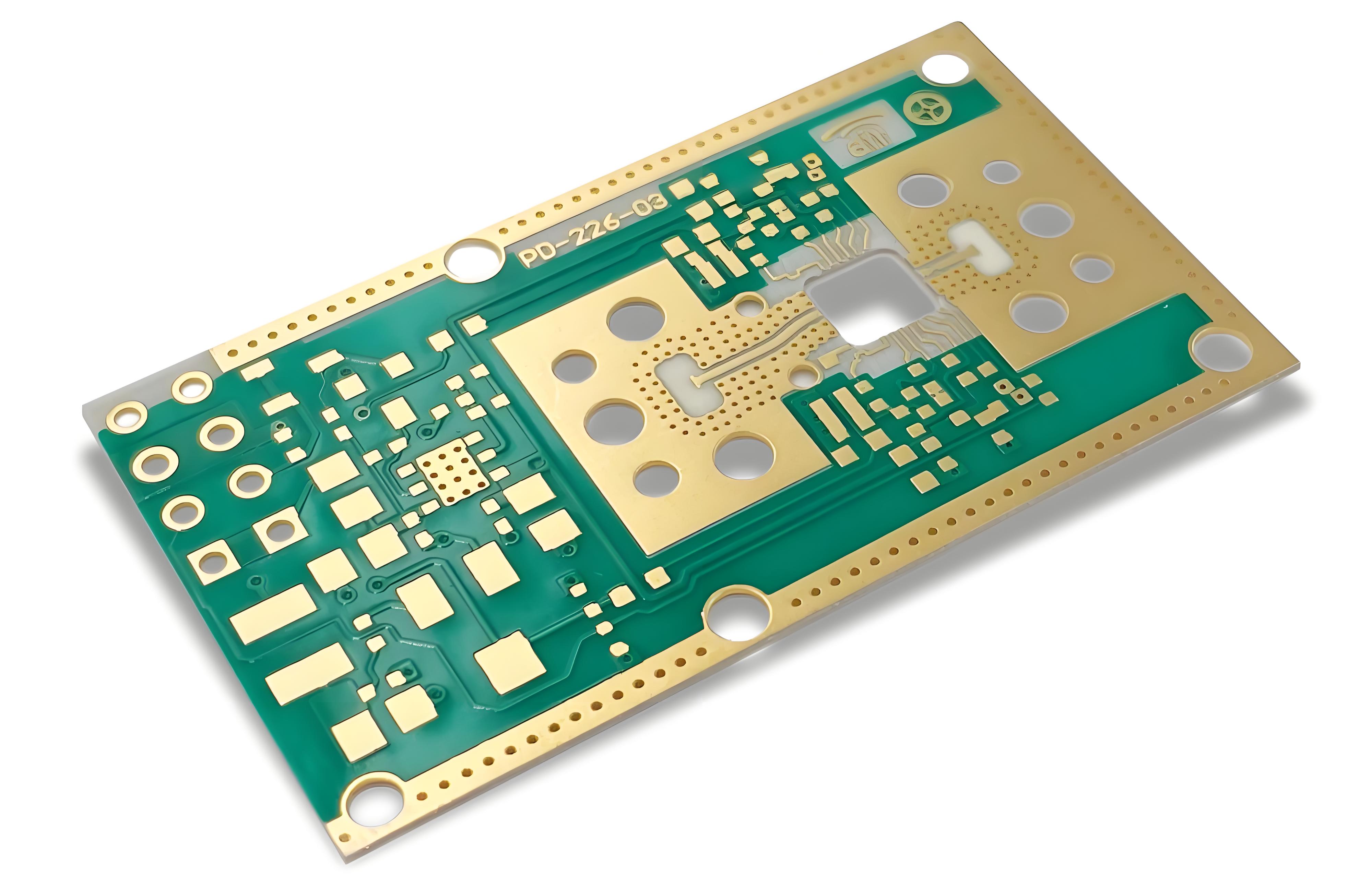
      Here is a photo of high frequency PCB we did before:

      ParameterSpecification
      Substrate ModelRogers RO4350B (Dk=3.48/Df=0.0037), Taconic TLY-5 (Dk=2.2/Df=0.002)
      Layer Structure4-10 layer multilayer board, supports high-frequency + HDI hybrid process
      Size Range50脳50mm to 500脳500mm
      Copper Thickness0.5oz-2oz (2oz recommended for high-power areas)
      Impedance Control50惟卤5% (matches RFID antenna standards)
      Line Width/SpacingMinimum 75渭m/75渭m (high-frequency signal transmission precision)
      Surface FinishENIG (Electroless Nickel Immersion Gold), OSP (Organic Solderability Preservative)
      Special ProcessesBlind/buried vias (depth 鈮6 layers), backdrilled stub 鈮50渭m
      Frequency Range13.56MHz / UHF (860-960MHz)
      Why Choose EBest Circuit (Best Technology) as High Frequency PCB Manufacturer?

      Our High Frequency PCB Capabilities

      Base material:Rogers/Telfon
      Board Thickness:0.5mm~3.0mm(0.02″~0.12″)
      Copper thickness:   0.5 OZ, 1.0 OZ, 2.0 OZ, 3.0 OZ
      Outline:Routing, punching, V-Cut
      Soldermask:White/Black/Blue/Green/Red Oil
      Legend/Silkscreen Color:     Black/White
      Surface finishing:Immersion Gold, HASL, OSP
      Max Panel size: 600*500mm(23.62″*19.68″)
      Packing:Vacuum/Plastic bag
      Samples L/T:7~9 Days
      MP L/T: 8~10 Days

      How to Get a Quote for High-Frequency PCB Project?

      1. Basic Design Files

      • Gerber Files: Include all layers (with drill files), specify version (e.g., RS-274X).
      • Stack-up Diagram: Define dielectric thickness, copper thickness, and material type (e.g., Rogers RO4350B, FR4).
      • Impedance Control: Mark critical signal impedance values (e.g., 50惟卤10%) and corresponding layers/line widths.

      2. Material Specifications

      • Substrate Parameters: Dielectric constant (Dk), loss tangent (Df), Tg value (e.g., PTFE substrates).
      • Copper Foil Type: Electrolytic/rolled copper, surface roughness requirements (e.g., HVLP copper foil).
      • Special Process Needs: Blind/buried vias, laser drilling, high-frequency hybrid stacking.

      3. Electrical & EMC Requirements

      • Signal Frequency Range: e.g., 2.4GHz/5.8GHz, mark sensitive traces (e.g., RF antenna routing).
      • Shielding Design: Metalized via walls or localized shielding cans if required.
      • Voltage/Insulation Standards: e.g., IPC-6012 Class 2/3.

      4. Surface Finish & Acceptance Criteria

      • Surface Treatments: ENIG, Immersion Ag, OSP, etc.
      • Acceptance Standards: IPC-A-600 visual grade, impedance test tolerance (e.g., 卤5%).

      5. Other Key Information

      • Lead Time: Sample/mass production timeline requirements.
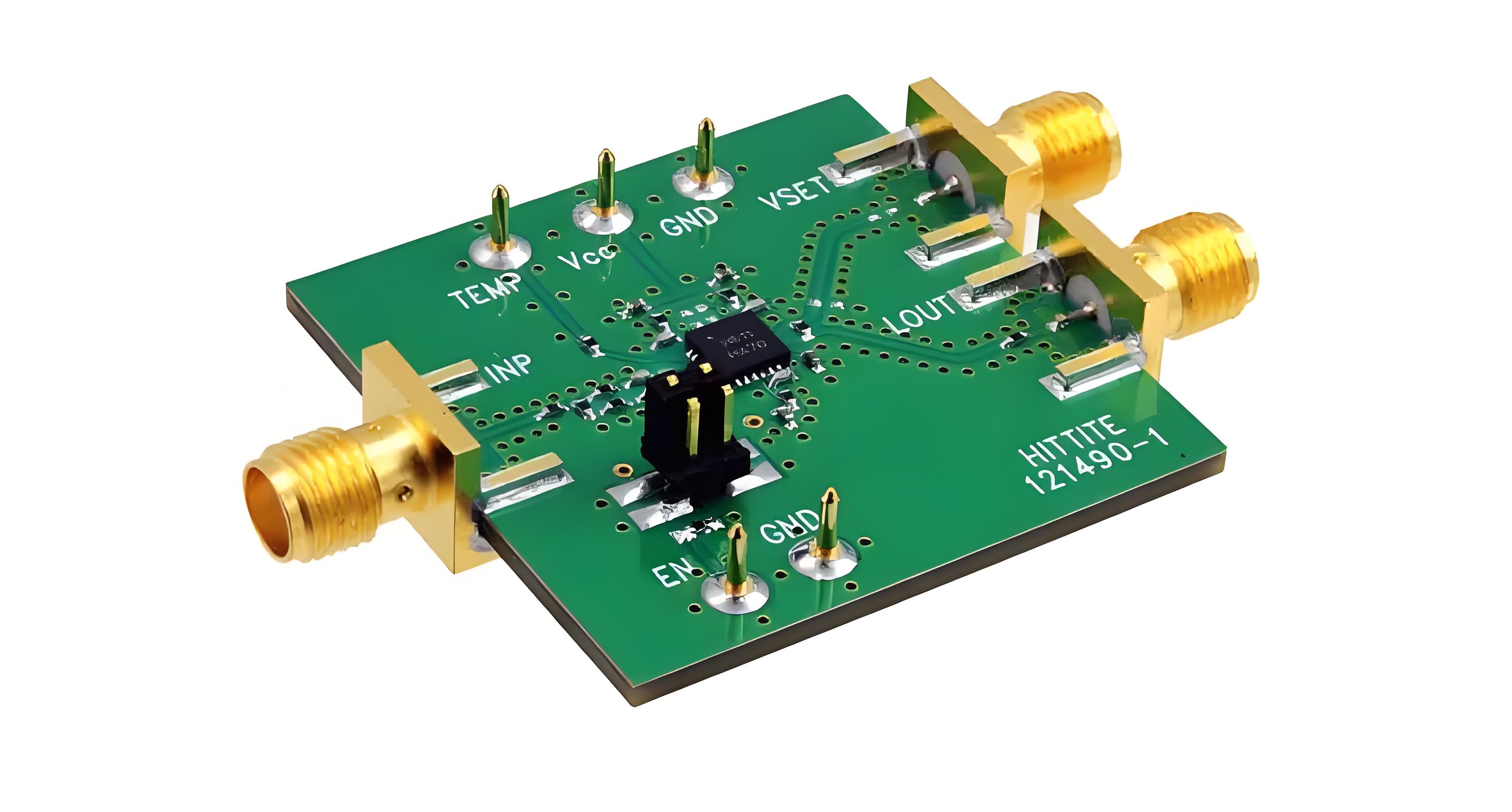
      • Testing Needs: TDR impedance test, RF parameter tests (S-parameters).
      • Additional Files: Design notes (special process remarks), BOM (if SMT required).

      Welcome to contact us if you have any request for high frequency PCB board: sales@bestpcbs.com.

      You may also like

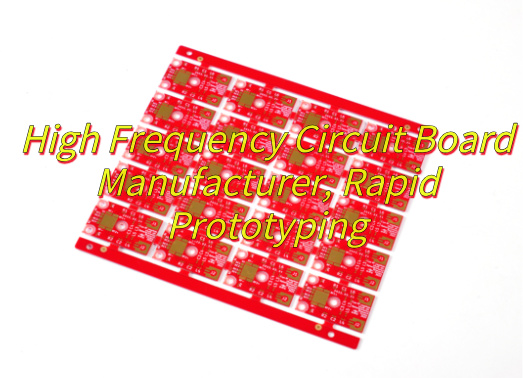
      High Frequency Circuit Board Manufacturer, Rapid Prototyping

      September 11th, 2025

      What is high frequency circuit board? Let鈥檚 discover its material, technical parameter, design guideline, production processes and recommended manufacturer.

      Are you troubled with these issues?

      • Is phase distortion caused by unstable Dk/Df in your high-frequency design?
      • How to reduce HF material costs without compromising performance?
      • How to ensure material consistency from prototype to mass production?

      As a high frequency PCB manufacturer, EBest Circuit (Best Technology) can provide you service and solution:

      • Full-band Dk卤0.02 Control: Phase error <1掳 across 24-77GHz, eliminating signal distortion.
      • Custom Ceramic Formulation: 40% lower loss, 50% cost saving vs PTFE.
      • Closed-loop Control System: <2% Dk variation in mass production, ensuring parameter consistency.

      Welcome to contact us if you have any request for high frequency PCB board: sales@bestpcbs.com.

      What Is High Frequency Circuit Board?

      High Frequency Circuit Board is a printed circuit board specifically designed to handle high-frequency signals (such as RF, microwave, and high-speed digital signals). Its core features include the use of low dielectric loss materials (e.g., PTFE, ceramic-filled substrates) and optimized layout design to achieve low signal attenuation, high signal integrity, and stable electromagnetic performance. This meets the stringent requirements of high-speed transmission and low noise in high-frequency scenarios such as 5G communications, radar systems, and satellite equipment.

      What Is High Frequency Circuit Board?

      What is the Best Material for High Frequency Circuit Board?

      PTFE-Based Composites (e.g., Rogers 4350B, RO4003C)

      • Features: Low dielectric constant (Dk 鈮 3.38鈥3.48), ultra-low dissipation factor (Df 鈮 0.002鈥0.0037), stable performance across GHz frequencies.
      • Applications: Ideal for microwave/millimeter-wave systems (5G antennas, radar modules)
      • Trade-offs: Higher cost and processing complexity (such as specialized drilling/etching techniques required).

      Ceramic-Filled Substrates (e.g., Rogers RO4000 Series, Nelco N4000-13)

      • Features: Enhanced thermal conductivity (0.6鈥0.7 W/m路K), low moisture absorption, and mechanical robustness.
      • Applications: High-power RF amplifiers, automotive electronics (harsh environment resistance), and hybrid stack-ups with FR4 for cost optimization.
      • Trade-offs: Stiffer than PTFE, may require thermal management design adjustments.

      Hydrocarbon/Ceramic Blends (e.g., Isola IS680, Panasonic Megtron Series)

      • Features: Balanced Dk (鈮3.0鈥3.66) and Df (鈮0.001鈥0.008), compatible with standard PCB fabrication processes.
      • Applications: High-speed digital/RF co-design (e.g., 5G base stations, satellite comms), offering a cost-performance compromise.
      • Trade-offs: Slightly higher Df than pure PTFE, limiting use in ultra-high-frequency (>50GHz) scenarios.

      Liquid Crystal Polymer (LCP)

      • Features: Ultra-low Dk (鈮3.0), minimal moisture absorption, and flexible/rigid-flex compatibility.
      • Applications: Miniaturized wearables, millimeter-wave modules (e.g., 28/39GHz 5G front-ends), and aerospace systems.
      • Trade-offs: Premium pricing and limited availability for large-format boards.

      High-Performance FR4 Variants (e.g., FR408HR)

      • Features: Improved Dk (鈮3.66) and Df (鈮0.008) over standard FR4, cost-effective for mid-range frequencies.
      • Applications: Budget-sensitive projects (e.g., IoT devices, low-tier RF systems) where FR4鈥檚 limitations are acceptable.
      • Trade-offs: Unsuitable for >10GHz applications due to signal attenuation and impedance mismatches.How to Make a High Frequency Circuit Board?

      High Frequency Printed Circuit Board Technical Parameter

      鈥孭arameter Category鈥鈥孌esign Requirements鈥
      鈥孲ubstrate Material鈥PTFE/Ceramic-filled Hydrocarbon/Modified PPO
      鈥孌ielectric Constant (Dk)鈥2.2~3.5 (卤0.05 tolerance)
      鈥孌issipation Factor (Df)鈥鈮0.002 (@10GHz)
      鈥孴race Width/Spacing鈥3mil/3mil (minimum)
      鈥孖mpedance Control鈥卤5% (100% impedance testing)
      鈥孋opper Foil Type鈥RTF/VLP (roughness 鈮1.5渭m)
      鈥孡ayer Alignment Tolerance鈥卤25渭m
      鈥孲urface Finish鈥ENEPIG (Ni layer >0.1渭m)
      鈥孖nsertion Loss鈥鈮0.5dB/inch (@40GHz)
      鈥孭hase Consistency鈥卤2掳 (@25GHz differential pairs)

      How to Design a High-Frequency PCB?

      1. Requirement Analysis & Specification Definition

        • Frequency Range: 2.4GHz (Wi-Fi routers), 5GHz (5G base stations), millimeter wave (radar/satellite communications), different frequency bands correspond to different transmission characteristics;
        • Signal Type: Digital signals (e.g., DDR5 clock lines require precise timing), RF signals (5G antennas require low-loss transmission), mixed signals (AD/DA interfaces require noise immunity);
        • Power Level: High-power scenarios (>10W PA modules) require enhanced thermal design using metal substrates or thermal via arrays;
        • Interface Standard: PCIe 4.0 (16GT/s data rate), HDMI 2.1 (48Gbps bandwidth), USB 3.2 (20Gbps rate), ensuring interface compatibility and signal integrity;

        2. Material Selection & Stackup Design

          • Material Type: PTFE substrate (Dk鈮2.2, Df鈮0.002, suitable for high-frequency), ceramic-filled substrate (Dk鈮3.0-10, Df鈮0.001, high-power scenarios), high-speed FR4 (Dk鈮3.66, Df鈮0.008, cost-sensitive);
          • Stackup Design: Signal layer-ground layer-power layer alternating arrangement, high-frequency signal layers adjacent to ground layers to reduce crosstalk, ground layers must be continuous without splits;
          • Dielectric Thickness: Thin dielectrics (3-5mil) for high-frequency bands (>10GHz, e.g., RO4350B), 8-12mil for mid/low-frequency;
          • Copper Thickness: 鈮1oz (35渭m) for high-frequency signal layers to reduce loss, 鈮2oz (70渭m) for ground layers to enhance heat dissipation, power layers adjusted based on current requirements.
          3. Layout Planning & Component Placement

            • Components: RF modules (e.g., LNA, PA) placed near antennas to minimize transmission loss, high-speed chips (e.g., FPGA, CPU) placed near connectors to shorten signal paths;
            • Signal Path: Minimize length of high-frequency signal lines, avoid 90-degree corners (use 135-degree or curved routing), serpentine routing compensates DDR clock line timing deviations (length matching error 鈮5mil);
            • Thermal Management: Thermal vias (鈮10mil diameter) under high-power components or metal substrates (e.g., Aluminum PCB) to prevent hotspots;
            • EMC: Sensitive components (e.g., crystals) kept away from noise sources (e.g., switching power supplies), high-frequency regions isolated with dedicated power supplies and filtering capacitors.

            4. Routing Design & Impedance Control

              • Differential Pair: Impedance strictly controlled at 100惟 (e.g., USB 3.0/PCIe), trace width/spacing ratio 1:1 (e.g., 5mil/5mil), length matching error 鈮5mil;
              • Microstrip/Stripline: 50惟 RF signal lines (trace width 鈮8mil, dielectric thickness 鈮5mil), 75惟 video signal lines (trace width 鈮12mil), high-frequency lines avoid crossing split planes;
              • Minimum Trace Spacing: 鈮3脳 trace width (e.g., 5mil trace width requires 鈮15mil spacing) to suppress crosstalk, high-frequency line spacing 鈮ノ/10 (e.g., 5GHz signal 位=60mm, spacing 鈮6mm);
              • Crossing Split Planes: High-frequency signal lines crossing split planes bridged via capacitors or vias to reduce reflections/radiation.

              5. EMC Optimization

                • Ground Via: Array spacing 鈮の/10 (e.g., 5GHz signal 位=60mm, via spacing 鈮6mm) for low-impedance ground paths;
                • Shielding Structure: Metal cavities (thickness 鈮0.2mm) or shielding layers (copper foil + conductive adhesive) to suppress resonances and electromagnetic radiation, high-frequency regions shielded independently;
                • Decoupling Capacitor: 0.1渭F (high-frequency) + 10渭F (low-frequency) paralleled near power pins (鈮5mm) to reduce power noise;
                • Filter: LC filters (e.g., 蟺-network) suppress power noise, ferrite beads absorb high-frequency noise for signal purity.

                6. Simulation Verification & Iteration

                  • Frequency Domain Simulation: ADS/HFSS analyze S-parameters (return loss 鈮-10dB, insertion loss 鈮1dB), radiation patterns (antenna optimization);
                  • Time Domain Simulation: SIwave/Altium verify signal integrity (eye diagram openness 鈮80%, crosstalk 鈮5%) for high-speed digital signals;
                  • 3D EM Simulation: CST Microwave Studio evaluates antenna performance, radiation leakage, and coupling effects to optimize layout/shielding;
                  • Iteration: Adjust layout/routing (e.g., add shielding, optimize impedance) based on simulation results until performance metrics are met.

                  7. Manufacturing Process Control & Testing

                    • Lamination Process: Precise control of dielectric thickness (tolerance 鈮ぢ5%) to avoid delamination and bubbles;
                    • Drilling Process: Microvia (0.15mm) copper plating uniformity (thickness variation 鈮10%) to prevent via wall fractures and conductivity issues;
                    • Impedance Testing: TDR verifies impedance matching (error 鈮ぢ5%) for signal quality;
                    • Eye Diagram Testing: High-speed digital signal eye diagram analysis (eye height 鈮800mV, eye width 鈮80%UI), radiation scanning (anechoic chamber) confirms EMI compliance to regulatory standards.
                    How to Design a High-Frequency PCB?

                    How to Make a High Frequency Circuit Board?

                    1. Material Cutting & Selection: Select low-loss substrates (e.g., PTFE, ceramic-filled substrates), cut panels to design specifications, ensure clean edges without burrs to prevent stress cracks or signal transmission loss in subsequent processes.

                    2. Inner Layer Pattern Transfer: Use high-precision exposure machine (resolution 鈮5渭m) for inner layer pattern transfer, precisely remove excess copper with alkaline etching solution, control line width/spacing tolerance within 卤10渭m to ensure high-frequency signal path accuracy.

                    3. Lamination & Stacking: Stack multilayer boards and perform vacuum lamination, strictly control temperature (180-200鈩) and pressure (300-500PSI) profiles to avoid interlayer bubbles or uneven dielectric thickness, ensuring impedance stability for high-frequency signal transmission.

                    4. Drilling & Plating: Use precision drill bit (hole diameter tolerance 卤2渭m) for through-hole/blind via drilling, control copper plating uniformity (thickness variation 鈮10%) to prevent via cracking or conductivity issues, ensuring high-quality vertical interconnection for high-frequency signals.

                    5. Outer Layer Pattern Transfer: After copper plating thickening, transfer outer layer patterns, optimize line width/spacing (e.g., 50惟 microstrip requires precise matching of dielectric thickness and copper thickness) using impedance calculation software to ensure consistent impedance for high-frequency signal transmission.

                    6. Solder Mask Application: Apply liquid photo-imageable solder mask ink, form protective layer through exposure/development, reduce signal transmission loss and surface contamination, avoid excessive solder mask thickness affecting high-frequency signal radiation efficiency.

                    7. Surface Finish: Apply ENIG (Electroless Nickel Immersion Gold) or OSP (Organic Solderability Preservative) surface finish to enhance solderability and long-term reliability, prevent oxidation affecting high-frequency signal conductivity, ensuring solder joint quality and product longevity.

                    8. Testing & Verification: Perform TDR (Time Domain Reflectometry) for impedance matching (error 鈮ぢ5%), eye diagram analysis (eye height/width meets standards), radiation scanning (anechoic chamber testing for EMI compliance) to ensure high-frequency signal integrity and regulatory adherence.

                    9. Packaging & Shipping: Vacuum-pack for moisture/dust protection, include quality inspection report and material certificate (e.g., Dk/Df test data), ensure safe transportation and traceability, maintaining high-frequency PCB performance stability in real-world applications.

                    How to Make a High Frequency Circuit Board?

                    Why Choose EBest Circuit (Best Technology) as High Frequency Circuit Board Manufacturer?

                    Reasons why choose us as high frequency circuit board manufacturer:

                    • 19-Year High Frequency PCB Manufacturing Expertise – Specialized in PTFE/hydrocarbon processing with core technologies (microvias, buried blind holes, hybrid pressing). Completed 5,000+ High Frequency PCB projects across 5G/radar/satellite.
                    • Certified Quality System – ISO 9001/14001/IATF 16949 certified, RoHS/REACH compliant. Regular customer/third-party audits maintain system effectiveness.
                    • Transparent Pricing & Cost Optimization – Leverage bulk procurement for raw material savings and lean production to minimize waste. Tiered pricing ensures industry-leading competitiveness with no hidden fees.
                    • 48-72 Hours Rapid Prototyping – Mature production lines + smart scheduling enable 7-10 day standard delivery, with urgent orders achievable in 2-3 days. Optimized supply chain ensures project timelines.
                    • Full-Cycle Technical Support – Free DFM analysis, in-process optimization, and post-sales troubleshooting. 24/7 engineer team resolves issues within 48 hours.
                    • Strict Quality Control – Raw material inspection, in-process IPQC, final AOI, environmental testing, impedance microsection, and third-party audits. Defect rate <0.3% surpasses industry norms.
                    • Customization Flexibility – Supports any-layer HDI design, custom impedance (50惟卤2%), finishes (ENIG/OSP), and thicknesses (0.1-3.0mm) for tailored solutions.
                    • Experience-Driven Problem Solving – 19-year fault database enables rapid diagnosis of common issues (e.g., signal loss, layer misalignment) with solutions to accelerate time-to-market.

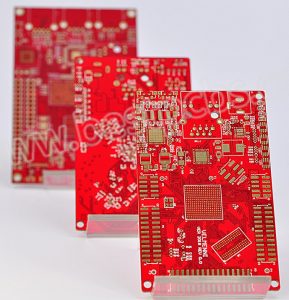
                    Below is a photo of high frequency high frequency circuit board we made before:

                    Why Choose EBest Circuit (Best Technology) as High Frequency Circuit Board Manufacturer?

                      Our High Frequency PCB Capabilities

                      Base material:Rogers/Telfon
                      Board Thickness:0.5mm~3.0mm(0.02″~0.12″)
                      Copper thickness:    0.5 OZ, 1.0 OZ, 2.0 OZ, 3.0 OZ
                      Outline:Routing, punching, V-Cut
                      Soldermask:White/Black/Blue/Green/Red Oil
                      Legend/Silkscreen Color:      Black/White
                      Surface finishing:Immersion Gold, HASL, OSP
                      Max Panel size:  600*500mm(23.62″*19.68″)
                      Packing:Vacuum/Plastic bag
                      Samples L/T:7~9 Days
                      MP L/T: 8~10 Days

                      How to Get a Quote for Your Project?

                      List of materials required for quotation:

                      • Gerber files: Complete hierarchical data to ensure the design is complete.
                      • Design files: Original files in Altium/OrCAD format, reproducing layout details.
                      • BOM: Clearly specify component model, package, quantity, and supplier.
                      • Technical parameters: Dimensions, number of layers, line width/space, aperture, and board thickness.
                      • Material and process: Substrate type (e.g., PTFE), surface finish (ENIG), and copper thickness.
                      • Impedance requirements: Target value (e.g., 50惟) and signal integrity indicators.
                      • Testing standards: Acceptance criteria such as impedance, eye diagrams, and radiation scans.
                      • Quantity and delivery: Order size and expected delivery time.
                      • Certification standards: Quality (e.g., IPC) and environmental (e.g., RoHS) compliance certifications.

                      Welcome to submit your files to get a quote via this email: sales@bestpcbs.com.

                      You may also like

                      PCB board with high frequency laminate鈥, High frequency PCB

                      September 8th, 2025

                      PCB board with high frequency laminate is a specialized printed circuit board designed to handle signals in the GHz range with minimal loss. Unlike standard FR-4 boards, it uses advanced laminate materials such as PTFE, ceramic-filled PTFE, or hydrocarbon composites to ensure low dielectric constant and low dissipation factor.

                      These properties allow the board to deliver stable electrical performance, maintain signal integrity, and reduce electromagnetic interference. High-frequency PCBs are essential in applications like 5G networks, radar systems, satellite communication, and RF devices, where even small signal distortions can impact overall performance.

                      Are you curious about EBest Circuit (Best Technology)鈥檚 pcb board with high frequency laminate?

                      • What is the maximum operating frequency and substrate type for high-frequency boards?
                      • What substrate/copper foil thicknesses are supported?
                      • What is the standard lead time?

                      EBest Circuit (Best Technology)鈥檚 pcb board with high frequency laminate can answer these questions.

                      • High-frequency boards use Rogers or Telfon substrates, and their frequencies typically range from 300MHz to 3GHz.
                      • Supported substrate thicknesses range from 0.5mm to 3.0mm (0.02″ to 0.12″), and copper foil thicknesses include 0.5oz, 1.0oz, 2.0oz, and 3.0oz.
                      • Sample delivery time is 7-9 days, and mass production (MP) lead time is 8-10 days.

                      What is the best PCB material for high-frequency?

                      Selecting the right PCB material is critical for high-frequency performance. It determines signal integrity, stability, and overall reliability. High-frequency circuits demand materials with low dielectric loss, stable thermal behavior, and minimal signal distortion.

                      The most popular materials for high-frequency boards include:

                      • PTFE (Polytetrafluoroethylene): Known for its low dielectric constant and excellent signal transmission.
                      • Rogers Laminates: A trusted brand offering laminates like RO3000 and RO4000 series for RF and high-speed designs.
                      • Ceramic-Filled PTFE: Provides improved mechanical strength and thermal performance compared to standard PTFE.
                      • Hydrocarbon Laminates: Offer a balance of cost-effectiveness and electrical properties for mid-frequency designs.

                      Each option has its benefits. PTFE remains the top choice for the highest frequency designs due to its superior electrical characteristics.

                      Hydrocarbon laminates are often chosen when cost and performance need balance. They work well for mid-range frequency designs while keeping costs lower than pure PTFE boards. The best material depends on your application.

                      Which materials have the highest frequency?

                      For extreme frequency applications, materials must maintain stable electrical characteristics under high speed. The dielectric constant (Dk) and dissipation factor (Df) must be low and consistent across the operating range.

                      • Rogers RO3003: Excellent for frequencies above 10 GHz.
                      • Taconic RF Series: Offers stable electrical performance for RF applications.
                      • Arlon Laminates: Known for thermal reliability and consistent performance.

                      These materials minimize signal degradation even at very high frequencies, making them essential for satellite, radar, and 5G applications.

                      Choosing these advanced laminates ensures your PCB can handle frequencies beyond 20 GHz without signal degradation.

                      What is considered high-frequency in PCB?

                      The term high-frequency refers to boards that handle signals above 300 MHz. However, in most cases, it applies to frequencies in the GHz range.

                      Digital systems often reach 50 MHz to 1 GHz. RF circuits start from 300MHz and go beyond 3 GHz. Microwave applications typically work between 20 GHz and 100 GHz.

                      As frequencies increase, material choice and design accuracy become more critical. Even minor variations in dielectric constant can cause signal delays or losses.

                      For designs above 1 GHz, standard FR-4 material is not suitable. High-frequency laminates are necessary to maintain performance and minimize interference.

                      What is the highest frequency PCB?

                      The highest frequency PCBs can support signals over 100 GHz. These boards are used in radar systems, satellite communication, and advanced wireless technologies.

                      Such boards require:

                      • Ultra-low Dk and Df materials
                      • Precise impedance control
                      • Advanced fabrication processes

                      PTFE-based laminates combined with ceramic fillers remain the standard for these extreme-frequency applications. Manufacturing these boards demands strict process control. Small errors in thickness or copper roughness can affect performance significantly.

                      What is lamination in PCB?

                      Lamination is the process of bonding copper layers to dielectric materials under heat and pressure. It forms the multilayer structure of a PCB.

                      In high-frequency boards, lamination is even more critical. It must ensure consistent thickness, strong adhesion, and zero defects.

                      The process affects electrical performance, especially impedance control. Incorrect lamination can cause air gaps or uneven layers, which impact signal transmission.

                      High-quality lamination keeps your board reliable under high-speed operation. It ensures smooth copper surfaces, accurate layer alignment, and long-term durability.

                      How to design a high-frequency PCB?

                      Designing a PCB board with high frequency laminate requires attention to detail. Here are the core steps:

                      • 1. Choose the Right Laminate

                      Select a material with low Dk, low Df, and stable thermal properties.

                      • 2. Control Impedance

                      Use proper trace widths and spacing to maintain impedance.

                      • 3. Reduce Crosstalk

                      Keep high-speed signals away from each other. Add ground planes when possible.

                      • 4. Minimize Signal Loss

                      Avoid unnecessary vias. Use smooth copper to reduce attenuation.

                      • 5. Consider Stack-Up

                      A well-planned layer stack-up improves performance and reduces EMI issues.

                      How to reduce electromagnetic interference in PCB?

                      Electromagnetic interference (EMI) can degrade the performance of high-frequency circuits. Here鈥檚 how to reduce it:

                      • Add Ground Planes: They provide a return path and reduce noise.
                      • Use Shielding: Metal enclosures or conductive coatings can block external interference.
                      • Shorten Signal Paths: Long traces act as antennas and increase EMI.
                      • Filter Power Lines: Use decoupling capacitors to reduce noise on power rails.
                      • Maintain Proper Spacing: Keep noisy and sensitive components apart.

                      Following these steps ensures a clean signal and improves board reliability. These techniques keep your board stable and interference-free.

                      What is the difference between high-speed and high-frequency PCB?

                      High-speed and high-frequency PCBs are different, though often confused.

                      • High-Speed PCB: Refers to fast digital signals with sharp rise times, typically in MHz or low GHz.

                      The main difference lies in signal type and frequency range. High-speed boards emphasize signal integrity for digital data, while high-frequency boards handle analog signals like RF transmissions.

                      When should you use high-frequency?

                      You should choose a high-frequency PCB when your application works in the GHz range. These boards are essential for wireless communication, radar, and RF systems.

                      Use high-frequency PCBs for devices like smartphones, Wi-Fi routers, and 5G base stations. They are also required in satellite equipment, medical imaging systems, and automotive radar.

                      Any application needing low signal loss, stable impedance, and consistent performance at high speed requires these boards.

                      Standard FR-4 materials cannot provide the stability needed at these frequencies. High-frequency laminates are the only reliable choice.

                      If you need expert solutions for high-frequency PCBs, contact us at sales@bestpcbs.com. Our team is ready to provide professional support and the best quality boards for your application.

                      You may also like

                      How to Choose Base Copper Weight for RF Boards?

                      September 4th, 2025

                      How to choose base copper weight for RF board? Let鈥檚 explore base copper weight options, selection guide, cost optimize solution, recommended supplier for RF board.

                      Are you troubled with these problems?

                      • Severe signal attenuation?
                      • Uncontrolled temperature rise?
                      • Impedance fluctuations?

                      EBest Circuit (Best Technology) can provide solutions:

                      • Dynamic copper thickness algorithm reduces skin loss by 40%.
                      • Gradient copper structure reduces hotspot temperature by over 15掳C.
                      • Intelligent impedance compensation with a 卤0.5渭m tolerance ensures 5G+ accuracy.

                      Welcome to contact us if you have any inquiry for RF boards: sales@bestpcbs.com.

                      What Is Base Copper Weight?

                      Base Copper Weight refers to the thickness of the initial copper foil on the PCB substrate (usually measured in ounces per square foot or microns). It directly affects the circuit’s current carrying capacity, signal transmission stability, and thermal management performance. It is a core parameter in PCB design that balances conductivity, heat dissipation requirements, and manufacturing feasibility.

                      What Is Base Copper Weight?

                      Why Base Copper Weight is Important for RF Boards?

                      Reasons why base copper weight is important for RF boards:

                      • Impedance Control: Base copper weight directly determines impedance accuracy (e.g., 50惟 for RF), minimizing signal reflection/loss.
                      • Thermal Management: Thicker copper (鈮2oz) enhances heat dissipation, reducing temperature rise by 20-30% in high-power RF modules.
                      • Signal Loss Reduction: Low-profile copper (surface roughness <2渭m) cuts high-frequency signal attenuation by ~30%.
                      • Mechanical Reliability: Thick copper (鈮1.5oz) improves resistance to vibration/bending, preventing circuit failures.
                      • Process Compatibility: Base copper weight affects etching/lamination precision; thin copper suits fine lines but requires careful parameter tuning.

                      Common Base Copper Weight Options for RF Boards

                      1. 0.5 oz Copper(Thickness 鈮17.5渭m)

                      • Application: Core for millimeter-wave high-frequency (>30GHz) and precision impedance lines.
                      • RF strength: lowest skin effect loss, optimal signal integrity.
                      • Limitation: weak current capacity (<5A/mm虏).

                      2. 1.0 oz Copper( Thickness 鈮35渭m)

                      • Application: Standard for mainstream RF circuits (5G/WiFi6).
                      • RF strength: balanced impedance control & current carrying (10-15A/mm虏).
                      • Limitation: slightly higher high-frequency loss than 0.5oz.

                      3. 2.0 oz Copper (Thickness 鈮70渭m)

                      • Application: Designed for high-power RF modules (base stations/radars).
                      • RF strength: 3x current capacity, 40% higher thermal efficiency.
                      • Limitation: significant loss increase at >10GHz.

                      3. 3.0 oz+ Copper(Thickness 鈮105渭m)

                      • Application: Used for high-current power supplies (e.g., phased array antennas).
                      • RF strength: supports extreme current (>30A/mm虏).
                      • Limitation: requires etching compensation, >50% cost increase.

                      4. Hybrid Copper Solutions(Customizable thickness锛

                      • Application: For multilayer boards (signal + power layers).
                      • RF strength: surface layer 0.5oz minimizes loss, inner layer 2oz enhances current.
                      • Limitation: high process complexity, increased lamination cost.

                      How to Choose the Base Copper Weight for RF Boards?

                      1. Define High-Frequency Requirements & Loss Budget

                      • Evaluate RF circuit loss budget (dB): Based on signal frequency, transmission distance, and acceptable loss, determine the maximum per-unit-length loss.
                      • Copper thickness impact on conductor loss: At high frequencies, the skin effect concentrates current near the surface; thicker copper reduces conductive loss. RF signal layers typically use 0.5-2 oz base copper.

                      2. Prioritize Impedance Control

                      • Strictly match impedance targets (e.g., 50惟 transmission lines): Base copper weight is critical for impedance calculations and must align with dielectric thickness, trace width, and spacing.
                      • Example: 50惟 Grounded Coplanar Waveguide (GCPW)
                      • Base copper: 0.5 oz (鈮17.5 渭m)
                      • Trace width: 6 mil, ground gap: 10 mil
                      • Dielectric thickness: 3.8 mil (Dk=4.1)

                      3. Consider Copper Foil Roughness for High-Frequency Loss

                      • Surface roughness impact: Rough copper significantly increases loss at microwave frequencies.
                      • Recommended low-roughness foils: VLP (Very Low Profile): Roughness (Rq) 鈮0.68 渭m; RTF (Reverse Treat Foil): Roughness 鈮2.6 渭m.

                      4. Layer-Specific Copper Weight Selection

                      Signal layers:

                      • Use 0.5 oz or 1 oz to balance loss and etching precision. Thicker copper (鈮2 oz) complicates etching and limits minimum trace/space.

                      Power/ground planes

                      • Prioritize 2 oz to 6+ oz to minimize resistance and thermal stress.

                      Internal layers:

                      • Signal layers: 0.5 oz for trace width <0.127 mm to enhance etching accuracy.
                      • Plane layers: 1 oz for cost efficiency; 2 oz requires 鈮10 mil spacing and adds ~20% cost.

                      5. Account for Manufacturing Constraints

                      Minimum trace/space rules:

                      • 1 oz boards: Outer layers 鈮5 mil (2-layer) or 鈮3.5 mil (4/6-layer).
                      • 2 oz boards: All layers 鈮8 mil.

                      Lamination structure:

                      • 4-layer PCBs: Internal copper options鈥0.5 oz, 1 oz, or 2 oz (鈮1.6 mm thickness required for 2 oz).
                      • Plating impact: Final copper thickness (e.g., after ENIG) must include design margins.

                      6. Cost-Material Optimization

                      • Standard weights (0.5/1/2 oz) are cost-effective; custom thicknesses require special processes and increase costs.
                      • High-frequency laminates: e.g., Rogers RO4003C often pairs with 0.5 oz (鈮17 渭m) base copper for stable dielectric properties.
                      • Cost-sensitive designs: Use FR-4 with 1 oz copper; for >5 GHz, combine optimized copper with RF laminates.
                      How to Choose the Base Copper Weight for RF Boards?

                      How Does Base Copper Weight Impact RF Board Production Cost?

                      1. Material Cost & Copper Thickness

                      • Impact: Each 1 oz (鈮35渭m) copper increase raises raw material cost by 30-50%; >3 oz requires special rolling, costing exponentially more.
                      • Solution: Prioritize standard weights (0.5/1/2 oz) for scalability; use “localized thick copper” (e.g., 2 oz only for power planes) to avoid full-board waste.
                      • Example: 5G base stations reduce cost 15-20% by pairing 1 oz signal layers with 2 oz power planes.

                      2. Etching Complexity Control

                      • Impact: Thick copper (鈮2 oz) causes undercut, extending etching time 20-40% and increasing depreciation costs.
                      • Solution: Adopt Semi-Additive Process (SAP) or optimized etchants (e.g., acidic cupric chloride); design with 10% width compensation for 2 oz traces to minimize rework.

                      3. Trace/Space Design Optimization

                      • Impact: 2 oz copper requires 鈮8 mil trace/space, limiting density and potentially increasing layer count or expensive processes.
                      • Solution: Use 0.5 oz for signal layers (supports 3.5-5 mil) with HDI microvias; balance with 1 oz for non-critical layers.

                      4. Lamination & Drilling Efficiency

                      • Impact: Thick copper needs higher temp/pressure (200掳C/400 psi) and longer press cycles (120 min); drilling wear increases costs 10-25%.
                      • Solution: Optimize drilling parameters (such as coated drills) and pre-stack structures to reduce press cycles; use high-temp rapid lamination.

                      5. Surface Finish & Plating Cost Control

                      • Impact: Thick copper extends plating time, increasing chemical use (5-15% cost rise).
                      • Solution: Shorten plating with efficient additives; replace ENIG with OSP in non-HF areas; optimize plating line layout to reduce copper waste.

                      6. Yield Improvement & Defect Prevention

                      • Impact: Thick copper reduces yield by 5-10%; thin copper risks wrinkling/breakage.
                      • Solution: Deploy AOI for real-time etching monitoring; reinforce thin copper with support layers; optimize stack-up to reduce interlayer stress, targeting >95% yield.

                      7. Supply Chain & Economies of Scale

                      • Impact: Custom weights require premium pricing and longer lead times, increasing inventory/logistics costs.
                      • Solution: Partner with fabricators for pooled standard weight inventory; use panelization for custom orders to share fixed costs; explore cost-effective alternatives like Cu-Al composite foil.
                      How Does Base Copper Weight Impact RF Board Production Cost?

                      Why Choose EBest Circuit (Best Technology) as RF Board Manufacturer?

                      19-Year PCB Manufacturing Expertise & Global Certifications:

                      • ISO 9001, ISO 13485, UL and RoHS compliance guarantee product safety and regulatory adherence.

                      24 Hours Rapid Prototyping

                      • Quick-turn prototypes (24-72 hours) with DFM feedback to optimize copper weight, stack-up, and impedance before volume production.

                      Multi-Thickness Copper Base Selection

                      • Offer flexible base copper weights (0.5 oz to 6+ oz) to match diverse RF requirements, from ultra-low-loss 0.2 oz for millimeter-wave designs to robust 6 oz for high-power applications.

                      Advanced Impedance Control Expertise

                      • Precision engineering for 50惟/75惟 transmission lines with sub-1% impedance tolerance, supported by co-simulation of copper weight, trace geometry, and dielectric parameters.

                      Low-Loss Material Integration

                      • Compatibility with high-frequency laminates (e.g., Rogers RO4000/RT/duroid, Panasonic Megtron 6) and optimized copper foil roughness (VLP/RTF) to minimize insertion loss.

                      High-Density Interconnect (HDI) Capability

                      • Enable 鈮20渭m line/space resolution via SAP/mSAP processes, supporting complex RF module integration with minimal signal degradation.

                      Thermal Management Solutions

                      • Design-integrated thick copper planes (鈮2 oz) with thermal vias and heat sinks to enhance heat dissipation in GaN/HEMT power amplifiers.

                      Cost-Performance Optimization

                      • Balanced material selection (e.g., FR-4 for cost-sensitive layers, RF laminates for critical signal paths) to minimize overall BOM cost while meeting performance targets.
                      Why Choose EBest Circuit (Best Technology) as RF Board Manufacturer?

                      Our RF Board Capabilities

                      Base material:Rogers/Telfon
                      Board Thickness:0.5mm~3.0mm(0.02″~0.12″)
                      Copper thickness:0.5 OZ, 1.0 OZ, 2.0 OZ, 3.0 OZ
                      Outline:Routing, punching, V-Cut
                      Soldermask:White/Black/Blue/Green/Red Oil
                      Legend/Silkscreen Color:Black/White
                      Surface finishing:Immersion Gold, HASL, OSP
                      Max Panel size:600*500mm(23.62″*19.68″)
                      Packing:Vacuum/Plastic bag
                      Samples L/T:7~9 Days
                      MP L/T:8~10 Days

                      How to Get a Quote for RF Board Project?

                      List of items to submit for quotation:

                      1. Technical Specifications

                      • Layer count (e.g., 4-layer rigid-flex).
                      • Base material (e.g., Rogers 4350B, FR4).
                      • Copper weight (e.g., 1oz outer/2oz inner).
                      • Impedance control requirements (卤5% tolerance).
                      • Surface finish (e.g., ENIG, Immersion Silver).

                      2. Design Files

                      • Gerber files (RS-274X format).
                      • Drill files (Excellon format).
                      • IPC-356 netlist (for testing).

                      3. Special RF Requirements

                      • Frequency range (e.g., 5-40GHz).
                      • Insertion loss limits (e.g., <0.5dB/inch @10GHz).
                      • RF-specific stackup (e.g., hybrid PTFE/FR4).

                      4. Production Details

                      • Quantity (prototype/bulk order).
                      • Delivery timeline (e.g., 4-week lead time).
                      • Testing standards (e.g., IPC-6012 Class 3).

                      5. Additional Notes

                      • Special tolerances (e.g., 卤2mil line width).
                      • Certifications (e.g., UL, ITAR).
                      • Packaging requirements (vacuum-sealed).

                      Welcome to contact us if you have any request for RF boards: sales@bestpcbs.com.

                      You may also like

                      High Frequency PCB Materials, High Frequency Circuit Design

                      August 21st, 2025

                      Have you ever faced such problems when design a PCB that used in high speed application?

                      • Is your high-speed design bleeding signal strength?
                      • How to solve poor thermal management in high-frequency systems to ensure stability and reliability?
                      • How to effectively suppress severeEMI and meet EMC standards in high-frequency circuits?

                      At EBest Circuit (Best Technology), we fabricate high frequency PCB that can solve these problems. We use:

                      • High quality materials with low loss and better shielding performance.
                      • Utilize ground via array, densely arranging ground vias around radiation sources such as microstrip lines to form a “wall”.
                      • Design multi-layer boards and adopt dedicated ground layers through reasonable stack-up design, provide a complete reference ground plane for high-frequency signals.

                      High frequency PCBs are essential in applications such as automotive radar, aerospace communication, medical imaging, 5G and satellite systems. These boards must handle signals above 100 MHz and, in many cases, well into the GHz range. At such speeds, signal losses, impedance mismatches, and electromagnetic interference (EMI) can cause severe degradation. EBest Circuit (Best Technology), a leading expertise in high frequency pcb manufacturing, can help to optimize your design and manufacture such board for you!

                      What is a High Frequency PCB?

                      A high frequency PCB is a printed circuit board designed to transmit signals above 500 MHz, often extending into 10 GHz, 30 GHz, or even higher depending on the application. Some applications, like automotive radar, require PCBs that perform stably at 77 GHz or more.

                      These boards are not limited to one sector. They are used in:

                      • Wireless base stations and antennas
                      • Radar for defense and vehicles
                      • Satellite communication modules
                      • High-speed computing and servers
                      • Precision medical imaging devices

                      The key challenge is that as frequency rises, signals become more vulnerable to losses, reflections, and interference. A standard FR4 PCB cannot handle these issues beyond a certain point, which is why high frequency laminates and designs are essential.

                      High Frequency PCB Materials, High Frequency Circuit Design

                      High Frequency PCB Material

                      The choice of material determines how well a PCB will perform in high frequency environments. Engineers usually evaluate three main parameters:

                      • Dielectric Constant (Dk): This defines how signals propagate through the material. A stable, low Dk improves signal speed and reduces delay.
                      • Dissipation Factor (Df): Also called the loss tangent, this defines how much energy is lost as heat. Lower values are better for long-distance signal transmission.
                      • Thermal Performance: Materials must handle fluctuating temperatures without expansion or deformation, especially in aerospace and automotive environments.

                      Common Materials Used in High Frequency PCB

                      • PTFE (Teflon-based laminates): Offers extremely low loss and stable dielectric properties. Perfect for microwave and RF circuits, though harder to process during manufacturing.
                      • Rogers laminates: Popular choices like RO4350B and RO3003 are widely used in communication devices due to their balance between cost and performance.
                      • Arlon and Taconic: Trusted for aerospace and military-grade systems.
                      • Ceramic-filled PTFE: Combines the benefits of PTFE with improved thermal stability, suitable for radar and satellite applications.
                      • FR4: Economical, but only practical for low GHz applications, as losses rise sharply at higher frequencies.

                      When comparing FR4 to Rogers or PTFE, the difference is like comparing regular tires to high-performance racing tires. Both work, but only one is built for extreme conditions.

                      What is the Best PCB Material for High Frequency?

                      The 鈥渂est鈥 material depends on the actual use case. For example:

                      • Up to 3 GHz: Rogers RO4350B provides stable performance at a manageable cost, widely used in RF applications.
                      • Microwave range (10鈥30 GHz): PTFE laminates such as Taconic TLY or Rogers RO3003 give superior low-loss performance.
                      • 5G antennas: Low Dk and Df materials like Rogers RO4835 are chosen for consistent performance in outdoor environments.
                      • Automotive radar (77 GHz): Ceramic-filled PTFE materials are the only reliable solution due to their high thermal and frequency stability.

                      Cost also matters. PTFE offers the lowest insertion loss but requires advanced processing, increasing manufacturing cost. Rogers materials are easier to fabricate and balance cost and performance, which is why they are widely used.

                      High Frequency PCB Characteristics

                      High frequency PCBs stand out due to specific characteristics:

                      • Stable dielectric constant across wide frequencies
                      • Low signal loss
                      • Thermal durability
                      • Controlled impedance
                      • Dimensional stability

                      These boards are engineered not just to survive but to deliver reliable, repeatable performance in demanding environments.

                      High Frequency PCB Design Guidelines

                      Designing a high frequency PCB is a delicate balance of precision, material choice, and layout strategy. Even small mistakes in design can cause significant signal loss, reflection, or interference at gigahertz frequencies. Below are the key guidelines that engineers follow to ensure high performance.

                      1. Controlled Impedance Design

                      At high frequencies, the impedance of each trace must be carefully calculated and maintained. Variations in trace width, thickness, or dielectric spacing can cause reflections and signal degradation. Designers usually rely on simulation software to calculate controlled impedance for microstrip, stripline, or coplanar waveguide structures. The target impedance is often 50惟 for single-ended signals or 100惟 for differential pairs.

                      2. Minimize Trace Lengths

                      Signal paths should be as short as possible. Long traces increase insertion loss, cause delay, and may introduce unwanted reflections. In applications like RF communication or 5G antennas, even small increases in trace length can degrade signal integrity significantly.

                      3. Reduce the Number of Vias

                      Each via acts as a small inductance and capacitance, which can reflect high-frequency signals. Limiting via usage and optimizing via placement is essential. When vias are unavoidable, designers often use via stitching or back-drilling techniques to reduce parasitic effects.

                      4. Ground Planes and Reference Layers

                      A continuous, solid ground plane beneath signal traces improves return paths and minimizes electromagnetic interference (EMI). Multiple ground planes can be used in multilayer boards to enhance shielding and reduce noise coupling. Proper stacking ensures that signal layers are adjacent to reference planes, which stabilizes impedance and improves signal quality.

                      5. Differential Pair Routing

                      Differential pairs are widely used in high-speed digital and RF circuits. These pairs carry complementary signals, which improves noise immunity and reduces crosstalk. Designers maintain strict control over trace spacing, length matching, and symmetry to preserve signal integrity.

                      6. Stack-Up Optimization

                      The stack-up, or layer arrangement, determines how signal layers, power planes, and ground planes interact. Proper stack-up design can reduce cross-talk, improve thermal management, and control impedance. High frequency PCBs often use hybrid stack-ups with PTFE or ceramic layers to balance performance and manufacturability.

                      Every decision鈥攆rom material choice to trace width, via placement to ground plane configuration鈥攄irectly impacts signal integrity. A high frequency PCB is not just about connecting components; it is about managing signals, controlling impedance, and reducing loss to ensure reliable, precise performance in the gigahertz range.

                      High Frequency PCB Design Guidelines

                      High Frequency PCB Manufacturer 鈥 EBest Circuit (Best Technology)

                      Not all manufacturers are capable of producing high frequency PCBs. Handling PTFE and ceramic materials requires different lamination temperatures, drilling techniques, and plating processes compared with FR4.

                      At EBest Circuit (Best Technology), we bring specialized expertise in:

                      • Fabricating Rogers, Taconic, PTFE, and hybrid PCB stack-ups.
                      • Maintaining strict dimensional tolerances for impedance control.
                      • Advanced inspection to measure dielectric thickness, copper roughness, and loss factors.
                      • End-to-end MES traceability to ensure every board can be tracked back to its source materials and processes.

                      This combination of material knowledge, certified systems, and engineering support makes EBest Circuit (Best Technology) a trusted partner for customers who need more than just a standard PCB.

                      Insertion Loss Comparisons of Common High Frequency PCB Constructions

                      MaterialFrequency (10GHz)Insertion Loss (dB/inch)Notes
                      FR4~10GHz0.7 鈥 1.0 dBHigh loss, not recommended
                      Rogers RO4350B~10GHz0.2 鈥 0.3 dBCost-effective, reliable
                      Rogers RO3003~10GHz0.1 鈥 0.15 dBExcellent for microwave use
                      PTFE Ceramic~10GHz0.05 鈥 0.1 dBPremium choice for radar/5G

                      This table clearly shows why FR4 is avoided for RF designs. At high GHz levels, FR4 can lose more than three times the signal strength compared with PTFE laminates.

                      High Speed vs High Frequency PCB 鈥 What is the Difference?

                      The terms 鈥渉igh speed鈥 and 鈥渉igh frequency鈥 are often confused, but they describe different challenges:

                      • High Speed PCB: Concerned with digital signals, rise times, and data rates. Examples: DDR memory boards, data centers, and Ethernet.
                      • High Frequency PCB: Concerned with analog and RF signals in the GHz range. Examples: radar, antennas, and satellite communication.

                      In practice, many designs overlap. For instance, a 5G base station board must support high-speed data processing and high-frequency RF transmission simultaneously. This is why engineers often require both high-speed and high-frequency design expertise.

                      High Speed vs High Frequency PCB 鈥 What is the Difference?

                      Why Do We Need High Frequency?

                      High frequency PCBs enable many of the technologies that define modern life:

                      • 5G base stations and smartphones: Delivering ultra-fast, low-latency communication.
                      • Automotive radar: Assisting advanced driver-assistance systems and autonomous driving.
                      • Satellite communication: Providing global coverage for navigation and broadcasting.
                      • Defense and aerospace: Supporting secure, high-performance radar and communication systems.
                      • Medical devices: Enabling accurate imaging through MRI, CT, and ultrasound.

                      Without these boards, the next generation of communication and smart systems would not be possible.

                      Who Should Not Get High Frequency?

                      Not every project needs high frequency PCBs. For example:

                      • A consumer product with simple sensors may not justify the extra cost.
                      • Low-speed devices below 500 MHz can rely on FR4.
                      • Cost-sensitive projects without high bandwidth needs should avoid high frequency laminates.

                      Choosing the right PCB type should always balance performance needs vs. budget.

                      FAQs

                      1. What frequency is considered high frequency in PCBs?

                      Any PCB designed to work above 500 MHz is typically considered high frequency, with advanced boards operating up to 60 GHz or more.

                      2. How does dielectric constant affect PCB performance?

                      A stable dielectric constant ensures signals propagate at predictable speeds and maintain impedance control, crucial for RF circuits.

                      3. Can FR4 be used for high frequency PCB?

                      FR4 works only up to around 1 GHz. Beyond that, losses become too high for reliable performance.

                      4. What are the challenges in manufacturing high frequency PCB?

                      Processing PTFE materials, achieving impedance accuracy, reducing insertion loss, and handling copper roughness are common challenges.

                      5. How to reduce signal loss in high frequency PCB design?

                      Use low-loss laminates, design shorter traces, avoid unnecessary vias, and apply smooth copper surfaces to reduce resistance.

                      You may also like

                      High Frequency PCB Design Guidelines – RF PCB Basic Acknowledge

                      August 20th, 2025

                      Are you often curious about these questions about high frequency PCB?

                      • Have you ever wondered why some electronic systems lose performance at higher frequencies?
                      • Why a well-designed PCB for low-speed circuits often fails when pushed into GHz ranges?
                      • How can designers minimize losses above 1 GHz?

                      The answer lies in the design of high frequency PCBs. High frequency PCBs also known as RF PCB or radio frequency pcb. They are more important in applications such as 5G, automotive radar, aerospace communication, medical imaging, and satellite systems. These boards must handle signals above 100 MHz and, in many cases, well into the GHz range. At such speeds, signal losses, impedance mismatches, and electromagnetic interference (EMI) can cause severe degradation.

                      This blog provides detailed guidelines for designing high frequency PCBs. From material selection to signal routing, impedance control, thermal management, and testing, we will walk through the critical factors engineers must consider.

                      What Frequency Range is Considered High Frequency in PCB Design?

                      In PCB engineering, high frequency generally refers to signal frequencies above 500 MHz. For RF and microwave circuits, the range extends from 1 GHz up to 100 GHz. Typical applications include:

                      • Wi-Fi (2.4 GHz / 5 GHz)
                      • Bluetooth (2.4 GHz)
                      • 5G NR bands (3.5 GHz / 28 GHz / 39 GHz)
                      • Automotive radar (24 GHz / 77 GHz)
                      • Satellite communication (Ku-band 12鈥18 GHz, Ka-band 26鈥40 GHz)

                      The higher the frequency, the more sensitive the PCB becomes to signal loss, dielectric constant stability, and copper surface roughness. For instance, at 28 GHz (5G mmWave), even 0.1 dB/cm of insertion loss can cause serious degradation in system performance.

                      High Frequency PCB Design Guidelines - RF PCB Basic Acknowledge

                      What PCB Materials are used for High Frequency Applications?

                      The dielectric substrate is the foundation of high frequency PCB design. Key material properties include:

                      • Dielectric Constant (Dk): Should remain stable across frequency and temperature.
                      • Dissipation Factor (Df): Lower values mean lower signal loss.
                      • Thermal Conductivity: Crucial for high-power RF designs.

                      Common Materials for High Frequency PCBs

                      Material TypeDielectric Constant (Dk)Dissipation Factor (Df) @10GHzThermal Conductivity (W/m路K)Typical Use Case
                      FR4 (High Tg)4.2鈥4.70.020鈥0.0250.3<1 GHz, low-cost boards
                      Rogers RO4350B3.48 卤0.050.00370.692鈥20 GHz, antennas
                      Rogers RO30033.00 卤0.040.00130.50mmWave 5G (28 GHz, 39 GHz)
                      Taconic RF-353.500.00180.62Microwave circuits
                      PTFE (Teflon)2.1鈥2.60.0009鈥0.00150.25鈥0.30Aerospace, radar
                      Ceramic-filled PTFE3.0鈥100.001鈥0.0050.7鈥1.2High-power RF

                      Data comparison shows that Rogers RO3003 has one of the lowest Df values, making it widely used in 5G mmWave base stations. PTFE-based laminates dominate satellite and radar applications where extreme performance is required.

                      How Does Dielectric Constant Affect Signal Speed?

                      The dielectric constant (Dk) directly influences the propagation velocity of signals on PCB traces. The relation is:

                      How Does Dielectric Constant Affect Signal Speed?

                      Where c = 3 脳 10^8 m/s (speed of light in vacuum).

                      • For FR4 (Dk 鈮 4.5) 鈫 v 鈮 1.41 脳 10^8 m/s
                      • For Rogers RO4350B (Dk 鈮 3.48) 鈫 v 鈮 1.61 脳 10^8 m/s
                      • For PTFE (Dk 鈮 2.2) 鈫 v 鈮 2.02 脳 10^8 m/s

                      This means PTFE substrates allow signals to travel ~43% faster than FR4. In high-speed digital systems (like SerDes 56G PAM4 links), such differences greatly influence timing margins.

                      What are the Key Design Rules for High Frequency PCB Layout?

                      Designing high frequency boards requires stricter rules compared to conventional PCBs:

                      1. Controlled Impedance Traces

                      • Single-ended 50 惟, differential 90鈥100 惟 are typical.
                      • Impedance tolerance must be within 卤5% for frequencies above 10 GHz.

                      2. Insertion Loss Minimization

                      • Use smooth copper foils (Ra < 2 渭m).
                      • Keep transmission lines short.
                      • Avoid unnecessary vias, which can introduce 0.1鈥0.2 dB loss per via at 10 GHz.

                      3. Ground Plane Integrity

                      • Solid reference planes reduce return path discontinuities.
                      • Use via fences to confine RF energy.

                      4. Crosstalk Reduction

                      • Maintain spacing 鈮3脳 trace width between high frequency lines.
                      • Place sensitive analog circuits far from digital noise sources.

                      5. Thermal Management

                      • For power amplifiers, substrates with >0.8 W/m路K thermal conductivity are recommended.
                      • Use thermal vias under RF components for efficient heat dissipation.
                      What are the Key Design Rules for High Frequency PCB Layout?

                      How Thick should a High Frequency PCB be?

                      The thickness of the PCB substrate directly impacts impedance and signal integrity. Typical stack-up configurations:

                      PCB ThicknessLayer CountDielectric ThicknessFrequency Application
                      0.2鈥0.4 mm2鈥4L0.1 mm coreHigh-speed connectors, 10鈥20 GHz
                      0.6鈥0.8 mm4鈥6L0.2 mm core2.4/5 GHz Wi-Fi, Bluetooth
                      1.0鈥1.6 mm6鈥10L0.3鈥0.5 mm coreAutomotive radar, 24 GHz
                      2.0+ mm8鈥12L>0.5 mm core28 GHz 5G, satellite boards

                      For example, in 77 GHz automotive radar PCBs, manufacturers often use 0.254 mm or thinner substrates to reduce dielectric loss and keep microstrip lines narrow enough for impedance control.

                      How to Reduce Signal Loss in High Frequency PCB Design?

                      Signal loss (attenuation) is one of the biggest concerns in high frequency circuits. It is affected by:

                      • Dielectric Loss: Higher Df increases insertion loss.
                      • Conductor Loss: Surface roughness increases resistance at high frequencies due to skin effect.
                      • Radiation Loss: Poor layout or sharp bends radiate energy.

                      Example of Insertion Loss Data

                      MaterialFrequencyLine LengthInsertion Loss
                      FR4 (Df 0.020)10 GHz10 cm-1.2 dB
                      Rogers RO4350B10 GHz10 cm-0.25 dB
                      PTFE (Df 0.001)10 GHz10 cm-0.05 dB

                      This demonstrates why high frequency applications almost never rely on standard FR4.

                      In Conclusion

                      Designing a high frequency PCB requires more than standard PCB know-how. From material selection to impedance control, routing, thermal management, and advanced testing, every step must be carefully engineered.

                      EBest Circuit (Best Technology) is a trusted PCB manufacturer in China with expertise in high frequency PCB fabrication. We offer advanced laminates like Rogers, Taconic, and Isola, alongside ISO9001, ISO13485, IATF16949, and AS9100D certifications. Our team applies rigorous quality control, competitive pricing, professional engineering support, and MES-based traceability to deliver reliable high frequency PCBs for industries such as 5G, automotive radar, medical devices, and aerospace.

                      If your project requires precise high frequency PCB solutions, EBest Circuit (Best Technology) is ready to provide professional guidance and manufacturing excellence.

                      FAQs

                      1. Can FR4 be used for high frequency PCBs?

                      Yes, but only for frequencies below ~1 GHz. For anything higher, specialized laminates are required.

                      2. What is the most commonly used material for 5G PCBs?

                      Rogers RO4350B and RO3003 are widely adopted due to their low loss at mmWave bands.

                      3. How do vias affect high frequency performance?

                      Each via can add 0.1鈥0.2 dB loss at 10 GHz, so designers minimize via count in RF paths.

                      4. Why is surface roughness important?

                      At high frequencies, the skin effect confines current to the outer conductor surface. Rough copper increases resistance and loss.

                      You may also like

                      RF Module Manufacturers, Custom RF Module Manufacturing

                      August 12th, 2025

                      What is RF module? Let’s discover definition, working principles, TV connectivity, usage guides, 433MHz testing for RF module.

                      Are you worried about these issues?

                      • Has your product design been repeatedly revised due to RF module protocol incompatibilities?
                      • Is the difficulty in balancing transmission distance and power consumption leading to constant complaints from end users?
                      • Do delays in small-batch orders frequently cause your supply chain plans to spiral out of control?

                      EBest Circuit (Best Technology) can provide service and solutions:

                      • Full-protocol compatibility matrix: Plug-and-play support for six major protocols, including Bluetooth, and Zigbee, reduces adaptation and debugging time by 80%.
                      • Intelligent power management: Dynamically adjusts transmit power to achieve a 40% reduction in power consumption at long-range transmission distances up to 200 meters.
                      • Flexible delivery system: Establish a dedicated “small order, fast response” line, with 7-day delivery for orders of 100 units and transparent inventory traceability.

                      Welcome to contact us if you have any request for RF module: sales@bestpcbs.com.

                      What Is RF Module?

                      An RF module is an electronic component that integrates RF transceiver circuitry, an antenna, and a control unit, specifically for wireless signal transmission and reception. It uses modulation and demodulation technologies to efficiently transmit data over the air and is widely used in the Internet of Things (such as smart homes), wireless communications (4G/5G base stations), and industrial automation (remote sensors). Its core advantage lies in simplifying wireless system design, allowing users to quickly deploy stable connections without in-depth RF circuit development.

                      What Is RF Module?

                      How RF Module Works?

                      1. Core Components

                      • The RF module consists of a transmitter and a receiver, enabling wireless data transmission via radio frequencies (e.g., 433 MHz).

                      2. Modulation and Demodulation

                      • Modulation (ASK/OOK): Data is embedded in a digital signal by varying the carrier amplitude (e.g., ASK modulation). The carrier is transmitted when a logic “1” is present, and suppressed when a logic “0” is present to save power.
                      • Demodulation: The receiver uses a frequency-matched crystal oscillator (e.g., a 433 MHz SAW resonator) to restore the original signal.

                      3. Workflow

                      • Transmitter: An encoder (e.g., the HT12E) converts parallel data into a serial signal. The crystal oscillator generates a carrier, which is then ASK-modulated and transmitted through the antenna.
                      • Receiver: The antenna captures the signal, and a decoder (e.g., the HT12D) converts the serial data into parallel outputs.

                      4. Key Parameters

                      • Frequency: 433 MHz or 315 MHz are commonly used, requiring strict matching between the transmitter and receiver. Power Consumption: 9-40mA when transmitting (3-12V power supply), approximately 5.5mA when receiving (5V power supply).
                      • Transmission Range: Up to 1000 meters in open environments, significantly affected by obstacles and interference.

                      5. Typical Applications

                      • Remote control (such as smart home, car key).
                      • Industrial sensing (wireless data acquisition, security systems).
                      How RF Module Works?

                      How to Connect RF Modulator to TV?

                      1. Confirming Interface Compatibility

                      • Check if your TV has an RF input (usually labeled “ANT IN” or “RF IN”). Some older TVs only support this interface for signal reception.
                      • If your TV doesn’t have an RF input, you’ll need to connect indirectly via HDMI or an AV converter (this requires additional equipment).

                      2. Connection Steps

                      • Coaxial Cable Connection: Use a 75惟 coaxial cable to connect the RF modulator’s output (RF OUT) to the TV’s ANT IN port.
                      • Antenna Matching: If the modulator requires an external antenna, ensure the antenna impedance matches (usually 50惟 or 75惟) to prevent signal reflections.

                      3. Signal Debugging

                      • Channel Search: Use the TV’s settings to perform an automatic channel scan to lock onto the modulator’s signal (usually in the UHF band, 470-862MHz).
                      • Optimizing Signal Strength: If the picture is blurry or lost, adjust the antenna angle or check for loose connections in the cable.

                      4. Troubleshooting

                      • No Signal: Verify that the modulator has a proper power supply (5V-12V) and that the transmitting frequency matches the TV’s tuning range.
                      • Interference Streaks: Stay away from other wireless devices (such as Wi-Fi routers) to avoid frequency conflicts.

                      5. Key Parameters

                      • Modulator Output Level: Recommended 鈮 60dB渭V (to ensure stable transmission over long distances).
                      • TV RF Sensitivity: Typically 鈮 30dB渭V is required (inadequate sensitivity may result in reception failure).

                      Tip: Modern smart TVs may disable RF input by default; you must manually switch to RF mode in the “Signal Source Settings.”

                      How to Use RF Module?

                      1. Hardware Preparation and Connection

                      • Choose the appropriate module: Select the frequency band (e.g., 433MHz, 2.4GHz) and protocol (e.g., LoRa, Bluetooth) based on the application scenario (e.g., IoT, remote control).
                      • Connect the antenna: Ensure the antenna matches the module (e.g., SMA connector) to avoid signal attenuation; keep the antenna away from metal obstructions.
                      • Power Supply Configuration: Provide a stable voltage (usually 3.3V-5V) and add a filter capacitor (10渭F + 0.1渭F) to reduce power supply noise.

                      2. Software and Protocol Configuration

                      • Choose the communication protocol: Select transparent transmission mode (direct data transmission and reception) or a custom protocol (e.g., adding a parity bit or retransmission mechanism) based on your needs.
                      • Set the baud rate and frequency band: The transmitter and receiver must maintain the same baud rate (e.g., 9600bps), with a frequency band deviation of no more than 卤10kHz.
                      • Initialize the module: Configure the module using AT commands or registers (e.g., setting transmit power and operating mode). Refer to the module manual for parameter settings.

                      3. Data Transmission and Reception Test

                      Transmitter Operation:

                      • Add a preamble (e.g., 0xAA) and a checksum (CRC16) before sending data to ensure data integrity.
                      • The recommended single data transmission length is 鈮 255 bytes to avoid timeouts and packet loss.

                      Receiver Operation:

                      • Enable automatic receive mode or use an interrupt trigger to read data.
                      • Monitor the signal using an oscilloscope or serial port debugging tool to confirm there is no garbled code or packet loss.

                      4. Anti-interference and Optimization Measures

                      • Antenna Layout: Maintain a straight-line distance of 1 meter or more between the transmitting and receiving antennas to avoid co-channel interference. For multi-module deployments, use staggered frequencies.
                      • Signal Filtering: Install an LC filter circuit (e.g., 10nH inductor + 10pF capacitor) at the module input to suppress high-frequency noise.
                      • Power Management: Switch to sleep mode (e.g., timed wakeup) when idle to reduce overall power consumption (typical sleep current 鈮 1渭A).

                      5. Troubleshooting and Debugging

                      • No signal: Check the antenna connection and power supply stability. Use a spectrum analyzer to confirm if the transmit frequency is offset. High packet loss rate: Reduce the transmission rate (e.g., from 9600bps to 4800bps) or add a retransmission mechanism (e.g., repeat each packet three times).
                      • Short communication range: Replace the antenna with a higher gain (e.g., from 5dBi to 9dBi) or adjust the transmit power (the maximum value must comply with local regulations).

                      How to Test 433mhz RF Module?

                      1. Power and basic communication checks

                      • Confirm that the VCC voltage is between 4.5V and 5.5V and that the antenna is securely connected.
                      • Send a test command (such as AT+TEST) via the serial port to verify that the receiver returns an acknowledgment signal.

                      2. Signal strength and range test

                      • Use a walkie-talkie or the “RF Signal Tracker” app to monitor the signal and test the critical distance (50-100 meters) in an open environment.
                      • Repeat the test behind obstacles to assess penetration attenuation (approximately 20-30dB through a concrete wall).

                      3. Interference and compatibility troubleshooting

                      • Use a spectrum analyzer to scan the 433MHz band, avoiding co-frequency devices (such as WiFi routers).
                      • Test multi-device coexistence, optimizing the protocol (adding parity bits) or implementing frequency hopping.

                      4. Advanced debugging and troubleshooting

                      • Adjust the antenna matching network (using a VNA to observe the S11 parameter) to ensure an impedance of 50惟.
                      • Check crystal oscillator startup (using an oscilloscope) and LNA power supply. Verify standby current in low-power mode (<1渭A).

                      Our RF Module and RF Board Case Studies

                      At EBest Circuit (Best Technology), we offer one-stop services for RF module components and customized RF board, from design to assembly. Whether you require a 2.4GHz wireless module or other frequency bands, we can optimize cost and performance to meet your specifications. Feel free to contact us for a quote and we’ll provide you with a cost-effective, reliable solution! Below is a photo of our RF board case.

                      Our RF Module and RF Board Case Studies

                      Attached is a datasheet and photo of 2.4GHz RF module:

                      Parameter鈥孲pecifications鈥
                      鈥孭roduct Name鈥鈥2.4GHz Wireless Video Transmission Module鈥
                      鈥孋ore Functionality鈥Built-in 2.4GHz ISM band RF IC, supports NTSC/PAL video formats, integrates FM-FM modulation/demodulation scheme.
                      鈥孭hysical Design鈥Compact size, no external audio circuit required, simplifies system integration.
                      鈥孯egulatory Compliance鈥CE/FCC EMC certified, meets global deployment requirements.
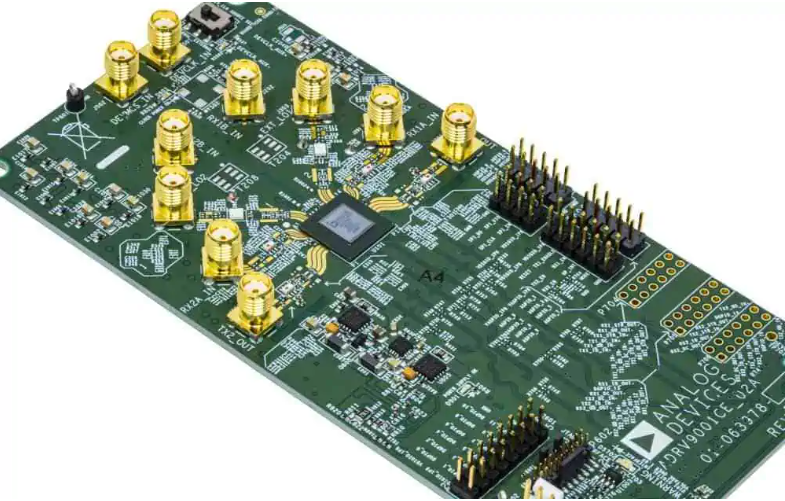
                      鈥孋hannel Configuration鈥Typically supports 4 channels via PLL synthesizer, enabling parallel device transmission.
                      鈥孴ypical Applications鈥Wireless video transmission, security monitoring, industrial remote control, and low-latency applications.
                      Our RF Module and RF Board Case Studies

                      Why Choose EBest Circuit (Best Technology) as RF Module Manufacturers?

                      Reasons why choose us as RF module manufacturers:

                      • Ultra-Fast Delivery: Prototype production and basic testing are completed within 48 hours for urgent orders, supporting the rapid iteration requirements of scenarios like 5G and satellite communications, reducing cycle times by over 60%.
                      • Strict High-Frequency Verification: Three-temperature storage cycle verification (temperature drift coefficient <0.3ppm), electromagnetic exposure level testing (scattering rate difference 160dB), and high-voltage breakdown testing (isolation voltage exceeds the specified limit by 30%) ensure stable millimeter-wave performance.
                      • Leading Millimeter-Wave Technology: Supports a wide frequency band from 24GHz to 77GHz, improves GaN/SiC semiconductor efficiency by 40%, and reduces 5G base station module size by 50%, with standing wave parameter degradation controlled to <1.5dB.
                      • Enhanced Environmental Adaptability: Four-quadrant clutter interference simulation (maintaining a 0.45dB signal-to-noise ratio) and a temperature and humidity fluctuation model automatically trigger anti-condensation parameters, adapting to extreme scenarios such as tropical rainforests and polar regions.
                      • RF Design Collaboration: An open API architecture supports secondary development, with pre-set parameter packages for subway tunnels and urban buildings. An intelligent diagnostic system locates high-temperature areas and S-parameter anomalies.
                      • Global Certification Guarantee: Compliant with FCC/CE/SRRC regulations, IPC-Class 3 standard production process, and hard gold plating that passes ASTM B488 salt spray testing, making it suitable for medical and aviation applications.
                      • Cost and Energy Efficiency Optimization: Prefabricated chip models reduce the cost of unpopular models. AI-optimized power amplifier parameters reduce base station energy consumption to 0.2kW/Mbps. Modular design reduces network construction costs by 30%.
                      • Technical Accuracy and Support: 19 years of RF experience have solved over 200 high-frequency design challenges (such as phase noise suppression). A 24/7 expert team provides real-time response to issues such as electromagnetic interference and thermal management.
                      • Flexible Measurement Range and Accuracy: Supports small-batch customization of 1-50 units to large-scale production of 10,000+ units. Available in QFN/BGA/ceramic packaging, with line width and line spacing error 鈮 2渭m and phase consistency deviation < 3掳.
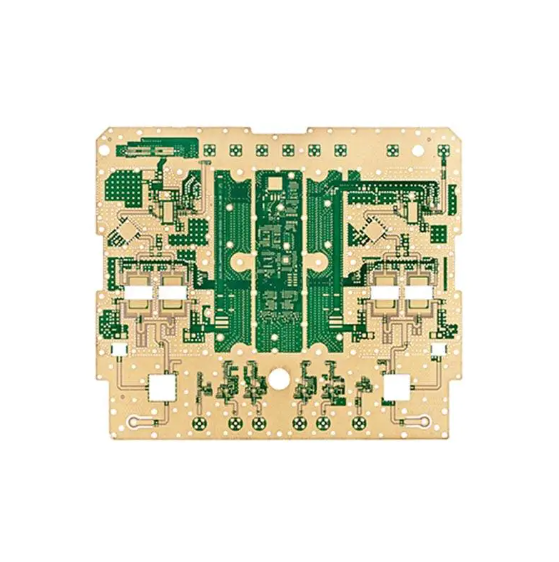
                      Please feel free to contact us if you have any inquiry for RF module: sales@bestpcbs.com.

                      You may also like