PCB manufacturing PCB manufacturing
Home > Blog

PCB Manufacturers in Israel

How Should You Evaluate HDI PCB Manufacturers in Israel?
Friday, August 21st, 2026

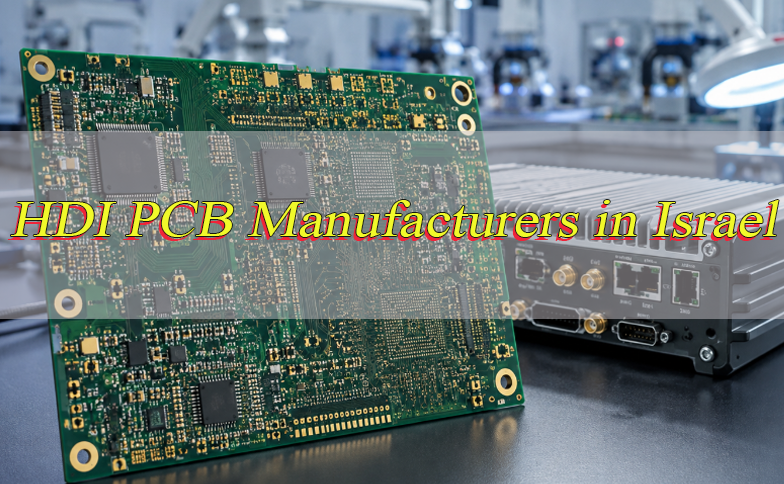
When evaluating HDI PCB manufacturers in Israel, review the supplier against the PCB construction you intend to manufacture. Use the actual fabrication package rather than a general capability list, and check the HDI build-up, microvia structure, production stack-up, controlled impedance, inspection requirements and repeat-production controls.

This guide explains what to verify before quotation, how to compare local and overseas production routes, and how to keep an approved HDI construction consistent from prototype to volume production. EBest Circuit provides one-stop HDI PCB services covering DFM review, PCB fabrication, component sourcing, PCB assembly, testing and volume production.

HDI PCB Manufacturers in Israel, https://www.bestpcbs.com/blog/2026/08/hdi-pcb-manufacturers-in-israel/

What HDI PCB Manufacturing Options Are Available in Israel?

The market includes local PCB manufacturers with published HDI capabilities and Israel-based PCB suppliers that manage production through international manufacturing networks. When comparing HDI PCB manufacturers in Israel, confirm both the technical capability and the actual fabrication route used for your order.

CompanySupply ModelPublished HDI Capability
PCB TechnologiesIsrael PCB manufacturerSequential lamination, filled microvias, any-layer technology and advanced HDI fabrication
EltekIsrael PCB manufacturerLaser microvias, blind and buried vias, via filling, stacked vias and staggered vias
APEX PCBIsrael-based PCB supplier1+, 2+ and 3+ HDI structures, stacked/staggered microvias and copper-filled microvias through a global supplier network

Use the same released fabrication package when requesting quotations. If one supplier prices a different stack-up, via structure, surface finish or inspection level, the quotations are not directly comparable.

Which HDI Build-Up Structure Should the Manufacturer Support?

The manufacturer should support the exact sequential build-up required by the PCB, because every additional build-up level adds lamination, laser drilling, plating and registration operations.

  • 1+N+1 construction: One HDI build-up layer is added to each side of the multilayer core. Confirm that the core construction and any buried vias can be completed before the outer HDI layers are laminated.
  • 2+N+2 construction: Two build-up levels are added to each side. This requires another controlled lamination and microvia formation cycle, so ask the supplier to approve the complete construction rather than only confirming that “2+N+2 is supported.”
  • Higher build-up levels: Submit the full layer construction, board thickness and via map. A maximum layer-count statement does not show how many sequential lamination cycles the factory can run for your design.
  • Stacked construction: Identify the microvias that are vertically aligned through successive build-up layers. The factory needs this information to determine the filling, planarization and subsequent drilling sequence.
  • Staggered construction: Show the offset microvia connections in the build-up drawing so the CAM review does not interpret them as stacked vias.
  • Buried vias in the core: Mark the exact internal layer span. These vias are normally drilled and plated before the outer HDI build-up is added.

For HDI PCB manufacturers in Israel, build-up capability should be approved from the released stack-up and via structure, not from a generic HDI capability statement.

IPC-2226 is the IPC sectional design standard for HDI printed boards and covers HDI interconnections, microvias, dielectric separation, via formation and metallization.

How Should You Verify a Manufacturer’s Microvia Capability?

Verify microvia capability using the complete via geometry in the PCB files. A published minimum laser-hole diameter does not show whether the proposed microvia can be drilled, plated, filled and registered reliably in the actual build-up.

  • Microvia diameter: Provide the designed laser-hole diameter and ask whether it falls within the supplier’s established production range for the proposed dielectric.
  • Microvia depth: Review depth together with diameter. Increasing depth without increasing diameter makes the via more difficult to form and plate consistently.
  • Layer pair: Identify each span, such as L1-L2 or L2-L3. This tells the manufacturer when the via is created during sequential lamination.
  • Capture pad: Provide the finished pad size around the microvia. The pad must allow for drilling and layer-registration variation while maintaining the required copper connection.
  • Target pad: Check the landing pad on the destination layer separately. Reducing it to create more routing space also reduces registration margin.
  • Via filling: State which microvias require copper filling or another controlled finished condition, especially for via-in-pad and stacked structures.

Ask the DFM reviewer to confirm the diameter, depth, layer span, pad geometry and filling condition together. That gives a more useful manufacturing answer than a minimum-hole-size figure alone.

How Should You Review the HDI Stack-Up Before Production?

The approved stack-up should show the physical construction that will actually be manufactured, not only the preliminary stack used during PCB layout. This is one of the main comparison points when evaluating HDI PCB manufacturers in Israel.

  • Layer sequence: Confirm the final order of signal, ground and power layers. Layer numbering must match the Gerber or ODB++ files.
  • Build-up dielectric thickness: Record the finished thickness between adjacent HDI layers so the released construction matches the production stack-up.
  • Core construction: Define the core thickness used in the multilayer section because it affects internal spacing and total PCB thickness.
  • Prepreg construction: Confirm the production prepreg or pressed dielectric thickness rather than leaving an approximate layout value.
  • Copper thickness: State base or finished copper where the value is controlled by the design or impedance calculation.
  • Finished PCB thickness: Define the overall board thickness and tolerance separately from the individual dielectric values.
  • Revision: Use one released stack-up revision that matches the fabrication drawing and manufacturing data.

If DFM changes the dielectric or copper construction, update the released stack-up before fabrication so only one approved version remains active.

How Should Controlled Impedance Be Verified on an HDI PCB?

Controlled impedance should be calculated from the approved production stack-up and finished conductor geometry. When comparing HDI PCB manufacturers in Israel, use the same impedance targets and tolerances so each quotation is based on the same electrical requirements. Preliminary design values need to be updated when the production construction changes during DFM.

  • Target impedance: State the required single-ended or differential value for the applicable signals.
  • Tolerance: Define the permitted range so design, fabrication and testing use the same acceptance requirement.
  • Controlled layer: Identify the routing layer containing each controlled trace.
  • Reference plane: Specify the corresponding ground or power reference because trace-to-plane spacing directly affects impedance.
  • Production dielectric thickness: Use the final distance between the controlled trace and its reference plane.
  • Material Dk: Use the value associated with the approved production laminate rather than a generic FR-4 assumption.
  • Finished conductor geometry: Include production copper thickness and the trace width used after manufacturing compensation.

If the manufacturer proposes a trace-width adjustment, approve the revised value before production and verify that it does not create spacing or routing conflicts elsewhere in the layout.

Which Inspection Methods Should an HDI Manufacturer Provide?

Inspection should match the feature that needs to be verified. AOI, electrical testing, microsection analysis and impedance testing answer different questions, so they should not be treated as interchangeable.

  • AOI: Detects copper-pattern opens, shorts and imaging defects before internal layers become inaccessible after lamination.
  • Electrical testing: Verifies finished-board continuity and isolation against the netlist. It detects opens and shorts but does not show the physical condition of an internal microvia interface.
  • Microsection analysis: Examines a sampled internal cross-section. It can show microvia plating, filling, target-pad connection, layer registration and dielectric spacing.
  • Impedance testing: Checks whether the manufactured transmission line falls within the specified impedance tolerance.
  • Reliability testing: Add thermal or interconnect reliability testing when the product qualification plan requires evidence beyond routine lot inspection, especially for demanding interconnected microvia structures.

When comparing HDI PCB manufacturers in Israel, state the required inspection and report package in the RFQ. This allows each supplier to quote the same acceptance requirements instead of adding tests after the boards are finished.

HDI PCB Manufacturers in Israel, https://www.bestpcbs.com/blog/2026/08/hdi-pcb-manufacturers-in-israel/

Which Quality Certifications and Traceability Records Should You Check?

Check the certificate scope and validity when a quality-system certification is required, then define the production records needed to trace each HDI lot back to the approved manufacturing data.

For certifications:

  • ISO 9001: Check the certificate scope and manufacturing site when a general quality-management system is required.
  • IATF 16949: Request the applicable certificate when the PCB enters an automotive supply chain that requires IATF controls.
  • ISO 13485: Confirm the manufacturing scope when medical-device quality requirements apply.
  • AS9100D: Confirm the site and scope when the PCB is supplied into an aerospace program requiring AS9100 controls.
  • UL: Verify the applicable recognition when UL requirements form part of the released PCB specification.
  • RoHS and REACH: Request the required compliance documentation when material restrictions apply to the destination market.

For production traceability:

  • PCB revision: Record the released manufacturing-data revision used for each lot.
  • Stack-up revision: Link production to the approved stack-up rather than recording only the PCB layer count.
  • Material identification: Record the laminate used for the lot where material traceability is required.
  • Production lot number: Use a lot identifier that links the finished boards to manufacturing records.
  • Inspection records: Retain specified electrical, microsection, impedance or other required test reports under the same lot reference.

For HDI PCB manufacturers in Israel, request only the certifications and traceability records required by the project, then state those requirements in the RFQ or quality documentation before production.

When Should You Choose a Local Israeli Manufacturer or an Overseas HDI Supplier?

Choose the manufacturing route according to fabrication-location restrictions, HDI capability, available capacity, delivery requirements and total delivered cost. The same criteria should be applied whether you are reviewing local suppliers or other HDI PCB manufacturers in Israel that use international production networks.

  • Choose local Israeli fabrication when manufacturing origin is controlled. Confirm the actual bare-board production site on the quotation or order documentation rather than relying only on a supplier’s office address.
  • Choose local production when on-site access is required. Local fabrication can simplify factory audits, production visits and direct technical discussions when physical access forms part of supplier qualification.
  • Compare fabrication and delivery lead times separately. Local production removes international freight, but HDI boards still require sequential lamination, laser drilling, plating and inspection. Ask for manufacturing lead time and delivered lead time.
  • Consider overseas production when manufacturing origin is unrestricted. An overseas route can provide additional capacity or another source for complex HDI requirements, but the proposed fabrication site must still support the released construction.
  • Use the same fabrication data for both quotations. Keep the build-up, stack-up, copper, microvia structure, surface finish, inspection requirements and quantity unchanged.
  • Confirm prototype and volume-production locations. If volume production moves to another site, verify that the new site can reproduce the approved construction before releasing the order.
  • Compare total delivered cost. Include fabrication, required testing, international freight, import handling and other applicable logistics instead of comparing only bare-board unit price.

When manufacturing origin matters, record the approved fabrication location in the purchasing documentation so it remains controlled on repeat orders.

How Should You Qualify an HDI Supplier From Prototype to Mass Production?

Qualification should establish a controlled manufacturing baseline during prototyping and verify that the same requirements can be maintained during production.

  • Complete DFM before prototype release: Resolve manufacturing deviations before ordering boards and document every approved change.
  • Check the prototype against released data: Verify controlled dimensions and requested manufacturing reports as well as product functionality.
  • Review inspection evidence: Compare specified impedance results, microsections or other test records against the agreed acceptance requirements.
  • Close prototype deviations: If the prototype requires a construction change, update the controlled fabrication package before volume production.
  • Document approved alternatives: Record permitted material or process alternatives before repeat orders begin rather than approving substitutions during production.
  • Verify the first production lot: Compare the first volume build with the approved prototype manufacturing baseline and required inspection records.
  • Require change notification: Define which manufacturing changes need approval before implementation, including changes to controlled construction or fabrication location.

For HDI PCB manufacturers in Israel, this qualification process gives you a documented reference for repeat orders instead of relying only on the fact that the first prototype worked.

What Files Should You Send for HDI DFM and Quotation?

Send enough fabrication data for the supplier to determine the HDI manufacturing route, controlled features and required inspection before providing the final quotation.

  • Gerber or ODB++ files: Provide the complete released PCB fabrication data.
  • NC drill data: Include the required mechanical and plated-hole drilling information.
  • Fabrication drawing: Define board dimensions, tolerances, surface finish and controlled manufacturing notes.
  • HDI stack-up: Show layer order, dielectric construction, copper and finished PCB thickness.
  • Via table or via map: Identify through vias, buried vias and every required microvia layer span.
  • Microvia requirements: Define stacked, staggered, via-in-pad and filling requirements where applicable.
  • Controlled impedance requirements: Provide target impedance, tolerance and controlled layers or nets.
  • Quantity: Include prototype quantity and expected production volume where available.

If PCB assembly is required, also provide the BOM, pick-and-place data, assembly drawing, programming requirements and test requirements.

Sending the same RFQ package to different HDI PCB manufacturers in Israel makes price, lead time and capability comparisons more meaningful because every supplier is reviewing the same released construction.

What HDI PCB Services Can EBest Circuit Provide to Customers in Israel?

EBest Circuit provides one-stop HDI PCB and PCBA services for projects supplied to customers in Israel, covering PCB review, production and assembly from prototype through repeat orders.

  • DFM review: Review the fabrication package before production and identify manufacturing details that require confirmation or adjustment.
  • HDI PCB fabrication: Manufacture boards according to the released build-up, stack-up, microvia and finished-board requirements.
  • PCB prototyping: Support initial builds before volume production so the PCB construction and assembled product can be verified.
  • Component sourcing: Source components according to the approved BOM when PCBA is included.
  • PCB assembly: Support SMT and applicable through-hole assembly together with bare-board production.
  • Inspection and testing: Perform the PCB or PCBA inspection and testing specified in the released project requirements.
  • Volume production: Use the approved manufacturing data as the production baseline for repeat orders.

If you are comparing HDI PCB manufacturers in Israel and also need a one-stop production option, send your Gerber or ODB++ files, HDI stack-up, via structure, impedance requirements and quantity to sales@bestpcbs.com. We can review the manufacturing package and prepare a PCB or PCBA quotation based on the released project requirements.
HDI PCB Manufacturers in Israel, https://www.bestpcbs.com/blog/2026/08/hdi-pcb-manufacturers-in-israel/

FAQs About HDI PCB Manufacturers in Israel

Q1: Does every fine-pitch BGA require an HDI PCB?

A1: No. HDI is needed when the BGA escape routing cannot be completed reliably with conventional vias and available routing space. BGA pitch, pad arrangement, pin count and routing channels determine whether microvias are required.

Q2: Are blind vias and microvias the same?

A2: No. A blind via is defined by the layers it connects, while a microvia is defined by its HDI interconnection structure and fabrication method. A microvia can form a blind connection, but the terms are not interchangeable.

Q3: Is ENIG mandatory for an HDI PCB?

A3: No. HDI does not determine the PCB surface finish. ENIG, ENEPIG, immersion silver, OSP or another finish can be selected according to component, assembly and end-product requirements.

Q4: Can HDI be combined with rigid-flex construction?

A4: Yes. HDI microvias can be combined with rigid-flex construction when the lamination and via structures are manufacturable within the same PCB build. The complete rigid-flex construction should be reviewed before fabrication.

Q5: What does any-layer HDI mean?

A5: Any-layer HDI uses microvia interconnections across successive build-up layers instead of relying only on conventional through vias for layer transitions. The required layer connections still need to be defined in the stack-up and fabrication data.

Q6: Does via-in-pad always need filling?

A6: For a via located directly in a solderable component pad, a controlled filling, planarization and capping process is normally required to prevent solder loss and maintain a flat pad surface. The exact finished condition depends on the via structure and assembly design.

Q7: Why can two HDI PCB quotations differ when the layer count is the same?

A7: Layer count alone does not determine HDI manufacturing difficulty. Sequential lamination count, microvia arrangement, via filling, conductor geometry and inspection requirements can create different production routes for boards with the same number of layers.

Q8: Does using HDI automatically improve signal integrity?

A8: No. HDI can shorten interconnections and provide more routing freedom, but signal integrity still depends on stack-up, reference planes, impedance geometry, return paths and routing. Higher interconnection density cannot compensate for an unsuitable electrical layout.

Selecting HDI PCB manufacturers in Israel requires more than checking whether “HDI” appears on a capability page. The supplier should be able to confirm your actual build-up, microvia structure, production stack-up, impedance requirements, inspection plan and repeat-production controls from the released PCB files.

If you are preparing an HDI project for prototype or volume production, send your Gerber or ODB++ files, stack-up, via map, impedance requirements, assembly files and target quantity to sales@bestpcbs.com. EBest Circuit can review the manufacturing package, identify items that need to be resolved before fabrication and provide a project-specific PCB or PCBA quotation.

You may also like

Top 10 PCB Manufacturers in Israel: 2025 Complete Guide & Selection Framework
Monday, November 24th, 2025

If you’re searching for reliable PCB manufacturers in Israel, you’re tapping into a market known for innovation, precision, and cross-industry expertise. Israeli PCB suppliers stand out globally for their blend of military-grade technology, advanced materials science, and agility in meeting custom demands—whether you need a prototype for a startup or mass production for a Fortune 500 company. This guide breaks down everything you need to know to make an informed choice, from technical capabilities to compliance requirements, and addresses the most common pain points shared by buyers on Reddit and industry forums.

Top 10 PCB Manufacturers in Israel

Introduction: Why Choose Israeli PCB Manufacturers?

Israel’s position as a leader in the global PCB manufacturing sector isn’t accidental. The country’s PCB industry benefits from a unique ecosystem of military-civilian integration technology, with many manufacturers leveraging expertise honed in aerospace and defense to serve commercial markets. According to IndexBox data, Israel is the dominant producer and consumer of printed circuits in the Middle East, with the regional market projected to grow to $5.7 billion by 2035. What sets Israeli PCB manufacturers apart? It’s their focus on high-performance solutions—think HDI boards, flexible-rigid hybrids, and special material PCBs—that meet the strictest standards for reliability and durability. For global businesses, this means partnering with suppliers who understand international quality benchmarks while offering the agility of a regional player.

Key Criteria for Selecting PCB Manufacturers in Israel

When evaluating Israeli PCB suppliers, it’s critical to align your selection with the factors that matter most for your project’s success. European and American buyers consistently rank these six criteria as non-negotiable:

  • Certification compliance: ISO 9001 (quality management), ISO 13485 (medical devices), UL, and RoHS are must-haves for global market access.
  • Technical capabilities: Layer count (up to 60 layers for top Israeli firms), line width/space (as low as 3 mil), and support for buried/blind vias.
  • Production flexibility: Ability to handle both small-batch prototypes and high-volume runs (some suppliers produce 100,000 square feet monthly).
  • Material expertise: Access to specialized substrates like Rogers 4003C, PTFE, and aluminum core (MCPCB) for thermal management.
  • Delivery reliability: On-time performance, especially for quick-turn orders.
  • Customer support: Responsive technical assistance and DFM (Design for Manufacturability) guidance.

Ignoring these factors often leads to the frustrations highlighted on Reddit—delayed shipments, non-compliant products, and costly rework.

Understanding Israeli PCB Manufacturing Capabilities

Israeli PCB fabrication facilities are equipped to handle some of the most complex requirements in the industry. Let’s break down their core strengths:

  • Multilayer PCBs: Leading manufacturers like EDA Integrity Solutions Ltd. offer up to 40 layers, while PCB Runner Limited supports 60-layer designs for high-density applications. This makes them ideal for aerospace and industrial electronics.
  • HDI & Microvia Technology: HDI PCB Israel suppliers specialize in fine-pitch components and miniaturized designs, critical for IoT devices and medical equipment.
  • Flexible & Rigid-Flex PCBs: Companies like AI Reshef Electronic Engineering Ltd. produce flexible and hybrid boards that withstand harsh environments, from automotive underhood systems to wearable tech.
  • Quick-Turn Prototyping: Need a prototype in 24 hours? Several Israeli manufacturers offer expedited services for 2-layer PCBs, with 3-4 day lead times for more complex designs. This agility is a game-changer for startups and product development teams working on tight deadlines.

Compliance & Certification: Non-Negotiable Requirements for Global Business

For businesses selling to European and American markets, compliance with international standards isn’t optional—it’s a prerequisite. PCB certification in Israel goes beyond basic RoHS compliance; many manufacturers hold certifications that open doors to specialized industries:

  • ISO 13485: Mandatory for medical device components, ensuring traceability and quality control throughout production.
  • IPC-A-610 Class 3: Military-grade standard for high-reliability applications like aerospace and defense.
  • UL 94: Flammability rating for PCBs used in consumer electronics and industrial equipment.
  • Halogen-free & Lead-free: Aligns with global sustainability trends and regulatory requirements in the EU and North America.

Israeli manufacturers excel at navigating these compliance landscapes, with many offering documentation packages to streamline your import processes. This eliminates the “certification gap” that often plagues buyers sourcing from less regulated regions.

Prototype vs. Mass Production: Which Israeli Manufacturers Excel?

One of the biggest questions buyers ask is: “Will this supplier handle my project size?” PCB prototyping in Israel and mass production are served by overlapping but distinct sets of manufacturers:

  • Prototype specialists: Companies like AllPCB focus exclusively on quick-turn prototypes, with minimum order quantities (MOQs) as low as 1 piece and lead times of 24-72 hours. They’re ideal for startups, R&D teams, and small-batch testing.
  • Mass production leaders: Firms like Synersys (Israel) Ltd. and Elcad PCB Ltd. handle volumes from 10,000 to 100,000+ units, with lead times of 3-4 weeks for consigned material orders and 6-12 weeks for turnkey solutions.
  • Dual-capability suppliers: Many top Israeli manufacturers offer both services, allowing you to scale from prototype to production without switching partners. This continuity reduces risk and ensures consistent quality across your product lifecycle.

Industry-Specific PCB Solutions from Israeli Suppliers

Israeli PCB manufacturers don’t offer one-size-fits-all solutions—they tailor their services to the unique needs of key industries:

  • Aerospace & Defense: High-reliability PCBs with extreme temperature resistance, shock tolerance, and compliance with MIL-STD standards. Suppliers use materials like Rogers and PTFE for signal integrity in harsh environments.
  • Medical Devices: Biocompatible materials, traceable production processes, and ISO 13485 certification. Israeli firms excel at miniaturized PCBs for diagnostic equipment and wearable health tech.
  • Automotive: High-temperature PCBs (up to 180°C TG) for EVs, ADAS systems, and in-vehicle infotainment. Many suppliers offer thermal management solutions like aluminum core PCBs.
  • IoT & Consumer Electronics: HDI and flexible PCBs for compact, low-power devices. Quick-turn prototyping supports fast product launches in competitive markets.

By choosing a supplier with industry-specific expertise, you avoid the “generalist trap” where your project gets lost among unrelated orders.

Lead Time & Logistics: Navigating Israeli PCB Supply Chains

Lead time anxiety is a common theme on Reddit, and for good reason—delays can derail product launches. Here’s what to expect from PCB lead times in Israel:

  • Prototyping: 24-72 hours for standard 2-4 layer PCBs; 3-5 days for complex multilayer or flexible designs.
  • Mass production: 3-4 weeks (consigned materials) or 6-12 weeks (turnkey). Lead times may fluctuate with demand, so it’s wise to build in a 1-2 week buffer.
  • Logistics advantages: Israel’s strategic location between Europe, Asia, and Africa means faster shipping to key markets. Most suppliers partner with global carriers (DHL, FedEx) for door-to-door delivery, with typical transit times of 2-5 days to Europe and 3-7 days to North America.

To mitigate delays, confirm lead times in writing, ask about rush options, and discuss contingency plans for material shortages—top Israeli suppliers will be transparent about potential bottlenecks.

Cost Considerations: Getting Value from Israeli PCB Manufacturers

It’s no secret that PCB pricing in Israel reflects the high quality and technical expertise on offer, but that doesn’t mean you can’t find value. Here’s how to navigate costs:

  • Pricing structure: Costs are driven by material type (Rogers is more expensive than FR-4), layer count, production volume, and lead time. For example, a 2-layer FR-4 prototype might cost $0.10-$0.50 per piece, while a 16-layer HDI board could run $50-$100 per unit.
  • Bulk discounts: Most suppliers offer significant savings for volumes above 1,000 units. If you’re scaling production, negotiate long-term pricing agreements.
  • Total cost of ownership: Don’t fixate on upfront costs. Israeli manufacturers often deliver lower total costs by reducing rework (thanks to strict quality control), avoiding compliance fines, and offering faster time-to-market.

Reddit users often regret choosing cheaper overseas suppliers only to face delays, non-compliant products, or poor technical support—investing in an Israeli supplier can save you money in the long run.

DFM Support & Technical Assistance: What to Expect?

Design for Manufacturability (DFM) is make-or-break for PCB projects, and Israeli PCB suppliers excel at providing proactive support. Here’s what you should look for:

  • Free DFM reviews: Top firms will analyze your Gerber files for manufacturability issues (e.g., tight trace spacing, incompatible hole sizes) before production begins, saving you from costly revisions.
  • Engineering collaboration: Many suppliers assign a dedicated engineer to your project, offering guidance on material selection, layer stackup, and impedance control.
  • Post-production support: If issues arise during assembly or testing, Israeli manufacturers provide quick troubleshooting—some offer 24/7 technical support for critical projects.

This level of assistance addresses a major Reddit complaint: “suppliers who don’t communicate until it’s too late.” With Israeli firms, you’ll have a partner invested in your project’s success.

Sustainability in Israeli PCB Manufacturing

Sustainability is no longer a “nice-to-have”—it’s a requirement for many European and American businesses. Eco-friendly PCB manufacturing in Israel is gaining momentum, with suppliers adopting practices like:

  • Lead-free & halogen-free processes: Eliminating harmful substances from production, aligning with RoHS and REACH regulations.
  • Waste reduction: Recycling of copper, solder, and substrate materials to minimize environmental impact.
  • Energy efficiency: Some facilities use solar power and energy-efficient equipment to reduce carbon footprints.
  • ESG reporting: Forward-thinking suppliers provide ESG scores and sustainability reports, as measured by frameworks like S&P Global’s Corporate Sustainability Assessment (CSA).

For companies prioritizing ESG goals, partnering with a sustainable Israeli PCB manufacturer isn’t just ethical—it’s a competitive advantage.

How to Verify Israeli PCB Manufacturer Credibility?

With so many options, verifying a supplier’s credibility is crucial to avoid scams or subpar service. Here’s a step-by-step process:

  1. Check certifications: Request copies of ISO, UL, and industry-specific certifications (e.g., ISO 13485 for medical) and verify them with the issuing bodies.
  2. Review customer references: Ask for case studies or contact information for clients in your industry—reputable suppliers will be happy to share.
  3. Assess production facilities: If possible, schedule a virtual or in-person tour to inspect equipment, quality control processes, and working conditions.
  4. Test with a prototype: Start with a small prototype order to evaluate quality, communication, and on-time delivery before committing to mass production.
  5. Verify business legitimacy: Check company registrations, tax IDs, and trade references to ensure you’re working with an established firm (not a middleman).

This due diligence process addresses the Reddit fear of “working with a supplier who overpromises and underdelivers.”

Common Challenges When Working with Israeli PCB Suppliers (And Solutions)

No partnership is without challenges, but being proactive can mitigate risks. Here are the most common issues and how to solve them:

  • Geopolitical uncertainty: Israel’s location raises concerns for some buyers, but most manufacturers have contingency plans for supply chain disruptions (e.g., alternative shipping routes, stockpiled materials).
  • Language barriers: While most Israeli suppliers have English-speaking teams, clarify communication protocols (e.g., preferred channels, response times) upfront.
  • Material shortages: Global supply chain issues can affect lead times—ask about alternative materials and minimum order quantities for critical substrates.
  • Cultural differences: Israeli business culture is direct and results-oriented—be clear about your expectations and don’t hesitate to ask questions.

By addressing these challenges head-on, you’ll build a stronger, more resilient partnership with your supplier.

Case Studies: Successful Partnerships with Israeli PCB Manufacturers

Real-world examples highlight the value of working with Israeli PCB manufacturers. Here are three standout success stories:

  • Aerospace Startup: A European aerospace firm needed a 32-layer HDI PCB for a satellite component. An Israeli supplier delivered prototypes in 5 days and mass production in 6 weeks, meeting MIL-STD-810G standards. The result? A 20% reduction in weight and 15% improvement in signal integrity compared to their previous supplier.
  • Medical Device Company: A US-based medical tech firm required ISO 13485-certified PCBs for a portable diagnostic tool. An Israeli manufacturer provided DFM support to miniaturize the design, reducing production costs by 25% and ensuring compliance with FDA regulations.
  • Automotive Supplier: A German EV manufacturer needed high-temperature aluminum core PCBs for battery management systems. An Israeli supplier delivered 100,000 units with a 99.8% yield rate, meeting the strict thermal requirements and delivering on time despite global material shortages.

These cases demonstrate how Israeli suppliers combine technical expertise, compliance, and agility to solve complex problems.

FAQs: Answering Reddit’s Most Asked Questions About Israeli PCB Manufacturers

We’ve compiled the most common questions from Reddit and industry forums to help you make informed decisions:

  • Q: Do Israeli PCB manufacturers accept small orders?
    A: Yes—many offer MOQs as low as 1 piece for prototypes. For mass production, MOQs typically start at 100 units, but some suppliers negotiate for smaller batches.
  • Q: How long does it take to ship PCBs from Israel to Europe/North America?
    A: Transit times are 2-5 days to Europe and 3-7 days to North America via express shipping.
  • Q: Are Israeli PCBs compliant with EU and US regulations?
    A: Most top manufacturers hold RoHS, UL, and ISO certifications, ensuring compliance with EU and US standards.
  • Q: Can Israeli suppliers handle custom material requirements?
    A: Yes—many specialize in Rogers, PTFE, ceramic, and aluminum core PCBs for specialized applications.
  • Q: What’s the typical warranty for Israeli-manufactured PCBs?
    A: Warranties range from 1-5 years, depending on the supplier and application. Most offer repair or replacement for defects in materials or workmanship.

Conclusion: How to Shortlist the Best Israeli PCB Manufacturers for Your Project

Choosing the right PCB manufacturer in Israel requires aligning your project’s needs with a supplier’s capabilities, compliance, and values. Follow this step-by-step framework to create your shortlist:

  1. Define your core requirements: layer count, material type, production volume, and lead time.
  2. Filter suppliers by certifications relevant to your industry (e.g., ISO 13485 for medical).
  3. Evaluate technical capabilities: confirm they can handle your design’s complexity (e.g., HDI, flexible-rigid).
  4. Check references and case studies from clients in your sector.
  5. Request a prototype to test quality and communication.
  6. Compare pricing and total cost of ownership (not just upfront costs).
  7. Assess sustainability practices if ESG is a priority.

By following this process, you’ll identify the top Israeli PCB manufacturers that can deliver the quality, compliance, and support your project needs.

Whether you’re launching a startup or scaling production for an established business, Israeli PCB manufacturers offer the perfect blend of innovation, precision, and reliability. Use this guide to navigate the market, avoid common pitfalls, and build a partnership that drives long-term success.

You may also like

Top 10 PCB Manufacturers in Israel, PCB Manufacturing Company Israel
Monday, November 24th, 2025

Israel’s PCB sector thrives on its tech-driven ecosystem, serving aerospace, medical, and telecom industries with precision-engineered solutions. For businesses hunting for trusted local partners, uncovering the top 10 PCB manufacturers in Israel isn’t just a checklist—it’s the key to securing circuit boards that balance performance, compliance, and reliability. Whether you need rapid prototypes or high-volume production of complex designs, this guide breaks down leading Israeli PCB firms, actionable selection tips, and industry realities to help you partner with the right PCB manufacturing company in Israel. The following insights draw from real market data and on-the-ground industry experience, making it easier to navigate Israel’s competitive PCB landscape and find the perfect match for your project.


Top 10 PCB Manufacturers in Israel, PCB Manufacturing Company Israel

Top 10 PCB Manufacturers in Israel

Company NameCore PCB Fabrication CapabilitiesKey AdvantagesLocation
Eltek Ltd. (a Nistec Company)HDI PCBs, 64-layer rigid-flex boards, ITAR-compliant production, aerospace-grade materialsAS9100/Nadcap certified, Israel’s industry leader, defense/medical focusPetah Tikva
Ma’agalim D.S. Ltd.Rigid-flex PCBs, PTFE/polyimide substrates, 64-layer designs, embedded componentsAerospace/automotive expertise, flame-retardant materialsIsrael
PCB TechnologiesPrototype to mass production, high-reliability PCBs, SMT assembly, design supportISO certified, end-to-end project management, 48hr prototype turnaroundMigdal
Mil PCBMIL-spec PCBs, Class 2/3 circuit boards, low-to-medium volume productionUL/ISO compliant, competitive pricing, global shipping supportIsrael
Elcad PCB Ltd.28-layer rigid PCBs, aerospace/defense-grade fabrication, copper core substratesSpecialized in high-reliability applications, quick quote responseIsrael
Ida Nics L.T.D28-layer rigid PCBs, FR-4/ceramic materials, automotive/medical complianceISO 9001 certified, cost-effective medium-volume runsIsrael
Newline-PCBRigid-flex PCBs, polyimide/Kapton substrates, 14-layer designsAerospace/telecom focus, personalized customer supportIsrael
Nahum Natan Technology SolutionsPCB Design & Assembly, complex SMT/wire bonding, bill of material management25+ years of experience, high-profile client portfolioPetah Tikva
Flexitech AviaFlexible PCBs, 4-layer rigid designs, aluminium/ceramic substratesLighting industry specialist, lead-free manufacturingIsrael
Print CBConductive Material PCB Solutions, copper ink-based circuitsEco-friendly processes, car electrification/renewable energy focusNess Ziona

How to Choose the Right PCB Manufacturer in Israel

Picking an Israeli PCB partner requires more than scanning a list—you need to align their capabilities with your project’s unique needs. Here’s a step-by-step approach grounded in real-world manufacturing experience:

1. Match PCB Production Capabilities to Your Design

Not all manufacturers handle the same specs. If you’re building a medical device, prioritize firms with ISO 13485 certification and experience with biocompatible substrates (like polyimide). For aerospace projects, look for AS9100D compliance and expertise in radiation-hardened PCBs or rigid-flex designs. Ask: Can they manage your layer count (e.g., 32+ layers for complex HDI boards) and material requirements (FR-4, PTFE, or ceramic)?

2. Verify Quality & Regulatory Compliance

Israeli manufacturers operate under strict local and international standards. Insist on certifications relevant to your industry—IATF 16949 for automotive, ITAR for defense, or RoHS for consumer electronics. Reputable firms will share their quality control processes, such as AOI (Automated Optical Inspection) or X-ray testing, to ensure zero-defect PCB fabrication.

3. Evaluate Turnaround & Scalability

Need a prototype in 24 hours? Or 10,000 units in 4 weeks? Ask about lead times for your specific volume—top Israeli manufacturers balance speed with precision. Look for flexibility: Can they scale from small-batch prototypes to mass production without sacrificing quality? Do they offer expedited services for urgent projects?

4. Assess Technical Support & Communication

Great PCB manufacturing isn’t just about production—it’s about partnership. Choose a firm with responsive engineers who can provide DFM (Design for Manufacturability) feedback to optimize your design. English-speaking teams are standard in Israel, so ensure clear communication on timelines, costs, and any design adjustments.

5. Check Industry-Specific Experience

A manufacturer excelling in telecom PCBs might not be the best fit for medical devices. Review their client portfolio—do they have a track record in your sector? For example, Eltek and Ma’agalim D.S. Ltd. are go-tos for aerospace, while Print CB specializes in renewable energy applications.

Core Pain Points Faced by PCB Manufacturers in Israel

As a seasoned PCB manufacturer, we’ve witnessed firsthand the challenges Israeli firms navigate to stay competitive:

  1. High Operational Costs: Labor, land, and imported raw materials (copper, laminates) drive up production costs, forcing a balance between affordability and quality.
  2. Supply Chain Volatility: Dependence on global suppliers leads to delays in critical materials, disrupting production timelines for time-sensitive projects.
  3. Stringent Compliance Burdens: Meeting ITAR, FDA, and local Israeli Standards Institute (SII) requirements demands ongoing investment in testing and certification.
  4. Skilled Labor Gaps: Israel’s booming tech sector creates competition for engineers specializing in HDI PCB design and advanced fabrication.
  5. Rapid Tech Evolution: Keeping up with 5G and IoT demands means investing in new equipment for finer line widths (down to 3mil) and microvia technology.
  6. Niche Domestic Market: Limited local demand pushes manufacturers to export, adding logistics complexity and customs hurdles.
  7. Quality vs. Speed Pressure: Clients expect faster turnarounds without compromising on precision—straining production workflows and quality control.
  8. Sustainability Mandates: Adopting lead-free processes and waste-reduction measures requires costly equipment upgrades and process overhauls.

How to Evaluate the Production Capacity of PCB Manufacturers in Israel

To ensure your manufacturer can deliver on time, every time, use these actionable criteria:

  1. Equipment Readiness: Do they have laser drills, AOI systems, and SMT lines for high-volume PCB production? Advanced machinery indicates ability to handle complex designs.
  2. Material Expertise: Can they work with your required substrates (FR-4, PTFE, polyimide) and meet specs like flame retardancy or high-temperature resistance?
  3. Layer Count & Board Size Limits: Confirm they can handle your design’s layer count (e.g., 64 layers for rigid-flex) and dimensions—avoid manufacturers with narrow capabilities.
  4. Quality Control Metrics: Ask for defect rates (top firms aim for <0.01%) and testing protocols (X-ray, thermal cycling, continuity checks) for PCB assembly.
  5. Scalability Proof: Request case studies of past projects scaling from prototype to 10,000+ units—this shows they can grow with your needs.
  6. Industry Certification Validity: Ensure certifications (AS9100, ISO 13485) are up-to-date and relevant to your sector’s requirements.
  7. Raw Material Inventory: Do they maintain stock of critical materials to avoid delays? Strategic inventory reduces risk of supply chain disruptions.
  8. Production Volume Flexibility: Can they handle both low-volume (100 units) and high-volume (100,000+ units) orders with consistent lead times?

How to Evaluate the Lead Time of PCB Manufacturers in Israel

On-time delivery is make-or-break for projects—use these steps to assess reliability:

  1. Standard/Expedited Lead Time Transparency: Get clear estimates (e.g., 5-7 days for standard, 24-48hr for expedited) and confirm if they honor deadlines.
  2. On-Time Delivery Track Record: Ask for data—reputable firms share metrics (e.g., 98%+ on-time rate) or client references to back claims.
  3. Production Scheduling Visibility: Do they offer real-time updates (via portal or email) so you can track your PCB fabrication progress?
  4. Inventory Management: Manufacturers with safety stock of raw materials are less likely to delay due to material shortages.
  5. Urgent Order Capability: Can they accommodate last-minute changes or rush orders? What’s the cost and timeline for expedited service?
  6. Logistics Partnerships: Do they work with reliable shippers (DHL, FedEx) for domestic/international delivery? Experience with customs clearance speeds up shipping.
  7. Contingency Planning: How do they handle equipment breakdowns or supply delays? A backup plan ensures your order stays on track.
  8. Client Feedback on Timeliness: Read reviews or ask references about their experience—did the manufacturer meet or exceed lead time expectations?

Key Challenges Facing the PCB Industry in Israel

The Israeli PCB sector operates in a dynamic global market, facing hurdles that shape its growth:

  1. Global Cost Competition: Competing with low-cost Asian manufacturers pressures pricing while maintaining Israeli quality standards.
  2. Technological Obsolescence Risk: Falling behind in HDI PCB or additive manufacturing (3D-printed circuits) means losing market share.
  3. Regulatory Complexity: Navigating evolving EU RoHS, FDA, and ITAR rules requires constant training and process adjustments.
  4. Supply Chain Fragility: Geopolitical tensions and trade barriers disrupt imports of key materials like copper and laminates.
  5. Skilled Workforce Shortages: Demand for PCB engineers outpaces supply, leading to project delays and increased labor costs.
  6. Sustainability Pressures: Green manufacturing expectations (reduced VOCs, waste recycling) require expensive facility upgrades.
  7. Export-Driven Market: Reliance on international clients adds currency fluctuation risks and logistics complexity.
  8. Customization Demands: Clients want tailored PCB solutions (e.g., ultra-thin flex boards for wearables) in small batches, increasing production complexity.
  9. Cybersecurity Threats: Digitized design and production processes expose manufacturers to data breaches of sensitive client designs.
  10. Raw Material Price Volatility: Fluctuations in copper and substrate costs impact profit margins and pricing stability.

You may also like