





A renewable energy PCB must keep power conversion, control, protection and monitoring functions stable throughout long operating cycles. For an equipment manufacturer, that means fewer field interruptions, more predictable approvals and a smoother move from prototype to repeat production.
The result depends on more than selecting a PCB material. Current load, voltage spacing, heat, component availability, environmental exposure, assembly processes and testing must be reviewed as one manufacturing system. EBest Circuit (Best Technology) combines DFM review, PCB fabrication, component sourcing, PCBA assembly and customer-defined testing support, giving engineers one team with which to resolve manufacturing questions before they affect delivery.
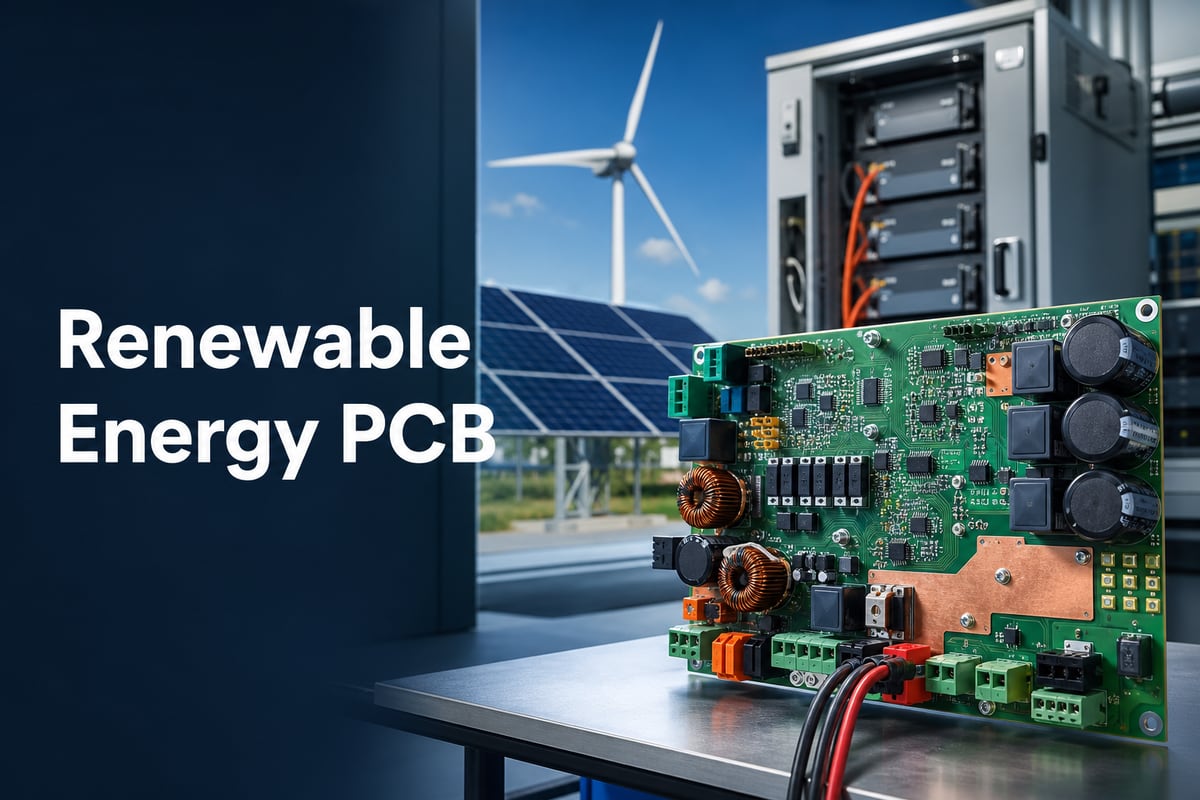
What PCB Requirements Matter Most in Renewable Energy Equipment?
Renewable energy equipment often runs for long periods while switching, converting, storing or measuring power. The PCB requirements should therefore be defined around the board’s actual electrical and operating conditions—not around a generic “industrial PCB” specification.
Key inputs include:
- Maximum continuous and peak current.
- Working voltage, transient voltage and isolation requirements.
- Acceptable conductor and component temperature rise.
- Ambient temperature, humidity, condensation and contamination exposure.
- Mechanical loads from connectors, transformers, inductors and installation.
- Required operating life and repeat-production volume.
- Inspection, electrical-test and functional-test requirements.
The quotation package should connect these requirements to the Gerber or ODB++ data, stack-up, fabrication notes, BOM, pick-and-place data, assembly drawings and test instructions. This gives the manufacturer enough information to identify conflicts before material is released.
Where Are PCBs Used in Renewable Energy Systems?
A PCB for renewable energy systems may perform power, control, sensing, communication or protection functions. Typical applications include:
- Solar inverter control and interface boards.
- Battery energy storage and battery-management assemblies.
- Wind-turbine control and monitoring electronics.
- Smart-grid communication and metering equipment.
- Charging, conversion and power-distribution modules.
- Energy monitoring, data acquisition and remote-control devices.
These applications do not all need the same board construction. A low-power communications board and a high-current conversion board can sit in the same product but require different copper, spacing, thermal and assembly decisions. Defining the board’s function first prevents an unnecessarily expensive specification—or one that is inadequate for the equipment.
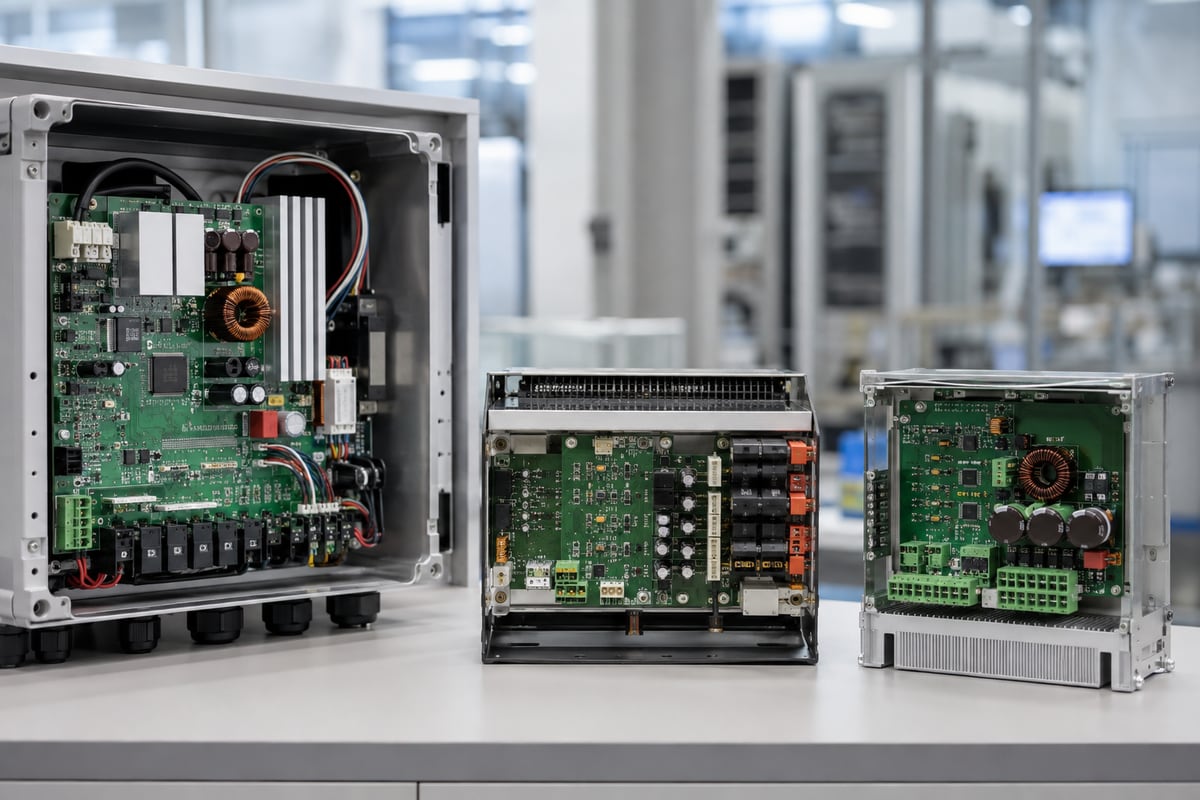
How Should a Renewable Energy PCB Handle High Current and High Voltage?
Current and voltage requirements affect different parts of the PCB and should be reviewed separately.
For current-carrying paths, engineers should confirm copper weight, conductor width, allowable temperature rise, via current capacity and connector ratings. Heavy copper may be appropriate for some power paths, but it is not automatically required across the entire board. Selective copper construction, wider conductors or a revised layer arrangement may provide a more manufacturable solution. EBest can review the released PCB data for manufacturability, while the customer retains responsibility for the electrical design and current calculations.
For high-voltage areas, creepage, clearance, isolation slots, exposed copper and material properties must match the equipment’s working environment and applicable standards. The high-voltage PCB review should also include solder-mask clearances, component bodies, assembly tolerances and possible contamination—not only nominal spacing in the layout.
Keeping power and control areas clearly defined also makes fabrication inspection and assembly verification more effective.
Which PCB Materials and Stackups Are Suitable for Renewable Energy Systems?
Material selection should follow the electrical, thermal, mechanical and environmental demands of the board.
- Standard FR-4 can support many control, monitoring and communication boards when its temperature and insulation properties meet the specification.
- High-Tg FR-4 can provide additional margin for elevated process or operating temperatures.
- Heavy-copper constructions can support higher-current paths when verified against layout and thermal requirements.
- Metal-core materials may help selected heat-generating applications, but they have different routing, isolation and assembly constraints.
- Multilayer constructions can separate power, control and communication functions while supporting controlled return paths and power distribution.
The stack-up should identify material family, finished thickness, copper weights, dielectric requirements and impedance requirements where applicable. Before production, EBest reviews the build against available materials and fabrication capability. Any proposed adjustment should be returned to the customer for approval rather than introduced as an undocumented substitution.
How Is Thermal Management Controlled in Renewable Energy PCBs?
Thermal control begins by understanding where heat is generated and how it can leave the assembly. In an inverter, charger or storage-control product, localized heating may come from power semiconductors, resistors, magnetic components, connectors or high-current copper paths.
Useful controls can include:
- Wider copper areas and internal or external copper planes.
- Thermal vias beneath or around heat-generating components.
- Component spacing that reduces concentrated hotspots.
- Copper balancing that supports both heat spreading and board manufacturability.
- Mechanical interfaces to heat sinks, housings or thermal materials defined by the customer.
- Temperature-rise or functional testing under agreed conditions.
These measures must be evaluated together. Adding copper or thermal vias can change soldering behaviour, board flatness and assembly heat demand. A DFM review helps reveal those manufacturing effects before the first build. For projects that need substantial conductor capacity, the heavy-copper PCB requirements should be confirmed early.
How Can Renewable Energy PCBs Withstand Harsh Operating Environments?
Outdoor cabinets, wind installations, solar equipment and energy-storage systems may expose electronics to humidity, condensation, dust, vibration, corrosive contaminants and repeated temperature changes. The appropriate protection depends on the enclosure and the board’s actual exposure.
Customers should define:
- Operating and storage temperature ranges.
- Humidity and condensation conditions.
- Expected dust, salt, chemical or corrosive exposure.
- Vibration and mechanical-support requirements.
- Cleaning and ionic-contamination limits.
- Conformal-coating material, masking and inspection requirements, when coating is specified.
Manufacturing controls may include material traceability, cleanliness requirements, controlled coating application and inspection, suitable component support and defined acceptance criteria. Conformal coating should not be treated as a universal solution: coating type, coverage, keep-out areas, rework rules and compatibility with connectors or test points must be agreed before production.
What Does Renewable Energy PCB Manufacturing Include?
Renewable energy PCB manufacturing should turn approved design data into a controlled, repeatable board—not simply reproduce a Gerber image.
At EBest, the manufacturing review can cover:
- Gerber or ODB++ completeness and consistency with fabrication notes.
- Stack-up, material, copper weight and finished-thickness confirmation.
- DFM findings affecting spacing, annular rings, drills, routing or panel utilization.
- Impedance, surface finish and special-process requirements where specified.
- Panelization and tooling information for customer approval when required.
- In-process inspection, final inspection and bare-board electrical testing.
- Lot and material traceability according to the agreed documentation level.
The customer receives identified questions before production release, allowing engineering decisions to be closed while changes are still manageable. This is especially valuable when several power, control and interface boards must be delivered for the same equipment build.
What Does Renewable Energy PCB Assembly Require?
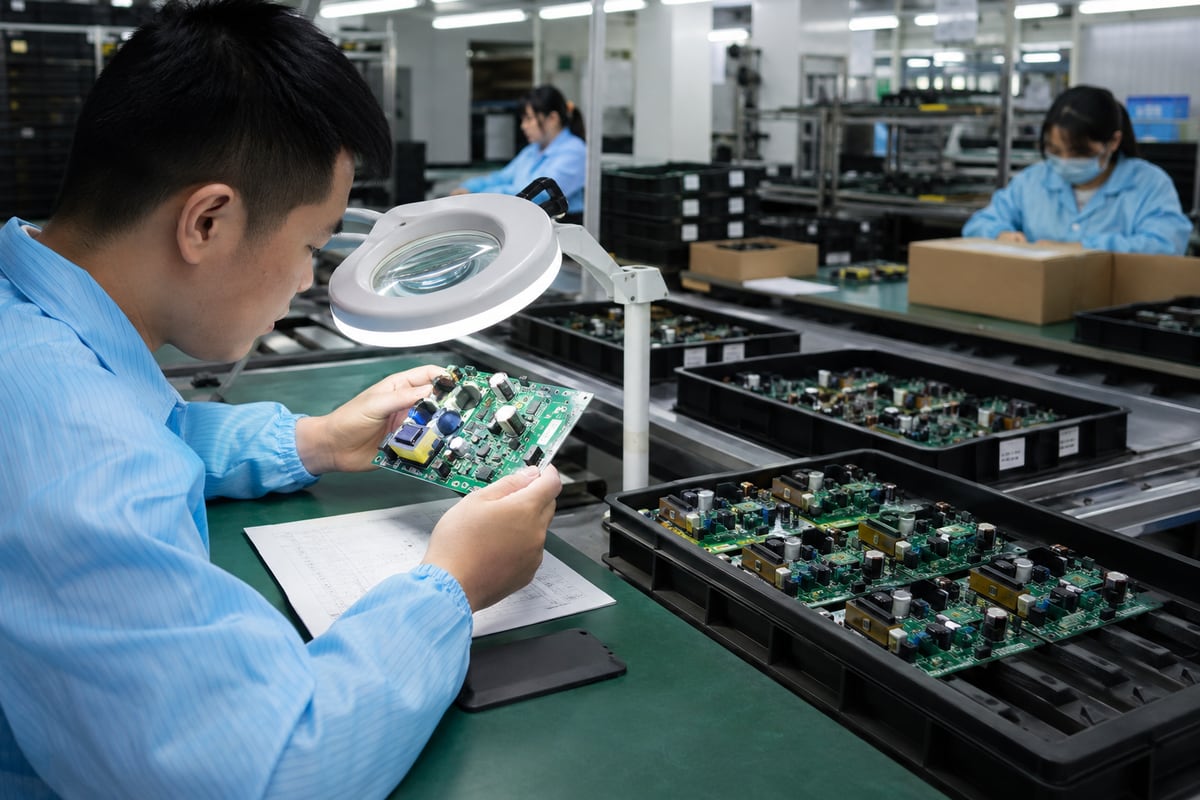
Renewable energy PCB assembly brings component sourcing, soldering, mechanical loading and test access into the manufacturing decision.
The BOM should be checked for manufacturer part numbers, lifecycle status, package consistency, approved alternatives and supply risk. EBest can provide a BOM optimization list when sourcing issues or unclear descriptions are found. No component substitution should be made without customer authorization.
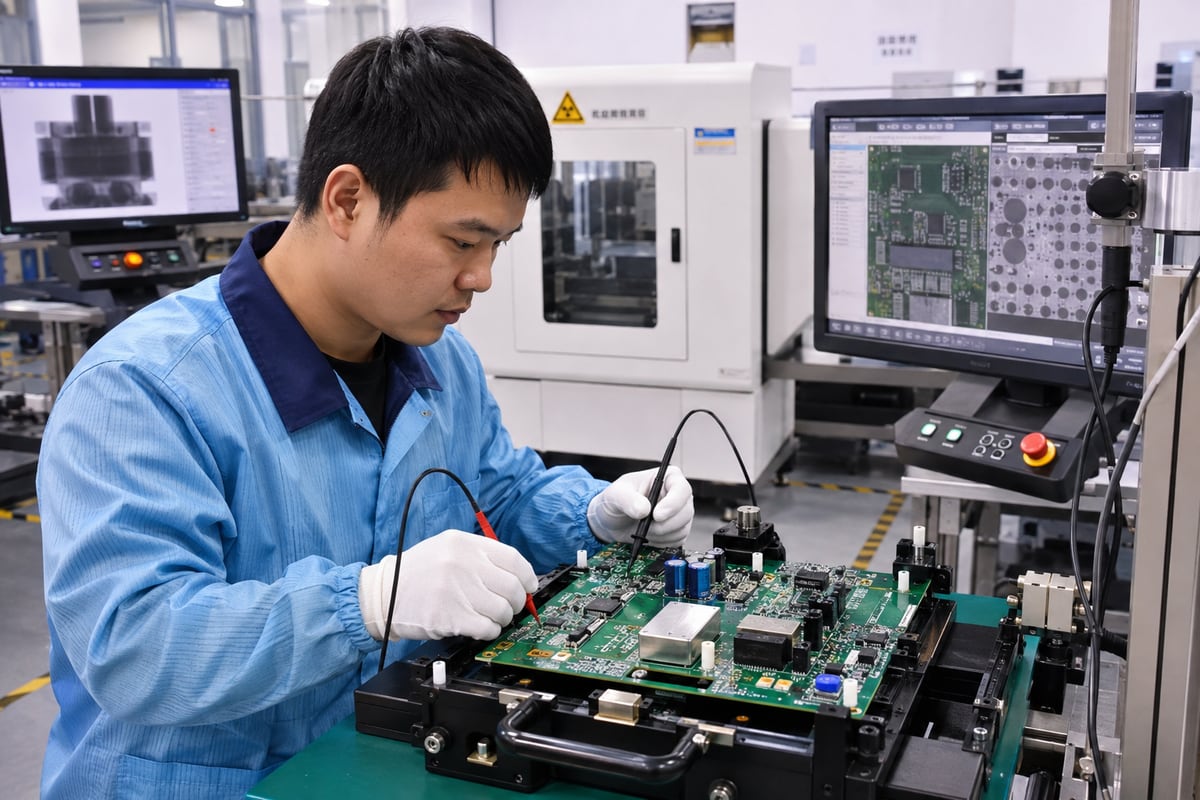
Assembly planning may combine SMT, through-hole, selective soldering, wave soldering or manual operations. Large capacitors, connectors, transformers, inductors and power components may need additional attention to polarity, seating, solder fill, mechanical support and process temperature. AOI can verify visible SMT features, while X-ray may be used where hidden joints or package types require it.
By combining PCB fabrication, component procurement and PCBA assembly, EBest reduces handoffs between separate suppliers. One sales contact supported by three engineers helps customers obtain coordinated answers on PCB, component and assembly questions instead of reconciling several disconnected responses.
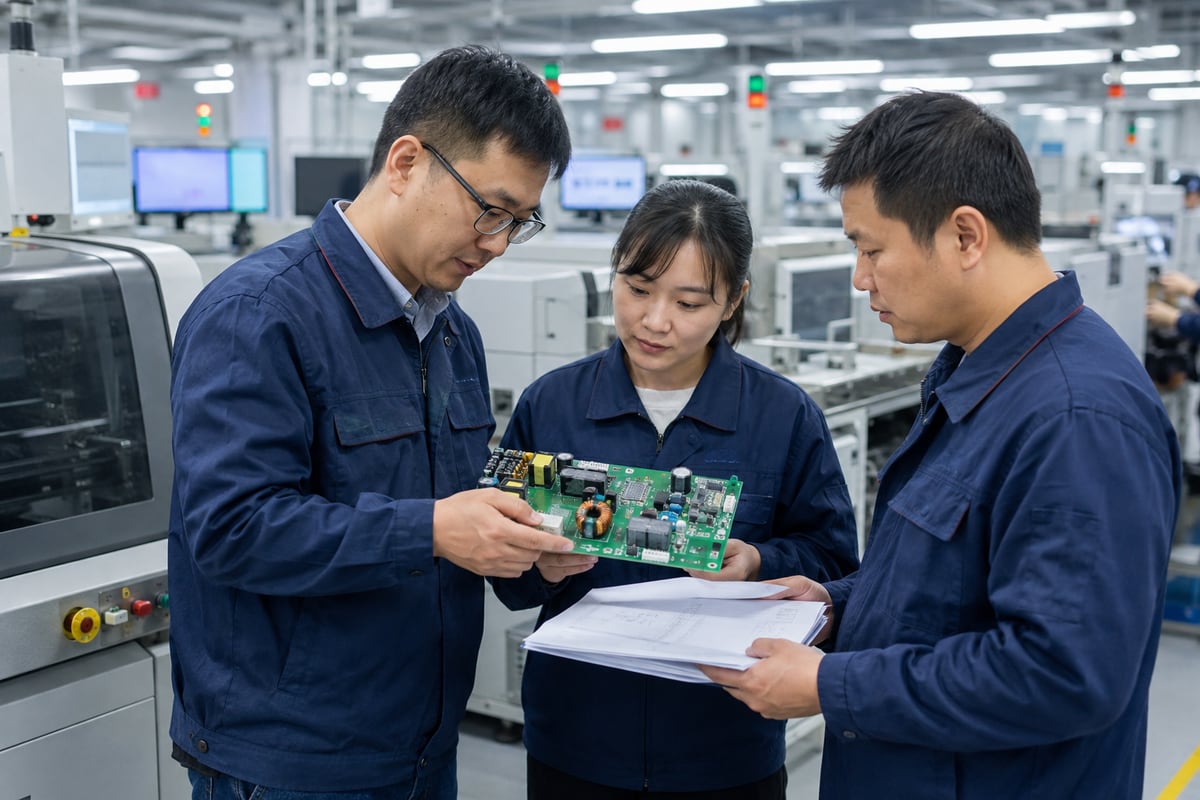
How Should Renewable Energy PCBs Be Inspected and Tested?
Testing should produce evidence tied to the customer’s acceptance requirements. A long list of equipment names is less useful than a clear explanation of what is inspected, when it is inspected and how results are recorded.
Depending on the project, the control plan may include:
- Incoming verification for PCBs and critical components.
- Solder-paste inspection and AOI for applicable SMT processes.
- X-ray inspection for hidden solder joints when required.
- Bare-board electrical testing.
- In-circuit testing when suitable test access and fixtures are available.
- Programming and functional testing to customer-provided procedures.
- First-article verification against approved drawings and BOM revisions.
- Serial-number, lot and test-result traceability at the agreed level.
EBest’s digital workshop can trace material and product batches, production cycles and manufacturing progress within five seconds. Quality systems include ISO 9001, ISO 13485, IATF 16949 and AS9100D. The applicable documentation and test scope should still be agreed for each order, because a certificate does not replace product-specific acceptance criteria.
How Do You Move a Renewable Energy PCB From Prototype to Repeat Production?
A successful prototype proves more than basic function when its materials, revisions and test conditions are recorded well enough to support the next build.
Before repeat production, customers and the manufacturing team should close:
- DFM findings and approved engineering changes.
- PCB, BOM, firmware and assembly-document revisions.
- Approved component alternatives and sourcing decisions.
- Test programs, fixtures and acceptance limits.
- First-article or golden-sample references where applicable.
- Packaging, labeling and traceability requirements.
- Pilot-build results and any corrective actions.
EBest supports samples and low-volume orders so engineering teams can verify the product before scaling. Once the build package is stable, the same controlled data can be used for repeat orders. For suitable PCBA projects with complete, confirmed files and available materials, EBest can support delivery in approximately 1.5 weeks; the confirmed schedule depends on board complexity, component availability, testing and order quantity.
What Should You Check When Choosing a Renewable Energy PCB Manufacturer?
A suitable manufacturer should help you obtain a production result—not merely return the lowest unit price. Before placing an order, check whether the supplier can provide:
- PCB fabrication and PCBA assembly under coordinated project control.
- DFM feedback linked to the released design files.
- BOM review, authorized sourcing and alternative-part control.
- Relevant high-current, high-voltage, thermal and material capability.
- Prototype and low-volume support before repeat production.
- Inspection and customer-defined testing with usable records.
- Revision, material, batch and product traceability.
- Quality certifications relevant to your market and project.
- Clear lead-time assumptions and responsive engineering communication.
EBest has focused on PCB and PCBA manufacturing for 20 years, operates its own PCB and PCBA factories and works with more than 1,000 supply-chain partners. More importantly for a customer, the integrated service means one team can review manufacturability, components, assembly and testing before quoting a delivery plan.
For an accurate review, send the Gerber or ODB++ files, fabrication drawing, stack-up, BOM, pick-and-place data, assembly drawings, expected quantities and test requirements to sales@bestpcbs.com. EBest will review the manufacturing package and identify the information needed to prepare the quotation.
FAQs About Renewable Energy PCB Manufacturing and Assembly
What PCB materials are used in renewable energy equipment?
FR-4 is common for control and monitoring boards. High-Tg FR-4, heavy-copper constructions, metal-core materials or multilayer stack-ups may be considered when temperature, current, insulation or heat-spreading requirements justify them. The correct choice depends on the board’s function and operating environment.
Do renewable energy PCBs always require heavy copper?
No. Heavy copper is useful when the verified current and temperature-rise requirements demand it. Many communication, sensing and control boards can use standard copper weights. The current path, conductor geometry, via structure and cooling conditions should determine the requirement.
What copper thickness is suitable for high-current power equipment?
There is no single suitable value for every product. Current, trace width, layer position, allowable temperature rise, duty cycle and cooling conditions must be considered together. The customer defines the electrical requirement; the manufacturer confirms whether the released construction can be fabricated consistently.
Can one supplier handle both PCB fabrication and assembly?
Yes. EBest provides PCB fabrication, component sourcing and PCBA assembly as an integrated service. This can simplify revision control and reduce the coordination required between separate board, component and assembly suppliers.
What testing is available for renewable energy PCB assemblies?
Available controls can include incoming inspection, AOI, X-ray where required, bare-board electrical testing, ICT and customer-defined functional testing. The final test plan depends on the design, test access, fixtures, software and acceptance criteria supplied for the project.
Can renewable energy PCBs be prototyped before volume production?
Yes. Prototype and low-volume builds allow engineers to verify fit, function, assembly conditions and test coverage before repeat production. Changes should be documented and incorporated into the controlled production files after validation.
What files are needed for a renewable energy PCB quotation?
Send Gerber or ODB++ data, fabrication notes, stack-up requirements, BOM, pick-and-place files, assembly drawings, quantities and testing instructions. Providing complete and revision-matched files helps the engineering team return a more accurate quotation and schedule.
Ready to move your renewable energy electronics from approved files to a controlled build? Send your project package to sales@bestpcbs.com for DFM, PCB fabrication, sourcing, assembly and testing review. EBest will help you establish a practical manufacturing route for your renewable energy PCB.
You may also like
Tags: Renewable Energy PCB, Renewable Energy PCB Assembly, Renewable Energy PCB Manufacturing