PCB BOM management becomes most important when a prototype turns into recurring PCBA production. At that stage, buyers are not only asking who can assemble boards. They need a supplier who can keep component information controlled, watch sourcing risks, handle approved alternatives, and prevent design engineers from being pulled back into every reorder.
For many buyers, the real pain starts between orders. A part goes out of stock, an IC becomes long-lead, a connector needs a replacement, or an old BOM revision returns during repeat production. If the supplier only reacts after a purchase order is placed, the project can lose time quickly. This guide explains how BOM control affects quotation, sourcing, assembly, lead time, repeat orders, and how EBest Circuit supports BOM-to-PCBA production with practical manufacturing follow-up.
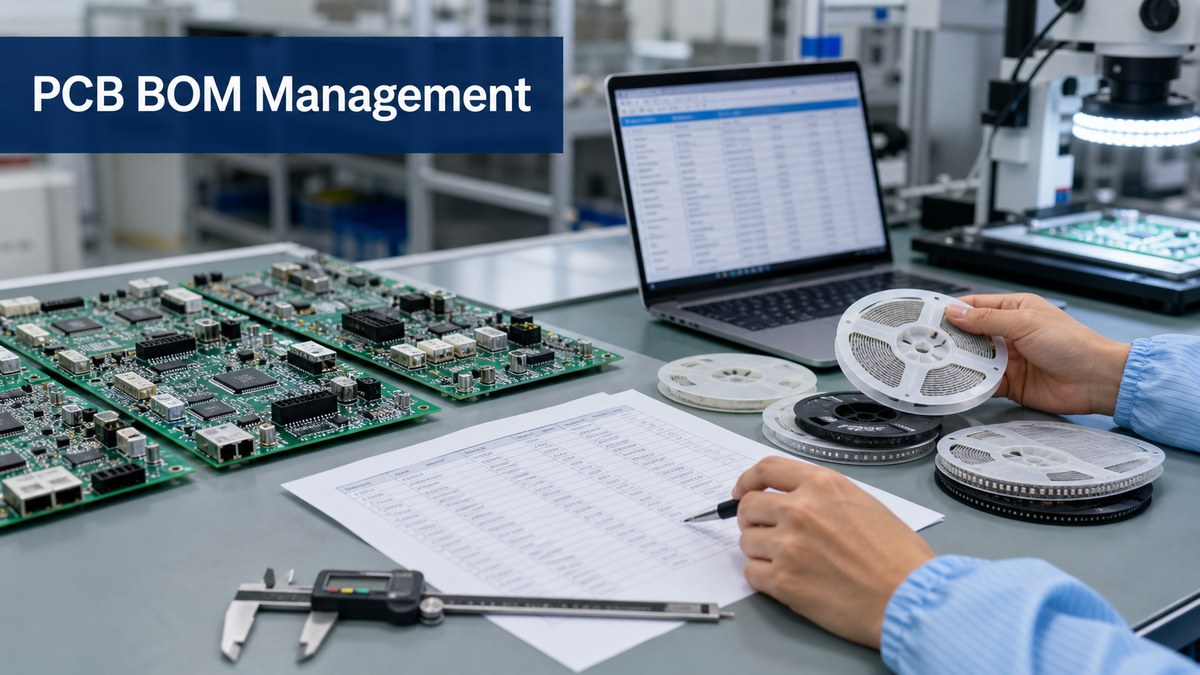
Why PCB BOM Management Matters Before Production
The BOM is the bridge between engineering files and real PCBA production. Gerber files define the PCB, but the BOM tells the supplier what must be purchased, mounted, inspected, tested, and repeated in the next batch.
For a buyer, strong BOM control helps answer practical questions before money and time are committed:
- Can each part be identified by a complete manufacturer part number?
- Are approved brands, values, packages, and tolerances clear?
- Are any parts obsolete, NRND, long-lead, or hard to source?
- Are alternative parts allowed, and who can approve them?
- Does the BOM match the CPL, assembly drawing, and PCB footprint?
- Will the quoted lead time still work after real sourcing checks?
A BOM problem is not only a spreadsheet problem. It can force the production material list to change, require MRP to run again, delay material kitting, increase warehouse communication, and create avoidable inventory cost. That is why BOM review should happen before PCBA production, not after the SMT line is ready.
PCB BOM Details Buyers Should Confirm
A good PCB BOM should be clear enough for quotation, purchasing, assembly, inspection, and repeat production. If a supplier has to guess, the quotation may look fast, but the risk is only pushed later.
Buyers should confirm these details before sending an RFQ:
| BOM Detail | Why It Matters |
|---|---|
| Manufacturer part number | Reduces wrong-part purchasing |
| Quantity per board | Affects total component cost |
| Package and footprint | Helps match pads and SMT process |
| Value and tolerance | Avoids electrical mismatch |
| Polarity or orientation | Reduces assembly mistakes |
| Approved alternatives | Speeds shortage response |
| DNI/DNP parts | Prevents unwanted mounting |
| Revision number | Keeps all files aligned |
The most useful BOM is not the longest BOM. It is the BOM that removes guessing. For PCBA buyers, complete part numbers, controlled alternatives, clear mounting status, and revision discipline usually matter more than extra notes that no one can act on.
BOM in PCB Assembly Issues That Stop Production
Many PCBA delays start with small BOM issues that were not visible during the first quotation. Once parts are being purchased and the job is moving toward production, these issues can stop the build.
Common problems include:
- a distributor code is listed instead of the real manufacturer part number
- the part value is clear, but package size is missing
- the BOM says one connector, while the footprint matches another
- the CPL direction does not match the silkscreen or datasheet
- a polarized component has no clear orientation note
- the customer changed the BOM but did not update the assembly drawing
- a substitute part is available, but it has not been approved
- a test point, programming connector, or fixture requirement is missing
These problems affect more than purchasing. They can delay SMT programming, stencil confirmation, first article inspection, functional testing, and final shipment. A supplier that catches these problems before production helps the buyer avoid expensive “stop and clarify” moments.
For controlled PCBA production, BOM information also needs to reach the workshop correctly. Material verification, inspection records, and anti-wrong-material checks help reduce the risk that an approved BOM is interpreted one way by purchasing and another way on the production floor.
BOM Issues That Change Your PCBA Quote
A PCBA quote is only reliable when the BOM is reliable. If the BOM contains unclear, risky, or incomplete component information, the first price may not reflect the real build cost.
BOM issues can change the quote in several ways:
- Wrong or missing MPN: the buyer may receive a price based on a different part.
- Unclear package: SMT difficulty, stencil opening, or placement risk may change.
- Shortage parts: spot-market sourcing may raise cost or reduce traceability.
- MOQ or package type: reels, cut tape, tubes, trays, and loose parts affect purchasing and handling.
- Unapproved substitutes: price may change after engineering approval.
- Missing testing scope: fixture, programming, or functional test time may not be included.
This is why buyers should not evaluate a supplier only by the fastest initial quote. A responsible PCBA quote should expose BOM questions early, especially for connectors, ICs, power components, LEDs, relays, sensors, and parts with tight tolerance or lifecycle risk.
For repeat production, price breaks also depend on BOM stability. A quote for 50, 125, 250, or 500 units can change if a key part has limited stock, high MOQ, or a substitute that still needs approval. The earlier these risks are visible, the easier it is for the buyer to compare real production cost.
Component Availability Before Purchasing
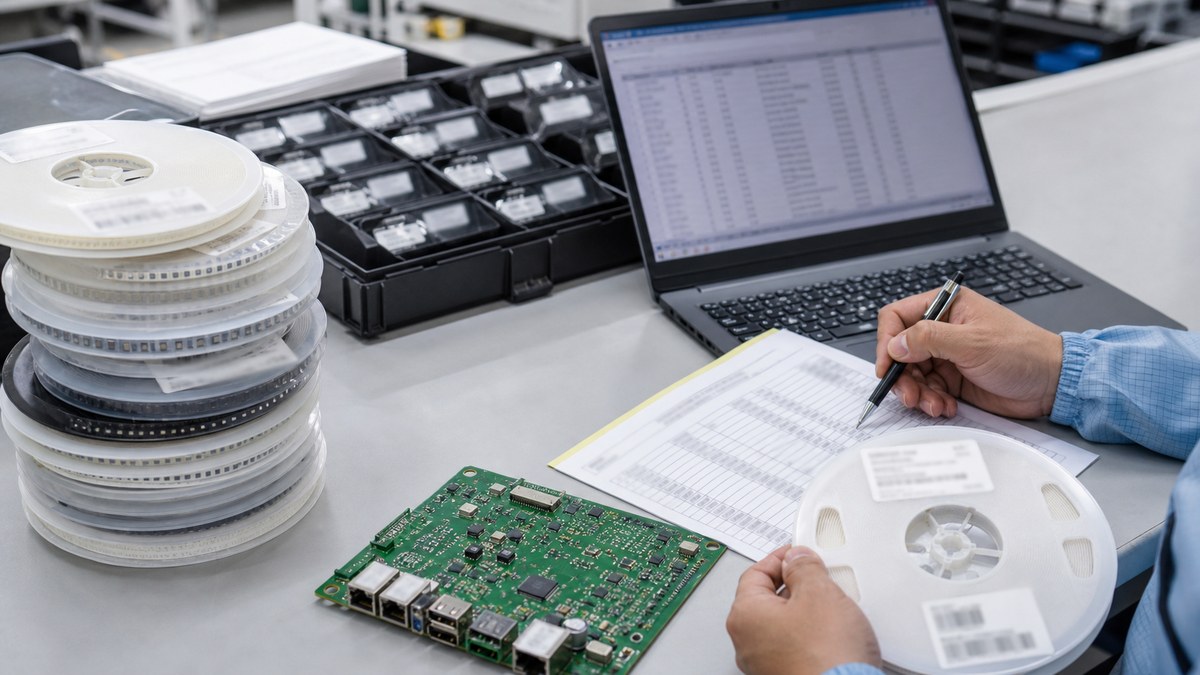
Component availability is one of the biggest differences between a “quoted BOM” and a “buildable BOM.” A BOM may look complete, but if key parts are out of stock, obsolete, restricted, or available only in small lots, the project can still stall.
For recurring PCBA production, availability should not be checked only after a purchase order arrives. Buyers often want the supplier to watch EOL, NRND, shortage, and long-lead risks between orders, especially when the same board is reordered again and again.
Before purchasing, EBest Circuit checks whether important components can be sourced with the required quantity, package, lead time, and supplier traceability. For high-risk parts, our team may return questions before buying instead of waiting until material shortage affects production.
Useful checks include:
- stock status for key ICs and connectors
- lead time for long-cycle components
- MOQ and packaging method
- lifecycle risk such as obsolete or NRND parts
- supplier source and traceability needs
- consistency between BOM, purchase request, PO, and production material list
For buyers, this step protects both cost and delivery. It also helps move sourcing responsibility away from the buyer’s design team and into a controlled manufacturing process.
Warehouse control matters here too. When receiving, storage, and material issuing are traceable, the BOM review is connected with real kitting status instead of staying as a spreadsheet discussion. This is especially useful when one missing reel, tray, tube, or through-hole part can hold the full PCBA batch.
Approved Alternatives for Shortage Parts
Alternative parts can save a project, but only when they are controlled. A random replacement can create electrical risk, assembly risk, testing failure, or customer approval problems.
A practical BOM should separate:
- Preferred parts: the first choice for quotation and purchasing
- Approved alternatives: parts already accepted by the customer
- Temporary substitutes: used only for a specific batch or urgent order
- Not-approved parts: available in the market but not allowed for production
Some buyers prepare a substitution authority before recurring production. This can define which parts may be replaced without delay, which parts need engineering approval, what data the supplier must provide, and whether the approval is valid for one batch or future repeat orders.
EBest Circuit can help buyers review alternative component options, but substitution should always stay under customer approval. For example, a resistor or capacitor may look easy to replace, but tolerance, voltage rating, temperature coefficient, package size, and brand restrictions can matter. For connectors, ICs, relays, sensors, and power devices, the approval threshold is usually higher.
Clear alternative rules help prevent a common production problem: purchasing uses one part, the production material list shows another, and engineering approval refers to a different BOM revision. When those three records do not match, the project becomes harder to control.
PCBA Lead Time Risks from BOM Problems
Lead time is often delayed before assembly starts. If the BOM is unclear, sourcing and production planning cannot move cleanly.
Typical BOM-related lead time risks include:
- long-lead ICs are found too late
- shortage parts need customer approval
- package mismatch requires footprint confirmation
- incoming PCB or component issues require rework or replenishment
- test method is missing, so fixture or programming preparation is delayed
- BOM revision changes after purchasing has started
- kitting cannot be completed because one critical part is not ready
For delivery control, the useful question is not only “How many days is the lead time?” Buyers should also ask how the supplier tracks material readiness, PCB incoming quality, SMT line timing, planned warehouse date, and WIP exceptions.
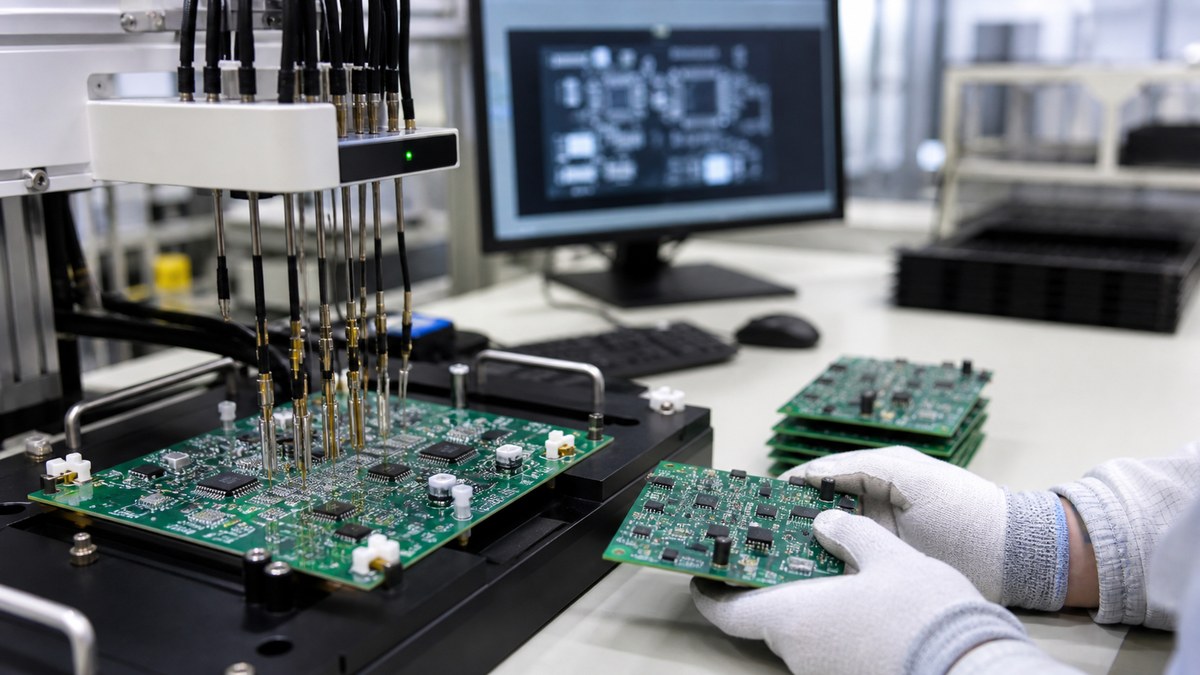
At EBest Circuit, BOM review is connected with component sourcing, PCB fabrication status, SMT/THT production planning, and testing preparation. This helps reduce last-minute surprises, especially for prototype validation, small-batch builds, and repeat PCBA orders.
BOM Version Control for Repeat Orders
Repeat orders should be easier than first builds, but only if the BOM version is controlled. If the first order used emergency substitutes, verbal approvals, or scattered email notes, the repeat order can become another new project.
A controlled repeat-order BOM should answer:
- Which BOM revision was actually built last time?
- Were any temporary alternatives used?
- Did the customer approve those alternatives for future orders?
- Did the assembly drawing, CPL, and test requirement change?
- Were any SMT program, stencil, fixture, or inspection notes updated?
- Were first article or production issues recorded for the next batch?
Repeatability depends on more than placing the same PO again. SMT program records, MES process maintenance, component library data, first article confirmation, and production notes all help the next order run with fewer questions.
Traceable production records make repeat orders easier to manage. MES-based process tracking can connect BOM version, material status, production steps, inspection records, and shipment follow-up, so the next batch does not depend only on scattered emails or manual notes.
For buyers with active boards in continuous production, this is often the point that decides supplier fit. They do not want every reorder to become another sourcing project for design engineers. They want approved records, clear responsibility, and a supplier who can flag BOM risk before the next order is already late.
PCB BOM Management Case Study at EBest Circuit
A customer sent EBest Circuit a 4-layer industrial control PCBA project for a pilot run of 120 pieces. The order looked simple at first: FR4 PCB fabrication, SMT assembly, several through-hole connectors, and functional testing after assembly.
Project requirements:
- PCB: 4-layer FR4 board
- Quantity: 120 PCBAs for pilot validation
- Assembly: SMT plus through-hole connectors
- Components: MCU, power ICs, relays, terminal blocks, LEDs, resistors, capacitors, and connectors
- Testing: power-on check and customer-defined functional test
- Goal: validate the build before repeat production
During BOM review, several issues were found before purchasing:
- two BOM lines used supplier codes instead of full manufacturer part numbers
- one connector footprint needed datasheet confirmation
- several polarized components needed clearer orientation marks
- one relay had a longer sourcing lead time than expected
- two ICs had possible shortage risk
- the test method did not define pass/fail voltage limits
Before the repeat batch, one control IC moved to a long lead time. Instead of waiting for the shortage to stop production, EBest Circuit checked available alternatives, compared package and key electrical requirements, prepared sourcing information, and returned the option to the customer for approval before purchasing.
EBest Circuit solution:
- reviewed Gerber, BOM, CPL, and assembly drawing together
- returned BOM questions before component purchasing
- checked connector footprint against the datasheet
- confirmed polarity and orientation before SMT programming
- listed sourcing options for risky ICs under customer approval
- aligned purchasing, production material list, and assembly preparation
- confirmed testing points before the pilot build
- recorded approved decisions for the repeat order
Result:
The buyer received a clearer quotation and a more controlled pilot build. More importantly, the project files became cleaner for the next repeat order. Instead of treating BOM problems as isolated purchasing questions, the project was reviewed as a full PCBA build: PCB, BOM, sourcing, assembly, inspection, testing, and repeat production.
EBest Circuit BOM-to-PCBA Production Support
EBest Circuit (Best Technology) is a China-based PCB and PCBA manufacturer founded in 2006. We support buyers who need PCB fabrication, BOM review, component sourcing, SMT assembly, through-hole assembly, mixed assembly, inspection, testing support, and repeat-order follow-up.
Our support is useful when a buyer wants one team to connect BOM details with real production requirements. We do not just receive a spreadsheet and purchase parts blindly. Before production, the project team can review BOM details, Gerber files, CPL data, assembly drawings, stencil needs, tooling or fixture requirements, SMT program preparation, test requirements, and special production notes.
For production control, BOM review can also be connected with material verification, warehouse records, MES process tracking, inspection sheets, and testing preparation. This helps buyers see that BOM management is not separate from the factory floor. It is part of how the order moves from file review to purchasing, kitting, assembly, inspection, and delivery.
EBest Circuit provides customized PCB and PCBA support across:
- FR4 PCB
- multilayer PCB
- metal core PCB
- ceramic PCB
- flexible and rigid-flex PCB
- high-frequency PCB
- special PCB
- SMT PCBA
- through-hole PCBA
- mixed assembly
- component sourcing
- PCBA testing support
With more than 20 years of PCB/PCBA experience, about 260,000 square feet of monthly PCB capacity, and more than 1,000 different board types completed each month, EBest Circuit can support prototype validation, small-batch orders, and repeat production projects.
For buyers, the value is not only “BOM checking.” The value is having a manufacturing partner who can connect RFQ review, sourcing risk, approved alternatives, material kitting, SMT/THT assembly, testing preparation, and repeat-order records into one controlled production path.
FAQs About PCB BOM Management
What is PCB BOM management?
PCB BOM management is the process of keeping the PCB bill of materials accurate, approved, sourced, and aligned with the assembly files before PCBA production. It helps prevent wrong-part purchasing, quotation changes, production delays, and repeat-order confusion.
Why does a BOM affect PCBA quotation?
A BOM affects PCBA quotation because component price, package, availability, MOQ, approved alternatives, assembly difficulty, and testing scope all influence the final cost. An incomplete BOM may lead to a quote that changes after sourcing starts.
Can a supplier replace parts in my BOM?
A supplier can suggest alternatives, but the customer should approve replacement parts before purchasing or production. This is especially important for ICs, connectors, relays, sensors, power components, and any part with electrical, mechanical, or certification requirements.
Should BOM risk be checked between repeat orders?
Yes. For recurring PCBA production, BOM risk should be reviewed between orders when possible. EOL, NRND, shortage, long-lead, and approved alternative status can change before the next PO is placed.
What files should be checked together with the BOM?
The BOM should be checked with Gerber files, CPL or pick-and-place data, assembly drawings, schematics when available, test requirements, and any special production notes. These files should match the same project revision.
In Conclusion, PCB BOM management helps buyers control PCBA cost, sourcing risk, lead time, assembly quality, and repeat production stability before the order reaches the line. If you need a PCB and PCBA manufacturer to review your BOM, Gerber, CPL, assembly notes, component risks, and testing requirements before production, contact EBest Circuit at sales@bestpcbs.com.