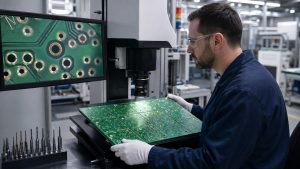
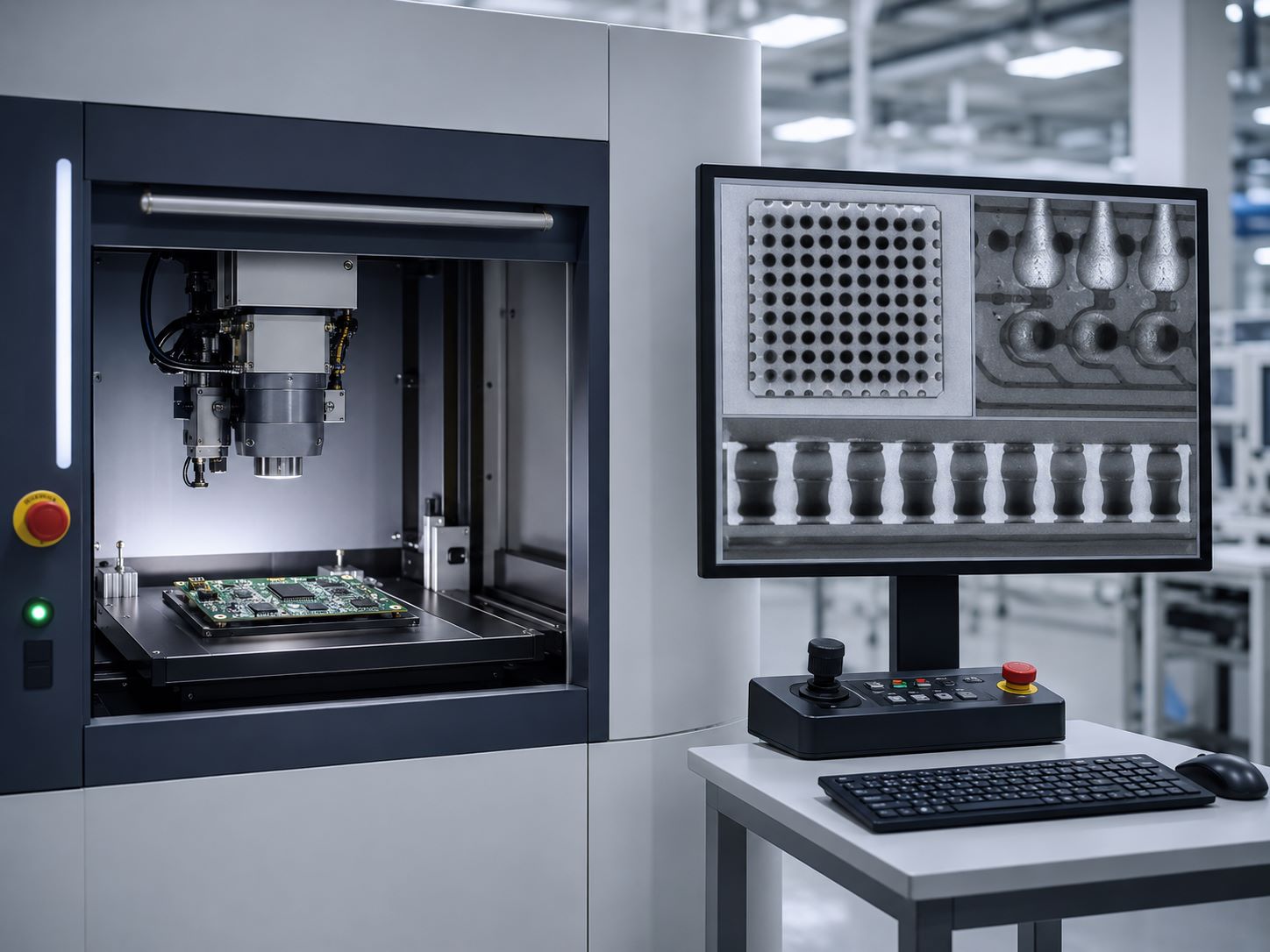
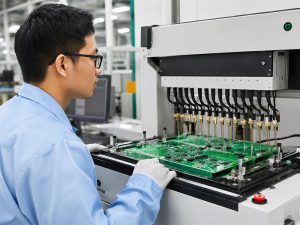
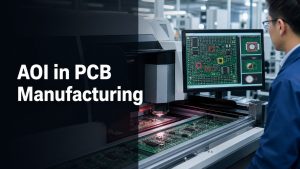
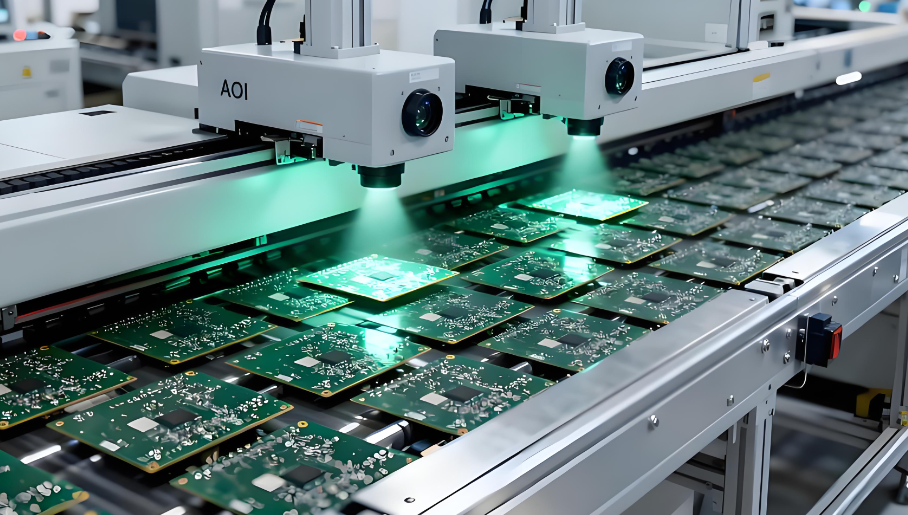
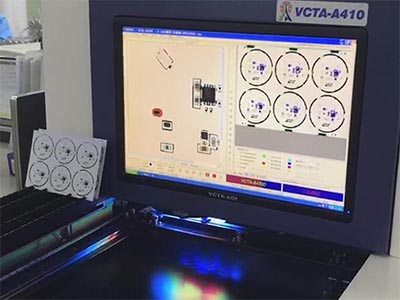
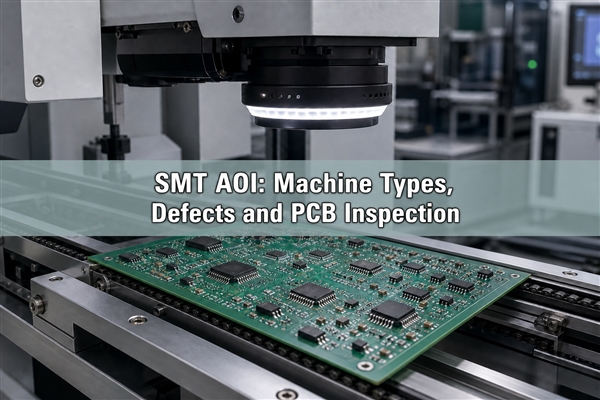
AOI in PCB manufacturing means automated optical inspection: a camera-based inspection process used to find visible defects on bare PCBs or assembled PCBAs before they move to the next production step. It helps manufacturers catch issues such as missing components, wrong polarity, solder defects, bridging, insufficient solder, misalignment, surface damage, and certain pattern defects, but it does not replace every electrical, X-ray, or functional test.
This guide explains where AOI fits in PCB and PCBA quality control, what it can detect, what it cannot prove, and what buyers should ask before sending an RFQ for production or assembly.
AOI in PCB Manufacturing at a Glance
AOI is a fast visual inspection method that compares PCB or PCBA images against programmed inspection rules. It is useful because many defects are visible before the board reaches final testing.
Inspection point
AOI can help check
AOI cannot fully replace
Bare PCB
Pattern defects, solder mask issues, surface contamination, open or short risk clues
Full electrical testing and final acceptance criteria
Hidden solder joint X-ray or powered functional testing
Final PCBA
Visible assembly defects and workmanship consistency
Firmware, load, signal, thermal, or application-specific tests
Where AOI Fits in the PCB Production Flow
AOI is usually placed after a manufacturing or assembly step where visible defects should be caught before more value is added to the board. In SMT assembly, AOI is commonly used after solder paste and reflow-related steps depending on the process plan. In bare PCB manufacturing, optical inspection can help flag pattern or surface issues before later processing.
For buyers, the important question is not simply whether AOI exists. Ask where it is used, which defect types are checked, and whether findings are reviewed by trained staff before boards are released.
What AOI Can Detect on PCBAs
AOI is strongest at detecting visible component and soldering problems on assembled boards. It is especially useful when there are many SMT parts and manual visual inspection would be slow, inconsistent, or easy to miss.
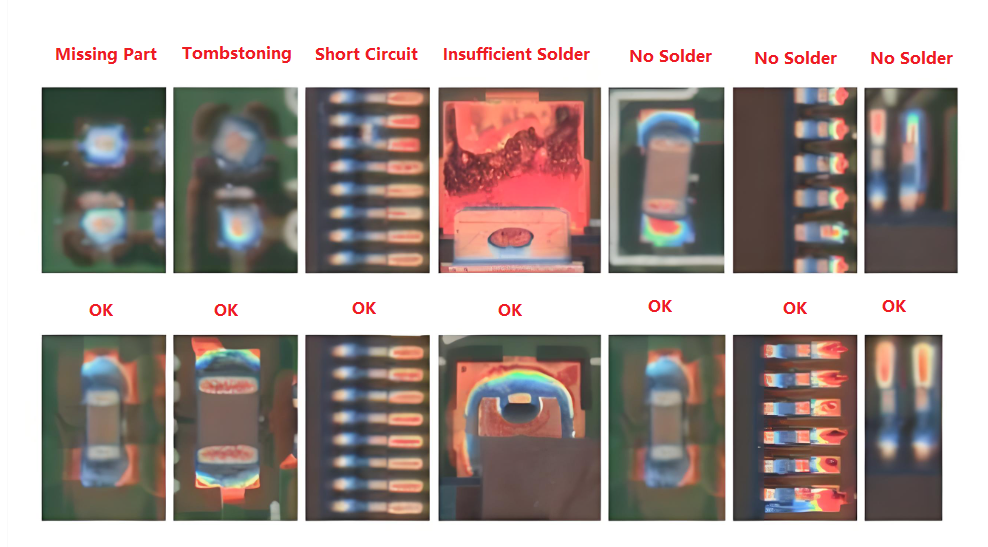
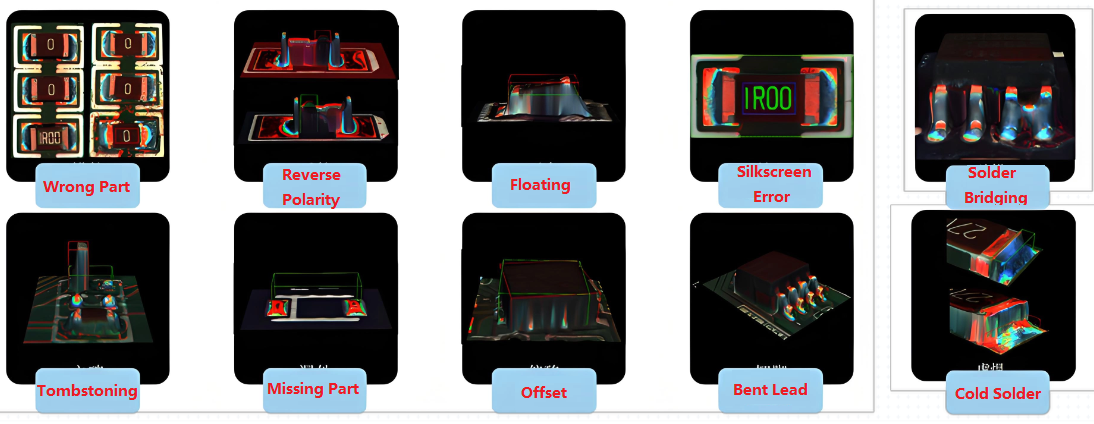
Missing, shifted, skewed, or rotated components
Wrong polarity on LEDs, diodes, ICs, or capacitors when markings are visible
Solder bridges and visible insufficient solder
Tombstoning, lifted leads, and package placement issues
Surface contamination or visible damage
For assembled projects, AOI should connect with the broader PCBA service workflow rather than standing alone as a checkbox.
What AOI Can Detect on Bare PCBs
For bare boards, optical inspection can help identify visible pattern, solder mask, silkscreen, and surface issues before shipment or assembly. It may flag scratches, contamination, missing features, copper pattern problems, solder mask misregistration, or visual abnormalities that need review.
AOI is only one layer of control. Bare-board electrical testing, process control, material verification, and final inspection still matter, especially for boards with fine features, controlled impedance, high current, or special materials.
AOI vs SPI, X-Ray and Functional Testing
AOI checks visible features, SPI checks solder paste, X-ray checks hidden structures, and functional testing checks whether the circuit works under defined conditions. These tests answer different questions.
Method
Best for
Typical limit
SPI
Solder paste volume and print quality before placement
Does not prove final component function
AOI
Visible placement and solder defects
Cannot see every hidden joint or prove circuit function
X-ray
BGA, QFN, hidden solder joints, voiding review
Not usually needed for every simple board
Functional test
Power, signal, firmware, application behavior
Requires buyer-defined test plan or fixture
AOI Limits Buyers Should Understand
AOI reduces visual defect risk, but it does not guarantee that every board will pass electrical or application testing. It depends on the inspection program, image quality, board design, component markings, operator review, and whether the defect is visible to the camera.
Hidden BGA solder joints, internal layer issues, marginal electrical behavior, thermal performance, firmware problems, and intermittent failures may require other test methods. Buyers should define the risk level and ask which inspection combination is appropriate.
How AOI Supports DFM and Process Feedback
AOI findings can feed back into DFM and process improvement when recurring defects point to pad design, stencil, placement, soldering, or component issues. If the same defect appears repeatedly, the supplier should not only sort boards. They should investigate the cause.
Examples include solder bridging caused by pad spacing, tombstoning caused by land pattern imbalance, weak polarity markings, or recurring placement offsets. This is why quality control should connect to engineering review before repeated production.
AOI for SMT, Through-Hole and Mixed Assembly
AOI is most common in SMT inspection, but mixed assemblies still need a planned inspection approach. Through-hole parts, connectors, large components, and hand-soldered features may need visual inspection, selective process checks, or functional testing in addition to AOI.
For through-hole-heavy projects, review the assembly route and inspection plan before quoting. The through-hole assembly page can be useful when a project combines SMT and mechanical-strength components.
What Buyers Should Ask About AOI Before RFQ
Buyers should ask what AOI checks, when it is used, what defect criteria apply, and what other tests are needed for the product. A supplier that only says “AOI included” has not given enough information for a high-risk board.
At which production stages is AOI used?
Which defect types are programmed for this board?
Are AOI findings reviewed before release?
Does this board need X-ray because of BGA, QFN, or hidden joints?
Does the buyer need to provide firmware, fixtures, or functional test requirements?
Cost and Lead-Time Impact of AOI
AOI can add inspection steps, but it often reduces downstream rework risk for assemblies with many components or visible soldering risk. The impact depends on board complexity, production volume, inspection program setup, and whether other tests are also required.
For quote planning, include test and inspection expectations early instead of adding them after the price is approved. The custom PCB cost guide can help buyers understand why inspection and testing should be treated as cost factors, not afterthoughts.
RFQ Checklist for AOI and PCB Quality Control
An RFQ should define the board files, assembly files, component risk, and inspection expectations clearly enough for the supplier to recommend the right quality plan.
Gerber or ODB++ files and drill data
BOM and CPL if assembly is required
Assembly drawing, polarity notes, and test point requirements
Package types such as BGA, QFN, fine-pitch ICs, connectors, or LEDs
Required inspection: AOI, X-ray, electrical testing, programming, or functional testing
Acceptance criteria and known product risks
Frequently Asked Questions
What does AOI mean in PCB manufacturing?
AOI means automated optical inspection. It uses cameras and programmed inspection rules to identify visible defects on bare PCBs or assembled PCBAs.
Can AOI replace functional testing?
No. AOI checks visible defects. Functional testing checks whether the circuit works under defined electrical or application conditions. Many projects need both.
Is AOI needed for every PCB assembly?
Not always. It is most valuable when there are many SMT components, fine-pitch packages, polarity-sensitive parts, or higher reliability requirements. Simple boards may need a lighter inspection plan.
Does AOI find BGA solder defects?
AOI can inspect visible features around BGA placement, but hidden solder joints usually require X-ray or another suitable inspection method.
What should I send if I need AOI and testing?
Send Gerber or ODB++ files, BOM, CPL, assembly drawing, package notes, test requirements, firmware or fixture needs, quantity, and acceptance criteria.
Send PCB Inspection and Assembly Requirements
If your PCB or PCBA project needs AOI, X-ray, functional testing, or a defined quality-control plan, send your Gerber or ODB++ files, BOM, CPL, assembly drawing, package details, quantity, and test requirements to the Best Technology / bestpcbs engineering team at sales@bestpcbs.com. The team can review which inspection steps fit the board design, assembly risk, and shipment requirements before production starts.
Printed circuit board inspection is the process of checking PCB quality before, during, and after manufacturing or assembly. It helps confirm that the board matches the design files, IPC requirements, customer specifications, and the real operating needs of the final product.
At EBest Circuit (Best Technology), printed circuit board inspection is handled as part of the full manufacturing workflow. With 20 years of PCB and PCBA manufacturing experience, our team combines DFM review, fabrication control, AOI, X-ray inspection, electrical testing, and assembly quality checks to support reliable production from prototype to mass production. If you are looking for a PCB or PCBA manufacturing partner with reliable inspection and full-process quality support, please feel free to send your Gerber files, BOM, and assembly drawings to sales@bestpcbs.com. Our engineering team will be glad to review your project requirements and provide suitable manufacturing support.
What Is Printed Circuit Board Inspection?
Printed circuit board inspection is a quality control process used to examine whether a PCB or PCBA meets the required design, manufacturing, and assembly standards. It may be applied to bare PCBs, assembled circuit boards, first article samples, incoming boards, or finished electronic modules.
For bare PCBs, inspection usually focuses on the board structure and fabrication quality. This includes board dimensions, layer count, copper thickness, hole size, solder mask alignment, surface finish, silkscreen clarity, routing accuracy, impedance requirements, and electrical continuity.
For PCB assembly, inspection becomes more component-focused. The factory checks whether each component is placed correctly, soldered properly, and free from visible or hidden defects. SMT placement, polarity, BGA soldering, through-hole solder joints, connector alignment, and cleanliness are all important checkpoints.
In simple terms, PCB inspection answers four important questions:
Does the board match the Gerber files, BOM, and assembly drawings?
Are there any visible or hidden defects?
Can the board pass electrical and functional requirements?
Is the product ready for shipment or the next production stage?
A good inspection process should not rely on only one method. Visual inspection, AOI, X-ray inspection, electrical testing, and functional testing all serve different purposes. When used together, they give a more complete view of board quality.
What Should Be Included in a Printed Circuit Board Inspection Checklist?
A printed circuit board inspection checklist should cover the most important items that affect PCB reliability, assembly yield, and final product performance. The checklist can vary depending on board type, industry, material, and application, but several core items are commonly used in professional PCB and PCBA production.
For bare PCB inspection, the checklist usually includes:
Barcode, serial number, revision, traceability information
Functional result
Whether the assembled board performs as required
The checklist should be clear enough for operators, inspectors, and engineers to follow. It should also match the product’s risk level. A simple consumer control board may need standard checks, while a medical device PCBA or automotive control board may require stricter documentation, traceability, and testing control.
What Are the Key Printed Circuit Board Inspection Criteria?
Printed circuit board inspection criteria are the standards used to judge whether a PCB or PCBA is acceptable. In professional manufacturing, the inspection team should not make decisions based only on personal experience. They need defined acceptance criteria.
Common inspection criteria include IPC standards, customer drawings, Gerber files, assembly drawings, BOM, test procedures, approved samples, and internal quality documents.
For bare PCB fabrication, common criteria may include:
Correct board material and thickness
Correct copper weight
Accurate hole size and location
Proper plating thickness in through holes
Clean solder mask registration
No open circuits or shorts
Controlled impedance within tolerance when required
No delamination, blistering, serious scratches, or contamination
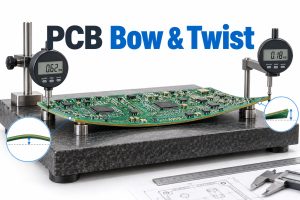
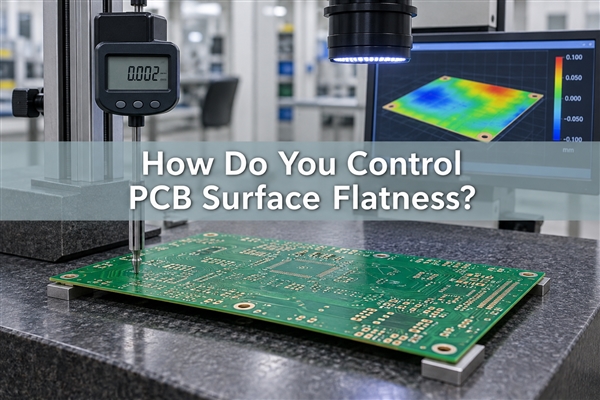
Board warpage within acceptable range
For PCB assembly, common criteria may include:
Correct component value and package
Correct component direction and polarity
Acceptable solder joint shape
No solder bridging between pads
No tombstoning, missing parts, or shifted components
No cracked ceramic capacitors or damaged ICs
Acceptable BGA void ratio based on product requirements
Clean board surface after soldering
Passed electrical or functional test
IPC-A-600 is often referenced for bare PCB acceptability, while IPC-A-610 is widely used for assembled board acceptability. For soldering workmanship, IPC J-STD-001 is also commonly used. In real production, these standards are often combined with customer-specific requirements.
The most important point is consistency. A good PCB manufacturer should apply the same inspection criteria across engineering review, production, quality control, and outgoing inspection. This helps avoid inconsistent judgment and reduces disputes after shipment.
How Is Incoming Inspection for Printed Circuit Boards Done?
Incoming inspection for printed circuit boards is the process of checking PCBs or components before they enter assembly or production. It is especially important when bare PCBs are produced in one facility and assembled in another, or when customers supply their own boards.
For PCB assembly projects, incoming PCB inspection helps confirm whether the bare boards are ready for SMT production. If board issues are found only after solder paste printing or reflow soldering, the cost of correction becomes higher.
A typical incoming inspection process may include:
Checking the packing condition
Confirming part number, revision, quantity, and date code
Reviewing the certificate of conformity or quality report
Checking PCB dimensions and thickness
Inspecting solder mask and surface finish
Checking warpage before SMT assembly
Confirming panel design and fiducial marks
Reviewing special requirements such as impedance, via plugging, or heavy copper
Performing sample electrical checks if needed
For components used in PCBA production, incoming inspection may include label verification, moisture sensitivity level control, package condition, quantity confirmation, and traceability record review. For high-risk or high-value components, X-ray inspection, decapsulation, or functional testing may be used when required.
At EBest Circuit (Best Technology), incoming inspection is not treated as an isolated receiving step. Because our PCB fabrication and PCBA assembly are coordinated within the same manufacturing workflow, our engineering and production teams can connect bare board quality, assembly requirements, and project documentation before SMT production begins.
Before assembly starts, our team reviews the PCB, BOM, Gerber files, pick-and-place files, and assembly drawings together. This helps us check whether the fabricated boards match the assembly requirements and identify potential mismatches early, such as pad design issues, unclear polarity marks, unsuitable footprints, panel design concerns, fiducial problems, or component availability risks.
Incoming inspection is the first quality gate before assembly. At EBest Circuit (Best Technology), it works together with DFM review, production preparation, and process control. This integrated approach helps prevent unsuitable boards or incorrect materials from entering the SMT line, improves assembly yield, and supports more stable PCB and PCBA manufacturing quality.
What Is First Article Inspection for Printed Circuit Boards?
First article inspection, often called FAI, is the detailed inspection of the first completed board or first production batch before full-scale production continues. It is an important step in PCB assembly because it confirms whether the manufacturing setup is correct.
In PCB assembly, first article inspection usually checks whether the first assembled PCBA matches the BOM, placement file, assembly drawing, polarity requirements, and customer specifications. This is especially useful for new products, engineering changes, new suppliers, or production line transfers.
A first article inspection may include:
BOM verification
Component value confirmation
Component orientation check
Reference designator check
Polarity confirmation
SMT placement accuracy
Solder joint inspection
AOI result review
X-ray inspection for BGA, QFN, LGA, or hidden solder joints
Electrical test or functional test
Label and revision confirmation
FAI is highly valuable because many assembly errors are setup-related. For example, a feeder may contain the wrong part, a component direction may be interpreted incorrectly, or a polarity mark may be unclear on the silkscreen. If this type of issue is not found during the first article stage, the same defect may repeat across the whole batch.
For high-reliability products, first article inspection also supports documentation and traceability. It provides a record that the first build was reviewed and approved before volume production moved forward.
EBest Circuit (Best Technology) uses first article inspection as part of PCBA quality control for prototype, small-batch, and production projects. For complex boards, especially those with BGA, fine-pitch ICs, mixed SMT and through-hole parts, or special materials, FAI helps engineers and customers confirm the build before scaling up.
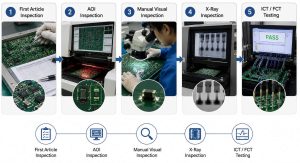
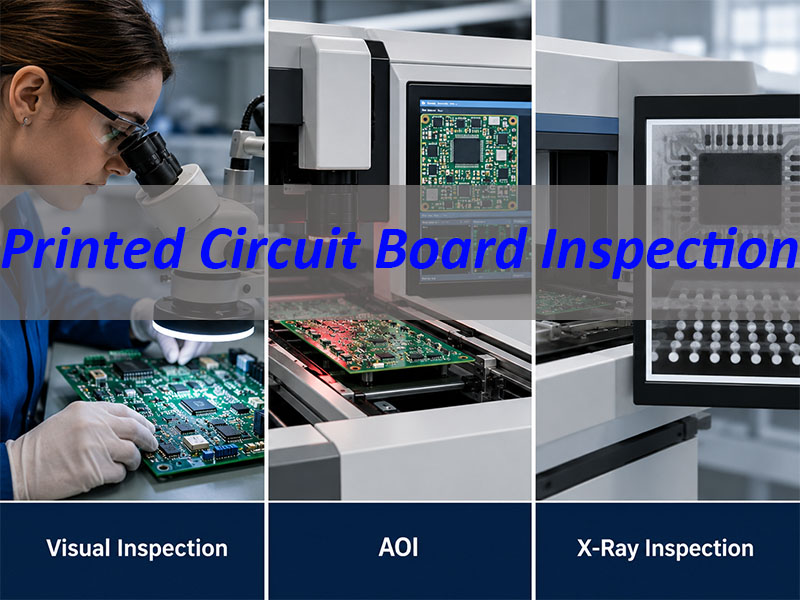
How Do Visual Inspection, AOI, and X-Ray Inspection Work in PCB Assembly?
Different inspection methods are used at different stages of PCB assembly. Each method has its own role. A strong quality control process does not depend on only one inspection tool.
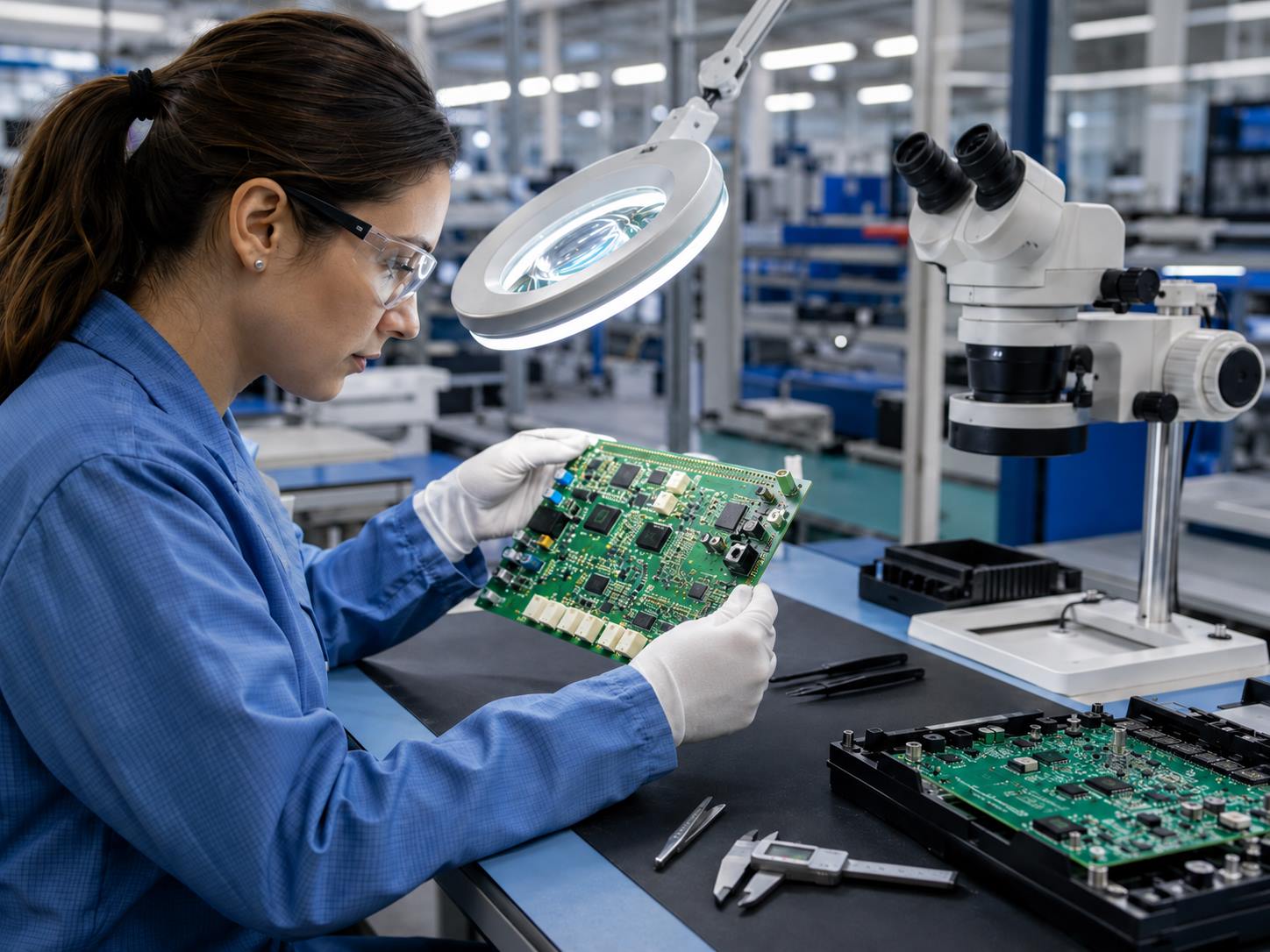
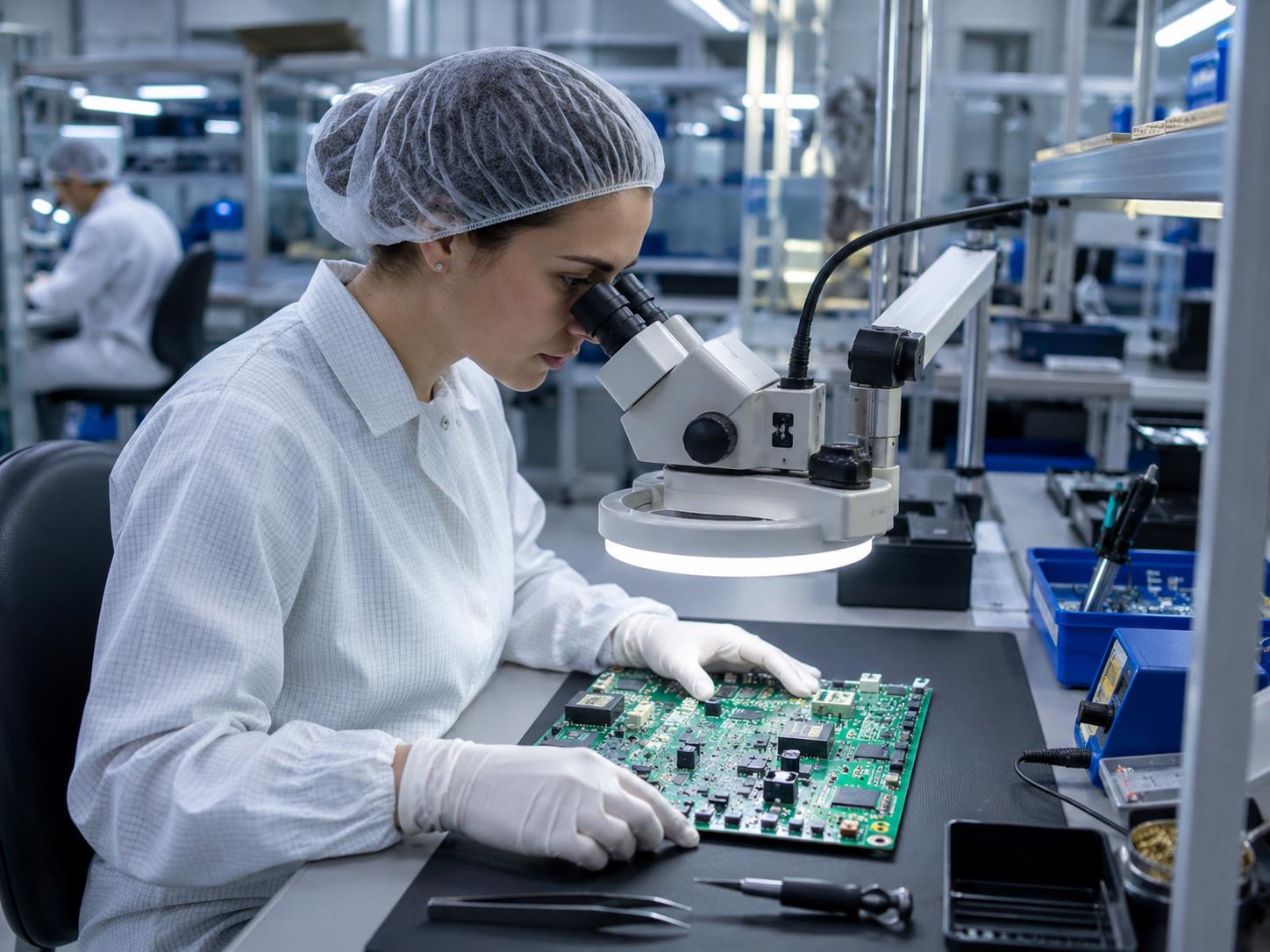
Visual inspection is usually performed by trained inspectors. It is useful for checking obvious assembly issues, solder joint appearance, component polarity, connector alignment, solder balls, contamination, broken parts, and board handling damage.
Visual inspection is flexible and practical, especially for prototypes and small-batch production. However, it depends on human judgment and cannot fully detect hidden solder defects under BGA, QFN, LGA, or bottom-terminated components.
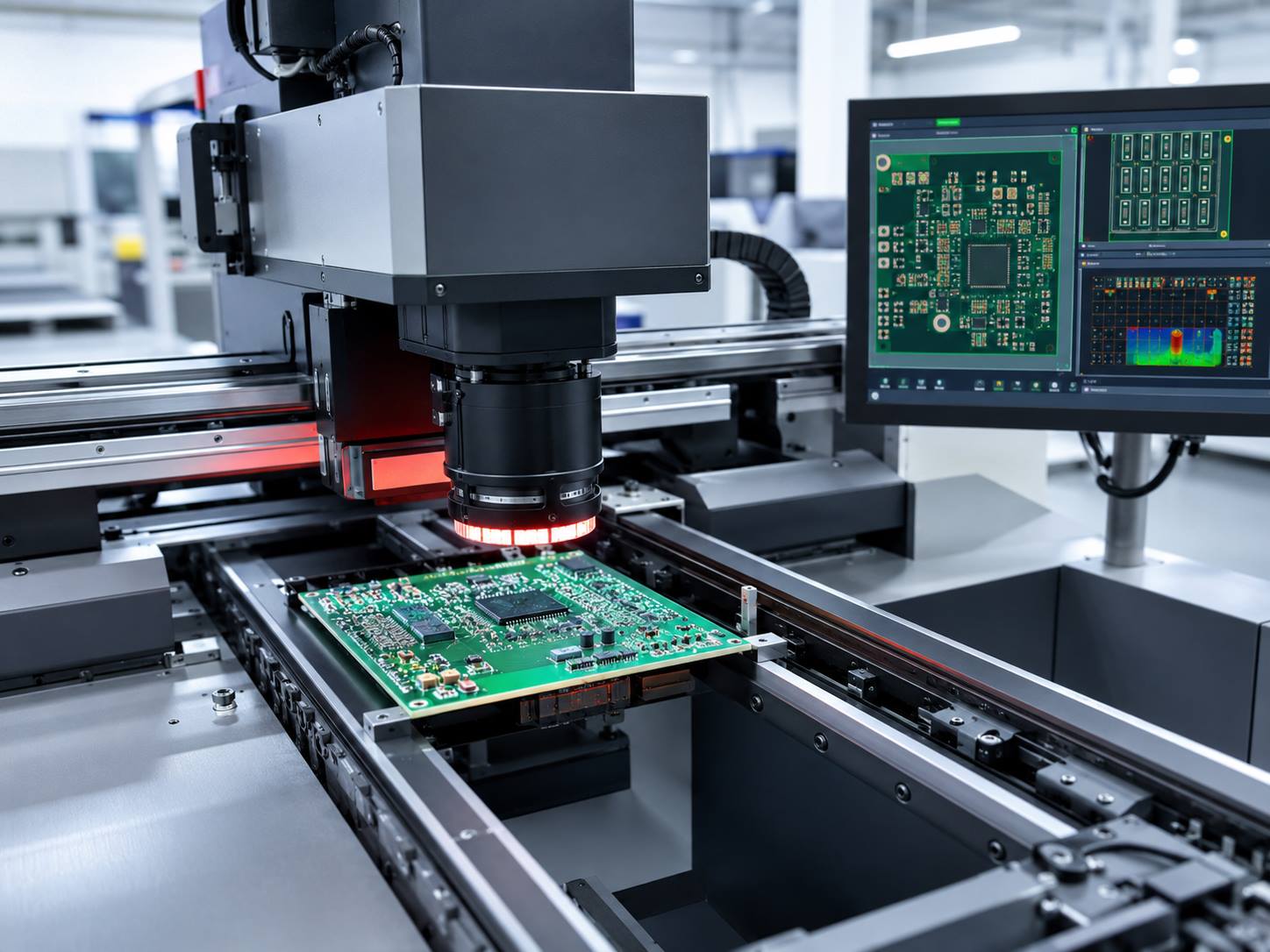
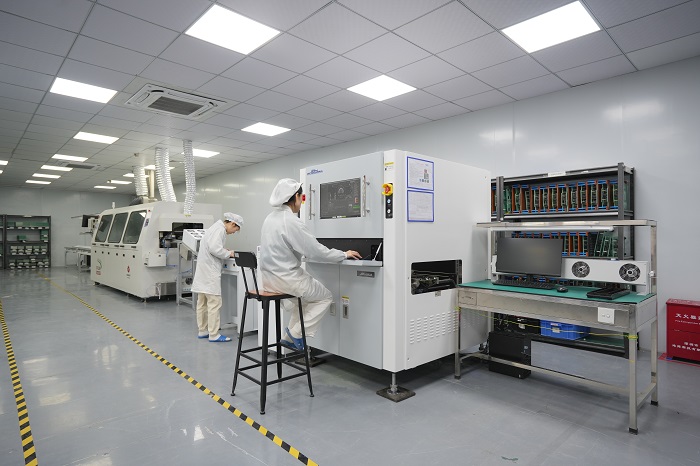
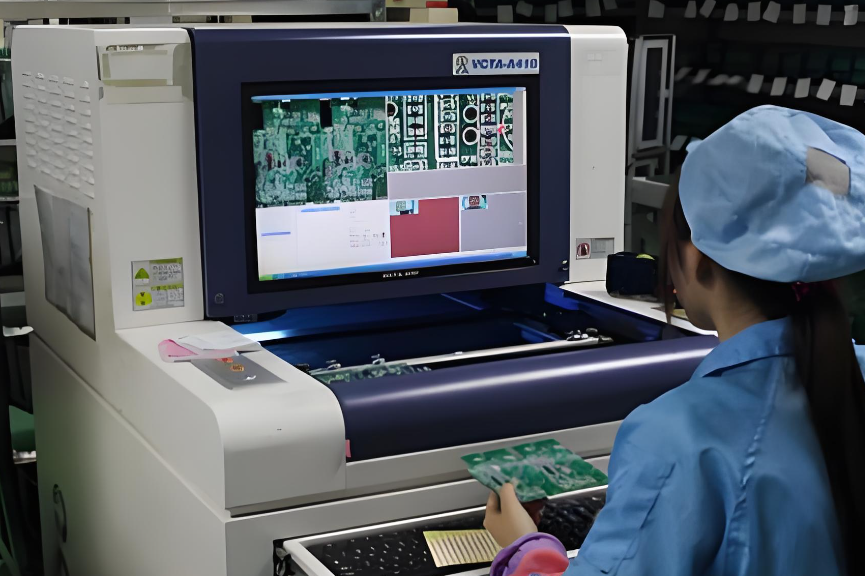
AOI, or automatic optical inspection, uses cameras and image analysis to inspect assembled boards. It is commonly used after SMT placement and reflow soldering. AOI can detect missing components, wrong polarity, component shift, tombstoning, solder bridging, insufficient solder, and some solder joint defects.
AOI is faster and more consistent than manual inspection. It is very useful for repeated production because the inspection program can compare each board against the approved standard. For boards with many small SMT parts, AOI improves inspection speed and reduces human error.
X-ray inspection is used when solder joints are hidden under the component body. It is commonly applied to BGA, QFN, LGA, bottom-terminated components, power devices, and some high-density PCB assemblies.
X-ray inspection can help detect:
BGA solder voids
Hidden solder bridges
Open solder joints
Head-in-pillow defects
Insufficient solder under hidden pads
Misalignment of hidden solder balls
Internal connection problems
For advanced PCB assembly, AOI and X-ray often work together. AOI checks visible defects quickly, while X-ray checks areas that optical inspection cannot see. Electrical testing and functional testing can then verify whether the circuit works as intended.
EBest Circuit (Best Technology) applies suitable inspection methods based on product structure, component package, and customer requirements. A simple LED PCB may not require the same inspection plan as a medical PCBA or an automotive electronic control board. The inspection method should match the risk level of the product.
What Defects Can Be Found During Printed Circuit Board Defect Inspection?
Printed circuit board defect inspection helps identify problems that may affect assembly yield, electrical performance, or long-term reliability. These defects may come from PCB fabrication, component mounting, soldering, handling, or material storage.
Cleanliness or reliability concern in sensitive products
Some defects are easy to see. Others are difficult to detect without proper equipment. For example, a solder bridge between fine-pitch IC pins may be visible under magnification, but a head-in-pillow issue under a BGA may require X-ray inspection.
Defect inspection should also connect with root cause analysis. Finding a defect is only the first step. The factory should understand why the defect happened. Was the solder paste stencil opening unsuitable? Was the reflow profile incorrect? Was the PCB surface finish oxidized? Was the component moisture-sensitive and not stored properly?
A mature PCB manufacturer uses inspection results to improve the process. This is where manufacturing experience becomes important. The real value is not only detecting problems, but also preventing the same problems from repeating in the next batch.
FAQs About Printed Circuit Board Inspection
1. Why is printed circuit board inspection important? Printed circuit board inspection helps detect fabrication and assembly defects before the product reaches the customer. It reduces rework, improves reliability, and supports stable production quality.
2. When should PCB inspection be performed? PCB inspection should be performed during incoming material control, bare board fabrication, first article inspection, PCB SMT assembly, soldering, testing, and final outgoing quality control.
3. What is the difference between PCB inspection and PCBA inspection? PCB inspection usually refers to checking the bare printed circuit board. PCBA inspection checks the assembled board after components have been mounted and soldered.
4. What is included in a PCB inspection checklist? A PCB inspection checklist may include board dimensions, copper thickness, hole quality, solder mask alignment, surface finish, electrical testing, component placement, solder joints, polarity, cleanliness, and final test results.
5. What is AOI in PCB assembly? AOI means automatic optical inspection. It uses camera-based image analysis to check component placement, polarity, solder bridges, missing parts, tombstoning, and other visible assembly defects.
6. When is X-ray inspection needed for printed circuit boards? X-ray inspection is used when solder joints are hidden under components, such as BGA, QFN, LGA, or other bottom-terminated packages. It helps detect hidden bridges, voids, opens, and alignment issues.
7. What standards are used for printed circuit board inspection? Common standards include IPC-A-600 for bare PCBs, IPC-A-610 for assembled boards, and IPC J-STD-001 for soldering workmanship. Customer specifications may also apply.
8. Can inspection find all PCB defects? No single method can find every possible defect. A reliable inspection plan often combines visual inspection, AOI, X-ray inspection, electrical testing, functional testing, and process control.
9. How does first article inspection help PCB assembly? First article inspection confirms that the first assembled board matches the BOM, drawings, placement files, and quality requirements before full production continues. It helps prevent batch-level mistakes.
10. How can I choose a reliable PCB inspection and assembly partner? Choose a manufacturer with PCB fabrication, PCBA assembly, DFM review, incoming inspection, AOI, X-ray inspection, electrical testing, functional testing, and traceability control. Experience with medical, industrial, automotive, aerospace, and communication electronics is also valuable for high-reliability projects.
Overall, printed circuit board inspection is not a single checkpoint at the end of production. It is a complete quality control system that runs through PCB fabrication, incoming material review, SMT assembly, soldering, testing, and final shipment.
For standard boards, inspection helps maintain stable production quality. For high-reliability products, it becomes even more important because small defects may affect safety, service life, and field performance.
EBest Circuit (Best Technology) supports PCB manufacturing and PCBA assembly with engineering-driven quality control. Our team provides DFM review, PCB fabrication, component sourcing, SMT assembly, AOI, X-ray inspection, electrical testing, functional testing, and final quality inspection for customers in medical electronics, industrial control, automotive electronics, communication equipment, aerospace, UAV, lighting, and other demanding industries.
If you are working on a PCB or PCBA project that requires reliable inspection, stable manufacturing, and full-process quality support, please feel free to send your Gerber files, BOM, and assembly drawings to sales@bestpcbs.com. Our engineering team will be glad to review your requirements and provide professional support for your project.
AOI inspection plays a critical role in modern PCB assembly by enabling fast, non-contact detection of surface defects before products reach functional testing or final delivery. For high-reliability industries such as automotive, medical, and industrial electronics, AOI is not just a quality checkpoint—it is a yield optimization tool.
In this guide, we will explain how AOI inspection works, what defects it can detect, how it compares with other inspection methods, and how to optimize it for maximum production efficiency.
What Is AOI Inspection in PCB Manufacturing?
AOI inspection (Automated Optical Inspection) is a vision-based inspection method used in PCB assembly to identify defects such as missing components, solder issues, and polarity errors by comparing captured images with a reference design.
It relies on high-resolution cameras, controlled lighting systems, and image processing algorithms. The system scans each PCB and flags deviations from predefined standards. Unlike manual inspection, AOI offers high repeatability and consistent accuracy across large production volumes.
In high-mix, low-volume manufacturing environments, AOI also helps standardize quality control and reduce dependency on operator experience.
AOI Inspection in PCB Assembly
How Does AOI Inspection Work Step by Step in SMT Lines?
AOI inspection follows a structured process in SMT lines to ensure consistent defect detection across different stages of PCB assembly.
Typical AOI inspection process:
Step 1: Image acquisition using multi-angle cameras
Step 2: Lighting adjustment for contrast enhancement
Step 3: Image comparison with CAD or golden board
Step 4: Defect classification using algorithms
Step 5: Pass/Fail decision and data logging
AOI can be placed at different stages, including post-solder paste printing, post-placement, and post-reflow, depending on inspection requirements.
What Defects Can AOI Inspection Detect on PCB Assemblies?
AOI inspection is highly effective for detecting visible defects on PCB surfaces. It significantly reduces early-stage defects before costly downstream testing.
Defect Type
Description
Detection Capability
Missing Component
Component not mounted
High
Solder Bridge
Unintended connection between pads
High
Misalignment
Component shifted from correct position
High
Tombstoning
Component standing vertically
Medium
Insufficient Solder
Weak or incomplete solder joint
Medium
Polarity Error
Incorrect component orientation
High
However, AOI cannot detect internal defects such as voids under BGA packages, which require X-ray inspection.
What Are the Limitations of AOI Inspection?
While AOI is highly efficient, it has inherent limitations that engineers must consider when designing inspection strategies.
Cannot inspect hidden solder joints (BGA, QFN)
False calls due to lighting or reflection issues
Dependent on programming quality
Limited ability to detect electrical defects
To overcome these limitations, AOI is often combined with X-ray inspection and ICT testing in high-reliability applications.
AOI Inspection vs X-Ray vs ICT: Which One Should You Choose?
Choosing the right inspection method depends on your product complexity, reliability requirements, and budget constraints.
Inspection Method
Hidden Defect Detection
Speed
Cost
Best Use Case
AOI
No
Fast
Low
Surface defect detection
X-ray
Yes
Medium
High
BGA/QFN inspection
ICT
Electrical faults
Slow
Medium
Circuit verification
In most SMT lines, AOI is used as the first inspection layer, followed by X-ray and ICT for critical applications.
Where Should AOI Be Placed in SMT Process for Best Results?
The placement of AOI inspection in the SMT process directly impacts defect detection efficiency and rework cost.
Post-Printing AOI: Detect solder paste issues early
Pre-Reflow AOI: Verify component placement
Post-Reflow AOI: Final inspection of solder joints
For most applications, post-reflow AOI is essential, while pre-reflow AOI is recommended for high-density PCBs.
What Is the Difference Between 2D AOI and 3D AOI Systems?
2D and 3D AOI systems differ mainly in inspection depth and accuracy.
Feature
2D AOI
3D AOI
Inspection Type
Image-based
Height & volume measurement
Accuracy
Moderate
High
Cost
Lower
Higher
Use Case
General SMT
High-reliability industries
3D AOI is increasingly used in automotive and medical applications due to its ability to measure solder volume precisely.
Why Does AOI Inspection Generate False Calls and How to Reduce Them?
False calls are one of the biggest challenges in AOI inspection, often caused by lighting inconsistencies, component variations, and poor programming.
Common causes:
Reflective surfaces
Component color variation
Incorrect threshold settings
Poor reference data
Optimization methods:
Use multi-angle lighting systems
Optimize inspection algorithms
Standardize component libraries
Continuous program tuning
Reducing false calls can significantly improve production efficiency and reduce manual inspection workload.
How to Program and Optimize AOI Inspection for High Yield?
Proper AOI programming is essential to achieving high yield and minimizing defects.
Use golden board for reference calibration
Define clear inspection criteria based on IPC standards
Segment inspection zones for complex PCBs
Regularly update programs for new product variants
Experienced engineers can reduce false call rates to below 5% with optimized programming strategies.
How Much Does AOI Inspection Cost in PCB Manufacturing?
The cost of AOI inspection depends on equipment type, production volume, and inspection complexity.
Cost Factor
Description
Equipment Investment
$50,000 – $150,000+
Programming Cost
Depends on PCB complexity
Operational Cost
Low per unit
Despite the initial investment, AOI significantly reduces defect-related costs and improves ROI over time.
What Standards Are Used in AOI Inspection?
AOI inspection follows international standards to ensure consistent quality and compliance.
IPC-A-610 (Acceptability of Electronic Assemblies)
ISO 9001 Quality Management
IATF 16949 for automotive
ISO 13485 for medical devices
For high-reliability applications, IPC Class 3 is commonly applied.
Why Choose EBest Circuit (Best Technology) for AOI Inspection Services?
With nearly 20 years of PCB and PCBA experience, EBest Circuit provides advanced AOI inspection solutions tailored for high-reliability industries.
3D AOI + X-ray integrated inspection capability
IPC Class 2 & Class 3 compliance
MES traceability system (5-second tracking)
Experienced engineering team for AOI optimization
Fast turnaround and stable quality
Contact us: sales@bestpcbs.com
FAQs About AOI Inspection
1. What is AOI inspection used for? AOI inspection is used to detect surface defects in PCB assembly, ensuring product quality before functional testing.
2. Can AOI detect BGA defects? No, AOI cannot detect hidden defects under BGA packages. X-ray inspection is required.
3. How accurate is AOI inspection? Accuracy can exceed 95% when properly programmed and optimized.
4. Is AOI inspection expensive? Initial investment is high, but long-term cost savings are significant.
5. What is the difference between AOI and SPI? SPI inspects solder paste before placement, while AOI inspects components and solder joints after placement.
AOI inspection, short for Automated Optical Inspection, is a quality control method used in PCB and PCBA manufacturing to automatically detect visual defects on circuit boards. It relies on high-resolution cameras, controlled lighting systems, and image processing algorithms to evaluate whether a board meets predefined standards.
In modern electronics manufacturing, AOI is not just an optional inspection step. It is a core process that ensures assembly accuracy, especially in high-density SMT production environments where manual inspection becomes inefficient and inconsistent.
Unlike traditional visual inspection performed by operators, AOI systems provide repeatable and objective results. They compare the inspected PCB against a reference, such as a “golden board” or CAD data, to identify deviations.
How Does AOI Inspection Work in PCB Assembly?
AOI inspection follows a structured process that combines imaging technology with intelligent comparison algorithms.
Step 1: Image Capture
High-speed cameras scan the PCB using multiple light sources. These include white light, RGB, and angled lighting to highlight solder joints and component edges.
Step 2: Reference Matching
The system compares captured images with:
Golden board samples
CAD / Gerber data
Component libraries
Step 3: Defect Detection
Software identifies deviations such as placement errors or solder defects.
Step 4: Classification & Output
Detected issues are categorized and displayed for operator review or automatically logged into MES systems.
Why Is AOI Inspection Important in SMT Production?
In modern SMT environments, defect tolerance is extremely low due to miniaturization and high-density layouts.
AOI inspection directly improves:
First Pass Yield (FPY) by detecting issues early
Process stability through continuous feedback
Cost control by reducing rework and scrap
Production efficiency with high-speed inspection
From an engineering standpoint, AOI is not just an inspection tool. It is a process optimization system that helps identify root causes such as stencil wear, placement deviation, or reflow inconsistencies.
What Defects Can AOI Inspection Detect?
AOI inspection is designed to identify visible defects related to component placement and solder quality. These defects typically include:
Missing components
Incorrect components
Misaligned or shifted components
Wrong polarity (especially for diodes and ICs)
Tombstoning (one side lifted)
Solder bridging
Insufficient solder
Excess solder
Open solder joints
Lifted leads
Surface contamination or scratches
These defects are common in SMT assembly and can significantly affect product performance.
However, AOI focuses on surface-level inspection. It is most effective for defects that can be visually detected. For hidden defects, additional inspection methods are required.
Where Is AOI Inspection Used in the Manufacturing Process?
AOI inspection can be deployed at multiple stages of PCB assembly. Each stage serves a different purpose.
Post-reflow AOI
This is the most common AOI stage. It inspects solder joints and component positions after reflow. Most solder-related defects are identified here.
Wave solder AOI
For through-hole components, AOI can be used after wave soldering to inspect solder quality and component insertion.
Final AOI inspection
Some manufacturers include a final AOI step to ensure no defects were missed earlier.
In practice, many high-end SMT lines use multiple AOI checkpoints to maximize defect coverage and process control.
What Are the Main Benefits of AOI Inspection?
AOI inspection delivers measurable benefits across production efficiency and product quality.
Unlike manual inspection, AOI provides consistent results regardless of operator fatigue or experience.
AOI systems can inspect thousands of components per second, supporting high-volume production.
By using AOI inspection, defects are identified immediately, reducing downstream failures.
Fewer operators are required for inspection tasks
Inspection data can be analyzed to improve process parameters and prevent recurring issues.
For manufacturers aiming to scale production while maintaining quality, AOI is a fundamental investment.
What Is the Difference Between 2D AOI and 3D AOI Inspection?
AOI systems are typically categorized into 2D and 3D technologies.
Feature
2D AOI
3D AOI
Inspection method
Image-based
Height + image analysis
Solder evaluation
Limited
Accurate volume measurement
Accuracy
Moderate
High
Cost
Lower
Higher
Application
Standard SMT
High-density / complex boards
2D AOI relies on color and contrast to detect defects. It is suitable for most standard applications.
3D AOI adds height measurement using techniques such as structured light or laser scanning. This allows it to evaluate solder volume and detect defects that 2D systems may miss.
For advanced applications such as fine-pitch components or reflective surfaces, 3D AOI provides better reliability.
AOI Inspection vs AXI vs Manual Visual Inspection
Different inspection methods serve different purposes in PCB assembly.
AOI vs AXI (Automated X-ray Inspection)
AOI inspects visible surfaces, while AXI is used for hidden structures such as BGA solder joints. AXI can detect voids and internal defects that AOI cannot see.
AOI vs manual inspection
Manual inspection depends on human judgment and is prone to inconsistency. AOI offers higher speed and repeatability.
In practice, these methods are complementary. A typical high-reliability production line may use:
SPI (Solder Paste Inspection)
AOI
X-ray inspection
Functional testing
This layered approach ensures comprehensive quality control.
What Are the Limitations of AOI Inspection?
While AOI is powerful, it has certain limitations. It cannot effectively inspect hidden solder joints, such as those under BGA components. It also depends heavily on programming quality. Poorly optimized programs can result in false calls or missed defects.
Reflective surfaces and complex geometries can sometimes challenge the system. In addition, AOI requires proper lighting and calibration to maintain accuracy.
Why Choose EBest Circuit (Best Technology) for AOI Inspection and PCBA Quality Control?
At EBest Circuit, AOI inspection is fully integrated into the PCB assembly workflow to ensure consistent quality at every stage.
Key advantages include:
Advanced AOI systems supporting both prototype and mass production
Multi-stage inspection strategy (pre-reflow and post-reflow)
Integration with MES for full traceability
Experienced engineering team for AOI programming optimization
Combined inspection capabilities including X-ray, SPI, ICT, and functional testing
Fast feedback loop to improve yield and reduce defects
With nearly 20 years of PCBA experience, EBest supports industries requiring high reliability, including automotive, medical, and industrial electronics.
FAQs About AOI Inspection
1. What is AOI inspection in PCB assembly?
AOI inspection is an automated method that uses cameras and software to detect visual defects on PCBs. It helps ensure component placement accuracy and solder quality.
2. What is AOI inspection used for?
AOI inspection is used to automatically detect visible defects in PCB assembly, including component placement errors and soldering issues, ensuring product quality and consistency.
3. Can AOI detect all PCB defects?
No, AOI detects only visible defects. Hidden issues such as BGA solder joints require X-ray inspection.
4. Is AOI better than manual inspection?
Yes, AOI is faster, more consistent, and less dependent on human factors, making it more suitable for high-volume production.
5. Where should AOI be placed in SMT lines?
AOI is typically used both before reflow (placement check) and after reflow (solder inspection) for optimal results.
6. What is the difference between 2D and 3D AOI?
2D AOI uses image comparison, while 3D AOI measures height and volume, providing more accurate solder inspection.
Ready to Improve Your PCB Assembly Quality?
If you are facing challenges such as inconsistent quality, high rework rates, or hidden defects in SMT production, integrating AOI inspection is a proven solution.
EBest Circuit offers one-stop PCB and PCBA services, combining advanced AOI inspection with full-process quality control.
This website uses cookies to enhance your experience, remember your preferences, and help us understand how visitors use our site. You can accept all cookies, reject non-essential cookies, or manage your settings.
This website uses cookies to improve your experience while you navigate through the website. Out of these cookies, the cookies that are categorized as necessary are stored on your browser as they are essential for the working of basic functionalities of the website. We also use third-party cookies that help us analyze and understand how you use this website. These cookies will be stored in your browser only with your consent. You also have the option to opt-out of these cookies. But opting out of some of these cookies may have an effect on your browsing experience.
Necessary cookies are absolutely essential for the website to function properly. These cookies ensure basic functionalities and security features of the website, anonymously.
Cookie
Duration
Description
cookielawinfo-checkbox-analytics
11 months
This cookie is set by GDPR Cookie Consent plugin. The cookie is used to store the user consent for the cookies in the category "Analytics".
cookielawinfo-checkbox-functional
11 months
The cookie is set by GDPR cookie consent to record the user consent for the cookies in the category "Functional".
cookielawinfo-checkbox-necessary
11 months
This cookie is set by GDPR Cookie Consent plugin. The cookies is used to store the user consent for the cookies in the category "Necessary".
cookielawinfo-checkbox-others
11 months
This cookie is set by GDPR Cookie Consent plugin. The cookie is used to store the user consent for the cookies in the category "Other.
cookielawinfo-checkbox-performance
11 months
This cookie is set by GDPR Cookie Consent plugin. The cookie is used to store the user consent for the cookies in the category "Performance".
viewed_cookie_policy
11 months
The cookie is set by the GDPR Cookie Consent plugin and is used to store whether or not user has consented to the use of cookies. It does not store any personal data.
Functional cookies help to perform certain functionalities like sharing the content of the website on social media platforms, collect feedbacks, and other third-party features.
Performance cookies are used to understand and analyze the key performance indexes of the website which helps in delivering a better user experience for the visitors.
Analytical cookies are used to understand how visitors interact with the website. These cookies help provide information on metrics the number of visitors, bounce rate, traffic source, etc.
Advertisement cookies are used to provide visitors with relevant ads and marketing campaigns. These cookies track visitors across websites and collect information to provide customized ads.