PCB manufacturing PCB manufacturing
Home > Blog

How to Choose the Best PCB Manufacturers in USA & Why EBest Stands Out

February 3rd, 2026

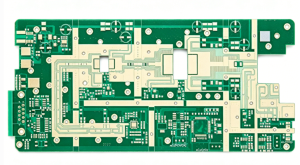
When searching for the best PCB manufacturers in usa, you need a partner that balances quality, speed, and technical expertise—something EBest Circuit (Best Technology) delivers as a global leader in PCB solutions. Whether you’re working on high-frequency PCBs for aerospace or rigid-flex PCBs for consumer electronics, the best PCB manufacturers in usa should offer more than just fabrication: they need end-to-end support to avoid delays, quality issues, and hidden costs. EBest’s 20+ years of experience, strict certifications, and 24-hour expedite service make us the top choice for businesses looking to align with the standards of the best PCB manufacturers in usa.

What Defines the Best PCB Manufacturers in USA? (Key Criteria to Check)

The best PCB manufacturers in usa aren’t just about producing circuit boards—they excel in four core areas that eliminate common pain points. First, they hold industry-leading certifications (like ISO 9001:2015, IATF 16949) to guarantee consistent quality. Second, they offer full turnkey services, covering PCB Design, PCB Prototype, Component Sourcing, PCB Assembly, and mass production, so you don’t have to manage multiple vendors. Third, they have transparent pricing with no hidden fees, plus design-for-manufacturability (DFM) advice to cut costs. Finally, they provide fast lead times—critical for meeting product launch deadlines.

EBest meets all these criteria and more. Our monthly production capacity of 260,000 square feet (28,900 square meters) means we handle both small prototypes and large-scale orders, while our 24-hour expedite service ensures urgent boards ship on time. We’re certified to ISO 9001:2015, IATF 16949, ISO 13485:2016, and AS9100D—matching the quality standards expected from the best PCB manufacturers in usa.

Why Certifications Matter for PCB Manufacturers in USA

Certifications aren’t just logos—they’re proof a manufacturer follows strict processes to avoid defects. For example:

  • IATF 16949: Ensures compliance with automotive industry quality requirements, critical for PCBs used in vehicles.
  • ISO 13485:2016: Mandatory for medical device PCBs, where failure can risk patient safety.
  • AS9100D: Required for aerospace and defense PCBs, which need to withstand extreme conditions.

EBest’s full suite of certifications means we can support projects across industries, from medical to aerospace—just like the top best PCB manufacturers in usa.

How Do the Best PCB Manufacturers in USA Solve Common Pain Points?

Businesses searching for best PCB manufacturers in usa often face four major challenges: inconsistent quality, slow lead times, fragmented services, and communication gaps. The top manufacturers address these head-on with targeted solutions, as shown in the table below.

Common Pain PointSolution from the Best PCB Manufacturers in USAEBest’s Implementation
Substandard PCBs that fail testingRigorous quality control (QC) at every production stageQC checks for raw materials, fabrication, and assembly; defective rate < 0.09%
Lead times over 2 weeksStreamlined production and expedite services24-hour shipping for urgent orders; standard lead times 5–7 days
Needing multiple vendors for design, fabrication, and assemblyFull turnkey services (design to box build)One-stop solution: PCB DesignPrototypeComponent SourcingAssembly → Mass Production
Miscommunication leading to errorsDedicated English-speaking project managers1:1 project support; 2-hour response time for queries

What Types of PCBs Do the Best Manufacturers in USA Specialize In?

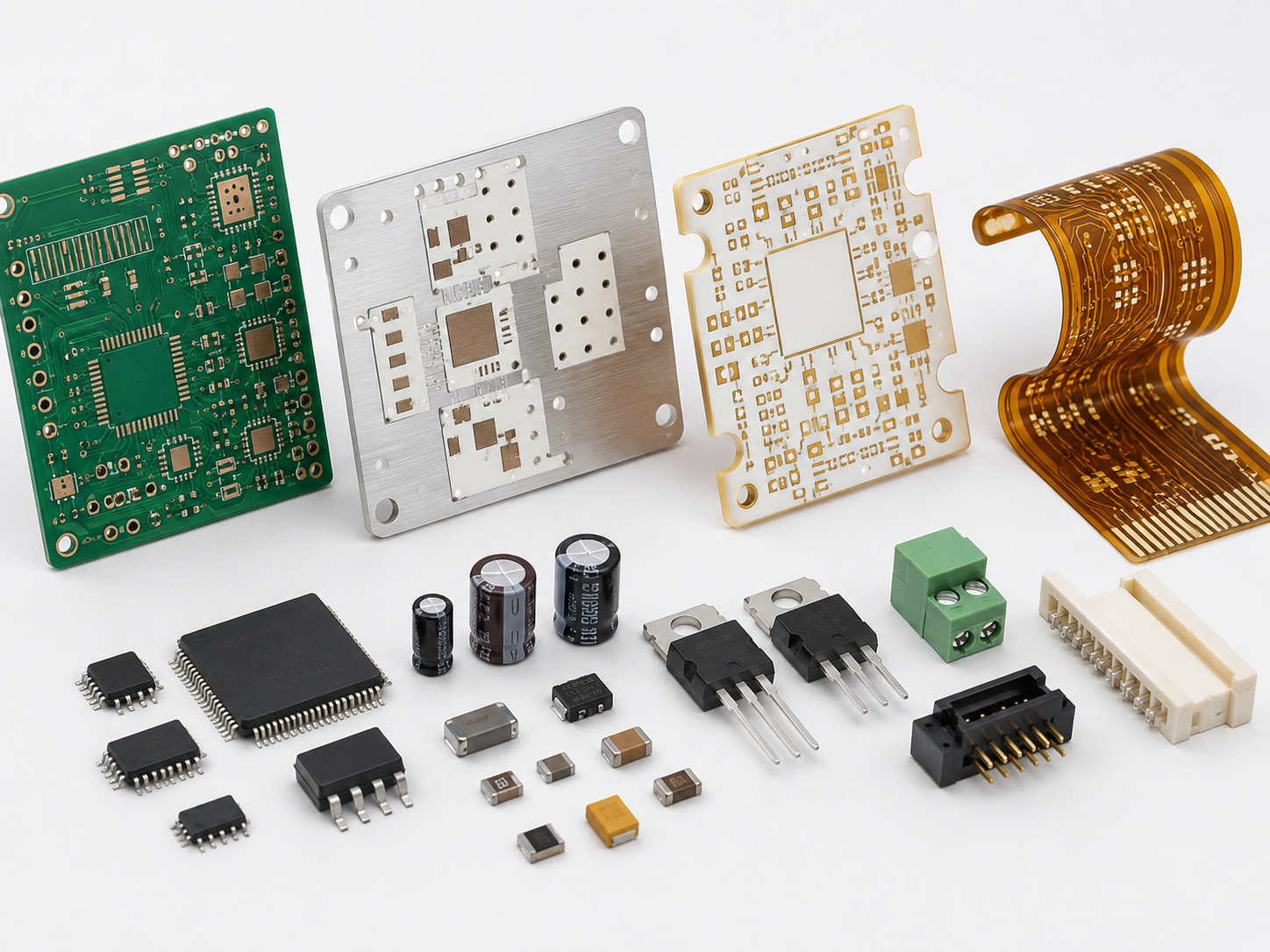
The best PCB manufacturers in usa don’t just make standard FR4 boards—they handle complex, industry-specific PCBs that require advanced technical skills. EBest’s product range aligns with these demands, covering:

  • Metal Core PCBs (MCPCBs): For LED lighting and power electronics, where heat dissipation is critical.
  • Ceramic PCBs: Ideal for high-temperature applications (e.g., automotive sensors, industrial controls) due to their thermal conductivity.
  • HDI PCBs (High-Density Interconnect): Used in compact devices like smartphones and medical wearables, with 1–2–1 and 2–4–2 stackups.
  • Rigid-Flex PCBs: Combine flexibility (for moving parts) and rigidity (for stability) in aerospace and consumer electronics.
  • Heavy Copper PCBs: With 4–20 oz copper layers, perfect for high-current applications like EV charging systems.
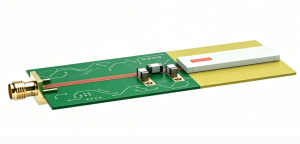
  • High-Frequency PCBs: Made with Rogers or Taconic materials for communication devices (5G, satellites).

Each of these PCBs undergoes specialized testing—e.g., thermal cycling for ceramic PCBs, impedance testing for high-frequency boards—to meet industry standards.

FAQ: Answers to Common Questions About the Best PCB Manufacturers in USA

1. How do I verify if a manufacturer is among the best PCB manufacturers in USA?

Start by checking their certifications (ISO 9001, IATF 16949, etc.) and production capacity—top manufacturers will publish these publicly. Next, ask for references or case studies in your industry (e.g., medical, aerospace). Finally, request a sample: a reputable manufacturer like EBest will provide a prototype with no obligation, so you can test quality firsthand.

2. Do the best PCB manufacturers in USA offer custom PCB design services?

Yes—custom design is a key service. The top manufacturers have in-house engineering teams that create PCB layouts tailored to your project’s specs (size, layers, materials). EBest’s design team completes 100+ complex projects yearly, with DFM reviews to ensure designs are manufacturable and cost-effective.

3. What’s the minimum order quantity (MOQ) for the best PCB manufacturers in USA?

Most top manufacturers don’t enforce strict MOQs—they handle both prototypes (1–10 pieces) and mass production (10,000+ pieces). EBest has no MOQ requirement, so you can order 1 prototype for testing or 100,000 boards for full-scale production.

4. How do the best PCB manufacturers in USA handle component sourcing?

They use a network of verified suppliers to source high-quality components (resistors, capacitors, ICs) at competitive prices. EBest has 12 stable raw material suppliers and stocks common components, reducing lead times by 30%. We also offer consignment sourcing if you prefer to use your own components.

5. Do the best PCB manufacturers in USA provide after-sales support?

Absolutely. Top manufacturers offer warranties (3–5 years) and troubleshooting help if issues arise. EBest provides a 3-year quality assurance on all PCBs and has a dedicated support team to assist with post-delivery testing or modifications.

6. Can the best PCB manufacturers in USA handle international shipping?

Yes—they have experience shipping to global clients, with compliance for customs and regulations (e.g., RoHS, REACH). EBest ships to 60+ countries, with tracked delivery and assistance with import documentation.

Why Choose EBest Over Other PCB Manufacturers in USA?

When you need a partner that meets the standards of the best PCB manufacturers in usa, EBest stands out for three key reasons:

1. 20+ Years of Technical Expertise

Our team has decades of experience in complex PCB projects—from designing HDI boards for medical devices to manufacturing heavy copper PCBs for EVs. We invest in R&D to stay ahead of trends (e.g., 5G-compatible high-frequency PCBs), ensuring your products are future-proof.

2. Unmatched Speed and Reliability

We understand time-to-market is critical. Our 24-hour expedite service gets urgent boards to you in a day, while our on-time delivery rate is 97.2%—far above industry averages. We also provide real-time production updates, so you never wonder where your order stands.

3. Transparent, Competitive Pricing

We offer detailed, upfront quotes with no hidden fees. Our DFM team also identifies cost-saving opportunities (e.g., optimizing board size, choosing alternative materials) without compromising quality. This transparency is why 3,000+ clients worldwide trust us as a top alternative to the best PCB manufacturers in usa.

Ready to Partner with a Manufacturer That Meets the Best PCB Manufacturers in USA Standards?

If you’re looking for best PCB manufacturers in usa quality without the limitations of local suppliers, EBest Circuit (Best Technology) is your solution. We offer all the core services—PCB Design, Prototype, Component Sourcing, Assembly, and mass production—backed by strict certifications and 24/7 support. Whether you need a single prototype or 100,000 production boards, we deliver on time and to your specs.

To get started, send your requirements to sales@bestpcbs.com today. Our team will provide a quote within 12 hours and assign a dedicated project manager to guide you through every step. Choose EBest—where the standards of the best PCB manufacturers in usa meet global expertise.

You may also like

What is Wave Soldering? A Complete Engineering Guide for PCB Assembly

February 3rd, 2026

Wave soldering remains one of the most dependable soldering methods in PCB assembly, especially for through-hole and mixed-technology boards. While surface-mount reflow dominates modern electronics, wave soldering still plays a critical role in industrial control, power electronics, automotive modules, and cost-sensitive high-volume products. Its strength lies in consistency, mechanical robustness, and efficiency when properly controlled.

This guide explains wave soldering from an engineering and manufacturing perspective—how it works, when to use it, how to control defects, and how to select a capable wave soldering partner.

What Is Wave Soldering in PCB Assembly?

Wave soldering is a PCB assembly process where the bottom side of a populated board briefly contacts a controlled wave of molten solder to form solder joints on exposed metal areas, mainly through-hole leads. It is best suited for PCBs with many through-hole components, such as connectors, transformers, relays, and power devices. The process relies on flux activation, controlled preheating, and precise solder contact time to achieve proper wetting and hole fill.

In simple terms, wave soldering uses liquid solder instead of solder paste. This allows many joints to be formed at once, making it efficient and mechanically robust. However, because the entire board bottom passes over molten solder, the process requires careful design rules and parameter control.

Wave soldering is commonly used in industrial control boards, power supplies, automotive modules, and infrastructure electronics, where solder joint strength and consistency are more important than ultra-high component density.

What is Wave Soldering? A Complete Engineering Guide for PCB Assembly

How Does the Wave Soldering Process Work Step by Step?

The wave soldering process consists of four tightly linked stages: flux application, preheating, solder wave contact, and controlled cooling. If defects appear, the root cause almost always traces back to one of these stages being outside its proper process window.

1. Flux Application

Flux is applied to the PCB bottom side by spray or jet. Its job is to remove oxides and promote solder wetting.

  • Too little flux → poor wetting, insufficient hole fill
  • Too much flux → bridging, residues, solder balls

2. Preheating

Preheating gradually raises the PCB temperature. This activates the flux and reduces thermal shock when the board touches molten solder. Insufficient preheat is one of the most common causes of wave soldering defects.

3. Solder Wave Contact

The PCB passes over one or two solder waves:

  • A turbulent wave helps solder penetrate plated through-holes
  • A laminar wave smooths the solder fillets

Contact time is controlled by conveyor speed.

4. Cooling

Controlled cooling solidifies the solder joints and stabilizes intermetallic formation. Cooling that is too fast or uneven can affect long-term reliability.

What Types of PCBs Are Best Suited for Wave Soldering?

Wave soldering works best for PCBs with a high proportion of through-hole components and limited bottom-side fine-pitch SMDs. It is especially suitable when mechanical strength and current-carrying capability are priorities.

Typical suitable boards include:

  • Power supply PCBs
  • Industrial control boards
  • Automotive connector boards
  • Motor drivers and inverter boards
  • Mixed-technology boards with bottom-side protection

Boards that are densely populated with fine-pitch SMDs on the bottom side are usually poor candidates unless pallets or masking are used. From an engineering standpoint, the decision should be made during PCB layout, not after fabrication.

What Types of PCBs Are Best Suited for Wave Soldering?

What Are the Key Parameters in Wave Soldering?

Wave soldering quality depends on controlling a group of interacting parameters, not a single setting. Changing one parameter without adjusting others often moves defects rather than eliminating them.

Key parameters include:

  • Solder temperature (typically 245–260 °C for lead-free)
  • Top-side preheat temperature (commonly 90–130 °C)
  • Conveyor speed (controls solder contact time)
  • Wave height and angle
  • Flux type and application density

A practical rule for beginners:

First stabilize preheat and conveyor speed, then fine-tune flux and wave height.

What Is the Difference Between Wave Soldering and Reflow Soldering?

Wave soldering and reflow soldering serve different assembly needs and should not be treated as interchangeable processes.

Wave Soldering vs Reflow Soldering

AspectWave SolderingReflow SolderingEngineering Guidance
Main applicationThrough-hole componentsSurface-mount componentsChoose based on component type
Solder formMolten solder waveSolder paste + heatFundamentally different
Joint strengthVery strong for THTOptimized for SMDPower and connectors favor wave
Process control focusFlux, preheat, speedPaste printing, thermal profileDifferent failure modes
Typical defectsBridging, iciclesTombstoning, voidsDiagnosis differs
Cost efficiencyHigh for THT volumeHigh for dense SMDMany products use both

When Should You Choose Wave Soldering Instead of Selective Soldering?

Wave soldering is preferred when many through-hole joints can be soldered simultaneously without risking bottom-side SMD damage. Selective soldering is better when only a few through-hole components exist.

Wave Soldering vs Selective Soldering

FactorWave SolderingSelective SolderingSelection Logic
Through-hole quantityHighLowMany joints → wave
FlexibilityLowerHigherComplex layouts → selective
ThroughputHighMediumVolume favors wave
ToolingPallets may be neededMinimalDepends on layout
Cost per boardLower at scaleHigherVolume sensitive

What Are the Advantages of Wave Soldering?

Wave soldering offers high efficiency, strong solder joints, and excellent through-hole fill when properly controlled. These advantages explain why it remains common in power and industrial electronics.

  • High throughput for THT assemblies
  • Strong mechanical solder joints
  • Reliable hole fill on thick boards
  • Lower unit cost at medium to high volume
  • Proven long-term reliability

For applications exposed to vibration, current load, or thermal cycling, wave soldering remains a solid engineering choice.

What Are the Limitations of Wave Soldering?

The main limitation of wave soldering is its lack of selectivity. Because the entire board bottom contacts molten solder, fine-pitch bottom-side SMDs require protection.

  • Higher bridging risk on dense layouts
  • Need for pallets or masking in mixed assemblies
  • Less flexibility than selective soldering
  • Greater sensitivity to PCB layout rules

These limitations reinforce the importance of early DFM review.

What Are Common Wave Soldering Defects and Their Causes?

Most wave soldering defects result from imbalance between flux activity, preheating, and solder contact time. Understanding the cause-and-effect relationship is critical.

Common Defects, Causes, and Fixes

DefectAppearanceRoot CausePrimary Correction
BridgingAdjacent joints connectedExcess solder, slow speedReduce wave height, increase speed
IciclesSharp solder spikesPoor drainageAdjust exit angle, improve preheat
Poor hole fillIncomplete solder riseLow preheat, weak fluxIncrease preheat, adjust flux
Non-wettingDull or missing solderOxidation, contaminationImprove cleaning, flux activity

How Can You Reduce Wave Soldering Defects?

Defect reduction starts at PCB design and is locked in during first-article setup. Most defects cannot be “fixed” later without redesign or process instability.

  • Proper pad spacing and solder mask design
  • Use of solder thieves where necessary
  • Matching flux chemistry to PCB finish
  • Stable preheat and conveyor speed
  • First-article verification and SPC monitoring

From experience, investing time in setup saves far more time in rework.

How Much Does Wave Soldering Cost in PCB Assembly?

Wave soldering cost depends on board size, through-hole count, production volume, and tooling needs—not just the process itself.

Cost Structure Overview

Cost ElementWhat Drives ItHow to Optimize
Equipment & line timeThroughput, utilizationEfficient scheduling
Solder & fluxAlloy, consumption controlProper maintenance
ToolingPallets, maskingDFM optimization
Labor & inspectionYield, rework rateStable process
Defects & scrapProcess variationEarly validation

Why Choose EBest as Your Wave Soldering Manufacturer?

When selecting a wave soldering partner, the most important factor is process discipline, not equipment alone. An experienced manufacturer understands how layout, materials, and parameters interact.

Best Technology provides wave soldering services with strong engineering support, including:

  • Dedicated wave and selective soldering lines
  • Nitrogen-assisted wave soldering capability
  • DFM feedback focused on defect prevention
  • Experience with industrial, automotive, and power electronics
  • Integrated PCB fabrication and PCBA production

This reduces risk and improves consistency from prototype to mass production.

EBest Circuit Wave Soldering Capabilities

ItemEBest Capability Data
Soldering ProcessLead-free wave soldering
Supported AlloysSAC305 / SAC405
Solder Pot Temp.245–260 °C
Temp. Stability±2 °C
Conveyor Speed0.8–1.8 m/min
Speed ResolutionFine adjustable
Preheat ZonesMulti-zone
Top-Side Preheat90–130 °C
Preheat UniformityControlled
Wave TypeDual wave
Turbulent WaveSupported
Laminar WaveSupported
Wave HeightAdjustable
Contact TimeSpeed-controlled
Nitrogen ModeSupported
O₂ Level (N₂)Low-oxygen environment
Flux TypeNo-clean / Water-soluble
Flux MethodSpray
Flux VolumeAdjustable
PCB Thickness (Min)~0.8 mm
PCB Thickness (Max)~3.2 mm
Copper WeightStd / Heavy copper
Through-Hole DensityHigh pin-count
Lead DiameterThick leads supported
Hole Aspect RatioHigh AR supported
Hole FillHigh consistency
Bottom-Side SMDPallet / masking
Pallet SupportCustom pallets
PCB Surface FinishHASL / ENIG / ENEPIG
Solder MaskLPI
Board SizeConveyor adjustable
First ArticleMandatory
Parameter LockAfter FA approval
Process MonitoringIn-line
Defect FocusBridging / Icicles / Hole fill
ReworkManual / Selective
Production VolumePrototype → Mass
Typical ApplicationsPower / Industrial / Automotive / Medical / Aerospace / Military

FAQ — Common Questions About Wave Soldering

1. What is wave soldering used for in PCB assembly?

Wave soldering is mainly used for through-hole components that require strong mechanical joints, such as connectors and power devices.

2. What temperature is used for lead-free wave soldering?

Most lead-free wave soldering processes operate between 245 °C and 260 °C, depending on alloy and board design.

3. How do you prevent bridging in wave soldering?

Bridging is reduced by optimizing wave height, increasing conveyor speed, improving solder mask design, and controlling flux volume.

4. How can you improve through-hole fill in wave soldering?

Adequate preheating, active flux, and sufficient solder contact time are the most effective ways to improve hole fill.

5. What PCB thickness works best for wave soldering?

Most boards from 1.0 mm to 3.2 mm are suitable with proper preheat control.

6. Is wave soldering better than selective soldering for THT boards?

For boards with many through-hole joints, wave soldering is usually faster and more cost-effective.

7. Can wave soldering be used for mixed THT and SMD boards?

Yes, but bottom-side SMDs must be protected using pallets, masking, or adhesive methods.

You may also like

PCB Assembly Germany Service with Fast Delivery

February 3rd, 2026

PCB assembly Germany stands out as a premier choice for anyone seeking reliable, precise electronic assembly services. Germany’s globally renowned engineering precision and attention to detail shine through in its PCB assembly sector, combining cutting-edge technology, rigorous quality standards, and streamlined workflows to deliver consistent, high-reliability results.

If you’re searching for a trusted cross-border PCB assembly Germany partner, this guide is tailored specifically for you. We’ve curated all the essential information you need, including the best manufacturers, key certification checks, lead time breakdowns, cost insights, and real-world FAQs sourced directly from online communities like Reddit eliminating the guesswork from your search.

PCB Assembly Germany Service with Fast Delivery, https://www.bestpcbs.com/blog/2026/02/pcb-assembly-germany/

Top 10 PCB Assembly Manufacturer in Germany

Company NameMain BusinessAdvantagesAssembly CapabilityLead Time
EBest Circuit Co., LimitedGlobal leader in PCB Assembly Germany offering one-stop services for industrial control, medical devices, automotive, and communication equipment.Free DFM collaborative design; end-to-end one-stop delivery; compliance pre-audits; 19+ years of experience; no MOQ; personalized support for prototypes and small-to-medium batches.SMT, THT, mixed and BGA assembly (0.4mm pitch); FR4, multi-layer, MCPCBs, ceramic, rigid-flex PCBs; monthly production 28,900㎡; FUJI SMT mounters, 3D X-RAY, 3D SPI.Standard: 5–7 working days; Urgent prototypes: 24–48 hours; Urgent small batches: 3–4 working days
EurocircuitsEstablished provider with facilities in Germany, India, Hungary; specializes in prototype/small-series PCB assembly with in-house fabrication serving 20,000+ customers in 60+ countries.Free online DFM/DFT, 3D review, BOM/CPL validation tools; 440,000+ validated components; ‘pooling’ panel service; local European manufacturing with shorter lead times, data protection, low carbon footprint.2–16 layer PCBs (HDI, impedance control, RF, semi-flex, metal substrate); SMT/THT assembly, BGA (0.4mm+ pitch); 8+ SMD lines; IPC-A-600/610 Class 2; MOQ 1 piece.Bare PCB prototypes: 3–5 working days; Total assembly (prototype): 6–17 working days; Standard small-series: 10–17 working days; Express options available
Leiton GmbHBerlin-based manufacturer focusing on prototypes, small/medium series; offers cost-effective large-series assembly from Asia (Berlin-managed); full project management from inquiry to delivery.Berlin-based technical advisory team; free layer builds and production recommendations; extensive testing equipment; cost-optimized Asian transport; Berlin stock for quick delivery; holiday delivery.Rigid PCB assembly (prototypes, small/medium series); high-quality materials (Panasonic, Nanya, TCLAD); blind vias; detailed measurement reports; modern machinery; dedicated QA team.German prototypes: 2 working days; Urgent prototypes: 1 working day (extra fee); Small-to-medium series: 5–7 working days; Large-series (Asia): 2–4 weeks
Bernd Siegmund GmbHTop exporter (26% of Germany’s PCB assembly shipment volume); specializes in industrial-grade high-volume PCB assembly serving 8 buyers across 1 country.Proven consistent shipment reliability (Volza data); competitive high-volume pricing; strict quality standards; full shipment transparency; dedicated large-scale project team; on-time delivery.High-volume industrial PCB assembly; SMT/THT assembly, RoHS compliant; standard/custom designs (durability, performance); advanced machinery for large-batch efficiency.High-volume: 7–10 working days; Small batches/prototypes: 3–5 working days; Flexible lead times for urgent industrial projects
Waldner Laboreinrichtungen GmbH & Co. KGLeading manufacturer (20% of Germany’s shipment volume); specializes in PCB assembly for laboratory equipment and full system integration serving global customers.Extensive laboratory equipment industry experience; full system integration (PCB + mechanical components); transparent shipment data; strict ISO environmental/quality standards.Precision PCB assembly for laboratory equipment; SMT/THT/BGA assembly (small-to-medium batches); IPC Class 2/3; integrates PCBs with cables, enclosures, mechanical components.Small-to-medium batches: 5–8 working days; Prototypes: 2–3 working days; Complex system integration: 10–14 working days (detailed timelines upfront)
Poggenpohl Manufacturing GmbHManufacturer (11% of Germany’s shipment volume); specializes in custom PCB assembly for industrial/consumer electronics serving startups to large corporations.Competitive pricing for small/large batches; custom solutions; strong component supply chain; quick customer support; transparent communication throughout assembly.2–12 layer PCBs (FR4, metal core); SMT/THT assembly, RoHS compliant; batch sizes 1–10,000+ pieces; advanced testing equipment for quality control.Prototypes: 3–4 working days; Small batches: 5–7 working days; Large batches: 7–10 working days; Express options (2–3 days cut for urgent orders)
Schweizer Electronic AGGerman-owned manufacturer specializing in high-tech PCB assembly and substrate solutions for automotive, aerospace, and industrial electronics; headquartered in Lahr.ISO 9001/14001/IATF 16949 certified; advanced HDI and rigid-flex assembly; in-house material development; long-term automotive/aerospace industry partnerships; strict quality control.2–40 layer PCBs, HDI, rigid-flex; SMT/THT/BGA/QFP assembly; 0.3mm BGA pitch; lead-free/RoHS compliant; automated optical inspection (AOI) and 3D X-RAY testing.Prototypes: 5–7 working days; Small-medium batches: 7–12 working days; Large automotive batches: 12–20 working days; Express options available
Elmatica GmbHDüsseldorf-based PCB assembly specialist focusing on prototype to medium-series production for industrial automation, medical devices, and telecommunication sectors.Free DFM analysis; rapid prototyping service; dedicated project manager; ISO 13485 certified for medical applications; short-distance shipping to Poland; transparent pricing.2–16 layer PCBs, MCPCBs; SMT/THT mixed assembly; BGA (0.4mm pitch); lead-free soldering; functional testing and burn-in testing; batch sizes 1–5,000 pieces.Prototypes: 3–4 working days; Urgent prototypes: 48 hours; Medium batches: 6–9 working days; Medical-grade assembly: 7–10 working days
Circuitronics Germany GmbHMunich-based manufacturer specializing in custom PCB assembly for high-reliability applications including industrial sensors, automotive electronics, and aerospace components.AS 9100 certified for aerospace; IATF 16949 for automotive; 100% functional testing; traceability for all components; personalized technical support; competitive pricing for high-volume orders.4–24 layer PCBs, HDI, metal core; SMT/THT/BGA assembly; 0.35mm BGA pitch; heavy copper assembly; RoHS/REACH compliant; automated production lines.Prototypes: 4–6 working days; Small batches: 6–8 working days; Large batches: 9–14 working days; Aerospace/automotive orders: 10–16 working days
Hitech Circuits GermanyFrankfurt-based one-stop PCB assembly provider offering fabrication, assembly, testing, and box build services for consumer electronics, industrial control, and renewable energy sectors.No MOQ; free BOM validation; online order tracking; fast shipping to Poland (2 working days); ISO 9001 certified; cost-effective for small-medium batches; 24/7 technical support.2–12 layer PCBs, rigid-flex; SMT/THT assembly; BGA (0.4mm pitch); FR4/MCPCB/ceramic PCBs; lead-free soldering; AOI and X-RAY inspection; monthly production 15,000㎡.Standard: 4–6 working days; Urgent prototypes: 24–48 hours; Small batches: 3–5 working days; Medium batches: 6–9 working days; Box build: +2–3 working days

Where Can I Find Reliable PCB Assembly Services in Germany?

Below are five practical methods to find a reliable PCB assembly services in Germany:

1. Prioritize the Top 10 Manufacturers

  • Strictly select Germany’s top 10 manufacturers based on five key dimensions: assembly capability, industry reputation, customer feedback, lead time, and after-sales service. All hold core certifications such as ISO 9001 and IPC-A-610. Support German designers with online order submission, real-time production tracking, and bilingual (German/English) customer service to ensure seamless technical communication.

2. Use Professional Industry Directories & Trade Platforms

  • Leverage authoritative platforms like Volza, Thomasnet, and PCB Directory, which pre-verify manufacturer qualifications to avoid unqualified suppliers. Volza provides shipment-level transparency (e.g., export volume, primary destinations), while Thomasnet and PCB Directory enable precise filtering by certification, batch size, and region to identify cost-effective partners.

3. Refer to Online Communities & Industry Forums

  • Engage with communities such as Reddit’s r/printedcircuitboard and Electronics Point Forum, where German engineers share firsthand collaboration experiences. Browse user-generated “avoidance guides” or post specific needs to receive recommendations, and validate authenticity through detailed cooperation backgrounds.

4. Attend German Electronic Trade Shows

  • Directly connect with top German PCB manufacturers at events like Electronica (Munich, 2026) and Productronica. German designers can conduct face-to-face discussions, inspect equipment/samples, and verify technical capabilities firsthand. Most shows are easily accessible via direct flights or high-speed trains from major German cities.

5. Conduct Key Verification Before Cooperation

  • Regardless of the channel, prioritize four critical checks: ① Certification authenticity (ISO, IPC, industry-specific certifications); ② Assembly capabilities (equipment precision, production capacity, QC processes); ③ Customer feedback and similar project cases; ④ Logistics and after-sales for Germany (shipping timeliness, costs, warranty policies).
Where Can I Find Reliable PCB Assembly Services in Germany, https://www.bestpcbs.com/blog/2026/02/pcb-assembly-germany/

What Quality Certifications Should I Look for in a PCB Assembly Germany Partner?

When choosing a German PCB assembly partner, quality certifications are essential. They demonstrate that the manufacturer complies with international standards and guarantees stable and reliable products. Key certifications include:

  • ISO 9001:2015: This is the most basic quality management certification, ensuring that the manufacturer has robust processes to guarantee consistent quality and continuous improvement. All 10 manufacturers listed in this article possess this certification.
  • IPC Certification: The core certification is IPC-A-610 (assembly acceptance standard, covering component placement, soldering, etc., divided into Class 2 general grade/Class 3 high-reliability grade); IPC 6012 is for rigid PCBs, ensuring their mechanical and electrical performance.
  • Environmental Compliance Certifications: ISO 14001 (environmental management) and ISO 50001 (energy management) demonstrate the manufacturer’s commitment to sustainability, reducing waste and energy consumption, and are suitable for projects with environmental requirements.
  • Industry-Specific Certifications: ISO 13485 for medical devices, IATF 16949 for automotive projects, and AS 9100 for aerospace. Most German manufacturers can provide corresponding industry certifications.
  • UL Certification: UL 94-V-0 (flame retardant standard) and UL 796 (PCB safety standard) ensure the safety of PCBs used in electrical equipment, suitable for consumer electronics and industrial equipment.

How Long Does the Typical PCB Assembly Process Take in Germany?

The lead time for PCB assembly in Germany is influenced by project complexity, batch size, and manufacturer capabilities. Below is a standardized timeline to facilitate project planning:

1. Prototyping

  • Simple Prototypes (2–4 layers, small size): 24–48 hours for completion.
  • Complex Prototypes (6–8 layers, BGA assembly): 3–5 business days.

2. Small Batch (1–100 units)

  • Standard delivery time: 5–7 business days (including component procurement, assembly, testing, and packaging).
  • Note: Self-sourced components can shorten the timeline by 1–2 business days.

3. Medium Batch (100–1,000 units)

  • Standard delivery time: 7–10 business days.
  • Note: Some manufacturers offer expedited services, reducing the timeline to 5–7 business days.

4. Large Batch (1,000+ units)

  • Regular Large Batch (1,000–10,000 units): 10–14 business days.
  • Extra-Large Batch (10,000+ units): 14–21 business days.
  • Note: Bulk orders may qualify for volume discounts with stable delivery timelines.

5. Key Factors Influencing Lead Time

  • Component Availability: Scarcity of critical components may add 1–3 business days.
  • Project Complexity: HDI, rigid-flex, or BGA assembly requires more time than standard SMT processes.
  • Custom Requirements: Special testing or custom packaging can extend the timeline by 1–2 business days.

7. Additional Notes

  • Expedited services are available upon request for a small additional fee.
How Long Does the Typical PCB Assembly Process Take in Germany, https://www.bestpcbs.com/blog/2026/02/pcb-assembly-germany/

How Does German PCB Assembly Ensure Quality Control and Compliance?

Below are methods to German PCB assembly ensure quality control and compliance:

1. Incoming Inspection​

  • For PCB assembly Germany, all components and raw materials undergo comprehensive inspection before assembly, focusing on verifying component authenticity, appearance integrity, and specification compliance. 98% of German PCB assembly manufacturers adopt automated component scanning systems, with a defect detection accuracy of over 99.7%, which can identify more than 80% of potential raw material issues in advance and eliminate quality hazards from the source.​

2. In-process Inspection​

  • The entire assembly process is monitored in real time. SMT placement machines are calibrated every 4 hours, with the component placement accuracy error controlled within ±0.03mm; operators check for soldering defects (such as cold solder joints and bridging) using microscopes and 3D X-RAY equipment. Among them, more than 95% of manufacturers use 3D X-RAY to detect BGA solder joints, with a missed detection rate of less than 0.1%, far exceeding the industry average.​

3. Post-assembly Testing​

  • 100% of PCBs undergo functional testing, including continuity testing, voltage testing, and performance testing, with a stable test pass rate of over 99.5%; 85% of manufacturers additionally provide burn-in testing, where PCBs are placed in extreme environments (-40℃~85℃) for 24 consecutive hours of testing, which can identify more than 90% of potential faults in advance and ensure product stability.​

4. Documentation for Compliance​

  • Detailed records are kept throughout the entire process, covering component procurement sources, assembly process parameters, and test results. The completeness rate of documentation is 100%, enabling 100% component traceability. These records can be directly adapted to the compliance requirements of industries such as medical and automotive, helping customers quickly pass industry audits and reduce compliance costs.​

5. Environmental Compliance​

  • 100% lead-free soldering technology is adopted, with RoHS and REACH compliance rates of 100%, strictly following the requirements of the WEEE directive; the coverage rate of ISO 14001 environmental management system certification exceeds 92%, and the coverage rate of ISO 50001 energy management certification reaches 88%. The waste emission during production is 30% lower than the industry average, and energy consumption is reduced by 25%.​

6. Continuous Improvement​

  • Manufacturers invest 5%-8% of their annual revenue in QC technology upgrades, complete QC process optimization every 3 months, and achieve 100% coverage of professional employee training; they continuously iterate processes based on customer feedback, with the average annual improvement of quality pass rate reaching 1.2% in the past 3 years, always leading the IPC-A-610 Class 3 high-reliability standard.

How to Evaluate the Assembly Capabilities of PCB Assembly Germany?

Evaluation guide to the assembly capabilities of PCB assembly Germany:

  • Verify assembly service adaptability: Confirm they offer your required assembly type (SMT, THT, BGA, mixed). 95%+ German manufacturers provide mixed assembly, and 80% handle complex designs (rigid-flex, HDI). All 10 manufacturers in this guide clearly list their services online.
  • Review equipment advancedness: Advanced equipment guarantees precision, look for modern SMT mounters, 3D X-RAY machines, and automated testing tools. SMT machines are calibrated every 4 hours (error ≤±0.03mm), and 98% of manufacturers are equipped with 3D X-RAY.
  • Check component sourcing capacity: Reliable manufacturers have large validated component databases (e.g., Eurocircuits has 440,000+ parts) and strong supplier relationships, ensuring 1–2 days for regular components and 3–5 days for hard-to-find ones.
  • Evaluate QC processes: Prioritize manufacturers with 100% functional testing (pass rate ≥99.5%) and 3D X-RAY for BGA inspection (used by 95% of firms, missed detection rate <0.1%). They should explain QC steps in simple terms.
  • Check customer reviews & case studies: Focus on real feedback, especially from Polish customers (88%+ positive reviews on Reddit/industry forums). Case studies of similar projects help verify their practical capabilities.
  • Request a sample: 70% of manufacturers offer free or low-cost prototypes (≤€50). Test samples for soldering quality and component placement, this directly verifies their craftsmanship before bulk orders.
  • Confirm after-sales support: Ensure they have a dedicated customer service team, 85% of reputable firms offer 2-hour response during working hours, with clear communication from quote to delivery.

How Much Does PCB Assembly Typically Cost in Germany?

Costs for PCB assembly Germany vary based on several factors, but you can expect transparent pricing with no hidden fees. Here’s a breakdown of typical costs, tailored to your needs in Germany:

  • First, prototype costs. Simple 2-layer prototypes (1–10 pieces) cost between €50–€150. This includes setup fees, stencil fees, and assembly. More complex prototypes (6–8 layers, BGA assembly) cost between €150–€300.
  • Small batches (1–100 pieces) have a lower per-unit cost. For 2-layer PCBs, expect to pay €5–€10 per unit. For 4-layer PCBs, the cost is €8–€15 per unit. Setup fees (€20–€50) and stencil fees (€10–€30) are usually included in small-batch pricing.
  • Medium batches (100–1,000 pieces) offer better volume discounts. 2-layer PCBs cost €2–€5 per unit, and 4-layer PCBs cost €4–€8 per unit. Setup fees are often waived for medium batches, reducing overall costs. Some manufacturers offer additional discounts if you combine PCB fabrication and assembly.
  • Large batches (1,000+ pieces) have the lowest per-unit costs. 2-layer PCBs cost €0.50–€2 per unit, and 4-layer PCBs cost €1–€4 per unit. Volume discounts can reduce costs by 30–50% compared to small batches. Manufacturers may also offer long-term contracts with fixed pricing for large, regular orders.
How Much Does PCB Assembly Typically Cost in Germany, https://www.bestpcbs.com/blog/2026/02/pcb-assembly-germany/

FAQs of PCB Assembly Germany

Q1: Do German PCB assembly services support shipping to Poland? What is the shipping duration?
A1: Yes, all reputable German PCB assembly providers ship to Poland. Standard courier services (such as DHL or UPS) typically take 1–3 business days, while express shipping is available for urgent orders and takes 1 business day. Shipping costs range from €5 to €20 based on order size and weight. Most providers offer real-time shipment tracking, and some offer discounted shipping rates for Poland and other European countries.

Q2: Are small prototype orders (1–5 pieces) handled with reasonable fees?
A2: Yes, most German PCB assembly providers specialize in small prototype orders and avoid excessive fees. They typically have no minimum order quantity, allowing single-piece orders without extra charges. Prototype costs for 1–5 pieces range from €50 to €150 depending on complexity. Some providers offer free prototypes for first-time customers or future large-scale orders, making them ideal for testing designs before scaling up.

Q3: How can I verify that genuine components are used instead of counterfeits?
A3: Reputable German providers source components from authorized distributors like Digikey or Mouser to ensure authenticity. They perform incoming inspections to check component labels, packaging, and specifications. You can request a component sourcing report that details each component’s origin and provides full traceability. Providers with validated component databases will share this information. Avoid those unable to provide sourcing details, as this may indicate potential counterfeits.

Q4: Is the higher cost of German PCB assembly compared to Asian providers worth it?
A4: For most projects, yes. Benefits include faster lead times (2–10 business days vs. 2–4 weeks in Asia), stricter quality control adhering to ISO and IPC standards, easier communication with no language barriers or time zone differences, and shorter shipping times (1–3 days vs. 2–4 weeks). The extra cost is negligible for time-sensitive or high-reliability applications like industrial or medical devices. For very large cost-priority batches, a hybrid approach (prototypes in Germany, mass production in Asia) may be considered.

Q5: Do German providers assist in fixing design errors before assembly?
A5: Yes, most offer free Design for Manufacturability (DFM) checks. This service reviews designs for common issues like incorrect component placement, insufficient spacing, or incompatible materials before assembly. They provide actionable recommendations to avoid rework costs and delays. Some also offer 3D PCB preview services to visualize the final product before assembly, which is particularly helpful for those new to PCB design.

You may also like

Turnkey Box Build Assembly Manufacturers in the UK

February 2nd, 2026

Turnkey Box Build Assembly enables OEMs and system integrators to move from assembled PCBA to fully integrated, tested, and packaged products through a single manufacturing partner. This article explains how turnkey box build assembly works, what UK manufacturers typically provide, how PCBA integration affects quality and lead time, and how to select a reliable partner capable of supporting UK-based projects with consistency and scale.

As a turnkey box build assembly manufacturer with 20 years of PCB and PCBA industry experiences, EBest Circuit (Best Technology) places strong emphasis on inventory management, supported by an MES-enabled production system that ensures full traceability for every PCBA product. This disciplined approach allows materials, components, and assemblies to be tracked accurately from receipt to final delivery. We have also landed ISO 13485 and AS9100D certifications, reflecting our commitment to regulated and high-reliability manufacturing.

With in-house PCB and PCBA factories, we maintain full control over production planning and lead time, enabling us to rebalance schedules internally for urgent orders rather than leaving customers in a passive position. If you are looking for an insightful opinion on a Turnkey Box Build Assembly UK project, including Free DFM and process adaptation suggestions, please feel free to contact us at sales@bestpcbs.com.
Turnkey Box Build Assembly

What Is Turnkey Box Build Assembly and How Does It Work?

Turnkey box build assembly is a manufacturing model where a single supplier takes responsibility for the complete product build, from PCBA integration to final enclosure assembly and shipment. Instead of coordinating multiple vendors, customers work with one accountable partner.

From an engineering perspective, box build assembly typically begins after PCBA completion and extends through mechanical assembly, wiring, system testing, labeling, and packaging. The “turnkey” aspect means the supplier manages materials, processes, quality control, and logistics under one program.

In practice, this approach reduces coordination overhead, minimizes interface risks between suppliers, and shortens overall time to market—particularly for products with complex electromechanical integration.

Turnkey Box Build Assembly

Top 5 Turnkey Box Build Assembly Manufacturers in the UK

The UK market includes a number of established manufacturers that support turnkey box build assembly, primarily for industrial, medical, defense, and instrumentation sectors. These companies typically focus on compliance, documentation, and stable delivery rather than ultra-low-cost production.

Representative UK turnkey box build assembly manufacturers include:

  • TT Electronics – A well-known EMS provider supporting regulated industries, with strong capabilities in industrial and medical box build.
  • ESCATEC – Offers end-to-end electronics manufacturing, including box build and system integration for international OEMs.
  • LAC Group – Focuses on low-to-medium volume, high-mix assemblies with strong engineering support.
  • JJS Manufacturing – Provides box build and electromechanical assembly for industrial and defense applications.
  • UK Circuits / Spirit Electronics (group-level services) – Supports complex assemblies with compliance-driven workflows.

In summary, UK-based providers are strong in documentation, compliance, and proximity to local customers. However, many rely on distributed supply chains or offshore PCB/PCBA sourcing, which can affect flexibility, lead time, and cost control for growing programs.

What Does a Turnkey Box Build Assembly Manufacturer Actually Provide?

A professional turnkey box build assembly manufacturer delivers far more than final assembly labor. The real value lies in integration management and accountability.

Typical services include:

  • PCBA integration into enclosures
  • Cable and wire harness assembly
  • Mechanical subassembly and fastening
  • Functional, system-level, and burn-in testing
  • Firmware loading and configuration
  • Labeling, serialization, and documentation
  • Final packaging and logistics coordination

From a customer standpoint, the supplier assumes responsibility for interactions between electronics, mechanics, and testing—removing ambiguity around failure ownership.

What Is the Standard Box Build Assembly Process in Electronics Manufacturing?

While details vary by product, a standard box build assembly process follows a disciplined sequence to ensure repeatability and quality.

Typical process flow:

  • Incoming material inspection (PCBA, mechanical parts, cables)
  • Subassembly preparation (harnesses, brackets, modules)
  • PCBA installation into enclosure
  • Cable routing and interconnection
  • Mechanical fastening and torque control
  • Functional and system testing
  • Final inspection, labeling, and packaging

Under real manufacturing conditions, skipping or reordering steps often leads to latent failures, rework, or shipment delays—making process discipline critical.

How Does Turnkey Assembly Simplify Complex Multi-Supplier Projects?

Complex products often involve PCBs, enclosures, cables, displays, fasteners, and firmware sourced from different vendors. Managing these independently introduces risk.

Turnkey assembly simplifies this by:

  • Centralizing material coordination
  • Reducing interface mismatches between suppliers
  • Establishing a single build schedule
  • Assigning one party accountable for integration issues

As a result, engineering changes and schedule adjustments can be implemented faster and with fewer downstream disruptions.

How Does PCBA Integration Impact Turnkey Box Build Assembly Quality and Lead Time?

PCBA is the technical foundation of any box build product. Poor coordination between PCBA and box build stages is one of the most common root causes of delays and failures.

When PCBA and box build are integrated:

  • Connector placement aligns with enclosure constraints
  • Cable lengths and routing are validated early
  • Thermal and mechanical interactions are tested realistically
  • Rework loops are significantly reduced

From a lead-time perspective, in-house or tightly integrated PCBA eliminates handoff delays and accelerates troubleshooting during early builds.

Turnkey Box Build Assembly

Why Select EBest Circuit (Best Technology) for Supporting Turnkey Box Build Assembly UK Projects?

EBest Circuit (Best Technology) supports UK turnkey box build assembly projects by combining PCB fabrication, PCBA, and system integration under one manufacturing structure. Rather than acting as a final assembler only, we approach box build from the electronics foundation upward.

Key strengths include:

  • Integrated PCB fabrication and PCBA before box build
  • Engineering-led DFM and system integration review
  • Support for low-volume, pilot, and scalable production
  • Stable supply chain coordination and material traceability
  • Clear communication aligned with UK customer expectations

This model allows UK customers to retain local design and compliance control while leveraging a consolidated manufacturing partner capable of executing complex builds efficiently.

For full-service turnkey pcb assembly project discussions, please contact us via sales@bestpcbs.com.

FAQ About Turnkey Box Build Assembly

What Products Are Suitable for Turnkey Box Build Assembly?
Industrial controllers, medical devices, power systems, communication equipment, and embedded systems with mechanical integration are ideal candidates.

Does Turnkey Box Build Assembly Include Testing and Final Packaging?
Yes. Most turnkey programs include functional testing, system verification, labeling, and packaging as part of the scope.

How Early Should Box Build Assembly Be Considered in Product Design?
Ideally during PCB and enclosure design. Early consideration prevents mechanical conflicts and late-stage redesigns.

Can Turnkey Box Build Assembly Scale From Low Volume to Mass Production?
Yes, when process documentation, test strategy, and supply chain planning are established from the initial builds.

You may also like

Full Turnkey PCB Assembly Manufacturer in China

February 2nd, 2026

Full turnkey PCB assembly enables companies to streamline PCB fabrication, component sourcing, assembly, and testing under a single accountable manufacturing partner. This article explains how full turnkey PCB assembly works, what services a qualified manufacturer should provide, how full and partial turnkey models differ, and how to choose a reliable turnkey PCB assembly manufacturer in China for long-term project success.

As an established SMT PCB manufacturer, EBest Circuit (Best Technology) provides one-stop PCBA services covering PCB fabrication, component sourcing, SMT/THT assembly, testing, and final integration. Our engineers and sales teams understand the nuts-and-bolts of product design, manufacturing processes, and internal workflows, enabling us to collaborate efficiently with customers and execute projects with clarity and speed. A wide range of PCB assembly services is on offer, including FR-4 PCB, HDI PCB, extra-thin PCB, bus bar PCB, and heavy copper PCB assemblies to support diverse application requirements.

All manufacturing equipment in our facilities is integrated with MES systems, ensuring full traceability for medical PCBs, IoT PCBs, and industrial PCB products throughout the production lifecycle. If you would like to visit our manufacturing facilities on-site to review equipment and production environments, please feel free to contact us at sales@bestpcbs.com.
What Is Full Turnkey PCB Assembly and How Does It Work?

Full turnkey PCB assembly is a manufacturing model in which a single supplier takes end-to-end responsibility for the entire PCBA process—from PCB fabrication and component sourcing to SMT/THT assembly, testing, and final delivery. Instead of coordinating multiple vendors, customers work with one manufacturer accountable for quality, cost, and schedule.

From an engineering standpoint, this model reduces interface risk between PCB manufacturing and assembly. From a procurement perspective, it simplifies supplier management and shortens decision cycles. In practice, full turnkey PCB assembly is widely used for prototype, low-volume, and production projects where supply-chain stability and accountability matter more than unit price alone.

Full Turnkey PCB Assembly

Top 10 Full Turnkey PCB Assembly Manufacturers in China

China has a mature and highly diversified electronics manufacturing ecosystem. In the field of full turnkey PCB assembly, leading manufacturers typically specialize in different board types and service models—ranging from standard FR-4 PCBA to ceramic PCBA, metal-core PCBA, and high-mix industrial assemblies. Below are representative full turnkey PCB assembly manufacturers in China that are commonly evaluated by international engineering and sourcing teams.

1. EBest Circuit (Best Technology)

EBest Circuit is a professional full turnkey PCB assembly manufacturer offering in-house PCB fabrication, component sourcing, SMT/THT assembly, testing, and box-build services. The company supports FR-4, HDI, metal-core, ceramic, and rigid-flex PCBs, with strong emphasis on engineering-led DFM review and project coordination. It is widely chosen for prototype, low-volume, and high-mix turnkey projects requiring stable quality and clear accountability.

Full Turnkey PCB Assembly

2. Shennan Circuits (SCC)

Shennan Circuits is a large-scale Chinese manufacturer with strong capabilities in high-layer-count PCBs and complex PCBA. It is commonly associated with telecom, automotive, and industrial electronics, and provides turnkey services mainly for medium-to-high volume production.

3. Kinwong Electronic

Kinwong focuses on advanced PCB manufacturing combined with PCBA services, particularly for automotive electronics and high-reliability industrial products. Its turnkey services emphasize process consistency and long-term supply stability.

4. TTM Technologies China Operations

TTM’s China facilities support full turnkey PCB assembly for high-reliability markets such as aerospace, defense, and industrial controls. The company is known for strict quality systems and complex multilayer PCB integration.

5. WUS Printed Circuit (WUS PCB)

WUS provides PCB fabrication and turnkey PCBA services with strengths in HDI and fine-pitch assemblies. It is often selected for consumer electronics and communication equipment requiring precision manufacturing.

6. Jabil China

Jabil operates as a global EMS provider with full turnkey capabilities in China. Its services focus on large-scale, high-volume turnkey assembly for consumer, healthcare, and industrial markets, supported by global supply-chain management.

7. Flex China

Flex offers full turnkey PCB assembly as part of its broader EMS portfolio. Its China operations are optimized for high-volume manufacturing, complex logistics, and global product launches.

8. Sanmina China

Sanmina provides high-reliability turnkey PCB assembly services, particularly for medical, industrial, and infrastructure electronics. The company emphasizes regulatory compliance and long product lifecycles.

9. RayMing PCB & Assembly

RayMing focuses on small-to-medium volume full turnkey PCB assembly, supporting FR-4, metal-core, and mixed SMT/THT boards. It is commonly used for prototypes and cost-sensitive turnkey projects.

10. PCBA Store

PCBA Store offers an online-oriented full turnkey PCB assembly service aimed at prototypes and low-volume orders. Its strength lies in simplified quoting and fast turnaround, though engineering customization is more standardized.

While many suppliers in China claim turnkey capability, true full turnkey PCB assembly manufacturers differ significantly in engineering depth, board type coverage, and responsibility ownership. Some excel in high-volume EMS, others in high-reliability sectors, and a smaller group—such as EBest Circuit—focus on engineering-driven turnkey services for prototype, low-volume, and high-mix projects. Selecting the right partner depends not only on price, but on how well the manufacturer aligns PCB fabrication, component sourcing, and assembly execution under a single, accountable process.

What Does a Full Turnkey PCB Assembly Manufacturer Actually Provide?

A qualified full turnkey PCB assembly manufacturer delivers more than assembly labor. The service scope typically includes:

  • PCB fabrication (single-layer to complex multilayer)
  • Component sourcing and supply-chain management
  • SMT and through-hole assembly
  • Inspection, testing, and quality control
  • Logistics coordination and delivery

In real projects, the most valuable contribution is not speed alone, but coordinated execution. Engineering review, sourcing decisions, and assembly processes are aligned from the start, reducing rework and schedule disruption.

What Is the Difference Between Full and Partial Turnkey PCB Assembly?

The difference between full and partial turnkey PCB assembly lies in responsibility ownership.

  • Full turnkey: The manufacturer manages PCB fabrication, components, assembly, and quality.
  • Partial turnkey: The customer supplies some or all components, while the manufacturer handles PCB fabrication and assembly only.

From a risk perspective, full turnkey offers clearer accountability, while partial turnkey provides more control over specific components. In practice, full turnkey is preferred when supply-chain complexity or time pressure is high.

When Should You Choose a Full Turnkey PCB Assembly Service?

A full turnkey PCB assembly service is most suitable when:

  • Engineering resources are limited
  • BOM sourcing is complex or volatile
  • Project timelines are aggressive
  • Accountability and traceability are critical

For early-stage products or programs transitioning from prototype to production, turnkey services reduce coordination overhead and allow teams to focus on design validation rather than supplier management.

How Do Full Turnkey PCB Assembly Services Reduce Supply Chain Risk?

Full turnkey PCB assembly services centralize supply-chain decisions under one responsible party. This reduces common risks such as component mismatch, late deliveries, or unclear ownership when problems arise.

In practice, turnkey manufacturers manage alternative sourcing, lifecycle risk, and inventory planning internally. This approach improves schedule predictability and minimizes last-minute disruptions—especially in high-mix or low-volume programs.

What Factors Influence Full Turnkey PCB Assembly Cost?

Full turnkey PCB assembly cost is driven by several factors beyond board quantity:

  • PCB complexity and layer count
  • Component availability and sourcing risk
  • Assembly density and process requirements
  • Inspection and testing depth
  • Engineering support and documentation needs

Applying mass-production pricing logic to turnkey projects often leads to hidden costs later. Transparent cost structures help customers balance upfront expense with long-term reliability.

Why Choose a Full Turnkey PCB Assembly Manufacturer in China?

China remains a preferred location for full turnkey PCB assembly manufacturers due to its mature electronics ecosystem, component availability, and manufacturing scale. When combined with strong engineering oversight, China-based turnkey services can deliver both speed and reliability.

For global customers, the key is not geography alone, but selecting a manufacturer capable of disciplined execution, clear communication, and consistent quality across the entire turnkey process.

To translate these advantages into real project outcomes, it is essential to look beyond location and examine what a manufacturer can consistently deliver in execution. This is where EBest Circuit (Best Technology) differentiates itself as a full turnkey PCB assembly partner.

Competitive Edges of EBest Circuit (Best Technology) in Full Turnkey PCB Assembly

Comprehensive Turnkey Coverage

  • End-to-end, one-stop PCBA solution covering PCB fabrication, component sourcing, SMT/THT assembly, testing, and final delivery.
  • Reliable component sourcing through authorized distributors such as Digi-Key and Mouser, reducing counterfeit risk and improving supply stability.
  • Engineering-driven component substitution support, providing cost-effective alternatives when specific parts are unavailable.

Assembly Capability and Precision

  • High-speed SMT capacity reaching up to 13.2 million components per day, supporting both prototype and volume production.
  • Flexible board size handling from 0.2 × 0.2 inches up to 20 × 20 inches or 22 × 47.5 inches.
  • Advanced assembly precision supporting 01005 SMD components, 0.25 mm BGA pitch, and SMT, THT, or mixed-technology assembly.
  • Full compatibility with reel, cut tape, tube, tray, and loose component packaging.

Quality Assurance System

  • Inspection and testing conducted in accordance with IPC standards and customer-specific requirements.
  • End-to-end quality control including DFA review, incoming component inspection, AOI, X-ray inspection, functional testing, final inspection, and controlled cleaning and drying processes.
  • Deployment of advanced equipment such as GKG-GLS solder paste printers, Yamaha YSM20R placement machines, and nitrogen reflow ovens to ensure consistency, accuracy, and yield stability.

Fast Turnaround and Delivery Control

  • Standard delivery lead time of 1–5 days, with expedited options supporting shipment within 24 hours when required.
  • Real-time WIP updates and production visibility, enabling customers to monitor project progress throughout the build cycle.

Manufacturing Capabilities Supporting Full Turnkey PCB Assembly

Capability AreaEBest Circuit (Best Technology)
PCB MaterialsFR-4, MCPCB (metal core), ceramic, flex, high-frequency
Layer Count10–32 layers
Board Thickness0.15 mm – 8.0 mm
Line/SpaceInner layers 3/3 mil (1/2 oz), outer layers 3/3 mil (1 oz)
Surface FinishesOSP, HASL, ENIG, Immersion Silver, ENEPIG
Monthly Capacity260,000 sq. ft., 1,000+ board types
CertificationsISO 9001:2015, IATF 16949:2016

In summary, by combining broad turnkey coverage, high-precision assembly, disciplined quality control, and fast response capability, EBest Circuit (Best Technology) delivers clear advantages as a full turnkey PCB assembly manufacturer in China. Its mature supply-chain integration, flexible manufacturing capacity, and internationally recognized quality systems make it particularly suitable for global customers seeking both cost efficiency and long-term reliability in turnkey PCBA projects.

Full Turnkey PCB Assembly

To conclude, full turnkey PCB assembly provides a streamlined, accountable manufacturing model that simplifies supply-chain management and reduces project risk. This article explained how turnkey services work, how manufacturers differ, and what factors influence cost and reliability. By working with an experienced full turnkey PCB assembly manufacturer in China, customers can accelerate development, improve quality control, and achieve more predictable outcomes.
For project inquiries or a PCB assembly quote, please contact us via sales@bestpcbs.com.

FAQ About Full Turnkey PCB Assembly

Is full turnkey PCB assembly suitable for low-volume or prototype projects?
Yes. Full turnkey is widely used for prototypes and low-volume builds where coordination and speed are critical.

Who owns component quality in a full turnkey PCB assembly project?
In full turnkey projects, the manufacturer is responsible for component sourcing and quality assurance.

Can full turnkey PCB assembly support complex or high-mix designs?
Yes. High-mix, complex designs often benefit the most from turnkey services due to integrated engineering and sourcing.

What files are required to start a full turnkey PCB assembly order?
Typically required files include Gerber data, BOM, pick-and-place files, assembly drawings, and testing requirements.

You may also like

Why Ink Blistering Failures Occurs on Thermally conductive PCBs?

February 2nd, 2026

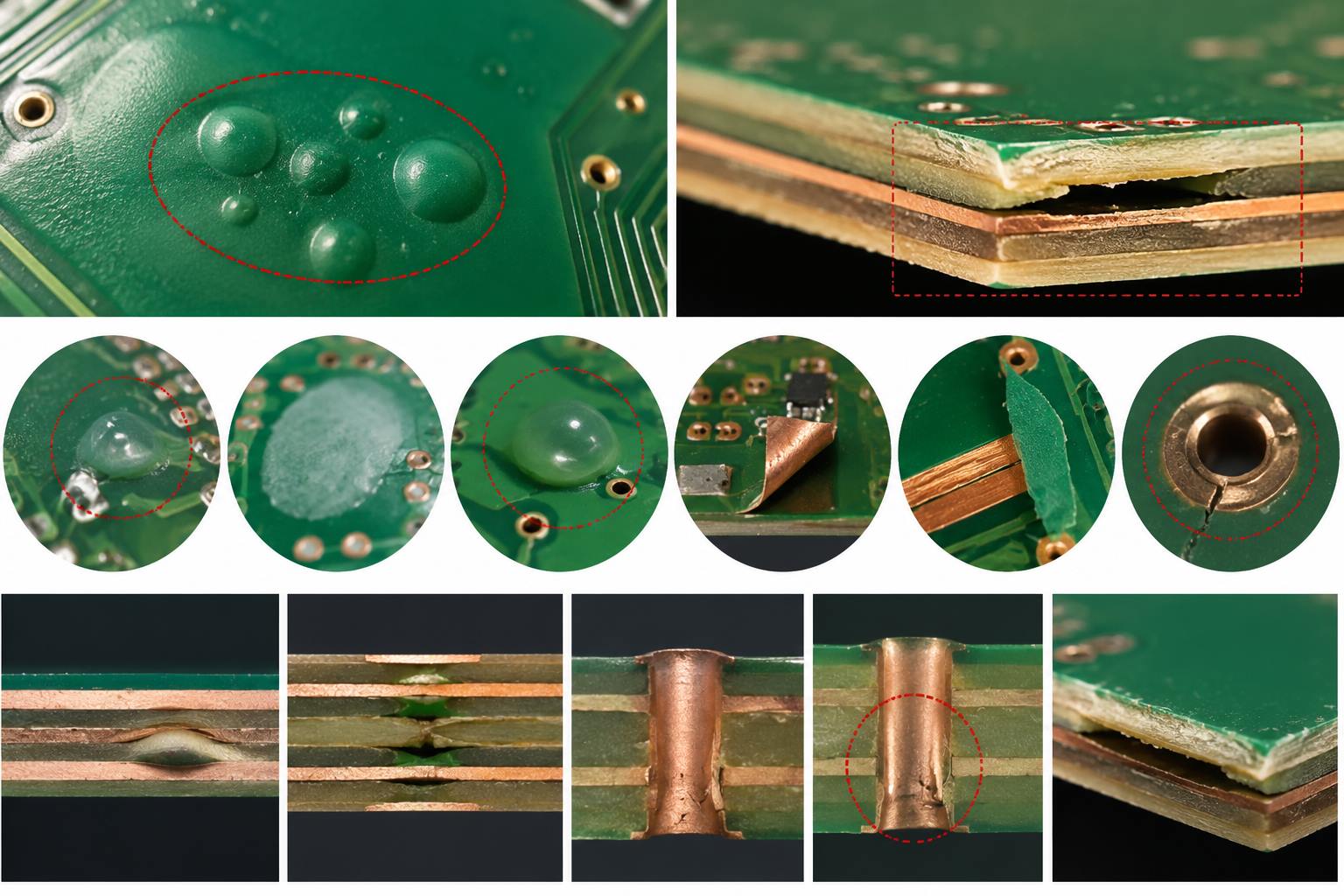
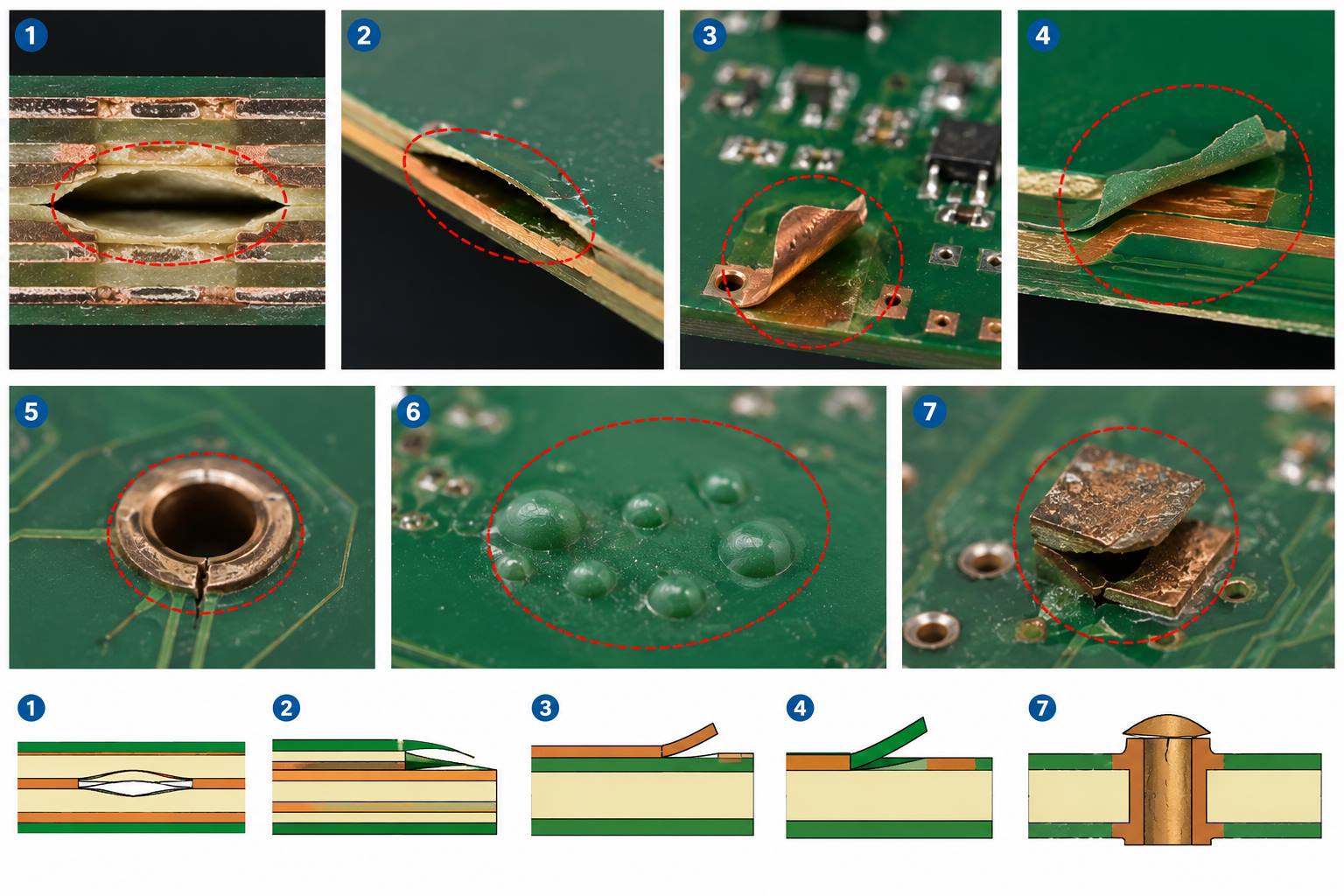
If you design or manufacture high-power electronics—such as LED modules, automotive electronics, or power supplies—you have likely encountered a costly issue: solder mask ink blistering or peeling on thermally conductive, copper-based PCBs.

This defect is far more than cosmetic. Once the ink detaches, insulation is compromised, copper is exposed, and the risk of corrosion, short circuits, and field failures increases sharply. The question is not if it can happen, but why it happens so often on thermally conductive PCBs—and how to prevent it in a controlled, repeatable way.

This guide explains the real root causes and provides a practical, engineering-driven prevention strategy.

Why Do Thermally Conductive PCBs Suffer from Ink Blistering?

Thermally conductive PCBs are designed to dissipate heat efficiently, often using thick copper layers, metal cores, or high-performance dielectric materials. These features make them excellent thermal performers—but also introduce mechanical stress.

The core issue is CTE mismatch. Copper, dielectric layers, substrates, and solder mask ink all expand and contract at different rates when exposed to heat. During soldering and thermal cycling, this mismatch generates strong shear forces at the ink-to-copper interface.

When stress exceeds adhesion strength, failure occurs. The ink does not fail randomly—the bond fails at its weakest point.

Why Do Thermally Conductive PCBs Suffer from Ink Blistering?

What Actually Fails When Ink Blisters or Peels Off?

The final failure mode is always the same: loss of adhesion between the solder mask ink and the copper surface.

Once this bond weakens:

  • Heat causes localized lifting
  • Trapped moisture expands into vapor
  • Flux chemicals penetrate the interface
  • The ink blisters, cracks, or peels away

Understanding why adhesion weakens is the key to long-term prevention.

Why Does Ink Adhesion Fail on Thermally Conductive PCBs?

Ink adhesion failure is rarely caused by a single factor. In most cases, it is the result of multiple small weaknesses stacking together.

1. Poor Surface Preparation

This is the most common root cause. Any contamination—oxide layers, oils from handling, dust, or residual plating chemicals—prevents proper bonding. Even a surface that is too smooth can be a problem, as the ink has nothing to mechanically anchor to.

Moisture trapped in vias or micro-voids becomes steam during soldering, pushing the ink away from underneath.

2. Using the Wrong Type of Ink

Standard solder masks developed for FR-4 are not designed for metal-core or high-thermal-conductivity boards. Their mechanical flexibility and thermal resistance are insufficient for the stress environment.

Expired ink or ink stored outside recommended conditions further degrades adhesion performance.

3. Incomplete or Incorrect Curing

Ink that is not fully cured remains chemically weak. Fast ramp rates, uneven oven temperatures, or insufficient soak time prevent full polymer cross-linking.

Visually, the ink may look acceptable—but internally, it lacks structural strength.

4. Chemical Attack During Assembly

Highly active fluxes can migrate under poorly bonded ink edges. Under reflow temperatures, these chemicals aggressively attack the interface, triggering sudden blistering or peeling after assembly.

5. Design-Driven Thermal Stress

Large copper pours and thick copper planes act as stress concentrators. Repeated thermal cycling during soldering, testing, and operation gradually fatigues the ink bond in these high-stress zones.

How Can Surface Preparation Be Optimized for Ink Adhesion?

The goal of surface preparation is simple: clean, micro-roughened, and moisture-free copper.

Key actions include:

  • Using controlled acidic cleaning followed by high-pressure DI water rinsing
  • Applying chemical micro-etch or plasma treatment to achieve Ra 0.4–0.8 µm
  • Enforcing a strict “print within 2 hours” window after surface treatment
  • Avoiding manual handling after preparation

Surface preparation sets the foundation. If this step fails, no ink can compensate.

How Should Ink Be Selected and Handled for These Boards?

Ink selection must match the application environment.

Best practices include:

  • Using solder mask inks specifically qualified for metal-core or high-thermal PCBs
  • Reviewing technical data sheets and Certificates of Analysis
  • Storing ink at controlled temperature and humidity
  • Enforcing FIFO inventory and never using expired material

Ink should be treated as a critical chemical, not a consumable.

What Printing and Curing Controls Prevent Ink Failures?

Printing and curing are where most hidden failures originate.

To maintain consistency:

  • Control ink viscosity using a viscometer
  • Measure dried ink thickness regularly (typically 25–35 µm)
  • Ensure uniform coverage across thick copper areas
  • Profile curing ovens using actual board measurements

Curing must follow the ink supplier’s recommended ramp-and-soak profile exactly. Assumptions are not acceptable—verification is required.

What Printing and Curing Controls Prevent Ink Failures?

How Can Ink Reliability Be Validated Before Shipment?

Validation should simulate real assembly and field conditions.

Recommended tests include:

  • Cross-hatch tape adhesion testing (IPC-TM-650 2.4.28)
  • 288°C solder float testing
  • Multiple simulated reflow cycles
  • Compatibility testing with selected solder pastes and fluxes

If ink survives these tests, it is far more likely to survive real use.

How Can PCB Design Reduce Ink Stress and Blistering Risk?

Design choices strongly influence ink reliability.

Effective DFM measures include:

  • Using rounded corners on large copper pours
  • Adding solder mask anchor features where possible
  • Avoiding abrupt copper thickness transitions
  • Communicating ink and assembly risks early in design reviews

Design collaboration prevents problems that manufacturing alone cannot fix.

Why Is Pre-Bake Important Before Assembly?

Moisture is a silent contributor to blistering.

Pre-baking boards at 125°C for 1–2 hours before assembly removes absorbed moisture from substrates and vias. This simple step dramatically reduces steam-induced ink lifting during reflow.

Why Is Pre-Bake Important Before Assembly?

How Should Ink Blistering Be Troubleshot Systematically?

When failures occur, follow a structured approach:

  1. Observe the blistering pattern
  2. Large, uniform blistering usually points to curing or ink issues
  3. Localized blistering often indicates contamination or handling problems
  4. Failures only after soldering suggest incomplete cure or flux attack

Systematic analysis saves time and prevents repeated mistakes.

What Is the Key to Preventing Ink Blistering Long Term?

Ink blistering on thermally conductive PCBs is not random. It is the result of unmanaged stress and weak process control.

Prevention comes from:

  • Proper material selection
  • Controlled surface preparation
  • Verified curing processes
  • Design collaboration
  • Assembly compatibility planning

When these elements are managed together, ink blistering becomes a rare exception rather than a recurring problem.

Ready to Eliminate Ink Blistering on Thermally Conductive PCBs?

Ink blistering and solder mask peeling are not inevitable problems—they are signals that something in material selection, process control, or design collaboration needs to be improved.

If you are working with thermally conductive, copper-based, or metal-core PCBs and want to prevent ink failures before they reach assembly or the field, working with an experienced manufacturing partner makes a measurable difference.

At EBest Circuit, we support engineers with:

  • Early DFM and process risk review for thermally conductive PCBs
  • Proven solder mask and surface treatment processes for high-thermal designs
  • Full PCB + PCBA one-stop service, including testing and traceability
  • Prototype and small-volume support with fast technical feedback

If you’d like a second opinion on your board design, process flow, or ink-related reliability risks, feel free to contact our engineering team.

📩 Email: sales@bestpcbs.com

We’re here to help you turn thermal performance into long-term reliability—without surprises after reflow.

You may also like

Quick Turn Ceramic RF PCB Manufacturer | EBest One-Stop PCBA

January 30th, 2026

Why is choosing the right Ceramic RF PCB manufacturer more important than “just picking a material”?

If you only remember one thing: the manufacturer’s process window can matter as much as the substrate choice. A perfect material spec won’t save you if copper adhesion, line definition, or ceramic handling is inconsistent. In ceramic boards, yield and reliability are heavily influenced by metallization method, copper thickness control, micro-pattern capability, and how the factory manages thermal stress during fabrication and assembly.

That’s why many engineering teams start by shortlisting a manufacturer that can do proper DFM, tolerance control, and traceability—then pick the final ceramic + copper system that fits the factory’s proven process. Ceramic PCB capability is commonly delivered through processes like DPC, DBC, AMB, thick film, LTCC/HTCC, each suited to different applications and costs.

Why pick EBest first when you need a Ceramic RF PCB manufacturer?

  • Free DFM and process adaptation suggestions before you commit.
  • 20 years experience, serving 1800+ customers and 10,000+ engineers (engineering-friendly communication cadence).
  • One-stop service: PCB, components, PCBA, testing, and box-building.
  • No MOQ, personal service, prototype & small volume welcome.
  • Quality system coverage: ISO9001 / ISO13485, IATF16949, AS9100D.
  • MES & Traceability for process accountability.
  • 1.5-week rapid PCBA delivery (project-dependent) with quick-turn discipline.
  • Technical support before & after sales, prompt feedback within 12 hours.
Quick Turn Ceramic RF PCB Manufacturer | EBest One-Stop PCBA

What is Ceramic RF PCB? Why to use it?

Ceramic RF PCB is a high-frequency circuit board built on ceramic substrates (commonly alumina Al2O3, aluminum nitride AlN, or beryllium oxide BeO) where copper is bonded or plated onto ceramic for RF signal stability and superior heat spreading. In plain terms: it’s chosen when you want RF to stay consistent at higher frequencies and power density without “temperature drift” turning your tuning into guesswork.

In RF builds, the board is not just a carrier. It becomes part of your circuit: it affects impedance, loss, phase, and even long-term drift. Ceramics stand out because they are electrically stable and mechanically rigid, while also handling harsh temperature environments better than typical organic laminates in many use cases. Ceramic substrates are widely recognized for RF and microwave suitability due to low dielectric loss and stable properties under operating conditions, and they’re also used in 5G, aerospace, automotive, and power modules in real production environments.

Where is Ceramic RF PCB most worth it in real RF/microwave products?

Ceramic RF PCBs are typically most “worth the cost” when your RF performance and thermal load rise together. In other words, you either run higher frequency where loss and drift matter more, or you run higher power where junction temperature threatens RF stability. Typical use cases include compact RF power amplifiers, antenna feed networks in tight space, RF front-end modules with hot components, and applications that need stable performance across wide temperature swings.

  • RF and microwave modules where low dielectric loss and stability are valuable.
  • High-power RF sections where heat must leave fast (reducing frequency drift and protecting components).
  • Harsh environments: automotive, aerospace, industrial, and outdoor telecom enclosures.
  • Miniaturized layouts where mechanical stiffness and dimensional stability help consistency.

Many ceramic PCB resources describe ceramics as suitable for RF/microwave due to low dielectric loss, stable permittivity, and robustness in demanding environments, alongside high-power and high-temperature use cases.

Alumina vs AlN vs BeO: how do beginners choose the right ceramic substrate?

Pick the substrate by answering four questions first:

(1) How much heat must move through the board?

(2) How sensitive is your RF response to temperature drift?

(3) Do you need fine lines and tight impedance control?

(4) Are there safety/compliance constraints?

Alumina is the common “balanced” option; AlN is usually chosen when thermal performance is critical; BeO can provide very high thermal conductivity but comes with safety handling constraints in many organizations.

ParameterAlumina (Al2O3)Aluminum Nitride (AlN)Beryllium Oxide (BeO)
Best forBalanced RF + cost, common ceramic buildsHigh heat flux RF modules, power + RF combinedExtreme thermal needs (with strict safety policies)
Thermal conductivity (typical ranges)Often cited around 20–30 W/m·K class in many industry referencesCommonly cited ranges vary by grade; many sources cite ~140–200 W/m·K or broader ranges depending on gradeOften cited around 250–300 W/m·K class in industry references
RF stabilityGood stability; widely used and well-understoodVery good, especially when temperature is a major variableGood, but selection is often driven by thermal rather than RF-only reasons
Manufacturing maturityVery mature supply chainMature, but cost and process control matter moreMore restricted handling; fewer suppliers in many regions
Notes for beginnersStart here if your RF is sensitive but heat is moderateMove here when your PA/LNA module runs hot or you need lower thermal resistanceOnly choose if your organization allows BeO handling and you truly need it

Quick selection rule

  • If your RF module is “warm but not hot”: start with Alumina.
  • If your hotspot is driving drift or reliability risk: shortlist AlN.
  • If your design is extreme heat flux and policies allow: evaluate BeO carefully.
Alumina vs AlN vs BeO: how do beginners choose the right ceramic substrate?

Which ceramic properties actually matter for RF engineers: Dk, Df, CTE, and thermal conductivity?

For RF, you care about how parameters interact: Dk affects impedance and electrical length; Df affects insertion loss; CTE mismatch drives solder and interface stress; thermal conductivity affects junction temperature and drift. A ceramic substrate is attractive because its dielectric behavior is stable, and it can survive harsh environments while helping heat move away efficiently.

How Dk affects impedance and phase

  • Higher Dk generally allows smaller transmission line geometry for the same impedance, which can be good for miniaturization.
  • But tighter geometry can increase sensitivity to etch tolerance and copper edge definition.

How Df affects loss at higher frequency

  • Df (loss tangent) is a key driver of dielectric loss, which becomes more visible as frequency increases.
  • For long RF traces, filters, and distributed elements, Df can be a performance limiter.

Why CTE matters more than many beginners expect

  • CTE mismatch between ceramic, copper, and components can create stress during reflow or thermal cycling.
  • This is one reason ceramic builds need a manufacturer who understands ceramic handling and metallization adhesion.

DPC vs DBC vs AMB: what’s the difference, and which metallization is best for Ceramic RF PCB?

Metallization is how copper “becomes one” with ceramic. The right choice depends on line/space needs, copper thickness, thermal cycling expectations, and cost. If you need fine features and smoother copper for precision RF patterns, DPC is often discussed as a strong option. If you need thick copper for heat spreading or power handling, DBC is common. AMB is often selected for robust bonding in demanding power modules and harsh cycling cases. Many ceramic PCB process references list DPC, DBC, AMB alongside thick film/thin film/LTCC/HTCC as core approaches.

MetallizationHow it’s formed (concept)Strengths for RFCommon reasons to chooseTypical trade-offs
DPC (Direct Plated Copper)Copper is plated onto prepared ceramic surfaceOften enables finer lines and smoother copper for accurate RF patterningFine pitch RF, compact RF modules, controlled geometryProcess control critical; cost can be higher than basic thick film
DBC (Direct Bonded Copper)Thick copper is bonded to ceramic under controlled conditionsStrong thermal spreading; stable copper thicknessPower + RF, heat spreaders, high current sectionsFeature size can be less “fine” than DPC in some builds; heavier copper handling
AMB (Active Metal Brazing)Active brazing alloy bonds copper to ceramicRobust interface in demanding environmentsHigh reliability modules, harsh thermal cyclingCost and vendor availability may be higher; design must respect process limits

Beginner mapping

  • Need tight RF geometry and fine patterns? Start with DPC.
  • Need thick copper and strong heat spreading? Look at DBC.
  • Need very robust bonding for harsh cycling? Evaluate AMB.

How do you design controlled impedance on Ceramic RF PCB so it stays stable in production?

For beginners: controlled impedance is not “a calculator result,” it’s a manufacturing agreement. The most practical approach is to define your target impedance (50Ω single-ended, 100Ω differential), specify the stack and copper thickness, then let the manufacturer confirm geometry with their process capability and coupons. Ceramic RF builds benefit from stiffness and stability, but they also demand tight control of etching and copper definition because RF lines can be small and sensitive.

What to define for 50Ω / 100Ω before you route

  • Substrate type and thickness (Al2O3 / AlN / etc.).
  • Copper thickness (and whether copper is thick like DBC).
  • Reference plane strategy (continuous ground return is non-negotiable in most RF layouts).
  • Surface finish and solder mask strategy (some ceramic builds may differ from FR-4 norms).

Layout habits that reduce RF surprises

  • Keep return paths short and continuous; avoid broken reference planes under RF traces.
  • Use via fences where isolation matters, and keep via inductance in mind for transitions.
  • For matching networks: place components tight, minimize interconnect length, and keep ground inductance low.
  • Ask for impedance coupons and test reports as part of the build, not after a failure.

What are the most common production “failure modes” for ceramic RF boards, and how do you prevent them?

The fastest way to avoid headaches is to treat ceramic as its own manufacturing category. Common problems are not “RF math” problems—they’re thermo-mechanical and interface problems: cracking from thermal shock, copper-to-ceramic adhesion weakness, and assembly-induced stress. Ceramics are robust, but they can be unforgiving if the process ignores CTE mismatch and thermal profiles.

Typical risk points to watch

  • Thermal shock during reflow or rework (profile discipline matters).
  • Copper-ceramic interface stress (especially with thick copper systems).
  • Board handling and depaneling method (laser depaneling is commonly discussed for clean ceramic edges).
  • Component layout that concentrates stress near corners or cutouts.

Prevention checklist (beginner-friendly)

  • Confirm assembly profile recommendations with your manufacturer early.
  • Use appropriate pad and solder volume strategy to reduce stress.
  • Specify edge and corner rules (avoid sharp internal corners; consider stress relief).
  • Request traceability for materials and key process steps when reliability matters.

What DFM information should you confirm before ordering a Ceramic RF PCB?

Good DFM prevents most expensive RF mistakes. Before you order, align on manufacturable line/space, minimum feature sizes, hole and slot rules (if any), copper thickness tolerances, and how the metallization method impacts RF geometry. You also want a clear agreement on what will be tested and reported. Many ceramic PCB manufacturers highlight that different metallization processes fit different applications, so DFM is where you lock the right process for your design.

RF-focused DFM items

  • Target impedance and coupon plan (what gets measured, where, and how reported).
  • Allowed etch tolerance and copper edge definition for critical RF traces.
  • Grounding strategy review (planes, stitching vias, via fences).
  • Surface finish recommendation based on frequency and assembly.

Files and data to send for accurate quoting

  • Gerbers or ODB++ plus drill files.
  • Stack-up requirements and target impedance notes.
  • BOM (if you want turnkey PCBA) and assembly drawings.
  • Special requirements: cleanliness, inspection criteria, reliability tests.

How do you test and accept a Ceramic RF PCB so the quality is measurable, not “subjective”?

Acceptance should be evidence-based: dimensional checks, visual inspection, metallization integrity checks, and RF-relevant measurements (impedance, insertion loss where applicable, and continuity/short). If your application is high reliability, add thermal and cycling validation appropriate to your product. Some ceramic PCB suppliers emphasize high-voltage and high-frequency readiness and highlight the value of stable properties—your test plan should verify the parts of that promise that matter to your design.

Baseline inspection

  • Visual: cracks, chips, edge defects, copper anomalies.
  • Dimensions: board outline, thickness, critical RF trace geometry sampling.
  • Electrical: continuity, isolation, and impedance coupon results (if controlled impedance).

RF-meaningful verification (project-dependent)

  • Impedance measurement reports tied to coupons.
  • Optional: S-parameter checks for representative structures if your program demands it.
  • Thermal verification for hotspots (simple thermography during bring-up can be very telling).

What drives Ceramic RF PCB cost and lead time, and how do you stay inside budget? (Comparison table)

Cost is usually driven by the ceramic type, metallization choice (DPC/DBC/AMB), copper thickness, feature density, and the inspection/reliability package you request. Lead time is driven by process steps, yield risk, and whether you need quick-turn capacity. If you want the most stable RF outcome within budget, you typically simplify geometry where possible, keep only truly critical RF lines tightly controlled, and work with a supplier who can do fast DFM and on-time scheduling.

Cost / Lead DriverWhy it mattersHow to optimize without sacrificing RF
Ceramic substrate (Al2O3 vs AlN vs BeO)Thermal performance and supply complexity affect pricingUse Al2O3 unless heat flux or drift forces AlN/BeO
Metallization (DPC/DBC/AMB)Defines copper interface, achievable feature size, and robustnessChoose DPC for fine RF; DBC/AMB when power/thermal dominates
Copper thicknessThicker copper improves heat spreading but complicates fine patterningKeep thick copper only where needed; use localized spreading if allowed
Feature density & toleranceTight lines increase yield risk and inspection timeReserve tight tolerance for the critical RF path only
Testing & reliability packageMore verification increases cost but reduces riskAlign tests to actual failure risk: impedance + visual + thermal focus

FAQ: Ceramic RF PCB questions beginners ask (and the straight answers)

1. What is a Ceramic RF PCB used for?

It’s used for RF/microwave circuits that need stable dielectric behavior and strong heat management—common in compact RF modules, high-power RF sections, and harsh environment electronics where temperature drift and heat buildup can degrade performance.

2. Is Ceramic RF PCB better than PTFE/Rogers for all high-frequency designs?

No. PTFE/Rogers-style laminates can be excellent for ultra-low loss transmission at high frequency, while ceramic shines when thermal handling, mechanical stability, and harsh-environment robustness are major constraints. The best choice depends on your loss budget, power density, and assembly environment.

3. Should I choose DPC, DBC, or AMB for a 50-ohm RF trace design?

If your design needs fine RF pattern control and stable geometry, DPC is often preferred. If your design is power-dense and needs thick copper heat spreading, DBC is common. If your module must survive demanding thermal cycling with robust bonding, AMB is worth evaluating.

4. Can Ceramic RF PCB support prototypes and small volume builds?

Yes—especially if you work with a supplier that supports no MOQ, fast DFM, and quick-turn scheduling for engineering iterations, because RF tuning often requires at least one or two build loops.

5. What files do I need to get an accurate Ceramic RF PCB quote?

Gerber/ODB++, drill files, stack-up notes, target impedance requirements, and any special acceptance/testing requirements. If you want turnkey PCBA, include BOM and assembly drawings so the supplier can check component compatibility and assembly profile risk.

6. Does EBest Circuit provide engineering assistance before production?

Yes. EBest Circuit supports Free DFM and process adaptation suggestions, plus technical support before and after sales, so RF boards are reviewed for manufacturability and risk before you spend money on the first build.

7. Do you welcome prototype and small-quantity orders?

Yes. EBest Circuit supports prototypes and small volume builds with no MOQ and personal service, which is practical for RF teams validating performance and tuning networks.

8. How fast can I get a build?

Lead time depends on substrate, metallization, and inspection scope. For many programs, EBest Circuit supports quick-turn discipline and can align PCB + PCBA schedules for a fast iteration cycle, including rapid PCBA delivery options where applicable.

Need a Ceramic RF PCB manufacturer who can quote fast and keep RF stable? Contact EBest

If you need Ceramic RF PCB prototyping, small-volume production, or a one-stop build (PCB + components + PCBA + testing + box-build), EBest Circuit is ready to help. Send your files for a free DFM review and a practical quote: sales@bestpcbs.com.

You may also like

DBC/DCB Ceramic Substrates for Power Semiconductor Packages

January 30th, 2026

What are DBC/DCB ceramic substrates?

DBC/DCB ceramic substrates are copper-on-ceramic platforms used inside power semiconductor packages to carry high current, isolate high voltage, and move heat into a heatsink with low thermal resistance. If you work with IGBT modules, SiC MOSFET modules, inverters, or high-power converters, they are one of the most common “workhorse” substrate choices because they combine electrical insulation and thermal conduction in one compact layer stack.

A ceramic substrate provides dielectric isolation, while thick copper layers on one or both sides provide low-resistance current paths and a mounting surface for chips, sinter, or solder. That combination is hard to achieve with standard PCB materials at the same voltage and power density.

What problem do they solve in IGBT and SiC module packaging?

Power devices generate heat and also demand safe isolation. A power package must do four jobs at once: conduct current, withstand kilovolts, spread heat, and survive thermal cycling. A copper-on-ceramic substrate is purpose-built for this “four-in-one” requirement.

What does “DBC” vs “DCB” mean in real projects?

In most purchasing and engineering discussions, “DBC” and “DCB” are used interchangeably. You will see both terms on drawings, RFQs, and datasheets. Practically, what matters is the material stack (Al2O3/AlN/Si3N4), copper thickness, ceramic thickness, and the reliability target (thermal cycling, partial discharge margin, and mechanical robustness).

DBC/DCB Ceramic Substrates for Power Semiconductor Packages

Why do power modules prefer DBC/DCB ceramic substrates over standard PCBs?

They win because they deliver high current + high voltage isolation + strong heat flow in a footprint that stays stable across temperature swings.

How do they handle high current, high voltage isolation, and heat together?

  • High current: Copper layers are much thicker than typical PCB copper, so I²R losses drop and temperature rise is easier to control.
  • High voltage: Ceramic provides strong dielectric isolation, supporting the separation between high-side and low-side copper patterns.
  • Heat removal: The ceramic layer conducts heat down to a baseplate or heatsink while copper spreads heat laterally.

What makes ceramic + copper “package-grade” compared to PCB-grade?

A standard FR-4 PCB can route signals nicely, but power packages are about controlled thermal paths and insulation integrity over years of cycling. Ceramic substrates are designed for harsh operating profiles, including repeated temperature swings and high junction temperatures.

How does the DBC/DCB process work (in simple steps)?

DBC/DCB uses a bonding method that creates a strong interface between copper foil and ceramic. Then the copper is patterned (etched) into circuits, and the finished substrate is plated or surface-finished as needed for die attach and wire bond.

Step-by-step (beginner-friendly)

  1. Ceramic selection: Choose Al2O3, AlN, or Si3N4 based on cost, thermal needs, and mechanical strength targets.
  2. Copper bonding: Copper foil is bonded to the ceramic at high temperature under controlled atmosphere to form a reliable copper–ceramic interface.
  3. Circuit patterning: The copper is etched into traces, pads, and isolation gaps.
  4. Surface finish: Common finishes include Ni/Au or other plating stacks depending on die attach, soldering, and bondability requirements.
  5. Inspection: Flatness, copper thickness, etch quality, and dielectric integrity are checked to match the application risk level.

Single-sided vs double-sided copper

Single-sided is used for simpler thermal and circuit needs. Double-sided copper is common in modules because it can improve heat spreading, stiffness, and interconnect options. The “right” choice depends on your mechanical stack and how you mount the substrate to the baseplate or heatsink.

Which ceramic is better for DBC/DCB: Al2O3 vs AlN vs Si3N4?

If you need value and proven supply chains, start with alumina. If you are heat-limited, AlN usually moves the needle. If your priority is mechanical toughness and thermal shock resistance, Si3N4 often leads.

MaterialBest forTypical strengthsTrade-offs
Alumina (Al2O3)Mainstream power modulesCost-effective, mature, widely availableLower thermal conductivity vs AlN; more brittle than Si3N4
Aluminum Nitride (AlN)Thermal-limited designsHigh thermal conductivity for lower thermal resistanceHigher cost; handling and processing needs more control
Silicon Nitride (Si3N4)High reliability, cycling-heavy environmentsHigh mechanical strength; strong thermal shock resistancePremium material; availability may vary by spec

When is alumina the smartest choice?

Choose alumina when your thermal budget is reasonable and you want a robust, cost-controlled BOM. Many industrial inverters, motor drives, and general power conversion stacks land here because it balances performance and procurement stability.

When do AlN and Si3N4 justify the premium?

AlN DBC substrates are a common upgrade path when junction temperature margin is tight, or when you want lower thermal resistance without enlarging the package. Si3N4 DBC substrates often show up when reliability under cycling is the dominant KPI—such as traction inverters, automotive environments, and harsh duty profiles.

What copper thickness and ceramic thickness should you specify for DBC/DCB?

Pick copper thickness based on current density and heat spreading goals. Pick ceramic thickness based on voltage isolation margin and mechanical stack constraints. Avoid “one-size-fits-all” defaults, because the wrong thickness can quietly drive hotspot risk or isolation stress.

How do copper thickness and current capacity relate?

Thicker copper lowers resistance and reduces temperature rise for the same current. It also helps spread heat away from die attach regions. The trade is that thicker copper can increase etching difficulty and may change stress distribution during cycling.

  • Use-case clue: If your design has wide copper planes and high RMS current, thicker copper is usually the practical win.
  • Layout clue: If you need fine features, extremely thick copper can limit minimum line/space.

How do ceramic thickness and dielectric withstand relate?

Thicker ceramic generally increases dielectric withstand, but it can raise thermal resistance. Most power packages must balance insulation integrity with heat flow. The smarter move is to define the operating voltage, surge conditions, clearance/creepage targets, and partial discharge margin, then choose thickness accordingly.

What copper thickness and ceramic thickness should you specify for DBC/DCB?

DBC/DCB vs AMB: which substrate should you choose for your power package?

DBC/DCB is the mainstream choice for many power modules because it balances cost and performance. AMB substrates often become attractive when you need extra mechanical robustness and higher cycling tolerance in extreme environments.

Decision pointDBC/DCB ceramic substratesAMB ceramic substrates
Bonding approachCopper bonded directly to ceramicCopper attached via active metal brazing layer
Typical positioningHigh volume, strong cost/performanceHigher-end reliability and robustness
Common ceramicsAl2O3, AlNAlN, Si3N4 (often chosen for toughness)
When it shinesIndustrial/automotive power modules with balanced needsHarsh cycling, high stress, mission-critical profiles

Selection shortcut

If you are pushing higher power density and expect aggressive cycling, talk about AMB early. If your program needs mature supply and predictable cost, DBC/DCB is usually the first substrate to validate.

DBC/DCB vs IMS (metal-core) vs thick-film ceramics: what’s the difference?

DBC/DCB is often chosen for high-voltage isolation + heat flow + thick copper. IMS is a strong fit for simpler assemblies and cost-driven thermal platforms. Thick-film ceramics can be useful for specific circuit styles, but DBC/DCB is typically the more common option in modern power modules.

Substrate typeTypical strengthsTypical use casesPractical limits
DBC/DCB copper-on-ceramicHigh insulation + strong thermal path + thick copperIGBT modules, SiC MOSFET modules, invertersMore specialized manufacturing than standard PCB
IMS / metal-core PCBCost-effective thermal spreading for power electronicsLED, moderate-power drivers, simpler thermal stacksInsulation system differs; not always ideal for kV-class isolation
Thick-film ceramic circuitsGood stability; suited to certain printed conductor schemesHybrid circuits, special sensor/power hybridsConductor style and current capability vary by build

What are the key design rules for DBC/DCB copper patterns (etching, clearance, corners)?

Use wide copper where current is high, avoid sharp corners, keep isolation gaps consistent, and design for manufacturability with realistic line/space. Your layout decisions have a direct impact on thermal uniformity and long-term cycling performance.

How to avoid hotspots and current crowding

  • Round internal corners: Sharp corners concentrate current and heat. Rounded corners improve current distribution.
  • Use copper pours and neck-down control: Avoid sudden reductions in trace width near die attach or bond areas.
  • Plan heat spreading: Add copper area under high-loss components when your mechanical stack allows it.

How to set creepage and clearance for high-voltage areas (practical approach)

Start with your working voltage, transient conditions, and contamination assumptions, then set conservative copper-to-copper gap targets. Use consistent gap geometry across the design so your partial discharge risk does not move around the substrate. If your environment is harsh, treat margin as a design feature, not a luxury.

What are common failure modes in DBC/DCB ceramic substrates, and how do you prevent them?

Most reliability issues trace back to stress concentration, thermal mismatch, or process choices that amplify cycling strain. You can prevent many problems with good geometry, controlled copper thickness choices, and stable assembly methods.

Why delamination happens (and how to reduce risk)

  • Stress from cycling: Repeated heating and cooling can load the interface.
  • Large copper islands: Very large copper areas can amplify stress in some stacks.
  • Prevention ideas: Smooth transitions, balanced copper on both sides when needed, and realistic copper thickness selection.

Why cracks start (and how layout choices help)

  • Corner stress: Sharp copper corners can focus stress.
  • Mechanical constraints: Overly rigid mounting or uneven torque can add bending.
  • Prevention ideas: Radius corners, avoid unnecessary cutouts near high-stress regions, and control mounting flatness.

How are DBC/DCB ceramic substrates used in real power semiconductor packages?

They sit between semiconductor chips and the heatsink/baseplate, acting as the insulated thermal highway and the copper circuit at the same time. That is why they are central to power module packaging.

IGBT modules: baseplate, solder, and heat path

In IGBT modules, a DBC/DCB substrate typically supports the die attach layer and wire bonds, then conducts heat through the ceramic down to the baseplate and into the cooling system. The copper pattern also routes phase currents and gate-related connections in a compact, low-inductance layout.

SiC MOSFET modules: faster switching, higher thermal stress

SiC switching can increase thermal and mechanical stress in the stack because designs often push higher power density. This is where ceramic choice, copper thickness strategy, and assembly control become even more important. A stable substrate can protect performance consistency across life-cycle operation.

How are DBC/DCB ceramic substrates used in real power semiconductor packages?

What information should you send a manufacturer to quote DBC/DCB ceramic substrates fast?

If you want fast quoting and fewer back-and-forth emails, send a complete stack definition plus the copper pattern data and inspection expectations. Power substrates are not “generic PCB,” so clarity saves days.

Include these items in your RFQ package

  • 2D drawing (PDF) + dimension tolerances
  • Copper pattern files (Gerber or DXF) for top and bottom
  • Ceramic type: Al2O3 / AlN / Si3N4
  • Ceramic thickness (target + tolerance)
  • Copper thickness (top/bottom), single- or double-sided
  • Surface finish requirement (example: Ni/Au for bondability)
  • Flatness target and any warpage limits
  • Reliability goal: thermal cycling expectations and inspection plan

Ask these questions early (they prevent surprises)

  • What minimum line/space is realistic for your copper thickness?
  • What is your typical etch tolerance window?
  • How do you control copper thickness uniformity?
  • What inspection data can you provide (thickness, flatness, dielectric checks)?

Why choose EBest as your DBC/DCB ceramic substrates manufacturer?

If you want a supplier that speaks the language of engineers, EBest is built around practical manufacturability, fast feedback, and reliable delivery. We position ourselves as a One-stop PCBA service provider with a strong understanding of power electronics build risks, so your substrate sourcing and downstream assembly stay aligned.

What EBest does differently (engineer-first advantages)

  • Free DFM and process adaptation suggestions for copper patterns, clearances, and manufacturable features
  • 20 years of manufacturing depth, serving 1800+ customers and 10,000+ engineers
  • One-stop support: PCB, components, PCBA, testing, and box-building
  • NO MOQ and personal service for prototype and small-volume programs
  • Quality systems aligned to regulated and reliability-driven industries (ISO9001, ISO13485, IATF16949, AS9100D)
  • MES & Traceability to keep material and process records consistent
  • 1.5-week rapid PCBA delivery capability for time-critical projects
  • Technical support before and after sales, with prompt feedback (within 12 hours)
  • Quick turn-out and on-time delivery mindset
  • High quality builds with special request support

What this means for your project

You get clearer manufacturability guidance upfront, fewer drawing revisions, and smoother integration from substrate to assembly. That reduces re-spin risk and keeps your schedule predictable.

FAQ about DBC/DCB ceramic substrates

What is the difference between DBC and DCB substrate?

In most real-world RFQs, they refer to the same copper-on-ceramic concept. Focus on the spec details that change performance: ceramic type, ceramic thickness, copper thickness, surface finish, and reliability requirements.

Which is better for power modules: AlN DBC substrate or Al2O3 DBC substrate?

If you are heat-limited, AlN usually offers a stronger thermal path and can reduce thermal resistance. If your design has enough thermal margin and cost control is critical, Al2O3 is often the best starting point.

Why do Si3N4 DBC substrates show up in automotive and cycling-heavy applications?

Because mechanical toughness and thermal shock resistance can become the limiting factor over long life cycles. When cycling is intense, Si3N4 is often chosen to protect reliability margins.

How do I choose copper thickness for DBC/DCB ceramic substrates?

Start with current level and allowable temperature rise, then choose copper thickness that keeps resistance and hotspots under control. If you also need finer copper features, confirm manufacturable line/space limits early so the copper thickness and pattern can coexist.

What surface finish is common for DBC/DCB ceramic substrates used in power packages?

Ni-based finishes with gold top layers are commonly specified when bondability and stable solderable surfaces matter. The best finish depends on your die attach method, wire bonding approach, and storage/handling needs.

What files do I need to get a fast quote for DBC/DCB ceramic substrates?

Send your 2D drawing, copper pattern data (top/bottom), stack definition (ceramic type + thickness, copper thickness), finish requirement, and any flatness or inspection expectations. Clear input leads to faster quoting and fewer revisions.

Does EBest support prototypes and small-quantity DBC/DCB substrate-related projects?

Yes. We welcome prototype and small-volume programs, and we support fast feedback with Free DFM so your design can move forward with confidence.

Ready to source DBC/DCB ceramic substrates for your power semiconductor packages?

If you need DBC/DCB ceramic substrates for power modules, inverters, IGBT packages, or SiC MOSFET packages, EBest can support your project with engineer-led DFM, responsive quoting, and one-stop manufacturing support. Email us at sales@bestpcbs.com and send your drawing + copper pattern files to start.

You may also like

Rigorous Quality SMT PCB Board Manufacturing

January 30th, 2026

SMT PCB board manufacturing is the foundation of modern electronics production, enabling compact layouts, stable electrical performance, and scalable assembly across a wide range of applications. This article explains what an SMT PCB board is, how SMT differs from other assembly technologies, what processes and board types are involved, and how quality is controlled in real manufacturing environments.

Understanding how SMT PCB board manufacturing actually works is essential for engineers and procurement teams alike. As an established manufacturer with over 20 years of experience in the SMT PCB board industry, EBest Circuit (Best Technology) is committed to becoming a reliable one-stop PCBA service provider. Our engineering and sales teams possess strong, practical knowledge of SMT manufacturing processes and production workflows, enabling clear technical communication at every project stage. We also excel in providing free DFM review and process adaptation suggestions, helping engineers reduce risk and improve manufacturability early in the design phase.

To prepare accurate SMT placement programs, a complete BOM list, a clear silkscreen reference designator drawing, and a correct pick-and-place (centroid) file are all essential inputs for the assembly process. If you require any related consultancy services or technical support, please feel free to contact us at sales@bestpcbs.com and provide these files for review.

What Is a SMT PCB?

A SMT PCB is a printed circuit board designed and assembled using Surface Mount Technology, where electronic components are mounted directly onto the surface of the PCB rather than inserted through drilled holes. In SMT PCB manufacturing, components are placed with high precision and soldered through controlled reflow processes.

From a manufacturing perspective, SMT in PCB manufacturing is not just a placement method. It is a complete system that integrates PCB design rules, solder paste printing, component placement accuracy, thermal profiling, and inspection strategy. Each step affects yield, reliability, and repeatability.

In practice, SMT PCB boards allow higher component density, shorter signal paths, and better electrical consistency compared to older assembly methods, which is why SMT has become the dominant technology in electronics production today.

What Is the Difference Between SMD and SMT PCB?

SMD and SMT are closely related but refer to different aspects of the same process. SMD (Surface Mount Device) refers to the components themselves, while SMT PCB refers to the assembly process used to mount those components onto the PCB.

From an engineering standpoint, confusion between SMD and SMT often leads to incomplete specifications. Engineers must define not only the component package (SMD) but also the assembly capability, inspection method, and rework strategy associated with SMT PCB manufacturing.

In real builds, the distinction matters because component selection, pad design, and SMT stencil thickness must all align with the SMT process window. Treating SMT PCB assembly as interchangeable with component choice alone is a common source of early-stage defects.

Why Is SMT PCB Board Used?

The SMT PCB board is used because it supports the performance, size, and manufacturing efficiency requirements of modern electronics. SMT enables smaller footprints, lighter assemblies, and higher functional integration.

From a production perspective, SMT PCB boards allow consistent automation, improved solder joint quality, and faster assembly cycles when properly engineered. These benefits are not theoretical; they directly affect yield stability and cost control.

In real-world manufacturing, SMT PCB board usage is driven by the need to balance electrical performance, thermal behavior, and scalability. This is why SMT is used across consumer electronics, industrial control, automotive systems, medical devices, and communication equipment.

What Processes Are Involved in SMT PCB Board Assembly?

SMT PCB board assembly involves a tightly controlled sequence of processes, each of which must be executed consistently to achieve reliable results.

Key processes include:

  • Solder paste stencil printing with controlled volume and alignment
  • High-accuracy component placement using pick-and-place systems
  • Reflow soldering with defined thermal profiles
  • Automated Optical Inspection (AOI) and functional checks
  • Rework and verification when required

From an engineering perspective, none of these steps can be optimized in isolation. Paste formulation, placement accuracy, and reflow profile must work together as a system.

In real production, stable SMT PCB board assembly comes from process discipline, not equipment alone. Manufacturers that focus only on speed or cost often sacrifice long-term reliability.

How Does PCB Board SMT Differ From THT and DIP Assembly?

PCB board SMT differs fundamentally from through-hole technologies such as THT and DIP assembly in both structure and manufacturing behavior. SMT mounts components on the surface, while THT and DIP require drilled holes and manual or wave soldering processes.

Assembly MethodSMT PCB BoardTHT AssemblyDIP Assembly
Component MountingSurface-mountedLeads inserted through holesDual in-line through holes
Board DensityVery highMediumLow
Automation LevelFully automatedSemi-automatedMostly manual
Assembly SpeedFastModerateSlow
Mechanical StrengthModerateHighHigh
Rework ComplexityHigherEasierEasier
Typical ApplicationsHDI, consumer, industrial, medicalPower, connectorsLegacy designs, prototypes
ScalabilityExcellentLimitedPoor

From a manufacturing viewpoint:

  • SMT supports higher density and automation
  • THT and DIP provide stronger mechanical anchoring for large components
  • SMT is more sensitive to thermal control and paste consistency

In real assembly lines, board assembly SMT DIP PCB and board assembly SMT THT PCB processes are often combined on the same board. Managing these hybrid builds requires careful sequencing to avoid solder defects or component damage.

What Types of Boards Commonly Use SMT PCB Board Technology?

SMT PCB board technology is used across a wide range of board types, not just standard FR4 designs.

Common applications include:

From an engineering standpoint, each board type introduces different thermal, mechanical, and inspection challenges. SMT PCB manufacturing must adapt process parameters accordingly.

In real manufacturing, suppliers with limited board experience often struggle when moving beyond standard FR4 SMT assemblies.

How Do SMT PCB Board Manufacturers Control Quality and Reliability?

Professional SMT PCB board manufacturers rely on process control rather than end-stage inspection alone. Quality must be built into each manufacturing step.

Effective control methods include:

  • Incoming material verification and traceability
  • First Article Inspection (FAI)
  • AOI at multiple stages
  • Controlled reflow profiling
  • MES-based lot and process tracking

From a reliability perspective, these controls ensure that each SMT PCB board performs consistently across production batches.

In practice, SMT PCB board factories with weak documentation or incomplete traceability often cannot support regulated or high-reliability applications.

Why Choose a China SMT PCB Board Manufacturer for Production?

A qualified China SMT PCB board manufacturer offers advantages beyond cost, including supply chain maturity, integrated PCB and PCBA capability, and flexible production scaling.

From an engineering and procurement viewpoint, China-based manufacturing supports:

That said, not all SMT PCBA suppliers operate at the same level. Engineering involvement, documentation quality, and process transparency are what separate reliable circuit assembly manufacturers from purely price-driven ones.

Why Choose EBest Circuit for SMT PCB Board Manufacturing?

EBest Circuit (Best Technology) approaches SMT PCB board manufacturing as an engineering service rather than a transactional process. We focus on execution discipline, traceability, and long-term manufacturability.

Our strengths include:

  • In-house PCB fabrication and SMT assembly
  • Dedicated engineering involvement throughout the build
  • Clear process documentation and MES-based traceability
  • Support for complex, mixed-technology assemblies
  • Stable delivery backed by real production capability

We do not compete by cutting corners or racing to the lowest price. Instead, we deliver consistent SMT PCB board manufacturing that engineers and procurement teams can rely on. And we attach great importance to customer experience and believe that long-term success is driven by delivering real value through both before and after sales service. From initial technical discussions to post-delivery support, our goal is to ensure every customer enjoys a smooth, transparent, and dependable project experience. For technical discussions or project inquiries, please contact us at sales@bestpcbs.com.
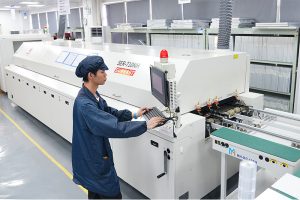
FAQ: SMT PCB Board

What Are the Disadvantages of SMT?
SMT requires tighter process control and is more sensitive to thermal and paste variations compared to through-hole assembly.
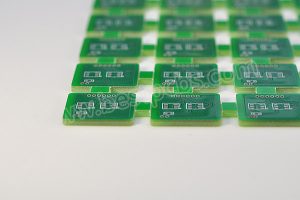
Is SMT the Same as SMD?
No. SMD refers to the component, while SMT refers to the assembly process used to mount it.
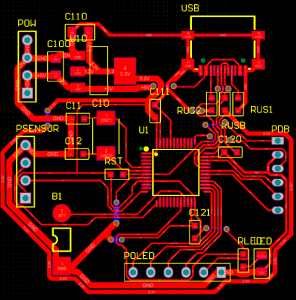
Can SMT Components Be Repaired?
Yes. With proper equipment and procedures, SMT components can be reworked or replaced.

How Do You Remove SMD Components?
SMD components are typically removed using controlled hot air or rework stations to avoid PCB damage.

You may also like

PCB Assembly South Africa Manufacturer Selection Guide

January 29th, 2026

PCB assembly South Africa plays a vital role in the region’s electronics manufacturing ecosystem, catering to automotive, industrial, and telecom sectors. Local and international suppliers deliver tailored solutions, from prototype to mass production, ensuring compliance with global standards. PCB assembly South Africa integrates advanced technologies and localized support, making it a reliable choice for businesses seeking efficient production cycles and quality output. This guide breaks down key aspects of selecting suppliers, quality control, lead times, and costs to help navigate the market effectively.

PCB Assembly South Africa Manufacturer Selection Guide, https://www.bestpcbs.com/blog/2026/01/pcb-assembly-south-africa/

Top 10 PCB Assembly South Africa Manufacturer

Company NameMain BusinessCore AdvantagePCBA CapabilityLead Time
EBest Circuit Co.Turnkey PCBA, component sourcingGlobal supply chain, 20-year experience1-32 layers, HDI, blind/buried viasPrototype: 5-7 days; Mass: 10-15 workdays
ElectekRigid PCB assemblyLocal Gauteng-based, quick prototypeRigid boards, SMT, basic testingPrototype: 7-10 days; Mass: 14-20 workdays
Expando WorksFlexible/rigid PCB assemblyMulti-material handling, aerospace complianceUp to 20 layers, SMT+THTPrototype: 8-12 days; Mass: 15-22 workdays
Master CircuitsRigid-flex PCB assemblyDurban-based, high-layer capabilityUp to 60 layers, aluminium substratePrototype: 10-14 days; Mass: 18-25 workdays
Pro CircuitPCB fabrication & assemblyCape Town location, MyData equipmentUp to 32 layers, rigid-flexPrototype: 10-14 days; Rush: 7-10 workdays
ICAPE TraxHigh-precision PCB assemblyIPC-certified, fast prototypesPTH, 4-6 layer boardsPTH: 3 days; 6-layer: 7 days
PCB Solutions AfricaTurnkey PCBA, testingCompetitive pricing, one-stop serviceSMT, functional testingPrototype: 6-9 days; Mass: 12-18 workdays
Techprint ElectronicsIndustrial PCB assemblySABS-certified, cleanroom environmentHigh-reliability soldering, X-ray inspectionPrototype: 9-13 days; Mass: 16-23 workdays
Elite Electronics AssemblyLow-medium volume assemblyPersonalized supportRigid boards, through-hole, basic SMTPrototype: 5-8 days; Mass: 13-19 workdays
Global Circuits SAInternational-grade assemblyRogers 4350B handlingHDI, BGA via-in-padPrototype: 7-11 days; Mass: 14-21 workdays

Quality Standards for PCB Assembly South Africa

  • IPC-A-610: The global benchmark for electronic component acceptability, covering soldering, component placement, and cleanliness for PCB assembly South Africa.
  • IPC 6012: Specifies performance requirements for rigid PCBs, including layer count, copper thickness, and dielectric strength.
  • SABS Certification: South Africa’s mandatory safety standard (e.g., IEC 60950-1) for electrical products, ensuring market access.
  • ISO 9001: Quality management system requirement to guarantee consistent processes in PCB assembly manufacturing in South Africa.
  • IPC-2221: Governs design rules for clearance, creepage, and conductor width to maintain structural and electrical integrity.

How to Choose the Right South Africa PCB Assembly Manufacturer?

Selection Guide to South Africa PCB Assembly Manufacturer:

  • Verify core certifications: Prioritize suppliers with IPC-A-610 (Class 2/3, electronic component acceptability benchmark), SABS (SANS IEC 60950-1, South Africa’s mandatory electrical safety certification), and ISO 9001. These credentials directly guarantee PCB assembly South Africa meets local market access rules and global quality thresholds for high-reliability applications.​
  • Assess process compatibility: Confirm the supplier handles your board type (rigid/flexible/rigid-flex) and component specs. For assembled PCB with relay South Africa, verify their proficiency in relay pin soldering (THT/SMT) and thermal control (240-260℃ for SMT relays) to avoid component damage during assembly.​
  • Evaluate supply chain stability: Select partners with dual-sourcing for critical components (e.g., microcontrollers, capacitors) and incoming inspection protocols (IPC-A-600 for bare boards). Inspect for batch traceability to filter defective materials like “reduced-cloth” substrates, minimizing delays in PCB assembly manufacturing in South Africa.​
  • Check testing capabilities: Ensure access to AOI (for SMT open/short circuits, component offset ≤0.1mm), X-ray inspection (The BGA void rate is controlled to be within 5%.), and functional testing. These steps eliminate 90%+ of defects before mass production, reducing rework costs.​
  • Review customer feedback: Focus on industry-specific case studies (automotive/industrial), on-time delivery rate (≥95% is ideal), and post-assembly support (failure analysis turnaround ≤48 hours). Peer feedback from similar volume/tech projects reflects real operational reliability.
How to Choose the Right South Africa PCB Assembly Manufacturer, https://www.bestpcbs.com/blog/2026/01/pcb-assembly-south-africa/

How to Evaluate the Assembly Capability of South Africa PCBA Supplier?

Evaluation Guide to Assembly Capability of South Africa PCBA Supplier:

  • Inspect equipment specifications: Verify modern MyData pick-and-place machines (component pitch down to 0.3mm)、X-ray inspection tools (for BGA/QFN hidden joints) and 8-12 zone solder reflow ovens. Check for precision drilling equipment with ±0.025mm accuracy to handle complex HDI or high-layer assemblies. ​
  • Review process limits with standards: Confirm maximum layer count (up to 60 layers for premium suppliers)、IPC-compliant component pitch (0.4mm BGA as baseline) and material compatibility. Ensure proficiency in FR-4, aluminium substrates and polyimide for flexible/rigid-flex boards, aligning with PCB assembly manufacturing in South Africa requirements. ​
  • Test prototype quality with metrics: Order 20-50pcs prototypes to assess soldering precision (≥99.9% pass rate per IPC-A-610 Class 2/3) and design spec adherence. Require a prototype test report detailing defects and optimizations for PCB assembly South Africa. ​
  • Evaluate production capacity scalability: Assess current equipment utilization (ideal ≤70% for flexibility) and availability of backup production lines. Confirm the supplier can double order volume within 10-15 workdays without extending lead times by more than 20%. ​
  • Assess technical support capability: Verify availability of DFM (Design for Manufacturability) services, with 24-hour response for engineering queries. Check if the team provides free design reviews to optimize for assembly efficiency and reduce production defects.

How to Ensure PCB Assembly Quality of South Africa PCBA Companies?

Evaluation Guide to PCB Assembly Quality of South Africa PCB Assembly Manufacturing Companies:

  • Implement incoming inspection: Follow IPC-A-600 standards to verify component authenticity through batch traceability and supplier Certificate of Conformance (COC) documents. Inspect solderability, package integrity and parameter consistency such as capacitor voltage rating to prevent faulty parts from entering PCB assembly South Africa processes.​
  • Adopt in-process testing: Deploy automated optical inspection (AOI) post-SMT to detect open circuits, short circuits, component offset (≤0.1mm) and polarity errors. Use X-ray inspection for BGA and QFN components, controlling void rates to ≤5% per IPC-A-610 Class 2/3 to identify hidden soldering defects early.​
  • Enforce final functional testing: Validate each assembly against design specifications including voltage, current and signal integrity using custom test fixtures. Conduct sample reliability tests like thermal cycling for industrial products to ensure consistent performance in real-world scenarios.​
  • Maintain process documentation: Record production parameters such as reflow oven temperature curves and soldering parameters, along with equipment calibration logs and inspection results. Retain documents for at least 3 years per ISO 9001 to enable full traceability and root-cause analysis for defects.
  • Conduct regular audits: Schedule quarterly on-site audits to verify compliance with IPC-A-610 and SABS (SANS IEC 60950-1) standards for PCB assembly manufacturing in South Africa. Audit scope includes process consistency, cleanroom conditions and staff training certifications.
How to Ensure PCB Assembly Quality of South Africa PCBA Companies, https://www.bestpcbs.com/blog/2026/01/pcb-assembly-south-africa/

What Are the Typical Lead Time for PCB Assembly in South Africa?

Typical Lead Time for PCB Assembly Manufacturing in South Africa:

Order TypeBoard TypeLead Time (Workdays)Notes
Prototype (≤50pcs)Rigid (1-4 layers)3-7Standard layer count, quick turn for testing
Prototype (≤50pcs)Flexible/Rigid-Flex7-14Complex board types require longer setup
Small Batch (51-500pcs)All Types10-18Balanced volume for cost and speed
Mass Production (>500pcs)Rigid (1-20 layers)14-25High-layer rigid boards for industrial use
Mass Production (>500pcs)Flexible/Rigid-Flex/HDI20-30Advanced technologies (HDI, flexible)
Rush OrderAll Types2-520-50% price premium for expedited service

How Much Does PCB Assembly South Africa Cost?

Below are Cost Estimation Factors of PCB Assembly Manufacturing in South Africa:

  • Board specifications: Layer count and substrate material are primary cost drivers for PCB assembly South Africa. 4-layer FR-4 boards range from $30-$80 per unit, while 10+ layer HDI boards cost $80-$400 per unit. Premium materials like Rogers or ceramic add 50-80% to base costs, and high-precision processes (e.g., microvia drilling with 50:1 aspect ratio) increase expenses due to specialized carbide drill bits that cost significantly more than standard tools. ​
  • Component complexity: Complex packages such as BGA, QFN, or micro-connectors raise labor and equipment costs by 15-30% compared to standard SMT components. These require X-ray inspection and precision placement, increasing process time and reducing throughput for PCB assembly manufacturing in South Africa.​
  • Order volume: Economies of scale directly impact PCB assembly prices South Africa. Small batches (<100pcs) have higher unit costs due to setup fees, while orders of 500+ units unlock volume discounts (10-20% lower per unit). Suppliers often waive minimum order charges for batches exceeding 1,000 units.​
  • Testing requirements: Basic AOI testing is usually included, but advanced inspections add $5-$20 per unit. X-ray inspection for BGA void detection costs $8-$12 per unit, while full functional testing with custom fixtures ranges from $15-$20 per unit, depending on test complexity.​
  • Lead time premium: Rush orders for PCB assembly South Africa incur a 20-50% surcharge. Expediting production requires shifting resources from regular orders, overtime labor, and priority component sourcing, all of which contribute to higher costs. Standard lead times avoid these premiums and allow for optimized production scheduling.
How Much Does PCB Assembly South Africa Cost, https://www.bestpcbs.com/blog/2026/01/pcb-assembly-south-africa/

FAQs of PCB Assembly Manufacturing in South Africa

Q1: Why do local PCB assemblies experience substrate delamination? ​
A1: Delamination is caused by substrate moisture absorption or improper press parameters. Require suppliers to bake substrates at 120℃ for 2 hours pre-assembly, optimize press temperature-pressure curves, and use high-Tg FR-4 for PCB assembly South Africa to boost durability.

Q2: How to fix component footprint mismatches during assembly? ​
A2: Cross-verify component datasheet dimensions with footprint designs. Utilize verified component libraries and test-fit prototypes before mass production. Collaborate with suppliers to adjust footprints promptly if mismatches occur. ​

Q3: What causes solder joint failures in South African PCBA? ​
A3: Solder joint failures stem from incorrect reflow profiles or oxidized pads. Ensure suppliers calibrate reflow ovens regularly, use OSP-treated pads with nitrogen reflow, and conduct post-assembly X-ray inspections to detect hidden defects in PCB assembly. ​

Q4: How to meet SABS certification for exported PCBA? ​
A4: Prepare English technical documents (circuit diagrams, BOM), submit samples to SABS-accredited labs for testing, and implement consistent factory quality controls. Retain test records for at least 3 years and partner with SABS-certified providers for PCB assembly manufacturing in South Africa. ​

Q5: Why are local PCB assembly lead times inconsistent? ​
A5: Inconsistency arises from component shortages or production bottlenecks. Select suppliers with dual-sourcing for critical components, confirm production capacity scalability, and lock lead times in contracts with clear penalties for delays in PCB assembly.

You may also like