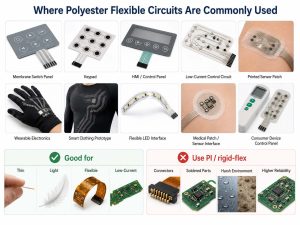
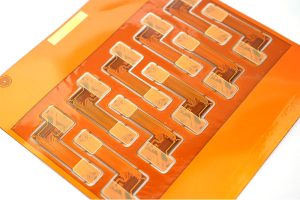
Finding the right flexible circuit board suppliers for medical devices is not only about price. Medical electronics usually require compact design, stable quality, clean documentation, and reliable assembly support.
Flexible circuits are used in wearable monitors, hearing aids, diagnostic tools, imaging systems, catheter systems, and portable medical devices. This guide helps you quickly compare board types, design points, manufacturing capabilities, certifications, and supplier options. For project review or medical PCB assembly quotes, you can also send your Gerber files and BOM to sales@bestpcbs.com.
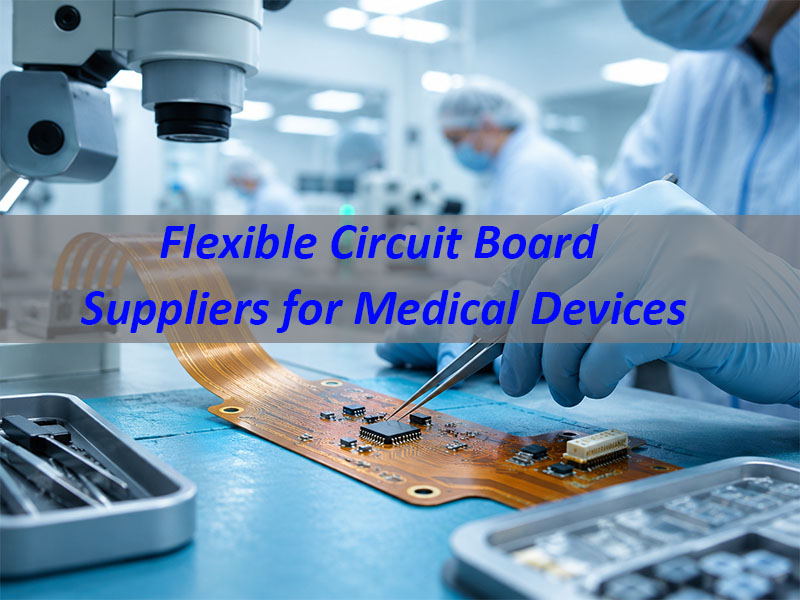
What Are Flexible Circuit Boards for Medical Devices?
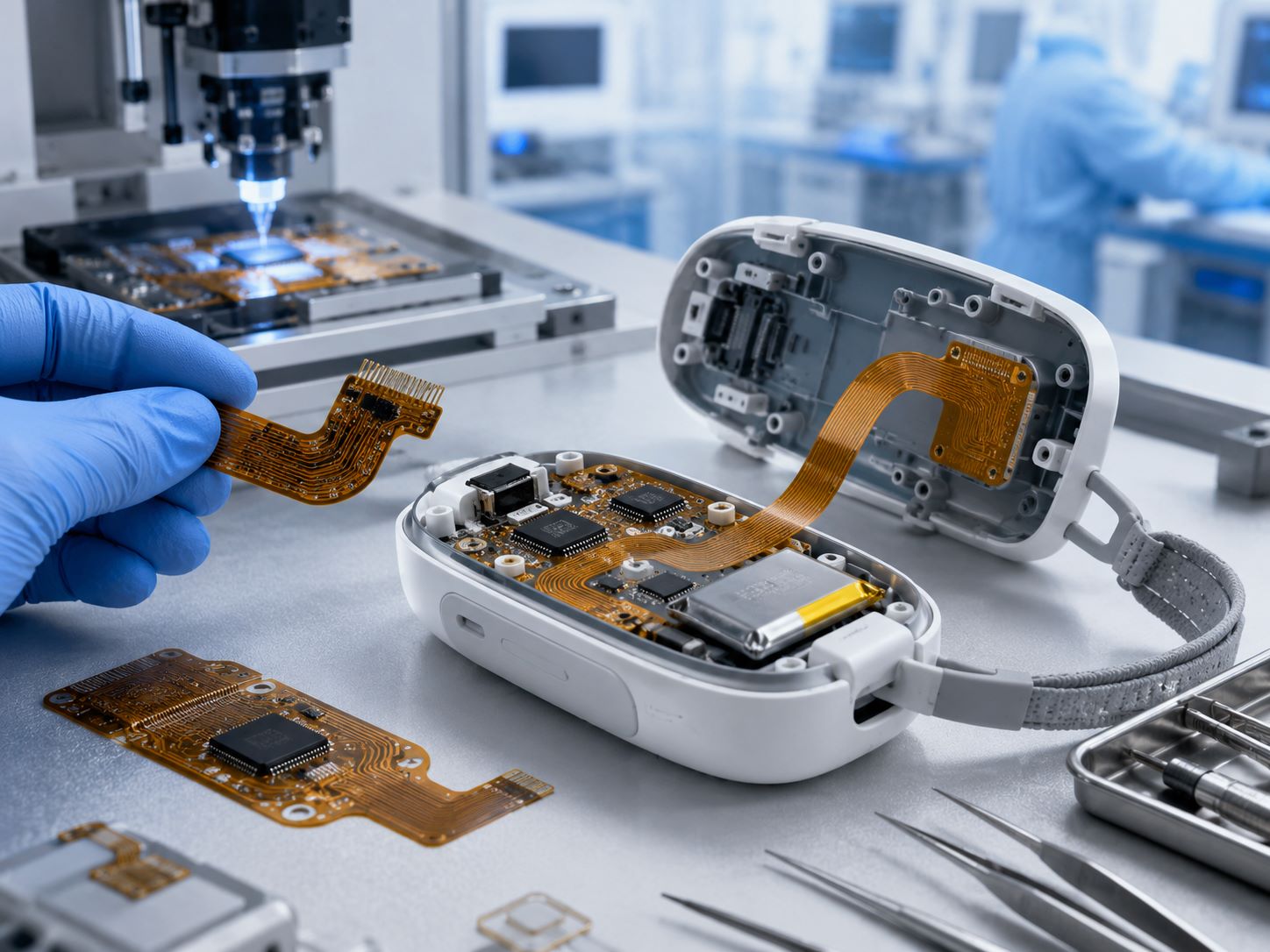
Flexible circuit boards are PCBs made with bendable materials, usually polyimide. They can fold, bend, or fit into small spaces where standard rigid PCBs are not practical.
For medical devices, flexible circuits help reduce wiring, save space, and improve internal structure. They are often used to connect sensors, displays, batteries, buttons, antennas, and control modules.
| Type | Typical Use |
|---|---|
| Single-sided flex circuits | Simple medical interconnection |
| Double-sided flex circuits | More routing space |
| Multilayer flex circuits | Higher signal density |
| Rigid flex circuit boards | Compact medical device structures |
| Custom etched flex circuits | Sensor and special connection designs |
Why Medical Flex Circuits Are Used in Medical Electronics?
Medical flex circuits are used because medical products are becoming smaller, lighter, and more integrated.
They help engineers:
- Reduce cables and connectors
- Save internal space
- Improve assembly layout
- Support curved or compact housings
- Connect multiple functional areas
- Build lightweight medical electronics
In many medical devices, the circuit must fit the product shape. That is where flex circuits and rigid-flex boards become practical.
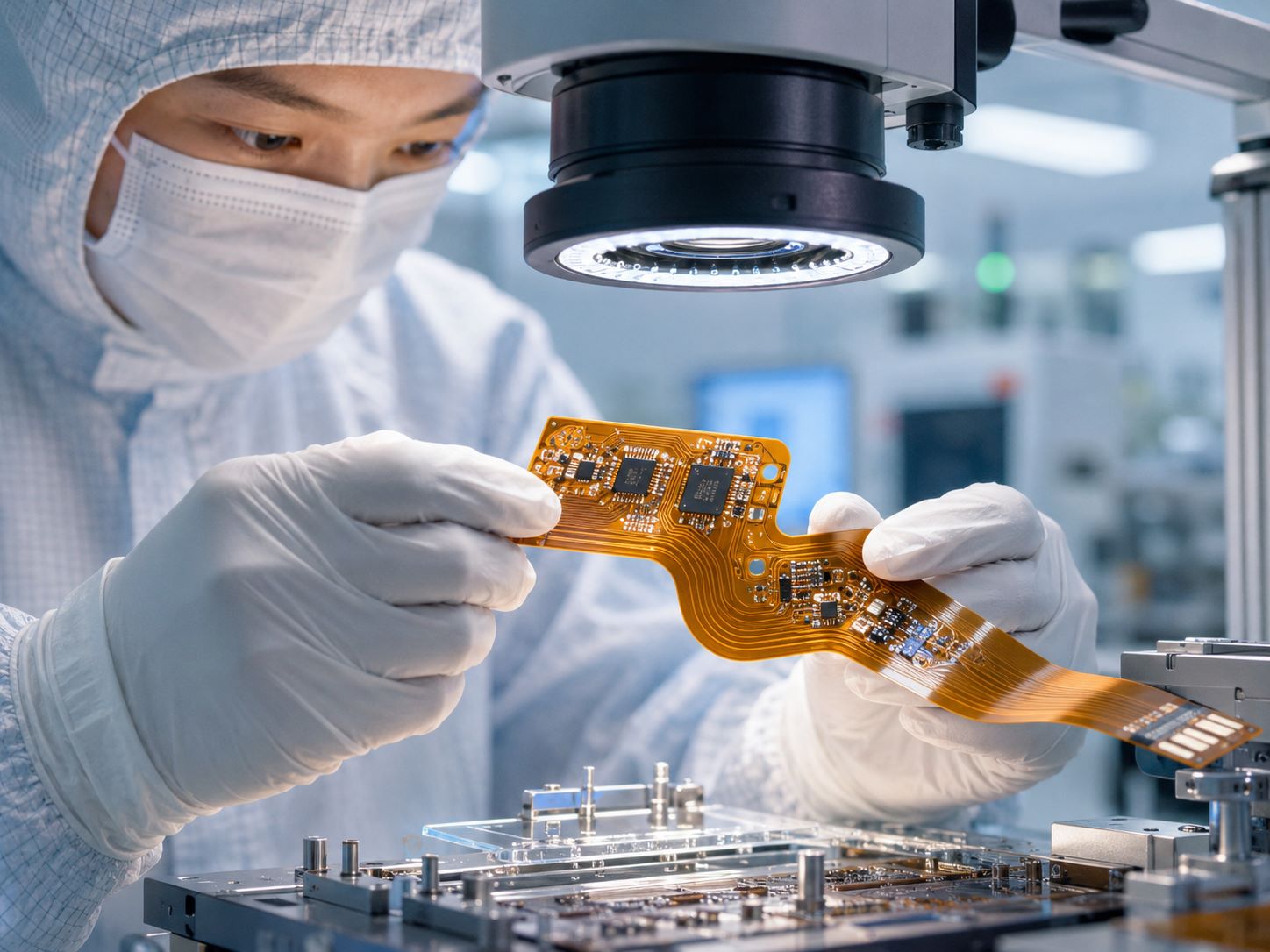
What Types of Flexible Circuit Boards Are Used in Medical Devices?
EBest Circuit (Best Technology) supports several flexible PCB types for medical electronics projects.
| Board Type | Application Fit |
|---|---|
| Single-sided flexible circuits | Simple signal connection |
| Double-sided flexible circuits | Medium-density routing |
| Multilayer flexible circuits | Compact medical modules |
| Rigid flex circuit boards | Integrated rigid + flexible structure |
| Custom flexible PCB | Device-specific mechanical design |
| Custom etched flex circuits | Sensor, electrode, and special circuit paths |
| Flexible PCB with stiffener | Connector or SMT support |
| Medical PCB assemblies | Fabrication + component assembly |
These board types are suitable for wearable devices, portable diagnostic equipment, handheld instruments, monitoring devices, and compact medical control modules.
Medical Device PCB Design: PCB Layout Guidelines for Flexible Circuits
Medical device PCB design should start from the product structure, not only the schematic.
| Design Area | What to Check |
|---|---|
| Bend radius | Avoid sharp bending in flex areas |
| Trace routing | Use smooth routing in bending zones |
| Component placement | Keep parts away from active flex areas |
| Vias | Avoid vias in repeated bending areas |
| Stiffener location | Support connectors and SMT areas |
| Grounding | Improve signal stability |
| Shielding | Protect sensitive medical signals |
| DFM review | Check manufacturability before production |
For rigid flex circuit boards, the transition area between rigid and flex sections is especially important. Poor layout in this area can affect yield and reliability.
Custom Flexible PCB and Medical PCB Assembly Manufacturing Capabilities
EBest Circuit (Best Technology) provides comprehensive end-to-end solutions, from custom flexible PCB fabrication and rigid flex circuit boards integration to precision medical device PCB assembly services. Our operations are engineered specifically to meet the stringent reliability, miniaturization, and regulatory demands of the healthcare industry.
Core Capabilities in Medical-Grde Flex Circuits
As experts in medical flex circuits, we utilize advanced custom etched flex circuits technology to ensure superior performance:
- Material Mastery: We utilize medical-grade polyimide (PI) and LCP substrates, ensuring full compliance with ISO 13485 and RoHS standards.
- Precision Fabrication: Our capabilities include fine-line trace routing and micro-via technology, perfect for the compact medical device PCB design required in modern implants and wearables.
- Rigid-Flex Solutions: We seamlessly integrate flex circuits with rigid sections, providing 3D packaging solutions that reduce weight and improve signal integrity for critical medical electronics.
Excellence in Medical PCB Assembly
Being a trusted medical PCB manufacturer means we never compromise on quality. Our medical PCB assembly processes are designed for zero-defect outcomes:
- Advanced Assembly: We offer high-precision SMT, BGA/CSP placement, and medical electronics assembly with sterilization-resistant coatings.
- Quality Assurance: Our medical PCB assembly services include 100% AOI/X-ray inspection and functional testing, aligning with FDA and GMP requirements.
- Full-System Integration: From prototype to volume production of medical PCB assemblies, we manage the entire lifecycle, including box-build integration.
Ready to start your next medical electronic assembly project? Just feel free to contact EBest Circuit (Best Technology) at sales@bestpcbs.com for expert support with your custom flexible PCB and medical PCB assemblies.
Certifications for Medical PCB Manufacturing and Assembly
Certifications help customers screen medical PCB suppliers faster.
| Certification / Standard | Why It Matters |
|---|---|
| ISO 9001 | General quality management |
| ISO 13485 | Medical device quality management |
| IPC standards | PCB fabrication and assembly workmanship |
| RoHS / REACH | Material compliance for global markets |
| UL materials | Required for some product designs |
For high-reliability medical electronics, IPC Class 3 is often discussed during flex PCB manufacturing review.
Medical Applications Using Rigid Flex Circuit Boards
Rigid flex circuit boards are used when a medical device needs both mechanical support and flexible connection.
| Application | Why Rigid-Flex Helps |
|---|---|
| Wearable monitors | Thin, light, body-friendly structure |
| Hearing aids | Compact curved internal layout |
| Endoscopes | Narrow and flexible circuit path |
| Catheter systems | Long, thin, flexible connection |
| Portable diagnostic tools | Reduced cables and smaller housing |
| Imaging equipment | Stable signal routing |
| Surgical instruments | Compact and durable internal design |
| Patient monitoring devices | Integrated sensor and control connection |
Case Study: EBest Circuit (Best Technology) Manufacturing Medical Flex Circuits
Project Type:
2-layer medical FPC for compact medical electronics.
Customer Requirement:
The customer needed a thin, flexible circuit with steel stiffeners on both sides for better assembly support.
EBest Circuit (Best Technology) Support:
- Reviewed FPC stack-up and material structure
- Checked coverlay opening and solder mask design
- Controlled steel stiffener alignment
- Used ENIG finish for stable solderability
- Added white silkscreen markings for UL 94 V-0 and RoHS
- Controlled bonding with 0.025mm pure thermal adhesive
Manufacturing Focus:
Thin FPC structure, stiffener bonding, flatness control, coverlay registration, and final surface quality.
Board Parameters
| Item | Specification |
|---|---|
| Board Type | 2-layer FPC |
| Board Thickness | 0.16mm ±0.03mm |
| Copper Type | 1/2 oz ED Cu |
| Base Material | 1 mil adhesive PI |
| Coverlay | 1 mil yellow coverlay |
| Surface Finish | ENIG 2U” |
| Solder Mask | Green solder mask |
| Silkscreen | White silkscreen |
| Compliance Marking | UL 94 V-0, RoHS |
| Top Stiffener | 0.2mm steel stiffener |
| Bottom Stiffener | 0.2mm steel stiffener |
| Stiffener Adhesive | 0.025mm pure thermal adhesive |
| Key Control Points | Stiffener alignment, bonding strength, flatness, coverlay registration |
Top 10 Flexible Circuit Board Suppliers for Medical Devices
Below are 10 suppliers commonly found when researching medical flex circuits, rigid-flex PCBs, and medical PCB assembly services.
| Company Name | Certifications | Key Capabilities |
|---|---|---|
| EBest Circuit (Best Technology) | ISO 9001, ISO 13485, UL, RoHS | Medical flex circuits, rigid-flex PCB, medical PCB assembly, DFM review |
| Epec Engineered Technologies | ISO, UL, IPC | Medical flex PCB, rigid-flex PCB, reliability testing |
| Fralock | ISO 13485, ISO 9001, AS9100D, FDA registered | Flex circuits, rigid-flex, stiffeners, shielding, turnkey builds |
| BENCOR | ISO 9001, UL | Flexible PCB, rigid-flex PCB, design, fabrication, assembly |
| Rush PCB | ISO 9001, ISO 13485, UL, RoHS/REACH | Flex PCB, rigid-flex PCB, medical PCB assembly, quick-turn service |
| All Flex Solutions | AS9100, ISO 9001, ESD S20.20 | Flexible circuits, CatheterFlex, rigid-flex, medical device PCBs |
| Minco | ISO 9001, AS9100D, Nadcap | High-reliability flex circuits, rigid-flex, multilayer flex |
| Cirexx International | ISO 9001, AS9100, ITAR, IPC | Flex PCB, rigid-flex PCB, layout, fabrication, assembly |
| Flex Plus FPC | ISO 9001, ISO 13485, IATF 16949, UL | Medical FPC, hearing aid FPC, portable monitor FPC |
| HT Medical Devices | ISO 13485, FDA registered product builds | Flexible circuits, rigid-flex, catheter flex, endoscope flex |
Before choosing a supplier, compare certifications, flex PCB capability, assembly support, traceability, quote speed, and engineering communication.
How to Choose Flexible Circuit Board Suppliers for Medical Devices
Use this checklist before sending a medical PCB project to a supplier:
| Checkpoint | Why It Matters |
|---|---|
| Medical PCB experience | Reduces communication risk |
| Flex and rigid-flex capability | Supports more device structures |
| ISO 13485 | Important for medical supply chains |
| DFM support | Finds layout issues early |
| SMT assembly | Saves supplier coordination time |
| Component sourcing | Supports one-stop medical electronics assembly |
| Testing capability | Improves delivery confidence |
| Traceability | Helps audits and production records |
| Fast RFQ response | Speeds up project evaluation |
A strong supplier should not only quote. They should review your files and point out manufacturing risks.
Future Trends of Custom Flexible PCB for Medical Devices
Custom flexible PCB will continue to grow in medical electronics because devices are getting smaller and more wearable.
Key trends include:
- More wearable medical monitors
- More rigid-flex designs in compact devices
- Smaller sensor modules
- Higher-density routing
- Better signal shielding
- Stronger traceability requirements
- More demand for one-stop PCB + assembly service
- Earlier DFM review before production
For medical device developers, this means the PCB supplier should join the project earlier, not only after the design is finished.
FAQs About Flexible Circuit Board Suppliers for Medical Devices
Q1. What are flexible circuit board suppliers for medical devices?
They are PCB manufacturers that provide flex circuits, rigid-flex boards, and sometimes medical PCB assembly for medical electronics.
Q2. What are medical flex circuits used for?
They are used in wearable monitors, hearing aids, diagnostic devices, imaging systems, catheter systems, and compact medical electronics.
Q3. What is the difference between flex circuits and rigid flex circuit boards?
Flex circuits are bendable boards. Rigid flex circuit boards combine rigid PCB areas and flexible connection areas in one design.
Q4. Can custom flexible PCB be used in wearable medical devices?
Yes. It helps reduce size, weight, and wiring inside wearable medical products.
Q5. What files are needed for medical PCB assembly quotes?
Usually Gerber files, BOM, pick-and-place file, assembly drawing, testing requirements, quantity, and material requirements.
Q6. What should be checked in medical device PCB design?
Bend radius, trace routing, stiffener position, connector support, component placement, surface finish, and DFM feedback.
Q7. Why is ISO 13485 important?
It shows the supplier has a medical device quality management system.
Q8. Can flexible circuits support SMT assembly?
Yes. Components are usually mounted on rigid or reinforced areas to improve assembly stability.
Q9. What affects medical PCB assembly cost?
Layer count, material, size, copper thickness, surface finish, components, assembly difficulty, testing, and order quantity.
Q10. Does EBest Circuit (Best Technology) provide medical PCB assembly services?
Yes. EBest Circuit (Best Technology) supports flex PCB fabrication, rigid-flex PCB manufacturing, component sourcing, SMT assembly, DFM review, testing, and medical PCB assembly services.
In conclusion, choosing flexible circuit board suppliers for medical devices should be based on capability, quality control, medical experience, and engineering support.
EBest Circuit (Best Technology) provides custom flexible PCB, rigid flex circuit boards, medical flex circuits, medical PCB assembly, DFM review, component sourcing, and testing support. Pls feel free to send your Gerber files, BOM, drawings, and project requirements to sales@bestpcbs.com for a medical PCB assembly quote.