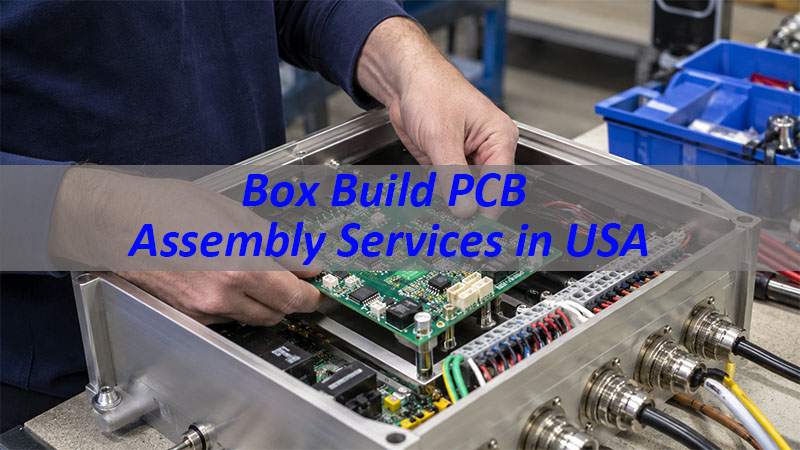
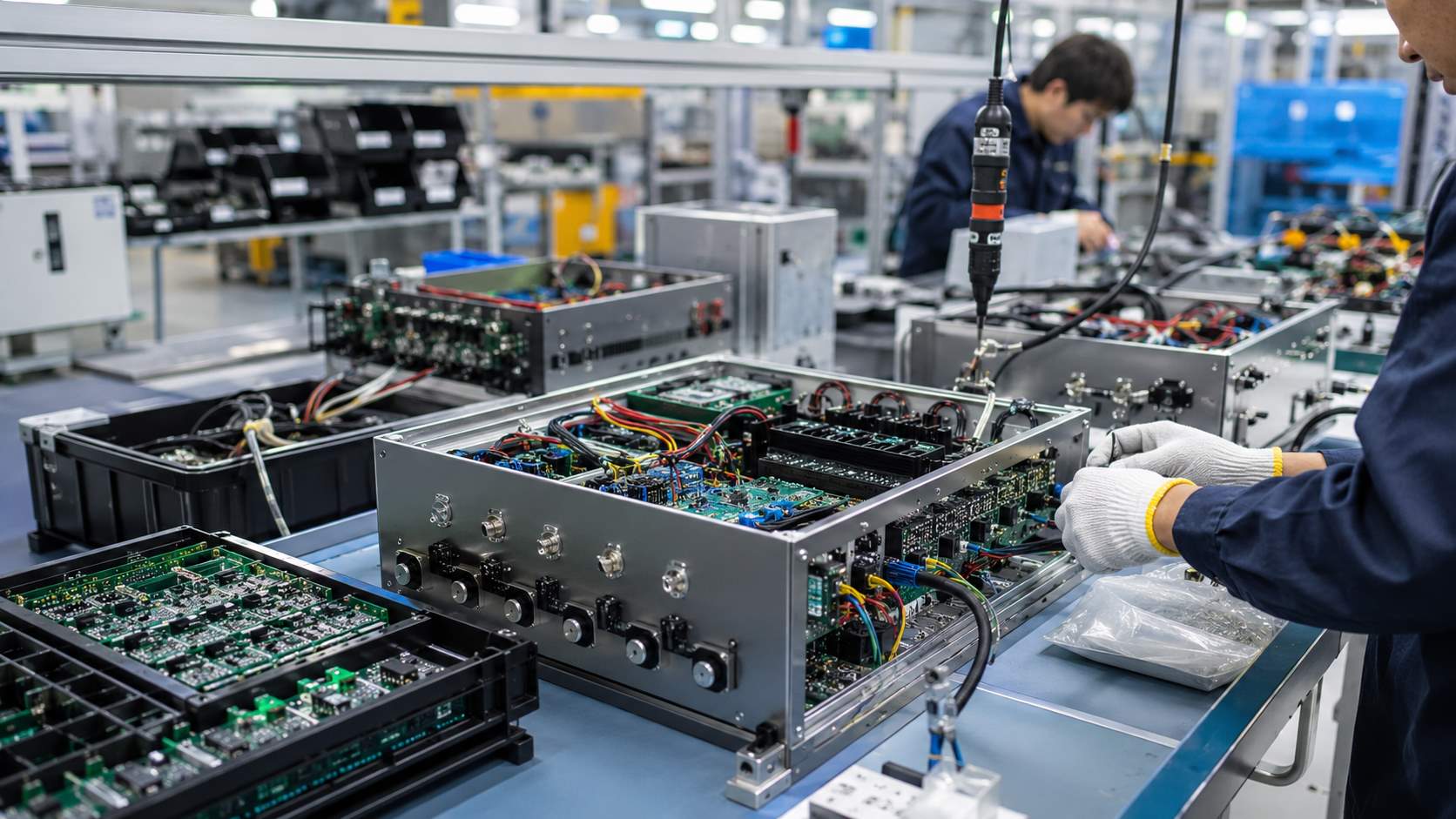
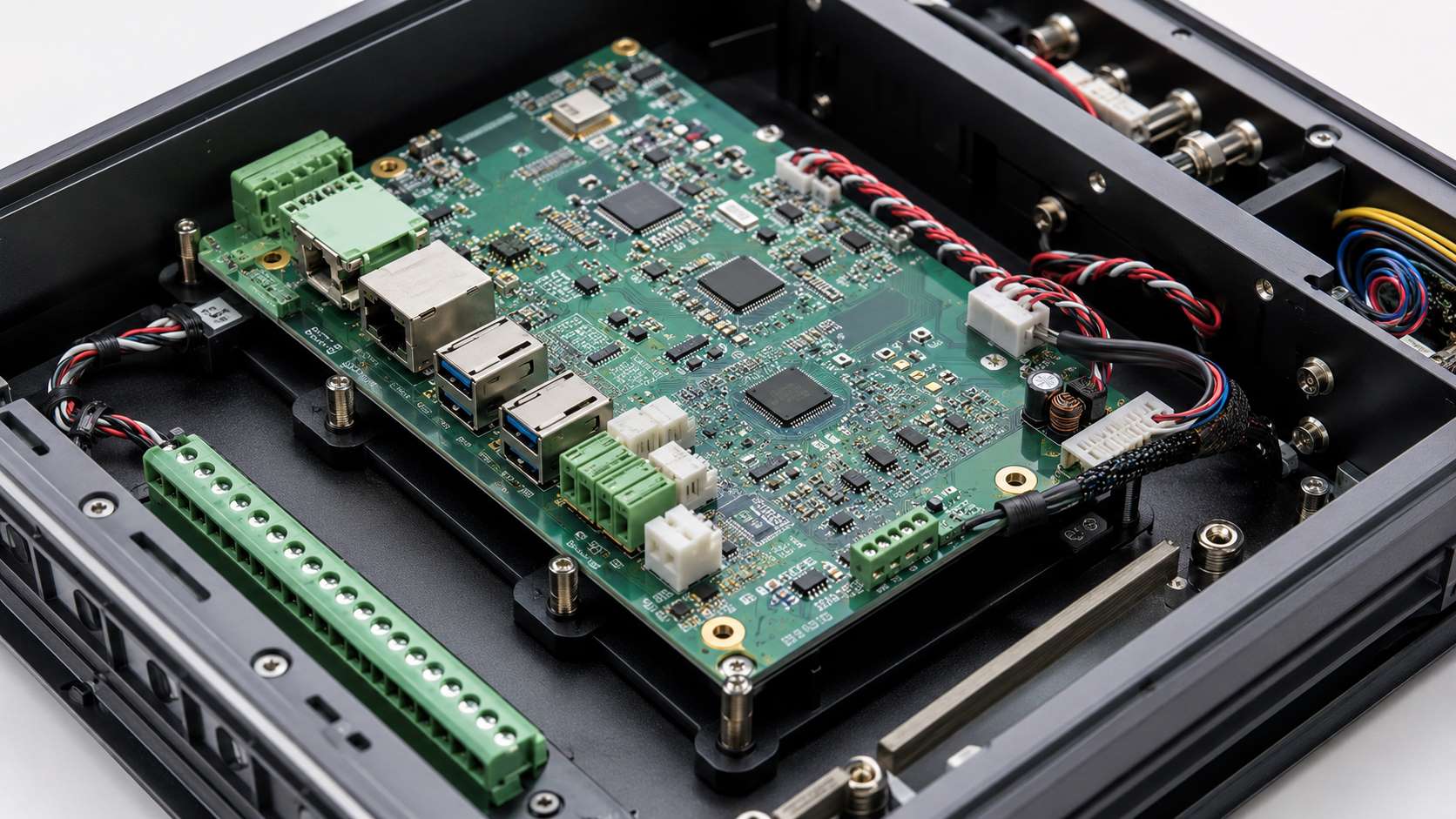
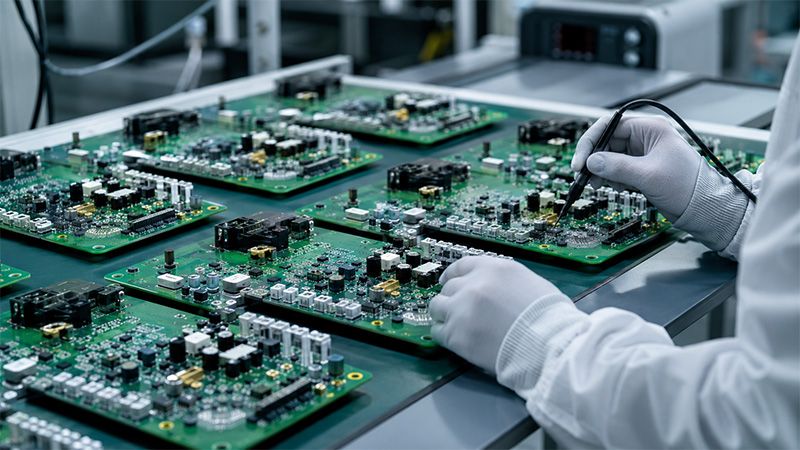
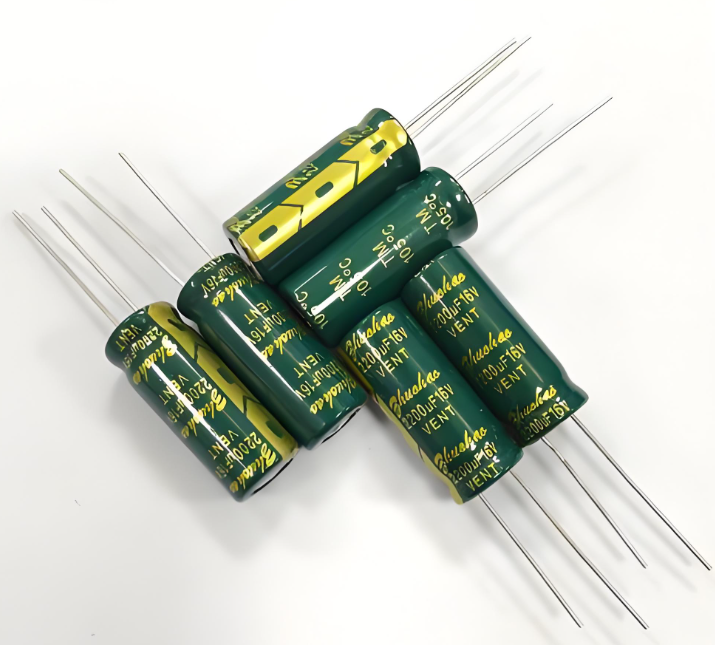
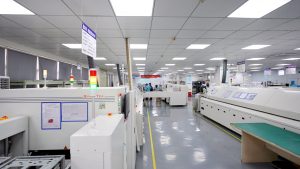
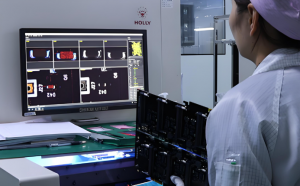
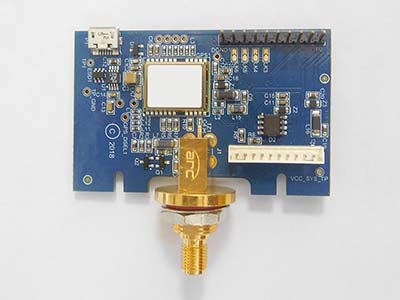
Box build PCB assembly services in USA are often searched by OEM teams that need more than a finished circuit board. They need a complete electronic assembly with PCBA, wiring, enclosure integration, testing, labeling, and ready-to-ship packaging.
EBest Circuit (Best Technology) is not a U.S.-based company, but we support USA OEM projects with practical one-stop PCBA and box build assembly solutions. If you are developing an industrial, medical, automation, LED, power, or custom electronic product, send your files and requirements to sales@bestpcbs.com. Our team will review your project and provide clear engineering feedback before quotation.
What Is Included in Box Build PCB Assembly Services in the USA?
Box build PCB assembly services go beyond a finished PCBA. They turn a circuit board into a complete electronic unit that can be tested, enclosed, labeled, packed, and shipped.
A typical box build project may include PCB fabrication, SMT assembly, through-hole assembly, component sourcing, cable harness installation, enclosure assembly, firmware loading, functional testing, labeling, and final packaging.
For USA OEMs, this service is useful when a product has both electronic and mechanical parts. Instead of managing PCB assembly, cables, enclosures, testing, and packing through different suppliers, one box build partner handles the full assembly flow.
How We Selected the Top Box Build PCB Assembly Services in the USA?
A good box build partner should not only place components on a board. It should understand how the PCBA connects with cables, panels, enclosures, displays, power modules, switches, sensors, and final testing.
For this list, the key comparison points are clear:
PCBA and box build capability
Wiring, cable, and enclosure support
Testing and inspection process
Turnkey manufacturing experience
Ability to support OEM projects
Suitable production volume
Communication and documentation support
The companies below have different positioning. Some are stronger in electromechanical integration. Some focus on quick-turn or flexible assembly. Others are better for complex system builds.
Top 10 Box Build PCB Assembly Services in the USA
1. EMSG — Turnkey final assembly partner. Best for OEMs that want PCB assembly and final product assembly managed under one process.
2. DEVA Inc. — Electromechanical integration specialist. Best for projects involving PCBs, custom cables, wiring, fans, panels, and complex mechanical assembly.
3. Sierra Assembly Technology — Complete system integration provider. Best for customers needing PCB integration, enclosure assembly, wiring, software loading, labeling, and testing.
4. ETI Manufacturing — Wire harness and PCB assembly expert. Best for box build projects where cable assemblies, wiring reliability, and harsh-environment performance matter.
5. Suntronic Inc. — Integrated PCBA box build manufacturer. Best for industrial systems with multiple PCBAs, connectors, switches, harnesses, screens, and control units.
6. A2Z EMS — Flexible end-to-end assembly partner. Best for customers who need fast, practical support from RFQ to final packaging.
7. Foxtronics EMS — Certified U.S. turnkey PCBA provider. Best for aerospace, medical, industrial, and high-reliability projects needing SMT, through-hole, box build, and functional testing.
8. VSE — U.S.-based vertically integrated manufacturer. Best for customers who prefer domestic production with PCBA, box build, and final assembly under one roof.
9. PICA Manufacturing — Turnkey product integration partner. Best for projects requiring PCB assembly, wiring, enclosure integration, and final validation.
10. Milwaukee Electronics — Full-service electronics contract manufacturer. Best for subassembly, panel assembly, potting, box build, and system integration projects.
EBest Circuit (Best Technology)’s Box Build PCB Assembly Capabilities for USA Projects
EBest Circuit (Best Technology) is not a U.S. local company, so it is not placed inside the Top 10 U.S. provider list. However, for USA customers who are open to overseas manufacturing, EBEST can be a practical one-stop PCBA service provider that better understands engineers’ needs.
For USA projects, EBest Circuit (Best Technology) can support PCB fabrication, component sourcing, SMT assembly, through-hole assembly, BGA assembly, cable connection, enclosure integration, functional testing, labeling, packing, and export shipment.
Its PCB capability also covers FR4 PCB, metal core PCB, ceramic PCB, rigid-flex PCB, high-frequency PCB, HDI PCB, heavy copper PCB, and other customized boards. This makes EBEST suitable for engineering-driven projects where PCB manufacturing, PCBA, and box build work need to be coordinated together.
USA-Based Box Build Assembly vs. Overseas Box Build Support: Which Option Fits Your Project?
A USA-based box build supplier is often suitable when the project needs local production, faster domestic logistics, U.S. compliance, or close engineering visits. This can be important for defense, aerospace, medical, government, or highly confidential projects.
Overseas box build support can make sense when the design is mature, the customer needs cost control, and the project requires flexible PCB and PCBA manufacturing capacity. For many industrial electronics, LED systems, automation products, power electronics, and IoT devices, overseas manufacturing can provide strong value.
The better choice depends on your project stage. Early prototypes may benefit from local communication. Stable pilot runs or repeat production may benefit from an experienced overseas PCBA partner.
Case Study: How EBest Circuit (Best Technology) Supports USA Customers with Box Build PCB Assembly Services
A USA industrial equipment customer needed a ready-to-install control box for an automation system. The project was not just about producing a 4-layer FR4 PCB. The customer wanted a complete assembly that could be mounted into their equipment with less internal handling.
The box build scope included:
Custom 4-layer FR4 control PCB fabrication
PCBA assembly with connector and terminal areas
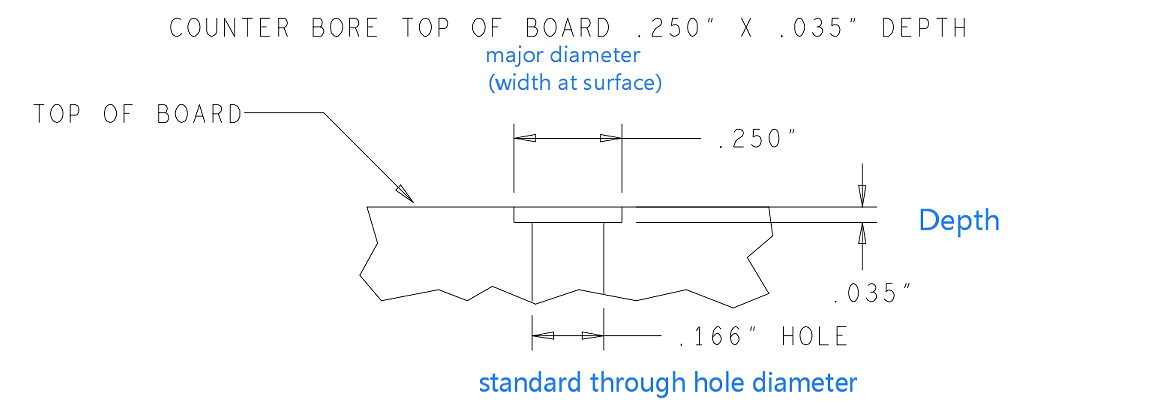
Press-fit assembly for +48V and GND connections
Wiring harness connection inside the enclosure
Board mounting into a compact metal control box
Labeling, inspection, functional checks, and export packaging
EBest Circuit (Best Technology) reviewed the files with the customer before production, confirmed the press-fit hole control, arranged panelized delivery, completed PCBA assembly, installed the board into the enclosure, and checked the finished control box before packing.
This case shows how EBEST supports box build PCB assembly projects in USA markets by combining PCB manufacturing, PCBA, wiring, mechanical assembly, and final testing in one workflow. For similar projects, send your files to sales@bestpcbs.com.
How to Start a Box Build PCB Assembly Project with EBest Circuit (Best Technology)?
To start a box build project, send the main project files to sales@bestpcbs.com.
Recommended files include:
Gerber files
BOM
Pick-and-place file
Assembly drawing
Enclosure drawing
Cable or wiring diagram
Test requirements
Label and packaging requirements
Estimated order quantity
After receiving the files, EBest Circuit (Best Technology) can review the PCB, PCBA, box build structure, testing method, and shipment requirements. This helps reduce missing details before quotation and production.
For engineering teams, this is the core value of EBEST: one-stop PCBA support with better understanding of real engineering needs.
FAQs About Box Build PCB Assembly Services in the USA
What are box build PCB assembly services? They are services that combine PCBA, wiring, enclosure assembly, testing, labeling, and packaging into one finished electronic assembly.
Is box build different from PCB assembly? Yes. PCB assembly focuses on the board. Box build assembly focuses on the complete electronic product or subassembly.
What files are needed for a box build quote? Gerber files, BOM, assembly drawing, enclosure drawing, wiring diagram, test requirements, and packaging instructions are usually needed.
Can overseas suppliers provide box build PCB assembly services in USA markets? Yes. If the supplier has PCB, PCBA, testing, engineering communication, and export experience, it can support USA customers effectively.
How can I contact EBest Circuit (Best Technology)? Send your project files and requirements to sales@bestpcbs.com.
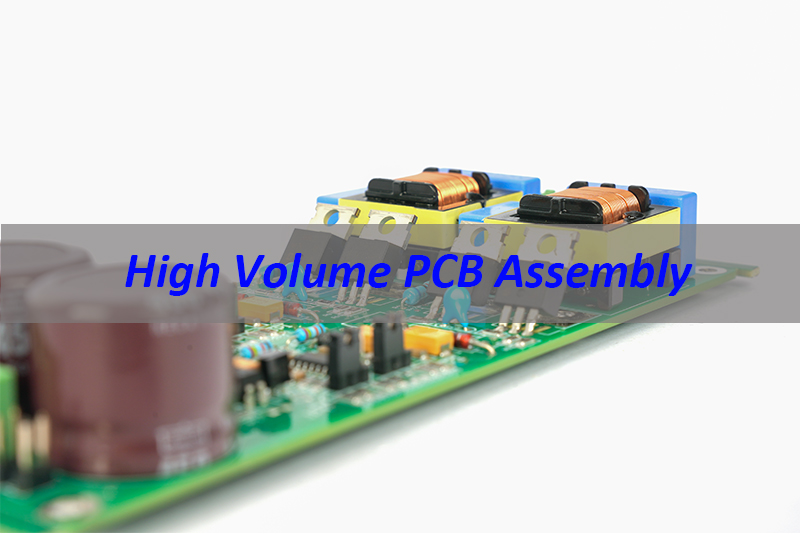
High volume PCB assembly helps companies build large numbers of assembled circuit boards with stable quality and repeatable results. It is widely used in industrial control, medical devices, automotive electronics, telecom equipment, robotics, LED lighting, and smart hardware. However, mass production is very different from prototype assembly. It needs better planning, stronger process control, stable components, and clear testing standards. Therefore, choosing the right manufacturing partner is important before your product moves into large-scale production.
What Is High Volume PCB Assembly?
High volume PCB assembly is the process of producing assembled printed circuit boards in large quantities. These boards are also called PCBAs. They include bare PCBs, electronic components, solder joints, and sometimes cables, connectors, coating, or enclosures.
In simple words, this process turns a PCB design into many finished circuit board assemblies. These assemblies are then used in real products, such as power modules, control systems, medical instruments, communication devices, and smart electronics.
Usually, high volume PCB assembly starts after the prototype has passed testing. At this stage, the product design is already stable. As a result, the main goal changes from design checking to stable production.
A typical high volume PCB assembly project may include:
PCB fabrication
Component sourcing
SMT assembly
Through-hole assembly
AOI inspection
X-ray inspection
Functional testing
Conformal coating
Final inspection
Packing and shipment
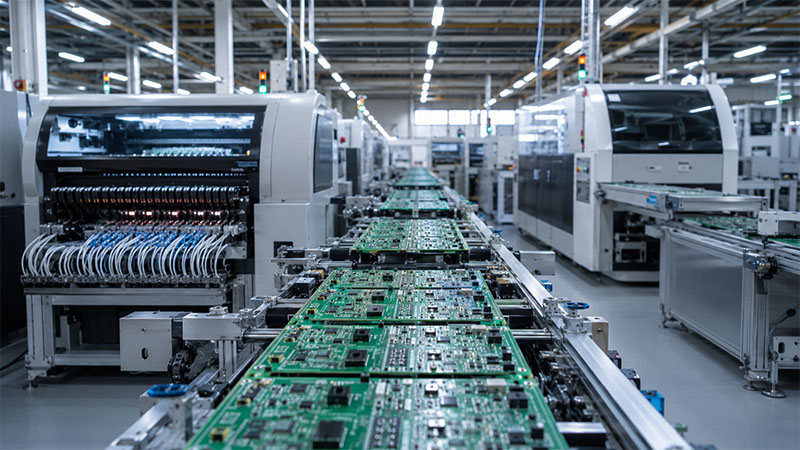
Compared with prototype assembly, high volume production needs more control. For example, the factory must manage solder paste printing, component placement, reflow temperature, test results, material batches, and production records. Also, the same quality level must be repeated across every batch.
Therefore, a good high volume PCB assembly manufacturer should not only assemble boards. It should also review files, check risks, manage components, control quality, and support long-term production.
Types of High Volume PCB Assembly
There are several types of high volume PCB assembly. Each type fits different product designs and application needs. Therefore, the right choice depends on your board structure, component type, testing needs, and final use.
Type
What It Means
Common Use
SMT PCB Assembly
Components are mounted on the PCB surface.
IoT devices, telecom boards, medical electronics
Through-Hole Assembly
Components with leads are inserted into PCB holes.
Power boards, connectors, industrial controls
Mixed Assembly
SMT and through-hole parts are used on one board.
Automotive modules, control boards, LED drivers
Single-Sided Assembly
Components are placed on one side of the PCB.
Simple electronic products
Double-Sided Assembly
Components are placed on both sides of the PCB.
Compact electronic devices
Box-Build Assembly
PCBA is assembled with housing, cables, labels, and final testing.
Finished electronic products
Automated High Volume PCB Assembly
Machines handle printing, placement, soldering, and inspection.
Large OEM production
SMT assembly is very common in high volume production. It supports small components, compact layouts, and fast placement. Also, modern SMT machines can place components with high speed and good accuracy.
Through-hole assembly is still useful. Many connectors, relays, transformers, and power parts need stronger mechanical support. Therefore, many industrial and power products still use through-hole components.
Mixed assembly is also common. Many real products use both tiny SMD parts and larger plug-in parts. For example, a control board may include ICs, resistors, capacitors, relays, terminal blocks, and connectors.
Box-build assembly goes one step further. It can include enclosure assembly, cable connection, label application, firmware loading, and final product testing. As a result, customers can receive a more complete product instead of only a bare PCBA.
Benefits of High Volume PCB Assembly Orders
High volume PCB assembly orders bring many practical benefits. These benefits become stronger when the design is stable and demand is clear.
Lower unit cost
First, large orders can help reduce the cost per unit. This is because setup costs can be shared across more boards. These costs may include stencil making, engineering review, SMT programming, test fixture preparation, and first article inspection.
Also, component purchasing may become more efficient. Larger demand can help improve sourcing plans and reduce repeated purchasing work.
More stable quality
Second, high volume production allows the factory to build a stable process. For example, the team can set the solder paste thickness, placement program, reflow profile, AOI rules, and test steps. After that, the same process can be used again and again.
As a result, the output becomes more consistent.
Better production speed
Third, mass production is easier to plan. Materials can be prepared in advance. SMT feeders can be set before production. Operators can follow clear work instructions. Therefore, the whole production flow becomes smoother.
Stronger quality control
Also, high volume orders make quality tracking easier. The factory can review defect data, test results, yield rate, and process issues. This helps improve production step by step.
More reliable supply
For OEM companies, stable PCBA supply is very important. If a product is already selling in the market, delayed boards can affect delivery plans. Therefore, high volume PCB assembly helps support regular shipments and market demand.
Better engineering improvement
In addition, repeated production can provide useful feedback. The manufacturer may suggest better panel design, alternative components, test point changes, or process improvements. These suggestions can help the next production batch become more efficient.
What Is the High Volume PCB Assembly Process?
The high volume PCB assembly process includes several controlled steps. Each step has a clear purpose. Therefore, the process should start with a full review before mass production begins.
Step
Main Work
Purpose
1. File Review
Check Gerber, BOM, CPL, drawings, and test needs.
Find issues early.
2. DFM Review
Review design for manufacturing.
Improve production success.
3. BOM Check
Confirm part numbers, packages, and alternatives.
Keep materials stable.
4. PCB Fabrication
Produce the bare circuit boards.
Build the base of the PCBA.
5. Incoming Inspection
Check PCBs and components.
Control material quality.
6. Solder Paste Printing
Print solder paste on pads.
Prepare for SMT mounting.
7. SMT Placement
Place components by machine.
Improve speed and accuracy.
8. Reflow Soldering
Melt solder paste to form joints.
Create electrical connection.
9. AOI / X-ray Inspection
Check soldering and placement.
Find defects early.
10. Through-Hole Assembly
Insert and solder plug-in parts.
Add stronger components.
11. Testing
Run ICT, functional test, or custom test.
Check board performance.
12. Final Inspection
Check appearance, labels, and packing.
Prepare for shipment.
The process usually begins with file review. The manufacturer checks Gerber files, BOM, CPL files, assembly drawings, and test instructions. This step is important because small file mistakes can affect a large batch.
Next comes DFM and DFA review. DFM means design for manufacturing. DFA means design for assembly. These reviews help check spacing, footprints, polarity marks, soldering risk, and panel layout.
After that, the factory checks the BOM. This step confirms part numbers, brands, packages, and supply status. Also, the team may suggest approved alternatives if some components are hard to buy.
Then the factory prepares the production line. This includes stencil design, SMT programming, feeder setup, reflow profile setting, and test fixture preparation.
After preparation, assembly begins. The line prints solder paste, places components, and runs the boards through reflow soldering. Then AOI checks missing parts, wrong parts, polarity, bridges, and solder quality.
If the board has BGA, QFN, LGA, or other hidden solder joints, X-ray inspection may be used. After that, through-hole components can be inserted and soldered.
Finally, the boards go through testing, final inspection, packing, and shipment. For many industrial, medical, automotive, and communication products, functional testing is very important. It helps confirm that each board works as expected.
What Is Considered a High Volume PCB Assembly?
There is no fixed number for high volume PCB assembly. The meaning depends on the product type, board complexity, component count, and production plan.
For a simple electronic board, high volume may mean 5,000 pieces or more. For a complex medical, industrial, or telecom board, even 1,000 pieces may be high volume. This is because complex boards need more testing, more process control, and more engineering work.
Here is a simple way to understand the difference:
Project Type
Low Volume
Medium Volume
High Volume
Simple PCBA
1–500 pcs
500–5,000 pcs
5,000+ pcs
Complex PCBA
1–100 pcs
100–1,000 pcs
1,000+ pcs
Production Plan
One-time order
Small repeat orders
Regular production
Design Status
Prototype stage
Pilot run stage
Stable product
Process Control
Flexible
Semi-standard
Highly repeatable
A project is usually ready for high volume production when:
However, it is wise to run a pilot batch before full production. A pilot run helps test the process, confirm fixtures, check soldering results, and review functional performance. After that, the full batch can move forward with more confidence.
How Fast Can High Volume Quick Turn PCB Assembly Be Delivered?
High volume quick turn PCB assembly depends on several factors. These include PCB complexity, component supply, order quantity, testing needs, and factory capacity.
For repeat orders, delivery can be faster. This is because the stencil, SMT program, assembly notes, and test method may already be ready. Also, the team already understands the product.
For new projects, more preparation is needed. The factory must review files, confirm materials, build fixtures, prepare the line, and approve the first article. Therefore, new high volume orders usually need more time than repeat orders.
Several factors can affect delivery time.
PCB structure
A simple FR4 PCB is usually faster to produce. However, HDI PCB, rigid-flex PCB, heavy copper PCB, Rogers PCB, ceramic PCB, or metal core PCB may need more time.
Component availability
Components are often the main factor. If all parts are in stock, production can move faster. However, if some ICs, connectors, or power parts have long lead times, the schedule may become longer.
Testing requirements
Basic inspection is faster. However, ICT, functional testing, burn-in, firmware programming, and custom test fixtures need more preparation.
Order quantity
Larger orders take more production time. Still, the process can be efficient when materials and equipment are ready.
Communication speed
Fast replies help shorten the schedule. For example, the customer may need to approve component alternatives, first articles, or engineering questions.
Therefore, a one-stop supplier can often support faster delivery. When PCB fabrication, component sourcing, assembly, and testing are handled together, the project becomes easier to manage.
What Do High Volume PCB Assembly Services Usually Include?
High volume PCB assembly services should cover more than basic soldering. A strong supplier should support the full production chain. This helps reduce communication work and improves project control.
Common services include the following:
PCB fabrication
The supplier produces bare PCBs according to Gerber files and technical requirements. These may include board material, layer count, copper thickness, solder mask, surface finish, impedance control, and special process needs.
Component sourcing
The supplier helps buy original components from reliable channels. Also, the team can review the BOM and check part availability. If needed, they may suggest alternatives for engineering approval.
SMT assembly
SMT assembly includes solder paste printing, component placement, reflow soldering, and AOI inspection. For high volume orders, this step must be fast and stable.
Through-hole assembly
Some products need plug-in parts, such as connectors, relays, transformers, terminal blocks, and switches. Therefore, the supplier may use wave soldering, selective soldering, or manual soldering.
Inspection and testing
Testing may include AOI, X-ray, flying probe, ICT, functional testing, aging test, and custom test fixtures. The right method depends on the product and application.
Conformal coating
Some products work in humid, dusty, or harsh environments. In this case, conformal coating can help protect the PCBA surface.
Box-build assembly
Box-build assembly includes PCBA installation, enclosure assembly, cable connection, labeling, firmware loading, final testing, and packaging. As a result, customers can receive a more complete product.
Traceability and records
Traceability is very useful in high volume production. It helps track material batches, production steps, inspection results, and shipment records. This is especially important for medical, automotive, industrial, and aerospace-related products.
How Do You Choose a High Volume PCB Assembly Manufacturer?
Choosing a high volume PCB assembly manufacturer should be done carefully. The right partner can help improve quality, delivery, cost control, and long-term production stability.
Here are the main points to check.
Manufacturing capability
First, check whether the supplier can build your PCB type. Some projects may need multilayer PCB, HDI PCB, rigid-flex PCB, heavy copper PCB, ceramic PCB, RF PCB, or metal core PCB. Also, the factory should support your component packages, such as BGA, QFN, fine-pitch ICs, and small passive parts.
Engineering support
Next, review the supplier’s engineering support. A good team can provide DFM review, BOM checking, panel suggestions, process advice, and test planning. This support helps reduce issues before mass production.
Supply chain ability
Component supply is very important. Therefore, the supplier should have reliable sourcing channels, incoming inspection, and alternative part support.
Quality system
Also, check the quality system. The factory should have clear inspection steps, production records, test methods, and traceability. For regulated industries, this is even more important.
Testing capability
Different products need different tests. Some only need AOI and basic electrical testing. Others need functional testing, firmware loading, burn-in, or custom fixtures. So, the supplier should understand your product testing needs.
Production planning
High volume projects need good planning. The factory should manage material arrival, line capacity, production schedule, inspection time, and shipping date.
Communication
Finally, clear communication matters. A responsive team can answer questions, confirm details, and solve issues quickly. This is helpful during both new production and repeat orders.
Before choosing a supplier, you can ask:
Can you support PCB fabrication and PCBA assembly together?
Can you provide turnkey component sourcing?
Do you offer DFM and BOM review?
What inspection methods do you use?
Can you support functional testing?
How do you manage traceability?
What industries have you served?
Can you support repeat production?
These questions can help you find a supplier that fits your product and long-term needs.
Why Should You Choose EBest Circuit (Best Technology) as Your Preferred Partner?
EBest Circuit (Best Technology) supports customers from PCB fabrication to PCBA assembly, component sourcing, testing, and turnkey electronics manufacturing. Therefore, customers can manage complex projects with one experienced team.
One-stop PCB and PCBA support
EBest Circuit provides PCB fabrication, SMT assembly, through-hole assembly, component sourcing, testing, and box-build assembly. This helps reduce vendor coordination and keeps the project easier to control.
DFM review before production
Before assembly, the engineering team can review Gerber files, BOM, CPL files, drawings, and test requirements. Also, they can check soldering risks, spacing issues, footprint concerns, panel design, and polarity marks.
Wide PCB technology coverage
EBest Circuit supports many PCB types, such as FR4 PCB, high-Tg PCB, metal core PCB, ceramic PCB, Rogers high-frequency PCB, heavy copper PCB, rigid-flex PCB, and multilayer PCB. As a result, customers can use one supplier for different board needs.
Component sourcing support
High volume production needs stable materials. EBest Circuit can support component sourcing, BOM review, and alternative part suggestions. This helps customers save time and reduce sourcing pressure.
Inspection and testing
The company supports quality checks such as AOI, X-ray inspection, electrical testing, and functional testing based on project needs. These steps help keep production stable and reliable.
Experience in demanding industries
EBest Circuit supports demanding industries such as medical devices, industrial control, automotive electronics, aerospace/UAV, communications, robotics, new energy, and LED lighting. These applications require stable production, strict process control, and reliable long-term performance. To support these requirements, we operate under a comprehensive quality management system with certifications such as ISO 9001, ISO 13485, IATF 16949, AS9100D, and UL recognition. Therefore, customers can rely on us for projects that need controlled manufacturing, clear documentation, material traceability, and consistent PCBA quality from prototype to high volume production.
Traceability and production records
For high volume PCB assembly, traceability is important. EBest Circuit can support material tracking, production records, inspection records, and shipment control. This helps customers manage repeat orders and quality follow-up.
Support from prototype to mass production
Many projects begin with prototypes. Then they move to pilot runs and mass production. EBest Circuit can support each stage. Therefore, customers can move from design validation to high volume production more smoothly.
If you need a reliable high volume PCB assembly manufacturer, EBest Circuit (Best Technology) can help review your files and provide a suitable quotation. Please send your Gerber files, BOM, CPL file, assembly drawing, quantity, and testing requirements to sales@bestpcbs.com.
FAQs About High Volume PCB Assembly
Q1: What files are needed for a high volume PCB assembly quote? A1: You usually need Gerber files, BOM, CPL file, assembly drawing, PCB specifications, testing requirements, and order quantity. If you need turnkey service, the BOM should include part numbers, packages, and approved alternatives if available.
Q2: Should I make a prototype before high volume PCB assembly? A2: Yes. A prototype or pilot batch helps check the design, components, soldering quality, and test method before mass production. As a result, the full production run becomes more stable.
Q3: Can high volume PCB assembly include component sourcing? A3: Yes. Many customers choose turnkey service. In this model, the supplier handles PCB fabrication, component sourcing, assembly, inspection, and testing.
Q4: What affects the cost of high volume PCB assembly? A4: The main cost factors include PCB type, board size, layer count, component quantity, component package, testing needs, coating needs, packing method, and delivery schedule.
Q5: How can I improve the yield of a high volume PCBA order? A5: Start with DFM and DFA review. Also, use clear footprints, stable components, proper panel design, enough test points, and clear test steps. A pilot run is also helpful.
Q6: What is the difference between high volume and low volume PCB assembly? A6: Low volume assembly is often used for prototypes or small batches. High volume assembly is used for stable products that need regular production. Therefore, high volume projects need more process control and planning.
Q7: Can high volume quick turn PCB assembly be done for urgent orders? A7: Yes, in many cases. However, delivery depends on PCB complexity, component availability, testing needs, and production capacity. Repeat orders are usually faster than new projects.
Q8: What industries use high volume PCB assembly services? A8: It is widely used in industrial control, medical devices, automotive electronics, telecom equipment, robotics, IoT devices, new energy systems, LED lighting, and smart hardware.
Q9: Why is testing important in high volume PCB assembly? A9: Testing helps confirm that each board works as expected. Also, it helps find issues before shipment. This is very important when many boards are produced in one batch.
Q10: How do I start a project with EBest Circuit? A10: You can send your Gerber files, BOM, CPL file, assembly drawing, quantity, and testing needs to sales@bestpcbs.com. The team will review your project and provide quotation support.
EBest Circuit (Best Technology) is a full turn-key assembly service company, we can supply the assembled board with very nice and clean surface.
Do you want to know how we control the cleaning process of PCBA? We would like to share the full cleaning process.
As we know, flux is used when soldering electrical components to a printed circuit board.
After assembly process finished, we need to remove all the unnecessary flux paste or other solder flux/ residue in order to avoid any quality issue.
Although it is a simple work, but to prepare some tools and preparation is necessary and important. Like wash board water, dust-free cloth, brush,Tweezers, static bracelets, finger gloves
Here is the how the cleaning process we made:
Step1:
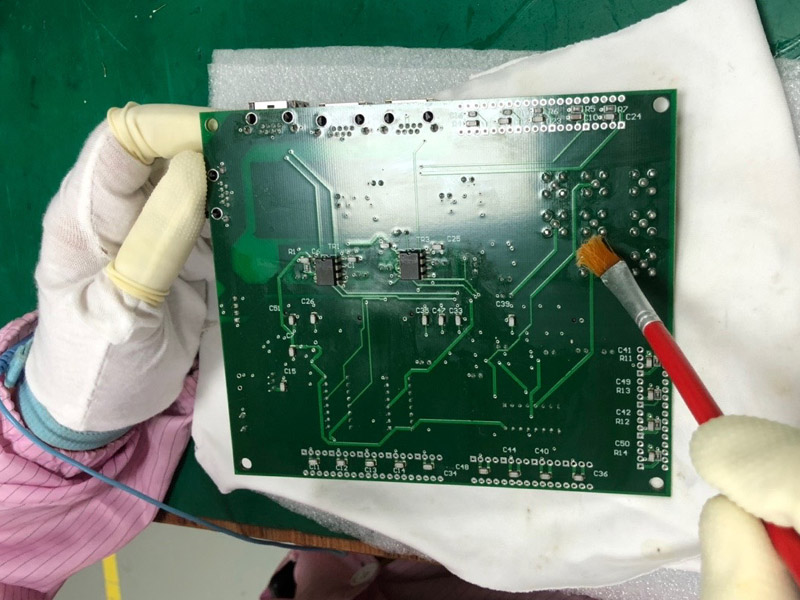
Use brush to brush the solder joint and solder flux on the soldered PCB. Applying some alcohol or acetone onto the brush, do not use too much pressure, as this may cause the solder point to break. Repeat the procedure as necessary, to remove remaining flux residue on the PCBA.
Step1: Brush the solder joint and solder flux on the soldered PCB
Step2:
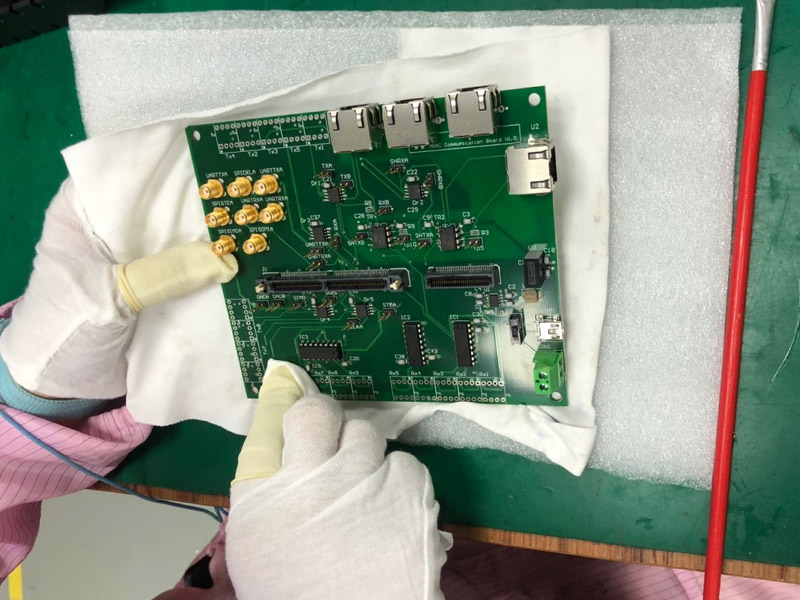
Wipe with a clean dust-free cloth to clean the assembled PCB.
Keep board clean and tidy to make sure no impurities and finger marks. Do the same process for bottom side.
Step2:Wipe with a clean dust-free cloth to clean the assembled PCB.
Step3:
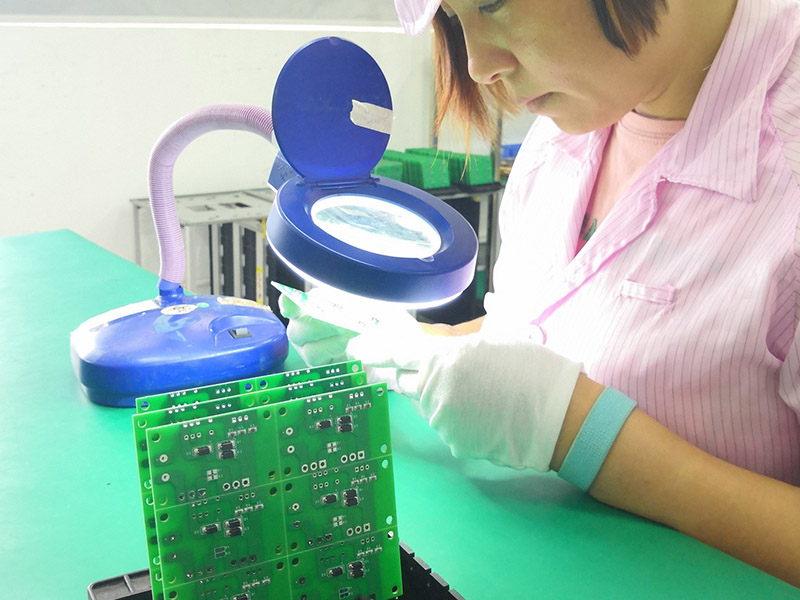
When above step finished, keep the board for an extra day to let the board dry enough before packing. Best QC guys will do final inspection for the finger prints under light. this will be helpful to check the cleaning result further.
Step3: final inspection for the finger prints under light
Step4:
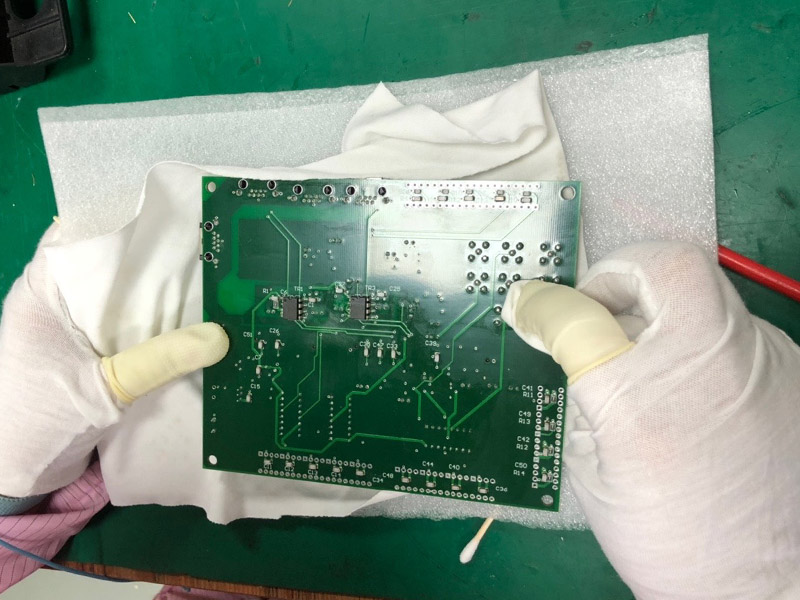
Finally, use dust-free cloth to do the final cleaning and let the board dry and clean enough before package.
Step4: use dust-free cloth to do the final cleaning.
Above are the process for how we clean the assembled boards.
Best Tech is a very professional manufacturer in printed circuit board and assembly. We clean each of assembled boards as the procedure we showed above.
If you are interesting to know more process for how we control the quality for the PCB assembled boards, contact us at any time, we will show you more.
This website uses cookies to enhance your experience, remember your preferences, and help us understand how visitors use our site. You can accept all cookies, reject non-essential cookies, or manage your settings.
This website uses cookies to improve your experience while you navigate through the website. Out of these cookies, the cookies that are categorized as necessary are stored on your browser as they are essential for the working of basic functionalities of the website. We also use third-party cookies that help us analyze and understand how you use this website. These cookies will be stored in your browser only with your consent. You also have the option to opt-out of these cookies. But opting out of some of these cookies may have an effect on your browsing experience.
Necessary cookies are absolutely essential for the website to function properly. These cookies ensure basic functionalities and security features of the website, anonymously.
Cookie
Duration
Description
cookielawinfo-checkbox-analytics
11 months
This cookie is set by GDPR Cookie Consent plugin. The cookie is used to store the user consent for the cookies in the category "Analytics".
cookielawinfo-checkbox-functional
11 months
The cookie is set by GDPR cookie consent to record the user consent for the cookies in the category "Functional".
cookielawinfo-checkbox-necessary
11 months
This cookie is set by GDPR Cookie Consent plugin. The cookies is used to store the user consent for the cookies in the category "Necessary".
cookielawinfo-checkbox-others
11 months
This cookie is set by GDPR Cookie Consent plugin. The cookie is used to store the user consent for the cookies in the category "Other.
cookielawinfo-checkbox-performance
11 months
This cookie is set by GDPR Cookie Consent plugin. The cookie is used to store the user consent for the cookies in the category "Performance".
viewed_cookie_policy
11 months
The cookie is set by the GDPR Cookie Consent plugin and is used to store whether or not user has consented to the use of cookies. It does not store any personal data.
Functional cookies help to perform certain functionalities like sharing the content of the website on social media platforms, collect feedbacks, and other third-party features.
Performance cookies are used to understand and analyze the key performance indexes of the website which helps in delivering a better user experience for the visitors.
Analytical cookies are used to understand how visitors interact with the website. These cookies help provide information on metrics the number of visitors, bounce rate, traffic source, etc.
Advertisement cookies are used to provide visitors with relevant ads and marketing campaigns. These cookies track visitors across websites and collect information to provide customized ads.