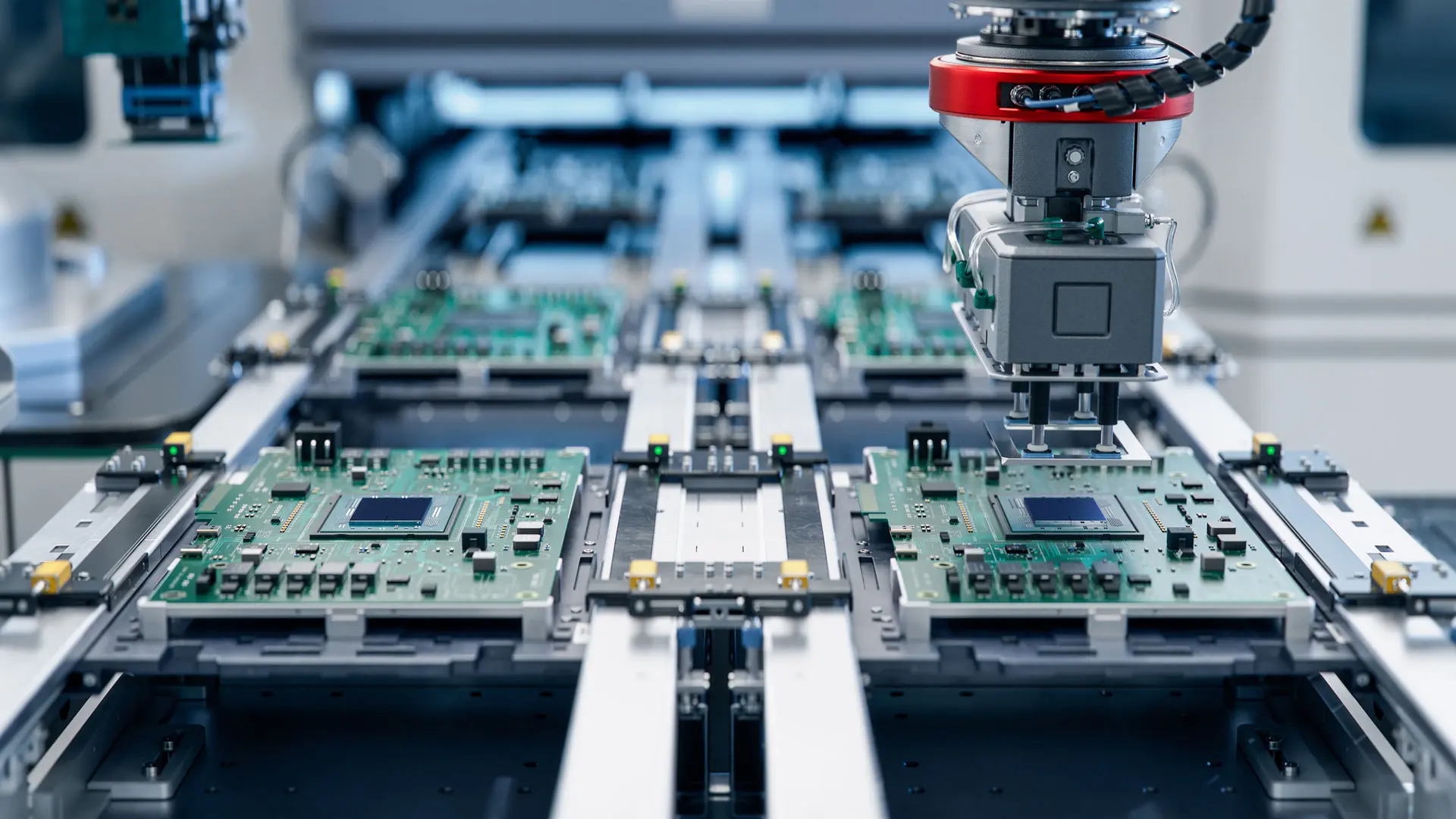
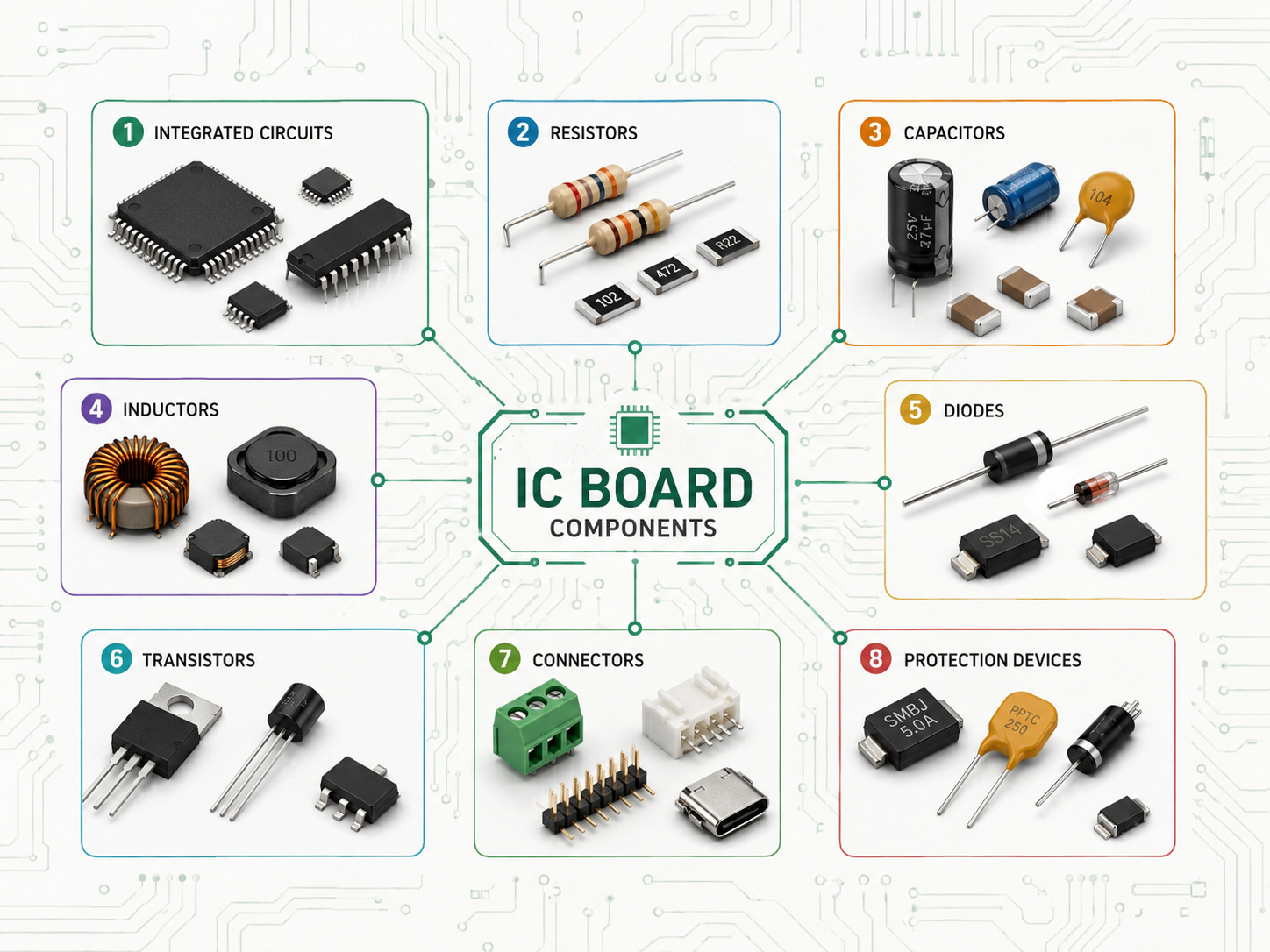
IC board components are the electronic parts mounted on a printed circuit board to make a circuit perform its required function. They include integrated circuits, resistors, capacitors, diodes, transistors, inductors, connectors, crystals, sensors, switches, protection devices, and power components.
Component selection affects circuit stability, PCB design layout, assembly yield, product lifetime, testing cost, and mass production risk. A well-designed IC board uses the right components, correct footprints, suitable materials, reliable soldering processes, and proper quality control.
What Are IC Board Components?
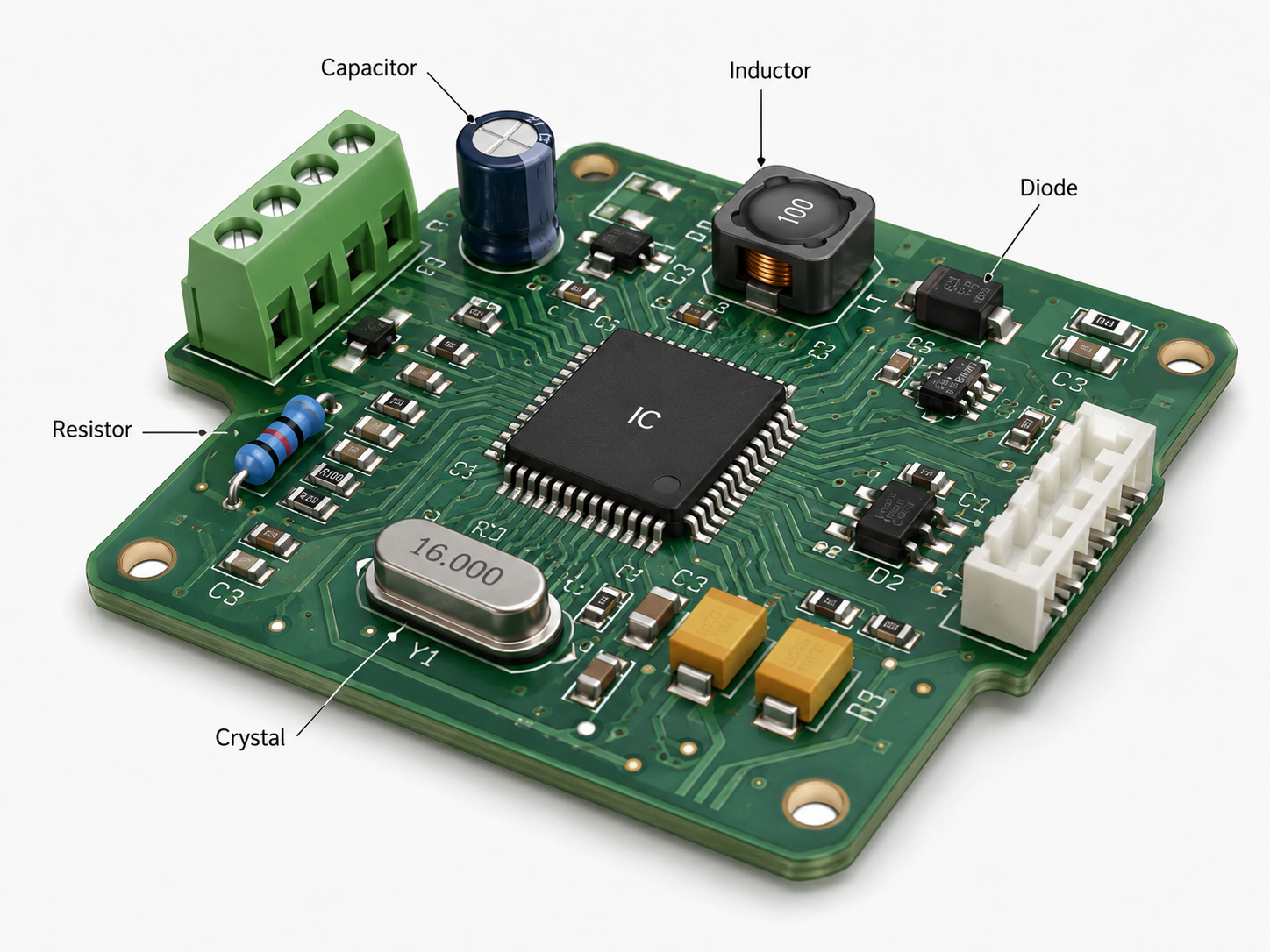
IC board components are the parts assembled on a PCB to create a working electronic circuit. The PCB provides copper traces, pads, vias, solder mask, and mechanical support. The components provide control, power conversion, signal processing, protection, sensing, communication, or user interface functions.
The integrated circuit, or IC, is usually the main functional device on the board. It may be a microcontroller, memory chip, power management IC, driver IC, amplifier, logic IC, or communication chip. After these components are soldered onto the PCB, the finished product is usually called a PCBA, or printed circuit board assembly.
Why Are IC Board Components Important?
IC board components directly decide how the product works in real conditions. A wrong capacitor may cause unstable power. A poor connector may fail after vibration. A MOSFET with weak thermal margin may overheat. A counterfeit IC may pass basic inspection but fail during long-term use.
In mass production, components also affect cost and delivery. Some ICs have long lead times, limited alternatives, or strict storage requirements. If the BOM is not reviewed early, a prototype may work, but batch production may become expensive, unstable, or delayed.
How Do IC Board Components Work Together?
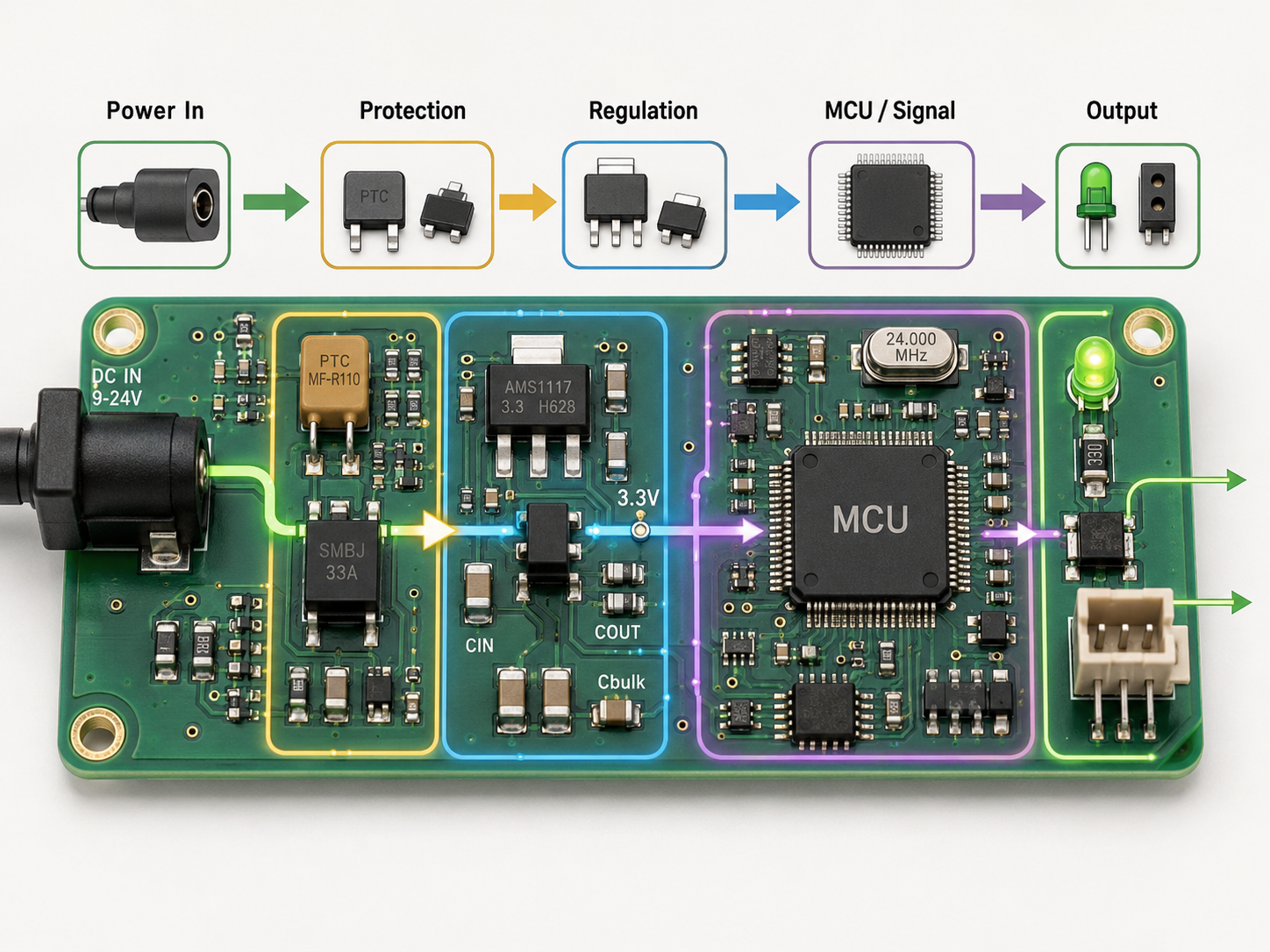
An IC board works through coordinated electrical paths. Power enters the board through a connector, terminal, battery contact, USB port, or power jack. Protection parts such as fuses, TVS diodes, ESD arrays, or common-mode chokes help reduce electrical stress.
Power management parts then convert and regulate voltage. For example, a DC-DC converter may work with a MOSFET, diode, inductor, capacitor, and feedback resistor network. These parts create stable power rails for ICs and other devices.
Signal components handle communication between ICs, sensors, memory, displays, motors, or external systems. Passive components such as resistors and capacitors support filtering, timing, voltage division, current limiting, and noise control. Here is a basic workflow:
Main Types of IC Board Components
Different IC board components serve different electrical and mechanical roles. The table below gives a practical overview.
| Component Type | Common Examples | Main Function | Key Selection Point |
|---|---|---|---|
| Integrated circuits | MCU, memory, driver IC, PMIC | Control, logic, processing, conversion | Package, voltage, temperature, lifecycle |
| Resistors | Chip resistor, current sense resistor | Current limiting, feedback, voltage division | Value, tolerance, power rating |
| Capacitors | MLCC, electrolytic, tantalum | Decoupling, filtering, energy storage | Capacitance, voltage, ESR, temperature behavior |
| Inductors | Power inductor, ferrite bead | Energy storage, EMI control | Current rating, DCR, saturation current |
| Diodes | Schottky, TVS, Zener, LED | Rectification, protection, indication | Voltage, current, response time |
| Transistors | MOSFET, BJT, IGBT | Switching, amplification, power control | Current, voltage, RDS(on), heat dissipation |
| Connectors | Board-to-board, wire-to-board, terminal block | Electrical interface | Pitch, current rating, plating, mating cycle |
| Timing parts | Crystal, oscillator, resonator | Clock generation | Frequency tolerance, load capacitance |
| Protection parts | Fuse, PTC, ESD array | Circuit safety | Surge rating, clamping voltage |
| Electromechanical parts | Relay, switch, buzzer | User or load interface | Contact rating, mechanical life |
Common IC Packages and Mounting Methods
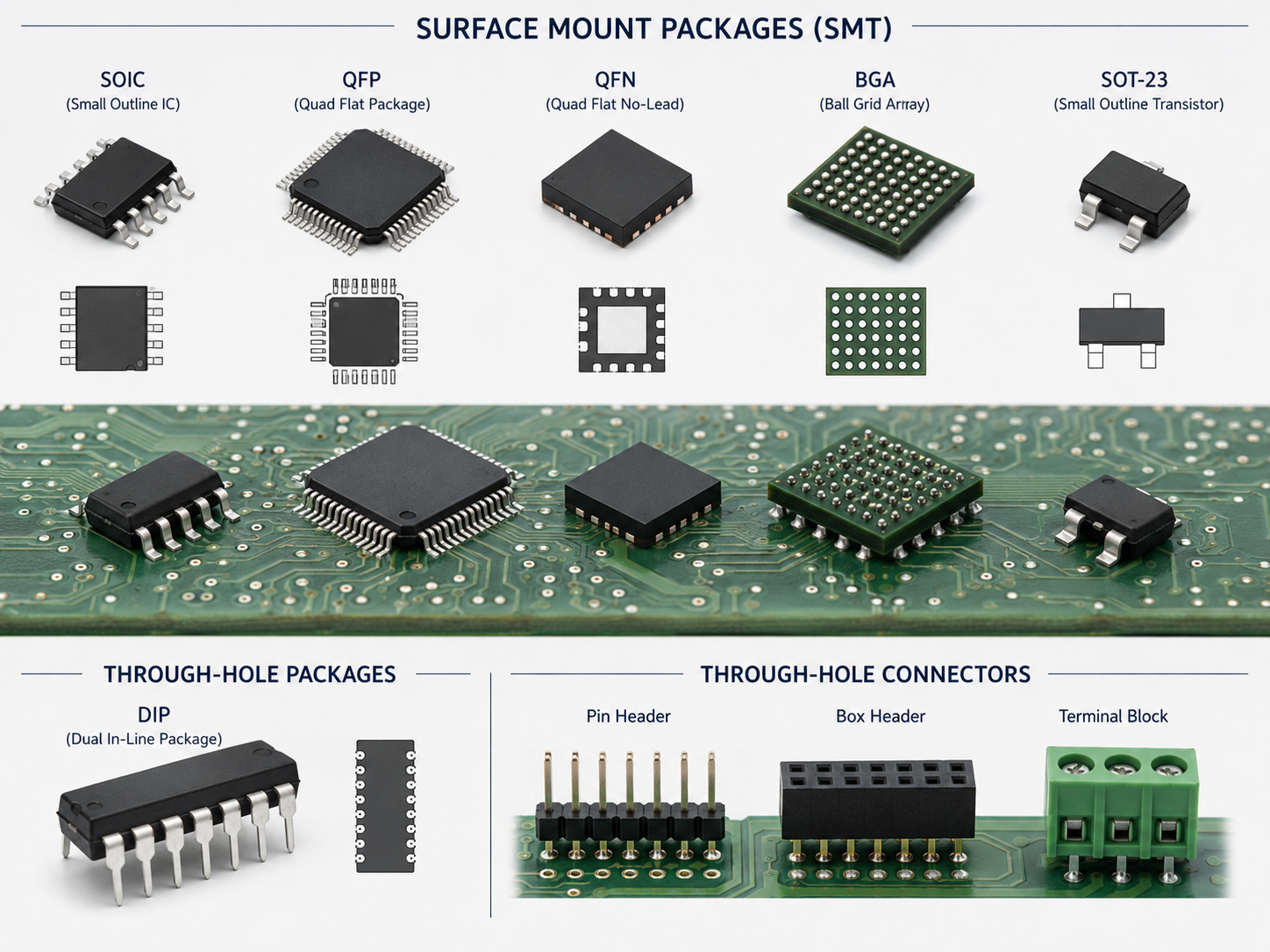
IC packages affect PCB size, routing difficulty, soldering quality, heat dissipation, and inspection method. Common packages include SOIC, SOP, QFN, QFP, BGA, LGA, DFN, SOT, DIP, and TO packages.
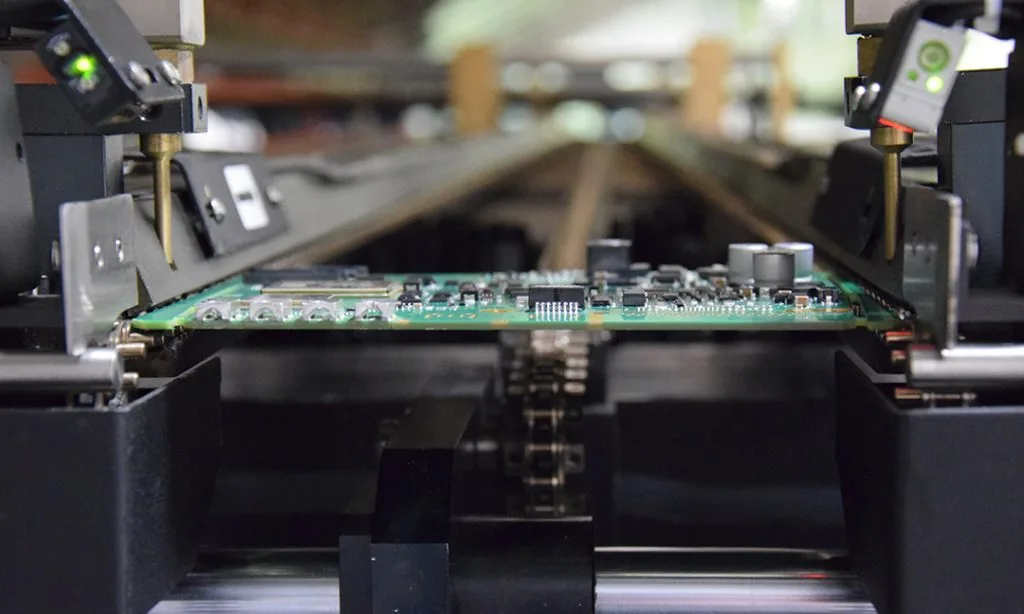
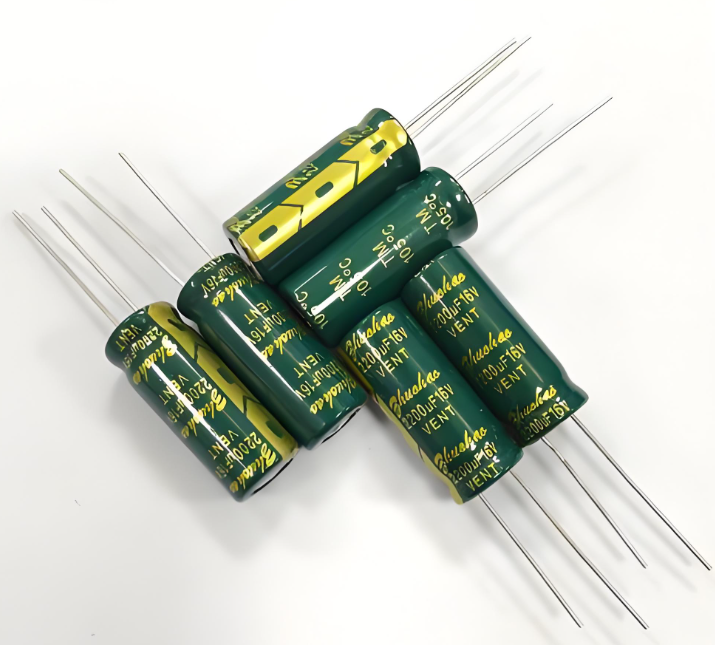
Most modern IC boards use SMT assembly because surface mount components are compact and suitable for automated production. Through-hole components are still used for connectors, relays, transformers, large capacitors, and parts that need stronger mechanical support.
Materials Used in IC Board Components and PCBs
IC board components use different materials based on function. IC packages may include silicon dies, copper lead frames, bonding wires, epoxy molding compound, solder balls, and plated terminals. Passive components may use ceramic, metal film, carbon film, ferrite, aluminum foil, polymer, or magnetic core materials.
The PCB substrate is also important. Standard consumer electronics often use normal FR4, High-temperature, high-power, RF, automotive, LED, or power module applications may require high-Tg FR4, aluminum PCB, copper base PCB, ceramic PCB, Rogers material like RO4350B, RO4003C, RT5880, , or hybrid stackups.
For example, a high-power MOSFET on FR4 may need large copper pours and thermal vias. A high-brightness LED may need aluminum or ceramic substrate for better heat spreading. A high-frequency IC may need low-loss material and controlled impedance.
IC Board Component Applications
IC board components are used in almost every electronic product, but each market has different priorities. The most common applications including:
- Consumer electronics – MCU, charger IC, LEDs, USB connector
- Industrial control – Relays, isolators, terminal blocks, TVS diodes
- Automotive electronics – MOSFETs, sensors, CAN/LIN ICs, regulators
- Medical devices – Precision analog ICs, sensors, isolation parts
- LED lighting – LED drivers, MOSFETs, capacitors, thermal substrates
- Communication equipment – RF ICs, oscillators, filters, shielding parts
- Power electronics – IGBTs, MOSFETs, gate drivers, inductors
- IoT devices – Wireless modules, sensors, low-power MCUs
A smart home board may focus on compact layout and cost control. An EV charger, medical controller, or industrial power board needs stronger derating, testing, and documentation.
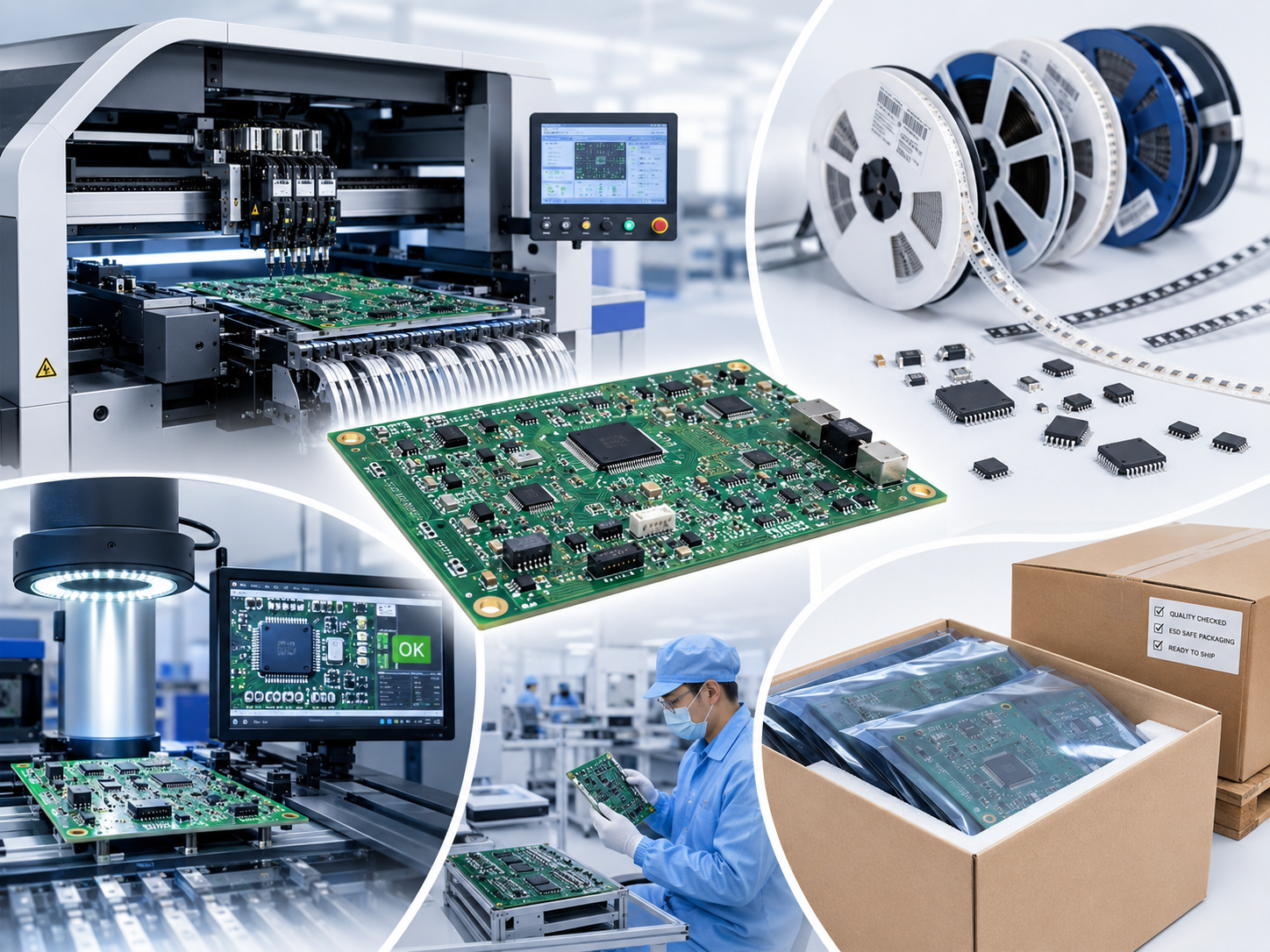
Testing Methods and Quality Standards
Common inspection methods include visual inspection, AOI, X-ray, in-circuit testing, flying probe testing, power-on testing, firmware programming, functional testing, burn-in, and thermal testing.
BGA, LGA, and QFN packages often need X-ray because the solder joints are hidden under the component. Power boards may need load testing and temperature rise testing. Communication products may require impedance, RF, or signal integrity tests.
Common quality references include IPC-A-610 for electronic assembly acceptability and IPC J-STD-001 for soldered assembly requirements. RoHS, REACH, UL, and customer-specific standards may also apply depending on the product and target market.
Common IC Board Component Failures
Component failures often come from electrical overstress, heat, poor soldering, wrong part selection, ESD, moisture, mechanical stress, or contamination.
| Failure | Common Cause | Prevention |
|---|---|---|
| Burned IC | Overvoltage or reverse polarity | Add protection circuit and verify power design |
| Cracked MLCC | PCB bending or thermal shock | Improve placement and use proper package size |
| BGA open joint | Warpage or poor reflow | Control profile and use X-ray inspection |
| MOSFET overheating | Poor copper area or wrong rating | Check RDS(on), thermal vias, and heat path |
| Connector failure | Vibration or weak plating | Choose correct locking style and plating |
| Corrosion | Flux residue or moisture | Improve cleaning, coating, and storage |
| Wrong component | BOM error or feeder mistake | Use barcode control and first article inspection |
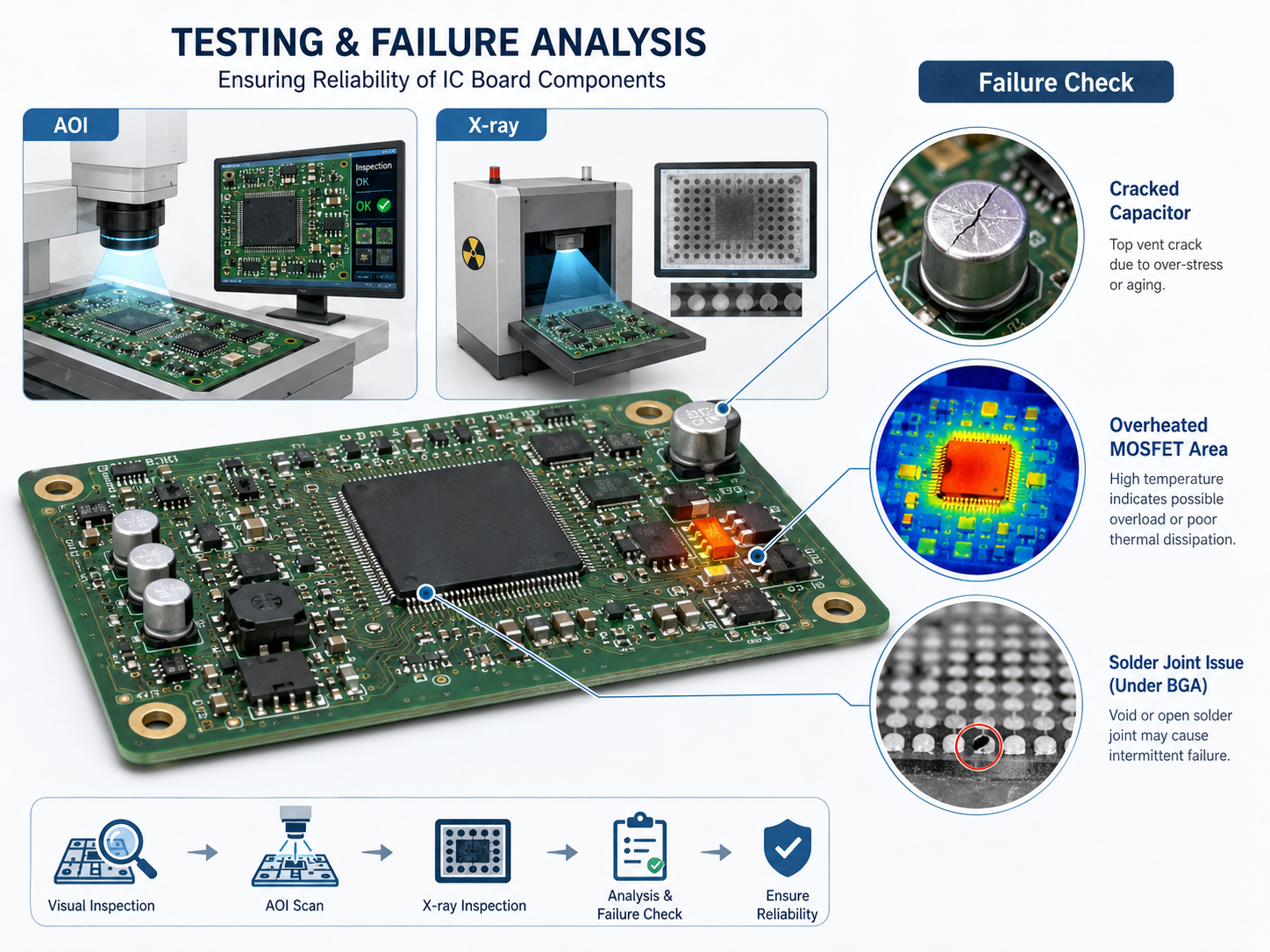
A failed part is often only the visible result. The root cause may be in design margin, layout, soldering process, component sourcing, or field environment.
How to Choose an IC Board Assembly Supplier?
A reliable supplier should understand both component sourcing and PCB assembly. The supplier should be able to review Gerber files, BOM, footprints, soldering requirements, test points, package risks, and production feasibility.
For turnkey PCB assembly, the supplier should support SMT, through-hole assembly, AOI, X-ray, functional testing, component procurement, and engineering feedback. For OEM and ODM projects, the supplier should also help with prototype development, batch production, cost optimization, and custom engineering support.
If you are looking for a supplier that can support both engineering review and reliable production, EBest Circuit can help you move from design files to finished IC board assembly with less risk. Our team supports PCB fabrication, component sourcing, SMT assembly, through-hole assembly, functional testing, OEM production, ODM development, prototypes, and batch manufacturing. For more information, welcome to contact us at sales@bestpcbs.com or leave your comments on below.
FAQs About IC Board Components
What are the most common IC board components?
The most common IC board components include ICs, resistors, capacitors, diodes, transistors, inductors, connectors, crystals, switches, relays, LEDs, and protection devices. Each part supports a different circuit function, such as control, filtering, power regulation, protection, or signal transfer.
Is an IC board the same as a PCB?
Not exactly. A PCB is the bare printed circuit board. An IC board usually refers to a PCB assembled with integrated circuits and other components. After assembly, it is often called a PCBA.
What does an IC do on a circuit board?
An IC performs a defined electronic function. It may process data, control power, store information, amplify signals, drive loads, or manage communication. Supporting components help the IC operate safely and reliably.
Why are capacitors placed close to ICs?
Capacitors placed near IC power pins reduce noise and stabilize voltage. These parts are called decoupling capacitors. Poor placement can cause resets, unstable signals, or power rail noise.
How do I identify components on an IC board?
You can identify parts by reference designators, package shape, markings, and circuit position. Common markings include R for resistors, C for capacitors, D for diodes, U for ICs, and J or CN for connectors.
What causes IC board components to fail?
Common causes include overvoltage, overheating, ESD, wrong polarity, poor soldering, moisture, vibration, contamination, counterfeit parts, and weak design margin. Failure analysis should check both the part and the surrounding circuit.
Can IC board components be replaced?
Many parts can be replaced, but fine-pitch ICs, QFNs, and BGAs need professional rework tools. The replacement part must match the correct package, orientation, electrical rating, and soldering requirement.
What is the difference between SMT and through-hole components?
SMT parts are mounted on the PCB surface and are suitable for compact automated assembly. Through-hole parts use leads inserted into holes and provide stronger mechanical support, especially for connectors and large components.
Why is component sourcing important?
Good sourcing reduces the risk of counterfeit parts, poor solderability, wrong date codes, unstable quality, and production delays. Critical components should come from approved and traceable channels.
What files are needed for IC board assembly quotation?
A complete quotation package usually includes Gerber files, BOM, pick-and-place file, assembly drawing, quantity, surface finish, test requirements, and quality standards. Turnkey assembly also needs clear sourcing requirements.
How can buyers reduce IC board component cost?
Buyers can reduce cost by approving alternative parts, choosing standard packages, avoiding obsolete components, reviewing the BOM early, optimizing the PCB panel, and confirming the required test level before production.
How do I choose a manufacturer for IC board assembly?
Choose a manufacturer that can support component sourcing, PCB fabrication, SMT assembly, through-hole assembly, AOI, X-ray, functional testing, and engineering review. For OEM and ODM work, prototype and mass production experience are both important.
Conclusion
IC board components determine circuit function, assembly quality, product reliability, and long-term production stability. A good design should consider component rating, package type, PCB material, thermal path, soldering process, inspection method, and supply-chain risk from the beginning.
For selection, engineers should focus on electrical margin, thermal performance, manufacturability, and test coverage. Buyers should focus on BOM accuracy, sourcing traceability, approved alternatives, cost control, and supplier capability.
If you need IC board assembly, OEM production, ODM development, prototype support, or batch manufacturing, working with a source factory that understands both PCB manufacturing and component assembly can reduce design risk and improve delivery efficiency.