PCB manufacturing PCB manufacturing
Home > Blog

European PCB manufacturers

Top 7 High-Frequency PCB Manufacturers in Europe
Thursday, September 10th, 2026

High-frequency PCB manufacturers in Europe cover PTFE multilayers, RF/FR-4 hybrid stackups, HDI, controlled impedance, 24–77 GHz radar PCBs, metal-backed boards, and RF testing. This guide compares seven manufacturers with documented European production and published high-frequency PCB capabilities.

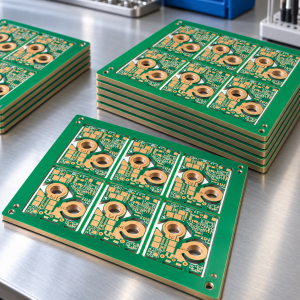
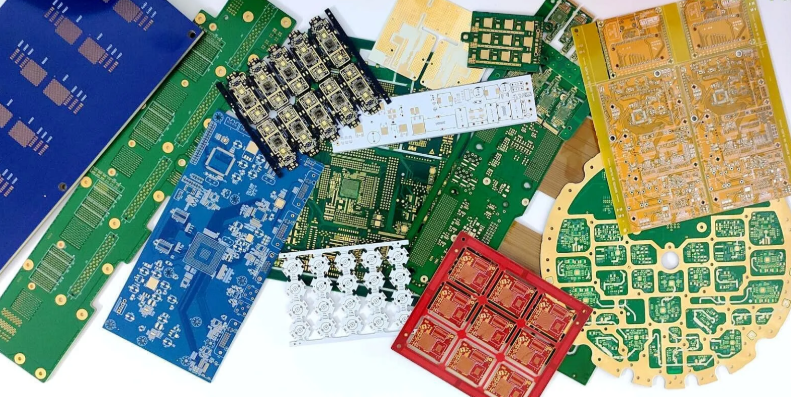
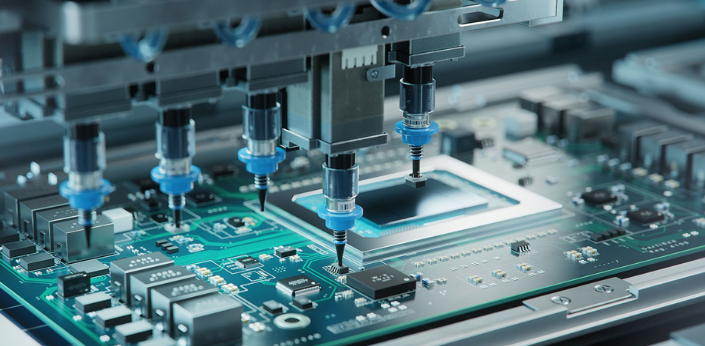
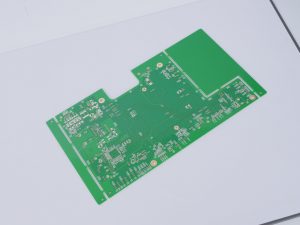
high-frequency PCB manufacturers in Europe, RF PCB samples in a precision electronics laboratory

Top 7 High-Frequency PCB Manufacturers in Europe

The seven manufacturers below differ mainly in RF material experience, layer structure, mmWave capability, HDI processing, production location, lead time, and target applications. The table provides a direct comparison of their published manufacturing strengths.

Manufacturer Manufacturing Site Process Capability Lead Time Strength
ACB France PTFE, microwave laminates, multilayer RF PCB Quick-turn available; by quote RF and microwave PCB specialization
Aspocomp Oulu, Finland PTFE, RF/FR-4 hybrid, HDI, microvias, via filling 3–20 days RF + HDI integration
AT&S Fehring, Austria High-frequency PCB up to 10 layers, multilayer, HDI By quote Advanced multilayer capability and broad certifications
Eurocircuits Europe Rogers 4000 series, I-Tera, 2- and 4-layer RF PCB 5 days bare / 10 days assembled for eligible RF Pool orders Fast RF prototyping
KSG Germany, Austria 24–77 GHz, 2–20 layers, PTFE, hydrocarbon, hybrid multilayer By quote mmWave and radar PCB manufacturing
Schweizer Electronic Schramberg, Germany 6–24 GHz, 77 GHz, hybrid stackups, blind/buried vias By quote Automotive radar and sensor PCB
Teledyne Labtech United Kingdom PTFE, LCP, mixed dielectric, metal-backed PCB, blind/buried vias From 5 days for qualifying prototypes Complex RF/microwave PCB and RF testing

What High-Frequency PCB Capabilities Do European Manufacturers Offer?

European manufacturers cover both conventional microwave PCBs and more complex structures that combine RF materials, multilayer construction, HDI, fine conductor control, thermal management, and mmWave processing. The following capabilities are the most relevant when comparing factories.
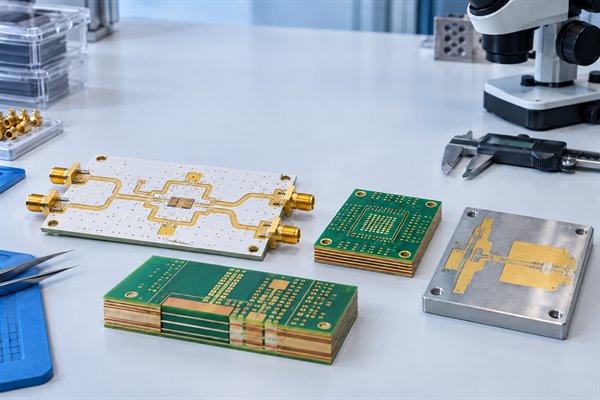
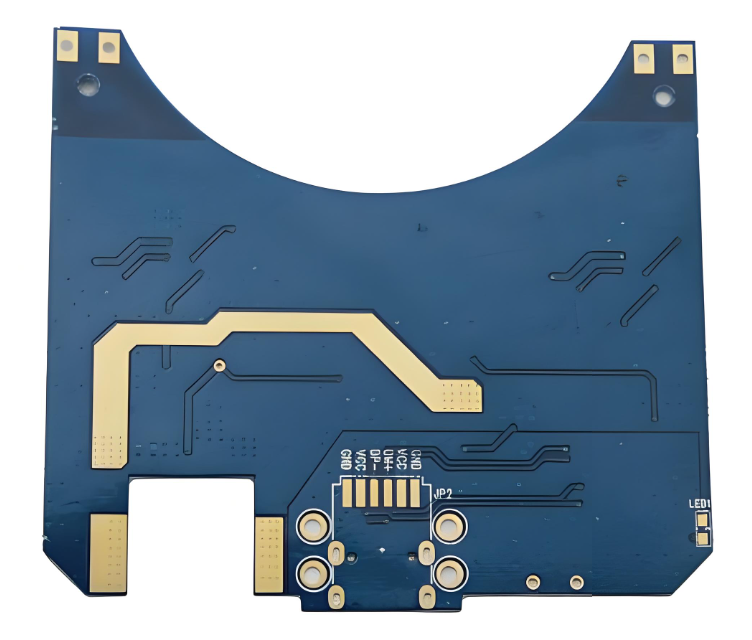
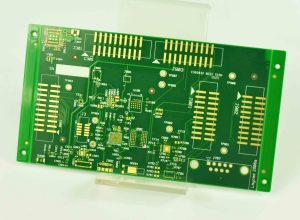
high-frequency PCB manufacturers in Europe, RF laminate and hybrid multilayer capability examples
Process Capability
RF Laminates PTFE, Rogers, I-Tera, hydrocarbon, LCP, mixed dielectric
Layer Count 2-layer RF PCB to 20-layer multilayer PCB
Hybrid Stackups RF laminate + FR-4
HDI Microvias, blind vias, buried vias, stacked and staggered vias
Controlled Impedance Controlled-impedance transmission lines and verification
Fine-Line Etching Published tolerances down to ±15 µm for selected processes
mmWave PCB 24 GHz and 77 GHz radar and sensor PCB production
Via Processing Via filling, copper-filled vias, via-in-pad
Special Structures Metal-backed PCB, cavities, controlled-depth features
Assembly SMT and RF PCB assembly
Testing Electrical test, impedance verification, RF/microwave test

At higher frequencies, trace width, dielectric thickness, copper profile, registration, and material stability have greater influence on impedance and insertion loss. For hybrid RF/FR-4 multilayers, lamination and dimensional compensation also become critical process controls.

Which Certifications Matter When Choosing a High-Frequency PCB Manufacturer in Europe?

Certifications should be matched to the application, production site, and required quality system. They are particularly relevant for automotive, aerospace, medical, and other regulated electronics.

  • ISO 9001 — quality management system for general PCB manufacturing.
  • IATF 16949 — relevant to automotive radar, ADAS, vehicle sensing, and automotive communication electronics.
  • EN 9100 / AS9100 — used for aerospace and aviation electronics where traceability and process control requirements are higher.
  • ISO 13485 — relevant to PCB production for medical devices and medical electronics.
  • NADCAP — applies to qualified special processes in aerospace supply chains where required.
  • ISO 14001 — covers environmental management systems.
  • IPC-6018 — covers performance requirements for high-frequency and microwave printed boards.

Before supplier approval, verify the certificate holder, factory address, certification scope, and validity period against the site that will manufacture the PCB.

How Does Lead Time Differ Among European High-Frequency PCB Manufacturers?

High-frequency PCB lead time varies with RF material availability, PCB structure, lamination cycles, HDI processing, special mechanical features, testing, and assembly. Published quick-turn times normally apply only to designs that fit a defined process window.

Manufacturer Lead Time Scope
ACB Quick-turn available Project-specific RF build
Aspocomp 3–20 days Oulu production
AT&S By quote Site and construction dependent
Eurocircuits 5 days bare / 10 days assembled Eligible RF Pool orders
KSG By quote Material and PCB structure dependent
Schweizer Electronic By quote Project-specific RF production
Teledyne Labtech From 5 days Qualifying prototypes

Lead time usually increases with:

  • special-order RF laminates
  • high layer count
  • PTFE or mixed-dielectric lamination
  • sequential lamination
  • microvias and filled vias
  • cavities or controlled-depth routing
  • metal-backed structures
  • additional impedance or RF testing
  • PCB assembly

For supplier comparison, use the required delivery date, not fabrication days alone. Material procurement, inspection, assembly, freight, and customs can materially change the final schedule.

How Does European High-Frequency PCB Manufacturing Compare With Asian Manufacturing?

For most sourcing decisions, the practical comparison is quality control, lead time, cost, process capability, material availability, engineering support, and production capacity. These factors affect both prototype development and volume production.

Factor European Manufacturing Asian Manufacturing
Quality Control Strong specialist RF factories and sector-specific quality systems Established RF factories can support tight impedance, HDI, and high-reliability production
Lead Time Shorter transport for European deliveries Fast fabrication possible; international freight and customs add time
Cost Higher labor and manufacturing overhead Generally more competitive for medium- and high-volume production
Process Capability Strong in specialty RF, radar, aerospace, and complex prototypes Broad capability across RF, HDI, multilayer, hybrid, rigid-flex, and volume production
RF Materials Strong specialist laminate experience Broad material sourcing network and supplier base
Prototype Support Strong regional quick-turn options Competitive prototype fabrication with longer logistics to Europe
Volume Capacity Some suppliers focus on specialty or lower-volume programs Stronger large-volume manufacturing capacity
Engineering Support Easier time-zone alignment for European programs Depends on supplier engineering resources and response process
Production Origin Suitable where European manufacture is required Suitable where offshore manufacturing is accepted
Total Cost Higher manufacturing cost but shorter regional logistics Lower production cost; freight, customs, and inventory must be included

European production is more suitable when local origin, regional engineering access, specialist RF processing, or shorter European logistics are required. Asian production is often stronger when volume capacity and manufacturing cost are higher priorities.

How Should You Choose the Right High-Frequency PCB Manufacturer in Europe?

The supplier should be evaluated against the actual RF stackup and the processes that are hardest to control on the board. A useful qualification compares measurable manufacturing capability rather than general claims such as “RF PCB supported.”
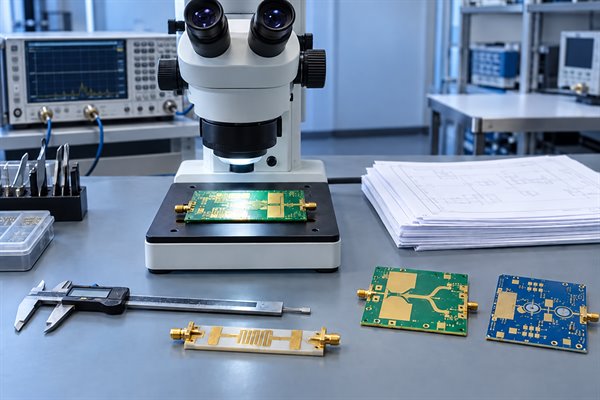
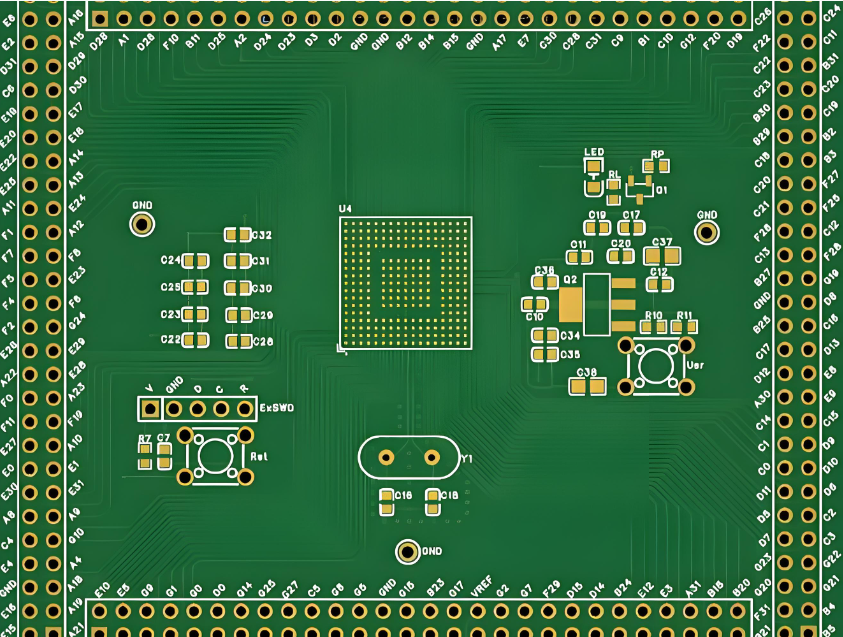
high-frequency PCB manufacturers in Europe, RF PCB inspection and supplier qualification
  1. Match the manufacturer to the operating frequency. A manufacturer experienced with a 2–6 GHz communication board is not automatically qualified for a 24 GHz or 77 GHz radar PCB. Check whether the factory has documented production experience near the required frequency range and with similar transmission-line structures.
  2. Confirm the exact RF material system. Specify the complete laminate grade rather than writing only “Rogers PCB” or “PTFE PCB.” Verify the core, prepreg or bonding material, dielectric thickness, copper type, material availability, and approved alternatives.
  3. Review the proposed stackup before releasing production files. For RF/FR-4 hybrid multilayers, confirm layer order, dielectric thickness, finished copper, impedance targets, lamination sequence, and material compatibility. Any stackup change can alter trace dimensions and impedance.
  4. Check the processes that affect RF performance. The most relevant controls include etching tolerance, conductor width, copper profile, dielectric thickness, registration, lamination, controlled-depth machining, and surface finish. For mmWave designs, small dimensional changes can have a measurable electrical effect.
  5. Verify HDI and via capability where required. For dense RF/digital boards, check microvia diameter, blind and buried vias, via-in-pad, copper filling, stacked or staggered vias, and sequential lamination. Confirm that these processes are qualified with the selected RF laminate rather than only standard FR-4.
  6. Confirm impedance control and inspection methods. Define the required impedance and tolerance on the fabrication drawing. Ask whether verification includes impedance coupons, TDR results, microsections, dimensional inspection, or other project-specific records.
  7. Check special RF and thermal structures. For high-power amplifiers, radar modules, antennas, or microwave systems, verify capability for metal-backed PCBs, cavities, thermal vias, copper-filled vias, controlled-depth routing, edge plating, or other required structures.
  8. Match certifications to the final application. A standard industrial RF PCB may require ISO 9001, while automotive radar may require IATF 16949 and aerospace electronics may require EN 9100/AS9100 or additional process approvals. Confirm that the certificate covers the actual production site.
  9. Compare lead time using the same starting point. Ask each manufacturer to quote from engineering approval and material availability through fabrication, inspection, assembly, and dispatch. This avoids comparing a five-day fabrication cycle with another supplier's complete delivery schedule.
  10. Check prototype and production capacity separately. A supplier may be excellent at prototypes but have limited volume capacity. Confirm prototype quantity, monthly production demand, panel requirements, expected ramp-up, and whether the same factory and process will be used after qualification.
  11. Confirm the manufacturing location. For PCB groups with plants in several countries, specify the required production site if country of origin, certification scope, logistics, or customer approval depends on it.
  12. Qualify the supplier with a representative build. The first build should contain the same RF laminate, stackup, critical conductor geometry, via structures, surface finish, and special processes planned for production. Review the finished PCB together with the agreed inspection records before approving volume production.

A strong supplier comparison should therefore answer five practical questions: Can the factory process the required RF material? Can it hold the critical geometry and impedance? Can it manufacture the full stackup and via structure? Can it provide the required quality evidence? Can it repeat the same process at the required production volume?

What Information Should You Provide When Requesting a High-Frequency PCB Quote?

A complete RFQ allows the manufacturer to review material availability, stackup feasibility, impedance, special processes, inspection requirements, and lead time before quotation. This reduces engineering questions after the order is released.

For PCB fabrication, provide:

  • Gerber X2 or ODB++
  • NC drill files
  • fabrication drawing
  • PCB dimensions
  • layer count
  • stackup
  • RF laminate grade
  • dielectric thickness
  • copper thickness
  • controlled impedance
  • critical RF traces
  • surface finish
  • via structure
  • finished hole size
  • cavity or controlled-depth requirements
  • metal-backed or thermal structures
  • order quantity
  • PCB acceptance standard
  • test requirements
  • delivery destination

For PCB assembly, also provide:

  • BOM
  • pick-and-place file
  • assembly drawing
  • approved substitutions
  • programming requirements
  • functional test requirements
  • RF test requirements

If the stackup has not been finalized, complete the manufacturer stackup review before fixing the final RF trace width and spacing.

FAQs About High-Frequency PCB Manufacturers in Europe

The following questions cover common issues that arise when comparing European RF PCB suppliers, especially for Rogers materials, 77 GHz boards, hybrid stackups, HDI, lead time, and certification.

Q1: Are there Rogers PCB manufacturers in Europe?

A1: Yes. European manufacturers including ACB and Eurocircuits publish support for Rogers high-frequency laminate systems.

Q2: Which European manufacturers can produce 77 GHz PCBs?

A2: KSG and Schweizer Electronic publish 77 GHz PCB manufacturing capability, particularly for radar and sensing applications.

Q3: Can European manufacturers produce RF/FR-4 hybrid PCBs?

A3: Yes. Several manufacturers support mixed-dielectric multilayers combining RF laminates with FR-4.

Q4: Can high-frequency PCBs use HDI technology?

A4: Yes. Microvias, blind vias, buried vias, via-in-pad, and sequential buildup can be combined with RF structures when the material and process are qualified together.

Q5: Are European high-frequency PCB manufacturers faster than Asian suppliers?

A5: European production can reduce shipping time within Europe, while Asian factories may offer similar or shorter fabrication cycles. Compare total delivery time rather than fabrication time alone.

Q6: Are European high-frequency PCBs more expensive?

A6: European production generally has higher labor and manufacturing costs. Asian manufacturing is often more competitive for medium- and high-volume production.

Q7: Can European suppliers provide RF PCB assembly?

A7: Yes. Some manufacturers focus on bare PCB fabrication, while others provide PCB assembly and RF or microwave testing.

Q8: What process controls matter most for 77 GHz PCBs?

A8: Conductor geometry, dielectric thickness, copper profile, registration, impedance, and material stability become increasingly sensitive at mmWave frequencies.

Q9: Does ISO 9001 prove high-frequency PCB capability?

A9: No. ISO 9001 verifies the quality management system. RF capability must be evaluated through materials, process tolerances, impedance control, and testing.

Q10: Should the production site be confirmed before ordering?

A10: Yes. Confirm the actual manufacturing site whenever country of origin, certification scope, qualification, or logistics requirements apply.

Conclusion

KSG and Schweizer Electronic publish strong 77 GHz radar capability, Aspocomp combines RF materials with HDI, Eurocircuits provides standardized quick-turn RF prototypes, and Teledyne Labtech combines complex microwave PCB fabrication with RF testing.

If European manufacturing is not required, EBest Circuit provides custom high-frequency PCB fabrication and PCBA support from China, from prototype through volume production. We support custom stackups and free DFM review. Send your Gerber or ODB++, stackup, RF material, impedance requirements, quantities, BOM, and assembly files to sales@bestpcbs.com.
You may also like

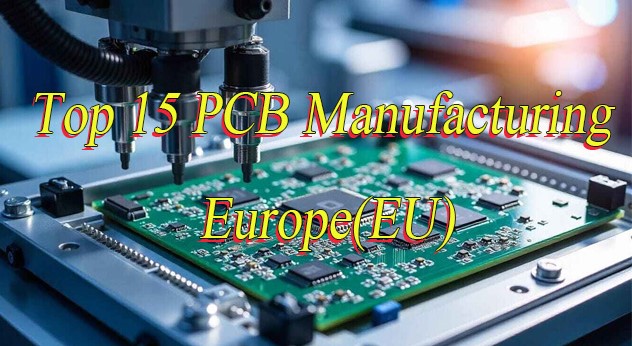
Top 15 PCB Manufacturing Europe(EU), PCB Factory in Europe
Thursday, February 19th, 2026

Europe’s electronics industry relies heavily on reliable PCB manufacturing Europe services to support sectors like automotive, aerospace, and medical devices. PCB manufacturing Europe stands out for strict quality compliance and advanced technical capabilities, but also faces unique challenges such as cost pressures and supply chain fragmentation. High-caliber European PCB manufacturers address these regional pain points by integrating optimized processes and collaborative supply chain strategies to deliver tailored solutions.

Top 15 PCB Manufacturing Europe(EU), https://www.bestpcbs.com/blog/2026/02/top-15-pcb-manufacturing-europe/

Top 15 PCB Manufacturing Companies in Europe(EU)

Company NameCountry/RegionMain BusinessCore AdvantagesProcess CapabilityLead Time
Best Technology Circuit Co., Limited (EBest Circuit Co., Limited)China (EU-compliant service)Full-range PCB manufacturing (prototyping to mass production) & assembly for European marketsEU RoHS/REACH compliance, multilingual technical support, European distributor network2-32 layers, HDI, rigid-flex PCBs, impedance control, RF/automotive-grade productionPrototypes: 2-5 days; Mass production: 7-15 days; Expedited for EU clients
EurocircuitsGermany/HungaryPrototype & small-batch PCB manufacturingOnline data verification, cost-saving pooling service, local EU production bases2-16 layers, HDI microvias, RF PCBs, IPC-compliant productionBare boards: 3-5 days; Assembled PCBs: 6-17 days
Zollner ElektronikGermanyHigh-reliability PCB assembly for automotive/medical sectorsISO 13485 certification, IATF 16494 compliance, complex assembly expertiseHigh-density assemblies, BGA/QFN soldering, cleanroom production10-20 business days
EnicsSwitzerlandIndustrial IoT & complex PCB assembliesLocalized EU production, sustainability focus, ISO 14001 certificationRigid-flex PCBs, functional testing, high-temperature materials7-18 days
All CircuitsFranceAerospace/automotive PCB manufacturing & assemblyAS9100 aerospace certification, turnkey solutions, EU supply chain integrationHigh-reliability PCBs, thermal management, complex interconnect designs8-22 days
Ashgill ElectronicsUKFast prototype PCB manufacturingDFM support, low MOQ, UK local production2-8 layers, prototype assemblies, SMT technologyPrototypes: 3-7 days
Note ABSwedenOEM EMS & industrial PCB productionLarge-volume production, quality traceability, Nordic quality standardsStandard/custom PCBs, industrial-grade material compatibility12-25 days
Kimball ElectronicsPolandIoT/medtech PCB manufacturingISO 13485 compliance, component sourcing support, Central EU logisticsPrecision assemblies, cleanroom production, IoT-specific PCBs9-18 days
Neways ElectronicsNetherlandsAutomotive/healthcare PCB assembliesRoHS compliance, long-term supply partnerships, Dutch quality control2-12 layers, power PCBs, high-current designs10-20 days
BMK GroupGermanyMid-volume high-end PCB assemblyAerospace certification, flexible production, German engineering precisionComplex PCBs, edge plating, high-precision drilling7-16 days
AsteelflashFrance/UKPCB manufacturing & box buildsEU supply chain, comprehensive testing, multi-site productionSMT assembly, functional testing, system-level integration8-20 days
Hanza GroupSwedenLocalized PCB productionSustainability focus, regional logistics efficiency, Nordic environmental standardsStandard PCBs, small-batch assembly, lead-free manufacturing11-23 days
VideotonHungaryConsumer electronics PCB manufacturingCost-efficient large-scale production, Eastern EU manufacturing advantage2-10 layers, SMT assembly, high-volume fabrication10-18 days
PlexusRomaniaHigh-complexity PCB assembliesMedical/industrial focus, strict quality control, EU regulatory complianceHDI, BGA rework, complex component placement9-21 days
ScanfilFinlandIndustrial/renewable energy PCBsNordic quality standards, custom solutions, renewable energy expertiseRigid PCBs, system assembly, high-voltage production12-24 days

Which Manufacturers Offer Fast PCB Manufacturing Europe?

  • EBest Circuit(Best Technology Circuit): Offers fast European PCB manufacturing services with a 2-5 day prototyping cycle and expedited mass production services. The company utilizes a global supply chain integrated with European distributors to ensure timely delivery while complying with EU regulations.
  • Eurocircuits: Provides 3-day bare board prototyping and 6-day assembled PCB services for urgent orders, with online data verification and local European production facilities to accelerate turnaround times.
  • Ashgill Electronics: Offers localized rapid prototyping services in the UK, with a 3-day turnaround time for simple designs, and provides DFM (Design for Manufacturability) support to streamline the iteration process while maintaining speed.
  • Proto-Electronics: Provides instant online quotes and 5-15 day delivery times, offering fast European PCB manufacturing and assembly services, focusing on small-batch urgent orders and providing flexible order adjustment options.
  • BMK Group: Offers high-end expedited PCB services for complex designs in 7-10 days, combining German engineering precision with flexible production planning to meet tight deadlines.
  • Eurocircuits: Provides 3-day bare board prototyping and 6-day assembled PCB services for urgent orders, with online data verification and local European production facilities to accelerate turnaround times.

Types of PCB Manufacturing Europe(EU)

  • Single sided and double sided PCB manufacturing.
  • Multilayer PCB manufacturing Europe.
  • HDI and microvia PCB production.
  • Rigid flex and flex PCB fabrication.
  • High frequency and impedance controlled PCB.
  • Prototype and low volume PCB production.
  • PCB manufacturing and assembly Europe.
Types of PCB Manufacturing Europe(EU), https://www.bestpcbs.com/blog/2026/02/top-15-pcb-manufacturing-europe/

How to Choose the Best PCB Manufacturer Europe?

Selection Guide to the Best PCB Manufacturer Europe:

  • Thoroughly Verify EU Compliance Certification: First, confirm basic RoHS and REACH compliance. For specific industry needs, check IATF 164949 certification for automotive applications, ISO 13485 certification for medical devices, and AS9100 certification for aerospace projects. Require suppliers to provide complete compliance documents and material traceability reports to avoid market access risks.
  • Precisely Match Technical Capabilities with Requirements: Based on product characteristics, accurately assess the supplier’s process capabilities. For high-frequency and high-speed products, focus on impedance control accuracy and HVLP4 copper foil compatibility. For complex structures, prioritize HDI micro-via and rigid-flex technologies. Evaluate DFM support and simulation tools to ensure design manufacturability and cost-effectiveness.
  • Assess Supply Chain Risk Mitigation Capabilities: Given the shortage of high-end fiberglass cloth and high-frequency copper foil, check the supplier’s core material reserves, alternative material solutions, and the stability of cooperation with local European distributors. Prioritize manufacturers with dual material supply mechanisms to prevent production interruptions.
  • Control Full-Process Quality Management: In addition to ISO 9001 certification, understand key testing processes, including X-ray inspection, flying probe testing, and thermal cycling testing. Require a batch traceability system and defect rate statistics to ensure quality consistency meets IPC-A-600 and IPC-A-610 standards.
  • Balance Delivery Efficiency and Flexibility: Clearly define standard delivery times for prototypes (3-7 days) and mass production (7-20 days). Verify the ability to handle urgent orders. Prioritize PCB manufacturers with multiple production bases or local presence in Europe to shorten cross-border logistics cycles and address supply chain fragmentation issues.
  • Calculate Total Life Cycle Cost Components: In addition to the unit price, break down logistics costs, customs duties, waste disposal costs, and compliance fees. Evaluate the supplier’s energy-saving processes to cope with rising European energy prices and avoid the accumulation of hidden costs. Confirm quotation transparency and price adjustment mechanisms.
  • Consider Localized Service Support: Prioritize suppliers that provide multilingual technical support and local response teams for efficient design communication and problem-solving. Check after-sales service guarantees, including defective product repair processes, technical consultation response times, and long-term technical iteration support.
  • Focus on sustainability and compliance upgrades: Verify ISO 14001 environmental certification and carbon footprint reporting. Evaluate green manufacturing processes, such as lead-free technology and waste recycling. Understand suppliers’ plans to adapt to future EU environmental regulations to ensure long-term collaborative compliance.

Quality Standards for PCB Manufacturing Europe

  • RoHS Directive: Restricts hazardous substances (lead, cadmium) in PCB production.​
  • ISO 9001: Quality management system certification for consistent production.​
  • IATF 16949: Specific standard for automotive PCB manufacturing and assembly.​
  • ISO 13485: Compliance requirement for medical device PCB components.​
  • IPC-A-600: Acceptability criteria for bare printed boards.​
  • IPC-A-610: Standards for electronic assembly quality.​
  • REACH Regulation: Controls chemical substances used in PCB materials.

How to Verify the Technical Capability of PCB Manufacturer Europe(EU)?

Evaluation Guide to Technical Capability of PCB Manufacturer Europe(EU):

  • Verify maximum layer count and HDI performance: Top European PCB manufacturers support up to 32 layers for rigid PCBs and 20 layers for HDI boards. HDI capabilities should include microvias as small as 0.1mm, blind/buried vias with aspect ratio 1:1, and mass production yield above 98% for such structures.​
  • Assess impedance control precision: For high-frequency applications (up to 40GHz), ensure impedance tolerance is within ±5% for characteristic impedances (50Ω, 75Ω, 100Ω). Advanced factories use automated impedance calibration tools with repeatability error below 0.5Ω.​
  • Evaluate material range and specifications: Confirm compatibility with EU standards, covering FR-4 (Tg≥170℃), polyimide (operating temperature -55℃ to 200℃), and metal core PCBs with thermal conductivity 1-4W/(m·K). Require material certificates for RoHS/REACH compliance.​
  • Check DFM support and simulation capabilities: Prioritize factories offering DFM reports within 24 hours, with simulation tools covering signal integrity (SI) and thermal analysis. Ensure support for optimizing designs to reduce production costs by 10%-15%.​
  • Review testing capabilities with quantitative indicators: Verify flying probe testing precision up to ±2μm, X-ray inspection for solder joints as small as 0.05mm, and functional testing with 99.9% test coverage. 4-8 probe parallel testing systems can improve efficiency by 2-4 times.​
  • Assess industry-specific project experience: For automotive/medical/aerospace sectors, require at least 5 years of mass production experience and 100+ qualified clients. Medical PCB manufacturers should have ISO 13485 certification with defect rates below 500ppm.​
  • Verify R&D investment and innovation output: Leading European PCB manufacturing facilities allocate 5%-8% of annual revenue to R&D. Check for 2-3 new patents per year related to HDI, material compatibility or testing technology.​
  • Check minimum line width and spacing accuracy: High-end factories achieve 9/12μm (line width/space) for fine-pitch designs, with batch consistency error within ±1μm. This is critical for compact IoT and automotive electronics.​
  • Evaluate surface treatment process stability: Support mainstream processes like ENIG (nickel layer 2-5μm, gold layer 0.05-0.1μm), OSP and immersion tin. Ensure corrosion resistance meets IPC-4552 standards, with salt spray test pass rate 100% for 48 hours.​
  • Assess special process adaptability: For RF and automotive PCBs, confirm capability of controlled impedance routing (up to 100GHz) and thermal cycle testing (500+ cycles at -40℃ to 125℃) with no delamination.
How to Verify the Technical Capability of PCB Manufacturer Europe(EU), https://www.bestpcbs.com/blog/2026/02/top-15-pcb-manufacturing-europe/

How to Evaluate the Production Capacity of PCB Factory in Europe?

Evaluation Guide to Production Capacity of PCB Factory in Europe:

  • Confirm monthly production capacity and scalability: For medium to large European PCB manufacturers, verify monthly capacity ranges from 50000 to 200000 square feet for rigid PCBs. Assess scalability by checking if they can boost output by 20 percent within 4 to 8 weeks without compromising quality.​
  • Evaluate lead time consistency and OTIF rate: Require an on-time in-full delivery rate of at least 95 percent for mass production orders. Review the past six months delivery reports to confirm lead time fluctuation is within ±1 day for standard batches. ​
  • Assess automation level and process stability: Check SMT production line automation rate of over 90 percent, equipped with robotic assembly and AOI SPI inspection. Verify MES systems monitor 120+ process parameters with automatic adjustments for deviations like etching temperature.​
  • Validate supply chain resilience for raw materials: Ensure core materials such as FR-4 and copper foil have dual source suppliers. Confirm key material inventory can cover 30+ days of production and cooperation stability with European local distributors. ​
  • Verify batch traceability system completeness: Ensure traceability covers raw material batches production processes and final shipment. The system should provide full data retrieval within 24 hours, meeting EU compliance and quality control requirements.​
  • Check low-volume high-mix production flexibility: Assess changeover time for different PCB models modular equipment supports 15-minute switch for four-layer boards. Confirm capability to handle 8 to 12 mixed designs simultaneously with MOQ as low as 10 units. ​
How to Evaluate the Production Capacity of PCB Factory in Europe, https://www.bestpcbs.com/blog/2026/02/top-15-pcb-manufacturing-europe/

Future Challenges of European PCB Manufacturers

  • Escalating energy costs across Europe impacting production profitability.
  • Growing competition from low-cost Asian manufacturers for mass production orders.
  • Rapidly evolving technology requiring continuous investment in equipment and skills.
  • Stricter EU environmental regulations increasing compliance costs and complexity.
  • Component shortages and supply chain disruptions affecting production schedules.
  • Skill gaps in the workforce for advanced PCB manufacturing Europe technologies.
  • Pressure to adopt sustainable materials and circular economy practices.
  • Geopolitical tensions disrupting cross-border supply and export opportunities.

FAQs of European PCB Manufacturing

Q1: How to reduce costs for low-volume PCB prototyping without sacrificing quality in Europe?
A1: Optimize for European PCB manufacturers offering pooling services to combine small-batch orders, cutting per-unit costs by 15%-20%. Leverage DFM analysis within 24 hours to optimize design (e.g., standardize hole sizes, reduce unique materials) and avoid rework. Prioritize local factories to eliminate cross-border logistics fees, while ensuring compliance with IPC-A-600 standards.

Q2: Why do high-frequency PCB prototypes often have signal integrity issues, and how to resolve them?
A2: Issues typically stem from improper trace routing, material mismatch, or impedance deviation. Choose low-loss dielectrics (e.g., FR-4 with Tg≥170℃) and control impedance tolerance within ±5% for 50Ω/75Ω lines. Use automated impedance calibration tools and SI simulation during design, and conduct RF testing post-production to identify signal loss, ensuring compatibility with high-frequency applications up to 40GHz.

Q3: How to handle last-minute component shortages during PCB assembly in Europe?
A3: Partner with suppliers having dual-source material mechanisms and a verified database of European distributors. Request alternative component suggestions with equivalent electrical performance, and ensure 24-hour verification of substitute parts. Opt for PCB manufacturing and assembly Europe services with local component inventory, which can reduce delivery delays by 30% compared to global sourcing.

Q4: What causes BGA soldering defects in European PCB assembly, and how to prevent them?
A4: Common causes include inadequate stencil alignment, improper reflow temperature profiles, and board warpage. Use automated stencil printing and AOI/SPI inspection to ensure alignment accuracy within ±2μm. Calibrate reflow ovens to match component specifications, and conduct X-ray inspection for hidden solder joints. Choose factories with SMT automation rates over 90% to minimize human error.

Q5: How to obtain complete compliance documentation for PCBs sold across the EU?
A5: Request a standardized compliance package from suppliers, including RoHS/REACH test reports, material certificates, and batch traceability records. Ensure suppliers integrate compliance checks into production processes, with real-time data retrieval within 24 hours. For medical/automotive PCBs, additional ISO 13485/IATF 16949 certification documents are required to meet sector-specific regulations.

You may also like