





Choosing among heavy copper PCB manufacturers in Canada requires more than comparing copper weight, certifications, or unit price. Two suppliers may both advertise 10 oz or 20 oz copper, yet differ significantly in the stackups they can build, the inspection records they provide, the actual production site, and the time required to deliver finished boards to Canada.
To compare heavy copper PCB manufacturers in Canada fairly, buyers should use the same PCB specification and review six areas together: manufacturing capability, production location, quality evidence, certifications, total quoted cost, and lead Time. The sections below show how to compare those factors, how domestic and overseas supply routes differ, and what information to include in an RFQ before choosing a supplier.
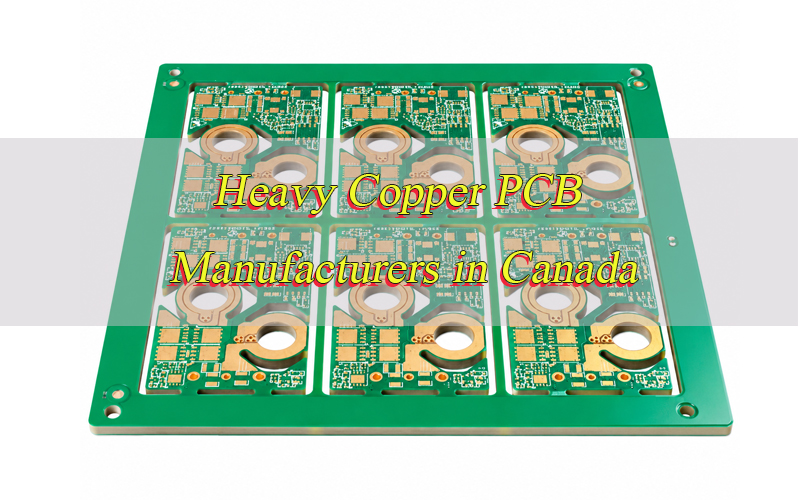
What Should You Compare When Evaluating Heavy Copper PCB Manufacturers in Canada?
A useful comparison starts with the actual PCB, not with a manufacturer’s general capability page. The supplier must be able to manufacture the required construction and support it with clear quality and commercial terms.
- Manufacturing capability: Confirm finished copper, trace width and spacing, layer count, board thickness, plated holes, and laminate in the same stackup.
- Quality evidence: Check what records are available for copper thickness, plated-hole quality, electrical testing, dimensions, and first-article inspection.
- Certifications: Verify that the required quality system covers the manufacturing site used for the order.
- Pricing: Compare material, tooling, testing, documentation, freight, and import-related costs on the same basis.
- Lead Time: Determine whether the quoted schedule covers fabrication only or delivery to the final Canadian destination.
- Manufacturing location: Identify whether the board will be fabricated in Canada, through an offshore partner, or directly by an overseas factory.
The lowest price or highest advertised copper weight does not automatically indicate the better supplier. A quote is only meaningful when it reflects the same board construction, inspection scope, quantity, and delivery basis.
Which Heavy Copper PCB Manufacturers in Canada Serve Canadian Projects?
Canadian buyers can source heavy copper PCBs from domestic factories, Canadian companies coordinating offshore production, or overseas manufacturers shipping directly to Canada. These routes can all serve Canadian projects, but the actual production site should be clear before quotations are compared.
| Manufacturer | Manufacturing Route | Published Heavy Copper Capability | Typical Fit |
|---|---|---|---|
| CCI Canadian Circuits | Canada | Published range from 1 oz to 40+ oz | Projects requiring Canadian fabrication |
| Candor Industries | Canada | Heavy copper from 3 oz | Domestic prototypes and custom PCB programs |
| J-Cube Technologies | Canadian coordination with offshore partners | Published 2 oz to 20 oz | Buyers wanting Canadian commercial support with offshore production |
| Bittele Electronics | International manufacturing network | Published multilayer capability up to 10 oz | PCB and PCBA programs using an international production route |
| EBest Circuit | Shenzhen, China | Heavy copper PCB manufacturing for international projects | Canadian projects that permit direct overseas fabrication |
The office location of a supplier does not always show where the PCB is produced. Before comparing heavy copper PCB manufacturers in Canada, confirm the actual factory, certification coverage, and manufacturing origin used for the quoted order.
Canadian vs. Overseas Heavy Copper PCB Manufacturers: What’s the Difference?
The choice between Canadian and overseas manufacturing depends on origin requirements, technical capability, total delivered cost, and the amount of international logistics the project can accept. Neither route is automatically better.
| Factor Buyers Care About | Canadian Manufacturing | Overseas Manufacturing |
|---|---|---|
| Manufacturing origin | PCB is fabricated in Canada | PCB is fabricated outside Canada |
| Supplier options | Limited to available domestic capability | Broader range of factories, stackups, and production capacities |
| Cost structure | Factory and domestic commercial costs | Factory cost plus freight, customs, and import-related charges |
| Lead Time | Shorter logistics route, but material and factory loading still matter | Fabrication plus international freight, customs, and delivery in Canada |
| Engineering communication | Easier time-zone alignment | Time-zone differences may affect communication |
| Factory access | Easier for local audits or visits | More planning may be required |
| Customs | No international import process for domestic fabrication | Import clearance and responsibility must be defined |
| Origin restrictions | Suitable when Canadian origin is required | Suitable only when overseas manufacturing is permitted |
| Production capacity | Depends on domestic factory capacity | Broader supplier base may offer more volume options |
If Canadian origin is mandatory, the supplier list becomes much narrower. If origin is unrestricted, compare both routes on technical capability, quality evidence, total delivered cost, and Lead Time rather than location alone.
Can the Manufacturer Build Your Heavy Copper PCB Stackup?
Maximum copper weight is only one part of manufacturability. A simple two-layer 10 oz PCB with wide conductors is much easier to build than a multilayer 10 oz board with small plated holes, tight spacing, and different copper weights across the stackup.
Before approving a supplier, confirm the complete construction:
- Finished copper by layer: Do not rely on a general note such as “6 oz PCB.” State the finished copper requirement for every controlled layer.
- Trace width and spacing: Confirm the geometry at the required copper thickness rather than using a generic minimum capability from the factory website.
- Layer count and board thickness: Thick copper affects resin fill, copper balance, lamination, registration, and finished thickness.
- Finished hole size and aspect ratio: Small plated holes through a thick board can become a constraint even when the copper weight is within the advertised range.
- Barrel copper and annular ring: Review these together with board thickness and finished hole size.
- Laminate: Confirm that the material suits the product’s electrical, thermal, assembly, and operating requirements.
This is why comparing heavy copper PCB manufacturers in Canada should start with the actual stackup. A factory may meet each specification individually but still be unable to manufacture that combination reliably.
How Can You Verify Heavy Copper PCB Manufacturing Quality?
Not all heavy copper PCB manufacturers in Canada provide the same level of inspection evidence. Buyers should verify what will be inspected, what reports will be available, and how those records link to the PCB revision and production lot.
- Copper thickness measurement: Verify finished copper against the fabrication drawing, not only the incoming copper foil. If thickness is controlled, define whether the requirement is nominal, minimum, or subject to a stated tolerance.
- AOI and conductor inspection: AOI can detect opens, shorts, residual copper, neck-down, and other conductor defects. These risks become more important as copper thickness increases and the etching process window narrows.
- Microsection inspection: A representative cross-section can show plated-hole barrel copper, internal-layer connections, annular-ring condition, visible voids, and lamination quality.
- Electrical testing: Continuity and isolation testing verifies the electrical network against the supplied netlist or design data. It does not replace physical inspection of copper thickness or plated holes.
- Dimensional inspection: Finished board thickness, hole diameter, outline, and controlled mechanical dimensions should be checked against the released drawing.
- First-article records: For a new supplier or stackup, first-article inspection can tie the approved material, construction, copper requirements, dimensions, test results, and accepted deviations to one revision.
- Traceability: Production and lot records should make it possible to identify the required material and manufacturing history when the project calls for it.
A certificate or equipment list does not prove that an individual shipment meets specification. Order-level inspection records provide much stronger evidence of the finished PCB quality.

Which Certifications Should Heavy Copper PCB Manufacturers in Canada Have?
The required certifications depend on the end market and customer requirements. More certificates do not automatically make a supplier more suitable; the relevant issue is whether the required system covers the site that will actually produce the PCB.
- ISO 9001: Common quality-management foundation for industrial and commercial PCB programs.
- IATF 16949: Relevant to automotive supply chains that require automotive quality-management controls.
- ISO 13485: Relevant to medical-device programs where a medical quality-management system is required.
- AS9100D: Relevant to aerospace and defense programs with aerospace quality requirements.
- UL, RoHS, and REACH: May be required for product recognition, restricted substances, or material compliance, but they do not replace manufacturing quality-system certification.
When reviewing certificates from heavy copper PCB manufacturers in Canada, check the legal entity, manufacturing site, certification scope, and validity date rather than the certificate name alone.
How Should You Compare Quotes from Heavy Copper PCB Manufacturers in Canada?
One of the biggest differences between heavy copper PCB manufacturers in Canada is what each supplier includes in the quotation. A lower unit price may simply reflect a different stackup, reduced inspection scope, or different delivery terms.
- Compare the same finished copper requirement. One supplier may interpret “6 oz” differently from another, particularly when outer-layer plating is involved.
- Keep the stackup consistent. Layer count, dielectric thickness, finished board thickness, and approved materials should match.
- Check geometry assumptions. Trace width, spacing, annular rings, and finished holes should not be changed without approval.
- Compare the same laminate and surface finish. Material substitutions can change both cost and performance.
- Match the inspection scope. Electrical testing, microsections, copper measurements, dimensional reports, and first-article records may not be included in every quote.
- Separate tooling and NRE. Tooling, engineering, test fixtures, and special inspection charges should be clearly identified.
- Use the same quantity. Prototype and production pricing follow very different cost structures.
- Compare total delivered cost. Include packaging, freight, customs, import charges, and delivery terms where applicable.
- Confirm the manufacturing site. If a specific site is approved in the quotation, it should not be changed without disclosure.
The useful question is not simply “Which supplier has the lowest unit price?” It is whether each supplier is quoting the same PCB construction, quality scope, quantity, and delivery basis.
How Should You Compare Lead Time from Heavy Copper PCB Manufacturers in Canada?
Lead time should be measured from the same starting point to the same delivery point. A quoted “10-day Lead time” has little meaning unless you know exactly what those 10 days include.
- Engineering review: Confirm whether lead time starts when the RFQ is received, when engineering questions are resolved, or when production files are approved.
- Material availability: Special laminates, unusual copper weights, or non-standard thicknesses may add sourcing time before fabrication starts.
- Fabrication complexity: Layer count, thick-copper etching, plating, drilling, lamination, and inspection can all affect production time.
- First-article approval: If production waits for customer approval, include that approval period in the schedule.
- Inspection and documentation: Microsections, additional measurements, inspection reports, and traceability requirements may add time after fabrication.
- International logistics: Overseas orders may require packaging, international freight, customs clearance, import handling, and domestic delivery within Canada.
- Expedited production: Confirm whether the actual stackup and quantity qualify for fast-turn service rather than relying on the shortest advertised schedule.
Always distinguish factory lead time from delivered lead time. When comparing heavy copper PCB manufacturers in Canada, use the same approved-file date, quantity, shipping method, and Canadian destination.
What Should You Send to Heavy Copper PCB Manufacturers in Canada in an RFQ?
Sending the same RFQ package to heavy copper PCB manufacturers in Canada is the most practical way to obtain quotations that can be compared fairly. Missing information forces suppliers to make their own assumptions, which can distort both price and Lead Time.
- Design files: Gerber or ODB++, NC drill files, fabrication drawing, netlist where applicable, and revision number.
- Stackup: Layer count, laminate, dielectric requirements, finished board thickness, and finished copper by layer.
- Critical geometry: Minimum trace width, spacing, finished hole sizes, annular-ring requirements, outline tolerances, and controlled mechanical features.
- Surface finish: ENIG, HASL, OSP, or another finish, together with solder mask, legend, contacts, and edge requirements.
- Quality requirements: Electrical testing, copper measurement, AOI, microsection, dimensional reports, first-article inspection, traceability, and the required acceptance standard.
- Certifications: State any quality-system or customer-specific certification that must cover the production site.
- Quantity: Include prototype quantity and expected production volume when available.
- Delivery requirements: Provide the Canadian destination, required delivery date, preferred shipping method, and any manufacturing-origin restriction.
- Commercial requirements: Ask the supplier to separate unit price, tooling/NRE, inspection charges, freight, and other non-recurring costs.
A complete RFQ should leave little room for interpretation. Finished copper by layer, controlled geometry, inspection scope, quantity, and delivery destination are especially important when comparing price and lead time.
Why Choose EBest Circuit for Heavy Copper PCB Manufacturing?
EBest Circuit is a China-based PCB manufacturer serving international projects. Its services include PCB design, PCB prototyping, mass production, component sourcing, and PCB assembly, allowing customers to manage more stages of a project through one supplier.
- Move from prototype to volume production with fewer supplier changes. EBest Circuit supports both PCB prototyping and mass production, so buyers can develop, validate, and scale a project without rebuilding the supply chain at each stage.
- Combine PCB fabrication, sourcing, and assembly with one supplier. Component sourcing and PCB assembly can be added when required, reducing the time spent coordinating separate PCB, component, and assembly vendors.
- Support projects with demanding quality-system requirements. EBest Circuit lists IATF 16949, ISO 9001:2015, ISO 13485:2016, and AS9100D, providing relevant quality-system support for automotive, industrial, medical, and aerospace programs.
- Source different PCB technologies through the same manufacturing partner. Alongside heavy copper PCBs, EBest Circuit supports multilayer, metal-core, ceramic, rigid-flex, RF, High Tg, HDI, high-speed, and impedance-control PCBs. This is useful when one product family requires several board technologies rather than a single PCB type.
- Respond faster when the project schedule becomes urgent. EBest Circuit offers expedited service for qualifying urgent boards, giving buyers another option when standard production timing no longer fits the project schedule.
- Work with an experienced PCB manufacturing partner. Founded in 2006, EBest Circuit brings more than 20 years of PCB industry experience to projects moving from engineering review through production.
For Canadian buyers comparing heavy copper PCB suppliers, the advantage is not simply access to another factory. It is the ability to bring PCB fabrication, prototype builds, production, component sourcing, and assembly into one coordinated supply route, while keeping quality-system requirements and production needs visible from the beginning.
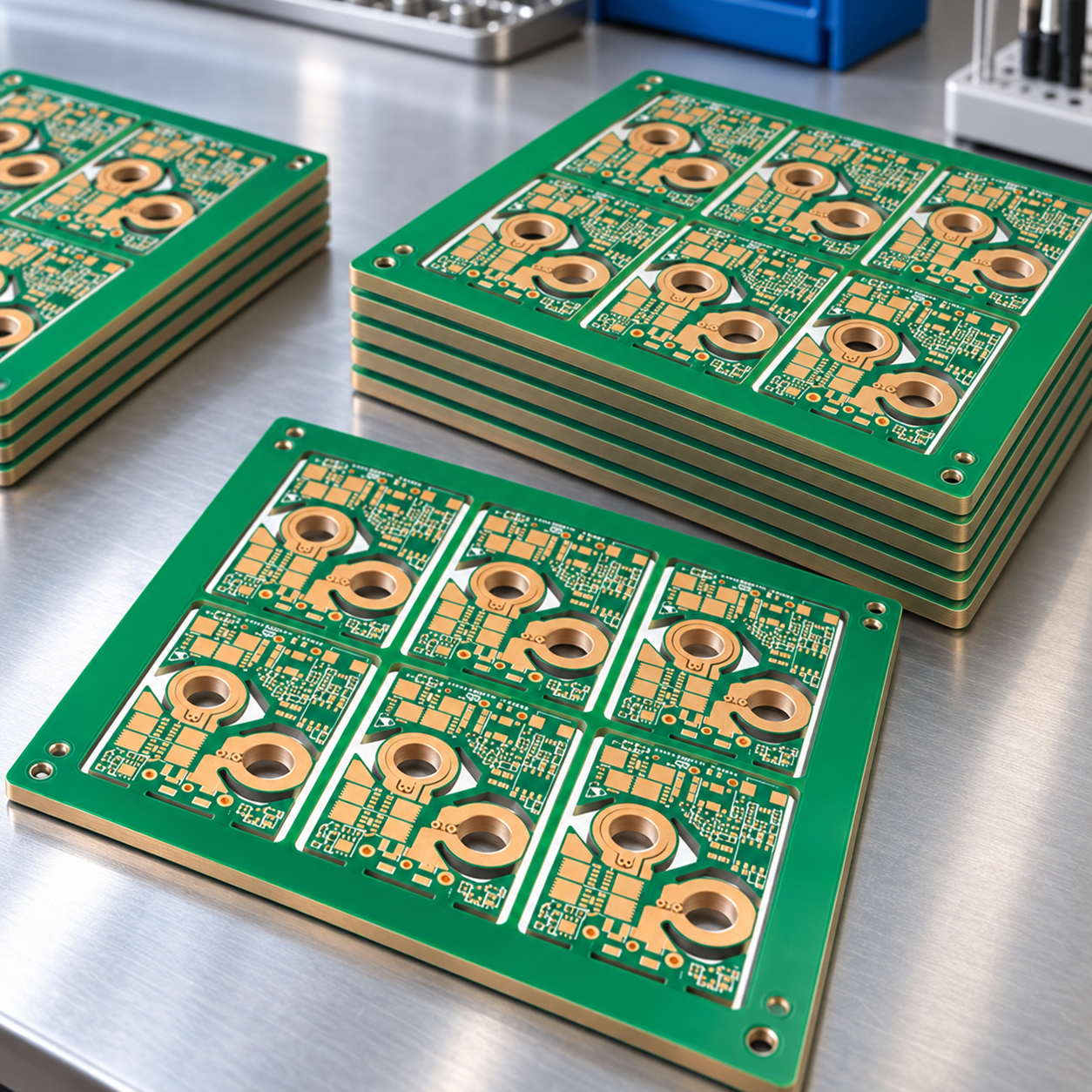
FAQs About Heavy Copper PCB Manufacturers in Canada
Q1: Is 3 oz copper considered heavy copper?
A1: Many PCB manufacturers use 3 oz copper or more as the starting point for heavy copper, although the exact definition can vary. The fabrication drawing should state the required finished copper rather than relying only on a product-category label.
Q2: Should copper thickness be specified in ounces or microns?
A2: Either unit is acceptable if the requirement is clear. More importantly, specify whether the value refers to base copper or finished copper and identify the requirement for each layer.
Q3: Can standard copper and heavy copper be used in the same multilayer PCB?
A3: Yes. Mixed-copper stackups are possible, but copper balance, resin fill, dielectric thickness, and lamination should be reviewed as one complete construction.
Q4: When is a microsection coupon worth requesting?
A4: A microsection coupon is useful when plated-hole copper, internal-layer connections, dielectric condition, or another cross-sectional feature requires documented verification. Define the sampling requirement before production.
Q5: Does thicker copper always reduce PCB temperature rise?
A5: No. Temperature rise also depends on current, conductor width and length, copper distribution, airflow, ambient temperature, duty cycle, and heat transfer through the assembly.
Q6: Can heavy copper PCBs use ENIG?
A6: Yes, provided ENIG is compatible with the pad geometry and assembly requirements. Include the selected surface finish in the fabrication data so every supplier quotes the same construction.
Q7: Should prototype and production boards use the same stackup?
A7: Where practical, yes. Keeping the approved material, stackup, manufacturing site, and controlled requirements consistent can reduce requalification work when the project moves into production.
Q8: Should an alternative laminate be accepted if its electrical properties are similar?
A8: Not automatically. Review the electrical, thermal, mechanical, flammability, processing, and customer-approval requirements before accepting a material substitution.
Q9: When should first-article approval be repeated?
A9: Review or repeat first-article approval after changes to the PCB revision, material, stackup, manufacturing site, or another controlled process that could affect the approved result.
Q10: What should be checked before placing a repeat order?
A10: Confirm the current revision, approved stackup, material, manufacturing site, quantity, open deviations, inspection requirements, pricing, and delivery terms. A repeated part number should not hide a changed construction or production route.
Would you like to get a heavy copper PCB quote based on your actual stackup and delivery requirements? Send your Gerber or ODB++ files, stackup, finished copper by layer, drill files, quantity, inspection requirements, and Canadian delivery destination to sales@bestpcbs.com. EBest Circuit can review the construction before quotation and provide a clear manufacturing scope, inspection basis, pricing structure, and Lead Time so you can compare the offer with fewer hidden assumptions.
You may also like

Tags: Heavy Copper PCB Manufacturers in Canada, Heavy Copper PCB Manufacturing, Heavy Copper PCB RFQ