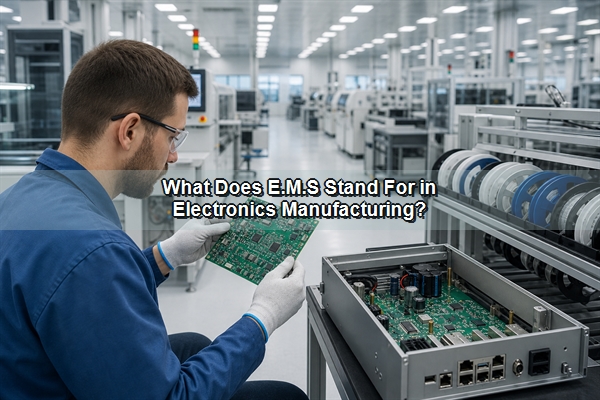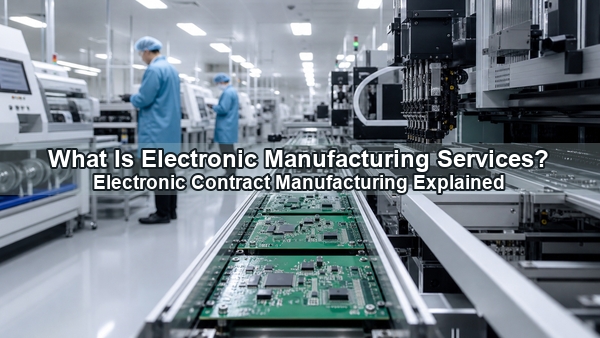


EMS stands for Electronics Manufacturing Services. In electronics, it means hiring a specialist to perform agreed manufacturing work. That could mean assembling and testing a circuit board, or it could mean sourcing parts, assembling the complete product, testing it in its case, and preparing it for shipment. EMS is the service arrangement, not the name of a single process.
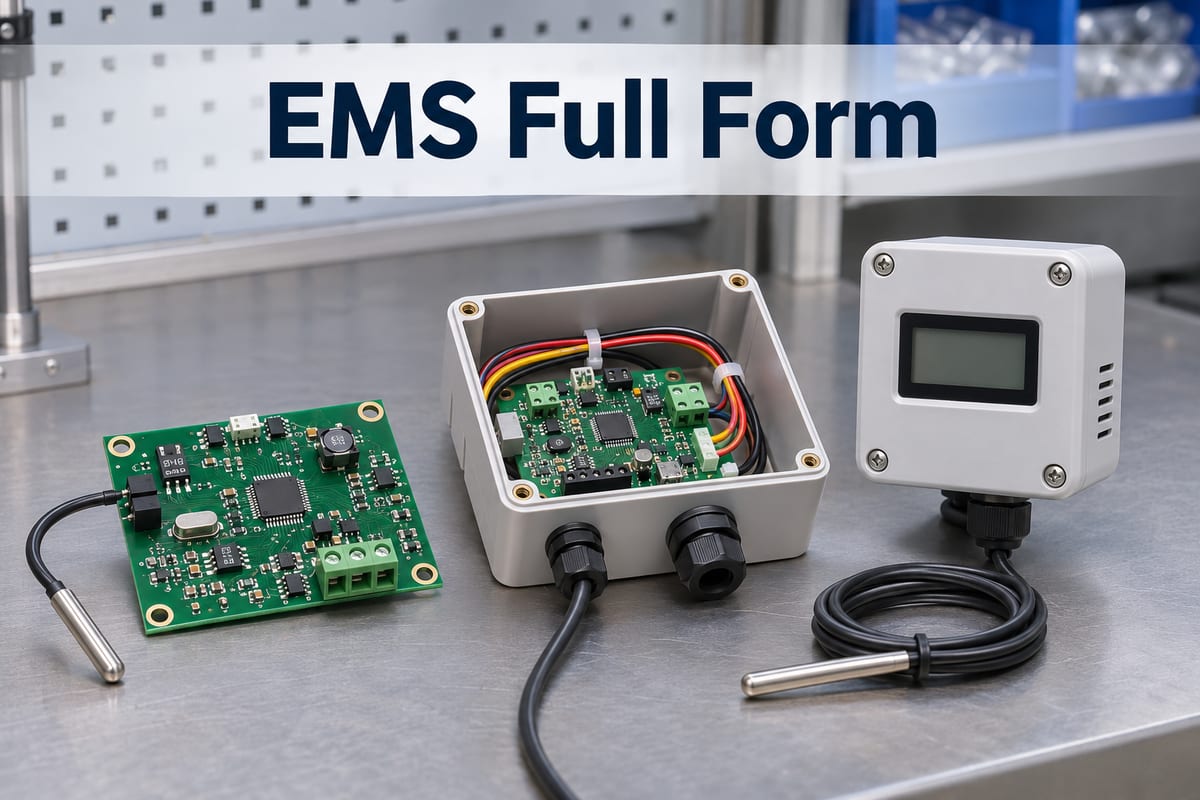
Imagine you have designed a small industrial temperature monitor. You have the circuit files and a list of parts, but you do not have a production line. How do those files become a device with a working sensor, a display and a housing? Follow the example below. It is a teaching scenario, not a real customer project.
What Does an EMS Company Actually Deliver?
The deliverable depends on where the supplier’s work ends. A bare printed circuit board (PCB) has copper paths and pads but no installed electronic parts. Once the components are attached, you have a printed circuit board assembly (PCBA). Once the assembly is wired, installed in its enclosure and checked as a complete unit, you have a boxed product. Do not assume the third is included when you ask for the second.
| Delivery stage | What you receive |
| Bare PCB | A fabricated board ready for components. |
| PCBA | A populated board, with any specified inspection or board-level tests. |
| Box build | An integrated unit with the agreed housing, wiring, configuration and final checks. |
Engineering Support: Find Problems While They Are Still on Paper
The supplier starts with the circuit files, mechanical drawings, parts list and expected behavior. Design for manufacturability (DFM) checks whether the board can be made as drawn. Design for assembly (DFA) asks whether it can be put together; for example, can a worker plug in a cable without hitting the housing wall? Design for testability (DFT) asks how the finished work can be checked. In the monitor example, adding an accessible test point may make it possible to check the power rail before the board goes in its case. The output is a list of issues to resolve, not automatic approval to redesign the product.
PCB Fabrication: Turn the Drawing Into a Bare Board
Fabrication creates the board that holds and connects the components. Manufacturing files define where copper should remain and where the board is drilled or cut. The board drawing also identifies such requirements as thickness, material and layer construction. The output at this stage is a bare board, not a working monitor. An EMS supplier may fabricate it or coordinate a separate board shop; clarify who is responsible for the board specification and acceptance.
Component Sourcing: Buy the Parts That Match the Design
A bill of materials (BOM) tells the buyer which parts are needed. A manufacturer part number identifies a specific part more reliably than a short label such as “temperature sensor.” The buyer checks the part number, availability and approved alternatives. If the specified sensor is unavailable, a different one may have a different pinout or report readings in a format the firmware does not understand. A proposed substitute needs approval before it is used.
PCB Assembly: Attach the Parts to Make a PCBA
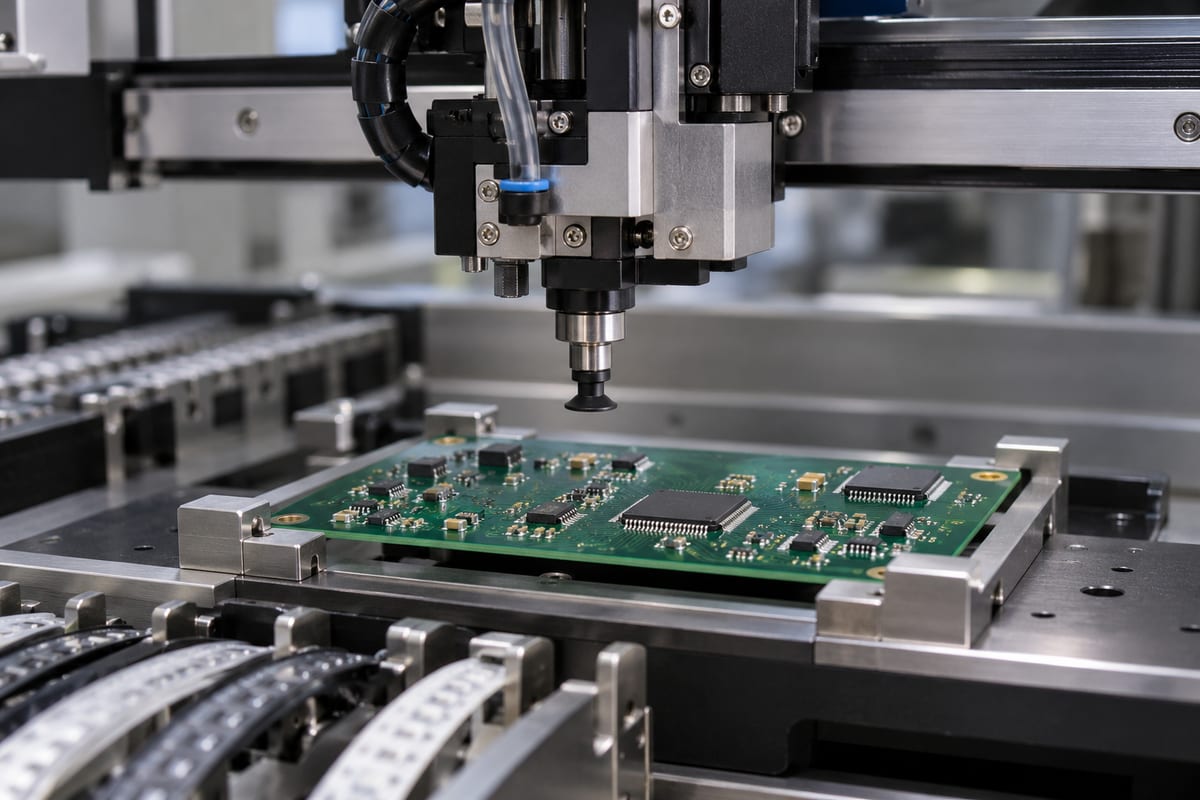
Surface-mount technology (SMT) attaches parts to pads on the board surface. A common route prints solder paste, places components and heats the assembly so the solder makes joints. Through-hole technology (THT) puts component leads through holes; those leads can then be soldered using the agreed process. The monitor could use SMT for its sensor and controller, and through-hole assembly for a terminal block. The output is the populated board, which still needs the agreed checks.
Inspection and Testing: Check the Build and the Behavior
A camera can help spot whether a visible part is missing or installed backward. It cannot tell whether the monitor reports the right temperature. To check that, use a defined sensor input or a controlled reference condition and compare the output with the approved test limits. The methods below complement one another; the right combination depends on the product and the test plan.
| Method | Example of what it checks |
| Solder paste inspection (SPI) | Whether deposits are present and within the programmed limits before placement. |
| Automated optical inspection (AOI) | Selected visible placement, orientation or joint features. |
| X-ray inspection | Selected hidden features that cannot be seen directly, subject to the technique and geometry. |
| In-circuit testing (ICT) | Selected connections or electrical properties at accessible points. |
| Functional testing | Whether the board or unit responds as specified to a known input. |
Box Build and Delivery: Make the Board Into a Product
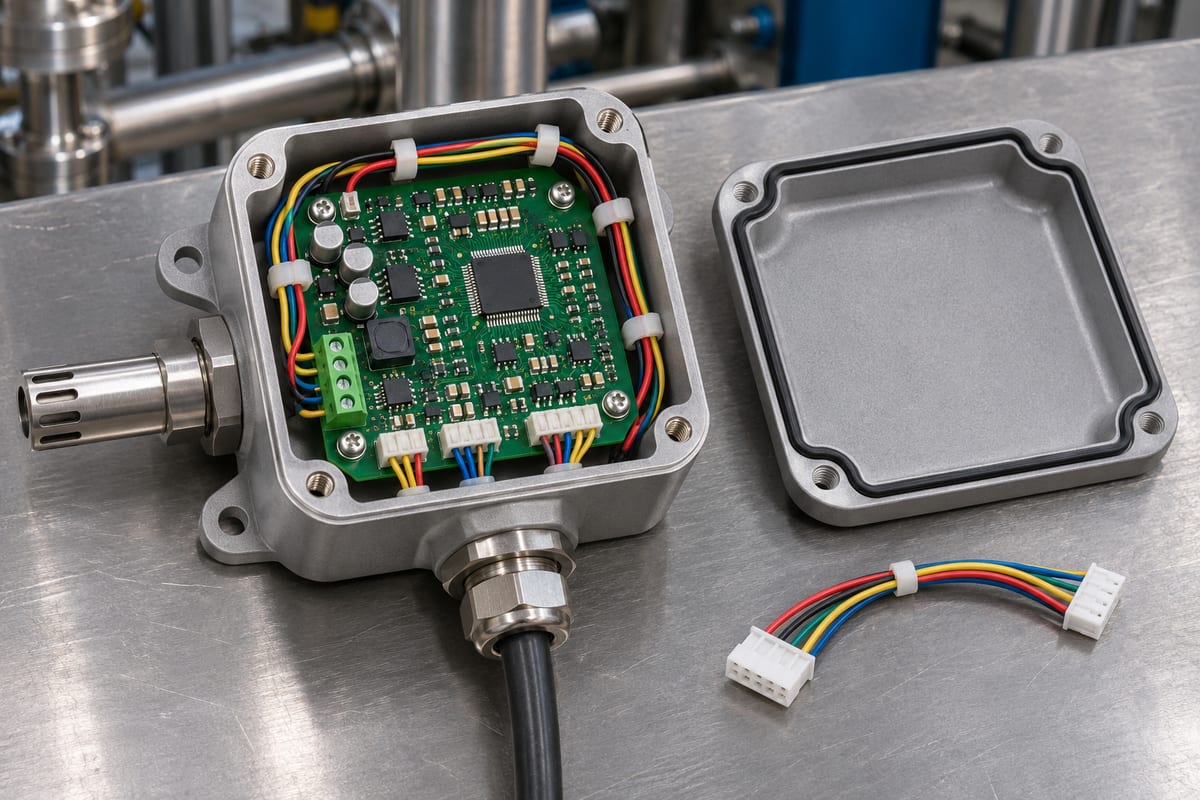
Box build means integrating the board into the product. For the monitor, that could mean attaching a sensor cable and display, fixing the assembly in the case, loading approved firmware, checking the complete unit and applying a serial label. A board that passed its bench test might still fail after installation if the display cable is not seated. The final acceptance plan should say what to check after assembly, which records to keep and what is included in the shipment.
How the Work Moves From Prototype to Production
New product introduction (NPI) is the work of turning a new design into a repeatable build. In the example, the team reviews the files, builds samples, tests the monitor, and fixes issues before ordering a larger lot. A pilot run checks the approved production steps and test setup on a limited build. Use the same released revisions for the board, parts list, firmware and test procedure. If the pilot reveals an unresolved fault, fix and verify it before scaling the affected process.
EMS, OEM and ODM: Who Does What?
EMS is the manufacturing service. OEM means original equipment manufacturer; usage varies, so establish which company owns the product requirements and releases the design. ODM means original design manufacturer, typically a supplier that contributes the product design as well as manufacturing. A company can perform several roles. For the monitor, the brand team might supply the design and hire an EMS provider to build it. If the supplier provides a design platform for customization, the arrangement can be closer to ODM. Record who can approve design, part and firmware changes.
Turnkey, Consigned and Partial Turnkey: Who Buys the Parts?
These models tell you how material purchasing is divided. They do not determine whether a case, firmware or final test is included.
| Model | How it works in the monitor example |
| Turnkey | The supplier buys the agreed boards and components. Confirm exclusions. |
| Consigned | The customer sends the agreed materials; the supplier assembles them. |
| Partial turnkey | The customer sends the specified sensor; the supplier buys the other agreed parts. |
Quality Requirements: What Counts as a Pass?
A quality management system describes how an organization controls its work; it is not a pass result for your individual monitor. Product requirements describe what the specific build must meet. For example, IPC’s assembly acceptability guidance distinguishes assembly workmanship criteria from requirements for soldered assemblies. Agree on the applicable documents, revisions and acceptance criteria. Separately define the monitor’s test input, allowed output range and recorded results. Do not treat a general certification or a photograph of a test station as evidence that this unit passed.
How to Choose the Scope You Actually Need
Outsourcing can give a product team access to manufacturing resources without setting up its own line. The value depends on which tasks the supplier can perform and verify for this particular design. If you already own the components and can install the boards yourself, you may only need assembly and a board-level test. If you need an integrated monitor, also define the housing, harness, firmware, labels and final checks. Send the drawing, BOM, expected quantity and test requirements to sales@bestpcbs.com to discuss a Best Technology build.
FAQ
Is EMS the same as PCB assembly?
No. PCB assembly attaches the parts to the bare board. EMS can include that work plus procurement, engineering review, testing or product integration. The supplier may offer several of these services but perform only those agreed for your order. Confirm the delivery stage before comparing two proposals.
Do all EMS companies fabricate their own bare boards?
No. Some suppliers make boards, and others source them from a separate fabricator. Either model can work if the drawing, revision, material requirements and incoming checks are clear. Ask who places the board order and who investigates a board issue before the material enters assembly.
Does turnkey EMS include the enclosure?
Not necessarily. Turnkey may refer to sourcing and assembling the parts for a board, without a case or final product integration. List the enclosure, harness and other mechanical parts separately and state who provides each one. Also confirm whether the final check takes place after the unit is assembled.
Can I send only the critical components?
Yes, if the supplier agrees to partial turnkey. Mark each customer-supplied part on the BOM and agree what documents, quantities and packaging are required. Confirm how shortages or rejected parts will be handled, so the team does not assume the supplier will buy replacements without permission.
Can EMS include product design?
Some providers offer design services, but they are not automatic. A manufacturing review may identify a problem without including responsibility to redesign or qualify the product. Define the requested engineering deliverables and approval owner so changes to the circuit, mechanical design or firmware do not become ambiguous.
Does a passed board test mean the finished product works?
Not always. A board test may not cover connections, firmware settings or mechanical integration introduced later. Decide which behaviors require testing after the board is installed. For the monitor example, checking the display and sensor response in the finished unit can reveal a problem that the board-only test did not cover.
Who owns the test fixture and its software?
The parties should agree this before building it. Clarify who pays for the fixture, who supplies the test software, and who maintains, updates and can reuse them. Ask for the expected test records too. Ownership of the product design does not automatically answer these practical fixture questions.
What should I send before the first EMS build?
Start with the released fabrication and assembly files, the BOM with manufacturer part numbers, quantity, delivery form and the required tests. Add mechanical and firmware instructions if the work includes integration. Mark unresolved requirements explicitly so neither team mistakes a placeholder for an approved production instruction.