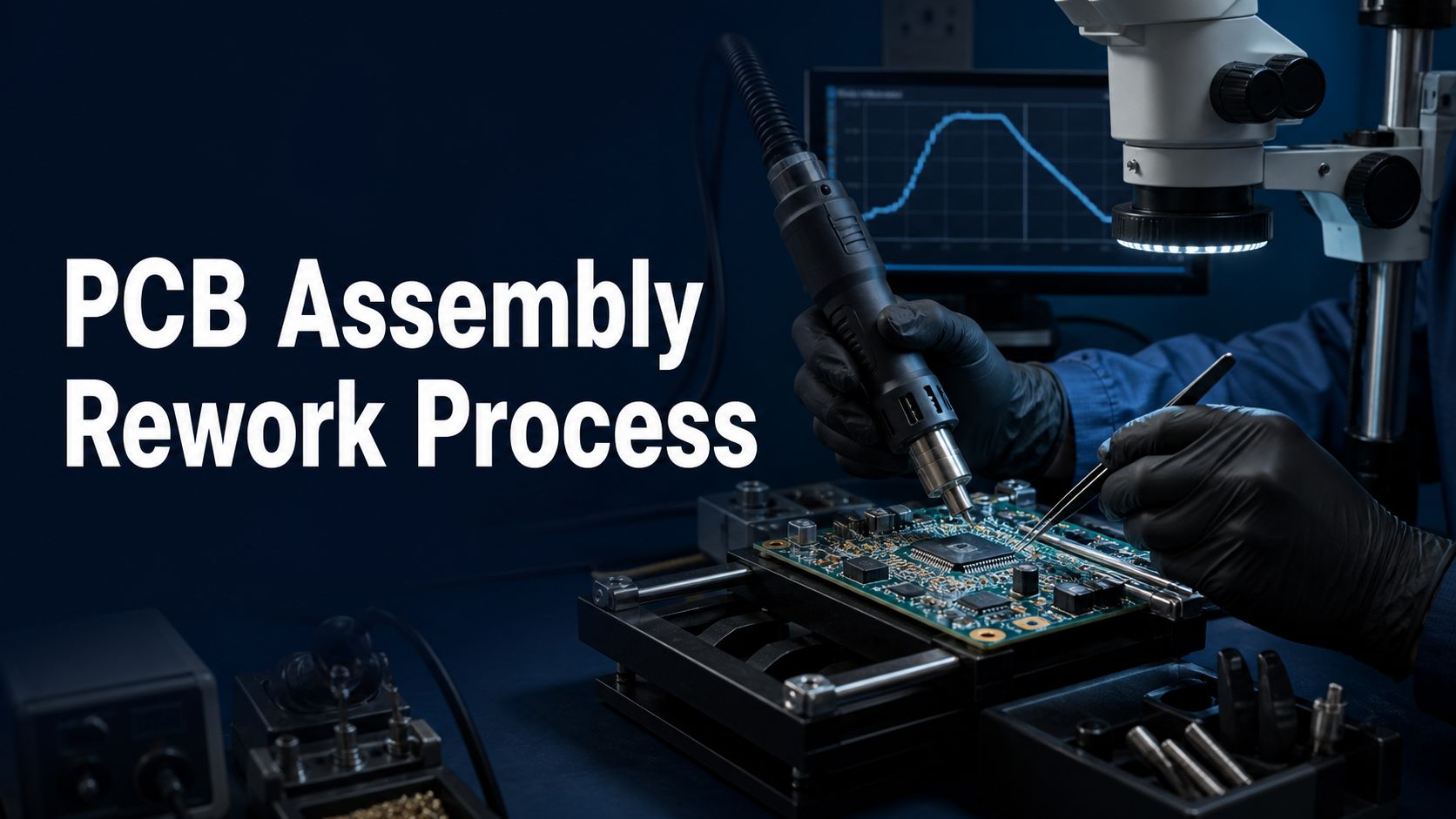
A PCB assembly rework process should correct one authorized condition without creating hidden damage elsewhere. The work must control sample identity, component removal, localized heat, pad condition, replacement alignment, cleaning, inspection, electrical or functional verification, and the release record.
Rework is not the same as diagnosis or unrestricted repair. This guide shows buyers and engineers how to define the work, acceptance checks, repeat-cycle limits, and RFQ evidence before a supplier touches the assembly.
Will the board be more reliable after rework—or merely appear to pass?
Ask which defect is authorized, how existing evidence is preserved, what thermal and mechanical risks apply, which acceptance criteria release the unit, and how prior heat cycles remain traceable.
EBest Circuit can review a customer’s affected units, assembly data, defect description, approved instruction, component information, acceptance criteria, and required test before confirming project-specific support.
Do not assume package, coating, hidden-joint, heat-cycle, equipment, certification, or yield capability before the actual board and scope are reviewed.
What a Controlled PCB Assembly Rework Process Must Achieve
Successful rework restores the authorized requirement while protecting the surrounding assembly. It should leave traceable evidence of the original defect, work performed, replacement material, inspections, test result, and final disposition.
A visual improvement alone is not enough. The board must meet the same functional and quality intent used to release acceptable production, plus any rework-specific checks for pads, adjacent parts, contamination, coating, and prior heat exposure.
Decide Whether to Rework, Repair, Use As Is, or Scrap
Disposition comes before tooling. Rework returns an assembly to the drawing or specification; repair may use an authorized method that differs from the original design; use-as-is accepts a documented deviation; scrap removes the unit from use.
Review product risk, defect mechanism, accessibility, replacement availability, board value, prior cycles, hidden damage, acceptance authority, and verification cost. A technically possible action may still be a poor lifecycle decision.
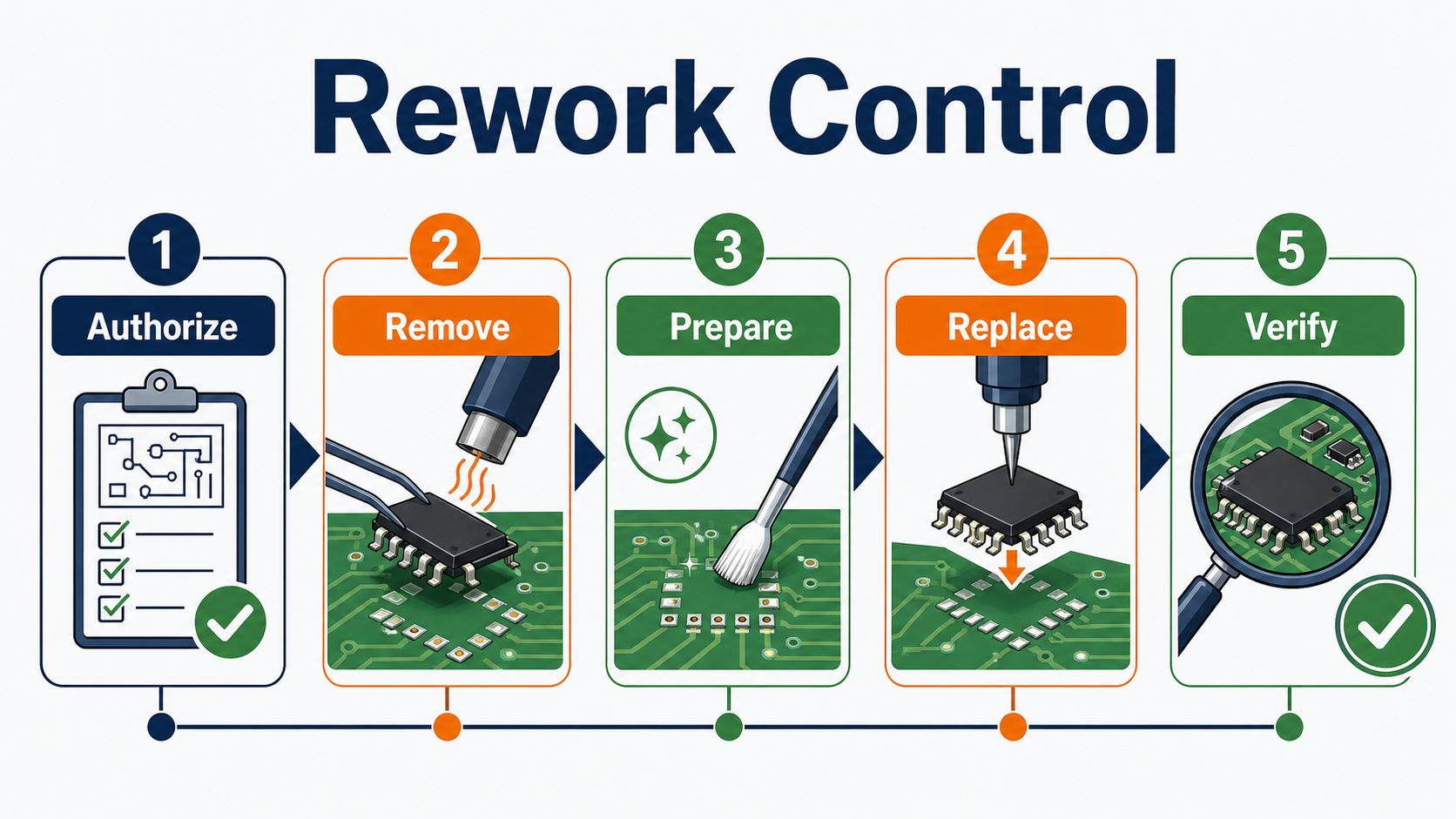
Authorize the Exact Unit, Defect, and Work Instruction
The instruction must identify the board, revision, location, defect, permitted action, materials, tools, settings or process window, acceptance checks, and approval authority. Prevent operators from extending one authorization to neighboring defects or additional units without review.
Record serial or lot identity and link the instruction to the controlled revision. The traceability requirements guide explains how this supports containment and later retrieval.
Preserve Original Evidence Before Touching the Board
Photograph and document the as-received condition before cleaning, heating, or removing parts. Preserve first-failure logs, inspection images, firmware, component lot, reflow history, and earlier interventions.
If the cause is not confirmed, complete or coordinate the investigation first. The failure-analysis service guide shows why premature rework can destroy the evidence needed to prevent recurrence.
Remove Coating, Adhesive, or Hardware Without Creating Damage
Access preparation is part of the rework risk. Identify coating, underfill, staking, adhesive, shields, heat sinks, connectors, and mechanical supports around the target. Define compatible removal and restoration methods.
Inspect after access is created. Scratches, lifted mask, damaged traces, displaced neighbors, residue, or mechanical stress must be contained before heat is applied.
Choose Tools and a Thermal Strategy for the Actual Assembly
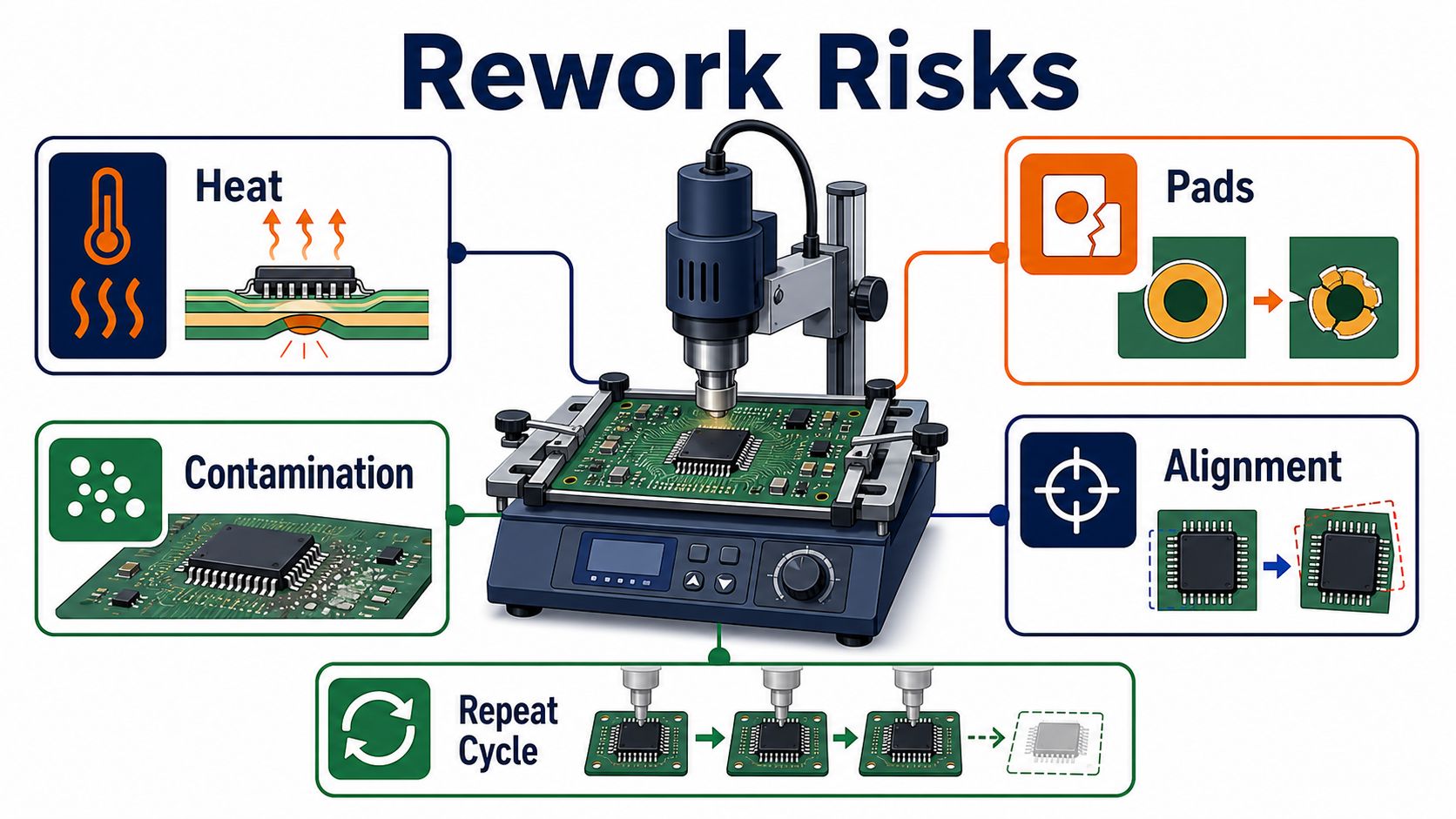
Tooling should fit package geometry, board construction, copper mass, nearby components, and heat sensitivity. Consider board support, preheat, localized heat, nozzle, airflow, contact method, extraction, shielding, temperature monitoring, and cooling.
A generic setpoint is not a thermal profile. The relevant result is controlled heating that achieves removal or soldering without exceeding agreed limits or adding unnecessary cycles. Lead-free assemblies may need specific process review; see the lead-free PCB assembly guide.
Remove the Component Without Lifting Pads or Disturbing Neighbors
Removal begins only after solder is adequately released. Excess force can lift pads, tear barrels, distort the board, or transfer heat to adjacent components. Use controlled extraction and stable support rather than prying.
After removal, preserve the component when analysis or lot traceability requires it. Document visible damage and inspect adjacent parts that were exposed to heat, airflow, tools, or mechanical load.
Clean and Inspect the Site Before Replacement
The landing site must be suitable for another soldering cycle. Remove residual solder and approved flux or contamination without thinning pads, damaging mask, or leaving debris. Inspect pads, traces, vias, mask, laminate, and planarity.
Stop if copper is lifted, pads are missing, laminate is discolored or delaminated, barrels are damaged, or the site no longer matches the approved instruction. Do not hide site damage under a new component.
Place and Solder the Replacement Component
Verify the replacement part, lot, orientation, moisture or handling status, and approved source before placement. Apply the authorized solder or flux method, align to the land pattern, support the board, and execute the controlled thermal sequence.
Inspect surrounding components after cooling. Clean only as required by the approved process and restore removed coating, staking, shielding, or hardware when the work instruction calls for it.
Control BGA, QFN, and Other Hidden-Joint Rework
Hidden-joint packages require controls beyond surface appearance. Define removal, site preparation, component preparation, paste or flux method, alignment, thermal process, cooling, inspection, and acceptance.
Imaging may support verification, but its scope and criteria must be agreed. The X-ray inspection guide explains how to frame hidden-joint evidence. Do not assume every anomaly or void automatically rejects the unit.
Inspect and Test the Reworked Assembly
Release checks should address both the original defect and new risks introduced by rework. Use the applicable visual, dimensional, optical, imaging, continuity, electrical, programming, or functional checks defined in the instruction.
Preserve first-pass and post-rework results. The PCB assembly testing services guide helps define limits, logs, retest, and failure disposition.
Record Parts, Heat Cycles, Results, and Disposition
The record should identify who changed what, why, how, and with what result. Capture board identity, defect code, instruction revision, removed and replacement part, lot where required, date, operator or authorization, thermal cycle, inspection, test, and disposition.
Define a repeat-rework limit or escalation rule. Repeatedly heating the same location without an engineering review can accumulate damage while erasing the original failure history.
Review the rework risk before the first component is removed.
Send unit identity, photos, defect and root-cause status, Gerber or ODB++, BOM, CPL, drawings, replacement part, coating/adhesive details, authorized instruction, acceptance checks, quantity, and deadline.
Units | Defect | Files | Parts | Instruction | Test | Deadline
Compare Rework Scope, NRE, Risk, and Exclusions
Normalize quotations by the work and evidence included. Compare intake engineering, setup or fixture NRE, coating or hardware removal, component sourcing, programming, per-unit work, inspection, hidden-joint verification, testing, reporting, scrap handling, shipping, and exclusions.
Ask how non-reworkable units are handled and who authorizes expanded scope. Low unit price is not comparable if it excludes site damage, replacement material, verification, or documentation.
Send a Rework Package Suppliers Can Execute
A quote-ready package should remove ambiguity before the boards move. Include affected quantity and identities, failure description, root-cause status, photos, design and assembly data, replacement components, approved instruction, coating and mechanical details, test procedure, acceptance criteria, prior heat/rework history, report needs, and target schedule.
For a new design or first build, use NPI manufacturing to validate the baseline and prevent the same rework from becoming a recurring production step.
PCB Assembly Rework Process FAQ
What is PCB assembly rework?
It is an authorized process that returns an assembly to the released drawing or specification by correcting a defined nonconformance.
What is the difference between rework and repair?
Rework restores the original requirement; repair may use an approved method that differs from the original design.
Should root cause be known before rework?
When prevention matters or evidence may be lost, investigate first. Emergency containment still needs documented authorization and preserved evidence.
Can every component be reworked?
No. Feasibility depends on package, board, damage, access, coating, prior cycles, product risk, replacement availability, and acceptance criteria.
Why is preheat used?
When appropriate, it can reduce thermal gradients and localized demand. The actual strategy must match the assembly.
How are lifted pads handled?
Stop and obtain an engineering disposition. Do not conceal pad or trace damage under the replacement component.
How is BGA rework verified?
Use the agreed combination of process records, optical checks, suitable imaging, electrical test, and functional test.
How many times can a board be reworked?
There is no universal count. Define an engineering review or limit from board construction, component, location, history, and risk.
What records should be retained?
Keep identity, reason, instruction, removed/replacement material, work date, authorization, thermal cycle, inspection, test, and disposition as required.
What files are needed for a rework quote?
Provide photos, identities, design/assembly data, defect and cause status, replacement parts, instruction, coating/mechanics, acceptance tests, quantity, and deadline.
Turn a board-level defect into a controlled, traceable disposition.
Email the affected-unit list, evidence, files, replacement material, approved work instruction, verification plan, report needs, quantity, and target date. EBest Circuit will review the package and confirm project-specific support and quotation scope.
Evidence | Files | Instruction | Replacement | Verify | Record | Release
You may also like






Tags: PCB Assembly, PCB Rework, Quality Control