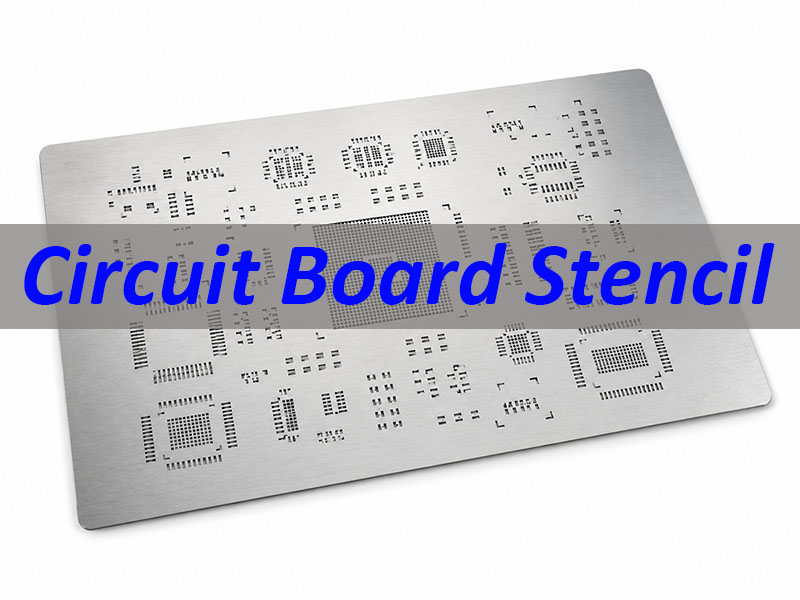
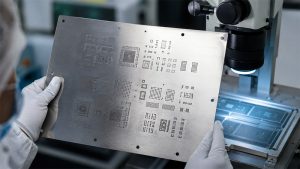
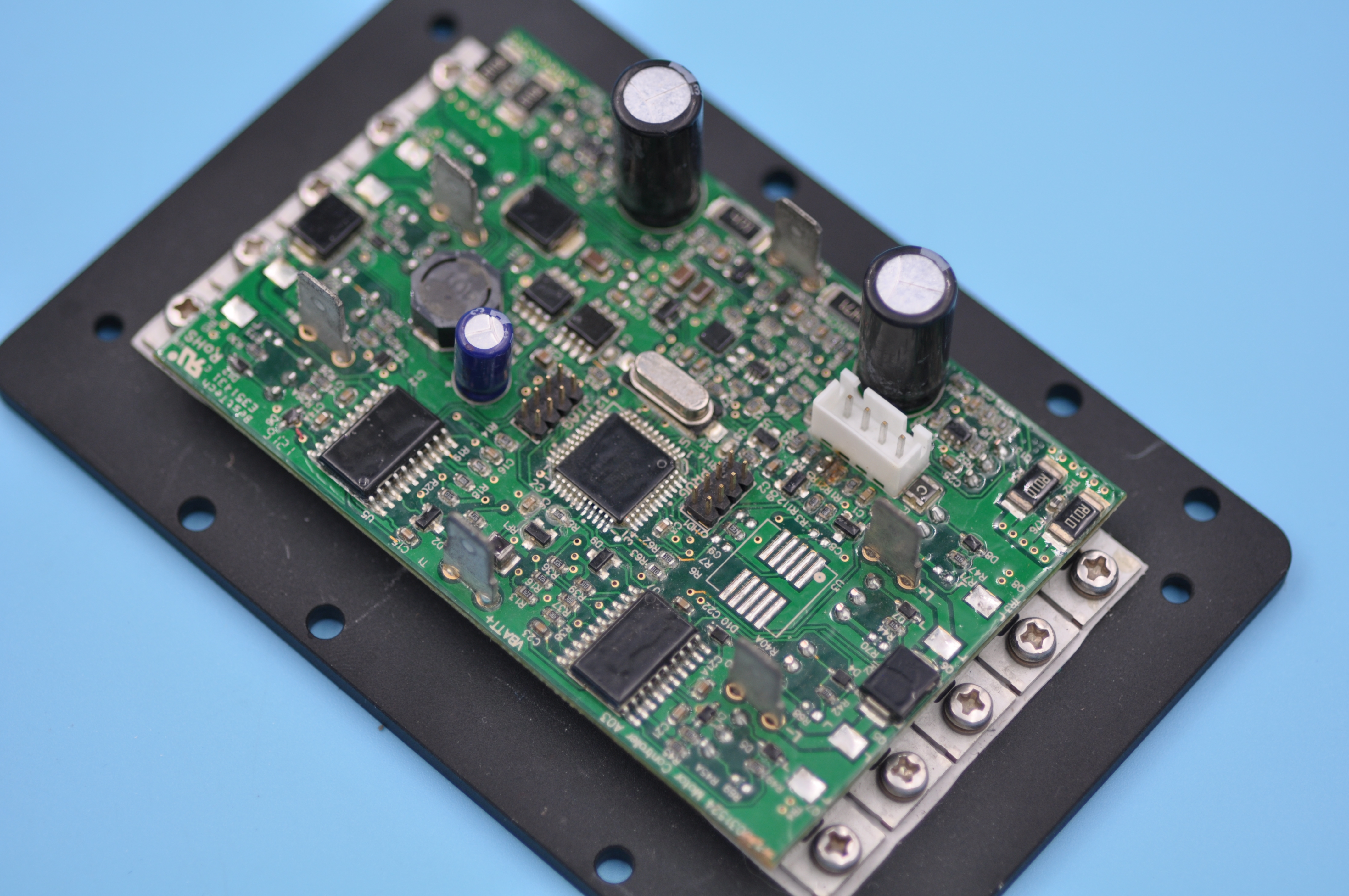
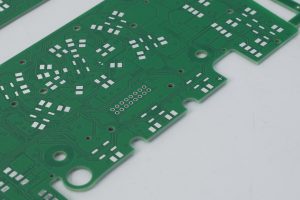
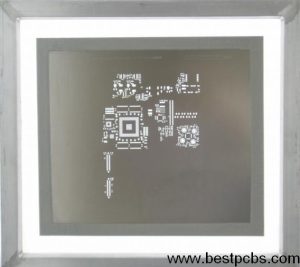
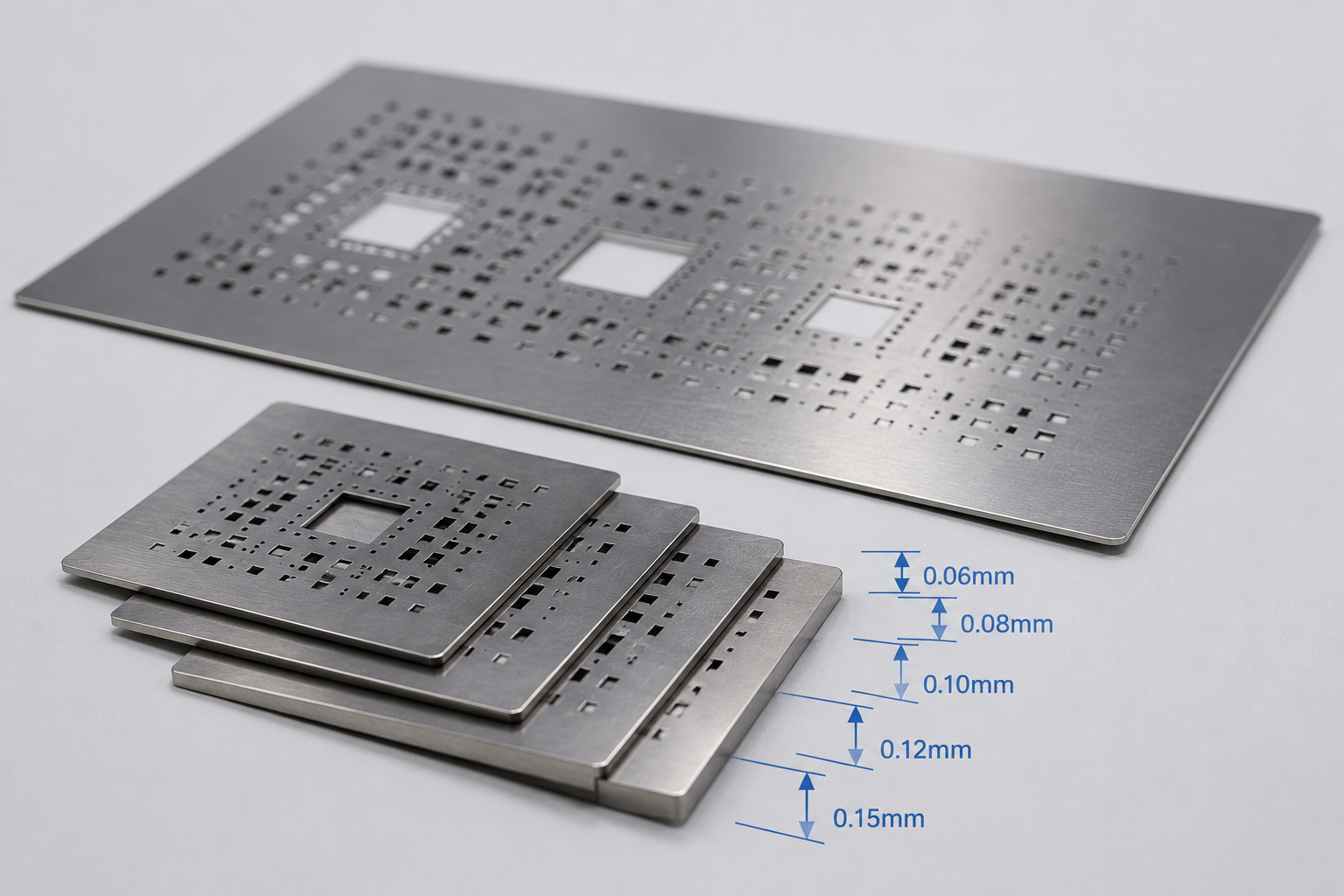
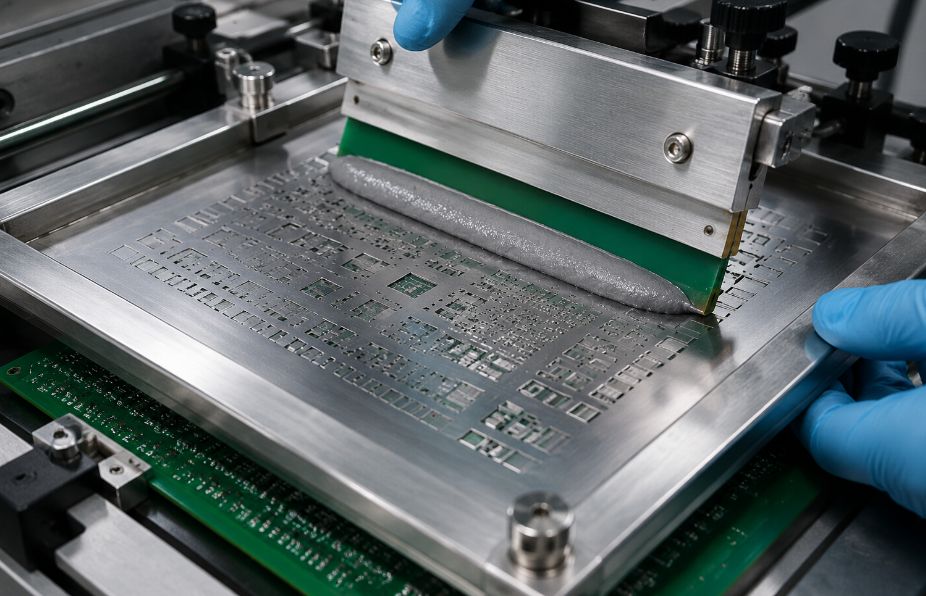
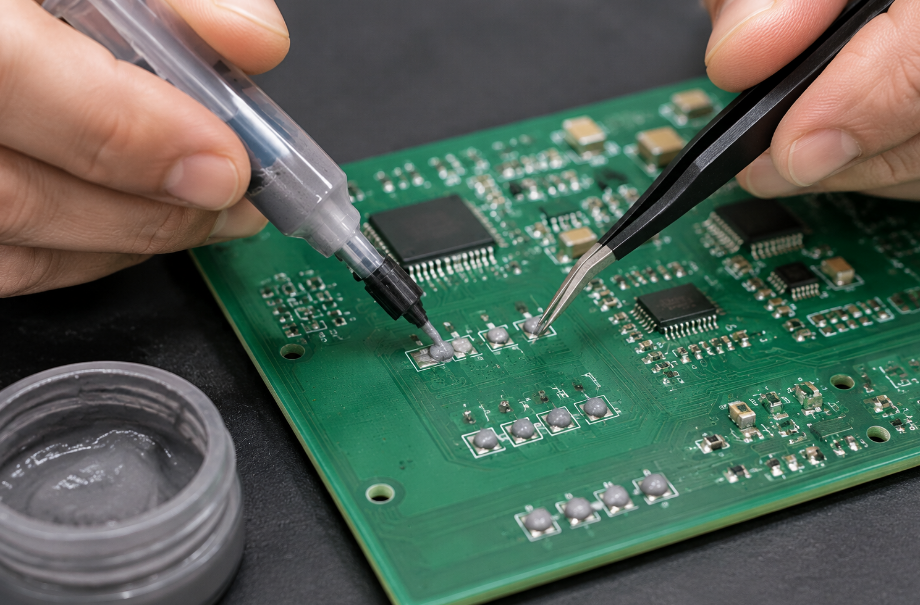
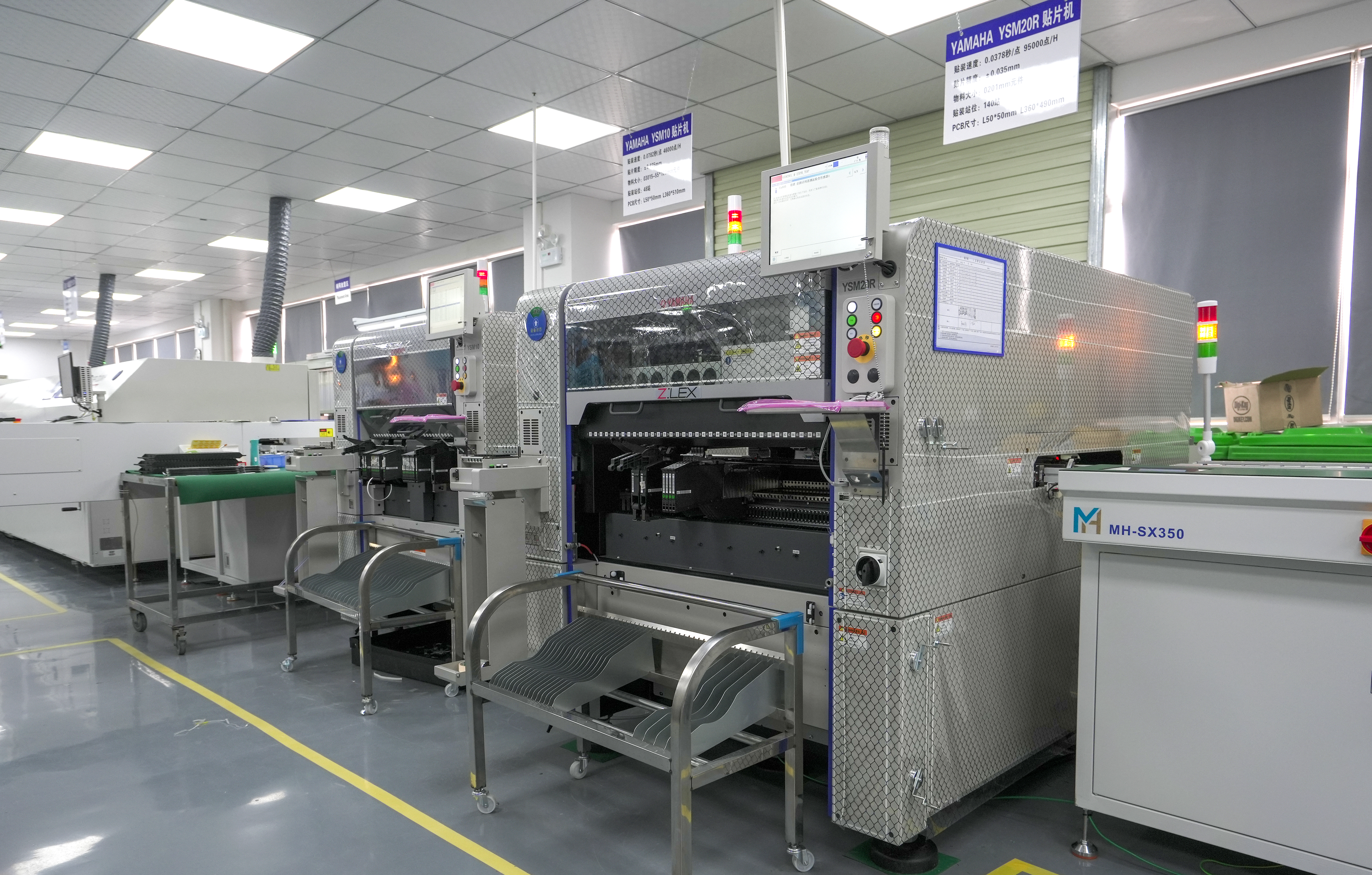
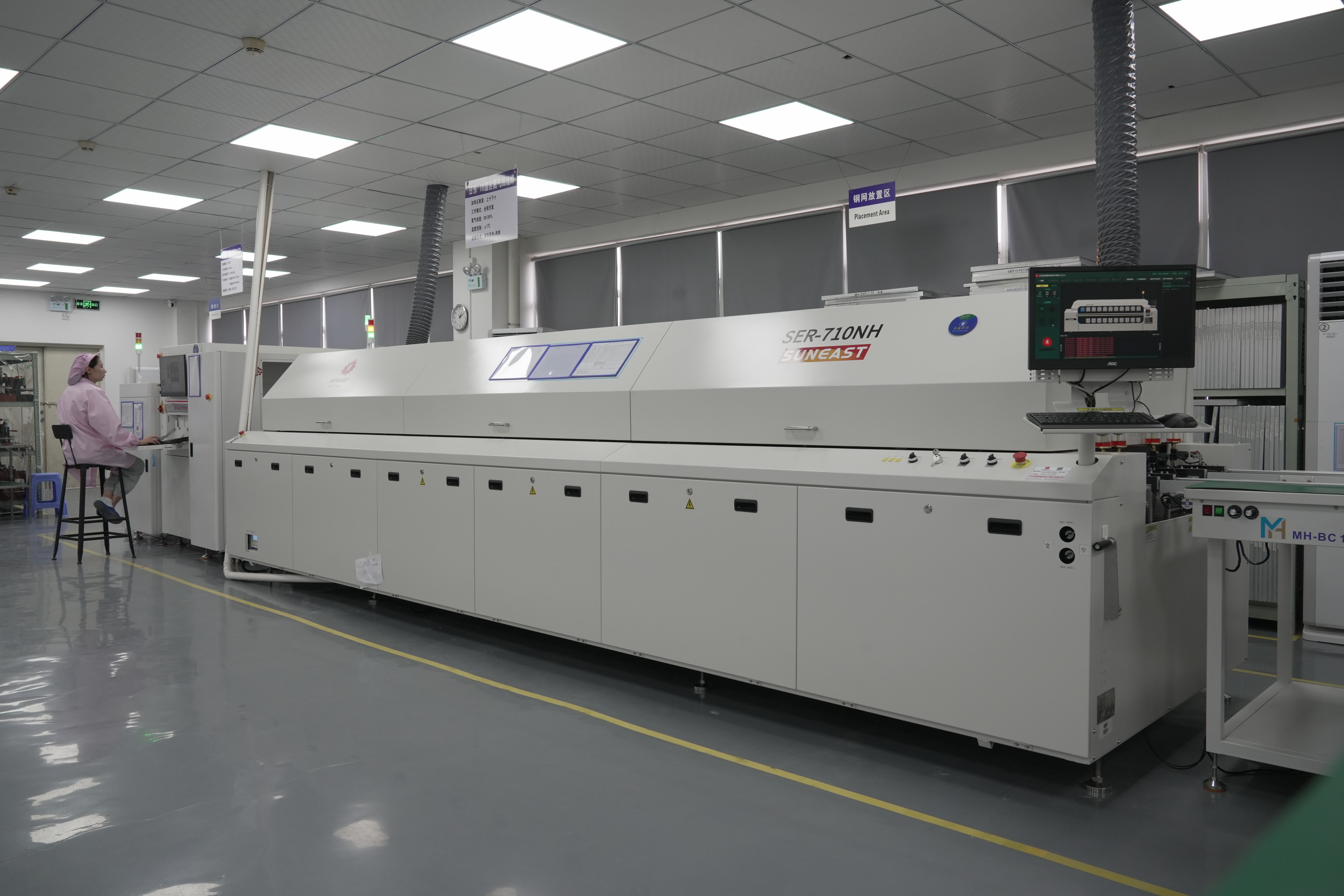
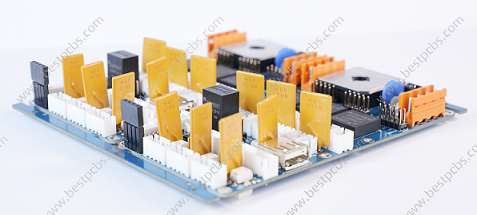
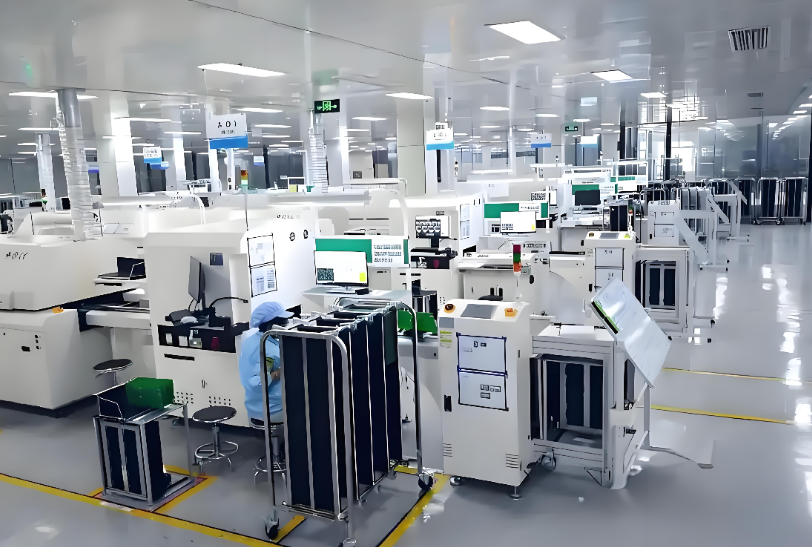
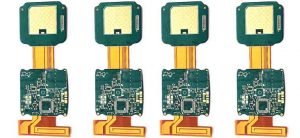
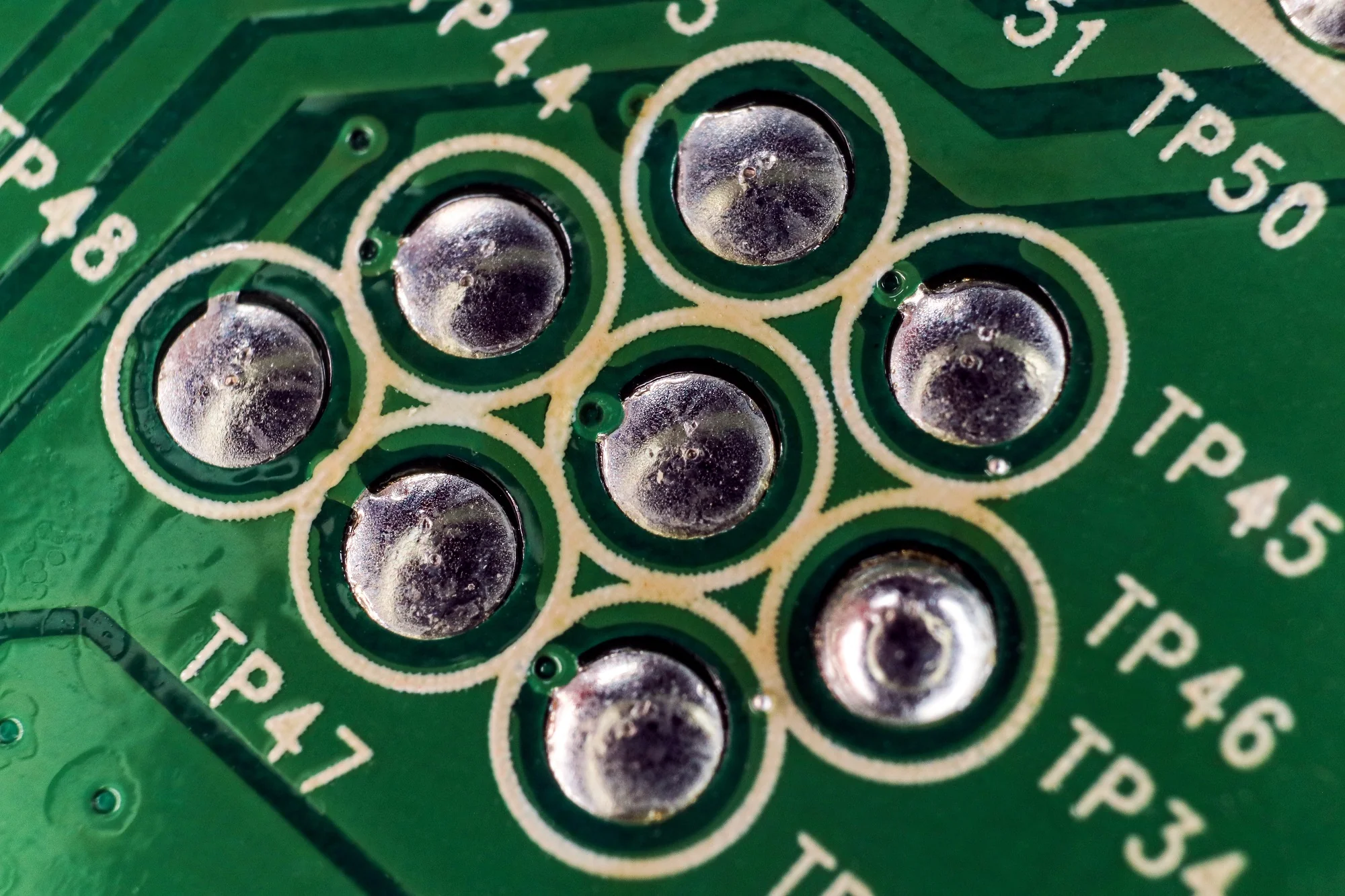
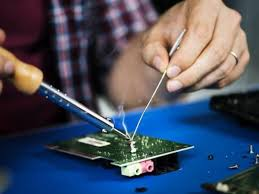
A circuit board stencil is used to print solder paste onto PCB pads before SMT assembly. A good stencil helps control solder paste volume, improve printing accuracy, reduce solder defects, and make PCB assembly more stable.
EBest Circuit (Best Technology), branded as EBEST, can provide circuit board stencils for SMT assembly projects, including laser-cut stencils, etched stencils, framed stencils, frameless stencils, PE stencils, BGA-related stencils, LED PCB stencils, and step-up/step-down stencil options.
For a circuit board stencil quote, please send your Gerber files, PCB files, CAD files, Protel files, stencil size, thickness requirement, framed or frameless preference, quantity, and delivery target to sales@bestpcbs.com.
Can EBEST Provide Circuit Board Stencils for SMT Assembly?
Yes. EBEST can provide circuit board stencils for SMT solder paste printing.
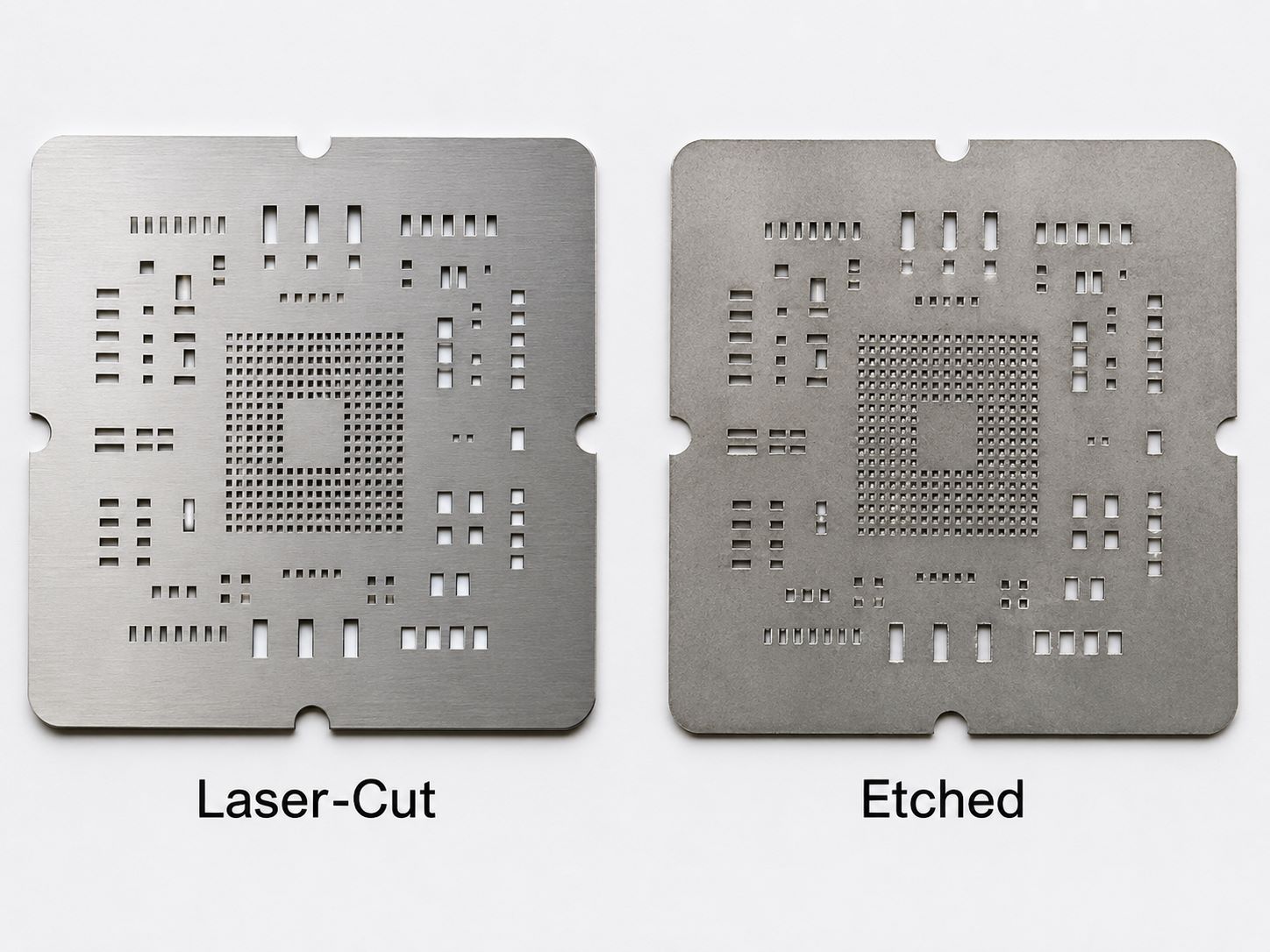
Most EBEST SMT stencils are laser-cut because laser cutting provides better aperture accuracy and smoother paste release for PCB assembly. Etched stencils are also available when the project requirement or budget is more suitable for etching.
A circuit board stencil helps transfer solder paste to PCB pads through precisely cut openings. If the stencil opening, thickness, or surface quality is not suitable, SMT defects can happen before component placement even starts.
Common problems from poor stencil control include:
Too much solder paste
Insufficient solder paste
Solder bridging
Solder balls
Component shift
Tombstoning
Poor BGA soldering
Extra stencil cleaning time
EBEST reviews the stencil requirement together with the PCB assembly need, so the stencil is not treated as a separate accessory but as part of the SMT process.
What Printed Circuit Board Stencils Can EBEST Supply?
EBEST can supply different printed circuit board stencils based on assembly method, board size, component type, and solder paste requirement.
Common stencil options include:
Laser-cut stainless steel stencil
Etched stencil
Framed stencil
Frameless stencil
PE stencil
BGA ball mounting stencil
Long strip LED stencil
Metal core PCB stencil
Step-up and step-down stencil
Most SMT assembly projects use stainless steel stencils because they provide stable strength, good aperture accuracy, and reliable solder paste printing.
Laser-cut stencils are suitable when the project needs:
Higher aperture accuracy
Better wall smoothness
Easier solder paste release
Fine-pitch component support
More stable SMT printing
Etched stencils may be considered when:
The project is cost-sensitive
The PCB design is not very complex
The aperture requirement is less demanding
The order is for simple prototype use
EBEST can also provide fiducial marks on stencil sides when required, which helps align the stencil during solder paste printing.
Laser-Cut or Etched Circuit Board Stencil: Which One Should You Choose?
A laser-cut circuit board stencil is usually the better choice for SMT assembly projects that need stable solder paste printing.
Laser-cut stencils are recommended for:
Fine-pitch ICs
BGA components
QFN packages
Dense SMT layouts
Small pads
High repeatability printing
Production assembly
Laser cutting helps improve:
Aperture accuracy
Solder paste release
Printing consistency
Pad opening quality
SMT efficiency
EBEST laser-cut stencils are electro-polished to improve aperture wall smoothness. Smoother aperture walls help solder paste release more easily, reduce cleaning frequency, and improve printing stability.
Etched stencils can still be useful for:
Simple boards
Lower-cost projects
Basic SMT printing
Less demanding pad designs
The right choice depends on the PCB layout, component pitch, solder paste volume, budget, and assembly quantity.
For most PCBA projects with fine-pitch components, laser-cut stencil is the safer choice.
Framed or Frameless PCB Stencil: Which Type Fits Your Assembly?
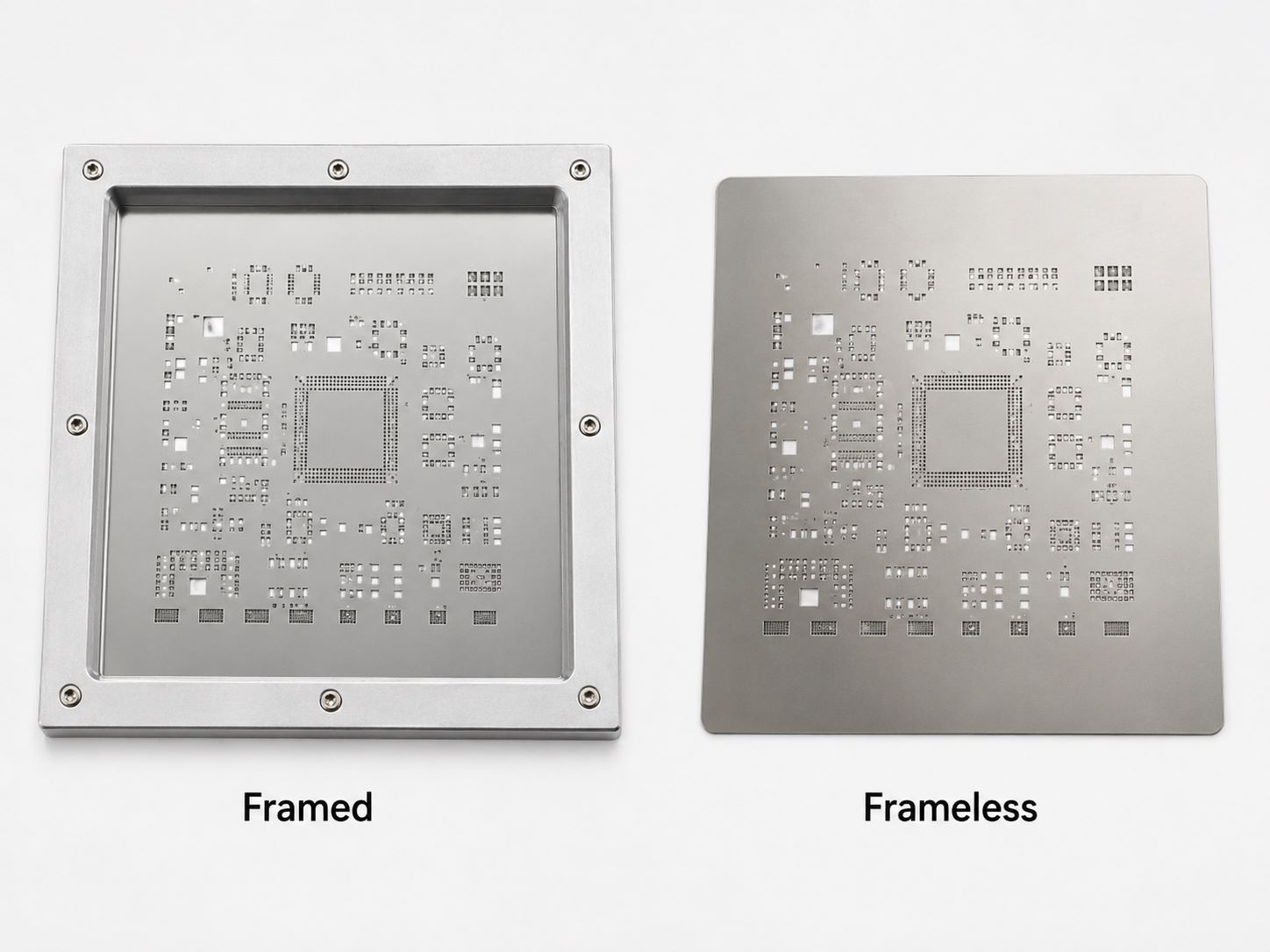
Both framed and frameless PCB stencils can be used for SMT solder paste printing, but they fit different production needs.
A framed stencil is suitable for:
Regular SMT production
Repeated printing
Higher tension stability
Standard stencil printer use
Better handling during production
A frameless stencil is suitable for:
Prototype assembly
Small-batch use
Lower storage space
Lower shipping weight
Customers using reusable stencil frames
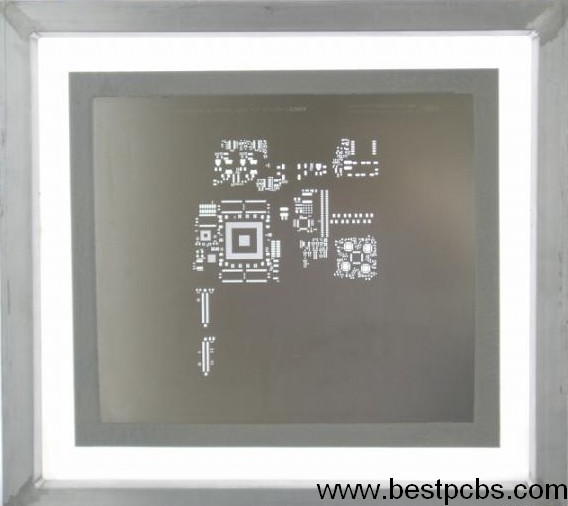
Framed stencils are more stable during printing because the stencil foil is fixed inside a frame. This helps maintain tension and alignment during repeated use.
Frameless stencils are more flexible for prototype and low-volume projects, especially when customers want to reduce shipping cost or use their own frame system.
For large circuit board stencil projects, long strip LED boards, or large panel SMT printing, framed stencil is often safer because it gives better support during printing.
EBEST can review the stencil type based on:
PCB size
Panel size
Assembly quantity
Stencil printer type
Shipping requirement
Customer production method
How Does Stencil Thickness Affect SMT Solder Paste Printing?
Stencil thickness affects solder paste volume.
If the stencil is too thick, too much solder paste may cause bridging, solder balls, or component floating. If the stencil is too thin, insufficient solder paste may cause weak solder joints or open circuits.
Common EBEST stencil thickness options include:
0.10mm
0.12mm
0.15mm
Custom thickness up to 0.60mm
General selection logic:
0.10mm: Fine-pitch parts, small pads, and compact SMT designs
0.12mm: Fine-pitch and mixed SMT layouts
0.15mm: Common SMT assembly and general-purpose PCBA
Thicker stencil: Larger pads, power components, connectors, or special solder paste volume needs
Stencil thickness should be checked together with:
Smallest pad size
Component pitch
BGA or QFN area
Connector pads
LED pads
PCB surface finish
Solder paste type
Assembly quantity
Some projects need different solder paste volume in different areas. In that case, a step-up or step-down stencil may be a better option than using one uniform thickness for the whole board.
What Custom Stencil Options Can EBEST Support?
EBEST can support custom stencil options when a standard stencil cannot meet the solder paste requirement.
Available custom options include:
Step-up stencil
Step-down stencil
BGA ball mounting stencil
Long strip LED stencil
Metal core PCB stencil
PE stencil
Custom aperture scaling
Local thickness control
Fiducial mark support
Tapered aperture wall design
Step-up and step-down stencils are used when different PCB areas need different solder paste volumes.
For example:
Normal components may use a 1:1 opening scale.
BGA areas may use a reduced scale such as 0.9:1.
Larger pads may need more solder paste.
Fine-pitch areas may need less solder paste to reduce bridging.
Long strip LED stencils are useful for LED PCB and metal core PCB assembly, where board length, thermal pad design, and paste consistency can affect production quality.
BGA ball mounting stencils are used for BGA-related assembly or repair support, where ball position and opening accuracy matter.
PE stencils can be used for certain prototype or special-use cases where a metal stencil is not the best fit.
Custom stencil selection should always follow the PCB layout and assembly process, not only the stencil price.
What Files Are Needed for a Circuit Board Stencil Quote?
A correct stencil quote needs the right files and specifications.
Please send:
Gerber files
PCB file or CAD file
Protel file, if available
Paste layer file
PCB size
Panel size
Stencil size
Framed or frameless requirement
Stencil thickness
Laser-cut or etched preference
Fiducial mark requirement
Step-up or step-down requirement, if needed
Special aperture notes
Quantity
Delivery target
Shipping address or destination country
For PCBA projects, please also provide:
BOM
Pick-and-place file
Assembly drawing
Component package notes
Fine-pitch or BGA information
Solder paste requirement
SMT production requirement
Direct data input from customer electrical files helps reduce manual errors. Gerber, PCB, CAD, and Protel files are useful because they allow the stencil openings to follow the actual PCB paste layer.
Before making the stencil, EBEST may check:
Aperture size
Pad opening ratio
Fiducial marks
PCB panelization
Fine-pitch areas
BGA or QFN areas
Large pad solder paste volume
Framed or frameless choice
Shipping packaging needs
Clear files lead to a faster quote and fewer stencil problems.
FAQs About Circuit Board Stencil
What Is a Circuit Board Stencil?
A circuit board stencil is a thin template used to print solder paste onto PCB pads before SMT assembly. It is also called a PCB stencil, SMT stencil, or solder paste stencil.
Is a Circuit Board Stencil the Same as a PCB Stencil?
Yes. In PCB assembly, circuit board stencil, PCB stencil, SMT stencil, and solder paste stencil usually refer to the same tool used for solder paste printing.
Does “Stencil Circuit Board” Mean the Same Thing?
“Stencil circuit board” is not the most accurate engineering term. Most buyers who search this phrase usually mean a circuit board stencil or PCB stencil for SMT solder paste printing.
What File Is Needed to Make a PCB Stencil?
The paste layer from Gerber files is usually needed to make a PCB stencil. PCB files, CAD files, Protel files, panel drawings, and assembly notes can also help confirm the stencil design.
What Stencil Thickness Should I Choose?
Common stencil thickness options include 0.10mm, 0.12mm, and 0.15mm. The right choice depends on pad size, component pitch, solder paste volume, BGA or QFN areas, and assembly requirements.
Can EBEST Provide Both Framed and Frameless Stencils?
Yes. EBEST can provide framed and frameless circuit board stencils based on customer production needs, stencil printer setup, shipping method, and assembly quantity.
Can EBEST Provide Laser-Cut Stencils?
Yes. Most EBEST SMT stencils are laser-cut, and electro-polishing is available to improve aperture wall smoothness and solder paste release.
How Do You Cover Unused Holes in a Circuit Board Stencil?
Unused apertures, or “holes,” in a circuit board stencil can sometimes be covered temporarily with high-temperature tape during prototype solder paste printing. This is only a short-term solution. For stable SMT production, it is better to modify the paste layer file or make a new stencil, because covered apertures may cause solder paste leakage, contamination, uneven printing, or extra cleaning.
Do All PCBA Projects Need a Stencil?
Most SMT assembly projects need a stencil because solder paste must be printed accurately before component placement. Some hand-soldered or very simple prototype projects may not need one, but stencil printing is more stable for repeatable SMT assembly.
Can EBEST Provide Stencil Support Together with PCBA Assembly?
Yes. EBEST can provide stencil support together with PCBA assembly, including PCB fabrication, stencil preparation, SMT assembly, DIP assembly, inspection, and functional testing when required.
To sum up, a circuit board stencil is a small part of the SMT assembly process, but it has a direct effect on solder paste printing quality.
The right stencil can help reduce solder bridges, insufficient solder, solder balls, component shift, and repeated cleaning during SMT production.
EBEST can provide circuit board stencils for SMT PCB assembly, including laser-cut stencils, etched stencils, framed stencils, frameless stencils, PE stencils, BGA-related stencils, LED PCB stencils, and step-up/step-down stencil options.
For a circuit board stencil quote, please send your Gerber files, PCB files, CAD files, Protel files, stencil size, thickness requirement, framed or frameless preference, quantity, and delivery target to sales@bestpcbs.com.
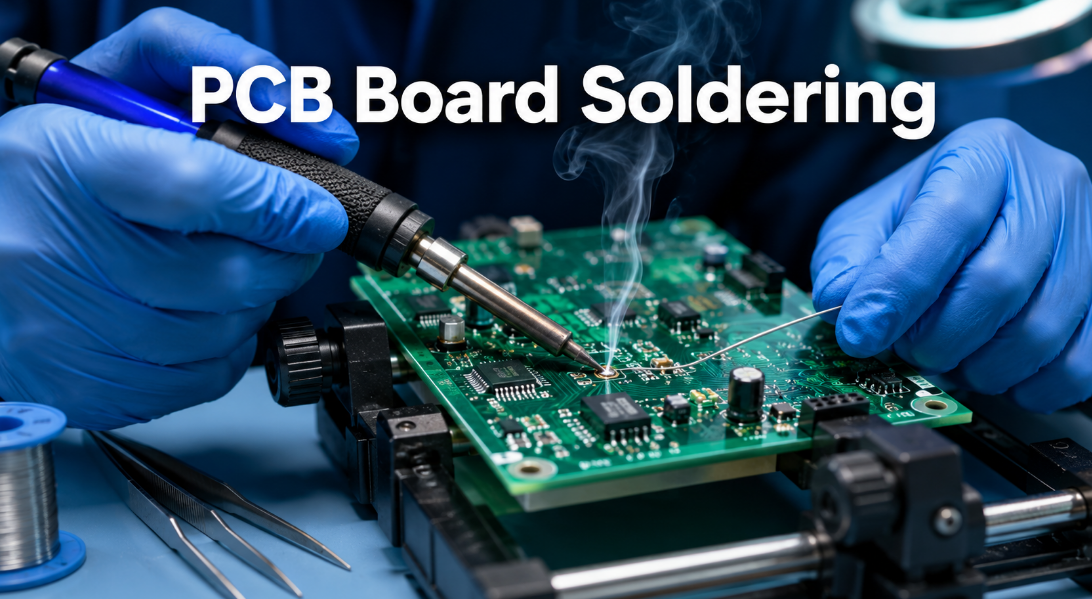
PCB board soldering joins electronic components, wires, connectors and terminals to a printed circuit board through controlled heat and molten solder. A good solder joint provides stable conductivity, mechanical strength and long-term reliability, while a poor joint may cause intermittent signals, short circuits, overheating or early product failure.
This guide explains soldering in PCB board assembly from a practical production view. It covers tools, soldering iron selection, temperature, solder wire, solder paste, holders, cleaning, solderability, defects, testing, cost and supplier selection. It is written for prototype work, repair projects, OEM assembly, ODM production and batch PCBA manufacturing.
What Is PCB Board Soldering?
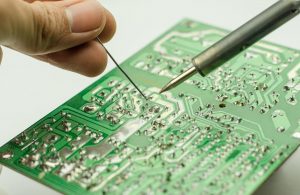
PCB board soldering is the process of bonding component leads, pads, wires or terminals to a PCB with molten solder.The solder forms a conductive metal connection after it wets the pad and cools into a stable joint.
This process is used for through-hole parts, surface mount devices, connectors, switches, sensors, cables and prototype circuits. A good joint should look smooth, fully wetted and mechanically secure.
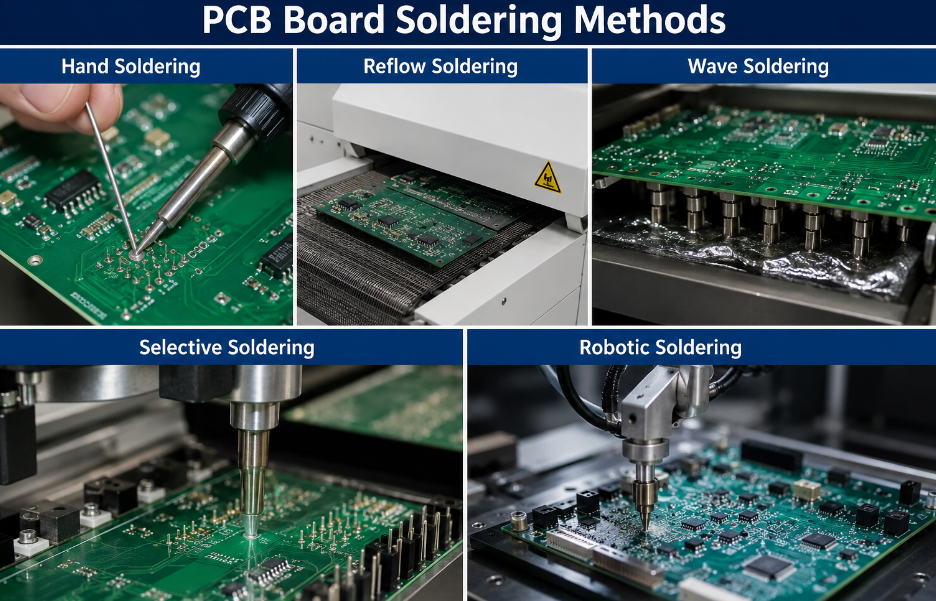
In production, PCB board soldering can be done by hand soldering, reflow soldering, wave soldering, selective soldering or robotic soldering. The best method depends on component type, volume, reliability level and inspection requirements.
Why Does PCB Board Soldering Matter for Assembly Reliability?
PCB board soldering matters because most circuit problems appear at connection points before they appear in the circuit design itself. A weak solder joint can pass an early power test but fail later under vibration, heat, humidity or repeated use.
For industrial control boards, IoT devices, medical equipment, automotive modules and communication products, soldering quality affects signal stability, current carrying capacity and product life. Even a small solder bridge can damage a board.
Reliable soldering also reduces repair cost after shipment. When the soldering temperature, flux, solder wire, solder paste and inspection process are controlled, the finished PCBA is easier to approve and more stable in real applications.
How Does Soldering in PCB Board Assembly Work?
Soldering in PCB board assembly works through heat transfer, wetting and solidification. The soldering iron or machine must heat both the PCB pad and the component lead before solder can flow correctly.
First, the pad and lead must be clean enough for solder to wet the surface. Then heat is applied to the joint area instead of only touching the solder wire. Once the metal surfaces reach the right temperature, solder flows around the lead and pad.
After that, the heat source is removed, and the joint cools without movement. If the component moves during cooling, the joint may become cracked, dull or weak. This same principle applies to hand soldering, reflow soldering and selective soldering.
What Tools Are Used for PCB Board Soldering?
PCB board soldering tools depend on whether the job is repair, prototype assembly or mass production. A basic PCB board soldering kit usually includes a soldering iron, soldering wire, flux, tweezers, tip cleaner, solder wick and a PCB board holder for soldering.
For hand work, a temperature-controlled PCB board soldering iron is better than a low-cost fixed-temperature tool. It gives more stable heat and reduces cold joints, pad damage and poor wetting.
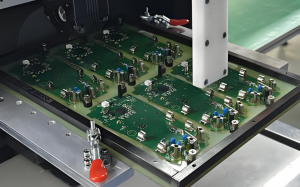
For factory assembly, a PCB board soldering machine may include a reflow oven, wave soldering system, selective soldering machine, solder paste printer or robotic soldering system. These machines improve consistency for batch PCBA production.
Tool
Use Case
Application
Soldering Iron
Manual joints
Repair, wire soldering, prototypes
Hot Air Station
SMD rework
ICs, resistors, capacitors
PCB Holder
Board support
Stable hand soldering
Soldering Stand
Iron safety
Tip protection and work safety
Reflow Oven
SMT assembly
Batch PCBA production
Wave Soldering
Through-hole parts
Connectors and DIP components
Selective Soldering
Local soldering
Mixed assembly projects
AOI System
Inspection
SMT solder quality check
How to Choose the Best Soldering Iron for PCB Boards?
The best soldering iron for PCB boards should have stable temperature control, fast heat recovery, replaceable tips and comfortable handling. For most PCB work, a 40W to 80W temperature-controlled soldering station is more useful than a cheap high-heat iron without control.
For fine SMD parts, use a smaller tip with good thermal response. For connectors, ground pads and thick copper boards, use a larger tip that can transfer enough heat without staying on the pad too long.
When choosing a soldering iron for PCB board repair or prototype work, also check tip availability, ESD safety, handle comfort and temperature accuracy. A good iron reduces rework risk and makes soldering pcb boards easier to repeat.
Useful selection points include:
Choose temperature control for stable hand soldering.
Match tip size to pad size and copper area.
Use ESD-safe tools for sensitive components.
Select fast heat recovery for large pads and connectors.
Keep spare tips for fine pitch, through-hole and wire soldering.
Avoid holding the iron on the pad for too long.
What PCB Board Soldering Temperature Should Be Used?
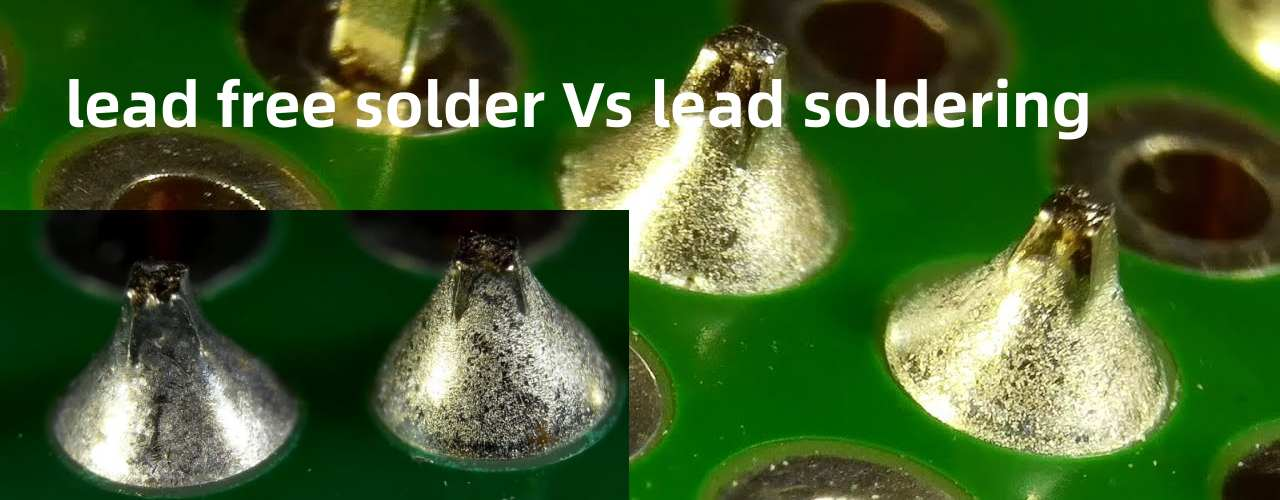
PCB board soldering temperature depends on solder alloy, pad size, copper thickness, board finish and component heat sensitivity. For hand soldering, lead-free solder often works around 330–380°C, while leaded solder often works around 300–350°C.
Higher temperature is not always better. Excessive heat may burn flux, damage components, lift pads or discolor the laminate. Low temperature may melt solder slowly but fail to heat the pad enough, which causes cold joints.
For large copper areas or power connectors, a wider tip may solve the problem better than raising temperature. The best setting is the lowest temperature that still creates fast, smooth and complete solder wetting.
Solder Type
Range
Note
Leaded Sn63/Pb37
300–350°C
Fast wetting and lower heat demand
Lead-Free SAC305
330–380°C
Higher melting point and more heat demand
Fine SMD Pads
300–360°C
Short contact time protects parts
Large Ground Pads
350–400°C
Larger tip improves heat transfer
Wire to PCB Pad
330–380°C
Pre-tinning improves joint quality
What Materials Affect PCB Printed Circuit Board Assembly Solderability?
PCB printed circuit board assembly solderability is affected by solder alloy, flux, surface finish, pad design, copper thickness, component plating and storage condition. Even skilled soldering cannot fully solve oxidation, poor plating or expired solder paste.
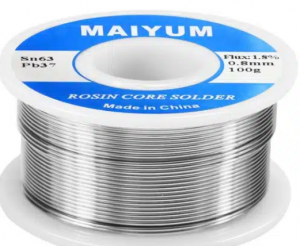
PCB board soldering wire is mainly used for manual work, wire soldering, through-hole assembly and repair. PCB board soldering paste is used for SMT production, where paste is printed on pads before placement and reflow.
Surface finish also changes soldering behavior. HASL, ENIG, OSP, immersion silver and immersion tin have different wetting performance and storage sensitivity. For batch production, incoming inspection and proper material storage reduce solderability risks.
Material
Effect
Risk
Solder Wire
Manual joint formation
Weak wetting or excess solder
Solder Paste
SMT solder volume
Voids, bridges or insufficient solder
Flux
Oxide removal
Residue, corrosion or poor wetting
Surface Finish
Pad solderability
Dewetting or non-wetting
Copper Thickness
Heat absorption
Slow solder flow
Component Plating
Joint bonding
Unstable contact
PCB Storage
Oxidation control
Difficult soldering
What Are the Main PCB Board Soldering Methods?
The main PCB board soldering methods are hand soldering, reflow soldering, wave soldering, selective soldering and robotic soldering. Each method has a different role in prototype work, SMT production, through-hole assembly and mixed technology PCBA manufacturing.
Hand soldering is flexible for repair, wires and PCB prototype board soldering. Reflow soldering is used for most SMT components because it supports speed and repeatability. Wave soldering is efficient for boards with many through-hole leads.
Selective soldering is useful when through-hole parts must be soldered after SMT reflow without heating the entire board. Robotic soldering works well for repeated wire, terminal and connector joints when fixtures are stable.
Main functions include:
Hand soldering supports repair, sample changes and small batches.
Robotic soldering improves repeatability for fixed joint positions.
Main limitations include:
Hand soldering depends strongly on operator skill.
Reflow soldering requires correct paste, stencil and profile control.
Wave soldering may create bridges if layout and process settings are poor.
Selective soldering is slower than wave soldering for dense boards.
Robotic soldering requires repeatable board positioning and fixtures.
How to Solder a PCB Board Step by Step?
How to solder a PCB board starts with preparation, correct heating and clean inspection. The key rule is to heat the pad and lead together, then feed solder into the heated joint instead of melting solder directly on the iron tip.
First, secure the PCB in a PCB board holder for soldering so the board does not move. Clean the pad, prepare the component, set the proper temperature and tin the soldering iron tip. A clean, lightly tinned tip transfers heat faster.
Next, touch the tip to both the pad and component lead. Feed solder wire into the joint area until it flows around the metal surfaces. Remove the solder first, then remove the iron. Let the joint cool naturally before moving the board.
Finally, inspect the joint under good lighting or magnification. A good joint should show complete wetting, stable shape and no bridge to nearby pads. Clean residue if the flux type or product environment requires cleaning.
How to Solder Wire to PCB Board Safely?
Soldering wire to PCB board requires strain relief, correct wire preparation and controlled heat. A wire joint should not rely on solder alone to carry mechanical pulling force, especially in products exposed to vibration or repeated handling.
First, strip only the required wire length and twist the strands neatly. Pre-tin the wire and the PCB pad so the final soldering time is shorter. Then place the wire on the pad and heat both surfaces until the solder flows together.
For production, use cable ties, adhesive, slots, terminals or mechanical fixtures when the wire may be pulled. This protects the copper pad from lifting. After soldering, inspect for broken strands, excess solder, insulation damage and weak fillet shape.
Key control points include:
Pre-tin the wire and PCB pad before final joining.
Avoid too much exposed conductor outside the joint.
Add strain relief when the wire may move.
Keep insulation away from direct iron contact.
Avoid pulling the wire before the joint cools.
Use inspection to confirm full wetting and no loose strands.
How to Clean PCB Board After Soldering?
Cleaning a PCB board after soldering depends on flux type, product environment and reliability level. No-clean flux may remain on many standard products, but high-reliability, high-impedance, RF, medical or harsh-environment boards often require cleaner residue control.
First, identify the flux chemistry. Rosin, water-soluble and no-clean fluxes require different cleaning methods. Using the wrong cleaner can spread residue or leave ionic contamination on the board.
For manual cleaning, use approved electronic-grade cleaner, lint-free swabs and controlled brushing. Avoid soaking sensitive parts unless the process is approved. After cleaning, dry the board fully before power testing because trapped moisture may cause leakage current or corrosion.
In batch production, cleaning should be part of the process plan. The supplier should control cleaning materials, drying time, inspection criteria and contamination risk before shipment.
What Common PCB Board Soldering Defects Should Be Avoided?
Common PCB board soldering defects include cold joints, solder bridges, insufficient solder, excess solder, lifted pads, poor wetting, tombstoning, solder balls, voids and cracked joints. Most defects come from poor heat transfer, wrong solder volume, contamination or unstable process control.
Cold joints may look dull, rough or cracked, and they often cause intermittent electrical failure. Solder bridges create shorts between nearby pads or pins. Insufficient solder reduces mechanical strength and current reliability.
Lifted pads often come from overheating, repeated rework or pulling parts before the solder fully melts. Flux residue may also become a risk when it is conductive, corrosive or trapped under components.
Defect
Cause
Prevention
Cold Joint
Low heat or movement
Heat pad and lead together
Solder Bridge
Excess solder
Control solder volume
Lifted Pad
Overheating or force
Use short contact time
Poor Wetting
Oxidation or contamination
Clean pad and use flux
Solder Ball
Paste or flux issue
Control paste and profile
Tombstoning
Uneven heating
Balance pad design and reflow
Voids
Outgassing or paste issue
Optimize paste and profile
How Is PCB Board Soldering Tested and Inspected?
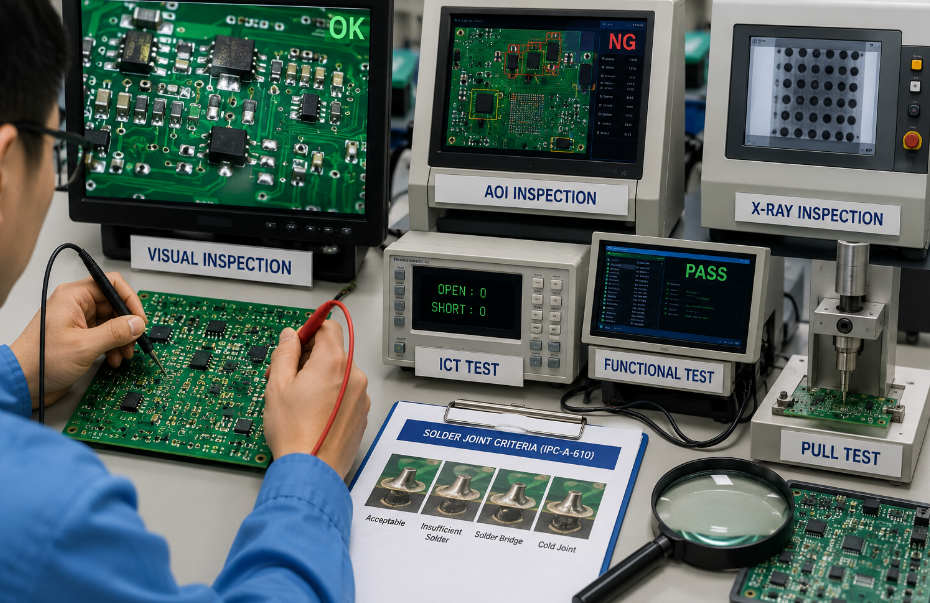
PCB board soldering is tested by visual inspection, AOI, X-ray, ICT, flying probe, functional testing, pull testing and reliability testing. The right inspection method depends on component package, board complexity, product risk and solder joint visibility.
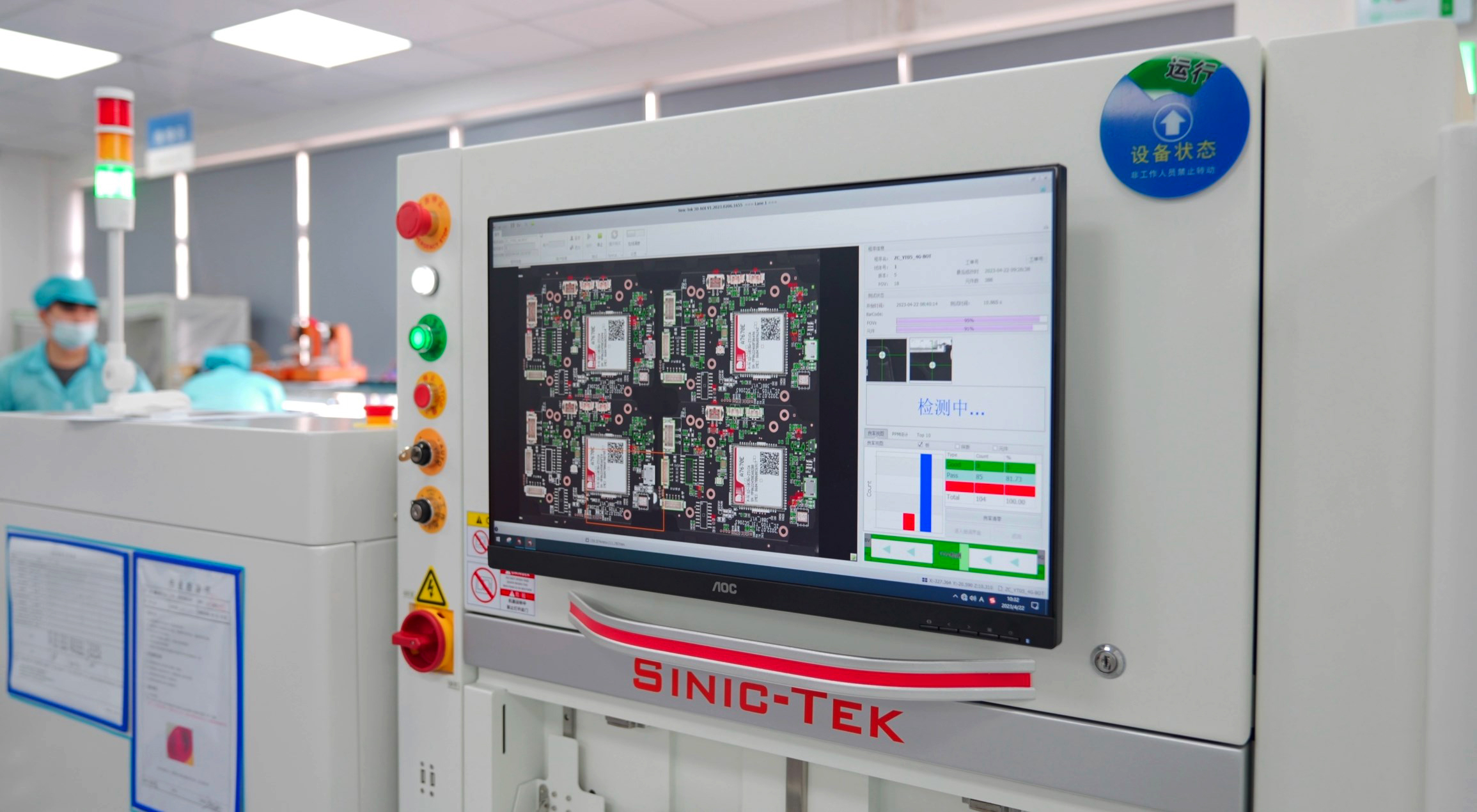
Visual inspection works for through-hole joints, wires and simple repairs. AOI is common for SMT production because it checks missing parts, polarity, bridges and solder shape. X-ray is used for hidden joints such as BGA, QFN and LGA packages.
Electrical tests confirm that joints are not only visually acceptable but also functional. For high-reliability products, thermal cycling, vibration testing, humidity testing and aging tests help reveal weak joints before shipment.
Test
Detects
Use
Visual
Obvious solder defects
Wires and through-hole joints
AOI
SMT placement and solder issues
Production inspection
X-ray
Hidden solder joints
BGA, QFN and LGA
ICT
Open and short circuits
Batch PCBA testing
Flying Probe
Prototype electrical faults
Low-volume boards
FCT
Product operation
Finished assemblies
Pull Test
Mechanical joint strength
Wire and terminal soldering
What Quality Standards Apply to PCB Board Soldering?
PCB board soldering quality is commonly controlled by IPC workmanship standards, RoHS material compliance, customer drawings and factory process controls. IPC-A-610 is widely used for electronic assembly acceptability, while IPC J-STD-001 focuses on soldering process requirements.
RoHS compliance is important for lead-free electronic products sold in many global markets. Some projects may also involve ISO quality systems, UL material requirements, automotive reliability control, medical traceability or customer-specific inspection rules.
Standards are only useful when the factory applies them in daily production. A reliable manufacturer should control solder paste storage, stencil printing, reflow profile, soldering temperature, operator training, inspection records and corrective actions.
Standard
Focus
Use
IPC-A-610
Acceptability
Visual assembly criteria
IPC J-STD-001
Soldering process
Workmanship and process control
RoHS
Substance control
Lead-free compliance
ISO 9001
Quality system
Process management
UL
Safety materials
Product compliance support
Customer Spec
Project rules
Custom inspection criteria
What Factors Affect PCB Board Soldering Cost?
PCB board soldering cost is affected by component count, package type, soldering method, testing level, order volume, manual labor and reliability requirements. Fine-pitch SMT, BGA, mixed assembly, wire soldering and strict inspection usually increase total assembly cost.
For prototype orders, setup time may be a large part of the price. For mass production, cost depends more on process stability, yield, testing speed and rework rate. Poor files or unclear soldering notes can also increase communication and rework cost.
The best cost control method is early file review. Gerber files, BOM, pick-and-place file, assembly drawing, soldering notes, test plan and packaging rules help the factory quote accurately and avoid delays.
Factor
Impact
Control
Component Count
More assembly time
Optimize BOM
Fine Pitch
Higher inspection demand
Use proper stencil
BGA/QFN
X-ray may be required
Confirm early
Wire Soldering
More labor
Add drawings and fixtures
Mixed Assembly
More process steps
Plan sequence
Testing Level
Higher quality cost
Match risk level
Quantity
Setup cost changes
Use pilot run
How to Choose a Reliable PCB Board Soldering Manufacturer?
Choose a PCB board soldering manufacturer by checking process capability, inspection systems, solderability control, engineering review and batch production experience. A reliable China source factory should support OEM manufacturing, ODM production, sample development, custom assembly and global delivery without claiming false overseas locations.
For international buyers, the lowest quote is not always the safest choice. A good supplier reviews soldering risks before production, confirms process routes and gives practical feedback on pads, wires, connectors, heat-sensitive parts and inspection needs.
Supplier selection points include:
Confirm SMT, through-hole, selective soldering and manual soldering capability.
Check whether the factory supports PCB prototype board soldering and mass production.
Ask about solder paste storage, reflow profiling and soldering temperature control.
Confirm AOI, X-ray, ICT, FCT and visual inspection options.
Review IPC workmanship understanding and RoHS compliance support.
Choose clear communication, real factory capability and stable delivery over the lowest price.
FAQs About PCB Board Soldering
Q1: Is it okay to put soldering iron on PCB board? A1: It is okay to touch the soldering iron tip to the PCB pad during soldering, but it should not stay there too long. Long contact time may lift pads, burn flux or damage laminate. Heat the pad and lead quickly, feed solder, then remove the iron.
Q2: What is the best soldering iron for PCB boards? A2: The best soldering iron for PCB boards is usually a temperature-controlled ESD-safe soldering station with replaceable tips. For most repair and prototype work, 40W to 80W is practical. Stable heat recovery and correct tip size matter more than maximum wattage.
Q3: What is a PCB board holder for soldering used for? A3: A PCB board holder for soldering keeps the board steady while both hands work on the soldering iron and solder wire. It reduces movement during cooling, which helps prevent cracked joints, cold joints and accidental bridges during manual soldering.
Q4: What soldering wire should be used for PCB board work? A4: PCB board soldering wire should match product compliance and solderability requirements. Lead-free SAC solder is common for RoHS products, while leaded solder is easier for some repair work. Flux-core wire is often used for manual soldering because it improves wetting.
Q5: Why does soldering on PCB board sometimes look dull? A5: A dull joint may be normal for some lead-free solders, but a rough, grainy or cracked surface can indicate a cold joint. Check heat transfer, flux activity, pad cleanliness and movement during cooling before accepting the joint.
Q6: What is the difference between PCB board soldering paste and soldering wire? A6: PCB board soldering paste is used for SMT assembly and reflow soldering, while soldering wire is used for hand soldering, repair, wires and through-hole joints. Paste requires stencil printing and controlled storage, while wire is fed directly into the heated joint.
Q7: How to soldering PCB board without damaging pads? A7: The correct phrase is “how to solder a PCB board,” and the safest method is to use controlled temperature, proper tip size, enough flux and short contact time. Avoid pulling components before solder fully melts because force can lift copper pads.
Q8: Why does solder not stick to a PCB board? A8: Solder may not stick because the pad is oxidized, dirty, too cold or poorly plated. Clean the pad, apply suitable flux and heat the pad and lead together. If the surface finish is damaged, the board may have a solderability problem.
Q9: Can soldering PCB boards be done without flux? A9: Some solder wire contains flux core, so extra flux may not always be required. However, additional flux often improves wetting and reduces rework, especially on old pads, wires, connectors or difficult surfaces. The flux type should match cleaning requirements.
Q10: What is PCB prototype board soldering used for? A10: PCB prototype board soldering is used to verify circuits, test components, modify samples and prepare small pilot builds. It is more flexible than mass production, but final batch assembly still requires process review, solderability control and inspection planning.
Q11: How to clean PCB board after soldering if flux remains? A11: Use an approved electronics cleaner, lint-free swabs and controlled brushing based on the flux type. Water-soluble, rosin and no-clean fluxes require different cleaning decisions. After cleaning, the board should be fully dry before power testing.
Q12: What causes solder bridges on PCB soldering board projects? A12: Solder bridges are usually caused by excess solder, fine pad spacing, poor stencil design, too much paste or unstable hand soldering. Better solder volume control, proper flux, AOI inspection and pad design review can reduce bridge risk.
Q13: What files are required for PCB board soldering quotation? A13: For quotation, provide Gerber files, BOM, pick-and-place file, assembly drawing, soldering notes, test requirements and order quantity. If the board has wires, connectors or hand-soldered parts, add photos or detailed drawings to reduce misunderstanding.
Q14: Can a China PCB factory handle global PCB board soldering orders? A14: Yes. A real China source factory can support OEM, ODM, sample development and batch PCB assembly for global customers. The key is transparent capability, clear documentation, controlled quality and honest global delivery support, not false overseas factory claims.
Conclusion
PCB board soldering is a core assembly process that directly affects electrical stability, mechanical strength and long-term product reliability. Good soldering depends on correct heat transfer, clean materials, suitable solder wire or paste, controlled soldering temperature, stable fixtures, proper inspection and clear production standards. For prototypes, hand soldering offers flexibility. For mass production, SMT reflow, wave soldering, selective soldering, AOI, X-ray and functional testing provide stronger consistency.
When selecting tools, choose a stable soldering iron, proper tip size, suitable solder wire, clean flux and a reliable PCB board holder for soldering. When selecting a supplier, focus on solderability review, process capability, inspection records, communication quality and real factory experience. A capable manufacturer can support PCB prototype board soldering, custom PCBA assembly, OEM production, ODM development and batch manufacturing with better cost control and fewer quality risks.
If you are looking for reliable OEM manufacturing, ODM production, sample development, mass production, or custom engineering solutions, please contact our engineering team for technical support and a quote: sales@bestpcbs.com.
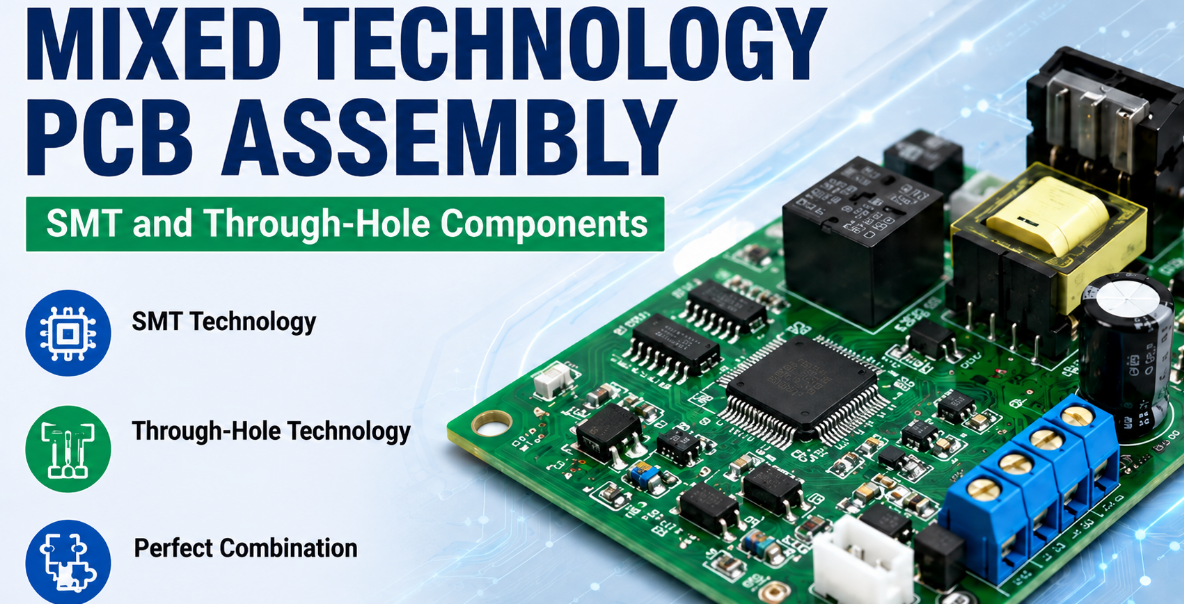
Are you looking for mixed technology PCB assembly that can handle SMT parts and through-hole components on the same board with stable quality and clear delivery control? Many electronic products include compact chips, connectors, relays, terminals, transformers, and other parts that cannot be handled well by SMT alone.
For this reason, mixed technology PCB assembly is widely used in PCBA projects that require both high-density layout and strong mechanical connection. It helps balance board size, solder strength, component flexibility, production cost, and long-term product reliability.
What is Mixed Technology PCB Assembly?
Mixed technology PCB assembly is a PCBA method that combines surface mount technology and through-hole technology on one printed circuit board. SMT parts are mounted directly on PCB surface pads, while through-hole parts are inserted into drilled holes and soldered to the plated hole wall.
This assembly type is used when a board contains both small electronic components and larger mechanical or power-related parts. ICs, resistors, capacitors, LEDs, and sensors often use SMT, while connectors, switches, relays, terminals, transformers, and fuse holders often use through-hole assembly.
Compared with pure SMT assembly, mixed PCB assembly gives more design flexibility. It supports compact circuit layout while keeping stronger solder joints for parts exposed to plugging force, vibration, pulling force, heat, or repeated operation.
Why is Mixed Technology PCB Assembly Used?
Mixed technology pcb assembly is used because some components perform better with through-hole mounting. Large connectors, power terminals, transformers, relays, and switches often require stronger mechanical support than surface pads can provide.
It is also useful when a product combines electronic control, power input, signal transmission, and mechanical interface on the same board. SMT supports compact control circuits, while through-hole assembly supports stronger physical connection points.
Another reason is component availability. Some parts are still easier to source, replace, or qualify in through-hole packages. Mixed SMT THT assembly gives more flexibility when balancing performance, cost, durability, and long-term supply planning.
How is SMT Assembly Different from Through-Hole Assembly?
SMT assembly and through-hole assembly use different mounting methods. SMT parts are placed directly on the PCB surface, while through-hole parts pass through drilled holes and are soldered around the leads.
In mixed technology PCB assembly, these two methods are often combined. SMT helps save space and supports automated placement, while through-hole assembly improves connection strength for larger and stress-bearing components.
Comparison Item
SMT Assembly
Through-Hole Assembly
Full Name
Surface Mount Technology Assembly
Through-Hole Technology Assembly
Mounting Method
Components are mounted directly on PCB surface pads
Component leads are inserted through plated holes
PCB Design Requirement
Requires accurate solder paste pads and placement coordinates
Requires drilled holes, annular rings, and proper hole-to-lead ratio
Component Size
Usually smaller and lighter
Usually larger and heavier
Board Space Usage
Saves more PCB space and supports compact design
Takes more space because holes and leads occupy board area
Component Density
Suitable for high-density circuit layouts
Lower component density due to hole spacing limits
Assembly Speed
Fast and highly automated with pick-and-place machines
Slower because insertion and soldering require more handling
Soldering Process
Mainly uses reflow soldering
Uses wave soldering, selective soldering, or manual soldering
Mechanical Strength
Suitable for small and low-stress components
Stronger for parts exposed to vibration, pulling, or plugging force
Electrical Performance
Suitable for high-speed and compact signal circuits
Suitable for higher current, power, and stronger connection points
Typical Components
ICs, resistors, capacitors, LEDs, diodes, sensors, small packages
Small parts may require special tools and skilled operation
Larger parts are usually easier to replace or repair
Reliability Advantage
Good for compact, lightweight, and high-speed electronics
Good for durable connections and high-stress operating conditions
Common Limitation
Not ideal for large or mechanically stressed parts
Not ideal for ultra-compact or high-density layouts
Best Application
Consumer electronics, communication boards, control modules, compact PCBA
Power boards, industrial control, interface boards, heavy-duty electronic products
Role in Mixed Assembly
Handles most small electronic components efficiently
Supports large, durable, or mechanically stressed components
For many modern boards, the best approach is not choosing only SMT or only through-hole assembly. A mixed SMT THT assembly approach keeps the PCB compact while strengthening important connection points.
When Should You Choose Mixed Technology Instead of SMT Assembly?
Mixed technology PCB assembly is a better choice when the board includes parts that are not suitable for SMT mounting. These may include power connectors, mechanical switches, transformers, terminal blocks, fuse holders, relays, and heavy capacitors.
It is also suitable for products exposed to vibration, frequent plugging, high current, external force, or long operating cycles. Industrial control boards, power boards, communication modules, automotive electronics, medical electronics, and equipment controllers often use mixed assembly.
Mixed assembly is also useful when a design contains specific through-hole packages. Instead of changing the whole design, PCBA mixed assembly allows SMT and THT components to work together in one controlled production flow.
What Is the Mixed Technology PCB Assembly Process?
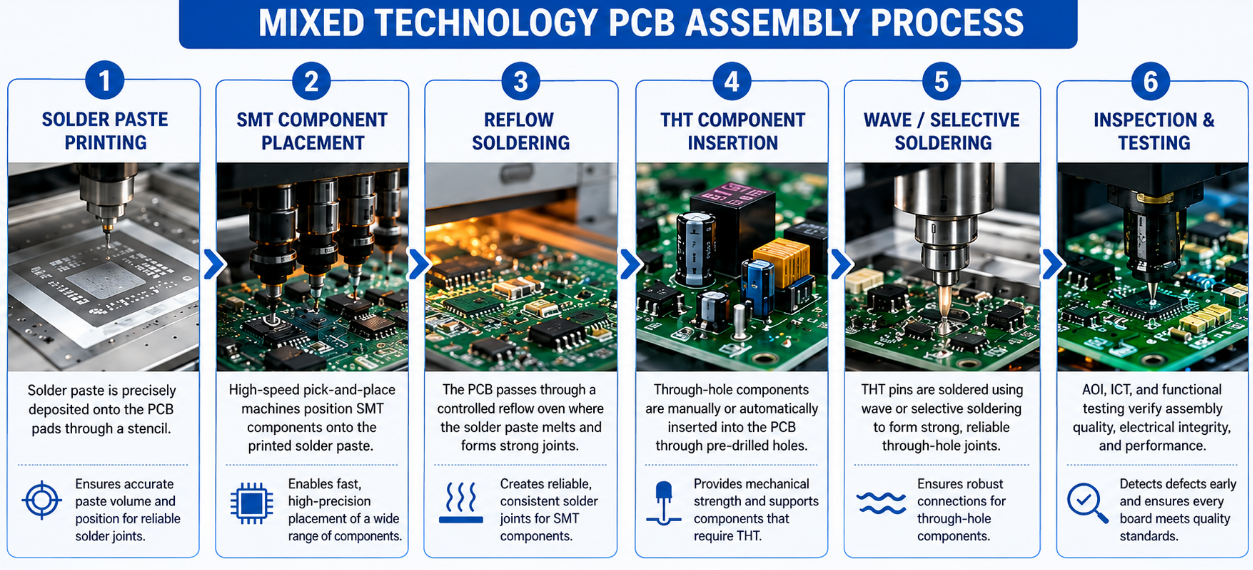
The mixed technology PCB assembly process must follow a clear production sequence because SMT parts and through-hole parts use different mounting and soldering methods. In most projects, SMT assembly is completed first, then through-hole components are inserted and soldered.
Step 1: Review Production Files The factory checks Gerber files, BOM, pick-and-place files, assembly drawings, polarity marks, and testing requirements. This step confirms PCB structure, component package, part quantity, mounting position, and soldering method.
For mixed PCB assembly, the review should also check hole size, pad design, component spacing, connector direction, and whether nearby SMT parts may affect through-hole soldering.
Step 2: Confirm DFM and Assembly Sequence DFM review confirms whether the PCB layout is suitable for SMT and THT assembly. Key points include SMT pad size, through-hole diameter, annular ring, solder mask opening, component clearance, and soldering access.
The assembly sequence is then confirmed. Usually, SMT is assembled first, followed by through-hole insertion and soldering. This prevents large THT parts from blocking SMT placement or inspection.
Step 3: Prepare PCBs and Components Bare PCBs are checked for surface finish, warpage, cleanliness, solder mask quality, drilled holes, and panel design. Components are checked by part number, quantity, package, polarity, and storage condition.
SMT parts should be prepared in reels, trays, tubes, or cut tape for machine placement. Through-hole parts should be checked for lead length, lead shape, body size, and insertion direction.
Step 4: Print Solder Paste Solder paste is printed onto SMT pads through a stencil. Paste volume must match pad size and component type to avoid solder bridging, insufficient solder, or poor wetting.
Stencil thickness, aperture design, paste release, and printing pressure should be controlled, especially for fine-pitch ICs, QFN, BGA, and small passive components.
Step 5: Place SMT Components Pick-and-place machines mount SMT components according to the coordinate file. The placement program controls part position, rotation, package type, and feeder location.
Accurate placement is important for small components and fine-pitch parts. Misalignment may cause open joints, bridging, or component shifting during reflow.
Step 6: Reflow Soldering The PCB passes through a reflow oven, where solder paste melts and forms solder joints between SMT terminals and PCB pads. The temperature profile must match PCB thickness, copper weight, solder paste type, and component heat tolerance.
Poor reflow control may cause tombstoning, solder balls, cold joints, voids, or damaged components.
Step 7: SMT Inspection After reflow, AOI checks missing parts, wrong polarity, skewed components, solder bridging, insufficient solder, and open joints. X-ray inspection may be used for BGA, QFN, or hidden solder joints.
SMT inspection should be completed before through-hole insertion because large THT parts may block inspection or make repair harder.
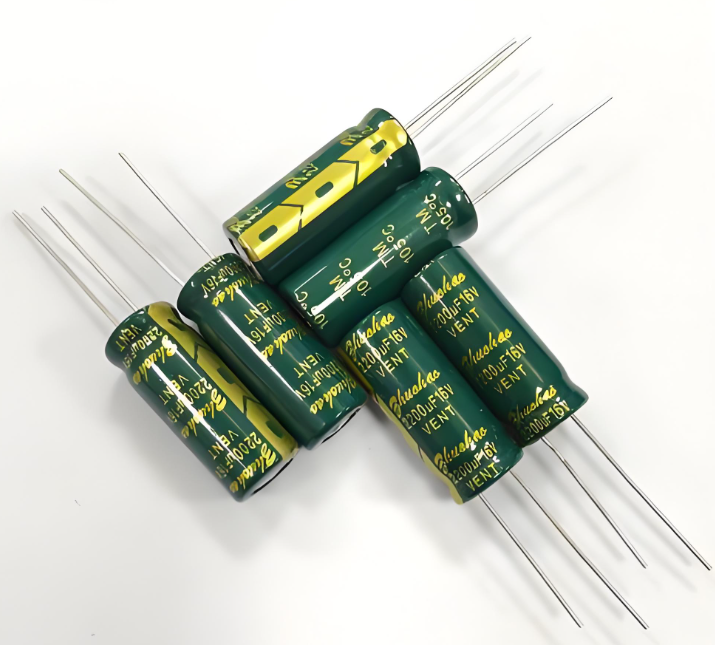
Step 8: Insert Through-Hole Components Through-hole components are inserted after SMT inspection. Common parts include connectors, terminal blocks, relays, transformers, switches, fuse holders, and electrolytic capacitors.
Insertion may be manual or automated. Component direction, seating height, lead fit, and mechanical clearance should be checked before soldering.
Step 9: Solder Through-Hole Components Through-hole soldering can use wave soldering, selective soldering, or manual soldering. The choice depends on component quantity, PCB layout, nearby SMT parts, soldering area, and production volume.
Wave soldering suits boards with many THT parts and enough clearance. Selective soldering suits local soldering areas near SMT components. Manual soldering suits special parts, low-volume runs, repairs, or components unsuitable for automated soldering.
Step 10: Clean and Inspect the Board After THT soldering, the board is checked for solder joint shape, barrel fill, lead trimming, component height, polarity, flux residue, and tilted parts.
Cleaning depends on flux type and product requirement. For no-clean flux, cleaning may not be required unless appearance, coating, or reliability standards require it.
Step 11: Electrical and Functional Testing Testing may include continuity test, ICT, functional test, power-on test, programming, communication test, or custom fixture test. The exact test depends on circuit function and product application.
For PCBA mixed assembly, testing is important because the board may include power input, signal connectors, control circuits, and mechanical interface components.
Step 12: Final Inspection and Packing Final inspection checks board appearance, quantity, labels, connector direction, component condition, and packing requirements. Boards are packed with ESD protection, foam, trays, or moisture-proof bags when required.
This process helps control soldering quality, reduce rework, and support stable delivery for mixed technology PCB assembly projects.
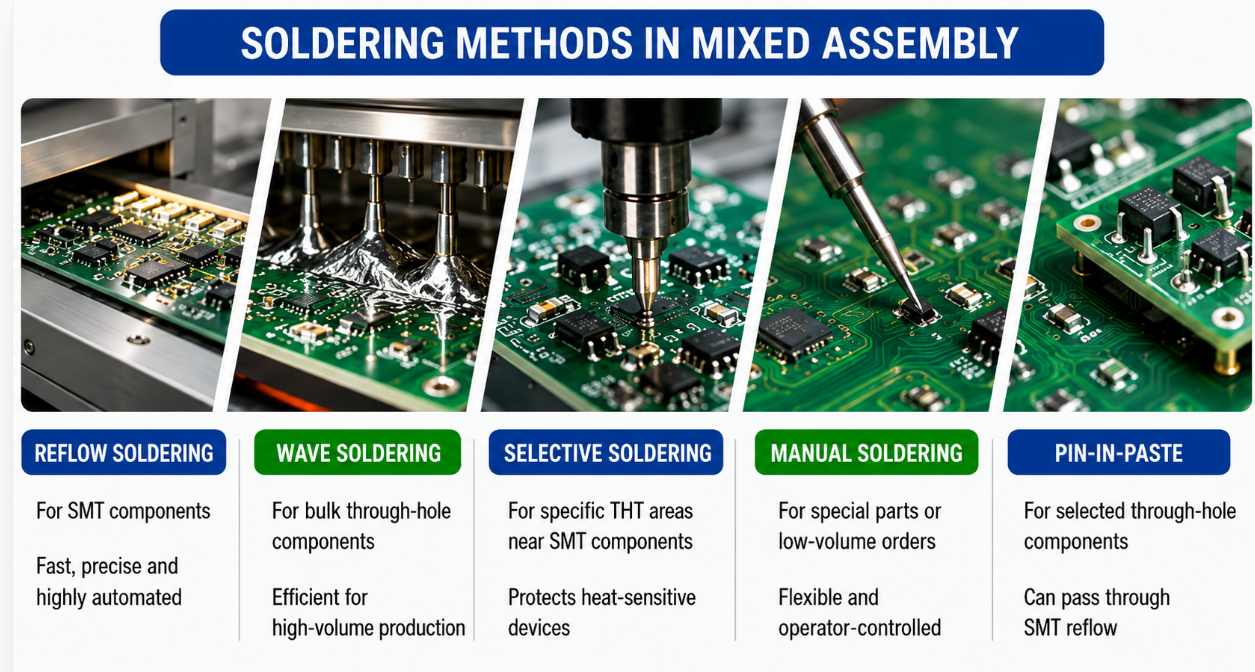
What Soldering Methods Are Used in Mixed Technology PCB Assembly?
Mixed technology PCB assembly may use several soldering methods because SMT and through-hole components do not always share the same soldering process. The suitable method depends on component type, layout density, heat sensitivity, production volume, and solder joint requirements.
Soldering Method
Suitable For
Main Advantage
Common Limitation
Reflow Soldering
SMT components
Fast and accurate for surface mount parts
Not suitable for most through-hole parts
Wave Soldering
Many through-hole parts
Efficient for batch THT soldering
Requires enough spacing and fixture control
Selective Soldering
Local through-hole areas
Protects nearby SMT parts
Requires accurate process programming
Manual Soldering
Special parts or low-volume orders
Flexible for complex areas
Slower and operator-dependent
Pin-in-Paste
Selected through-hole parts
Can pass through SMT reflow
Requires correct hole and paste volume design
In most mixed SMT THT assembly projects, SMT reflow is finished first. Through-hole soldering is then completed by wave, selective, or manual soldering based on layout and component structure.
DFM Guidelines for Mixed Technology PCB Assembly
DFM review for mixed technology PCB assembly should focus on layout clearance, soldering access, hole design, pad design, test access, and assembly sequence. These items directly affect solder joint quality, production speed, repair difficulty, and final PCBA reliability.
1. Keep Enough Space Between SMT and THT Parts Small SMT parts should not be placed too close to connectors, relays, transformers, terminal blocks, or electrolytic capacitors. Large THT parts may block pick-and-place nozzles, AOI cameras, soldering tools, and rework access.
For dense layouts, keep clear space around fine-pitch ICs, BGA, QFN, and 0201/0402 components. If a large THT component must be placed nearby, confirm that inspection and repair tools can still reach the SMT solder joints.
2. Match Through-Hole Diameter with Lead Size Through-hole diameter should match the actual lead diameter after considering tolerance and plating thickness. A hole that is too tight may cause difficult insertion, bent leads, PCB damage, or cracked plated holes.
A hole that is too large may reduce solder filling and weaken the joint. For connectors, switches, terminals, and relays, the hole design must support both solder flow and mechanical holding strength.
3. Design Enough Annular Ring for THT Pads THT pads should have enough annular ring around the drilled hole. If the annular ring is too narrow, the pad may lift during soldering or repair, especially on connectors and parts that receive external force.
For high-stress components, larger pads can improve solder fillet strength. Connector pins, terminal blocks, fuse holders, and heavy components should not use minimum pad sizes unless space is extremely limited.
4. Optimize SMT Pad Size and Paste Opening SMT pads should match the component package and solder paste volume. For fine-pitch ICs, QFN, BGA, and small passive parts, stencil apertures may require reduction to prevent solder bridging.
For 0201, 0402, and small chip components, pad balance is important. Unequal pad size or uneven copper connection may cause tombstoning, part shifting, or insufficient solder after reflow.
5. Reserve Soldering Clearance Around THT Areas If wave soldering is used, there should be enough clearance around THT solder joints to avoid solder bridging and shadowing. Small SMT parts should not sit directly behind large THT leads in the solder flow direction.
If selective soldering is used, the nozzle must have enough working space around each solder point. Connectors, tall parts, and nearby components should not block the nozzle path.
6. Confirm Component Height and Mechanical Interference Tall components such as transformers, electrolytic capacitors, relays, connectors, switches, and heat sinks should be checked against enclosure height, cable space, screw holes, and final product structure.
Mechanical keep-out areas should be marked clearly. Parts near board edges, mounting holes, clips, shells, or cables must leave enough space for assembly and final installation.
7. Place Heat-Sensitive Components Away from Soldering Heat Plastic connectors, switches, sensors, LEDs, batteries, and heat-sensitive ICs should not be placed too close to wave soldering, selective soldering, or manual soldering points.
If heat-sensitive parts must be near THT solder joints, the soldering process should be reviewed before production. Selective soldering or manual soldering may be safer than full wave soldering in tight areas.
8. Arrange Components According to Assembly Sequence The layout should support the real production order. In most mixed PCB assembly projects, SMT is assembled first, then THT parts are inserted and soldered.
Large THT parts should not be mounted before SMT inspection. Otherwise, they may block AOI cameras, X-ray access, rework tools, and test probes.
9. Keep Test Points Accessible After Assembly Test points should not be hidden under connectors, transformers, relays, heat sinks, or tall capacitors. ICT probes, programming pins, and functional test fixtures must touch the required pads after all components are installed.
Test points should have enough spacing and stable surface finish. If the board requires programming, power-on testing, or communication testing, test pads should be placed where fixtures can reach them easily.
10. Mark Polarity and Connector Direction Clearly Polarity marks should be clear for LEDs, diodes, ICs, electrolytic capacitors, connectors, batteries, and polarized THT parts. Pin 1 marks should be visible on both the silkscreen and assembly drawing.
Connector direction should be marked clearly when similar connectors are used on the same board. This helps prevent reverse insertion, wrong cable direction, and incorrect final assembly.
11. Avoid Weak Board Edge and Mounting Hole Layouts Heavy connectors, switches, or terminals should not be placed too close to unsupported board edges unless mechanical support is added. Repeated plugging or pulling may stress the solder joints and PCB laminate.
Mounting holes should keep enough clearance from copper, pads, traces, and tall components. Screws, washers, and fixtures should not touch exposed conductors or damage nearby parts.
12. Provide Complete Assembly Notes Before Quotation Mixed technology PCB assembly should include Gerber files, BOM, pick-and-place file, assembly drawing, polarity notes, soldering requirements, test requirements, and special handling instructions.
If any component requires manual soldering, special height control, lead forming, glue fixing, conformal coating, or separate packing, it should be stated before quotation. This helps avoid price changes and production delays after order confirmation.
What Common Defects Should Be Avoided in Mixed Technology PCB Assembly?
Mixed technology PCB assembly involves SMT placement, reflow soldering, through-hole insertion, and THT soldering. Defects may come from pad design, hole size, soldering sequence, component handling, or poor inspection control.
1. Solder Bridging Solder bridging often appears between fine-pitch SMT pins, connector pins, or dense through-hole leads. Common causes include excessive solder paste, narrow pad spacing, poor stencil opening, or unsuitable wave soldering direction.
To reduce this risk, stencil aperture design, pad spacing, solder mask clearance, and soldering profile should be checked before production. Dense THT pins should also be reviewed when wave soldering is planned.
2. Insufficient Solder Insufficient solder may occur on SMT pads, through-hole barrels, connector pins, and terminal blocks. It can cause weak electrical contact, unstable signal transmission, or poor mechanical strength.
For SMT parts, the solder paste volume should match pad size and component package. For through-hole parts, hole size, lead diameter, soldering temperature, and contact time should be controlled.
3. Poor Barrel Fill Poor barrel fill is a common through-hole soldering defect. It means solder does not properly fill the plated hole, which can reduce both electrical connection and mechanical strength.
This issue is often related to wrong hole-to-lead ratio, poor preheating, low solder temperature, short soldering time, or poor PCB plating quality. It is especially important for connectors, relays, terminals, and high-current parts.
4. Tombstoning Tombstoning usually happens to small chip components such as 0201, 0402, and 0603 packages. One side of the component lifts during reflow, creating an open circuit.
Common causes include unbalanced pad size, uneven copper connection, uneven heating, or different solder wetting speeds on both ends. Pad symmetry and thermal balance should be checked during DFM review.
5. Component Misalignment Misalignment may happen during SMT placement or through-hole insertion. SMT parts may shift during reflow, while THT parts may lean, float, or fail to sit flat on the board.
This defect can affect soldering quality, appearance, enclosure fit, and connector alignment. Placement coordinates, component footprint, fixture design, and insertion height should be checked before assembly.
6. Cold Solder Joints Cold solder joints usually look dull, rough, or incomplete. They may appear when soldering temperature is too low, contact time is too short, or the solder surface is contaminated.
Cold joints can create intermittent electrical failure. Reflow profile, wave soldering temperature, selective soldering parameters, and manual soldering control should be verified.
7. Lifted Pads or Damaged Plated Holes Lifted pads and damaged holes may appear during rework, manual soldering, or forced component insertion. This is more likely when THT holes are too tight or pads are too small.
Connectors, switches, and terminals should have proper pad size and annular ring. Components that receive external force should not rely on weak minimum-size pads.
8. Wrong Polarity or Wrong Orientation Polarity errors often happen on diodes, LEDs, ICs, electrolytic capacitors, connectors, and polarized through-hole components. Similar connectors on the same board may also be inserted in the wrong direction.
Clear silkscreen marks, Pin 1 marks, assembly drawings, and first article inspection help prevent this issue. Directional parts should always be checked before batch assembly.
9. Flux Residue and Contamination Flux residue may remain around THT pins, connectors, dense SMT areas, or manual soldering points. If the board requires conformal coating or high-reliability operation, residue may affect appearance, insulation, or long-term stability.
Cleaning should be selected according to flux type and product requirement. No-clean flux may still require cleaning when coating, testing, or appearance standards require a cleaner surface.
10. Blocked Test Points Test points may become blocked by tall capacitors, relays, connectors, heat sinks, cables, or transformers. Once blocked, ICT, programming, or functional testing may become difficult.
Test points should be checked after all SMT and through-hole components are installed. Fixture access should be confirmed before production, not after assembly is complete.
What Quality Control Is Needed for Mixed-Technology PCB Assembly?
Quality control for mixed technology pcb assembly should cover file review, material inspection, SMT process control, through-hole soldering inspection, electrical testing, and final shipment checks. Each stage should be controlled separately because SMT and THT defects are different.
1. Production File Review Gerber files, BOM, pick-and-place files, assembly drawings, polarity notes, and test requirements should be checked before production. This step helps confirm footprint, component package, quantity, orientation, soldering method, and special process requirements.
For mixed PCB assembly, file review should also check through-hole size, pad spacing, connector direction, soldering clearance, and whether tall components may block inspection or test access.
2. Incoming PCB Inspection Bare PCBs should be checked for board size, surface finish, solder mask quality, drilled holes, plating quality, warpage, cleanliness, and panel structure. Hole quality is especially important for through-hole soldering.
If the board has tight spacing, high copper weight, BGA, or dense mixed assembly areas, extra attention should be given to solder mask opening, pad accuracy, and surface flatness.
3. Component Verification Components should be checked by part number, package, quantity, polarity, moisture sensitivity, and storage condition. SMT parts should match machine feeding formats such as reel, tray, tube, or cut tape.
Through-hole parts should be checked for lead diameter, lead length, lead shape, body size, and insertion direction. Odd-form parts should be confirmed before production to avoid insertion or fixture problems.
4. First Article Inspection First article inspection confirms whether the first assembled board matches the BOM, placement file, polarity requirements, and assembly drawing. It is useful before batch production starts.
This step should cover SMT parts, THT parts, connectors, directional components, component height, and soldering appearance. Errors found at this stage are easier to correct than after full production.
5. SMT Process Inspection SMT quality control includes solder paste printing, component placement, reflow profile, and AOI inspection. SPI may be used when solder paste volume control is critical.
AOI should check missing components, wrong orientation, skewed parts, bridging, insufficient solder, and wrong values when visible. X-ray may be used for BGA, QFN, or hidden solder joints.
6. Through-Hole Soldering Inspection After THT soldering, solder joints should be checked for barrel fill, wetting, solder bridge, lead trimming, component seating, polarity, and connector direction.
For wave soldering and selective soldering, process parameters should be controlled carefully. For manual soldering, operator consistency and soldering appearance should be checked more strictly.
7. Electrical and Functional Testing Testing may include continuity testing, ICT, programming, power-on testing, communication testing, and functional testing. The test method should match the board function and product application.
Mixed SMT THT assembly often includes connectors, power input, signal interfaces, switches, and control circuits. Functional testing helps confirm that all assembly areas work together correctly.
8. Final Inspection and Packing Check Final inspection should confirm board appearance, solder joint condition, component height, connector alignment, label content, quantity, and packing method.
Packing should use ESD-safe bags, trays, foam, moisture-proof bags, or custom protection when required. This helps reduce damage during storage and transport.
What Factors Affect the Cost of Mixed-Technology PCB Assembly Services?
The cost of mixed technology PCB assembly services depends on board complexity, component quantity, SMT/THT ratio, soldering method, inspection level, testing scope, order quantity, and delivery schedule.
Boards with many fine-pitch SMT parts and many through-hole components usually take more process time. Loose parts, odd-form parts, large connectors, transformers, and relays may also increase handling and fixture cost.
Testing also affects price. AOI, X-ray, ICT, functional testing, conformal coating, programming, and box assembly add value, but they also increase total project cost. Complete files help create a more accurate quotation.
Cost Factor
Impact on Price
PCB Size and Panel Design
Affects handling, fixture, and production efficiency
Component Count
More parts increase placement and inspection time
SMT/THT Ratio
More through-hole parts often raise labor and soldering cost
Soldering Method
Selective soldering and manual soldering may cost more
Component Package
Loose or odd-form parts require extra handling
Testing Level
ICT, FCT, and X-ray increase inspection cost
Lead Time
Faster delivery may require priority scheduling
Quantity
Higher volume can reduce unit cost
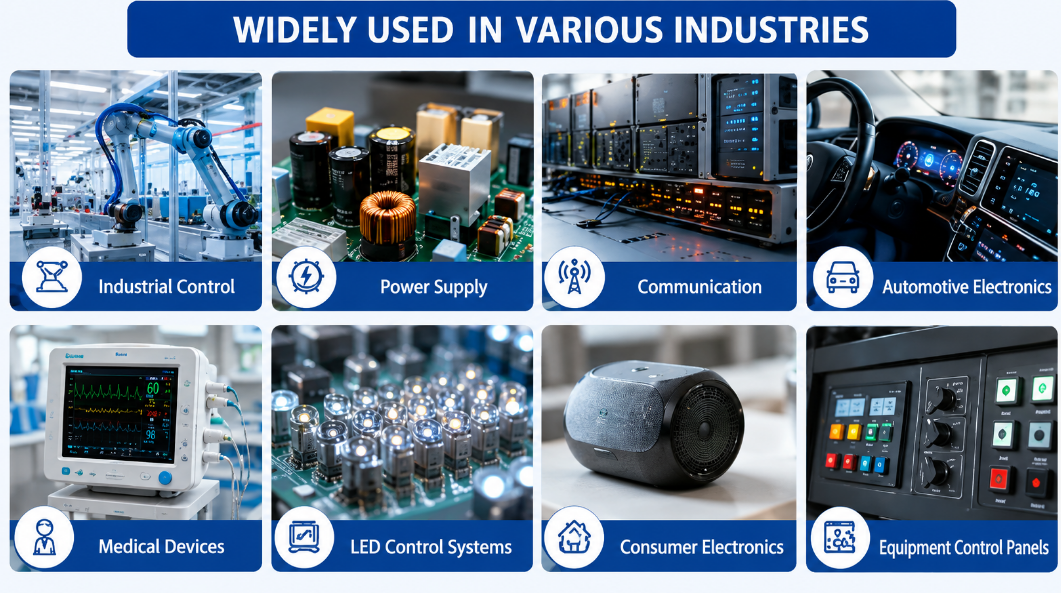
Where Is Mixed Technology PCB Assembly Commonly Used?
Mixed technology PCB assembly is used when one PCB must combine compact SMT circuits with strong through-hole connection points. It is common in products that require stable signal control, power connection, mechanical strength, and long service life.
1. Industrial Control Boards Industrial control boards often include ICs, resistors, sensors, terminal blocks, relays, and power connectors. SMT supports compact control circuits, while through-hole parts provide stronger connection for wiring and field installation.
2. Power Supply and Power Control Boards Power boards often use transformers, inductors, fuse holders, electrolytic capacitors, terminals, and high-current connectors. These parts usually require through-hole mounting for better mechanical support and current handling.
3. Communication Equipment Communication boards may combine SMT chips, RF modules, signal circuits, connectors, and interface ports. Mixed assembly helps support compact layout while keeping stable external connection points.
4. Automotive Electronics Automotive electronic modules may face vibration, temperature change, and repeated operation. Mixed PCB assembly is often used for control modules, sensor boards, lighting controllers, power interfaces, and connector-heavy boards.
5. Medical Electronic Devices Medical electronics may require compact circuits, stable connectors, reliable power input, and consistent testing. Mixed SMT THT assembly can support both small signal components and durable interface parts.
6. Consumer Electronics and Smart Devices Some consumer products use SMT for compact circuit areas and through-hole parts for charging ports, switches, connectors, speakers, or high-stress interface components.
7. LED Control Systems LED control boards may include SMT control ICs, resistors, capacitors, terminal blocks, connectors, and power input parts. Mixed assembly supports both control function and practical field wiring.
8. Equipment Control Panels Control panels may include switches, connectors, displays, indicators, buzzers, and control ICs. Through-hole parts help strengthen user-facing components, while SMT parts keep the circuit compact.
What Files Are Required for Mixed Technology PCB Assembly Quotation?
A clear quotation requires complete production files. Missing or unclear files may cause price changes, production delay, wrong components, or assembly risk.
Gerber files define PCB layers, copper, solder mask, silkscreen, drill data, and board outline. The BOM lists component part number, quantity, package, value, manufacturer, and approved substitute parts.
Pick-and-place files help confirm SMT coordinates and rotation. Assembly drawings are also important because they show polarity, connector direction, through-hole insertion, height limits, and testing points.
Quotation file checklist:
Gerber files
BOM with full part numbers
Pick-and-place file
Assembly drawing
PCB specification
Testing requirements
Firmware or programming instructions
Special packing requirements
Approved substitute component list
How to Choose Reliable Mixed Technology PCB Assembly Services?
Choosing reliable mixed technology PCB assembly services should focus on process capability, quality control, sourcing support, testing ability, and delivery stability. Since mixed assembly includes both SMT and through-hole processes, the supplier must control more than simple component placement.
Check SMT and THT Assembly Capability The supplier should support SMT placement, reflow soldering, through-hole insertion, wave soldering, selective soldering, and manual soldering. This ensures the board can be assembled according to component type, layout density, and soldering requirement.
Confirm DFM Review Before Production A reliable supplier should review pad size, hole diameter, annular ring, soldering clearance, component height, polarity marks, and test point access before production. This helps reduce solder defects, rework, and quotation changes.
Review Component Sourcing Support Mixed PCB assembly may include SMD parts, connectors, relays, terminals, BGA, QFN, QFP, and odd-form components. Strong sourcing support helps control cost, lead time, and substitute part risks.
Check Inspection and Testing Options The supplier should provide AOI, visual inspection, X-ray when needed, ICT, functional testing, or custom fixture testing. Testing requirements should be confirmed before quotation to avoid later cost or schedule changes.
Confirm Prototype and Batch Production Support Prototype production verifies component fit, soldering method, test access, and functional performance. Batch production requires stable process control, repeatable inspection standards, and clear delivery planning.
Evaluate Communication and Delivery Control A good supplier should provide clear file review feedback, quotation details, lead time, production updates, and delivery plan. This is important for mixed SMT THT assembly because PCB fabrication, component sourcing, assembly, testing, and packing must be coordinated together.
Why Choose EBest for Mixed Technology PCB Assembly Services?
EBest is suitable for mixed technology PCB assembly services because it supports PCB fabrication, component sourcing, SMT assembly, through-hole assembly, mixed assembly, testing support, and box assembly in one service system.
One-Stop PCB and PCBA Service EBest supports PCB fabrication, component supply, SMT assembly, through-hole assembly, full turnkey PCB assembly, prototype PCB assembly, quick turn PCB assembly, BGA assembly, flex PCB assembly, ceramic PCB assembly, and box assembly.
SMT, THT, and Mixed Assembly Capability EBest supports SMT, THT, and mixed assembly. It can handle SMD parts, through-hole components, BGA packages, QFN/QFP packages, connectors, relays, terminals, and components supplied in reels, cut tape, tubes, trays, or loose parts.
Strong Production Capability EBest lists a placement capacity of 13,200,000 chips per day, minimum SMD component size of 01005, minimum BGA pitch of 0.25mm, maximum component size of 50 × 150mm, and bare board size support from 0.2 × 0.2 inches to 20 × 20 inches / 22 × 47.5 inches.
Fast Assembly Lead Time EBest lists PCBA assembly lead time of 1–5 days and also supports expedite service for urgent PCB projects. Final lead time depends on file readiness, component availability, board complexity, and testing requirements.
Certified Quality Support EBest is supported by ISO 9001:2015, ISO 13485:2016, IATF 16949, AS9100D, REACH, RoHS, and UL certifications. These certifications support quality control for industrial, medical, automotive, aerospace, and commercial electronics.
Component Sourcing and Value-Added Support EBest provides component sourcing for SMD, BGA, QFN, QFP, and other electronic components. It can also support box assembly, injection molding, CNC machining, sheet metal, and final assembly for projects that require more than PCBA production.
FAQs About Mixed Technology PCB Assembly
Q1: Can a PCB have SMT parts on both sides and through-hole parts on one side? A1: Yes. Many mixed assembly boards use double-sided SMT and one-sided through-hole insertion. The process sequence must be reviewed carefully so heavy parts, soldering heat, and inspection access do not create assembly problems.
Q2: Is selective soldering better than wave soldering for mixed assembly? A2: Selective soldering is often better for dense boards because it solders local THT points without exposing the whole board to a solder wave. Wave soldering is more efficient when many THT parts are grouped with enough clearance.
Q3: What causes through-hole solder joints to be weak? A3: Weak THT solder joints may come from oversized holes, poor barrel fill, low solder temperature, short soldering time, contaminated surfaces, or insufficient pad size. Connector and terminal areas should be checked carefully during DFM review.
Q4: Can mixed assembly support BGA components? A4: Yes. BGA components can be assembled with SMT before THT insertion. X-ray inspection is usually recommended because BGA solder joints are hidden under the package.
Q5: Should through-hole parts be inserted before or after SMT assembly? A5: In most cases, through-hole parts are inserted after SMT reflow and SMT inspection. This prevents large THT parts from blocking pick-and-place machines, AOI cameras, X-ray access, and rework tools.
Q6: What information helps get a more accurate mixed assembly quote? A6: A complete quotation package should include Gerber files, BOM, pick-and-place file, assembly drawing, testing requirements, special soldering notes, component sourcing requirements, and packing instructions.
Q7: Can mixed technology PCB assembly be used for small batches? A7: Yes. It is suitable for prototypes, small batches, and volume production. Small-batch production is useful for checking component fit, soldering quality, test method, and product function before larger orders.
Q8: What should be checked before approving mass production? A8: First article inspection, soldering appearance, polarity, connector direction, component height, test results, packing method, and any approved process changes should be confirmed before moving to batch production.
Get a Reliable Mixed Technology PCB Assembly Quote
If your board combines SMT parts, through-hole components, connectors, BGA packages, or functional testing, EBest can support custom mixed technology pcb assembly services. From PCB fabrication and component sourcing to assembly, inspection, testing, and final delivery, EBest helps simplify the full PCBA process.
Send your Gerber files, BOM, pick-and-place file, assembly drawing, and testing requirements to sales@bestpcbs.com. EBest can review your project, confirm the suitable assembly process, and provide a clear quotation for high-quality, reliable, and on-time PCBA delivery.
Are you choosing a solder paste stencil and wondering which specifications matter most for SMT assembly? A solder paste stencil controls solder paste deposition on PCB pads, helping improve printing accuracy, solder joint consistency, and overall assembly quality.
This guide explains stencil materials, thickness options, design guidelines, printing methods, cleaning procedures, and service life. Whether for prototypes or volume production, understanding these fundamentals can help achieve more reliable SMT results.
What is Solder Paste Stencil?
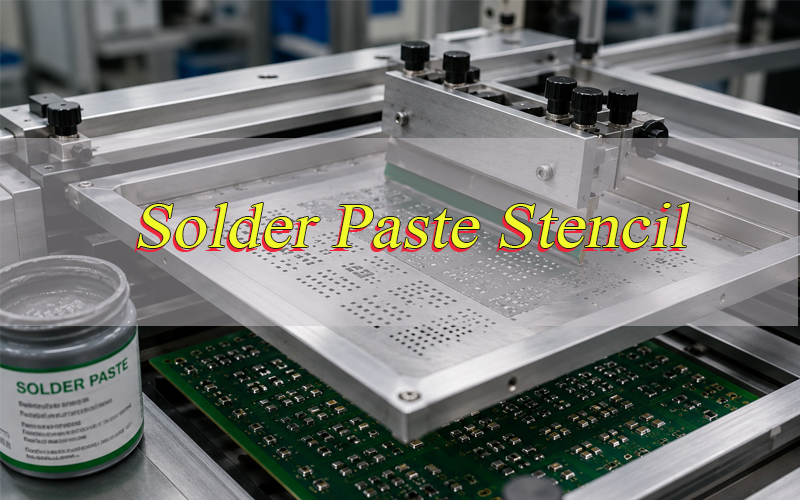
A solder paste stencil is a thin metal sheet with precisely cut openings that match the pad layout on a PCB. During SMT assembly, solder paste is printed through these openings onto specific locations before component placement.
Most stencils are manufactured from stainless steel using laser-cut technology. The openings determine how much solder paste is deposited on each pad, making stencil accuracy critical to assembly quality.
The stencil acts as a template between the PCB and the printing process. Without controlled solder deposition, issues such as solder bridging, insufficient solder, or poor solder joints may occur during reflow.
Because of its ability to deliver consistent solder volume and repeatable printing results, the stencil has become a standard tool in modern SMT manufacturing.
What is a Stencil Used for Solder Pasting?
The main purpose of a stencil is to transfer a controlled amount of solder paste onto PCB pads before component placement. Each aperture is designed according to the size and shape of the corresponding pad.
A stencil helps ensure that every solder joint receives a similar volume of paste. This consistency is important for achieving stable reflow results and reducing assembly defects.
During printing, a squeegee pushes solder paste across the stencil surface. The paste fills the apertures and is transferred onto the PCB when the stencil separates from the board.
Compared with manual dispensing, stencil printing offers higher efficiency, better repeatability, and more uniform solder paste deposition, making it suitable for both prototypes and volume production.
What Materials Are Used for Solder Paste Stencils?
The most common materials used for solder paste stencils are stainless steel, electroformed nickel, and nano-coated stainless steel. Among them, stainless steel is the most widely used because it offers a good balance of durability, printing performance, and cost.
Stainless steel stencils are suitable for most SMT assembly applications and can withstand thousands of printing cycles. They are commonly used in both prototype and mass production.
For fine-pitch components and high-density PCB designs, electroformed nickel stencils provide smoother aperture walls and better solder paste release performance.
Some manufacturers also use nano-coated stencils, which reduce solder paste adhesion and improve cleaning efficiency during continuous production.
Material
Main Advantage
Typical Use
Stainless Steel
Durable and economical
General SMT assembly
Electroformed Nickel
Better paste release
Fine-pitch devices
Nano-Coated Stencil
Cleaner printing
High-volume production
What is the Thickness of Solder Paste Stencil?
The standard solder paste stencil thickness is typically 0.08 mm, 0.10 mm, 0.12 mm, 0.15 mm, and 0.20 mm. For most SMT assemblies, 0.10 mm and 0.12 mm are the most commonly used options.
Thinner stencils are generally selected for fine-pitch components and high-density PCB layouts because they provide better control of solder paste volume and help reduce bridging.
Thicker stencils are often used for connectors, power devices, and components that require a larger amount of solder during assembly.
Stencil Thickness
Typical Applications
0.08 mm
0201, 0402, fine-pitch ICs
0.10 mm
Mixed SMT assemblies
0.12 mm
Standard SMT production
0.15 mm
Large components and connectors
0.20 mm
High solder volume requirements
Solder Paste Stencil Design Guidelines
Proper stencil design directly affects solder paste transfer, solder joint quality, and SMT production yield. A well-designed stencil helps achieve consistent printing results while reducing common assembly defects.
Match stencil thickness to component size. Fine-pitch ICs and miniature components usually require thinner stencils, while connectors and power devices often need thicker stencils to provide sufficient solder volume.
Optimize aperture size instead of copying pad dimensions exactly. In many cases, reducing the aperture slightly improves solder paste release and lowers the risk of solder bridging.
Maintain a proper area ratio. The stencil area ratio affects how easily solder paste releases from the aperture. An area ratio greater than 0.66 is generally recommended for stable printing performance.
Use window-pane openings for large thermal pads. Dividing a large aperture into multiple smaller openings helps distribute solder more evenly and reduces voiding during reflow.
Modify apertures for fine-pitch components. BGAs, QFNs, and fine-pitch ICs may require reduced or specially shaped apertures to improve printing accuracy and minimize solder defects.
Consider spacing between adjacent pads. Components with tight pad spacing are more prone to solder bridging, so aperture design should be adjusted accordingly.
Ensure smooth aperture walls. Laser-cut and polished apertures improve solder paste release and help maintain consistent print quality over long production runs.
Review manufacturing tolerances before fabrication. Verify aperture dimensions, pad alignment, and solder volume requirements to ensure the stencil can be manufactured accurately.
What Equipment Is Used for Solder Paste Stencil Printing?
Accurate solder paste printing requires several pieces of equipment working together. Each tool contributes to alignment accuracy, solder paste control, and process consistency.
Stencil Printer – Aligns the PCB and stencil before printing. Automatic printers provide higher throughput and better consistency than manual systems.
Squeegee Blade – Pushes solder paste across the stencil surface and fills the apertures. Blade pressure, speed, and angle directly affect print quality.
PCB Support System – Uses support fixtures or vacuum platforms to keep the PCB flat during printing and prevent movement.
Vision Alignment System – Uses cameras to align stencil apertures with PCB pads before printing begins.
Solder Paste Inspection (SPI) System – Measures solder paste volume, height, and coverage to identify printing defects before component placement.
Stencil Cleaning System – Removes residual solder paste from stencil surfaces and apertures, helping maintain stable printing performance.
How to Make a Solder Paste Stencil?
A solder paste stencil is usually manufactured from PCB Gerber files and serves as the foundation of the SMT printing process. A well-made stencil helps ensure accurate solder paste deposition, while a poorly designed stencil can lead to solder bridging, insufficient solder, or inconsistent printing results.
Prepare the solder paste layer data. The stencil manufacturer uses the PCB solder paste layer to generate aperture openings. Before production, verify pad sizes, component spacing, and special package requirements.
Optimize aperture openings. Apertures are often adjusted rather than copied directly from PCB pads. Small reductions can improve solder paste release and help prevent excess solder deposition.
Choose the correct stencil thickness. Thickness should match component density and solder volume requirements. Fine-pitch assemblies generally require thinner stencils, while connectors and power devices may require thicker stencils.
Laser cut the stencil. Laser cutting is the most widely used manufacturing method because it offers excellent dimensional accuracy and consistent aperture quality.
Electropolish the apertures. Polishing smooths the aperture walls and improves solder paste release, especially for fine-pitch components.
Perform final inspection. Aperture dimensions, stencil flatness, and overall quality should be verified before the stencil enters production.
How to Frame a Solder Paste Stencil?
Framing ensures that the stencil remains flat and properly tensioned during printing. Proper installation is important because even a small alignment error can affect solder paste deposition accuracy.
Select the appropriate frame type. Framed stencils are commonly used for continuous production, while frameless stencils are often preferred for prototypes and small-volume orders.
Inspect the stencil before installation. Check for scratches, bending, contamination, or other damage that may affect print quality.
Mount the stencil evenly. Uniform tension across the stencil surface helps prevent distortion during printing.
Verify alignment references. Fiducials and positioning marks should remain visible and accurately positioned after framing.
Run a trial print. Testing before production helps identify alignment issues and confirms that solder paste deposits are forming correctly.
How to Apply Solder Paste with Stencil?
Stencil printing is the most common method used in SMT manufacturing because it provides fast, accurate, and repeatable solder paste deposition. Consistent printing is essential for achieving reliable solder joints during reflow.
Secure the PCB firmly. The board should be supported properly to prevent movement during printing.
Align the stencil accurately. Apertures must match PCB pads precisely to ensure solder paste is deposited in the correct locations.
Apply the correct amount of solder paste. Too little paste can cause weak joints, while excessive paste increases the risk of bridging.
Use proper squeegee settings. Squeegee pressure, speed, and angle should remain consistent throughout production.
Separate the stencil smoothly. Careful separation helps maintain clean solder paste deposits and prevents smearing.
Inspect the printed result. Check solder paste height, shape, and coverage before component placement.
How to Clean Solder Paste Stencil?
Cleaning is an important part of stencil maintenance. Residual solder paste left inside apertures can affect paste release and eventually lead to printing defects.
Clean the stencil regularly during production. Frequent cleaning helps prevent aperture blockage and maintains stable print quality.
Use compatible cleaning solutions. Cleaning chemicals should remove solder paste effectively without damaging the stencil surface.
Pay special attention to fine-pitch apertures. Small openings are more likely to trap solder paste and require thorough cleaning.
Inspect the stencil during maintenance. Cleaning provides an opportunity to identify scratches, wear, or damaged apertures.
Store the stencil correctly after cleaning. Proper storage helps prevent contamination and mechanical damage.
What is Solder Paste Stencil Life?
A high-quality solder paste stencil can typically be used for thousands to tens of thousands of printing cycles under normal production conditions. The actual lifespan depends on stencil material, printing frequency, and maintenance practices.
Regular cleaning helps maintain solder paste release performance and extends stencil life. Residual solder paste inside apertures can affect printing accuracy and lead to inconsistent solder deposition.
Proper storage is also important. Stencils should be protected from bending, scratches, and contamination to maintain printing precision.
A stencil should be replaced when aperture wear, deformation, or poor paste release begins affecting print quality. A well-maintained stencil helps ensure consistent solder paste deposition and reliable SMT production results.
How to Apply Solder Paste without Stencil?
Although stencil printing is preferred for most SMT assemblies, manual solder paste application can be useful for prototypes, repairs, and very small production runs.
Use a dispensing syringe. This is the most common alternative method and allows solder paste to be placed directly onto individual pads.
Choose a suitable dispensing tip. Smaller tips provide better control when working with miniature components.
Apply solder paste carefully. Excessive paste may cause solder bridging, while insufficient paste can affect solder joint strength.
Inspect the paste deposits before assembly. Checking placement accuracy helps reduce defects during reflow.
Reserve this method for low-volume work. Manual application is flexible but generally cannot match the consistency and efficiency of stencil printing.
For prototype projects, manual application can be effective, but for production quantities a stencil remains the most reliable solution.
FAQs About Solder Paste Stencils
Q1: What is the HS Code for Solder Paste Stencils?
A1:The HS code varies by country and customs regulations. Solder paste stencils are commonly classified as industrial metal templates or SMT manufacturing tools. Always confirm the exact code with your customs broker before shipment.
Q2: What is the Difference Between Framed and Frameless Stencils?
A2:Framed stencils include a fixed aluminum frame, while frameless stencils require a reusable mounting system. Framed stencils are preferred for production runs, while frameless stencils are more economical for prototypes and small batches.
Q3: Do I Need a Stencil for Solder Paste?
A3:No, but a stencil is the most accurate and efficient way to apply solder paste. Manual application is suitable for prototypes and repairs, while stencil printing provides better consistency and higher production efficiency.
Q4: Which Stencil Thickness Is Best for Fine-Pitch Components?
A4:A thickness of 0.08 mm to 0.10 mm is commonly used for fine-pitch components. Thinner stencils provide better control of solder volume and help reduce solder bridging.
Q5: When Should a Solder Paste Stencil Be Replaced?
A6:A stencil should be replaced when wear, damage, or poor paste release affects print quality. Replacing worn stencils helps maintain consistent solder deposition and SMT yield
Conclusion
A well-designed solder paste stencil helps ensure accurate solder paste deposition, reliable solder joints, and stable SMT assembly results. Choosing the right stencil specifications and maintaining proper printing practices can significantly improve production quality and efficiency.
If you are looking for a reliable SMT assembly partner, EBest PCB provides one-stop SMT services, including SMT stencil fabrication, component sourcing, SMT assembly, THT assembly, testing, and final product assembly. Whether you need prototypes or volume production, our team is ready to support your project with fast turnaround and dependable quality. Contact sales@bestpcbs.com today for a quotation.
In PCB mechanical design, countersink vs counterbore is mainly about screw head shape, mounting height, contact surface, and how much board material must be removed. A countersink hole has a conical recess for a flat-head screw, so the screw can sit flush with the PCB or enclosure surface. A counterbore hole has a straight cylindrical recess with a flat bottom, so a socket head screw, cap screw, or shoulder screw can sit below or level with the surface while keeping a flat bearing area. For PCB and electronic assembly, this choice affects assembly clearance, insulation distance, board strength, enclosure fit, torque stability, and even manufacturability.
What is counterbore vs countersink?
A countersink is a cone-shaped cut made at the top of a hole. It is designed for screws with a tapered head. When the screw is tightened, the angled underside of the screw head matches the angled recess. This allows the screw head to sit flush with the board, panel, or enclosure surface. In PCB mounting, countersinking is often used when the board must fit tightly into a housing, when the screw head should not protrude, or when the assembly needs a cleaner, low-profile finish.
A counterbore is different. It is a cylindrical recess made around a hole, usually with a flat bottom. The screw passes through the smaller central hole, while the screw head sits inside the larger recessed area. This style is common for socket head cap screws, cheese head screws, shoulder screws, spacers, and some machine screws used in stronger mechanical assemblies. For PCBs, a counterbore can provide a more stable seating surface because the screw head presses against a flat surface rather than a conical surface.
The difference looks simple, but it matters in PCB manufacturing. A printed circuit board is not just a piece of plastic. It may contain copper layers, plated through holes, solder mask, silkscreen, glass fiber, controlled impedance traces, ground planes, and clearance areas. Removing material for a countersink or counterbore can expose laminate, cut into copper, reduce board thickness around the mounting area, or create unexpected stress around the hole. That is why these features should be defined clearly in the mechanical drawing and checked during DFM review.
In engineering drawings, counterbore vs countersink symbols are also different. A countersink is usually shown with a V-shaped symbol, often written as “⌵” followed by the major diameter and angle. A counterbore is usually shown with a square-bottom symbol, often written as “⌴” followed by the recess diameter and depth. PCB fabrication drawings may also use notes such as “CSK Ø6.0 x 90°” or “C’BORE Ø6.0 x 1.2 mm deep.” The exact notation depends on the customer’s CAD system, drawing style, and manufacturing standard.
Feature
Countersink Hole
Counterbore Hole
Recess shape
Conical, angled
Cylindrical, flat-bottom
Typical screw type
Flat-head screw
Socket head cap screw, shoulder screw, pan head screw
For a PCB supplier such as EBest Circuit (Best Technology), this is not treated as a small drilling detail only. It is part of mechanical reliability. During PCB or PCBA review, the engineering team needs to confirm hole size, screw standard, board thickness, plating requirements, copper keep-out, and whether the feature is processed before or after surface finish. When the documentation is precise, the finished assembly is easier to build and inspect.
countersink vs counterbore advantages
The advantages of each option depend on what the PCB needs to do in the final product. A countersink is excellent when the goal is a flush surface, smooth appearance, or minimum mechanical height. A counterbore is stronger when the design needs stable clamping, a flat screw seat, controlled screw depth, or better load distribution around the mounting hole.
The main advantage of a countersink hole is the clean, low-profile fit. Flat-head screws can sit level with the PCB surface, which helps when the board slides into a narrow enclosure or when another part must sit close above it. This is useful in handheld electronics, compact control modules, display assemblies, sensor boards, keyboard structures, and some automotive or industrial housings. A countersink can also improve appearance because the screw head does not stand proud of the surface.
A counterbore hole offers a different kind of advantage. Because the recess has a flat bottom, the screw head can apply force more evenly. This is useful when the PCB is mounted to metal standoffs, heat sinks, brackets, or structural carriers. A counterbore also allows the use of stronger screw types. Socket head cap screws, for example, can handle higher installation torque than many flat-head screws. This can be valuable when the PCB assembly must remain secure under vibration, repeated service, or thermal cycling.
For electronic assembly, the practical advantage is often not only the screw style. It is also the control of spacing. A counterbore can recess a screw head while keeping the top surface predictable. A countersink can reduce height but may concentrate force along an angled surface. When FR4, ceramic substrate, aluminum PCB, or heavy copper PCB is involved, that difference can influence how much pressure the board can safely handle.
Comparison Point
Countersink Advantage
Counterbore Advantage
Assembly height
Very low profile
Controlled recessed height
Appearance
Clean flush surface
Neat recessed screw head
Screw strength
Good for flat-head screws
Stronger with cap screws or shoulder screws
Load distribution
Depends on angle match
Better flat bearing area
PCB thickness usage
Can be efficient on thicker boards
Needs enough thickness for recess depth
Serviceability
Good for simple access
Excellent for repeat assembly
Vibration resistance
Good when designed well
Often stronger with proper screw and washer design
There are also cost and production considerations. Countersinking usually requires angle control. Counterboring requires depth control and enough remaining material under the recess. Neither choice is automatically better. The better choice is the one that fits the screw, the enclosure, the PCB material, and the assembly process.
For EBest Circuit, this is where DFM review becomes useful. A drawing may show a counterbore vs countersink hole clearly, but the factory still needs to check if the feature is compatible with actual board thickness, nearby copper, solder mask opening, surface finish, panelization method, and final PCBA mounting. A small mechanical feature can become a high-value design detail when it prevents assembly interference later.
When to use countersink vs counterbore?
Use a countersink when the screw head must sit flush and the design uses a flat-head screw. This is common when there is limited vertical space, when the PCB is mounted behind a panel, or when a smooth surface is needed for shielding, insulation film, labels, keypads, or nearby mechanical parts. A countersink hole is also suitable when the screw head should guide itself into position during assembly. The angled geometry can help center the screw, provided the hole and recess are machined accurately.
Use a counterbore when the screw head needs to sit inside the board or panel while keeping a flat contact area. This is often preferred when the PCB is part of a more robust mechanical stack-up. Examples include boards mounted to heat sinks, power modules fixed to metal plates, industrial controller boards, automotive electronics, and assemblies where socket head screws are preferred for torque control. Counterbore mounting can also work well when a washer, spacer, or shoulder feature is involved.
PCB thickness is one of the first checks. If the board is thin, countersinking may remove too much material around the hole. If the countersink angle is deep, the remaining laminate may become weak. For a counterbore, the recess depth must leave enough board material to support the screw head and maintain mechanical stability. A 1.6 mm FR4 PCB, for example, gives limited depth for a counterbore. A thicker PCB, aluminum PCB, or mechanical carrier may provide more room.
Copper clearance is another major factor. Mounting holes should usually have copper keep-out unless they are intentionally connected to chassis ground or a metal mounting point. If a countersink or counterbore cuts into copper, it can expose copper edges or create unwanted electrical contact with a screw. This matters in high-voltage boards, battery systems, power supplies, motor controllers, automotive modules, and any assembly where creepage and clearance are part of the safety design.
In simple terms, use countersink for flush fit and use counterbore for flat, strong, recessed mounting. That rule works for many PCB projects. The final decision should still include screw type, board thickness, enclosure stack-up, torque requirement, insulation distance, and manufacturing tolerance.
Choose a countersink when the final surface must stay flat and the screw is a flat-head type.
Choose a counterbore when the screw head needs a flat seat and stronger mechanical holding.
Choose neither if a normal clearance hole with a standoff gives better reliability and lower cost.
Ask for DFM feedback when the hole is close to copper, board edges, slots, components, or high-voltage areas.
This is especially important for PCBA. A board may look correct at PCB fabrication stage, but assembly can reveal interference with connectors, heat sinks, shields, cables, screwdrivers, or automated test fixtures. EBest Circuit often reviews these mechanical details early because a clean mounting solution helps the entire product feel more refined and easier to assemble.
What type of fastener fits a countersink hole perfectly?
A countersink hole is designed for a flat-head screw, sometimes called a countersunk screw. The underside of the screw head has an angled surface that matches the cone-shaped recess in the board or panel. When the screw is tightened, the head settles into the countersink and becomes flush or nearly flush with the surface.
The most important detail is the angle. Flat-head screws are not all the same. In many inch-based screw systems, an 82-degree flat-head screw is common. In many metric systems, 90 degrees is common. Some aerospace and specialty fasteners use 100 degrees. If the screw angle and countersink angle do not match, the screw may contact only at the top edge or bottom edge of the recess. That creates uneven stress and can reduce the quality of the assembly.
For PCBs, the screw head should also be selected with the board material in mind. FR4 is durable, but it is still a laminated composite. It does not behave like steel or aluminum. If the screw is tightened too aggressively, the angled head can press into the laminate. A properly designed countersink gives a clean fit, but the assembly process should use controlled torque. This is especially useful when the product must be assembled repeatedly during repair, testing, or field service.
Flat-head machine screws are common in electronic products. They may be used with metal inserts, threaded standoffs, nuts, or enclosure bosses. Self-tapping flat-head screws may also be used in plastic housings, but they need careful control because the thread-forming force can add stress to the PCB or the enclosure. In higher-reliability electronics, machine screws with metal standoffs often provide a more predictable result.
For a countersink vs counterbore hole decision, the screw head shape should come before the hole style. Do not choose a countersink first and then search for a screw later. The better process is to select the screw family, confirm the head angle, define the mounting stack-up, and then calculate the countersink diameter and depth. This keeps the PCB drawing practical.
Fastener Type
Fit for Countersink Hole
Notes for PCB Use
Flat-head machine screw
Excellent
Best match when angle is correct
Flat-head self-tapping screw
Possible
More common with plastic bosses than metal standoffs
Oval-head screw
Sometimes
Head may not sit fully flush
Pan-head screw
Poor
Designed for flat surface seating
Socket head cap screw
Poor
Better suited for counterbore
Shoulder screw
Usually poor
Often needs counterbore or precision clearance
A countersink hole works best when the screw head is not used as an electrical path unless the design intentionally requires chassis grounding. If the screw is connected to ground, the copper land, plating, surface finish, washer, and corrosion behavior should be planned. If it is isolated, the keep-out area needs enough clearance around the full countersink diameter, not just the drilled hole.
What kind of screws are used for counterbore hole mounting?
Counterbore hole mounting commonly uses screws with a straight-sided or flat-bottom head. The most familiar choice is the socket head cap screw. This screw has a cylindrical head and an internal hex drive. The head can sit neatly inside the counterbore recess while the underside presses against a flat surface. This makes it a strong and reliable option for assemblies that need firm clamping.
Pan head screws, cheese head screws, button head screws, and shoulder screws may also be used with counterbore holes, depending on the design. The point is not always to hide the screw completely. Sometimes the purpose is to control screw head location, protect surrounding parts, or keep the screw from interfering with a cover, bracket, cable path, or neighboring PCB. A counterbore gives the designer a defined pocket for the screw head.
In PCB assemblies, counterbore mounting is often selected when the board is part of a thicker mechanical structure. For example, an aluminum PCB may be fastened to a heat sink using screws that need firm pressure. A power electronics board may be mounted to a metal baseplate. A control board may be fixed inside an industrial enclosure where vibration resistance matters. In these cases, the screw head style and tightening method have a direct effect on assembly quality.
A counterbore can also be used with a washer if there is enough recess diameter. The washer can spread the force, protect the PCB surface, and improve consistency during tightening. However, the counterbore diameter must be large enough for both the screw head and washer. The drawing should state this clearly because a standard counterbore made only for the screw head may not fit a washer.
For higher-volume PCBA, the screw drive style matters as well. Hex socket, Torx, and Phillips drives each behave differently during assembly. A hex socket or Torx screw may provide better torque control and lower cam-out risk. This helps when assembly technicians need repeatability. If the screw is installed by automatic equipment, the head type, drive depth, and access clearance become even more important.
Common screws used with counterbore hole mounting include:
Socket head cap screws for stronger clamping and clean recessed mounting.
Pan head or cheese head machine screws when a flat seating surface is needed.
Shoulder screws when alignment, rotation, or controlled spacing is required.
Screws used with washers when load spreading is more important than minimum size.
Captive screws in serviceable electronic equipment where repeated access is expected.
Counterbore mounting is a strong choice when the PCB needs mechanical confidence. It allows the designer to create a controlled screw pocket while preserving a flat contact zone. The tradeoff is that the board or carrier must have enough material for the recess. That is why counterbore depth, remaining thickness, hole tolerance, and surface finish should be reviewed before production.
What is the purpose of a counterbore?
The purpose of a counterbore is to create a flat-bottom recess that allows a screw head, washer, spacer, or shoulder feature to sit below or level with a surface. In PCB design, this helps control assembly height, improve fastening stability, and create a cleaner mechanical interface. It is especially useful when the screw head cannot protrude above the board surface but a flat seating area is still needed.
A counterbore also provides better load distribution than many angled recesses. Because the bottom of the recess is flat, the screw head can press against a more predictable surface. This is valuable for assemblies that need repeatable torque. In electronics, that can include products exposed to vibration, heat, movement, or service cycles. A secure screw joint helps the board stay aligned with connectors, displays, sensors, heat sinks, and enclosure features.
Another purpose is to protect nearby components. In compact electronics, screw heads can interfere with covers, cables, battery packs, metal shields, or other boards. A counterbore lowers the screw head and creates extra clearance. This can make the whole assembly easier to package. It also gives industrial designers more freedom because the mechanical fastening does not disturb the outer shape of the product.
Counterbores can also support precise spacing. A shoulder screw or custom fastener can sit in a recess to control alignment. This is useful when a PCB must match an optical path, sensor window, connector cutout, or metal frame. In such designs, the mounting hole is not only a hole. It becomes part of the mechanical positioning system.
In manufacturing, the counterbore must be controlled carefully. The recess diameter should fit the screw head with enough clearance. The depth should place the screw head at the desired height. The bottom surface should be clean and flat enough for the intended function. If the board is multilayer, the designer must make sure that the counterbore does not cut into inner-layer copper, ground planes, or power planes. The same concern applies to countersink holes, but counterbore depth can be easier to overlook because the recess looks simple on a drawing.
For PCB and PCBA projects, EBest Circuit recommends defining counterbore details in a mechanical drawing or fabrication note, not only in Gerber files. Gerber data may show hole positions, but it may not communicate full recess depth, diameter, tolerance, screw type, or special requirements. A complete drawing helps the fabrication team produce the correct feature and helps the assembly team verify the final fit.
What are common counterboring mistakes?
Counterboring mistakes usually come from incomplete mechanical definition, weak tolerance control, or a lack of coordination between PCB layout and enclosure design. The feature may look easy, but a counterbore removes real material from the board. If the designer treats it as a simple hole enlargement, problems may appear during assembly.
One common mistake is making the counterbore too deep. A deep recess may leave very little material under the screw head. On a thin FR4 board, this can reduce strength around the mounting hole. On a multilayer PCB, it may also get too close to internal copper layers. If the board has heavy copper or high-current planes, this can create a serious manufacturing concern. The better approach is to define a safe remaining thickness and keep copper away from the full counterbore area.
Another mistake is choosing a recess diameter that is too tight. Screws have tolerances. Plating, surface finish, solder mask, and fabrication variation can also affect fit. If the counterbore diameter barely matches the screw head, the screw may bind during assembly. This slows production and may damage the board surface. A little practical clearance helps the screw sit properly and makes manual or automated installation smoother.
A third mistake is ignoring the washer or tool access. A drawing may show a screw head inside the recess, but the real assembly may use a washer or require a screwdriver bit with enough room. If the recess does not provide enough space, the assembly technician may struggle to install the screw cleanly. In volume production, that small issue can create avoidable handling time.
Counterboring near copper, traces, or components is another frequent issue. The recess diameter is larger than the drilled hole, so the keep-out area must follow the outer counterbore diameter. Designers sometimes clear copper around the center hole only, then discover that the counterbore cuts into copper or solder mask. For safer PCB design, copper clearance should be checked around the entire machined feature.
Counterboring Mistake
Why It Matters
Better Practice
Recess too deep
Weakens the board and may approach inner copper
Define maximum depth and remaining thickness
Diameter too small
Screw head may bind
Add practical clearance based on screw tolerance
Copper too close
Risk of exposed copper or unwanted contact
Use keep-out around full recess diameter
Washer not considered
Assembly may not fit as expected
Confirm full hardware stack-up
Tool access ignored
Slower or less consistent assembly
Check screwdriver bit clearance
Missing drawing notes
Fabricator may interpret incorrectly
State diameter, depth, tolerance, and screw type
Counterboring is very effective when it is designed with the full assembly in mind. It becomes easier and more reliable when the PCB designer, mechanical engineer, and manufacturer agree on the exact screw, board thickness, mounting surface, and final product requirements.
What are common countersinking mistakes?
Countersinking mistakes often come from angle mismatch, excessive depth, or poor clearance planning. A countersink depends on proper contact between the flat-head screw and the conical recess. If the screw angle and recess angle do not match, the screw may sit proud, wobble, or press unevenly into the laminate. In a PCB, uneven stress can create cosmetic issues, mechanical weakness, or assembly inconsistency.
One of the most common mistakes is using the wrong countersink angle. A designer may call out a countersink but forget to specify whether the screw head is 82 degrees, 90 degrees, or 100 degrees. The factory may then use a default angle, while the purchasing team may buy a different screw standard. The result is a poor fit. A proper drawing should state the countersink angle and the intended screw standard.
Another mistake is countersinking too deeply. A deep countersink can remove too much laminate around the mounting hole. This can be especially risky on thinner PCBs. The screw may sit flush, but the board may lose mechanical support at the hole edge. If the screw is tightened with high torque, the angled head can act like a wedge. Good design balances flush height with enough remaining material.
Copper clearance is also important. A countersink hole has a larger diameter at the top surface than the drilled hole. If copper is only cleared around the drill size, the angled cut may expose copper. This can matter in grounding design, insulation control, and appearance. The copper keep-out should cover the full countersink major diameter, plus a reasonable safety margin.
Surface finish and solder mask should also be considered. ENIG, HASL, OSP, immersion silver, or other finishes may behave differently around machined features. If the countersink is made after surface finish, exposed laminate may remain visible. If the countersink is made before finish, coverage and process compatibility should be checked. For many PCB mounting holes, the simplest and most robust option is to keep the countersink as a mechanical non-plated feature unless the design has a clear reason for electrical connection.
A countersink can also create assembly concerns when components are too close to the hole. A flat-head screw needs tool access, and the screw head diameter may be larger than expected. If a connector, tall capacitor, shield can, or cable sits near the mounting point, the screw may be hard to install. Early mechanical review can prevent this.
Good countersinking starts with the screw. Confirm the screw head diameter, angle, drive type, finish, torque target, and mounting stack. Then define the PCB feature. When this order is followed, the final counterbore vs countersink hole decision becomes much easier and more practical.
Which option works better for PCB and electronic assembly?
For PCB and electronic assembly, the better option depends on the mechanical purpose. A countersink works better when the product needs a flush screw head, low height, and a clean surface. A counterbore works better when the product needs stronger clamping, a flat screw seat, recessed hardware, or better torque control. In many professional electronic assemblies, counterbore mounting is often more forgiving because it gives the screw head a flat bearing area. However, countersink mounting remains the right choice when flush fit is the main requirement.
For standard FR4 PCBs, both options should be used carefully. A normal clearance hole with standoff support is often the simplest and most economical mounting method. Countersink and counterbore features should be used when they solve a real assembly need. That need may be enclosure clearance, screw height reduction, vibration resistance, heat sink attachment, or improved product appearance. When the feature has a clear purpose, it can add real value to the design.
For thin PCBs, countersinking can be challenging because the conical cut may remove too much material. Counterboring can also be limited because there may not be enough thickness for a useful recess. In these cases, designers may use a thicker local mechanical support, a metal bracket, a standoff, a molded boss, or a separate enclosure feature instead of cutting deeply into the board.
For aluminum PCBs, ceramic PCBs, heavy copper PCBs, and high-power assemblies, the mounting decision becomes more important. These boards often connect to heat sinks, metal bases, or structural parts. A counterbore may provide better screw seating and torque control, especially when heat transfer and pressure distribution matter. A countersink may still be used for a flush surface, but the screw force and material behavior should be checked carefully.
For high-reliability electronics, the best answer is not simply “countersink” or “counterbore.” The best answer is a verified mounting design. The screw, hole, board thickness, copper clearance, enclosure boss, standoff, torque, and assembly sequence should work together. This is where a capable PCB and PCBA manufacturer can help.
EBest Circuit (Best Technology) supports PCB fabrication, PCBA assembly, component sourcing, and engineering review for electronic products across industrial, medical, automotive, communication, power, and embedded control applications. For mechanical features such as countersunk holes, counterbored holes, plated and non-plated mounting holes, cutouts, slots, and enclosure-related PCB details, the team can review manufacturability before production. This helps customers reduce assembly surprises and build boards that fit the final product with confidence.
PCB Assembly Situation
Better Choice
Reason
Need a flush screw head
Countersink
Flat-head screw sits level with the surface
Need stronger clamping
Counterbore
Flat screw seat supports more stable pressure
Thin PCB with limited material
Usually standard clearance hole
Less material removal is safer
Board mounted to heat sink
Often counterbore
Better contact control and torque consistency
Cosmetic product surface
Countersink
Cleaner low-profile appearance
Vibration-sensitive assembly
Often counterbore
Works well with cap screws and controlled torque
Tight enclosure clearance
Depends on screw type
Countersink for flush fit, counterbore for recessed cap screw
High-voltage PCB
Depends on clearance
Copper and insulation spacing must be reviewed
In short, choose countersink for a smooth, flush, space-saving mount. Choose counterbore for a stronger, flatter, more controlled mounting pocket. For PCBs, the winning design is the one that respects board thickness, copper clearance, screw geometry, assembly torque, and enclosure fit. When these details are reviewed early, the final PCBA looks cleaner, installs faster, and performs with stronger long-term reliability.
If you are designing a PCB that needs countersink holes, counterbore holes, precision mounting holes, enclosure fit review, or full PCBA support, contact EBest Circuit (Best Technology) at sales@bestpcbs.com.
Surface Mount Technology has reshaped how modern electronics are built. From compact consumer devices to high-reliability industrial systems, the SMT line is the backbone that enables consistent, scalable, and precise assembly. If you are evaluating manufacturing partners or planning your own production setup, understanding how an SMT line works is not optional—it is essential.
What is SMT Production Line?
An SMT production line is an integrated sequence of automated machines designed to assemble electronic components directly onto the surface of a printed circuit board. Instead of inserting components through holes, SMT places them on pads and solders them using controlled thermal processes.
At its core, an SMT line is not just a group of machines. It is a synchronized system where material handling, placement accuracy, and thermal profiles are tightly controlled to ensure yield and reliability.
In practical terms, an SMT production line performs three main functions:
Applies solder paste onto PCB pads
Places components with high precision
Reflows solder to create permanent electrical and mechanical connections
This entire process is optimized for speed, repeatability, and traceability.
A typical SMT assembly line includes conveyors, printers, pick-and-place machines, ovens, and inspection systems. Each unit communicates with the others to maintain throughput and minimize downtime.
From a manufacturing perspective, SMT lines are preferred because they:
Support high-density designs such as HDI and fine-pitch BGA
Enable miniaturization of electronic products
Reduce manual labor and human error
Improve production consistency across batches
At EBest Circuit (Best Technology), SMT production lines are configured to support both prototype runs and high-mix, low-volume manufacturing. This flexibility allows engineers to validate designs quickly while maintaining production-level quality.
What is SMT Line Process?
The SMT line process is a structured flow that transforms a bare PCB into a fully assembled board. Each step is engineered to maintain alignment, solder integrity, and component accuracy.
Below is a simplified overview of the SMT line process flow:
PCB loading
Solder paste printing
Solder paste inspection (SPI)
Component placement
Reflow soldering
Automated optical inspection (AOI)
Optional testing and rework
Each stage plays a specific role in ensuring final product quality.
Step-by-Step SMT Line Process Flow
1. PCB Loading Bare PCBs are loaded onto the conveyor system. Automated loaders ensure consistent positioning and prevent handling damage.
2. Solder Paste Printing A stencil printer deposits solder paste onto PCB pads. The volume and alignment of paste are critical for proper solder joints.
3. SPI (Solder Paste Inspection) SPI systems measure paste volume, height, and alignment. Early detection here prevents downstream defects.
4. Pick-and-Place Process High-speed placement machines mount components onto the PCB. These machines use vision systems to achieve micrometer-level accuracy.
5. Reflow Soldering Boards pass through a reflow oven where solder paste melts and solidifies, forming reliable joints. Temperature profiles are carefully controlled.
6. AOI (Automated Optical Inspection) AOI systems inspect component placement, polarity, and solder quality. This step ensures defects are identified before further processing.
7. Functional Testing (Optional) Depending on the application, boards may undergo ICT or functional testing to validate electrical performance.
Why Process Control Matters?
Even small variations in solder paste or temperature can affect yield. That is why advanced SMT lines rely on:
Closed-loop feedback systems
MES (Manufacturing Execution Systems) for traceability
Real-time monitoring of process parameters
At EBest Circuit (Best Technology), SMT lines are integrated with MES systems that allow traceability within seconds. This is especially important for industries such as automotive and medical electronics.
What is a SMT Line Operator?
An SMT line operator is responsible for managing, monitoring, and maintaining the production line. While automation handles most of the physical work, human expertise ensures stability and efficiency.
The role is more technical than it may appear. Operators must understand machine behavior, process parameters, and quality standards.
Key Responsibilities
Setting up machines for new production runs
Loading components and feeders
Monitoring machine performance
Adjusting process parameters when needed
Identifying and resolving minor issues
Coordinating with engineers for process optimization
Skill Requirements
A capable SMT operator typically has:
Basic understanding of electronics and PCB assembly
Familiarity with SMT equipment interfaces
Attention to detail and process discipline
Ability to interpret inspection results
In advanced facilities, operators often work alongside process engineers. This collaboration ensures that production remains stable while continuously improving yield.
Can a Solitary Operator Run SMT Line Efficiently?
In theory, a single operator can run a small SMT line. In practice, efficiency depends on the complexity of the line and production volume.
When One Operator Can Work?
A solitary operator may manage the line effectively if:
The line is compact and semi-automated
Production volume is low
Product complexity is limited
Machines are well-maintained and stable
Limitations of Single-Operator Setup
However, there are constraints:
Limited ability to handle multiple issues simultaneously
Slower response to machine alarms
Reduced throughput
Increased risk of production delays
Recommended Approach
For most professional environments, a small team is preferred:
One operator for printing and placement
One technician for inspection and troubleshooting
One engineer for process oversight
This structure ensures balance between efficiency and quality.
At EBest Circuit (Best Technology), SMT lines are staffed based on project complexity. This ensures consistent output without compromising quality or delivery timelines.
How Do You Add Serialization to an SMT Line?
Serialization is essential for traceability. It allows each PCB to be uniquely identified and tracked throughout its lifecycle.
Why Serialization Matters?
Enables product traceability for compliance
Supports quality analysis and failure tracking
Helps with warranty and recall management
Provides full production history
Methods to Add Serialization
Serialization can be integrated into an SMT line using several methods:
Laser marking systems
Inkjet printing
Barcode or QR code labeling
Integration Steps
Assign a unique ID to each PCB
Print or mark the ID before or after SMT process
Capture data at each stage (SPI, AOI, testing)
Store data in MES system
Practical Implementation
In a modern SMT line, scanners are installed at key points. Each board is scanned, and data is logged automatically.
At EBest Circuit (Best Technology), serialization is integrated into the MES system. This allows customers to trace materials, processes, and inspection results within seconds.
How to Setup a Small SMT Production Line?
Setting up a small SMT line requires balancing cost, capability, and scalability. The goal is to create a system that meets current needs while allowing future expansion.
Key Considerations
Production volume
Product complexity
Available space
Budget constraints
Basic Setup for Small SMT Line
A minimal configuration includes:
PCB loader or manual feeding system
Stencil printer
Pick-and-place machine
Reflow oven
AOI system
Layout Strategy
A linear layout is often preferred for small setups:
Improves workflow
Reduces handling time
Simplifies operator management
Example Setup
Equipment
Function
Priority
Stencil Printer
Solder paste application
Essential
Pick-and-Place
Component mounting
Essential
Reflow Oven
Soldering
Essential
AOI
Inspection
Recommended
SPI
Paste inspection
Optional but valuable
Practical Advice
Start with essential equipment and upgrade as production grows. Avoid over-investing in capacity that is not yet required.
EBest Circuit (Best Technology) supports customers in early-stage production by offering quick-turn SMT assembly services. This allows design validation before committing to full-scale production.
What Equipment is Included in an SMT Line?
An SMT line consists of multiple specialized machines. Each one contributes to a specific stage of the process.
Core Equipment List
PCB Loader/Unloader
Stencil Printer
SPI Machine
Pick-and-Place Machine
Reflow Oven
AOI System
Conveyor System
Detailed Equipment Breakdown
Equipment
Function
Key Feature
PCB Loader
Feeds boards into line
Automation
Stencil Printer
Applies solder paste
High precision alignment
SPI
Inspects paste quality
3D measurement
Pick-and-Place
Mounts components
High speed & accuracy
Reflow Oven
Solders components
Controlled thermal profile
AOI
Inspects assembly
Defect detection
Conveyor
Transfers boards
Smooth flow
Advanced Equipment
For high-reliability applications, additional systems may be included:
X-ray inspection for BGA
ICT (In-Circuit Testing)
Functional testing stations
At EBest Circuit (Best Technology), SMT lines are equipped with advanced inspection tools such as AOI and X-ray systems to meet stringent quality standards.
How Much Does an SMT Line Cost?
The cost of an SMT line varies widely depending on scale, automation level, and equipment brand.
Cost Breakdown
Setup Type
Estimated Cost Range
Entry-Level Line
$50,000 – $150,000
Mid-Range Line
$200,000 – $500,000
High-End Fully Automated Line
$800,000 – $2,000,000+
Key Cost Drivers
Pick-and-place machine capability
Inspection systems (AOI, X-ray)
Automation level
Production speed requirements
Brand selection (e.g., Panasonic, Yamaha, Fuji)
Brand Comparison (Simplified)
Brand
Strength
Typical Use
Panasonic
High precision
Automotive, medical
Yamaha
Cost-effective
General electronics
Fuji
High speed
Mass production
Strategic Insight
Instead of investing heavily upfront, many companies outsource SMT assembly during early stages. This approach reduces risk and allows faster market entry.
EBest Circuit (Best Technology) offers flexible SMT services with no minimum order requirement. This makes it easier for engineers and startups to move from prototype to production without large capital investment.
Summary:
The SMT line is the core of modern electronics manufacturing. It combines precision machinery, controlled processes, and data-driven systems to deliver reliable PCB assemblies at scale.
If you are exploring SMT production or looking for a reliable manufacturing partner, feel free to reach out: Contact: sales@bestpcbs.com
Through-Hole Assembly remains a critical manufacturing method for electronics that demand strong mechanical connections and long-term reliability. In this guide, you will learn how through hole pcb assembly works, when to use it, and how to choose the right through hole pcb assembly service for your project.
What Is Through-Hole Assembly and Why Is It Still Essential?
Through-hole assembly refers to inserting component leads into drilled holes on a PCB and soldering them on the opposite side, which creates a strong and stable mechanical bond. Compared with surface mount technology, this method offers better durability, especially in applications exposed to vibration, heat, or high electrical load.
Although SMT dominates consumer electronics, through-hole pcb assembly is still widely used in industrial, aerospace, and automotive sectors. The reason is simple: reliability matters more than size in these environments, and through-hole connections are much harder to fail under stress.
What Are the Advantages of Through-Hole PCB Assembly?
Through hole assembly services continue to be preferred in many industries, because they offer several practical advantages that SMT alone cannot fully replace.
Strong mechanical bonding for heavy or large components
Better resistance to vibration and thermal cycling
Higher reliability in high-current and high-voltage circuits
Easier inspection, repair, and rework
Suitable for connectors, transformers, and power components
Because of these benefits, many designs still combine SMT and through hole pcb assembly to achieve both compact size and strong reliability.
What Types of Through-Hole Assembly Services Do We Offer?
A professional through hole pcb assembly service should cover different production needs, from low-volume prototypes to large-scale manufacturing. At EBest Circuit, we provide flexible and scalable solutions to match different project requirements.
Manual through hole assembly for complex or low-volume boards
Automated through hole assembly for high-volume production
Mixed technology assembly (SMT + THT)
Wave soldering and selective soldering
Full turnkey service including PCB fabrication and component sourcing
By integrating all processes into one workflow, we help reduce lead time and improve overall production efficiency.
Through Hole Assembly Process – Step-by-Step Overview
The through hole assembly process follows a structured workflow, and each stage must be controlled carefully to ensure consistent quality.
1. Component preparation and lead forming, ensuring proper fit for insertion
2. PCB drilling and plating, creating reliable conductive holes
3. Component insertion, either manually or using automated machines
4. Soldering, typically through wave soldering or selective soldering
5. Cleaning, removing flux residues when required
6. Inspection, including AOI, X-ray, and visual checks
Each step plays a role in ensuring that the final product meets both mechanical and electrical requirements.
What Equipment Is Used in Through-Hole PCB Assembly?
Modern through hole pcb assembly equipment helps improve efficiency and consistency, especially in large-scale production.
Automated insertion machines for axial and radial components
Wave soldering systems for high-speed production
Selective soldering machines for precision soldering
AOI and X-ray systems for quality inspection
With the right equipment, manufacturers can achieve both high yield and stable performance across batches.
Automated Through Hole Assembly vs Manual Assembly – Which to Choose?
Choosing between automated through hole assembly and manual assembly depends on production volume and design complexity.
Type
Automated Through Hole Assembly
Manual Through Hole Assembly
Efficiency
High
Lower
Cost
Lower at scale
Higher
Flexibility
Limited
High
Best for
Mass production
Prototypes and complex boards
When Should You Choose Through-Hole PCB Assembly Instead of SMT?
While SMT is efficient for compact designs, there are situations where through hole pcb assembly is the better choice.
When components require strong mechanical support
When the circuit operates under high current or voltage
When the product will face vibration or harsh environments
When long-term reliability is more important than size
Understanding these scenarios helps engineers make better design decisions early in the project.
Why Choose EBest Circuit for Through Hole PCB Assembly Service?
Selecting the right manufacturing partner is just as important as choosing the right technology. EBest Circuit offers a complete solution for through hole pcb assembly, backed by strong engineering and manufacturing capabilities.
Over 20 years of PCB and PCBA manufacturing experience
One-stop service from PCB fabrication to final assembly
Certified quality system including ISO9001, ISO13485, IATF16949, and AS9100D
Multiply PCB types, including MCPCB, high speed PCB, RF PCB, ceramic PCB, rigid flex pcb…
With a focus on quality and customer support, EBest helps reduce risks and improve project success rates.
Which Industries Use Through-Hole Assembly the Most?
Through hole pcb assembly remains essential in industries where durability and reliability are critical.
Industrial control systems
Automotive electronics
Aerospace and defense
Power supply and energy systems
Medical equipment
As electronic systems become more complex, these industries continue to rely on through-hole technology for critical components.
Common Challenges in Through Hole PCB Assembly and How to Solve Them
Like any manufacturing process, through hole assembly comes with challenges, but most of them can be addressed with the right approach.
Common challenges include:
Inconsistent solder joints
Component misalignment
High labor cost
Difficulty in automation for complex designs
Effective solutions include:
Using selective soldering for precision control
Optimizing PCB layout for easier insertion
Combining SMT and THT technologies
Working with experienced manufacturers
By addressing these issues early, manufacturers can improve both yield and reliability.
FAQ About Through-Hole Assembly
What is the difference between through hole pcb assembly and SMT?
Through hole assembly uses inserted leads, while SMT mounts components directly on the surface, resulting in different mechanical strength and application use.
Is through hole assembly still used today?
Yes, it is still widely used in high-reliability applications such as aerospace, industrial systems, and power electronics.
Can through-hole and SMT be combined on one PCB?
Yes, many designs use a mixed assembly approach to balance performance and cost.
What is automated through hole assembly?
It refers to using machines to insert components and improve efficiency in high-volume production.
Ready to Start Your Through-Hole PCB Assembly Project?
If you are looking for a reliable through hole pcb assembly service, EBest Circuit is ready to support your project with strong engineering expertise and fast delivery.
Feel free to contact us at sales@bestpcbs.com to discuss your requirements and get a quick quotation.
Struggling to understand howconsigned PCB assembly differs from turnkey and which one saves you money? This guide compares definitions, costs, service scopes, lead times, risks, and supplier choices to help you optimize your PCB decisions efficiently.
What is Consigned PCB Assembly?
Consigned PCB assemblyrefers to a service where the client provides all necessary components (such as resistors, capacitors, ICs, and PCBs), and the manufacturer is responsible for assembling these components into finished PCBs according to the client’s specifications. This model puts the client in control of component sourcing, while the manufacturer handles the assembly process, quality testing, and packaging.
A reputable consignment PCB assembly supplier will verify component quality upon receipt, ensure proper storage to prevent damage, and follow strict assembly protocols to meet the client’s requirements. This model is ideal for clients who have established component supply chains or need to use specific, high-quality components for their products.
What is Turnkey PCB Assembly?
Turnkey PCB assembly is a full-service solution where the manufacturer takes complete responsibility for the entire PCB production process. This includes component sourcing, procurement, assembly, testing and delivery. Clients only need to provide the design files (Gerber files, BOM list) and specifications, and the manufacturer handles the rest.
This model eliminates the need for clients to manage component sourcing. It reduces administrative burdens and potential supply chain risks, making turnkey solutions popular among businesses that want to streamline their production process and focus on core operations instead of component management.
Difference Between Turnkey and Consigned PCB Assembly
Comparison Aspect
Turnkey PCB Assembly
Consigned PCB Assembly
Material Procurement
Manufacturer handles all component sourcing
Client supplies components
Cost Structure
Higher upfront cost but lower total cost (bulk buying, logistics savings)
Lower material costs but higher management/labor costs
Lead Time
Typically shorter (manufacturer controls supply chain)
Varies based on client’s supply chain efficiency
Risk Allocation
Manufacturer bears sourcing/quality risks
Client bears component quality/supply risks
Quality Control
Manufacturer-managed (integrated process)
Shared responsibility (client controls part quality)
Flexibility & Customization
Limited (predefined specs)
High (client can modify materials/processes)
Volume Efficiency
Optimal for large-scale production
Better for small batches/specialty items
Client Expertise Required
Minimal (relies on manufacturer)
High (requires sourcing/inventory management skills)
Supply Chain Control
Manufacturer-managed
Client-controlled
Total Cost of Ownership
Often lower (logistics/bulk savings offset fees)
Potentially higher (inventory/management costs)
Cost Analysis: Is Consigned PCB Assembly More Economical for Small Businesses?
For international small businesses, cost control directly affects operational sustainability. Unlike turnkey solutions, consigned PCB assembly eliminates manufacturer sourcing markups, cutting direct costs significantly. This is a game-changer for budget-conscious small businesses, especially those leveraging regional trade agreements, as sourcing components locally or from preferential regions can slash tariff costs by up to 60% in some cases, and you retain full control over component pricing to negotiate bulk discounts with trusted suppliers, critical for reducing per-unit costs on small to medium production runs.
However, hidden costs can erode savings if you lack an established component supply chain. These include international shipping fees, customs delays, and rework costs from low-quality components; for example, urgent component shipping or rework for defective parts can add 15-30% to your total costs, negating initial assembly savings from consigned services, especially when navigating complex global trade rules and supply chain gaps.
The key to cost efficiency lies in your component supply chain: if you have reliable local or regional component suppliers, consigned PCB assembly is almost always more economical, as it avoids turnkey markup and lets you optimize tariffs and component costs. Without trusted suppliers, turnkey may be cheaper, as manufacturers leverage global networks to secure components at lower costs and avoid hidden supply chain expenses, including those associated with international shipping and compliance checks.
Service Scope Comparison: Consigned vs. Turnkey PCB Solutions
Understanding the exact services included in each assembly model helps you choose the right fit for your global operations. Both options focus on quality and efficiency but differ significantly in the level of support provided, especially for international clients managing cross-border supply chains.
Consigned PCB Assembly Services
Consignment PCB assembly services are tailored for clients who want control without sacrificing quality. Key services include component inspection to verify your parts meet specifications, SMT and through-hole assembly, rigorous testing such as AOI, X-ray and functional testing, and packaging optimized for international shipping. Many suppliers also offer component storage so you can stage parts for ongoing production and avoid repeated international shipping costs.
This model keeps you in charge of component sourcing while we handle the technical aspects of assembly. It is ideal for clients with established supplier relationships who want to maintain consistency across global production batches.
Turnkey PCB Solutions
Turnkey solutions are designed for international clients who want to simplify their supply chain. They include all consigned assembly services plus component sourcing with compliance checks for regional standards like EU RoHS and US FCC, DFM analysis to optimize designs for global production, inventory management, and global shipping with end-to-end tracking. This eliminates the need to coordinate with multiple suppliers and customs agents.
Turnkey services leverage the manufacturer’s global supplier networks and logistics expertise to streamline your operations. They are perfect for clients new to global manufacturing or those looking to reduce administrative workload and supply chain complexity.
Lead Time Efficiency: Can Consigned PCB Assembly Beat Turnkey for Urgent Deadlines?
Yes, consigned PCB assembly is significantly more efficient for meeting urgent global deadlines, especially with same day consigned PCB assembly options. When you provide all necessary components, your manufacturer can begin assembly the moment those parts arrive. This cuts out the 3 to 7 days (or longer) typically needed for component sourcing in turnkey solutions, which is a critical benefit when you’re up against tight market launch timelines or need to quickly replace defective parts for global customers. Many international clients rely on this speed to avoid costly delays that could harm their brand reputation in competitive markets.
For international clients, partnering with a consignment PCB assembly supplier with proven global shipping experience is key to faster turnaround. We’re familiar with customs regulations across major markets from the EU and US to Asia, and use specialized packaging (like vacuum sealing for high-tech PCBs) to prevent damage during transit, which also helps streamline customs inspections and avoid hold-ups. We provide real-time tracking for every shipment, so you can monitor delivery progress at any time. Turnkey solutions, by contrast, often struggle with urgent deadlines because they’re dependent on global component sourcing, which can face delays from supply chain disruptions or customs issues.
Risk Assessment: Consignment vs. Turnkey PCB Assembly
For international clients, understanding the risk differences between consigned and turnkey PCB assembly is critical to protecting your business, brand reputation, and bottom line. Each model shifts risk responsibility differently, and knowing these nuances helps you choose the option that aligns with your risk tolerance and operational capabilities.
Consigned PCB Assembly Risks
With consigned PCB assembly, the majority of supply chain risks fall on you, the client. This is a key tradeoff for the control you gain over component sourcing and quality.
The most common risks include component shortages caused by global supply chain disruptions, damage to parts during international shipping, and the threat of counterfeit components if your suppliers are not reputable. Counterfeit parts are particularly dangerous as they can fail unexpectedly, damage your products, and even harm your brand’s credibility in global markets.
You also bear the risk of non-compliant components. If the parts you source do not meet regional standards like EU RoHS or US FDA, your finished products may be rejected at customs, leading to costly delays and rework.
To mitigate these risks, partner with a consignment PCB assembly supplier that conducts thorough component inspections upon receipt, offers climate-controlled storage to prevent damage, and provides detailed quality reports. This ensures your components meet the standards required for your target markets and reduces the chance of costly errors.
Turnkey PCB Assembly Risks
In turnkey PCB assembly, most supply chain and quality risks shift to the manufacturer, relieving you of the administrative burden but requiring trust in your partner’s capabilities.
The primary risks the manufacturer bears include sourcing counterfeit or non-compliant components, unexpected component price fluctuations, and supply chain delays due to global events or part shortages. These issues can delay your order and impact your ability to meet market deadlines.
While the manufacturer takes on most risks, you still face potential setbacks if they fail to meet your quality or delivery requirements. Poor assembly quality or missed deadlines can disrupt your operations and damage relationships with your own customers.
To minimize these risks, choose a turnkey supplier with a proven track record of serving international clients, transparent sourcing processes, and strict compliance with global standards (IPC-610, RoHS, FCC). A reliable supplier will also offer DFM analysis to prevent design-related risks and ensure smooth production.
Volume Strategy: Why Choose Consigned PCB Assembly for High-Volume Production?
Consigned PCB assembly offers strategic advantages for high-volume production by prioritizing client control over costs, quality, and supply chain flexibility. Below is a structured breakdown of its benefits, tailored to client priorities:
Cost Efficiency Through Direct Component Sourcing: Clients avoid manufacturer markups (typically 5–20%) and inventory overhead by supplying components directly. This model is ideal for companies with pre-negotiated supplier contracts or access to bulk/specialized components. For example, projects leveraging long-term supplier deals can achieve 15–40% cost savings compared to turnkey solutions. High-volume runs benefit from bulk purchasing efficiencies, reducing per-unit costs significantly.
Enhanced Quality Control: Clients retain full oversight of component quality, ensuring adherence to standards like IPC-A-610. Automated inspection tools (SPI, AOI, X-ray) detect early-stage anomalies and soldering defects, ensuring consistent quality across thousands of boards. This is critical for reliability-driven industries (e.g., automotive, telecommunications), where field failures carry high costs.
Supply Chain Agility & Risk Mitigation: Consigned assembly shifts supply chain management to the client, avoiding delays from third-party logistics or supplier shortages. Clients with robust in-house supply chains can coordinate component deliveries directly, ensuring timely production starts. This model also mitigates risks like component obsolescence or price fluctuations, as clients proactively manage inventory lifecycles and source alternatives.
Customization for Specialized Components: For projects requiring niche, patented, or custom-designed components, consigned assembly allows direct integration without manufacturer constraints. This is particularly valuable for R&D-driven or niche products where component specifications must align precisely with design goals. Manufacturers focus on assembly expertise, while clients handle specialized sourcing.
Accelerated Time-to-Market: High-volume production demands rapid scaling. Consigned assembly reduces lead times by eliminating the need for manufacturer-led component procurement. Clients with pre-sourced components can initiate assembly immediately, leveraging contract manufacturers’ (CMs) high-speed SMT lines for quick-turn delivery (e.g., 2–4 days for QuickTurn services). This agility is crucial for meeting tight deadlines and capitalizing on market opportunities.
Selection Criteria: Consignment vs. Turnkey PCB Assembly Supplier
When selecting a consignment PCB assembly supplier for global production, prioritize these factors:
Component Sourcing Control: For consigned PCB assembly, you provide all components, keeping full control over quality, sourcing channels, and regional compliance (e.g., EU RoHS, US FDA). For turnkey, the manufacturer sources all components via their global network, handling counterfeit risk and compliance checks.
Cost & Tariff Efficiency: Consigned has lower direct assembly fees (no sourcing markup) but requires you to manage component costs and optimize local tariffs. Turnkey includes a component markup but leverages bulk sourcing to lower total costs, with the manufacturer handling tariff optimization across regions.
Lead Time for Urgent Orders: Consigned delivers faster once components arrive, supporting same-day consigned PCB assembly for tight deadlines (cuts out 3–7 days of sourcing). Turnkey has longer lead times due to sourcing, making it harder to meet urgent deadlines.
Risk Distribution: In consigned, you bear supply chain risks (shortages, counterfeits, shipping damage). In turnkey, the manufacturer takes most sourcing risks, leaving you only at risk of delivery delays from the manufacturer.
Service Scope Fit: Consigned focuses on assembly, testing (AOI, X-ray, functional), packaging, and component storage, ideal if you already have trusted suppliers. Turnkey offers end-to-end support: sourcing, DFM analysis, inventory, and global shipping, perfect for simplifying your supply chain.
Volume Suitability: Consigned works best for high-volume production to leverage bulk component discounts and ensure stable global supply. Turnkey is cost-effective for low-to-medium volumes or small batches, avoiding the need for large component stockpiles.
Quality & Compliance Assurance: Consigned relies on your component compliance; the manufacturer ensures assembly meets IPC-610 standards. Turnkey covers component and assembly compliance, including DFM analysis to prevent design-related production issues.
Supplier Selection Criteria: For consigned, pick suppliers with strong component inspection, climate-controlled storage, and 24/7 English communication to handle global time zones. For turnkey, prioritize a large authorized supplier network, compliance expertise (ISO 9001, RoHS), and transparent pricing.
Conclusion
At the end of the day, the choice between consigned PCB assembly and turnkey PCB assembly boils down to your business’s unique needs, resources, and priorities, especially as the global PCB industry enters a new growth cycle driven by AI and automotive innovation. If you have trusted global component suppliers, prioritize control over quality and compliance, need fast turnaround for urgent orders, or handle high-volume production for global markets, consigned assembly is your ideal fit. For businesses seeking to simplify their supply chain, lacking established component sources, or working with low-to-medium volumes, turnkey assembly offers the convenience and peace of mind to focus on your core growth.
Electronic schematics rely on standardized symbols to represent components. Among them, the capacitor symbol is one of the most frequently used in circuit diagrams. Whether you are designing a PCB, troubleshooting electronics, or studying circuit theory, understanding capacitor symbols is essential.
A capacitor symbol may look simple, but it carries useful information about the component type, polarity, and function in the circuit. Engineers use different capacitor symbols to represent ceramic capacitors, electrolytic capacitors, variable capacitors, and other types.
This guide explains the capacitor symbol meaning, explores different symbol types, and shows how to interpret them correctly in schematic diagrams.
Capacitor Symbol: Meaning, Types, and How to Read It in Circuit Diagrams
What Is a Capacitor Symbol in Electronics?
A capacitor symbol is a graphic used in circuit schematics to show the presence of a capacitor. Instead of drawing the actual part, engineers use a standard symbol to represent the capacitor’s electrical behavior.
A capacitor is an electronic component that stores and releases electrical energy in an electric field. It is built with two conductive plates separated by an insulating material called a dielectric.
In circuit diagrams, the capacitor symbol usually appears as two parallel lines that represent the two conductive plates.
The main functions of capacitors include:
Energy storage
Noise filtering in power supplies
Signal coupling and decoupling
Timing control in RC circuits
Voltage stabilization
Because capacitors are used in power, analog, digital, and RF designs, the capacitor symbol is one of the most important schematic symbols to understand.
What Does the Capacitor Symbol Mean in a Circuit Diagram?
The capacitor symbol meaning is not limited to showing that a capacitor is present. It also helps indicate how the part behaves in the circuit and, in some cases, what kind of capacitor it is.
In a schematic, the capacitor symbol often suggests:
The component can store electrical charge.
It may filter ripple, spikes, or signal noise.
It can block DC while allowing AC to pass.
It may work with a resistor to create a timing function.
Engineers read the capacitor symbol together with nearby components. For example, in a power supply, a capacitor often handles smoothing or decoupling. In an audio or analog path, it may be used for coupling. In RF circuits, it may support matching or filtering.
What Does the Standard Capacitor Symbol Look Like?
The standard capacitor symbol is simple and easy to recognize. It is usually drawn as two parallel plates separated by a small gap.
It may also appear in a horizontal connection style:
This standard symbol usually means:
Two identical conductive plates
No polarity requirement
Use for non-polarized capacitors
Typical parts shown with this symbol include:
Ceramic capacitors
Film capacitors
Mica capacitors
Other non-polarized capacitors
Because these parts can be installed in either direction, the symbol is symmetrical.
Why Are There Different Capacitor Symbols?
Different capacitor symbols exist because capacitors are not all the same. Some are non-polarized. Some are polarized. Some are adjustable. The symbol helps the designer, assembler, and technician identify the right type quickly.
A standard non-polarized capacitor can be connected in either direction. A polarized capacitor must be connected with the correct positive and negative terminals. A variable capacitor allows the capacitance value to be adjusted.
Common symbol differences are shown below:
Capacitor Type
Symbol Feature
Typical Use
Ceramic Capacitor
Two straight plates
High-frequency filtering and decoupling
Electrolytic Capacitor
Polarity marking or curved plate
Power supply smoothing
Variable Capacitor
Arrow across the plates
Tuning and calibration circuits
Polarized Capacitor
Positive or negative indication
DC circuits and bulk capacitance
What Is the Polarized Capacitor Symbol?
A polarized capacitor symbol shows that the capacitor must be connected in the correct direction. This is common for electrolytic capacitors and tantalum capacitors.
The symbol often includes one straight plate, one curved plate, and a polarity mark near the positive terminal.
In many schematics:
The straight plate is associated with the positive side.
The curved plate is associated with the negative side.
Polarized capacitors are often used in:
Power supply filtering
Bulk energy storage
Amplifier circuits
Voltage regulation sections
This is why the keyword capacitor symbol positive negative matters so much in practical circuit work. Correct polarity prevents installation mistakes and improves reliability.
What Is the Variable Capacitor Symbol?
A variable capacitor symbol represents a capacitor whose capacitance can be adjusted. It usually looks like a normal capacitor symbol with an arrow crossing it.
The arrow indicates that the capacitance value can change.
Variable capacitors are commonly used in:
RF tuning circuits
Radio receivers
Oscillators
Matching networks
In practical designs, the variable capacitor symbol tells the reader that tuning or calibration is part of the circuit function.
What Is the Difference Between IEC and ANSI Capacitor Symbols?
The two most common symbol standards are IEC and ANSI. Both are widely recognized, but there can be small visual differences depending on the documentation source.
Standard
Full Name
Common Use Region
IEC
International Electrotechnical Commission
Europe and many international documents
ANSI
American National Standards Institute
United States
In many cases, IEC uses clean, simple parallel-plate symbols, while ANSI drawings may show more style variation for polarized parts. Modern EDA software often supports both, so engineers should be familiar with each style.
How Do You Read a Capacitor Symbol in a Schematic?
Reading a capacitor symbol in a schematic involves more than identifying the drawing. You also need to read the reference designator, capacitance value, polarity, and circuit position.
Here is what to look for:
Reference designator: Capacitors are usually labeled with the letter C, such as C1, C12, or C205.
Capacitance value: Common values include 10uF, 100nF, and 1pF.
Polarity marking: Look for a plus sign, curved plate, or other polarity notation.
Placement in the circuit: A capacitor across power rails usually works as a decoupling capacitor. A capacitor in series with a signal path often works as a coupling capacitor.
Type clues: A symmetrical symbol often suggests a ceramic capacitor symbol or other non-polarized part. An arrow suggests a variable type.
When all of these details are read together, the circuit function becomes much clearer.
What Are the Most Common Capacitor Symbols Used in Electronics?
Several capacitor symbols appear regularly in electronic schematics. Each one represents a specific capacitor family or function.
Non-Polarized Capacitor Symbol
This is the most common form. It is widely used for ceramic, film, and general-purpose capacitors.
Ceramic Capacitor Symbol
The ceramic capacitor symbol usually uses the same basic two-plate form as the standard non-polarized symbol. It is common in decoupling, bypass, and high-frequency designs.
Polarized Capacitor Symbol
The polarized capacitor symbol is used for electrolytic and tantalum capacitors where direction matters.
Variable Capacitor Symbol
The variable capacitor symbol includes an arrow and is common in tunable analog and RF circuits.
Trimmer Capacitor Symbol
This symbol is similar to a variable capacitor but is generally used for calibration rather than frequent adjustment.
Capacitor Symbol vs Resistor Symbol: What Is the Difference?
The capacitor symbol and resistor symbol are both basic schematic elements, but they represent very different electrical functions.
Component
Common Symbol Style
Main Function
Capacitor
Two parallel plates
Stores electrical energy
Resistor
Zigzag line or rectangle
Limits current flow
A capacitor affects voltage and time behavior. A resistor controls current and voltage drop. When used together, they form common building blocks such as RC filters, delay networks, and timing circuits.
Conclusion
The capacitor symbol is a small mark with a big role in electronics. It helps engineers identify capacitor types, understand polarity, and interpret circuit function quickly.
Once you understand the difference between the standard capacitor symbol, the ceramic capacitor symbol, the polarized capacitor symbol, and the variable capacitor symbol, reading schematics becomes much easier.
Whether you are working on circuit design, PCB layout design, electronics repair, or engineering education, understanding capacitor symbols is a basic but valuable skill.
EBest Circuit (Best Technology) provides professional PCB fabrication and PCBA assembly services for engineers who need reliable support from prototype to production.
Solder is the invisible backbone of modern electronics. Every smartphone, industrial controller, and medical device depends on thousands of tiny solder joints to create electrical connections. For decades, engineers relied on traditional tin-lead solder. Today, however, most electronics manufacturing uses lead-free alloys.
This shift created an ongoing discussion among engineers and manufacturers: leaded vs lead free solder — which one actually performs better in PCB assembly?
What Is the Difference Between Leaded vs Lead Free Solder?
The main difference between leaded vs lead free solder lies in the alloy composition. Leaded solder contains lead, while lead-free solder replaces it with other metals such as silver or copper.
Traditional solder used in electronics for decades is a tin-lead alloy, often written as Sn63/Pb37. Lead-free solder removes lead due to environmental regulations. Below is a simple comparison:
Property
Leaded Solder
Lead Free Solder
Typical Alloy
Sn63/Pb37
SAC305 (Sn96.5/Ag3/Cu0.5)
Melting Temperature
~183°C
~217-221°C
Wettability
Excellent
Moderate
Mechanical Strength
Good
Higher strength but more brittle
Environmental Impact
Contains toxic lead
Environmentally safer
Industry Compliance
Not RoHS compliant
RoHS compliant
Leaded solder forms smooth and shiny joints. It flows easily during reflow. Many engineers still appreciate its process stability.
Lead-free solder focuses on environmental safety. It reduces heavy metal contamination and supports global electronics regulations.
Today, most commercial electronics rely on lead-free alloys, though leaded solder remains common in specialized sectors.
Why Did the Electronics Industry Move from Leaded to Lead Free Solder?
The transition from leaded to lead-free solder was driven mainly by environmental regulations.
Lead is a heavy metal. If discarded electronics enter landfills, lead may contaminate soil and water. Governments began addressing this concern in the early 2000s.
One of the most important regulations is the RoHS directive (Restriction of Hazardous Substances) introduced in the European Union.
RoHS restricts several materials in electronics, including:
Lead (Pb)
Mercury (Hg)
Cadmium (Cd)
Hexavalent chromium
Certain flame retardants
Under RoHS rules, most consumer electronics must avoid lead. Because of this regulation, global manufacturers shifted their production processes. Lead-free solder became the industry standard.
The move required major adjustments:
Higher reflow temperatures
New solder alloys
Improved PCB materials
More precise process control
Modern PCBA factories now design equipment and processes around lead-free assembly.
Is Leaded Solder Better Than Lead Free Solder?
The answer depends on the application. In terms of process behavior, many engineers find leaded solder easier to use. It melts at lower temperature and wets copper pads quickly.
However, lead-free solder offers strong environmental benefits and better long-term compliance.
Factor
Leaded Solder
Lead Free Solder
Process stability
Very stable
Requires tighter process control
Reflow temperature
Lower
Higher
Environmental safety
Lower
Higher
Compliance
Limited
Global standard
Mechanical strength
Flexible
Strong but harder
Leaded solder is still preferred in some specialized industries such as:
aerospace electronics
military equipment
high-reliability legacy systems
Lead-free solder dominates consumer electronics, automotive electronics, and industrial equipment. Most new electronic products today are designed around lead-free assembly processes.
What Is the Melting Point of Leaded vs Lead Free Solder?
Melting temperature is one of the most critical differences between leaded vs lead free solder.
The widely used Sn63/Pb37 alloy melts at 183°C. It has a eutectic composition. This means it transitions directly from solid to liquid without a plastic phase.
Lead-free alloys melt at higher temperatures, common lead-free alloys include:
Alloy
Composition
Melting Range
SAC305
Sn96.5 Ag3 Cu0.5
217-221°C
SAC405
Sn95.5 Ag4 Cu0.5
~217-219°C
SnCu
Tin-Copper
~227°C
Because of the higher melting point, lead-free solder requires:
higher reflow oven temperatures
more heat-resistant components
PCB laminates with higher Tg
Typical peak reflow temperatures for lead-free solder reach 240-250°C.
Why Is Lead Free Solder Harder to Work With?
Many engineers report that lead-free solder is more difficult to work with compared to leaded solder. There are several reasons for this:
1. Higher melting temperature
Lead-free alloys require higher soldering temperatures, which can increase thermal stress on components and PCB materials.
2. Reduced wetting performance
Lead-free solder tends to spread less easily across metal surfaces, making it harder to form smooth solder joints.
3. Oxidation sensitivity
Lead-free alloys oxidize more quickly at high temperatures, which can affect solder joint quality.
4. Different joint appearance
Unlike the shiny joints produced by leaded solder, lead-free joints often appear dull or grainy, which can confuse technicians during inspection.
For these reasons, PCB manufacturers must carefully control:
Reflow temperature profiles
Flux chemistry
Surface finishes such as ENIG or OSP
Lead Free vs Lead Solder: Reliability Comparison
Reliability is a major factor when evaluating lead free vs lead solder. Leaded solder has long been known for its excellent fatigue resistance and mechanical flexibility. Lead-free solder, while environmentally friendly, can be more brittle due to its alloy structure.
Reliability Factor
Leaded Solder
Lead Free Solder
Thermal fatigue resistance
High
Moderate
Mechanical flexibility
Good
Lower
Operating temperature tolerance
Moderate
Higher
Long-term reliability
Proven
Improving
Despite these concerns, improvements in lead-free alloy formulations and process control have significantly improved reliability in recent years.
What Temperature Should Be Used for Lead Free Solder?
In PCB assembly, lead-free solder requires a carefully controlled reflow temperature profile. For the commonly used SAC305 alloy, the typical reflow profile includes:
Reflow Stage
Temperature Range
Purpose
Preheat
150–180°C
Gradually warm the PCB
Soak
180–200°C
Activate flux and equalize temperature
Reflow
Above 217°C
Melt solder and form joints
Peak
240–250°C
Ensure complete solder wetting
Cooling
Controlled drop
Solidify solder joints
Maintaining the correct temperature profile ensures strong, reliable solder joints without damaging components.
Can You Mix Leaded and Lead Free Solder?
Mixing leaded and lead-free solder is generally not recommended in production environments. When the two alloys mix, they form unpredictable metallurgical structures that can affect reliability and melting behavior.
Potential problems include:
Irregular melting temperatures
Weak solder joints
Poor wetting performance
In repair or rework situations, technicians may sometimes mix alloys, but it is best practice to fully remove the old solder before applying a different alloy type.
Typical processes that use lead-free solder include:
SMT reflow soldering
Wave soldering
Selective soldering
However, certain high-reliability electronics still prefer leaded solder due to its proven long-term reliability. Examples include:
aerospace avionics
defense electronics
specialized medical equipment
These applications often operate under strict reliability requirements, where long-term performance is critical.
How to Choose Between Leaded and Lead Free Solder?
Choosing between leaded vs lead free solder depends on several factors related to your product design, regulatory requirements, and reliability needs. Consider the following points:
Choose lead-free solder if:
Your product must comply with RoHS regulations
You manufacture consumer electronics
Environmental compliance is required
Choose leaded solder if:
Your product falls under RoHS exemptions
Maximum reliability is required
The system operates in harsh environments
Most modern PCB manufacturers support both soldering technologies, depending on customer requirements.
If you are developing a new electronics product or planning PCB assembly, working with an experienced manufacturing partner can make a significant difference.
EBest Circuit (Best Technology) provides complete PCB fabrication and PCBA services, supporting prototypes, small-volume production, and complex electronics projects.
For technical consultation or manufacturing inquiries, feel free to contact: sales@bestpcbs.com
FAQs
1. Is lead free solder better than leaded solder?
Lead-free solder is better for environmental compliance and regulatory requirements. However, leaded solder is often easier to work with and historically offers excellent reliability.
2. Why is lead free solder required?
Lead-free solder is required mainly because of environmental regulations such as RoHS, which restrict the use of hazardous substances like lead in electronic products.
3. What temperature melts lead free solder?
Most lead-free solder alloys melt between 217°C and 221°C, depending on the specific alloy composition.
4. Can lead free solder cause reliability issues?
Early lead-free solder alloys had reliability concerns, but modern alloys such as SAC305 have significantly improved performance and are widely used in commercial electronics.
5. Is lead free solder required for RoHS compliance?
Yes. Products that must comply with RoHS regulations generally require lead-free solder unless the product qualifies for a specific exemption.
This website uses cookies to enhance your experience, remember your preferences, and help us understand how visitors use our site. You can accept all cookies, reject non-essential cookies, or manage your settings.
This website uses cookies to improve your experience while you navigate through the website. Out of these cookies, the cookies that are categorized as necessary are stored on your browser as they are essential for the working of basic functionalities of the website. We also use third-party cookies that help us analyze and understand how you use this website. These cookies will be stored in your browser only with your consent. You also have the option to opt-out of these cookies. But opting out of some of these cookies may have an effect on your browsing experience.
Necessary cookies are absolutely essential for the website to function properly. These cookies ensure basic functionalities and security features of the website, anonymously.
Cookie
Duration
Description
cookielawinfo-checkbox-analytics
11 months
This cookie is set by GDPR Cookie Consent plugin. The cookie is used to store the user consent for the cookies in the category "Analytics".
cookielawinfo-checkbox-functional
11 months
The cookie is set by GDPR cookie consent to record the user consent for the cookies in the category "Functional".
cookielawinfo-checkbox-necessary
11 months
This cookie is set by GDPR Cookie Consent plugin. The cookies is used to store the user consent for the cookies in the category "Necessary".
cookielawinfo-checkbox-others
11 months
This cookie is set by GDPR Cookie Consent plugin. The cookie is used to store the user consent for the cookies in the category "Other.
cookielawinfo-checkbox-performance
11 months
This cookie is set by GDPR Cookie Consent plugin. The cookie is used to store the user consent for the cookies in the category "Performance".
viewed_cookie_policy
11 months
The cookie is set by the GDPR Cookie Consent plugin and is used to store whether or not user has consented to the use of cookies. It does not store any personal data.
Functional cookies help to perform certain functionalities like sharing the content of the website on social media platforms, collect feedbacks, and other third-party features.
Performance cookies are used to understand and analyze the key performance indexes of the website which helps in delivering a better user experience for the visitors.
Analytical cookies are used to understand how visitors interact with the website. These cookies help provide information on metrics the number of visitors, bounce rate, traffic source, etc.
Advertisement cookies are used to provide visitors with relevant ads and marketing campaigns. These cookies track visitors across websites and collect information to provide customized ads.