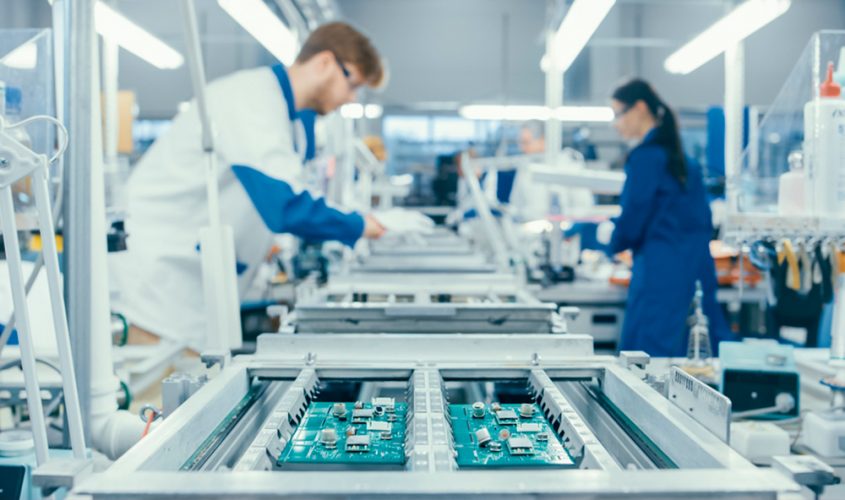
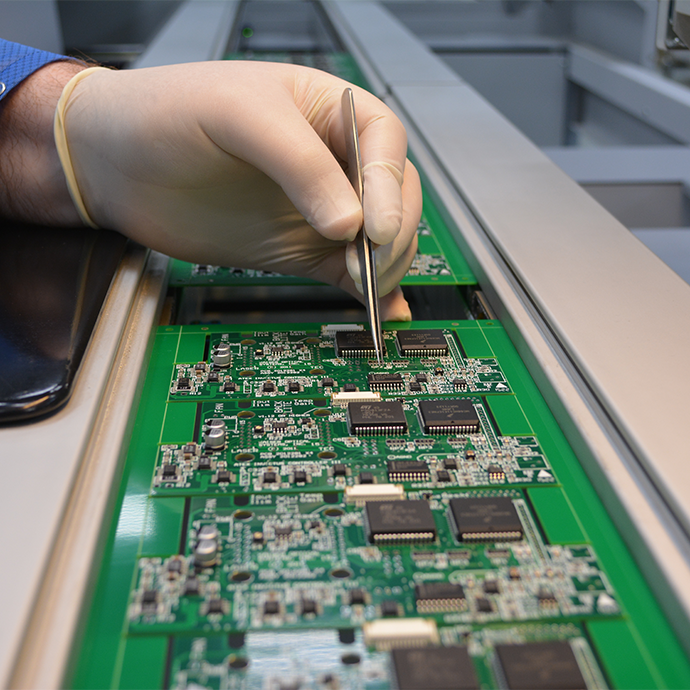
PCB manufacturing PCB manufacturing
Home > Blog

What Is the System Board? 2026 Guide for PC Beginners & Engineers

December 24th, 2025

The system board is one of the core elements inside every modern electronic device. Whether you use a laptop, desktop PC, tablet, medical device, industrial controller, or even consumer IoT equipment, everything begins with the system board. It is the foundational circuit structure that connects, coordinates, and powers all major hardware components. Without it, a device cannot turn on, cannot transfer data, and cannot function reliably.

Many people know this component by another familiar name: the motherboard. In most contexts, both terms refer to the same thing. However, when you evaluate technical documentation, service manuals, OEM repair guides, or industrial product sheets, you will often encounter the phrase “system board” because it reflects a more functional description of the board’s role. This guide will explain what the system board is, why it matters, what components it contains, and how to differentiate system board vs motherboard.

What Is the System Board? 2026 Guide for PC Beginners & Engineers

What Is the System Board?

What Is the System Board? System Board Definition

A system board is the main printed circuit board that hosts and interconnects all major hardware components of an electronic device. It distributes power, manages data communication, holds connectors, supports the CPU and memory, and integrates the firmware that controls boot and hardware configuration.

In a practical sense, the system board is the central nervous system of any computer or smart device. All processing, storage, communication, and peripheral interaction begin with it.

Key characteristics of a system board include:

  • It houses the CPU or SoC
  • It provides slots and interfaces for memory, storage, and expansion devices
  • It manages internal and external I/O
  • It contains the chipset or controller hub that coordinates system communication
  • It provides power regulation for critical components
  • It holds firmware such as BIOS or UEFI

This definition applies across device types, from high-performance servers to compact embedded systems.

Types of System Boards

Because electronic products vary greatly in size, function, and performance demands, system boards come in multiple categories.

1. Desktop System Boards

    Common form factors: ATX, Micro-ATX, Mini-ITX. These boards offer replaceable components, expansion slots, GPU support, and thermal flexibility.

    2. Laptop System Boards

    Compact and heavily optimized. Many components, like RAM or CPU, may be soldered to save space.

    3. Server System Boards

    Engineered for reliability and scalability. Typical features: multi-CPU sockets, ECC memory support, redundant power design, strong I/O capacity.

    4. Embedded and Industrial System Boards

    Used in factories, automation equipment, medical devices, and IoT controllers. Highly customizable layouts and long lifecycle availability.

    5. Mobile Device System Boards

    Found in smartphones and tablets. Use integrated SoC packages with wireless modules, power regulators, and dense multilayer stack-ups.

    Each type has a different design approach, but they all perform the same core role: providing the platform on which the entire system operates.

    Types of System Boards

    How Does a System Board Work?

    A system board works by acting as the central communication and power distribution platform for all hardware inside a device. Every major component—CPU, memory, storage, graphics, power modules, and external interfaces—relies on the system board to operate in sync. It functions as both the electrical backbone and the coordination center of the entire system.

    A system board works by:

    1. Delivering stable power

    2. Offering high-speed communication pathways

    3. Running firmware to start the device

    4. Synchronizing all operations

    5. Managing data traffic

    6. Physically integrating all components

    7. Monitoring system health

    It is the one component that must function perfectly for the entire system to operate. At every moment, the system board is directing traffic among dozens of active hardware elements.

    System Board Diagram

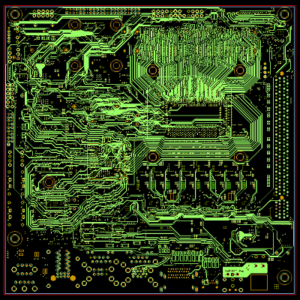
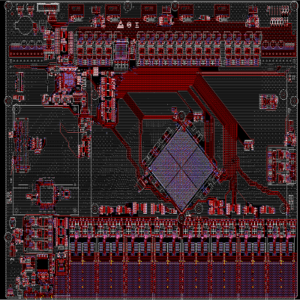
    Below is a simplified conceptual layout of a typical system board, it includes:

    • CPU socket
    • Chipset (Northbridge/Southbridge or PCH)
    • Memory (DIMM/SODIMM slots)
    • PCIe slots
    • Storage interfaces (M.2, SATA)
    • Power connectors (24-pin, 8-pin CPU)
    • I/O interfaces (USB, Ethernet, audio)
    • BIOS/UEFI firmware chip
    • VRM power modules
    • Internal headers (fan, front panel, RGB, etc.)
    System Board Diagram

    This diagram helps visualize how tightly integrated the components are and how the board organizes both power and data pathways.

    What Is the Purpose of the System Board?

    The core purpose of the system board is to:

    • Integrate all essential components into a unified platform
    • Enable communication between hardware modules
    • Provide physical mounting points and electrical pathways
    • Supply and regulate power from the power input
    • Facilitate system startup and firmware control
    • Handle data flow to internal and external devices

    Put simply, it is the foundation on which the entire computing system is built.

    Key Components Found on a System Board

    A modern system board integrates a wide range of functional components:

    • CPU socket or SoC package
    • RAM slots (DIMM or SODIMM)
    • PCH or chipset
    • PCIe interfaces
    • M.2 slots
    • SATA connectors
    • VRM power modules
    • BIOS/UEFI firmware chip
    • Internal headers (USB, fan, RGB, front panel)
    • Rear I/O ports (USB, HDMI, LAN, audio)
    • Embedded controllers (TPM, sensors, management ICs)
    Key Components Found on a System Board

    Each element contributes to the total functionality and performance capability of the device.

    System Board vs Motherboard: What Are the Differences?

    Although many people treat these terms as identical, there are subtle distinctions:

    System Board

    • Used in enterprise service documents
    • Emphasizes system-level integration
    • Common in servers, industrial controllers, embedded systems
    • More neutral, technical terminology

    Motherboard

    • Popular in consumer PC building
    • More common in desktop, gaming, and DIY markets
    • Focuses on expandability and performance features
    • Broadly recognized by non-technical users

    Key takeaway

    Both terms describe the same type of hardware, but they differ in usage context.

    What Is the System Board Used For?

    Anywhere data is processed or controlled, a system board exists. System boards are found in nearly all electronic systems:

    • Desktop PCs
    • Laptops
    • Smartphones
    • Servers
    • Medical devices
    • Automotive electronics
    • Industrial automation controllers
    • Robotics
    • Consumer electronics
    • IoT devices
    • Network equipment

    Why System Board Manufacturing Requires Professional PCB & PCBA Capabilities?

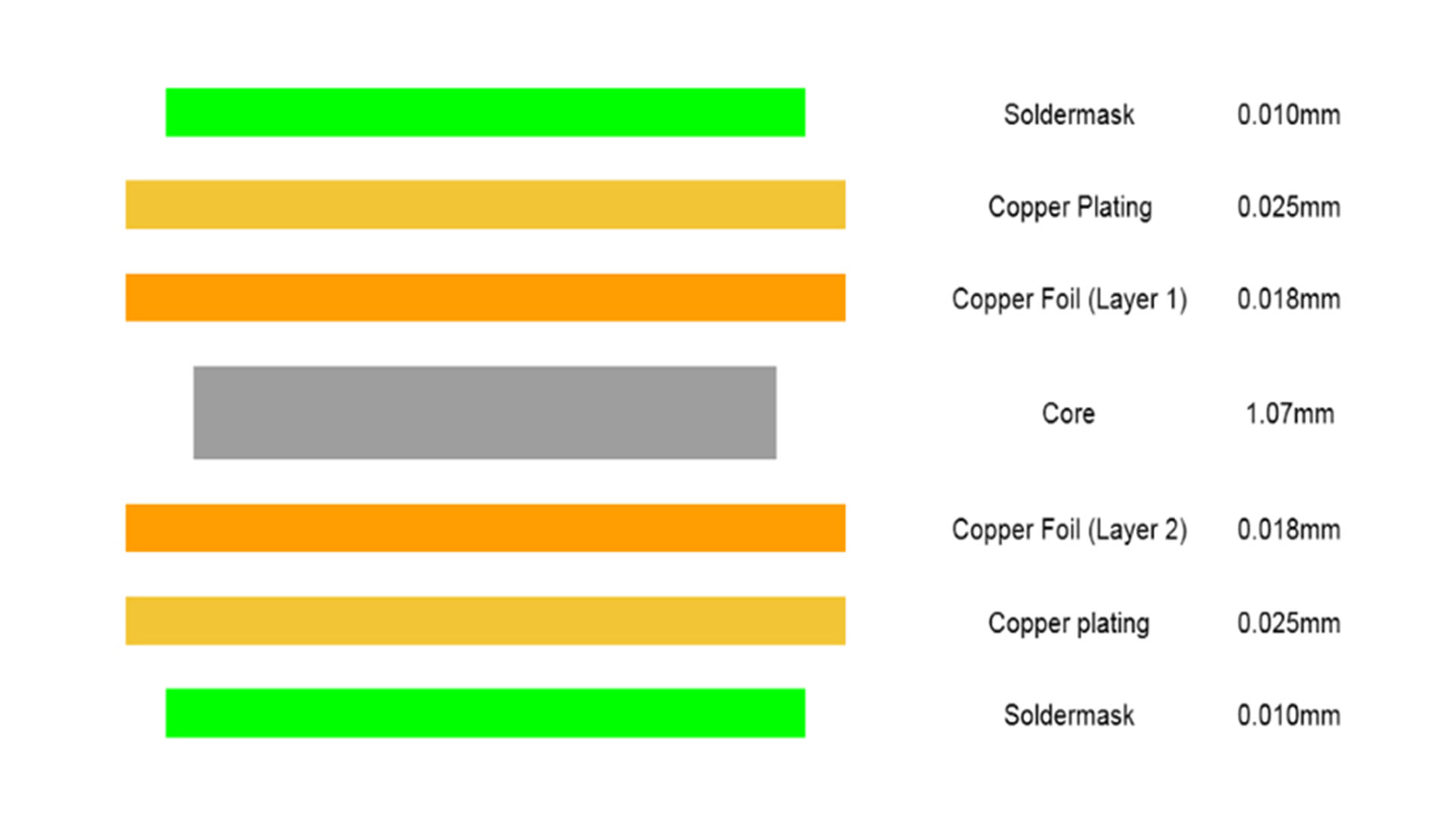
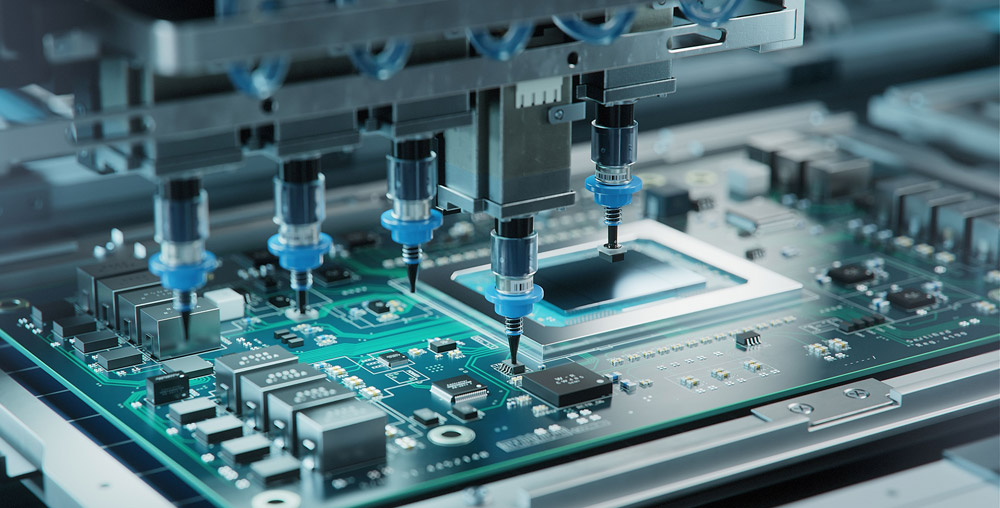
    Although readers usually think of the system board as a finished computer component, its reliability begins much earlier in the PCB manufacturing and assembly stages. A system board is a complex, multilayer PCB with dense routing, high-speed interfaces, strict impedance control, and tight thermal requirements. This makes the quality of its PCB and PCBA processes critical.

    Modern system boards typically include:

    • Multilayer stack-ups (8L, 10L, 12L and above)
    • High-speed differential pairs for PCIe, USB, HDMI, LVDS
    • Controlled impedance traces for stable signal integrity
    • BGA and LGA CPU packages
    • Fine-pitch connectors and ultra-dense component layouts
    • High-current VRM power stages
    • M.2, SATA, and PCIe slot soldering
    • Embedded controllers, BIOS/UEFI ICs, and power management circuits

    Manufacturing and assembling such boards requires precision, stability, engineering support, and strict testing procedures.

    This is exactly where EBest Circuit (Best Technology) helps global customers gain reliable performance.

    How EBest Circuit (Best Technology) Supports System Board Production?

    EBest Circuit (Best Technology) has long served customers who require complex mainboards, server logic boards, laptop controller boards, industrial control boards, and embedded system boards. Our fabrication and assembly services are engineered to meet the stringent requirements of system-level products.

    1. Advanced PCB Manufacturing Capabilities

    Our factories support:

    • Up to 40-layer PCB stack-ups
    • HDI structures (laser microvias, blind/buried vias, via-in-pad)
    • High-speed materials (Megtron, Isola, Rogers hybrid builds)
    • Tight impedance control ±8% or better
    • Thick copper options for power stages
    • High-temperature laminates for reliability
    • ENIG, ENEPIG, Immersion Tin, Hard Gold and other finishes

    These capabilities allow us to fabricate system boards that support stable high-speed signaling and long-term operational reliability.

    2. Professional SMT & PCBA Assembly

    With SMT factories in China and Vietnam, we support flexible production, fast lead times, and global supply chain advantages.

    Our assembly strengths include:

    • 0201, 0402, 0603 to high-power components
    • BGA, LGA, QFN, WLP, CSP, and high-density IC packages
    • Fine-pitch 0.3 mm and VFQFN layouts
    • Automated SPI, AOI, X-ray BGA inspection
    • Lead-free & RoHS-compliant processes
    • Fast prototype to mass-production capability

    For system boards, precise soldering of BGA CPU sockets, M.2 connectors, PCIe slots, and high-speed controllers is essential—and our inspection workflow ensures stable solder quality.

    3. Complete Electrical Testing & Functional Verification

    System boards must pass strict testing because they are the “brain” of the entire device.

    We use:

    • Flying-probe testing
    • Automated in-circuit testing (ICT)
    • Functional testing based on customer firmware
    • Boundary scan (JTAG) for high-density digital boards
    • Burn-in testing upon request

    High-layer count PCBs often hide defects deep inside the stackup, so our process ensures that every board delivered meets performance expectations.

    4. Full Engineering Support

    • Stack-up design assistance
    • DFM / DFA review
    • Impedance simulation
    • Material recommendation for high-speed designs
    • Prototype revision feedback
    • One-stop BOM sourcing

    Our engineering team collaborates directly with OEMs, industrial designers, and hardware architects to optimize manufacturability before production begins.

    Why Many Global Brands Choose EBest Circuit (Best Technology) for System Board Projects?

    Companies choose EBest Circuit (Best Technology) because we provide:

    • One-stop PCB + PCBA integration
    • Factories in China and Vietnam for flexible cost and lead time
    • High-layer, high-speed, HDI capability for complex logic boards
    • Professional SMT assembly with strict inspection
    • On-time delivery and stable quality
    • UL, ISO 9001, ISO 13485, AS9100D and IATF 16949 quality certifications

    Over a decade of experience serving electronics, industrial, automotive, medical, and computing customers

    If you are developing a system board, embedded controller, logic board, medical equipment mainboard, or industrial computer board, EBest Circuit (Best Technology) can support you from prototype to mass production.

    To get a fast quotation or technical consultation:

    Email: sales@bestpcbs.com

    Website: www.bestpcbs.com

    We will evaluate your Gerber files, BOM, and assembly requirements, then provide optimized PCB stack-ups, material choices, and lead-time proposals based on your project needs.

    You may also like

    PCBA vs PCB: What Are the Differences?

    December 24th, 2025

    PCBA vs PCB describes two different stages of electronic product creation. A PCB is the bare printed circuit board with copper traces but no components. It provides structure and routing but cannot function on its own. A PCBA, in contrast, is the fully assembled board with all chips, resistors, capacitors, and connectors soldered in place, ready to power a device.

    PCBA vs PCB: What Are the Differences?

    What Is PCB in Electronics?

    PCB is the base of most electronic products. It is the thin board that carries copper circuits. These copper paths guide signals and power across different parts of the device. A PCB does not power anything by itself. It only offers the layout and the structure.

    PCBs use materials like FR4, aluminum, and ceramic. FR4 is the most common because it offers strength, stability, and a friendly price. Aluminum and ceramic boards are chosen for high-heat or high-frequency applications.

    PCB can have one layer, two layers, or many layers. Because of this, PCBs can support small gadgets or advanced machines. Skilled designers use PCB technology to build phones, routers, sensors, medical devices, and even control units inside cars.

    Are Motherboards Just PCBs?

    A motherboard looks like a PCB, but it is much more than a bare board. It is a full PCBA. This means it contains the components, connectors, chips, capacitors, and controllers that allow a computer to function.

    A pure PCB cannot run a processor, store data, or supply power. It needs components soldered onto it. When those parts are added, the board becomes a system board or motherboard.

    So, a motherboard is not just a PCB. Instead, it is a perfect example of a PCBA. A motherboard is a product. A PCB is only a step toward that product.

    How Are PCB Boards Manufactured?

    Manufacturing PCBs is a complex process that requires precise operations at multiple critical stages to ensure the circuit boards possess excellent functionality, durability, and efficiency.

    • 1. Design and Layout

    BEST Technology’s engineers use design software to create circuit layouts. We plan the routing of each copper trace, select the number of layers, and determine the hole size, pad shape, and width.

    • 2. Material Preparation

    A large copper-clad sheet is chosen. The sheet uses FR4 or another base material.

    • 3. Image Transfer

    The copper pattern is printed onto the board surface. This creates the shapes that guide the electrical signals.

    • 4. Etching

    Excess copper is removed. Only the desired circuit pattern remains.

    • 5. Drilling

    Small holes are drilled to connect layers or mount components.

    • 6. Plating

    Copper is added inside the holes. This creates strong electrical connections.

    • 7. Solder Mask

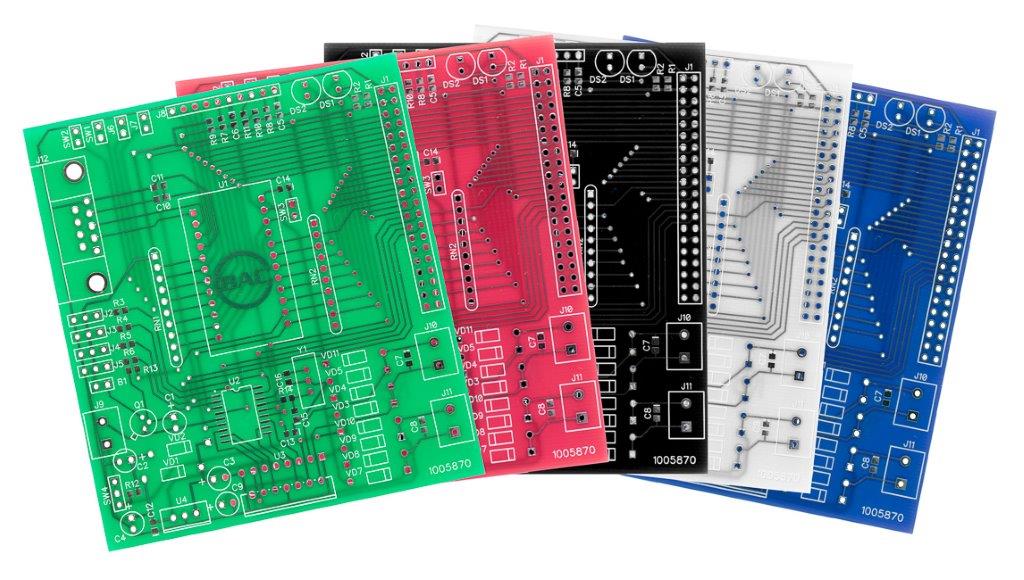
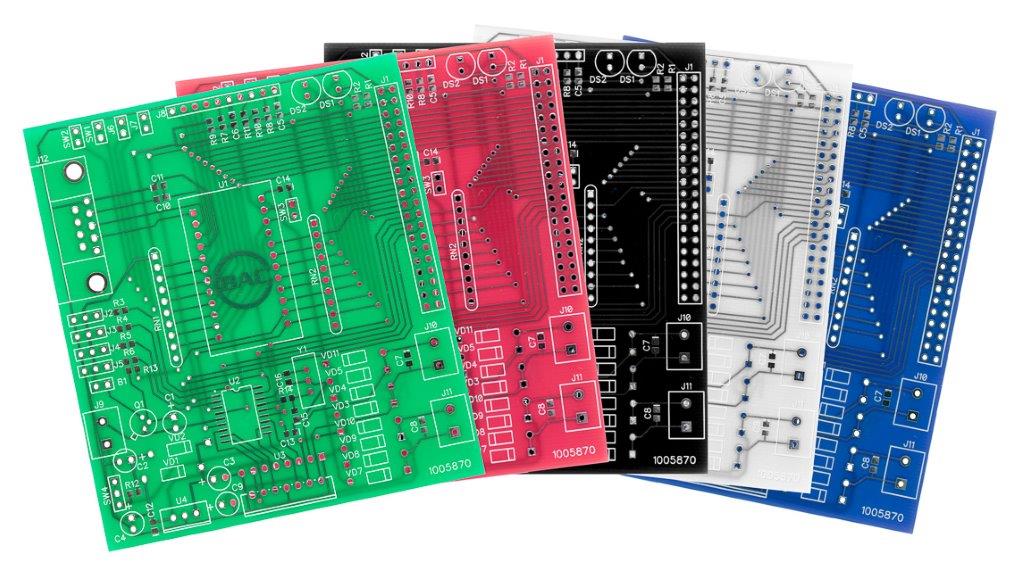
    The green (or red, blue, black) protective coating is applied. It prevents short circuits.

    • 8. Silkscreen

    Text, symbols, and markings are printed for easy assembly.

    • 9. Surface Finish

    A coating like ENIG, HASL, or OSP protects copper pads.

    • 10. Final Testing

    Electrical tests ensure every circuit works.

    This is how a PCB becomes ready for assembly. Next, components will be added. And that leads us to PCBA.

    PCBA vs PCB: What Are the Differences?

    Types of PCBs

    PCBs come in different types. Each type serves a different purpose, and each one influences final product performance.

    • 1. Single-Sided PCB

    One copper layer. Simple. Used for basic devices. Very low cost.

    • 2. Double-Sided PCB

    Copper on both sides. More routing. Used in many everyday products.

    Three or more layers. Often 4 to 32 layers. High performance. Great for complex electronics like PCs, routers, and industrial equipment.

    High-Density Interconnect boards. Very fine lines. Laser-drilled microvias. Popular in smartphones, wearables, and advanced communication systems.

    • 5. Flex PCB

    Thin and bendable. Used in cameras, medical probes, and folding designs.

    A mix of rigid and flexible materials. Supports 3D structure. Trusted for aerospace and medical devices.

    Uses aluminum or copper base. Excellent heat control. Great for LED lighting and power electronics.

    When choosing between them, engineers consider temperature, size, frequency, and mechanical stress. Each board type offers a unique value and opens new design possibilities.

    What Is a PCBA Board?

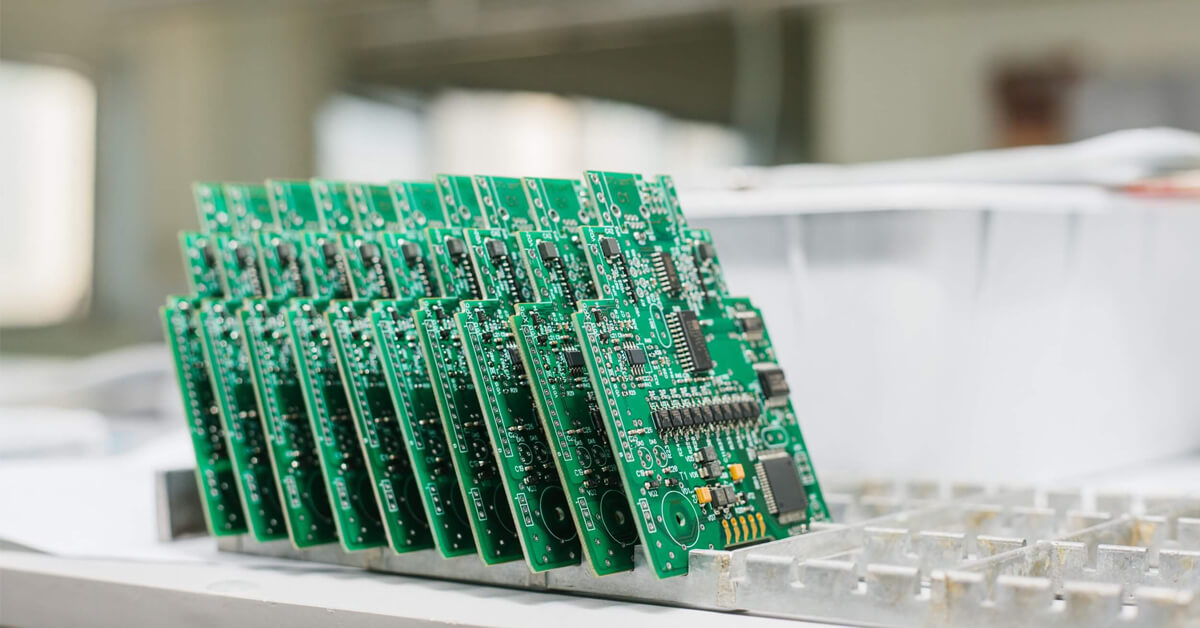
    PCBA board is a PCB that has been assembled with electronic components. PCBA stands for “Printed Circuit Board Assembly.” It is the stage where the PCB receives the chips, resistors, sensors, and connectors that allow it to operate.

    Without assembly, circuits cannot move data or power. With assembly, the board becomes a working product.

    A PCBA can be simple or advanced. It may have only a few resistors, or it may have hundreds of parts with tight spacing. In fast-moving industries like consumer electronics, automotive, and medical devices, PCBA quality decides final product reliability.

    PCBA vs PCB: What Are the Differences?

    What Does PCBA Mean?

    PCBA means the factory has placed and soldered components onto the bare board. The process includes:

    • Placement
    • Soldering
    • Inspection
    • Functional testing

    People often confuse the terms “PCB” and “PCBA.” However, PCBA is the complete version, containing everything necessary for the device to function. PCB, on the other hand, is just the basic foundation.

    What Are the Different Methods for PCBA Assembly?

    Different devices require different assembly methods. Here are the most common ones.

    • 1. SMT (Surface Mount Technology)

    The most popular method today. Components are placed on pads without holes. Machines place parts at high speed. Solder paste holds each part. Then heat melts the solder to make a strong joint.

    SMT is great for compact, modern designs.

    • 2. Through-Hole Technology

    Components have long legs. They go through holes in the board. Solder secures them on the opposite side. Through-hole is strong and dependable. It is often used for power components or connectors.

    Even today, many industries use both SMT and through-hole together.

    • 3. Mixed Technology

    Most boards use SMT for small parts and through-hole for strong or heavy parts. This balance offers performance and reliability.

    • 4. BGA Assembly

    Ball Grid Array (BGA) components offer high density. They use solder balls under the chip. This method is used for processors, GPUs, and advanced modules.

    • 5. Wave Soldering

    Hot solder flows in a wave. Through-hole parts get soldered at once. It saves time on mass production.

    • 6. Reflow Soldering

    This method is for SMT parts. The board goes through a heating oven. The solder melts and bonds each pad.

    Assembly technology keeps improving, but these core methods remain highly trusted in the industry.

    What Is the Difference Between PCBA and PCB?

    Now let’s talk about the main topic: PCBA vs PCB. This comparison is simple when explained clearly.

    1. Structure

    • PCB: Just the base board with copper.
    • PCBA: Complete board with components.

    2. Function

    • PCB: No function by itself.
    • PCBA: Can operate, run software, transmit signals, and power a device.

    3. Stage

    • PCB: Step one of the process.
    • PCBA: Step two, after assembly.

    4. Cost

    • PCB: Lower cost.
    • PCBA: Higher cost due to components, assembly, and testing.

    5. Lead Time

    • PCB: Faster to produce.
    • PCBA: Takes longer due to sourcing, programming, and testing.

    6. Use

    • PCB: For design verification, prototyping, and structure.
    • PCBA: For final products and field use.

    7. Industry Terminology

    PCB vs PCBA difference matters because many new buyers search for the wrong term. If you need a working board, you want PCBA—not just PCB.

    PCBA vs PCB: What Are the Differences?

    Conclusion:

    PCBs form the structure. PCBs guide signals. PCBA processes signals. PCBs are the first step. PCBA is the final, functional product.

    When you choose a professional PCBA manufacturer, your product gains reliability, performance, and trust.

    For high-quality PCB and PCBA manufacturing in China and Vietnam, contact: sales@bestpcbs.com

    You may also like

    PCB Manufacturer in Dubai

    December 24th, 2025

    Looking for PCB manufacturer in Dubai? This comprehensive guide outlines top providers, key selection criteria, and solutions to common manufacturing pain points.

    Dubai’s position as a global technological and industrial hub has fostered a dynamic ecosystem of PCB manufacturer in Dubai, catering to diverse sectors from aerospace to consumer electronics. For those seeking reliable partners in this region, understanding the PCB manufacturer in Dubai is crucial to making informed decisions that align with project requirements and quality standards. This guide delves into the key players, core challenges, and evaluation frameworks for PCB manufacturer in Dubai, offering actionable insights to navigate the local market effectively and secure supply chain stability.

    PCB Manufacturer in Dubai, https://www.bestpcbs.com/blog/2025/12/pcb-manufacturer-in-dubai/

    Top 10 PCB Manufacturer in Dubai

    Company NameCore Business AdvantagesKey StrengthsManufacturing CapabilitiesLead Time
    EBest Circuit (Best Technology) Co.,LtdOne-stop PCB design, prototyping, manufacturing & assembly; automotive and aerospace PCB solutions19+ years of industry experience; ISO9001/ISO13485/IATF16949 certified; 97.2% on-time delivery rate1-16 layer rigid-flex PCBs; 0.1mm laser drilling; heavy copper PCBs (up to 6oz); impedance control ±5%; ceramic & FR4 materials24 hours for 2-layer prototypes; 7-12 days for mass production
    Falcon ElectronicsPCB assembly & prototyping; automotive and consumer electronics-focused OEM servicesEstablished in 2008; ISO certified; Dubai Silicon Oasis location for logistical advantage2-12 layer PCBs; SMT & through-hole assembly; rigid PCB fabrication; IPC-6012 compliant5-7 days for prototypes; 10-15 days for mass production
    Precision Electronics UAEHigh-quality PCB fabrication; rapid prototyping; small to medium volume production12+ years of local experience; client-recommended for precision; Dubai Investment Park base1-8 layer PCBs; laser direct imaging (LDI) technology; FR4 & aluminum-based materials; AOI inspection3-5 days for prototypes; 8-12 days for mass production
    Globaltronics Manufacturing L.L.C.Contract electronics manufacturing; PCB assembly for telecom, defense & industrial sectorsJebel Ali Free Zone location; multiple ISO certifications; lean manufacturing processes2-16 layer PCBs; HDI boards; SMT & MID technologies; RoHS compliant materials6-8 days for prototypes; 12-18 days for mass production
    Naoki Design SolutionsRigid PCB fabrication; prototype & production services; local technical supportBur Dubai location; specialized in FR4 materials; tailored solutions for local industries2-20 layer rigid PCBs; vacuum etching; line width/spacing 3/3 mil; interlayer alignment ≀25ÎŒm4-6 days for prototypes; 9-14 days for mass production
    Popular ElectronicsPrinted circuit board supply; electronic components; technical equipment maintenanceDeira & Nad Al Hamar locations; established local distribution network; quick response service1-6 layer PCBs; glass-reinforced plastic substrates; standard surface treatments (OSP, HASL)3-7 days for prototypes; 10-15 days for mass production
    Emirates Electronics Factory (Dubai Branch)Turnkey electronics manufacturing; PCB assembly; full product assembly services15+ years of UAE market experience; international quality standard compliance; scalable production2-14 layer PCBs; SMT assembly; through-hole technology; environmental testing support7-10 days for prototypes; 14-20 days for mass production
    Techno Print Circuits DubaiCustom PCB fabrication; high-frequency PCBs; industrial electronics solutionsSpecialized in high-temperature materials (TG 180-220℃); advanced process control2-18 layer PCBs; high-frequency microwave PCBs; impedance control ±5%; laser drilling5-8 days for prototypes; 12-16 days for mass production
    Dubai Electronic Manufacturing Co.PCB prototyping & production; electronic assembly; quality testing servicesIndustrial zone location; modern production facility; strict quality assurance protocols1-10 layer PCBs; FR4 & CEM materials; AOI & flying probe testing; copper thickness uniformity ±1.5Όm4-6 days for prototypes; 9-13 days for mass production
    Smart Circuit Technologies DubaiHDI PCB manufacturing; rigid-flex solutions; IoT device PCB componentsFocus on smart city applications; innovative micro-via technology; quick-turn services4-16 layer HDI PCBs; rigid-flex PCBs; 0.1mm micro-vias; ENIG surface treatment6-9 days for prototypes; 13-17 days for mass production

    How to Choose A Reliable PCB Manufacturer in Dubai?

    Selection Guide to PCB Manufacturer in Dubai:

    • Validate industry certifications and compliance with international standards (ISO 9001, IPC-A-600G, RoHS): These certifications serve as critical benchmarks for ensuring your PCB designs meet global quality requirements and regulatory mandates, reducing risks of non-compliance in end-product markets.
    • Align manufacturer’s process capabilities with your design specifications: Evaluate if the manufacturer can accommodate your project’s unique requirements, such as layer count, fine line width/spacing (e.g., 2/2 mil for HDI designs), and compatibility with specialized materials like high-frequency or ruggedized substrates.
    • Assess on-time delivery track record and flexibility for time-sensitive projects: Review historical on-time delivery data, and confirm the manufacturer can handle expedited orders or adapt to last-minute design adjustments without compromising production quality, which is vital for maintaining your project timelines.
    • Scrutinize quality control (QC) processes and inspection capabilities: Verify the manufacturer employs advanced QC technologies (AOI, flying probe testing, X-ray inspection) and has a transparent defect rate history, ensuring potential design or production flaws are detected early in the manufacturing cycle.
    • Evaluate local supply chain integration and logistics efficiency: A manufacturer with robust local supply chain links and proximity to Dubai’s key ports/airports can minimize lead times, reduce transportation risks, and ensure timely delivery of materials and finished PCBs for your global projects.
    • Gauge technical support and engineering collaboration capacity: Prioritize manufacturers that offer proactive technical support for complex or custom designs, such as early-stage design for manufacturability (DFM) reviews, to optimize your designs and avoid production bottlenecks.
    • Compare pricing structures and value-added services: Look beyond base costs to assess cost-effectiveness, including value-added services like rapid prototyping, design optimization, and post-production support, ensuring you get quality results without unnecessary expenses.
    • Check customer references and industry reputation: Seek feedback from peers in your sector (e.g., automotive, aerospace, telecom) to evaluate the manufacturer’s performance with similar designs, as well as the reliability of their after-sales support for issues like design iterations or quality follow-ups.
    How to Choose A Reliable PCB Manufacturer in Dubai, https://www.bestpcbs.com/blog/2025/12/pcb-manufacturer-in-dubai/

    Core Pain Points of PCB Manufacturer in Dubai

    • Heavy reliance on imported raw materials (copper, FR4 substrates, specialty alloys), leading to supply chain volatility and cost fluctuations​.
    • Shortage of skilled technical personnel, particularly in high-precision processes like HDI board fabrication and impedance control​.
    • Stringent environmental regulations on electronic waste management, increasing production and disposal costs​.
    • Intense competition from international PCB manufacturers supplying the Dubai market, pressuring local pricing and profit margins​.
    • Limited local R&D capabilities for advanced PCB technologies, hindering innovation in high-frequency and automotive-grade products​.
    • Fluctuating energy costs in Dubai, impacting the energy-intensive PCB manufacturing processes (etching, plating, curing)​.
    • Challenges in meeting the growing demand for small-batch and custom PCB orders due to rigid production line configurations​.
    • Delays in customs clearance for imported equipment and materials, disrupting production schedules and lead times.

    How to Evaluate Production Capacity of PCB Manufacturer in Dubai?

    Evaluation Guide to Production Capacity of PCB Manufacturer in Dubai:

    • Review monthly production volume capabilities and current order saturation to ensure capacity for your requirements​.
    • Inspect manufacturing facilities and equipment, including automation level and advanced machinery (e.g., LDI exposure machines, vacuum etching lines)​.
    • Assess scalability by evaluating the manufacturer’s ability to ramp up production volumes within required timelines.​
    • Verify raw material inventory management and supply chain resilience to avoid production delays due to material shortages​.
    • Evaluate multi-shift operation capabilities to meet tight deadlines or high-volume demands​.
    • Review process diversification, including the ability to handle different PCB types (rigid, flexible, HDI) and technologies​.
    • Analyze historical production data for on-time completion rates and capacity utilization during peak periods​.
    • Assess the manufacturer’s engineering team size and expertise to support production optimization and problem-solving.

    How to Evaluate Delivery Time of PCB Manufacturing Company Dubai?

    Evaluation Guide to Delivery Time of PCB Manufacturer in Dubai:

    • Confirm standard lead times for different order types (prototype, low-volume, high-volume) and compare against industry benchmarks​.
    • Evaluate expedited service options and associated costs for time-sensitive projects​.
    • Review production scheduling processes and flexibility to accommodate last-minute design changes or order adjustments​.
    • Assess logistics and shipping capabilities, including proximity to ports/airports and partnerships with reliable logistics providers​.
    • Verify inventory management systems for critical raw materials to minimize delays from material procurement​.
    • Evaluate the manufacturer’s track record for on-time delivery through customer references and performance reports​.
    • Assess contingency plans for production disruptions (e.g., equipment failure, supply chain issues) that could impact delivery​.
    • Confirm clear communication protocols for delivery status updates and potential delay notifications.
    How to Evaluate Delivery Time of PCB Manufacturing Company Dubai, https://www.bestpcbs.com/blog/2025/12/pcb-manufacturer-in-dubai/

    How to Inspect Quality Control Processes of PCB Manufacturing Company Dubai?

    Inspection Guide to Quality Control Processes of PCB Manufacturing Company Dubai:

    • Verify the presence of a comprehensive quality management system (QMS) certified to ISO 9001 or relevant industry standards​.
    • Inspect incoming material inspection (IQC) processes for raw material verification and compliance with specifications​.
    • Evaluate in-process quality control (IPQC) measures, including real-time monitoring of critical production parameters​.
    • Review outgoing quality control (OQC) procedures, including final inspection technologies (AOI, flying probe, X-ray testing)​.
    • Assess defect tracking and corrective action processes to ensure continuous improvement of quality issues​.
    • Verify product traceability systems, including batch/lot tracking and documentation of production processes​.
    • Review quality audit reports, both internal and third-party, to assess compliance with quality standards​.
    • Evaluate the manufacturer’s approach to failure analysis and root cause investigation for quality non-conformances​.
    • Confirm adherence to IPC standards (e.g., IPC-A-600G for PCB acceptability) through documentation and sample inspections.

    Frequently Asked Questions of Dubai PCB Manufacturing

    Q1: Which reliable PCB rapid prototyping suppliers operate in Dubai?

    A1: Besomi Electronics is a major PCB manufacturer in Dubai, though discussions note concerns about market concentration. Alternative options include Fox EMS, which offers end-to-end services from prototyping to mass production, supporting 4-layer boards, IPC Class 2/3 standards, and product certification. Local manufacturing is often preferred for rapid iterations, avoiding high overseas shipping costs.

    Q2: How do PCB manufacturing costs in Dubai compare to international options?

    A2: Local costs may be higher than some international suppliers but eliminate significant shipping fees. For example, 5 dual-layer boards locally produced cost approximately 200-300 AED, while international shipping could add 150-200 AED. Local production typically delivers in 3-5 days, versus 7-14 days for overseas options.

    Q3: Are there companies in Dubai that support full electronic device commercialization?

    A3: Firms like Fox EMS provide full-stack services including design, prototyping, mass production, and packaging. Users emphasize selecting suppliers with ISO certifications and MIL-SPEC experience, particularly for medical/industrial devices. Startups are advised to validate designs through small batches before scaling.

    Q4: Do Dubai’s tax advantages attract PCB manufacturers?

    A4: Free zone companies benefit from 0% income tax and customs duties, primarily aiding trade rather than manufacturing. Imported raw materials are duty-free, and exports to MENA markets enjoy lower tariffs. However, manufacturing must account for higher labor costs compared to Southeast Asia and partial reliance on imported components.

    Q5: What common quality issues arise in Dubai PCB manufacturing?

    A5: Reported issues include oxidized pads causing solder joint failures, poor solder mask alignment, and layer registration errors. Suppliers offering electrical testing reports and AOI inspections are recommended. Designers should include test points, as skipping IPC Class 3 standards may lead to signal integrity problems in high-frequency applications.

    You may also like

    PCB Manufacturer in Belarus, Belarus PCB Manufacturing Company

    December 23rd, 2025

    Looking for PCB manufacturer in Belarus? This guide explores key solutions, leading companies, and future trends to help you make an informed decision.

    When searching for reliable PCB manufacturer in Belarus, understanding the landscape of Belarus top 10 PCB manufacturers is crucial for securing high-quality PCB manufacturing services. This guide delves into the key players, core challenges, and evaluation criteria for PCB manufacturer in Belarus, providing actionable insights to streamline your sourcing process. Whether you need PCB prototyping, mass production, or custom PCB design support, the Belarus PCB manufacturers overview here helps you make informed decisions, avoiding common pitfalls in the local PCB manufacturing market.

    PCB Manufacturer in Belarus, https://www.bestpcbs.com/blog/2025/12/pcb-manufacturer-in-belarus/

    Are You Facing These Challenges?

    • Do you often face frequent rework and project delays due to inconsistent quality control in small-batch PCB prototyping?​
    • Is it hard to find cost-effective solutions for complex PCB design that balance performance and budget constraints?​
    • Do prolonged lead times for urgent PCB manufacturing orders make it difficult to meet tight project deadlines?​
    • Do insufficient technical support for PCB design optimization lead to higher production costs and potential functionality issues for you?​
    • Are you concerned about the market access risks of end products caused by unclear certification compliance of PCB Manufacturer in Belarus?​
    • Do you find that many manufacturers lack the flexibility to meet custom PCB manufacturing requirements for specialized applications?

    Our Solutions to These Challenges

    At our PCB manufacturing facility, we prioritize your needs with a data-backed comprehensive end-to-end solution that effectively eliminates the aforementioned pain points for clients collaborating with PCB Manufacturer in Belarus. Our process starts with a detailed requirement analysis, where our technical team provides a 12-hour rapid response to fully understand your PCB design and application scenarios. We then deliver tailored optimization recommendations that can reduce design-related production waste by 15%-20% while enhancing manufacturability.

    For PCB prototyping, we adopt advanced laser drilling equipment and implement 100% automatic optical inspection (AOI), ensuring prototype accuracy with a layer-to-layer tolerance of ±0.003mil and a prototype yield rate of over 99.5%. During mass production, our real-time production monitoring system updates key process data every 5 minutes, enabling us to address production anomalies within 30 minutes and control the mass production defect rate below 0.3%.

    Our optimized logistics network ensures that 95% of local orders in Belarus are delivered within 3-5 business days, with full transparency through a real-time order tracking system. We stand behind our products with a comprehensive after-sales service, offering 2-hour technical support response and a 48-hour problem resolution rate of 95% for any post-delivery concerns. Choosing us means partnering with a PCB Manufacturers that takes full responsibility for your project success, backed by tangible data, from initial design to final delivery.
    Why Choose EBest Circuit (Best Technology) for PCB Manufacturer?

    Reasons Why Choose EBest Circuit (Best Technology) for PCB Manufacturer:

    • Competitive Pricing & Cost-Sensitive Solutions: Amid global PCB raw material price fluctuations (copper foil up 11.5% YoY, laminate lead time extended 13.8%1), we leverage bulk material procurement (covering 80% of common substrates) and lean production processes to cut overall costs by 10%-15%. Our design optimization team identifies material waste reduction opportunities, lowering material scrap rates to below 3% (industry average: 8%), ensuring cost-effectiveness without compromising performance.?
    • 24-Hour Rapid Prototyping for Urgent Orders: Our dedicated urgent prototyping line supports 24-hour turnaround for standard specs (2-12 layers, 3mil/3mil line width/space, 0.1mm minimum hole diameter). With 100% automated AOI inspection integrated into the prototyping process, we achieve a prototype yield rate of 99.5%+, accelerating your product development cycle by an average of 7-10 days compared to industry typical lead times.?
    • Fast Delivery with 99.2% On-Time Rate: Our streamlined production planning system and strategic logistics partnerships (covering EU, CIS, and North American markets) ensure a 99.2% on-time delivery rate. For mass production orders, average lead time is 7-15 days, 30% shorter than the regional industry average. We also provide real-time order tracking, with 95% of orders offering detailed production and shipping status updates.?
    • Superior Quality with Full Inspection & Strict QC Processes: Quality control covers the entire production chain—raw material incoming inspection (100% batch testing for substrate Tg value, copper thickness), in-process SPC monitoring (5-minute data sampling), and final 100% AOI + X-ray inspection for mass production. We maintain a mass production defect rate below 30 PPM (parts per million), far below the industry average of 150 PPM, ensuring consistent product reliability.?
    • 19 Years of Production Experience & Cost-Reduction Database: With 19 years in the industry, we’ve built a database of 100,000+ production error cases. This database enables us to predict and avoid 90% of common manufacturing issues, reducing rework costs by 35% and shortening production lead times by 20% for complex projects. We’ve served 5,000+ global clients, adapting to diverse market demand nuances.?
    • Free DFM Analysis: Our free DFM analysis identifies 90%+ of manufacturability issues in early design stages. The analysis includes optimization recommendations for line width/space, pad design, and layer stack-up, which can improve production yield by 15% and reduce design iteration time by 5-7 days. We deliver detailed DFM reports within 12 hours of receiving your design files.?
    • Comprehensive Certification Compliance: We hold ISO9001:2015 (quality management), ISO13485:2016 (medical electronics), IATF16949 (automotive electronics), REACH, and RoHS certifications. All certifications are audited annually with a 100% compliance rate, ensuring your products meet strict market access requirements in the EU, US, and other key regions. Our certified processes cover 100% of production batches.?
    • Customizable Solutions for Diverse Applications: Our customization capabilities cover high-frequency PCBs (up to 40GHz, PTFE/Rogers materials), rigid-flex PCBs (2-20 layers, bend radius 0.8mm), and HDI PCBs (up to 32 layers, blind/buried vias). For specialized applications, we achieve a customization success rate of 98.5% and offer tailored process parameters, with 70% of custom projects delivered within the standard lead time.
    Why Choose EBest Circuit (Best Technology) for PCB Manufacturer, https://www.bestpcbs.com/blog/2025/12/pcb-manufacturer-in-belarus/

    Top 10 PCB Manufacturer in Belarus List

    Company NameMain BusinessCore AdvantagesProcess CapabilityDelivery Time
    EBest Circuit (Best Technology) Co.,LtdPCB prototyping, mass production (rigid/flexible/rigid-flex/HDI PCBs), custom design support19Y experience, 24h rapid prototyping, 99.2% on-time delivery, free DFM analysis, cost-sensitive solutions2-32L, min 3mil/3mil, 0.1mm hole, HDI blind/buried vias, ENIG/HASL/OSP/Imm TinUrgent: 24h, Standard: 3-7 day, Mass: 7-15 day
    Belwest ElectronicsPCB manufacturing, assembly, component sourcingLocal Minsk base, supply chain integration, personalized service, EU compliance2-16L, min 4mil/4mil, 0.2mm hole, HASL/OSPPrototyping: 5-10 day, Mass: 10-20 day
    Mikron GroupHigh-precision PCBs, microelectronics, testingAdvanced testing, aerospace/automotive expertise, strict QC2-24L, min 2.5mil/2.5mil, 0.15mm hole, HDI, ENIG/Imm SilverPrototyping:3-8 day, Mass: 8-18 day
    Integral ElectronicsPCB prototyping, small-medium batch, design optimizationFlexible production, competitive small batch pricing, 24/7 tech support2-12L, min 5mil/5mil, 0.25mm hole, HASL/OSP/ENIGPrototyping:4-7 day, Mass: 7-15 day
    Electronmash MinskMass PCBs, industrial control, assemblyLarge-scale capacity, stable quality, industrial experience2-20L, min 4mil/4mil, 0.2mm hole, HASL/OSPPrototyping: 7-12 day, Mass: 12-25 day
    PCB-Tech BelarusSpecialized PCBs (high-temp/high-freq), prototyping, design consultationHigh-quality materials, environmental standards, research collaboration2-18L, min 3mil/3mil, 0.15mm hole, PTFE/Rogers, ENIGPrototyping: 5-10 day, Mass: 10-20 day
    Techno-ElectronicsPCB manufacturing, assembly, turnkey solutionsOne-stop service, project management, after-sales support2-16L, min 4mil/4mil, 0.2mm hole, HASL/OSP/Imm TinPrototyping: 6-9 day, Mass: 9-18 day
    Zelenograd-Electronics BelarusHigh-density PCBs, HDI, testing/validationAdvanced HDI, precision testing, high-end experience2-28L, min 2mil/2mil, 0.1mm hole, multi-vias HDI, ENIG/Imm SilverPrototyping:7-12 day, Mass:12-22 day
    Minsk Electronics FactoryStandard/custom PCBs, automotive small-batchIATF16949, automotive experience, stable supply chain2-14L, min 4mil/4mil, 0.2mm hole, HASL/ENIGPrototyping:5-8 day, Mass:8-16 day
    EuroPCB BelarusPCB prototyping, medium-batch, EU-standardEU compliance, fast EU delivery, multilingual support2-12L, min 5mil/5mil, 0.25mm hole, OSP/ENIG/HASLPrototyping:4-6 day, Mass:6-14 day

    Pain Point of PCB Manufacturer in Belarus

    • Dependence on imported raw materials (such as high-grade copper clad laminates and special inks), leading to unstable supply chains and increased production costs​.
    • Insufficient advanced production equipment, limiting the manufacturing capacity of high-precision, multi-layer PCBs (such as HDI and rigid-flex PCBs)​.
    • High labor costs compared to some Asian manufacturing bases, affecting price competitiveness in the global market​.
    • Stringent environmental regulations in the region, requiring additional investment in environmental protection equipment and processes, increasing production costs​.
    • Limited local R&D capabilities in new PCB materials and processes, lagging behind international advanced levels​.
    • Fluctuations in regional geopolitical factors, affecting export channels and international cooperation opportunities​.
    • Shortage of professional technical talents in PCB design and manufacturing, leading to slower response to complex customer needs​.
    • Challenges in scaling production capacity quickly to meet sudden increases in market demand, resulting in lost business opportunities.
    Pain Point of PCB Manufacturer in Belarus, https://www.bestpcbs.com/blog/2025/12/pcb-manufacturer-in-belarus/

    How to Assess the Production Capability of PCB Manufacturer in Belarus?

    Assessment Guide to Production Capability of PCB Manufacturer in Belarus:

    • Check the manufacturer’s maximum number of PCB layers and minimum line width/line spacing specifications, which directly reflect their ability to produce high-precision products​.
    • Verify the types of surface finishes they can provide (such as ENIG, HASL, OSP) to ensure compatibility with your product’s application environment​.
    • Inquire about their minimum hole diameter capability, especially for products requiring dense interconnects or small component packaging​.
    • Assess their experience in manufacturing specialized PCBs (such as high-temperature, high-frequency, rigid-flex) if your project has specific requirements​.
    • Review their quality control process documentation, including raw material inspection, in-process testing, and final inspection procedures​.
    • Request sample testing reports to verify the consistency and accuracy of their production processes​.
    • Inquire about their equipment list, focusing on whether they have advanced production and testing equipment (such as laser drilling machines, AOI testers)​.
    • Check their production error rate and yield data, which are key indicators of process stability and reliability.
    How to Assess the Production Capability of PCB Manufacturer in Belarus, https://www.bestpcbs.com/blog/2025/12/pcb-manufacturer-in-belarus/

    How to Evaluate the Delivery Time of Belarus PCB Manufacturing Company?

    Evaluation Guide to Production Capability of PCB Manufacturer in Belarus:

    • Request detailed delivery time commitments for different order types (prototyping, small batch, mass production) in writing to avoid disputes​.
    • Inquire about their on-time delivery rate statistics and ask for customer references to verify the accuracy of these data​.
    • Assess their production planning and scheduling capabilities, including whether they have dedicated lines for urgent orders​.
    • Check their supply chain management, such as the stability of raw material suppliers and lead times for material procurement​.
    • Inquire about their contingency plans for potential production delays (such as equipment failures, raw material shortages)​.
    • Evaluate their logistics partners and shipping options to ensure that delivery time includes final transportation to your location​.
    • Ask about the possibility of expedited services and associated costs for urgent projects​.
    • Review their historical delivery performance for similar order sizes and specifications to your project.

    Frequently Asked Questions About Belarus PCB Manufacturing

    Q1: Why do some Belarus PCB manufacturers have longer lead times compared to major Asian suppliers?
    A1: Belarus has a smaller fabrication ecosystem, so many raw materials such as copper-clad laminates, solder mask, or RF substrates must be imported. This often creates longer procurement cycles, and when combined with limited high-volume production lines, total lead time increases, especially for multilayer or HDI builds.

    Q2: Can PCB factories in Belarus handle HDI, microvias, or fine-line routing for dense designs?
    A2: Basic HDI capabilities such as laser-drilled microvias and fine-line imaging exist, but availability varies widely between suppliers. Some factories can support controlled impedance and microvias for 6–10 layer boards, while more advanced stacked-via or 0.1 mm line/space capability is usually handled by external partners.

    Q3: Is it easy to source high-frequency materials like Rogers or Taconic through Belarus PCB manufacturers?
    A3: Specialty RF materials are available, but typically on request. Most suppliers do not stock Rogers, Taconic, or PTFE substrates in large quantities, so these laminates are imported per project. Designers working with antennas, radar systems, or RF modules should expect additional lead time and higher cost when using such materials.

    Q4: Do Belarus PCB manufacturers provide reliable assembly services for BGA and fine-pitch components?
    A4:Some factories offer SMT and THT assembly, but not all support dense BGA footprints or 0.5 mm-pitch packages. Engineers normally confirm stencil thickness, reflow profiling, and inspection capability (X-ray, AOI) before sending boards that use fine-pitch or high-IO components.

    Q5: How consistent is quality control for multilayer PCBs produced in Belarus?
    A5: Quality is generally stable for standard FR-4 multilayer work, but consistency varies among suppliers, especially when it comes to via reliability, layer registration, and solder mask alignment. Designers usually request impedance reports, cross-section samples, and full electrical test documentation to ensure the manufacturer meets their reliability requirements.

    You may also like

    PCB Manufacturer Ireland, PCB Manufacturing Company Ireland

    December 23rd, 2025

    Struggling to find a reliable PCB Manufacturer Ireland? This comprehensive guide lists the top 10 vendors and provides actionable steps to evaluate their capability, quality control, lead time, and future-readiness, empowering your sourcing decision.

    PCB Manufacturer Ireland is pivotal for sourcing reliable printed circuit board solutions in Ireland, as partnering with a trustworthy provider directly impacts product quality and project success. The local PCB manufacturing industry here combines global expertise with homegrown specialization, offering diverse capabilities to meet varying project demands from prototype development to high-volume production. Choosing the right PCB manufacturer Ireland not only streamlines workflow and mitigates risks but also enhances the overall performance of electronic products, making the selection of a capable partner a core priority for any project.

    PCB Manufacturer Ireland, https://www.bestpcbs.com/blog/2025/12/pcb-manufacturer-ireland/

    Top 10 PCB Manufacturer Ireland List

    Company NameMain Business AdvantagesCore AdvantagesProduction CapabilityLead Time
    EBest Circuit (Best Technology)One-stop PCB manufacturing & assembly99.8% on-time delivery rate1-48 layer PCBsPrototype: 24-48 hours
    ECS CircuitsMulti-industry PCB manufacturing30+ years of experience1-24 layer PCBsPrototype: 5-7 working days
    Beta LayoutEurope’s largest PCB prototyperOnline instant pricing1-6 layer PCBsPrototype: 1-6 working days
    Litho CircuitsSemiconductor-focused design80% development time reduction1-36 layer complex PCBsPrototype: 4-6 working days
    Realtime TechnologiesAerospace/medical PCBs35,000 sq ft advanced facility1-20 layer rigid PCBsPrototype: 3-5 working days
    Shipco CircuitsHigh-performance material specialistROHS certified1-40 layer HDI boardsPrototype: 6-8 working days
    PCB RunnerLocal Irish manufacturingDFM optimization1-24 layer mixed boardsPrototype: 4-7 working days
    Micro ElectronicsIndustrial control specialistLean production system1-16 layer rigid PCBsPrototype: 5-7 working days
    Irish CircuitsStartup-friendly servicesFlexible service models1-12 layer basic PCBsPrototype: 3-4 working days
    Advanced CircuitsMedical/aerospace gradeAS9100 certified1-28 layer high-reliability PCBsPrototype: 7-10 working days

    How to Choose A PCB Manufacturer Ireland?

    Selection Guide to PCB Manufacturer Ireland:

    • Certification Alignment: Verify Ireland PCB Manufacturer holds ISO 9001, AS9100 (aerospace), IATF 16949 (automotive), and IPC standards compliance. Certified facilities ensure process control, traceability, and product reliability for Irish designers and engineers.
    • Technical Capability Depth: Prioritize Ireland PCB Manufacturer with multilevel HDI, rigid-flex, RF, and high-speed digital circuit expertise. Confirm capabilities in microvia formation, impedance control, thermal management, and advanced substrate handling (e.g., Rogers RO4350, polyimide).
    • Lead Time Transparency: Evaluate Ireland PCB Manufacturer’s prototype turnaround (7-14 days for quick-turn) and mass production timelines. Review on-time delivery history and supply chain resilience to avoid project delays for Irish engineering teams.
    • Material Sourcing Flexibility: Select Ireland PCB Manufacturer offering diverse laminate options (FR-4, high-Tg FR-4, ceramic, metal-core) with consistent copper weight/thickness availability. This ensures design optimization and cost-effective material matching for local projects.
    • Engineering Support Quality: Partner with Ireland PCB Manufacturer providing free DFM (Design for Manufacturing) reviews, stackup guidance, and technical consultation. Responsive CAM engineers help resolve manufacturability issues early in the design phase.
    • Environmental Compliance: Choose Ireland PCB Manufacturer adhering to RoHS, REACH, and ISO 14001 standards. Sustainable practices reduce ecological impact and align with Irish regulatory frameworks for electronics production.
    • Volume Scalability: Assess Ireland PCB Manufacturer’s capacity for small-batch prototyping through high-volume production. Scalable operations support startup R&D and enterprise production needs without switching suppliers.

    How to Evaluate the Production Capability of PCB Manufacturer Ireland?

    Evaluation Guide to Production Capability of PCB Manufacturer in Ireland:

    • Assess layer manufacturing range: Check if the PCB manufacturer Ireland can handle the required number of layers for your project, from single-layer to high-layer count (40+ layers) for complex applications. Verify their experience with rigid, flexible, and rigid-flex PCBs as per your product needs.
    • Examine precision processing capabilities: Evaluate the manufacturer’s ability to produce fine line widths and spacing, with a focus on tolerance control. For HDI boards, confirm their expertise in blind/buried vias and laser drilling technologies, which are critical for high-density designs.
    • Review material compatibility: Ensure the PCB manufacturer Ireland supports the specific substrate materials your project requires, such as FR-4 for standard applications, or exotic materials like PTFE, ceramic, or polyimide for high-frequency, high-temperature, or harsh environment use.
    • Check production volume flexibility: Determine if the manufacturer can accommodate your production scale, from small-batch prototypes to large-volume mass production. A reliable PCB manufacturer Ireland should maintain consistent quality across all volume ranges.
    • Evaluate special process capabilities: For specialized requirements, such as impedance control, controlled depth milling, or surface treatments (OSP), verify the manufacturer’s technical proficiency and relevant certification.
    • Inspect equipment sophistication: Inquire about the manufacturer’s production equipment, including LDI exposure machines, precision drilling machines, and automated assembly lines. Advanced, well-maintained equipment is a key indicator of consistent production capability.
    How to Evaluate the Production Capability of PCB Manufacturer Ireland, https://www.bestpcbs.com/blog/2025/12/pcb-manufacturer-ireland/

    How to Check the Quality Control of PCB Manufacturing Company Ireland?

    Guide to Check the Quality Control of PCB Manufacturing Company Ireland:

    • Verify Quality Certifications: First, check if the Irish PCB manufacturing company holds international quality certifications, such as ISO 9001:2015 for general quality management, ISO 14001 for environmental management, and industry-specific certifications like IATF 16949 for the automotive industry or AS9100 for the aerospace industry.
    • Review Incoming Quality Control (IQC) Processes: A robust quality control system begins with rigorous IQC. Confirm that the manufacturer tests raw materials (substrates, copper foil, chemicals) to ensure they meet specifications, including thickness, Tg value, and surface quality.
    • Assess In-Process Quality Monitoring: Check if the Irish PCB manufacturing company implements real-time process control at critical stages such as etching, lamination, and plating. This includes monitoring etching parameters to avoid over-etching or under-etching, and controlling lamination temperature/pressure to prevent delamination.
    • Evaluate Testing Capabilities: Verify the manufacturer’s testing equipment and procedures, including electrical testing for open/short circuit faults (flying probe testing or bed-of-nails testing), impedance testing using TDR instruments, and automated optical inspection (AOI) for surface defects. For high-reliability applications, check if they offer reliability testing (thermal stress, humidity cycling).
    • Check Traceability Systems: A reliable Irish PCB manufacturing company should have a comprehensive traceability system (e.g., MES) that tracks every batch from raw materials to final delivery. This helps in quickly identifying and resolving any quality issues.
    • Check Final Quality Inspection (FQC) Standards: Inquire about the final inspection standards, including compliance with IPC-A-600 standards (Level 2 or Level 3) for visual acceptance criteria. Confirm whether they use AQL sampling or 100% inspection for critical applications.

    How to Evaluate the Lead Time of PCB Manufacturing Company Ireland?

    Evaluation Guide to Lead Time of PCB Manufacturing Company Ireland:

    • Clarify standard lead timeframes: Request a detailed breakdown of standard lead times from the PCB manufacturing company Ireland for different order types—prototypes, small batches, and mass production. Compare these with your project timeline requirements to ensure alignment.
    • Assess emergency response capabilities: Inquire about the manufacturer’s ability to handle expedited orders. A flexible PCB manufacturer Ireland should offer emergency turnaround options for critical projects, such as 24-48 hour prototype delivery.
    • Review production scheduling transparency: Ask if the manufacturer provides real-time order tracking. Transparent scheduling and regular progress updates can help you anticipate potential delays and adjust your project timeline accordingly.
    • Evaluate supply chain stability: A reliable PCB manufacturing company Ireland should have stable relationships with raw material suppliers to avoid material shortages that can cause lead time delays. Inquire about their inventory management practices for key materials.
    • Check historical on-time delivery rate: Request data on the manufacturer’s on-time delivery performance. A high on-time rate (99%+) indicates efficient production planning and execution, reducing the risk of project delays.
    • Clarify communication protocols for delays: Understand how the PCB manufacturing company Ireland communicates and addresses potential delays. A proactive approach, including early warning and proposed solutions, is essential for effective project management.
    How to Evaluate the Lead Time of PCB Manufacturing Company Ireland, https://www.bestpcbs.com/blog/2025/12/pcb-manufacturer-ireland/

    Future Trends of PCB Manufacturing Ireland

    Future trends of PCB manufacturing in Ireland point to steady but focused growth, driven less by sheer volume and more by higher-value, high-reliability applications. Ireland’s broader electronic component and board manufacturing sector has grown at roughly 2–3% annually in recent years, while the European PCB market is forecast to expand by about 3–5% per year toward 2030, implying that Ireland-linked PCB output is likely to see cumulative value growth in the range of roughly 16–28% over the next five years if it tracks these regional trends.

    Within that, segments tied to Ireland’s strong medtech and semiconductor base are expected to outperform: Ireland is one of Europe’s top medtech exporters (over €16 billion in annual medtech exports, around 14% of national exports), and hosts operations of many leading semiconductor companies, which together are investing around €1 billion in new manufacturing and R&D capacity—both sectors that consume complex, high-reliability and often HDI or flex/rigid-flex PCBs.

    At the European level, flexible PCBs and automotive PCBs are projected to grow faster than standard FR-4 (around 8–10% CAGR in some studies), so Irish PCB work connected to automotive electronics, medical devices, RF, and high-speed digital designs will likely shift toward more advanced stack-ups, controlled-impedance routing, and stricter quality systems (ISO 13485, IATF 16949, IPC Class 3). Overall, Ireland is unlikely to become a low-cost, high-volume PCB hub, but it is well positioned to move further “up the value chain” into specialized, engineering-intensive PCB manufacturing and PCBA for regulated and high-performance markets.

    Frequently Asked Questions About PCB Manufacturing Ireland

    Q1: Why do small PCB prototype orders in Ireland cost more than overseas quick-turn services?
    A1: Local fabrication shops operate smaller production lines, source many laminates through import channels, and face higher labor costs. These factors push prototype pricing upward, especially for 1–10 piece runs. Engineers often use Ireland-based manufacturers for communication convenience and support but expect higher unit costs.

    Q2: Can PCB manufacturers in Ireland reliably produce controlled-impedance traces for high-speed designs?
    A2: Yes, most established Irish PCB factories support controlled impedance, but designers need to provide full stack-up details, target values, and trace geometries. Some advanced high-speed materials may require longer lead times due to limited local stock.

    Q3: Is it difficult to order multilayer boards with blind or buried vias in Ireland?
    A3: Multilayer production is available, but blind or buried vias, stacked microvias, and complex HDI structures are less common. Engineers working on dense or high-speed layouts often choose fabrication partners with deeper HDI capability outside Ireland.

    Q4: Are Irish PCB suppliers able to handle fine-pitch BGA footprints during assembly?
    A4: Some assembly houses can manage 0.5 mm and occasionally 0.4 mm pitch BGAs, but results vary by facility. Designers typically confirm stencil design, reflow profile, and inspection capability before sending boards with dense BGA layouts.

    Q5: How accessible are specialty materials like Rogers, Taconic, and PTFE laminates for RF boards in Ireland?
    A5: Specialty RF laminates are available but not widely stocked. Manufacturers often order these materials per project, which increases both cost and lead time. Engineers working on RF modules or antennas frequently choose suppliers with large RF material inventories to avoid delays.

    You may also like

    PCB Egypt Manufacturing, PCB Factory in Egypt

    December 23rd, 2025

    Looking for reliable PCB Egypt manufacturing? This guide covers top factory lists, certifications, capabilities evaluation, and lead times for informed sourcing decisions.

    PCB Egypt manufacturing has witnessed significant expansion in recent years, fueled by regional industrial growth and strategic policy initiatives. As a vital part of electronic manufacturing in North Africa, PCB Egypt Manufacturing delivers a compelling combination of cost efficiency, technological progress, and strategic market reach that caters to diverse project requirements. This expansion has solidified the region’s status as a reliable destination for high-quality printed circuit board production, supported by a steadily growing ecosystem of factories and supporting industries.

    PCB Egypt Manufacturing, https://www.bestpcbs.com/blog/2025/12/pcb-egypt-manufacturing/

    Why Choose PCB Egypt Manufacturing?

    Benefits of PCB Egypt Manufacturing:

    • Strategic Geographical Advantage: PCB Egypt Manufacturing benefits from Egypt’s prime location connecting Europe, the Middle East, and Africa, enabling efficient logistics and reduced lead times for regional market access.​
    • Government Policy Support: The Egyptian government’s initiatives under Vision 2030 and the PCP Egypt program provide incentives for manufacturing development, including infrastructure upgrades and investment facilitation for PCB Egypt Manufacturing.​
    • Developed Core Material Base: Egypt’s growing copper-clad laminate production, with a 10% year-on-year growth in 2022, ensures a stable supply chain for PCB Egypt Manufacturing, reducing reliance on imported raw materials.​
    • Cost-Competitive Production: Compared to European and North American counterparts, PCB Egypt Manufacturing offers competitive labor and operational costs without compromising on quality standards.​
    • Advancing Technological Capabilities: Local factories are increasingly adopting advanced technologies such as SMT, HDI, and rigid-flex manufacturing, enhancing the technical scope of PCB Egypt Manufacturing.​
    • Regional Supply Chain Integration: PCB Egypt Manufacturing is part of a growing electronic manufacturing ecosystem in Egypt, facilitating seamless collaboration with component suppliers and assembly services.

    Types of PCB Egypt Manufacturing

    • Single-Layer PCBs: Basic configuration ideal for simple electronic applications, widely available in PCB Egypt Manufacturing.​
    • Double-Layer PCBs: Featuring conductive layers on both sides, suitable for medium-complexity devices, a staple offering in PCB Egypt Manufacturing.​
    • Multi-Layer PCBs: Ranging from 4 to 20 layers, supporting high-density interconnects (HDI) for advanced electronics, a growing segment in PCB Egypt manufacturing.​
    • Flexible PCBs: Utilizing materials like polyimide (PI) and LCP for bendable applications, available in PCB Egypt Manufacturing for wearable and compact devices.​
    • Rigid-Flex PCBs: Combining rigid and flexible substrates for versatile design requirements, offered by specialized providers in PCB Egypt Manufacturing.​
    • High-Frequency PCBs: Engineered for signal integrity in communication devices, using low-loss materials, part of the advanced portfolio in PCB Egypt manufacturing.​
    • SMT/THT Assembly PCBs: Integrated manufacturing with surface mount or through-hole technology, a comprehensive service in PCB Egypt Manufacturing.
    Types of PCB Egypt Manufacturing, https://www.bestpcbs.com/blog/2025/12/pcb-egypt-manufacturing/

    Quality Certifications for PCB Egypt Manufacturing

    • ISO 9001:2015: Quality management system certification, widely adopted across PCB Egypt Manufacturing to ensure consistent production processes.​
    • ISO 14001: Environmental management system certification, increasingly required for sustainable operations in PCB Egypt Manufacturing.​
    • IPC Standards Compliance: Adherence to IPC-A-600 (PCB acceptability) and IPC-A-610 (assembly acceptability), critical quality benchmarks for PCB Egypt Manufacturing.​
    • UL Certification: Safety certification for PCB materials and products, essential for market access in global applications from PCB Egypt Manufacturing.​
    • ISO 13485:2016: Specialized certification for medical device-related PCB production, offered by select providers in PCB Egypt Manufacturing.​
    • IECEx Certification: For PCBs used in explosive atmospheres, a niche certification available in PCB Egypt Manufacturing for industrial applications.

    Top 10 PCB Factory in Egypt List

    Company NameMain Business AdvantagesCore AdvantagesProcess CapabilitiesLead Time
    EBest Circuit (Best Technology) Co.,LtdMulti-layer PCB manufacturing and assemblyAdvanced HDI technology and strict quality controlUp to 20-layer PCBs, HDI, rigid-flex, SMT assemblyStandard: 7-15 days; Express: 3-5 days
    Pyramid ElectronicsPCB design, manufacturing, and mechanical enclosure integrationOne-stop solution and reverse engineering capabilitiesUp to 12-layer PCBs, SMT/THT assembly, 3D printing supportStandard: 5-12 days; Express: 2-4 days
    Egyptian Electronic TechnologyMulti-layer PCB assembly and testingHigh-throughput robotics and advanced testing facilitiesUp to 16-layer PCBs, SMT (0201 to CSP packages), AOI testingStandard: 8-14 days; Express: 3-6 days
    Metanoia LtdRapid prototyping and custom PCB fabricationFast response and small-batch production expertiseUp to 8-layer PCBs, prototype to small-batch, flying-probe testingStandard: 3-7 days; Express: 24-72 hours
    BTC ElectronicsPCB manufacturing and electronic component distributionStrong supply chain and Panasonic partnershipUp to 10-layer PCBs, SMT assembly, large-batch productionStandard: 10-20 days; Express: 5-8 days
    Ronex MisrSMT-based PCB assemblyDual Fuji and Siemens SMT lines for high efficiencyUp to 8-layer PCBs, SMT assembly, automated testingStandard: 6-13 days; Express: 3-5 days
    Ultima True Engineering IndustriesElectronic control products and PCB manufacturingServing MENA and Africa markets, regional logistics expertiseUp to 14-layer PCBs, rigid PCBs, industrial-grade assemblyStandard: 9-16 days; Express: 4-7 days
    Entech Electronics EgyptMedical and industrial PCB manufacturingISO 13485 certification and cleanroom productionUp to 18-layer PCBs, high-reliability PCBs, IPC-A-610 Class 3Standard: 12-20 days; Express: 6-9 days
    Multi TechnologyPCB design, maintenance, and custom manufacturingSpecialized in automatic control systems PCBsUp to 6-layer PCBs, custom circuit design, repair servicesStandard: 7-10 days; Express: 3-4 days
    Egypt Italy for Modern Industry Co., LtdHigh-quality PCB manufacturing and exportInternational quality standards and export experienceUp to 12-layer PCBs, rigid PCBs, RoHS-compliant productionStandard: 10-18 days; Express: 5-7 days

    How to Identify a Reliable PCB Factory in Egypt?

    Identification Guide to PCB Factory in Egypt:

    1. Validate International Quality Certifications: Prioritize factories with globally recognized certifications relevant to PCB Egypt Manufacturing, such as ISO 9001:2015 (quality management system) and IPC standards (including IPC-A-600 for PCB acceptability and IPC-A-610 for assembly quality). For application-specific needs, verify certifications like ISO 13485 (medical devices) or UL (safety for global markets). You can cross-check certification validity via official databases (e.g., IPC’s certification verification portal) to ensure authenticity.​

    2. Conduct Production Facility Audits: Inspect or request detailed videos of production facilities to confirm access to advanced, well-maintained equipment. Key equipment indicators include SMT lines (e.g., Fuji, Siemens), automated optical inspection (AOI) systems for defect detection, and high-precision drilling machinery. This ensures the factory can meet the technical requirements of your PCB projects in PCB Egypt Manufacturing.​
    3. Review Relevant Project Portfolios & Track Records: Ask for case studies or project samples similar to your PCB type (e.g., multi-layer, rigid-flex) or complexity level. Focus on their track record in delivering projects with comparable specifications, including batch size and lead time commitments. Reliable factories will also provide third-party test reports for past projects to demonstrate quality consistency.​

    4. Evaluate Comprehensive Quality Control (QC) Processes: Assess the factory’s end-to-end QC system, which should include in-house testing capabilities for electrical performance (e.g., flying-probe testing, impedance testing) and defect detection. Confirm they follow IPC-defined quality classes (Class 1/2/3) and have documented QC procedures, this ensures adherence to international quality benchmarks for PCB Egypt Manufacturing.​

    5. Assess Supply Chain Stability & Material Sourcing: Investigate the factory’s core material supply chain, especially for copper-clad laminates (a critical PCB component). Reliable suppliers in PCB Egypt Manufacturing will source materials from certified vendors and maintain consistent stock to avoid production delays. Verify if their materials meet RoHS or REACH compliance, which is essential for global market access.​

    6. Check International Customer Feedback & Reputation: Gather feedback from the factory’s international clients (e.g., via industry forums or reference checks) to evaluate on-time delivery rates and after-sales support. A strong reputation for resolving issues promptly and honoring commitments is a key indicator of reliability for foreign partners engaging in PCB Egypt manufacturing.​

    7. Confirm Environmental & Sustainable Compliance: Ensure the factory adheres to international environmental standards such as ISO 14001 and local Egyptian environmental regulations. Sustainable practices (e.g., proper waste disposal of chemical solvents) not only reduce environmental risks but also align with the sustainability requirements of many global buyers for PCB production.

    How to Identify a Reliable PCB Factory in Egypt, https://www.bestpcbs.com/blog/2025/12/pcb-egypt-manufacturing/

    How to Evaluate the Manufacturing Capability of PCB Factory in Egypt?

    Evaluation Guide to Manufacturing Capability of PCB Factory in Egypt:

    • Assess maximum layer count and PCB size capabilities to ensure alignment with project requirements in PCB Egypt manufacturing.
    • Evaluate advanced process adoption, such as HDI, blind/buried vias, and rigid-flex manufacturing technologies.
    • Review equipment sophistication, including the type and condition of SMT machines, drilling equipment, and testing tools.
    • Check production capacity and throughput rates to confirm ability to handle order volume, both small-batch and large-scale.
    • Evaluate material range options, including support for high-frequency laminates, high-Tg materials, and flexible substrates.
    • Assess quality control metrics, such as defect rate, yield percentage, and compliance with IPC standards.
    • Review research and development capabilities for custom solutions and technological innovation in PCB Egypt manufacturing.
    • Evaluate employee expertise and training programs to ensure skilled personnel for complex manufacturing processes.
    • Check ability to integrate additional services, such as PCB assembly, testing, and packaging.

    How to Evaluate the Lead Time of PCB Factory in Egypt?

    Evaluation Guide to Lead Time of PCB Factory in Egypt:

    • Assess maximum layer count and PCB size capabilities to ensure alignment with project requirements in PCB Egypt Manufacturing.
    • Evaluate advanced process adoption, such as HDI, blind/buried vias, and rigid-flex manufacturing technologies.
    • Review equipment sophistication, including the type and condition of SMT machines, drilling equipment, and testing tools.
    • Check production capacity and throughput rates to confirm ability to handle order volume, both small-batch and large-scale.
    • Evaluate material range options, including support for high-frequency laminates, high-Tg materials, and flexible substrates.
    • Assess quality control metrics, such as defect rate, yield percentage, and compliance with IPC standards.
    • Review research and development capabilities for custom solutions and technological innovation in PCB Egypt manufacturing.
    • Evaluate employee expertise and training programs to ensure skilled personnel for complex manufacturing processes.
    • Check ability to integrate additional services, such as PCB assembly, testing, and packaging.
    How to Evaluate the Lead Time of PCB Factory in Egypt, https://www.bestpcbs.com/blog/2025/12/pcb-egypt-manufacturing/

    Frequently Asked Questions of PCB Egypt Manufacturer

    Q1: Is it easy to find reliable PCB prototyping services in Egypt for small-batch builds?
    A1: Yes, but options are limited compared with larger manufacturing hubs. Many Egyptian engineers on Reddit mention that while local prototype services exist, they often rely on overseas partners for faster turnaround or advanced features. Local shops can handle simple FR4 prototypes and small runs efficiently, but high-density boards or RF designs typically require offshore fabrication.

    Q2: Can Egyptian PCB manufacturers handle multilayer designs or HDI structures?
    A2: Capability varies by facility. Reddit discussions often point out that standard multilayer PCBs (4–8 layers) are supported locally, but HDI stack-ups, microvias, or very fine line widths usually exceed local equipment limits. For complex designs, engineers frequently choose China or Europe, while keeping simple layers and revisions with local Egyptian shops.

    Q3: Are PCB assembly services in Egypt able to source components locally?
    A3: Many Reddit users note that component sourcing within Egypt can be challenging, especially for specialized ICs, high-frequency passives, or automotive-grade parts. As a result, most local assembly houses request that clients supply components or allow them to import parts. This may extend lead times but ensures component authenticity and proper lot control.

    Q4: What files do Egyptian PCB shops typically require for a clean manufacturing handoff?
    A4: According to Reddit users, the standard requirements include Gerber files, Excellon drill files, BOM, pick-and-place file, and fabrication notes. For SMT builds, Egyptian assembly houses also ask for centroid files, clear polarity markings, and preferred part orientation to minimize placement errors.

    Q5: How long does it normally take to get PCB prototypes manufactured in Egypt?
    A5: Reddit feedback suggests lead times of 5–12 business days for simple prototypes, depending on the shop’s workload. Urgent jobs may be accepted but usually incur a premium. More advanced boards or assembly-ready PCBs often require additional time, especially if components need to be imported or if the design involves controlled impedance or special materials.

    You may also like

    HDI & High TG PCB Solutions for High-Reliability Electronics

    December 22nd, 2025

    Why do HDI & high TG PCB solutions matter so much for high-reliability electronics? Because failures rarely come from a single “big” mistake. They often start from small issues: marginal solder joints, microcracks around vias, drift in impedance, or repeated thermal shock.

    An HDI PCB helps by shortening trace length, controlling impedance, and reducing stubs. A high Tg PCB helps by raising the glass transition temperature, so the board structure stays stable under higher reflow and operating temperatures.

    When you integrate both, you gain:

    • Better control of high-speed signals in dense layouts
    • Stronger resistance to repeated lead-free reflow cycles
    • Improved reliability in wide temperature ranges
    • Smaller, lighter boards that still carry complex circuits

    For sectors like automotive ADAS, 5G equipment, and industry automation, this combination is often no longer “nice to have”. It becomes a base requirement.

    What Are HDI & High Tg PCB Solutions?

    HDI & High Tg PCB solutions refer to PCB designs that use high-density interconnection structures together with high-temperature glass transition materials. Rather than treating HDI PCB and high Tg PCB as separate topics, this concept views them as a design “toolbox” that works as a system.

    A typical HDI & high Tg PCB stack-up may include:

    • High Tg FR4 or hybrid material core
    • One or more HDI buildup layers with microvias
    • Fine lines and spaces for dense routing
    • Controlled impedance structures for high-speed signals
    • Multiple lamination cycles using high Tg prepregs

    These solutions focus on two goals at the same time: interconnection density and temperature endurance. The design approach covers layout rules, via strategy, material selection, and process limits from the start, not as late-stage fixes.

    HDI & High TG PCB Solutions for High-Reliability Electronics

    What Is an HDI PCB and Why Is It Used in Modern Electronics?

    An hdi pcb (High-Density Interconnect PCB) uses finer features and advanced via structures to pack more circuitry into a smaller area. You will often see:

    • Microvias (laser-drilled) between layers
    • Sequential build-up (1+N+1, 2+N+2, 3+N+3, and so on)
    • Fine line/space (e.g., 75 ”m/75 ”m or better)
    • Via-in-pad for BGA breakout

    Modern ICs such as high pin-count BGAs, fine-pitch QFNs, and SiP modules simply cannot be routed on old-style 1-via-per-pin layouts. HDI PCB structures shorten critical paths, reduce via stubs, and keep return paths tight.

    Key advantages of hdi pcb in modern designs include:

    • Smaller board size with the same or higher function density
    • Better signal integrity for multi-gigabit links
    • Improved power distribution with dense stitching vias
    • Room for mechanical design freedom in slim devices

    Because of this, HDI PCB technology is common in smartphones, tablets, communication modules, automotive radar, and compact industrial controllers.

    What Is a High Tg PCB and How Does It Improve Reliability?

    A high tg pcb uses laminate with a higher glass transition temperature than standard FR4. Tg is the point where the resin system changes from glassy to rubbery. Above this point, mechanical properties weaken quickly.

    In a high Tg PCB, the Tg value might be 170–180°C or higher, instead of around 130–140°C for common materials. This increased Tg gives several benefits:
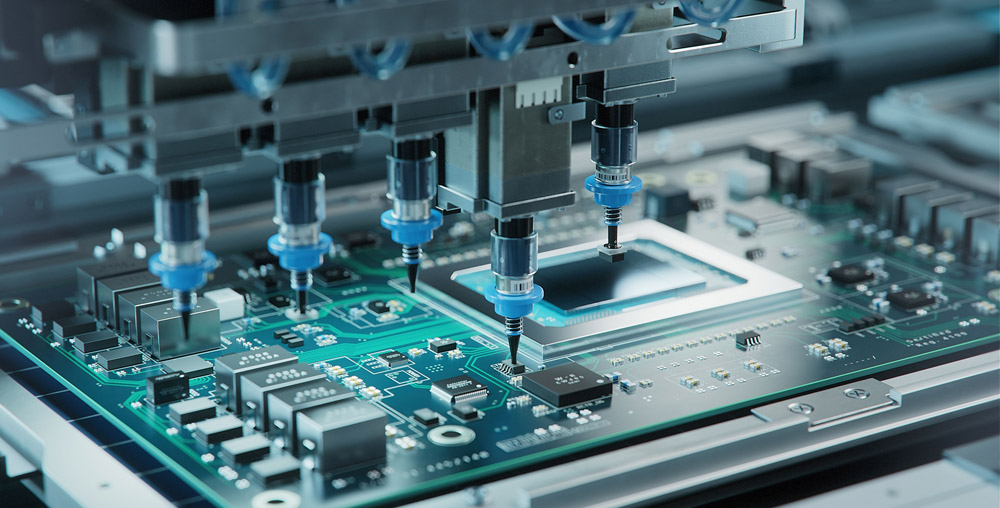
    • Better dimensional stability during lead-free reflow
    • Lower risk of pad lifting, delamination, or barrel cracks
    • Reduced mechanical stress during temperature cycling
    • Improved long-term reliability in high-temperature service

    High Tg PCB materials also tend to have better thermal endurance over time, which helps in automotive under-hood zones, power supplies, motor drives, and LED lighting. They can handle more thermal stress without visible or hidden damage.

    What Is a High Tg PCB and How Does It Improve Reliability?

    Differences Between HDI PCB and High Tg PCB

    HDI and high Tg describe two different aspects of a PCB: one structural, one material. They often coexist, but they are not the same.

    AspectHDI PCBHigh Tg PCB
    Main focusInterconnect density and routingThermal and mechanical stability
    Key featuresMicrovias, fine lines, via-in-padTg ≄ 170–180°C, better thermal endurance
    Typical driverFine-pitch BGAs, compact form factorLead-free reflow, high operating temperature
    Impact on layoutStrong effect on routing and stack-upModerate; affects stack-up and DFM margin
    Impact on reliabilityBetter signal and via performanceLower risk of warpage and delamination
    Cost driversLaser drilling, lamination cycles, yieldMaterial price, process window, lamination setup

    An HDI PCB can use standard Tg material when the thermal profile is mild. A high Tg PCB can have no HDI features at all if density remains low. When the project pushes both limits, you combine them.

    When Should HDI PCB and High Tg PCB Be Combined?

    When Should HDI PCB and High Tg PCB Be Combined?

    Combining HDI PCB and high Tg PCB makes sense when a design faces both density and thermal stress at the same time. Typical cases include:

    • High-speed compute boards with large BGAs and multiple reflow passes
    • Automotive radar or camera modules near engines or outdoor zones
    • 5G RF front-ends in compact housings with limited airflow
    • Industrial motion control or power electronics running at elevated temperature

    You should consider an HDI & high Tg PCB solution if:

    • The layout requires microvias or sequential lamination to escape key components
    • The assembly line uses lead-free profiles with high peak temperature
    • The product will see frequent on-off cycling or wide ambient temperature swings
    • Field reliability and long service life carry high business value

    In these scenarios, HDI brings routing freedom and signal quality, while high Tg materials protect the board structure against thermal and mechanical stress.

    HDI & High Tg PCB Applications

    HDI & high Tg PCB solutions appear in many sectors. Some typical applications are:

    • Automotive electronics: ADAS, camera modules, radar, infotainment, EV control units
    • Telecom and networking: 5G small cells, base stations, high-speed backplanes
    • Industrial control: PLCs, servo drives, motion controllers, sensor hubs
    • Medical devices: Imaging equipment, patient monitoring, compact diagnostic tools
    • Consumer and wearable devices: Smartphones, tablets, smartwatches, AR/VR devices

    All these products share common requirements: compact size, strict reliability targets, and long-term stability under shifting loads. HDI PCB structures handle fine-pitch and high-speed paths, while high Tg PCB materials carry the thermal and mechanical burden.

    What Are the Key Design Considerations for HDI & High Tg PCB?

    Designing HDI & high Tg PCB solutions is not just about choosing a material with higher Tg and shrinking traces. It needs careful coordination between layout, stack-up, and process limits. Key points include:

    What Are the Key Design Considerations for HDI & High Tg PCB?

    1. Stack-up planning early

      Decide the HDI level (1+N+1, 2+N+2, etc.), copper thickness, and layer count early. Include high Tg material data, Dk/Df values, and lamination constraints in the first draft.

      2. Microvia and buried via strategy

      Keep microvia aspect ratios within the fabricator’s safe range. Use staggered rather than stacked microvias when reliability priority is high, unless the project can support enhanced filling processes.

      3. Impedance control with high-speed pairs

      High-density routing often pushes traces close together. Work with the fabricator to set precise trace width and spacing for each impedance class, considering the actual dielectric constant of the high Tg material.

      4. Thermal management and copper balance

      High Tg PCB materials support higher temperature, but heat still needs paths. Balance copper areas across the panel to reduce warpage. Provide solid ground planes, thermal vias, and clear heat paths.

      5. Solder mask and via-in-pad design

      When using via-in-pad on HDI pads, confirm filling and capping processes. Poorly filled vias can trap flux or reduce solder joint strength.

      6. Design for manufacturability (DFM)

      Follow the manufacturer’s design rules for minimum line/space, annular ring, drill size, and pad shapes. Good DFM work reduces scrap and supports stable quality.

      What Manufacturing Challenges Exist in HDI & High Tg PCB?

      Manufacturing HDI PCB involves several engineering challenges because the process pushes the limits of micro-fabrication, interlayer reliability, material control, and inspection accuracy. Each stage demands strict tolerance management to keep performance stable in high-density layouts.

      • Microvia and blind-via drilling accuracy is difficult because HDI requires via diameters

      below 0.15 mm. Laser drilling must stay stable and precise to avoid rough walls, incomplete holes, or weak plating that may cause electrical issues in stacked via structures.

      • Layer-to-layer registration and lamination control demand micron-level alignment.

      High-order HDI needs multiple lamination cycles, and any shift in imaging, resin flow, or pressure can create opens, shorts, or signal loss.

      • Fine-line etching becomes harder as line width and spacing drop to 3 mil or less. Thin

      traces are sensitive to under-etching or over-etching, and thicker copper (4–10 oz) makes precise control even more challenging.

      • Plating and via filling must deliver uniform copper to keep interconnections stable.

      Voids, trapped gas, or uneven filling weaken microvias and reduce long-term reliability, especially when the design needs high breakdown voltage.

      How EBest Circuit (Best Technology) Supports HDI & High Tg PCB Solutions?

      EBest Circuit (Best Technology) supports HDI & High Tg PCB Solutions from early design review through mass production and assembly. Our team focuses on turning demanding ideas into stable, repeatable products.

      • Engineering and DFM for HDI and high Tg

      Our engineers review your stack-up, HDI level, and component layout at the start. We suggest suitable high Tg materials, via strategies, and impedance structures based on your performance and cost targets.

      • HDI PCB manufacturing capability

      We support fine line and space routing, laser-drilled microvias, via-in-pad, and multi-step lamination. Typical HDI builds such as 1+N+1, 2+N+2, and higher structures can be handled with controlled registration and repeatable yields.

      • High Tg and advanced materials

      We work with well-known high Tg PCB laminates and can also support hybrid builds for projects that need both RF and digital performance. Material selection focuses on Tg, Td, Dk/Df, and reliability under your real reflow profile.

      • PCBA assembly with process control

      EBest Circuit (Best Technology) provides SMT and through-hole assembly for HDI and high Tg boards in both China and Vietnam. Lead-free profiles, X-ray for BGA, and AOI help keep quality stable for dense layouts.

      • Quality systems and traceability

      Our factories follow ISO9001, ISO13485 for medical, IATF16949 for automotive, and AS9100D for aerospace. We also run MES systems to track each lot from material incoming through final shipment. This supports clear traceability and faster root-cause analysis if any issue appears.

      For buyers who need a long-term partner for HDI & high Tg PCB solutions, this combination of engineering support, HDI process capability, and certified quality systems reduces risk and saves internal effort.

      FAQs about HDI & High Tg PCB Solutions

      1. Is HDI PCB always more expensive than a standard multilayer board?

      HDI PCB usually costs more per panel due to laser drilling, extra lamination, and tighter controls. However, the total product cost can drop because the board is smaller, the BOM can be simplified, and performance improves.

      2. When do I really need a high Tg PCB instead of normal FR4?

      You should consider a high Tg PCB when your design uses lead-free solder, has more than one reflow cycle, or runs in high ambient temperatures. Automotive, power, and industrial products are common cases where high Tg material significantly improves reliability.

      3. Can I use HDI without high Tg material for consumer products?

      Yes. Many consumer devices use hdi pcb structures on mid-range Tg materials because their operating temperature is moderate and lifetime targets are shorter. The decision depends on your thermal profile and reliability goals.

      4. Are stacked microvias less reliable than staggered ones?

      Stacked microvias can be reliable when the process is well controlled, but they need stricter plating and filling quality. For very harsh environments, many designers still prefer staggered microvias for extra margin, unless dense routing forces stacking.

      5. How early should I involve EBest Circuit (Best Technology) in an HDI & high Tg PCB project?

      The best time is before you freeze the stack-up and routing strategy. Early DFM and material discussion help avoid later redesign, reduce risk, and shorten the path from prototype to stable mass production.

      If you are planning a new design that needs smaller size, higher speed, and stronger thermal performance, HDI & High Tg PCB Solutions may be the right direction. You can share your Gerber files, stack-up ideas, or even just a concept, and EBest Circuit (Best Technology) will help you evaluate practical options, costs, and timelines for your next project.

      You may also like

      Main PCB Assembly Manufacturer in China, Turnkey Solution

      December 19th, 2025

      When it comes to sourcing reliable main PCB assembly services, global electronics professionals increasingly turn to China for its comprehensive manufacturing capabilities and cost-effectiveness. Our factory, as a leading provider in the region, specializes in delivering high-quality main PCB assembly solutions tailored to the unique needs of industries ranging from automotive to consumer electronics. We combine advanced production technology with rigorous quality control to ensure that every main PCB assembly meets international standards, making us a trusted partner for businesses across Europe, Israel, Russia, and beyond.

      Main PCB Assembly Manufacturer in China, https://www.bestpcbs.com/blog/2025/12/main-pcb-assembly-manufacturer-in-china/

      What Is a Main PCB Assembly?

      Main PCB assembly is the process of attaching electronic parts to a printed circuit board so the board becomes a complete system. It involves both manual and automated actions, depending on volume and design needs. This service is used for consumer electronics, industrial controllers, medical devices, automotive units, smart systems, and many other fields.

      Furthermore, this workflow covers more than soldering. It begins with engineering review. Then it moves to component sourcing, SMT assembly, through-hole soldering, inspection, function testing, and packing. Every step affects the final performance. That is why buyers often look for a manufacturer with strong process control and fast communication.

      In addition, main PCB assembly supports boards of many shapes and materials. FR4, metal core boards, flex circuits, rigid-flex boards, ceramic boards, and high-frequency materials are all used. This flexibility helps designers select the right base for their product goals.

      Types of Main PCB Assembly Service

      Different projects require different assembly modes, so a good manufacturer provides several options. Below are the common service types buyers often choose:

      • SMT Assembly handles surface-mount parts. These parts sit on the surface of the board and need accurate placement. This method works for small resistors, capacitors, ICs, and fine-pitch chips.
      • Through-Hole Assembly supports parts that require pins inserted through the board. It is widely used for connectors, transformers, relays, and high-current components. This method can use manual soldering or wave soldering, depending on volume.
      • Mixed Assembly joins both SMT and through-hole. Many modern designs use this method because it offers flexibility in layout and strength.
      • Turnkey Assembly gives you a complete solution. The manufacturer sources all components, builds the boards, does testing, and handles shipping. Buyers often choose this option to save time and reduce costs.
      • Partial Turnkey Assembly lets the buyer supply some components while the manufacturer provides the rest. This option suits customers who already have approved vendors or hold components in stock.
      • Prototype Assembly supports small batches for early testing. It helps buyers verify function before moving to mass production.
      Types of Main PCB Assembly Service, https://www.bestpcbs.com/blog/2025/12/main-pcb-assembly-manufacturer-in-china/

      Main PCB Assembly Process

      1. Design for Manufacturability (DFM) Review

      • Before production commences, our engineering team performs a comprehensive DFM review of your PCB design. This proactive step identifies potential issues that could impact main PCB assembly, such as component placement conflicts, insufficient solder mask coverage, or unsupported trace widths, laying the groundwork for a seamless manufacturing process.

      2. Component Sourcing and Inspection

        • We source premium components exclusively from authorized distributors to ensure authenticity and consistent performance. Every component undergoes stringent incoming inspection, including visual examinations and electrical testing, to filter out defective parts before they enter the main PCB assembly workflow.

        3. PCB Fabrication Preparation

          • Bare PCBs are prepared for assembly through thorough cleaning to remove contaminants, followed by precise solder paste application onto pads using a stencil. This accurate application guarantees optimal solder coverage, which is critical for reliable component attachment during main PCB assembly.

          4. Component Placement

            • We utilize state-of-the-art SMT placement machines to accurately position components on the PCB. For DIP components, we employ either automated or manual insertion based on component type and design specifications. This stage is pivotal to ensuring the functionality and reliability of the final main PCB assembly.

            5. Strict Quality Control Adhering to International Standards

            • PCBs with placed components undergo soldering via reflow ovens (for SMT) or wave soldering machines (for DIP). The soldering process is meticulously controlled to form strong, dependable joints while preventing thermal damage to components— a key quality criterion for Main PCB Assembly.

            6. Post-Soldering Inspection and Rework

              • After soldering, the Main PCB Assembly undergoes rigorous inspection using Automated Optical Inspection (AOI) machines and manual checks. This dual-inspection approach identifies defects like solder bridges, cold joints, or missing components, all of which are promptly reworked to meet strict quality standards.

              7. Functional Testing

                • The final stage of the Main PCB Assembly process is functional testing. The assembled PCB is connected to specialized test equipment to verify it operates in line with your specific requirements. This ensures the PCB is fully functional and ready for integration into your end product.

                Why Choose EBest Circuit (Best Technology) for Main PCB Assembly Manufacturer?

                Reasons Why Choose EBest Circuit (Best Technology) for main PCB assembly manufacturer:

                Cost-Competitive Pricing with No Compromise on Quality:

                • Leveraging our large-scale component sourcing (covering 60% of PCB production cost per industry data 1) and efficient production processes, we can reduce your Main PCB Assembly costs by 10%-15% compared to regional competitors. Our transparent pricing model includes no hidden fees, all material, labor, and testing costs are clearly itemized, helping you optimize project budgets with predictable expenses.

                With 19 years of experience in motherboard assembly, we offer exceptional quality and reliability:

                • Leveraging our extensive experience in the electronics manufacturing industry over 19 years, we have continuously refined our motherboard assembly process through more than 5,000 successful projects. We have over 80 experienced engineers and technicians (with an average of 12 years of industry experience) who can efficiently handle projects ranging from small-batch prototypes (10+ units) to large-scale production (100,000+ units), ensuring stable and reliable product quality and achieving a customer retention rate of 99.8%.

                Fast and Reliable Lead Times

                • Our standard lead time for motherboard assembly is 2-4 weeks, and we offer expedited services for urgent projects (small batch orders can be completed within 1 week). Our efficient production scheduling system and 24/7 production lines ensure a 99.5% on-time delivery rate, helping you avoid costly project delays.

                Free Comprehensive DFM Analysis

                • Our free DFM (Design for Manufacturability) analysis service helps you optimize your PCB design, improve manufacturability, reduce defect risk by 35%, and lower component-level production costs by 25% to 40%ÂČ. Our engineers will provide detailed recommendations (e.g., component layout optimization, trace width adjustments) to improve motherboard assembly efficiency and enhance the reliability of the final product.

                Full Turnkey Main PCB Assembly Solutions

                • We offer end-to-end turnkey solutions for Main PCB Assembly, covering component sourcing (from 200+ authorized distributors), PCB fabrication, assembly, testing, and packaging. This one-stop approach reduces your supply chain coordination time by 80%, eliminates the hassle of managing multiple vendors, and ensures consistent quality control across all production stages.

                Strict Quality Control Adhering to International Standards

                • Our Main PCB Assembly processes fully comply with IPC-A-610G and ISO 9001:2015 standards. We implement 7-stage quality control measures, achieving a defect rate of less than 0.05%. All finished PCBs undergo 100% functional testing and AOI inspection, ensuring each product meets the highest quality requirements for industries like automotive and medical.

                Advanced Production and Testing Equipment

                • We have invested in and introduced state-of-the-art production equipment, including more than 10 high-precision SMT placement machines (positioning accuracy ±0.03 mm). Our X-ray inspection equipment can perform 100% inspection of all BGA components, and our functional testing stations support over 500 test protocols. With these advanced technologies, we are able to handle complex motherboard assembly designs (line width ≀20 micrometers) with extremely low defect rates.

                Customized Solutions for Specialized Industries

                • We specialize in customized Main PCB Assembly solutions for 6 core industries: automotive, medical, aerospace, consumer electronics, industrial control, and AI servers. Our team has completed 1,200+ industry-specific projects, including high-temperature resistant PCBs for EVs (-40°C to 125°C) and FDA-compliant assemblies for medical devices, ensuring tailored solutions meet industry-specific standards.
                Why Choose EBest Circuit (Best Technology) for Main PCB Assembly Manufacturer, https://www.bestpcbs.com/blog/2025/12/main-pcb-assembly-manufacturer-in-china/

                Our PCB Assembly Capability

                Item  Capabilities
                Placer Speed 13,200,000 chips/day
                Bare Board Size0.2 x 0.2 inches – 20 x 20 inches/ 22*47.5 inches
                Minimum SMD Component01005
                Minimum BGA Pitch0.25mm
                Maximum Components50*150mm
                Assembly TypeSMT, THT, Mixed assembly
                Component PackageReels, Cut Tape, Tube, Tray, Loose Parts
                Lead Time1 – 5 days

                Our Quality Control in Main PCB Assembly

                1. Incoming Material Inspection: All components and PCB materials undergo strict incoming inspection before entering the Main PCB Assembly process. We check for component authenticity, quality, and compliance with specifications, using advanced testing equipment to eliminate defective materials.

                2. DFM Review Before Production: Our engineering team conducts a detailed DFM review to identify any design issues that could affect Main PCB Assembly quality. This proactive step ensures that the design is optimized for manufacturing, reducing the risk of defects.

                3. In-Process Quality Checks: We perform regular in-process quality checks during Main PCB Assembly, including solder paste inspection, component placement verification, and soldering process monitoring. These checks ensure that each stage of production adheres to quality standards.

                4. Automated Optical Inspection (AOI): After soldering, each Main PCB Assembly undergoes AOI testing to detect defects such as solder bridges, cold joints, missing components, and misaligned components. AOI technology enables fast and accurate inspection, ensuring consistent quality.

                5. X-Ray Inspection for Complex Components: For complex components such as BGA (Ball Grid Array), we use X-ray inspection to verify solder joint quality. This non-destructive testing method ensures that hidden solder joints in the Main PCB Assembly are reliable and free from defects.

                6. Functional Testing: Each Main PCB Assembly undergoes comprehensive functional testing to verify that it operates according to the client’s specifications. We use custom test fixtures and software to simulate real-world operating conditions, ensuring the PCB is fully functional.

                7. Final Visual Inspection and Packaging: Before shipment, a final visual inspection is performed to ensure the Main PCB Assembly is clean and free from any defects. The PCBs are then packaged in anti-static materials to protect them during shipping and storage.

                Our Quality Control in Main PCB Assembly, https://www.bestpcbs.com/blog/2025/12/main-pcb-assembly-manufacturer-in-china/

                Case Studies of Our PCB Main Board Assembly

                Project Requirements:

                • A European automotive manufacturer required a high-reliability Main PCB Assembly for their electric vehicle (EV) battery management system. The project required compliance with automotive industry standards (ISO/TS 16949), strict temperature resistance (-40°C to 125°C), and a lead time of 4 weeks.

                Our Solution:

                • We conducted a detailed DFM review to optimize the PCB design for automotive applications. We sourced high-temperature components from authorized distributors and used a mixed-technology Main PCB Assembly process (SMT + DIP) to meet the component requirements. We implemented additional X-ray inspection for BGA components and performed rigorous environmental testing to ensure temperature resistance.

                Output Results

                • The Main PCB Assembly met all automotive industry standards and temperature resistance requirements. The project was delivered on time, with a defect rate of less than 0.1%. The client was impressed with the quality and reliability of the PCBs, leading to a long-term partnership for future EV projects.

                How to Get A Quote For Main PCB Assembly Service?

                Follow these steps to receive a customized quote tailored to your project needs:

                1. Prepare Your Project Documents​: Gather the necessary documents, including PCB Gerber files, BOM (Bill of Materials), assembly drawings, and any specific requirements (e.g., industry standards, lead time, quantity). These documents help us accurately assess your main PCB assembly needs.​

                2. Submit Your Inquiry​: You can submit your inquiry through our website’s quote request form, email, or by contacting our sales team directly. Please include your project documents and any additional information about your main PCB assembly requirements.​

                3. Free DFM Analysis and Quote Preparation​: Our engineering team will conduct a free DFM analysis of your design and prepare a detailed quote for Main PCB Assembly. The quote will include pricing, lead time, quality control measures, and any recommendations to optimize your project.​

                4. Review and Confirm​: Our sales team will send the quote to you for review. We are available to answer any questions and make adjustments to the quote based on your feedback. Once you confirm the quote, we will begin the Main PCB Assembly process according to your specifications.​

                5. Production and Delivery​: After confirmation, we will start production and provide real-time updates on the progress of your Main PCB Assembly order. Once production is complete, we will ship the order to your specified location, handling all logistics and customs arrangements.

                Welcome to contact us if you have any request for main PCB assembly: sales@bestpcbs.com.

                You may also like

                What is a keyboard PCB? PCB board keyboard

                December 19th, 2025

                A keyboard PCB is the electronic backbone of a keyboard. It is a printed circuit board that detects each key press and converts it into a digital signal the device can understand. Every time a key is pressed, the PCB closes a circuit, identifies the key’s position, and sends accurate input data to the computer.

                What is a keyboard PCB? PCB board keyboard

                What Is a PCB on a Keyboard?

                A keyboard PCB is the printed circuit board that connects switches, stabilizers, LEDs, and the controller into one stable platform. Each time you press a key, the switch closes a circuit on the PCB, sending an electrical signal to the microcontroller. That signal becomes the character, function, or macro you see on your screen.

                The PCB replaces old-style wiring that was once messy and inconsistent. Instead, everything sits on a neat, flat board where copper traces interpret the user’s input. Because these traces are organized and protected, the keyboard responds more smoothly and lasts longer.

                In mechanical keyboards, the PCB is more advanced. It handles precise actuation, varied layouts, backlighting, and programmable features.

                A keyboard PCB also influences these factors:

                • Typing feel due to layout support and switch connection method.
                • Durability due to copper thickness, plating quality, and protection layers.
                • Signal stability because clean traces reduce interference.
                • Lighting effects when the PCB includes addressable RGB pads.

                Customization freedom when the board offers hot-swap sockets or multiple layout footprints.

                What Is a Magic Keyboard PCB?

                Magic Keyboard PCB refers to the internal printed circuit board used in Apple’s Magic Keyboard line. It is a compact, low-profile PCB designed to support thin scissor switches, stable key feel, and low-power Bluetooth operation. While it follows the same core idea as a standard keyboard PCB, its structure is tighter, slimmer, and more integrated.

                Unlike many mechanical keyboard PCBs, a Magic Keyboard PCB does not support modular changes. The layout is fixed. The switches are low-profile scissor mechanisms, and the board follows Apple’s proprietary design.

                A Magic Keyboard PCB uses tight copper routing, small SMD components, and a compact controller area. Each key pad is reinforced to keep signals stable even under heavy typing. The board often includes Bluetooth antennas, battery connections, and power-efficient circuitry that keeps the keyboard running for long periods.

                How to Check if a Keyboard PCB Is Working?

                Checking if a keyboard PCB works is simple when you follow a clear process. You can test your board with basic tools, and each step helps you find problems early. A working PCB reacts fast, sends clean signals, and shows no unusual behavior when keys are pressed.

                Here is a practical sequence you can follow.

                • First, connect the keyboard PCB to your computer.

                Use a USB cable. If the board lights up or if the system plays a connection sound, you know the controller is active.

                • Next, open a keyboard testing tool online.

                There are many free testing websites. If each key registers, the keyboard PCB is working well.

                • Then, check the LEDs or RGB pads.

                If your PCB includes lighting, turn it on through the firmware.

                • After that, inspect the USB connector area.

                A loose connector can cause random disconnects. Light pressure on the port should not break the connection.

                • Finally, test the board again after assembling it into a case.

                A case may add pressure to certain components.

                What is a keyboard PCB? PCB board keyboard

                How to Design a Keyboard PCB?

                To design a keyboard PCB, you can follow a structured approach that keeps the process simple.

                • Start with your layout.

                Choose the size you want: 60%, 65%, TKL, full-size, or a custom shape. The layout decides the switch spacing, stabilizer placement, and the overall PCB outline.

                • Move to the switch footprints.

                Mechanical keyboard PCBs usually use MX-style footprints. If you want a low-profile build, you may use Choc footprints.

                • Add the controller.

                Popular microcontrollers include Atmel ATmega32U4, RP2040, STM32, and other modern chips.

                • Plan the matrix wiring.

                The matrix is a grid of rows and columns. It helps the controller read key inputs efficiently.

                • Include diodes.

                Each switch pad usually needs a diode to prevent ghosting.

                • Add RGB or LED pads if needed.

                Per-key RGB or under-glow lighting adds visual style.

                • Check grounding and shielding.

                A stable grounding layer keeps signals clean. It also reduces interference in high-speed USB communication.

                • Finally, export your files.

                You will need Gerber files, a drill file, and a BOM.

                How to Make a Keyboard PCB?

                Making a keyboard PCB involves fabrication steps that follow your design file. Good manufacturing practice ensures stable traces, strong plating, and consistent performance.

                The following steps explain the process of manufacturing a keyboard PCB.

                • Prepare your files: Send Gerber files, drill files, a layer stack, and your BOM to a PCB manufacturer.
                • Choose suitable materials: Most keyboard PCBs use FR4. If you want extra durability or thin form factors, you can choose special materials.
                • Confirm layer count: Most keyboard PCBs are 1-layer or 2-layer boards. If you use complex lighting or advanced controller circuits, you may choose a 4-layer design.
                • Move to fabrication: The manufacturer prints copper patterns, drills holes, plates vias, and builds the board with protective solder mask and silkscreen.
                • Add surface finish: HASL, ENIG, or ENEPIG are common finishes.
                • Apply quality checks: The finished board goes through electrical testing to confirm that every trace works.

                Send the PCB to assembly if needed, If you want SMD components pre-assembled, BEST Technology can solder the controller, resistors, capacitors, and LEDs.

                What is a keyboard PCB? PCB board keyboard

                How to Solder a Keyboard PCB?

                Before you begin, gather a soldering iron, solder wire, tweezers, and a small amount of flux. Keep the workspace clean.

                If your layout uses screw-in stabilizers, install them first. They sit lower than switches and must be secured before anything else.

                If your PCB is not a hot-swap board, insert each switch through the plate and into the PCB. Make sure the pins are straight. Each one must sit firmly in the holes.

                A temperature around 320–350°C works well for most solder wires. Let the iron warm up fully before you begin. Hold the iron so it touches both surfaces. Then feed a small amount of solder. Move from one side to the other. If your PCB includes LEDs, solder them next. Once the soldering is complete, let the board cool.

                How to Clean a Keyboard PCB?

                Cleaning a keyboard PCB keeps it fresh, stable, and long-lasting. Dust, flux residue, or spilled liquid may affect the board over time.

                First, disconnect the PCB from power. Make sure no USB cable or battery is connected. Use compressed air. Short bursts keep the PCB clean without harming components.

                Use isopropyl alcohol (IPA). Apply it to a cotton swab or a soft brush. IPA removes fingerprints, flux residue, and sticky dirt. A small amount is enough. Too much liquid may trap moisture under components. Alcohol dries fast. Leave the board in open air for a few minutes. A dry PCB stays safe and ready for testing.

                If you use the keyboard in a humid place, cleaning becomes even more important. Regular cleaning helps the traces stay fresh and stable.

                Why Choose EBest Circuit (Best Technology) for Keyboard PCB Manufacturing?

                EBest Circuit (Best Technology) delivers engineering support, stable fabrication, and consistent quality, which gives users and brands more confidence throughout the entire process. Our team focuses on accuracy, smooth communication, and clean workmanship so your project runs without stress.

                If you need unique switch layouts, alternative footprints, or special routing, we provide DFM guidance to make your files easier to produce. Mechanical keyboard PCBs often need ENIG for smooth soldering, stable plating, and long-term durability.

                What is a keyboard PCB? PCB board keyboard

                Conclusion:

                A keyboard PCB shapes how a keyboard responds, how long it lasts, and how enjoyable it feels. We help you design, produce, assemble, and test keyboard PCBs with smooth communication and consistent results.

                For project support or inquiries, please contact us at sales@bestpcbs.com

                You may also like

                China PCBA Contract Manufacturing Service, One Stop Solution

                December 19th, 2025

                Looking for PCBA contract manufacturing service? This guide explains China PCBA contract manufacturing, its process, benefits, and how EBest Circuit (Best Technology) supports your projects from idea to shipment.

                PCBA contract manufacturing provides a practical solution for companies seeking fast, stable, and cost-effective electronic production, enabling teams to focus on design while experienced partners manage fabrication and assembly. In today’s global market, this PCBA contract manufacturing approach reduces risk, shortens timelines, and leverages China’s mature supply chain and broad process capability as a top choice. As demand grows for smaller, smarter, and more advanced products, trusted partners like EBest Circuit (Best Technology) become essential, supporting brands, startups, and OEMs with consistent results, clear communication, and dependable engineering guidance across PCB fabrication, component sourcing, and surface-mount assembly to turn concepts into predictable-quality products step by step.

                What Is PCBA Contract Manufacturing Service?

                PCBA contract manufacturing is a production model where a company outsources the fabrication and assembly of printed circuit board assemblies to a specialized factory. Instead of managing several vendors, buyers rely on one partner that handles everything. This approach removes unnecessary steps and keeps the project workflow smooth.

                In simple terms, you provide your design files. Then the manufacturer handles PCB fabrication, materials sourcing, assembly, soldering, testing, and packaging. Some customers also request firmware loading and functional checks to create a complete unit. Because of this integrated approach, PCBA contract manufacturing helps reduce cost, lower engineering mistakes, and avoid production delays. As a result, companies can stay focused on product improvement and market growth.

                China PCBA Contract Manufacturing Service, bestpcbs.com/blog/2025/12/china-pcba-contract-manufacturing-service/

                Why Choose China PCBA Contract Manufacturing Service?

                Benefits of China PCBA Contract Manufacturing Service:

                • Full Industrial Chain Ecosystem Synergy: Covers the entire chain from laminate materials, components, solder paste suppliers, testing labs to logistics hubs. This integrated ecosystem shortens lead times and reduces operational costs while providing “one-stop” supply chain services.
                • Full Production Scale Coverage: Supports all stages from small-batch prototyping to million-unit mass production, meeting needs for rapid iteration during development and stable supply during mass production phases.
                • International Certification Quality Assurance: Certifications including ISO9001, ISO13485 (medical), AS9100D (aerospace), and IATF16949 (automotive) ensure product quality stability, meeting stringent requirements for automotive, medical, and other high-reliability applications.
                • Advanced Process Technology Capability: Rich experience in HDI boards, high-frequency laminates, fine-pitch devices (01005/008004), and complex multi-stage assemblies enables high-performance product realization in communications, IoT, medical devices, automotive control systems, and industrial monitoring equipment.
                • Cost-Performance Advantage: Competitive pricing for high-quality products combined with advanced equipment and professional engineering support achieves optimal balance of cost, quality, and responsiveness.

                What Does China PCBA Contract Manufacturing Service Include?

                China PCBA Contract Manufacturing Service Include:

                Component Sourcing & Supply Chain Management:

                • Procures components based on BOM (Bill of Materials).
                • Manages supplier networks and mitigates material shortage risks.

                PCB Bare Board Production Oversight (Optional)

                • May handle in-house PCB fabrication or outsource manufacturing.

                SMT Assembly

                • Utilizes high-speed pick-and-place machines to mount micro-components onto PCBs.

                Through-Hole Component Insertion

                • Implements manual/automated DIP (Dual In-line Package) insertion followed by wave/selective soldering.

                Soldering Processes

                • Reflow soldering (for SMT) and wave/selective soldering (for DIP).

                Post-Soldering Cleaning (Optional)

                • Removes solder residues, critical for high-reliability applications.

                Testing & Inspection

                • AOI (Automated Optical Inspection), X-Ray inspection, ICT (In-Circuit Test), FCT (Functional Circuit Test), burn-in testing, etc.

                Assembly & System Integration

                • Performs box-build assembly (housing PCBA, connecting cables, etc.)

                Packaging & Logistics

                • Packages finished products per customer specifications and coordinates global shipment.

                Delivery Output

                • Provides fully functional, quality-assured PCBA modules or complete turnkey products.
                What Does China PCBA Contract Manufacturing Service Include, bestpcbs.com/blog/2025/12/china-pcba-contract-manufacturing-service/

                PCBA Contract Manufacturing Process

                PCBA Contract Manufacturing Full Process:

                1. Engineering Review: Design for Manufacturability Verification

                • Technical team cross-checks Gerber files, BOM, pick-and-place data, and assembly drawings
                • Validates line width/spacing against HDI process capabilities, BOM material availability, and pad design compatibility with automated equipment.
                • Prevents design-related mass production issues through proactive risk mitigation.

                2. PCB Fabrication: Precision & Material Control

                • Customizes PCB substrates (FR4, Rogers high-frequency materials), copper thickness, solder mask accuracy, and impedance control as required.
                • Key processes include inner layer etching, laminate alignment (±0.05mm drilling tolerance), surface finishing (ENIG/OSP), and AOI defect detection.

                3. Component Sourcing & Logistics: Full Chain Traceability

                • Procures active (ICs, MCUs), passive (resistors/capacitors), connectors, power modules, sensors, and wireless chips from certified suppliers.
                • ERP system tracks real-time inventory, delivery risks, and batch quality; VMI (Vendor Managed Inventory) implemented for critical components.

                4. Stencil Preparation: Solder Paste Application Accuracy

                • Laser-cuts stainless steel stencils with ±5ÎŒm aperture precision.
                • Uses stepped stencils for ultra-fine components (01005/008004) to ensure uniform solder paste volume and prevent bridging/defective soldering.

                5. SMT Assembly: High-Speed Precision Operations

                • Employs advanced pick-and-place machines (e.g., Siemens SIPLACE series) achieving ≄36,000cph placement speed for 0201 components.
                • N2-reflow oven maintains six-zone temperature profile control (±2℃ error) for reliable solder joints.

                6. Through-Hole Assembly & Soldering: Automated & Manual Integration

                • Selective wave soldering with customized fixtures minimizes tin slag contamination.
                • Manual soldering + X-ray inspection for high-reliability products ensures mechanical strength and electrical performance compliance.

                7. Testing & Inspection: Multi-Dimensional Quality Assurance

                • AOI detects solder joint defects, X-ray inspects BGA internal connections, ICT verifies circuit continuity, FCT simulates real-world functionality.
                • Burn-in testing screens for early-life failures to achieve <0.1% defect rate in delivered products.

                8. Cleaning, Packaging & Global Logistics: Secure Delivery

                • Ultrasonic cleaning removes post-solder flux residues; vacuum packaging prevents moisture/dust damage
                • Custom packaging with protective materials and real-time ERP logistics tracking supports DHL/FedEx/air/sea shipment to global destinations

                Types of Our PCBA Contract Manufacturing Service

                • Prototype PCBA service: Used for early evaluation, concept verification, and quick engineering builds. Short lead times and high flexibility are typical at this stage.
                • Small-batch production: Ideal for pilot runs and small orders. This service helps customers validate performance before mass production.
                • Mass production: When demand increases, factories scale up to support stable production with consistent quality. Automated lines maintain uniformity.
                • Turnkey service: This includes PCB fabrication, components sourcing, assembly, testing, and shipping. Buyers only provide design documents.
                • Partial turnkey or kitted service: Some customers supply certain components. The factory handles the rest.
                • Specialized PCBA builds: This includes RF boards, high-density interconnect boards, high-frequency modules, ceramic assemblies, aluminum base assemblies, and automotive PCBs.
                Types of Our PCBA Contract Manufacturing Service, bestpcbs.com/blog/2025/12/china-pcba-contract-manufacturing-service/

                Why Choose EBest Circuit (Best Technology) for PCBA Contract Manufacturer?

                Reasons Why Choose EBest Circuit (Best Technology) for PCBA Contract Manufacturer:

                • Advanced technology enhances product performance: High-speed placement machines and precision inspection systems enable 01005 ultra-small component assembly, ensuring electrical performance 20%-40% better than industry benchmarks.
                • Full-chain quality control system: Dual ISO 9001 and IATF 16949 certifications with SPC statistical process control and AOI/X-ray smart inspection achieve repair rates below 0.02%.
                • Rapid response and global delivery network: 48-hour rapid prototyping with DHL/UPS air freight to Europe and North America meets urgent delivery needs.
                • Structural cost optimization: DFM design optimization reduces material waste by 30% while automated storage systems lower overall costs by 15%.
                • Green manufacturing compliance: RoHS/REACH-compliant lead-free processes and eco-friendly materials meet EU environmental regulations.
                • Supply chain resilience: Strategic inventory agreements with global top-tier component suppliers compress critical material lead times to under 24 hours.
                • One Stop Solution: NPI full-process support from DFM analysis to mass production testing shortens time-to-market by 40%.
                • Digital transparency platform: Real-time tracking via ERP and MES systems with customer-exclusive portals for full-process visibility.
                • Authoritative certifications and patents: UL safety certifications, IPC-A-610 standards, and proprietary patents pass rigorous factory audits by leading enterprises.
                • Cross-industry success stories: Proven expertise in automotive electronics, industrial control, and consumer electronics with over 80% customer retention rates.
                Why Choose EBest Circuit (Best Technology) for PCBA Contract Manufacturer, bestpcbs.com/blog/2025/12/china-pcba-contract-manufacturing-service/

                Case Studies of Our PCBA Contract Manufacturing

                Case Study: Medical-Grade Cardiac Monitor PCBA Contract Manufacturing

                Project Background:

                An international medical device company launched a new generation of portable cardiac monitors, requiring PCBA modules to operate stably in a wide temperature range of -40°C to 85°C, meet IEC 60601-1-2 medical-grade EMI/EMC standards, and compress batch production cycles to 28 days. As the PCBA contract manufacturer, we achieved project goals through full-process collaborative innovation.

                Project Requirements Breakdown

                • Reliability Verification: Must pass 1,000-hour accelerated life testing (THB 85°C/85% RH) and 500 thermal shock cycles (-55°C to 125°C);
                • Signal Integrity: ECG signal acquisition module noise must be below 2ÎŒVrms, with common-mode rejection ratio (CMRR) ≄110dB;
                • Manufacturability: Support flexible small-batch production (500 pieces/batch) while reserving capacity for future annual production of 500,000 pieces;
                • Cost Control: Target BOM cost reduction of 15%, with process defect rate controlled within 0.3%.

                Solution Implementation

                1. Design Collaboration Optimization

                  • Utilized Ansys HFSS for PCB layout simulation, optimized critical signal paths (e.g., ECG acquisition differential pairs), and reduced crosstalk by 40% through layer stack adjustment;
                  • Introduced 3D-MID (molded interconnect device) technology to deposit metal circuits directly on plastic substrates, reducing traditional connector usage and saving 20% space;
                  • Conducted DFM (design for manufacturability) review, optimizing minimum trace width/spacing from 6mil to 5mil, increasing routing density by 15%.

                  2. Material and Process Innovation

                    • Selected high-Tg (180°C) halogen-free FR-4 substrate with ENIG (electroless nickel immersion gold) surface treatment for solder pad oxidation resistance;
                    • Adopted AEC-Q200-certified automotive-grade MLCC capacitors and 0201 package resistors to enhance component temperature resistance;
                    • Implemented “double-sided reflow + selective wave soldering” processes, with X-ray + AOI dual inspection for critical BGA devices to ensure solder joint defect rate <50ppm.

                    3. Testing and Quality Control

                      • Developed dedicated test fixtures for 100% ICT (in-circuit testing) + FCT (functional testing), integrating ECG signal simulators to verify acquisition accuracy;
                      • Implemented “first article inspection + process sampling + final inspection” three-tier quality control, with destructive physical analysis (cross-sectioning) performed on 5 pieces per batch;
                      • Established traceability system, binding production data (temperature profiles, test records) to each PCBA to meet medical device UDI (unique device identification) requirements.

                      Output Results and Value Delivery

                      • Delivery Cycle: Completed design verification to mass production in 25 days, 3 days ahead of schedule;
                      • Quality Performance: First batch of 500 pieces passed ISO 13485 quality system certification, achieved zero failures in accelerated life testing, and CMRR measured at 115dB;
                      • Cost Efficiency: BOM cost reduced by 18% (3% above target), process defect rate at 0.25%, with annual capacity planning supporting 500,000-piece expansion needs;
                      • Client Feedback: Product received FDA 510(k) certification after market launch, market share increased by 20%, and client repurchase rate reached 98%.

                      How to Get A Quote for PCBA Contract Manufacturing Service?

                      Steps to Get A Quote for PCBA Contract Manufacturing Service:

                      1. Submit Complete Documentation: Provide BOM (Bill of Materials) in Excel format with component specifications, Gerber files, PCB layout, and assembly drawings. Include test requirements (ICT/FCT), conformal coating needs, and compliance standards (RoHS, ITAR, etc.).

                      2. Specify Quantity & Timeline: Clarify order volume, annual forecast, and required delivery dates. For prototypes, indicate urgency; for mass production, detail production cycles and batch sizes.

                      3. Outline Technical Specifications: Define PCB dimensions, layer count, thickness, material, and special processes (e.g., gold plating, blind vias). Include packaging preferences (ESD-safe, serialized labeling) and logistics requirements.

                      4. Engage in Pre-Quote Communication: Discuss DFM (Design for Manufacturability) feedback, component sourcing strategies, and quality certifications. Address potential risks (e.g., component shortages) and mitigation plans.

                      5. Request Formal RFQ Submission: Formalize the quote request with all above details. Manufacturers will assess costs (material, labor, testing) and provide a breakdown with lead times, payment terms, and value-added services.

                      6. Review & Compare Proposals: Evaluate quotes based on cost, technical capability, certifications, and past performance. Prioritize transparency in pricing and responsiveness to technical inquiries.

                      7. Finalize Contract Terms: Sign a contract detailing deliverables, quality standards, IP protection (NDA), and dispute resolution. Ensure alignment on change management processes for design updates.

                      Welcome to contact us if you have any request for PCBA contract manufacturing service: sales@bestpcbs.com.

                      You may also like