PCB manufacturing PCB manufacturing
Home > Blog

pcb bom management

PCB BOM Management for Reliable PCBA Production
Tuesday, September 1st, 2026

PCB BOM management becomes most important when a prototype turns into recurring PCBA production. At that stage, buyers are not only asking who can assemble boards. They need a supplier who can keep component information controlled, watch sourcing risks, handle approved alternatives, and prevent design engineers from being pulled back into every reorder.

For many buyers, the real pain starts between orders. A part goes out of stock, an IC becomes long-lead, a connector needs a replacement, or an old BOM revision returns during repeat production. If the supplier only reacts after a purchase order is placed, the project can lose time quickly. This guide explains how BOM control affects quotation, sourcing, assembly, lead time, repeat orders, and how EBest Circuit supports BOM-to-PCBA production with practical manufacturing follow-up.
PCB BOM management
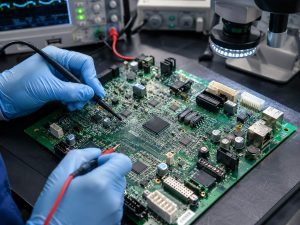
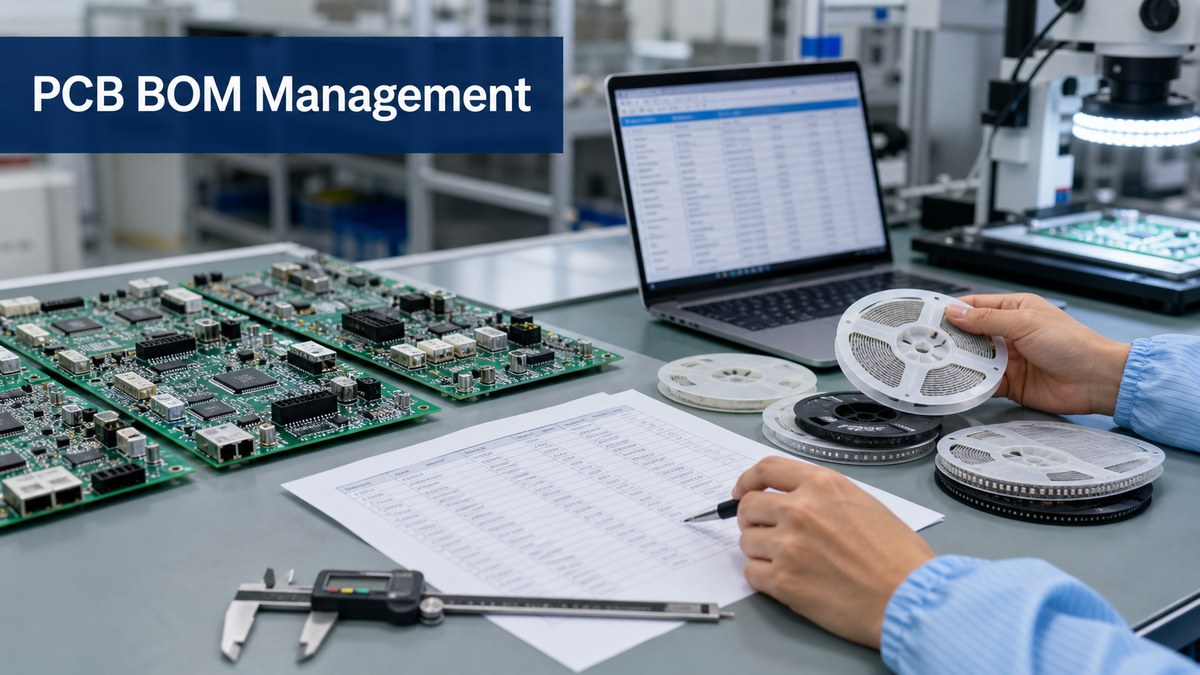
PCB BOM management helps connect component data, sourcing risk, and PCBA production before the order reaches the line.

Why PCB BOM Management Matters Before Production

The BOM is the bridge between engineering files and real PCBA production. Gerber files define the PCB, but the BOM tells the supplier what must be purchased, mounted, inspected, tested, and repeated in the next batch.

For a buyer, strong BOM control helps answer practical questions before money and time are committed:

  • Can each part be identified by a complete manufacturer part number?
  • Are approved brands, values, packages, and tolerances clear?
  • Are any parts obsolete, NRND, long-lead, or hard to source?
  • Are alternative parts allowed, and who can approve them?
  • Does the BOM match the CPL, assembly drawing, and PCB footprint?
  • Will the quoted lead time still work after real sourcing checks?

A BOM problem is not only a spreadsheet problem. It can force the production material list to change, require MRP to run again, delay material kitting, increase warehouse communication, and create avoidable inventory cost. That is why BOM review should happen before PCBA production, not after the SMT line is ready.

PCB BOM Details Buyers Should Confirm

A good PCB BOM should be clear enough for quotation, purchasing, assembly, inspection, and repeat production. If a supplier has to guess, the quotation may look fast, but the risk is only pushed later.

Buyers should confirm these details before sending an RFQ:

BOM Detail Why It Matters
Manufacturer part number Reduces wrong-part purchasing
Quantity per board Affects total component cost
Package and footprint Helps match pads and SMT process
Value and tolerance Avoids electrical mismatch
Polarity or orientation Reduces assembly mistakes
Approved alternatives Speeds shortage response
DNI/DNP parts Prevents unwanted mounting
Revision number Keeps all files aligned

The most useful BOM is not the longest BOM. It is the BOM that removes guessing. For PCBA buyers, complete part numbers, controlled alternatives, clear mounting status, and revision discipline usually matter more than extra notes that no one can act on.

BOM in PCB Assembly Issues That Stop Production

Many PCBA delays start with small BOM issues that were not visible during the first quotation. Once parts are being purchased and the job is moving toward production, these issues can stop the build.

Common problems include:

  • a distributor code is listed instead of the real manufacturer part number
  • the part value is clear, but package size is missing
  • the BOM says one connector, while the footprint matches another
  • the CPL direction does not match the silkscreen or datasheet
  • a polarized component has no clear orientation note
  • the customer changed the BOM but did not update the assembly drawing
  • a substitute part is available, but it has not been approved
  • a test point, programming connector, or fixture requirement is missing

These problems affect more than purchasing. They can delay SMT programming, stencil confirmation, first article inspection, functional testing, and final shipment. A supplier that catches these problems before production helps the buyer avoid expensive “stop and clarify” moments.

For controlled PCBA production, BOM information also needs to reach the workshop correctly. Material verification, inspection records, and anti-wrong-material checks help reduce the risk that an approved BOM is interpreted one way by purchasing and another way on the production floor.

BOM Issues That Change Your PCBA Quote

A PCBA quote is only reliable when the BOM is reliable. If the BOM contains unclear, risky, or incomplete component information, the first price may not reflect the real build cost.

BOM issues can change the quote in several ways:

  • Wrong or missing MPN: the buyer may receive a price based on a different part.
  • Unclear package: SMT difficulty, stencil opening, or placement risk may change.
  • Shortage parts: spot-market sourcing may raise cost or reduce traceability.
  • MOQ or package type: reels, cut tape, tubes, trays, and loose parts affect purchasing and handling.
  • Unapproved substitutes: price may change after engineering approval.
  • Missing testing scope: fixture, programming, or functional test time may not be included.

This is why buyers should not evaluate a supplier only by the fastest initial quote. A responsible PCBA quote should expose BOM questions early, especially for connectors, ICs, power components, LEDs, relays, sensors, and parts with tight tolerance or lifecycle risk.

For repeat production, price breaks also depend on BOM stability. A quote for 50, 125, 250, or 500 units can change if a key part has limited stock, high MOQ, or a substitute that still needs approval. The earlier these risks are visible, the easier it is for the buyer to compare real production cost.
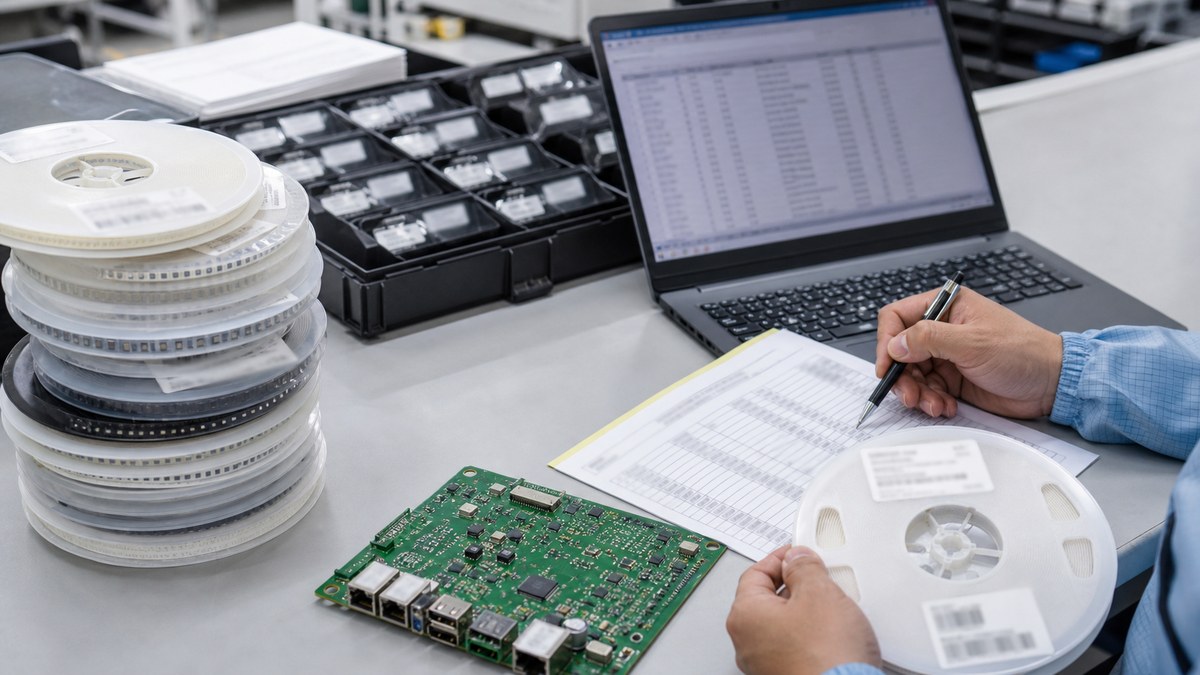
PCB BOM management
BOM review should be connected with component sourcing, approved alternatives, and material readiness.

Component Availability Before Purchasing

Component availability is one of the biggest differences between a “quoted BOM” and a “buildable BOM.” A BOM may look complete, but if key parts are out of stock, obsolete, restricted, or available only in small lots, the project can still stall.

For recurring PCBA production, availability should not be checked only after a purchase order arrives. Buyers often want the supplier to watch EOL, NRND, shortage, and long-lead risks between orders, especially when the same board is reordered again and again.

Before purchasing, EBest Circuit checks whether important components can be sourced with the required quantity, package, lead time, and supplier traceability. For high-risk parts, our team may return questions before buying instead of waiting until material shortage affects production.

Useful checks include:

  • stock status for key ICs and connectors
  • lead time for long-cycle components
  • MOQ and packaging method
  • lifecycle risk such as obsolete or NRND parts
  • supplier source and traceability needs
  • consistency between BOM, purchase request, PO, and production material list

For buyers, this step protects both cost and delivery. It also helps move sourcing responsibility away from the buyer’s design team and into a controlled manufacturing process.

Warehouse control matters here too. When receiving, storage, and material issuing are traceable, the BOM review is connected with real kitting status instead of staying as a spreadsheet discussion. This is especially useful when one missing reel, tray, tube, or through-hole part can hold the full PCBA batch.

Approved Alternatives for Shortage Parts

Alternative parts can save a project, but only when they are controlled. A random replacement can create electrical risk, assembly risk, testing failure, or customer approval problems.

A practical BOM should separate:

  • Preferred parts: the first choice for quotation and purchasing
  • Approved alternatives: parts already accepted by the customer
  • Temporary substitutes: used only for a specific batch or urgent order
  • Not-approved parts: available in the market but not allowed for production

Some buyers prepare a substitution authority before recurring production. This can define which parts may be replaced without delay, which parts need engineering approval, what data the supplier must provide, and whether the approval is valid for one batch or future repeat orders.

EBest Circuit can help buyers review alternative component options, but substitution should always stay under customer approval. For example, a resistor or capacitor may look easy to replace, but tolerance, voltage rating, temperature coefficient, package size, and brand restrictions can matter. For connectors, ICs, relays, sensors, and power devices, the approval threshold is usually higher.

Clear alternative rules help prevent a common production problem: purchasing uses one part, the production material list shows another, and engineering approval refers to a different BOM revision. When those three records do not match, the project becomes harder to control.

PCBA Lead Time Risks from BOM Problems

Lead time is often delayed before assembly starts. If the BOM is unclear, sourcing and production planning cannot move cleanly.

Typical BOM-related lead time risks include:

  • long-lead ICs are found too late
  • shortage parts need customer approval
  • package mismatch requires footprint confirmation
  • incoming PCB or component issues require rework or replenishment
  • test method is missing, so fixture or programming preparation is delayed
  • BOM revision changes after purchasing has started
  • kitting cannot be completed because one critical part is not ready

For delivery control, the useful question is not only “How many days is the lead time?” Buyers should also ask how the supplier tracks material readiness, PCB incoming quality, SMT line timing, planned warehouse date, and WIP exceptions.

At EBest Circuit, BOM review is connected with component sourcing, PCB fabrication status, SMT/THT production planning, and testing preparation. This helps reduce last-minute surprises, especially for prototype validation, small-batch builds, and repeat PCBA orders.
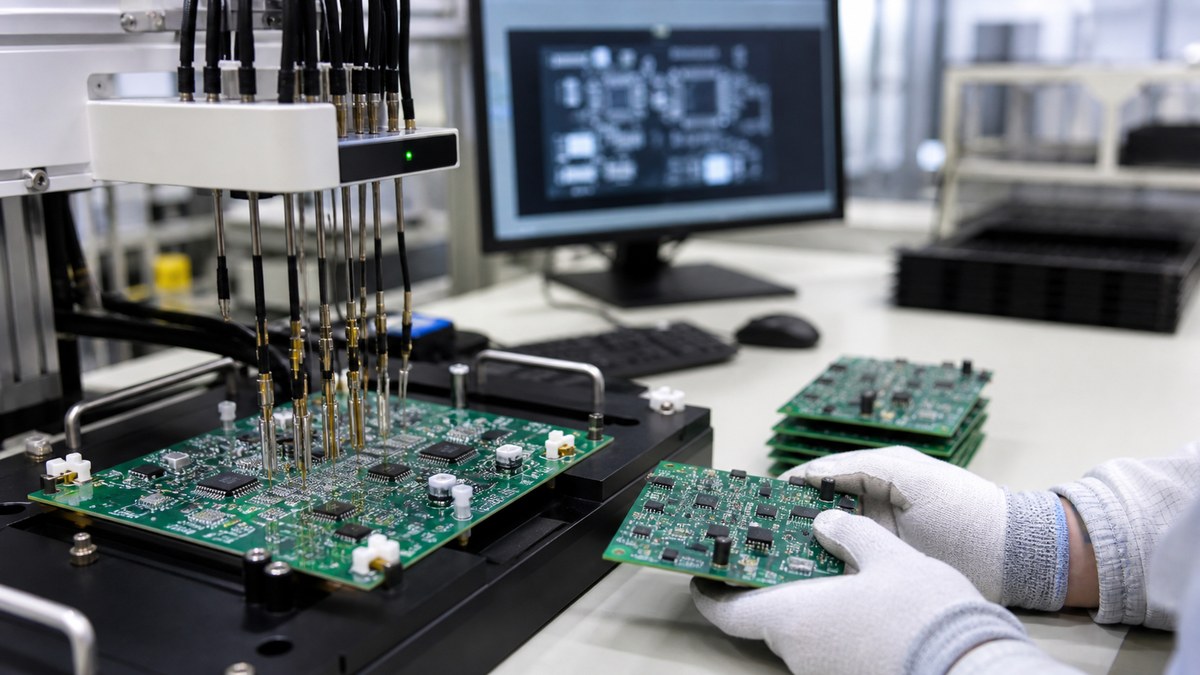
PCB BOM management
Controlled PCBA production links BOM data with assembly preparation, inspection, and testing support.

BOM Version Control for Repeat Orders

Repeat orders should be easier than first builds, but only if the BOM version is controlled. If the first order used emergency substitutes, verbal approvals, or scattered email notes, the repeat order can become another new project.

A controlled repeat-order BOM should answer:

  • Which BOM revision was actually built last time?
  • Were any temporary alternatives used?
  • Did the customer approve those alternatives for future orders?
  • Did the assembly drawing, CPL, and test requirement change?
  • Were any SMT program, stencil, fixture, or inspection notes updated?
  • Were first article or production issues recorded for the next batch?

Repeatability depends on more than placing the same PO again. SMT program records, MES process maintenance, component library data, first article confirmation, and production notes all help the next order run with fewer questions.

Traceable production records make repeat orders easier to manage. MES-based process tracking can connect BOM version, material status, production steps, inspection records, and shipment follow-up, so the next batch does not depend only on scattered emails or manual notes.

For buyers with active boards in continuous production, this is often the point that decides supplier fit. They do not want every reorder to become another sourcing project for design engineers. They want approved records, clear responsibility, and a supplier who can flag BOM risk before the next order is already late.

PCB BOM Management Case Study at EBest Circuit

A customer sent EBest Circuit a 4-layer industrial control PCBA project for a pilot run of 120 pieces. The order looked simple at first: FR4 PCB fabrication, SMT assembly, several through-hole connectors, and functional testing after assembly.

Project requirements:

  • PCB: 4-layer FR4 board
  • Quantity: 120 PCBAs for pilot validation
  • Assembly: SMT plus through-hole connectors
  • Components: MCU, power ICs, relays, terminal blocks, LEDs, resistors, capacitors, and connectors
  • Testing: power-on check and customer-defined functional test
  • Goal: validate the build before repeat production

During BOM review, several issues were found before purchasing:

  • two BOM lines used supplier codes instead of full manufacturer part numbers
  • one connector footprint needed datasheet confirmation
  • several polarized components needed clearer orientation marks
  • one relay had a longer sourcing lead time than expected
  • two ICs had possible shortage risk
  • the test method did not define pass/fail voltage limits

Before the repeat batch, one control IC moved to a long lead time. Instead of waiting for the shortage to stop production, EBest Circuit checked available alternatives, compared package and key electrical requirements, prepared sourcing information, and returned the option to the customer for approval before purchasing.

EBest Circuit solution:

  • reviewed Gerber, BOM, CPL, and assembly drawing together
  • returned BOM questions before component purchasing
  • checked connector footprint against the datasheet
  • confirmed polarity and orientation before SMT programming
  • listed sourcing options for risky ICs under customer approval
  • aligned purchasing, production material list, and assembly preparation
  • confirmed testing points before the pilot build
  • recorded approved decisions for the repeat order

Result:

The buyer received a clearer quotation and a more controlled pilot build. More importantly, the project files became cleaner for the next repeat order. Instead of treating BOM problems as isolated purchasing questions, the project was reviewed as a full PCBA build: PCB, BOM, sourcing, assembly, inspection, testing, and repeat production.

EBest Circuit BOM-to-PCBA Production Support

EBest Circuit (Best Technology) is a China-based PCB and PCBA manufacturer founded in 2006. We support buyers who need PCB fabrication, BOM review, component sourcing, SMT assembly, through-hole assembly, mixed assembly, inspection, testing support, and repeat-order follow-up.

Our support is useful when a buyer wants one team to connect BOM details with real production requirements. We do not just receive a spreadsheet and purchase parts blindly. Before production, the project team can review BOM details, Gerber files, CPL data, assembly drawings, stencil needs, tooling or fixture requirements, SMT program preparation, test requirements, and special production notes.

For production control, BOM review can also be connected with material verification, warehouse records, MES process tracking, inspection sheets, and testing preparation. This helps buyers see that BOM management is not separate from the factory floor. It is part of how the order moves from file review to purchasing, kitting, assembly, inspection, and delivery.

EBest Circuit provides customized PCB and PCBA support across:

  • FR4 PCB
  • multilayer PCB
  • metal core PCB
  • ceramic PCB
  • flexible and rigid-flex PCB
  • high-frequency PCB
  • special PCB
  • SMT PCBA
  • through-hole PCBA
  • mixed assembly
  • component sourcing
  • PCBA testing support

With more than 20 years of PCB/PCBA experience, about 260,000 square feet of monthly PCB capacity, and more than 1,000 different board types completed each month, EBest Circuit can support prototype validation, small-batch orders, and repeat production projects.

For buyers, the value is not only “BOM checking.” The value is having a manufacturing partner who can connect RFQ review, sourcing risk, approved alternatives, material kitting, SMT/THT assembly, testing preparation, and repeat-order records into one controlled production path.

FAQs About PCB BOM Management

What is PCB BOM management?

PCB BOM management is the process of keeping the PCB bill of materials accurate, approved, sourced, and aligned with the assembly files before PCBA production. It helps prevent wrong-part purchasing, quotation changes, production delays, and repeat-order confusion.

Why does a BOM affect PCBA quotation?

A BOM affects PCBA quotation because component price, package, availability, MOQ, approved alternatives, assembly difficulty, and testing scope all influence the final cost. An incomplete BOM may lead to a quote that changes after sourcing starts.

Can a supplier replace parts in my BOM?

A supplier can suggest alternatives, but the customer should approve replacement parts before purchasing or production. This is especially important for ICs, connectors, relays, sensors, power components, and any part with electrical, mechanical, or certification requirements.

Should BOM risk be checked between repeat orders?

Yes. For recurring PCBA production, BOM risk should be reviewed between orders when possible. EOL, NRND, shortage, long-lead, and approved alternative status can change before the next PO is placed.

What files should be checked together with the BOM?

The BOM should be checked with Gerber files, CPL or pick-and-place data, assembly drawings, schematics when available, test requirements, and any special production notes. These files should match the same project revision.

In Conclusion, PCB BOM management helps buyers control PCBA cost, sourcing risk, lead time, assembly quality, and repeat production stability before the order reaches the line. If you need a PCB and PCBA manufacturer to review your BOM, Gerber, CPL, assembly notes, component risks, and testing requirements before production, contact EBest Circuit at sales@bestpcbs.com.


You may also like

Microchip Price Increase 2026: PCBA Cost and Lead-Time Impact
Monday, August 17th, 2026

Microchip’s reported price adjustment took effect on August 14, 2026. For us as a PCBA manufacturer, the semiconductor price increase 2026 is not merely a supplier announcement: it can change component cost, quotation validity, material reservation, substitute approval, and the date an SMT build can start.

The most important answers are straightforward. For teams researching the microchip price increase 2026, Microchip has confirmed selective price increases across its broad portfolio, but it has not publicly stated one universal percentage for every affected part. The company linked the increase to broad-based input costs rather than a shortage. A general lead-time extension caused by this price change has not been officially announced, so we check price and availability separately for every manufacturer part number.

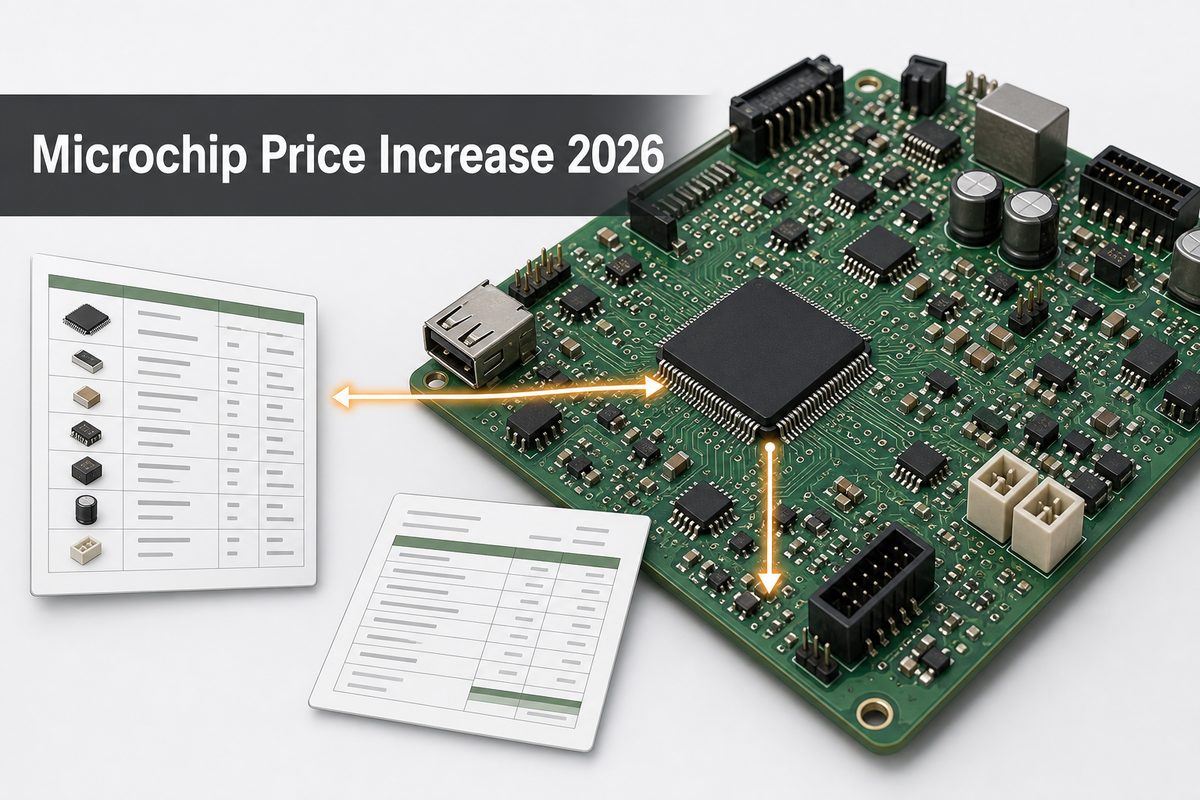
Semiconductor Price Increase 2026 flowing through a PCBA BOM, quotation, and SMT production plan

What Did Microchip Change on August 14, 2026?

Microchip implemented selective price increases across its broad product portfolio, with supply-chain reports identifying August 14, 2026, as the effective date. In a June statement, Microchip said broad-based input cost pressures could no longer be fully absorbed and that it was working on the specific increases to communicate to customers. A later electronics supply-chain report identified selected products and the August 14 effective date.

This timing matters to a PCBA order because a component quote issued before August 14 may not remain valid when the purchase order is released, the material is reserved, or a scheduled shipment falls after the change. We therefore treat the date as a mandatory BOM recheck point, not as permission to apply a blanket surcharge.

How Much Did Microchip Prices Increase?

There is no publicly confirmed universal Microchip increase percentage for all affected part numbers. Public reports conflict: some describe selected products, while others publish portfolio-wide percentages without a customer notice that can be verified. We do not apply those unverified figures to a PCBA quotation.

Question Verified answer How we handle it
When did the change take effect? August 14, 2026, according to multiple supply-chain reports Recheck every open RFQ and uncommitted order
What is the percentage increase? No single public percentage is confirmed for all parts Compare old and new prices by manufacturer part number
Are all Microchip products affected? Microchip says increases are selective across a broad portfolio Request the affected-part list from the authorized source
Did lead time increase? No general extension is confirmed as part of this price action Check stock, allocation, and factory lead time separately

For a specific PCBA, the only defensible percentage is (new confirmed unit price − old comparable unit price) ÷ old unit price × 100%. Both prices must use the same part number, quantity break, currency, packaging, source, and commercial terms. If any of those fields differ, the calculated percentage can misstate the supplier’s actual adjustment.

Did the Microchip Price Increase Change Lead Times?

The price increase does not by itself prove that Microchip lead times became longer. In the company’s June 2026 earnings discussion, management described lead times at roughly seven to eight weeks and said the planned increase was cost-driven, not caused by shortages. That was a company-wide snapshot, not a guarantee for every device or region.

From our PCBA production perspective, the customer-visible schedule can still move even without a vendor-wide lead-time extension. A build may wait while we obtain a revised quote, reserve stock, approve a price change, or validate an alternate. One critical MCU can hold an SMT start even when the bare PCB, solder paste, passives, and most other components are ready.

  • Supplier lead time is the quoted time for a specific part and order quantity.
  • Material-ready date is when every production-critical BOM item is available and released.
  • PCBA lead time includes material readiness, PCB fabrication, SMT scheduling, assembly, inspection, testing, and shipment.

Why Does a Semiconductor Price Increase Affect PCBA Manufacturing?

A semiconductor price change reaches PCBA manufacturing through the BOM before it reaches the SMT line. Components often represent a major share of turnkey assembly cost, and one MCU, FPGA, analog IC, or power-management device can carry more value than many passive lines combined.

Supply-chain change PCBA effect Our manufacturing action
New unit price BOM cost and quote margin change Requote the exact affected line
Shorter quote validity Customer approval window narrows State validity and reconfirm at order release
Stock reserved by other buyers Material-ready date may move Reserve approved stock after order confirmation
Alternate proposed Engineering and test work may be required Hold substitution until written approval
Unverified source offered Traceability and quality risk increase Do not trade sourcing control for a lower headline price

The same event also affects the wider electronic components industry. Distributors revise cost files, OEMs review forecasts, contract manufacturers re-open BOMs, and demand may shift toward substitutes or available stock. This can create part-level volatility even when the supplier has not announced an industry-wide shortage.

How Do We Calculate the PCBA Cost Impact?

We calculate the change line by line instead of multiplying the complete assembly price by a rumored percentage. A useful bom cost analysis separates confirmed deltas, pending quotes, already purchased material, and customer-owned inventory.

  1. Freeze the BOM revision, build quantity, and currency.
  2. Filter all Microchip manufacturer part numbers and approved alternates.
  3. Mark each line as purchased, reserved, quoted, pending, or customer supplied.
  4. Compare old and new prices using the same quantity break and source terms.
  5. Multiply each confirmed unit delta by usage per PCBA and build quantity.
  6. Add only confirmed line deltas to the revised material cost.

For example, if an MCU rises from $4.00 to $4.40 and one unit is used per board, the part-level increase is 10% and the PCBA material delta is $0.40 per board. If that MCU represents 20% of a $20 BOM, the total BOM rises by 2%, not 10%. Freight, MOQ, packaging, currency, yield reserve, and testing remain separate cost fields.

This distinction is why a supplier’s part-level increase cannot be copied directly into a finished-PCBA percentage. The final effect depends on affected value as a share of the whole BOM and on how much material was already committed at protected pricing.

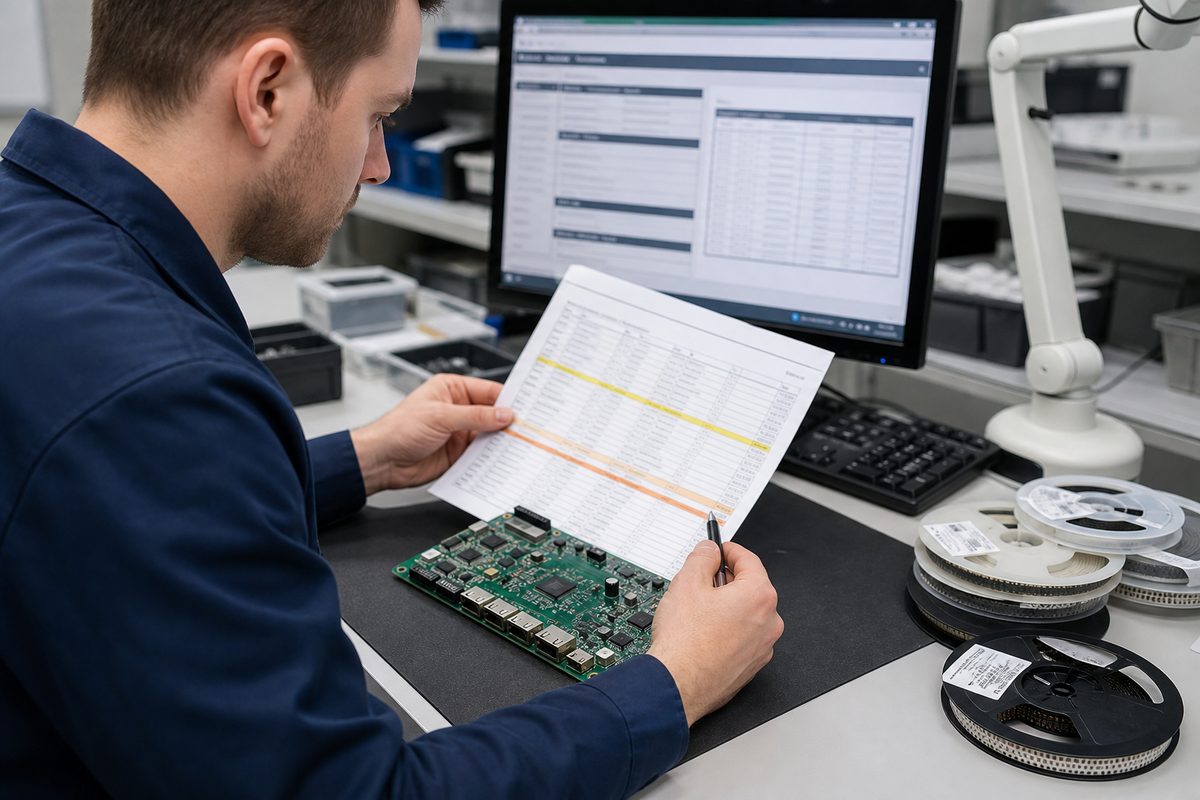
PCBA procurement and engineering team reviewing BOM prices and component reels

How Does Electronic Component Procurement Change?

Electronic component procurement becomes more evidence-driven after a price adjustment. We need a written, part-level commercial record before we change a customer quotation or release material for production.

  • Exact manufacturer part number, revision, temperature grade, and package.
  • Old and new unit price, currency, quantity break, MOQ, and pack quantity.
  • Quotation date, validity period, stock location, and standard lead time.
  • Rules for new orders, backlog, scheduled shipments, and price protection.
  • Authorized source identity, date code, lot traceability, and warranty path.

At EBest Circuit, our component sourcing process connects this commercial evidence with BOM review and incoming inspection. We do not treat a distributor news headline as the price governing every customer’s order.

How Does PCB BOM Management Protect Repeat Orders?

PCB BOM management protects repeat orders by keeping part, source, revision, price, lifecycle, and alternative data under change control. It does not prevent a supplier increase, but it shows exactly which previous assumptions are no longer valid.

  • Use exact manufacturer part numbers instead of generic descriptions.
  • Record approved alternates and do-not-substitute lines.
  • Store source, date, price break, currency, and validity with each quotation.
  • Flag sole-source, high-value, long-lead, allocation-prone, and EOL parts.
  • Recheck critical lines before RFQ, order release, and every repeat build.

A controlled file package also keeps component decisions aligned with fabrication and assembly. Our PCB manufacturing and assembly guide explains how Gerber or ODB++, BOM, CPL, assembly drawings, firmware, and test instructions move together through a turnkey project.

When Should We Recommend an Alternative Component?

We recommend an alternative when the cost or availability benefit justifies the engineering and qualification work. A lower price is not enough: the replacement must fit the electrical, mechanical, firmware, quality, lifecycle, and regulatory requirements of the finished product.

  • Compare function, pinout, footprint, voltage, current, timing, memory, peripherals, and temperature grade.
  • Check firmware, programming, bootloader, driver, and test-limit changes.
  • Verify lifecycle, authorized availability, packaging, date code, and moisture sensitivity.
  • Build engineering samples and complete required functional or environmental validation.
  • Update the BOM, drawings, firmware revision, test plan, and approval record together.

For a core MCU or FPGA, redesign cost and validation time may exceed the immediate price increase. For a support IC with an already approved second source, substitution may be much faster. We never change a customer-controlled component without written approval.

PCBA production team checking component material readiness before SMT scheduling

What Are We Checking at EBest Circuit Now?

We are checking every affected PCBA project at the part, purchase, and production-plan level. The priority is not to spread a market headline across every quote; it is to identify the exact commercial exposure before it interrupts the build.

  • Open RFQs with Microchip content and expired or near-expiry component quotes.
  • Orders where critical ICs have not yet been purchased or reserved.
  • Repeat builds using old BOM cost baselines.
  • Sole-source parts without an approved alternative.
  • High-value lines where a small percentage changes total program cost materially.
  • Material-ready dates that depend on one unconfirmed device.

Before SMT, we also verify incoming component identity, packaging, traceability, and condition. This control remains essential when price pressure makes unauthorized or poorly documented offers look attractive.

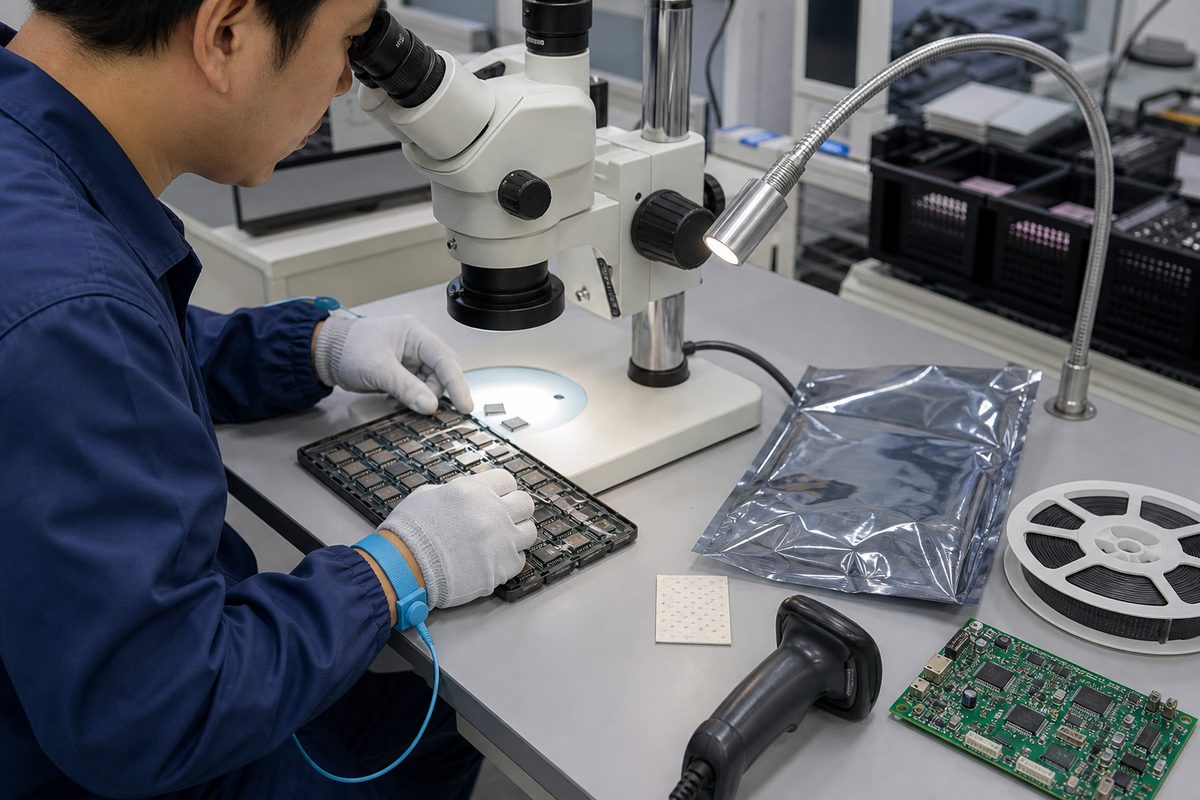
Incoming semiconductor inspection and traceability check before PCBA assembly

What Should Customers Send for a Fast PCBA Requote?

Customers should send the current manufacturing package, build quantity, required date, and substitution rules. Complete inputs let us isolate the Microchip price impact without reopening unrelated parts of the project.

  • Gerber or ODB++ files, current BOM, CPL, and assembly drawings.
  • Build quantity, forecast quantity, target ship date, and delivery location.
  • Approved vendor list, approved alternates, and do-not-substitute parts.
  • Customer-owned or already purchased inventory with quantities and lot data.
  • Firmware, programming, functional-test, and regulatory requirements.
  • Any existing supplier quote or price-protection document that should be considered.

Our PCB assembly RFQ checklist shows the information needed to align pricing, sourcing, assembly, inspection, and testing in one review.

FAQ About Semiconductor Price Increase 2026

When did Microchip’s 2026 price increase take effect?

Supply-chain reports identify August 14, 2026, as the effective date for selected products.

What percentage did Microchip prices increase?

No single public percentage is verified for all affected parts. The correct figure must be calculated from comparable old and new quotes for the exact manufacturer part number.

Is the reported increase 15% or 20%?

Those figures appear in some secondary market reports, but we have not found a public Microchip notice confirming either as a portfolio-wide rate. We do not use them as universal PCBA cost inputs.

Are all Microchip components affected?

Microchip described selective increases across a broad portfolio. Each part number needs confirmation from the authorized commercial channel.

Did Microchip extend lead times because of the price increase?

No general lead-time extension has been officially tied to this price action. Availability and lead time must be checked separately by part and quantity.

Will every PCBA quote increase by the same percentage?

No. The PCBA delta depends on affected part value, quantity per board, build quantity, protected inventory, and the rest of the BOM.

Can a quote issued before August 14 still be used?

Only if it remains valid and the component price is protected or material has been committed. We reconfirm the commercial terms before order release.

Should customers buy extra Microchip stock immediately?

Not automatically. Demand, lifecycle, storage, cash, forecast accuracy, traceability, and obsolescence risk should be reviewed before a pre-buy.

Can we replace a Microchip part with another brand?

Possibly, but only after engineering verifies the device, package, firmware, qualification, test, and lifecycle requirements and the customer approves the change.

What information is needed to update a turnkey PCBA quote?

Send the latest BOM and manufacturing files, quantity, required date, approved alternatives, customer-owned inventory, and any price-protection evidence.

How Can EBest Circuit Support Your PCBA Project?

We can review your BOM files, recalculate the confirmed BOM delta, check authorized availability, identify approval risks, and align the material-ready date with PCB fabrication and SMT production. Send your current BOM, Gerber or ODB++, CPL, build quantity, and required date to sales@bestpcbs.com for a controlled PCBA requote.

You may also like

Microchip Price Increase 2026: What PCBA Buyers Should Check Now
Monday, August 17th, 2026

The microchip price increase 2026 took effect on August 14, according to multiple electronics supply-chain reports. PCBA buyers should now recheck affected part numbers, open orders, quotation validity, and uncommitted BOM costs. Public evidence does not establish one universal percentage increase, a complete affected-part list, or a general lead-time extension, so every commercial decision should be based on part-level written confirmation.

3D PCBA and BOM documents illustrating the Microchip price increase 2026

What Changed on August 14, 2026?

New pricing reportedly became effective on August 14, 2026, for selected products in Microchip’s portfolio. FTC Electronics identify that date and describe cost pressure from materials, labor, logistics, energy, suppliers, assembly, and wafer foundry partners.

The practical trigger is the effective date, not the earlier circulation date of the reported notice. A BOM quoted before August 14 may contain prices that no longer apply when the buyer releases a new order or when an open order reaches shipment. The exact treatment must be confirmed for each order because public reports use different language about product scope and order status.

What Is Confirmed and What Still Needs Evidence?

The effective date and direction of the pricing change have consistent public support, while the commercial details remain incomplete. Buyers should keep those two evidence levels separate.

Item Current evidence status Buyer action
Effective date August 14, 2026, reported by multiple supply-chain sources Revalidate quotations and uncommitted orders now
Reason for adjustment Cost pressure is consistently cited Use as context, not as proof of a specific part’s increase
Percentage increase No reliable universal figure is publicly confirmed Request old and new unit prices by part number
Affected products Public descriptions range from selected products to a broad portfolio Request the affected-part file from an authorized channel
Open-order treatment Public descriptions are not fully consistent Confirm backlog, scheduled shipments, contract pricing, and price protection in writing
Lead time or shortage No general extension or shortage is confirmed by this event alone Check availability separately; do not equate a price change with a supply interruption

Microchip’s public media center did not provide a readily accessible public customer letter during our August 17 review. The company’s product change notification system is useful for lifecycle and product/process notices, but buyers should still obtain the commercial price document from their authorized supplier or account representative.

Which PCBA Orders Need Review First?

Review the orders with the largest uncommitted Microchip spend and the least pricing protection first. A small unit-price change becomes material when it affects a high-quantity line, a costly MCU or FPGA, or a program with a long delivery horizon.

  • Open RFQs and quoted PCBA projects that have not yet been released.
  • Customer orders accepted before components were purchased or reserved.
  • Open purchase orders with scheduled or partial shipments after August 14.
  • Forecast demand that relies on blanket orders, contract pricing, or annual agreements.
  • BOMs containing sole-source MCUs, analog ICs, power-management devices, timing products, memory, security ICs, or FPGA/SoC devices.
  • Low-margin projects where a component-cost change could exceed the remaining quotation buffer.

Start with manufacturer part number, order status, open quantity, required date, last quoted unit price, latest confirmed unit price, currency, and supplier source. This prevents a general market headline from being applied to parts that are not affected.

Engineer reviewing a PCBA BOM, component reels, and cost changes

How Should Buyers Run a BOM Cost Analysis?

A useful bom cost analysis compares the last approved cost with a current written quote at the part-number and order-status level. It should show the cost delta for one PCBA and the total impact on the open build quantity.

  1. Freeze the correct BOM revision. Record the product revision, BOM revision, assembly quantity, and currency.
  2. Filter Microchip manufacturer part numbers. Include approved alternates and do-not-substitute status.
  3. Separate committed and uncommitted demand. Identify parts already purchased, reserved, scheduled, quoted only, or still open.
  4. Collect comparable prices. Record old unit price, new unit price, price break, MOQ, pack quantity, date, source, and quotation validity.
  5. Calculate the assembly impact. Multiply the per-part delta by usage per PCBA and planned build quantity.
  6. Review margin and customer terms. Decide whether the project remains covered, needs customer approval, or requires a revised quote.
Calculation Formula Decision use
Part delta per PCBA (New unit price – old unit price) × quantity per board Shows which line changes assembly cost most
Total build delta Part delta per PCBA × build quantity Shows the total purchasing exposure
Revised BOM cost Unchanged BOM cost + all confirmed line deltas Supports a revised PCBA quotation

Do not insert a rumored 10%, 15%, or portfolio-wide factor into every line. If a supplier cannot provide a part-level figure, mark that line as pending and keep it out of the confirmed total.

What Should Electronic Component Procurement Request?

Electronic component procurement should request a traceable commercial record for every affected manufacturer part number. A distributor news post is an early warning; it is not a substitute for the quote and order terms governing the buyer’s transaction.

  • The manufacturer or authorized-channel price notice available to the buyer.
  • Affected manufacturer part numbers and the effective date for each line.
  • Old and new unit prices at the required quantity break and currency.
  • Rules for new orders, open backlog, scheduled shipments, blanket orders, and contract pricing.
  • Price-protection eligibility and the deadline for any protected order.
  • MOQ, standard pack quantity, NCNR status, quotation validity, stock location, and lead time.
  • Authorized source identity, date code, lot traceability, and warranty path.

For turnkey PCBA, the sourcing review should be coordinated with assembly planning. EBest Circuit’s component sourcing workflow starts from a complete BOM and availability review, while the PCB assembly manufacturer RFQ checklist connects component data with CPL, assembly, inspection, and test requirements.

Procurement and engineering staff reviewing PCBA component pricing and order evidence

How Can PCB BOM Management Limit Repricing Risk?

PCB BOM management reduces repricing risk by keeping revision, source, lifecycle, alternative, and quotation data under change control. It cannot stop a supplier price adjustment, but it makes the exposure visible before a customer order reaches production.

  • Use the exact manufacturer part number instead of a generic component description.
  • Record approved alternates and parts that require customer or engineering approval.
  • Store the quote source, date, currency, quantity break, and validity period with each cost.
  • Flag sole-source, long-lead, high-value, and allocation-prone lines.
  • Link every purchase and substitution decision to the current BOM revision.
  • Recheck high-risk lines before quotation, order release, and repeat production.

A complete file package also keeps the PCB and assembly decisions aligned. Our PCB manufacturing and assembly guide explains how Gerber or ODB++, BOM, CPL, assembly drawings, and test instructions work together during quotation and production review.

Should Buyers Approve Alternatives or Second Sources?

Alternatives can reduce cost or availability risk only after engineering approval confirms functional, electrical, mechanical, firmware, safety, and lifecycle fit. A cheaper or available part is not automatically a drop-in replacement.

  • Compare function, pinout, package, footprint, voltage, current, timing, memory, peripherals, temperature grade, and qualification needs.
  • Check whether firmware, bootloader, programming tools, drivers, or test limits must change.
  • Confirm lifecycle status, authorized availability, date code, moisture-sensitivity handling, and traceability.
  • Run engineering samples and the required functional, environmental, or regulatory validation before production release.
  • Update the BOM, drawings, test plan, firmware revision, and approval record together.

For a core MCU or FPGA, redesign and validation may cost more than the immediate price delta. For a less design-sensitive support component, a preapproved alternate may be a practical second-source measure. The decision belongs to the product owner and engineering team, not to purchasing alone.

How Does the Event Affect PCBA Quotes and Lead Times?

The confirmed effect is a need to revalidate component cost; a general lead-time increase is not established by the pricing event alone. For teams tracking the query semiconductor price increase 2026, the distinction matters: price, availability, allocation, and lead time are separate fields and need separate evidence.

PCBA quotations with uncommitted Microchip content should use a shorter validity period and state that critical component pricing and availability are confirmed at order release. Buyers should also separate the bare PCB fabrication schedule from component readiness and assembly start. A board can be manufactured on time while SMT remains blocked by one unconfirmed IC.

Do not pressure-buy from an unauthorized source only because a price headline creates urgency. Verify source authorization, traceability, packaging, date code, storage condition, and inspection needs. Counterfeit or mishandled components create a larger production risk than a documented cost increase.

Incoming quality inspection of semiconductor components before PCBA assembly

FAQ About the Microchip Price Increase 2026

Did every Microchip product increase by the same percentage?

No reliable public evidence confirms one percentage for every product. Public reports also differ on whether the scope is selected products or a broader portfolio. Obtain the affected-part list and old/new prices for the exact manufacturer part numbers in your BOM.

Does the adjustment apply to orders placed before August 14?

That depends on the commercial terms, supplier, shipment status, and any price-protection agreement. Ask for written confirmation covering open backlog, scheduled shipments, blanket orders, contract prices, and partially delivered purchase orders.

Does this event mean Microchip parts are in shortage?

No. A price adjustment does not prove a general shortage or lead-time extension. Check current stock, confirmed allocation, factory lead time, and scheduled delivery separately for each manufacturer part number.

Should we reprice every PCBA quotation immediately?

Prioritize quotations with uncommitted Microchip content, high component value, narrow margin, or long delivery horizons. Reprice only the lines supported by current written evidence, then calculate the confirmed effect on one assembly and the planned build quantity.

What data should a revised component quote contain?

It should identify the manufacturer part number, unit price, currency, quantity break, MOQ, pack quantity, quotation date, validity, stock or lead time, source, and commercial terms. A percentage without the base price and affected part number is not enough for a controlled BOM update.

Can a broker quote be used for the cost review?

A broker quote can show market availability, but source, traceability, warranty, packaging, date code, storage, and counterfeit risk must be evaluated. For production release, use the sourcing route approved by the customer and quality system.

When is an alternate component worth evaluating?

Evaluate an alternate when the confirmed cost or availability risk justifies engineering work and the product plan can absorb validation. Compare technical fit, firmware impact, qualification needs, lifecycle, supply source, and total change cost before approval.

How long should a PCBA quote remain valid?

There is no universal period. Validity should reflect the supplier quotes for critical components, currency exposure, stock status, and whether material is reserved. State the validity explicitly and reconfirm uncommitted high-risk lines at order release.

What should be saved for an audit trail?

Keep the BOM revision, customer approval, supplier notice, part-level quote, purchase order, order acknowledgment, price-protection confirmation, alternate approval, receiving record, and any revised customer quotation. These documents show why the cost changed and who approved the response.

What should a buyer send for a PCBA cost review?

Send Gerber or ODB++, the current BOM, CPL, assembly drawing, build quantity, delivery target, approved alternates, do-not-substitute parts, testing requirements, and any open supplier quotations. The correct revision is essential for an accurate review.

How Can EBest Circuit Support a PCBA Cost Review?

At EBest Circuit, we can review the current PCB and PCBA file package, identify sourcing-sensitive BOM lines, coordinate component quotations with assembly planning, and keep approved changes tied to the correct revision. We do not treat an industry headline as a substitute for a part-level quote or engineering approval.

If your project contains Microchip components, send us the Gerber or ODB++ files, BOM, CPL, assembly drawings, quantity, approved alternatives, test requirements, and target delivery date. Our team can review PCB fabrication, component sourcing, SMT/THT assembly, inspection, and testing requirements together, then provide a quotation based on the confirmed project scope.

You may also like