The microchip price increase 2026 took effect on August 14, according to multiple electronics supply-chain reports. PCBA buyers should now recheck affected part numbers, open orders, quotation validity, and uncommitted BOM costs. Public evidence does not establish one universal percentage increase, a complete affected-part list, or a general lead-time extension, so every commercial decision should be based on part-level written confirmation.
What Changed on August 14, 2026?
New pricing reportedly became effective on August 14, 2026, for selected products in Microchip’s portfolio. FTC Electronics identify that date and describe cost pressure from materials, labor, logistics, energy, suppliers, assembly, and wafer foundry partners.
The practical trigger is the effective date, not the earlier circulation date of the reported notice. A BOM quoted before August 14 may contain prices that no longer apply when the buyer releases a new order or when an open order reaches shipment. The exact treatment must be confirmed for each order because public reports use different language about product scope and order status.
What Is Confirmed and What Still Needs Evidence?
The effective date and direction of the pricing change have consistent public support, while the commercial details remain incomplete. Buyers should keep those two evidence levels separate.
| Item | Current evidence status | Buyer action |
| Effective date | August 14, 2026, reported by multiple supply-chain sources | Revalidate quotations and uncommitted orders now |
| Reason for adjustment | Cost pressure is consistently cited | Use as context, not as proof of a specific part’s increase |
| Percentage increase | No reliable universal figure is publicly confirmed | Request old and new unit prices by part number |
| Affected products | Public descriptions range from selected products to a broad portfolio | Request the affected-part file from an authorized channel |
| Open-order treatment | Public descriptions are not fully consistent | Confirm backlog, scheduled shipments, contract pricing, and price protection in writing |
| Lead time or shortage | No general extension or shortage is confirmed by this event alone | Check availability separately; do not equate a price change with a supply interruption |
Microchip’s public media center did not provide a readily accessible public customer letter during our August 17 review. The company’s product change notification system is useful for lifecycle and product/process notices, but buyers should still obtain the commercial price document from their authorized supplier or account representative.
Which PCBA Orders Need Review First?
Review the orders with the largest uncommitted Microchip spend and the least pricing protection first. A small unit-price change becomes material when it affects a high-quantity line, a costly MCU or FPGA, or a program with a long delivery horizon.
- Open RFQs and quoted PCBA projects that have not yet been released.
- Customer orders accepted before components were purchased or reserved.
- Open purchase orders with scheduled or partial shipments after August 14.
- Forecast demand that relies on blanket orders, contract pricing, or annual agreements.
- BOMs containing sole-source MCUs, analog ICs, power-management devices, timing products, memory, security ICs, or FPGA/SoC devices.
- Low-margin projects where a component-cost change could exceed the remaining quotation buffer.
Start with manufacturer part number, order status, open quantity, required date, last quoted unit price, latest confirmed unit price, currency, and supplier source. This prevents a general market headline from being applied to parts that are not affected.
How Should Buyers Run a BOM Cost Analysis?
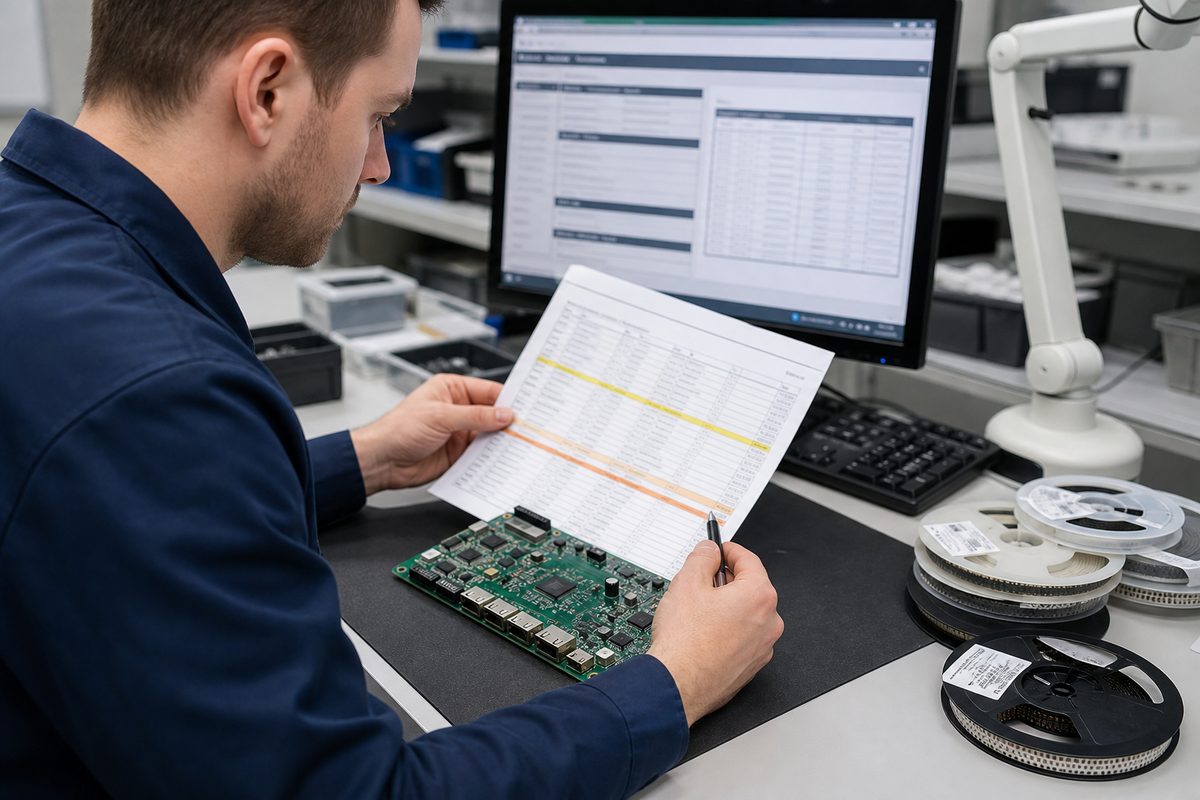
A useful bom cost analysis compares the last approved cost with a current written quote at the part-number and order-status level. It should show the cost delta for one PCBA and the total impact on the open build quantity.
- Freeze the correct BOM revision. Record the product revision, BOM revision, assembly quantity, and currency.
- Filter Microchip manufacturer part numbers. Include approved alternates and do-not-substitute status.
- Separate committed and uncommitted demand. Identify parts already purchased, reserved, scheduled, quoted only, or still open.
- Collect comparable prices. Record old unit price, new unit price, price break, MOQ, pack quantity, date, source, and quotation validity.
- Calculate the assembly impact. Multiply the per-part delta by usage per PCBA and planned build quantity.
- Review margin and customer terms. Decide whether the project remains covered, needs customer approval, or requires a revised quote.
| Calculation | Formula | Decision use |
| Part delta per PCBA | (New unit price – old unit price) × quantity per board | Shows which line changes assembly cost most |
| Total build delta | Part delta per PCBA × build quantity | Shows the total purchasing exposure |
| Revised BOM cost | Unchanged BOM cost + all confirmed line deltas | Supports a revised PCBA quotation |
Do not insert a rumored 10%, 15%, or portfolio-wide factor into every line. If a supplier cannot provide a part-level figure, mark that line as pending and keep it out of the confirmed total.
What Should Electronic Component Procurement Request?
Electronic component procurement should request a traceable commercial record for every affected manufacturer part number. A distributor news post is an early warning; it is not a substitute for the quote and order terms governing the buyer’s transaction.
- The manufacturer or authorized-channel price notice available to the buyer.
- Affected manufacturer part numbers and the effective date for each line.
- Old and new unit prices at the required quantity break and currency.
- Rules for new orders, open backlog, scheduled shipments, blanket orders, and contract pricing.
- Price-protection eligibility and the deadline for any protected order.
- MOQ, standard pack quantity, NCNR status, quotation validity, stock location, and lead time.
- Authorized source identity, date code, lot traceability, and warranty path.
For turnkey PCBA, the sourcing review should be coordinated with assembly planning. EBest Circuit’s component sourcing workflow starts from a complete BOM and availability review, while the PCB assembly manufacturer RFQ checklist connects component data with CPL, assembly, inspection, and test requirements.

How Can PCB BOM Management Limit Repricing Risk?
PCB BOM management reduces repricing risk by keeping revision, source, lifecycle, alternative, and quotation data under change control. It cannot stop a supplier price adjustment, but it makes the exposure visible before a customer order reaches production.
- Use the exact manufacturer part number instead of a generic component description.
- Record approved alternates and parts that require customer or engineering approval.
- Store the quote source, date, currency, quantity break, and validity period with each cost.
- Flag sole-source, long-lead, high-value, and allocation-prone lines.
- Link every purchase and substitution decision to the current BOM revision.
- Recheck high-risk lines before quotation, order release, and repeat production.
A complete file package also keeps the PCB and assembly decisions aligned. Our PCB manufacturing and assembly guide explains how Gerber or ODB++, BOM, CPL, assembly drawings, and test instructions work together during quotation and production review.
Should Buyers Approve Alternatives or Second Sources?
Alternatives can reduce cost or availability risk only after engineering approval confirms functional, electrical, mechanical, firmware, safety, and lifecycle fit. A cheaper or available part is not automatically a drop-in replacement.
- Compare function, pinout, package, footprint, voltage, current, timing, memory, peripherals, temperature grade, and qualification needs.
- Check whether firmware, bootloader, programming tools, drivers, or test limits must change.
- Confirm lifecycle status, authorized availability, date code, moisture-sensitivity handling, and traceability.
- Run engineering samples and the required functional, environmental, or regulatory validation before production release.
- Update the BOM, drawings, test plan, firmware revision, and approval record together.
For a core MCU or FPGA, redesign and validation may cost more than the immediate price delta. For a less design-sensitive support component, a preapproved alternate may be a practical second-source measure. The decision belongs to the product owner and engineering team, not to purchasing alone.
How Does the Event Affect PCBA Quotes and Lead Times?
The confirmed effect is a need to revalidate component cost; a general lead-time increase is not established by the pricing event alone. For teams tracking the query semiconductor price increase 2026, the distinction matters: price, availability, allocation, and lead time are separate fields and need separate evidence.
PCBA quotations with uncommitted Microchip content should use a shorter validity period and state that critical component pricing and availability are confirmed at order release. Buyers should also separate the bare PCB fabrication schedule from component readiness and assembly start. A board can be manufactured on time while SMT remains blocked by one unconfirmed IC.
Do not pressure-buy from an unauthorized source only because a price headline creates urgency. Verify source authorization, traceability, packaging, date code, storage condition, and inspection needs. Counterfeit or mishandled components create a larger production risk than a documented cost increase.
FAQ About the Microchip Price Increase 2026
Did every Microchip product increase by the same percentage?
No reliable public evidence confirms one percentage for every product. Public reports also differ on whether the scope is selected products or a broader portfolio. Obtain the affected-part list and old/new prices for the exact manufacturer part numbers in your BOM.
Does the adjustment apply to orders placed before August 14?
That depends on the commercial terms, supplier, shipment status, and any price-protection agreement. Ask for written confirmation covering open backlog, scheduled shipments, blanket orders, contract prices, and partially delivered purchase orders.
Does this event mean Microchip parts are in shortage?
No. A price adjustment does not prove a general shortage or lead-time extension. Check current stock, confirmed allocation, factory lead time, and scheduled delivery separately for each manufacturer part number.
Should we reprice every PCBA quotation immediately?
Prioritize quotations with uncommitted Microchip content, high component value, narrow margin, or long delivery horizons. Reprice only the lines supported by current written evidence, then calculate the confirmed effect on one assembly and the planned build quantity.
What data should a revised component quote contain?
It should identify the manufacturer part number, unit price, currency, quantity break, MOQ, pack quantity, quotation date, validity, stock or lead time, source, and commercial terms. A percentage without the base price and affected part number is not enough for a controlled BOM update.
Can a broker quote be used for the cost review?
A broker quote can show market availability, but source, traceability, warranty, packaging, date code, storage, and counterfeit risk must be evaluated. For production release, use the sourcing route approved by the customer and quality system.
When is an alternate component worth evaluating?
Evaluate an alternate when the confirmed cost or availability risk justifies engineering work and the product plan can absorb validation. Compare technical fit, firmware impact, qualification needs, lifecycle, supply source, and total change cost before approval.
How long should a PCBA quote remain valid?
There is no universal period. Validity should reflect the supplier quotes for critical components, currency exposure, stock status, and whether material is reserved. State the validity explicitly and reconfirm uncommitted high-risk lines at order release.
What should be saved for an audit trail?
Keep the BOM revision, customer approval, supplier notice, part-level quote, purchase order, order acknowledgment, price-protection confirmation, alternate approval, receiving record, and any revised customer quotation. These documents show why the cost changed and who approved the response.
What should a buyer send for a PCBA cost review?
Send Gerber or ODB++, the current BOM, CPL, assembly drawing, build quantity, delivery target, approved alternates, do-not-substitute parts, testing requirements, and any open supplier quotations. The correct revision is essential for an accurate review.
How Can EBest Circuit Support a PCBA Cost Review?
At EBest Circuit, we can review the current PCB and PCBA file package, identify sourcing-sensitive BOM lines, coordinate component quotations with assembly planning, and keep approved changes tied to the correct revision. We do not treat an industry headline as a substitute for a part-level quote or engineering approval.
If your project contains Microchip components, send us the Gerber or ODB++ files, BOM, CPL, assembly drawings, quantity, approved alternatives, test requirements, and target delivery date. Our team can review PCB fabrication, component sourcing, SMT/THT assembly, inspection, and testing requirements together, then provide a quotation based on the confirmed project scope.
You may also like



Tags: bom cost analysis, electronic component procurement, microchip price increase 2026, pcb bom management, semiconductor price increase 2026