
A PCB supplier change notification (PCN) is the controlled notice a PCB or PCBA supplier sends before changing an approved material, process, site, equipment route, subcontractor or product configuration. It should describe the current and proposed states, affected items, reason, risk, qualification evidence, implementation boundary and requested customer decision.
The goal is not to generate more paperwork. It is to prevent an apparently minor supplier change from altering impedance, solderability, reliability, compliance, traceability, assembly behavior or long-term availability without the customer knowing which lots are affected.
Would your team learn about a material, factory or process change before the first changed PCB lot ships—or only after a quality problem?
If the purchase order and quality agreement do not define notification triggers, timing and approval authority, both customer and supplier may assume the other party owns the decision.
EBest Circuit can review project-specific PCB/PCBA change requirements and affected manufacturing data.
Send the controlled Gerber/ODB++, drawing, stackup, BOM/CPL if applicable, approved material/process requirements, quantity, validation needs and required notice/approval rules. Final feasibility and evidence depend on the released construction and change scope.
What a PCB Supplier Must Notify Before Making a Change
A supplier should notify changes that can affect the approved definition, manufacturing route, product performance, acceptance evidence or continuity of supply. The exact trigger list belongs in the purchase agreement, drawing, specification or supplier-quality agreement; it should not depend on one salesperson deciding whether a change seems important.
Notification does not automatically mean rejection. It creates a review gate so engineering, quality and purchasing can decide whether the change is equivalent, needs evidence, requires a limited qualification build or cannot be accepted.
PCB Change Triggers That Require Customer Review
| Change area | PCB/PCBA examples | Customer question |
|---|---|---|
| Material | Laminate, prepreg, copper foil, solder mask, surface finish chemistry, adhesive or approved component source | Does form, fit, function, reliability or compliance change? |
| Process or equipment | Lamination route, drilling/plating method, imaging, cleaning, soldering, rework, test or inspection method | Is the output still controlled to the approved requirement? |
| Site or ownership | Factory move, new line, merger, tooling transfer or different manufacturing entity | Does qualification and traceability remain valid? |
| Subcontractor | New outside finish, special process, bare-board source or assembly partner | Who controls the external process and its records? |
| Design/configuration | Stackup, panel, marking, BOM alternate, firmware or test limit proposed by the supplier | Who has design authority to approve it? |
| Supply status | Discontinuance, allocation, EOL material or emergency substitution | What inventory and transition plan protects continuity? |
PCN, ECO, Deviation and SCAR: Do Not Mix the Records
A PCN starts with the supplier and asks the customer to review a proposed product or process change. An engineering change order usually authorizes a customer-controlled design change. A deviation requests temporary permission to depart from an approved requirement. A supplier corrective action request (SCAR) addresses a failure and asks for root cause and corrective action.
One issue may require several linked records, but each has a different decision. The PCB engineering change order checklist covers customer-originated design release; this page controls supplier-originated change notice and approval.
Set Notice Timing by Contract and Risk, Not One Universal Number
There is no single notice period that fits every PCB program. Define the required advance notice in the contract or quality agreement and align it with qualification time, inventory exposure, regulatory/customer approval and supply continuity. A high-reliability material or site change may need more review than a documentation correction.
Emergency changes caused by obsolescence, disaster or sudden material unavailability still require prompt disclosure, containment and an agreed interim plan. “Emergency” should not silently turn a proposed substitution into an approved change.
Required Fields in a PCB Supplier PCN Template
| PCN field | Minimum useful content | Approval value |
|---|---|---|
| Identity | PCN number, supplier site, customer, affected part numbers/revisions and contacts | Creates traceability |
| Current vs proposed state | Specific before/after material, process, site, source or configuration | Shows the real difference |
| Reason and risk | Driver, urgency, known effects and potential failure modes | Supports priority and depth |
| Affected scope | Orders, inventory, WIP, finished lots and related products | Defines containment |
| Qualification | Test plan, comparison data, samples and acceptance criteria | Makes equivalence observable |
| Effectivity | Proposed date, PO, lot, date code or serial boundary | Prevents mixed shipments |
| Decision | Approve, reject, request evidence, limited approval or deviation | Records authority and conditions |
Assess Form, Fit, Function, Reliability and Supply Impact
Review the change against the released requirement, not only the supplier’s statement that it is “equivalent.” Check physical dimensions and interfaces, electrical behavior, thermal/mechanical performance, process compatibility, solderability, impedance, environmental/compliance documentation, inspection/test coverage, marking, traceability and service interchangeability.
Also review business impact: new tooling, MOQ, price, lead time, lifecycle, remaining old stock and the risk of splitting production between old and new states. A technically acceptable change can still create an uncontrolled supply transition.
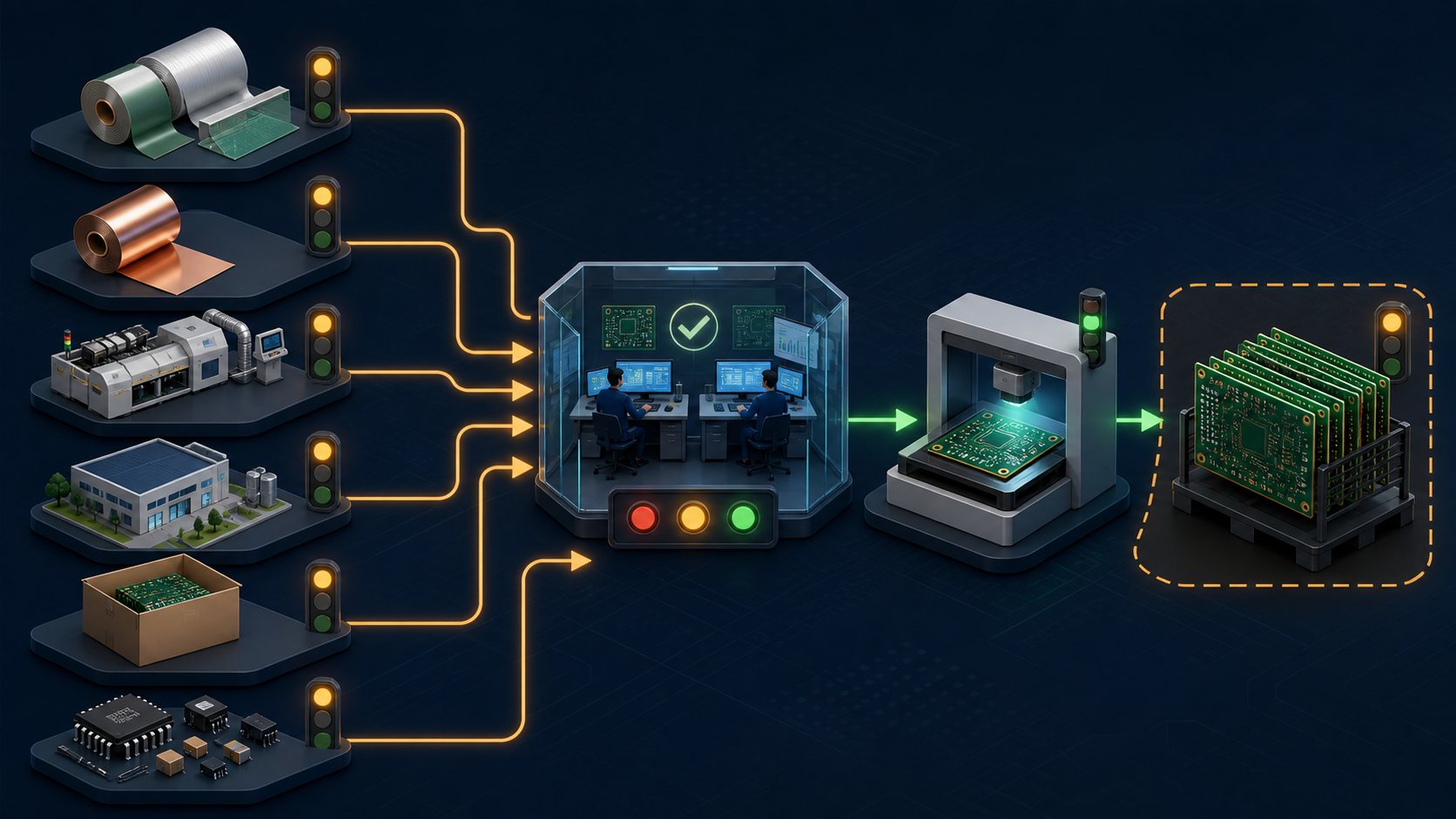
Route the PCN Through Engineering, Quality and Purchasing Approval
Engineering assesses design and performance impact. Quality defines qualification, traceability and acceptance evidence. Purchasing assesses price, inventory, continuity and contract terms. Regulatory or customer-program owners join when their requirements are affected. Assign one coordinator and one final authority rather than collecting disconnected email opinions.
Record open questions, owner, due date and disposition. The supplier should not implement the changed state until the required decision is issued, unless a documented emergency/deviation path explicitly authorizes it.
Make the change review specific to the released PCB.
Send the proposed before/after state, affected part/revision, current orders and required evidence. EBest Circuit can clarify manufacturing impact, validation questions and an implementation boundary for the project.
Before/After | Parts | Lots | Evidence | Approval | Effectivity
Define Qualification Evidence Before Approving the Change
Evidence should target the changed risk. A material/stackup change may require updated construction, impedance or reliability review. A finish or soldering-process change may require solderability, microsection, profile or assembly evidence. A site/equipment transfer may require first-article comparison and process capability evidence. A component-source change may need authenticity, package, electrical, lifecycle and functional review.
Define sample size, method, limits and records before testing. Use the PCB testing guide to distinguish bare-board from assembly evidence, and use the PCB supplier audit checklist when the change also affects site or process qualification.
Control Effectivity, Existing Inventory and the First Changed Lot
Approval should state which lot, date code, PO or serial number first uses the change. Identify old material, WIP and finished inventory, then decide whether it may be used, segregated, returned, reworked or exhausted under a controlled boundary. Require the first changed lot to carry the agreed identification and evidence package.
After approval, update drawings, specifications, approved-source records, incoming inspection and supplier records. Monitor early lots for the failure modes considered in the impact assessment.
Put Change-Notification Rules Into the PCB Quality Agreement
- define product/material/process/site/subsupplier and supply-status triggers;
- state the required advance notice or emergency escalation path;
- name customer and supplier contacts plus approval authority;
- prohibit implementation before required approval;
- define PCN fields, evidence, sample and document format;
- set effectivity, inventory, traceability and first-lot rules;
- define what happens when a change is implemented without notice;
- require flow-down to relevant sub-tier suppliers.
The custom PCB supplier guide helps connect these controls to RFQ and supplier selection.
What to Send EBest Circuit for a Controlled PCB Change Review
Send the affected PCB/PCBA part and revision, current and proposed state, reason, target timing, open orders, inventory/WIP status and required approval process. Include Gerber/ODB++, fabrication drawing, stackup and material/finish requirements; add BOM, CPL, assembly drawing, test and programming data for PCBA.
State the validation evidence you require and whether any customer, regulatory or service approval is involved. EBest Circuit can review project-specific feasibility, manufacturing impact and quotation, but the released files and agreed acceptance plan remain the basis of approval.
FAQ About PCB Supplier Change Notifications
What does PCN mean in PCB manufacturing?
PCN commonly means product or process change notification: a supplier’s controlled notice of a proposed change affecting an approved PCB or PCBA.
Which PCB changes require a PCN?
Define triggers contractually; typical areas include material, process, site, equipment route, subcontractor, source, product configuration, test and supply status.
Is a PCN the same as an ECO?
No. A PCN usually originates with a supplier; an ECO authorizes a controlled engineering design change.
How much advance notice is required?
Use the purchase/quality agreement and applicable customer or regulatory requirement. Do not assume one universal period.
Can a supplier implement a change before approval?
Only if the governing agreement allows it or a documented emergency/deviation approval authorizes it.
What should be checked in the first changed lot?
Confirm identification, approved effectivity, targeted qualification evidence, traceability and any enhanced inspection or test.
What if a supplier changed a process without notice?
Contain affected lots, identify the implementation boundary, assess risk, request records and decide disposition plus corrective action.
Turn a supplier change into a controlled first lot—not a surprise.
Email the PCN inputs and released data to sales@bestpcbs.com. EBest Circuit can return clarification points, a project-specific review path and PCB or PCBA quotation.
Files | Change | Risk | Evidence | Lot | Delivery