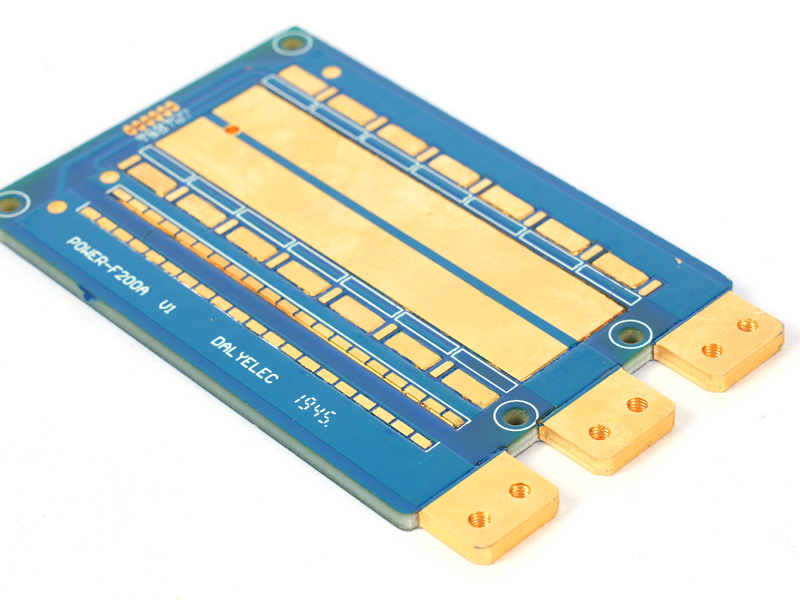
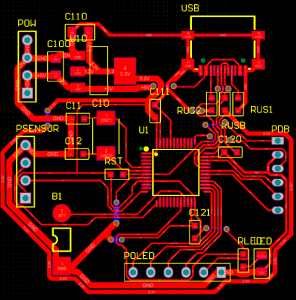
An amplifier circuit PCB is a specialized printed circuit board designed to support and interconnect components that increase signal amplitude while maintaining fidelity. This article explores its types, design strategies, high-power builds, component selection, common issues, and selection criteria to help you optimize layout and performance.
Designing reliable amplifier circuits often comes with challenges that can derail projects.
- Poor signal integrity due to mismatched trace impedance
- Thermal management failures causing component damage
- Ground loop noise and EMI interference
- Difficulty scaling from prototype to mass production
- High cost and long lead times for custom layouts
To address these pain points, EBest Circuit (Best Technology) offers professional amplifier PCB manufacturing and assembly services tailored for optimal performance and manufacturability.
- Impedance-controlled routing and PCB traces art for signal clarity
- Integrated thermal vias and copper pours for heat dissipation
- Star grounding and shielding techniques to suppress EMI
- DFM-optimized layouts ensuring smooth mass production
- Fast-turn prototyping and volume production with transparent pricing
EBest Circuit (Best Technology) is a leading PCBA manufacturer specializing in high-performance amplifier circuit PCB solutions. With advanced fabrication capabilities and strict quality control, we deliver reliable boards for audio, RF, and industrial applications. Pls feel free to contact us at sales@bestpcbs.com for expert support.
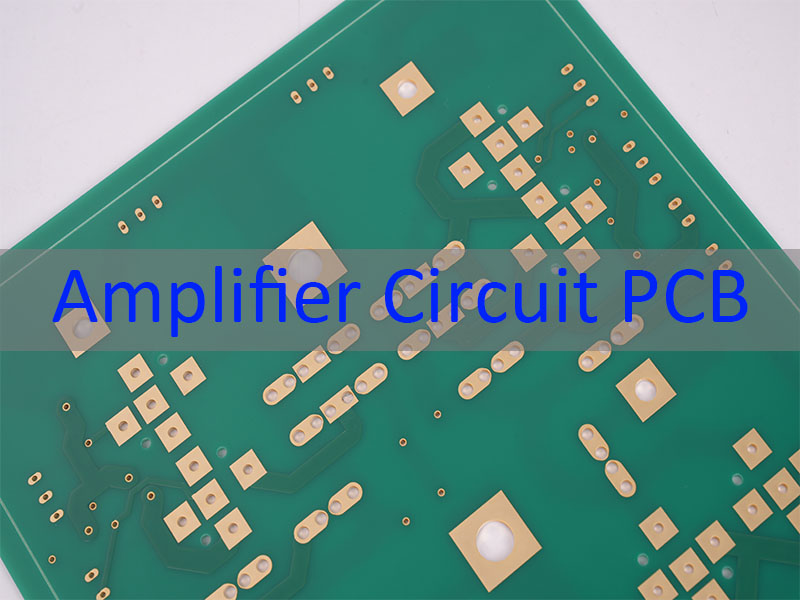
What Is an Amplifier Circuit PCB?
An amplifier circuit PCB is the engineered foundation that mechanically supports and electrically connects all components required to increase the amplitude of a signal—whether audio, radio frequency (RF), or power. Beyond simple connectivity, it manages critical factors like power delivery, signal integrity, and heat dissipation to ensure stable, high-fidelity performance.
Depending on the application, different base materials and technologies are selected to meet specific electrical and thermal demands. The most common types used in amplifier PCB manufacturing include:
- FR-4 (Standard): The most widely used substrate for general-purpose amplifier circuit boards, offering a balance of cost, mechanical strength, and electrical insulation. Ideal for consumer audio and mid-power designs.
- High-Tg FR-4: Modified for higher glass transition temperatures, providing better thermal stability and reliability for power amplifier circuit PCB layout in demanding environments.
- HDI (High-Density Interconnect): Utilizes microvias and fine lines to accommodate complex PCB amplifier circuit designs with high component density, often used in compact Class D amplifiers.
- Metal Core PCB (MCPCB): Features an aluminum or copper base for superior thermal conductivity, essential for 3kw power amplifier driver circuit PCB layout where heat management is critical.
- RF/Microwave Laminates (e.g., Rogers): Low-loss materials designed for high-frequency applications, crucial for class d amplifier circuit PCB layout and wireless communication amplifiers to maintain signal purity.
By selecting the right board type and layout strategy, designers can effectively manage the trade-offs between performance, size, and cost in any amplifier circuit PCB project.
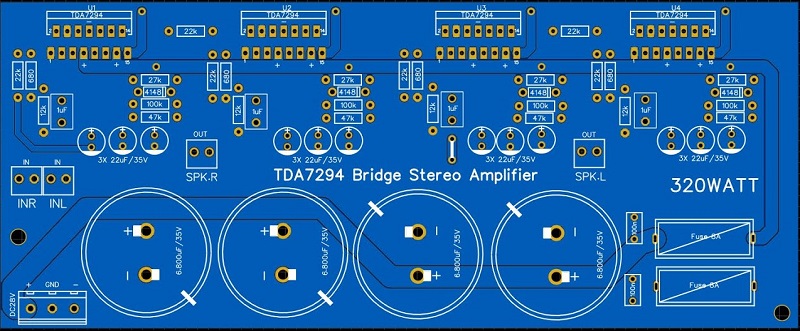
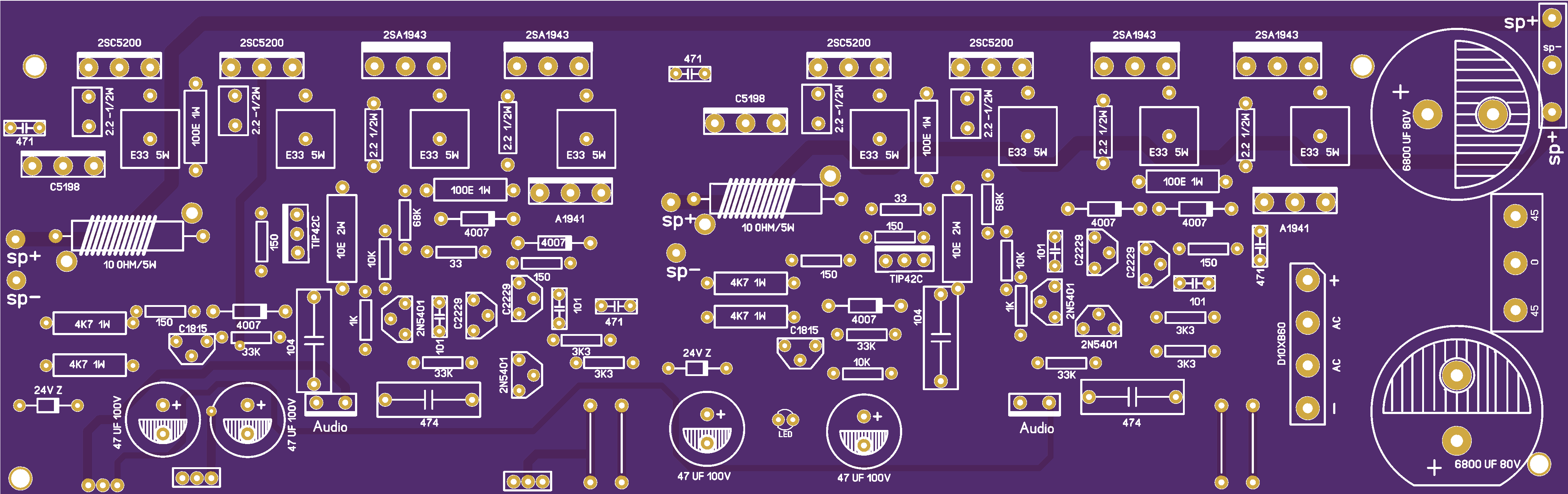
What Are the Key Types of Amplifier PCB Circuits?
Amplifier PCBs vary by application and topology:
| Type | Typical Use | Key Feature |
|---|---|---|
| Audio Amplifier PCB | Home/car audio | Low distortion, high fidelity |
| RF Amplifier PCB | Wireless comms | High-frequency stability |
| Class D Amplifier PCB | Efficient power amps | PWM switching, compact size |
| Instrumentation Amp PCB | Sensors/measurement | High CMRR, precision |
| Power Amplifier PCB | 1000W–3KW systems | Robust thermal handling |
How to Design a High-Performance Amplifier PCB Layout?
Optimizing an amplifier circuit PCB layout requires attention to signal paths, grounding, and thermal design.
- Keep input and output traces short and separated to avoid feedback
- Use ground planes and star grounding to minimize noise
- Place decoupling capacitors close to power pins
- Implement thermal vias under high-power devices
- Follow power amplifier circuit PCB layout best practices for EMI reduction
For complex designs like a 1000w amplifier circuit diagram PCB, simulation tools help validate signal integrity before fabrication.
How to Build a 1000W or 3KW Power Amplifier PCB?
High-power builds demand careful planning:
- Select MOSFETs or IGBTs rated for voltage/current
- Use thick copper (2oz–4oz) for current-carrying traces
- Design 3kw power amplifier driver circuit PCB layout with adequate heatsinking
- Ensure proper isolation between high-voltage and low-voltage sections
- Validate with thermal imaging and load testing
What Components Are Used in an Amplifier Circuit PCB?
Core components include:
- Amplification devices: BJTs, MOSFETs, op-amps, Class D ICs
- Passive elements: Resistors, capacitors, inductors for filtering
- Protection circuits: Fuses, TVS diodes, thermal sensors
- Connectors: Audio jacks, terminal blocks, RF connectors
A typical PCB amplifier circuit integrates these for stable gain and protection.
Common Problems in Amplifier PCB Layout and How to Fix Them
| Problem | Cause | Solution |
|---|---|---|
| Oscillation | Poor grounding, long feedback loops | Shorten traces, improve grounding |
| Overheating | Inadequate copper, no thermal vias | Add vias, increase copper area |
| Noise/hum | Ground loops, unshielded traces | Star ground, shield sensitive lines |
| Distortion | Incorrect biasing, poor layout | Verify bias points, optimize routing |
| Failure to start | Power sequencing issues | Add soft-start or delay circuits |
How to Choose the Right Amplifier PCB for Your Application?
Consider:
- Required power output (e.g., 1000W vs 3KW)
- Frequency range and signal type
- Environmental conditions (temperature, vibration)
- Size and form factor constraints
- Budget and production volume
Matching specs to needs ensures optimal performance from your amplifier circuit board.
Overall, an amplifier circuit PCB is essential for delivering clean, amplified signals across audio, RF, and power applications. This guide covered definitions, types, layout optimization, high-power design, components, troubleshooting, and selection criteria to help you build better boards. For expert manufacturing and assembly of amplifier PCB solutions, pls feel free to contact us anytime at sales@bestpcbs.com.
FAQs About Amplifier Circuit PCB
Q: Can I use a standard PCB for a power amplifier?
A: Not recommended—high-current designs need thicker copper and thermal management.
Q: What’s the difference between Class AB and Class D layouts?
A: Class D uses switching topology requiring careful EMI control; Class AB is linear but less efficient.
Q: How do I reduce noise in my amplifier PCB?
A: Use proper grounding, shielding, and keep analog/digital sections isolated.
Q: Do you provide power amplifier circuit diagram with PCB layout services?
A: Yes, EBest Circuit offers full design-to-production support.
Q: What file formats do you accept?
A: Gerber, ODB++, and Altium files are preferred.