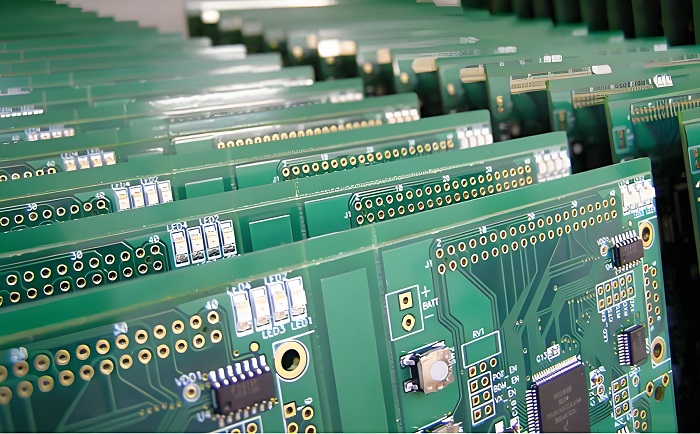
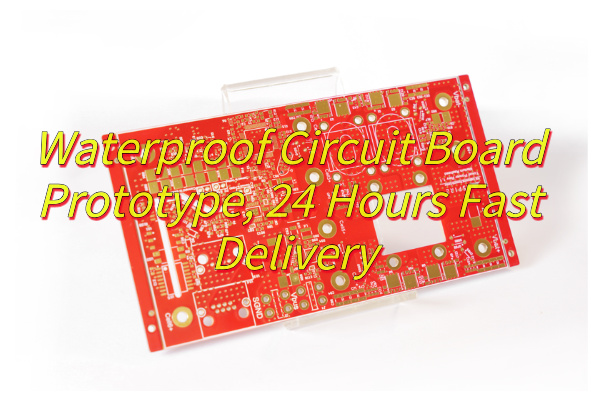
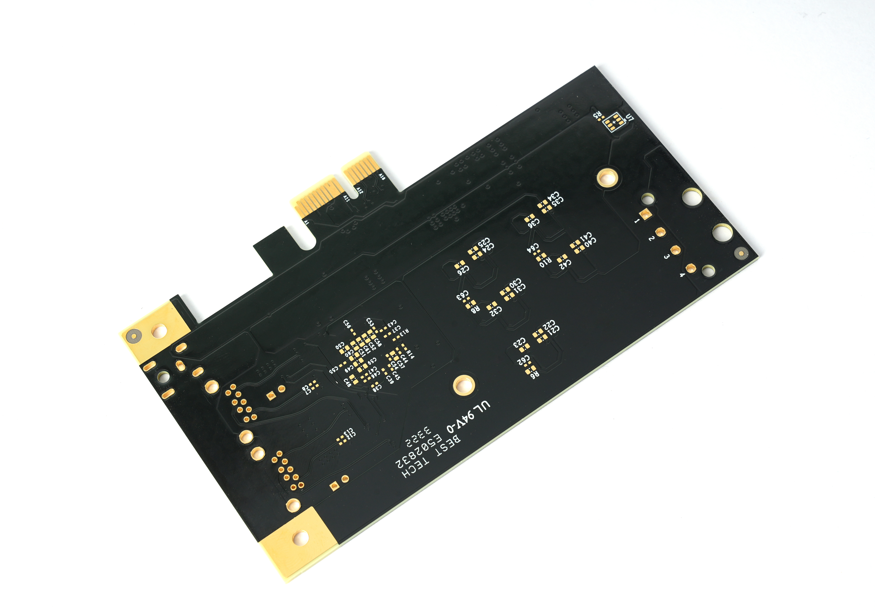
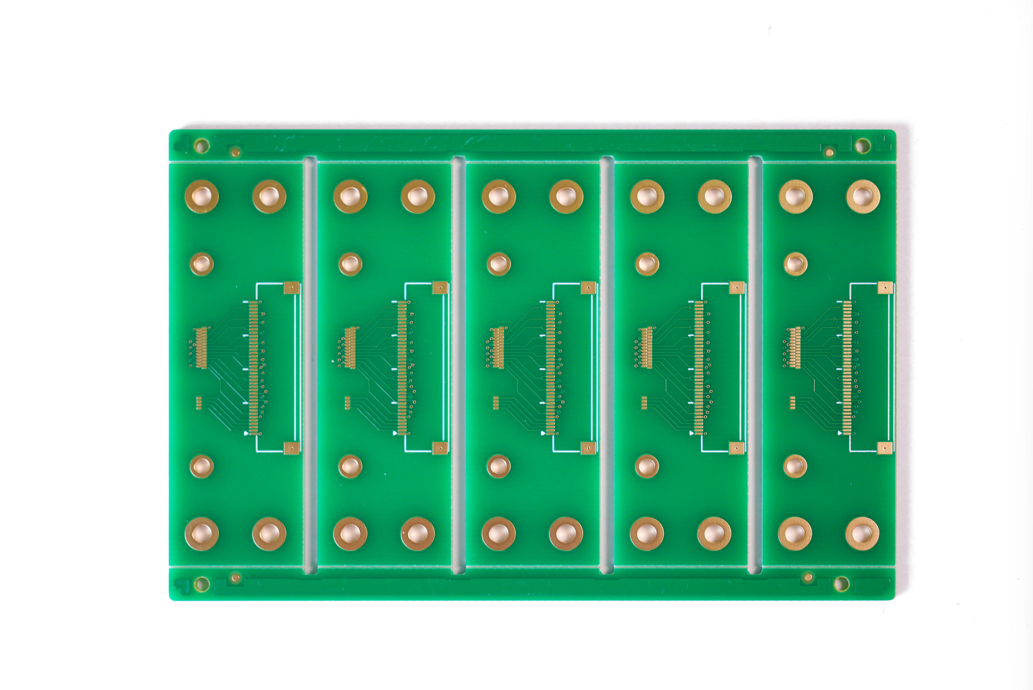
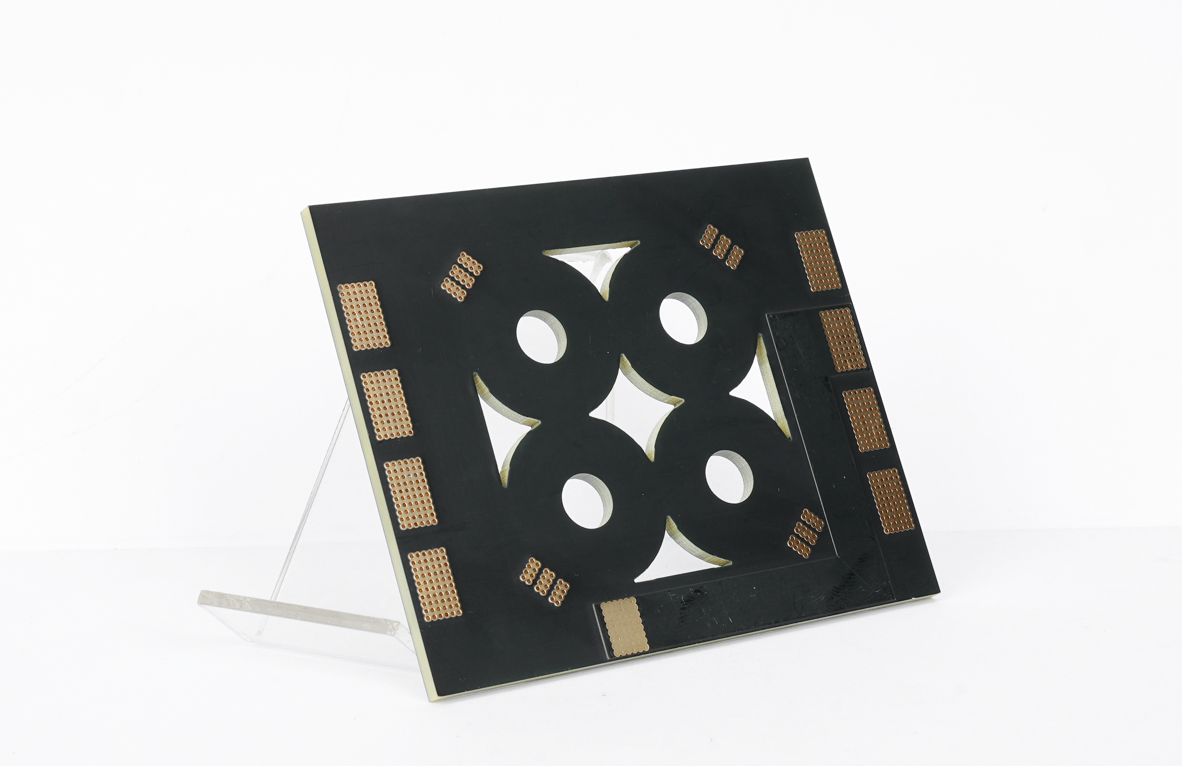
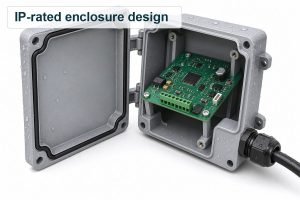
A waterproof PCB is a printed circuit board or PCB assembly designed to reduce failure risk caused by moisture, condensation, splash, humidity, chemicals, or water exposure. In real products, waterproofing is rarely achieved by the bare PCB alone. It usually requires the right combination of PCB material, layout spacing, surface finish, conformal coating, potting, enclosure sealing, connector selection, cleaning, and final testing.
For engineers and purchasing teams, the main question is not “Can this PCB be waterproof?” but “What level of moisture protection is necessary, and which method gives enough reliability without unnecessary cost or manufacturing risk?”
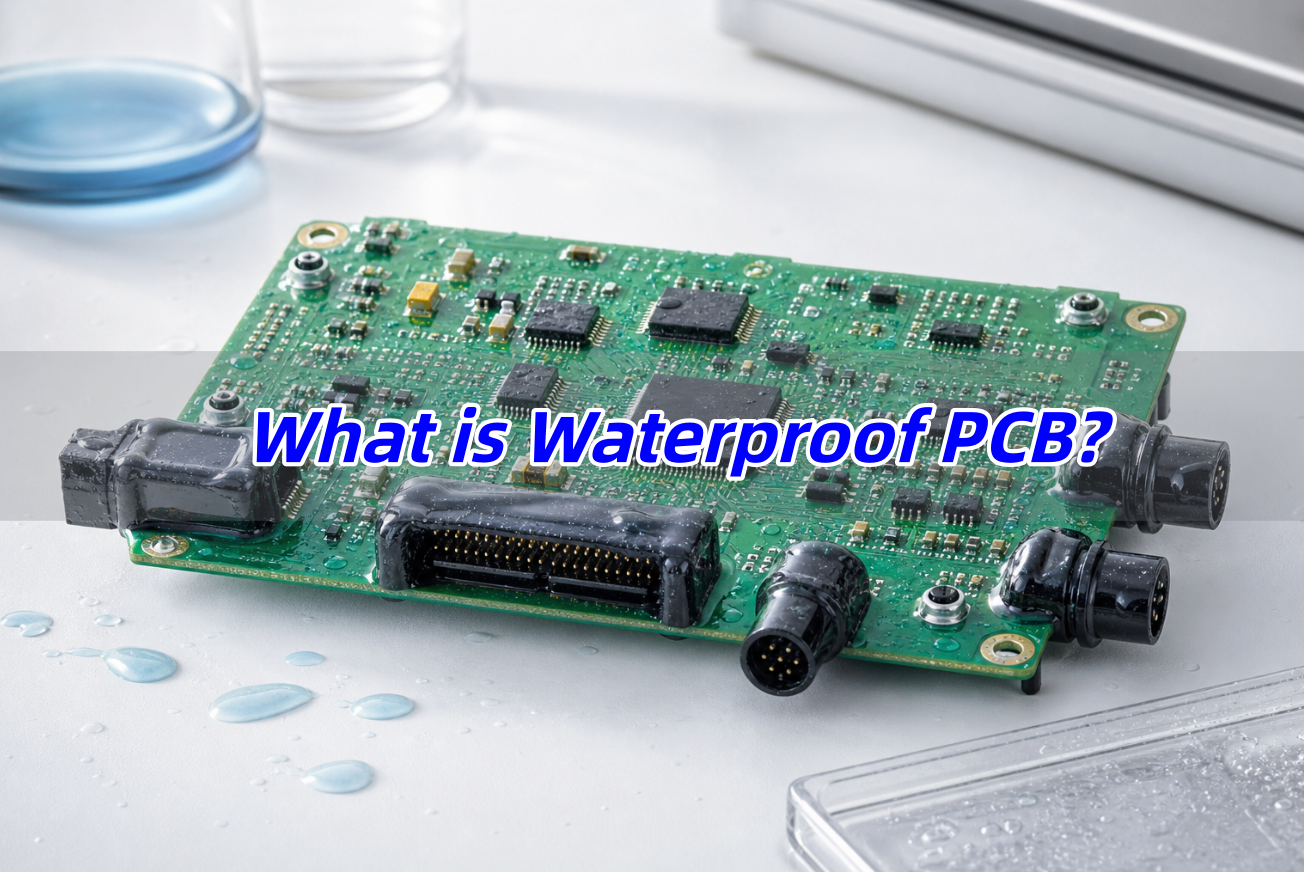
What Is a Waterproof PCB?
A waterproof PCB is a circuit board designed to operate reliably when exposed to moisture-related conditions. This may include high humidity, condensation inside an enclosure, outdoor rain splash, industrial washdown, or partial immersion, depending on the final product requirement.
The term is often used loosely. A PCB with conformal coating may resist humidity, but that does not mean the final device can survive immersion. A potted PCBA may block water effectively, but it may create thermal or repairability issues. A product with an IP67 enclosure may still fail if connectors, cable exits, or coating keep-out areas are not handled correctly.
For accurate specification, engineers should define the exposure level first:
| Exposure Condition | Practical Meaning | Typical Protection Method |
| High humidity | Moisture in air, no direct water | Cleaning, solder mask control, conformal coating |
| Condensation | Water forms inside enclosure | Coating, spacing review, drainage or venting |
| Splash or rain | Short-term direct water contact | Coating plus sealed enclosure |
| Water jets | Pressurized water exposure | IP-rated housing, sealed connectors, process validation |
| Immersion | Submerged use | Potting, encapsulation, sealed enclosure, full assembly testing |
| Salt fog or chemicals | Corrosive contamination | Material review, coating selection, corrosion testing |
The practical takeaway: waterproof PCB design should be specified by operating environment, not by a general label.
Why Waterproof PCB Design Matters
Moisture can cause corrosion, leakage current, short circuits, dendritic growth, unstable sensor readings, insulation breakdown, and intermittent failures that are difficult to reproduce during standard bench testing.
The risk is higher when the PCB has fine-pitch components, high-impedance signals, exposed test pads, high voltage, dense connectors, or flux residues left after assembly. Even a small amount of ionic contamination can become conductive when humidity rises.
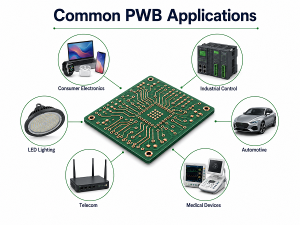
Waterproof PCB design is especially important for:
- Outdoor LED lighting
- Automotive electronics
- EV charging equipment
- Marine electronics
- Industrial controllers
- Agricultural sensors
- Security cameras
- Medical monitoring devices
- Wearable electronics
- Smart home devices installed in kitchens, bathrooms, or outdoor areas
For these applications, the cost of field failure is usually much higher than the cost of proper design review, cleaning, coating, or enclosure validation.
Waterproof PCB vs. Waterproof PCBA
A waterproof PCB refers mainly to the fabricated circuit board. A waterproof PCBA refers to the complete assembled board, including components, solder joints, connectors, cables, coating, potting, testing, and sometimes box-build integration.
This distinction matters because many moisture failures happen after assembly, not during bare board fabrication. Connectors, switches, relays, sensors, displays, unsealed cables, and exposed pads often create water entry points or leakage paths.
| Item | Waterproof PCB | Waterproof PCBA |
| Scope | Bare board structure | Complete assembled electronics |
| Main concerns | Material, solder mask, copper exposure, spacing | Components, solder joints, connectors, coating, potting, testing |
| Typical buyer focus | PCB fabrication quality | Functional reliability in the final environment |
| Best used when | Board-level moisture resistance is enough | Product must survive real operating conditions |
For most customer projects, waterproof PCBA is the more useful engineering target because it reflects how the product will actually be used.
Main Waterproof PCB Protection Methods
The right method depends on water exposure, repair requirements, production volume, thermal load, and cost target.
| Method | Best For | Advantages | Limits |
| Conformal coating | Humidity, condensation, light splash | Thin, cost-effective, inspectable, reworkable depending on material | Not ideal for immersion or poor enclosure sealing |
| Potting | Immersion, vibration, harsh outdoor use | Strong water and mechanical protection | Hard to repair, adds weight, may trap heat |
| Encapsulation | Local protection for selected parts | Protects sensitive areas without filling entire unit | Requires precise process control |
| Sealed enclosure | Products needing IP rating | Protects full device, including mechanical openings | Failure risk remains at connectors, seams, buttons, vents |
| Combined approach | Outdoor or high-reliability products | Balances board-level and system-level protection | Requires DFM review and testing plan |
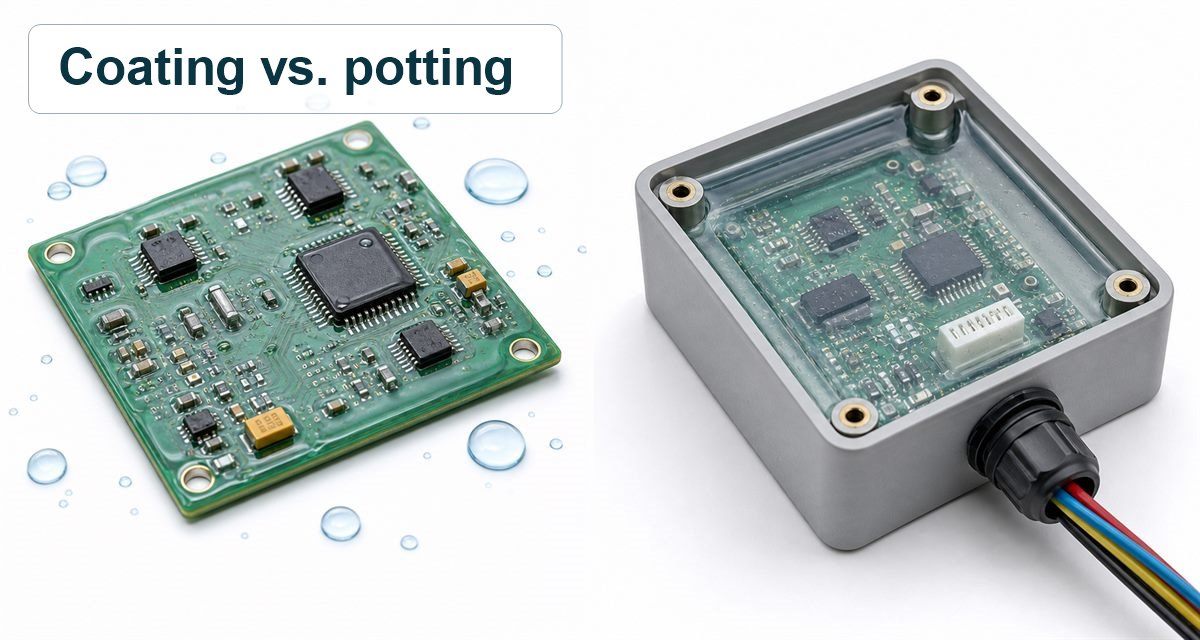
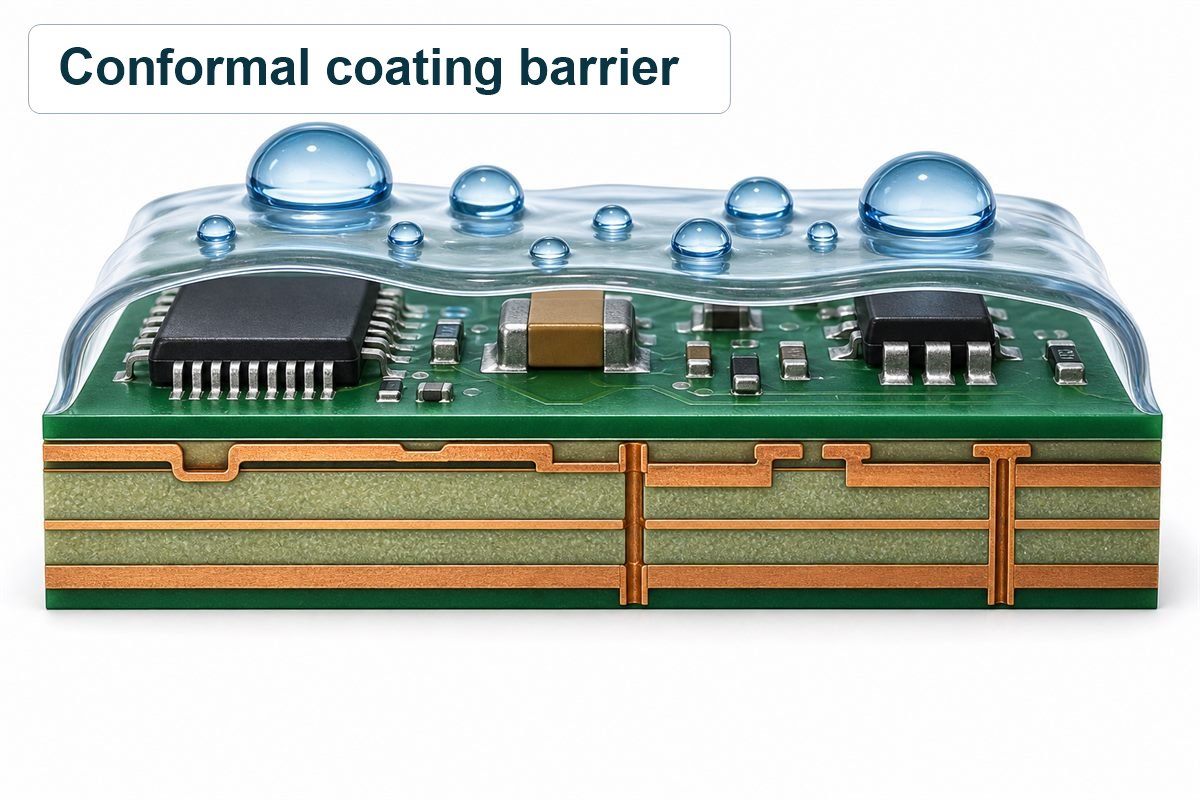
Conformal coating is often the first choice for moisture-resistant PCBAs. Potting is better when water exposure is severe, but it should not be selected automatically because it can create new thermal and serviceability problems.
How to Choose Waterproof PCB Coating?
Coating selection should be based on operating temperature, chemical exposure, rework needs, coating thickness, component geometry, curing method, and production process. A coating that works well for an indoor humidity problem may not be suitable for an outdoor product exposed to UV, vibration, salt fog, or cleaning chemicals.
| Coating Type | Suitable When | Key Trade-Off |
| Acrylic | General humidity protection and easy rework | Lower chemical and solvent resistance than some alternatives |
| Silicone | Outdoor, vibration, and wide temperature conditions | Softer surface and may require careful adhesion control |
| Polyurethane | Moisture and chemical resistance | More difficult to remove than acrylic |
| Epoxy | Strong mechanical and chemical protection | Hard to rework and may stress components |
| Parylene | Thin, uniform, high-reliability protection | Higher cost and requires specialized deposition process |
Before coating, the PCBA should be cleaned and dried properly. Coating over flux residue or contamination can seal the problem inside the assembly and increase leakage risk during humidity exposure.
When Potting Is Better Than Coating
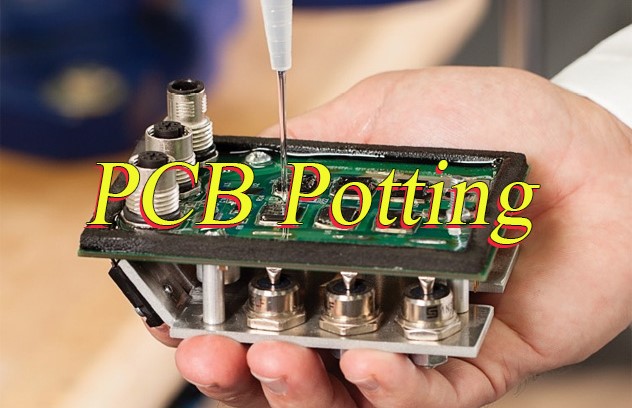
Potting is suitable when the assembly must survive immersion, heavy vibration, shock, tampering, or aggressive contamination. It is common in outdoor sensors, LED drivers, power modules, automotive electronics, and marine devices.
The decision is usually practical rather than theoretical: choose potting when coating cannot provide enough environmental or mechanical protection, but avoid it when repairability, low weight, inspection access, or heat dissipation is a priority.
| Decision Factor | Choose Coating | Choose Potting |
| Water exposure | Humidity, condensation, splash | Immersion or severe splash |
| Repair requirement | Rework may be needed | Repair is not expected |
| Thermal load | Moderate heat, visible inspection needed | Thermal path can be designed through resin or housing |
| Mechanical stress | Normal vibration | High shock or vibration |
| Cost sensitivity | Lower process cost | Higher protection justifies added cost |
| Production validation | Easier inspection | Requires resin control, curing control, and thermal review |
For power electronics, potting material must be checked carefully. Resin hardness, thermal conductivity, cure shrinkage, and coefficient of thermal expansion can affect solder joints and component life.
PCB Design Factors That Improve Moisture Resistance
Waterproofing is easier and more reliable when the PCB layout already supports moisture protection. Risk areas should be reviewed before fabrication and assembly, because coating or potting cannot always compensate for poor spacing, exposed conductors, or water paths created by the mechanical design.
Key design factors include:
- Increase creepage and clearance for high-voltage nets
- Avoid placing sensitive analog or high-impedance circuits near board edges
- Reduce exposed copper and unnecessary test pads
- Keep connectors away from likely water paths
- Use solder mask dams where appropriate
- Avoid dense via fields in wet-risk areas
- Define coating keep-out zones clearly for connectors, switches, and contact pads
- Consider drainage and board orientation inside the enclosure
- Separate high-power, RF, analog, and moisture-sensitive areas when possible
A DFM review should also check whether coating can reach the required areas. Tall components, low-clearance connectors, and shadowed regions can create uneven coating coverage.
Materials Used for Waterproof PCB Applications
Material choice should match electrical load, thermal requirements, mechanical environment, and cost. Waterproofing does not automatically require an exotic laminate.
| PCB Material | Suitable Applications | Practical Notes |
| FR4 | General waterproof electronics, control boards, IoT devices | Cost-effective and widely available |
| High-Tg FR4 | Automotive, industrial, higher temperature products | Better thermal stability than standard FR4 |
| Aluminum PCB | Outdoor LED lighting, power modules | Good heat dissipation, usually single or limited layer structures |
| Copper base PCB | High-power thermal applications | Higher cost, strong thermal performance |
| Ceramic PCB | LED, medical, power, high-reliability electronics | Excellent thermal stability, higher material and process cost |
| Flexible PCB | Wearables and compact sealed devices | Requires careful bend radius and sealing design |
| Rogers / RF laminate | RF and communication products | Used when signal performance matters more than cost |
For many moisture-resistant products, FR4 plus proper coating is enough. Higher-performance materials become useful when heat, high power, RF stability, or reliability requirements justify the cost.
Testing and Inspection for Waterproof PCB Reliability
A waterproof PCB should be tested against the conditions it will actually face, because a board that passes room-temperature electrical testing can still fail after humidity exposure, thermal cycling, condensation, or contamination.
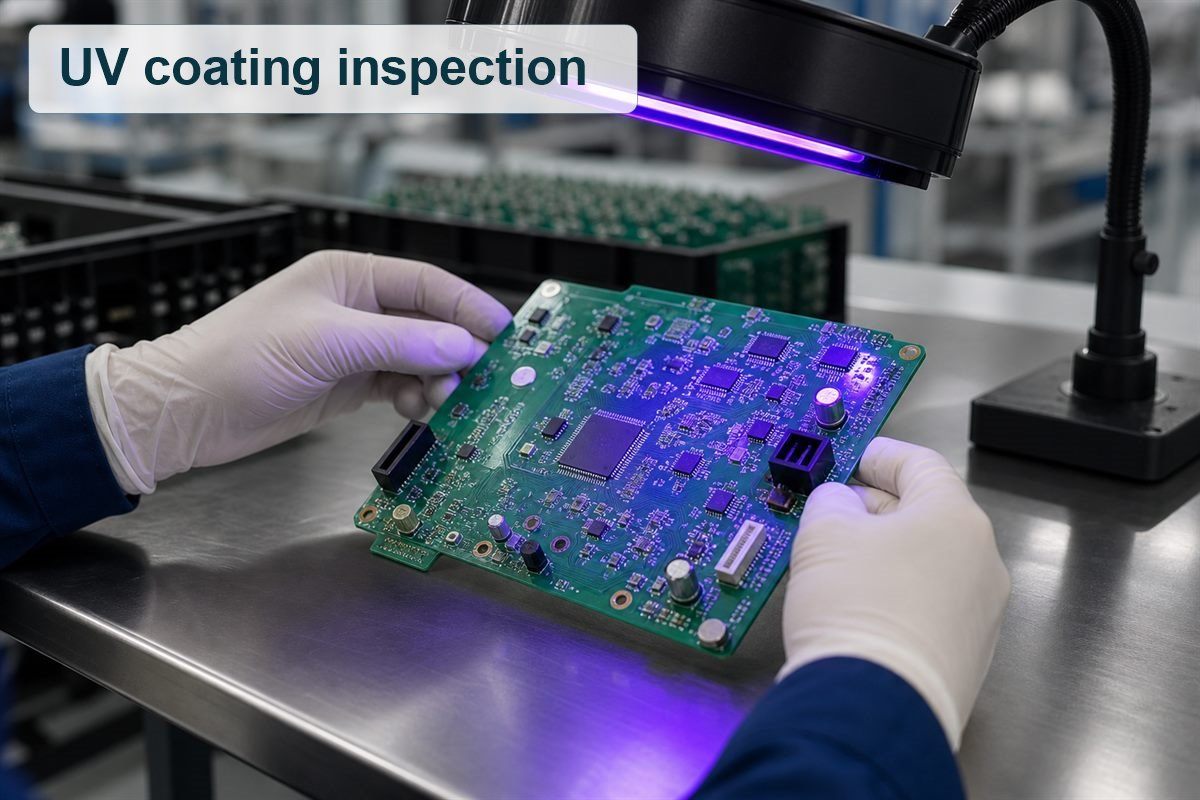
Common checks include:
| Test or Inspection | What It Helps Verify |
| Visual inspection | Coating gaps, bubbles, cracks, contamination |
| UV inspection | Coating coverage when fluorescent coating is used |
| Electrical test | Basic circuit function after coating or potting |
| Functional test | Real operating behavior of the PCBA |
| Insulation resistance test | Leakage current risk under moisture conditions |
| Humidity test | Long-term moisture reliability |
| Thermal cycling | Coating adhesion and material stress |
| Salt spray test | Corrosion resistance for marine or coastal use |
| IP testing | Full product enclosure protection level |
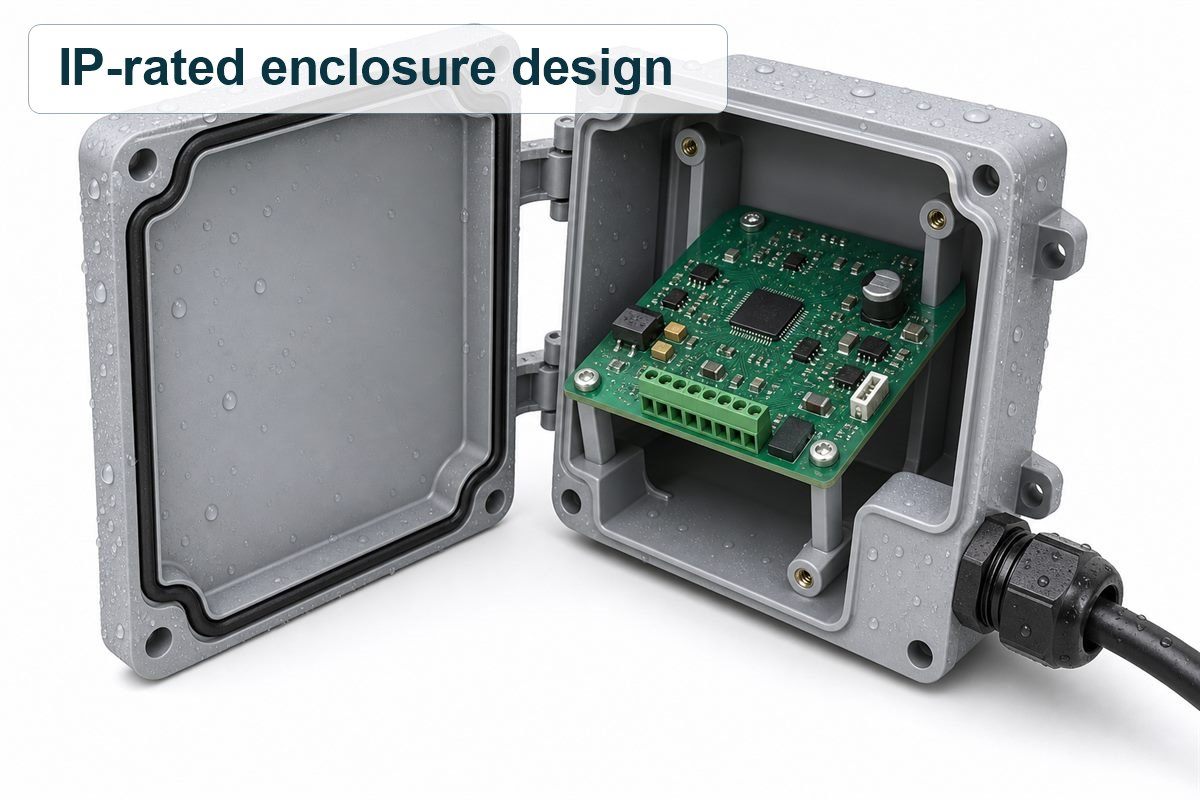
IP ratings apply to the enclosure or complete product, not the bare PCB alone. If a customer needs IP65, IP67, or IP68 performance, the quotation and validation plan should include mechanical sealing, connectors, cables, and complete assembly testing.
What to Provide When Requesting a Waterproof PCB Quote
Gerber files are only the starting point for a waterproof PCB quotation. The manufacturer also needs to understand where the product will be used, how much moisture exposure it will face, and whether coating, potting, enclosure sealing, or functional testing is required.
Customers should provide:
- Gerber files, BOM, and assembly drawings
- Product application and installation environment
- Expected exposure: humidity, rain, splash, immersion, salt fog, chemicals
- Target IP rating, if required
- Operating voltage, current, and temperature range
- Required coating or potting preference, if known
- Areas that must not be coated, such as connectors or contact pads
- Prototype quantity, small-batch quantity, and expected production volume
- Testing requirements and acceptance criteria
- Enclosure, cable, or box-build requirements if included
This information helps avoid under-specifying protection or adding unnecessary cost where a simpler process would be enough.
How EBest Circuit Supports Waterproof PCB and PCBA Projects
EBest Circuit, also known as Best Technology, supports waterproof PCB and waterproof PCBA projects through PCB manufacturing, component sourcing, SMT assembly, testing, coating coordination, potting process support, and box-build assembly.
For engineering teams, the useful value is early review. EBest Circuit provides free DFM checks and BOM optimization support, with experienced PCB/PCBA engineers reviewing manufacturability, component availability, process compatibility, coating keep-out areas, and prototype-to-production risks.
The company supports prototypes and small batches with no MOQ, which is useful when engineers need to validate waterproofing before committing to mass production. EBest Circuit also operates its own PCB and PCBA manufacturing facilities, works with 1,000+ qualified supply chain partners, and holds ISO9001, ISO13485, IATF16949, and AS9100D certifications for projects that require stronger quality documentation.
For time-sensitive builds, the team can support rapid PCBA delivery in as fast as 1.5 weeks, depending on material availability, BOM risk, testing scope, and assembly complexity.
Conclusion
A reliable waterproof PCB is not just a coated circuit board. It is the result of practical decisions about exposure level, material, layout, coating, potting, enclosure sealing, connectors, cleaning, inspection, and testing.
For simple humidity protection, conformal coating may be enough. For immersion or harsh outdoor use, potting, sealed enclosures, and full PCBA validation may be required. The best purchasing decision starts with a clear description of the operating environment and a quotation package that includes Gerbers, BOM, drawings, coating requirements, test expectations, and production volume.
If you are evaluating a waterproof PCB or waterproof PCBA project, contact EBest Circuit at sales@bestpcbs.com for DFM review, BOM support, PCB manufacturing, assembly, testing, and prototype-to-production guidance.