EBest Circuit is a certified ISO 13485 PCB manufacturer in China providing PCB fabrication, component sourcing, and PCBA assembly for medical-electronics projects.
EBest Circuit PCB and PCBA manufacturing coordinates design review, prototyping, fabrication, sourcing, assembly, inspection, and testing through one project route. Five-year MES history connects agreed production records with the applicable PCB or PCBA lot.
Send the released fabrication package, BOM, assembly data, quantities, inspection or test requirements, and required traceability fields to sales@bestpcbs.com for engineering review and quotation.

What Does ISO 13485 Certification Mean for a PCB Manufacturer?
ISO 13485 certification shows that a PCB supplier operates a quality management system designed for medical-device supply chains within the certificate’s stated entity, site, and scope. For an ISO 13485 PCB manufacturer, the practical result is controlled release of customer requirements, manufacturing files, materials, production records, nonconformances, and approved changes.
- Verify the certificate: Match the legal entity, issuing body, validity dates, covered address, and activity scope with the quotation and purchase order.
- Match the service route: Confirm whether the covered site performs PCB fabrication, sourcing, PCBA assembly, inspection, testing, rework, and shipment or controls an outsourced step.
- Review production evidence: Examine a controlled traveler, inspection record, change record, nonconformance disposition, and example lot genealogy for the proposed route.
Treat supplier certification as QMS evidence, not as approval of the customer’s finished medical device. The ISO 13485:2016 standard remains the third edition, confirmed in 2025. For U.S. medical-device programs, the FDA Quality Management System Regulation became effective on February 2, 2026; it incorporates ISO 13485:2016 by reference with additional FDA requirements.
What PCB and PCBA Services Should an ISO 13485 Manufacturer Provide?
The service scope should cover the actual project route, from fabrication data review through bare-board production and any required component sourcing, assembly, inspection, testing, and shipment records. EBest Circuit can coordinate these activities through one PCB/PCBA project instead of splitting revision and lot information across unrelated suppliers.
- Engineering review: Check Gerber or ODB++, NC drill data, stackup, fabrication notes, BOM, placement data, assembly drawings, and test inputs before release.
- PCB fabrication: Build the released construction using the specified laminate, copper, via structure, solder mask, surface finish, impedance requirements, and acceptance criteria.
- Component sourcing: Purchase against approved manufacturer part numbers and retain the agreed supplier-lot or date-code relationships.
- PCBA production: Coordinate solder-paste printing, SMT placement, reflow, through-hole work when applicable, inspection, rework control, and final release.
- Project records: Link the released revision, production route, inspection and test status, approved exceptions, and shipment identity to the manufactured lot.
What PCB Manufacturing Capabilities Matter for Medical Electronics?
The required capability follows the released design and verification plan. Medical electronics may use multilayer FR-4, HDI, flexible or rigid-flex, high-Tg, high-frequency, heavy-copper, ceramic, or metal-core constructions, but the application name alone does not determine which structure is necessary.
- Construction review: Check layer count, finished thickness, copper weight, stackup, via structure, minimum hole requirements, surface finish, and controlled-impedance inputs.
- Fabrication verification: Define dimensional checks, electrical-test coverage, coupons, microsection requirements, and other project-specific release evidence.
- Assembly fit: Review package footprints, polarity, fine-pitch or BGA access, through-hole parts, test points, programming needs, and any special handling.
- Inspection access: Match AOI, visual inspection, X-ray, ICT, programming, or functional testing to the features each method can actually evaluate.
How Are Medical PCB Materials and Components Controlled?
Production should use the released laminate, copper construction, surface finish, solder materials, and approved components for the identified lot. Receiving, storage, issue, and substitution controls keep an available but unapproved material from entering the medical PCB or PCBA build.
- Laminate and fabrication materials: Tie the material family, performance requirement, copper construction, solder mask, and surface finish to the current fabrication revision.
- Approved components: Use the released BOM and approved manufacturer list; record supplier lot and date code when the project requires that genealogy.
- Assembly materials: Control solder paste, solder wire, adhesives, cleaning materials, and other process inputs that can affect the approved assembly route.
- Incoming status: Identify accepted, quarantined, or rejected material so nonconforming stock cannot be issued to production.
- Substitutions: Hold alternates until technical impact, process compatibility, traceability needs, validation conditions, and approval authority are resolved.
How Does Five-Year MES Traceability Support Medical PCB Production?
Five-year MES traceability connects each configured PCB or PCBA lot with its materials, components, process route, inspection results, test records, rework history, approved changes, and shipment data. A suspect lot can then be isolated and compared with unaffected production without reviewing every order.
- Containment: Use the lot or serial identity to identify affected boards, components, work orders, and shipments.
- Root-cause comparison: Compare material lots, process steps, inspection results, rework, and approved deviations between affected and unaffected production.
- Change review: Determine whether a BOM alternate, material source, fabrication note, program, test revision, or rework instruction changed before the event.
- Evidence retrieval: Retrieve agreed records using the same lot identity instead of reconstructing the history from separate emails and spreadsheets.
Five years is EBest Circuit’s stated MES retention period. The RFQ should identify the required fields and export format and confirm whether the duration fits the customer’s product lifecycle and contractual needs.
Define retrieval scenarios before approving the record structure. A useful test is to select one finished serial or lot identity and retrieve its released revision, material and component lots, production route, inspection results, rework status, approved deviations, and shipment reference. Then perform the reverse check from a suspect component or material lot to every affected finished lot. Forward and backward retrieval demonstrate whether the captured relationships can support containment, complaint investigation, and customer notification.
The response time and output format should match the customer’s investigation process. Agree whether records will be supplied as a human-readable report, structured export, scanned traveler, or combination, and identify which fields may be redacted for supplier confidentiality. A five-year retention statement has limited operational value if the required lot cannot be located, the fields cannot be interpreted, or the export omits the revision and disposition needed to make a containment decision.
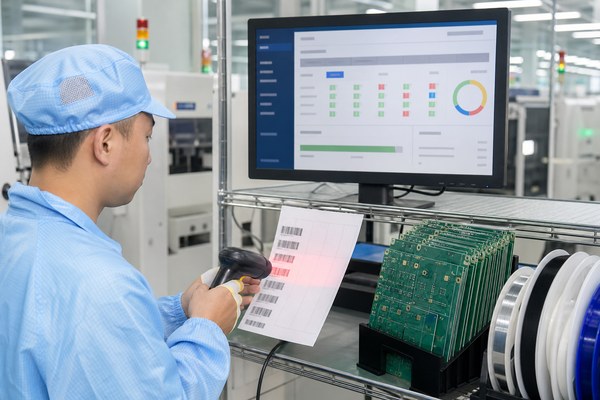
What PCB and PCBA Data Should Be Traceable for Each Production Lot?
A useful lot record connects the released product definition with the materials, process route, verification results, exceptions, and delivered units. The required fields must be configured and captured; the presence of MES software does not create missing genealogy after production.
| Record Group | Lot Connection | Buyer Use |
|---|---|---|
| Released files | Drawing, Gerber/ODB++, BOM, assembly, and test revisions | Identify the approved product definition used for the lot |
| Materials and components | Laminate, finish, solder materials, component manufacturer, supplier lot, and required date code | Contain suspect inputs without blocking unrelated builds |
| Production route | Fabrication, assembly, inspection, programming, and test operations performed | Find omitted, repeated, or changed process steps |
| Exceptions | Nonconformance, disposition, rework instruction, and re-verification | Separate the normal route from approved exceptions |
| Shipment | Finished lot or serial identity, quantity, packing identity, and dispatch record | Connect production evidence with delivered units |
How Are BOM, Material, and Manufacturing Changes Controlled?
A change should remain outside production until its identity, affected lots, technical impact, approval, implementation point, and verification requirements are recorded. The controlled baseline includes Gerber or ODB++, drawings, stackup, BOM, approved manufacturers, assembly data, programs, test procedures, and work instructions.
Step 1: Describe the change. Identify the exact component, material, process, site, file, program, or instruction and explain why it is proposed.
Step 2: Assess the impact. Compare form, fit, function, reliability, process compatibility, inspection coverage, traceability, and any required validation.
Step 3: Approve the disposition. Record the decision authority, effective date, affected quantities, conditions, and rejected alternatives.
Step 4: Update production data. Revise procurement records, work instructions, programs, inspection plans, test methods, and MES identifiers before the affected lot is released.
Step 5: Verify implementation. Check the first affected output against the approval conditions and retain the result with the lot record.
What Inspection and Testing Are Used for Medical PCB and PCBA Production?
Inspection and testing must follow the feature being evaluated and its position in the manufacturing sequence. Bare-board electrical test occurs before assembly; SPI, AOI, X-ray, ICT, programming, and functional test are selected only when applicable to the package geometry, process risk, and customer acceptance plan.
| Production Stage | Applicable Verification | Required Input or Output |
|---|---|---|
| Bare PCB fabrication | Visual or dimensional inspection, electrical test, and specified microsection or coupon review | Fabrication drawing, netlist, limits, and required report |
| Solder-paste printing | SPI when required for the assembly and package risk | Approved program and project-specific process limits |
| Placement and reflow | Visual inspection and AOI; X-ray for applicable hidden joints | Released assembly data and workmanship criteria |
| Electrical or functional verification | ICT, flying probe, programming, or functional test when specified | Fixture, firmware, conditions, measurement points, pass limits, and result record |
| Final release | Review of lot identity, exceptions, completed inspections and tests, quantity, and packing | Approved release checklist and shipment record |
Each result should state what was checked, the applicable revision and limit, the lot identity, and the disposition. An equipment list without those relationships cannot show whether the shipped configuration met the released acceptance plan.
Build the acceptance plan from product characteristics rather than from available equipment. For each required check, identify the feature or failure mode, manufacturing stage, sampling or coverage, acceptance limit, record owner, and reaction to failure. For example, bare-board continuity results belong to the fabricated-board identity, while a functional test result must reference the loaded firmware, fixture or interface conditions, limits, and assembled-unit identity. This separation prevents a general “tested” status from hiding which configuration and requirements were actually evaluated.
Nonconforming results also need a defined path. The record package should distinguish retest from rework, identify the approved instruction, retain the original failure, and show the final disposition. If a failed unit or lot is accepted under deviation, the authorization and affected quantity should remain linked to shipment. Those relationships give customers usable investigation evidence without implying that every project requires the same inspection method or full test suite.

How Should Medical PCB Prototypes Move into Volume Production?
Prototype, pilot, and volume builds should retain one product identity while using stage-specific release evidence. Temporary prototype decisions must remain visible so they are closed rather than silently inherited by mass production.
- Prototype: Resolve manufacturability, material availability, assembly access, programming, and test-method questions; record temporary parts and deviations.
- Pilot: Use production-intent materials, tooling, programs, inspection plans, and traceability where feasible; evaluate repeatability and open risks.
- Volume release: Freeze the approved files, suppliers, route, acceptance criteria, packaging, and record package.
- Ongoing production: Route supplier notices, nonconformances, rework, test failures, and customer feedback through the controlled change and lot-history process.
Use a transfer checklist to close prototype-only conditions. Compare the prototype and proposed volume baselines for laminate and finish, approved component sources, panelization, tooling, assembly programs, test fixtures, inspection coverage, rework instructions, labels, packaging, and MES fields. Each difference should be closed by design revision, approved production method, documented deviation, or additional validation before the volume release.
The pilot output should answer whether the manufacturing route is repeatable, not merely whether a small quantity passed final inspection. Review process exceptions, defect and rework information when contractually available, material substitutions, test escapes, and incomplete records. This provides a rational basis for freezing the production package and keeps successful hand-built prototype practices from becoming undocumented volume-production assumptions.
How Should You Evaluate an ISO 13485 PCB Manufacturer in China?
Evaluate the certificate, the proposed production site, the PCB/PCBA capabilities, and the records available for the exact order. A useful supplier review follows one representative job from file release through materials, fabrication, assembly, inspection, change handling, final release, and MES retrieval.
- Certificate and site: Confirm the quoted entity, address, validity, scope, and outsourced operations.
- Technical feasibility: Obtain a marked-up response covering stackup, materials, via structure, impedance, finish, assembly packages, inspection access, and test needs.
- Change control: Review how BOM alternates, material substitutions, program revisions, rework, and site changes are held and approved.
- Traceability sample: Compare a redacted traveler, lot genealogy, inspection report, and change record with the fields required by the RFQ.
- Release evidence: Define the reports, labels, exception status, and shipment records that must accompany or remain retrievable for each lot.
Ask the supplier to return a marked-up requirement package rather than a simple “can build” response. Each critical item should be accepted, conditionally accepted with a stated alternative, or left open with the exact customer input required. Include certificate and site identity, outsourced steps, stackup, approved materials, component controls, traceability fields, inspection and test outputs, deviation handling, and retention. This response becomes a measurable supplier-approval record and exposes scope gaps before purchasing commits materials.
For a new medical program, review one representative evidence chain from incoming material through shipment. The chain should connect the released files to material and component identity, production actions, inspection or test results, nonconformance status, final release, and MES retrieval. The objective is not to collect the largest document bundle; it is to prove that the specific records needed for risk control and investigation can be produced for the quoted manufacturing route.
Why Choose EBest Circuit as Your ISO 13485 PCB Manufacturer?
EBest Circuit combines ISO 13485 certification, five-year MES history, and a coordinated PCB/PCBA manufacturing route in China. The service is designed to keep engineering files, materials, production actions, verification results, and lot records connected through the project lifecycle.
- One production route: PCB fabrication, component sourcing, and assembly can be coordinated against the same released files.
- Five-year MES history: Agreed lot records remain available for later investigation, comparison, and customer record requests.
- Prototype-to-volume continuity: Approved manufacturing, sourcing, inspection, and test requirements can continue into pilot and production planning.
- Controlled component sourcing: BOM identity, approved manufacturers, and substitutions can be reviewed before affected material enters the build.
- PCB and PCBA verification: Bare-board and assembly inspection or testing can be planned within one project route according to the released requirements.
- Global project support from China: Engineering and production coordination supports customers sourcing medical PCB and PCBA work from China.
What Information Should You Provide for a Medical PCB Quote?
A usable RFQ identifies the current product revision, production stage, manufacturing scope, acceptance plan, and traceability output. The quotation can then separate confirmed requirements from assumptions, exclusions, missing files, and proposed alternatives.
- Fabrication package: Gerber or ODB++, NC drill files, fabrication drawing, stackup, materials, impedance data, surface finish, panel needs, quantity, and revision identity.
- Assembly package: BOM with approved manufacturers, placement data, assembly drawings, polarity notes, permitted alternates, special processes, and quantity.
- Quality and test plan: Workmanship criteria, inspection methods, sample or full-inspection needs, fixture responsibility, firmware, conditions, measurement points, and pass limits.
- Traceability requirements: Required PCB, component, process, inspection, test, rework, label, and shipment fields plus retention and export expectations.
- Program inputs: Prototype, pilot, and forecast volume, target dates, packaging, destination, and authorized change contacts.
Frequently Asked Questions About ISO 13485 PCB Manufacturing
Q1: Does ISO 13485 certification make a PCB a medically approved device?
A1: No. ISO 13485 certification provides evidence about a supplier’s quality-management system. The finished medical-device manufacturer remains responsible for product classification, design controls, validation, market authorization, and other applicable regulatory obligations for the completed medical device.
Q2: Do medical PCBs require ISO 13485 certification?
A2: The applicable supplier requirement depends on the medical-device manufacturer’s quality system, risk assessment, market obligations, and purchasing controls. State the required certificate, scope, site, and manufacturing activities in the supplier-approval and RFQ documents. Record why the selected supplier-control level is appropriate for the board’s role in the device.
Q3: Is five-year MES retention sufficient for every medical PCB program?
A3: Not automatically. The device manufacturer must compare the five-year period with its device lifetime, complaint-handling, customer, market, and contractual record requirements, then document any longer retention period in the applicable quality agreement or purchase order.
Q4: Can MES trace every component date code and supplier lot?
A4: Only the configured and captured fields are traceable. List the required component, supplier, date-code, receiving, and placement relationships in the RFQ, then review a representative report before approving the production record structure for the order.
Q5: What is the difference between ISO 9001 and ISO 13485 for PCB manufacturing?
A5: ISO 13485 applies a medical-device quality-management framework with requirements relevant to regulatory and supplier-control environments. Supplier selection should verify the certificate scope and the order-specific PCB fabrication, PCBA, traceability, inspection, and change controls. Compare the quoted legal entity and production route rather than treating the two certificates as interchangeable labels.
Q6: Do all ISO 13485-certified PCB manufacturers for medical devices offer PCBA?
A6: No. Certification scope and service scope differ. Confirm whether the quoted legal entity and site perform bare-board fabrication, sourcing, assembly, inspection, testing, and record retention, or whether some operations are outsourced to separately controlled suppliers.
Q7: What records should be provided with medical PCB production?
A7: The record package depends on the purchase specification. It may include certificate or declaration records, lot genealogy, material or component identities, inspection and test results, deviations, rework verification, final release, labels, and shipment data. Define which documents accompany the shipment and which remain retrievable by lot.
Q8: What happens when an approved component becomes unavailable?
A8: The alternate should remain blocked until approval. The supplier should document the proposed manufacturer and part, affected lots, technical comparison, validation conditions, and written customer disposition before purchasing or placing the substitute in medical production.
Q9: How should reworked PCBAs appear in traceability records?
A9: The affected unit or lot should link to the nonconformance, disposition, rework instruction, and re-verification result. Buyers should state whether unit serialization or lot-level identity is required and which records must accompany the final shipment.
Q10: How long should medical PCB traceability records be retained?
A10: The required period follows the customer’s device lifecycle, complaint-handling, regulatory, contractual, and quality-system needs. EBest Circuit states five-year MES retention; confirm required fields, retrieval format, and any longer project-specific period before ordering. Put the agreed duration and access method in the quality agreement or purchase specification.
EBest Circuit combines certified quality-system control, PCB/PCBA manufacturing, and five-year MES history in one China-based supplier route. Send your current package to confirm capability, manufacturing assumptions, inspection and test outputs, traceability fields, and quotation scope.
If you are evaluating an ISO 13485 PCB manufacturer, send your Gerber/ODB++, fabrication drawing, stackup, BOM, assembly data, quantities, MES requirements, and inspection or test plan to sales@bestpcbs.com.