PCB manufacturing PCB manufacturing
Home > Blog

Why is FR4 Material the Most Commonly Used PCB Material?

June 5th, 2024

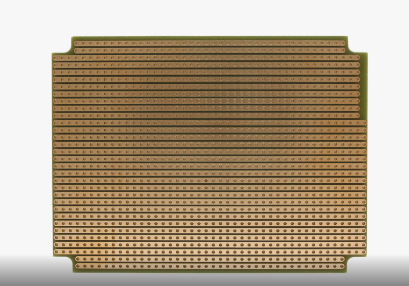
FR4 material is a highly popular and widely used substrate in the PCB industry due to its exceptional mechanical strength, electrical insulation, and flame retardant properties. It has become the standard for PCB fabrication.

What is FR4 Material and Why is it Used in PCBs?

FR4 is a type of fiberglass-reinforced epoxy laminate. The term “FR4” comes from its flame-retardant properties, meeting the UL94V-0 standard. It is made from woven fiberglass cloth and epoxy resin, which together provide great strength and durability.

Electrical engineers and designers prefer FR4 because of its many benefits, such as:

  • Low cost
  • High dielectric strength
  • Excellent strength-to-weight ratio
  • Moisture resistance
  • Temperature endurance
  • Good electric loss characteristics
  • Flame retardance and self-extinguishing capabilities
  • Mechanical robustness
  • Insulating properties

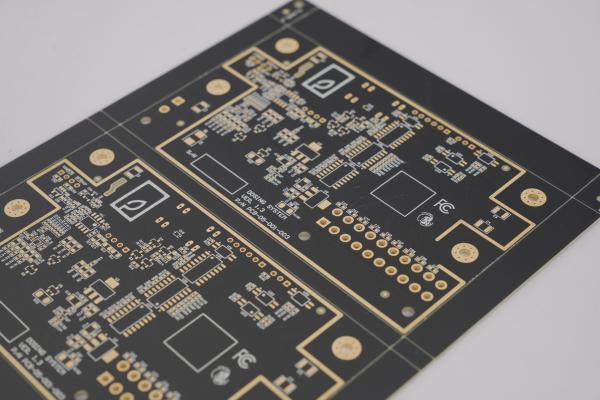
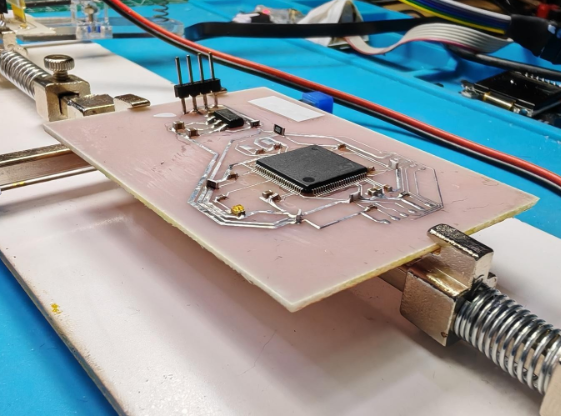
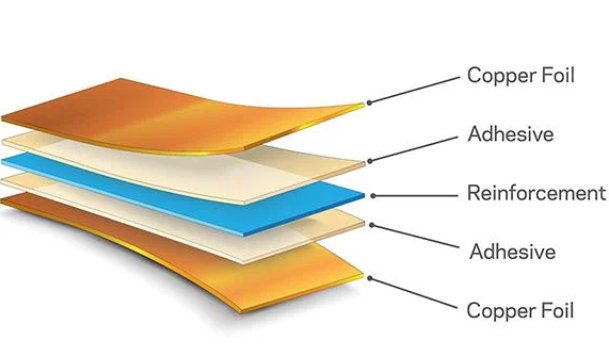
FR4 is also suitable for marine PCBs because it absorbs very little water. In a standard FR4 PCB, a layer of FR4 is placed between two thin layers of laminated copper.

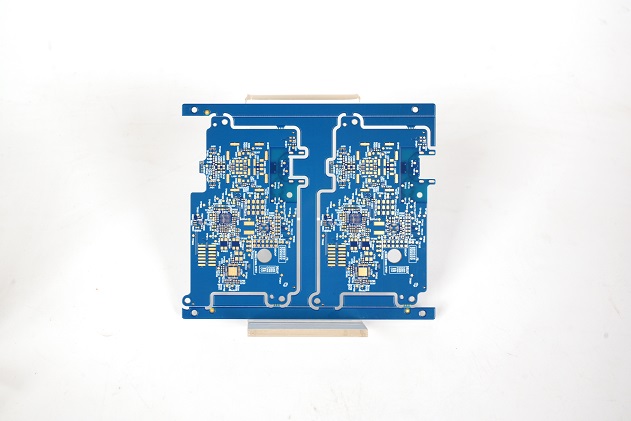
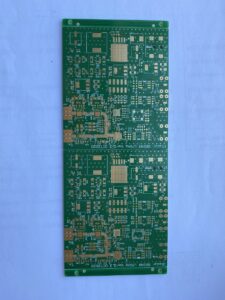
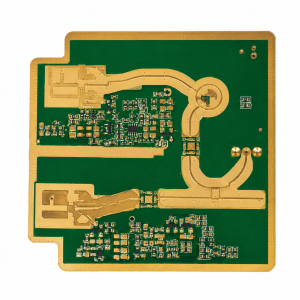
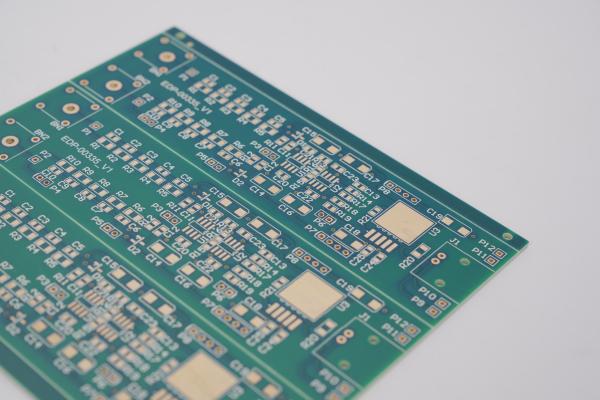
FR4 material pcb

What are the Key Performances of FR4 Material?

FR4 material, also recognized as flame retardant 4, is a composite of glass fabric and epoxy resin, predominantly utilized as a foundational material for printed circuit boards. Familiarity with the specifications of FR4 is crucial for selecting the appropriate substrate for PCB manufacturing. Key specifications include:

1. The thickness of FR4 sheet is usually 0.2 mm to 3.2 mm, and other special thickness also available.

2. The specific gravity of FR4 material is about 1.85g/cm3, which means that it is heavier than water.

3. Coefficient of thermal expansion of FR4 is about 1.0×10^-5cm/cm/℃, which means that its length or width will expand slightly when the temperature changes.

4. The thermal decomposition temperature of FR4 materials is usually between 280C and 320C, which makes it able to withstand high temperature applications.

5. FR4 material has a dielectric constant around 4.0-4.8, which makes it an ideal material for circuit board manufacturing.

6. FR4 has good arc resistance, which means that in the case of high voltage, it can effectively prevent arc discharge.

7. FR4 material good hydrolysis resistance and can maintain good performance even in a humid environment.

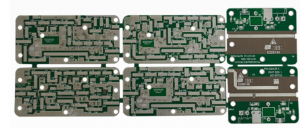
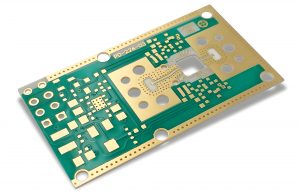
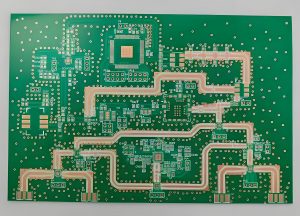
RF FR4 PCB

What are the Types of PCB Materials in the Industry?

PCB materials can be broadly categorized based on their composition and intended application. Nowadays, the commonly used are including FR4, polyimide (PI), Metal material (copper or aluminum), ceramic substrate like Al2O3, AlN, Si3N4, and so on. Different materials have its unique functions and well-suited in specific environment. Here we introduce their properties and suited applications simply.

FR4 (Fiberglass Epoxy Laminate)

At present, almost of PCB you seen in the market or electronics used the FR4 material. It widely used because of its superb equilibrium of mechanical strength, electrical insulation, and cost-efficiency. Actually, according to the different reinforcement materials, the circuit board is mainly classified into the following types:

1) FR-4

2) FR-1, FR-2, etc.

3) CEM series: Composite substrate

FR-4 used frequently because of its high fire resistance rating.

High Tg FR4

Though normal FR4 material has good electrical insulation, it is not an ideal option for high frequency circuit board. And then, high Tg FR4 stands out by using an advanced technology. “Tg” refers to glass transition temperature, the juncture at which the material transitions from a rigid, glassy state to a pliable, rubbery state. High Tg FR4 boasts a Tg of 170°C or higher.

Polyimide (PI)

Polyimide materials are renowned for their excellent flexibility, superior thermal stability and chemical resistance. It is always used as raw material of flex circuits, rigid flex circuit boards or membrane switches. Due to the good chemistry properties, they can endure temperatures up to 260°C and are highly flexible, making them ideal for those small and limited PCB designs.

polyimide pcb

Metal base material

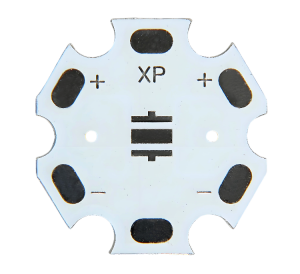
Metal materials always used in metal core PCBs (MCPCB), usually used aluminum core or copper core. The metal base has great thermal conductivity to enhance the thermal management of the device, buy using metal core, the device can dissipate heat away from the critical component such as LED chips, ICs, BGAs, to remain the reliability and performance of the PCB.

metal core pcb

Ceramic substrate

Ceramic PCB substrate offers excellent thermal conductivity and stability than that metal core PCBs, making them suitable for high-power and high-frequency applications. But due to the high cost and complex manufacturing, the ceramic PCB is much expensive than metal core PCB, therefore, they are always be used in high-end applications, such as the military, defense, aerospace and some special fields where requires excellent thermal management.

ceramic pcb

Understanding these materials enable to help engineers and designers in selecting the most appropriate substrate for their projects, ensuring optimal performance and cost-efficiency. EBest Circuit (Best Technology) provides a comprehensive array of PCB materials, guaranteeing high-quality solutions for all your electronic needs.

What are the Applications of FR4 PCB Material in Various Industries?

FR4 material is versatile and finds applications in numerous industries, including:

  • Consumer Electronics like smartphones, laptops, and other personal electronic devices.
  • Applied in vehicle electronics for infotainment systems, engine control units, and more.
  • Industrial Equipment such as control systems, power supplies, and industrial automation.
  • Essential for telecommunications, network devices, routers, and communication infrastructure.
  • Medical instrumentation and diagnostic equipment.
  • Aerospace and defense in avionics, radar systems, and defense electronics.

This is all of this sharing, thanks for your reading. Welcome to contact us if you have other questions about FR4 or other raw materials of PCB. EBest Circuit (Best Technology) engaging in the PCB manufacturing about 18 years, we are one of the leading PCB manufacturers in China. And we have such confidence to provide with you the best PCB and PCBA fast solution for your projects.

You may also like

What are HDI PCBs and Their Basic Parameters?

June 5th, 2024

High-Density Interconnect (HDI) PCBs are revolutionizing the electronics industry with their advanced capabilities and compact designs. As technology continues to evolve, the demand for smaller, faster, and more efficient electronic devices has led to the widespread adoption of HDI PCBs.

What is Definition of HDI PCB?

HDI board refers to High Density Interconnect, that is, high density interconnect board, which is a relatively new technology developed by the PCB industry at the end of the 20th century.
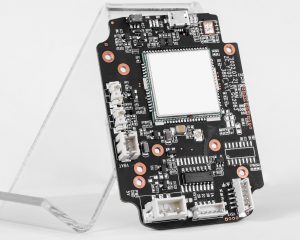
The drilling of the traditional PCB board is affected by the drilling tool, and when the drilling aperture reaches 0.15mm, the cost is already very high, and it is difficult to improve again. The drilling of HDI board no longer relies on traditional mechanical drilling, but uses laser drilling technology. (This is why it is sometimes called a laser plate.) The hole diameter of the HDI board is generally 3-5mil (0.076-0.127mm), the line width is generally 3-4mil(0.076-0.10mm), the size of the pad can be greatly reduced, so more line distribution can be obtained within the unit area, and the high-density interconnection comes from this.
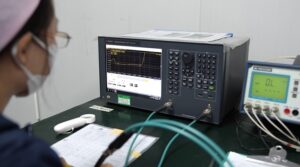
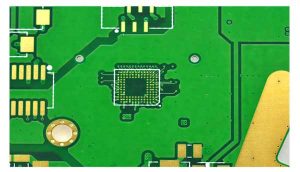
Smaller device spacing, more I/O pins and embedded passive devices Larger ASiCs and FPGAs with increasingly shorter rise times and higher frequencies all require smaller PCB feature sizes, which is driving a strong demand for HDI/ micro through-holes. The typical high density interconnector designs are including:

  • 1+N+1
  • 2+N+2
  • 3+N+3
  • 4+N+4
HDI PCB

What are the benefits of HDI PCB?

HDI is a compact circuit board designed for small volume users. Compared with ordinary FR4 PCB, the most significant feature of HDI is the high wiring density, and the difference between the two is mainly reflected in the following three aspects.

1. HDI is smaller and lighter

HDI board is a traditional dual panel as the core board, through continuous stacking layer by layer. This kind of circuit board made by continuous layering is also called Build-up Multilayer (BUM). Compared with traditional circuit boards, HDI circuit boards have the advantages of “light, thin, short and small”.

The electrical interconnection between the HDI board is realized through the conductive through hole, buried hole and blind hole connection, its structure is different from the common multi-layer circuit board, and a large number of micro-buried blind holes are used in HDI board. HDI uses direct laser drilling, while standard PCBS usually use mechanical drilling, so the number of layers and aspect ratio tend to be reduced.

The high density of HDI board is mainly reflected in the hole, line, pad density, and layer thickness.

● Micro-via hole

The HDI board contains the design of micro-pilot holes such as blind holes, which is mainly reflected in the micro-hole formation technology with a diameter less than 150um, and the high requirements of cost, production efficiency and hole position precision control. In the traditional multilayer circuit board, there are only through holes and no tiny buried blind holes.

● Fine line width and line distance

Its main performance in the wire defects and wire surface roughness requirements are more and more stringent. Generally, the line width and line distance do not exceed 76.2um.

● High pad density

The density of welded contacts is greater than 50 per square centimeter.

● Thinning of medium thickness

It is mainly manifested in the trend of the thickness of the interlayer medium to 80um and below, and the thickness uniformity requirements are becoming more and more stringent, especially for high-density plates and packaging substrates with characteristic impedance control.

2. Better electrical performance

    HDI not only enables end-product designs to be miniaturized, but also to meet higher standards of electronic performance and efficiency at the same time.

    The increased interconnect density of HDI allows for increased signal strength and improved reliability. In addition, the HDI board has better improvement for RF interference, electromagnetic wave interference, electrostatic discharge, heat conduction and so on. HDI also uses full digital signal process control (DSP) technology and a number of patented technologies, with a full range of load adaptability and strong short-term overload capability.

    3. The HDI board has very high requirements for buried holes

    It can be seen from the above that whether it is the volume of the board, or the electrical performance, HDI is better than ordinary PCB. Where the coin has two sides, the other side of HDI is as a high-end PCB manufacturing, its manufacturing threshold and process difficulty are much higher than ordinary PCB, and there are more problems to pay attention to when producing – especially the buried hole jack.

    What are the basic parameters of HDI PCB?

    HDI PCB has greater different with normal FR4 PCB, from the stack up, material selection, manufacturing and cost. So, it is vital to understanding the basic parameters of a high-density interconnect board before start your designing trip. The standard parameters of HDI board mainly include the following aspects:

    1. Numbers of layers

    Generally, the number of layers of HDI board is 4-20 layers, and the high-end HDI board can reach to 40-50 layers.

    • Line width/spacing

    Due to the HDI PCB are always used in high-end applications, their line width and spacing are usually very strict, and the common requirement is that the line width/spacing is 4/4mil (0.1mm), or even smaller.

    • Blind hole, buried hole, bus

    These are one of the characteristics of the HDI board, blind hole and buried hole can reduce the area of the circuit board, make your design more density, and the bus enable to improve the signal transmission rate of the PCB.

    • Board thickness

    The board thickness of HDI board is usually range from 0.8 to 3.2mm, of which 1.6mm is the most common thickness.

    • Pad

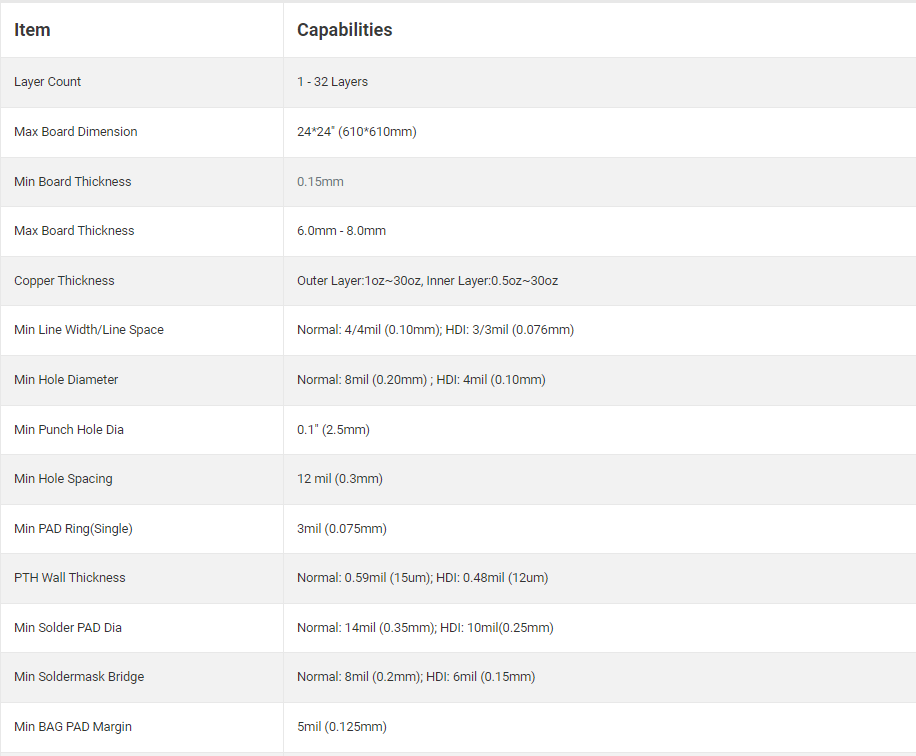
    The pad on the HDI board is generally very small, and the common pad size is 0.2mm to 0.5mm. Different factory has different capabilities, it is best to ask your supplier or manufacturer to get a manufacturing capability document.

    • Impedance control

    For high-speed signal transmission circuits, the impedance control of the HDI board is very important, and the requirements are very strict. It is needed to tell your vendor if your HDI board will be used in high-speed devices.

    • Material

    The main materials of HDI board are FR4, BT, PI, PET, etc. Different materials can meet different requirements.

    This is the end of this sharing, contact us today to learn more about our HDI PCB solutions and how we can help you achieve your technological goals. In our next chapter, we will introduce the manufacturing process and methods of HDI boards, let me know if you are interested in it.

    You may also like

    What Should We Consider When Designing A High Power PCB?

    June 1st, 2024

    With the continuous growth of new energy demand and the transformation of energy structure, the market size of high-power technology continues to expand. The high power pcb includes heavy copper pcb, bus bar pcb. As an important part of the battery module in the energy storage system, the high power PCB plays a key role in the safety and performance of the entire system. This article explores key considerations when designing high power PCBs, providing insights to help you optimize your designs for demanding applications.

    How Important is Thermal Management in High Power PCB Design?

    Thermal management is crucial in high power PCB design to prevent overheating and ensure reliable operation. High power components generate significant heat, which can damage the PCB and reduce its lifespan if not managed effectively. Here are some key strategies:

    1. Use thicker copper layers to improve thermal conductivity as much as possible. For example, a 2 oz/ftÂČ copper layer can carry approximately 10 amps of current.
    2. Thermal Vias are important elements in the complex designs, they serve as the heat dissipation paths to conduct heat away from high power components.
    3. Select appropriate heat sinks based on the power dissipation requirements. For instance, a heat sink with a thermal resistance of 1°C/W can handle 50W of power dissipation with a 50°C temperature rise.
    high power bus bar pcb

    How to Optimize Power Distribution in High Power PCBs?

    Normally, high power PCBs are featuring in thick copper thickness, wider trace space and distance, less or no BGA or fine pitch components. And because of the operation of high current, the circuit board is more likely to have the problem of heating, so the high-power PCB always do some heat treatment to avoid overheating, such as design dissipation via holes or adding some heat sinks. Anyway, effective power distribution is essential to ensure stable operation and prevent voltage drops in high power PCBs. Here we summarize some tips to optimize the power distribution when designing a high-power PCB.

    High-Performance Materials

    Choose materials suitable for high current applications like FR-4, metal substrates, or composite materials. These materials have lower resistance, higher thermal conductivity, and better mechanical strength to handle high currents and heat concentration.

    Current Distribution Balance

    Implement balanced current distribution by adding current balancers, balancing resistors, or current balance layers. This reduces the resistance and hot spots, enhancing reliability and stability.

    Avoid Cross-Talk Between Power and Signal Traces

    Keep high current paths separate from digital signal paths to minimize interference. This reduces electromagnetic interference (EMI) and improves overall performance.

    Solid Copper Pour for High Current Paths

    Use solid copper pours for high current paths. This increases current-carrying capacity, improves heat dissipation, and minimizes voltage drops.

    Thermal Management for Power Paths

    Use large copper areas, vias, and exposed copper to enhance heat dissipation. Proper thermal management prevents component and product damage due to overheating.

    EMC Radiation Control

    Use wider trace widths, larger hole diameters, and increased spacing to manage EMC radiation. Keep high current paths short and place them away from sensitive components.

    Why is Copper Thickness Critical in High Power PCB Design?

    Copper thickness plays a vital role in determining the current-carrying capacity and thermal performance of high power PCBs. Here are some data points:

    Standard Thickness: For high power applications, copper thickness typically ranges from 2 oz/ftÂČ to 6 oz/ftÂČ.

    Current Capacity: A 2 oz/ftÂČ copper layer can handle approximately 10 amps, while a 6 oz/ftÂČ layer can carry up to 30 amps.

    Thermal Performance: Thicker copper layers improve heat dissipation, reducing the risk of overheating.

    How Does PCB Layout Affect Signal Integrity in High Power Designs?

    PCB layout is a critical factor that influences signal integrity and overall performance in high power designs. Consider these points:

    Trace Length: Minimize the length of high-speed signal traces to reduce signal loss.

    Consistent Trace Widths: Maintain consistent trace widths to ensure uniform current distribution.

    Separation of Power and Ground Planes: Reduces noise and crosstalk.

    Differential Pairs: Use differential pairs for high-speed signals to enhance signal integrity.

    Adequate Spacing: Ensure adequate spacing between traces to prevent interference.

    high power pcb

    Designing a high power PCB requires a comprehensive understanding of various factors, including thermal management, material selection, power distribution, copper thickness, and PCB layout. By addressing these considerations, you can optimize your PCB designs for high power applications, ensuring reliability and performance. At EBest Circuit (Best Technology), we specialize in high power PCB solutions tailored to meet your specific needs. Our expertise and commitment to quality make us the ideal partner for your high power PCB projects. Choose EBest Circuit (Best Technology) for unparalleled performance and reliability in your PCB designs.

    You may also like

    What is the Rogers Printed Circuit Boards?

    May 13th, 2024

    Rogers Printed Circuit Board (short for Rogers PCB) is a printed circuit board (PCB) manufactured using a special high-frequency material produced by Rogers Corporation. These boards are designed to meet the demanding performance requirements of high-frequency electronic devices, especially in wireless communications, microwave technology, high-speed digital signal processing, radio frequency (RF) products, and applications requiring extremely high stability and low signal loss.

    Rogers pcb made by best technology

    What are the Main Features of Rogers Printed Circuit Board?

    Rogers boards are made of a proprietary amide resin material, which gives them excellent dielectric properties, thermal stability and mechanical strength. Even in extreme working environments such as high temperature and humidity, high frequency and high speed, Rogers PCB board can maintain stable operation, showing its strong adaptability and reliability. Whether it is to improve the performance of electronic equipment, or to ensure the stability of the system, Rogers PCB board plays a vital role. Below are some main features and benefits of Rogers PCB.

    • Special substrates

    Unlike traditional PCB materials based on glass fiber reinforced epoxy resins such as FR-4, Rogers PCBs are ceramic filled or based on high-performance substrates such as liquid crystal polymers (LCP), for example, RO4350B, RT/duroid series, TMM series and TC series. These substrates provide excellent electrical properties, such as low dielectric constant (Δr) and low dielectric loss factor (Df), ensuring low signal loss and high-speed during transmission.

    • High frequency performance

    Rogers PCB is particularly suitable for high frequency applications, because its material characteristics make the circuit board can maintain extremely low signal attenuation and stable electrical performance at operating frequencies up to tens or even hundreds of GHz. This makes them excellent in radar systems, satellite communications, 5G/6G network equipment, radio frequency identification (RFID) systems, high-speed data transmission interfaces (such as USB, PCIe) and other applications.

    • Temperature stability

    Rogers material has excellent thermal stability and low coefficient of thermal expansion (CTE), which matches the thermal expansion rate of copper foil, helping to reduce the stress and deformation caused by temperature changes, ensuring the reliability of the circuit when working in a wide temperature range.

    • Mechanical strength and heat resistance

    Due to the use of high-performance composite materials, Rogers PCB usually has high mechanical strength and good high temperature resistance, and can adapt to harsh environmental conditions and heat dissipation requirements.

    • Surface treatment

    Rogers PCB can carry out a variety of surface treatments, such as gold plating, silver plating, organic welding film (OSP), etc., to meet the specific requirements of different applications for weldability, oxidation resistance, contact resistance, etc.

    • Multi-layer structure and fine traces

    Rogers PCB can be made into single-layer to multi-layer structure, support high density interconnect (HDI) design, with fine lines (such as line width/line distance up to 0.3mm or smaller) and small aperture (such as 0.3mm), suitable for complex and precise high-frequency circuit design.

    • Low moisture absorption

    Rogers material moisture absorption rate is very low, even in high humidity environment can maintain stable electrical performance, reduce the impact of moisture on dielectric properties, to ensure long-term reliability. In summary, Rogers printed circuit board is a high-end, professional-grade circuit board product, with its excellent high frequency characteristics, stable electrical performance, excellent temperature stability, and wide applicability, becoming the ideal choice to meet the demanding requirements of modern high performance electronic equipment and communication systems.

    Why Use Rogers Printed Circuit Boards?

    High frequency PCBs often need high performance with low signal losses, low electrical noise, or high board temperatures. To meet this need Rogers Corp. PCB materials are often used as they are cost effective vs. many of the alternatives. Here are some typical Applications for Rogers PCB:

    All kinds of the Microwave equipment.

    5G Cellular Base Station Antennas and Power Amplifiers

    Automotive Radar and Sensors

    RF Identification (RFID) Tags

    Direct Broadcast Satellites for low noise block downconverter

    Medical equipment such as monitoring instrument, cardiac pacemaker, MRI, etc.

    Military and aerospace

    Rogers pcb made by best technology

    Rogers series is often used in RF PCBs with frequencies 6+ GHz and in high heat applications that need ceramic laminates and low signal losses. It may also be used to minimize electrical noise to meet stringent performance requirements.

    In our next blog from EBest Circuit (Best Technology), we are going to share more information about different material from Rogers PCB. pls follow us and if you want to know more about the Rogers PCB, warmly welcomed to visited www.bestpcbs.com or email us, it would be our great pleasure to answer all the questions for Rogers PCB.

    You may also like

    Top 6 Considerations You Must Know About PCB Designs

    March 27th, 2024

    Electronics devices and parts are existing everywhere in this big data era, and more and more engineers trying to step in the electronics design and development. As a one-stop PCB and PCBA manufacturer in China, EBest Circuit (Best Technology) would like to share some basic considerations and tips during the PCB designs. Hope this can help you.

    Substrate Material

    Substrate is the main composition of a circuit board and it mainly used for suppler and copper foil insulation. The commonly materials are FR4 and PI. FR4 is a widely acceptable international grade for fiberglass reinforced epoxy laminated, and it always used for making rigid PCB or rigid-flex PCB. FR4 substrate has good insulation and mechanical strength, so it can be widely used in various applications. However, PI has higher heat and chemistry resistance, more suitable for high temperature and chemical corrosion environment.  

    Circuit Layout

    The layout design depends on the dimensions, performance and reliability of a circuit board, it is needed to follow your supplier’s standard to make sure the fast production time and high quality.

    • Min line width

    Please make sure your line width within your supplier’s manufacturing capability, that is to say, if it is less than the minimum line width will not able to be produced. The best way is if the design conditions available, the larger the line width, the better the factory production. Generally, the line width keeps around 10mil is the best. In another word, if your line width is less than normal standard, it would be difficult for you to find a suitable supplier.

    • Min line spacing

    Min line spacing means the distance between trace and trace. Normally, from the production aspect, the distance from line to pads should not less than min line spacing, and it would be better if it is larger, generally equal to or more than 10mil.

    • The spacing between circuit to outline should be control in 20mil.

    Plug-in Hole

    The diameter of plug-in hole should be considered by the side of components, but it is necessary that it must greater than the component’s pins, it is recommended that greater at least 0.2mm. That is to say, if the pin of components is 0.6mm, then the plug-in holes should be greater than 0.8mm. Otherwise, the plug-in components would be probably difficult to insert into PCB because of the tolerance control during the manufacturing and assembly. 

    Min Hole Diameter

    As we all know, the holes in PCB almost be used for mounting components, connect circuit and provide the electrical connection between layers. So how to design the hole also is crucial during the designing. Generally, the min hole diameter depends on the drill bitter that vendor used, always around 0.2-0.4mm. You can ask your supplier during the design evaluation.

    Copper Thickness

    Copper foil is a layer of metal foil on the PCB board that is used to conduct current. The thickness of copper foil is usually in oz (ounces), such as 1oz, 2oz, 3oz, etc. The thickness of the copper foil will affect the conductivity and heat dissipation performance of the PCB board.

    Impendence Control

    Impedance control is a key parameter in high-speed signal transmission and high-frequency circuit design. It involves board thickness, copper foil thickness, substrate dielectric constant, pad and line layout and other factors to improve the signal integrity and anti-interference ability of the PCB board.

    The production process of PCBs is rather complex, involving a wide range of techniques from simple mechanical processing to sophisticated machining, so you should understand the design rules very clearly when you are trying to design a PCB board. Its applications are also diverse, from consumer electronics to industrial machinery, where PCBs are utilized.

    EBest Circuit (Best Technology) offers one-stop PCB solutions, we offer service from prototyping to large-scale production and assembly. With experienced engineers and service teams, we ensure successful fulfillment of your requirements. Just send us with your design files, and we will make the circuit board for you in a very short time.

    You may also like

    Do You Know What Is PCB Stiffener Busbar?

    March 27th, 2024

    Busbar PCB is an electronic component, also known as a socket board or mother board, which is an important part of an electronic device and is used to connect and transmit current and signals, so it plays a crucial role in the design of electronic devices. Busbar PCB is like a PCB coated with an “ear”, which we also call it as stiffener busbar. Want to know more about it? Welcome to reading on!

    (Busbar_pcb)

    What is PCB Stiffener Busbar?

    A busbar circuit board is a key component used in electrical systems. It usually consists of a main conductive busbar (usually copper or aluminum) that is covered with an insulating material such as prepreg or resin. Busbar boards are used to transmit high currents in power systems, such as in industrial equipment, power distribution systems, and control panels.

    These boards typically have multiple slots for inserting electrical connectors or electrical devices. The design of the bus board can be customized according to the specific application requirements to adapt to different current and voltage requirements. They are widely used in the industrial and commercial sectors because they provide reliable power transmission and connectivity solutions.

    (Busbar_aluminum_pcb)

    What Are Benefits of Using a Busbar PCB?

    Busbar stiffener pcb serves as a crucial element of conducting electricity, especially when simplifying the power distribution process, saving costs and requiring greater flexibility. They come in a variety of sizes and different coatings, such as aluminum and copper. The material type, dimension, size and shape of the busbar determine the current capacity it can carry. Compared with a coil harness, though it is expensive in manufacturing, but has longer life and does not need to replace in a short time. Here we listing some benefits of busbar PCB:

    • Efficient Power Distribution

    With the fast development of new energy cars and vehicles, the electronic parts in the cars also should updated to meet the demands of renewable energy powers. So the busbar PCB stands out because it can distribute the powers in devices efficiently. Meanwhile, it also can help to reducing the consumption of energy. Because of its integrated nature, it can easily adapt to the integration of renewable energy, which is quite intriguing to consider in this advanced era of energy.

    • High Conductivity

    The busbar stiffener on a PCB is typically crafted from either copper or aluminum. Copper, renowned for its excellent conductivity, stands out as the preferred material for busbars due to its capacity to facilitate the flow of electrons. Moreover, copper’s robust nature enables it to withstand harsh environmental conditions and high temperatures, thus bolstering its longevity and durability. But if you want PCB that can carry higher conductivity, ceramic PCB is the best choice but a little bit higher cost.

    (Busbar_copper_pcb)
    • Can be Customized

    Busbar is a highly customization product in PCB design, it offers various options for its mechanical capability. So maybe you can find it in every industry, such as educations, medical instruments, factories, communications and various electronic devices. Tight space and compact devices require substitute electrical distribution, and busbars serve the purpose right. Due to its high compact and strong mechanical and chemistry, busbar PCB can be used in extremely harsh weather. This makes them a good choice in substations or devices that need to used outdoors.

    • Space Saving

    Due to the copper materials mounted on the PCB, Busbar PCBs can replace multiple traces with a single, wider conductive strip, saving valuable space on the board. This compact design is particularly useful in applications where space is limited. In addition, busbar PCB provides multi-layer structure when your design is complex and has density traces network.

    By means our extensive PCB & PCBA manufacturing and professional engineering team, we are highly able to build and design busbar PCBs according to your specific requirements. Meanwhile, we follow the strict quality system to make sure the high-quality of products. You are welcome to contact us or send e-mail if you want to make such busbar stiffener PCB.

    You may also like

    2024 Newest Guide to High Thermal Conductivity PCBs

    March 18th, 2024

    Currently, with the rapid development of the digital era, the demands and requirements for electronics have increased significantly. Many double-sided and multi-layer boards have high density and power, making it difficult to dissipate heat efficiently. Conventional printed circuit board substrates such as FR4 and CEM3 are poor thermal conductors with interlayer insulation, the heat can’t transfer out, which leading to high-temperature failure of electronic components and devices. So, engineers and researchers are aiming to find high thermal conductivity PCBs to solve such problems, and metal core PCB and ceramic PCB stand out at this time.

    Metal core PCB is a type of PCB that made by metal alloy material as the base core, commonly are aluminum core or copper core, rarely is iron PCB. They are popular because of its good heat dissipation properties and good mechanical strength.

    What is Aluminum PCB and Why Use It?

    Aluminum substrate is a low-alloyed Al-Mg-Si series high-ductility alloy sheet. It exhibits excellent thermal conductivity, electrical insulation properties, and mechanical machinability. Compared to traditional FR-4, with the same thickness and line width, aluminum substrate can carry higher currents, withstanding voltages up to 4500V. Its thermal conductivity coefficient exceeds 2.0.

    A normal single side (1L) aluminum core PCB consists of three layers, aluminum base, dielectric layer and copper trace layer. Generally speaking, 1L aluminum PCB is always used for LED lighting, high current LED, spotlight, etc. So it also called LED PCB. For high-end applications, there are also designs for double-sided boards, structured as circuit layer, insulation layer, aluminum base, insulation layer, and circuit layer. In rare cases, multi-layer boards are used, which can be composed of multi-layer FR4 boards laminated to insulation layers and aluminum base.

    Aluminum_PCB

    The thermal conductivity of aluminum core is range from 1-3W/m.k, the higher conductivity, the better heat dissipation. However, not all the projects is suitable for higher conductivity, it should depend on the specific requirements, such as mechanical strengthen, corrosivity. Nowadays, EBest Circuit (Best Technology) used 6061, 5052, 1060 aluminum alloy as the metal core, others also available if customers have requirements.

    How Does Copper Core PCB Works?

    Copper substrate is the most expensive type among metal substrates, offering significantly better thermal conductivity compared to aluminum and iron substrates. It is suitable for high-frequency circuits, regions with large temperature variations, and precision communication equipment for heat dissipation purposes, as well as in the construction and decoration industries.

    The copper PCB’s circuit layer requires a significant current-carrying capacity, thus necessitating the use of thicker copper foils, typically ranging from 35ÎŒm to 280ÎŒm in thickness. The thermal insulation layer is the core technology of the copper substrate, composed of aluminum oxide and silicon powder as the main thermal conductive components, filled with a polymer of epoxy resin. It exhibits low thermal resistance (0.15), excellent viscoelastic properties, and possesses the ability to resist thermal aging, withstanding mechanical and thermal stresses.

    The metal base layer of the copper substrate serves as its supporting component, requiring high thermal conductivity. It is typically made of copper foil, though copper plate can also be used (with copper PCB offering better thermal conductivity, around 1-400W/m.k). These substrates are suitable for conventional mechanical processing methods such as drilling, punching, and cutting.

    Copper_core_PCB

    What Are Differences Between Copper and Aluminum PCB?

    Though both copper and aluminum are metal core PCB, they still have some differences in characteristic and manufacturing. Knowing their differentiation can help you to understanding and making correct decision in material selection.

    • Material

    Copper has excellent electrical conductivity and mechanical strength, so copper PCB is well-suit for high frequency circuits and high-power electronic equipment. While aluminum is slightly inferior to the copper base, so it is a good choice of low-power devices.

    • Cost

    Compared with copper, aluminum PCB has much advantages in cost, so if you have limited budget and require to use for low-power equipment such as LED lights, aluminum is the better one.

    • Manufacturing

    Due to copper has great hardness and good strengthen, it requires for special technical and complex processes, for example: chemical etching, electro-plating. However, the lightweight of aluminum makes it easy in manufacturing. In addition, PTH (plated through holes) can be created on copper PCBs, but not on aluminum ones.

    • Physical Property

    The difference in elastic modulus between copper and aluminum is significant, resulting in less warping and expansion/contraction in copper substrates compared to aluminum substrates.

    • Application

    Aluminum PCB is lighter than copper substrate, the material cost is lower, often used in daily LED lights or electronic equipment. Because of its strong thermal conductivity and better electrical conductivity, copper substrate is usually used in high-speed circuits and high energy circuits. In addition, copper substrates are also widely used in areas requiring high heat transfer and heat dissipation performance, such as power amplifiers, power supplies, power tools, automotive engine controllers and solar inverters.

    Sink_Pad_PCB

    What is Ceramic PCB? And Its Thermal Conductivity?

    Ceramic PCB is one of the high thermal conductivity PCBs in this industry. They have good high-frequency properties and electrical properties, and have high thermal conductivity, chemical stability and excellent thermal stability of organic substrates without. It is a new generation of large-scale integrated circuits and power electronics module ideal packaging materials. The thermal conductivity of the ceramic substrate can reach about 220W/ M.K according to the preparation method and the material formula. Theoretically speaking, the thermal conductivity of ceramic circuit made by alumina is 24-28W/m.k, AlN is 150-240W/m.k and for BeO is 22-250W/m.k.

    Ceramic PCB can be divided into various types of PCB according to its different PCB manufacturing process, they are thick film, thin film PCB, DPC, DBC, HTCC and LTCC ceramic circuit board. Different types of PCB made in different temperature and uses different materials, this means they have different chemistry and physical properties. So you should take them into consideration when designing a ceramic PCB for your device.

    Ceramic_PCB

    A Reliable PCB Supplier in China – EBest Circuit (Best Technology)

    Whatever you choose metal core PCB or ceramic PCB, a reliable supplier is necessary and needed. EBest Circuit (Best Technology) has extensive manufacturing experience in PCB and we are very confident that we can serve you the best service and high-quality product. With rich experience and strong R&D team, we know how to provide you the best solution and evaluate the design files for you. We have professional DFM (Design For Manufacturing) process to identify the mistakes or inappropriate layout in design. Welcome to contact with us to discuss your PCB projects.

    You may also like

    How Does the Ceramic PCB Works in IGBT Modules?

    January 19th, 2024

    IGBT (Insulated Gate Bipolar Transistor) is a bipolar junction transistor (BJT) with a MOS gate, or we can say that an IGBT module is a combination of BJT and MOS module. Despite its small size, the IGBT chip can control the transmission of electrical energy. It can switch the current 100,000 times within 1 second under an ultra-high voltage of 650 million volts.

    What is the Working Principle of IGBT?

    IGBT combines the features of a transistor and a switching circuit, making it a new type of electronic component that can control current efficiency. Its structure allows it to achieve current control from turn on to off without generating excessive leakage current, as well as not affecting the operation of other circuits.

    The working principle of IGBT modules including two parts – the current control of MOS gate and BJT transistor. When the voltage of MOS gate changes, it affects the conduction of the transistor, thus controlling the flow of current. When the BJT comes into play, it controls the flow of current, so that improve the working efficiency of the IGBT.

    (Working_principle_of_IGBT)

    How Does A Ceramic PCB Protect IGBT Modules from Overheat?

    As you know, IGBT modules have been applied for many years in various industries such as automotive, industrial, aerospace, consumer electronics, and more. However, optimizing the thermal dissipation of IGBT packaging is crucial to enable the modules to operate at higher power conditions. If heat dissipation is improved, IGBT modules can be used in more advanced applications.

    You might be wondering how much heat does an IGBT module generate during running? It’s equivalent to the heat produced by 100 electric furnaces. This substantial amount of heat must be dissipated immediately from the IGBT chip, that’s why the ceramic circuit board stands out.

    (Ceramic_pcb_with_DPC_technology)

    In IGBT modules, ceramic PCBs are placed beneath the IGBT chip, or we can say the chip is assembled on the ceramic circuit board. The ceramic PCB connects and supports the chip, rapidly dissipating heat to the outer package. This method protects the chip from the adverse effects of heat.

    Why ceramic PCBs Are Suitable for IGBT thermal dissipation?

    Ceramic materials exhibit excellent thermal dissipation and electrical insulation properties. Unlike aluminum metal core PCBs, ceramic PCBs do not use insulation layers that hinder heat dissipation. In the manufacturing process of ceramic PCBs, copper foil is directly bonded to the ceramic substrate under high pressure and temperature (it depends on the different technology and different copper thickness). During PCB manufacturing, IGBT and other components are mounted on the circuit board through assembly technology.

    Ceramic materials have extremely high insulation capabilities, enduring breakdown voltages up to 20KV/mm. At present, there are three ceramic materials that can be used for IGBT modules, they are 99% or 96% Alumina (Al₂O₃), Aluminum Nitride (AlN), and Silicon Nitride (Si₃N₄).

    The thermal conductivity of alumina PCB is 15-35W/mK, aluminum nitride PCB is 170-230W/mK, and silicon nitride PCB is 80+W/mK. In contrast, aluminum core circuit boards only have a thermal conductivity of 1-12W/mK.

    Applications of Ceramic PCBs in IGBT Packaging

    Alumina PCBs are the most commonly used circuit boards in IGBT modules due to their lower cost. But if IGBT modules have higher power or precision requirements, AlN ceramic PCBs and Si3N4 PCBs are the most suitable choices. Because they have higher thermal dissipation and thermal expansion coefficients (CTE) close to semiconductors. Since different ceramic substrate has different features, the uses of ceramic PCB should depend on the specific requirements of IGBT modules.

    In addition, with the development of Silicon Carbide (SiC) and Gallium Nitride (GaN) materials, they are starting to be used for IGBT chips due to their high-frequency, high-power, and high-temperature characteristics. Maybe in the future, aluminum nitride PCBs and silicon carbide PCBs will be increasingly applied to high-power IGBT modules in high-density three-dimensional packaging.

    Common Properties of Using Ceramic Circuit Board

    • Excellent thermal conductivity and voltage resistance of ceramic substrates.
    • Copper trace layers has extremely high current-carrying capacity.
    • Strong adhesion and reliability between circuit layers and ceramic substrates.
    • Good soldering performance, suitable for wire bonding.
    (Ceramic_PCB)

    How to Solve the Overheat Issues in IGBT?

    Though the ceramic PCB is good at heat dissipation, there still some overheat occasions happened if small power or long-time operation. Here we summarized some solutions for such issues.

    1. Clean the heat sink to ensure tight contact between the IGBT and the heat sink.

    2. Clean the fan, including the fan blades and lubricate the bearings if needed.

    3. Clear the airflow path of the fan.

    4. Replace with higher power IGBTs, ensuring the withstand voltage is not lower than the original IGBT’s value.

    Above all are the information that we’d shared, welcome to contact us if you want to know more. EBest Circuit (Best Technology) is a historic company which has over 17 years PCB manufacturing experience, here you can enjoy the one-stop ODM & OEM service, one-to-one after sales, quick delivery and high-quality products.

    You may also like

    What Are Differences of ENIG VS ENEPIG in PCB Manufacturing – Series 2

    January 2nd, 2024

    In our last blog, we simply introduced ENIG surface treatment in PCB manufacturing, and this time, we will share more information about the comparison of ENIG and ENEPIG.

    What is ENEPIG Surface Treatment?

    ENEPIG stands for Electroless Nickel Electroless Palladium Immersion Gold. This type of metal coating on the PCB pad surface consists of three layers—nickel, palladium, and gold. Apart from protecting the copper surface from corrosion and oxidation, the ENEPIG surface treatment is also suitable for high-density SMT (Surface Mount Technology) designs.

    For its manufacturing process, manufacturers begin by activating the copper surface, followed by depositing a layer of electroless nickel, then a layer of electroless palladium, and finally, a layer of immersion gold. The process is somewhat similar to the one they follow in the ENIG process, but adding a palladium layer to the ENIG technology. The palladium layer not only improves the surface protection of the PCB, but also prevents nickel from deteriorating and inhibits interactions with the gold layer.

    Pros of ENEPIG Surface Treatment

    • Reduce the black pad issues
    • Excellent solderability and high reflow soldering performance
    • Provide high-reliable wire bonding capability
    • High-density design available
    • Meet the miniaturization standards
    • Suitable for extra thin PCBs

    Cons of ENEPIG Surface Treatment

    • Expensive than ENIG process
    • Thicker palladium layer will decrease the effective of SMT soldering
    • Longer wettability time

    What are the Differences Between ENIG and ENEPIG?

    The main difference between ENIG and ENEPIG is the palladium layer. This is the extra layer that added in ENEPIG process, which provides high oxidation resistance, enhance the electrical performance of the surface cleanliness and improve the abrasion resistance of the PCB surface. However, the palladium layer also increases the cost of manufacturing.

    Additionally, the inconsistent surface cleanliness of ENIG, resulting from low solder joint reliability, particularly in gold wire bonding, is a concern. Extra procedures are also required to prevent nickel corrosion in ENIG. When considering it into manufacturing, the ENIG is well-suited for lower-end electronic products.

    (ENIG_VS_ENEPIG)

    The Considerations of Selecting ENIG or ENEPIG Surface Finishing

    Though both two surface treatments offer excellent electrical performance and heat dissipation properties, there are still some conditions that need to consider when choose them.

    • Budget

    Cost is an important factor when choose a suitable surface treatment. As we explain above, ENEPIG is expensive than ENIG, if you are trying to find a relative cost-effective coating, then ENIG is the best choice.

    • End-applications

    The end-applications or finished products also determined the selection of surface finishing. For example, if your PCB will be used in high temperature applications, ENIG would be the better one since it can withstand high temperature.

    • Flatness

    Many traditional surface finishes have poor flatness and smoothness, this brings the big challenge of small-size components mounted. Especially for those fine-pitch components like BGA, an uneven surface can result many problems. However, both ENIG and ENEPIG offer highly smooth surface finishes, forming thin and uniform layers on the solder pads.

    • Bonding demand

    ENEPIG provides the optimal choice for wire bonding due to its highly smooth surface finish, which enhances wire bonding capabilities.

    • Environment-friendly

    Some traditional surface treatments contain hazardous substances, making them non-compliant with RoHS requirements. Both ENIG and ENEPIG made by EBest Circuit (Best Technology) are fully RoHS compliant and lead-free, so you are don’t worry about the environment unfriendly.

    At the end, the choice between ENIG and ENEPIG surface treatments in PCB manufacturing involves a careful consideration of various factors. While both options offer excellent electrical performance, heat dissipation properties, and compliance with environmental standards like RoHS, specific project requirements and priorities will guide the decision-making process. If you are still confuse about the selection of surface treatment, welcome to contact with us, Best Team will give you a best solution that can meet your specific demands and save money for you.

    You may also like

    Why Thermal Conductivity Layer is Important in Aluminum PCB?

    January 2nd, 2024

    In the aluminum PCB design, people always mention the thermal conductivity value. Do you know what about thermal conductivity and you know what is the role of this layer in the aluminum core circuit board? Welcome to keep reading if you are interested in it.

    (1_layer_aluminum_pcb)

    What is thermal conductivity?

    Thermal conductivity is a physical value signifies the capacity of a material to allow heat flow per unit area through it in a unit of time. A higher thermal conductivity indicates better heat conduction for the material. In the field of heat generation and thermal management products, thermal conductivity is a crucial parameter as it relates to the product’s heat dissipation capability and stability. In the structure of aluminum, the thermal conductivity layer is always stand between the copper circuit layer and base material, so that the heat generated by product can be transfer quickly to outside.

    (Stack_up_for_1_layer_aluminum_PCB)

    Significance of Thermal Conductivity in Aluminum PCBs

    Aluminum substrates are commonly used materials in heat dissipation and thermal management products. Their thermal conductivity is a vital element evaluated heat dissipation properties typically in W/m·K. It can be understood as the material’s heat transfer rate, i.e., the amount of heat conducted per unit time. Specifically, assuming the same amount of heat is conducted in aluminum substrates and other materials, the conduction rate of aluminum substrate will be faster over a certain period. This implies that aluminum substrates can transfer heat more quickly from the heat source to the external environment, achieving efficient heat dissipation.

    Impact of Thermal Conductivity on Heat Dissipation Products

    The primary function of thermal management products is to dissipate heat. How does thermal conductivity specifically affect them? Let us dive into from below aspects:

    1. Thermal Conductivity Value

    A higher thermal conductivity leads to better heat dissipation capability, as it can achieve faster transfer of heat from the heat source to the environment. Therefore, thermal conductivity of aluminum substrates plays a crucial role in the heat dissipation products, such as the LED lights, industrial power devices, automotives. At EBest Circuit (Best Technology), the thermal conductivity we used for aluminum PCB always is range from 1.0 to 3.0W (thickness=75-200um). Different thermal conductivity value has its own thickness.

    2. Product Stability

    The stability of a product also depends on its thermal conductivity. According to our 17+ manufacturing experience, insufficient thermal conductivity in heat dissipation products may result in overheating during prolonged operation, potentially shortening the product’s lifespan. Let me take a simple example, assume your mobile phone is under long time playing games, then it will generate many heats, finally causing the overheating phenomenon. And this will shorten its lifecycle if you always do like that.

    (Single_sided_4_layer_aluminum_PCB)

    When it comes to thermal conductivity selection, there is a big misunderstanding is that some may believe that higher thermal conductivity in aluminum substrates is always better. However, this is not entirely accurate. While higher thermal conductivity is generally favorable, it does not mean that aluminum substrates with the highest thermal conductivity are suitable for all heat dissipation applications. In specific use cases, it is essential to choose the appropriate thermal conductivity for aluminum substrates based on actual requirements to achieve the optimal heat dissipation effect.

    By the way, if you want to choose higher thermal conductivity value, ceramic PCB is a better choice, which can achieve 24W or more. It mainly depends on its ceramic substrate material, like the Al2O3 thermal conductivity value is around 24W~28W/m-K, while AlN enable to reach 150W~240W/m-K.

    Conclusion

    All in all, to ensure optimal heat dissipation effects and stability, it is crucial to choose the right thermal conductivity for aluminum substrates based on actual needs. The careful consideration of thermal conductivity values in aluminum PCBs is integral to the longevity and performance of heat dissipation products, emphasizing the importance of informed selection in the pursuit of effective thermal management.

    EBest Circuit (Best Technology) is an expert in metal core PCB manufacturing, we have strong R&D team and full-experienced employs that can provide with you the best metal core PCB solution. Welcome to contact us at sales@bestpcbs.com if you want to know more.

    You may also like