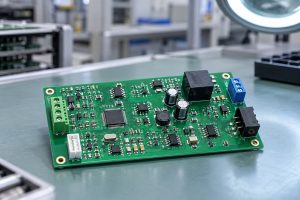


PCBA manufacturing for overseas customers can reduce production expenses, but poor quality control, incomplete quotations, and unreliable component sourcing can quickly erase those savings. Hidden BGA solder defects, unauthorized component substitutions, unexpected testing charges, and delayed shipments can turn a low-cost PCBA order into an expensive production problem.
EBest Circuit provides PCB fabrication, component sourcing, SMT/THT assembly, inspection, and testing for international OEM customers. Our free DFM check helps identify manufacturing problems before production, reducing the risk of PCB scrap, assembly rework, and unexpected expenses. But how can you verify a PCBA manufacturer’s capabilities without visiting the factory, and what should you check before approving a quotation?

What Quality and Cost Risks Do Overseas Customers Face in PCBA Manufacturing?
The biggest risks in overseas PCBA manufacturing are defects discovered after delivery, incomplete quotations, uncontrolled component substitutions, and inconsistent production batches. These problems can increase manufacturing costs, delay product launches, and make quality disputes difficult to resolve across borders.
Overseas OEM customers should pay particular attention to five risks:
- Assembly quality problems: Hidden BGA solder defects, incorrect component orientation, poor solder joints, and insufficient functional testing may cause product failures or batch rework.
- Hidden manufacturing costs: Initial quotations may exclude SMT stencils, test fixtures, firmware programming, special inspections, or international shipping.
- Component sourcing risks: Incorrect MPNs, counterfeit components, and unapproved substitutions can affect circuit performance and production schedules.
- Prototype-to-production inconsistencies: Changes in PCB revisions, component sources, or assembly instructions may cause mass-produced boards to differ from approved prototypes.
- Unclear delivery responsibilities: Material shortages, production delays, and undefined shipping or warranty terms can result in additional expenses.
These risks are often connected. For example, a component shortage may lead to an unauthorized substitution, which then causes functional failures and additional production costs.
For PCBA manufacturing for overseas customers, the most effective protection is to establish approved manufacturing specifications, component requirements, inspection criteria, and complete quotation terms before production begins.
How Can Overseas Customers Verify a PCBA Manufacturer’s Capabilities?
The most reliable way to verify a PCBA manufacturer is to compare your actual PCB design and assembly requirements with the factory’s documented manufacturing capabilities, then request technical evidence and relevant project experience.
A supplier’s equipment list or claims of high-precision assembly are not enough to prove that it can manufacture your product.
1. Verify PCB fabrication capabilities against your design.
Submit the relevant PCB specifications and confirm whether the manufacturer can support:
- PCB layer count, thickness, copper weight, and required materials.
- Minimum trace width, spacing, finished hole size, and manufacturing tolerances.
- HDI structures, blind and buried vias, impedance control, and special surface finishes.
- Board dimensions, stackup requirements, and process limitations.
For complex designs, confirm that the required specifications can be achieved together. A manufacturer capable of producing a 0.10 mm microvia under certain conditions may not support that feature in every board thickness or stackup.
2. Check SMT/THT assembly compatibility.
Review the factory’s minimum SMD package size, BGA pitch capability, supported PCB dimensions, and soldering processes.
For projects using 0.4 mm-pitch BGAs, 0201 components, or double-sided SMT assembly, ask the manufacturer to evaluate pad geometry, stencil design, component clearance, reflow conditions, and inspection accessibility.
3. Request a DFM review using your actual manufacturing files.
A useful DFM review should identify specific issues in the Gerber files, BOM, CPL, and assembly drawings.
These may include incompatible footprints, insufficient component clearance, unsuitable panelization, incorrect connector orientation, or inaccessible test pads.
A manufacturer that can identify actual manufacturing risks and explain their consequences provides stronger evidence of technical capability than one that simply advertises advanced equipment.
4. Verify quality management documentation.
Depending on the product application, request relevant ISO 9001, ISO 13485, IATF 16949, or AS9100D documentation.
Check the certified entity, manufacturing location, certification scope, and validity. If IPC-A-610 workmanship requirements apply, confirm the required revision and acceptance class.
5. Review similar manufacturing projects.
Ask for examples involving comparable PCB constructions, component density, assembly processes, and testing requirements.
Useful evidence may include approved sample photographs, redacted inspection records, or manufacturing examples that the supplier is permitted to disclose.
6. Validate manufacturing capability through prototypes or pilot production.
For a new supplier or technically demanding project, use a prototype or controlled pilot build to assess assembly quality, testability, process repeatability, and the amount of manual rework required.
The following checklist can help overseas customers evaluate potential PCBA manufacturers.
| Verification Area | Evidence to Request |
|---|---|
| PCB fabrication | Process specifications and project-specific manufacturability confirmation |
| SMT/THT assembly | Component compatibility and soldering process capabilities |
| DFM capability | Manufacturing risk findings and proposed corrective actions |
| Quality management | Valid certification documents and applicable scope |
| Relevant experience | Similar project examples and available inspection records |
| Production readiness | First article approval and pilot production results |
A PCBA manufacturer should be selected based on demonstrated compatibility with your project, not equipment specifications or certificates alone.
How Can Overseas Customers Ensure PCBA Quality Without Visiting the Factory?
Overseas customers can verify PCBA quality remotely by defining inspection requirements before production, approving first articles, and reviewing manufacturing and test records before shipment.

For PCBA manufacturing for overseas customers, quality verification should cover the following stages:
- Before production: Confirm that Gerber files, BOM, CPL, assembly drawings, and acceptance criteria are consistent. Critical component orientation and special assembly requirements should be documented.
- First article inspection: Check the initial assembled board against the approved BOM, component locations, polarity, soldering workmanship, and required functional characteristics.
- During SMT assembly: Use solder paste inspection (SPI) to detect printing problems and automated optical inspection (AOI) to identify visible placement and soldering defects.
- Hidden solder joint inspection: Specify X-ray inspection for selected BGAs and other bottom-terminated packages when hidden solder connections present a reliability risk.
- After assembly: Perform agreed electrical and functional tests to verify power outputs, communication interfaces, input/output functions, or other critical operating characteristics.
- Before shipment: Review the applicable test results, production revision, traceability records, and any unresolved nonconformances.
Different inspections detect different problems. AOI cannot fully inspect hidden BGA joints, while X-ray inspection cannot prove that the entire circuit operates correctly.
A useful remote quality agreement should define:
- Which inspections are required.
- Whether testing applies to every board or an agreed sample.
- Which pass/fail criteria will be used.
- What reports the customer will receive.
- How failed assemblies will be handled before shipment.
For example, an industrial control PCBA containing BGA devices and multiple communication ports may require X-ray inspection of specified solder joints and functional testing of power rails and communication interfaces.
The customer should approve the relevant test requirements before production, rather than relying on the manufacturer’s standard inspection process without knowing its coverage.
Remote quality assurance depends on verifiable acceptance evidence, not simply photographs of completed PCB assemblies.
How Are Component Sourcing Risks and Unauthorized Substitutions Prevented?
Component sourcing risks can be reduced by controlling the approved BOM, verifying supplier channels, checking material availability, and requiring written approval before component substitutions.
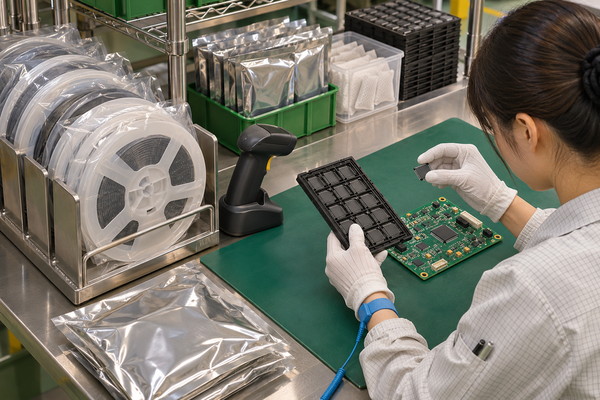
For overseas PCBA manufacturing, the following purchasing controls are essential:
- MPN verification: Confirm component manufacturers, part numbers, packages, electrical ratings, and reference designators against the approved BOM.
- Traceable sourcing: Purchase critical components through manufacturers or authorized distributors when required, retaining appropriate procurement and lot information.
- Inventory and lifecycle checks: Identify obsolete, long-lead, and supply-constrained components before confirming the manufacturing schedule.
- Substitution approval: Verify the electrical, mechanical, environmental, and compatibility requirements of proposed alternatives and obtain customer approval before procurement.
- Date code and handling control: Confirm component date code restrictions, lot traceability, moisture sensitivity, and applicable storage requirements.
For example, two voltage regulators may have the same package and nominal output voltage but different enable-pin configurations or startup characteristics.
Installing an unverified substitute could cause functional failure even when every solder joint passes inspection.
For PCBA manufacturing for overseas customers, component traceability is particularly important because buyers cannot directly supervise every purchasing decision.
Customers may also retain control of proprietary or critical ICs through consigned or partial turnkey assembly while allowing the manufacturer to source standard components.
Every approved material change should be recorded in the production BOM to prevent unauthorized substitutions and inconsistencies between manufacturing batches.
How Can Overseas Customers Avoid Hidden PCBA Costs Without Compromising Quality?
The best way to avoid hidden PCBA costs is to compare quotations based on the complete manufacturing scope, including PCB fabrication, components, assembly, tooling, testing, and international delivery.
A low SMT assembly price may not include the services necessary to deliver a fully tested and accepted PCBA.
| Cost Category | Potential Hidden Expenses | How to Avoid Extra Costs |
|---|---|---|
| PCB fabrication | Special laminates, surface finishes, impedance testing | Confirm complete fabrication requirements |
| Component sourcing | Supplier MOQ, excess components, shortage premiums | Verify material availability and purchasing terms |
| SMT/THT assembly | Stencils, setup fees, special soldering operations | Separate one-time and recurring costs |
| Inspection and testing | X-ray, functional test development, dedicated fixtures | Define coverage and testing charges |
| International delivery | ESD packaging, freight, insurance, duties | Confirm Incoterms and shipping responsibilities |
Hidden costs should be identified before purchase order approval, not discovered after manufacturing begins.
Once the quotation scope is clear, overseas buyers can reduce expenses without sacrificing quality through four practical measures.
1. Use a free DFM check before fabrication and tooling.
Review solder mask openings, pad geometry, component clearance, PCB panelization, tooling requirements, and test-point accessibility.
For example, a mismatch between a component footprint and its actual package can cause solder bridges or insufficient solder joints. Identifying the problem before stencil fabrication may prevent repeated tooling charges and assembly rework.
2. Confirm the BOM before purchasing components.
Review inventory, minimum order quantities, and lead times before placing material orders.
This reduces the risk of expensive last-minute purchases and excess inventory caused by unexpected supplier packaging requirements.
3. Optimize panelization and production quantity.
PCB panelization should balance material utilization with SMT placement, board handling, soldering, and depanelization requirements.
A tightly packed PCB panel is not necessarily the lowest-cost option if it requires additional manual handling or increases the risk of damage.
Similarly, larger production quantities may reduce unit costs but increase inventory exposure when the design is still changing.
4. Define testing requirements and reusable tooling.
Confirm which inspections are necessary and whether SMT stencils, programming fixtures, and functional test equipment can be reused for repeat orders.
Cost reduction must not come from eliminating essential testing, using unapproved components, or relaxing critical manufacturing specifications.
The proper comparison is the total cost of producing a compliant, inspected, and delivered PCBA under equivalent technical and commercial conditions.
How Can Prototype Approval Prevent Quality Problems in Mass Production?
Prototype approval reduces mass-production risks only when the approved PCB design, BOM, assembly instructions, and testing requirements remain controlled throughout production.
For PCBA manufacturing for overseas customers, a successful prototype does not automatically guarantee consistent manufacturing at larger quantities.
Before authorizing mass production, three areas require verification:
- Document and material consistency: Ensure that the production Gerber, BOM, CPL, assembly drawings, and firmware revisions match the approved release. Any changes must undergo review.
- Manufacturing repeatability: Use first article and pilot inspections to confirm that the assembly process can consistently meet requirements without excessive manual correction.
- Repeatable testing: Confirm that test points, fixtures, software, inspection procedures, and acceptance criteria can be applied consistently at the intended production volume.
Consider an industrial controller that passes prototype testing with its original connector. If the production batch uses an alternative connector with a different mechanical profile, the completed assembly may interfere with the enclosure even though its electrical connections remain correct.
This change requires mechanical verification and customer approval before production.
A controlled pilot build helps identify process, material, and testability problems before committing to larger production quantities.
What Affects PCBA Manufacturing Lead Time and International Delivery?
The actual lead time for overseas PCBA orders includes manufacturing file approval, PCB fabrication, component procurement, assembly, testing, and international shipment.
The SMT assembly turnaround alone does not represent the complete project delivery time.
Overseas customers should request a schedule covering:
- Manufacturing release: When design files, component alternatives, and technical questions will receive final approval.
- PCB and component readiness: Expected PCB completion and arrival dates for all critical components.
- Assembly and inspection: Planned SMT/THT production, first article verification, and functional testing completion.
- Shipping and delivery: Shipment date, transportation method, destination, and expected arrival.
Component availability can have a greater effect on total lead time than the assembly process itself. A long-lead IC may prevent production even when the PCB fabrication and SMT lines are ready.
For international orders, confirm packaging, import responsibilities, and the applicable Incoterms.
DAP and DDP arrangements, for example, allocate import-clearance and duty responsibilities differently. The agreed terms must be clearly stated in the commercial documents.
A reliable PCBA delivery commitment should be supported by confirmed material availability, realistic production milestones, and an agreed shipping arrangement—not simply the shortest advertised assembly time.
What Information Is Required for an Accurate Overseas PCBA Quote?
An accurate PCBA quotation requires complete PCB manufacturing data, an approved BOM, assembly specifications, testing requirements, and commercial delivery information.
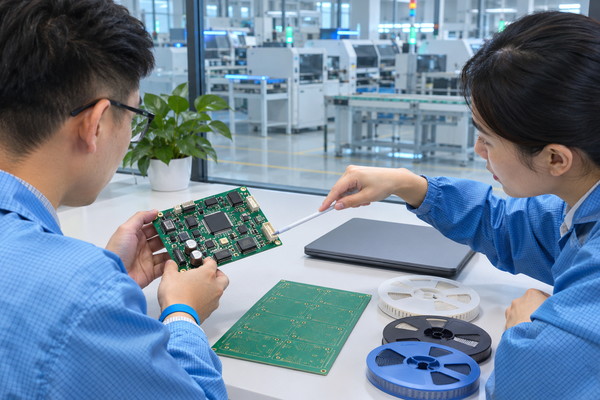
For PCBA manufacturing for overseas customers, provide the following information:
- PCB manufacturing files: Gerber or ODB++, drill data, stackup, board thickness, copper weight, material, surface finish, and special fabrication requirements.
- Component information: BOM, manufacturer part numbers, quantities, date code requirements, and approved alternatives.
- Assembly documentation: CPL, assembly drawings, DNP positions, special soldering instructions, and customer-consigned components.
- Inspection and testing requirements: Required workmanship criteria, inspection coverage, functional test procedures, programming requirements, and acceptance documentation.
- Order and delivery details: Prototype or production quantity, target delivery date, destination address, packaging requirements, and Incoterms.
For HDI designs, fine-pitch BGAs, or specialized PCB materials, include the approved stackup, package drawings, and any necessary manufacturing notes.
All files should carry consistent revision identifiers. If the BOM or PCB design is still being updated, identify which revision should be used for quotation.
Complete manufacturing information allows suppliers to evaluate feasibility, component availability, production costs, testing, and delivery before issuing a quotation.
Why Choose EBest Circuit for Overseas PCBA Manufacturing?
EBest Circuit helps international OEM customers reduce PCBA quality risks, avoid unexpected manufacturing costs, and simplify overseas production through free DFM checks, controlled component sourcing, coordinated manufacturing, and defined inspection requirements.
Rather than focusing only on a low assembly price, we help customers identify potential problems before production and clarify the requirements needed to deliver acceptable PCBAs.
- Avoid costly rework with a free DFM check. Before PCB fabrication and SMT assembly, we review relevant footprints, solder mask openings, component spacing, panelization, and assembly feasibility. Identifying problems before manufacturing can reduce PCB scrap, repeated tooling, and avoidable soldering defects.
- Reduce hidden costs with a clearly defined quotation. PCB fabrication, component sourcing, assembly preparation, tooling, agreed inspection and testing, and international delivery requirements can be evaluated within one project. Customers can confirm what is included and which additional services require approval.
- Lower the risk of receiving defective PCBAs. SPI, AOI, X-ray, first article inspection, and project-specific functional testing support quality verification at different manufacturing stages. Agreed inspection records help overseas customers evaluate acceptance results before shipment.
- Prevent material-related failures and production disruption. BOM verification, traceable sourcing, and customer-approved substitutions reduce risks from incorrect or unavailable components. Full turnkey, partial turnkey, and consigned assembly options give customers control over critical materials.
- Reduce supplier coordination and handoff costs. PCB fabrication, component procurement, SMT/THT assembly, and inspection can be coordinated within one manufacturing project, reducing repeated technical clarification and inconsistencies between separate suppliers.
EBest Circuit supports FR4, multilayer HDI, metal-core, ceramic, flexible, and rigid-flex PCB manufacturing, along with SMT/THT assembly and project-specific inspection services.
For overseas OEM customers, the practical benefit is a clearer manufacturing cost, fewer preventable production errors, controlled components, and verifiable quality requirements before delivery.
Illustrative Scenario: Preventing PCBA Quality and Cost Problems for an Overseas OEM
Consider a hypothetical UK industrial automation project that needs manufacturing support for a 4-layer FR4 control-module PCBA with mixed SMT components and through-hole connectors.
Assume the project involves 50 prototype assemblies followed by a planned 300-piece pilot order. The buyer’s local manufacturing quotation exceeds its target budget, while the assembly documentation also raises concerns about connector orientation and test-point accessibility.
Scenario risks
A preproduction review might identify three issues:
- Two connectors had similar external dimensions but different pin orientations, creating an incorrect-assembly risk.
- Several ICs had alternative manufacturer part numbers with different procurement lead times.
- Test pads were positioned close to the enclosure edge, potentially restricting fixture access.
The BOM also required additional confirmation before the pilot build could be released.
These issues could affect both quality and project cost. Incorrect connector installation might require rework, while inaccessible test points could lead to additional fixture modifications.
Recommended manufacturing response
The manufacturer would review the Gerber files, BOM, CPL, and assembly drawings before finalizing the manufacturing scope.
Connector orientation and test-access concerns were identified for customer confirmation. Long-lead components and possible alternatives were also reviewed before purchasing decisions.
PCB fabrication, mixed SMT/THT assembly, and test preparation were coordinated within the same manufacturing project to maintain consistent production requirements.
Expected decision output
The preliminary review should establish a clearer manufacturing plan and identify the technical decisions that require customer approval before pilot production.
The buyer could then assess the order using the actual fabrication requirements, component availability, assembly process, and testing scope instead of relying only on the initial assembly price.
This scenario illustrates how reviewing manufacturing files and BOM risks before production can help overseas OEMs reduce avoidable rework, material errors, and unexpected manufacturing expenses.
FAQs About PCBA Manufacturing for Overseas Customers
Q1: Can overseas customers sign an NDA before sharing confidential PCB design files?
A1: Yes. An NDA can be arranged before sharing Gerber files, BOMs, schematics, firmware, or other proprietary information. Additional file-access, confidentiality, and subcontracting requirements should be agreed upon in writing.
Q2: Can selected components be left unpopulated during PCBA assembly?
A2: Yes. The relevant positions should be marked as DNP (Do Not Populate) in the approved BOM and assembly drawings. Different assembly configurations should have clear revision or variant identifiers.
Q3: Can firmware programming be performed during PCBA manufacturing?
A3: Firmware programming can be evaluated according to the project requirements. Customers should provide approved firmware, programming interfaces, necessary tools, and verification instructions. Version recording or programming logs should be included in the test plan when required.
Q4: Can serial numbers or QR codes be used to trace individual PCBAs?
A4: Yes. Serialization can be evaluated based on the required traceability scope. Customers should provide the numbering format, marking position, scanning requirements, and information to be linked to each serial number.
Q5: Can conformal coating, cable assembly, or box-build services be included?
A5: These services can be evaluated according to the project. Customers should provide coating specifications, masking requirements, mechanical drawings, wiring instructions, and final acceptance criteria.
Q6: Can RoHS or REACH-related material documentation be provided?
A6: Relevant material declarations and compliance documents can be requested according to the components and manufacturing scope. Document availability should be confirmed for the specific project, as general supplier statements do not establish compliance for every finished product.
Q7: Who owns custom programming fixtures and functional test equipment?
A7: Fixture ownership, storage, maintenance, reuse, and modification responsibilities should be agreed upon before custom equipment is manufactured. These conditions should be documented in the purchase agreement.
Q8: What happens if defective PCBAs are discovered after delivery?
A8: Customers should retain the affected board identifiers, lot information, failure symptoms, test records, and photographs before submitting a quality claim. Investigation, repair, replacement, and transportation responsibilities should follow the agreed warranty and acceptance terms.
Worried about defective PCBAs, unexpected manufacturing charges, or unreliable component sourcing when working with an overseas supplier? EBest Circuit helps you reduce these risks before production. Our free DFM check identifies potential PCB fabrication and assembly problems early, while BOM verification, controlled component sourcing, and agreed inspection and functional testing help prevent costly rework, unauthorized substitutions, and defective deliveries.
Why pay for manufacturing mistakes that could have been identified before production? Send your Gerber files, BOM, order quantity, component date code requirements, target delivery date, and delivery location to sales@bestpcbs.com. Get a PCBA quotation with a clearly defined manufacturing scope and a free DFM check to help control quality risks, avoid hidden costs, and keep your project on track.