PCB manufacturing PCB manufacturing
Home > Blog

Metal Core PCB Manufacturer

Metal Core PCB Material: Aluminum, Copper, Thickness and FR4 Comparison
Monday, May 11th, 2026

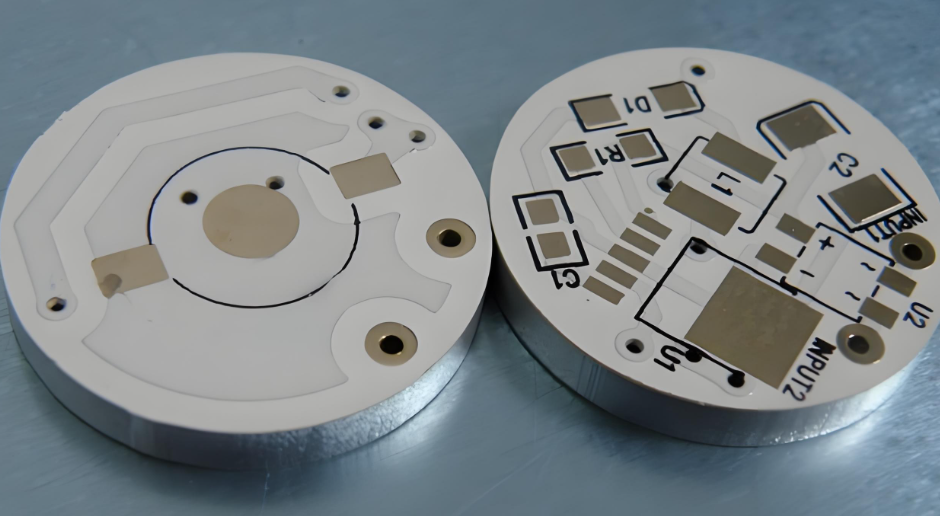
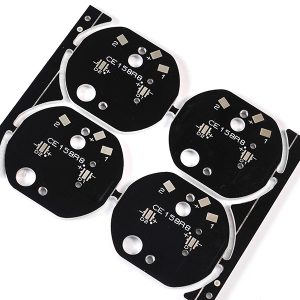
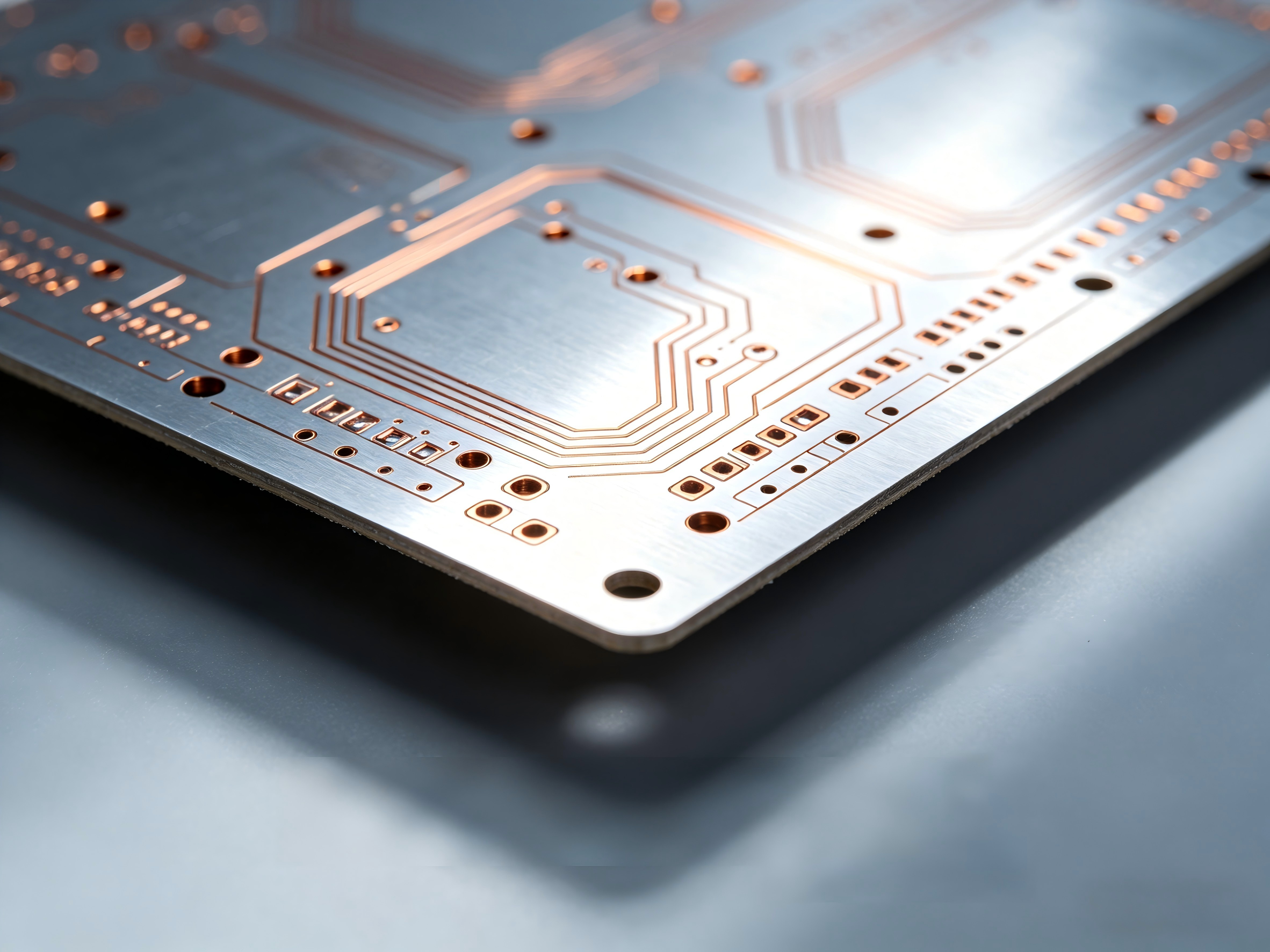
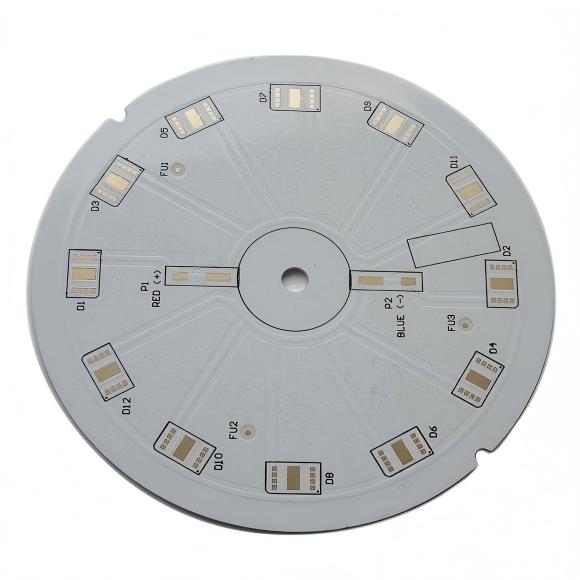
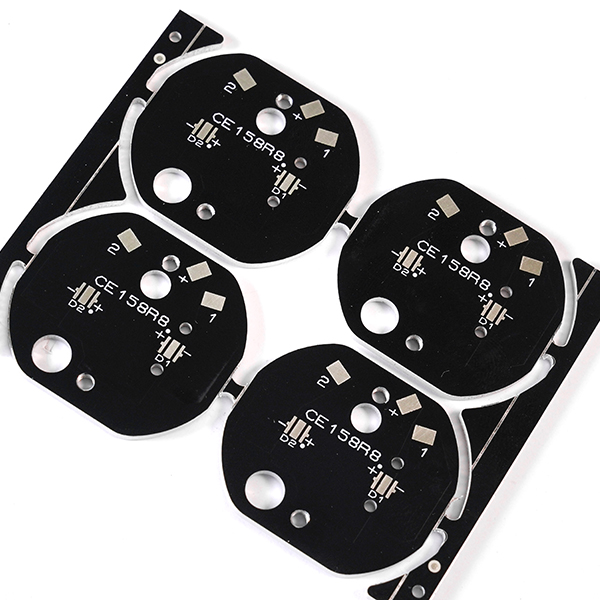
Metal core PCB material is selected when a circuit board needs stronger heat dissipation than a standard FR4 board can provide. Instead of using only fiberglass epoxy as the base, a metal core PCB uses aluminum, copper, or another metal substrate to transfer heat away from components such as LEDs, power ICs, MOSFETs, voltage regulators, motor drivers, and automotive lighting modules.

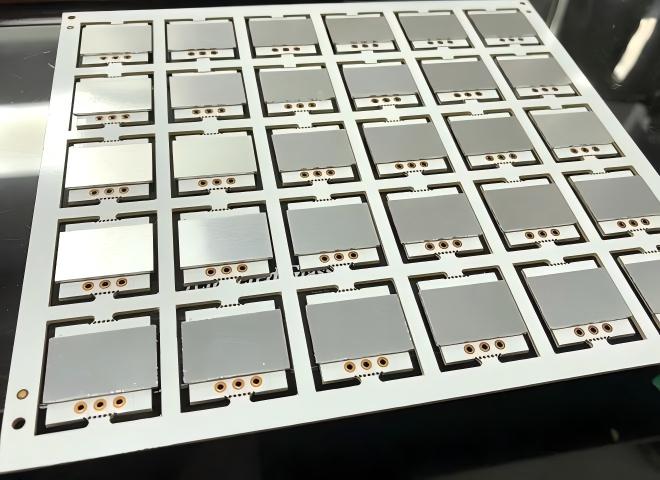
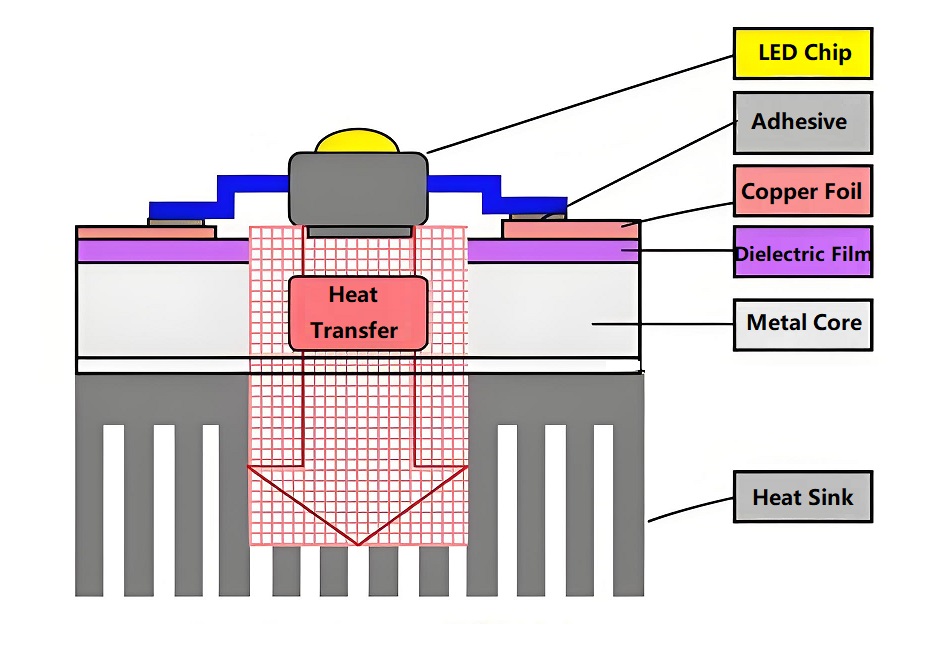
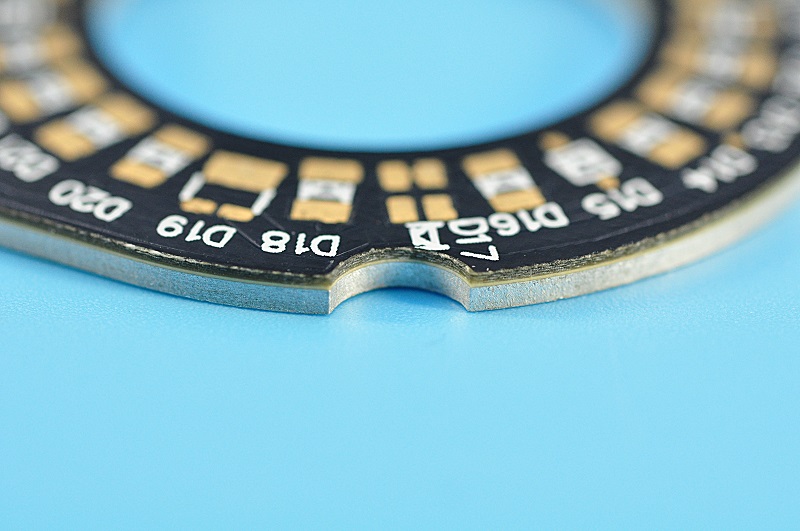
A typical metal core PCB has three key parts: the copper circuit layer, the thermally conductive dielectric layer, and the metal base. The copper layer carries electrical signals and current. The dielectric layer provides insulation while helping heat move downward. The metal base spreads that heat into the housing, heat sink, chassis, or surrounding air.

For many projects, aluminum is the most practical choice. For higher-power or high-current designs, copper may be a better fit. The final choice depends on heat load, current level, board size, insulation requirement, product environment, and cost target.

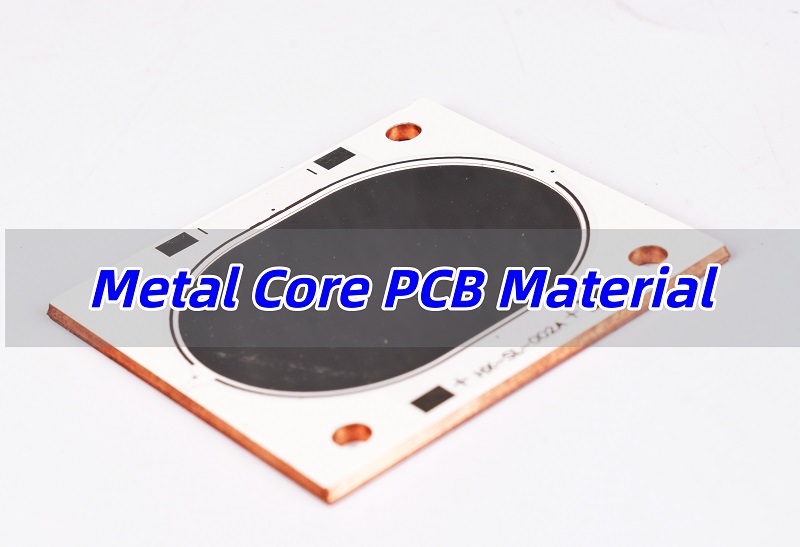
Metal Core PCB Material
Metal core PCB Material

What Is Metal Core PCB Material?

Metal core PCB material refers to the material system used to build a metal core printed circuit board. It is not only the metal base. It also includes the copper foil, insulation layer, solder mask, surface finish, and sometimes special thermal interface materials.

The main purpose of this material system is to move heat away from components more efficiently. In a standard FR4 PCB, heat moves slowly through the fiberglass epoxy base. In a metal core PCB, heat can travel through a thermal dielectric layer into a metal substrate, which spreads heat across a larger area.

A common metal core PCB stack-up includes:

LayerMain FunctionWhy It Matters
Solder maskProtects copper traces and prevents solder bridgingImproves surface protection and assembly reliability
Copper circuit layerCarries current and electrical signalsDefines circuit performance and current capacity
Thermal dielectric layerTransfers heat while providing electrical insulationA key factor in thermal resistance
Metal coreSpreads and conducts heatUsually aluminum or copper
Surface finishProtects exposed copper padsSupports solderability and assembly quality

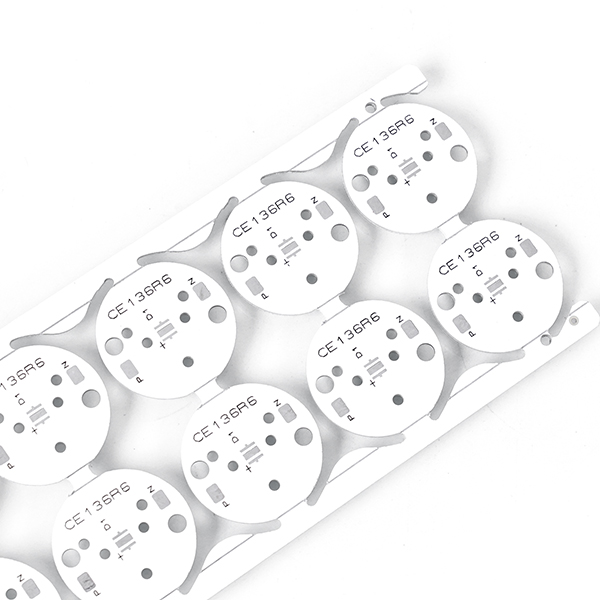
Metal core PCBs are often called MCPCB, IMS PCB or insulated metal substrate PCB. They are widely used in LED lighting, automotive lighting, power electronics, motor control, industrial modules, and thermal management products.

What Materials Are Used in a Metal Core PCB?

The most common materials used in a metal core PCB are aluminum, copper, thermal dielectric material, copper foil, solder mask, and surface finish materials. Each one affects thermal performance, electrical safety, mechanical strength, and manufacturing cost.

Aluminum is the most widely used metal base because it offers a good balance between thermal performance, weight, machinability, and price. Copper provides stronger heat spreading and current-carrying capability, but it is heavier and more expensive. The dielectric layer is especially important because it must conduct heat and insulate electricity at the same time.

MaterialCommon RoleTypical ApplicationSelection Note
Aluminum coreMain heat-spreading baseLED lighting, power supply, automotive lightingBest balance for cost and thermal performance
Copper coreHigh-performance heat-spreading baseHigh-power modules, RF, high-current electronicsBetter thermal conduction but higher cost
Thermal dielectricHeat transfer and electrical insulationAll metal core PCB structuresA major factor in thermal resistance
Copper foilElectrical circuit layerSignal and power traces1oz, 2oz, 3oz or heavier copper may be used
Solder maskSurface protectionMost assembled PCBsMust withstand assembly and operating conditions
ENIG / HASL / OSPSurface finishSolder pads and exposed copper areasChosen based on assembly, shelf life, and cost

Public manufacturing specifications often show dielectric thermal conductivity options around 1W/m路K, 2W/m路K, 3W/m路K, or higher, while metal thickness may range from about 0.4mm to 3.2mm depending on supplier capability and design class.

Why Is Aluminum the Most Common Metal Core PCB Material?

Aluminum is the most common metal core PCB material because it gives designers a practical mix of heat dissipation, light weight, stable mechanical support, and manufacturability. It is widely used when the product needs better thermal control than FR4 but does not require the cost level of copper core PCB.

Aluminum core PCB is especially common in LED products. LED chips are sensitive to temperature, and poor heat transfer can reduce luminous efficiency and shorten service life. An aluminum substrate helps move heat from the LED package into the board and then into the fixture body or heat sink.

Aluminum core PCB is also common in:

  • LED bulbs and LED modules
  • Automotive headlights and taillights
  • Street lighting and high-bay lighting
  • Power supply boards
  • Motor control electronics
  • Battery charging products
  • Industrial control modules
  • Consumer power devices

Aluminum PCBs are commonly available in thicknesses such as 1.0mm, 1.5mm, 1.6mm, and 2.0mm, with copper thickness often selected from 1oz to 3oz for many thermal and power designs. Public capability tables from PCB manufacturers show aluminum PCB thickness ranges from about 0.3mm to 3.0mm, with special options available for thicker structures.

Aluminum is not always the highest-performance choice, but it is often the best commercial choice. When the heat load is moderate and the project needs stable quality at a reasonable cost, aluminum core PCB is usually the first material to evaluate.

When Should You Choose Copper Core PCB Material?

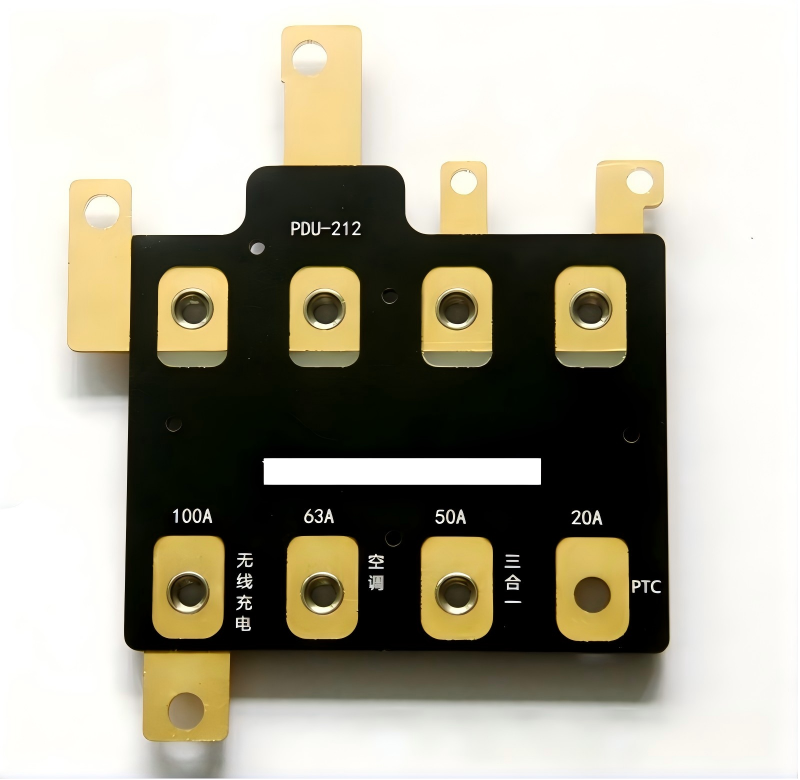
Copper core PCB material should be considered when the design has high heat density, high current, compact board size, or strict reliability requirements. Copper spreads heat faster than aluminum and can support demanding thermal paths in power electronics, RF modules, automotive systems, and aerospace-grade assemblies.

Copper core PCB is suitable for applications such as:

  • High-power LED modules
  • Power converters and inverters
  • High-current control boards
  • RF and microwave power modules
  • Automotive power electronics
  • Aerospace electronics
  • Laser diode modules
  • High-reliability industrial equipment

The main value of copper core material is its stronger thermal conductivity and current-handling potential. When heat is concentrated in a small area, copper can spread it more quickly across the board. This helps reduce hot spots and improve thermal stability.

However, copper core PCB also requires more careful cost control. Copper is heavier and more expensive than aluminum. It can also be more challenging to machine, drill, and process. For this reason, copper core material is usually selected when the design clearly needs the extra thermal performance.

A good approach is to start with the thermal requirement, not the material name. If aluminum with a high-performance dielectric layer can meet the junction temperature target, it may be the more economical solution. If the design still has heat concentration or current stress, copper core becomes a stronger option.

Is Copper Core Better Than Aluminum Core?

Copper core is better than aluminum core for maximum thermal spreading and high-current applications, but aluminum core is better for many cost-sensitive and weight-sensitive products. The better choice depends on heat load, budget, board size, mechanical structure, and reliability target.

Comparison ItemAluminum Core PCBCopper Core PCB
Thermal performanceGoodExcellent
WeightLighterHeavier
CostLowerHigher
Machining difficultyEasierMore difficult
Current supportGood for many power designsBetter for high-current structures
Common useLED lighting, power supply, automotive lightingHigh-power electronics, RF, aerospace, heavy-current modules
Best fitBalanced thermal and cost requirementsHigh heat density or high reliability requirements

For most LED lighting and general power products, aluminum core PCB is enough. For high-power density modules, copper core PCB can be a better investment because it improves heat spreading and reduces thermal stress.

A practical selection rule is simple:

Choose aluminum core when the design needs reliable heat dissipation at a controlled cost. Choose copper core when the product has concentrated heat, high current, limited cooling space, or strict thermal margins.

How Important Is the Dielectric Layer in Metal Core PCB Material?

The dielectric layer is one of the most important parts of metal core PCB material. It sits between the copper circuit and the metal base. Its job is difficult because it must conduct heat while preventing electrical current from reaching the metal core.

Many buyers focus only on whether the board is aluminum or copper. In real thermal design, the dielectric layer can be the bottleneck. Even when the metal base has strong thermal conductivity, heat still needs to pass through the dielectric first.

Important dielectric layer parameters include:

ParameterWhy It Matters
Thermal conductivityHigher values help heat move through the insulation layer
Dielectric thicknessThinner layers often reduce thermal resistance
Breakdown voltageEnsures electrical insulation safety
Peel strengthHelps copper stay bonded to the dielectric
Glass transition and thermal stabilitySupports soldering and long-term operation
Moisture resistanceHelps reliability in humid or outdoor applications

Typical metal core PCB dielectric materials may offer thermal conductivity from about 1W/m路K to 4W/m路K, with higher grades available from some material systems. Conventional MCPCB structures often rely on the dielectric layer as the main thermal path between copper traces and the metal base.

For LED and power electronics, the dielectric layer should be selected together with component power loss, copper area, board thickness, housing structure, and expected operating temperature. A high-conductivity dielectric may cost more, but it can improve product stability when the heat source is intense.

What Thickness Is Best for Metal Core PCB Material?

The best metal core pcb thickness depends on heat dissipation, mechanical strength, current level, product structure, and assembly requirements. There is no universal thickness that fits every project. Many metal core PCBs use total board thicknesses around 1.0mm, 1.5mm, 1.6mm, or 2.0mm, while special designs may use thinner or thicker structures.

Thickness selection should consider three areas: total board thickness, metal base thickness, and dielectric thickness.

Thickness ItemCommon RangeSelection Guidance
Total board thickness0.8鈥3.0mm commonChoose based on mechanical support, fixture design, and heat path
Aluminum base thickness0.5鈥2.0mm commonThicker base improves rigidity and heat spreading
Copper foil thickness1oz鈥3oz commonHigher current often needs thicker copper
Dielectric thickness75鈥150渭m common; some specs show wider rangesThinner dielectric can improve heat transfer but must meet voltage needs
Metal thickness capabilityAround 0.4鈥3.2mm in some public specificationsDepends on manufacturer capability and stack-up

Some public MCPCB manufacturing data lists metal thickness around 0.4鈥3.2mm and dielectric thickness around 100鈥300渭m, depending on standard or advanced capability.

For LED boards, 1.5mm or 1.6mm aluminum core PCB is commonly selected because it offers good mechanical stability and familiar assembly handling. For automotive lighting or higher-power designs, thicker metal bases may be used to increase heat spreading and structural strength.

When selecting thickness, avoid looking at only the total board number. A 1.6mm metal core PCB can behave very differently depending on copper thickness, dielectric thickness, dielectric thermal conductivity, and base metal type.

Metal Core PCB vs FR4: Which Is Better for Heat Dissipation?

Metal core pcb vs fr4 is mainly a heat dissipation comparison. Metal core PCB is better for heat dissipation because its aluminum or copper substrate spreads heat faster than fiberglass epoxy. FR4 is still suitable for general electronic products, signal circuits, control boards, and multilayer routing, but it is not the first choice for high-power thermal designs.

FR4 is widely used because it is cost-effective, easy to process, and suitable for multilayer circuits. However, when components generate significant heat, FR4 often needs extra thermal vias, copper pours, heat sinks, or larger board area. Metal core PCB creates a more direct heat path from the component to the metal base.

FeatureFR4 PCBMetal Core PCB
Base materialFiberglass epoxy laminateAluminum, copper, or metal alloy
Thermal performanceLimitedStrong
Typical thermal conductivityAround 0.3W/m路K for many FR4 materialsOften much higher through thermal dielectric systems
Best useGeneral electronics, control circuits, multilayer designsLEDs, power modules, thermal products
Layer complexityVery flexible for multilayer routingMore limited, especially in simple MCPCB structures
Mechanical rigidityGoodVery strong
CostUsually lowerUsually higher
Heat sink integrationOften needs extra design workEasier to connect to housing or heat sink

FR4 thermal conductivity is often cited around 0.25鈥0.3W/m路K, while MCPCB dielectric systems are commonly listed around 1鈥4W/m路K or higher depending on material grade.

Choose FR4 when the circuit is low-power, routing density is high, or cost control is the main goal. Choose metal core PCB when heat is a primary design concern, especially for LEDs, power devices, automotive lighting, and compact electronics with limited cooling space.

How to Choose the Right Metal Core PCB Material for Your Design?

To choose the right metal core PCB material, start with the heat source and working environment. Then match the metal base, dielectric layer, copper thickness, surface finish, and board thickness to the actual product requirement.

A clear selection process helps reduce redesign risk:

1. Identify the heat source

List the components that generate heat, such as LEDs, MOSFETs, power ICs, regulators, bridge rectifiers, or high-current connectors.

2. Estimate power loss

Check how much heat the component will generate during normal and peak operation. Use this to define the thermal path.
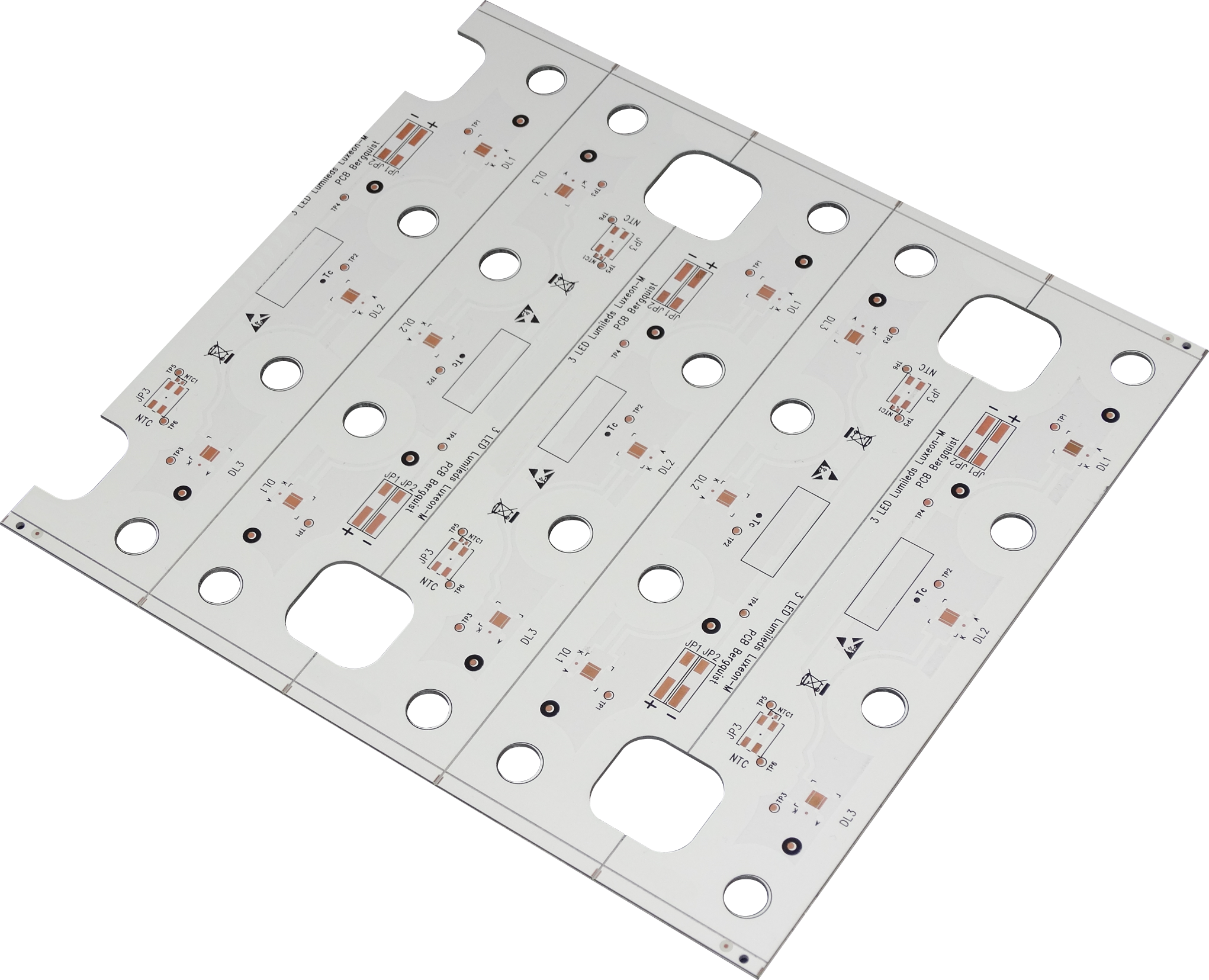
3. Choose aluminum or copper core

Use aluminum for most balanced thermal designs. Use copper when heat density or current level is high.

4. Select dielectric thermal conductivity

For general LED and power designs, 1鈥2W/m路K may be enough. For compact or high-power designs, 3W/m路K or higher may be considered.

5. Check dielectric thickness and voltage requirement

A thinner dielectric can improve heat transfer, but it must still meet insulation and breakdown voltage requirements.

6. Define copper thickness

For low-to-medium current circuits, 1oz copper may be enough. For power boards, 2oz or 3oz copper is often considered.

7. Confirm total metal core pcb thickness

Match the board thickness with mechanical mounting, housing flatness, screw holes, thermal interface material, and assembly process.

8. Review surface finish

ENIG, HASL, lead-free HASL, and OSP may be selected depending on assembly, shelf life, solderability, and cost.

9. Discuss DFM before production

Before mass production, the stack-up, hole design, outline tolerance, solder mask clearance, copper spacing, thermal pad design, and assembly method should be reviewed.

A strong MCPCB design is not built by choosing the most expensive material. It is built by matching the right material to the real thermal path.

Why Choose EBest Circuit as Your Metal Core PCB Manufacturer?

Choosing the right metal core pcb manufacturer is important because MCPCB quality depends on material selection, lamination control, dielectric reliability, copper bonding, surface finish, machining accuracy, and thermal performance. A small stack-up mistake can affect heat transfer, soldering, assembly, and long-term stability.

EBest Circuit supports metal core PCB projects from early design review to fabrication, assembly, and testing. For customers developing LED lighting, automotive electronics, industrial controls, power modules, medical electronics, communication products, and UAV systems, EBest can help review the material stack-up before production.
EBest Circuit can support:

  • Aluminum core PCB manufacturing
  • Copper core PCB manufacturing
  • DFM review before fabrication
  • Thermal material and stack-up suggestions
  • Prototype and small-batch production
  • PCB fabrication and PCBA assembly
  • Component sourcing and BOM support
  • AOI, X-ray, electrical testing, and process inspection
  • Quality control for regulated and high-reliability applications

For customers who are not sure whether to use aluminum core, copper core, or FR4, EBest can review the drawing, Gerber file, BOM, current load, heat source, and application environment. This helps avoid over-design and under-design.

A reliable metal core PCB manufacturer should not only produce the board. It should help customers make practical decisions about thermal conductivity, dielectric thickness, copper weight, surface finish, and assembly risk.

FAQs

1. What is metal core PCB material?

Metal core PCB material is the material system used in a metal core printed circuit board. It usually includes a copper circuit layer, thermal dielectric layer, and aluminum or copper metal base. Its main purpose is to improve heat dissipation.
2. What is the most common metal core PCB material?

Aluminum is the most common metal core PCB material. It offers a good balance of thermal performance, weight, cost, and manufacturability, making it suitable for LED lighting, power supplies, automotive lighting, and industrial electronics.

3. Is copper core better than aluminum core?

Copper core is better for high thermal conductivity and high-current designs. Aluminum core is better for many projects that need reliable heat dissipation at a more controlled cost. The better choice depends on heat load, budget, and application.
4. What is the normal metal core pcb thickness?

Common metal core pcb thickness options include 1.0mm, 1.5mm, 1.6mm, and 2.0mm. Some projects may use thinner or thicker boards depending on heat dissipation, mechanical structure, and assembly requirements.

5. Is metal core PCB better than FR4?

Metal core PCB is better than FR4 for heat dissipation. FR4 is better for general electronics, complex multilayer routing, and cost-sensitive low-power circuits. For LEDs, power modules, and automotive lighting, metal core PCB is often the better thermal choice.
6. What is the dielectric layer in metal core PCB material?

The dielectric layer is the insulating layer between the copper circuit and the metal base. It transfers heat while preventing electrical current from reaching the metal core. Its thermal conductivity and thickness strongly affect board performance.

7. Can metal core PCB be multilayer?

Yes, metal core PCB can be designed as single-layer, double-layer, or more complex structures. However, multilayer MCPCB requires careful stack-up design, insulation control, drilling process, and manufacturer review.

8. How do I choose a metal core PCB manufacturer?

Choose a metal core PCB manufacturer with material knowledge, DFM support, stable fabrication capability, thermal stack-up experience, testing systems, and PCB assembly support. For high-power or high-reliability products, early engineering review is especially valuable.

Conclusion

Need support with metal core PCB material selection or MCPCB manufacturing? Contact EBest Circuit for DFM review, material suggestions, PCB fabrication, PCBA assembly, and prototype-to-production support.

You may also like

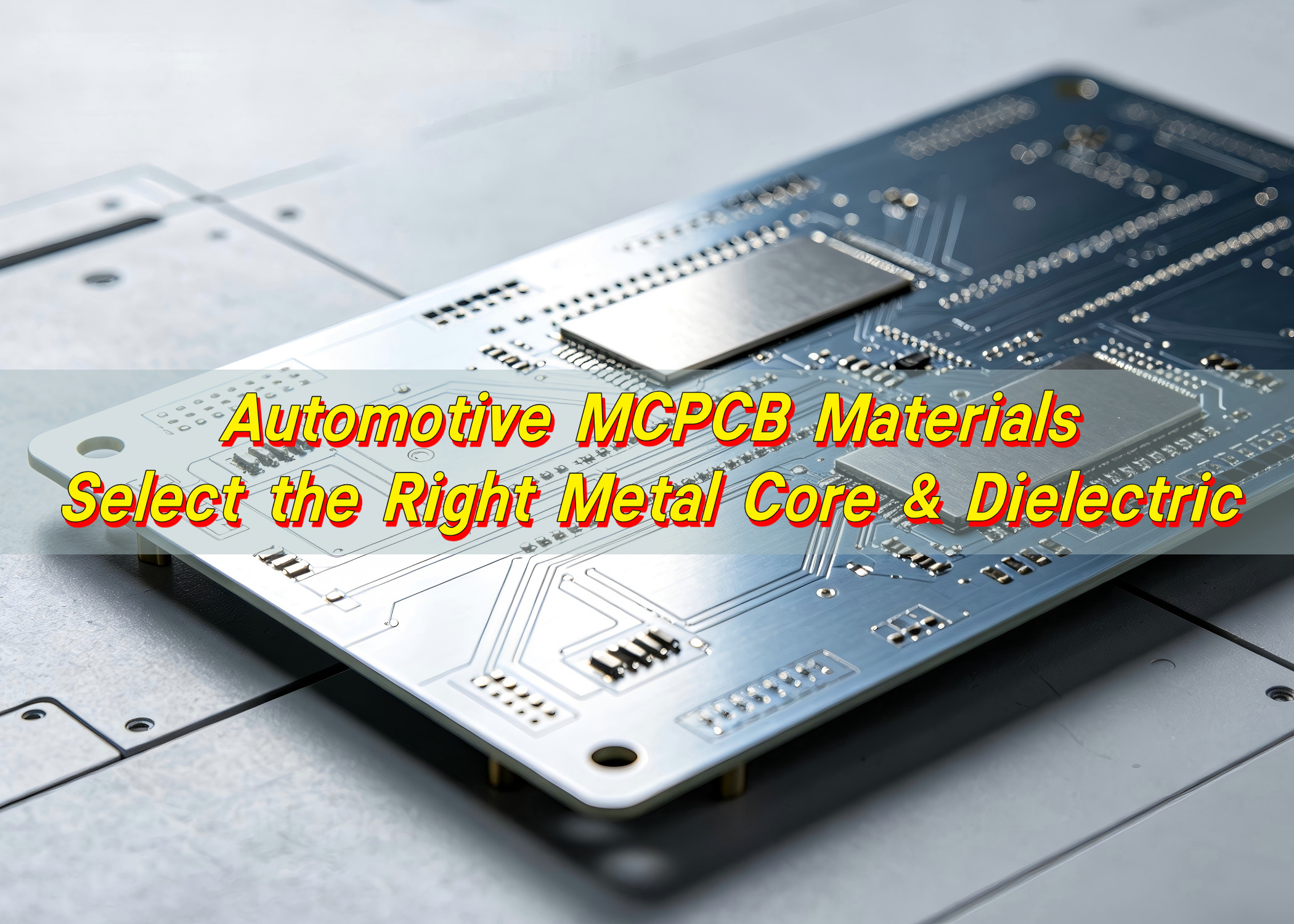
Automotive MCPCB Materials: Select the Right Metal Core & Dielectric
Thursday, April 16th, 2026

EBest鈥檚 Automotive MCPCB Materials deliver industry-leading thermal conductivity (0.8~3.0 W/m.K), IATF 16949-certified quality, and reliable performance in extreme automotive environments鈥攈igh temperatures, vibration, and humidity. Choose us for consistent, durable solutions that keep your automotive electronics running smoothly.

Automotive MCPCB Materials: Select the Right Metal Core & Dielectric

Why Choose EBest for Your Automotive MCPCB Materials Needs?

EBest is your top choice for Automotive MCPCB Materials, with core parameters and proven reliability that outperform competitors. Our MCPCB materials support up to 10 layers, 0.3mm~4.0mm thickness, and 6/6 mil trace width/space, ideal for all automotive electronic applications.

Don鈥檛 settle for subpar materials that risk performance failures. Partner with EBest today to get premium Automotive MCPCB Materials tailored to your project needs.

Why Choose Us for Automotive MCPCB Materials?

  • Quality: Our Automotive MCPCB Materials undergo 100% full inspection before delivery, with strict adherence to automotive industry standards and certifications to ensure consistency and durability.
  • Lead Time: We offer expedited service, with urgent Automotive MCPCB Materials prototypes and orders shipped within 24 hours, and regular orders delivered on time to keep your production on track.
  • Service: Our team provides one-stop support, from material customization to technical guidance, ensuring you get the right Automotive MCPCB Materials for your specific automotive application.
  • Supply Chain: We have a stable, global supply chain for Automotive MCPCB Materials, ensuring consistent availability and avoiding production delays due to material shortages.

What Are the Main Types of Automotive MCPCB Materials?

The most common Automotive MCPCB Materials are aluminum-based, copper-based, and iron-based, each with unique benefits for automotive applications.

Material TypeKey FeaturesAutomotive Applications
Aluminum-Based MCPCBThermal conductivity 0.8~2.0 W/m.K, lightweight, good mechanical strength, cost-effectiveLED lighting, power modules, dashboard electronics
Copper-Based MCPCBHigh thermal conductivity (2.0~3.0 W/m.K), excellent heat dissipation, high mechanical strengthHigh-power ADAS components, battery management systems (BMS)
Iron-Based MCPCBGood electromagnetic shielding, high dimensional stability, reliable in harsh vibrationsBrushless DC motors, engine control units (ECUs)

How Do Automotive MCPCB Materials Perform in Extreme Environments?

Our Automotive MCPCB Materials are engineered to withstand the harshest automotive conditions, with proven performance in high temperatures, vibration, and humidity.

They maintain thermal stability up to 280鈩 (3 x 10 Sec thermal stress test) and have a flammability rating of 94V-0, ensuring safety in high-heat areas like engine bays.

With a wrap & twist rate of 鈮 0.75% and dielectric strength >1.5 Kv, our materials resist vibration and electrical interference, critical for automotive electronics reliability.

Automotive MCPCB Materials: Select the Right Metal Core & Dielectric

What Certifications Do EBest鈥檚 Automotive MCPCB Materials Have?

EBest鈥檚 Automotive MCPCB Materials hold industry-leading certifications, each delivering tangible value to ensure quality, safety, and compliance with automotive standards.

CertificationPractical Value for Automotive MCPCB Materials
IATF 16949Ensures full control of the production process, eliminates quality hazards, and qualifies EBest to supply automotive-grade MCPCB materials to global automotive supply chains.
ISO 9001:2015Guarantees consistent quality management systems, ensuring every batch of Automotive MCPCB Materials meets the same high standards.
ISO 13485:2016Validates compliance with medical-grade quality standards, ideal for automotive components requiring high reliability (e.g., life-saving systems).
AS9100DMeets aerospace-grade quality requirements, ensuring our Automotive MCPCB Materials are durable and reliable for high-performance automotive applications.
REACHEnsures our Automotive MCPCB Materials are free of harmful substances, complying with global environmental and safety regulations.
RoHSGuarantees no restricted hazardous materials, making our materials suitable for eco-friendly automotive production worldwide.
ULCertifies fire safety and electrical performance, ensuring our Automotive MCPCB Materials meet strict safety standards for automotive use.

What Are the Common Pain Points with Automotive MCPCB Materials?

Many teams face challenges with Automotive MCPCB Materials鈥攊nconsistent quality, poor thermal performance, supply chain delays, and limited customization. EBest addresses each pain point with targeted solutions.

Pain Point 1: Inconsistent Material Quality Leading to Production Failures

Solution: We implement 100% full inspection and strict quality control, with IATF 16949 certification to ensure every batch of Automotive MCPCB Materials meets uniform standards. Our automated production lines reduce human error, maintaining consistent performance.

Pain Point 2: Insufficient Thermal Conductivity Causing Component Overheating

Solution: Our Automotive MCPCB Materials offer thermal conductivity ranging from 0.8~3.0 W/m.K, with high-grade options for high-power automotive components. This prevents overheating and extends component lifespan.

Pain Point 3: Supply Chain Disruptions Delaying Production

Solution: We have a stable, global supply chain for Automotive MCPCB Materials, with strategic partnerships to ensure consistent availability. Our 24-hour expedite service handles urgent orders to avoid production downtime.

Pain Point 4: Limited Customization for Unique Automotive Applications

Solution: EBest offers full customization of Automotive MCPCB Materials, including substrate type, thickness (0.3mm~4.0mm), layer count (up to 10 layers), and surface treatment, tailored to your specific project needs.

For reliable, tailored Automotive MCPCB Materials that solve your biggest challenges, choose EBest鈥攜our trusted partner for automotive electronic solutions.

How to Choose the Right Automotive MCPCB Materials for Your Project?

Choosing the right Automotive MCPCB Materials depends on your application鈥檚 thermal needs, mechanical requirements, and environmental conditions. Follow these simple steps:

  • 1. Assess thermal requirements: High-power components (e.g., BMS, ADAS) need high thermal conductivity (2.0~3.0 W/m.K) copper-based materials.
  • 2. Consider mechanical demands: Applications with high vibration (e.g., engine components) benefit from iron-based or aluminum-based materials with strong mechanical strength.
  • 3. Check environmental conditions: For high-temperature areas (engine bays), choose materials with thermal stability up to 280鈩 and 94V-0 flammability rating.
  • 4. Verify compliance: Ensure materials meet IATF 16949 and RoHS certifications to comply with automotive industry standards.

What Are the Key Parameters of EBest鈥檚 Automotive MCPCB Materials?

Our Automotive MCPCB Materials are engineered with precise parameters to meet the strict demands of automotive electronics. Below are the core specifications:

ParameterSpecification
Max Layer Count10 Layers
Board Thickness Range12 mil (0.3mm) to 157 mil (4.0mm)
Max Board Dimension24*64″(610*1,625mm)
Thermal ConductivityNormal: 0.8~1.0, 1.5 W/m.K; High: 2.0, 3.0 W/m.K
Min Trace Width/Space6/6 mil (0.15/0.15mm)
Surface Treatment OptionsENIG, Flash Gold, Hard Gold Finger, HAL, HASL(LF), OSP, Silver Imm., Tin Imm
Thermal Stress Resistance3 x 10 Sec @ 280 鈩
Flammability Rating94V-0

How Does EBest Ensure the Durability of Automotive MCPCB Materials?

EBest prioritizes durability in every batch of Automotive MCPCB Materials, using strict testing and high-quality manufacturing processes to ensure long-term performance.

We use A+ grade substrates and automated assembly processes to minimize defects, with 100% full inspection before delivery to catch any issues early.

Our materials undergo thermal stress testing (3 x 10 Sec @ 280 鈩), vibration testing, and dielectric strength testing to ensure they withstand automotive environments.

With PTH wall thickness of 0.48mil (12um) for HDI and 0.59mil (15um) for normal, our Automotive MCPCB Materials offer strong electrical connectivity and long-term reliability.

What Automotive Applications Benefit Most from EBest鈥檚 MCPCB Materials?

Our Automotive MCPCB Materials are versatile and suitable for a wide range of automotive electronic applications, solving specific challenges in each use case.

Automotive LED Lighting

Aluminum-based Automotive MCPCB Materials provide efficient heat dissipation, preventing LED overheating and extending lifespan, ideal for headlights, taillights, and interior lighting.

Battery Management Systems (BMS)

Copper-based Automotive MCPCB Materials with high thermal conductivity (2.0~3.0 W/m.K) dissipate heat from high-power BMS components, ensuring safe, stable battery performance.

Engine Control Units (ECUs)

Iron-based Automotive MCPCB Materials offer excellent electromagnetic shielding and vibration resistance, protecting ECUs from engine bay harshness and ensuring accurate performance.

ADAS Components

Our high-precision Automotive MCPCB Materials (6/6 mil trace width/space) support the complex circuitry of ADAS systems, ensuring signal integrity and reliable operation.

Real-World Case Study: How EBest鈥檚 Automotive MCPCB Materials Solved a Critical Overheating Issue

A leading automotive manufacturer faced frequent overheating in their electric vehicle (EV) BMS components, leading to production delays and reliability concerns.

They switched to EBest鈥檚 high-thermal Automotive MCPCB Materials (3.0 W/m.K thermal conductivity), which dissipated heat 60% more efficiently than their previous supplier.

The result: Zero overheating failures, 20% longer component lifespan, and on-time production delivery. The manufacturer now relies on EBest as their exclusive Automotive MCPCB Materials supplier.

What Are the Differences Between Standard MCPCB Materials and Automotive-Grade MCPCB Materials?

Automotive-grade Automotive MCPCB Materials are engineered to meet stricter standards than standard MCPCB materials, with key differences in quality, performance, and compliance.

FeatureStandard MCPCB MaterialsAutomotive MCPCB Materials (EBest)
CertificationsBasic ISO 9001IATF 16949, ISO 13485, RoHS, UL, AS9100D
Thermal Conductivity0.5~1.5 W/m.K0.8~3.0 W/m.K
Environmental ResistanceLimited to mild conditionsWithstands high temp, vibration, humidity
Quality ControlBasic inspection100% full inspection, automated testing
Supply ChainUnstable, limited availabilityStable, global supply chain with expedite options

FAQ: Common Questions About Automotive MCPCB Materials

  • Q1: What is the thermal conductivity range of EBest鈥檚 Automotive MCPCB Materials?

A1: EBest鈥檚 Automotive MCPCB Materials offer a thermal conductivity range of 0.8~3.0 W/m.K. Normal-grade materials are 0.8~1.0 and 1.5 W/m.K, while high-grade options are 2.0 and 3.0 W/m.K for high-power automotive applications.

  • Q2: Are EBest鈥檚 Automotive MCPCB Materials compliant with automotive industry standards?

A2: Yes. Our Automotive MCPCB Materials are IATF 16949-certified, along with ISO 9001:2015, ISO 13485:2016, RoHS, UL, and AS9100D, ensuring full compliance with global automotive standards.

  • Q3: Can EBest customize Automotive MCPCB Materials for my specific project?

A3: Absolutely. We offer full customization of Automotive MCPCB Materials, including substrate type (aluminum, copper, iron), board thickness (0.3mm~4.0mm), layer count (up to 10 layers), and surface treatment.

  • Q4: How long does it take to deliver Automotive MCPCB Materials from EBest?

A4: We offer flexible lead times. Urgent orders for Automotive MCPCB Materials are shipped within 24 hours, while regular orders are delivered on time based on your project timeline.

  • Q5: Do EBest鈥檚 Automotive MCPCB Materials withstand high temperatures in engine bays?

A5: Yes. Our Automotive MCPCB Materials undergo thermal stress testing at 3 x 10 Sec @ 280 鈩 and have a flammability rating of 94V-0, making them ideal for engine bay applications.

  • Q6: What surface treatment options are available for Automotive MCPCB Materials?

A6: We offer a range of surface treatments for Automotive MCPCB Materials, including ENIG, Flash Gold, Hard Gold Finger, Gold Plating, ENEPIG, ENIPIG, HAL, HASL(LF), OSP, Silver Immersion, and Tin Immersion.

  • Q7: How does EBest ensure the quality of Automotive MCPCB Materials?

A7: We implement strict quality control, including 100% full inspection before delivery, automated production processes, and compliance with IATF 16949 standards to ensure consistent quality.

How to Optimize the Performance of Automotive MCPCB Materials in Your Application?

To get the most out of your Automotive MCPCB Materials, follow these simple tips to optimize performance and reliability.

  • Choose the right substrate: Match the material type (aluminum, copper, iron) to your application鈥檚 thermal and mechanical needs.
  • Opt for high thermal conductivity: For high-power components, use our 2.0~3.0 W/m.K high-grade Automotive MCPCB Materials to prevent overheating.
  • Ensure proper surface treatment: Select the right surface treatment (e.g., ENIG for corrosion resistance) based on your application鈥檚 environmental conditions.
  • Work with EBest鈥檚 technical team: Our experts can provide guidance to tailor Automotive MCPCB Materials to your specific project, optimizing performance and reducing costs.
Automotive MCPCB Materials: Select the Right Metal Core & Dielectric

What Makes EBest鈥檚 Automotive MCPCB Materials Stand Out from Competitors?

EBest鈥檚 Automotive MCPCB Materials stand out for their proven quality, customization options, and customer-centric service鈥攌ey advantages that set us apart.

  • 19+ years of experience: We have over 19 years of expertise in PCB manufacturing, with deep knowledge of Automotive MCPCB Materials and automotive industry needs.
  • Industry-leading certifications: Our materials hold IATF 16949 and other key certifications, ensuring compliance and quality you can trust.
  • Flexible production capacity: We produce 260,000 square feet of PCBs monthly, supporting both small prototypes and large-scale bulk orders.
  • One-stop support: From material selection to delivery, our team provides end-to-end support to ensure your Automotive MCPCB Materials meet your project goals.

Urgent need for high-quality Automotive MCPCB Materials? EBest offers prototype samples delivered in 24 hours and bulk order exclusive support鈥攄on鈥檛 let material delays slow down your production. We provide top-tier Automotive MCPCB Materials with certified quality, tailored customization, and reliable delivery. Place your order today by emailing sales@bestpcbs.com鈥攜our trusted partner for automotive MCPCB solutions is EBest.

You may also like

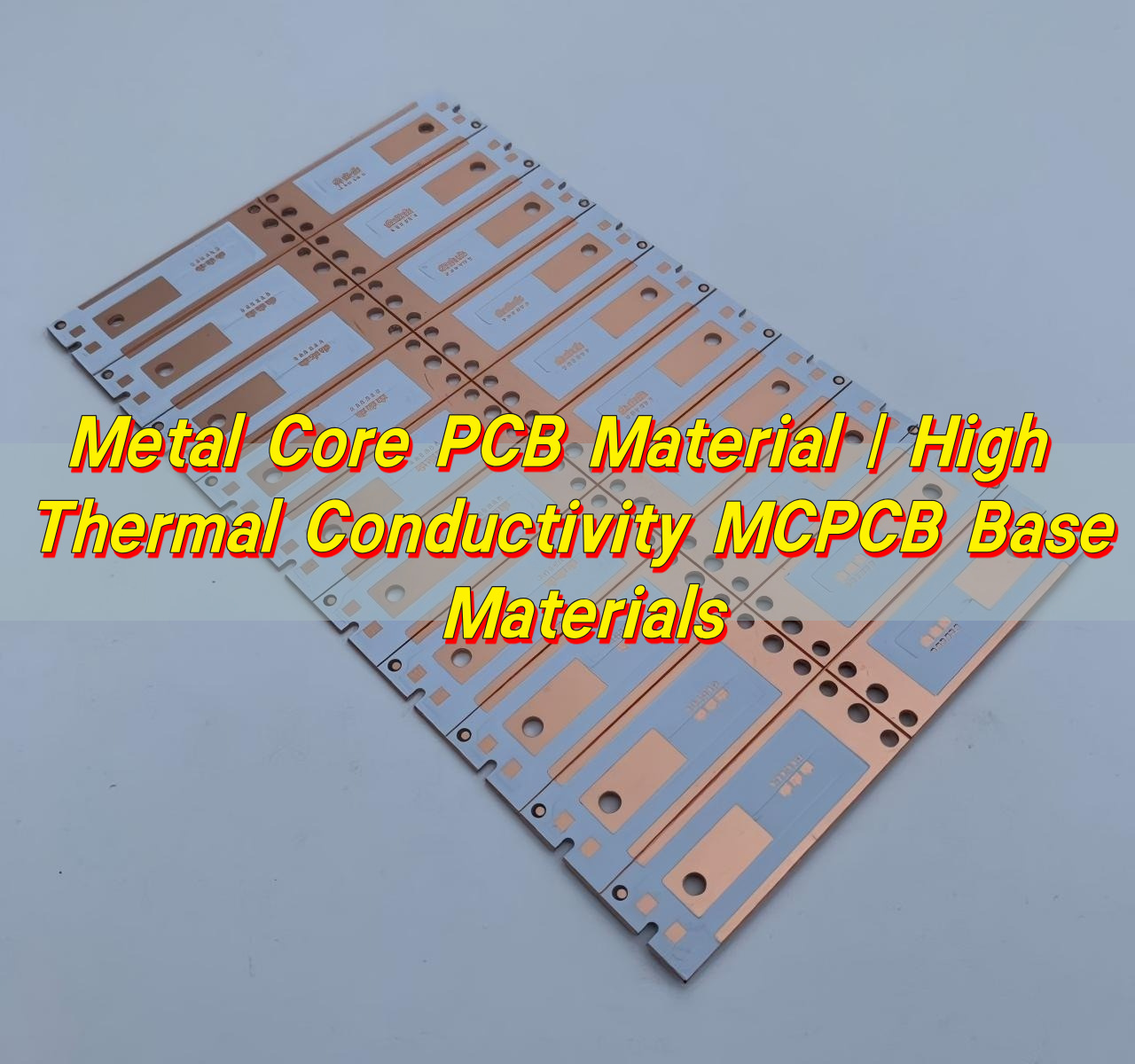
Metal Core PCB Material | High Thermal Conductivity MCPCB Base Materials
Friday, March 6th, 2026

Electronic devices continue to shrink while power density keeps rising. Excess heat can shorten component life, reduce performance, and cause signal instability. Because of this, designers often select metal core PCB material instead of conventional laminates when thermal control becomes critical.

A metal core circuit board integrates a thermally conductive metal base beneath the dielectric and copper circuitry. This structure creates a direct path for heat to travel away from components. Compared with standard FR-4 boards, metal core PCBs can dissipate heat more efficiently and maintain better thermal balance during operation.

Metal Core PCB Material | High Thermal Conductivity MCPCB Base Materials

These boards are widely used in high-power LED lighting, automotive electronics, power converters, industrial control systems, and communication equipment. As power levels increase and device footprints shrink, engineers increasingly rely on aluminium core PCB, copper core PCB, and IMS PCB (Insulated Metal Substrate) technologies to stabilize thermal performance.

EBest Circuit (Best Technology)鈥檚 metal core PCB material provides excellent thermal conductivity, high stability and reliable performance for LED, power and high鈥慼eat electronic applications.

What materials are used in metal core PCB?

A typical metal core PCB material structure consists of three primary layers. These layers work together to transfer heat efficiently from components to the metal substrate. Each layer performs a specific thermal and electrical function that ensures stable circuit performance.

The typical MCPCB stack structure includes:

  • Copper circuit layer
  • Thermal dielectric layer
  • Metal base layer

1. Copper Circuit Layer

The top layer contains copper traces that form the electrical circuit. This layer functions similarly to the copper layer in standard PCBs. Thicker copper improves current carrying capability and also spreads heat across the board surface. Copper thickness usually ranges from:

Copper ThicknessTypical Use
1 oz (35 渭m)Standard LED and low-power circuits
2 oz (70 渭m)Power LED modules
3 oz 鈥 4 ozHigh-current power electronics

2. Thermal Dielectric Layer

The dielectric layer is a critical part of metal core PCB material. It electrically isolates the circuit from the metal base while still allowing heat to pass through. High thermal conductivity dielectric materials allow heat to move quickly from components into the metal base. Typical dielectric properties include:

PropertyTypical Range
Thermal conductivity1 W/mK 鈥 10 W/mK
Thickness50 渭m 鈥 150 渭m
Breakdown voltage2 kV 鈥 6 kV

Common dielectric fillers include:

  • Ceramic particles
  • Aluminum oxide
  • Silicon compounds

These fillers increase thermal conductivity while maintaining insulation strength.

3. Metal Base Layer

The bottom layer of a pcb metal core acts as the primary heat sink. It spreads heat over a large surface area and transfers it to the external environment. Aluminum is widely used because it provides strong thermal performance at a reasonable cost. Copper offers the highest thermal conductivity but is heavier and more expensive. The most common base materials are:

Metal Base TypeThermal Conductivity
Aluminum~200 W/mK
Copper~385 W/mK
Steel~50 W/mK

How to choose metal core PCB material?

Selecting the right metal core pcb material depends on several engineering factors. The design must balance thermal performance, mechanical strength, electrical insulation, and manufacturing cost.

1. Thermal conductivity requirement

Heat dissipation is the main reason for using IMS PCB technology. The thermal conductivity of the dielectric layer determines how quickly heat moves into the metal base. Higher conductivity improves cooling performance. Typical ranges include:

Thermal ConductivityApplication
1鈥2 W/mKStandard LED lighting
3鈥5 W/mKAutomotive lighting
5鈥10 W/mKHigh-power electronics

2. Electrical insulation performance

Although the metal base conducts heat well, it must remain electrically isolated from the circuit layer. Reliable insulation prevents short circuits and protects sensitive components. Designers must verify:

  • Dielectric breakdown voltage
  • Insulation resistance
  • Long-term reliability under temperature cycling

3. Mechanical stability

Mechanical strength is also important when selecting metal core PCB materials. Aluminum substrates provide good rigidity while keeping board weight low. Copper base boards offer superior strength but increase overall board mass.

4. Manufacturing compatibility

Manufacturers evaluate whether the material supports standard processes such as:

  • SMT assembly
  • reflow soldering
  • drilling and routing
  • surface finishing

A stable material simplifies production and improves yield.

Metal Core PCB Material | High Thermal Conductivity MCPCB Base Materials

What material is the MCPCB made of?

An MCPCB (Metal Core Printed Circuit Board) typically combines three major materials: copper circuitry, thermal dielectric, and a metal substrate. However, within this structure, several variants exist depending on the application.

Aluminum Core PCB

An aluminium core PCB is the most widely used type of MCPCB. Aluminum offers excellent thermal conductivity while remaining lightweight and cost-effective. Typical aluminum grades used include:

  • 5052 aluminum
  • 6061 aluminum
  • 1060 aluminum

Advantages of aluminum core PCB include:

  • Lightweight structure
  • Good heat dissipation
  • Low material cost
  • Stable mechanical properties

Because of these benefits, aluminum core boards dominate LED lighting and power modules.

Copper Core PCB

A copper core PCB uses a solid copper substrate instead of aluminum. Copper has almost double the thermal conductivity of aluminum. This allows heat to move even faster away from components. However, copper boards are heavier and more expensive. Copper core PCBs are often used in:

  • high-power LEDs
  • RF power amplifiers
  • motor drivers
  • automotive electronics

IMS PCB (Insulated Metal Substrate)

An IMS PCB refers to a board where a dielectric layer isolates the circuit from the metal base. Most metal core PCBs fall into this category. The IMS structure allows designers to combine electrical insulation with thermal efficiency.

Typical IMS stack: Copper layer 鈫 thermal dielectric 鈫 aluminum base. This structure provides excellent heat dissipation while maintaining electrical isolation.

Metal Core PCB Material | High Thermal Conductivity MCPCB Base Materials

How thick is the metal core PCB?

The metal core pcb thickness varies depending on the design requirements. Engineers must consider both electrical performance and heat transfer efficiency. A typical MCPCB includes several thickness parameters.

Total board thickness. Thicker boards often improve mechanical strength. Common board thickness values include:

Board ThicknessApplication
1.0 mmThin LED modules
1.6 mmStandard MCPCB
2.0 mmHigh-power lighting
3.2 mmPower electronics

Metal core thickness. The metal base itself can vary significantly. A thicker metal base improves heat spreading capacity.

Metal Core ThicknessTypical Range
Aluminum base0.8 mm 鈥 3.0 mm
Copper base1.0 mm 鈥 4.0 mm

Dielectric thickness. The dielectric layer usually ranges between: 50 渭m 鈥 150 渭m. A thinner dielectric improves thermal transfer but must still provide reliable electrical insulation.

Why is thermal conductivity important in metal core PCB material?

Thermal conductivity determines how quickly heat moves through a material. In electronic circuits, efficient heat removal protects components and stabilizes performance. High temperatures can reduce LED brightness, affect semiconductor switching speed, and shorten component lifespan.

A well-designed metal core PCB material structure solves this problem by creating a direct thermal path. Because the metal base spreads heat efficiently, the board avoids localized hot spots.

Heat flows through the following stages:

  • Component generates heat
  • Heat enters copper circuit layer
  • Heat moves through dielectric layer
  • Heat spreads across metal substrate
  • Heat dissipates into air or heat sink

Typical thermal conductivity comparison:

MaterialThermal Conductivity
FR-40.3 W/mK
Aluminum base~200 W/mK
Copper base~385 W/mK

What are benefits of metal core PCB material?

The advantages of metal core pcb materials extend beyond thermal performance. Engineers often select them because they improve reliability and design flexibility. Several benefits stand out. These advantages make pcb metal core technology suitable for high-power electronics.

  • 1. Excellent heat dissipation

Metal substrates rapidly transfer heat away from components. This reduces thermal stress and improves long-term reliability.

  • 2. Improved circuit stability

Stable temperatures keep semiconductor devices operating within their optimal range.

  • 3. High mechanical strength

Metal substrates increase board rigidity and durability.

  • 4. Compact product design

Efficient heat transfer allows designers to place components closer together.

  • 5. Longer product lifespan

Lower operating temperature helps protect LEDs, ICs, and power components.

  • 6. Reduced external cooling requirements

Many MCPCB designs operate without large heat sinks.

What is the difference between metal core PCB and FR4?

A metal core PCB vs FR4 comparison highlights the fundamental differences between the two technologies.

FR-4 is a fiberglass epoxy laminate commonly used in conventional PCBs. While it offers good electrical insulation, it has limited thermal conductivity. Metal core boards replace the fiberglass base with a thermally conductive metal substrate. In applications with high power density, metal core circuit boards offer clear advantages.

Below is a comparison of the two materials.

FeatureMetal Core PCBFR-4 PCB
Base materialAluminum or copperGlass fiber epoxy
Thermal conductivityHighLow
Heat dissipationExcellentLimited
Mechanical strengthStrongModerate
WeightHeavierLightweight
Typical applicationsLEDs, power electronicsConsumer electronics
Metal Core PCB Material | High Thermal Conductivity MCPCB Base Materials

Where is metal core PCB material used?

Because of its thermal advantages, metal core PCB material appears in many modern electronic systems. Industries rely on MCPCBs to manage heat in compact designs. Common applications include:

LED lighting, High-power LEDs generate substantial heat. MCPCBs help maintain consistent brightness and extend LED life.

Examples include:

  • street lighting
  • automotive headlights
  • industrial lighting

Automotive electronics, Vehicles require reliable thermal management for components such as:

  • engine control modules
  • power converters
  • lighting systems

Power electronics, Power supplies and converters generate high heat density. Metal core boards stabilize thermal performance in:

  • motor drives
  • DC-DC converters
  • industrial power modules

Communication systems, RF amplifiers and communication equipment often use copper core PCB structures to dissipate heat from power devices.

Consumer electronics, Compact devices such as projectors and audio equipment also benefit from MCPCB technology.

At EBest Circuit (Best Technology), we specialize in manufacturing high-quality metal core PCBs and thermal management circuit boards for demanding applications. Our engineering team supports customers from design review to production, ensuring each board meets strict performance standards.

If you are developing high-power electronic products and need reliable metal core PCB materials, feel free to contact our team. Email: sales@bestpcbs.com

You may also like

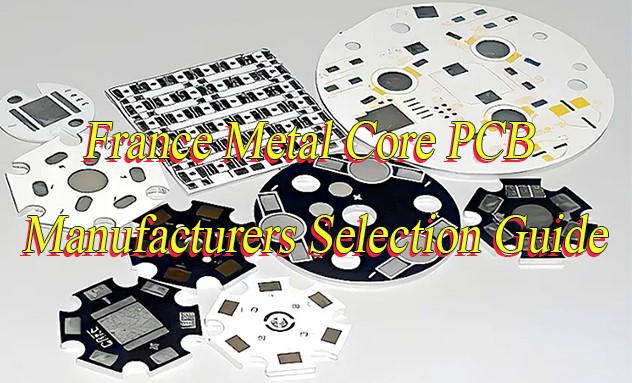
France Metal Core PCB Manufacturers Selection Guide
Thursday, November 27th, 2025

Are you looking for France metal core manufacturers? This blog is mainly about manufacturers list and selection guide to France metal core PCB manufacturers.

Are you worried about these issues now?

  • Will Your Thermal Management Fail at 150掳C? Prototypes Passed, Production Burned.
  • Delayed Shipments Killing Your Time-to-Market? 4-Week Promises Became 8-Week Nightmares.
  • Getting Invisible Cost Surprises in Final Invoice? Uncontrolled Budget Spikes.

As a professional MCPCB manufacturer, EBest Circuit (Best Technology) can provide you service and solutions:

  • Guaranteed Thermal Reliability: 1.2W/mK Aluminum Base + Dielectric Layer Withstanding 200掳C Continuous Load.
  • On-Time Delivery Guarantee: Dedicated production lines for urgent orders accelerate product launch cycles
  • 100% Cost Transparency: No any hidden cost and provide turnkey price.

Welcome to contact us if you have any request for metal core PCB design, prototyping, mass production and assembly: sales@bestpcbs.com.

Top 10 Metal Core PCB Manufacturers in France

1. Eurocircuits France

    • Main Business: Small-batch PCB fabrication for design houses and R&D teams. They support many European clients.
    • Advantages: Strong online tooling. Good design-for-manufacturing feedback. Easy ordering for single boards and small runs.
    • Manufacturing Capabilities: Aluminum-based MCPCBs, standard copper thickness up to 70 碌m, ENIG and OSP finishes, routing and CNC milling for complex shapes. They run batch and panelized production.
    • Delivery Time: Typical lead time 7鈥12 working days for small batches. Express options often around 3鈥5 days for prototype panels.

    2. Elvia PCB Group

      • Main Business: Mid- to high-volume production for industrial, aerospace, and defense. They make many rigid and thermal boards.
      • Advantages: Deep process control. Strong certification record. Proven supply to regulated industries.
      • Manufacturing Capabilities: Heavy copper plating, hybrid metal cores (aluminum + copper layers), multi-layer options with thermal vias, tight impedance control, and automated optical inspection.
      • Delivery Time: Standard 10鈥20 working days. Expedited jobs can be negotiated for urgent runs.

      3. CIRE Group

        • Main Business: MCPCBs for lighting and automotive subsystems. Focus on thermal management designs.
        • Advantages: Hands-on engineering help. Strong plating and surface finish control. Good for mid-power LED boards.
        • Manufacturing Capabilities: Dielectric materials tuned for 1鈥3 W/mK thermal conductivity, edge-routing, nickel-gold finishes, and selective plating. They also offer assembly and conformal coating.
        • Delivery Time: Usually 8鈥14 working days. Faster service for prototypes if file-ready.

        4. SELP Circuits

          • Main Business: Practical, cost-effective PCBs for consumer lighting and industrial tools.
          • Advantages: Competitive pricing for small and medium runs. Shorter batch sizes accepted.
          • Manufacturing Capabilities: Aluminum MCPCBs with single-sided copper traces, common ENIG finish, basic thermal testing, and simple SMT assembly options.
          • Delivery Time: Often 5鈥10 working days for prototypes and small production runs.

          5. Cofidur EMS

            • Main Business: Turnkey electronics services with integrated PCB supply, assembly, and testing.
            • Advantages: One-stop shop for board plus assembly. Simplifies supply chain and reduces lead time variance.
            • Manufacturing Capabilities: MCPCB fabrication through trusted partners, integrated functional testing, automatic optical inspection (AOI), and wave or selective soldering for assemblies.
            • Delivery Time: Typical 10鈥18 working days for PCB + assembly. Prototypes can be faster if BOM is ready.

            6. ALL Circuits

              • Main Business: Electronics manufacturing services for OEMs who need procurement and production.
              • Advantages: Strong sourcing and logistics. Good at combining PCB runs with immediate assembly.
              • Manufacturing Capabilities: Outsourced MCPCB production via vetted partners, quality control on incoming boards, and multi-step testing for assembled systems.
              • Delivery Time: Delivery depends on combined supplier lead times. Plan on 10鈥20 working days for turnkey orders.

              7. Novalec

                • Main Business: Low-to-medium volume PCBs for industrial controls and lighting systems.
                • Advantages: Careful process control and low defect rates for small series. Personalized customer service.
                • Manufacturing Capabilities: Single and double-sided MCPCBs, plated through-holes for mechanical strength, custom thickness for thermal needs, and basic reliability tests.
                • Delivery Time: Often 7鈥14 working days for MCPCB fabrication.

                8. Cirly

                  • Main Business: Fast prototyping and small series for product developers and labs.
                  • Advantages: Very quick turn, friendly to iterative design. Helpful for thermal validation cycles.
                  • Manufacturing Capabilities: Rapid aluminum MCPCBs, quick-turn ENIG finishes, simple laser routing for complex outlines, and support for thermal vias.
                  • Delivery Time: Prototype options can be delivered in 24鈥72 hours for simple panels. Typical small runs 3鈥7 days.

                  9. ACB Group (serving France locally)

                    • Main Business: High-capacity production for clients needing heavy copper or specialized thermal boards.
                    • Advantages: Deep expertise in thick copper and demanding thermal designs. Good for power electronics.
                    • Manufacturing Capabilities: Heavy copper up to 400 碌m, multi-layer MCPCBs, robust plating, laser-drilled microvias, and advanced thermal management options
                    • Delivery Time: Standard production 12鈥25 working days. Fast lanes may be available for critical projects.

                    10. LCC 鈥 Le Circuits du Centre

                      • Main Business: Local supplier of standard PCBs and aluminum-based boards for lighting and industry.
                      • Advantages: Local service, personal account management, and flexible small-run policy.
                      • Manufacturing Capabilities: Aluminum MCPCBs, common finishes including HASL and ENIG, routing, and simple assembly.
                      • Delivery Time: Typical 6鈥12 working days for common items. Prototypes may be faster
                      France Metal Core PCB Manufacturers Selection Guide

                      Quality Standards of Metal Core PCB Manufacturers in France

                      • IPC-6012 and IPC-6012DS: Define acceptance for rigid PCBs. They cover plating, solderability, and physical tolerances. Use them as a base for acceptance criteria.
                      • IPC-2221 and IPC-2222: Cover generic and rigid printed board design rules. They help with trace width, spacing, and thermal via placement.
                      • IPC-A-600: For visual acceptance criteria. It helps you set pass/fail rules for appearance.
                      • ISO 9001: Confirms the manufacturer uses a formal quality management system. This shows process repeatability.
                      • EN 9100: Aerospace-specific quality management. Relevant if your MCPCBs will enter aerospace supply chains.
                      • UL: UL recognition helps with product acceptance in many markets and simplifies compliance for appliances and lighting sold in some regions
                      • RoHS: Restricts hazardous substances. Most France makers supply RoHS-compliant boards.
                      • REACH: Governs chemical safety in the EU. Ask for declarations if you need to certify end-products.
                      • Electrical testing standards: 100% electrical testing finds shorts and opens. Also request continuity and isolation tests for power paths. For high-reliability work, request burn-in and functional load tests.

                      France Metal Core PCB Manufacturers Selection Guide

                      A Detailed Selection Guide to France Metal Core PCB Manufacturers:

                      1. Technical Expertise & Process Capability

                      • Metal Substrate Options: Offer aluminum-based (e.g., 5052, 6061 with thermal conductivity 140-220 W/m路K) and copper-based (thermal conductivity ~385 W/m路K) substrates to match varying power density and thermal dissipation requirements.
                      • Process Details: Line width/spacing typically 0.20/0.20 mm, dielectric layer thickness 0.003-0.006 inch, and via diameter specifications to support high-density, high-power layouts.
                      • Thermal Management Solutions: Provide thermal simulation reports and adopt innovative structures like Super Pillar to reduce thermal resistance and enhance heat dissipation efficiency.

                      2. Quality Certifications & Standards Compliance

                      • International Certifications: Prioritize manufacturers certified under ISO 9001 quality management systems to ensure standardized production controls.
                      • Industry Standards: Adhere to IPC-4101/4104 material standards and comply with RoHS, UL, and other safety/environmental directives for seamless market access in the EU.

                      3. Production Flexibility & Supply Chain Resilience

                      • Capacity & Lead Times: Understand regular production capacity, prototype lead times (typically 5-10 days), and bulk delivery reliability to avoid delays from production bottlenecks.
                      • Supply Chain Management: Implement dual-sourcing strategies for critical materials (metal substrates, dielectric layers) to ensure stable supply during geopolitical or logistics disruptions.

                      4. Design Support & Response Efficiency

                      • Early-Stage Engagement: Provide DFM feedback during the design phase, including panelization schemes, slot positioning, and surface finish (HASL, ENIG) recommendations to minimize post-design modifications.
                      • Technical Responsiveness: Maintain a 24-48 hour feedback mechanism for urgent issues through email or phone support.

                      5. Customer Feedback & Industry Reputation

                      • Case References: Showcase past projects in automotive, aerospace, and premium lighting sectors with verified thermal performance and reliability data.
                      • Third-Party Reviews: Leverage independent platforms or peer evaluations to gauge long-term performance in delivery quality and collaborative communication.

                      6. Sample Validation & Reliability Testing

                      • Small-Batch Prototyping: Order samples before bulk production to test key parameters like thermal conductivity, dielectric strength (e.g., 2.5 kV), and dimensional accuracy.
                      • Environmental Testing: Supply reliability reports for thermal cycling, high-temperature/humidity exposure, and other harsh-condition tests to validate stability.

                      7. Cost Transparency & Long-Term Partnership Value

                      • Quotation Breakdown: Provide itemized quotes for materials, layer counts, and process fees to avoid hidden costs (e.g., 1.5 mm aluminum MCPCB at $0.50鈭$0.70/piece; 2.0mm copper MCPCB at $2.50-$4.00/piece).
                      • Value Assessment: Evaluate overall partnership value by considering yield rates, on-time delivery rates, technical support, and other implicit costs.

                      8. Environmental Compliance & Sustainability

                      • Eco-Friendly Materials: Ensure metal substrates and dielectric layers comply with EU RoHS, REACH, and other environmental regulations, supported by test reports.
                      • Green Manufacturing: Prioritize manufacturers with energy management systems (e.g., ISO 50001) or carbon reduction commitments to reflect long-term operational sustainability.
                      France Metal Core PCB Manufacturers Selection Guide

                      How to Evaluate the Mechanical and Finishing Quality of France MCPCB?

                      1. Base Metal and Substrate Quality

                      • Request metal alloy certificates: Ensure supplier provides material composition reports to confirm alloy grades (e.g., 1060, 3003 aluminum, or C11000 copper) comply with design specifications.
                      • Flatness inspection of the board surface: Place the panel on a known flat reference surface and measure the maximum gap with feeler gauges. Warpage exceeding IPC-6012 standards (typically 鈮0.75%) causes SMT misalignment.
                      • High-power applications require high-grade materials: Aluminum substrates recommended for 5052 or 6061 series with thermal conductivity up to 140 W/(m路K); copper substrates preferred for C1100 (thermal conductivity 鈮380 W/(m路K)) for better oxidation resistance at high temperatures.
                      • Thermal expansion coefficient matching: Confirm substrate CTE matches chip carriers (e.g., ceramic, silicon) to prevent solder joint cracking after temperature cycling.

                      2. Dielectric Properties and Laminate Structure

                      • Dielectric thickness and thermal conductivity: Require supplier to provide thickness (0.1mm鈥0.18mm typical) and thermal conductivity values (FR-4 ~0.3鈥0.6 W/(m路K); high-performance fillers 2鈥5 W/(m路K)) for each dielectric layer.
                      • Comparison with thermal simulation: Input actual laminate structure (copper thickness, dielectric thickness, material k-values) into thermal simulation software to verify hotspot temperatures are within allowable limits. Quality suppliers assist in adjusting laminate schemes for optimized heat dissipation.
                      • Inspection of void defects: Request cross-sectional photos of dielectric layers to check for bubbles, delamination, or uneven resin filling. Voids reduce insulation strength and thermal pathways.

                      3. Copper Traces and Pad Quality

                      • Edge smoothness of copper traces: Inspect trace edges under 10x magnification for jaggedness, burrs, or excessive etching residues. Rough edges increase high-frequency losses and EMI.
                      • Copper thickness verification: Measure actual copper thickness via test coupons or microsections (1oz=35渭m, 2oz=70渭m) to ensure impedance control compliance.
                      • Plating uniformity report: Request plating thickness distribution maps (e.g., gold-plated buttons, electroless nickel). Thickness deviation 鈮ぢ10%.

                      4. Copper Traces and Pad Quality

                      • Solder mask coverage integrity: Solder mask must fully cover non-pad areas including trace gaps and vias. Use optical microscopy to check for gaps or thin coverage.
                      • Pad perimeter quality: Monitor solder mask encroachment on pads (solder mask bridge breakage) or pad edge undercut鈥攊ndicators of unstable process control.
                      • Silkscreen legibility: Characters and polarity marks must be sharp, blur-free, and aligned. Perform adhesion testing (tape peel) to confirm ink durability.

                      5. Surface Finish Uniformity

                      • ENIG (electroless nickel immersion gold): Surface should show uniform bright gold without black spots, haze, or nickel corrosion. Nickel thickness 3鈥6渭m, gold 0.05鈥0.1渭m.
                      • HASL (lead-free hot air leveling): Minor wave patterns permitted, but pad coating thickness must be uniform to avoid exposed copper.
                      • OSP (organic solderability preservative): Film should be uniform, non-peeling, and non-oxidized. For long-term storage, request supplier-provided shelf life data (typically 6鈥12 months).

                      6. Mechanical Strength and Adhesion Testing

                      • Peel strength test: Request copper-to-dielectric peel strength reports meeting IPC-TM-650 2.4.8 (鈮1.0N/mm typical).
                      • Thermal cycling/thermal shock report: Suppliers provide test data for similar structures showing no solder joint or interlayer cracking during 鈭40掳C to +125掳C cycles.
                      • Bending test: For flexible or pluggable rigid boards, perform bending tests (e.g., IPC-6013) to confirm laminate adhesion under mechanical stress.

                      7. Dimensional and Hole Quality Inspection

                      • Hole diameter and annular ring tolerance: Request drilling charts and measured data. Hole tolerance 卤0.05mm typical; annular ring 鈮0.075mm (Class B) or 0.05mm (Class C).
                      • Edge and milling quality: Inspect board edges and slots for burrs or edge breaks鈥攃ritical for snap-fit assembly sealing.

                      8. Functional Verification

                      • Additional testing for high-frequency/high-speed boards: Request TDR reports for impedance control (卤10% tolerance) and batch consistency of dielectric constant (Dk) and dissipation factor (Df) for RF boards.
                      • Electrical test report: Require 100% flying probe or bed-of-nails test reports listing all open/short and network continuity results.
                      • Thermal imaging data for LED boards: Capture infrared thermography at set currents (e.g., 350mA) to verify uniform heat diffusion and maximum temperature below material Tg.
                      How to Evaluate the Mechanical and Finishing Quality of France MCPCB

                      Why France Clients Trust EBest Circuit (Best Technology) as Metal Core PCB Manufacturers?

                      Reasons Why Choose EBest Circuit (Best Technology) As Metal Core PCB Manufacturer:

                      • Price Competitiveness: EBest Circuit (Best Technology) reduces MCPCB costs by 8-12% through scaled procurement and automated production lines, offering 15% lower quotes than French local suppliers. Tiered pricing provides an additional 3-5% discount for bulk orders.
                      • Quality Consistency: ISO 9001:2015 certified processes, paired with AOI inspection (卤2渭m accuracy) and X-ray systems, ensure batch-to-batch thermal conductivity variation 鈮3% and electrical parameter deviation <1%, compliant with EU CE/REACH standards.
                      • On-Time Delivery Rate 99.2%: Achieved through optimized production scheduling and global logistics coordination, enabling 99.2% on-time delivery for standard orders. Critical orders (e.g., medical PCBs) are fulfilled within 72 hours.
                      • Flexible Lead Times: 7-21 day multi-tier delivery options, with 3-5 day rapid prototyping (40% faster than industry average). Parallel production lines double capacity for bulk orders, supporting dynamic production adjustments for French clients.
                      • 25-Step Quality Control: Full traceability via unique QR codes on each board, covering raw material checks (e.g., copper foil thickness tolerance 鈮1%) to reliability testing (e.g., 1,000-cycle thermal shock from -40掳C to 150掳C).
                      • International Certifications: UL certification (E355848), RoHS 2.0, ISO 14001, and IATF 16949 (automotive-grade) with verifiable certificate numbers, ensuring compliance with French/EU safety and environmental regulations.
                      • 24/7 Bilingual Support: Chinese-English technical sales team provides <2-hour response times for DFM consultations, preventing rework costs from design flaws.
                      • Free DFM Analysis: Pre-production reports include signal integrity checks (impedance matching error <5%), thermal simulation (15-20% efficiency gain), and manufacturability assessments, reducing R&D cycles by >30%.
                      • Collaborative R&D: Custom solutions co-developed with French clients, such as high-power LED substrates with thermal conductivity 鈮200W/m路K or precision dielectric layer adjustments (卤5% tolerance).
                      • Strategic Partnership Value: 85% client retention rate through continuous tech investment and value-added services like cost optimization advice and industry trend analysis, transitioning from transactional to strategic relationships.
                      Why France Clients Trust EBest Circuit (Best Technology) as Metal Core PCB Manufactures?

                      On-Time MCPCB Delivery: 24 Hours Rapid Prototyping for Urgent Orders

                      • 24-Hour Quick-Turn Support: For urgent designs, we can produce MCPCB samples within 24 hours depending on complexity. This helps you validate design ideas faster.
                      • Shorter Development Cycle: Fast prototyping allows early thermal tests, brightness tests, or current flow checks. This speeds up approval and reduces delays.
                      • Reliable Europe-Focused Logistics: We ship frequently to France. Transit times remain stable, and shipment tracking is always available.

                      Consistent MCPCB Quality: ISO/IPC Certifications & 100% Electrical Testing

                      • Mechanical Inspection: We check flatness, drill accuracy, copper shape, and routing quality.
                      • Electrical Testing: Every MCPCB undergoes a complete electrical test to confirm zero shorts or opens.
                      • Thermal Reliability: Our dielectric materials are selected for stable thermal flow and strong bonding. We verify adhesion strength and insulation.
                      • Surface Finish Control: We inspect ENIG, OSP, HASL, and other finishes to ensure they support stable soldering.

                      Transparent MCPCB Pricing: Turnkey Solutions Without Hidden Costs

                      • Turnkey Support: If you need parts and assembly, the team can handle full service. This saves time for design houses and startups.
                      • Flexible Volume Options: You can order small runs, medium runs, or large production. The price stays fair.

                      Real-Time Online Communication: English-Speaking Teams & Dedicated Support

                      • Dedicated Engineers and Account Managers: French customers receive a direct point of contact who understands MCPCB requirements and offers timely updates.
                      • Clear Design Discussions: We provide clear design feedback, review files carefully, and share manufacturability suggestions in a direct way.
                      • Fast Replies: Quick responses reduce delays and help you adapt design changes without waiting days for clarification.

                        How to Get A Quote for Your Metal Core PCB Project?

                        Follow this short process to get clear quotes:

                        1. Prepare your files: Gerbers, drill files, BOM, and stack-up. If possible, add a short note that lists the thermal target (e.g., “dissipate 3W across 20 mm虏 at 30掳C rise”).
                        2. State quantity and target date: Include initial prototype qty and ramp volumes.
                        3. Request sample test items: If in doubt, ask for a small sample batch with full test reports.
                        4. Ask for production options: Compare one-off prototypes to panelized production pricing.
                        5. Review the timelines: Confirm exact dates for PO acceptance, start, and ship.
                        6. Confirm packaging and shipping: Choose protective packaging for plated holes and flatness.
                        7. Approve and request a first article inspection (FAI): This confirms build quality before full runs.

                        Welcome to contact us if you have any request for metal core printed circuit board design, prototyping, mass production and assembly: sales@bestpcbs.com.

                        You may also like

                        Metal Core PCB Material: Types, Properties & Applications
                        Friday, July 25th, 2025

                        When it comes to managing heat in high-power electronic devices, Metal Core PCBs (MCPCBs) are the go-to solution. These boards use a metal base鈥攖ypically aluminum or copper鈥攖o efficiently dissipate heat for LEDs, power modules, and automotive systems. However, the effectiveness of an MCPCB depends heavily on the material chosen for its core and dielectric layers.

                        At EBest Circuit (Best Technology), we specialize in custom MCPCB fabrication using materials from leading global brands like Laird, Bergquist, and Ventec. Whether you need aluminum-based MCPCBs for LED lighting or copper-core boards for power electronics, we offer full support from material selection to prototyping and mass production. In this blog, we will share some information about metal core PCB materials, help you to understand MCPCB from the inside to out.

                        Metal Core PCB Material: Types, Properties & Applications

                        What Is Metal Core PCB?

                        A metal core PCB (MCPCB) is a printed circuit board that uses a metal base instead of traditional fiberglass (FR4). This metal base acts as a heat spreader, drawing heat away from components that generate significant thermal energy during operation.

                        In a typical MCPCB, the structure includes three key layers:

                        • Copper Circuit Layer 鈥 for electrical connections.
                        • Dielectric Layer 鈥 an insulating layer that separates the copper from the metal core, allowing heat transfer but preventing electrical conduction.
                        • Metal Core (Base Layer) 鈥 typically aluminum, copper, or stainless steel, used to conduct heat away from the board.
                        Metal Core PCB structure

                        These PCBs are engineered to handle thermal management more efficiently than standard PCBs. As electronic devices become more compact and powerful, effective heat dissipation becomes more important, and MCPCBs offer a practical solution.

                        Common Metal Core PCB Materials

                        There are several options when it comes to metal core PCB material, each with its own unique benefits. The choice depends on factors like thermal requirements, mechanical strength, weight, and budget.

                        1. Aluminum Core

                        Aluminum is the most commonly used metal core material in MCPCBs. It is lightweight, cost-effective, and has good thermal conductivity鈥攖ypically around 205 W/m路K. Aluminum cores are ideal for LED lighting, consumer electronics, and automotive circuits where heat must be dissipated efficiently, but extreme thermal loads are not present. The commonly used aluminum core PCB in EBest Circuit (Best Technology) is 5052, 6061, 3003, here is the datasheet of them:

                        Property6061 Aluminum5052 Aluminum3003 Aluminum
                        Material TypeAl-Mg-SiAl-MgAl-Mn
                        Tensile Strength (MPa)290 鈥 350190 鈥 260130 鈥 200
                        Yield Strength (MPa)240160 鈥 200115 鈥 150
                        Elongation at Break (%)10 鈥 1712 鈥 2015 鈥 20
                        Thermal Conductivity (W/m路K)167138159
                        Density (g/cm鲁)2.702.682.73
                        Melting Point (掳C)582 鈥 652607 鈥 650643 鈥 657

                        2. Copper Core

                        Copper is used where superior heat dissipation is needed. It has excellent thermal conductivity鈥攁round 385 W/m路K鈥攁nd is suitable for high-power applications such as power supplies, industrial equipment, and RF systems. While it offers the best performance in terms of heat transfer, it is also heavier and more expensive than aluminum.

                        3. Stainless Steel Core

                        Stainless steel is rarely used, but it can be found in certain niche applications where corrosion resistance and mechanical strength are more important than thermal performance. Its thermal conductivity is much lower, around 16 W/m路K, making it suitable only for specific use cases.

                        Metal Core PCB Material Manufacturers

                        When choosing a metal core PCB manufacturer, it鈥檚 important to work with companies that supply high-quality materials and have a track record of consistency and reliability. Below are some of the leading manufacturers of metal core PCB materials that we cooperating:

                        • Bergquist (Henkel)
                        • Ventec
                        • Polytronics (Taiwan)
                        • Boyu (China)
                        • Laird Technologies
                        • Totking (China)
                        • Dupont Clamcool
                        • XianYang Bode electronic

                        Why Thermal Conductivity Is Important in MCPCB?

                        The thermal conductivity of a material refers to the amount of heat it can transfer under stable conditions. Specifically, for a 1-meter-thick material, if the temperature difference between two surfaces is 1掳C, and heat transfer occurs through 1 square meter within 1 hour, the quantity of heat transferred is expressed in W/m路K (watts per meter-kelvin). For practical use, K (kelvin) can often be replaced by 掳C.

                        The thermal conductivity value depends on the material鈥檚 composition, density, moisture content, and temperature. Materials with lower density or non-crystalline structures tend to have lower thermal conductivity, while materials with higher density and metallic bonding structures transfer heat more efficiently.

                        Generally, materials with low thermal conductivity are referred to as thermal insulators, and those with a conductivity below 0.05 W/m路K are called high-efficiency insulation materials. In contrast, metals typically exhibit high thermal conductivity, which makes them ideal for use in metal core PCBs.

                        Thermal Conductivity of Common Metals Materials

                        MetalThermal Conductivity (W/m路K)
                        Silver429
                        Copper401
                        Gold317
                        Aluminum237
                        Iron80
                        Lead67
                        Zinc34.8

                        As seen in the table above, silver has the highest thermal conductivity, followed by copper and gold. However, due to cost and practicality, copper and aluminum are the most commonly used metals in MCPCBs. Aluminum strikes a balance between cost, weight, and thermal performance, while copper is chosen for extreme thermal demands.

                        1W vs 2W vs 3W Thermal Conductivity Differences

                        When evaluating MCPCB materials, it’s essential to consider not only the core metal but also the thermal conductivity of the dielectric layer. This layer sits between the copper circuitry and the metal base. In the metal core pcb manufacturing, the commonly used dielectric layers are 1W, 2W and 3W.

                        • 1W/m路K: Basic dielectric material, suitable for low-power circuits and LEDs with minimal heat output.
                        • 2W/m路K: Offers moderate thermal performance, ideal for mid-power LEDs and general electronics.
                        • 3W/m路K or higher: Designed for high-power LEDs or circuits that generate significant heat, ensuring efficient transfer to the metal core.

                        Choosing a higher thermal conductivity dielectric can greatly reduce thermal resistance, leading to better overall cooling performance. But not the higher the better, it should depends on your specific demands.

                        Aluminum PCB vs Copper Core PCB

                        When comparing aluminum PCBs and copper core PCBs, the main differences come down to thermal performance, cost, and application needs. Both are types of metal core PCBs (MCPCBs), but they serve different purposes depending on how much heat your circuit generates and how much budget you have.

                        Aluminum PCB is the most commonly used metal core because it offers a good balance of performance, weight, and affordability. It provides moderate thermal conductivity (around 237 W/m路K) and is suitable for many applications, especially LED lighting, consumer electronics, and automotive circuits where heat is present but manageable. Aluminum is also lightweight, making it easier to handle and mount, especially in devices where weight matters.

                        Copper core PCB, on the other hand, offers superior thermal conductivity (around 401 W/m路K if used directly thermal path technology), nearly double that of aluminum. This allows it to handle more heat, which is crucial in high-power electronics, RF systems, and industrial power converters. However, copper is heavier and more expensive, so it’s typically used only when the highest level of heat dissipation is required.

                        Can I Use Aluminum PCB in High Power LED Lighting?

                        Yes, aluminum PCBs are widely used in high-power LED lighting, especially when paired with high thermal conductivity dielectric materials. These boards effectively dissipate heat away from LEDs, preventing overheating and maintaining light output stability.

                        However, the design must ensure:

                        • Adequate heat spreading area
                        • Proper thickness of aluminum core (typically 1.0mm to 1.6mm)
                        • High-quality dielectric layer with 2W or 3W thermal conductivity

                        In cases where LEDs generate extreme heat, consider using copper MCPCBs or combining the aluminum core with external heat sinks for better performance.

                        How to Choose the Right MCPCB Material for LED Projects?

                        Selecting the correct metal core PCB material for your LED project involves analyzing the following:

                        • Thermal Output of LEDs

                        Higher wattage LEDs generate more heat. For low-power LEDs, aluminum with 1W/m路K dielectric is sufficient. For high-power LEDs, choose aluminum or copper with 2W鈥3W dielectric.

                        • Mechanical Requirements

                        If the PCB must endure vibration or mechanical stress (e.g., automotive lighting), choose thicker copper for added durability.

                        • Budget Considerations

                        Aluminum offers a cost-effective balance between performance and price. Copper is more expensive and should be reserved for projects where thermal performance cannot be compromised.

                        • Weight Constraints

                        In portable or ceiling-mounted LED systems, lightweight aluminum helps reduce the overall weight of the fixture.

                        Metal Core PCB Applications

                        • LED Lighting: Used in street lights, automotive lights, grow lights, and flood lights to ensure LEDs stay cool.
                        • Power Electronics: Found in motor controllers, inverters, and converters to handle large currents and heat.
                        • Automotive: Used in ECUs, headlights, and battery systems for reliable performance in harsh environments.
                        • Telecommunications: Applied in RF modules, power amplifiers, and antenna systems.
                        • Consumer Devices: Used in high-performance audio systems and power adapters.

                        EBest Circuit (Best Technology) 鈥 Your Online Partner in MCPCB Manufacturing

                        At EBest Circuit (Best Technology), we specialize in the design and production of metal core PCBs for various industries. Whether you need aluminum or copper-based boards, we deliver customized thermal solutions to meet your specific project needs. By choosing EBest Circuit (Best Technology), you can enjoy:

                        • 99% on-time delivery
                        • Highest quality that conforms to IATF16949
                        • Factory prices with no MOQ
                        • High mixed varieties: aluminum pcb, copper PCB, directly thermal path PCB, ims pcb
                        • Multiply surface finish: OSP, HASL, ENIG, ENEPIG
                        • Turnkey PCB & PCBA assembly
                        • Flexible Production: From prototypes to high-volume manufacturing
                        • Free DFM & DFA checks
                        • 24/7 online sales

                        FAQs

                        Q1: What thickness is standard for aluminum MCPCBs?

                        Typical thicknesses range from 1.0mm to 1.6mm, depending on mechanical strength and thermal needs.

                        Q2: Is copper MCPCB worth the extra cost?

                        Yes, in high-power applications where superior thermal performance is necessary, copper is a valuable investment.

                        Q3: Can I request a custom thermal analysis?

                        Absolutely. EBest Circuit (Best Technology) provides thermal analysis and simulation support to ensure the right material choice.

                        Q4: Are there standard sizes for MCPCB panels?

                        Yes, but we also offer custom sizes based on your design files and project needs.

                        Q5: How can I get a quote for metal core PCBs?

                        Send your Gerber files, project details, and thermal requirements to EBest Circuit (Best Technology). Our team will respond within 12 hours.

                        You may also like

                        Metal Core Board, Metal Core PCB Manufacturer, No MOQ
                        Thursday, May 1st, 2025

                        When you鈥檙e in the market for a metal core PCB manufacturer, finding the right one can make a big difference. From ensuring the efficiency of heat dissipation to maximizing performance, metal core PCBs (MCPCBs) offer unique benefits in the world of electronics. As more companies look to enhance their products with these specialized PCBs, the need for a reliable and skilled manufacturer grows.

                        EBest Circuit (Best Technology) is a metal core PCB manufacturer compliance with ISO9001, ISO13485, IATF16949, AS9100D, UL, REACH, RoHS. With MOQ-free, EBest Circuit (Best Technology) is an original factory for SinkPad PCB, Aluminum PCB Manufacturing. Our competitive edges lie in zero MOQ, 2-3 weeks lead time policy, and 24/7 engineering support. We operate strategically located SMT factories in China and Vietnam, offering full SMT assembly capabilities and mixed assembly advantages. If you need metal core PCB instant quote, welcome to contact us at sales@bestpcbs.com.

                        Metal Core Board, Metal Core PCB Manufacturer, No MOQ

                        What Metals Are in Circuit Boards?

                        When discussing metal core PCBs, it’s essential to understand the types of metals commonly used in their construction. While standard PCBs use materials like fiberglass and copper, metal core PCBs take it a step further by incorporating metals such as aluminum, copper, and steel.

                        • Aluminum is the most widely used metal in MCPCBs due to its excellent thermal conductivity, lightweight nature, and cost-effectiveness.
                        • Copper is also used for its superior thermal performance, making it ideal for high-performance applications like power electronics and LED lighting.
                        • Steel might be used in certain designs for added strength, especially in cases where durability is a top priority.

                        These materials help in efficiently managing heat, which is critical for ensuring the longevity and reliability of electronic devices. EBest Circuit (Best Technology) offers rigorous quality inspection to metal core board. We assure you that there is no MOQ requirement, and all metal core PCB production is IPC standards compliance.

                        Metal Core Board

                        How Are Metal Core Circuit Boards Manufactured?

                        The metal core PCB manufacturing process is a specialized procedure designed to optimize the thermal conductivity of the board. The general steps involved are:

                        • Material Selection鈥: Depending on the application, materials like aluminum or copper are chosen for the core layer. These materials are selected based on the need for heat dissipation and cost considerations.
                        • 鈥孡ayering鈥: The core metal (e.g., aluminum) is coated with a dielectric insulation layer, followed by a copper circuit layer. This structure ensures efficient heat transfer from components to the metal core.
                        • Drilling and Plating鈥: Holes are drilled through the layers, followed by insulation treatment (e.g., resin filling) to isolate the metal core. Copper plating is then applied to form conductive vias and pathways.
                        • Etching鈥: The copper layer is etched to create precise circuit traces and pads.
                        • Final Testing鈥: Rigorous thermal cycling, electrical, and reliability tests are conducted to validate performance under demanding conditions.

                        The precision and quality of these steps are vital to producing an effective metal core PCB that will perform under challenging conditions.

                        Metal Core PCB Manufacturer China

                        China has long been a global leader in PCB manufacturing, and the demand for metal core PCBs has grown alongside the expansion of industries such as automotive, consumer electronics, and LED lighting. The country鈥檚 extensive manufacturing capabilities, combined with competitive pricing, make it an attractive destination for companies seeking reliable metal core PCB manufacturers. In this section, we will explore the top metal core PCB manufacturers in China who specialize in delivering high-quality products that meet global standards.

                        EBest Circuit (Best Technology)

                        • EBest Circuit (Best Technology) is one of China鈥檚 top PCB manufacturers, with a strong reputation for delivering high-quality metal core PCBs at high quality. Our comprehensive services range from design assistance to full-scale production, catering to industries such as LED lighting, power electronics, and medical devices.
                        Metal Core PCB Manufacturer

                        Shenzhen Sesa Tech Co., Ltd.

                        • Sesa Tech is a well-established manufacturer of various PCBs, including metal core PCBs. They focus on providing custom solutions for industries like automotive, telecommunications, and consumer electronics. Their production facility is equipped with cutting-edge technology, and they are known for offering efficient turnarounds on high-volume orders.

                        When looking for a metal core PCB manufacturer in China, these companies provide a combination of cost-effective solutions, advanced technology, and reliable production. Whether you鈥檙e aiming for high-volume production or quick prototyping, China remains a key player in the global PCB manufacturing landscape.

                        Metal Core PCB Manufacturer Bangalore

                        Bangalore, known as India鈥檚 tech hub, is home to a growing number of PCB manufacturers who specialize in metal core PCBs. The city鈥檚 robust engineering expertise, coupled with affordable labor costs, makes it an ideal location for sourcing high-quality PCBs. In this section, we鈥檒l highlight some of the leading metal core PCB manufacturers in Bangalore that can meet the needs of various industries such as automotive, aerospace, and LED lighting.

                        V-Tech PCB

                        • V-Tech PCB is a well-established manufacturer in Bangalore, specializing in a wide range of PCB products, including metal core PCBs. With an emphasis on quality control and precision, V-Tech serves industries like automotive, telecommunications, and industrial electronics. Their state-of-the-art manufacturing facility ensures that every PCB meets global standards.

                        Eagle Circuits

                        • Eagle Circuits has been a trusted PCB manufacturer in Bangalore for over a decade. Their metal core PCB offerings are highly regarded for their superior heat dissipation properties, making them ideal for applications such as power electronics and high-power LEDs. Eagle Circuits is known for their flexible manufacturing processes and quick delivery times.

                        Flextronics

                        • Flextronics, a global player in the electronics manufacturing industry, has a significant presence in Bangalore. They offer metal core PCBs for a variety of applications, with a strong focus on innovation and quality. Their experience in producing high-performance PCBs for the automotive and industrial sectors ensures that their products meet stringent specifications.

                        Bangalore offers a growing number of metal core PCB manufacturers that provide a blend of technical expertise, cost-effective solutions, and quick delivery. Companies looking for reliable and high-quality manufacturers can rely on Bangalore’s rich pool of experienced manufacturers.

                        Metal Core PCB Manufacturer in Delhi

                        Delhi, as the capital of India, has emerged as an important hub for PCB manufacturing, including metal core PCBs. The city鈥檚 strategic location, coupled with access to a skilled workforce and advanced manufacturing technology, makes it a key destination for companies seeking high-quality PCBs. In this section, we鈥檒l explore some of the top metal core PCB manufacturers in Delhi who offer a wide range of products tailored to industries like automotive, medical devices, and electronics.

                        PCB Power Market

                        • PCB Power Market is a leading PCB manufacturer in Delhi, specializing in both standard and metal core PCBs. They provide high-quality PCBs for a variety of industries, including automotive, lighting, and industrial electronics. Their advanced manufacturing process ensures precision and durability, especially in heat-sensitive applications.

                        Atotech India Pvt. Ltd.

                        • Atotech is a global leader in PCB manufacturing with a significant presence in Delhi. They provide metal core PCBs designed for high-heat applications. Known for their cutting-edge technology and adherence to international quality standards, Atotech serves industries such as medical devices, automotive, and telecommunications.

                        Deltronics

                        • Deltronics is a reputable manufacturer in Delhi known for their metal core PCBs that offer excellent thermal management. They specialize in custom PCBs designed to meet the unique needs of clients, particularly in power electronics and LED applications. Deltronics is committed to delivering high-quality products with fast turnaround times.

                        Delhi is home to a variety of metal core PCB manufacturers offering high-quality, reliable, and cost-effective solutions for various industries. Whether you are in need of high-performance metal core PCBs for LED applications or power electronics, Delhi manufacturers provide competitive options that meet international standards.

                        How to Evaluate and Select the Best Metal Core PCB Manufacturer?

                        Choosing the right metal core PCB manufacturer involves evaluating several key factors:

                        • Experience and Expertise: Ensure that the manufacturer has a proven track record in producing MCPCBs for the specific applications you need.
                        • Certifications: Look for manufacturers with relevant certifications, such as ISO9001 and IATF16949, which demonstrate a commitment to quality control.
                        • Customization: The ability to design and manufacture custom MCPCBs tailored to your specific needs is crucial, especially for complex projects.
                        • Cost and Lead Time: Compare prices and lead times between manufacturers to ensure you鈥檙e getting the best value without compromising on quality.
                        • Customer Service and Support: A reliable manufacturer should offer excellent customer service, including post-production support and assistance with troubleshooting.

                        Taking the time to consider these factors will ensure that you select the best partner for your metal core PCB needs.

                        Why Should You Choose EBest Circuit (Best Technology) as Your Metal Core PCB Manufacturer?

                        When it comes to metal core PCB manufacture, EBest Circuit (Best Technology) stands out as a trusted partner. Here are a few reasons why we are your best choice:

                        • Quality: We are committed to the highest standards of quality control. Our metal core PCBs are rigorously tested to ensure that meet the toughest performance requirements.
                        • Experience: With years of 18 experience in PCB manufacturing, we understand the complexities involved in producing reliable metal core PCBs that meet your exact specifications.
                        • Quick turn-out: We offer quick turn-out solutions without compromising on quality, helping you get high-quality metal-core PCBs while getting quick results. Whether you鈥檙e in Europe, the USA, or anywhere else in the market, we provide fast shipping and delivery to meet your deadlines.
                        • Customization: We specialize in custom designs tailored to your unique needs, offering a wide range of options for 2-layer aluminum PCBs, flex PCBs, and more.

                        By choosing EBest Circuit (Best Technology), you ensure a reliable, high-performance metal-core PCB that enhances the efficiency and longevity of your electronics.

                        Metal Core PCB Manufacturer, No MOQ

                        In summary, choosing a metal core PCB manufacturer is an important decision that impacts the performance and longevity of your electronic products. By understanding the manufacturing process, evaluating your options, and considering factors like cost, quality, and customization, you can make an informed choice. With EBest Circuit (Best Technology), you gain access to top-notch manufacturing expertise, high-quality materials, and customer-centric service that ensures your products meet the highest standards.

                        If you’re ready to take the next step and discuss your metal core PCB needs, just contact us at sales@bestpcbs.com. EBest Circuit (Best Technology) is here to assist you every step of the way.

                        You may also like