PCB vs PCBA: What Is the Difference?
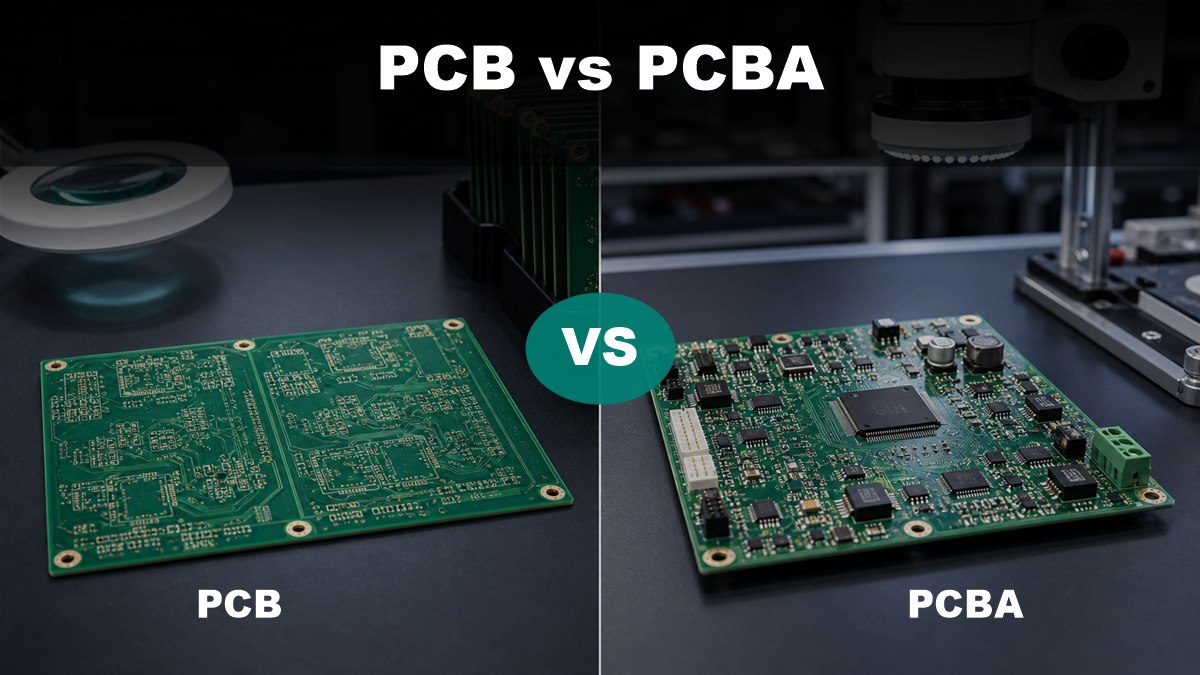
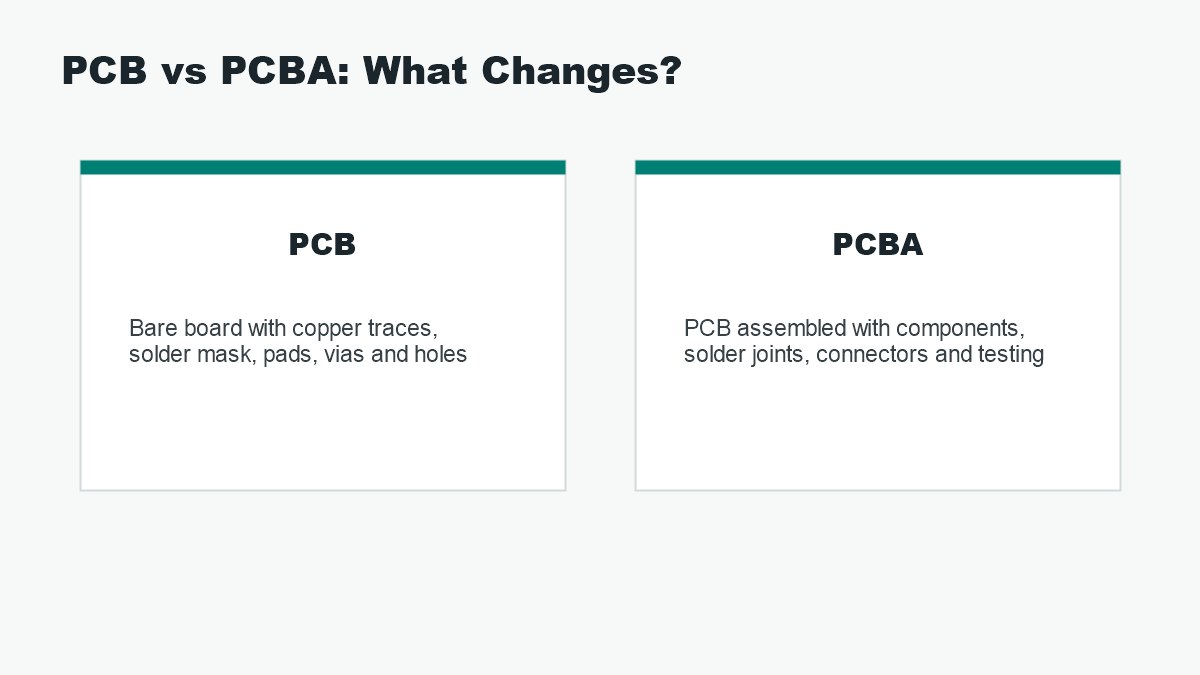
A PCB is the bare printed circuit board: copper traces, solder mask, pads, vias, holes and surface finish, but no assembled electronic components. A PCBA is the completed assembly after components are mounted and soldered onto the PCB, then inspected and tested. In sourcing terms, PCB usually means bare board fabrication, while PCBA means PCB fabrication plus component procurement, SMT or through-hole assembly, inspection and functional checks.
This PCB vs PCBA guide explains the difference from an engineering and purchasing point of view, so you know what to request, what files to prepare and how each choice affects cost, lead time and quality control.
What Is a PCB?
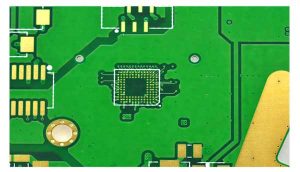
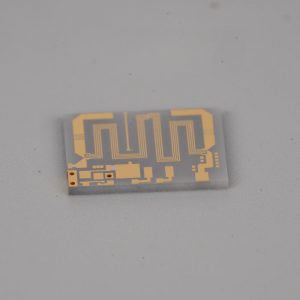
A PCB, or printed circuit board, is the physical platform that connects electronic components through copper traces. It may include laminate material, copper layers, solder mask, silkscreen, plated holes, vias, pads, slots and a surface finish such as HASL, ENIG or OSP.
A bare PCB does not perform the final product function by itself. It is the circuit carrier. Before components are added, the factory can inspect board dimensions, copper quality, solder mask registration, hole plating, impedance requirements and electrical continuity. For buyers, a PCB order usually requires Gerber files, drill files, stackup notes and fabrication specifications.
What Is a PCBA?
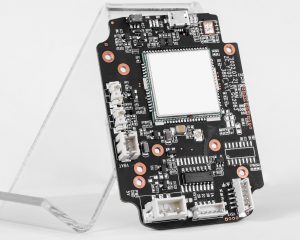
A PCBA, or printed circuit board assembly, is the PCB after electronic components have been installed and soldered. It may include SMT components, through-hole components, connectors, cables, heat sinks, firmware programming and test records depending on the project scope.
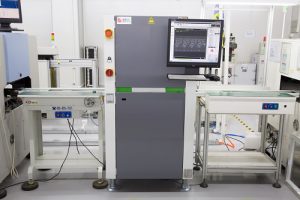
PCBA work is more than placing parts on a board. The supplier must manage component sourcing, stencil setup, solder paste printing, pick-and-place, reflow, through-hole soldering when needed, AOI, X-ray for some packages, cleaning if required, inspection and functional testing. For buyers, a PCBA order usually needs Gerber files, BOM, pick-and-place data, assembly drawings and test requirements.
PCB vs PCBA: The Core Difference
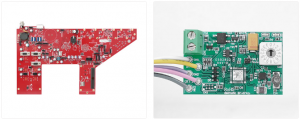
The core difference is assembly status. PCB is the bare board before components; PCBA is the assembled and tested electronic board after components are installed.
| Item | PCB | PCBA |
| Meaning | Bare printed circuit board | Printed circuit board assembly |
| Components | No assembled components | Components mounted and soldered |
| Main factory work | Board fabrication | Fabrication, sourcing, assembly and test |
| Files usually needed | Gerber, drill, stackup notes | Gerber, BOM, pick-and-place, assembly notes, test plan |
| Quality focus | Trace, hole, solder mask, surface finish, electrical test | Solder joints, polarity, component value, function and reliability |
| Best for | Board-only fabrication or buyer-managed assembly | Turnkey prototypes, samples, validation and production builds |
How a PCB Becomes a PCBA
A PCB becomes a PCBA when the bare board moves through component sourcing, solder paste printing, SMT placement, reflow soldering, through-hole assembly when needed, inspection and testing.
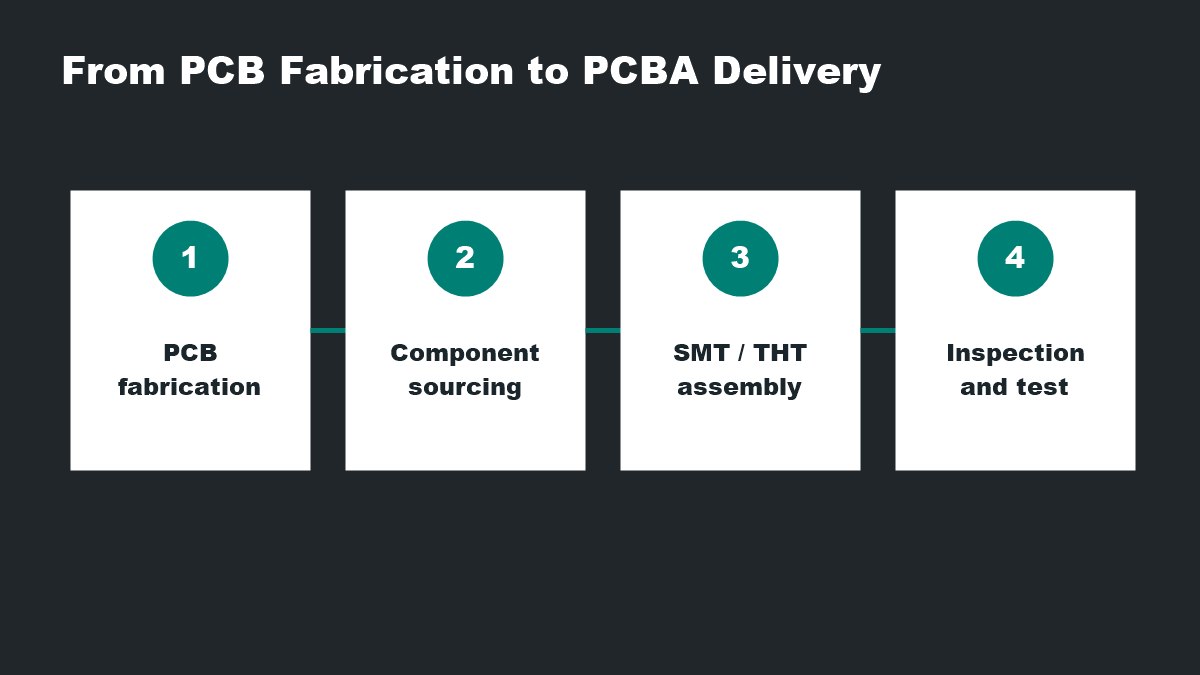
For SMT assembly, solder paste is printed through a stencil, components are placed by machine, and the board goes through reflow. Through-hole components may be soldered by wave soldering, selective soldering or manual soldering depending on volume and design. After that, inspection and testing confirm whether the assembled board meets the order requirements.
Which One Should You Order: PCB or PCBA?
Order a PCB when you only need the bare board or when your team will buy components and assemble the boards elsewhere. Order PCBA when you want one supplier to manage the board, parts, assembly and test process.
PCB-only orders make sense when you already have assembly capability, want to control component purchasing, or need bare boards for internal trials. PCBA is usually better when you need working samples, production builds, functional testing, less handoff risk or one quotation that includes more of the manufacturing work.
The wrong scope can waste time. If you request PCB when you really need PCBA, you may receive good bare boards but still have no working units. If you request PCBA without a clean BOM and assembly data, the supplier may need extra clarification before quoting or building.
Cost Difference Between PCB and PCBA
PCB cost is usually driven by board size, layer count, material, copper thickness, surface finish, hole requirements, impedance control, panelization and quantity. PCBA cost adds component cost, sourcing risk, stencil, placement, soldering, inspection, test fixture needs and labor.
For simple boards, the bare PCB may be a small part of the total assembled product cost. For complex assemblies, component availability and testing can matter more than board fabrication price. Buyers should compare quotes by scope, not by headline price. A PCB quote and a PCBA quote are not equivalent unless the included work is the same.
Quality Control: PCB vs PCBA
PCB quality control checks whether the bare board was fabricated correctly. PCBA quality control checks whether the full assembled circuit was built correctly and can work as intended.
For PCB fabrication, common checks include electrical test, visual inspection, hole plating review, solder mask inspection and dimensional checks. For PCBA, the inspection scope may include solder paste quality, component placement, polarity, solder joint quality, AOI, X-ray for hidden joints, ICT or functional testing. The more complete the assembly, the more important test planning becomes.
Files Needed for PCB and PCBA Quotes
PCB and PCBA quotes need different document packages. Sending the right files early helps avoid delays and wrong assumptions.
- For PCB: Gerber files, drill files, board thickness, copper weight, layer count, material, surface finish, solder mask color and special requirements.
- For PCBA: PCB files plus BOM, pick-and-place file, assembly drawing, component polarity notes, programming requirements, test plan and packaging requirements.
- For turnkey PCBA: approved alternates, manufacturer part numbers, substitute rules and critical component notes are especially useful.
Common Buyer Mistakes
Many PCB vs PCBA problems happen because the order scope is unclear. A buyer may ask for a PCB quote while expecting assembled boards, or send a BOM without confirming footprints and polarity.
Before requesting a quote, decide whether you need bare boards, consigned assembly, turnkey PCBA, prototype assembly or mass production. Check that every component in the BOM has a package, value, manufacturer part number when needed and a matching footprint. If the board needs firmware, test points or a fixture, mention that before production starts.
FAQ
Is PCB the same as PCBA?
No. PCB means the bare printed circuit board. PCBA means the printed circuit board assembly after components are mounted, soldered, inspected and tested.
What does PCBA stand for?
PCBA stands for printed circuit board assembly. It refers to a PCB that has been assembled with electronic components and is ready for inspection, testing or product integration.
Can I order PCB fabrication without assembly?
Yes. If you only need bare boards, order PCB fabrication. You will still need a separate assembly plan if the boards must become working electronics.
What files are needed for PCBA?
PCBA usually needs Gerber files, drill files, BOM, pick-and-place data, assembly drawings, polarity notes and test requirements. Turnkey assembly also needs clear component sourcing rules.
Why is PCBA more expensive than PCB?
PCBA includes more work: component sourcing, stencil, SMT or through-hole assembly, soldering, inspection, testing and handling. The components themselves can also cost more than the bare board.
Which is better for prototypes, PCB or PCBA?
If you only want to check board fabrication, PCB is enough. If you need working samples for validation, firmware, testing or customer review, PCBA is usually the right scope.
Does PCBA include functional testing?
Not always. Functional testing must be defined in the order scope. Some PCBA orders include only assembly and visual inspection, while others include ICT, programming or custom functional tests.
Can the same supplier handle PCB and PCBA?
Yes, many suppliers can support both PCB fabrication and PCBA. This can reduce handoff issues, but the buyer still needs to provide complete files, approved components and clear test requirements.
Final Thoughts
The simplest way to remember PCB vs PCBA is this: PCB is the board, PCBA is the assembled electronic board. If you need only fabricated boards, request PCB. If you need working assemblies, request PCBA with BOM, placement data and test requirements.
If you are sourcing PCB fabrication or turnkey PCBA for prototypes, sample builds or production, BestPCBs can help review fabrication details, assembly requirements and quotation scope. Contact the engineering team at sales@bestpcbs.com for technical support and a quote.