

Complex PCB assembly services are available from specialist PCBA manufacturers, EMS providers, industry directories, electronics trade shows, and referrals from experienced engineers. These channels can produce a shortlist, but supplier selection depends on whether the actual assembly processes, service responsibilities, and verification evidence match your board.
EBest Circuit (Best Technology) coordinates PCB fabrication, component sourcing, assembly, inspection, and testing for prototype and production orders. Our team reviews the available project information before quotation so you can identify capability gaps, clarify material responsibility, and compare the proposed work with other suppliers.

Where Can You Find Reliable Complex PCB Assembly Services?
Use direct manufacturer searches for a defined project, EMS providers for broader production support, and independent channels to expand or cross-check the shortlist. Add your difficult assembly requirement to the search instead of relying on a general PCB assembly
query.
- Specialist PCBA manufacturers: Search terms such as
BGA and mixed SMT/THT assembly
,double‑sided PCBA
, orPCB assembly with X-ray inspection
can surface suppliers whose published services resemble your board. - EMS providers: This route is useful when assembly is part of a wider requirement involving procurement, test development, box build, or ongoing production management. Confirm which services are actually performed at the proposed site.
- Industry directories and trade shows: Use filters for location, order volume, processes, and supported markets to create a longer list, then verify each claim on the supplier’s own site and during a technical discussion.
- Engineer and buyer referrals: Ask what board was built, which manufacturing issue was difficult, how changes were communicated, and whether the supplier supported a repeat order.
These channels help you find candidates; reliability is established only after a supplier explains where the work will be performed, which processes it controls, and how its capabilities match the difficult features on your board.
What Makes a PCB Assembly Project Complex?
Assembly complexity comes from interacting process constraints, not from layer count or component count alone. The more these constraints affect one another, the more important it becomes to find a supplier with a suitable assembly sequence, inspection method, and test approach.
- High density and hidden joints: Fine‑pitch ICs, BGA, QFN, LGA, and tightly spaced parts increase printing, placement, inspection, and rework demands.
- Double-sided assembly: Components on both sides require a reflow sequence and board support that protect parts already soldered.
- Mixed SMT/THT construction: Through‑hole, press-fit, selective soldering, or manual operations must fit around the SMT process and nearby components.
- Uneven thermal mass: Small devices beside grounded packages, heavy copper, shields, or large connectors can make one soldering profile harder to balance.
- Limited inspection and test access: Hidden joints, shields, coatings, dense connectors, or few test points restrict the methods available to verify the build.
A project is complex when its package, thermal, mechanical, assembly, and verification constraints interact. Describe that combination when screening suppliers so they can propose a realistic process rather than respond to a generic component count.
What Capabilities Should a Complex PCB Assembly Supplier Have?
Judge capability against the actual packages, board construction, and mechanical features in your design. A general fine‑pitch claim does not confirm that the supplier can control every process your assembly requires.
| Process Capability | What to Confirm | Why It Matters for Your Board |
| Fine‑pitch SMT placement | Supported package sizes, pitches, feeder formats, fiducials, and placement requirements. | Shows whether dense components can be placed consistently under the conditions used by your design. |
| BGA, QFN, and LGA assembly | Relevant package experience, paste and soldering controls, moisture handling, and hidden-joint inspection. | Helps assess joints that cannot be fully checked with visual inspection alone. |
| Double-sided assembly | Reflow sequence, bottom-side component retention, warpage control, and board support. | Addresses handling and soldering requirements across both sides without disturbing earlier joints. |
| Mixed SMT/THT assembly | Insertion and soldering methods, connector seating, keep-outs, and the assembly sequence. | Confirms coverage for boards that combine automated placement with through‑hole or manual operations. |
| Thermal process control | Profiling for heavy copper, grounded packages, shields, and large connectors beside smaller parts. | Helps manage components and board areas with different heating requirements. |
| Mechanical assembly | Connector seating, shields, alignment, fasteners, board-edge interfaces, and fixture requirements. | Supports correct fit with cables, enclosures, heat sinks, and mating parts. |
| Controlled rework | Repairable packages, authorization, pad protection, inspection, and mandatory retesting. | Clarifies how an accepted repair will be performed, verified, and linked to the affected unit. |
A capable supplier should connect each relevant table item to your files and explain the proposed equipment, sequence, controls, and limits. Specific file questions and a board-level process proposal are stronger evidence than a general capability list.
What Service Scope Should You Confirm with a PCBA Manufacturer?
Confirm who supplies the PCB and components, who performs each manufacturing step, and which outputs are included in the quoted price. Turnkey does not automatically mean that coating, box build, custom fixtures, or every test is included.
- Full turnkey: The manufacturer sources the bare PCB and approved components, assembles the boards, and performs the inspection and test work listed in the quotation.
- Partial turnkey: You provide selected critical, allocated, or existing parts while the manufacturer purchases the remainder and coordinates the build.
- Consigned assembly: You provide most or all materials, and both parties define receiving checks, setup allowance, shortage handling, storage, and the return or reuse of unused parts.
For every model, confirm whether the scope includes PCB fabrication, component sourcing, SMT and THT assembly, programming, electrical or functional testing, cleaning, conformal coating, cable work, box build, packaging, and reports. Services requiring firmware, fixtures, procedures, or mechanical drawings may need additional inputs and separate pricing.
The correct service model is the one whose quotation clearly assigns materials, manufacturing steps, optional services, approvals, deliverables, and excess inventory. That prevents a turnkey label from hiding gaps in responsibility or cost.
How Can You Verify a Supplier’s Assembly Quality and Testing Capabilities?
Verify the supplier by tracing each important defect and product function from the proposed check to its acceptance criterion and retained result. A credible supplier can show how the plan applies to your board, not merely name the inspection equipment it owns.
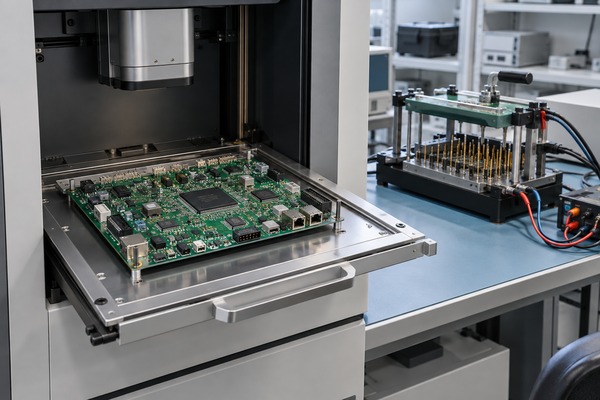
- Ask for a board-specific verification matrix: The supplier should map risks such as paste defects, wrong polarity, hidden BGA joints, shorts, programming errors, and failed interfaces to a suitable inspection or test, its coverage, and its pass/fail rule.
- Review anonymized sample records: Request a representative AOI, SPI, X-ray, electrical, or functional-test record. Check whether it identifies the board revision, unit or lot, inspected feature, result, reviewer, and disposition instead of showing only a machine screenshot.
- Challenge the coverage limits: Ask which joints are visible, which hidden packages will be X-rayed, whether inspection is 100% or sampled, and what cannot be detected by the proposed method. For hidden-joint examples, see our BGA assembly service.
- Review the actual test inputs: Provide the firmware version, power conditions, interfaces, loads, sequence, limits, and fixture information, then ask the supplier to identify missing access, software, or equipment before quotation.
- Verify failure control and retesting: Ask how a failed unit is isolated, recorded, diagnosed, authorized for repair, and retested, and whether the final record distinguishes the original failure from the accepted result.
- Use a pilot build as proof: Compare the delivered inspection and test package with the quoted plan. Confirm that records can be traced to the correct revision and that deviations were reported before approving volume production.
Quality and testing capabilities are verified when the supplier can define coverage before the build and return traceable evidence afterward. Certificates and equipment lists support the review, but the board‑specific plan, records, failure handling, and pilot results show whether the controls work for your product.
How Can You Tell If a Supplier Has Experience with Boards Like Yours?
Look for experience with the same manufacturing constraints, not merely the same industry label. Validate the claim by comparing board features, reviewing the supplier’s reasoning and evidence, and observing performance on a controlled first build.
- Match the difficult board features: Ask whether the example included comparable BGA or QFN packages, fine pitch, double‑sided or mixed assembly, heavy connectors, board format, thermal mass, and mechanical restrictions.
- Compare the manufacturing sequence: Confirm how the previous build handled stencil needs, board support, reflow order, selective or manual soldering, connector seating, cleaning, and any coating or mechanical work relevant to your board.
- Test the engineering response: Present one difficult feature and ask which file details are missing, what process would be used, where the main risk lies, and what design or tooling change might be required. A specific answer is more useful than a general claim.
- Request relevant evidence: Review anonymized assembly photographs, first‑article findings, inspection records, test summaries, or examples of how a deviation was resolved. The evidence should resemble the claimed process, not merely the product market.
- Check repeat-production control: Ask how approved file revisions, BOM options, assembly instructions, firmware, test profiles, and accepted changes are carried from the first build into later orders.
- Use a prototype or pilot build: Measure whether the supplier closes technical questions before release, reports deviations promptly, provides the promised records, and routes repaired units back through the required inspection and test steps.
Relevant experience is demonstrated by a close match in manufacturing difficulty, a technically credible response, supporting records, and consistent pilot performance. Use all four signals before treating a previous project as proof of fit for volume production.
How Should You Compare Complex PCB Assembly Quotes and Lead Times?
Compare quotations only when the PCB revision, BOM, supply model, quantities, inspection, testing, packaging, and destination are the same. A lower total can simply mean that material, tooling, or test work was excluded.
- PCB and components: Check whether bare boards, all BOM items, minimum purchases, excess materials, and customer‑supplied parts are included.
- One-time charges: Separate stencils, pallets, programming adapters, custom fixtures, test development, and engineering setup from recurring unit cost.
- Inspection, programming, and test: Identify the methods, sample coverage, cycle time, limits, and reports covered by the price.
- Material and assembly schedule: Ask when long-lead components are expected, when assembly can start, and which approvals or missing files could delay release.
- Delivery scope: Confirm packaging, labels, certificates or reports, freight, duties where applicable, and any coating or box‑build service.
A comparable quotation shows the same scope, separates one-time and recurring cost, identifies material and engineering dependencies, and states an achievable delivery basis. Ask every shortlisted supplier to explain exclusions and schedule risks before selecting the lowest total.
Why Choose EBest Circuit for Complex PCB Assembly Services?
EBest Circuit brings 20 years of PCB and PCBA manufacturing experience to projects that require coordinated fabrication, sourcing, assembly, inspection, and testing. The following services are intended to reduce the work required to move from design files to an accepted build.
- Resolve file and assembly issues before production: A free DFM review checks PCB, stackup, BOM, placement, panel, and test information so your team can address conflicts before materials and programs are committed.
- Reduce coordination between separate suppliers: PCB fabrication, component purchasing, customer‑supplied parts, SMT/THT assembly, programming, and quoted tests can be managed within one project.
- Apply inspection to the difficult features: Visible joints, selected hidden joints, polarity, connector alignment, electrical access, and functional requirements can be assigned suitable checks instead of one generic inspection claim.
- Get direct engineering follow-up: A dedicated engineering team links each open question to the affected file, part, process, or test requirement, helping engineers and buyers reach a clear decision.
- Support repeat production with an accepted reference: Released files, closed questions, approved changes, assembly instructions, and applicable test requirements are carried into later orders to reduce avoidable revision confusion.
For the customer, these services mean fewer unresolved file questions, one defined purchasing responsibility, inspection tied to actual board risks, and a clearer production reference for repeat orders.
What Files Should You Send for a Complex PCB Assembly Quote?
Start with the files you already have, then complete any missing production inputs after the initial review. A practical first quotation package includes:
- PCB manufacturing files: Gerber or ODB++, NC drill, fabrication drawing, stackup or material notes, finish, and panel information when available.
- Assembly files: BOM with manufacturer part numbers, centroid or pick-and-place data, assembly drawings, polarity notes, and do‑not‑fit options.
- Purchasing scope: Full‑turnkey, partial‑turnkey, or consigned responsibility, including any critical or customer‑supplied parts.
- Quantity and schedule: Prototype and expected production quantities, delivery destination, and target date.
- Programming and test: Firmware, interface, available procedure, fixture information, operating conditions, pass/fail limits, and required reports.
Send your Gerber files, BOM, placement data, quantities, and available test requirements to sales@bestpcbs.com. Our engineering team will check the files, return specific manufacturing questions, and confirm component supply, assembly, inspection, test, and quotation coverage.
FAQs About Complex PCB Assembly Services
The following answers address practical order details that are often confirmed after a supplier has passed the initial capability review.
Q1: Can several BOM versions be included in one assembly order?
A1: Yes, when each version has a unique revision, quantity, placement option, firmware or label requirement, and matching test profile.
Q2: Can an NDA be reviewed before complete design files are shared?
A2: Yes, subject to agreement on the legal entities, protected information, permitted use, term, and authorized recipients.
Q3: Can I order a small trial batch before volume production?
A3: Yes, a prototype or pilot quantity can be quoted to verify assembly, communication, inspection, and test requirements before scaling.
Q4: Who owns custom tooling and test fixtures?
A4: Ownership, storage, maintenance, modification, and return terms should be agreed in the quotation before tooling or fixture development starts.
Q5: What happens to unused components after the order?
A5: Remaining materials can be returned, stored, or assigned to another order according to the agreed ownership, condition, storage, and freight terms.
Q6: Can completed boards be shipped to several locations?
A6: Multi-address delivery can be arranged when quantities, labels, packaging, documents, addresses, customs requirements, and freight responsibility are agreed before dispatch.
Confirm these commercial and handling details in the quotation so the production order, material ownership, tooling, and delivery instructions remain unambiguous.