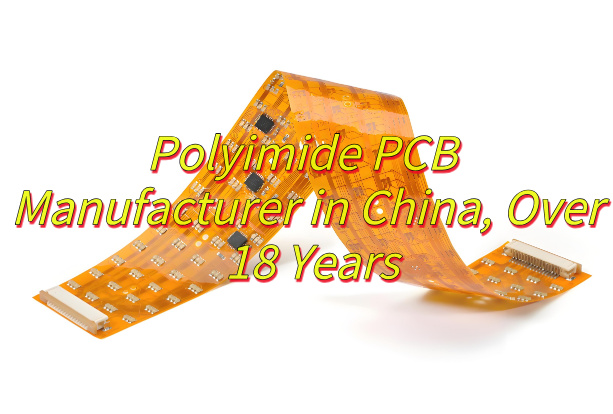
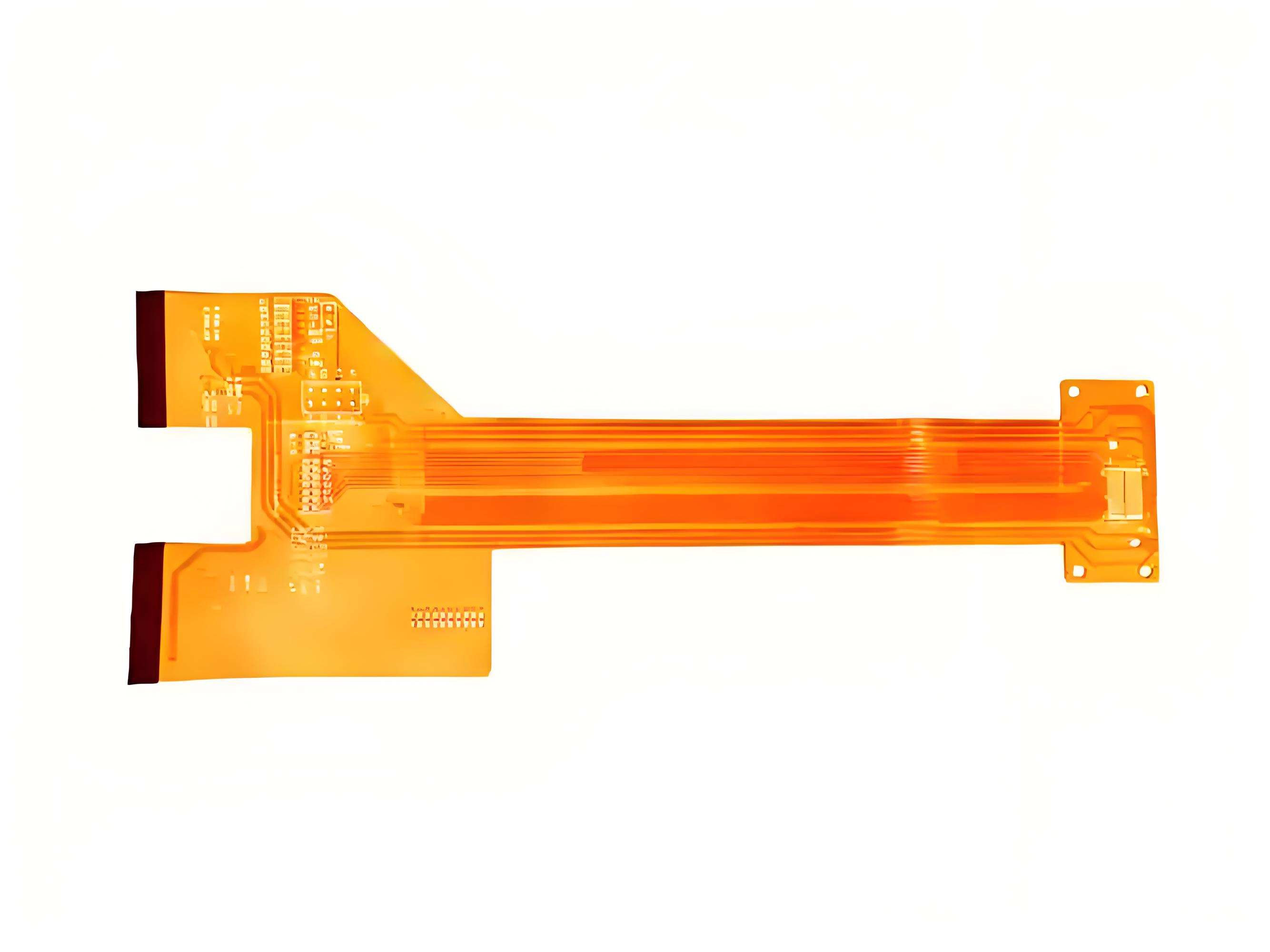
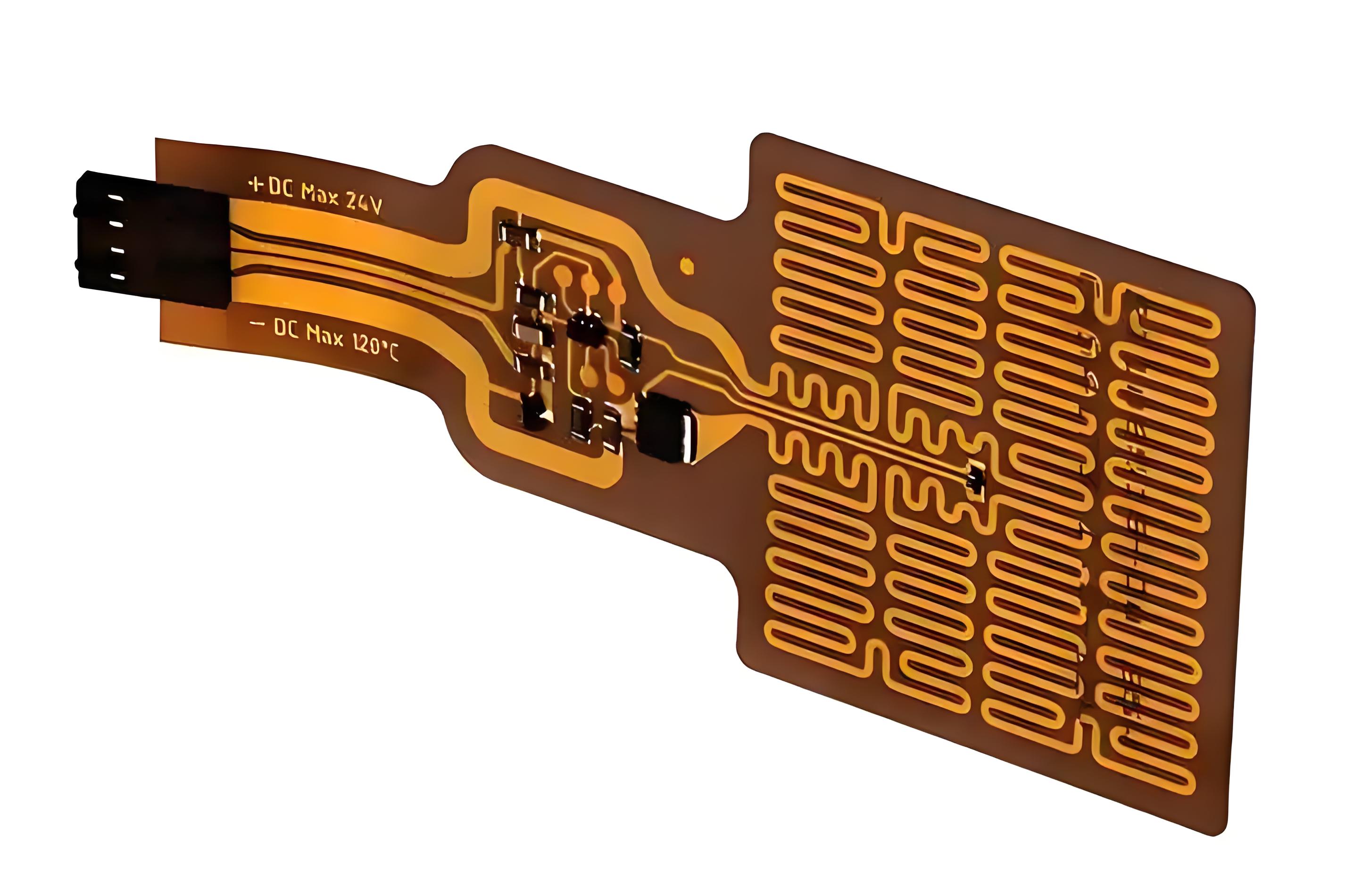
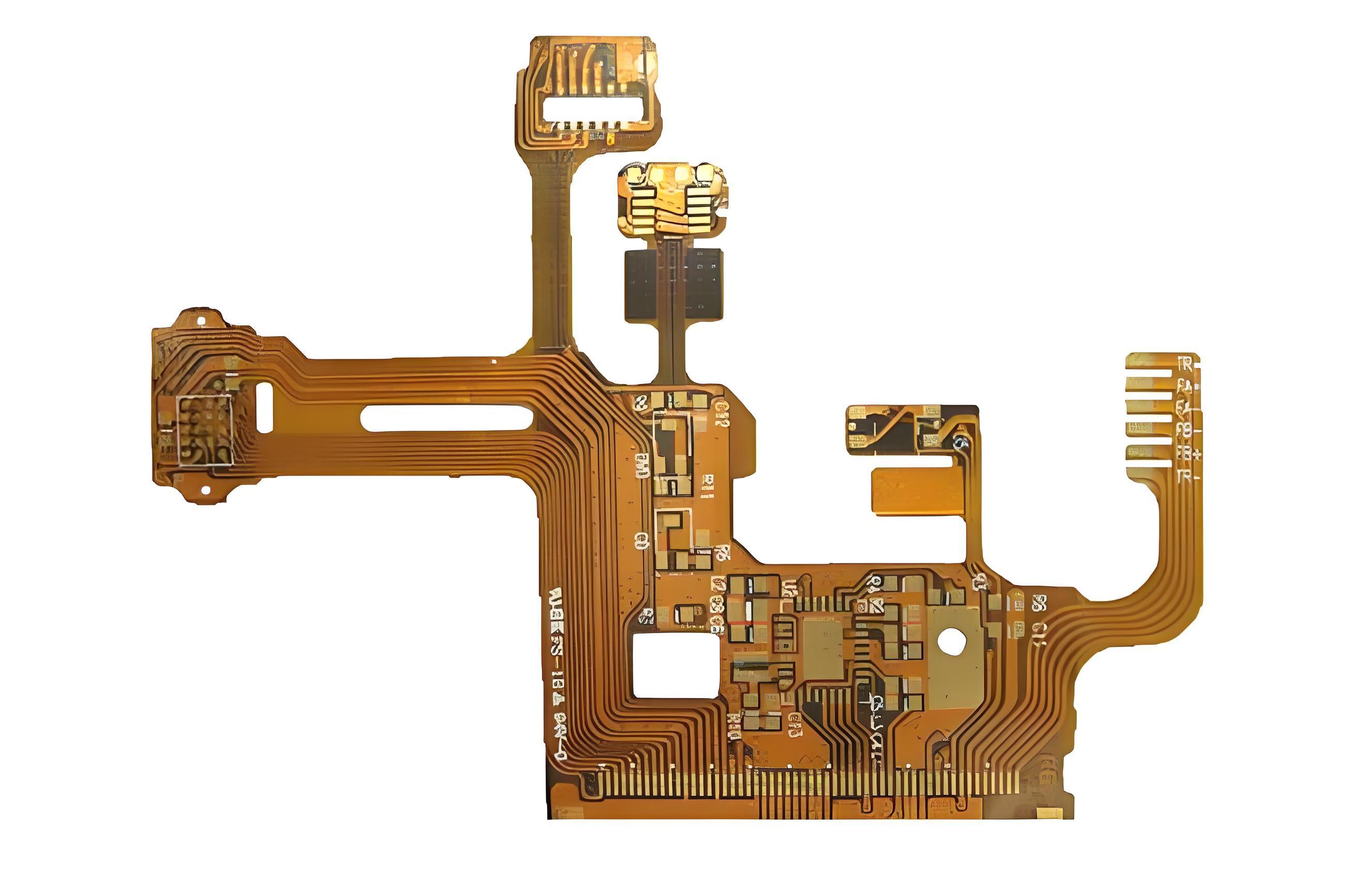
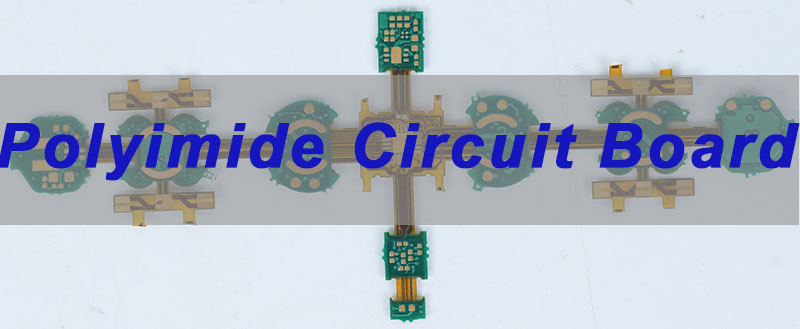
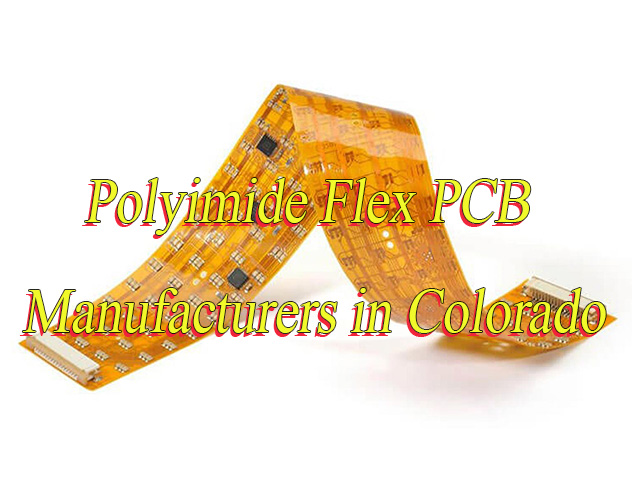
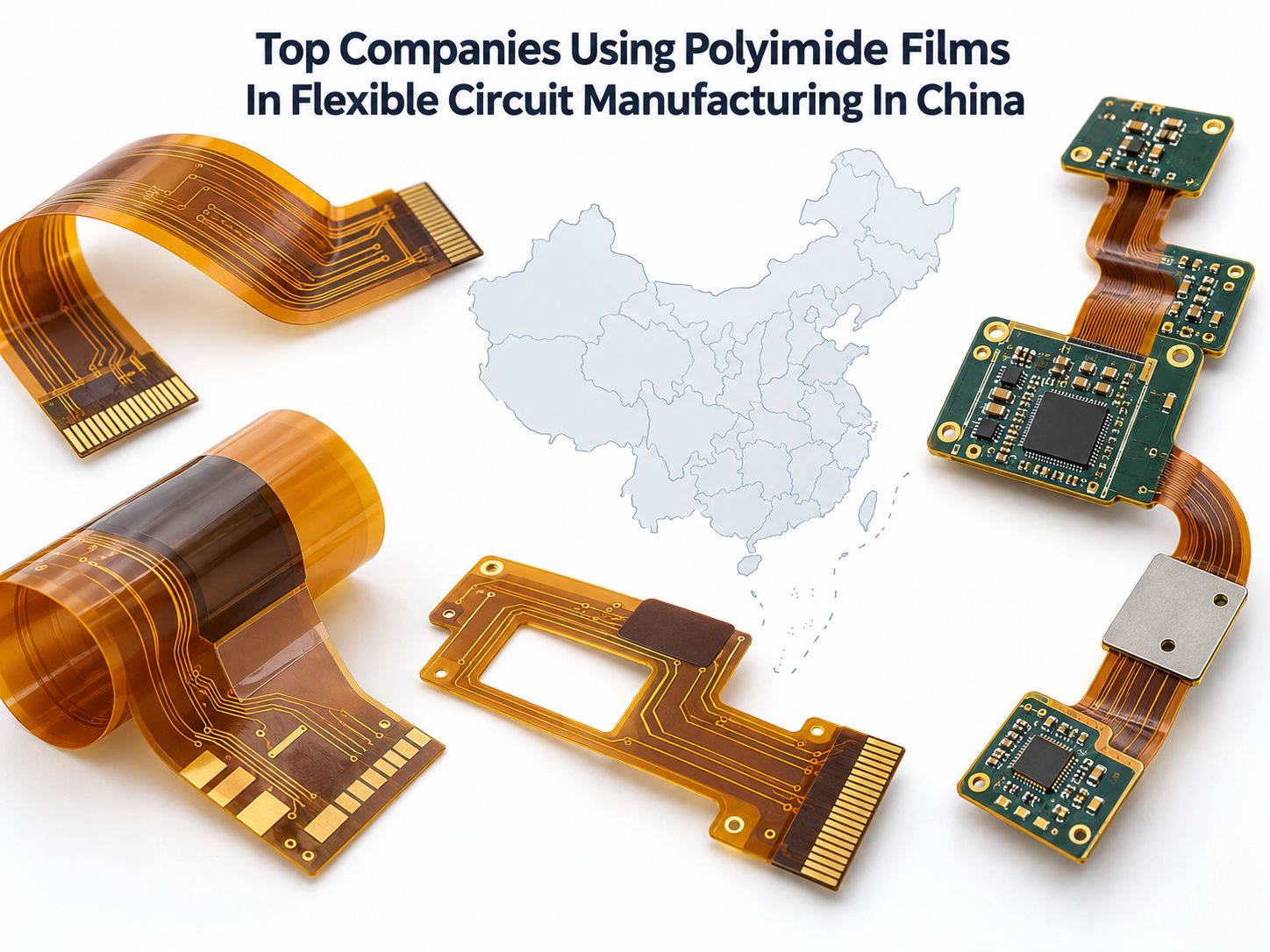
Polyimide flexible circuit companies use polyimide film in flexible circuit manufacturing because it combines a thin dielectric structure with heat resistance, electrical insulation, dimensional stability, and reliable bending performance. In China, PI films are used in single-sided FPCs, double-sided flex circuits, multilayer FPCs, rigid-flex boards, coverlays, stiffeners, and high-frequency flexible interconnects.
In supplier catalogs, terms such as polyimide PCB, polyimide flexible circuit, and polyimide flex circuits may describe overlapping FPC constructions.
The following 10 companies were selected based on their publicly documented flexible-circuit manufacturing capability, use of polyimide or modified polyimide materials, manufacturing presence in China, application coverage, engineering support, and quality certifications. The order is intended as a supplier comparison rather than a strict ranking by revenue or polyimide-film consumption.
1. EBest Circuit
EBest Circuit manufactures polyimide flexible PCBs and rigid-flex boards for projects ranging from prototypes to production. Its flex capability covers PI substrates, coverlay, stiffeners, adhesiveless constructions, controlled impedance, HDI features, and rigid-flex stackups. PCB fabrication, DFM, component sourcing, PCBA, and testing can also be coordinated within one project. EBest’s published capability covers 1–10 layer FPCs and rigid-flex constructions for more complex interconnects.
Location: Shenzhen, Guangdong, China
Services:
- Polyimide flexible PCB manufacturing
- Multilayer FPC
- Rigid-flex PCB manufacturing
- PI coverlay and stiffeners
- Controlled-impedance flex circuits
- DFM and stackup review
- FPC assembly and turnkey PCBA
Industries Served: Medical, automotive, aerospace, industrial control, communication, consumer electronics, and compact electronic devices
Key Differentiators:
- PCB fabrication and PCBA coordinated in one workflow
- DFM review covering bend zones, coverlay, stiffeners, stackup, and assembly
- Support for both flexible and rigid-flex constructions
- Prototype through production support
Certifications: ISO 9001, ISO 13485, IATF 16949, AS9100D, UL, RoHS, REACH
2. Zhen Ding Technology / Avary Holding
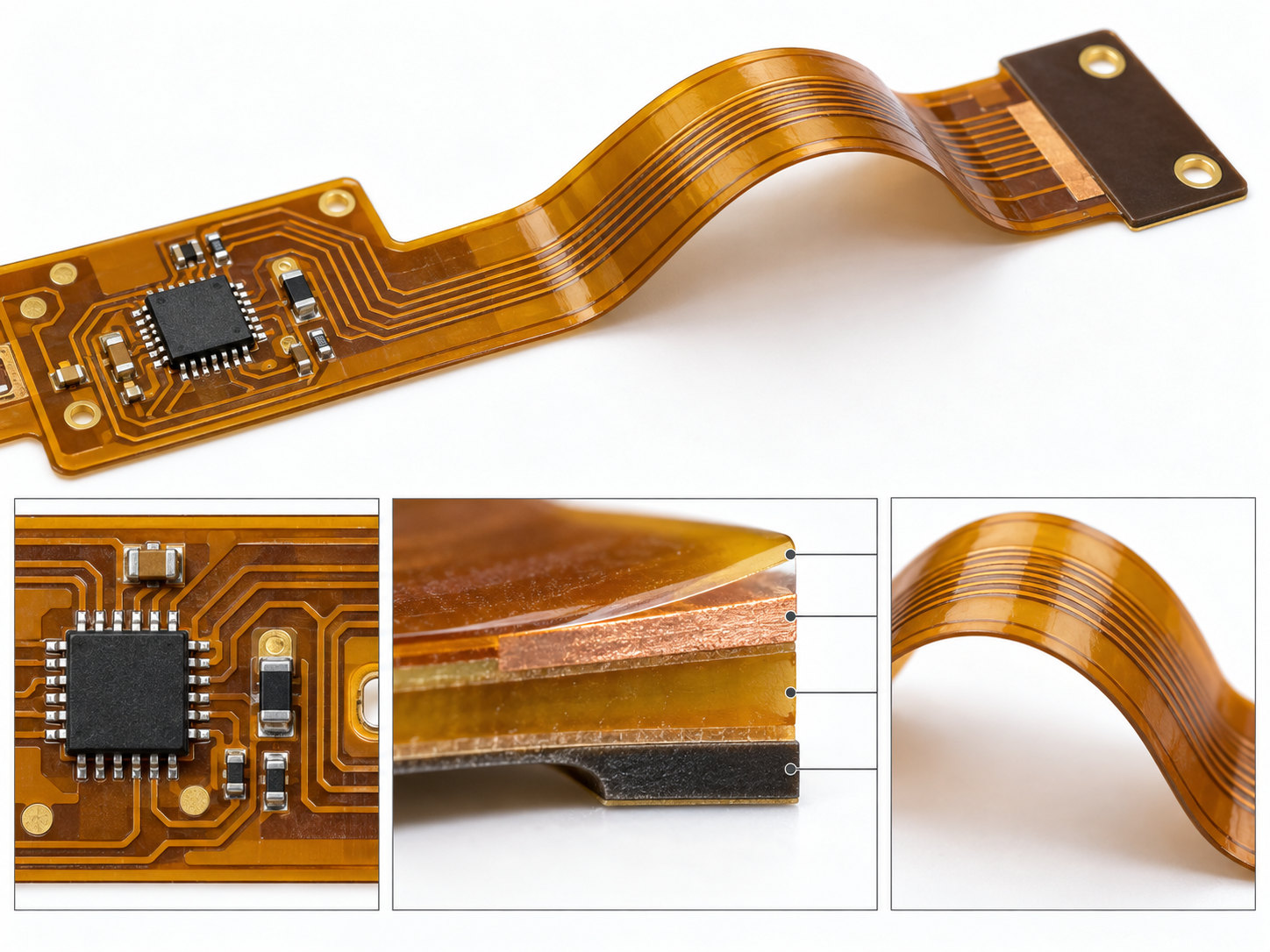
Zhen Ding Technology operates a broad PCB platform covering FPC, rigid-flex, HDI, SLP, IC substrates, and modules. Its FPC products serve smartphones, notebooks, wearables, tablets, AR/VR devices, and other compact electronics. The group also develops high-frequency flexible interconnect technologies for advanced communication applications.
Location: Shenzhen, Huai’an, Qinhuangdao, and other mainland China production sites
Services:
- High-volume flexible PCB manufacturing
- Modified-polyimide flexible circuits
- LCP flexible circuits
- Rigid-flex PCB
- HDI and SLP manufacturing
- FPC module assembly and testing
Industries Served: Smartphones, notebooks, tablets, wearables, AR/VR, communication equipment, automotive electronics, smart home products, and medical devices
Key Differentiators:
- Large-scale FPC manufacturing footprint
- High-frequency flexible-circuit capability
- FPC fabrication combined with module assembly
- Broad PCB portfolio covering FPC, HDI, SLP, rigid-flex, and substrates
Certifications: ISO 9001, IATF 16949, IECQ QC 080000, ISO 14001, ISO 45001, ISO 50001, UL, CQC
3. DSBJ / MFLEX
MFLEX, part of DSBJ, manufactures flexible printed circuits on polyimide dielectrics with copper conductors and supports PI, modified PI, LCP, adhesive, and adhesiveless material systems. Its China manufacturing footprint includes facilities in Suzhou and Yancheng, with capabilities extending from FPC fabrication to component and module assembly.
Location: Suzhou and Yancheng, Jiangsu, China
Services:
- Single-sided to multilayer FPC
- PI and modified-PI flexible circuits
- Adhesive and adhesiveless structures
- Rigid-flex constructions
- HDI flex and microvia processing
- FPC component assembly
- Module assembly and functional testing
Industries Served: Smartphones, notebooks, tablets, wearables, health electronics, IoT, smart home products, consumer electronics, and new-energy vehicles
Key Differentiators:
- Dedicated FPCB fabrication and FPCA facilities in China
- PI, mPI, and LCP material support
- Static and dynamic flex capability
- Fabrication, component assembly, and module integration
Certifications: ISO 14001, ISO 50001
4. Shenzhen Kinwong Electronic Co., Ltd.
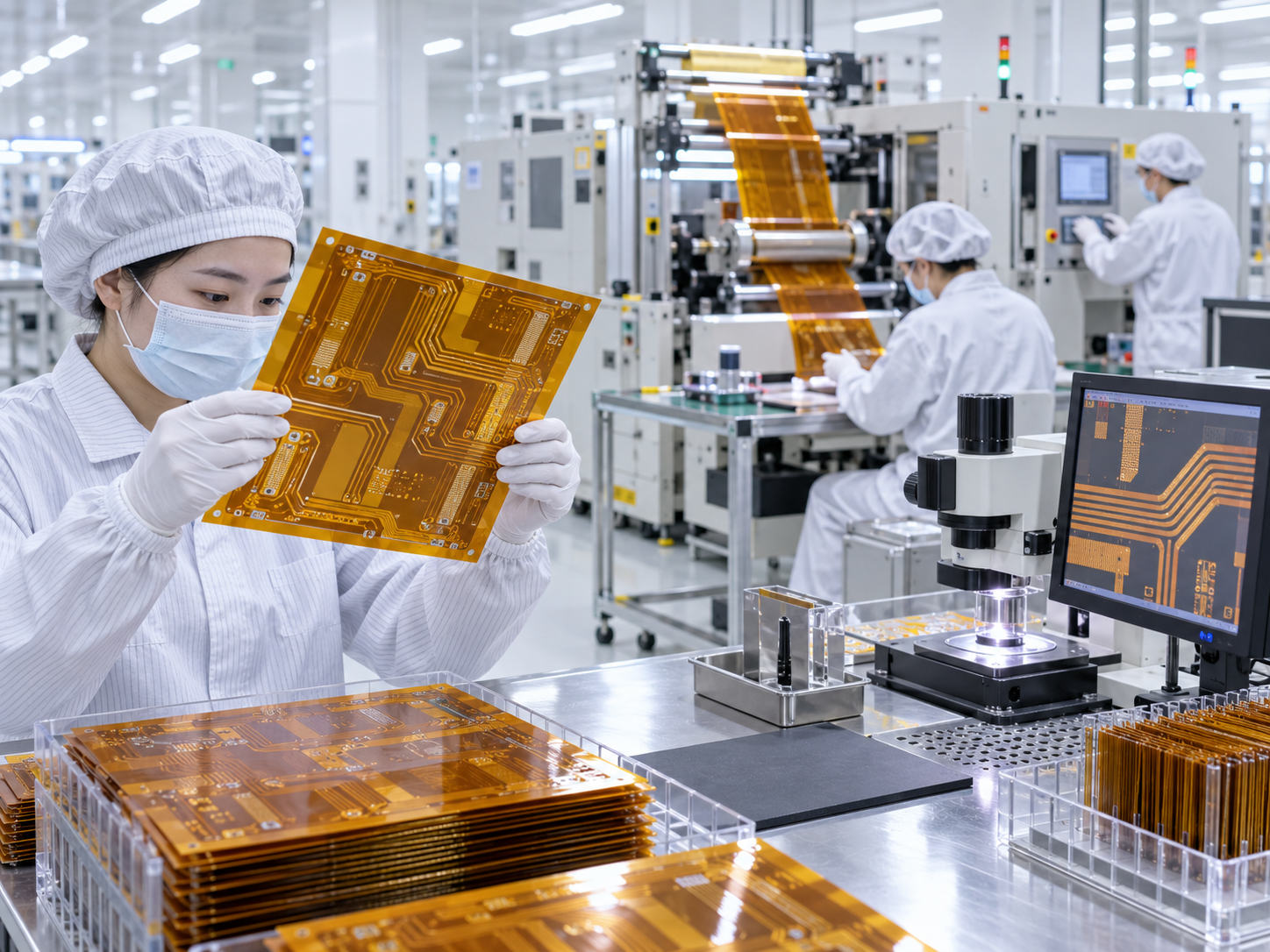
Kinwong manufactures single-sided, double-sided, and multilayer flexible PCBs with published capability up to six flex layers. Its FPC platform includes roll-to-roll processing, 50 μm microvias, 35/35 μm line/space, SMT, ICT, FCT, assembly, and 5G FPC simulation and testing.
Location: Shenzhen, Guangdong, China
Services:
- Single-sided and double-sided FPC
- Multilayer FPC up to six flex layers
- Rigid-flex PCB
- Roll-to-roll FPC production
- Microvia and fine-line processing
- Controlled-impedance flex
- SMT, ICT, FCT, and assembly
Industries Served: Automotive, medical, industrial control, smart terminals, wearables, consumer electronics, telecom, and 5G products
Key Differentiators:
- Roll-to-roll flexible-circuit production
- Fine-line and microvia capability
- FPC fabrication combined with assembly and testing
- 5G FPC simulation, manufacturing, and testing support
Certifications: ISO 9001, ISO 13485, IATF 16949, ISO 14001, ISO 50001, ISO 45001, IECQ QC 080000, ISO/IEC 27001, ISO/IEC 17025
5. Suntak Technology Co., Ltd.
Suntak explicitly states that its flexible PCBs use polyimide substrates for three-dimensional dynamic wiring. Its published FPC capability includes structures below 0.2 mm, repeated bending, and 50 μm-level dense routing for mobile, automotive, medical, and communication applications.
Location: Shenzhen, Guangdong, China
Services:
- Polyimide FPC manufacturing
- Single-sided and multilayer flexible PCB
- Rigid-flex PCB
- Fine-line FPC
- Thin flexible circuits
- High-density flexible interconnects
Industries Served: Mobile phones, wearables, automotive electronics, laptops, tablets, 5G optical communication, medical devices, and consumer electronics
Key Differentiators:
- Documented PI-based FPC production
- Thin FPC structures
- Fine routing for compact flex applications
- Dedicated Shenzhen FPC manufacturing
Certifications: ISO 9001, IATF 16949, AS9100, ISO 13485, ISO 14001, ISO 45001, ISO/IEC 27001, IECQ QC 080000, SA8000, RBA
6. JLCPCB
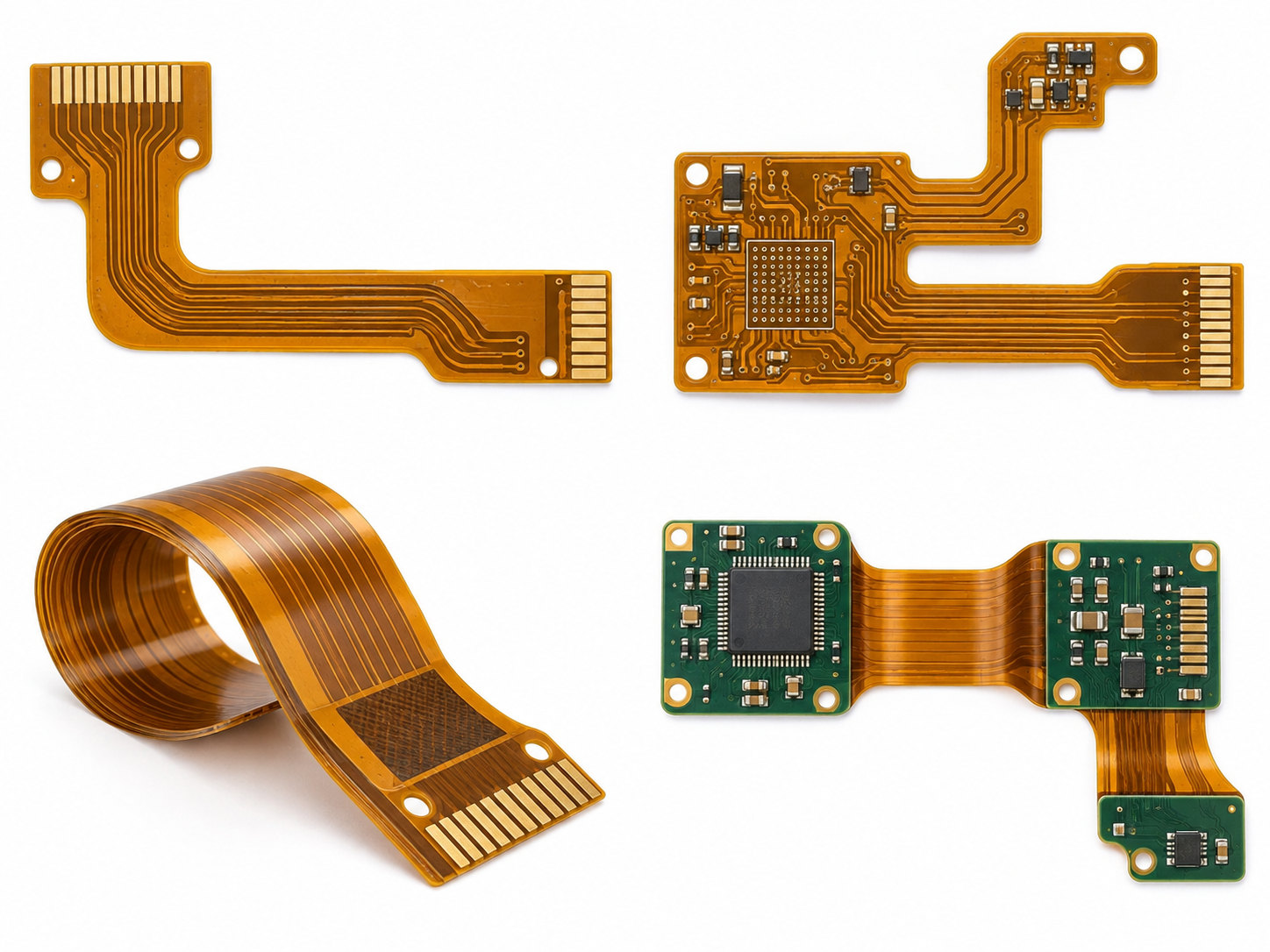
JLCPCB provides standardized polyimide flex PCB manufacturing through its online ordering platform. Its published FPC capability covers one-, two-, and four-layer flex circuits, 25 μm and 50 μm PI dielectric options, adhesive and adhesiveless PI, localized stiffeners, and controlled-impedance-compatible structures.
Location: China
Services:
- 1–4 layer flexible PCB
- Polyimide base material
- Adhesiveless PI FPC
- PI, FR4, and stainless-steel stiffeners
- Coverlay processing
- FPC prototyping
- PCB assembly support
Industries Served: Consumer electronics, wearables, cameras, medical electronics, automotive electronics, education, startups, and product development
Key Differentiators:
- Online instant quotation and ordering
- Published standard PI stackups
- 25 μm and 50 μm PI options
- Strong fit for prototype and small-batch FPC orders
Certifications: ISO 9001, IATF 16949, ISO 13485, ISO 14001, UL, RoHS, REACH, ISO/IEC 27001
7. PCBWay
PCBWay supports flexible PCB and rigid-flex manufacturing with polyimide available as a primary flexible base material. Its online FPC configuration supports multilayer designs, PI stiffeners, coverlay, controlled impedance, multiple thicknesses, and custom flex constructions.
Location: Hangzhou, Zhejiang, China
Services:
- Polyimide flexible PCB
- Multilayer FPC
- Rigid-flex PCB
- Custom FPC stackups
- PI stiffeners
- Controlled impedance
- PCB assembly and component sourcing
Industries Served: Medical electronics, robotics, automotive, consumer products, industrial equipment, communication devices, and R&D projects
Key Differentiators:
- Broad online FPC configuration options
- Polyimide and other flexible material choices
- Custom multilayer FPC support
- Flexible PCB, rigid-flex, assembly, and prototyping services
Certifications: ISO 9001, ISO 13485, IATF 16949, UL, RoHS, REACH, CE
8. Capel / Shenzhen Kaboer Technology Co., Ltd.
Capel is the brand used by Shenzhen Kaboer Technology for flexible PCB, rigid-flex, HDI, and PCBA manufacturing. Its current process capability lists flexible circuits from single-sided through multilayer constructions, rigid-flex boards, PI material processing, fine-line routing, impedance control, and IPC-6013 acceptance support.
Location: Shenzhen, Guangdong, China
Services:
- Polyimide FPC manufacturing
- Multilayer flexible PCB
- Rigid-flex PCB
- PI coverlay and stiffeners
- Controlled impedance
- HDI and fine-line flex
- SMT assembly and PCBA
Industries Served: Medical devices, automotive, aerospace, UAVs, IoT, industrial control, telecommunications, AI hardware, EVs, and consumer electronics
Key Differentiators:
- Wide published flex and rigid-flex layer range
- Fine-line flex capability
- FPC fabrication plus assembly support
- Support for IPC-6013 flexible-board acceptance
Certifications: ISO 9001, ISO 14001, ISO 45001, IATF 16949, ISO 13485, GJB9001C, UL
9. XiangYuan Insulation Materials Co., Ltd.
XiangYuan differs from most companies on this list because its operations span polyimide film, FCCL flexible copper-clad laminate, and finished FPC manufacturing. This gives the company direct involvement in the flexible-circuit material chain rather than only PCB fabrication.
Location: Tianjin, China, with additional production bases in Jiangxi, Shenzhen, Zhuhai, and other locations
Services:
- Polyimide film manufacturing
- FCCL manufacturing
- Adhesive and adhesiveless flexible materials
- Single-sided FPC
- Double-sided FPC
- Flexible-circuit material development
Industries Served: Consumer electronics, communication equipment, computers, aerospace, military electronics, optoelectronics, and new-energy applications
Key Differentiators:
- PI film, FCCL, and FPC within the same product chain
- Direct polyimide-film manufacturing
- 12.5 μm, 25 μm, and 50 μm PI film options
- Strong fit where flexible material sourcing is important
Certifications: ISO 9001, ISO 14001, UL
10. Honflex Electronics
Honflex Electronics focuses heavily on flexible circuit manufacturing and serves high-volume electronics applications including smartphones, displays, wearables, automotive electronics, new-energy systems, and other compact products. Its FPC technology portfolio includes multilayer flex, fine-line structures, and high-frequency flexible interconnects.
Location: Xiamen, Fujian, China
Services:
- Flexible PCB manufacturing
- Multilayer FPC
- Rigid-flex PCB
- MPI high-frequency flexible circuits
- HDI FPC
- Fine-line flexible circuits
- Automotive FPC and battery interconnect products
Industries Served: Smartphones, notebooks, tablets, displays, wearables, automotive electronics, new-energy vehicles, robotics, industrial electronics, medical products, and smart home devices
Key Differentiators:
- FPC-focused manufacturing platform
- High-frequency flexible-circuit capability
- Fine-line and HDI FPC structures
- Dedicated automotive and new-energy flex products
Certifications: ISO 9001, IATF 16949, IECQ QC 080000, ISO 14001, ISO 45001, ISO 50001, ISO/IEC 27001, UL
FAQs
1. Why is polyimide film widely used in flexible circuit manufacturing? Polyimide combines flexibility, heat resistance, electrical insulation, and dimensional stability. It can tolerate PCB fabrication and assembly temperatures while remaining thin enough for flex and rigid-flex structures.
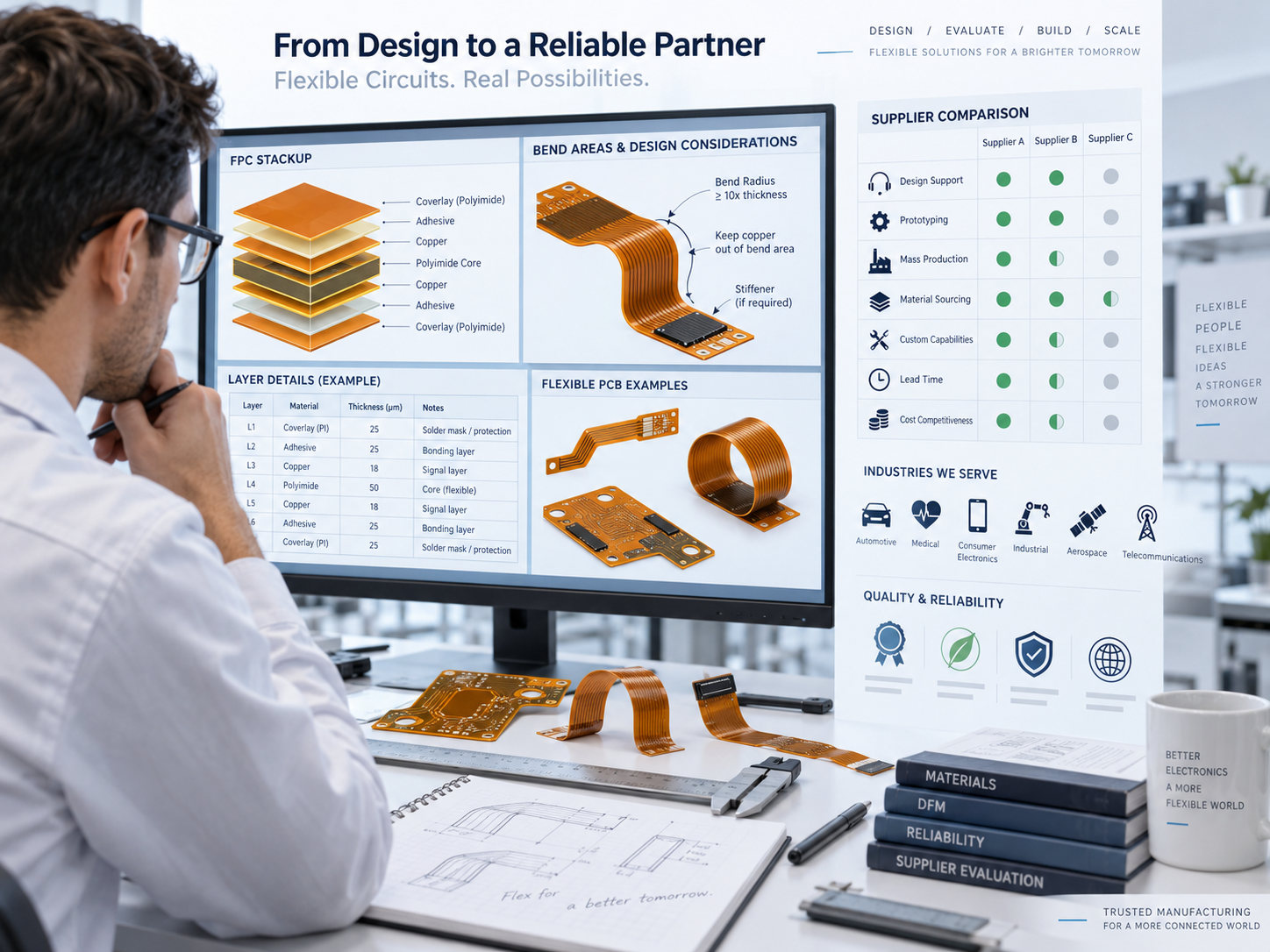
2. What polyimide thickness is commonly used in flexible PCBs? Common PI base-film thicknesses include approximately 12.5 μm, 25 μm, and 50 μm. The final thickness depends on the FPC stackup, bend radius, copper construction, and mechanical requirement.
3. What is the difference between adhesive and adhesiveless polyimide FPC? Adhesive FPC uses a separate bonding layer between copper and polyimide. Adhesiveless material removes that separate adhesive layer, reducing the dielectric build and making it useful for thinner or repeatedly flexed constructions.
4. Can Chinese FPC manufacturers provide both fabrication and assembly? Yes. Several companies on this list combine flexible-circuit fabrication with component assembly, testing, or module integration.
5. What should I send a polyimide FPC manufacturer for quotation? Send the Gerber or ODB++ files, stackup, PI material requirement, copper weight, finished thickness, bend radius or flex-cycle requirement, coverlay, stiffener details, surface finish, impedance targets, quantity, and BOM/CPL files when assembly is required.
Looking for a Polyimide FPC Manufacturer in China?
Choosing a flexible circuit supplier is not only about whether the factory can process polyimide. PI thickness, copper type, adhesive system, coverlay, bend-zone layout, stiffener design, impedance, and assembly conditions all affect the finished FPC.
EBest Circuit supports polyimide FPC and rigid-flex PCB fabrication, DFM review, component sourcing, and PCBA for prototype and production projects. If you are developing a new flexible circuit, send your Gerber files, stackup, bend requirements, and assembly specifications to sales@bestpcbs.com for engineering review.