PCB assembly cost quotes can look simple until sourcing changes, test requirements, setup charges, or incomplete files create additional costs. Comparing only the quoted unit price may therefore lead to budget overruns, delayed production, or assemblies that cannot pass inspection.
A useful cost review should connect every charge to the BOM, assembly data, production quantity, inspection plan, and released revision. This guide explains what buyers should confirm before approving a PCBA build and how EBest Circuit (Best Technology) can support PCB fabrication, component sourcing, assembly, inspection, and agreed testing.

How Much Does PCB Assembly Cost?
There is no dependable universal price for PCB assembly. Two boards with the same dimensions can have very different costs because their component count, package types, sourcing risks, placement sides, soldering methods, inspection requirements, and order quantities are different.
A quotation may contain several cost groups:
- PCB fabrication
- BOM and component sourcing
- Stencil and production setup
- SMT component placement
- Through-hole or manual assembly
- Inspection and testing
- Tooling, programming, or special process charges
- Packaging and shipping
The unit price is also affected by how fixed costs are distributed. A prototype order may have a high cost per assembly because setup is divided across only a few boards. A larger production order can reduce that unit cost, but only if the BOM, files, process, and quality requirements remain stable.
Instead of asking for a general price first, provide a controlled RFQ package. A supplier can then separate confirmed costs from assumptions and identify missing information before production.
What Does Your PCB Assembly Price Include?
A PCB assembly price is useful only when its scope is clear. A low figure may cover placement labor while excluding the PCB, components, stencil, inspection, testing, or shipping. Another quotation may include most of these items, making a direct comparison misleading.
Before approving a quotation, confirm whether it includes:
- Bare PCB fabrication
- All BOM components and approved alternates
- Component procurement fees
- Solder paste stencil
- SMT setup and placement
- Through-hole insertion and soldering
- Double-sided assembly
- X-ray, AOI, visual inspection, or other agreed checks
- Functional or fixture-based testing
- Rework allowances
- Programming or firmware loading
- Packaging and logistics
Check whether component prices are firm, estimated, or subject to availability. Also confirm whether the quotation includes excess components needed for machine loading, attrition, minimum order quantities, or supplier packaging requirements.
EBest Circuit can review the requested PCB and PCBA scope and identify which manufacturing, sourcing, inspection, and testing items are included. The customer remains responsible for approving the design, released files, functional requirements, firmware, and final product acceptance criteria.
Fixed and Variable Costs in Assembly Pricing
Assembly pricing normally combines fixed costs and variable costs. Separating them helps buyers understand why the price per unit changes with order quantity.
Fixed or largely fixed costs may include:
- Engineering and file review
- Stencil preparation
- Machine programming
- Feeder and production-line setup
- Test fixture preparation
- First-article inspection
- Special tooling
Variable costs generally increase with the number of assemblies:
- PCB quantity
- Component quantity
- SMT placements
- Through-hole pins
- Manual operations
- Inspection time
- Testing time
- Packaging materials
This distinction matters when comparing suppliers. A quotation with a low setup fee may carry a higher placement or sourcing charge. Another may have a higher initial fee but a lower repeat-order cost.
Ask suppliers to distinguish one-time charges from recurring charges. Also confirm which setup costs can be reused when the design, BOM, stencil data, and test requirements do not change. A revision change may require new programming, tooling, inspection work, or component validation.
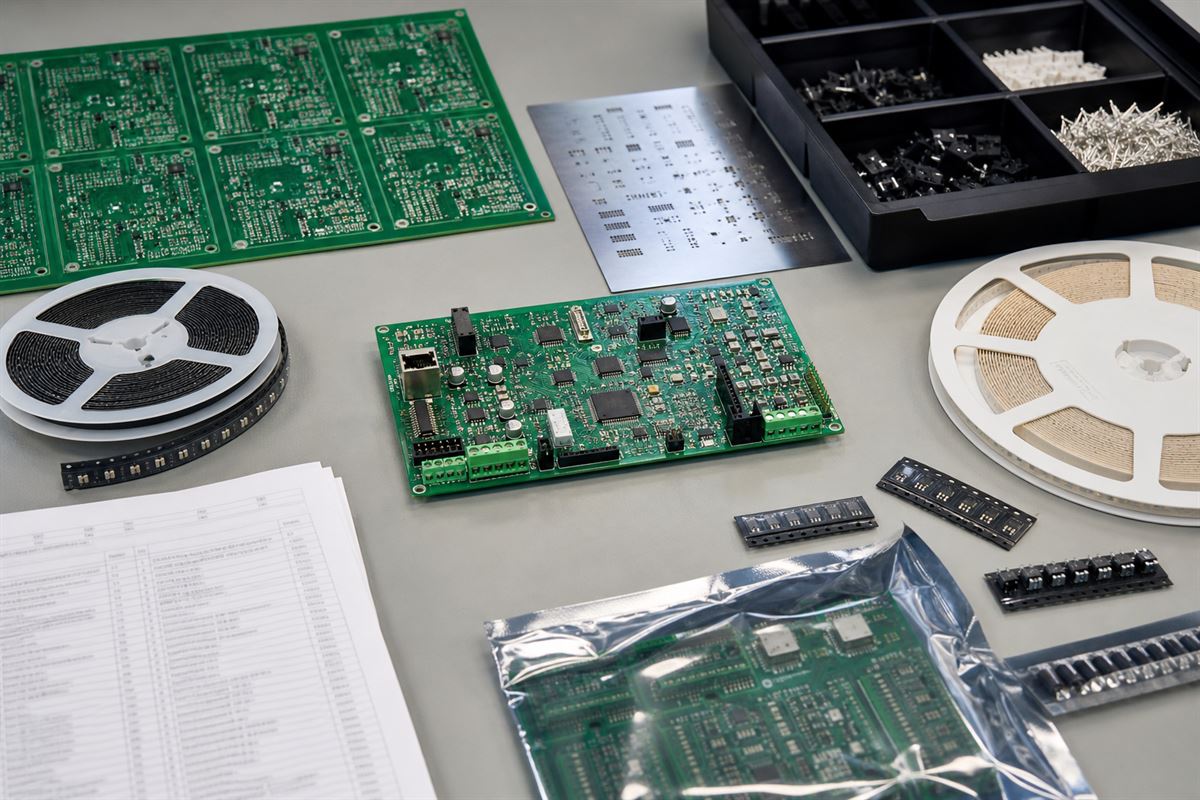
PCB Manufacturing Cost vs PCB Assembly Price
PCB manufacturing cost and PCB assembly price are related but different.
PCB manufacturing cost covers production of the bare board. It may be affected by:
- Board dimensions and panel utilization
- Layer count and stackup
- Material selection
- Copper weight
- Trace and spacing requirements
- Controlled impedance
- Via structures
- Surface finish
- Solder mask and legend
- Electrical testing
- Quantity and lead time
PCB assembly price begins with the fabricated board and adds components and assembly operations. It may be affected by:
- BOM value and availability
- Component packages
- Number of placements
- Single- or double-sided assembly
- SMT, THT, or mixed technology
- Fine-pitch, BGA, bottom-terminated, or special components
- Manual soldering
- Cleaning, coating, programming, inspection, and testing
A quotation should separate these scopes clearly. Otherwise, a buyer may compare a bare-board price with a turnkey PCBA price or fail to notice that components and testing are excluded.
For an accurate comparison, ask each supplier to quote against the same fabrication files, BOM revision, assembly data, quantity, quality requirements, and delivery terms.
How Quantity Changes PCB Assembly Cost per Board
Order quantity changes PCB assembly cost per board because fixed setup work is distributed differently.
For a prototype build, the supplier still needs to review files, prepare the stencil, program machines, load feeders, verify polarity, and inspect the first assembly. These activities may be similar whether the order contains five boards or fifty boards.
As quantity increases, the fixed cost allocated to each unit generally decreases. However, higher volume does not automatically produce the lowest practical cost. Other changes may appear:
- Component reels may replace cut tape.
- Supplier minimum order quantities may become relevant.
- Panelization may need revision.
- Test time may become a production bottleneck.
- Packaging requirements may increase.
- Process capability and yield become more important.
- A design change may make earlier tooling unusable.
Ask for quantity breaks based on realistic demand, such as prototype, pilot, and expected production volumes. The supplier should use the same technical scope for each price tier so that the comparison shows the real effect of quantity.
If a repeat order is expected, also ask which charges will recur and which can be reused.
When a PCB Assembly Cost Calculator Is Not Enough
A PCB assembly cost calculator can provide an early budget indication, but it cannot always evaluate the complete manufacturing risk.
A calculator may estimate cost from:
- Board size
- PCB quantity
- Layer count
- Number of unique components
- Total placements
- Assembly sides
- SMT and through-hole quantities
The estimate may not detect whether the BOM has obsolete parts, whether footprints match the selected components, or whether the panel and assembly process are practical. It may also miss costs associated with special handling, inspection, testing, programming, coating, or customer-specific documentation.
Calculator results should therefore be treated as preliminary. Before approving production, request a supplier review based on the actual released files.
A practical review should confirm:
- BOM manufacturer part numbers
- Approved alternates
- Placement and polarity data
- PCB and assembly revisions
- Special process requirements
- Inspection criteria
- Test instructions
- Packaging and delivery expectations
The final quotation should identify remaining assumptions. An unexplained estimate can become expensive when those assumptions are corrected after components have been ordered or production has started.
Files Needed for an Accurate PCB Assembly Quote
Incomplete files create quotation uncertainty. The supplier may add a risk allowance, issue repeated clarification requests, or quote a scope that does not match the intended build.
A useful PCB assembly quote package normally includes:
- Gerber, ODB++, IPC-2581, or other agreed PCB production data
- Drill files
- Fabrication drawing
- Assembly drawing
- BOM with manufacturer and manufacturer part number
- Pick-and-place or centroid data
- Polarity and orientation information
- Approved component alternates
- PCB and assembly revision identifiers
- Quantity and delivery requirements
- Inspection requirements
- Test procedure and acceptance criteria
- Programming files and instructions, when required
- Special process and packaging notes
The files should use consistent reference designators and revisions. A BOM from one revision combined with placement data from another can cause missing parts, incorrect sourcing, or assembly errors.
Before requesting a final quotation, identify whether the build is consigned, turnkey PCB assembly, or partially turnkey. For consigned parts, provide quantities, packaging types, date codes or traceability requirements, and the treatment of unused components.
EBest Circuit can review the released manufacturing package for PCB and PCBA quotation. Questions discovered during this review should be resolved before procurement and production whenever possible.
Low Cost PCB Assembly Without Hidden Rework
Low cost PCB assembly should come from removing unnecessary cost, not removing necessary controls.
Practical cost-reduction opportunities may include:
- Improving panel utilization
- Reducing unnecessary component variety
- Using available approved alternates
- Avoiding avoidable manual operations
- Confirming machine-compatible component packaging
- Reducing unnecessary placement-side changes
- Combining compatible orders
- Stabilizing revisions before procurement
- Matching inspection and testing to the actual risk
- Planning realistic lead times
Savings become risky when they depend on unapproved substitutions, incomplete inspection, uncertain soldering requirements, or assumptions about customer acceptance.
For example, replacing a component solely because its unit price is lower can create footprint, voltage, tolerance, lifecycle, or sourcing problems. Removing an inspection step may reduce the quotation but increase the risk of discovering defects after boards reach system integration.
Ask the supplier to document every proposed cost change. The customer should approve component substitutions, design changes, functional requirements, and acceptance criteria before implementation.
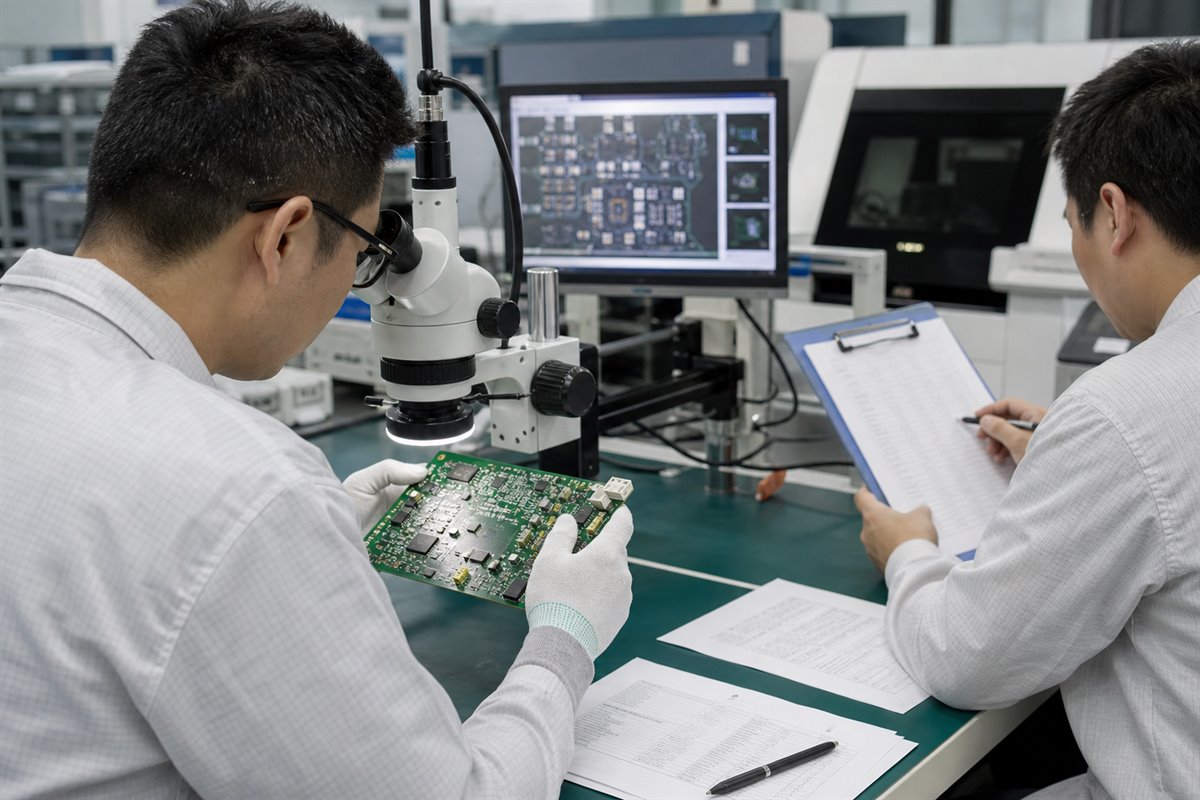
A Prototype PCB Assembly Cost Example
Consider a prototype that uses a small, double-sided PCB with SMT components, several through-hole connectors, and a few bottom-terminated packages.
The first quotation appears inexpensive, but it assumes:
- Customer-supplied PCBs
- Customer-supplied components
- SMT placement only
- No through-hole soldering
- No X-ray inspection
- No functional testing
- No programming
- Standard packaging
A second quotation is higher because it includes PCB fabrication, component sourcing, SMT and through-hole assembly, inspection, and an agreed test procedure.
The first quotation is not necessarily wrong, but it does not represent the complete build. If the buyer compares only the final totals, the second supplier may appear more expensive even though it covers a much larger scope.
A better decision process is to normalize both quotations:
- Confirm the same PCB and assembly revisions.
- Separate PCB, components, setup, assembly, inspection, and testing.
- Identify excluded operations.
- Confirm component availability and alternates.
- Compare lead time and delivery terms.
- Record assumptions requiring customer approval.
This comparison reveals the expected project cost rather than only the lowest initial number.
PCB Assembly Cost FAQs
What information has the greatest effect on PCB assembly cost?
The BOM, placement quantity, component packages, assembly sides, soldering methods, inspection, testing, production quantity, and lead time usually have the greatest effect.
Why is prototype PCB assembly expensive per board?
Setup, programming, stencil preparation, file review, and first-article inspection must be distributed across a small number of assemblies.
Does PCB assembly price include components?
Not always. Confirm whether the quotation is consigned, turnkey, or partially turnkey and whether component procurement, attrition, and excess quantities are included.
Can a PCB assembly cost calculator provide a final quotation?
It can support early budgeting, but a final quotation normally requires the actual PCB files, BOM, placement data, quantity, inspection requirements, and test scope.
How can I request a comparable PCBA quotation?
Send the same controlled file package, revision, quantity tiers, inspection requirements, testing inputs, and delivery terms to each supplier. Ask each supplier to list included items, exclusions, assumptions, and one-time charges.
For a file-based PCB and PCBA quotation, send the released package and expected quantities to sales@bestpcbs.com. EBest Circuit can review the manufacturing scope, identify questions that should be resolved before procurement and production, and help you evaluate the complete PCB assembly cost.