what does e.m.s stand for depends on the industry in which the abbreviation appears. In electronics manufacturing, EMS means Electronics Manufacturing Services: outsourced services that can cover product introduction, supply-chain execution, PCB fabrication, PCB assembly, testing, box build and lifecycle support. The same letters can mean something entirely different in medicine, environmental compliance or energy management, so the surrounding technical context matters.
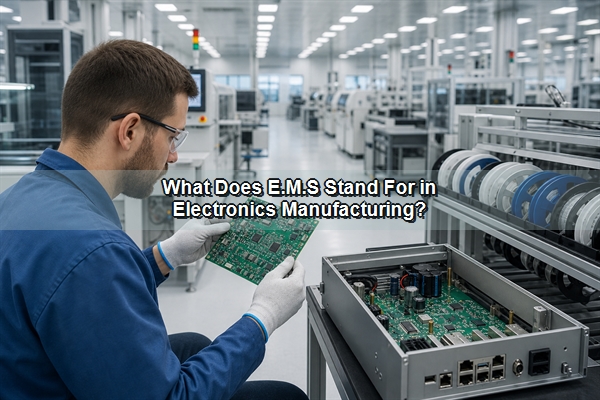
What Does E.M.S Stand For?
EMS is an acronym rather than a single universal term. A document mentioning an ambulance service, an ISO 14001 program, a factory energy dashboard or a circuit-board production line may use the same three letters for unrelated concepts.
| Context | Common EMS meaning | Clue in the document |
|---|---|---|
| Electronics | Electronics Manufacturing Services | BOM, SMT, PCBA, testing, box build |
| Medical response | Emergency Medical Services | Ambulance, paramedic, emergency care |
| Environmental management | Environmental Management System | ISO 14001, aspects, compliance, audit |
| Energy operations | Energy Management System | Metering, load control, energy efficiency |
| Physical therapy or fitness | Electrical Muscle Stimulation | Electrodes, pulses, muscle contraction |
In a manufacturing specification, supplier list or electronics program plan, EMS normally refers to the first meaning in the table.
Why Does the Meaning of EMS Depend on Context?
Acronyms compress language, but they also remove context. The reliable way to interpret EMS is to identify the objects and actions around it. Terms such as schematic, Gerber, AVL, solder paste, AOI and functional test point to electronics manufacturing. Terms such as emergency care, environmental audit or energy monitoring point elsewhere.
Punctuation does not change the expansion. E.M.S., E.M.S and EMS are typographic variants. Electronics companies generally use the unpunctuated form, while a search written with periods can still be seeking the manufacturing definition.
What Does EMS Stand For in Electronics Manufacturing?
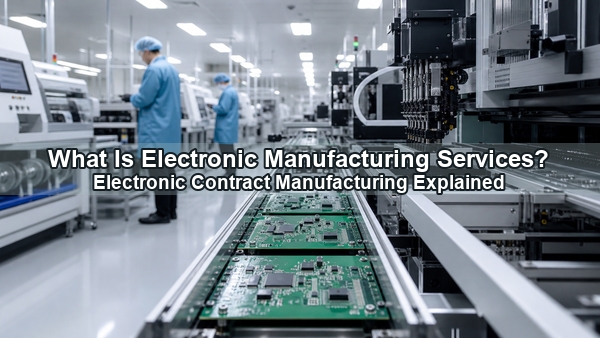
In electronics, EMS stands for Electronics Manufacturing Services. An EMS provider manufactures, assembles, tests and supports electronic products for another company under an agreed technical and commercial scope. The customer may be an original equipment manufacturer, an industrial product developer, a medical-device company or another organization that owns the product requirements.
The term describes a service model, not a particular factory process. One program may cover only PCB assembly, while another includes design-for-manufacturing review, component sourcing, FR4 PCB fabrication, programming, functional testing, enclosure integration and shipment of finished units. Scope must therefore be defined by controlled documents rather than inferred from the label EMS.
Is It Electronic or Electronics Manufacturing Services?
Electronics Manufacturing Services is the established industry expansion of EMS. “Electronic manufacturing services” is also understandable and appears in general writing, but it describes the activity more loosely. The plural noun “electronics” refers to the industry and is the clearer form for contracts, capability statements and supplier categories.
Related phrases include electronics contract manufacturing, electronic contract manufacturing and contract electronics manufacturing. They overlap substantially, although some companies use “contract manufacturing” for a narrower build-to-print scope and reserve EMS for broader engineering, supply-chain and lifecycle support.
What Does an EMS Provider Actually Control?
An EMS provider controls manufacturing execution within the boundaries approved for the program. That normally means converting released product data into a repeatable production route, maintaining process instructions, controlling materials, recording inspection results and managing nonconforming output.
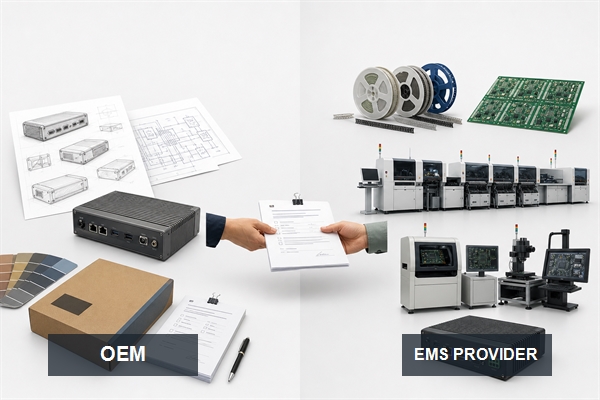
- Process planning: panel handling, stencil strategy, placement sequence, reflow profile, inspection points and test flow.
- Authorized sourcing: purchasing against the approved BOM and AVL, with substitutions controlled by the agreed change process.
- Production records: material lots, work orders, inspection history, test results and disposition records at the traceability level specified for the product.
- Manufacturing feedback: DFM, DFA and DFT findings that identify yield, assembly or testability risks before volume production.
Control is not the same as ownership. The provider can recommend a pad change or alternate component, but it should not silently change released product data.
What Does the OEM Retain Control Of?
The OEM usually retains ownership of the product definition: performance requirements, system architecture, intellectual property, approved schematics, released PCB data, firmware, branding and market obligations. It also defines which deviations require formal approval and who can release a new revision.
A practical responsibility matrix should identify the owner for each deliverable. For example, the OEM may own the master BOM and acceptance criteria, while the EMS provider owns machine programs and work instructions derived from those inputs. Regulatory files, cybersecurity decisions and product-level validation remain with the legally responsible organization unless a contract explicitly assigns supporting work.
How Are EMS, OEM, ODM and ECM Different?
The useful distinction is who owns the product design and how broad the contracted work is. Company labels vary, so the signed scope and controlled deliverables are more reliable than the acronym alone.
| Model | Typical design ownership | Typical manufacturing role |
|---|---|---|
| OEM | Owns the branded product definition and market requirements | May manufacture internally or outsource part or all of production |
| EMS | Usually builds from customer-controlled product data | Can provide NPI, sourcing, fabrication, assembly, test, box build and lifecycle support |
| ODM | Owns or licenses a product platform that a customer can customize and brand | Designs and manufactures the resulting product |
| ECM/CM | Usually customer-owned design | Often used for build-to-print contract manufacturing; usage overlaps with EMS |
For a fuller process-oriented comparison, see electronic manufacturing services and contract manufacturing.
What Does EMS Mean for a PCB and PCBA Project?
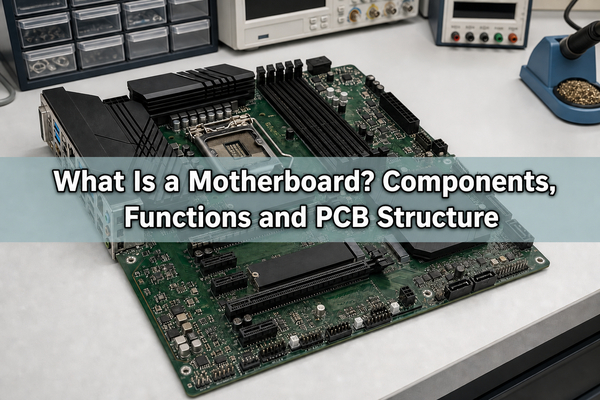
A bare PCB is the manufactured interconnect structure; a PCBA is that board populated with electronic components. EMS can connect those stages, but they remain separate deliverables with different source files and inspection criteria.
PCB fabrication uses Gerber or ODB++ data, drill files, a stack-up, material requirements, controlled impedance information and a fabrication drawing. PCB assembly services add the BOM, centroid data, assembly drawings, polarity information, approved alternates, programming files and test requirements. A complete EMS program may then integrate the PCBA with cables, displays, thermal hardware and an enclosure.
This separation matters during revision control. A schematic change can affect the BOM, PCB layout, firmware and test procedure at the same time; every affected artifact must move to a compatible revision before production resumes.
Which Manufacturing Services Sit Inside an EMS Program?
An EMS program can contain several linked manufacturing modules. The required combination depends on the released scope, but each module should have its own inputs, acceptance criteria and records.
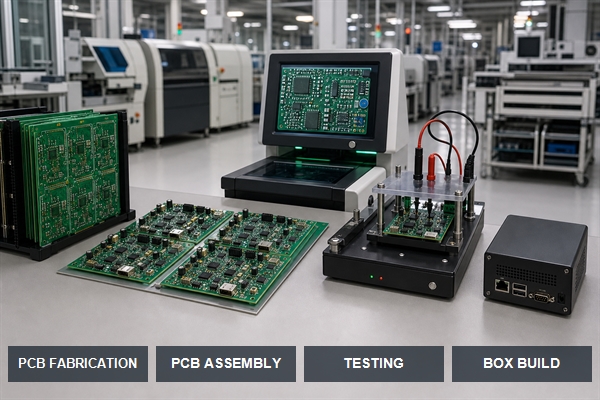
- NPI planning, manufacturability review and process development
- Component sourcing and incoming-material control
- Bare-board fabrication and electrical testing
- SMT, through-hole or mixed-technology assembly
- Programming, inspection, electrical test and functional verification
- Box build, cable integration, labeling and configured packaging
- Repair, rework, revision transition and end-of-life support when contracted
An SMT stencil, for example, is a process tool rather than part of the finished product, yet its aperture design and revision directly affect solder-paste deposition and assembly yield.
How Does an EMS Project Move From NPI to Production?
NPI converts design data into a controlled manufacturing process. The first step is a data-set review that checks file completeness and revision consistency. DFM, DFA and DFT findings are then closed or formally accepted before machine programming and tooling are frozen.
- Release review: verify BOM, AVL, fabrication data, drawings, firmware and test specifications.
- Process preparation: define panel handling, paste printing, placement, reflow, manual assembly, inspection and test routes.
- Pilot build: assemble a limited lot to validate tooling, component fit, process windows and test coverage.
- First-article approval: compare the built unit with dimensional, electrical, workmanship and functional criteria.
- Production release: freeze approved programs and instructions, then monitor yield and defects against defined limits.
A pilot build is valuable only when its findings change the controlled process. A defect log without assigned disposition, updated instructions and verified corrective action does not complete NPI.
How Are Engineering Changes Controlled in EMS?
Engineering change control prevents a valid new document from being combined with an obsolete companion file. Every production release should identify the compatible revisions of the BOM, PCB data, assembly drawing, firmware and test procedure.
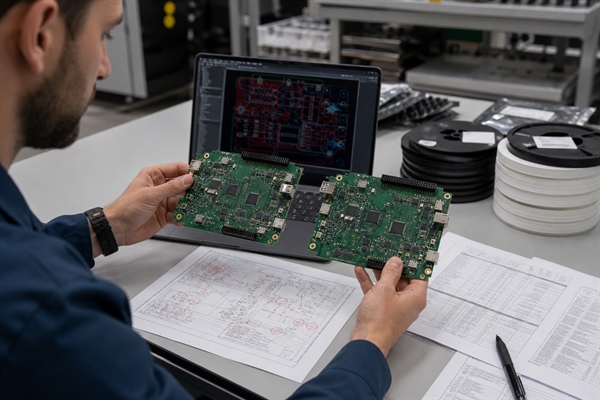
A controlled change normally records the reason, affected part numbers, inventory disposition, effective work order, required validation and approval authority. Temporary deviations should have an expiration or quantity limit. When an alternate component changes package geometry, electrical behavior or firmware interaction, a purchasing approval alone is insufficient; the affected manufacturing and test documents must also be reviewed.
How Is Quality Verified in Electronics Manufacturing Services?
Quality verification should match the failure modes of the assembly. Solder-paste inspection detects deposit volume or alignment problems before components are placed. AOI checks visible component and solder-joint conditions. X-ray is used where joints are hidden, such as BGA and bottom-terminated packages. Functional testing confirms behavior that optical inspection cannot prove.
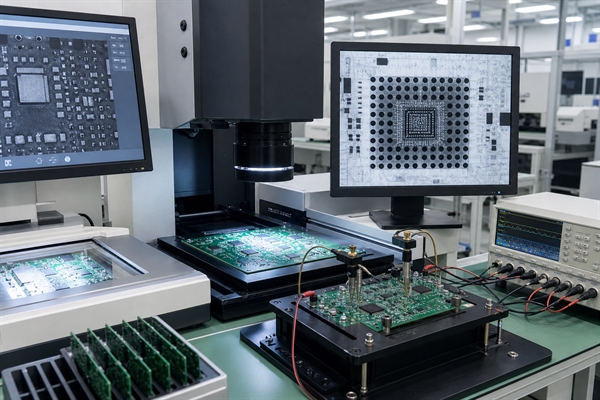
At EBest Circuit (Best Technology), relevant assembly programs can combine SMT, THT or mixed assembly with 3D SPI, AOI, X-ray and functional testing. The inspection route should be selected according to package type, defect visibility and required test coverage; adding every test indiscriminately increases handling without necessarily improving detection.
Which Industries Use EMS Providers?
EMS providers support products in industrial control, communications, automotive electronics, medical equipment, instrumentation, consumer electronics, energy systems and aerospace-related applications. The manufacturing steps may look similar, but documentation, traceability, environmental testing, change approval and product validation differ substantially by industry and program.
For example, an industrial controller may prioritize long component availability and field-service records, while a compact communication product may prioritize fine-pitch assembly, RF performance and thermal control. “Industry experience” is meaningful only when it maps to the applicable materials, processes, inspection coverage and documentation.
FAQ About What E.M.S Stands For
Is PCB Assembly the Same as EMS?
No. PCB assembly is one manufacturing service. EMS is a broader operating model that may include NPI, sourcing, PCB fabrication, PCBA, programming, testing, box build, logistics and lifecycle support.
Can an EMS Provider Own the Product Design?
An EMS provider can perform design services, but design ownership depends on the contract. In a conventional build-to-print program, the customer owns the released product data. An ODM arrangement more commonly uses a supplier-owned platform or design.
Is EMS Only for High-Volume Production?
No. EMS programs can support prototypes, high-mix low-volume production and sustained volume manufacturing. The appropriate equipment, tooling, material strategy and process controls differ across those production profiles.
What Does EMS Mean on a Supplier List?
On an electronics supplier list, EMS usually identifies a company that provides outsourced electronics manufacturing. The approved scope may still be restricted to particular sites, processes, product families or certifications.
Can EMS Include Box Build and Repair?
Yes. Box build, cable integration, programming, final test, repair and return analysis can be included when their technical inputs, acceptance criteria, records and ownership boundaries are defined.
Conclusion
In an electronics context, what does e.m.s stand for has a direct answer: Electronics Manufacturing Services. The more important engineering question is what the contracted scope includes and where control passes between the product owner and the manufacturing provider. Clear release data, responsibility boundaries, revision control and test coverage turn the acronym into a workable production system.
For PCB fabrication, PCBA and electronics manufacturing support, contact EBest Circuit (Best Technology) at sales@bestpcbs.com.