Medical PCB manufacturer Germany options give OEM buyers access to domestic engineering support, short logistics routes, and suppliers familiar with European medical-device expectations. The right choice, however, depends on more than location. Buyers need a PCB partner that can hold the required stackup and tolerances, provide the agreed inspection records, protect approved materials, and support the project from prototypes through repeat production.
This guide compares German supplier options and shows when an integrated China PCB and PCBA route may be a better fit for cost, capacity, or process coverage.
Top 10 Medical PCB Manufacturers in Germany for OEM Projects
The following companies are practical candidates for a German medical PCB supplier shortlist. This is not a quality ranking. Buyers should confirm the production site, technology, ISO 13485 scope, PCBA coverage, traceability, and regulatory documentation for the specific project before placing an order.
| Supplier | Useful starting point for comparison |
|---|---|
| KSG GmbH | Medical PCB programs, HDI, rigid-flex, documented traceability |
| Schweizer Electronic AG | High-reliability and custom PCB technologies |
| Würth Elektronik CBT | German production, HDI, flex-rigid, prototype-to-series support |
| PRECOPLAT GmbH (formerly MicroCirtec) | German PCB production, IPC Class 2/3, medical addendum on request |
| CONTAG AG | Quick-turn, high-technology prototypes and HDI |
| Leiton GmbH | German prototypes, CAM review, specialty PCB options |
| Beta LAYOUT GmbH | Rapid prototypes, PCB-POOL, and assembly options |
| Multi-Circuit Boards Ltd. | Multilayer, HDI, impedance-controlled, and special PCBs |
| Aisler B.V. Germany service | Online PCB and assembly ordering for development teams |
| ANDUS Electronic GmbH | Prototype and small-series PCB manufacturing |
KSG specifically presents medical applications, traceability, HDI, and rigid or semi-flexible PCB capability. Schweizer identifies industrial and medical applications among its target markets. Würth Elektronik offers German production across basic, HDI, and rigid-flex technologies and has supplied PCBs for medical ventilators. PRECOPLAT, CONTAG, Leiton, and Beta LAYOUT are relevant when prototype speed, German CAM support, or smaller quantities are important. MicroCirtec was fully merged into PRECOPLAT effective August 1, 2025, so buyers should now qualify and contract with the PRECOPLAT entity.
A supplier name alone is not enough. A buyer sourcing an implant-related HDI board, a diagnostic sensor PCB, and a laboratory controller may need three different capability profiles.
Medical PCB Supplier Selection for German OEM Projects
Choose the supplier by the evidence required at release and repeat-order stages.
| Your project needs | Confirm before the RFQ is approved |
|---|---|
| Miniaturized medical electronics | HDI stackup, microvia structure, registration limits |
| Imaging or high-speed signals | Material, impedance coupon, test report |
| Portable or wearable device | Flex construction, bend area, stiffener details |
| High-current control board | Copper weight, thermal path, temperature rise limits |
| Regulated production | Certificate scope, lot traceability, change control |
| Complete PCBA | BOM ownership, SMT/THT, inspection, functional test |
Send the same controlled RFQ package to every candidate: Gerber or ODB++, fabrication drawing, stackup, IPC class, BOM, CPL, assembly drawing, test requirements, quantity, target date, and required records. Comparable inputs produce more meaningful quotations and expose missing assumptions before supplier selection.
PCB Manufacturing Capabilities for Medical Devices in Germany
For Germany medical PCB projects, capability should be checked against the released design rather than a generic equipment list. At EBest Circuit, we compare the PCB structure, smallest features, materials, thermal requirements, component packages, and inspection scope with our actual process limits before confirming manufacturability.
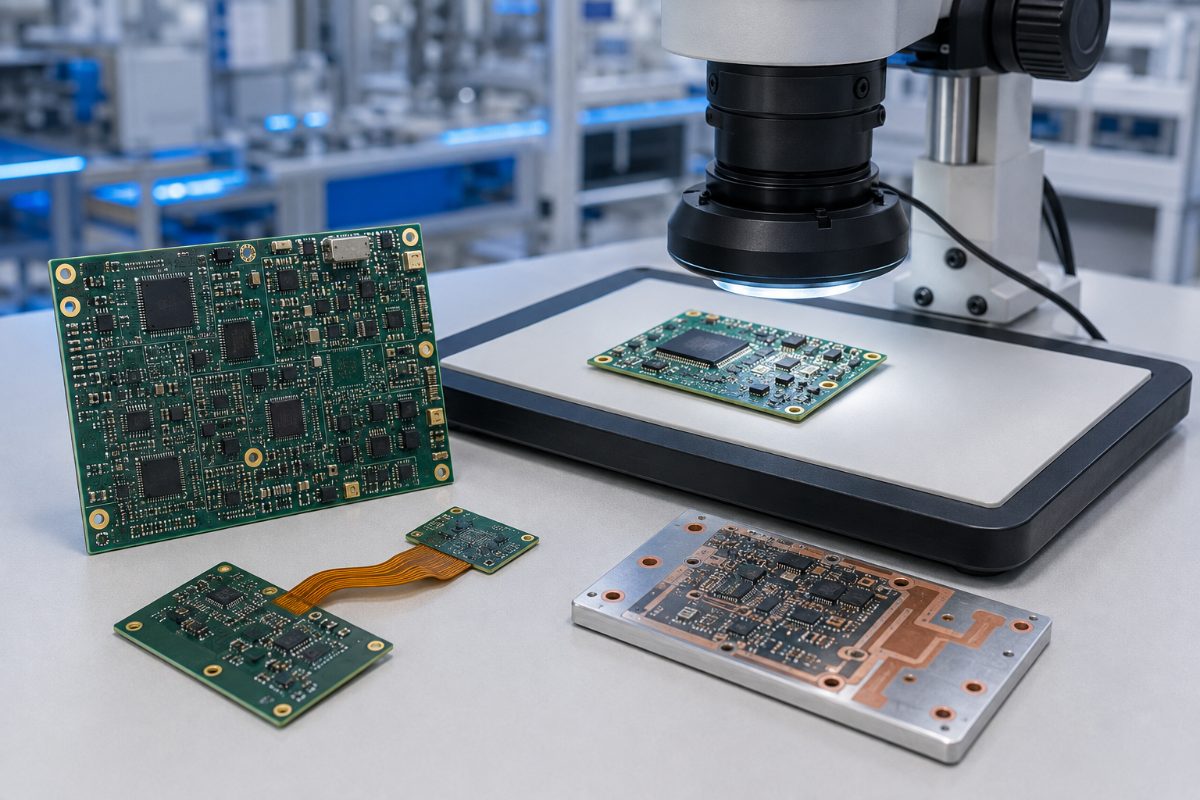
Our relevant PCB and PCBA capabilities include:
| Capability | EBest Circuit capability |
|---|---|
| PCB structures | Multilayer up to 32 layers; FPC up to 8; rigid-flex up to 12 |
| Fine features | 3/3 mil line/space; 0.15 mm finished holes; 0.10 mm laser vias |
| Materials and impedance | High-Tg FR-4, high-frequency, metal-core, ceramic; ±10% impedance |
| Metal-core options | Aluminum, copper, insulated metal, and thermoelectric separation |
| Thermal conductivity | 1–3 W/m·K standard; 3–8 W/m·K requires material confirmation |
| Metal-core build | 0.8–3.0 mm standard; inner 0.5–3 oz and outer 1–3 oz copper |
| Assembly and inspection | ±0.025 mm SMT placement; 3D SPI, 3D AOI, and X-ray |
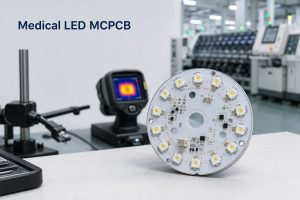
The metal-core options are useful when a medical product must move heat away from LEDs, power devices, drivers, or compact control electronics. Standard metal-core thickness is 0.8–3.0 mm; 4.0/5.0 mm material and 0.4–1.0 mm bendable aluminum require project review. Available finishes include HASL, OSP, ENIG, immersion silver, immersion tin, and plated gold fingers. The buyer should specify thermal conductivity, dielectric thickness, base metal, copper weight, finished thickness, insulation voltage, and mechanical envelope; “aluminum PCB” alone is not enough to select a construction.
When reviewing a medical PCB RFQ, we match the table above directly with the released files:
- PCB structure, stackup, finished thickness, and minimum features.
- Material, impedance, copper, current, and thermal requirements.
- Smallest component package and required inspection or testing.
- Prototype quantity and expected repeat-production volume.
The buyer receives a project-specific feasibility response before production: which requirements fit the standard process, which need special material or engineering review, and which data must be clarified before quotation. This reduces the risk of discovering a stackup, thermal, drilling, or assembly conflict after the first medical PCB build has already started.
Medical PCB Assembly and Testing for Germany Projects
Medical PCBA buyers should define what must be checked, what record must be retained, and who approves any deviation.
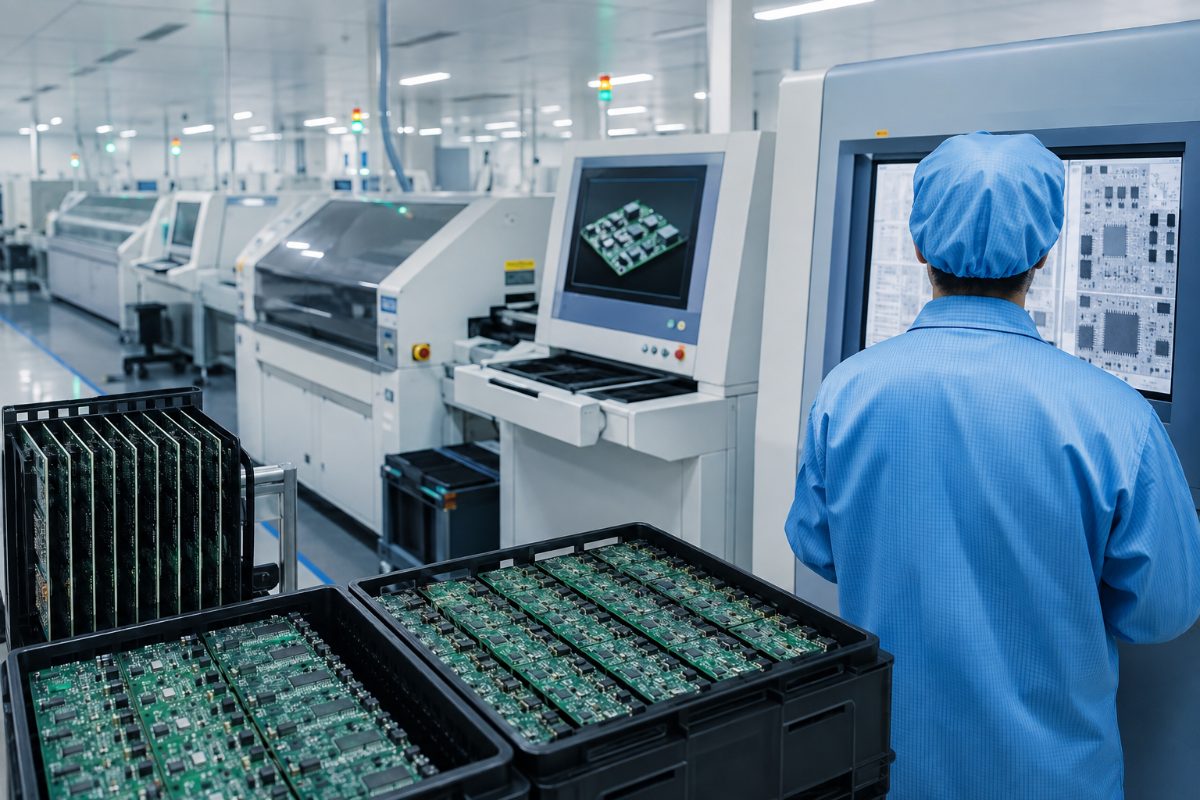
| Production stage | Practical control |
|---|---|
| Component receiving | MPN, quantity, packaging, date code, moisture status |
| Solder paste | SPI for deposit volume and alignment |
| First assembled board | First-article verification before the batch continues |
| Visible solder joints | AOI plus visual inspection where required |
| BGA or hidden joints | X-ray inspection |
| Electrical performance | ICT, flying probe, or functional test as specified |
| Final release | Inspection record, serial or lot identity, packaging check |
The inspection plan should follow the board. X-ray is valuable for hidden joints but does not replace functional testing. AOI can identify visible placement and soldering defects but cannot prove that firmware, sensors, communications, or power functions operate correctly. If the OEM supplies a test fixture and procedure, the manufacturer can quote the actual functional-test coverage rather than a generic “100% tested” claim.
PCB Certifications for Medical Device Projects in Germany
For a German medical project, verify the certificate that covers the work being purchased, not just the logos on a supplier page.
| Requirement | What the buyer should verify |
|---|---|
| ISO 13485 | Legal entity, site, scope, validity, PCB or PCBA activity covered |
| ISO 9001 | General quality-management scope and site |
| IPC-A-600 / IPC-6012 | Bare-board acceptance class stated on the drawing |
| IPC-A-610 / J-STD-001 | Assembly workmanship class and process requirement |
| IPC-6012EM | Whether the medical addendum is contractually required |
| RoHS / REACH | Material declarations required for the project |
| UL | Applicable material system and marking requirement |
ISO 13485 supports a medical-device quality-management system, but it does not by itself approve the finished medical device or replace the OEM’s regulatory responsibilities. German and EU buyers should place the required records, change-notification rules, approved materials, retention period, and traceability level directly in the purchase specification or quality agreement.
German Medical PCB Manufacturer vs China PCB Partner
Neither route is automatically better. The right route depends on regulatory constraints, product maturity, volume, and the work that must stay under one supplier.
| Project priority | German manufacturer | China PCB partner |
|---|---|---|
| Domestic-source requirement | Strong fit | Not suitable |
| Face-to-face engineering | Easier | Usually remote |
| Urgent local prototype | Often advantageous | Shipping must be included |
| Broad PCB plus PCBA scope | Supplier-dependent | Often available together |
| Cost-sensitive repeat volume | May cost more | Often more competitive |
| Component sourcing | Supplier-dependent | Can be integrated with PCBA |
| Complex capacity scaling | Confirm available lines | Often broader capacity options |
Use a German supplier when domestic production, local communication, or a short physical supply chain is mandatory. Consider a China PCB partner when the project needs integrated fabrication, component sourcing, assembly, testing, and repeat-volume pricing. The comparison should use landed cost, approved process scope, records, yield ownership, and delivery date rather than PCB unit price alone.
Medical PCB Manufacturing Lead Time for Germany Buyers
For Germany projects quoted by EBest Circuit, the following ranges can be used as an initial planning reference. The delivery date becomes reliable only after we have reviewed the PCB data, BOM, materials, tests, approvals, and shipping method.
| Stage | EBest Circuit planning reference |
|---|---|
| Engineering and DFM review | 1–2 working days |
| Standard prototype PCB | About 3–7 working days |
| Complex HDI or rigid-flex PCB | About 1.5–3 weeks |
| Standard PCBA after material readiness | About 1 week |
| Urgent PCBA | 1–5 days when the build qualifies |
| Express delivery to Germany | Commonly 3–7 days |
These are EBest Circuit planning ranges, not an automatic commitment or an average of the ten German suppliers listed above. Missing stackup details, unavailable components, special laminates, impedance reports, test fixtures, coating, programming, or customer approval can extend the schedule. Our quotation separates PCB fabrication, component preparation, assembly, testing, and transport so the buyer can see the true critical path.
Medical PCB Manufacturing Case Study for Germany Buyers
A medical sensor-control PCBA entered review with Gerber files, BOM, CPL, assembly drawings, and buyer-approved critical components. Before SMT release, two issues needed resolution: passive-component alternatives were not clearly authorized, and a connector footprint needed confirmation against the selected part.
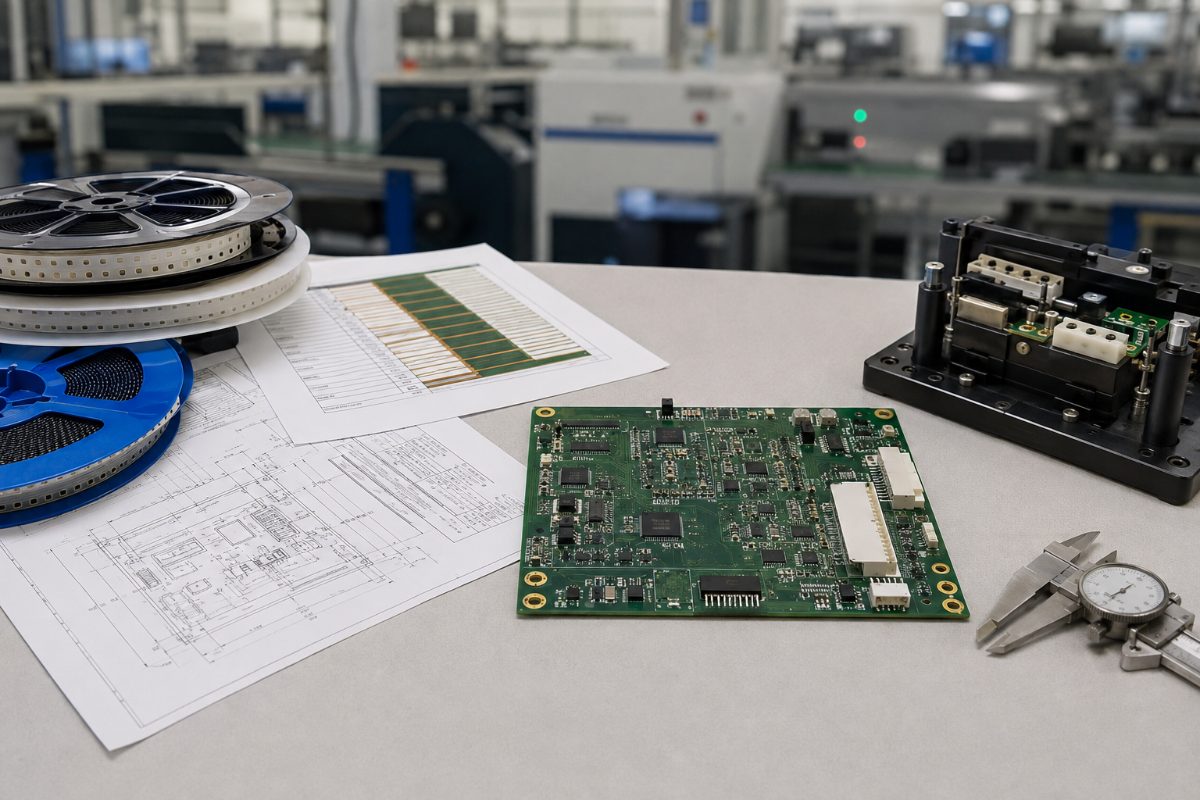
Problem
Starting production with unclear substitutions could have placed an unapproved component on the board. A connector-package mismatch could have stopped assembly or created a nonfunctional first article.
Action
The BOM notes and approved alternatives were clarified before purchasing. The connector package and placement data were checked before SMT. Critical ICs were verified, and the assembly plan included first-article inspection, SPI, AOI, and X-ray for hidden joints.
Result
The build entered production with the BOM, package data, and inspection points aligned. The buyer avoided approving substitutions during assembly and received inspection records that could support repeat-order review.
This is a manufacturing reference for German buyers; it is not presented as a claim that the customer was located in Germany.
How EBest Circuit Supports Medical PCB Projects for Germany
Germany buyers can use EBest Circuit when their project is open to overseas production and they want fewer handoffs between PCB fabrication and PCBA.
- One release package: PCB data, BOM, CPL, drawings, and test requirements are reviewed together before production.
- More PCB options: HDI, flex, rigid-flex, high-frequency, heavy-copper, metal-core, and multilayer requirements can be assessed within one supplier route.
- Controlled sourcing: Turnkey, partial-turnkey, and consigned-component models let the buyer retain control of strategic parts.
- Visible approvals: Material changes, substitutions, and unresolved engineering questions can be held for customer approval before use.
- Assembly evidence: SPI, first-article inspection, AOI, X-ray, functional testing, and traceability records can be defined according to the build.
- Repeat-order continuity: Released files, component status, process records, and approved changes remain connected to the production order.
The practical benefit is a clearer route from quotation to repeat production: fewer supplier interfaces, fewer uncontrolled substitutions, and one team responsible for coordinating PCB, parts, assembly, and inspection.
FAQs About Medical PCB Manufacturer Germany
Is a German production site mandatory for every medical PCB?
No. It is mandatory only when the OEM, customer contract, regulatory strategy, funding condition, or security requirement specifies domestic or regional production. Otherwise, an audited overseas supplier may also be considered.
Does a medical PCB manufacturer need ISO 13485?
It depends on the supplier’s role and the OEM’s quality plan. If ISO 13485 is required, verify the legal entity, manufacturing site, certificate scope, and purchased activity rather than accepting a logo alone.
What should I send for a medical PCB quotation?
Send Gerber or ODB++, fabrication drawing, stackup, BOM, CPL, assembly drawings, quantities, target date, test procedure, programming files, acceptance class, traceability needs, and required quality documents.
Can one supplier provide both PCB fabrication and medical PCBA?
Yes, if its approved scope covers both. This can reduce handoffs involving panelization, surface finish, component land patterns, fixtures, sourcing, soldering, and defect ownership.
How should component substitutions be controlled?
Define approved alternatives and substitution authority before ordering. Any unapproved change should be supported by manufacturer data and submitted to the buyer for written approval before use.
How can a Germany buyer start an EBest Circuit review?
Send the PCB files, BOM, CPL, assembly drawings, quantity, required certifications, inspection records, and target delivery date to sales@bestpcbs.com. The returned review should identify missing inputs, manufacturability questions, component risks, test needs, and the quoted production schedule before the order is released.
Use this medical PCB manufacturer Germany guide to compare the supplier route against your released files, quality requirements, and production plan.